

















What is biotechnology and why is it divided into branches?
Before going into detail, it is worth clarifying the starting point. Biotechnology is the scientific discipline that uses living organisms, cells or biological systems to develop products, processes and solutions applied to various sectors. It combines knowledge of molecular biology, genetics, biochemistry, microbiology and, increasingly, computing and data.
The reason it is organised into branches is simple: the field of application is so broad that it is impossible to cover it as a single entity. To organise this diversity, the scientific community adopted a colour-coded classification system, where each colour represents a specific area of focus. It is a model that facilitates communication between researchers, industry and regulatory bodies.
The colour-coded classification: the main branches
The colour-coded classification of biotechnology is now the most widely used reference system internationally. Each colour groups together a set of applications with their own objectives, working environments and professional profiles.
Red biotechnology: health and medicine
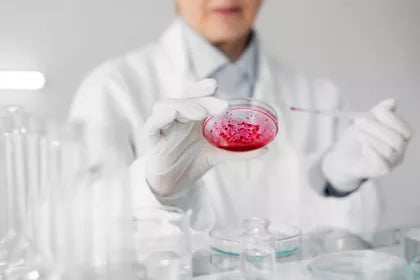
This is probably the best known branch and the one that has generated the most visible advances in recent years. red biotechnology focuses on medical and pharmaceutical applications: the development of vaccines, gene therapies, biologics, molecular diagnostic techniques and regenerative medicine.
Some specific examples include:
- mRNA vaccines against COVID-19, which demonstrated this technology’s ability to respond in record time to a global health emergency.
- CAR-T therapies, which genetically modify the patient’s own immune cells to target tumours specifically.
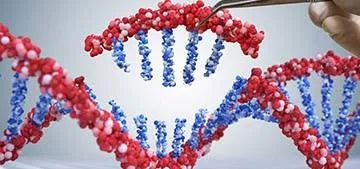
- CRISPR gene editing, which is already being used in clinical trials to treat conditions such as sickle cell anaemia and beta-thalassaemia.
- Organoids: miniature replicas of human tissues developed in the laboratory to design personalised treatments.
If you are interested in biomedical research, the pharmaceutical industry or the development of diagnostic tools, this is the sector with the highest level of investment and demand for professionals in Spain and across Europe.
Green biotechnology: agriculture and the environment
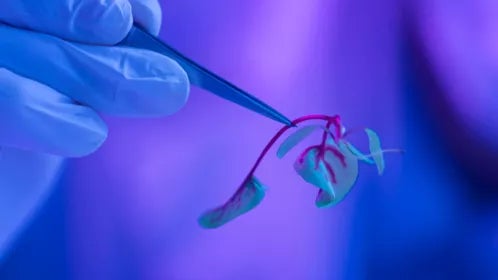
Green green biotechnology applies biotechnological tools to the agri-food and environmental sectors. Its aim is to improve crop productivity, make crops more resistant to disease or adverse weather conditions, and reduce the use of pesticides and chemical fertilisers.
Some of its most significant applications include:
- Genetically modified crops with greater resistance to pests or drought.
- Microbial biofertilisers and biopesticides that replace polluting chemical products.
- The use of CRISPR to improve the nutritional profile of food or remove allergenic components.
- Soil bioremediation techniques, i.e. the use of microorganisms to decontaminate land.
Spain plays a significant role in the European agri-food sector, making this field a promising career choice for those wishing to combine science and sustainability.
White biotechnology: sustainable industry and processes
Also known as industrial biotechnology, the ‘white’ branch aims to make production processes more efficient and environmentally friendly by replacing conventional chemical processes with biological alternatives.
Its applications include:
- The production of biofuels from organic waste or algae.
- The manufacture of biodegradable bioplastics using microorganisms.
- The use of industrial enzymes in the textile, paper and food industries to reduce water and energy consumption.
- The synthesis of chemical compounds through microbial fermentation.
This type of biotechnology lies at the heart of the transition towards a circular economy. If sustainability and industrial innovation are among your interests, white biotechnology offers career opportunities in sectors such as energy, chemicals and materials manufacturing.
Blue biotechnology: marine and aquatic ecosystems
Blue blue biotechnology explores organisms found in marine and aquatic environments to identify bioactive compounds, develop pharmaceutical or cosmetic products, and improve aquaculture in a sustainable manner.
The oceans are home to an enormous amount of biodiversity, much of which remains unexplored. Some of its most promising areas of research include:
- The search for bioactive molecules in algae, sponges and other marine organisms with pharmacological potential.
- Precision aquaculture: genetic improvement of commercially important species to optimise their production.
- Bioremediation of aquatic environments contaminated by plastics or industrial waste.
Grey biotechnology: environmental conservation
Unlike ‘green’ biotechnology, which focuses on agriculture, grey biotechnology is specifically geared towards the conservation of ecosystems and biodiversity. It uses biotechnological tools to monitor environmental quality, protect endangered species and restore degraded habitats.
It is a field with a more academic and institutional focus, linked to public bodies, NGOs and environmental agencies.
Golden biotechnology: bioinformatics and data management
This is currently one of the branches with the greatest potential. Golden biotechnology encompasses bioinformatics and the computational analysis of biological data. In a context where genomic sequencing generates vast amounts of information, professionals who know how to interpret this data using programming and statistical tools are extremely valuable.
Its applications include:
- Analysis of whole genomes to identify mutations associated with diseases.
- Development of artificial intelligence models that predict protein structure or the efficacy of a drug.
- Data management and interpretation in precision medicine studies.
If you have an affinity for both the life sciences and programming and data analysis, this field represents one of the rarest and best-paid roles on the market.
Other complementary fields
In addition to the above, the colour-coded system includes other categories with specific roles:
Field | Main area |
| Yellow biotechnology | Food industry and fermentation |
| Brown biotechnology | Arid and desert ecosystems |
| Orange biotechnology | Outreach, education and technology transfer |
| Violet biotechnology | Ethics, legislation and biopats |
Violet biotechnology, for example, is becoming particularly relevant as gene-editing technologies raise ethical and legal dilemmas that require professionals specialising in bio-law and bioethics.
What do all branches of biotechnology have in common?
Despite their differences, the various branches of biotechnology share a common foundation: the rigorous scientific method, the use of advanced laboratory techniques and the ability to work with large volumes of data. Furthermore, they all draw on disciplines such as:
- Molecular and cellular biology
- Genetics and genomics
- Microbiology
- Biostatistics and bioinformatics
- Biochemistry
This interdisciplinary nature is, in fact, one of the great strengths of the biotechnology degree programme: if you’d like to find out in detail which subjects make up this programme, take a look at our comprehensive guide to the modules of the Bachelor’s Degree in Biotechnology.
Branches of biotechnology and career prospects: where do biotechnologists work?
Understanding these branches is not only useful from an academic perspective; it also helps you tailor your specialisation to the job market. The sectors with the highest demand for biotechnology graduates are:
- Pharmaceutical and life sciences industry: R&D laboratories, clinical trials, quality control.
- Academic and hospital research: universities, research centres, university hospitals.
- Agri-food: companies specialising in plant breeding, food safety and agricultural biotechnology.
- Industrial and environmental biotechnology: renewable energy, waste management, sustainable materials.
- Molecular diagnostics and healthcare technology.
- Scientific consultancy and R&D&I project management.
If you’d like to find out more about the career opportunities in biotechnology and what the salaries are in Spain, we recommend reading our comprehensive guide.
How to study biotechnology at UAX
If all this has sparked your interest, the first step is to choose a solid course that combines a scientific foundation with real-world practice. At Alfonso X el Sabio University (UAX), the Bachelor’s Degree in Biotechnology is designed so that, from day one, you’ll be working in state-of-the-art laboratories such as UAX-BioLAB, with access to partnerships with leading centres such as the CNIO (National Cancer Research Centre), the CNIC, the CSIC and numerous biomedical research institutes.
This programme will provide you with the scientific foundation you need to specialise later in whichever branch of biotechnology you are most passionate about.
Summary
The branches of biotechnology are mainly organised using a colour-coded classification system, where each colour represents an area of application: red focuses on health and medicine, green on agriculture and the environment, white on sustainable industry, blue on marine ecosystems, grey on environmental conservation and gold on bioinformatics and data analysis. There are also complementary branches such as yellow (food), orange (public outreach) and violet (bioethics and legislation). All share a common foundation in molecular biology, genetics and biostatistics.
As for the job market, the biotechnology sector in Europe is projected to be one of the fastest-growing over the next decade, with career opportunities in the pharmaceutical industry, research, the agri-food sector and industrial biotechnology, amongst others.
Sources
- National Institute of Statistics (INE): employment data on biotechnology R&D in Spain.
- Ministry of Science and Innovation: report on biotechnology in Spain.
- Spanish Association of Biotechnology Companies (ASEBIO): annual report on the Spanish biotechnology sector
- European Commission: regulatory framework for modern biotechnology.
- Spanish Society of Biochemistry and Molecular Biology (SEBBM).