





















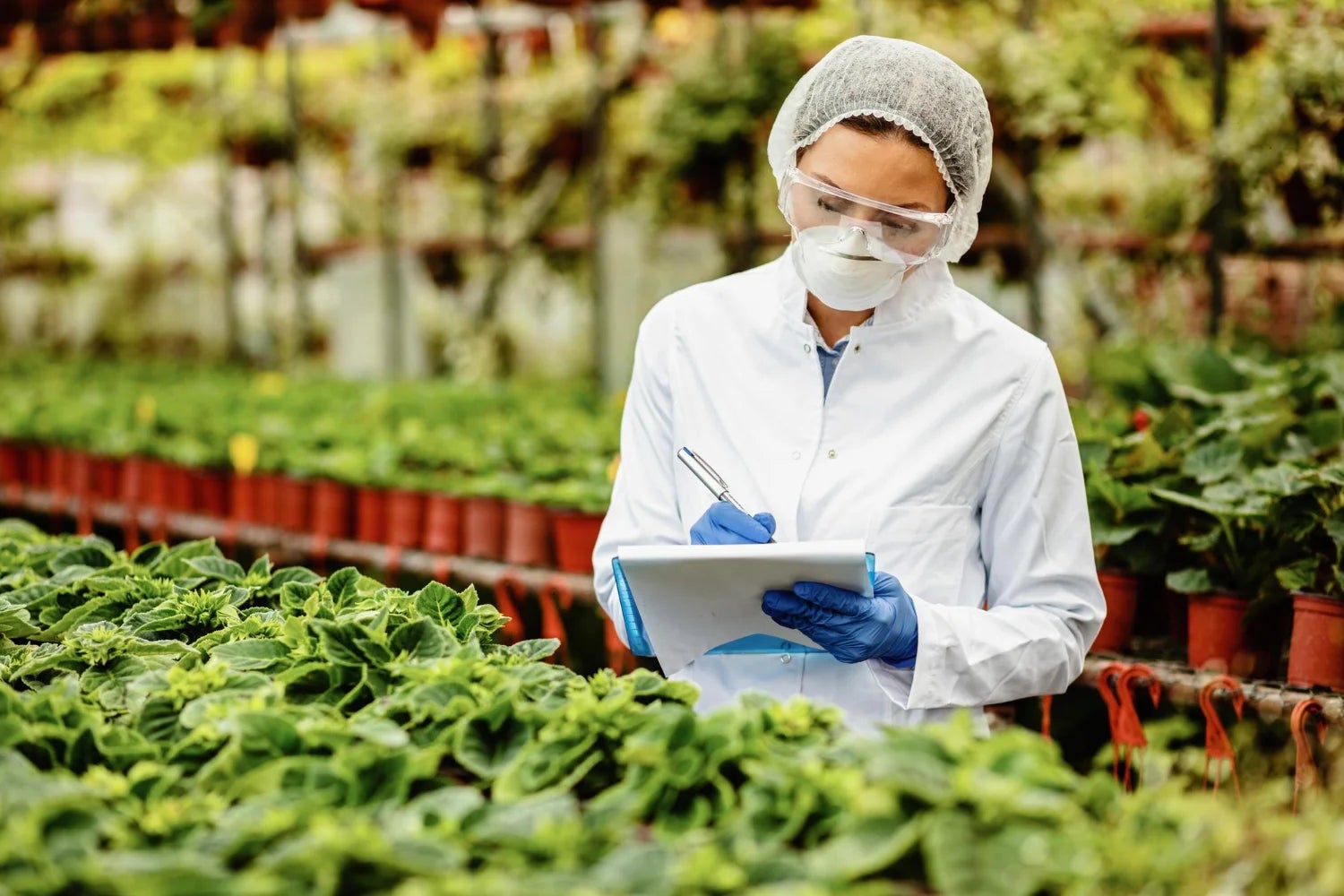
Against a backdrop of population growth, climate change and the need for more sustainable food systems, green biotechnology is emerging as a key discipline. It enables the production of more food using fewer resources, reduces the environmental impact of agriculture and improves the quality of agricultural produce.
Furthermore, this discipline creates career opportunities in areas such as crop improvement, agricultural sustainability and innovation in food systems.
What is green biotechnology?
Green biotechnology can be defined as the application of biotechnology in the agricultural and plant sector. It includes the use of techniques such as genetic engineering, marker-assisted selection, plant tissue culture and gene editing to improve plants and cropping systems.
Unlike other branches , such as red biotechnology (focused on health), white biotechnology (geared towards sustainable industrial processes) or blue (marine) biotechnology, grey (environmental) , yellow (food) , gold (bioinformatics) , violet (ethics) and orange (outreach) , green biotechnology has a direct focus on food production and the management of natural resources.
Its aim is not only to increase agricultural yields, but to do so sustainably, by minimising the use of water, fertilisers and pesticides, and reducing environmental impact.
Characteristics of green biotechnology
To understand its impact on food production and sustainability, it is essential to understand the characteristics that define green biotechnology.
Focus on plants and agriculture
At the heart of green biotechnology lie agricultural crops. Work is carried out on plant species to improve their yield, resistance or nutritional value.
Use of advanced techniques
Key technologies used include:
- Genetic engineering (genetically modified organisms)
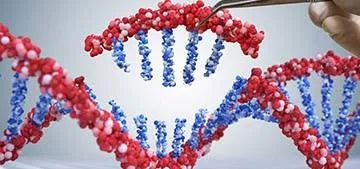
- Gene editing (such as CRISPR)
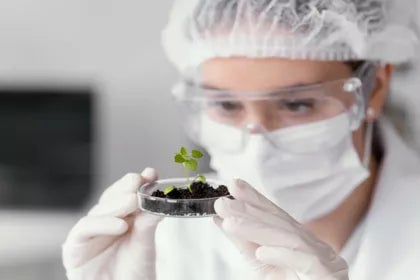
- Plant tissue culture
- Molecular markers
These tools make it possible to accelerate processes that would take decades using traditional agricultural methods.
Focus on sustainability
One of its cornerstones is reducing the environmental impact of agriculture through:
- Reduced use of pesticides
- Optimising water use
- Improved nutrient efficiency
Improving food security
Green biotechnology helps to ensure access to sufficient, safe and nutritious food, particularly in regions with adverse climatic conditions.
Global application
It is used in both intensive agriculture and developing agricultural systems, adapting to different production contexts.
Applications of green biotechnology
Green biotechnology extends its influence across a wide range of areas, primarily related to agriculture and the environment, seeking sustainable and efficient solutions. Its applications are diverse and have a significant impact on food production, resource conservation and climate change mitigation.
Genetic improvement of crops
One of the most significant applications is the development of crops with improved characteristics, such as:
- Greater resistance to pests
- Tolerance to drought or salinity
- Higher yield
- Improved nutritional value
This makes it possible to increase agricultural productivity without proportionally increasing the resources used.
Development of genetically modified crops
Genetically modified organisms (GMOs) are one of the best-known applications. Specific genes are introduced to confer desired traits, such as resistance to insects or tolerance to herbicides.
Sustainable agriculture
Green biotechnology facilitates more sustainable practices, such as:
- Reduced use of chemicals
- Efficient use of land
- Reduced environmental impact
Biofertilisers and biopesticides
The use of beneficial microorganisms makes it possible to replace traditional chemicals. This improves soil health and reduces pollution.
In vitro cultivation
Plant tissue culture enables plants to be propagated under controlled conditions, ensuring genetic and phytosanitary quality.
Adaptation to climate change
Green biotechnology is key to developing crops adapted to new climatic conditions, such as extreme temperatures or water scarcity.
Examples of green biotechnology
To better understand the scope of this discipline, below are some illustrative examples of green biotechnology that are already transforming agriculture and the environment.
- Insect-resistant maize. Reduces the need for chemical pesticides.
- Vitamin A-enriched rice. Known as ‘golden rice’, it improves nutritional value.
- Drought-tolerant crops. These enable production under water-stress conditions.
- Use of nitrogen-fixing bacteria. Reduces the need for chemical fertilisers.
- Disease-resistant plants. These minimise agricultural losses.
- Plant micropropagation. Mass production of genetically identical plants.
- Natural biopesticides. These replace conventional chemical products.
- Genetic editing of crops. Precise improvement of specific traits.
- High-yielding crops. Optimisation of agricultural production.
- Biology-based precision agriculture. Integration of biotechnology and data to optimise crops.
- Development of new crop varieties by biotechnology companies. R&D teams are working to create more resilient and productive crops using advanced techniques.
Types of green biotechnology
Within green biotechnology, different approaches can be identified:
Classical plant biotechnology
This type enhances traditional crop selection and improvement, using cross-breeding and propagation to develop superior varieties. It relies on modern tools such as marker-assisted selection (MAS) and tissue culture to speed up the process and make it more efficient. Its aim is to obtain plants with improved characteristics (yield, resistance) from their own genetic pool.
Transgenic biotechnology
This involves the direct genetic modification of plant organisms by introducing genes from other species. This confers entirely new characteristics on plants, such as resistance to pests or herbicides, which could not be achieved by conventional methods. This is the origin of genetically modified (GM) or transgenic crops.
Gene editing
This allows for the precise modification of plant DNA without introducing genetic material from external species. Tools such as CRISPR/Cas9 act as ‘molecular scissors’ to correct, inactivate or enhance specific genes with great accuracy. It offers a controlled way of improving traits such as disease resistance or nutritional quality, with a result that is indistinguishable from traditional breeding.
Microbial biotechnology applied to agriculture
This focuses on the use of beneficial microorganisms, such as bacteria and fungi, to improve agriculture. These microorganisms act as biofertilisers, biopesticides or plant growth promoters, improving soil health and plant nutrition. It reduces dependence on synthetic chemicals, promoting more sustainable agriculture.
Advantages and disadvantages of green biotechnology
Like any transformative technology, green biotechnology presents a balance of opportunities and challenges, offering significant advantages but also raising certain disadvantages and controversies.
Advantages
- Increased agricultural productivity
- Reduced use of pesticides and fertilisers
- Improved nutritional quality
- Adaptation to climate change
- More efficient use of natural resources
Disadvantages
- Public debate on genetically modified organisms
- Strict regulation in many countries
- Technological dependence in some agricultural models
- Potential ecological impacts if not managed correctly
Career opportunities in green biotechnology
Green biotechnology offers career opportunities in the agricultural, agri-food and sustainability sectors, with a strong focus on crop improvement and food production. The most notable are:
- Genetic improvement and crop development. Designing plants that are more resilient, productive or nutritious through genetic engineering, gene editing or assisted selection.
- The agri-food industry. Working in companies specialising in seeds, agricultural biotechnology, organic fertilisers or crop protection.
- R&D in agriculture and sustainability. Research at technology centres or universities into new farming techniques, adaptation to climate change and resource efficiency.
- Precision farming and agrotech. Application of technologies (sensors, data, automation) to optimise agricultural production.
- Consultancy in agricultural sustainability. Advising farms and businesses on how to improve yields and reduce environmental impact.
- Public sector and international organisations. Development of agricultural policies, food security and sustainability.
The strategic role of green biotechnology
Green biotechnology is essential for tackling global challenges such as:
- Food security
- Climate change
- Agricultural sustainability
- Reducing environmental impact
Its ability to improve crops and optimise resources makes it a key tool in the transition towards more efficient and sustainable food systems. Furthermore, its integration with digital technologies (big data , sensors, artificial intelligence ) is transforming agriculture towards more precise and efficient models.
This context is driving demand for specialists in biotechnology applied to agriculture, particularly in plant breeding, sustainability and food production.
Conclusion
Green biotechnology is the branch of biotechnology focused on agriculture and the development of sustainable crops. It enables improved productivity, reduced environmental impact and higher-quality food. Thanks to its applications and potential for innovation, it is positioned as a strategic discipline for the future of food and global sustainability.
Finally, it is worth noting that its role in food production makes it one of the areas with the greatest career prospects within biotechnology.
Sources used