See all Online Master's Degrees in Health
See all Master's Degrees in Engineering
Most searched curriculums
Madrid
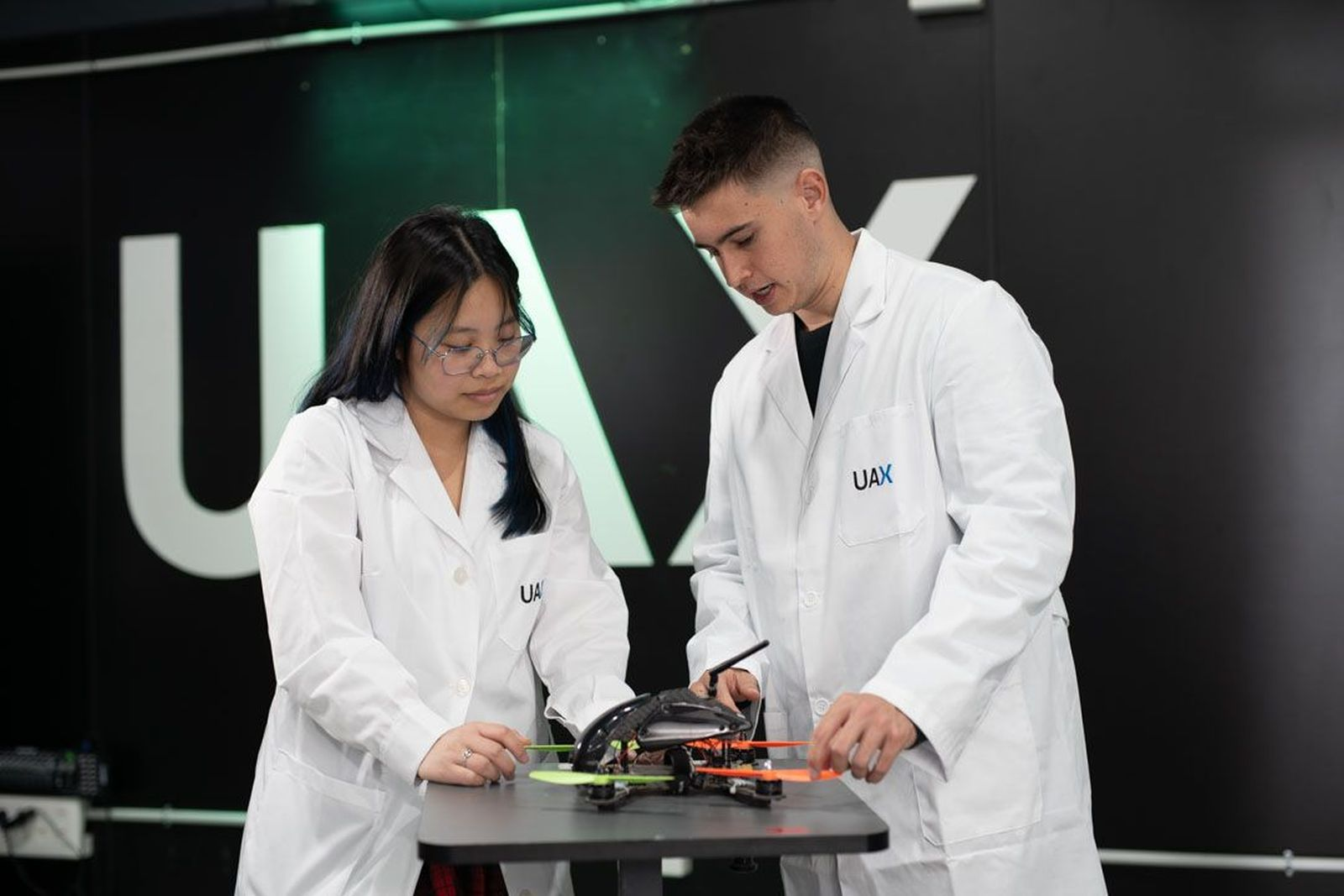
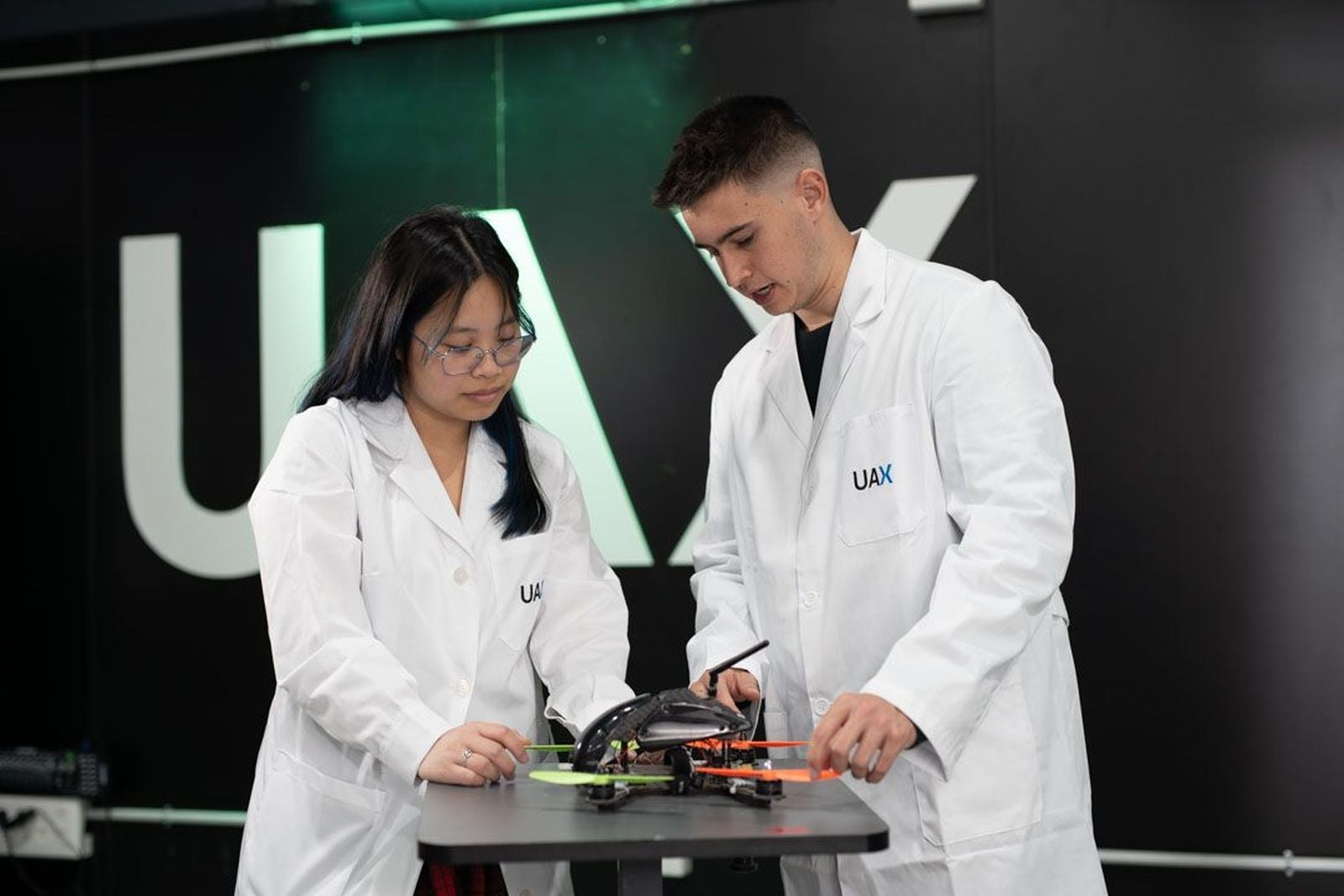
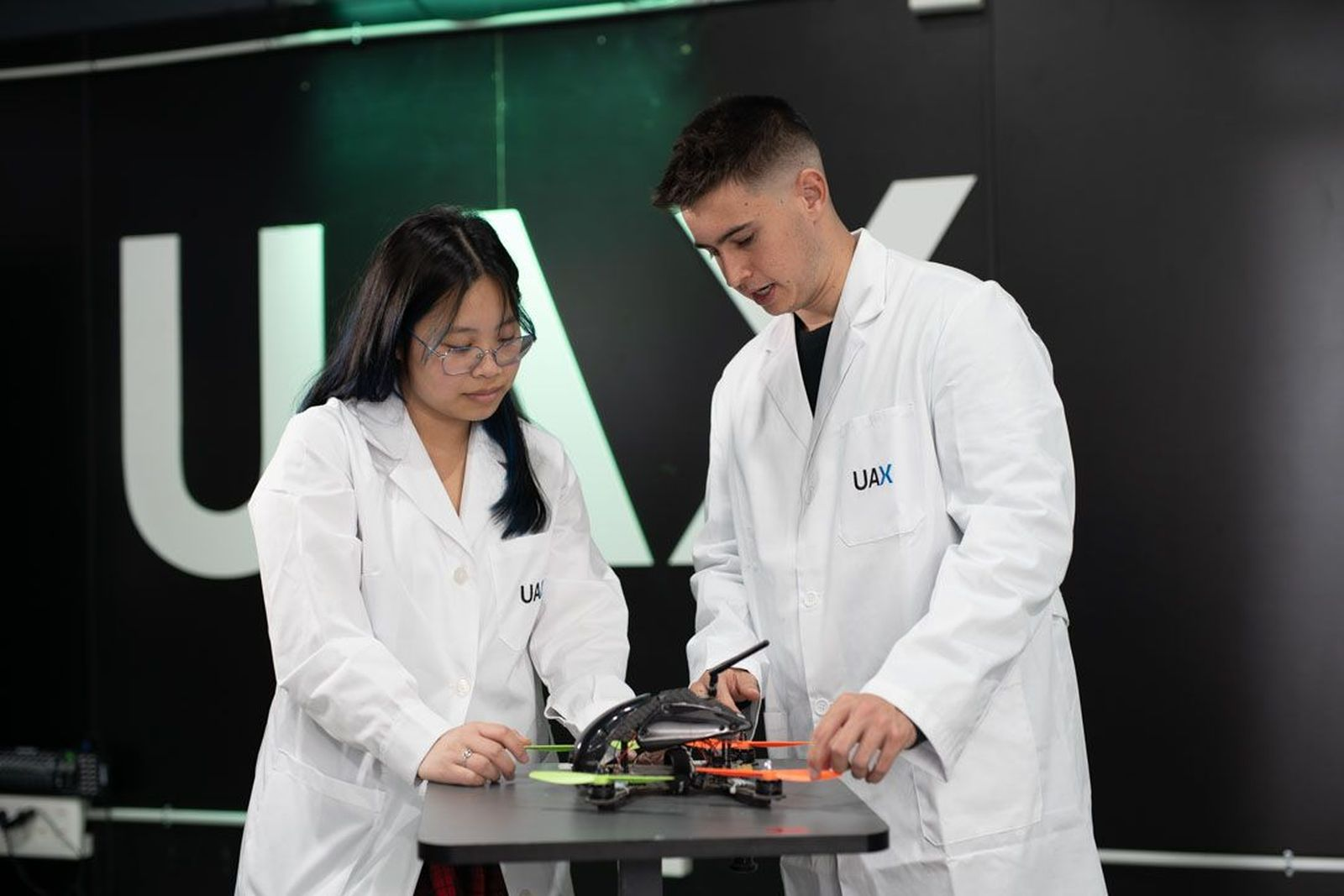
Companies seek professionals who understand the impact of new technologies on the business world. UAX trains you to become that professional and add value to the company from your very first day on the job. + Certificate in Business & Product Innovation
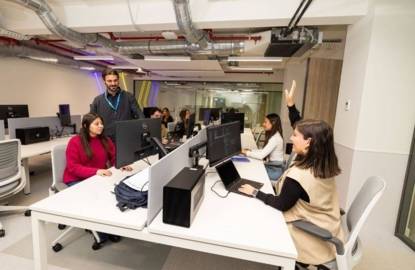
In shared spaces on campus, in collaborative innovation projects and through internships from the very first year.
Academic and professional mentoring programme designed to improve your profile by focusing on your efforts and achievements.
You will work with real companies and students from other disciplines on innovative projects to develop technology-based products and solutions.
+700 hours of certified training in new technologies, advanced analytics and professional skills.
Internships and placements in strategic markets including Asia, Europe and the USA combined with a progressive bilingual model.
An innovative campus as a focal point where technology, business and students converge.
Digital transformation is redefining industries, creating a need for professionals who can understand new technologies and apply them strategically to business.
The curriculum of UAX’s Computer Engineering Degree stands out for integrating essential technological knowledge with two key areas: data analytics and fundamental training in business disciplines such as finance, marketing and product innovation.
+ Data, Coding and Web Engineering Certificate by

Developing innovative solutions to optimise customer operations at CaixaBank through predictive models, AI and data analytics.
Developing a virtual twin of the Villanueva de la Cañada Campus.
Designing and building an autonomous electric vehicle for data collection within the virtual twin.
Students design and develop affordable virtual-reality glasses.
Applying AI techniques to forecast working hours for large-scale international engineering projects.
Degree in Computer Engineering
First Year
ANNUAL SUBJECTS
| Code | Subjects | Character* | ECTS | ||||||||||||||||||||||||||||||||||||||||||||||||||||||||||||||||||||||||||||||||||||||||||||||||||||||||||||||||||||||||||||||||||||||||||||||||||||||||||||||||||||||||||||||||||||||||||||||||||||||||||||||||||||||||||||||||||||||||||||||||||||||||
|---|---|---|---|---|---|---|---|---|---|---|---|---|---|---|---|---|---|---|---|---|---|---|---|---|---|---|---|---|---|---|---|---|---|---|---|---|---|---|---|---|---|---|---|---|---|---|---|---|---|---|---|---|---|---|---|---|---|---|---|---|---|---|---|---|---|---|---|---|---|---|---|---|---|---|---|---|---|---|---|---|---|---|---|---|---|---|---|---|---|---|---|---|---|---|---|---|---|---|---|---|---|---|---|---|---|---|---|---|---|---|---|---|---|---|---|---|---|---|---|---|---|---|---|---|---|---|---|---|---|---|---|---|---|---|---|---|---|---|---|---|---|---|---|---|---|---|---|---|---|---|---|---|---|---|---|---|---|---|---|---|---|---|---|---|---|---|---|---|---|---|---|---|---|---|---|---|---|---|---|---|---|---|---|---|---|---|---|---|---|---|---|---|---|---|---|---|---|---|---|---|---|---|---|---|---|---|---|---|---|---|---|---|---|---|---|---|---|---|---|---|---|---|---|---|---|---|---|---|---|---|---|---|---|---|---|---|---|---|---|---|---|---|---|---|---|---|---|---|---|---|---|
| C0141415 | Communication in a Foreign Language 1 | FB | 6 | ||||||||||||||||||||||||||||||||||||||||||||||||||||||||||||||||||||||||||||||||||||||||||||||||||||||||||||||||||||||||||||||||||||||||||||||||||||||||||||||||||||||||||||||||||||||||||||||||||||||||||||||||||||||||||||||||||||||||||||||||||||||||
Communication in a Foreign Language 1Código: C0141415 Imprimir Course 1: First-term module. Foundation course. 6 credits. Profesores
Objectives To acquire the necessary skills in existing methods to reach a B1–B2 level, with particular emphasis on individual expression (spoken and written), the communicative process (speaking and listening), the correct use of spoken and written language (accuracy, coherence and appropriateness, lexical accuracy, spelling, vocabulary, pronunciation and creativity) and reading texts (reading, comprehension and critical thinking). Students will also be given an initial introduction to technical English in the field of engineering. They will be familiarised with basic technical vocabulary and introduced to B1–B2-level texts within the scope of their degree programme. Learning outcomes RK15 Is familiar with the terminology and styles characteristic of oral and written communication in English within the fields of computing and technology. Course description The content of this module is designed to enable students to acquire the skills in reading comprehension, listening comprehension, oral production and written production that will allow them to function effectively in a professional context in a foreign language, preferably English. The course will cover a combination of basic English, including the study and refinement of language use in various everyday contexts, and technical English, involving the study of vocabulary and concepts specific to different fields of specialisation. Contents: Unit 1 Systems Vocabulary / Technology 1.1: Safety equipment • telecoms 1.2: Telecoms • satellites 1.3: Instructional verbs • marine • mechanics Grammar / Discourse 1.1: Cohesion 1.2: Relative pronouns 1.3: Present simple • imperative Unit 2 Processes Vocabulary / Technology 2.1: Applications of plastics 2.2: Process verbs 2.3: Process verbs, related nouns • gerunds Grammar / Discourse 2.1: ‘will’ for predictions 2.2: Present simple passive 2.3: Phrases used to refer to a visual Unit 3 Events Vocabulary / Technology 3.1: Aerospace • mechanics 3.2: Spacecraft LAS system 3.3: Noun suffixes • semi-technical vocabulary Grammar / Discourse 3.1: Present perfect v past simple • First and second conditional 3.2: Time clauses 3.3: Sequence markers Unit 4 Careers Vocabulary / Technology 4.1: Terms used in a CV 4.2: Semi-technical vocabulary • biomedical 4.3: Employment Grammar / Discourse 4.1: Present continuous for present and future • going to 4.2: Comparative • conjunctions 4.3: Present perfect v past simple • for, since, ago Unit 5 Safety Vocabulary / Technology 5.1: Control and warning systems 5.2: Maintenance • automotive 5.3: Navigation • air traffic Grammar / Discourse 5.1: Discussion markers 5.2: Active and passive modals 5.3: unless • present participle Unit 6 Planning Vocabulary / Technology 6.1: Deadlines • energy • environment 6.2: Nouns expressing actions • causal suffixes • fuel processing 6.3: Energy • power generation Grammar / Discourse 6.1: Future modals 6.2: due to, owing to, because (of), as a result of, caused by 6.3: Section markers in a talk Unit 7 Reports Vocabulary / Technology 7.1: Reporting verbs • security 7.2: Electrical 7.3: Electrical, electronics Grammar / Discourse 7.1: Reported speech 7.2: Past continuous 7.3: Discourse markers Unit 8 Projects Vocabulary / Technology 8.1: Installation, transport, oil extraction 8.2: Construction • active / passive adjectives 8.3: General words with technical meanings • oil drilling Grammar / Discourse 8.1: Present perfect and past simple passive 8.2: Cohesion • by (means of) • (in order) to 8.3: Phrases to check understanding Unit 9 Design Vocabulary / Technology 9.1: Automotive • electrical 9.2: Shapes • architectural 9.3: Technical drawing Grammar / Discourse 9.1: Modifying comparatives 9.2: Modifying superlatives 9.3: Complex noun phrases Unit 10 Disasters Vocabulary / Technology 10.1: Damage • structural engineering 10.2: Civil engineering 10.3: Report headings Grammar / Discourse 10.1: Modals + perfect infinitive: must/may/can’t have 10.2: Third conditional • should/shouldn’t have 10.3: Grammar associated with report sections Learning activities P1 Lecture P2 Interactive lessons P4 Project work P5 Independent study P6 Tutorials P7 Assessments. Assessment system and criteria The assessment process will be carried out with the aim of achieving the learning outcomes set out in the course description. The assessments carried out will evaluate the four language skills: reading, listening, writing and speaking (reading comprehension, listening comprehension, written expression and oral expression). These assessments will consist of: • Writing tasks. • Written tests comprising multiple-choice questions, true or false questions, fill-in-the-blank exercises and questions requiring answers. • Reading and reading comprehension exercises. • Vocabulary and grammar exercises (with particular emphasis on vocabulary specific to the subject area covered in class). • Completing and presenting assignments. • Listening comprehension tests. • Oral expression tests. The various assessed tests will be organised as follows: 1. CONTINUOUS ASSESSMENT Five written tests covering the content of units 1–10. Each test will assess students’ knowledge in four areas: Listening, Reading, Grammar and Terminology. Two oral tests (one in groups and one individually) will also be held on a different date to the written tests. Weighting of written assessments throughout the academic year: - Written tests (5): 65% - Oral tests (1): 15% - Classwork: 5% - Tutor’s assessment: 5% - UAX SKill School: Introduction to Public Speaking: 10% Each of the 5 written assessments will consist of exercises in: Listening Comprehension Vocabulary and specific terminology Reading Comprehension Grammar or Linguistic Structures The topic of the oral presentation, which may be undertaken individually and/or in pairs, will be agreed in advance with the teacher. The dates of these assessments will be announced in advance by the teacher. They will take place in the usual classroom, unless the teacher specifies otherwise at the time. IMPORTANT 1) It is essential to sit ALL the assessment tests scheduled during the Continuous Assessment period. It follows that any student who fails to sit any of the mid-term tests, WILL LOSE THE RIGHT TO CONTINUOUS ASSESSMENT AND WILL BE REQUIRED TO SIT THE REGULAR EXAMINATION COVERING 100% OF THE COURSE, subject to the assessment criteria specified for that examination session. 2) If a minimum mark of 5 has been obtained in the oral presentation assessment as part of the continuous assessment, this mark will be retained for the ordinary and/or supplementary examination sessions. 3) The mark for the written examination will not be carried over in either case. 4) The final mark will be calculated according to the percentages mentioned above. The continuous assessment may be failed if the result of the calculation, when combined with the other assessments, is below 5. In this case, the student would have to sit the course examination in the June ordinary examination period, with the mark counting for 75 per cent (if they have a mark of at least 5 in the oral component of the continuous assessment and decide to carry it over to June) or for 100 per cent of the course mark. 5) Students must achieve a mark of 3.5 or above in the written assessments and 5 in the oral assessments in order to have their mark calculated as part of the continuous assessment average. 6) Students with a final average mark of 5 or above in continuous assessment will pass the module via the continuous assessment system. 2. REGULAR EXAM SESSION WITHOUT CONTINUOUS ASSESSMENT AND SUPPLEMENTARY EXAM SESSION 2.1 Examinations: Students who are to be assessed on 100 per cent of the course content must sit the final examination in June and/or July. The assessment criteria in this case shall be as follows: Written exam: 75% Oral examination: 25% The written exam will cover the same skills as those outlined above for students on the continuous assessment scheme. The oral examination will consist of an individual or pair presentation, as specified by the lecturer at the time. Details regarding the format of the presentation will be provided during the academic year. If a minimum mark of 5 has been achieved in the oral examination, this mark will be retained for the supplementary examination, if necessary, should the student so request. It is the student’s responsibility to find out about classrooms, dates and times. Type of examination 2.1.1 Written exam The written exam will include questions on listening comprehension, vocabulary, reading comprehension and grammar. The mark for the written exam will not be carried over to the resit session under any circumstances. 2.1.2 Oral exam This may be conducted individually or in pairs, as indicated at the time. It will consist of a dialogue on a given topic related to engineering. Each student will prepare their dialogue in advance, following the guidelines provided in class or via the course portal. Oral examinations may be recorded to facilitate marking if the student requests this. Timetable Click on this link to view the detailed timetable in Excel
Bibliography Core: 1. Chris Jacques Technical English, 2nd Edition, Level 3 Workbook Pearson. 2022. ISBN: 9781292424521 2. David Bonamy Technical English, 2nd Edition, Level 3 Course Book Pearson. 2022. ISBN: 9781292424484 Supplementary: 3.- Virginia Evans and Jenny Dooley It’s Grammar Time 4 Express Publishing. 2017. ISBN: 9781471538100 |
|||||||||||||||||||||||||||||||||||||||||||||||||||||||||||||||||||||||||||||||||||||||||||||||||||||||||||||||||||||||||||||||||||||||||||||||||||||||||||||||||||||||||||||||||||||||||||||||||||||||||||||||||||||||||||||||||||||||||||||||||||||||||||
| TOTAL: | 6 | ||||||||||||||||||||||||||||||||||||||||||||||||||||||||||||||||||||||||||||||||||||||||||||||||||||||||||||||||||||||||||||||||||||||||||||||||||||||||||||||||||||||||||||||||||||||||||||||||||||||||||||||||||||||||||||||||||||||||||||||||||||||||||
FIRST FOUR-MONTH PERIOD
| Code | Subjects | Character* | ECTS | ||||||||||||||||||||||||||||||||||||||||||||||||||||||||||||||||||||||||||||||||||||||||||||||||||||||||||||||||||||||||||||||||||||||||||||||||||||||||||||||||||||||||||||||||||||||||||||||||||||||||||||||||||||||||||||||||||||||||||||||||||||||||||||
|---|---|---|---|---|---|---|---|---|---|---|---|---|---|---|---|---|---|---|---|---|---|---|---|---|---|---|---|---|---|---|---|---|---|---|---|---|---|---|---|---|---|---|---|---|---|---|---|---|---|---|---|---|---|---|---|---|---|---|---|---|---|---|---|---|---|---|---|---|---|---|---|---|---|---|---|---|---|---|---|---|---|---|---|---|---|---|---|---|---|---|---|---|---|---|---|---|---|---|---|---|---|---|---|---|---|---|---|---|---|---|---|---|---|---|---|---|---|---|---|---|---|---|---|---|---|---|---|---|---|---|---|---|---|---|---|---|---|---|---|---|---|---|---|---|---|---|---|---|---|---|---|---|---|---|---|---|---|---|---|---|---|---|---|---|---|---|---|---|---|---|---|---|---|---|---|---|---|---|---|---|---|---|---|---|---|---|---|---|---|---|---|---|---|---|---|---|---|---|---|---|---|---|---|---|---|---|---|---|---|---|---|---|---|---|---|---|---|---|---|---|---|---|---|---|---|---|---|---|---|---|---|---|---|---|---|---|---|---|---|---|---|---|---|---|---|---|---|---|---|---|---|---|---|---|---|
| C0141412 | Physics | FB | 6 | ||||||||||||||||||||||||||||||||||||||||||||||||||||||||||||||||||||||||||||||||||||||||||||||||||||||||||||||||||||||||||||||||||||||||||||||||||||||||||||||||||||||||||||||||||||||||||||||||||||||||||||||||||||||||||||||||||||||||||||||||||||||||||||
PhysicsCódigo: C0141412 Imprimir Course 1: First-term module. Foundation course. 6 credits. Profesores
Objectives To become familiar with, understand and master the following basic concepts of physics: scalar and vector fields, electrostatics, electric current, magnetic fields, electromagnetic induction, circuit analysis, physical phenomena related to the operation of computers and their peripherals, semiconductor devices, bipolar transistors and field-effect transistors. Fundamentals of integrated circuits. Prerequisites No prerequisites have been set. Learning Outcomes RK2 – Understanding and mastery of the basic concepts of fields and waves and electromagnetism, electrical circuit theory, electronic circuits, the physical principles of semiconductors and logic families, electronic and photonic devices, and their application to solving engineering problems. RS1 – Ability to solve mathematical problems that may arise in engineering. Course description General content covered by the module: Scalar and vector fields, Electrostatics, Electric current, Magnetic fields, Electromagnetic induction, Circuit analysis, Physical phenomena related to the operation of computers and their peripherals, Semiconductor devices, Bipolar transistors and Field-effect transistors, Fundamentals of integrated circuits Topic 1: VECTOR ANALYSIS. Definition of a vector. Elementary operations with vectors. Scalar fields. Vector fields. Topic 2: ELECTROSTATICS. Coulomb’s law. Electric field. Gauss’s theorem. Electric potential. Potential energy. Conductors and dielectrics. Capacitors. Capacitance. Topic 3: MAGNETIC FIELD. Magnetic induction. Magnetic force. Ampère’s law. Magnetic induction. Faraday’s law. Self-induction and mutual inductance. Magnetic energy. Topic 4: CIRCUIT ANALYSIS. Direct current analysis: Kirchhoff’s laws, Kennelly’s equations, the mesh method, Thevenin’s and Norton’s theorems. Alternating current analysis: Time constants of RC, RL and RLC circuits. Impedance. Admittance. Phasors. Topic 5: SEMICONDUCTORS. Band theory for solids. Properties of semiconductors. Extrinsic and intrinsic semiconductors. p-n junction. Junction diode. Applications. Topic 6: TRANSISTORS Bipolar transistor. Field-effect transistor. Applications. Fundamentals of integrated circuits. Training activities P1 Lectures P2 Interactive classes P3 Workshop and/or laboratory activities P4 Preparation of assignments or projects and problem-solving P5 Independent study, case studies or problem-solving, literature reviews P6 Assessments P7 Tutorials Assessment system and criteria Without prejudice to any other requirements that may be specified in the relevant course syllabus, as a general rule, failure to attend more than 70 per cent of the course’s teaching activities—which require the student’s physical or virtual presence—will result in the loss of the right to continuous assessment during the standard examination period. In this case, the examination to be held during the official period set by the University will be the sole assessment criterion, with the weighting specified in the course syllabus. ---- The final mark consists of a theory component and a practical component. The theory component will account for 60% of the final mark: 1st mid-term exam: 30% 2nd mid-term exam: 30% The laboratory mark (40%) will be calculated as the average of the marks for each of the practical sessions. Students must sit the final assessment if: They have not achieved a minimum mark of 4/10 in either of the two mid-term exams. They have achieved a mark higher than 4 in one of the exams, but their average is below 5/10. They have not submitted any of the laboratory practicals. They have submitted all the practicals, but their average mark is below 5/10. If a student has passed one of the two parts but failed the other, they will only sit that part of the final exam in the ordinary examination session. Access to continuous assessment will only be possible if the student has achieved 70% attendance; if this level is not reached, the student must sit the entire module in both the ordinary and supplementary examination sessions. |
|||||||||||||||||||||||||||||||||||||||||||||||||||||||||||||||||||||||||||||||||||||||||||||||||||||||||||||||||||||||||||||||||||||||||||||||||||||||||||||||||||||||||||||||||||||||||||||||||||||||||||||||||||||||||||||||||||||||||||||||||||||||||||||||
| C0141413 | Computer Science 1 | FB | 6 | ||||||||||||||||||||||||||||||||||||||||||||||||||||||||||||||||||||||||||||||||||||||||||||||||||||||||||||||||||||||||||||||||||||||||||||||||||||||||||||||||||||||||||||||||||||||||||||||||||||||||||||||||||||||||||||||||||||||||||||||||||||||||||||
Computer Science 1Código: C0141413 Imprimir Course 1: First-term module. Foundation course. 6 credits. Profesores
Objectives • To build a foundation of knowledge and skills based on the optimised use of IT resources and tools designed for academic, educational and professional purposes. • To foster information and knowledge management skills. • To establish a useful foundation for management and learning based on independent research using IT tools. • The ability to apply general knowledge of office automation and new information technologies in current practice and in future professional contexts. Prerequisites No prerequisites have been established Learning outcomes RK4 Basic knowledge of the use and programming of computers, operating systems, databases and software applications relevant to engineering. RK5 Knowledge of the structure, organisation, operation and interconnection of computer systems, the fundamentals of their programming, and their application to solving engineering problems. RC5 Knowledge and application of the tools required for the storage, processing and access to information systems, including web-based systems. Description of the content General content covered by the module: Concepts of information and communications technology. Basic structure and operation of computers. Computer applications for engineering. Advanced use of spreadsheets. Introduction to programming. The Web and web services. Web application development. Client-side (front-end) development. Server-side (back-end) development Course content: Concepts in Information and Communications Technology; Computers and their use; File management; Word processing; Spreadsheets; Use of databases; The Internet; Messaging; Fundamentals of computing and data analysis. Teaching activities P1 Lectures P2 Interactive classes P3 Workshop and/or laboratory activities P4 Completion of assignments or projects and problem-solving P5 Independent study, case studies or problem-solving, literature reviews P6 Assessments P7 Tutorials Assessment system and criteria Without prejudice to any other requirements that may be specified in the relevant course syllabus, as a general rule, failure to attend more than 70 per cent of the course’s teaching activities—which require the student’s physical or virtual presence—will result in the loss of the right to continuous assessment during the standard examination period. In this case, the examination to be held during the official period set by the University will be the sole assessment criterion, with the weighting specified in the course syllabus. ---- The assessment process will be carried out taking into account the intended learning outcomes, so that the objectives and competences that the student is required to acquire are achieved. Continuous assessment For the continuous assessment of the Computer Science 1 module, various computer-based exercises and practical case studies will be carried out, along with an assignment linked to the ‘vitaminised’ courses and their certifications (16%); a class attendance rate of over 70 per cent will be required, and the following practical examinations (in each of which a minimum mark of 4 is required) will be held: - Part 1 on spreadsheets using Excel and data analysis: 42% - Part 2 on Fundamentals of Computing and Python: 42% Students who meet the requirements for continuous assessment, attendance and minimum mark will have the percentages indicated for each part applied to their marks, and their final course mark will be calculated accordingly. Students who meet the requirements and ultimately achieve a mark of 5 or above in continuous assessment will have passed the course and will not need to sit the final exam in the ordinary examination session. Ordinary Examination Students who have not passed the course will be required to sit the final exam in the ordinary examination session, for which there are two options: - Students who, having met the continuous assessment requirements (class attendance, coursework, practical exams and minimum mark), have not passed the course, may sit an exam in June for only one of the course components (in which they must achieve a minimum mark of 4), so that, by reapplying the relevant weightings together with the mark for the resat part, they may achieve a final pass (a mark of 5 or above) in the ordinary examination session. - Students who do not fall into the above category will have to sit an exam covering the entire syllabus of the module during the ordinary examination period. Extraordinary Examination In the supplementary examination session, students must be examined on the entire syllabus of the module. The exam will include one question from each of the two parts that make up the course, requiring a minimum mark of 4 in each of these questions, after which the corresponding percentages for each part will be applied. Timetable Click on this link to view the detailed timetable in Excel
Bibliography Basic: 1. Lambert, Joan. MOS 2016 Study Guide for Microsoft Excel: Microsoft Press. 2016. ISBN: 9780735699434 2. Microsoft Microsoft 365 Microsoft. 2022. ISBN: 9782409024351 https://support.microsoft.com/es-es/training Supplementary: 3. CLAUDIA VALDES-MIRANDA EXCEL 2016 (ESSENTIAL HANDBOOK) Anaya Multimedia. 2016. ISBN: 9788441538023 4.- Eni Microsoft Office 2019 and Office 365: Word, Excel, PowerPoint and Outlook Eni Editions. 2020. ISBN: 978-2-409-024 5. JOHN PIERCE MOS 2016 STUDY GUIDE FOR MICROSOFT WORD EXPERT Microsoft Press. 2016. ISBN: 9788441539266 6. Peña Pérez, Rosario Office 2016: Ediciones Altaria, 2015. ISBN: 9788494404979 7. ROSARIO PEÑA PEREZ Office 2019–Office 365: Key new features Altaria. 2018. ISBN: 9788494731976 8. VALENTIN, HANDZ EXCEL 2016 STEP BY STEP, 2nd UPDATED EDITION Ra-Ma. 2016. ISBN: 9788499646619 9. VALENTIN, HANDZ OFFICE 2016 PRACTICAL COURSE Ra-Ma. 2016. ISBN: 9788499646343 |
|||||||||||||||||||||||||||||||||||||||||||||||||||||||||||||||||||||||||||||||||||||||||||||||||||||||||||||||||||||||||||||||||||||||||||||||||||||||||||||||||||||||||||||||||||||||||||||||||||||||||||||||||||||||||||||||||||||||||||||||||||||||||||||||
| C0141414 | Programme | OB | 6 | ||||||||||||||||||||||||||||||||||||||||||||||||||||||||||||||||||||||||||||||||||||||||||||||||||||||||||||||||||||||||||||||||||||||||||||||||||||||||||||||||||||||||||||||||||||||||||||||||||||||||||||||||||||||||||||||||||||||||||||||||||||||||||||
ProgrammeCódigo: C0141414 Imprimir Course 1: First-term module. Foundation course. 6 credits. Profesores
Objectives Information systems, data analysis and retrieval, etc. Document management, databases and operating systems. Basic application structure, data types and expressions, data input/output, classes and objects, flow control structures, text handling, arrays and matrices, error and exception handling, files, abstract data types, collections: Lists, Stacks and Queues, Trees, Hash Tables, Searching and Sorting, Algorithmic complexity, Pointers. Prerequisites No prerequisites have been set Learning outcomes RK4 Basic knowledge of the use and programming of computers, operating systems, databases and software applications in engineering. RK5 Knowledge of the structure, organisation, operation and interconnection of computer systems, the fundamentals of their programming, and their application to solving engineering problems. RK3 Ability to understand and master the basic concepts of discrete mathematics, logic, algorithms and computational complexity, and their application to solving engineering problems. RS4 Ability to identify, design and efficiently utilise the data types and structures best suited to solving a problem. RS5 Ability to analyse, design, build and maintain applications in a robust, secure and efficient manner, selecting the most appropriate programming paradigm and languages. RS10 Ability to identify and analyse problems and to design, develop, implement, verify and document software solutions based on an adequate understanding of current theories, models and techniques. RC1 The ability to design, develop, select and evaluate computer applications and systems, ensuring their reliability, security and quality, in accordance with ethical principles and current legislation and regulations. RC3 Knowledge and application of the basic algorithmic procedures of computer technologies to design solutions to problems, analysing the suitability and complexity of the proposed algorithms. RC6 Ability to develop, maintain and evaluate software services and systems that meet all user requirements and perform reliably and efficiently, are cost-effective to develop and maintain, and comply with quality standards, by applying the theories, principles, methods and practices of software engineering RC12 Ability to assess the computational complexity of a problem, identify algorithmic strategies that may lead to its resolution, and recommend, develop and implement the strategy that guarantees the best performance in accordance with the established requirements. Description of the content General content covered by the module: Basic structure of applications, Data types and expressions, Data input/output, Classes and objects, Flow control structures, String handling, Arrays and matrices, Error and exception handling, Files, Abstract data types, Collections: Lists, Stacks and Queues, Trees, Hash Tables, Searching and Sorting, Algorithmic complexity. Course content: -Introduction to programming. Structure of a programme -Identifiers. Variables. Data types, Literals. Operations and expressions -Reading data from the keyboard. Utility classes. -Classes and objects. Attributes, methods, method calls. Aliases. -Classes and objects. Constructors. Returning values. Exercises. -Control statements -Exceptions -Arrays -Files -Final practicals Learning activities P1 Lecture P2 Interactive classes P3 Laboratories P4 Project development P5 Independent Study P6 Tutorials P7 Assessments. Assessment system and criteria Without prejudice to any other requirements that may be set out in the relevant course syllabus, as a general rule, failure to attend more than 70 per cent of the course’s teaching activities—which require the student’s physical or virtual presence—will result in the loss of the right to continuous assessment during the standard examination period. In this case, the examination to be held during the official period set by the University will be the sole assessment criterion, with the weighting specified in the course syllabus. ---- The assessment process will be carried out taking into account the various learning outcomes. To this end, the following assessment activities will be used to gauge the extent to which each of the listed learning outcomes has been mastered: • Assessment of reports on various practical case studies set for resolution by applying the knowledge acquired in the different modules. • Submission of practical assignments and reports on their completion, as well as the student’s performance in the laboratory whilst carrying out the practicals. • Tests conducted throughout the course to assess the competences the student is acquiring. • Written examinations covering the full range of learning activities carried out in the classroom. Regular assessment period: Exam (100%) Supplementary assessment: 100% exam |
|||||||||||||||||||||||||||||||||||||||||||||||||||||||||||||||||||||||||||||||||||||||||||||||||||||||||||||||||||||||||||||||||||||||||||||||||||||||||||||||||||||||||||||||||||||||||||||||||||||||||||||||||||||||||||||||||||||||||||||||||||||||||||||||
| C0141416 | Mathematics 1 | FB | 6 | ||||||||||||||||||||||||||||||||||||||||||||||||||||||||||||||||||||||||||||||||||||||||||||||||||||||||||||||||||||||||||||||||||||||||||||||||||||||||||||||||||||||||||||||||||||||||||||||||||||||||||||||||||||||||||||||||||||||||||||||||||||||||||||
Mathematics 1Código: C0141416 Imprimir Course 1: First-term module. Foundation course. 6 credits. Profesores
Objectives The aim of this module is to provide the necessary mathematical foundations to enable a graduate in Computer Engineering to interpret, select, evaluate and create new concepts, theories, applications and technological developments relating to computer science and its applications. Prerequisites No prerequisites have been set Learning Outcomes RK1 Knowledge of linear algebra; differential and integral calculus; numerical methods; statistics and optimisation, for solving engineering problems. RK3 Ability to understand and master the basic concepts of discrete mathematics, logic, algorithms and computational complexity, and their application to solving engineering problems. RS1 Ability to solve mathematical problems typical of those that may arise in engineering. Description of the content General content covered by the module: Introduction to mathematical calculus; differentiation of functions of one and several variables; integration of functions of one variable; multiple integrals; line integrals; surface integrals; Sequences, Series, Matrices, Vector spaces, Linear applications, Algebraic structures, ODE (ordinary differential equations), Discrete mathematics. Course content: 1. Introduction to mathematical calculus. 2. Differentiation of functions of one and several variables. 3. Integration of single-variable functions. 4. Multiple integrals. Line integrals. Surface integrals. 5. Sequences and series. Teaching activities P1 Lectures P2 Interactive classes P3 Workshops and/or laboratory sessions P4 Preparation of assignments or projects and problem-solving P5 Independent study, case studies or problem-solving, literature reviews P6 Assessments P7 Tutorials Assessment system and criteria Without prejudice to any other requirements that may be set out in the relevant course syllabus, as a general rule, failure to attend more than 70 per cent of the course’s teaching activities—which require the student’s physical or virtual presence—will result in the loss of the right to continuous assessment during the standard examination period. In this case, the examination to be held during the official period set by the University will be the sole assessment criterion, with the weighting specified in the course syllabus. ---- The assessment process will consist of evaluating the extent to which the student has acquired the competences associated with the module. The module may be passed through continuous assessment, that is, without the need to sit the exam in the standard examination period. However, VERY IMPORTANT: students will be required to attend at least 70 per cent of class sessions (LECTURES, PRACTICALS) in order to benefit from continuous assessment. If attendance falls below 70 per cent, the module must be passed by sitting a single exam during an official examination period (ordinary or supplementary). CONTINUOUS ASSESSMENT Continuous assessment will consist of the following components: -- a case study, accounting for 20% of the final continuous assessment mark, which students will undertake in small groups throughout the academic term; this project will involve the submission of several deliverables (in order to analyse the progress of the different working groups), each of which will be assessed and will carry its corresponding weighting in the practical case study mark. Submission dates will be announced well in advance. -- two mid-term exams, each accounting for 40 per cent of the final mark for continuous assessment (80 per cent in total), which students will sit individually during the term. The dates of these exams will be announced well in advance. A weighted average of the various assessments will only be calculated if the mark obtained in each and every one of them (including assignments) is 4.0 or higher. Furthermore, only the examinations will be subject to re-marking. *** The module will be deemed to have been passed through continuous assessment if the final mark for that assessment is 5.0 or higher. If the student does not pass the module through continuous assessment, they may do so by sitting a single exam during an official examination session (ordinary or supplementary). REGULAR EXAM SESSION *** Attendance of 70 per cent or more. In this case, the student will be examined on all the content covered in the module or, if they have passed a mid-term exam (mark of 5.0 or above), on the content of the mid-term exam they failed. The mark for the ordinary examination session will continue to be the weighted average of the case study and the examination(s), in accordance with the weightings indicated above. *** Attendance below 70 per cent. In this case, the student will be examined on all the content covered in the module in a single examination. The mark for the ordinary examination period will be the mark obtained in that examination. *** The module is considered passed in the ordinary examination period if the final mark is 5.0 or higher. SUPPLEMENTARY EXAM Regardless of attendance, in the supplementary sitting, the student will be examined on all the content covered in the module in a single examination. The mark for this sitting will be that obtained in that examination. *** The module is considered passed in the supplementary examination period if the final mark is 5.0 or higher. Students are reminded that, in order to benefit from continuous assessment, attendance at class sessions (SESSION, TRAB) must be 70 per cent or higher. Timetable Click on this link to view the detailed timetable in Excel
Reading List Core: 1. Pedro de Mingo García Calculus Bellisco Technical and Scientific Publications. 2009. ISBN: 8496486370 2. Pedro de Mingo García Calculus Exercises Bellisco Technical and Scientific Publications. 2009. ISBN: 8496486788 Others: 3. James Stewart Differential and Integral Calculus Cengage Learning Latin America. 2006. ISBN: 9706865446 4. James Stewart, Lothar Redlin, Saleem Watson Pre-Calculus: Mathematics for Calculus. Cengage Learning. 2017. ISBN: 607526275X 5. Michael Spivak Calculus Reverté Publishers. 2012. ISBN: 8429151826 6. N. Piskunov Differential and Integral Calculus Limusa S.A. de C.V. Publishers. 2009. ISBN: 9681839854 7. Ron E. Larson and Bruce H. Edwards Calculus I Cengage Learning. 2014. ISBN: 978-607-522-0 8. Ron E. Larson and Bruce H. Edwards Calculus II Cengage Learning. 2014. ISBN: 978-607-522-0 |
|||||||||||||||||||||||||||||||||||||||||||||||||||||||||||||||||||||||||||||||||||||||||||||||||||||||||||||||||||||||||||||||||||||||||||||||||||||||||||||||||||||||||||||||||||||||||||||||||||||||||||||||||||||||||||||||||||||||||||||||||||||||||||||||
| C0141418 | Communication Techniques 1 | FB | 3 | ||||||||||||||||||||||||||||||||||||||||||||||||||||||||||||||||||||||||||||||||||||||||||||||||||||||||||||||||||||||||||||||||||||||||||||||||||||||||||||||||||||||||||||||||||||||||||||||||||||||||||||||||||||||||||||||||||||||||||||||||||||||||||||
Communication Techniques 1Código: C0141418 Imprimir Course 1. Second-term module. Compulsory. 6 credits. Profesores
Objectives - To develop critical thinking and the ability to express complex ideas in simple terms. - To develop leadership and conflict management skills. - To develop people management and teamwork skills. - To apply the principles of human communication to interpersonal communication in order to produce accurate and effective speeches. - To provide appropriate preparation for the needs of the business world. - To refine the communication skills of professionals who will be working in the fields of new technologies and information. - Improving lexical competence: expanding one’s active vocabulary in formal contexts, and understanding and using subject-specific terminology. - To develop public speaking skills: to gain fluency and the ability to engage with the audience, and to overcome stage fright. - To acquire a range of oral presentation techniques: speaking to large groups, in meetings, debates and discussions. - To recognise and apply the appropriate procedures for writing reports, letters or emails that satisfy the recipient and effectively represent the organisation’s image and interests. - Understand and apply the resources of written communication as a tool for management and cohesion - Learn to manage interpersonal relationships. - Information literacy. Prerequisites There are no prerequisites. Learning outcomes RC16 Ability to enter and integrate into a real-world professional environment within the field of the degree programme, adapting to its dynamics and working procedures, as well as its internal organisation, with the aim of carrying out tasks and/or performing specific roles that may or may not require participation in work teams RODS Develops effective communication, teamwork, analytical thinking, creativity and ethical leadership from a cross-cutting perspective, clearly inspired by democratic principles and values, as well as the Sustainable Development Goals, in order to operate with integrity in the professional sphere. Description of the content General content covered by the module: Human communication, Business communication, General writing. Processes and methods, Professional texts in ICT engineering, Grammar correction, Vocabulary, Summarising, Oral communication. Course content: Written communication General and applied writing. Professional texts in ICT engineering. Summarising. ICT-specific vocabulary and terminology. Information and cataloguing. Electronic resources. Training activities P1 Lectures P2 Interactive classes P4 Completing assignments or projects and solving challenges P5 Independent study, case studies or problem-solving, literature reviews P7 Knowledge assessments Assessment system and criteria Without prejudice to any other requirements that may be set out in the relevant course syllabus, as a general rule, failure to attend more than 70 per cent of the course’s teaching activities—which require the student’s physical or virtual presence—will result in the loss of the right to continuous assessment during the standard examination period. In this case, the examination to be held during the official period set by the University will be the sole assessment criterion, with the weighting specified in the course syllabus. ---- The assessment process will consist of verifying and evaluating the student’s acquisition of the learning outcomes. To this end, the following assessment activities will be used to determine the extent to which each of the listed learning outcomes has been mastered: Continuous assessment Continuous assessment test (10 per cent): a test covering the content covered in the module. 15 questions (multiple-choice and short-answer) Tutor’s assessment: 5% o Main examination (85%). Students who fail the continuous assessment must sit the failed examination (oral and/or written), and the mark for the passed examination will be retained. Oral (40%): final weeks of the term. Minimum mark: 5 Written examination. This will be held on the same date as the ordinary examination (discourse analysis): 45% o Supplementary examination (100%). Students who are required to sit the supplementary examination must sit both parts: oral and written. Oral (40%). Minimum mark: 5 Written (60%). Minimum mark: 5 Timetable Click on this link to view the detailed timetable in Excel
|
|||||||||||||||||||||||||||||||||||||||||||||||||||||||||||||||||||||||||||||||||||||||||||||||||||||||||||||||||||||||||||||||||||||||||||||||||||||||||||||||||||||||||||||||||||||||||||||||||||||||||||||||||||||||||||||||||||||||||||||||||||||||||||||||
| TOTAL: | 27 | ||||||||||||||||||||||||||||||||||||||||||||||||||||||||||||||||||||||||||||||||||||||||||||||||||||||||||||||||||||||||||||||||||||||||||||||||||||||||||||||||||||||||||||||||||||||||||||||||||||||||||||||||||||||||||||||||||||||||||||||||||||||||||||||
SECOND FOUR-MONTH PERIOD
| Code | Subjects | Character* | ECTS | ||||||||||||||||||||||||||||||||||||||||||||||||||||||||||||||||||||||||||||||||||||||||||||||||||||||||||||||||||||||||||||||||||||||||||||||||||||||||||||||||||||||||||||||||||||||||||||
|---|---|---|---|---|---|---|---|---|---|---|---|---|---|---|---|---|---|---|---|---|---|---|---|---|---|---|---|---|---|---|---|---|---|---|---|---|---|---|---|---|---|---|---|---|---|---|---|---|---|---|---|---|---|---|---|---|---|---|---|---|---|---|---|---|---|---|---|---|---|---|---|---|---|---|---|---|---|---|---|---|---|---|---|---|---|---|---|---|---|---|---|---|---|---|---|---|---|---|---|---|---|---|---|---|---|---|---|---|---|---|---|---|---|---|---|---|---|---|---|---|---|---|---|---|---|---|---|---|---|---|---|---|---|---|---|---|---|---|---|---|---|---|---|---|---|---|---|---|---|---|---|---|---|---|---|---|---|---|---|---|---|---|---|---|---|---|---|---|---|---|---|---|---|---|---|---|---|---|---|---|---|---|---|---|---|---|---|---|---|---|---|
| C0141417 | Data Structures | OB | 6 | ||||||||||||||||||||||||||||||||||||||||||||||||||||||||||||||||||||||||||||||||||||||||||||||||||||||||||||||||||||||||||||||||||||||||||||||||||||||||||||||||||||||||||||||||||||||||||||
Data StructuresCódigo: C0141417 Imprimir Course 1. Second-term module. Foundation course. 6 credits. Profesores
Objectives This module builds upon and complements the knowledge covered in the Programming modules, exploring in greater depth the basic structures widely used in software development, as well as the concepts of algorithms and algorithmic complexity. It formalises the concepts of data structures, as well as the techniques for designing and constructing algorithms to handle them. Data structures are presented using object-oriented techniques. The module is complemented by laboratory sessions in which the concepts taught in class are put into practice. Prerequisites No prerequisites have been set Learning outcomes RK4 Basic knowledge of the use and programming of computers, operating systems, databases and software with applications in engineering. RK5 Knowledge of the structure, organisation, operation and interconnection of computer systems, the fundamentals of their programming, and their application to solving engineering problems. RK3 Ability to understand and master the basic concepts of discrete mathematics, logic, algorithms and computational complexity, and their application to solving engineering problems. RS4 Ability to identify, design and efficiently utilise the data types and structures best suited to solving a problem. RS5 Ability to analyse, design, build and maintain applications in a robust, secure and efficient manner, selecting the most appropriate programming paradigm and languages. RS10 Ability to identify and analyse problems and to design, develop, implement, verify and document software solutions based on an adequate understanding of current theories, models and techniques. RC1 The ability to design, develop, select and evaluate computer applications and systems, ensuring their reliability, security and quality, in accordance with ethical principles and current legislation and regulations. RC3 Knowledge and application of the basic algorithmic procedures of computer technologies to design solutions to problems, analysing the suitability and complexity of the proposed algorithms. RC6 Ability to develop, maintain and evaluate software services and systems that meet all user requirements and perform reliably and efficiently, are cost-effective to develop and maintain, and comply with quality standards, by applying the theories, principles, methods and practices of Software Engineering RC12 Ability to assess the computational complexity of a problem, identify algorithmic strategies that may lead to its resolution, and recommend, develop and implement the strategy that guarantees the best performance in accordance with the established requirements. Description of the content General content covered by the module: Basic structure of applications, Data types and expressions, Data input/output, Classes and objects, Flow control structures, String handling, Arrays and matrices, Error and exception handling, Files, Abstract data types, Collections: Lists, Stacks and Queues, Trees, Hash Tables, Searching and Sorting, Algorithmic complexity. Course content: Algorithms. Abstract Data Types. Fundamental data structures: Lists, queues and stacks. Trees. Collections in Java. Search and sort algorithms and their algorithmic complexity. Teaching activities P1 Lecture P2 Interactive sessions P3 Laboratory sessions P4 Project work P5 Independent study P6 Assessments P7 Tutorials Assessment system and criteria Without prejudice to any other requirements that may be specified in the relevant course syllabus, as a general rule, failure to attend more than 70 per cent of the course’s teaching activities—which require the student’s physical or virtual presence—will result in the loss of the right to continuous assessment during the standard examination period. In this case, the examination to be held during the official period set by the University will be the sole assessment criterion, with the weighting specified in the course syllabus. ---- The assessment process will be carried out taking into account the various learning outcomes. To this end, the following assessment activities will be used to determine the degree to which each of the listed learning outcomes has been mastered: • Assessment of reports on various practical case studies set for students to solve by applying the knowledge acquired in the different modules. • Submission of practical assignments and reports on their completion, as well as the student’s performance in the laboratory whilst carrying out the practicals. • Tests conducted throughout the course to assess the competences the student is acquiring. • Written examinations covering the full range of learning activities carried out in the classroom. Continuous Assessment: This involves the tests and submissions set out in the course schedule, which are summarised below along with their percentage contribution to the final course mark: Theoretical content exams: 60% Assignments and/or practical exams and/or practical coursework: 40% (IMPORTANT: Marks for the assessments in this section will be carried over to the ordinary and supplementary examination sessions should the student need to sit them. However, if a student fails to sit these assessments or achieves a mark of less than 5 in continuous assessment, these components will NOT be eligible for resit in either of the two examination sessions. In order to calculate the mark for continuous assessment, it is an essential requirement that a mark of 4 out of 10 or higher has been obtained in each exam or block of assignments. If a continuous assessment mark can be calculated and this is 5 or more out of 10, the module will be deemed passed and the mark obtained will be carried over directly to the ordinary examination session. Otherwise, students must sit the ordinary examination. Ordinary Examination Session: Students will sit the ordinary examination session to take the exam covering the content corresponding to the assessments not passed in the continuous assessment. For the calculation of the ordinary examination session mark, the same percentage weightings assigned to the corresponding continuous assessment tests will apply. The mark obtained in the assignment blocks set for continuous assessment cannot be improved upon in this sitting and will be the mark used, with the corresponding percentage applied, to calculate the final mark. IMPORTANT: Assignments or assessed tests on practical content will retain their percentage weighting in the ordinary examination session (40%). However, the session will NOT include any examination or test relating to these. Extraordinary Examination Session: Students will sit the extraordinary examination session to take an exam covering the full range of theoretical and practical content of the module. The mark obtained in the assessment blocks established for continuous assessment cannot be improved upon in this sitting and will be the mark used, with the corresponding percentage applied, to calculate the final mark. IMPORTANT: Assignments or assessed tests on practical content will retain their weighting in the supplementary assessment (40%). However, the supplementary assessment will NOT include any exam or test relating to these. Bibliography Essential: 1.- Joyanes Aguilar, Luis; Zahonero Martínez, Ignacio Data Structures in Java McGraw-Hill. 2008. ISBN: 978-84-481-56 |
|||||||||||||||||||||||||||||||||||||||||||||||||||||||||||||||||||||||||||||||||||||||||||||||||||||||||||||||||||||||||||||||||||||||||||||||||||||||||||||||||||||||||||||||||||||||||||||||
| C0141419 | Fundamentals of Communications Networks | OB | 6 | ||||||||||||||||||||||||||||||||||||||||||||||||||||||||||||||||||||||||||||||||||||||||||||||||||||||||||||||||||||||||||||||||||||||||||||||||||||||||||||||||||||||||||||||||||||||||||||
Fundamentals of Communications NetworksCódigo: C0141419 Imprimir Course 1. Second-term module. Compulsory. 6 credits. Profesores
Objectives To understand the fundamentals of IP-based communications networks. To become familiar with the essential protocols and technologies used in IP networks. Develop skills in configuring and managing basic IP networks. Become familiar with network analysis and diagnostic tools. Prerequisites No prerequisites have been set Learning outcomes RK5 Knowledge of the structure, organisation, operation and interconnection of computer systems, the fundamentals of their programming, and their application to solving engineering-related problems. RS12 Ability to select, design, deploy, integrate and manage networks and communications infrastructure within an organisation. RC4 Ability to understand and apply the characteristics, functionalities and structure of distributed systems, computer networks and the Internet, and to design and implement applications based on them. RC11 Ability to design, deploy, administer and manage computer networks. RC12 Ability to assess the computational complexity of a problem, identify algorithmic strategies that may lead to its solution, and recommend, develop and implement the strategy that guarantees the best performance in accordance with the established requirements. Description of the content General content covered by the module: OSI reference models, Physical layer, Data link layer, Network layer, IP addressing, ARP and ICMP, Subnets, Routing, Transport layer, switching in LAN design, Switches, Virtual LANs (VLANs), VLAN trunking, WAN technologies, point-to-point protocols, physical technologies. Course content: 1. Introduction to communications networks: Basic networking concepts: topologies, transmission media, network devices. Reference models: OSI and TCP/IP. Introduction to IP networks: addressing, routing and switching. 2. Network layer protocols (IP): IP protocol (IPv4 and IPv6): packet format, addressing and subnets. Address resolution protocols: ARP, RARP, ICMP. Static and dynamic routing: RIP, OSPF, BGP. 3. Transport layer protocols: TCP (Transmission Control Protocol): connections, flow control and congestion control. UDP (User Datagram Protocol): characteristics and uses. Comparison between TCP and UDP. 4. Application layer protocols: DNS (Domain Name System). HTTP/HTTPS, FTP, SMTP, POP3, IMAP. Real-time applications: VoIP. 5. Network technologies: LAN/WAN networks: Ethernet, VLANs, Wi-Fi. 6. Network diagnostic and management tools: Monitoring tools: Wireshark, ping, traceroute. Configuring routing tables on Linux, routers and switches. Training activities P1 Lecture P2 Interactive sessions P3 Practical sessions P4 Project work P5 Independent Study P6 Tutorials P7 Assessments. Assessment system and criteria Methodology: Lectures: Explanation of concepts and protocols. Practical classes: Network configuration, use of tools and simulators. Laboratory sessions: Setting up and testing real networks. Assessment: Without prejudice to any other requirements that may be set out in the relevant course syllabus, as a general rule, failure to attend more than 70 per cent of the course’s teaching activities—which require the student’s physical or virtual presence—will result in the loss of the right to continuous assessment during the standard examination period. In this case, the examination to be held during the official period set by the University will be the sole assessment criterion, with the weighting specified in the course syllabus. ---- 1) In the ordinary assessment period, the course assessment consists of two parts: * Continuous assessment mark on campus (exercises, assignments and/or tests): 25% * Final exam: 75% IMPORTANT: The final mark will be calculated using the above weightings provided that the exam mark is >=4 marks and the mark for each assignment is above 3. Otherwise, 100% of the mark will be based on the result of the exam. 2) In the case of a resit, 100 per cent of the mark will be based on the exam. This will include questions on topics covered in the continuous assessment. 3) A minimum attendance rate of 70% is required, unless an exemption is granted, in order to pass via continuous assessment. Please note that a minimum attendance rate of 70% is necessary for a student to sit the continuous assessment and pass the course. Therefore, attendance will be taken every day. There will be three mid-term exams, all of which are eliminatory with a minimum mark of 3, held during class hours. If a student scores less than 3 in any exam, that section will be carried over to the final exam. If the average mark for continuous assessment is less than 5.0, the entire module will be assessed via the final exam, in which laboratory work will be included. Addendum To keep up with the course, it is recommended that you have a laptop and bring it to class. Bibliography Core: 1. Andrew S. Tanenbaum Computer Networks Pearson Education. 2012. ISBN: 978-607320959 2. Cisco Networking Academy CCNA Routing and Switching Cisco Press. 2016. ISBN: 978-158720581 3. James F. Kurose, Keith W. Ross Computer Networking: A Top-Down Approach Pearson. 2020. ISBN: 978-013592861 4. W. Richard Stevens TCP/IP Illustrated, Volume 1: The Protocols Addison-Wesley Professional. 2011. ISBN: 978-032133631 Supplementary: 5.- Halsall, Fred Computer Networks and the Internet Madrid: Pearson Educación, 2006. 2006. ISBN: 8478290834 |
|||||||||||||||||||||||||||||||||||||||||||||||||||||||||||||||||||||||||||||||||||||||||||||||||||||||||||||||||||||||||||||||||||||||||||||||||||||||||||||||||||||||||||||||||||||||||||||||
| C0141420 | Mathematics 2 | FB | 6 | ||||||||||||||||||||||||||||||||||||||||||||||||||||||||||||||||||||||||||||||||||||||||||||||||||||||||||||||||||||||||||||||||||||||||||||||||||||||||||||||||||||||||||||||||||||||||||||
Mathematics 2Código: C0141420 Imprimir Course 1. Second-term module. Foundation course. 6 credits. Profesores
Objectives The aim of this module is to provide the necessary mathematical foundations to enable a graduate in Computer Engineering to interpret, select, evaluate and create new concepts, theories, applications and technological developments relating to computer science and its applications. Prerequisites No prerequisites have been set. Learning Outcomes RK1 Knowledge of linear algebra; differential and integral calculus; numerical methods; statistics and optimisation, for solving engineering problems. RK3: Understands the mathematical, logical and physical foundations underpinning the scientific method and relates them to the methodologies and creation of paradigms that enable innovation and technological development. RS1: Analyses, synthesises and solves complex problems by applying tools based on logic, physics and mathematics. Description of the content General content covered by the module: Introduction to mathematical calculus; differentiation of functions of one and several variables; integration of functions of one variable; multiple integrals; line integrals; surface integrals; Sequences, series, matrices, vector spaces, linear applications, algebraic structures, ODE (ordinary differential equations), discrete mathematics. Course content: 1. Matrices. 2. Vector spaces. 3. Linear mappings. 4. Algebraic structures. 5. Discrete mathematics. 6. Ordinary differential equations. Teaching activities P1 Lecture P2 Interactive sessions P4 Project work P5 Independent study P6 Tutorials P7 Assessments. Assessment system and criteria Without prejudice to any other requirements that may be set out in the relevant course syllabus, as a general rule, failure to attend more than 70 per cent of the course’s teaching activities—which require the student’s physical or virtual presence—will result in the loss of the right to continuous assessment during the standard examination period. In this case, the examination to be held during the official period set by the University will be the sole assessment criterion, with the weighting specified in the course syllabus. ---- The assessment process will consist of evaluating the extent to which the student has acquired the competences associated with the module. The module may be passed through continuous assessment, that is, without the need to sit the exam in the standard examination period. However, VERY IMPORTANT: students will be required to attend at least 70 per cent of class sessions (LECTURES, PRACTICALS) in order to benefit from continuous assessment. If attendance falls below 70 per cent, the module must be passed by sitting a single exam during an official examination period (regular or supplementary). CONTINUOUS ASSESSMENT Continuous assessment will consist of the following components: -- a case study, accounting for 20% of the final continuous assessment mark, which students will undertake in small groups throughout the academic term; this project will involve the submission of several deliverables (in order to analyse the progress of the different working groups), each of which will be assessed and will carry its corresponding weighting in the practical case study mark. Submission dates will be announced well in advance. -- two mid-term exams, each accounting for 40 per cent of the final mark for continuous assessment (80 per cent in total), which students will sit individually during the term. The dates of these exams will be announced well in advance. A weighted average of the various assessments will only be calculated if the mark obtained in each and every one of them (including assignments) is 4.0 or higher. Furthermore, only the examinations will be subject to re-marking. *** The module will be deemed to have been passed through continuous assessment if the final mark for that assessment is 5.0 or higher. If the student does not pass the module through continuous assessment, they may do so by sitting a single examination during an official examination session (ordinary or supplementary). REGULAR EXAM SESSION *** Attendance of 70 per cent or more. In this case, the student will be examined on all the content covered in the module or, if they have passed a mid-term exam (mark of 5.0 or above), on the content of the mid-term exam they failed. The mark for the ordinary examination session will continue to be the weighted average of the case study and the examination(s), in accordance with the weightings indicated above. *** Attendance below 70 per cent. In this case, the student will be examined on all the content covered in the module in a single examination. The mark for the ordinary examination period will be the mark obtained in that examination. *** The module is considered passed in the ordinary examination period if the final mark is 5.0 or higher. SUPPLEMENTARY EXAM Regardless of attendance, in the supplementary examination session, the student will be examined on all the content covered in the module in a single examination. The mark for this session will be that obtained in that examination. *** The module is considered passed in the supplementary examination period if the final mark is 5.0 or higher. Students are reminded that, in order to benefit from continuous assessment, attendance at class sessions (SESSION, TRAB) must be 70 per cent or higher. |
|||||||||||||||||||||||||||||||||||||||||||||||||||||||||||||||||||||||||||||||||||||||||||||||||||||||||||||||||||||||||||||||||||||||||||||||||||||||||||||||||||||||||||||||||||||||||||||||
| C0141421 | Digital Systems | OB | 6 | ||||||||||||||||||||||||||||||||||||||||||||||||||||||||||||||||||||||||||||||||||||||||||||||||||||||||||||||||||||||||||||||||||||||||||||||||||||||||||||||||||||||||||||||||||||||||||||
Digital SystemsCódigo: C0141421 Imprimir Course 1. Second-term module. Foundation course. 6 credits. Profesores
Objectives To understand the fundamentals of computer architecture and its basic hardware structures. Prerequisites No prerequisites have been set Learning Outcomes RK2 Understanding and mastery of the basic concepts of fields and waves and electromagnetism, electrical circuit theory, electronic circuits, the physical principles of semiconductors and logic families, electronic and photonic devices, and their application to solving engineering problems. Course description Basic building blocks of digital electronics; sequential circuits; combinational circuits; microcontrollers; microprocessors: structure and organisation. Introduction. Two-level combinational logic. Programmable logic devices. Functional modules based on combinational logic. Introduction to sequential logic circuits. Functional modules based on sequential logic: Registers, counters and RAM. Microprogrammable digital electronics Learning activities P1 Lecture P2 Interactive sessions P3 Laboratory sessions P4 Project work P5 Independent Study P6 Tutorials P7 Assessments. Assessment system and criteria Without prejudice to any other requirements that may be set out in the relevant course syllabus, as a general rule, failure to attend more than 70 per cent of the course’s teaching activities—which require the student’s physical or virtual presence—will result in the loss of the right to continuous assessment during the standard examination period. In this case, the examination to be held during the official period set by the University will be the sole assessment criterion, with the weighting specified in the course syllabus. ---- EV1 Assessment of practical activities 20% EV2 Portfolio 30% EV3 Laboratory notebook or projects 20% EV4 Final knowledge assessments 30% |
|||||||||||||||||||||||||||||||||||||||||||||||||||||||||||||||||||||||||||||||||||||||||||||||||||||||||||||||||||||||||||||||||||||||||||||||||||||||||||||||||||||||||||||||||||||||||||||||
| C0141422 | Communication Techniques 2 | FB | 3 | ||||||||||||||||||||||||||||||||||||||||||||||||||||||||||||||||||||||||||||||||||||||||||||||||||||||||||||||||||||||||||||||||||||||||||||||||||||||||||||||||||||||||||||||||||||||||||||
Communication Techniques 2Código: C0141422 Imprimir Profesores
Objectives To enable students to: 1. Develop oral and written communication skills in Spanish and improve their interpersonal communication. 2. Develop linguistic and textual skills (comprehension and production) and pragmatic skills in Spanish. 3. Improve their lexical competence and use appropriate terminology. 4. Use expressive, textual, contextual and documentary resources effectively. 5. Develop persuasive rhetoric and professional communication skills: reports, minutes, notices, etc. 6. Adopt responsible attitudes towards written culture and the written language. 7. Appreciate the role and value of linguistic communication in business and society. 8. Master the discourse of negotiation: verbal courtesy, argumentation. 9. Protocol Prerequisites No prerequisites have been set. Learning outcomes RC16 Ability to enter and integrate into a real professional environment within the field of the degree programme, adapting to its dynamics and working procedures, as well as its internal organisation, with the aim of carrying out tasks and/or performing specific functions that may or may not require participation in work teams RODS Develops effective communication, teamwork, analytical thinking, creativity and ethical leadership from a cross-disciplinary perspective, clearly inspired by democratic principles and values, as well as the Sustainable Development Goals, in order to operate with integrity in the professional sphere. Description of the content General content covered by the module: Human communication, Business communication, General writing. Processes and methods, Professional texts in ICT engineering, Grammar correction, Vocabulary, Summarising, Oral communication. Course content: Written communication General and applied writing. Professional texts in ICT engineering. Summarising. ICT-specific vocabulary and terminology. Information and cataloguing. Electronic resources. Training activities P1 Lectures P2 Interactive classes P4 Completing assignments or projects and solving challenges P5 Independent study, case studies or problem-solving, literature reviews P7 Knowledge assessments Assessment system and criteria Without prejudice to any other requirements that may be specified in the relevant course syllabus, as a general rule, failure to attend more than 70 per cent of the course’s teaching activities—which require the student’s physical or virtual presence—will result in the loss of the right to continuous assessment during the standard examination period. In this case, the examination to be held during the official period set by the University will be the sole assessment criterion, with the weighting specified in the course syllabus. ---- ASSESSMENT CRITERIA: The assessment process will consist of verifying and evaluating the student’s acquisition of the learning outcomes. To this end, the following assessment activities will be used to determine the extent to which each of the listed learning outcomes has been mastered: Continuous assessment test: content test – 10% of the mark. Lecturer’s assessment: 5% Main examination (85% of the mark) Documentation assessment – submission of 3 articles to summarise and cite – (40% of the mark). Last few weeks of the term Final written exam (on the dates of the standard assessment period): 45% of the mark. Letter of motivation or cover letter for a job application. Minimum mark: 5 Supplementary assessment (100%). Written assessment (100%). Minimum mark: 5 (multiple-choice, essay, summary, etc.) Timetable Click on this link to view the detailed timetable in Excel
|
|||||||||||||||||||||||||||||||||||||||||||||||||||||||||||||||||||||||||||||||||||||||||||||||||||||||||||||||||||||||||||||||||||||||||||||||||||||||||||||||||||||||||||||||||||||||||||||||
| TOTAL: | 27 | ||||||||||||||||||||||||||||||||||||||||||||||||||||||||||||||||||||||||||||||||||||||||||||||||||||||||||||||||||||||||||||||||||||||||||||||||||||||||||||||||||||||||||||||||||||||||||||||
Second Year
ANNUAL SUBJECTS
| Code | Subjects | Character* | ECTS | ||||||||||||||||||||||||||||||||||||||||||||||||||||||||||||||||||||||||||||||||||||||||||||||||||||||||||||||||||||||||||||||||||||||||||||||||||||||||||||||||||||||||||||||||||||||||||||||||||||||||||||||||||||||||||||||||||||||||||||||||||||||
|---|---|---|---|---|---|---|---|---|---|---|---|---|---|---|---|---|---|---|---|---|---|---|---|---|---|---|---|---|---|---|---|---|---|---|---|---|---|---|---|---|---|---|---|---|---|---|---|---|---|---|---|---|---|---|---|---|---|---|---|---|---|---|---|---|---|---|---|---|---|---|---|---|---|---|---|---|---|---|---|---|---|---|---|---|---|---|---|---|---|---|---|---|---|---|---|---|---|---|---|---|---|---|---|---|---|---|---|---|---|---|---|---|---|---|---|---|---|---|---|---|---|---|---|---|---|---|---|---|---|---|---|---|---|---|---|---|---|---|---|---|---|---|---|---|---|---|---|---|---|---|---|---|---|---|---|---|---|---|---|---|---|---|---|---|---|---|---|---|---|---|---|---|---|---|---|---|---|---|---|---|---|---|---|---|---|---|---|---|---|---|---|---|---|---|---|---|---|---|---|---|---|---|---|---|---|---|---|---|---|---|---|---|---|---|---|---|---|---|---|---|---|---|---|---|---|---|---|---|---|---|---|---|---|---|---|---|---|---|---|---|---|---|---|---|---|---|---|---|---|
| C0241401 | Communication in a Foreign Language 2 | FB | 6 | ||||||||||||||||||||||||||||||||||||||||||||||||||||||||||||||||||||||||||||||||||||||||||||||||||||||||||||||||||||||||||||||||||||||||||||||||||||||||||||||||||||||||||||||||||||||||||||||||||||||||||||||||||||||||||||||||||||||||||||||||||||||
Communication in a Foreign Language 2Código: C0241401 Imprimir Profesores
Objectives To provide an introduction to English specific to computer science at a B2–C1 level. To familiarise students with and expand their English vocabulary, particularly technical vocabulary. To familiarise students with potential situations and texts related to engineering, with a view to developing their comprehension and expression skills (both oral and written). Prerequisites There are no prerequisites. To ensure students’ successful progress in the module, it is recommended that they have successfully completed the ‘Communication in a Foreign Language 1’ module. Learning Outcomes CG1. To independently acquire new knowledge and techniques suitable for the design, development or operation of computer systems. CG2. To communicate effectively, both in writing and orally, knowledge, procedures, results and ideas relating to ICT and, specifically, computer science, whilst being aware of their socio-economic impact. CG3. To understand the social, ethical and professional responsibilities – and, where applicable, civil responsibilities – associated with the work of a Computer Engineer and their role within the field of ICT and the Information and Knowledge Society. CE4. Possess the necessary mathematical, physical, economic and sociological foundations to interpret, select, evaluate and create new concepts, theories, applications and technological developments related to computer science, and their application. CE8. Design, deploy, organise and manage IT systems and services in business or institutional contexts to improve business processes, taking responsibility for and leading their implementation and continuous improvement, as well as assessing their economic and social impact. • Proficiency in a foreign language at a working level • Basic command of communication techniques Learning outcomes • Proficiency in a foreign language Course description "Technical English" is a four-level course for students in technical or vocational education and for company employees undergoing on-the-job training. It covers the basic language and skills that students need to communicate successfully across all technical and industrial specialisms. - Technical concepts are presented clearly through engaging texts and clear illustrations. - The topics reflect the latest technological developments and are tailored to the students’ needs. - The course uses basic language common to various specialisms. - Grammar is practised regularly and there is a comprehensive section of grammar summaries. Book: Technical English 4 Second Edition (Pearson) Author: David Bonamy Syllabus: Unit 1 Innovations Vocabulary / Technology 1.1: Oil and gas drilling 1.2: Drilling • remote control 1.3: Laser technology Grammar / Discourse 1.1: Past / present perfect continuous 1.2: Past participle • cohesion 1.3: Section markers in a talk Unit 2 Design Vocabulary / Technology 2.1: Products of space research 2.2: Design • mechanical 2.3: Construction • synthetic textiles Grammar / Discourse 2.1: Present / past simple passive • to + infinitive • for + -ing • that / which 2.2: Modals and semi-modals 2.3: Phrases to encourage participation Unit 3 Systems Vocabulary / Technology 3.1: Automotive 3.2: Automotive • braking systems 3.3: Automotive • aeronautics Grammar / Discourse 3.1: Present continuous passive • phrases suggesting low risk 3.2: Non-defining relative clause • present participle • although 3.3: Contrastive connectives Unit 4 Networks Vocabulary / Technology 4.1: AI • sensors • environmental measurements 4.2: AI • robotics • automotive assembly 4.3: AI • sensors Grammar / Discourse 4.1: Present active and passive • modal verbs can, could, would 4.2: Past active vs passive in reports 4.3: Past active vs passive • spoken vs written features Unit 5 Processes Lexis / Technology 5.1: Metallurgy • chemistry 5.2: Iron and steel production 5.3: Aluminium refining / smelting Grammar / Discourse 5.1: Verb, noun and prepositional phrases of cause and effect 5.2: Choosing between the active and passive voices 5.3: Gerunds / nouns as captions • lexical cohesion Unit 6 Planning Vocabulary / Technology 6.1: Petroleum • the environment 6.2: Petroleum • marine 6.3: Transport • mechanical • electrical Grammar / Discourse 6.1: Phrases expressing degrees of certainty 6.2: Future / future perfect passive • about to / on the point of 6.3: Phrases for chairing a meeting Unit 7 Products Vocabulary / Technology 7.1: ICT • AR • software engineering 7.2: Electronics • touchscreens 7.3: Electrical • materials science Grammar / Discourse 7.1: Range of forms and functions 7.2: Phrases / linking words expressing comparison and contrast 7.3: Phrases introducing explanations / analogies Unit 8 Incidents Vocabulary / Technology 8.1: Logistics • warehousing 8.2: ICT • telecoms • security 8.3: Health and safety • hazardous materials Grammar / Discourse 8.1: Present perfect passive modal 8.2: Indirect questions and related noun phrases 8.3: Phrases qualifying ‘yes’ or ‘no’: to a certain extent / on the contrary Unit 9 Agreements Vocabulary / Technology 9.1: Electronics • wireless controls 9.2: Sensor technology 9.3: Employment contracts Grammar / Discourse 9.1: Noun clause / gerund following ‘propose’, ‘recommend’ or ‘suggest’ 9.2: Defining relative clauses • pre- and post-modifiers in definitions 9.3: Alternatives to ‘if’: ‘on condition’ / ‘provided that’ Unit 10 Testing Lexis / Technology 10.1: Destructive testing • earthquake-proofing 10.2: Testing buildings and bridges 10.3: Non-destructive testing Grammar / Discourse 10.1: Nouns / hyphenated phrases used as pre-modifiers 10.2: Grammar / markers associated with report sections 10.3: Range of language forms Assessable assignments will be set throughout the course and will be announced by the lecturer during class and via a notice on the virtual campus. Learning activities The learning activities designed to enable students to acquire the intended competences will be as follows: 1) Seminars. Seminars consist of three main types of activities: presentation activities, practice activities and oral and written production activities. All of these will be carried out under the supervision of the lecturer and will be tailored to the required language level. 1a) Presentation activities: These introduce new functional content and, consequently, the vocabulary and grammar that students must acquire. Types of introductory activities: • Reading texts adapted to the required level and completing comprehension tasks based on them. • Listening comprehension tasks related to professional and/or everyday situations, adapted to the required level of foreign language proficiency. 1b) Practice activities: These involve practising the content previously introduced in class. Types of practice activities: • Activities and tasks for practising and reinforcing grammar or vocabulary. • Tasks involving identifying differences in information, based on guidelines set by the teacher and in accordance with the required level of foreign language proficiency. • Tasks involving the development of an oral scenario based on guidelines set by the teacher and in line with the required level of foreign language proficiency. • Individual or group work. 1c) Production activities: In these, the student must produce spoken or written texts using the content previously presented and practised, according to their language level. Types of production activities: • Writing tasks appropriate to the required level of foreign language proficiency. • Tasks involving distinguishing between pieces of information, which are more challenging than those carried out in the practice activities, based on guidelines set by the teacher. • Individual or group oral presentations. • Tasks involving the development of an oral scenario based on guidelines set by the teacher. 2) Students’ independent study. This will be carried out either individually or in study groups. 3) Assessment tests. Learning activities The learning activities designed to enable students to acquire the intended competences will be as follows: 1) Seminars. Seminars consist of three main types of activities: introductory activities, practice activities and oral and written production activities. All of these will be carried out under the teacher’s supervision and will be tailored to the required language level. 1a) Presentation activities: these introduce new functional content and, consequently, the vocabulary and grammar that students must acquire. Types of presentation activities: • Reading texts adapted to the required level and completing comprehension tasks based on them. • Listening comprehension tasks relating to professional and/or everyday situations, adapted to the required level of foreign language proficiency. 1b) Practice activities: these involve practising the content previously introduced in class. Types of practice activities: • Activities and tasks for practising and reinforcing grammar or vocabulary. • Tasks involving identifying differences in information based on guidelines set by the teacher and in accordance with the required level of foreign language proficiency. • Tasks involving the development of an oral scenario based on guidelines set by the teacher and in line with the required level of foreign language proficiency. • Individual or group work. 1c) Production activities: in these, the student must produce spoken or written texts using the content previously presented and practised, according to their language level. Types of production activities: • Text-writing tasks appropriate to the required level of foreign language proficiency. • Tasks involving distinguishing between pieces of information, which are more challenging than those carried out in the practice activities, based on guidelines set by the teacher. • Individual or group oral presentations. • Tasks involving the development of an oral scenario based on guidelines set by the teacher. 2) Language lab activities. Students must attend the language lab, with or without the teacher’s supervision. 3) Students’ independent study. This will take place either individually or in study groups. 4) Assessment tests. Assessment system and criteria 1. CONTINUOUS ASSESSMENT To receive a mark under the continuous assessment scheme, students must have attended at least 70 per cent of classes unless they have been granted an ‘exemption’. Five written tests covering the content of units 1–10. Each test will assess students’ knowledge in four areas: Listening, Reading, Grammar and Terminology. There will also be two oral tests (one in pairs and one individually) on a different date to that of the written tests. Weighting of the written tests throughout the academic year: - Written tests (5): 65% - Oral tests (2): 25% - Classwork: 5% - Tutor’s assessment: 5% Each of the 5 written assessments will consist of exercises in: Listening Comprehension Vocabulary and specific terminology Reading Comprehension Grammar or Linguistic Structures The topic of the oral presentation, which may be undertaken individually and/or in pairs, will be agreed in advance with the teacher. The dates of these tests will be announced in advance by the teacher. They will take place in the usual classroom, unless the teacher specifies otherwise at the time. Each of the five written tests will consist of exercises in: Listening Comprehension Vocabulary and Specific Terminology Reading Comprehension Grammar or Linguistic Structures (Grammar) Use of English Writing IMPORTANT 1) Students must sit ALL the assessment tests scheduled during the continuous assessment period. It follows that any student who fails to sit any of the mid-term tests WILL LOSE THEIR RIGHT TO CONTINUOUS ASSESSMENT AND WILL BE REQUIRED TO SIT THE REGULAR EXAMINATION COVERING 100% OF THE COURSE, subject to the assessment criteria set out for that examination session. 2) If a minimum mark of 5 has been obtained in the oral presentation assessment as part of the continuous assessment, this mark will be retained for the ordinary and/or supplementary examination sessions. 3) The mark for the written examination will not be carried over in either case. 4) The final mark will be calculated according to the percentages mentioned above. The continuous assessment may be failed if the result of the calculation, when combined with the other assessments, is below 5. In this case, the student would have to sit the course examination in the June ordinary examination period, with the mark counting for 75 per cent (if they have a mark of at least 5 in the oral component of the continuous assessment and decide to carry it over to June) or for 100 per cent of the course mark. 5) Students must achieve a mark of 3.5 or above in the written assessments and 5 in the oral assessments in order to have their mark calculated as part of the continuous assessment average. 6) Students with a final average mark of 5 or above in continuous assessment will pass the module via the continuous assessment system. 2. REGULAR EXAM SESSION WITHOUT CONTINUOUS ASSESSMENT AND SUPPLEMENTARY EXAM SESSION 2.1 Examinations: Students who are to be assessed on 100 per cent of the course content must sit the final examination in June and/or July. The assessment criteria in this case shall be as follows: Written exam: 75% Oral examination: 25% The written exam will cover the same skills as those outlined above for students on the continuous assessment scheme. The oral examination will consist of an individual or pair presentation, as specified by the lecturer at the time. Details regarding the format of the presentation will be provided during the academic year. If a minimum mark of 5 has been achieved in the oral examination, this mark will be retained for the supplementary examination, if necessary, should the student so request. Timetable Click on this link to view the detailed timetable in Excel
Bibliography Core: 1. David Bonamy Technical English, 2nd Edition, Level 4 Pearson Education. 2022. ISBN: 978-129242449 |
|||||||||||||||||||||||||||||||||||||||||||||||||||||||||||||||||||||||||||||||||||||||||||||||||||||||||||||||||||||||||||||||||||||||||||||||||||||||||||||||||||||||||||||||||||||||||||||||||||||||||||||||||||||||||||||||||||||||||||||||||||||||||
| C0241402 | Computer Science 2 | FB | 6 | ||||||||||||||||||||||||||||||||||||||||||||||||||||||||||||||||||||||||||||||||||||||||||||||||||||||||||||||||||||||||||||||||||||||||||||||||||||||||||||||||||||||||||||||||||||||||||||||||||||||||||||||||||||||||||||||||||||||||||||||||||||||
Computer Science 2Código: C0241402 Imprimir Profesores
Objectives The development of Internet-based systems and applications has become increasingly important in recent years. In fact, it is increasingly common to find systems and services that have moved their operations online or that utilise technologies specific to Internet languages and protocols. This development is taking place across the business and commercial sectors, as well as in the leisure and information sectors. This module therefore covers the fundamental concepts relating to the design and development of Internet-based systems and the use of the languages employed for this purpose. Prerequisites None Learning Outcomes CG1. To independently acquire new knowledge and techniques suitable for the design, development or operation of computer systems. CG2. To communicate effectively, both in writing and orally, knowledge, procedures, results and ideas relating to ICT and, specifically, computer science, whilst being aware of their socio-economic impact. CG3. Understand the social, ethical and professional responsibilities – and, where applicable, civil liabilities – associated with the work of a Computer Science Engineer and their role within the field of ICT and the Information and Knowledge Society CE4. Possess the necessary mathematical, physical, economic and sociological foundations to interpret, select, evaluate and create new concepts, theories, applications and technological developments related to computer science, and their application. CE8. To design, deploy, organise and manage IT systems and services in business or institutional contexts to improve business processes, taking responsibility for and leading their implementation and continuous improvement, as well as assessing their economic and social impact. • Solve problems through abstraction • Design and implementation of real-world scenarios • Formulating exercises and subsequently solving them • Use of relevant literature Learning outcomes Ability to apply knowledge to the resolution of real-world problems Course content The Internet, Internet services, Creating content for the Internet, REST APIs, WebApps,... Learning activities The training activities designed to enable students to acquire the intended competences during this module and to achieve the expected outcomes of the work undertaken will be: 1) Classroom presentations on concepts related to application development, as well as introductory sessions, discussions, exercises, etc. 2) Laboratory activities of increasing difficulty, enabling students to gradually develop the ability to solve problems independently, as well as project proposals, guided internet searches, webquests and other highly practical sessions. 3) Independent study, report writing, practical work, etc., carried out by individual students or groups of students. 4) Assessment tests Assessment system and criteria The assessment process will take into account the various learning outcomes. <b>Regular assessment period</b> - 40% from theoretical/practical exams. - 40% from practical work - 20% based on external work <b>Supplementary assessment</b> - 50% based on a final exam covering theoretical and practical content - 50% based on practical work and assignments set during the course. |
|||||||||||||||||||||||||||||||||||||||||||||||||||||||||||||||||||||||||||||||||||||||||||||||||||||||||||||||||||||||||||||||||||||||||||||||||||||||||||||||||||||||||||||||||||||||||||||||||||||||||||||||||||||||||||||||||||||||||||||||||||||||||
| TOTAL: | 12 | ||||||||||||||||||||||||||||||||||||||||||||||||||||||||||||||||||||||||||||||||||||||||||||||||||||||||||||||||||||||||||||||||||||||||||||||||||||||||||||||||||||||||||||||||||||||||||||||||||||||||||||||||||||||||||||||||||||||||||||||||||||||||
FIRST FOUR-MONTH PERIOD
| Code | Subjects | Character* | ECTS | ||||||||||||||||||||||||||||||||||||||||||||||||||||||||||||||||||||||||||||||||||||||||||||||||||||||||||||||||||||||||||||||||||||||||||||||||||||||||||||||||||||||||||||||||||||||||||||||||||||||||||||||||||||||||||||||||||||||||||||||||||||||||||||||||
|---|---|---|---|---|---|---|---|---|---|---|---|---|---|---|---|---|---|---|---|---|---|---|---|---|---|---|---|---|---|---|---|---|---|---|---|---|---|---|---|---|---|---|---|---|---|---|---|---|---|---|---|---|---|---|---|---|---|---|---|---|---|---|---|---|---|---|---|---|---|---|---|---|---|---|---|---|---|---|---|---|---|---|---|---|---|---|---|---|---|---|---|---|---|---|---|---|---|---|---|---|---|---|---|---|---|---|---|---|---|---|---|---|---|---|---|---|---|---|---|---|---|---|---|---|---|---|---|---|---|---|---|---|---|---|---|---|---|---|---|---|---|---|---|---|---|---|---|---|---|---|---|---|---|---|---|---|---|---|---|---|---|---|---|---|---|---|---|---|---|---|---|---|---|---|---|---|---|---|---|---|---|---|---|---|---|---|---|---|---|---|---|---|---|---|---|---|---|---|---|---|---|---|---|---|---|---|---|---|---|---|---|---|---|---|---|---|---|---|---|---|---|---|---|---|---|---|---|---|---|---|---|---|---|---|---|---|---|---|---|---|---|---|---|---|---|---|---|---|---|---|---|---|---|---|---|---|---|---|---|
| C0241403 | Object-Oriented Development | OB | 6 | ||||||||||||||||||||||||||||||||||||||||||||||||||||||||||||||||||||||||||||||||||||||||||||||||||||||||||||||||||||||||||||||||||||||||||||||||||||||||||||||||||||||||||||||||||||||||||||||||||||||||||||||||||||||||||||||||||||||||||||||||||||||||||||||||
Object-Oriented DevelopmentCódigo: C0241403 Imprimir Profesores
Objectives The aim of the module is to equip students with the necessary skills to use and develop computer applications from the perspective of medium-complexity software projects (OOP). Course content Modularity and Reusability, Functional and object-oriented decomposition, Classes and objects, Relationships between classes: Inheritance and client-server relationships, Polymorphism and abstract classes, Interfaces and multiple inheritance, Generics, Exceptions, Assertions, Testing, verification and validation of programmes, Performance evaluation. BLOCK 1. Principles of software applications and development - Internal/external quality factors. - Preliminary description of Object-Oriented Programming. - Background and causes - Modularity - Reusability - Functional decomposition vs object-oriented decomposition. BLOCK 2. Elements of Object-Oriented Programming. - Classes and objects. - Relationships between classes: Inheritance and inheritance hierarchy. - Polymorphism and abstract classes. - Interfaces and multiple inheritance. SECTION 3. Advanced elements of object-oriented programming. - Generics. - Error handling with exceptions. - Assertions. - Programme testing, verification and validation; performance evaluation. Learning Activities The teaching activities designed to enable students to acquire the intended competences during this module and to achieve the expected learning outcomes will be as follows: 1) Classroom presentations on concepts related to the topics covered in each subject and problem-solving exercises to enable students to understand how to tackle these problems, as well as other face-to-face group sessions such as discussion classes, group work, etc. 2) Laboratory activities of increasing difficulty, enabling students to gradually develop the ability to solve problems independently. 3) Carrying out work in small groups outside the classroom. 4) Independent study, report writing, practical work, etc., carried out by individual students or groups of students. 5) Assessment tests. Assessment system and criteria The assessment process will be carried out taking into account the various learning outcomes. To this end, the following assessment activities will be used to gauge the extent to which each of the listed competences has been acquired: Continuous assessment: Practical assignments (50 per cent) First practical assignment (40 per cent) Second practical assignment (60%) Exams (50 per cent) First mid-term exam (40 per cent) Second mid-term exam (60%) To pass via continuous assessment, students must achieve a minimum mark of 4 in each and every practical session and mid-term exam. The average mark for practical sessions and exams must be 5 or above. Regular exam: (100%) Resit exam (100 %) Timetable Click on this link to view the detailed timetable in Excel
Bibliography Core: 1. Joyanes Aguilar, Luis; Zahonero Martínez, Ignacio Java 6 Programming: Algorithms and Object-Oriented Programming McGraw-Hill. 2011. ISBN: 978-607-15-06 Supplementary: 2.- J. Sánchez et al. Java Programming 2 McGraw-Hill. 2005. ISBN: 84-481-4591-7 3.- Meyer, Bertrand Object-Oriented Software Development 2nd ed. Pearson Prentice Hall. 1999. ISBN: 8483220407 4. Rumbaugh, James; Blaha, Michael; Premerlani, William; Eddy, Frederick; Lorensen, William Object-Oriented Modelling and Design Prentice Hall. 1997. ISBN: 0-13-240698-5 |
|||||||||||||||||||||||||||||||||||||||||||||||||||||||||||||||||||||||||||||||||||||||||||||||||||||||||||||||||||||||||||||||||||||||||||||||||||||||||||||||||||||||||||||||||||||||||||||||||||||||||||||||||||||||||||||||||||||||||||||||||||||||||||||||||||
| C0241404 | Business Economics | FB | 6 | ||||||||||||||||||||||||||||||||||||||||||||||||||||||||||||||||||||||||||||||||||||||||||||||||||||||||||||||||||||||||||||||||||||||||||||||||||||||||||||||||||||||||||||||||||||||||||||||||||||||||||||||||||||||||||||||||||||||||||||||||||||||||||||||||
Business EconomicsCódigo: C0241404 Imprimir Profesores
Objectives To provide students with the basic theoretical and practical knowledge enabling them to understand the nature of economic activity and, in particular, business activity. Prerequisites No prerequisites have been set for taking this module. Skills Basic proficiency in business management techniques. Learning outcomes Understanding of business topics. Course content Topic 1. The business, the entrepreneur and the business environment. Topic 2. Business management and the decision-making process. Topic 3. The production function of the business. Topic 4. The financial function of the business. Topic 5. Sales management. Marketing management. Topic 6. Business plans. Teaching activities Theoretical lectures. Practical seminars. Theoretical and practical consultations. Independent study by students. Assessment tests. Assessment system and criteria The criteria for continuous assessment are as follows: S2. Final knowledge assessments: 60% - First assessed test: 30% - Final exam: 30% - These examinations will only be passed if a mark of 5 or above is obtained in each of the assessments - To be included in the average mark, a minimum mark of 5 is required in each of the tests S3. Portfolio (questionnaires, activities, assignments, etc.): 40% REGULAR EXAMINATION PERIOD: students who have not passed the module through continuous assessment will sit an exam on the material they have failed during the January–February exam period; this will carry the same weighting as continuous assessment, whilst the remaining marks will be retained. SUPPLEMENTARY SESSION: Students who have not passed the module in the ordinary session will sit an exam covering the entire syllabus in July; this exam will carry a weighting of 100%. Bibliography Essential: 1. Bueno Campos, E. Basic Course in Business Economics Pirámide. 2004. ISBN: 8436807790 2. Bueno Campos, E. Business Organisation: Structure, Processes and Models Pirámide. 1997. ISBN: 8436809769 |
|||||||||||||||||||||||||||||||||||||||||||||||||||||||||||||||||||||||||||||||||||||||||||||||||||||||||||||||||||||||||||||||||||||||||||||||||||||||||||||||||||||||||||||||||||||||||||||||||||||||||||||||||||||||||||||||||||||||||||||||||||||||||||||||||||
| C0241405 | Computer Architecture | OB | 6 | ||||||||||||||||||||||||||||||||||||||||||||||||||||||||||||||||||||||||||||||||||||||||||||||||||||||||||||||||||||||||||||||||||||||||||||||||||||||||||||||||||||||||||||||||||||||||||||||||||||||||||||||||||||||||||||||||||||||||||||||||||||||||||||||||
Computer ArchitectureCódigo: C0241405 Imprimir Profesores
Objectives The main objective of the module is for students to understand the fundamentals of systems based on microprocessor and microcontroller programming as the basis for computer architecture. In addition, students will learn about the elements of machine instructions and assembly language programming using the MIPS microprocessor, as well as their relationship with high-level languages, and will understand the levels of a computer’s memory hierarchy. They will be able to evaluate the performance of an assembler programme as well as basic memory schemes Prerequisites No prerequisites have been set. Knowledge of digital electronic devices and Boolean algebra is recommended. Competencies CG1. Independently acquire new knowledge and techniques suitable for the design, development or operation of computer systems. CE1. To design and carry out IT projects using engineering principles and methodologies. CE3. Define, evaluate and select hardware and software platforms for the development and execution of computer applications and services of varying complexity. CE6. Design and develop centralised or distributed IT systems or architectures, integrating hardware, software and networks. CE7. Propose, analyse, validate, interpret, install and maintain IT solutions in real-world situations across various areas of application within an organisation. Understand the main hardware characteristics that affect the configuration and design of IT systems. Define and evaluate the hardware required to undertake IT projects of varying complexity Design software systems that manage hardware at a low level. Design and implement digital circuits for projects of a certain level of complexity. Understand and use the equipment in a digital electronics laboratory. Learning outcomes Design of sequential and combinational digital circuits. Preparation of reports on the design, implementation and testing of low-level programmes and their laboratory testing. Preparing reports on the hardware configuration of computer systems that meet specific criteria. Understanding the evaluation and performance characteristics of hardware and their application to computer systems. Knowledge of new hardware components and storage systems. Knowledge of the use of equipment in a digital electronics laboratory. Course content Unit 1: Introduction to computer architecture. Revision of digital electronics. Concepts and components of a computer. Architectures. Instructions and programmes. Computer performance. Unit 2: Instructions and addressing modes. Basic concepts. Introduction to and characteristics of the MIPS architecture. Instruction formats and addressing modes. Set of and programming structures. Unit 3: Control unit and data path. Introduction to processor design. The data path. Constituent blocks. Operation of the data path. Control unit. Unit 4: Memory and Input/Output. Memory: concepts and classification. Memory hierarchy. Cache management. Input/output subsystems. Learning activities The learning activities designed to enable students to acquire the intended competences during this module and to achieve the expected learning outcomes of the work undertaken will be: 1) Classroom presentations on concepts related to programmable digital electronics, basic computer concepts, and the configuration and evaluation of computer systems, enabling students to understand how to tackle configuration problems, as well as other face-to-face group sessions such as presentation classes, discussions, exercises, etc. 2) Laboratory activities of increasing difficulty, enabling students to gradually develop the ability to work independently in solving programming problems, as well as project proposals, guided internet searches, webquests and other sessions of a predominantly practical nature. 3) Independent study, report writing, practical work, etc., carried out by individual students or groups of students. 4) Assessment tests Assessment system and criteria The final mark for the module will be determined by taking the following assessments into account: Assessed problems, Unit 1 ........... 5% Assessed problems, Unit 2..............5% Assessed exercises, Unit 3.............5% Assessed problems, Unit 4.............. 5% Continuous Assessment for Units 1 and 2.......... 40% Continuous Assessment for Units 3 and 4 .......... 40% To pass the module, students must achieve 5 out of 10 marks. Alternatively, students may choose to be assessed for the course by a single examination in the ordinary examination session, the details of which are as follows: questions covering the entire syllabus (closed-book) and The pass mark for each part of the exam is 4 marks. Students who fail to achieve the pass mark in any part of the exam must sit the ordinary examination session for the part of the course they have not passed. The supplementary exam will be exactly the same as that described above for students who opt for a single mark in the ordinary examination period. |
|||||||||||||||||||||||||||||||||||||||||||||||||||||||||||||||||||||||||||||||||||||||||||||||||||||||||||||||||||||||||||||||||||||||||||||||||||||||||||||||||||||||||||||||||||||||||||||||||||||||||||||||||||||||||||||||||||||||||||||||||||||||||||||||||||
| C0241406 | Operating Systems | OB | 6 | ||||||||||||||||||||||||||||||||||||||||||||||||||||||||||||||||||||||||||||||||||||||||||||||||||||||||||||||||||||||||||||||||||||||||||||||||||||||||||||||||||||||||||||||||||||||||||||||||||||||||||||||||||||||||||||||||||||||||||||||||||||||||||||||||
Operating SystemsCódigo: C0241406 Imprimir Profesores
Objectives This module covers the most important aspects of Operating Systems that students of Technical Engineering in Computer Systems need to know. The theoretical content begins with the basic concepts of physical machine architecture, before moving on to cover the main structural and functional aspects that characterise modern operating systems. Throughout the course, the aim is for students to acquire a sound understanding of the main components that make up most operating systems and the way in which they are organised and carry out their respective functions. The module will examine operating systems both from the perspective of the services they offer to users and applications, and from the perspective of the administration and management tasks they perform on all system resources under their control. With regard to the first point, it is considered very important that students become familiar with the use of the application programming interface (API) provided by the operating system to request its services and functional capabilities. The aim will be to apply the knowledge acquired to two of today’s most popular operating systems: Linux and Windows. Prerequisites No prerequisites have been set. Learning Outcomes CG1. To independently acquire new knowledge and techniques suitable for the design, development or operation of computer systems. CE1. To design and carry out IT projects using the principles and methodologies of engineering. CE3. Define, evaluate and select hardware and software platforms for the development and execution of computer applications and services of varying complexity. CE6. Design and develop centralised or distributed IT systems or architectures, integrating hardware, software and networks. CE7. Propose, analyse, validate, interpret, install and maintain IT solutions in real-world situations across various areas of application within an organisation. • Understand the generic architecture of operating systems: main components, their operation and how they interact. • Understand how the operating system manages and administers the system’s physical and logical resources. • Apply the tools and utilities provided by the operating system. • Design and implement programmes that make use of the programming API provided by the operating system to request its services. • Apply the concept of a thread to application development. Learning outcomes • Understanding of concepts relating to the structure and operation of operating systems. • Design of processes that utilise the operating system’s services. • Design of multi-threaded and distributed applications. Course content Introduction to Operating Systems, Processes and Threads, Processor Scheduling, Communication and Synchronisation, Memory Management, File Management and I/O. Learning Activities 1) Classroom presentations on concepts relating to structured programming, object-oriented programming and algorithms, and problem-solving, enabling students to understand how to tackle these topics, as well as other face-to-face group sessions such as discussion classes, group work, etc. 2) Laboratory activities of increasing difficulty, enabling students to gradually develop the ability to solve programming problems independently, as well as project proposals, guided internet searches, webquests and other sessions of a predominantly practical nature. 3) Independent study, report writing, practical work, etc., carried out by individual students or groups of students. 4) Assessment tests ECTS credit allocation ECTS credit allocation ECTS credit allocation ECTS credit allocation The allocation of ECTS credits for each of the learning activities listed above and for each of the modules is as follows: 1) 2) 3) 4) Total Operating Systems 1 1 3.5 0.5 6 Assessment system and criteria The assessment process will be carried out taking into account the various competences and learning outcomes. Accordingly, the following assessment activities will be carried out: • 2 mid-term exams on the theoretical content. • Practical case studies set in the modules, to be submitted by students. Continuous Assessment: In addition to an attendance rate of over 70% in both theoretical and practical classes, students must achieve 5 out of 10 in all mid-term exams and practical case studies. The mid-term exams on theoretical content account for 60 per cent of the overall continuous assessment mark and count towards exemption from the ordinary examination session. The practical content component, meanwhile, will account for 40 per cent of the overall continuous assessment mark. Students who do not achieve 5 out of 10 in continuous assessment must sit the exam in the ordinary examination session. IMPORTANT: The mark for the practical component will be carried over to both the ordinary and supplementary examination sessions, maintaining its 40 per cent weighting in the overall mark. However, no examination will be held on this content, nor will further submissions be permitted in either session. Ordinary examination session: Final exam on the theoretical content of the module. The exam will consist of two parts, one for each of the mid-term exams, and will therefore account for 60 per cent of the total mark. Students will be examined on the content corresponding to the mid-term exams they have not passed. The only exception is where, even having passed both mid-term exams, the continuous assessment mark is less than 5 out of 10. In this case, students will sit the exam covering the content corresponding to the exam with the lower mark. An overall mark of 5 out of 10 is required to pass the module. Students who do not achieve this mark must sit the final theory exam during the supplementary examination period. Extraordinary examination session: Final exam covering the theoretical content of the entire module, accounting for 60 per cent of the mark. An overall mark of 5 out of 10 is required to pass the module. Timetable Click on this link to view the detailed timetable in Excel
|
|||||||||||||||||||||||||||||||||||||||||||||||||||||||||||||||||||||||||||||||||||||||||||||||||||||||||||||||||||||||||||||||||||||||||||||||||||||||||||||||||||||||||||||||||||||||||||||||||||||||||||||||||||||||||||||||||||||||||||||||||||||||||||||||||||
| TOTAL: | 24 | ||||||||||||||||||||||||||||||||||||||||||||||||||||||||||||||||||||||||||||||||||||||||||||||||||||||||||||||||||||||||||||||||||||||||||||||||||||||||||||||||||||||||||||||||||||||||||||||||||||||||||||||||||||||||||||||||||||||||||||||||||||||||||||||||||
SECOND FOUR-MONTH PERIOD
| Code | Subjects | Character* | ECTS | ||||||||
|---|---|---|---|---|---|---|---|---|---|---|---|
| C0241407 | Databases | OB | 6 | ||||||||
DatabasesCódigo: C0241407 Imprimir Profesores
Objectives Data analysis and modelling processes are fundamental to the planning and development of modern information systems. The purpose of a data model is to represent the information elements of interest to a particular organisation, as well as the various relationships between them, and to serve as a foundation. The data model will ultimately be implemented in a database supported by a suitable computer system. This module therefore covers the fundamental concepts relating to database design and the languages used to define and manipulate information. For these reasons, the course aims to: • Learn the basic concepts related to data modelling. Understand the life cycle of the database design process To learn how to use CASE tools that assist the database designer To learn how to define the structure of a database using the appropriate language To learn how to carry out queries for data retrieval and manipulation Learn how to combine data manipulation languages with more powerful programming languages. To familiarise students with various commercial databases. Prerequisites None Skills Develop IT projects of a certain level of complexity using engineering techniques that involve the use of relational databases. Use professional-grade software development tools This module specifically contributes to the following competences defined for the degree programme as a whole, although there are other competences to which it may also contribute: 1) To independently acquire new knowledge and techniques suitable for the design, development or operation of computer systems. 2) To design and carry out IT projects using the principles and methodologies specific to engineering. 3) To design, develop, evaluate and ensure the accessibility, ergonomics, usability and security of computer systems, applications and services, as well as the information they provide, in accordance with current legislation and regulations. 4) Define, evaluate and select hardware and software platforms for the development and execution of computer applications and services of varying complexity. 5) To design, develop and maintain software systems and applications using various software engineering methods and programming languages appropriate to the type of application to be developed, whilst maintaining the required quality standards. 6) Design and develop centralised or distributed IT systems or architectures, integrating hardware, software and networks. 7) Propose, analyse, validate, interpret, install and maintain IT solutions in real-world situations across various areas of application within an organisation. Learning outcomes Development and implementation of applications involving the design, implementation and administration of databases. Drafting reports describing the processes of conception, analysis, design and development of applications using database management systems Understanding concepts relating to database normalisation, design and administration, and their integration into information systems. Course content Data models, Relational model, Relational algebra, Normalisation, SQL, QBE, Training activities The teaching activities to be carried out to ensure that students acquire the intended competences and are able to achieve the learning outcomes will be: 1) Classroom presentations on concepts relating to databases, application usability and artificial intelligence techniques, as well as lectures, discussions, exercises, etc. 2) Laboratory activities of increasing difficulty, enabling students to gradually develop the ability to solve problems independently, as well as project proposals, guided internet searches, webquests and other highly practical sessions. 3) Independent study, report writing, practical work, etc., carried out by individual students or groups of students. 4) Assessment tests Assessment system and criteria The assessment process will be carried out taking into account the various learning outcomes. To this end, the following assessment activities will be used to determine the extent to which each of the listed competences has been mastered: • Assessment of reports on various practical case studies set for students to solve by applying the knowledge acquired in the different modules. • Submission of practical assignments and reports on their completion, as well as the student’s performance in the laboratory whilst carrying out the practicals. • Tests conducted throughout the course to assess the competences the student is acquiring. • Written examinations covering the full range of learning activities carried out in the classroom. Continuous Assessment: This involves the tests and submissions set out in the course schedule, which are summarised below along with their percentage contribution to the final course mark: Theoretical content examinations: 60% Assignments and/or practical exams and/or practical coursework: 40% (IMPORTANT: Marks for the assessments in this section will be carried over to the ordinary and supplementary examination sessions should the student need to sit them. However, if they are not submitted or if marks of less than 5 are obtained in continuous assessment, these elements will NOT be eligible for resit in either of the two examination sessions. In order to calculate the mark for continuous assessment, it is an essential requirement that a mark of 4 out of 10 or higher has been obtained in each exam or block of assignments. If a continuous assessment mark can be calculated and this is 5 or more out of 10, the module will be deemed passed and the mark obtained will be carried over directly to the ordinary examination session. Otherwise, the student must sit the ordinary examination. Ordinary Examination Session: Students will sit the ordinary examination session to take the exam covering the content corresponding to the assessments not passed in the continuous assessment. For the calculation of the ordinary examination session mark, the same percentage weightings assigned to the corresponding continuous assessment tests will apply. The mark obtained in the assignment blocks set for continuous assessment cannot be improved upon in this sitting and will be the mark used, with the corresponding percentage applied, to calculate the final mark. IMPORTANT: Assignments or assessed tests on practical content will retain their percentage weighting in the ordinary examination session (40%). However, the session will NOT include any examination or test relating to these. Extraordinary Examination Session: Students will sit the extraordinary examination session to take an exam covering the full range of theoretical and practical content of the module. The mark obtained in the assessment blocks established for continuous assessment cannot be improved upon in this sitting and will be the mark used, with the corresponding percentage applied, to calculate the final mark. IMPORTANT: Assignments or assessed tests on practical content will retain their weighting in the supplementary assessment (40%). However, the supplementary assessment will NOT include any examination or test relating to these. |
|||||||||||
| C0241408 | Statistics | FB | 6 | ||||||||
StatisticsCódigo: C0241408 Imprimir Profesores
Objectives To understand the basic concepts, principles and techniques of statistics. To apply statistical techniques to problem-solving. To become familiar with the terminology specific to statistics. To analyse the relationships between statistics and other branches of science and technology Prerequisites Basic knowledge of mathematics: differential and integral calculus Skills · Solve problems through abstraction · Designing experiments based on real-world scenarios · Carrying out and verifying experiments based on real-world scenarios · Designing and carrying out real-world scenarios · Analysing complex problems · Setting exercises and subsequently solving them · Use of relevant literature · Possess the necessary mathematical, physical, economic and sociological foundations to interpret, select, evaluate and create new concepts, theories, applications and technological developments related to computer science, and their application. Learning outcomes · Ability to apply knowledge to the resolution of real-world problems · Carrying out research projects on . · Designing statistical experiments applied to the resolving real-world cases Course description Probability theory. One-dimensional random variables. Parametric estimation. Regression and correlation. Sampling. Analysis of variance. Confidence intervals. Hypothesis testing. Introduction to multivariate analysis. Teaching activities 1) Classroom presentation of concepts related to the subject and problem-solving exercises to enable students to understand how to tackle them, as well as other face-to-face group sessions such as discussion classes, , etc. 2) Independent study, report writing, carrying out practical work, etc., as independent work by the student or a group of students. 3) Assessment tests. Assessment system and criteria The assessment activities will be as follows: 1- For competences involving the skills of information retrieval, analysis and synthesis, students will be required to produce reports, assignments, etc. based on real-life cases. 2- For competences relating to the use of technical tools, written tests and/or practical tests using these tools will be set. Students will also be required to submit practical assignments and reports on their progress. 3- For competences involving knowledge of the content covered through classroom-based learning activities, written examinations will be set, covering this content in various ways. Two theoretical and practical written tests will be held during the term. To pass the module for the academic year (without sitting the official exam in the ordinary examination session), students must meet three requirements: 1. Achieve a mark of 5 or above in both tests. 2. Submit all practical assignments. 3. Attend classes regularly (attendance of over 70 per cent). If the student meets the three requirements set out above, the final mark for the module will be calculated as follows: 1. The results of the written theoretical and practical tests, each carrying a weighting of 45% each. 2. Practical assignments and projects, each accounting for 10%. MAY–JUNE REGULAR EXAMINATION PERIOD: students who have not passed the module through continuous assessment will sit an exam covering the entire syllabus in May–June, which will account for 100% of the mark. JULY SUPPLEMENTARY EXAMINATION SESSION: Students who have not passed the module in the May–June session will be examined on the entire syllabus in the July exam, which will account for 100% of the mark. |
|||||||||||
| C0241409 | Networks | OB | 6 | ||||||||
NetworksCódigo: C0241409 Imprimir Profesores
Prerequisites Fundamentals of Communications Networks or its equivalent first-year module. Learning Outcomes • Understand the principles of communication protocols and layered architecture. • To design and develop centralised or distributed computer systems or architectures, integrating hardware, software and networks. • To design and implement a network structure involving interconnection devices. • Configure network services and test that they are functioning correctly. 1) Independently acquire new knowledge and techniques suitable for the design, development or operation of IT systems. 2) To design and carry out IT projects using the principles and methodologies of engineering. 3) Define, evaluate and select hardware and software platforms for the development and execution of IT applications and services of varying complexity. 4) Design, develop and maintain software systems and applications using various software engineering methods and programming languages appropriate to the type of application to be developed, whilst maintaining the required quality standards. 5) To design and develop centralised or distributed IT systems or architectures, integrating hardware, software and networks. Learning outcomes Students will gain knowledge of networks at the physical and logical levels, as well as knowledge of network addressing configuration, quality of service and IPv6. Students will be able to distinguish between the different addressing levels within the TCP/IP stack in order to decide which device is most suitable for each situation. Students will be able to initiate a security audit of a network or professional working environment Training activities Two hours of theory per week: Exercises set in class. Discussions on current issues related to the syllabus. Two hours per week in the lab: Practical work following a script provided by the teacher. Preparation of a report by the student. |
|||||||||||
| C0241410 | Programming Techniques | OB | 6 | ||||||||
Programming TechniquesCódigo: C0241410 Imprimir Profesores
Objectives This module is divided into a series of modules designed to improve and refine the techniques students use in programming and testing applications. The modules comprising the course are: 1. Advanced Data Structures. This module introduces students to specialised techniques for defining data structures that model the real world. 2. Algorithmic Techniques. This module examines different approaches to algorithmic problem-solving that can be applied at various stages of computer-based problem-solving. 3. Programme Testing. The aim of this module is to make students aware of the importance of testing throughout the development process. Students will also be taught the most common techniques for testing programmes and computer systems. Prerequisites First-year courses in Programming Fundamentals and Data Structures. Competencies • Solve problems by applying abstraction • Develop computer projects of a certain complexity using engineering techniques. • To design, implement and maintain computer projects that apply current programming engineering techniques. • Use professional-grade programming tools To design and implement IT projects using engineering principles and methodologies. Design, develop and maintain software systems and applications using various software engineering methods and programming languages appropriate to the type of application to be developed, whilst maintaining the required quality standards. To design and develop centralised or distributed IT systems or architectures, integrating hardware, software and networks. Learning outcomes • Write programmes that utilise the various structures of modern programming languages • Produce reports on the development, implementation and testing of programmes • Debug programmes using a debugging environment • Use professional-grade tools for programming, debugging and testing programmes Course content 1. DATA STRUCTURES. 1.1 Introduction to the module 1.2 Definition of an abstract data structure 2. ADVANCED DATA STRUCTURES 2.1. Introduction 2.2. Graphs 2.2.1. Definitions and concepts 2.2.2. Representation of undirected and directed graphs 2.2.3. Operations 2.3. Hash Tables 2.3.1. Definitions and concepts 2.3.2. Choice of key transformation function 2.3.3. Handling collisions 2.3.4. Operations 2.4. Predefined data structures in the Java API 3. PROGRAM TESTING 3.1. Definitions 3.2. White-box techniques 3.3. Black-Box Techniques 3.4. Test case design 4. ALGORITHMS 4.1. Introduction. Brute-force algorithms. 4.2. Divide and Conquer 4.3. Greedy Algorithms 4.4. Dynamic algorithms 4.5. Backtracking algorithms Learning activities The learning activities designed to enable students to acquire the intended competences during this module and to achieve the expected outcomes of the work undertaken will be: 1) Classroom presentations on concepts relating to databases, application usability and artificial intelligence techniques, as well as introductory lectures, discussions, exercises, etc. 2) Laboratory activities of increasing difficulty, enabling students to gradually develop the ability to solve problems independently, as well as project proposals, guided internet searches, webquests and other highly practical sessions. 3) Independent study, report writing, practical work, etc., carried out by individual students or groups of students. 4) Assessment tests Assessment system and criteria The assessment process will be carried out taking into account the various competences. To this end, the following assessment activities will be used to gauge the extent to which each of the listed competences has been mastered: • Assessment of reports on various practical case studies set for resolution by applying the knowledge acquired in the different subjects. • Submission of practical assignments and reports on their completion, as well as students’ performance in the laboratory whilst carrying out the practicals. • Tests conducted throughout the course to assess the competences the student is acquiring. • Written examinations covering the full range of learning activities carried out in the classroom. <b>Regular assessment period</b> Assessment will consist of the following components: - 60% from two theoretical/practical examinations. - 40% from laboratory practicals. Half of this will correspond to the first exam and the other half to the second exam. <b>Supplementary examination session</b> Assessment in the supplementary examination period will consist of two parts: - 60% from a theoretical/practical exam. - 40% from the course practicals. |
|||||||||||
| TOTAL: | 24 | ||||||||||
Third Year
FIRST FOUR-MONTH PERIOD
| Code | Subjects | Character* | ECTS | ||||||||||||||||||||||||||||||||||||||||||||||||||||||||||||||||||||||||||||||||||||||||||||||||||||||||||||||||||||||||||||||||||||||||||||||||||||||||||||||||||||||||||||||||||||||||||||||||||||||||||||||||||||||||||||||||||||||||||||||||||||||||
|---|---|---|---|---|---|---|---|---|---|---|---|---|---|---|---|---|---|---|---|---|---|---|---|---|---|---|---|---|---|---|---|---|---|---|---|---|---|---|---|---|---|---|---|---|---|---|---|---|---|---|---|---|---|---|---|---|---|---|---|---|---|---|---|---|---|---|---|---|---|---|---|---|---|---|---|---|---|---|---|---|---|---|---|---|---|---|---|---|---|---|---|---|---|---|---|---|---|---|---|---|---|---|---|---|---|---|---|---|---|---|---|---|---|---|---|---|---|---|---|---|---|---|---|---|---|---|---|---|---|---|---|---|---|---|---|---|---|---|---|---|---|---|---|---|---|---|---|---|---|---|---|---|---|---|---|---|---|---|---|---|---|---|---|---|---|---|---|---|---|---|---|---|---|---|---|---|---|---|---|---|---|---|---|---|---|---|---|---|---|---|---|---|---|---|---|---|---|---|---|---|---|---|---|---|---|---|---|---|---|---|---|---|---|---|---|---|---|---|---|---|---|---|---|---|---|---|---|---|---|---|---|---|---|---|---|---|---|---|---|---|---|---|---|---|---|---|---|---|---|---|---|
| C0341401 | Systems Administration | OB | 6 | ||||||||||||||||||||||||||||||||||||||||||||||||||||||||||||||||||||||||||||||||||||||||||||||||||||||||||||||||||||||||||||||||||||||||||||||||||||||||||||||||||||||||||||||||||||||||||||||||||||||||||||||||||||||||||||||||||||||||||||||||||||||||
Systems AdministrationCódigo: C0341401 Imprimir Profesores
Objectives 1) To independently acquire new knowledge and techniques suitable for the design, development or operation of computer systems. 2) To design and carry out IT projects using the principles and methodologies of engineering. 3) To define, evaluate and select hardware and software platforms for the development and operation of computer applications and services of varying complexity. 4) To design and develop centralised or distributed IT systems or architectures, integrating hardware, software and networks. 5) Propose, analyse, validate, interpret, install and maintain IT solutions in real-world situations across various areas of application within an organisation. Prerequisites None Competencies CG1. Independently acquire new knowledge and techniques appropriate for the design, development or operation of IT systems. CE1. Design and carry out IT projects using engineering principles and methodologies. CE3. Define, evaluate and select hardware and software platforms for the development and execution of computer applications and services of varying complexity. CE6. Design and develop centralised or distributed IT systems or architectures, integrating hardware, software and networks. CE7. Propose, analyse, validate, interpret, install and maintain IT solutions in real-world situations across various areas of application within an organisation. • Understand the structural elements, network topologies, and the communication and synchronisation protocols and mechanisms used in distributed systems. • Assume responsibilities regarding information security and protection. Learning outcomes • Produce reports on the installation, configuration, optimisation and operational audit of an operating system. • Designing information security and protection policies. • Use tools for the administration and configuration of an operating system Course content Course content Operating system installation and configuration, user management, disk and file system management, service configuration and management, service logging and auditing, administration tools, performance and optimisation, security elements Training activities 1) Classroom presentation of concepts relating to operating systems, discussion, exercises, etc. 2) Laboratory activities of increasing difficulty, enabling students to gradually develop the ability to solve problems independently, as well as project proposals, guided internet searches, webquests and other highly practical sessions. 3) Independent study, report writing, practical work, etc., carried out by individual students or groups of students. 4) Assessment tests Assessment system and criteria The module consists of two mid-term exams, weighted as follows: 1st Mid-term 20% 2nd Mid-term 30% In addition, there are three assignments to be submitted throughout the course, accounting for 50% of the mark (10%, 20% and 20% respectively) The final exam accounts for 50 per cent. Students may optionally sit a final exam covering the course’s examinable content. There are also compulsory laboratory practicals, which account for 50 per cent of the mark. To pass the module, students must achieve 5 out of 10 marks. Students who do not achieve 5 out of 10 marks must sit the entire course in the supplementary examination session. The supplementary examination may include questions on the entire syllabus, including laboratory practicals and course seminars. |
|||||||||||||||||||||||||||||||||||||||||||||||||||||||||||||||||||||||||||||||||||||||||||||||||||||||||||||||||||||||||||||||||||||||||||||||||||||||||||||||||||||||||||||||||||||||||||||||||||||||||||||||||||||||||||||||||||||||||||||||||||||||||||
| C0341402 | Software Engineering | OB | 6 | ||||||||||||||||||||||||||||||||||||||||||||||||||||||||||||||||||||||||||||||||||||||||||||||||||||||||||||||||||||||||||||||||||||||||||||||||||||||||||||||||||||||||||||||||||||||||||||||||||||||||||||||||||||||||||||||||||||||||||||||||||||||||
Software EngineeringCódigo: C0341402 Imprimir Profesores
Objectives The aim of the Software Engineering module is to enable students to acquire expertise in the use of the most widely used software development approaches. This module will therefore cover software life cycles, the development of requirements specifications, the analysis of the necessary data models, and the appropriate management of quality and the evolution of software products. Students will learn the main agile methodologies used in the workplace, as well as basic project and programme management in Software Engineering. Course description Prerequisites None Learning Outcomes CG1. Independently acquire new knowledge and techniques suitable for the design, development or operation of computer systems. CE1. To design and carry out IT projects using the principles and methodologies of engineering. CE3. Define, evaluate and select hardware and software platforms for the development and execution of computer applications and services of varying complexity. CE5. Design, develop and maintain software systems and applications using various software engineering methods and programming languages appropriate to the type of application to be developed, whilst maintaining the required quality standards. CE6. Design and develop centralised or distributed IT systems or architectures, integrating hardware, software and networks. CE7. Propose, analyse, validate, interpret, install and maintain IT solutions in real-world situations across various areas of application within an organisation. CE8. Design, deploy, organise and manage IT systems and services in business or institutional contexts to improve business processes, taking responsibility for and leading their implementation and continuous improvement, as well as assessing their economic and social impact. · Design, develop and maintain software systems and applications using various software engineering methods. · Design and carry out IT projects using the principles and methodologies specific to engineering. · Define, evaluate and select software platforms for the development and execution of IT applications and services of varying complexity. · Apply software quality criteria in the development of applications. · Use professional-grade tools that support the development of software systems using a specific development methodology. Learning outcomes · Carry out the complete development of an IT system by applying analysis and design techniques that correspond to a software development methodology framework · Understanding of different types of software development models and their application. · Use professional-grade tools that support the development of software systems using a specific development methodology. Prerequisites None Course content Introduction to Software Engineering, Software Development Models, Analysis and Design Techniques, Quality in Computer Systems Development, Analysis and Design Languages. Learning Activities The teaching activities designed to enable students to acquire the intended competences during this module and to achieve the expected learning outcomes will be: 1) Classroom presentations on concepts related to software engineering, project management and technology management, as well as face-to-face group sessions such as presentations, discussions, exercises, etc. 2) Practical work in small groups and other activities requiring the formation of student groups to carry them out. 3) Independent study, report writing, practical work, etc., carried out by individual students or groups of students. 4) Assessment tests. Allocation of ECTS credits 1) 1 2) 1 3) 3.5 4) 0.5 Assessment system and criteria The assessment process will be carried out taking into account the various learning outcomes. To this end, the following assessment activities will be used to gauge the extent to which each of the listed learning outcomes has been achieved: 2 Mid-term Exams (50% of the weighting in continuous assessment) Practical Assignments (50% of the weighting in continuous assessment) To pass the module through continuous assessment, students must achieve 5 out of 10 in all mid-term exams and practical assignments. Students who do not achieve 5 out of 10 must sit the full module in the ordinary examination session. The final exam in the ordinary examination period accounts for 100% of the mark The final exam in the supplementary sitting accounts for 100% Timetable Click on this link to view the detailed timetable in Excel
Bibliography Essential: 1. S.R. Gómez Palomo, E. Moraleda Gil An Introduction to Software Engineering Ramón Areces University Press. 2020. ISBN: 978-84-9961-3 |
|||||||||||||||||||||||||||||||||||||||||||||||||||||||||||||||||||||||||||||||||||||||||||||||||||||||||||||||||||||||||||||||||||||||||||||||||||||||||||||||||||||||||||||||||||||||||||||||||||||||||||||||||||||||||||||||||||||||||||||||||||||||||||
| C0341403 | Concurrent Programming | OB | 6 | ||||||||||||||||||||||||||||||||||||||||||||||||||||||||||||||||||||||||||||||||||||||||||||||||||||||||||||||||||||||||||||||||||||||||||||||||||||||||||||||||||||||||||||||||||||||||||||||||||||||||||||||||||||||||||||||||||||||||||||||||||||||||
Concurrent ProgrammingCódigo: C0341403 Imprimir Profesores
Skills Core and general competences: CB2 – Students should be able to apply their knowledge to their work or vocation in a professional manner and possess the competences typically demonstrated through the development and defence of arguments and the resolution of problems within their field of study. CB3 – Students should be able to gather and interpret relevant data (usually within their field of study) in order to form judgements that include reflection on relevant social, scientific or ethical issues. CB4 – Students should be able to communicate information, ideas, problems and solutions to both specialist and non-specialist audiences. CB5 – Students should have developed the learning skills necessary to undertake further study with a high degree of autonomy. CG1 – Critical and self-critical thinking, and the ability to demonstrate attitudes consistent with ethical and deontological principles. CG2 – Ability to work independently and in an organised manner when developing solutions subject to strict time or budgetary constraints. CG3 - The ability to carry out engineering-related projects individually, within interdisciplinary teams or in multicultural contexts. CG4 - Ability to assess the social repercussions and impact of solutions and proposals in mathematical engineering, and to ensure compliance with quality standards and regulations applicable to the degree programme. Transversal competences: CT1 – Ability to apply acquired knowledge flexibly and creatively, and to adapt it to new contexts and situations. CT2 – Ability to draft and prepare reports, written work and other documents in the field of Mathematical Engineering, communicating them clearly and effectively both in writing and orally. CT3 – Ability to generate new ideas and incorporate them into day-to-day work. Specific competences: CE3 – The ability to propose, analyse, validate and interpret the most appropriate mathematical models and tools in real-world situations, in accordance with the objectives being pursued. CE4 – Formulate problems from a professional context in mathematical language in a way that facilitates their analysis and resolution. CE5 – Identify the different phases of the mathematical modelling process, distinguishing between formulation, analysis, solution and interpretation of results. CE6 – Plan the resolution of a problem in accordance with the available tools and the constraints of time and resources. CE7 – Use computer applications for statistical analysis, numerical and symbolic computation, graphical visualisation, optimisation or other purposes to solve problems. CE8 – Be familiar with and use software programmes that solve mathematical problems with engineering applications, utilising the appropriate computing environment for each case. CE9 – Plan and carry out projects in the field of Mathematical Engineering. CE12 – Master and apply concepts of statistics and statistical inference to large datasets. CE13 – Use data science methods (data management, machine learning) as part of the process of analysing large datasets in computing environments. CE14 – Develop and use tools for visualising large volumes of data in order to communicate the results of the analyses carried out on them, adapting them to different audiences, both technical and non-technical. Learning activities AF1: Presentation of concepts related to the modules comprising each subject and the resolution of case studies enabling students to understand how to approach them, as well as other face-to-face group sessions such as discussion classes, group work, etc. AF2: Practical activities of increasing difficulty that enable students to gradually acquire the ability to solve problems independently. AF3: Independent study, report writing, practical work, etc., carried out by individual students or groups of students. AF4: Assessment tests. Timetable Click on this link to view the detailed timetable in Excel
|
|||||||||||||||||||||||||||||||||||||||||||||||||||||||||||||||||||||||||||||||||||||||||||||||||||||||||||||||||||||||||||||||||||||||||||||||||||||||||||||||||||||||||||||||||||||||||||||||||||||||||||||||||||||||||||||||||||||||||||||||||||||||||||
| C0341404 | Event-Driven Programming | OB | 6 | ||||||||||||||||||||||||||||||||||||||||||||||||||||||||||||||||||||||||||||||||||||||||||||||||||||||||||||||||||||||||||||||||||||||||||||||||||||||||||||||||||||||||||||||||||||||||||||||||||||||||||||||||||||||||||||||||||||||||||||||||||||||||
Event-Driven ProgrammingCódigo: C0341404 Imprimir Profesores
Objectives The aim of this module is to improve and refine the techniques students use in programming and testing applications. In particular, students will learn about event-driven programming, using graphical user interface (GUI) programming as a paradigm. In the context of event-driven programming, the emergence of graphical environments has seen event-driven programming grow in importance as these environments have become more widespread. The event-driven programming paradigm focuses primarily on the development of the user interface and is combined with other paradigms such as object-oriented programming. Prerequisites Fundamentals of programming. Object-oriented programming. Competencies CG1. Independently acquire new knowledge and techniques suitable for the design, development or operation of computer systems. CE1. To design and carry out IT projects using the principles and methodologies of engineering. CE5. Design, develop and maintain software systems and applications using various software engineering methods and programming languages appropriate to the type of application to be developed, whilst maintaining the required quality standards. CE6. Design and develop centralised or distributed computer systems or architectures, integrating hardware, software and networks. • Solve problems by applying abstraction • Develop IT projects of a certain complexity using engineering techniques • Design, implement and maintain IT projects that apply current programming engineering techniques. • Use professional-grade programming tools Learning outcomes • Write programmes that utilise the various structures of modern programming languages • Produce reports on the development, implementation and testing of programmes • Debug programmes using a debugging environment • Use professional-grade tools for programming, debugging and testing programmes Course content The concept of event-driven programming, event handling strategies, event propagation, the structure of an event-driven application, APIs for creating graphical user interfaces, and graphical user interface programming. Training activities The learning activities designed to enable students to acquire the intended competences during this module and to achieve the expected outcomes of the work undertaken will be: 1) Classroom presentations on concepts relating to databases, application usability and artificial intelligence techniques, as well as lectures, discussions, exercises, etc. 2) Laboratory activities of increasing difficulty, enabling students to gradually develop the ability to solve problems independently, as well as project proposals, guided internet searches, webquests and other types of sessions of a predominantly practical nature. 3) Independent study, report writing, practical work, etc., carried out by individual students or groups of students. 4) Assessment tests Assessment system and criteria The following assessment activities will be used to gauge the extent to which each of the listed competences has been acquired: Assessment of reports on various practical case studies set for resolution by applying the knowledge acquired in the different subjects. Submission of practical assignments and reports on their completion, as well as students’ performance in the laboratory whilst carrying out the practical work. Assessments that follow the learning process and capture the skills the student is acquiring. Written examinations covering the full range of learning activities carried out in the classroom. Regular assessment period The assessment will consist of the following parts: - 50% from two theoretical/practical examinations. - 50% from laboratory practicals. Half of this will correspond to the first exam and the other half to the second exam. Supplementary examination Assessment in the supplementary sitting will consist of two parts: - 50% from a theoretical/practical exam. - 50% from the course practicals. |
|||||||||||||||||||||||||||||||||||||||||||||||||||||||||||||||||||||||||||||||||||||||||||||||||||||||||||||||||||||||||||||||||||||||||||||||||||||||||||||||||||||||||||||||||||||||||||||||||||||||||||||||||||||||||||||||||||||||||||||||||||||||||||
| C0341405 | Advanced Operating Systems | OB | 6 | ||||||||||||||||||||||||||||||||||||||||||||||||||||||||||||||||||||||||||||||||||||||||||||||||||||||||||||||||||||||||||||||||||||||||||||||||||||||||||||||||||||||||||||||||||||||||||||||||||||||||||||||||||||||||||||||||||||||||||||||||||||||||
Advanced Operating SystemsCódigo: C0341405 Imprimir Profesores
Objectives This module will enable students to: . Understand the main structural and functional characteristics of multiprocessing systems. • Understand the main aspects of operating systems relating to the management and administration of multiprocessing systems. . Understand the main multiprocessing systems (cell, grid, cluster) . To utilise multiprocessing to speed up the execution of applications: Parallel Programming. . Understand the main structural, functional and organisational characteristics of distributed systems. .To understand the different types of distributed systems. .Use programming elements related to distributed systems. .Use communication and synchronisation tools specific to distributed systems. .Learn the basics of shell scripting and the automation of administrative tasks Prerequisites None Competencies CG1. Independently acquire new knowledge and techniques suitable for the design, development or operation of computer systems. CE1. Design and carry out IT projects using engineering principles and methodologies. CE3. Define, evaluate and select hardware and software platforms for the development and execution of computer applications and services of varying complexity. CE6. Design and develop centralised or distributed IT systems or architectures, integrating hardware, software and networks. CE7. Propose, analyse, validate, interpret, install and maintain IT solutions in real-world situations across various areas of application within an organisation. • Install, configure and manage IT systems running on one or more operating systems. • Apply design techniques based on middleware and grid computing systems in the development of distributed applications. Learning outcomes Preparation of reports on the installation, configuration, optimisation and operational audit of an operating system. Designing security and information protection policies. Use of tools for the administration and configuration of an operating system Course content Operating systems for multiprocessor environments; of multiprocessing, distributed and real-time systems Learning activities 1) Classroom presentations on concepts relating to structured programming, object-oriented programming and algorithms, and problem-solving, enabling students to understand how to approach these topics, as well as other face-to-face group sessions such as discussion classes, group work, etc. 2) Laboratory activities of increasing difficulty, enabling students to gradually develop the ability to solve programming problems independently, as well as project proposals, guided internet searches, webquests and other highly practical sessions. 3) Independent study, report writing, practical work, etc., carried out by individual students or groups of students. 4) Assessment tests ECTS credit allocation ECTS credit allocation The allocation of ECTS credits for each of the learning activities listed above and for each of the modules is as follows: 1) 2) 3) 4) Total Operating systems 1 1 3.5 0.5 6 Assessment system and criteria The assessment process will take into account the various learning outcomes. To this end, the following assessment activities will be used to determine the extent to which each of the listed competences has been mastered: • Assessment of reports on various practical case studies set for students to solve by applying the knowledge acquired in the different modules. • Submission of practical assignments and reports on their completion, as well as students’ performance in the laboratory whilst carrying out the practicals. • Tests conducted throughout the course to assess the competences the student is acquiring. • Written examinations covering the full range of learning activities carried out in the classroom. Continuous Assessment: This involves the tests and submissions set out in the course schedule, which are summarised below along with their percentage contribution to the final course mark: Theoretical content examinations: 60% Assignments and/or practical exams and/or practical coursework: 40% (IMPORTANT: Marks for the assessments in this section will be carried over to the ordinary and supplementary examination sessions should the student need to sit them. However, if they are not submitted or if marks of less than 5 are obtained in continuous assessment, these elements will NOT be eligible for resit in either of the two examination sessions. In order to calculate the mark for continuous assessment, it is an essential requirement that a mark of 4 out of 10 or higher has been obtained in each exam or block of assignments. If a continuous assessment mark can be calculated and this is 5 or more out of 10, the module will be deemed passed and the mark obtained will be carried over directly to the ordinary examination session. Otherwise, students must sit the ordinary examination. Ordinary Examination Session: Students will sit the ordinary examination session to take the exam covering the content corresponding to the assessments not passed in the continuous assessment. For the calculation of the ordinary examination session mark, the same percentage weightings assigned to the corresponding continuous assessment tests will apply. The mark obtained in the assignment blocks set for continuous assessment cannot be improved upon in this sitting and will be the mark used, with the corresponding percentage applied, to calculate the final mark. IMPORTANT: Assignments or assessed tests on practical content will retain their percentage weighting in the ordinary examination session (40%). However, the session will NOT include any examination or test relating to these. Extraordinary Examination Session: Students will sit the extraordinary examination session to take an exam covering the full range of theoretical and practical content of the module. The mark obtained in the assessment blocks established for continuous assessment cannot be improved upon in this sitting and will be the mark used, with the corresponding percentage applied, to calculate the final mark. IMPORTANT: Assignments or assessed tests on practical content will retain their weighting in the extraordinary assessment period (40%). However, this assessment period will NOT include any examination or test relating to these topics. Timetable Click on this link to view the detailed timetable in Excel
|
|||||||||||||||||||||||||||||||||||||||||||||||||||||||||||||||||||||||||||||||||||||||||||||||||||||||||||||||||||||||||||||||||||||||||||||||||||||||||||||||||||||||||||||||||||||||||||||||||||||||||||||||||||||||||||||||||||||||||||||||||||||||||||
| TOTAL: | 30 | ||||||||||||||||||||||||||||||||||||||||||||||||||||||||||||||||||||||||||||||||||||||||||||||||||||||||||||||||||||||||||||||||||||||||||||||||||||||||||||||||||||||||||||||||||||||||||||||||||||||||||||||||||||||||||||||||||||||||||||||||||||||||||
SECOND FOUR-MONTH PERIOD
| Code | Subjects | Character* | ECTS | ||||||
|---|---|---|---|---|---|---|---|---|---|
| C0341406 | Network Administration | OB | 6 | ||||||
Network AdministrationCódigo: C0341406 Imprimir Profesores
Objectives To use system administration tools to configure communications networks. To gain an understanding of network administration in both Windows and Unix environments. Prerequisites Knowledge of routing, VLANs and the OSI model. Ability to work in a team and to make connections between concepts. Skills • Configure network services and test that they are functioning correctly. • Use network administration tools Define, evaluate and select hardware and software platforms for the development and deployment of IT applications and services of varying complexity. Design and develop centralised or distributed IT systems or architectures, integrating hardware, software and networks. Propose, analyse, validate, interpret, install and maintain IT solutions in real-world scenarios across various areas of application within an organisation. Learning outcomes Configuration of networks and communications services in accordance with specific criteria Understanding network administration issues and the most common solutions to them. Use of network administration tools. Course content Network services, resource sharing, administration and configuration of services, network management, UNIX/Windows integration. Network network security. Training activities The training activities to be carried out to ensure that students acquire the intended competences during this module and are able to achieve the expected outcomes of the work undertaken will be: 1) Classroom presentations on concepts relating to databases, application usability and artificial intelligence techniques, as well as lectures, discussions, exercises, etc. 2) Laboratory activities of increasing difficulty, enabling students to gradually develop the ability to solve problems independently, as well as project proposals, guided internet searches, webquests and other highly practical sessions. 3) Independent study, report writing, practical work, etc., carried out by individual students or groups of students. 4) Assessment tests Assessment system and criteria Assessment of the module consists of a final examination, which accounts for 40% of the final mark. The remaining 60% is derived from continuous assessment, comprising six practical sessions (40%), one theory exam (10%), a second theory exam (25%) and a practical exam (25%). If a student is unable to take part in the continuous assessment, the final exam will account for 100 per cent of their mark. Extraordinary examination session: The overall mark will be based on a single examination. The examination mark therefore accounts for 100 per cent of the assessment. |
|||||||||
| C0341407 | Computer Architecture | OB | 6 | ||||||
Computer ArchitectureCódigo: C0341407 Imprimir Profesores
Objectives This module aims to cover complex processor architectures, including the hardware and software components that make up today’s computer systems. The approach taken is to analyse computer architectures from a quantitative rather than a design perspective; to this end, the course begins by studying the main techniques used to facilitate performance analysis, techniques which will be applied throughout the course to analyse the architectural elements under consideration. This is an advanced course in computer architecture, designed to provide students with a comprehensive understanding of how a computer architecture functions, enabling them, as engineers, to grasp the principles required to assess the suitability of a given architecture for any field of application. To this end, all the elements found in a modern architecture are studied in detail: multiprocessors, operating systems for multiprocessors, memory hierarchies, virtual memory management systems, RISC architectures, interconnect buses, I/O, and high-capacity storage systems. Throughout the course, theoretical concepts are linked to examples of real commercial systems, and in some cases, real systems are used as a starting point for study (e.g. the SPARC architecture as a model for a RISC system). The course objectives are as follows - To understand the concepts involved in modern computer systems. - To be able to carry out a critical evaluation of the performance of these systems in order to assess their suitability for a specific field of application. - To be able to obtain the best performance from these systems. - To be familiar with technological trends in hardware. - To be familiar with basic systems programming techniques. Prerequisites None Skills • Understand the main hardware characteristics that affect the configuration and design of computer systems. • Define and evaluate the hardware required to undertake IT projects of varying complexity Relation to the degree programme’s learning outcomes: These modules specifically contribute to the following competences defined for the degree programme as a whole, although they may also contribute to other competences: 1) To independently acquire new knowledge and techniques suitable for the design, development or operation of computer systems. 2) To design and carry out IT projects using the principles and methodologies specific to engineering. 3) To define, evaluate and select hardware and software platforms for the development and execution of IT applications and services of varying complexity. 4) To design and develop centralised or distributed IT systems or architectures, integrating hardware, software and networks. 5) Propose, analyse, validate, interpret, install and maintain IT solutions in real-world situations across various areas of application within an organisation. 6) To design, deploy, organise and manage IT systems and services in business or institutional contexts to improve business processes, taking responsibility for and leading their implementation and continuous improvement, as well as assessing their economic and social impact. Learning outcomes • Production of reports on the hardware configuration of IT systems that meet specific criteria. • Understanding the elements of hardware evaluation and performance and their application to IT systems. • Knowledge of new hardware components and storage systems Course Content Modules and Interconnections, Design Technologies, Storage Systems, Computer Performance, Configuration Assessment. Training activities The learning activities designed to enable students to acquire the intended competences during this module and to achieve the expected outcomes of the work undertaken will be: 1) Classroom presentations on concepts relating to databases, application usability and artificial intelligence techniques, as well as lectures, discussions, exercises, etc. 2) Laboratory activities of increasing difficulty, enabling students to gradually develop the ability to solve problems independently, as well as project proposals, guided internet searches, webquests and other highly practical sessions. 3) Independent study, report writing, practical work, etc., carried out by individual students or groups of students. 4) Assessment tests Assessment system and criteria The assessment process will be carried out taking into account the various learning outcomes. To this end, the following assessment activities will be used to determine the extent to which each of the listed competences has been mastered: • Assessment of reports on various practical case studies set for students to solve by applying the knowledge acquired in the different subjects. • Submission of practical assignments and reports on their completion, as well as students’ performance in the laboratory whilst carrying out the practicals. • Tests conducted throughout the course to assess the competences the student is acquiring. • Written examinations covering the full range of learning activities carried out in the classroom. Continuous Assessment: This involves the tests and submissions set out in the course schedule, which are summarised below along with their percentage contribution to the final course mark: Theoretical content exams: 60% Assignments and/or practical exams and/or practical coursework: 40% (IMPORTANT: Marks for the assessments in this section will be carried over to the ordinary and supplementary examination sessions should the student need to sit them. However, if they are not submitted or if marks of less than 5 are obtained in continuous assessment, these elements will NOT be eligible for resit in either of the two examination sessions. In order to calculate the mark for continuous assessment, it is an essential requirement that a mark of 4 out of 10 or higher has been obtained in each exam or block of assignments. If a continuous assessment mark can be calculated and this is 5 or more out of 10, the module will be deemed passed and the mark obtained will be carried over directly to the ordinary examination session. Otherwise, students must sit the ordinary examination. Ordinary Examination Session: Students will sit the ordinary examination session to take the exam covering the content corresponding to the assessments not passed in the continuous assessment. For the calculation of the ordinary examination session mark, the same percentage weightings assigned to the corresponding continuous assessment tests will apply. The mark obtained in the assignment blocks set for continuous assessment cannot be improved upon in this sitting and will be the mark used, with the corresponding percentage applied, to calculate the final mark. IMPORTANT: Assignments or assessed tests on practical content will retain their percentage weighting in the ordinary examination session (40%). However, the session will NOT include any examination or test relating to these. Extraordinary Examination Session: Students will sit the extraordinary examination session to take an exam covering the full range of theoretical and practical content of the module. The mark obtained in the assignment blocks established for continuous assessment cannot be improved upon in this sitting and will be the mark used, with the corresponding percentage applied, to calculate the final mark. IMPORTANT: Assignments or assessed tests on practical content will retain their weighting in the supplementary assessment (40%). However, the supplementary assessment will NOT include any exam or test relating to these. |
|||||||||
| C0341408 | Artificial Intelligence | OB | 6 | ||||||
Artificial IntelligenceCódigo: C0341408 Imprimir Profesores
Objectives ·To learn the basic techniques of AI; ·To learn how to identify when a problem requires the application of AI techniques; ·To understand what computational intelligence (CI) is, and its relationship with software engineering and computer systems development;; ·To learn the concept of a Generic Task;; ·To examine the usefulness of an expert system. Prerequisites No prerequisites Skills • Develop computer applications using artificial intelligence techniques • Use professional-grade software development tools Learning outcomes • Developing applications that involve the use of various artificial intelligence techniques. • Understand the different artificial intelligence techniques used in solving real-world problems. • Proficiency in using professional-grade tools for programming, debugging and testing applications Course description 0. INTRODUCTION TO AI: An overview of the concept of Artificial Intelligence, its origins, fundamentals and historical background; the cognitive science approach; the logic-based approach; and the rational agent approach 1. PROBLEM-SOLVING METHODS 1. Steps in problem-solving 2. Problem formulation 3. State space method 4. Search methods 2. LOGIC AND REASONING CONTROL As in the previous section, we review the concepts of first-order logic used for knowledge representation and how they are integrated into AI. 1 Predicate Logic. 2. Unification. 3 Skolem Functions. 4 Unification: Most General Unifier. 5 Modus Ponens and Horn’s Databases. 6 Resolution and Normal Form. 3. GENETIC ALGORITHMS 4. KNOWLEDGE ENGINEERING This topic analyses the concept of knowledge engineering, its origins, fundamentals, methodologies, design and implementation 1. Construction methodology. 2. Knowledge. 3. Knowledge acquisition 4. Models of knowledge representation 5. Reasoning models based on measures of certainty 6. Rule-based systems. Fuzzy logic. 7. Expert systems Laboratories Training activities The training activities to be carried out to ensure that students acquire the intended competences during this module and are able to achieve the expected outcomes of the work undertaken will be: 1) Classroom presentations on concepts relating to databases, application usability and artificial intelligence techniques, as well as lectures, discussions, exercises, etc. 2) Laboratory activities of increasing difficulty, enabling students to gradually develop the ability to solve problems independently, as well as project proposals, guided internet searches, webquests and other highly practical sessions. 3) Independent study, report writing, practical work, etc., carried out by individual students or groups of students. 4) Assessment tests Assessment system and criteria The module consists of two mid-term exams, weighted as follows: 1st Mid-term 25% 2nd Mid-term 25% In addition, there are compulsory laboratory practicals, which account for 50% of the mark. To pass the course through continuous assessment, students must achieve 5 out of 10 marks. Students who do not achieve 5 out of 10 marks must sit the full examination during the ordinary examination period. The final exam in the ordinary examination period accounts for 100% of the mark The supplementary examination, which accounts for 100%, may include questions on the entire syllabus, including laboratory practicals and course seminars. |
|||||||||
| C0341409 | Human-Machine Interaction | OB | 6 | ||||||
Human-Machine InteractionCódigo: C0341409 Imprimir Profesores
|
|||||||||
| C0341410 | Information Systems Planning and Management | OB | 6 | ||||||
Information Systems Planning and ManagementCódigo: C0341410 Imprimir Profesores
Objectives The main objective of the course is to familiarise students with the use of Information Technology to implement Information Systems within organisations, thereby creating a technological platform that provides solutions to the requirements and/or needs of the organisation for which the Information System is intended. The specific objectives are: • The design, development and/or operation of Information Systems. • To acquire the practical experience necessary to design, plan and manage Information Systems that meet the requirements and/or needs of an organisation, thereby supporting decision-making and improving the organisation’s business operations. • Knowledge of the various steps involved in the creation and development of Information Systems. • The ability to generate new ideas (‘creativity’). • The ability to identify new opportunities in the professional sphere. Prerequisites None Skills • To develop IT projects of a certain complexity using engineering techniques involving relational databases. • Use professional-grade software development tools Relation to the degree programme’s learning outcomes: This module specifically contributes to the following competences defined for the degree programme as a whole, although there are other competences to which it may also contribute: 1) To independently acquire new knowledge, methods and techniques suitable for the design, development and operation of information systems. 2) To design and carry out IT projects using the principles and methodologies specific to software engineering. 3) To design, develop, evaluate and ensure the accessibility, ergonomics, usability and security of IT systems, applications and services, as well as the information they provide, in accordance with current legislation and regulations. 4) To define, evaluate and select hardware and software platforms for the development and execution of IT applications and services of varying complexity. 5) To design, develop and maintain software systems and applications using various software engineering methods and programming languages appropriate to the type of application to be developed, whilst maintaining the required quality standards. 6) Design and develop information systems with centralised or distributed architectures, integrating hardware, software and networks. 7) Propose, analyse, validate, interpret, install and maintain IT solutions in real-world scenarios across various areas of application within an organisation. 8) Design, deploy, organise and manage IT systems and services in business or institutional contexts to improve business processes, taking responsibility for and leading their implementation and continuous improvement, as well as assessing their economic and social impact. Learning outcomes • Development and implementation of applications involving the design, implementation and administration of databases. • Drafting reports describing the processes of conception, analysis, design and development of applications using database management systems • Understanding concepts relating to database normalisation, design and administration, and their integration into information systems. • Proficient use of professional-grade tools for programming, debugging and testing applications Course content - Topic 1. Introduction to Information Systems Planning and Management - Topic 2. Information Systems Management Frameworks - Topic 3. Business and Technology Architecture - Topic 4. Corporate Information Systems - Topic 5: Systems Development and Integration - Topic 6. Information Systems Life Cycle Learning Activities The teaching activities designed to enable students to acquire the intended competences during this module and to achieve the expected outcomes of the work undertaken will be: 1) Classroom presentations on concepts relating to databases, application usability and artificial intelligence techniques, as well as lectures, discussions, exercises, etc. 2) Laboratory activities of increasing difficulty, enabling students to gradually develop the ability to solve problems independently, as well as project proposals, guided internet searches, webquests and other highly practical sessions. 3) Independent study, report writing, practical work, etc., carried out by individual students or groups of students. 4) Assessment tests Assessment system and criteria The assessment system will take into account the various skills acquired during the course. To this end, the following assessable activities will be used to gauge the extent to which each of the skills listed in the syllabus has been mastered. CONTINUOUS ASSESSMENT • Completion and submission of various exercises and practical assignments set for completion, as well as performance in the laboratory (seminars), applying the knowledge acquired in the various units of the syllabus (compulsory practicals). • Completion of assessment tests carried out throughout the course, which assess the skills students acquire through the range of classroom-based learning activities (Mid-term Exams). • Compulsory Practical Sessions (40% of the final mark): - Completion of practical exercises. - Final Practical (20%) - Ironhack Course – Coding for the Industry (20%) • Assessment Tests – Mid-term Exams (60 per cent): - Mid-term Exam I (Topics 1, 2 and 3): 30% - Mid-term Exam II (Topics 4, 5 and 6): 30% REGULAR EXAM SESSION Ordinary Final Exam: students will sit this exam if their mark for any mid-term exam is less than 4. SESSION II Extraordinary Final Exam: students must sit this exam covering the full syllabus of the module. A minimum mark of 4 is required in the exams to be included in the weighted average with the continuous assessment. |
|||||||||
| C0341421 | Human-computer interaction | OB | 6 | ||||||
| TOTAL: | 36 | ||||||||
Year 4
FIRST FOUR-MONTH PERIOD
| Code | Subjects | Character* | ECTS |
|---|---|---|---|
| C0441401 | New Information Technologies | OB | 6 |
| C0441402 | Planning and Management of IT Projects | OB | 6 |
Planning and Management of IT ProjectsCódigo: C0441402 Imprimir Objectives This module will enable students to gain an understanding of effective management in engineering projects by presenting a comprehensive and coherent methodology, with particular emphasis on IT projects. Prerequisites No prerequisites have been set. Learning Outcomes CG1. Independently acquire new knowledge and techniques appropriate for the design, development or operation of IT systems. CE1. To design and carry out IT projects using engineering principles and methodologies. CE3. Define, evaluate and select hardware and software platforms for the development and execution of computer applications and services of varying complexity. CE5. Design, develop and maintain software systems and applications using various software engineering methods and programming languages appropriate to the type of application to be developed, whilst maintaining the required quality standards. CE6. Design and develop centralised or distributed IT systems or architectures, integrating hardware, software and networks. CE7. Propose, analyse, validate, interpret, install and maintain IT solutions in real-world situations across various areas of application within an organisation. CE8. Design, deploy, organise and manage IT systems and services in business or institutional contexts to improve business processes, taking responsibility for and leading their implementation and continuous improvement, as well as assessing their economic and social impact. · Design and carry out IT projects using the principles and methodologies of engineering. · Use professional-grade tools to support the planning and management of an IT project. Learning outcomes Production of reports setting out practical case studies in the field of business organisation and management. · Use professional tools to support the planning and management processes of an IT project. Course description The module explains how to manage a project through the acquisition of theoretical knowledge, whilst practical skills will be developed through exercises and case studies. All aspects of project management will be covered: project definition, the project team, project phases, planning, management, control and monitoring, documentation, regulations, the key factors for successful completion, and the use of IT support tools, as well as their direct application and implementation in current projects. Project management will also be developed and applied, covering characteristics, objectives, classification, planning, feasibility and negotiation. This will be applied to IT projects, whilst also taking into account development, documentation, quality and key variables. Planning will be carried out using specific software applications designed for this purpose. Training activities The training activities designed to enable students to acquire the intended competences during this module and to achieve the expected outcomes of the work undertaken will be: 1) Classroom presentations on concepts related to project management and leadership, as well as other face-to-face group sessions such as presentations, discussions, exercises, etc. 2) Laboratory activities of increasing difficulty, enabling students to gradually develop the ability to work independently in the planning and organisation of a project using computer applications. 3) Independent study, report writing and case studies carried out as individual or group work by students. 4) Assessment tests. Assessment system and criteria Continuous assessment For the continuous assessment of the module, various exercises and practical case studies will be set. Several practical examinations will be held (for which a minimum mark of 3 is required): - Block 1 Exams: 15% - Block 2 Exams: 20% - Block 3 Exams: 25% For students who meet the minimum exam mark and minimum attendance requirements, the percentages indicated for the exams in each block will be applied, and the final course mark will be calculated by adding the marks for the exercises, assignments and presentations: - Block 2: 5% - Block 3: 10% - End-of-course project: 25% . Students who ultimately achieve a mark of 5 or above in continuous assessment will have passed the course and will not be required to sit the final exam in the ordinary examination session. Ordinary Examination Students who have not passed the course will be required to sit an exam covering the entire syllabus of the module. Supplementary Examination In the supplementary examination session, students must be examined on the entire syllabus of the module. |
|||
| C0441403 | Broadband Networks | OB | 6 |
Broadband NetworksCódigo: C0441403 Imprimir Objectives The aim is that, by the end of the course, students will have sufficient judgement to be able to choose between different technological solutions when developing a project involving public telecommunications, and will be able to propose an initial technological solution to a requirement based on the current catalogue of products and services offered by any Spanish telecoms operator. Prerequisites No prerequisites have been set. Competencies CG1. Independently acquire new knowledge and techniques appropriate for the design, development or operation of computer systems. CE1. To design and carry out IT projects using the principles and methodologies of engineering. CE3. Define, evaluate and select hardware and software platforms for the development and execution of computer applications and services of varying complexity. CE5. Design, develop and maintain software systems and applications using various software engineering methods and programming languages appropriate to the type of application to be developed, whilst maintaining the required quality standards. CE6. Design and develop centralised or distributed IT systems or architectures, integrating hardware, software and networks. CE7. Propose, analyse, validate, interpret, install and maintain IT solutions in real-world situations across various areas of application within an organisation. CE8. Design, deploy, organise and manage IT systems and services in business or institutional contexts to improve business processes, taking responsibility for and leading their implementation and continuous improvement, as well as assessing their economic and social impact. · Design and carry out IT projects using the principles and methodologies of engineering. · Use professional-grade tools to support the planning and management of an IT project. Learning outcomes · Producing reports that develop case studies in the field of business organisation and management. · Use professional tools to support the planning and management processes of an IT project. Course Content Basic concepts of broadband communications networks. Public broadband network. Signalling network. Fixed and mobile broadband access. Aggregation and transport technologies in broadband networks. Learning activities The teaching activities designed to enable students to acquire the intended competences during this module and to achieve the expected learning outcomes will be as follows: 1) Classroom presentations on concepts relating to communications networks, their administration and new network technologies, as well as other face-to-face group sessions such as presentations, discussions, exercises, etc. 2) Laboratory activities of increasing difficulty, enabling students to gradually develop the ability to work independently in solving programming problems, as well as project proposals, guided internet searches, webquests and other sessions of a predominantly practical nature. 3) Independent study, report writing, practical work, etc., carried out by individual students or groups of students. 4) Assessment tests. Assessment system and criteria 1) In the standard assessment period, the course assessment consists of two parts: * Continuous assessment mark on campus (exercises, assignments and/or tests): 40% * Final exam: 60% IMPORTANT: The final mark will be calculated using the above weightings provided that the exam mark is >=4 marks and the mark for each assignment is above 3. Otherwise, 100% of the mark will be based on the exam result. 2) In the resit, 100 per cent of the mark will be based on the exam. This will include questions on topics covered in the continuous assessment. 3) A minimum attendance rate of 70% is required, unless an exemption is granted, in order to pass via continuous assessment. |
|||
| C0441404 | Information Society | OB | 6 |
Information SocietyCódigo: C0441404 Imprimir Objectives The main objective of this module is to examine the impact of ICT (Information and Communication Technologies) on society as a whole. The growth in the volume of available information and improvements in the ways we access it justify the widespread and generalised use of the term ‘Information and Knowledge Society’. The course covers topics such as: the evolution of society up to the current Information Society; changes brought about by ICT in the economy and the world of work; ethical values in the Information Society; laws and regulation; and new forms of knowledge development and management through ICT. Prerequisites None Learning Outcomes CG1. To independently acquire new knowledge and techniques suitable for the design, development or operation of computer systems. CG2. To communicate effectively, both in writing and orally, knowledge, procedures, results and ideas relating to ICT and, specifically, computer science, whilst being aware of their socio-economic impact. CG3. Understand the social, ethical and professional responsibilities – and, where applicable, civil liabilities – associated with the work of a Computer Science Engineer and their role within the field of ICT and the Information and Knowledge Society CE7. Propose, analyse, validate, interpret, install and maintain IT solutions in real-world situations across various areas of application within an organisation. CE8. Design, deploy, organise and manage IT systems and services in business or institutional contexts to improve business processes, taking responsibility for and leading their implementation and continuous improvement, as well as assessing their economic and social impact. · Understand the social, ethical and professional responsibilities – and, where applicable, civil liabilities – associated with the work of a Computer Engineer · Understand the influence that computer science is exerting on society. · Communicate the impact that computer science is having across various socio-economic spheres. Learning outcomes · Producing reports on aspects of the impact of Computer Science in various socio-economic spheres · Understanding the most significant ways in which Computer Science is altering social structures and habits, and its impact on various socio-economic aspects. Course content Topic 1: Introduction to the Information Society • Definition and scope of the Information Society. • Origins and evolution. • Impact of the Internet and ICT. • The digital divide. Topic 2: Ethics and Legislation in the Information Society • Ethics in technology. • ICT legislation and regulation. • Data protection and cybercrime. Topic 3: Information and Resource Management • Knowledge management. • Information systems. • Case studies in management. Topic 4: Economic and Cultural Aspects • Resource and investment assessment. • Transformation of cultural industries. • Intellectual property. Topic 5: ICT Policy and Governance • Digital regulation and legislation. • Principles of net neutrality. • Internet governance. Topic 6: Future Trends and Challenges • Emerging technologies. • Future impact on society. • Preparing for ethical and social challenges. Learning activities 1) Classroom presentation of concepts relating to the information society and the influence of computer science on society, the various business organisational structures, as well as other face-to-face group sessions such as discussion classes, group discussions, etc. 2) Carrying out practical case studies in small groups and other activities requiring the formation of student groups to undertake them. 3) Independent study, report writing, practical work, etc., carried out by individual students or groups of students. 4) Assessment tests. Assessment system and criteria CONTINUOUS ASSESSMENT: - Mid-term 1: TOPICS 1, 2, 3. Weighting: 30% of the final course mark. Minimum mark: 5 - Mid-term exam 2: TOPICS 4, 5, 6. Weighting: 30% of the final course mark. Minimum mark: 5 - Group assignment and oral presentation on TOPICS 1, 2, 3: 15 per cent. Details will be posted on the course noticeboard. Minimum mark: 5 - Group project and oral presentation on TOPICS 4 and 5: 15 per cent. Details will be posted on the course noticeboard. Minimum mark: 5 - Discussion of topics for debate in class: 10 per cent. Minimum mark: 5 To be eligible for the CONTINUOUS ASSESSMENT option, a minimum attendance of 70% of the sessions is an essential requirement ***Passing either of the two mid-term exams (mark >=5) will mean that that part of the syllabus is no longer required if you sit the ordinary examination The final exam in February will cover the ENTIRE syllabus. To pass the module, students must achieve a mark of 5 out of a total of 10. The continuous assessment process comprises 60 per cent written examinations and 40 per cent active and productive participation by the student and the discussion groups formed in class, in addition to the debates that will take place in class, which will be announced in good time. Failure to meet any of these requirements means that the module has NOT been passed under the continuous assessment scheme, and the student will be required to sit the exam in the ordinary examination session, which counts for 100%. NON-CONTINUOUS ASSESSMENT: Students who do not achieve a sufficient mark (5 out of 10) to pass the module through continuous assessment may sit an exam in the ordinary February examination session, which will account for 100 per cent of the final course mark. EXTRAORDINARY EXAMINATION SESSION: - Exam: 100% of the final course mark. ASSESSMENT METHODS: The teacher-student teaching system will be complemented by other, more dynamic educational methods. The main teaching method will consist of lectures and the organisation of discussion groups and debates, encouraging students to engage in critical reflection on topics of interest, with the aim of adapting the academic content so that it can be put to good use in their future professional development. Other teaching methods will be considered, such as case-based learning, group dynamics and oral presentations. The aim is to encourage students’ active participation and engagement in the course. |
|||
| C0441415 | Advanced information technologies | OB | 6 |
| C0441416 | Networks and platforms for mass information processing | OB | 6 |
| TOTAL: | 36 | ||
SECOND FOUR-MONTH PERIOD
| Code | Subjects | Character* | ECTS |
|---|---|---|---|
| C0441405 | Business Administration and Management | OB | 6 |
Business Administration and ManagementCódigo: C0441405 Imprimir Objectives To understand and learn about the nature, content and purpose of organisational work within a company Prerequisites No prerequisites have been set Skills • To devise and understand the organisational strategies that may be implemented within an organisation or a company. • Understand the elements involved in business processes and the impact of information technology on them. Learning outcomes • Producing reports that enable the design of organisational strategies within a company or organisation. • Understand the concepts of business organisation and the most common organisational structures. Course content Topic 1 Business Organisation: Business Case Studies 1.1 Zara: Organisational size, growth and life cycles 1.2 HP: Innovation, strategic change and organisational learning 1.3 Indra: Organisational technology 1.4 El Corte Inglés: The global environment of organisations 1.5 Silicon Valley: Organisational culture 1.6 Renfe: Power and politics: organisations as political entities 1.7 Sears: Information and organisational decision-making 1.8 Telepizza: Strategic organisational design models Topic 2 Business Administration: Accounting and Finance 2.1 Estimating the cash flows of an investment project 2.2 Comparison between the NPV method and approximate methods 2.3 Reinvestment of cash flows in NPV and IRR 2.4 Evaluation of an investment project based on incremental cash flows 2.5 Application of the NPV method 2.6 Applying NPV to simple investment projects 2.7 Non-simple investment projects: inconsistency of the internal rate of return 2.8 Comparison of the NPV and IRR criteria in heterogeneous projects 2.9 Choosing between investment projects with different durations Topic 3 Business Strategies: Marketing and Human Resources 3.1 Florentino Pérez 3.2 Simply brilliant 3.3 Critical chain 3.4 The Goal 3.5 Why We Buy 3.6 Funky Business 3.7 Jack Welch 3.8 Emotional intelligence 3.9 The Seven Habits of Highly Effective People Training activities 1) Classroom presentation on concepts relating to the information society and the influence of information technology on society, the various business organisational structures, as well as other face-to-face group sessions such as discussion classes, group discussions, etc. 2) Carrying out practical case studies in small groups and other types of activities that require the formation of student groups to carry them out. 3) Independent study, report writing, practical work, etc., as independent work by the student or a group of students. 4) Assessment tests. Assessment system and criteria The assessment process will be carried out taking into account the various competencies. To this end, the following assessment activities , which will enable us to determine the extent to which each of the listed competences: • Assessment of reports on various practical case studies to be resolved by applying the knowledge acquired in the various modules. • Tests conducted throughout the course to monitor the skills the student acquires. • Written examinations covering the full range of learning activities carried out in the classroom. Assessment criteria Final written multiple-choice exam with no penalty for incorrect answers, but a pass mark of 60% on the content covered in class (only for those students who have not passed the two remedial tests): 60% First multiple-choice test (no penalty for incorrect answers), but a pass requires 60% correct answers: 30% Second multiple-choice test (no penalty for incorrect answers, but a pass requires 60% correct answers): 30% Guided academic activities (book presentations): 30% Participation and proactive attendance: 10% In order to calculate the weighted total of the above marks, students must achieve at least a ‘five’ in the final exam or in each of the qualifying tests, and must give the oral book presentation on the dates set at the start of the academic year. VERY IMPORTANT. The maximum final mark for the module in the standard assessment period, if the book is not presented in class, is 4 marks: FAIL For the supplementary examination period, the maximum mark that can be achieved if the book is not presented is 5 marks: PASS For ERASMUS students, the oral presentation of the book must be substituted by an original written assignment on a book selected by the lecturer. The mark for the supplementary examination is the average of the mark obtained in the ordinary examination and that of the supplementary examination, provided the student passes, with a minimum of 5 marks |
|||
| C0441406 | Technology Management | OB | 3 |
Technology ManagementCódigo: C0441406 Imprimir Objectives The recent rapid technological development, and in particular that of Information and Communication Technologies (ICT), is having a decisive impact on businesses – not only those that develop equipment and solutions based on these technologies, but also those that are advanced users of such equipment and solutions. Companies are facing the unstoppable process of integrating technological solutions, relying on professionals who often lack the necessary skills to manage the technical aspects of the systems implemented; as a result, these systems frequently become sources of ongoing problems, and partial solutions are adopted that are not in line with the company’s strategic direction. Moving down from strategic and business planning, there arises a need to establish a technology strategy and information systems that meet the functional needs and requirements of an organisation. This module aims to train current and future managers of companies and organisations, as well as professionals with a strong background in specific techniques for managing Information and Communication Systems, so that they can effectively lead the departments responsible for defining and operating such systems. To this end, the module focuses on explaining the theoretical and practical principles of Technology Management within a business environment and its social impact, and on enabling students to develop a technology plan as a practical case study. Prerequisites No prerequisites have been set Learning Outcomes • To design, deploy, organise and manage IT systems and services in business or institutional contexts. • Use professional-grade tools to support the planning and management of an IT project Propose, analyse, validate, interpret, install and maintain IT solutions in real-world situations across various areas of application within an organisation. To design, deploy, organise and manage IT systems and services in business or institutional contexts to improve business processes, taking responsibility for and leading their implementation and continuous improvement, as well as assessing their economic and social impact. Learning outcomes - Production of reports analysing and developing case studies on technology management within a company. - Understanding the factors that determine technology management in a business environment. Course content 1. Business and technology management a. Introduction b. Development c. Competition between technologies d. Components of technology e. Technology substitution. Disruptive technologies. f. Technology management within the company. g. Organisation of the technology transfer process 2. Technological innovation a. Technological competition b. The technological innovation process c. Models of the technological innovation process d. Technological strategies 3. Technological strategy a. Technological audit b. Analysis tools c. Technology partnerships 4. The technology transfer process a. Technology transfer b. Reasons for change c. The need for adoption. d. Justification for technology transfer e. Technology parks f. Analysis of the transfer process g. Technology transfer strategies 5. Technology watch and competitive intelligence a. Technology watch b. Users of the technology watch system c. Sources of information Training activities The training activities to be carried out to ensure that students acquire the intended competences during this module and are able to achieve the expected outcomes of the work undertaken will be: 1) Classroom presentations on concepts relating to databases, application usability and artificial intelligence techniques, as well as lectures, discussions, exercises, etc. 2) Laboratory activities of increasing difficulty, enabling students to gradually develop the ability to solve problems independently, as well as project proposals, guided internet searches, webquests and other highly practical sessions. 3) Independent study, report writing, practical work, etc., carried out by individual students or groups of students. 4) Assessment tests Assessment system and criteria Continuous assessment A continuous assessment methodology will be followed: - There will be 5 assessment tests, each accounting for 20% of the mark. The assessment tests will consist of sitting an exam; for tests 2, 4 and 5, students will also be required to submit and present an assignment worth 5% Assessment in the ordinary and supplementary examination sessions This will consist of an exam covering the entire syllabus and the submission of an assignment set by the lecturer. |
|||
| C0441407 | Final-Year Project | OB | 15 |
Final-Year ProjectCódigo: C0441407 Imprimir Objectives The main objective of the module is to carry out an original project to be presented and defended before a university examination board, consisting of a comprehensive project in the field of Computer Engineering of a professional nature, which synthesises the skills acquired in the other modules of the degree programme, or an innovative piece of work involving the development of an idea, a prototype, or a model of a piece of equipment or system, within one of the degree programme’s areas of specialisation. Prerequisites Students enrolled on this module may not present or defend their Final-Year Project until they have passed the remaining compulsory ECTS credits required to complete the degree. Competencies The main learning outcomes of this module are aimed at enabling students to acquire the general skills and competences described in the degree programme’s objectives, together with specific career-oriented skills. To independently acquire new knowledge and techniques suitable for the design, development or operation of computer systems. To design and carry out IT projects using the principles and methodologies specific to engineering. To design, develop, evaluate and ensure the accessibility, ergonomics, usability and security of IT systems, applications and services, as well as the information they provide, in accordance with current legislation and regulations. Define, evaluate and select hardware and software platforms for the development and execution of computer applications and services of varying complexity. To design, develop and maintain software systems and applications using various software engineering methods and programming languages appropriate to the type of application to be developed, whilst maintaining the required quality standards. Design and develop centralised or distributed IT systems or architectures, integrating hardware, software and networks. Propose, analyse, validate, interpret, install and maintain IT solutions in real-world situations across various areas of application within an organisation. To design, deploy, organise and manage IT systems and services in business or institutional contexts to improve business processes, taking responsibility for and leading their implementation and continuous improvement, as well as assessing their economic and social impact. Learning Outcomes The outcome of the student’s work in this module will consist of the submission of a final-year project report comprising a detailed account of all the work carried out during the time devoted to the project, including, amongst other sections, the background to the problem, a selection of alternative solutions, a detailed presentation of the solution implemented, conclusions and a bibliography. Description of the content The Final-Year Project must demonstrate the student’s acquisition of the general and specific competences of the degree programme through the design and development of a computer system or IT project of sufficient complexity, focusing efforts on hardware, software or both in an environment as close as possible to real-world conditions. Learning activities The learning activities will be designed to enable the student to undertake a professional engineering project. They will therefore consist mainly of the following: • Personalised supervision of the project to provide students with the information needed to complete it in accordance with the objectives set at the outset. • Independent work, research, writing, etc. • Assessment tests Assessment system and criteria At the request of the University’s Secretary-General, a Committee shall be appointed to assess each Final-Year Project, comprising two University lecturers and the project supervisor. The Committee shall act in accordance with the rules governing collegial bodies; it shall assess the project submitted for its consideration and award the corresponding mark and grade, which shall be recorded in a transcript. This document shall be forwarded to the Students’ Office, which shall include a copy of it in the student’s academic record. |
|||
| TOTAL: | 24 | ||
ELECTIVE COURSES
| Code | Subjects | Character* | ECTS |
|---|---|---|---|
| N/A | Elective | OP | 12 |
| TOTAL: | 12 | ||
List of Elective Modules
ANNUAL SUBJECTS
| Code | Subjects | Character* | ECTS |
|---|---|---|---|
| C0441432 | Work Placements (External Placements) | OP | 12 |
Work Placements (External Placements)Código: C0441432 Imprimir Objectives Work placements are an essential complement to a student’s studies, enabling them to gain work experience within a company before completing their degree. During the placement, students are expected to develop the working habits typical of a business environment, as well as the skills of responsibility, teamwork and cooperation that will enable them to successfully join a company upon completion of their degree. Prerequisites To undertake an external work placement, students must have passed at least 50 per cent of their credits. Competencies Work placements will take place in companies, public or private organisations, or research centres, always under the supervision of an external supervisor (from the organisation where the placement is carried out) and an internal tutor, who must be a lecturer associated with the degree programme. These placements must demonstrate that the student has acquired the general skills and competences described in the degree programme’s learning outcomes, alongside specific skills, preferably of a professional nature. Learning Outcomes The outcome of the student’s work carried out during the external work placement will consist of the submission of a written report on the work carried out at the external organisation. This report will set out in detail the work carried out during the time spent on the placement. Description of the content The content of the external placements to be undertaken by students will be based on work experience at an organisation that is already linked to the University through an agreement which expressly includes external placement activities at that organisation. The chosen topic will be finalised before the student’s placement begins and may relate to various professional aspects within the scope of the subjects comprising the degree programme. Training activities The training activities designed to enable the student to acquire the intended competences during this module and to achieve the expected outcomes of the work carried out will be: - Personalised supervision of the work placement, enabling the student to receive effective guidance from both the company supervisor and the academic tutor, so that the objectives set at the start of the placement are met - Independent work and professional development in the workplace - Assessment tests Assessment system and criteria The assessment process will involve the continuous monitoring of the student throughout the work placement. The assessment system will therefore include the following activities: - Assessment by the company supervisor regarding the work carried out at the external workplace: punctuality, commitment, work ethic, relationships with colleagues, relationships with superiors, level of engagement, etc. (50 per cent) - Assessment by the academic tutor, taking into account the comments of the company tutor and evaluating the final report submitted, the student’s organisational skills and the level of maturity demonstrated throughout the monitoring process during the work placement. (50%) |
|||
| TOTAL: | 12 | ||
FIRST FOUR-MONTH PERIOD
| Code | Subjects | Character* | ECTS |
|---|---|---|---|
| C0441445 | Information Security | OP | 6 |
Information SecurityCódigo: C0441445 Imprimir Objectives Upon completing this module, students should be able to understand the various processes and technologies currently used to protect information within organisations. It should be borne in mind that information is the most important asset in any modern organisation, and its protection is now one of the strategic objectives of any organisation. This is why having adequate knowledge of this subject ensures that future professionals are equipped to tackle any task in a holistic manner. Course content 1. Governance of an information security management system. 2. Attacks on information security systems. 3. Technologies used to implement information security policies. Training activities . Assessment system and criteria 1) In the standard assessment period, the course assessment consists of two parts: * Continuous assessment mark on campus (exercises, assignments and/or tests): 40% * Final exam: 60% IMPORTANT: The final mark will be calculated using the above weightings provided that the exam mark is >=4 marks and the mark for each assignment is above 3. Otherwise, 100% of the mark will be based on the exam result. 2) In the resit, 100 per cent of the mark will be based on the exam. This will include questions on topics covered in the continuous assessment. 3) A minimum attendance rate of 70% is required, unless an exemption is granted, in order to pass via continuous assessment. |
|||
| TOTAL: | 6 | ||
SECOND FOUR-MONTH PERIOD
| Code | Subjects | Character* | ECTS |
|---|---|---|---|
| C0441444 | Multimedia and Graphic Design | OP | 6 |
| TOTAL: | 6 | ||
*Character: BT: Basic Training, Ob: Required, Op: Optional
As a Computer Engineering student, you’ll have the freedom to tailor your own university experience, choosing between studying at our urban campus in the centre of Madrid Chamberí or, for the first two years, at our campus in Villanueva de la Cañada.
You will be taught at facilities inspired and shared with businesses, where the use of technological tools will be a common denominator. Here are some of the facilities where you will work at throughout your training:
By pursuing a Computer Engineering Degree at UAX, you will be taught by a faculty where over 95% of lecturers combine teaching with professional roles at leading companies such as NH Hotels, Agoratech and Seedtag.
Head of Studies for the Computer Engineering Degree and Coordinator of Professional Computing at Alfonso X el Sabio University. PhD in Engineering from the Polytechnic University of Madrid (UPM). Master’s Degree and Specialist in Engineering and Environmental Management from UPM. Over 20 years of experience in teaching and university management, as well as contributing to various research projects in environmental engineering, computing and GIS.
Professor in the Department of ICT Engineering at Alfonso X el Sabio University for over 20 years. He has conducted extensive research, including his PhD thesis, within the Gsyc/Libresoft research group, has supervised multiple doctoral theses and currently collaborates on research projects at the UAX Foundation. Accredited by the Madrid Quality, Accreditation and Foresight Agency (ACAP) as a Tenured Dr Professor and Dr Professor at Private Universities. He has authored multiple books, journal articles and international conference papers. His research interests include the integration of wiki platforms and other e/b/m/u-learning technologies in university education, open knowledge management systems and learning analytics techniques.
PhD in Security Engineering, Telecommunications Engineer and Systems Computing Engineer. Certified by CISA and CISM. Professional experience: Over 20 years of teaching experience in undergraduate Telecommunications and Computer Engineering programmes, as well as in Master’s programmes in Information Security. More than 22 years of industry experience as an engineer at Telefónica Group, holding leadership roles in Cybersecurity Governance, Fraud Prevention and Internal Auditing within various companies of the group. Speaker at multiple national and international conferences and courses on Cybersecurity and Telecommunications Fraud. Author of several articles and books on the subject.
Over 20 years of experience in R&D, designing and developing decentralised and loosely coupled systems. Specialist in software and backend development. Passionate about technology, software development and open-source operating systems (former lead developer of the FirefoxOS operating system). Works for technology companies such as Telefónica I+D and Swarm Association, as well as biotech companies like myDNAmap. More than 10 years of experience as a university lecturer.
Marina Pérez Jimenez
PhD in Telecommunications Engineering from the Polytechnic University of Madrid (UPM). Accredited as an Assistant Professor by ANECA. Teaching experience at the Polytechnic University of Madrid and Alfonso X el Sabio University since September 2019. Private sector experience at Thales Alenia Space, part of the European Space Agency (ESA) consortium. Author of six JCR-indexed articles and two additional non-JCR publications. Holder of three patents and an active contributor to three accredited research projects.
Over 30 years of experience in the private sector, primarily in technological innovation across fields such as cloud computing, IoT, VoIP and CMS. Collaborator on numerous international projects under the Framework Programme and Eureka Initiative. Recipient of the ITEA Award for European Projects. Specialises in software development methodologies, particularly Agile techniques. Author of 16 technical books and numerous articles.
PhD in Telecommunications Engineering (UPM), Armament and Material Engineer (ESPOL), Master’s Degree in Security and Defence (UCM) and Military Specialist in Programme and Project Management (ESPOL). Commander in the Polytechnic Engineers Corps of the Spanish Army. For 10 years, served as a technical lead and national representative in NATO’s NSPA committees, overseeing defence programmes such as the Patriot missile system, NASAMS and Spike. Currently works as an auditor and Quality Assurance Representative in R&D programmes and defence contracts, both national and international, within the Ministry of Defence.
Bachelor’s Degree in Video Game Design and Development. Several years of experience in 2D and 3D content creation, as well as video game and mobile game programming for companies such as 5th Element, as well as working freelance. Collaborates with 3D modelling companies to develop digital assets.
Master’s Degree in Artificial Intelligence. Bachelor’s Degree in Telecommunications Systems Engineering. Data scientist at Seedtag. Over five years of experience developing and implementing data-driven solutions at leading companies such as Telefónica and Reale Seguros. Co-founder of multiple AI and data analytics start-ups, including MiEscaparate. Currently at Seedtag, helping to scale the company’s data team.
Telecommunications Engineering Degree from Universidad Alfonso X el Sabio, as well as postgraduate studies at ESIC Business & Marketing School and IESE – University of Navarra (Global Management Program). Over 20 years of experience at Telefónica. For the past eight years, has served as Head of Cybersecurity & Network Internal Audit (Corporate Centre) / Internal Audit Manager at Telefónica. Previously held roles including Head of Fraud Investigation at Telefónica, as well as other positions such as IT Consultant.
We put you in touch with leading universities in strategic global markets such as Asia, the USA or Europe, all so that you can live an international experience tailored to your needs.
Here are some of the universities where Business Administration and Management students go on internships and placements
Asia
America
Europe
Companies are an integral part of your daily life on campus. You’ll participate in innovation projects, have your skills certified, and be offered internships starting in your first year. Companies such as Avanade, CIMPA, and Sener are already working with our students to develop talent and projects.

Choose a curriculum that maximises your career opportunities

30 ECTs of certified training in emerging technologies such as blockchain, Legaltech or Artificial Intelligence.

Data-driven thinking to support decision-making and drive change.

30 ECTS of training in key business areas such as strategic management, user experience and digital product innovation.

Build your own portfolio of real-world innovation projects with companies, gain hands-on experience through internships from the early years of the programme and the opportunity to complete international placements.

Agile methodologies and certifications in communication, leadership, analytical and disruptive thinking.

Computer engineering is a highly sought-after field, with over 1,000 job postings on LinkedIn in Spain and more than 100,000 worldwide. Salaries are highly competitive, with an average of €40,000 in Spain and €70,000 globally.
Graduates of the Computer Engineering Degree at UAX are well-prepared to take on leadership roles and drive the digital transformation of top-tier companies. Some of the most in-demand career paths include:
You bring your talent to UAX. And we train you to achieve what you always set out to do. That’s the #Maker deal.
Find out about our scholarships and grants to study the Computer Engineering Degree.
Business & Tech Excellence Scholarships: These are designed to reward talent among students so that nothing holds them back in their academic and professional development. Limited places.
Scholarships from official organisations: Community of Madrid and Ministry of Education.
UAX study grants: For continuing studies, family members at the university or academic validations.
UAX financing plans
The UAX Business & Tech Campus, located in the heart of Madrid, was created with the conviction that technology is the social and economic engine of a new era, and offers you an inspiring environment, shared with companies, to live an unlimited learning experience.
Other UAX Business & Tech programmes

Bachelor’s Degree in Business Management and Administration
Start:
September
Length:
4 years
Bachelor’s Degree in International Relations
Start:
September
Length:
4 years
The Computer Engineering Degree at Alfonso X University equips students with the skills to meet the needs of industry leaders such as Microsoft, Telefónica, IBM, EY, Deloitte and Banco Santander, who seek professionals proficient in digital technologies, including programming, data science and problem-solving for innovation process implementation.
You will learn through Agile methodologies, receive business training in key sectors and collaborate on interdisciplinary projects with students from other faculties and companies such as Avanade, Ecoalf, Quirónsalud and CaixaBank.
Career prospects in Computer Engineering are highly promising. Thanks to continuous advancements in technology, job opportunities in IT and computing are more in demand than ever.
Students interested in pursuing this degree should have a keen interest in physics, mathematics and technology, along with strong logical and abstract reasoning skills, digital proficiency and creativity.
You can apply through the following pathways: PAU (university entrance exams), vocational training courses, UNED credential, foreign students with recognised qualifications, entrance exams for students over 25, university degrees, master’s degrees or doctorates.
Yes! The Computer Engineering Degree includes internships, giving students their first hands-on experience in the job market, with 300 hours of work placement (12 ECTS credits). Plus, find out how much a Computer Engineer earns after graduation.
98% of our Computer Engineering students secure a job before completing their studies.
Necesitamos saber un poco sobre ti para poder atenderte de forma personalizada.
All fields are required
The Degree Monitoring and Improvement Committee comprises the degree’s director, two faculty representatives (from both core and specialised courses), two student representatives and a representative from the Vice-Rectorate for Studies and Quality. Additionally, there may be invited members to discuss specific topics that are identified for monitoring.
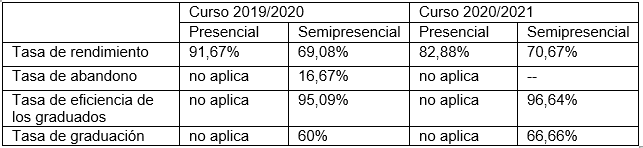
Main action plans for the degree: