See all Online Master's Degrees in Health
See all Master's Degrees in Engineering
Most searched curriculums
Official Master’s Degree
Online Lessons
Specialise through online courses in one of the areas with the highest demand for professionals within health psychology. Gain a practical clinical approach, drawing on the up-to-date insights of practising lecturers, and obtain the official accreditation you need to practise as a General Health Psychologist. Take the decisive step and make a difference in the healthcare sector. Study at Spain’s number one university for employability (U-Ranking 2023, BBVA Foundation).
The key to standing out in the market is specialisation, practical experience and talent. Become the professional who makes a difference in mental health with UAX’s Online Master’s Degree in General Health Psychology, a programme featuring online classes and practical sessions geared towards professional practice. Develop the essential clinical skills to assess, diagnose and treat the most common psychological disorders, learning from professionals who are 100 per cent practising and who will guide you through highly complex real-life cases. Obtain the official accreditation you need to practise in both the public and private healthcare sectors.
Master the most effective intervention techniques – from cognitive-behavioural therapy to acceptance and commitment therapy – through a theoretical and practical approach based on real clinical cases. Delivered online, the course combines the flexibility of online classes with practical sessions that reinforce your learning. Develop key skills such as therapeutic communication, empathy and teamwork, which are essential for success in clinical practice.
You will acquire the necessary skills to practise as a general health psychologist with professional rigour, clinical judgement and the ability to intervene in real-world contexts.
Throughout the Master’s programme, you will learn to assess, diagnose and intervene in psychological problems and mental health disorders, applying evidence-based techniques and working on clinical cases, practical activities and situations typical of the healthcare sector.
Applies evidence-based therapies such as cognitive-behavioural and acceptance and commitment therapies
Master the clinical interview and assessment techniques for different psychopathologies.
Acquires competencies to conduct research in the field of mental health.
Develops professional autonomy using scientific and clinical resources
Learn how to design and implement psychological prevention and treatment programmes.
Develops communication, empathy and active listening skills with patients.
This micro-credential equips you to use tools such as ChatGPT, Copilot, Gemini and Claude to analyse information, create content and optimise professional tasks, whilst integrating innovative solutions in an ethical and responsible manner within real-world contexts.

Develop your professional potential through leadership and interpersonal skills in healthcare settings. This micro-credential provides you with the keys to managing teams, communicating effectively and solving problems in real-world settings, by applying personal leadership techniques and practical productivity tools in the healthcare sector.
You will learn the appropriate skills for conducting psychological research, assessments and interventions on different behaviours in society.
Our programme focuses on establishing an appropriate framework for your relationship with the patient, as well as being able to communicate your findings and knowledge in a clear and unambiguous way.
Master's Degree in General Health Psychology
First Year
ANNUAL SUBJECTS
| Code | Subjects | Character* | ECTS | ||||||||||||||||||||||||||||||||||||||||||||||||||||||||||||||||||||||||||||||||||||||||||||||||||||
|---|---|---|---|---|---|---|---|---|---|---|---|---|---|---|---|---|---|---|---|---|---|---|---|---|---|---|---|---|---|---|---|---|---|---|---|---|---|---|---|---|---|---|---|---|---|---|---|---|---|---|---|---|---|---|---|---|---|---|---|---|---|---|---|---|---|---|---|---|---|---|---|---|---|---|---|---|---|---|---|---|---|---|---|---|---|---|---|---|---|---|---|---|---|---|---|---|---|---|---|---|---|---|---|
| M131303 | Assessment, diagnosis and intervention in children and young people. Distinguishing characteristics and main conditions. | OB | 9 | ||||||||||||||||||||||||||||||||||||||||||||||||||||||||||||||||||||||||||||||||||||||||||||||||||||
Assessment, diagnosis and intervention in children and young people. Distinguishing characteristics and main conditions.Código: M131303 Imprimir Year 1. Annual module. Compulsory. 9 credits. Profesores
Objectives To understand the assessment and intervention procedures in the main areas of practice within general health psychology relating to children and young people. Prerequisites There are no prerequisites other than those set out for admission to the Master’s programme. Competencies Core competences: CG1 – To acquire applied, advanced and specialised training in a body of conceptual, procedural, technical and attitudinal knowledge that enables professionals to operate effectively within the field of health psychology CG2 – To acquire the skills necessary to address the various problems that may arise in the practice of the profession of General Health Psychologist, whilst being able to gradually assume the autonomy required to make decisions independently, making use of the scientific and professional resources necessary for this purpose. Cross-cutting Competences (CT): No data available. Specific Competences (CE): CE1 – To acquire, develop and put into practice a concept of holistic health, incorporating its biopsychosocial components, in accordance with the guidelines established by the WHO SC12 – Gain an in-depth understanding of the psychological nature of human behaviour, as well as the social and biological factors that may influence it; SC13 – Gain an in-depth understanding of the psychological nature of human behavioural disorders SC15 – To have an in-depth understanding of the biological and psychosocial factors associated with health problems and illness, particularly those relating to mental health. CE16 – To have an in-depth understanding of the various assessment and intervention models in the field of General Health Psychology, as well as the techniques and procedures derived from them for addressing behavioural disorders and the psychological factors associated with health problems CE17 - To plan, carry out and, where appropriate, supervise the process of psychological assessment of human behaviour and the psychological factors associated with health problems, in order to evaluate them CE18 - To design, develop and, where appropriate, supervise and evaluate psychological intervention plans and programmes, based on the psychological assessment and the individual and social variables present in each case. Learning outcomes Upon successful completion of this module, students will be able to: RA09 – Demonstrate in-depth knowledge of the factors, models and procedures for assessment and intervention specific to general health psychology. RA10 – Design psychological intervention and health promotion programmes at individual, group and community levels in accordance with the assessment and analysis of relevant variables, and carry out the planning, implementation and supervision of these programmes. RA01 – Assimilate and apply scientific and professional knowledge to facilitate the generation and application of original ideas in problem-solving within applied and research contexts. RA02 – Formulate judgements and reflections in situations of uncertainty or ambiguity, whilst respecting the ethical considerations involved in the practical application of their knowledge and skills. RA04 – Effectively utilise scientific and professional resources to solve problems and make decisions independently whilst carrying out the duties of a general health psychologist. RA05 - Apply a concept of holistic health in accordance with WHO guidelines, integrating the components of biopsychosocial models of health and the principles of bioethics, in accordance with the provisions of Law 44/2003 of 21 November on the regulation of the health professions. RA07 – Be familiar with the options offered by related disciplines and the criteria for referral within the scope of general health psychology. Description of the content Specific aspects of assessment and intervention processes in childhood and adolescence Intellectual disability Autism spectrum disorders Attention-deficit/hyperactivity disorder Learning disorders or difficulties Anxiety disorders Mood disorders Emotional regulation, emotional intelligence and social skills Eating disorders Obsessive-compulsive disorder Sleep and elimination disorders Disruptive, impulse control and behavioural disorders Addictions Attachment and trauma Childhood abuse and sexual violence Sexting, grooming and cyberbullying Training activities AF1. Lectures/presentations AF2. Practical sessions AF4. Preparation and presentation of individual and/or group projects AF5. Preparation of presentations AF6. Independent study and work. AF7. Individual tutorials Assessment system and criteria Attendance/participation: 10% Exam: 60% Group project (presented in class): 30% Exam format: multiple-choice, 3 answer options; Mark = Correct answers – [Incorrect answers / (number of options – 1)]. Group project format: The project will consist of a literature review, case study or proposal prepared by each group leader on a topic of interest to the course not covered in class; this review must be presented orally in class, accompanied by a PowerPoint presentation or similar software. Plagiarism must not exceed 20 per cent; otherwise, the work will not be marked by the teaching staff. Each component must be passed separately in order to be included in the final mark. The minimum pass mark is 5. Attendance threshold: 80 per cent. The day of the presentation is considered an additional class day for all attendance purposes. Students must remain in class until the end of the session. Any unauthorised absence will be counted as an absence. In the event of failing to complete the group assignment, failing to attend on the day of the presentation and/or failing to upload the assignment to the virtual campus by the agreed deadline, the student must submit an individual written assignment (same format and objective, different topic) during the supplementary assessment period, with a maximum mark of 5 for the course as a whole, provided that all other components have been passed independently. In this case, the student may sit the exam during the ordinary examination period, but the academic record will show ‘NP’ (did not sit the exam), subject to submitting the assignment during the supplementary examination period and passing the module with a mark of 5. If the student fails the module, the lowest mark obtained will be recorded in the academic transcript. If a student fails during the supplementary examination period, it is understood that they have not met the course objectives; they must therefore re-enrol the following academic year and retake the failed component, with only the content for which they have passed being retained for a period of one year. Once the final course mark has been published on the virtual campus, students will have 48 hours to lodge an appeal before the Assessment Board meets. After this deadline, the academic records will be published and no further changes may be made. Addendum BIBLIOGRAPHY • Russell GFM. (2003). The Essence of Anorexia Nervosa: In Red l, Cava G (eds). Anorexia Nervosa. 1st edition. Barcelona: Ariel Ciencias Médicas. • Turón Gil V. (2014) Historical Review and Concept of Eating Disorders. Chapter 2, pp. 11–16 in Eating Disorders and Obesity: A Comprehensive Approach. Edited by Morandé, Graell and Blanco. Madrid: Editorial Panamericana. • Morandé G (2014) Introduction and Concept of Eating Disorders. Chapter 1, pp. 5–10 in Eating Disorders and Obesity: A Comprehensive Approach. In Morandé, Graell, Blanco (eds). Madrid: Editorial Panamericana. • Anderson, M. ‘Anorexia Nervosa in Males’. *Pediatr Ann* 13 (1984), pp. 901–907 • Graell Berna, M., Villaseñor Montarroso, A., Cabellos Velasco, M.V.: Eating Disorders in Adolescents. Hospitalisation. In Morandé, Graell, Blanco (eds). Eating Disorders and Obesity. Editorial Panamericana. 2014. • Morande, G., Bayo, C. Managing Adolescent Conflict. Ed. Académica Española. 2018 • Morande, G., Graell, M., Blanco, A. Eating Disorders and Obesity. Ed. Panamericana. 2014. • Clinical Practice Guidelines on Eating Disorders. Madrid: Quality Plan for the National Health System of the Ministry of Health and Consumer Affairs. Catalan Agency for Health Technology Assessment and Medical Research; 2009. Clinical Practice Guidelines in the Spanish National Health System: AATRM No. 2006/05-01. • NICE (2017) Eating disorders—core interventions in the treatment and management of anorexia nervosa, bulimia nervosa and related eating disorders. British Psychological Society, London • Santamarta Requejo, C. (2021). Eating disorders in adolescents and pre-adolescents associated with high-risk and non-high-risk sports. • Zhu, James; Yang, Yive; Touyz, Stephen; Park, Rebecca; Hay, Phillipa (2020). Psychological Treatments for People With Severe and Enduring Anorexia Nervosa: A Mini Review. Frontiers in Psychiatry, 11(), 206 Timetable Click on this link to view the detailed timetable in Excel
|
|||||||||||||||||||||||||||||||||||||||||||||||||||||||||||||||||||||||||||||||||||||||||||||||||||||||
| TOTAL: | 9 | ||||||||||||||||||||||||||||||||||||||||||||||||||||||||||||||||||||||||||||||||||||||||||||||||||||||
FIRST FOUR-MONTH PERIOD
| Code | Subjects | Character* | ECTS | ||||||||||||||||||||||||||||||||||||||||||||||||||||||||||||||||||||||||||||||||||||||||||||||||||||
|---|---|---|---|---|---|---|---|---|---|---|---|---|---|---|---|---|---|---|---|---|---|---|---|---|---|---|---|---|---|---|---|---|---|---|---|---|---|---|---|---|---|---|---|---|---|---|---|---|---|---|---|---|---|---|---|---|---|---|---|---|---|---|---|---|---|---|---|---|---|---|---|---|---|---|---|---|---|---|---|---|---|---|---|---|---|---|---|---|---|---|---|---|---|---|---|---|---|---|---|---|---|---|---|
| M131300 | Advances in Clinical and Experimental Psychopathology | OB | 3 | ||||||||||||||||||||||||||||||||||||||||||||||||||||||||||||||||||||||||||||||||||||||||||||||||||||
Advances in Clinical and Experimental PsychopathologyCódigo: M131300 Imprimir Course 1: First-semester module. Compulsory. 3 credits. Profesores
Objectives To learn about recent advances and developments in general health psychology Prerequisites There are no prerequisites other than those set out for admission to the Master’s programme. Competencies General and basic (CG and CB): CG1 – To acquire applied, advanced and specialised training in a body of conceptual, procedural, technical and attitudinal knowledge that enables professionals to operate effectively within the field of health psychology; CB7 – Students should be able to apply the knowledge they have acquired and their problem-solving skills in new or unfamiliar environments within broader (or multidisciplinary) contexts related to their field of study. Cross-cutting (CT): No data available. Specific (CE): CE1 – To acquire, develop and put into practice a concept of holistic health, incorporating its biopsychosocial components, in accordance with the guidelines established by the WHO; CE4 – To critically analyse and utilise clinical information sources; CE5 – Use information and communication technologies in professional practice; CE7 – Formulate working hypotheses in research and critically collect and evaluate information for problem-solving, applying the scientific method; CE9 - Carry out their work from the perspective of quality and continuous improvement, with the self-critical approach necessary for responsible professional practice; CE10 - Be able to communicate effectively with other professionals and master the skills required for teamwork and working in multidisciplinary groups; CE12 - Have an in-depth understanding of the psychological nature of human behaviour, as well as the social and biological factors that may influence it; CE13 - Have an in-depth understanding of the psychological nature of human behavioural disorders; CE14 - Have an in-depth understanding of the psychosocial factors associated with health problems and illness; CE15 - Have an in-depth understanding of the biological and psychosocial factors associated with health problems and illness, particularly those relating to mental health; CE16 - To have an in-depth understanding of the various assessment and intervention models in the field of General Health Psychology, as well as the techniques and procedures derived from them for addressing behavioural disorders and the psychological factors associated with health problems; CE17 - To plan, carry out and, where appropriate, supervise the process of psychological assessment of human behaviour and the psychological factors associated with health problems in order to evaluate them. Learning outcomes Upon successful completion of this module, students will be able to: RA09 – Gain an in-depth understanding of the factors, models and assessment and intervention procedures specific to general health psychology. RA06 – Use information technology effectively and responsibly in the practice of general health psychology. RA07 – Understand the alternatives offered by related disciplines and the criteria for referral within the scope of general health psychology. RA02 – Formulate judgements and reflections in situations of uncertainty or ambiguity, whilst respecting the ethical considerations involved in the practical application of their knowledge and skills. Description of the content UD1 Advanced models in psychological assessment and intervention: Introduction and third-generation therapies UD2 Clinical formulation and transdiagnostic models UD3 Cognitive restructuring Module 4 New technologies in the therapeutic process Module 5 Biological foundations of psychopathology and psychopharmacology Training activities TA1. Lectures/masterclasses TA2. Practical sessions TA4. Preparation and presentation of individual and/or group projects TA5. Preparation of presentations AF6. Independent study and work. AF7. Individual tutorials Assessment system and criteria Attendance/participation: 10% Exam: 60% Group project (presented in class): 30% Exam format: multiple-choice, 3 answer options; Mark = Correct answers – [Incorrect answers / (number of options – 1)]. Group project format: The project will consist of a literature review, case study or proposal prepared by each group leader on a topic of relevance to the course that has not been covered in class. This review must be presented orally in class, accompanied by a PowerPoint presentation or similar software. Plagiarism must not exceed 20 per cent; otherwise, the work will not be marked by the teaching staff. Each component must be passed separately in order to be included in the final mark. The minimum pass mark is 5. Attendance threshold: 80 per cent. The day of the presentation is considered an additional class day for all attendance purposes. Students must remain in class until the end of the session. Any unauthorised absence will be counted as an absence. In the event of failing to complete the group assignment, failing to attend on the day of the presentation and/or failing to upload the assignment to the virtual campus by the agreed deadline, the student must submit an individual written assignment (same format and objective, different topic) during the supplementary assessment period, achieving a 5 as the maximum mark for the course as a whole, provided that the remaining content has been passed independently. In this case, the student may sit the exam during the ordinary examination period, but the academic record will show ‘NP’ (did not sit the exam), subject to submitting the assignment during the supplementary examination period and passing the module with a mark of 5. If the student fails the module, the lowest mark obtained will be recorded in the academic transcript. If a student fails during the supplementary examination period, it is understood that they have not met the course objectives; they must therefore re-enrol the following academic year and retake the failed component, with only the content for which they have passed being retained for a period of one year. Once the final course mark has been published on the virtual campus, students will have 48 hours to lodge an appeal before the Assessment Board meets. After this deadline, the academic records will be published and no further changes may be made. Addendum BIBLIOGRAPHY • Molero, P. et al. (2011). Mood disorders (II). Medicine, 10(84), 5676–84. • Arranz, F.J. et al. (2011). Antidepressants. In Zarranz, J.J. (ed.). Contemporary Neuropharmacology. Elsevier (pp. 219–246). • Lobo, A. and Sobrado, A.M. (2017). Appropriate use of antidepressants. AMF, 13(1), 29–33. • Stahl, S.M. (2014). Essential Psychopharmacology (4th ed.). Aula Médica. Chapter 7 (pp. 284–369). • Soutullo, C., Figueroa, A., Miranda, E. and de Castro, P. (2011). Bipolar or manic-depressive disorder. Medicine, 10 (84), 5684–92. • Bravo, M.F. et al. (2013). Clinical practice guidelines on bipolar disorder: pharmacological and psychosocial treatment. Clinical Medicine, 141 (7), 305–10. • Stahl, S.M. (2014). Essential Psychopharmacology (4th ed.). Aula Médica. Chapter 8 (pp. 370–387). • Saiz, L.C. (2013). Focus on attention deficit disorder (ADHD). Navarre Pharmacotherapy Information Bulletin, 21, 1–20. • Valverde, M.A. & Inchauspe, J.A. (2014). Scope and limitations of pharmacological treatment for attention deficit hyperactivity disorder in children and adolescents, and clinical practice guidelines. A literature review. Journal of the Spanish Association of Neuropsychiatry, 34 (121), 37–74. Timeline Click on this link to view the detailed timetable in Excel
Bibliography Essential: 1. Arranz, F.J. et al. Antidepressants. In Zarranz, J.J. (ed.). Contemporary Neuropharmacology. Elsevier. 2011. ISBN: 9788480865609 2. Molero, P. et al. Mood Disorders Medicine. 2011. ISBN: 0304-5412 |
|||||||||||||||||||||||||||||||||||||||||||||||||||||||||||||||||||||||||||||||||||||||||||||||||||||||
| M131302 | Assessment, diagnosis and intervention in the adult population. Distinguishing characteristics and main conditions. | OB | 9 | ||||||||||||||||||||||||||||||||||||||||||||||||||||||||||||||||||||||||||||||||||||||||||||||||||||
Assessment, diagnosis and intervention in the adult population. Distinguishing characteristics and main conditions.Código: M131302 Imprimir Course 1: First-semester module. Compulsory. 9 credits. Profesores
Objectives To understand the assessment and intervention procedures in the main areas of practice within general health psychology for the adult population Prerequisites There are no prerequisites other than those set out for admission to the Master’s degree. Competencies General and basic (CG and CB): CG1 – To acquire applied, advanced and specialised training in a body of conceptual, procedural, technical and attitudinal knowledge that enables professionals to operate effectively within the field of health psychology; CG2 – To acquire the skills necessary to address the various problems that may arise in the practice of the profession of General Health Psychologist, whilst being able to gradually assume the autonomy required to make decisions independently, making use of the scientific and professional resources necessary for this purpose. Cross-cutting (CT): No data available. Specific (CE): CE1 – To acquire, develop and put into practice a concept of holistic health, incorporating its biopsychosocial components, in accordance with the guidelines established by the WHO; CE12 – Gain an in-depth understanding of the psychological nature of human behaviour, as well as the social and biological factors that may influence it; CE13 – Gain an in-depth understanding of the psychological nature of human behavioural disorders; CE15 – Gain an in-depth understanding of the biological and psychosocial factors associated with health problems and illness, particularly those relating to mental health; CE16 - Have an in-depth understanding of the various assessment and intervention models in the field of General Health Psychology, as well as the techniques and procedures derived from them for addressing behavioural disorders and the psychological factors associated with health problems; CE17 - To plan, carry out and, where appropriate, supervise the process of psychological assessment of human behaviour and the psychological factors associated with health problems in order to evaluate them; CE18 - To design, develop and, where appropriate, supervise and evaluate psychological intervention plans and programmes, based on the psychological assessment and the individual and social variables present in each case. Learning outcomes Upon successful completion of this module, students will be able to: RA09 – Have an in-depth understanding of the factors, models and procedures for assessment and intervention specific to general health psychology. RA10 – Design psychological intervention and health promotion programmes at individual, group and community levels in accordance with the assessment and analysis of relevant variables, and carry out the planning, implementation and supervision of such programmes. RA01 – Assimilate and apply scientific and professional knowledge to facilitate the generation and application of original ideas in problem-solving within applied and research contexts. RA02 – Formulate judgements and reflections in situations of uncertainty or ambiguity, whilst respecting the ethical considerations involved in the practical application of their knowledge and skills. RA04 – Effectively utilise scientific and professional resources to solve problems and make decisions independently whilst carrying out the duties of a general health psychologist. RA05 - Apply a concept of holistic health in accordance with WHO guidelines, integrating the components of biopsychosocial models of health and the principles of bioethics, in accordance with the provisions of Law 44/2003 of 21 November on the regulation of the health professions. RA07 – Be familiar with the options offered by related disciplines and the criteria for referral within the scope of general health psychology. Description of the content UD1. Psychological characteristics of adults UD2. Bipolar disorder UD3. Depressive disorder UD4. Post-traumatic stress disorder Unit 5. Stress and anxiety disorders Unit 6. TBI, stroke, bereavement and suicide UD7. Personality Disorders UD8. Psychotic Disorders Unit 9. Eating Disorders Unit 10. Relationship problems Unit 11. Substance Dependence and New Addictions UD12. Sexual Dysfunctions UD13. Sleep Disorders Unit 14. Psychological Characteristics of Adults Unit 15. Bipolar disorder Teaching activities TA1. Lectures/classroom-based sessions TA2. Practical sessions TA4. Preparation and presentation of individual and/or group projects TA5. Preparation of presentations AF6. Independent study and work. AF7. Individual tutorials Assessment system and criteria Attendance/participation: 10% Exam: 60% Group project (presented in class): 30% Exam format: multiple-choice, 3 answer options; Mark = Correct answers – [Incorrect answers / (number of options – 1)]. Group project format: The project will consist of a literature review, case study or proposal prepared by each group leader on a topic of relevance to the course that has not been covered in class. This review must be presented orally in class, accompanied by a PowerPoint presentation or similar software. Plagiarism must not exceed 20 per cent; otherwise, the work will not be marked by the teaching staff. Each component must be passed separately in order to be included in the final mark. The minimum pass mark is 5. Attendance threshold: 80 per cent. The day of the presentation is considered an additional class day for all attendance purposes. Students must remain in class until the end of the session. Any unauthorised absence will be counted as an absence. In the event of failing to complete the group assignment, failing to attend on the day of the presentation and/or failing to upload the assignment to the virtual campus by the agreed deadline, the student must submit an individual written assignment (same format and objective, different topic) during the supplementary assessment period, with a maximum mark of 5 for the course as a whole, provided that all other components have been passed independently. In this case, the student may sit the exam in the ordinary examination period, but the academic record will show ‘NP’ (did not sit the exam), subject to submitting the assignment during the supplementary examination period and passing the module with a mark of 5. If the student fails the module, the lowest mark obtained will be recorded in the academic transcript. If a student fails during the supplementary examination period, it is understood that they have not met the course objectives; they must therefore re-enrol the following academic year and retake the failed component, with only the content for which they have passed being retained for a period of one year. Once the final course mark has been published on the virtual campus, students will have 48 hours to lodge an appeal before the Assessment Board meets. After this deadline, the academic records will be published and no further changes may be made. Addendum Bibliography: - Vicente Prieto; Cervantes; Martín; Zazo. ‘Intervention Programme Based on Interbehavioural Psychology for Psychiatric Patients’. In: Buela-Casal and V. Caballo. *Manual of Applied Clinical Psychology*. Siglo XXI. 1991. - Marino Pérez Álvarez. Guide to Effective Psychological Treatments for Adults. Pirámide. 2003. - Vicente E. Caballo. Manual of Personality Disorders. Ed. Síntesis. 2004 - Lolcih, M., Vázquez, G.H., Álvarez, L.M. and Tamayo, J.M. (2012). Psychosocial Interventions in Bipolar Disorder: A Review. Actas Esp Psiquiatr;40(2):84–92. - López-Muñoz, Shen, W.W., D’Ocon., P., Romero., A. and Álamo, C. (2018). A History of the Pharmacological Treatment of Bipolar Disorder. International Journal of Molecular Science, 19, pp. 1–38. - Maletic, V., & Raison, C. (2014). Integrated neurobiology of bipolar disorder. Frontiers in Psychiatry, 5, 98. - Merikangas, K.R., Jin, R., He, J.-P., Kessler, R.C., Lee, S., Sampson, N.A., et al. (2011). Prevalence and Correlates of Bipolar Spectrum Disorder in the World Mental Health Survey Initiative. Arch Gen Psychiatry; 68(3):241–251. - Tao, L., Jiang, R., Zhang, K., Qian, Z., Chen, P., Lv, Y., & Yao, Y. (2020). Light therapy in non-seasonal depression: An updated meta-analysis. Psychiatry Research, 291, 113247. - Tuunainen, A., Kripke, D. F., & Endo, T. (2004). Light therapy for non-seasonal depression. Cochrane Database of Systematic Reviews, (2). - Zarabanda, M., García, M., Salcedo, D. and Lahera, G. (2015). Bipolar disorder. Medicine;11(85):5075–85. Timeline Click on this link to view the detailed timetable in Excel
|
|||||||||||||||||||||||||||||||||||||||||||||||||||||||||||||||||||||||||||||||||||||||||||||||||||||||
| M131304 | The scientific and professional foundations of Health Psychology | OB | 6 | ||||||||||||||||||||||||||||||||||||||||||||||||||||||||||||||||||||||||||||||||||||||||||||||||||||
The scientific and professional foundations of Health PsychologyCódigo: M131304 Imprimir Course 1: First-semester module. Compulsory. 6 credits. Profesores
Objectives To understand the regulatory, theoretical and scientific context within which the profession of general health psychologist operates. Entry requirements There are no prerequisites other than those set out for admission to the Master’s degree. Competencies General and basic (CG and CB): CG2 – To acquire the skills necessary to address the various problems that may arise in the practice of the profession of general health psychologist, whilst being able to gradually assume the autonomy required to make decisions independently, making use of the necessary scientific and professional resources for this purpose. CB6 – Possess and understand knowledge that provides a basis or opportunity for originality in the development and/or application of ideas, often within a research context. CB7 – Students should be able to apply the knowledge they have acquired and their problem-solving skills in new or unfamiliar settings within broader (or multidisciplinary) contexts related to their field of study. CB8 – Students should be able to integrate knowledge and address the complexity of making judgements based on information which, whilst incomplete or limited, includes reflections on the social and ethical responsibilities associated with the application of their knowledge and judgements. CB9 – Students should be able to communicate their conclusions, as well as the knowledge and underlying rationale supporting them, to specialist and non-specialist audiences in a clear and unambiguous manner. CB10 – Students should possess the learning skills that enable them to continue their studies in a manner that will be largely self-directed or autonomous. Cross-cutting (CT): No data available Specific (CE): CE1 – To acquire, develop and put into practice a concept of holistic health, incorporating its biopsychosocial components, in accordance with the guidelines established by the WHO CE2 – To apply the fundamentals of bioethics and the deliberative method in professional practice, ensuring that their practice as healthcare professionals complies with the provisions of Law 44/2003 of 21 November on the regulation of the healthcare professions; CE4 - Critically analyse and utilise sources of clinical information. CE5 – Use information and communication technologies in professional practice. CE8 - Understand the scope of practice of a general healthcare psychologist and know how to refer patients to the appropriate specialist CE9 - Carry out their work from the perspective of quality and continuous improvement, with the self-critical capacity necessary for responsible professional practice. CE11 – Understanding the obligations and responsibilities of healthcare staff regarding the confidentiality of information and the protection of patients’ personal data CE19 - Understand the steps required to set up, launch and manage a business, its various legal forms, and the associated legal, accounting and tax obligations CE20 – Knowledge of current regulations in the Spanish healthcare sector. Learning outcomes RA05 - Apply a holistic concept of health in accordance with WHO guidelines, integrating the components of the biopsychosocial models of health and the principles of bioethics, in accordance with the provisions of Law 44/2003 of 21 November on the regulation of healthcare professions. RA08 - Carry out their work with a clear focus on quality and continuous improvement, managing their activities in accordance with current legislation and regulations regarding confidentiality, data protection and corporate responsibilities. RA07 – Be familiar with the alternatives offered by related disciplines and the criteria for referral within the scope of general health psychology. Description of the content The National Health System in Spain. Health Psychology and Clinical Psychology: characteristics. Legislation governing General Health Psychologists. Designs and selection of psychological treatments: efficacy, effectiveness and efficiency. Functional analysis. Confidentiality of information and protection of patients’ personal data Introduction to database management Classification of mental and behavioural disorders according to the World Health Organisation’s (WHO) ICD-11. Training activities AF1. Lectures/masterclasses TA2. Practical sessions TA4. Preparation and presentation of individual and/or group projects AF5. Preparation of presentations AF6. Independent study and work. AF7. Individual tutorials Assessment system and criteria Attendance/participation: 10% Exam: 60% Group work: 30% Exam format: multiple-choice, 3 answer options; Mark = Correct answers – [Incorrect answers / (number of options – 1)]. Assignment format: Group assignment: the assignment will consist of formulating a clinical case, conducting a literature review or working on a topic proposed by the coordinator Plagiarism must not exceed 20 per cent; otherwise, the assignment will not be marked by the teaching staff. All components must be passed individually to be included in the final mark. The minimum pass mark is 5. Attendance threshold: 80 per cent. The day of the presentation is considered an additional class day for all attendance purposes. Students must remain in class until the end of the session. Any unauthorised absence will be counted as an absence. In the event of failing to complete the group assignment, failing to attend on the day of the presentation and/or failing to upload the work to the virtual campus by the agreed deadline, the student must submit an individual written assignment (same format and objective, different topic) during the supplementary assessment period, achieving a 5 as the maximum mark for the course as a whole, provided that the remaining content has been passed independently. In this case, the student may sit the exam during the ordinary examination period, but the academic record will show ‘NP’ (did not sit the exam), subject to submitting the assignment during the supplementary examination period and passing the module with a mark of 5. If the student fails the module, the lowest mark obtained will be recorded in the academic transcript. If a student fails during the supplementary examination period, it is understood that they have not met the course objectives; they must therefore re-enrol the following academic year and retake the failed component, with only the content for which they have passed being retained for a period of one year. Once the final course mark has been published on the virtual campus, students will have 48 hours to lodge an appeal before the Assessment Board meets. After this deadline, the academic records will be published and no further changes may be made. Addendum BIBLIOGRAPHY AND RESOURCES Organic Law 3/2018 on the Protection of Personal Data and the Guarantee of Digital Rights • REGULATION (EU) 2016/679 OF THE EUROPEAN PARLIAMENT AND OF THE COUNCIL of 27 April 2016 on the protection of natural persons with regard to the processing of personal data and on the free movement of such data Guide to Personal Data Protection in Psychology: Implications and Best Practice This guide was drawn up in accordance with the guidelines of Organic Law 15/1999 of 13 December on the Protection of Personal Data . An effort was made to include information on the General Data Protection Regulation available at the time of the guide was drawn up, and is currently being updated to reflect the new data protection law, Organic Law 3/2018 of 5 December, on the Protection of Personal Data and the Guarantee of Digital Rights. Guidance document for compliance with the new European General Data Protection Regulation (GDPR) This document aims to facilitate compliance with the provisions of the GDPR, outlining the main changes and obligations it entails. Best practices for data protection in online psychology This document sets out best practices for using the internet safely. Information security requirements to be met by social media platforms Timeline Click on this link to view the detailed timetable in Excel
|
|||||||||||||||||||||||||||||||||||||||||||||||||||||||||||||||||||||||||||||||||||||||||||||||||||||||
| TOTAL: | 18 | ||||||||||||||||||||||||||||||||||||||||||||||||||||||||||||||||||||||||||||||||||||||||||||||||||||||
SECOND FOUR-MONTH PERIOD
| Code | Subjects | Character* | ECTS | ||||||||||||||||||||||||||||||||||||||||||||||||||||||||||||||||||||||
|---|---|---|---|---|---|---|---|---|---|---|---|---|---|---|---|---|---|---|---|---|---|---|---|---|---|---|---|---|---|---|---|---|---|---|---|---|---|---|---|---|---|---|---|---|---|---|---|---|---|---|---|---|---|---|---|---|---|---|---|---|---|---|---|---|---|---|---|---|---|---|---|---|---|
| M131301 | Characteristics of the therapeutic process and core competencies of the PGS | OB | 6 | ||||||||||||||||||||||||||||||||||||||||||||||||||||||||||||||||||||||
Characteristics of the therapeutic process and core competencies of the PGSCódigo: M131301 Imprimir Course 1. Second-term module. Compulsory. 6 credits. Profesores
Objectives To understand the work of a general health psychologist from a perspective centred on the therapeutic alliance. Prerequisites There are no prerequisites other than those set out for admission to the Master’s programme. Competencies 1. General and basic (CG and CB): CB9 – Students should be able to communicate their conclusions, the knowledge underpinning them and the underlying rationale to specialist and non-specialist audiences clearly and unambiguously. CG1 – To acquire applied, advanced and specialised training in a body of conceptual, procedural, technical and attitudinal knowledge that enables professionals to operate effectively in the field of health psychology CG2 – To acquire the skills necessary to address the various problems that may arise in the practice of the profession of General Health Psychologist, whilst being able to gradually assume the autonomy required to make decisions independently, making use of the scientific and professional resources necessary for this purpose. 2. Cross-cutting (CT): N/A 3. Specific (CE): CE1 – To acquire, develop and put into practice a concept of holistic health, incorporating its biopsychosocial components, in accordance with the guidelines established by the WHO CE3 – Demonstrate interpersonal communication and emotional management skills appropriate for effective interaction with patients, family members and carers during the processes of problem identification, assessment, communication of the diagnosis, and psychological intervention and follow-up. CE6 – Draft psychological reports in a manner appropriate to the intended audience CE9 - Carry out their work from the perspective of quality and continuous improvement, with the self-critical capacity necessary for responsible professional practice CE10 - Be able to communicate with other professionals and master the skills required for teamwork and working in multidisciplinary groups CE11 - Understanding the obligations and responsibilities of healthcare staff regarding the confidentiality of information and the protection of patients’ personal data CE12 - Have an in-depth understanding of the psychological nature of human behaviour, as well as the social and biological factors that may influence it CE13 - In-depth understanding of the psychological nature of human behavioural disorders. CE16 - In-depth understanding of the various assessment and intervention models in the field of General Health Psychology, as well as the techniques and procedures derived from them for addressing behavioural disorders and the psychological factors associated with health problems CE17 - To plan, carry out and, where appropriate, supervise the process of psychological assessment of human behaviour and the psychological factors associated with health problems, in order to evaluate them CE18 - To design, develop and, where appropriate, supervise and evaluate psychological intervention plans and programmes, based on the psychological assessment and the individual and social variables present in each case. Learning outcomes Upon successful completion of this module, students will be able to: - RA03 – Present their conclusions and knowledge clearly, concisely and effectively to audiences with varying levels of specialisation, whilst adhering to the relevant formal and ethical criteria. - RA02 – Formulate judgements and reflections in situations of uncertainty or ambiguity, whilst respecting the ethical considerations involved in the practical application of their knowledge and skills. - RA08 – Carry out their work with a clear focus on quality and continuous improvement, managing their activities in accordance with current legislation and regulations regarding confidentiality, data protection and corporate responsibilities. Description of the content UD1. Non-specific factors: assessment and management throughout the therapeutic process: difficult cases. UD2. Core competencies of the Health Psychologist (expertise and feedback). Unit 3. Motivational interviewing. Unit 4. Therapeutic alliance Unit 5. Therapeutic skills and managing difficulties (children). Unit 6. Therapeutic skills and managing difficulties (adolescents). Module 7. Self-care for psychologists Training activities AF1. Lectures/masterclasses TA2. Practical sessions TA4. Preparation and presentation of individual and/or group projects AF5. Preparation of presentations AF6. Independent study and work. AF7. Individual tutorials Assessment system and criteria Attendance/participation: 10% Exam: 60% Group project (presented in class): 30% Exam format: multiple-choice, 3 answer options; Mark = Correct answers – [Incorrect answers / (number of options – 1)]. Group project format: The project will consist of a literature review, case study or proposal prepared by each group leader on a topic of relevance to the course not covered in class; this review must be presented orally in class, accompanied by a PowerPoint presentation or similar software. Plagiarism must not exceed 20 per cent; otherwise, the work will not be marked by the teaching staff. Each component must be passed separately in order to be included in the final mark. The minimum pass mark is 5. Attendance threshold: 80 per cent. The day of the presentation is considered an additional class day for all attendance purposes. Students must remain in class until the end of the session. Any unauthorised absence will be counted as an absence. In the event of failing to complete the group assignment, failing to attend on the day of the presentation and/or failing to upload the assignment to the virtual campus by the agreed deadline, the student must submit an individual written assignment (same format and objective, different topic) during the supplementary assessment period, achieving a 5 as the maximum mark for the course as a whole, provided that the remaining content has been passed independently. In this case, the student may sit the exam during the ordinary examination period, but the academic record will show ‘NP’ (did not sit the exam), subject to submitting the assignment during the supplementary examination period and passing the module with a mark of 5. If the student fails the module, the lowest mark obtained will be recorded in the academic transcript. If a student fails during the supplementary examination period, it is understood that they have not met the course objectives; they must therefore re-enrol the following academic year and retake the failed component, with only the content for which they have passed being retained for a period of one year. Once the final course mark has been published on the virtual campus, students will have 48 hours to lodge an appeal before the Assessment Board meets. After this deadline, the academic records will be published and no further changes may be made. Addendum BIBLIOGRAPHY Brown, G. S., Lambert, M. J., Jones, E. R., and Minami, T. (2005). Identifying highly effective psychotherapists in a managed care environment. The American Journal of Managed Care, 11, 513–520. Chow, D. L., Miller, S. D., Seidel, J. A., Kane, R. T., Thornton, J. A., and Andrews, W. P. (2015). The role of deliberate practice in the development of highly effective psychotherapists. Psychotherapy, 52, 337–345. http://dx.doi.org/10.1037/pst0000015 Goldberg, S. B., Babins-Wagner, R., Rousmaniere, T., Berzins, S., Hoyt, W. T., Whipple, J. L., Miller, S. D. and Wampold, B. E. (2016). Creating a climate for therapist improvement. A case study of an agency focused on outcomes and deliberate practice. Psychotherapy, 53 (3), 367–375. https://doi.org/10.1037/pst0000060 Orlinsky, D. E., & Rønnestad, M. H. (2005). Work practice patterns. In D. E. Orlinsky & M. H. Rønnestad (Eds.), How psychotherapists develop: A study of therapeutic work and professional growth (pp. 81–99). Washington, DC: American Psychological Association. http://dx.doi.org/10.1037/11157-006 Stein, D. M., & Lambert, M. J. (1995). Graduate training in psychotherapy: Are therapy outcomes enhanced? Journal of Consulting and Clinical Psychology, 63, 182–196. http://dx.doi.org/10.1037/0022-006X.63.2.182 Strupp, H. H., & Hadley, S. W. (1979). Specific versus non-specific factors in psychotherapy. A controlled study of outcome. Archives of General Psychiatry, 36, 1125–1136. http://dx.doi.org/10.1001/archpsyc.1979.01780100095009 Timeline Click on this link to view the detailed timetable in Excel
|
|||||||||||||||||||||||||||||||||||||||||||||||||||||||||||||||||||||||||
| M131305 | Assessment, diagnosis and intervention in older people. Distinguishing features and main conditions. | OB | 3 | ||||||||||||||||||||||||||||||||||||||||||||||||||||||||||||||||||||||
Assessment, diagnosis and intervention in older people. Distinguishing features and main conditions.Código: M131305 Imprimir Course 1. Second-term module. Compulsory. 3 credits. Profesores
Objectives To understand the assessment and intervention procedures in the main areas of practice within general health psychology for older people. Prerequisites There are no prerequisites other than those set out for admission to the Master’s degree. Competencies 1. General and basic (CG and CB): CG1 – To acquire applied, advanced and specialised training in a body of conceptual, procedural, technical and attitudinal knowledge that enables professionals to operate effectively within the field of health psychology CG2 – To acquire the skills necessary to address the various problems that may arise in the practice of the profession of General Health Psychologist, whilst being able to gradually assume the autonomy required to make decisions independently, making use of the necessary scientific and professional resources for this purpose. 2. Cross-cutting (CT): N/A 3. Specific (CE): CE1 – To acquire, develop and put into practice a concept of holistic health, incorporating its biopsychosocial components, in accordance with the guidelines established by the WHO CE12 – Gain an in-depth understanding of the psychological nature of human behaviour, as well as the social and biological factors that may influence it CE13 – Gain an in-depth understanding of the psychological nature of human behavioural disorders. CE15 – Gain an in-depth understanding of the biological and psychosocial factors associated with health problems and illness, particularly those relating to mental health. CE16 - To have an in-depth understanding of the various assessment and intervention models in the field of General Health Psychology, as well as the techniques and procedures derived from them for addressing behavioural disorders and the psychological factors associated with health problems CE17 - To plan, carry out and, where appropriate, supervise the process of psychological assessment of human behaviour and the psychological factors associated with health problems in order to evaluate them CE18 – To design, develop and, where appropriate, supervise and evaluate psychological intervention plans and programmes, based on the psychological assessment and the individual and social variables present in each case Learning outcomes Upon successful completion of this module, students will be able to: - RA09 – Have an in-depth understanding of the factors, models and procedures for assessment and intervention specific to general health psychology. - RA10 – Design psychological intervention and health promotion programmes at individual, group and community levels in accordance with the assessment and analysis of relevant variables, and carry out the planning, implementation and supervision of these programmes. - RA01 – Assimilate and apply scientific and professional knowledge to facilitate the generation and application of original ideas in problem-solving within applied and research contexts. - RA02 – Formulate judgements and reflections in situations of uncertainty or ambiguity, whilst respecting the ethical considerations involved in the practical application of their knowledge and skills. - RA04 – Effectively utilise scientific and professional resources to solve problems and make decisions independently whilst carrying out the duties of a general health psychologist. - RA05 - Apply a concept of holistic health in line with WHO guidelines, integrating the components of biopsychosocial models of health and the principles of bioethics, in accordance with the provisions of Law 44/2003 of 21 November on the regulation of the health professions. - RA07 – Be familiar with the options offered by related disciplines and the criteria for referral within the scope of general health psychology. Description of the content UD1 Distinctive characteristics and specific challenges of assessment and intervention in older people. UD2 Diagnosis, assessment and psychological intervention in the most common disorders. UD3 Psychological management and intervention in the processes of dying and bereavement Module 4 Prevention and health promotion in old age. Module 5 The role of the carer: key aspects of prevention and specific aspects of intervention Training activities TA1. Lectures/masterclasses TA2. Practical sessions TA4. Preparation and presentation of individual and/or group projects TA5. Preparation of presentations AF6. Independent study and work. AF7. Individual tutorials Assessment system and criteria Attendance/participation: 10% Exam: 60% Group project (presented in class): 30% Exam format: multiple-choice, 3 answer options; Mark = Correct answers – [Incorrect answers / (number of options – 1)]. Group project format: The project will consist of a literature review, case study or proposal prepared by each group leader on a topic of relevance to the course that has not been covered in class. This review must be presented orally in class, accompanied by a PowerPoint presentation or similar software. Plagiarism must not exceed 20 per cent; otherwise, the work will not be marked by the teaching staff. Each component must be passed separately in order to be included in the final mark. The minimum pass mark is 5. Attendance threshold: 80 per cent. The day of the presentation is considered an additional class day for all attendance purposes. Students must remain in class until the end of the session. Any unauthorised absence will be counted as an absence. In the event of failing to complete the group assignment, failing to attend on the day of the presentation and/or failing to upload the assignment to the virtual campus by the agreed deadline, the student must submit an individual written assignment (same format and objective, different topic) during the supplementary assessment period, with a maximum mark of 5 for the course as a whole, provided that all other course content has been passed independently. In this case, the student may sit the exam during the ordinary examination period, but the academic record will show ‘NP’ (did not sit the exam), subject to submitting the assignment during the supplementary examination period and passing the module with a mark of 5. If the student fails the module, the lowest mark obtained will be recorded in the academic transcript. If a student fails during the supplementary examination period, it is understood that they have not met the course objectives; they must therefore re-enrol the following academic year and retake the failed component, with only the content for which they have passed being retained for a period of one year. Once the final course mark has been published on the virtual campus, students will have 48 hours to lodge an appeal before the Assessment Board meets. After this deadline, the academic records will be published and no further changes may be made. Addendum Bibliography: Vicente Prieto Cabras. (2013). The Caregiver’s Loneliness. Madrid: La esfera de los libros. • Senile Dementia. http://www.medicinageriatrica.com.ar/ Depression in Old Age. Vivirsindepresion.org Frontiers in Alzheimer’s Disease. Scientific Series, Autonomous University of Madrid 2002 • Observatory on Older People, ‘The Mental Health and Well-being of older people. Making it possible’. Madrid, 2010 WFMH. Report on Mental Health and Older People. WHO, 2013 • ICD-10 • WHO. Fact Sheet No. 381. September 2015 Timetable Click on this link to view the detailed timetable in Excel
|
|||||||||||||||||||||||||||||||||||||||||||||||||||||||||||||||||||||||||
| M131306 | Assessment, diagnosis and intervention in the legal-forensic field. Distinguishing characteristics and main disorders. | OB | 3 | ||||||||||||||||||||||||||||||||||||||||||||||||||||||||||||||||||||||
Assessment, diagnosis and intervention in the legal-forensic field. Distinguishing characteristics and main disorders.Código: M131306 Imprimir Course 1. Second-term module. Compulsory. 3 credits. Profesores
Objectives To understand assessment and intervention procedures, as well as the specific regulatory framework within the legal and forensic fields. Prerequisites There are no prerequisites other than those set out for admission to the Master’s programme. Competencies 1. General and basic (CG and CB): CG1 – To acquire applied, advanced and specialised training in a body of conceptual, procedural, technical and attitudinal knowledge that enables professionals to operate effectively in the field of health psychology CG2 – To acquire the skills necessary to address the various problems that may arise in the practice of the profession of General Health Psychologist, whilst being able to gradually assume the autonomy required to make decisions independently, making use of the necessary scientific and professional resources for this purpose. 2. Cross-cutting (CT): N/A 3. Specific (CE): CE1 – To acquire, develop and put into practice a concept of holistic health, incorporating its biopsychosocial components, in accordance with the guidelines established by the WHO CE12 – Gain an in-depth understanding of the psychological nature of human behaviour, as well as the social and biological factors that may influence it CE13 – To gain an in-depth understanding of the psychological nature of human behavioural disorders. CE15 – To gain an in-depth understanding of the biological and psychosocial factors associated with health problems and illness, particularly those relating to mental health. CE16 - To have an in-depth understanding of the various assessment and intervention models in the field of General Health Psychology, as well as the techniques and procedures derived from them for addressing behavioural disorders and the psychological factors associated with health problems CE17 - To plan, carry out and, where appropriate, supervise the process of psychological assessment of human behaviour and the psychological factors associated with health problems in order to evaluate them CE18 – To design, develop and, where appropriate, supervise and evaluate psychological intervention plans and programmes, based on the psychological assessment and the individual and social variables present in each case Learning outcomes Upon successful completion of this module, students will be able to: - RA02 – Formulate judgements and reflections in situations of uncertainty or ambiguity, whilst respecting the ethical considerations involved in the practical application of their knowledge and skills. - RA09 – Have an in-depth understanding of the factors, models and procedures for assessment and intervention specific to general health psychology. - RA10 – Design psychological intervention and health promotion programmes at individual, group and community levels in accordance with the assessment and analysis of relevant variables, and carry out the planning, implementation and supervision of these programmes. - RA01 – To assimilate and apply scientific and professional knowledge that facilitates the generation and application of original ideas in problem-solving within applied and research contexts. - RA04 – Effectively utilise scientific and professional resources to solve problems and make decisions independently whilst carrying out the duties of a general health psychologist. - RA05 - Apply a concept of holistic health in accordance with WHO guidelines, integrating the components of biopsychosocial models of health and the principles of bioethics, in accordance with the provisions of Law 44/2003 of 21 November on the regulation of the health professions. - RA07 – Be familiar with the options offered by related disciplines and the criteria for referral within the scope of general health psychology. Course content description UD1 Distinctive aspects of assessment and intervention in the legal-forensic field: psychological expert reports. UD2 Intervention with hospitalised minors. Child-to-parent violence UD3 Adoption processes and parental suitability. Module 4 Assessment and intervention with children who are victims of gender-based violence Module 5 Assessment, intervention and management of the risk of violent behaviour Training activities AF1. Lectures/masterclasses TA2. Practical sessions AF4. Preparation and presentation of individual and/or group projects TA5. Preparation of presentations AF6. Independent study and work. AF7. Individual tutorials Assessment system and criteria Attendance/participation: 10% Exam: 60% Group project (presented in class): 30% Exam format: multiple-choice, 3 answer options; Mark = Correct answers – [Incorrect answers / (number of options – 1)]. Group project format: The project will consist of a literature review, case study or proposal prepared by each group leader on a topic of relevance to the module not covered in class; this review must be presented orally in class, accompanied by a PowerPoint presentation or similar software. Plagiarism must not exceed 20 per cent; otherwise, the work will not be marked by the teaching staff. Each component must be passed separately in order to be included in the final mark. The minimum pass mark is 5. Attendance threshold: 80 per cent. The day of the presentation is considered an additional class day for all attendance purposes. Students must remain in class until the end of the session. Any unauthorised absence will be counted as an absence. In the event of failing to complete the group assignment, failing to attend on the day of the presentation and/or failing to upload the work to the virtual campus by the agreed deadline, the student must submit an individual written assignment (same format and objective, different topic) during the supplementary assessment period, with a maximum mark of 5 for the course as a whole, provided that all other course content has been passed independently. In this case, the student may sit the exam during the ordinary examination period, but the academic record will show ‘NP’ (did not sit the exam), subject to submitting the assignment during the supplementary examination period and passing the module with a mark of 5. If the student fails the module, the lowest mark obtained will be recorded in the academic transcript. If a student fails during the supplementary examination period, it is understood that they have not met the course objectives; they must therefore re-enrol in the following academic year and retake the failed component, with only the content for which they have passed being retained for a period of one year. Once the final course mark has been published on the virtual campus, students will have 48 hours to lodge an appeal before the Assessment Board meets. After this deadline, the academic records will be published and no further changes may be made. Addendum Bibliography: - Law 27/2003 of 31 July, regulating the Protection Order for victims of domestic violence, served as the basis for Organic Law 1/2004 on Measures for Comprehensive Protection against Gender-Based Violence - Hubble MA, Duncan BL, Miller SD. (1999) The Heart and Soul of Change: What Works in Therapy. Washington DC, APA; doi:10.1037/11132-000 -Campagne, Daniel M. (2014). Therapists are not born, they are made. Journal of the Spanish Association of Neuropsychiatry, 34(121), 75–95. https://dx.doi.org/10.4321/S0211-57352014000100005 – Olweus, D. (1993). School bullying: facts and interventions. Research Centre for Health Promotion. Bergen: University of Bergen. - Pena, M. & Repetto, E. (2008). The state of research in Spain on emotional intelligence in the educational context. Electronic Journal of Psychoeducational Research, 6(2), 400–420. - Sastre, A. (Ed.) (2016). I’m Not Playing That Game. Bullying and Cyberbullying in Childhood. Madrid, Spain: Save the Children Spain. Retrieved from https://www.savethechildren.es/sites/default/files/imce/docs/yo_a_eso_- no_juego.pdf - Community of Madrid. (n.d.). Intervention Protocols. Community of Madrid. In Improving Coexistence and the Social Climate for Teachers. - Díaz-Aguado, 2006, Guidelines for preventing violence through education Timetable Click on this link to view the detailed timetable in Excel
|
|||||||||||||||||||||||||||||||||||||||||||||||||||||||||||||||||||||||||
| M131307 | Assessment, diagnosis and intervention in the field of occupational health. | OB | 3 | ||||||||||||||||||||||||||||||||||||||||||||||||||||||||||||||||||||||
Assessment, diagnosis and intervention in the field of occupational health.Código: M131307 Imprimir Course 1. Second-term module. Compulsory. 3 credits. Profesores
Objectives To understand assessment and intervention procedures, as well as the context within the field of occupational health. Prerequisites There are no prerequisites other than those set out for admission to the Master’s programme. Competencies 1. General and basic (CG and CB): CG1 – To acquire applied, advanced and specialised training in a body of conceptual, procedural, technical and attitudinal knowledge that enables professionals to operate effectively in the field of health psychology CG2 – To acquire the skills necessary to address the various problems that may arise in the practice of the profession of General Health Psychologist, whilst being able to gradually assume the autonomy required to make decisions independently, making use of the necessary scientific and professional resources for this purpose. 2. Cross-cutting (CT): N/A 3. Specific (CE): CE1 – To acquire, develop and put into practice a concept of holistic health, incorporating its biopsychosocial components, in accordance with the guidelines established by the WHO CE12 – Gain an in-depth understanding of the psychological nature of human behaviour, as well as the social and biological factors that may influence it CE13 – Gain an in-depth understanding of the psychological nature of human behavioural disorders. CE15 – Gain an in-depth understanding of the biological and psychosocial factors associated with health problems and illness, particularly those relating to mental health. CE16 - To have an in-depth understanding of the various assessment and intervention models in the field of General Health Psychology, as well as the techniques and procedures derived from them for addressing behavioural disorders and the psychological factors associated with health problems CE17 - To plan, carry out and, where appropriate, supervise the process of psychological assessment of human behaviour and the psychological factors associated with health problems, in order to evaluate them CE18 - To design, develop and, where appropriate, supervise and evaluate psychological intervention plans and programmes, based on the psychological assessment and the individual and social variables present in each case. Learning outcomes Upon successful completion of this module, students will be able to: - LA02 – Formulate judgements and reflections in situations of uncertainty or ambiguity, whilst respecting the ethical considerations involved in the practical application of their knowledge and skills. - RA09 – Gain an in-depth understanding of the factors, models and procedures for assessment and intervention specific to general health psychology. - RA10 – Design psychological intervention and health promotion programmes at individual, group and community levels in accordance with the assessment and analysis of relevant variables, and carry out the planning, implementation and supervision of these programmes. - RA01 – To assimilate and apply scientific and professional knowledge that facilitates the generation and application of original ideas in problem-solving within applied and research contexts. - RA04 – Effectively utilise scientific and professional resources to solve problems and make decisions independently whilst carrying out the duties of a general health psychologist. - RA05 - Apply a concept of holistic health in line with WHO guidelines, integrating the components of biopsychosocial models of health and the principles of bioethics, in accordance with the provisions of Law 44/2003 of 21 November on the regulation of the health professions. - RA07 – Be familiar with the options offered by related disciplines and the criteria for referral within the scope of general health psychology. Description of the content UD1 Prevention in the field of occupational health UD2 Stress and wellbeing at work: distinguishing factors and strategies for emotional regulation in the workplace Module 3 Workplace bullying, relationship issues and conflict management Module 4 Strategies for Well-being in the Workplace Training activities TA1. Lectures/presentations TA2. Practical sessions TA4. Preparation and presentation of individual and/or group assignments AF5. Preparation of presentations AF6. Independent study and work. AF7. Individual tutorials Assessment system and criteria Attendance/participation: 10% Exam: 60% Group project (presented in class): 30% Exam format: multiple-choice, 3 answer options; Mark = Correct answers – [Incorrect answers / (number of options – 1)]. Group project format: The project will consist of a literature review, case study or proposal prepared by each group leader on a topic of relevance to the course that has not been covered in class; this review must be presented orally in class, accompanied by a PowerPoint presentation or similar software. Plagiarism must not exceed 20 per cent; otherwise, the work will not be marked by the teaching staff. Each component must be passed separately in order to be included in the final mark. The minimum pass mark is 5. Attendance threshold: 80 per cent. The day of the presentation is considered an additional class day for all attendance purposes. Students must remain in class until the end of the session. Any unauthorised absence will be counted as an absence. In the event of failing to complete the group assignment, failing to attend on the day of the presentation and/or failing to upload the assignment to the virtual campus by the agreed deadline, the student must submit an individual written assignment (same format and objective, different topic) during the supplementary assessment period, with a maximum mark of 5 for the course as a whole, provided that all other course content has been passed independently. In this case, the student may sit the exam during the ordinary examination period, but the academic record will show ‘NP’ (did not sit the exam), subject to submitting the assignment during the supplementary examination period and passing the module with a mark of 5. If the student fails the module, the lowest mark obtained will be recorded in the academic transcript. If a student fails during the supplementary examination period, it is understood that they have not met the course objectives; they must therefore re-enrol the following academic year and retake the failed component, with only the content for which they have passed being retained for a period of one year. Once the final course mark has been published on the virtual campus, students will have 48 hours to lodge an appeal before the Assessment Board meets. After this deadline, the academic records will be published and no further changes may be made. Addendum 1. Alayeto, M., Sánchez, N. and Pelegrín, C. (2014). Forensic assessment in an alleged case of workplace bullying. Advances in Clinical Psychology, 725–734 2. Alcides, J. and Puentes, A. (2010). Personality traits and self-esteem in victims of workplace bullying. *Diversitas Journal – Perspectives in Psychology*, 6 (1), 51–64. ISSN: 1794-9998 3. Aleassa, H.M. and Megdadi, O.D. (2014). Workplace bullying and unethical behaviour: A mediating model. International Journal of Business and Management, 9 (3), 157–165. www.ccsenet.org/ijbm 4. Ares, A. and Ortega, M.M. (2018). Workplace bullying in the healthcare sector. Medicina Clínica, 150 (5), 198–201. https://doi.org/10.1016/j.medcli.2017.06.034 5. Arnal, M.P., Gago, B., Estévez, L.E. and Gómez, J. (2016). Group therapy as a psychological intervention strategy in primary care: an approach to adjustment disorders. Advances in Clinical Psychology, 40–48 6. Bjorkelo, B. (2013). Workplace bullying following whistleblowing: future research and implications. Journal of Managerial Psychology, 28 (3), 306–323. 7. Bowling, N.A. and Beehr, T.A. (2006). Workplace harassment from the victim’s perspective: A theoretical model and meta-analysis. Journal of Applied Psychology, 91 (5), 998–1012. DOI: 10.1037/0021-9010.91.5.998. 8. Campos-Serna, J., Ronda-Pérez, E., Artazcoz, L. and Benavides, F.G. (2012). Gender inequalities in occupational health in Spain. Gaceta Sanitaria, 26(4), 343–351. https://dx.doi.org/10.1016/j.gaceta.2011.09.025 9. Castro, D. (3 June 2021): The Supreme Court upholds the prison sentence for the employer who harassed an employee who subsequently took her own life. www.elperiodico.com Timeline Click on this link to view the detailed timeline in Excel
Bibliography Essential: 1. Bernardo Moreno Jiménez Occupational Health: Psychosocial Risks at Work and Well-being at Work (Psychology) Pirámide. 2013. ISBN: 9788436829471 Supplementary: 2.- Gonzáles de Rivera y Revuelta, J.L. The keys to mobbing: workplace harassment (ALT) as seen by experts EOS. 2005. ISBN: 978-849727187 3.- Piñuel, I. Mobbing: How to Survive Psychological Harassment at Work Sal Terrae. 2001. ISBN: 9788429314106 |
|||||||||||||||||||||||||||||||||||||||||||||||||||||||||||||||||||||||||
| M131308 | Advanced resources and methods in clinical and health psychology research. | OB | 6 | ||||||||||||||||||||||||||||||||||||||||||||||||||||||||||||||||||||||
Advanced resources and methods in clinical and health psychology research.Código: M131308 Imprimir Course 1. Second-term module. Compulsory. 6 credits. Profesores
Objectives To understand and be able to implement strategies for the consumption and production of scientific knowledge. Prerequisites There are no prerequisites other than those set out for admission to the Master’s programme. Competences 1. General and basic (CG and CB): CG2 – To acquire the skills necessary to address the various problems that may arise in the practice of the profession of General Health Psychologist, whilst being able to gradually assume the autonomy required to make decisions independently, making use of the necessary scientific and professional resources for this purpose. CB9 – Students should be able to communicate their conclusions, as well as the knowledge and underlying rationale supporting them, to specialist and non-specialist audiences in a clear and unambiguous manner. CB10 - Students should possess the learning skills that enable them to continue their studies in a manner that will be largely self-directed or autonomous. 2. Cross-cutting (CT): N/A 3. Specific (CE): CE4 – Critically analyse and utilise sources of clinical information. CE5 – Use information and communication technologies in professional practice. CE6 - Draft psychological reports in a manner appropriate to the intended audience CE7 - Formulate working hypotheses in research and critically collect and evaluate information for problem-solving, applying the scientific method CE10 - Be able to communicate effectively with other professionals and master the skills required for teamwork and working in multidisciplinary groups. Learning outcomes Upon successful completion of this module, students will be able to: - RA01 – Assimilate and apply scientific and professional knowledge to facilitate the generation and application of original ideas in problem-solving within applied and research contexts. - RA02 – Formulate judgements and reflections in situations of uncertainty or ambiguity, whilst respecting the ethical considerations involved in the practical application of their knowledge and skills. - RA03 – Present their conclusions and knowledge clearly, concisely and effectively to audiences with varying levels of specialisation, whilst adhering to the relevant formal and ethical criteria. - RA04 – To make effective use of scientific and professional resources to solve problems and make decisions independently whilst carrying out the duties of a general health psychologist. - RA08 – Carry out their work with a clear focus on quality and continuous improvement, managing their activities in accordance with current legislation and regulations regarding confidentiality, data protection and corporate responsibilities. - RA09 – Possess in-depth knowledge of the factors, models and procedures for assessment and intervention specific to general health psychology. Description of the content UD1 Scientific research in Clinical and Health Psychology. Research design and planning Module 2 Data analysis in psychology. Procedures and interpretation of univariate analysis UD3 Data analysis in psychology. Procedures and interpretation of multivariate analyses Module 4 Psychometrics. Development and adaptation of measurement instruments in Clinical and Health Psychology. Module 5 Factor validity in psychometrics: conducting factor analyses. UD6 Evaluation and critical review of scientific work: systematic reviews. UD7 Evaluation and critical review of scientific studies: meta-analyses. Module 8 Communication of research findings in scientific journals Training activities TA1. Lectures TA2. Practical sessions TA4. Preparation and presentation of individual and/or group projects AF5. Preparation of presentations AF6. Independent study and work. AF7. Individual tutorials Assessment system and criteria Attendance/participation: 10% Exam: 60% Group project (presented in class): 30% Exam format: multiple-choice, 3 answer options; Mark = Correct answers – [Incorrect answers / (number of options – 1)]. Group project format: The project will consist of a literature review, case study or proposal prepared by each group leader on a topic of relevance to the course that has not been covered in class. This review must be presented orally in class, accompanied by a PowerPoint presentation or similar software. Plagiarism must not exceed 20 per cent; otherwise, the work will not be marked by the teaching staff. Each component must be passed separately in order to be included in the final mark. The minimum pass mark is 5. Attendance threshold: 80 per cent. The day of the presentation is considered an additional class day for all attendance purposes. Students must remain in class until the end of the session. Any unauthorised absence will be counted as an absence. In the event of failing to complete the group assignment, failing to attend on the day of the presentation and/or failing to upload the work to the virtual campus by the agreed deadline, the student must submit an individual written assignment (same format and objective, different topic) during the supplementary assessment period, achieving a 5 as the maximum mark for the course as a whole, provided that the remaining course content has been passed independently. In this case, the student may sit the exam during the ordinary examination period, but the academic record will show ‘NP’ (did not sit the exam), subject to submitting the assignment during the supplementary examination period and passing the module with a mark of 5. If the student fails the module, the lowest mark obtained will be recorded in the academic transcript. If a student fails during the supplementary examination period, it is understood that they have not met the course objectives; they must therefore re-enrol the following academic year and retake the failed component, with only the content for which they have passed being retained for a period of one year. Once the final course mark has been published on the virtual campus, students will have 48 hours to lodge appeals before the Assessment Board meets. After this deadline, the academic records will be published and no further changes may be made. Addendum Nicol, A.A.M. and Pexman, P.M. (2010b). Presenting your findings: A practical guide for creating tables (6th edition). Washington: American Psychological Society. Ramos-Alvarez, M.M., Moreno-Fernandez, M.M., Valdez-Conroy, B. and Catena, A. (2008). Criteria of the peer review process for the publication of experimental and quasi-experimental research in psychology: A guide to writing research papers. International Journal of Clinical and Health Psychology, 8, 751–764 Fernandez-Rios, L. (2009). Standards for the preparation and editing of review articles in psychology. International Journal of Clinical and Health Psychology, 9, 329–244 Timetable Click on this link to view the detailed timetable in Excel
|
|||||||||||||||||||||||||||||||||||||||||||||||||||||||||||||||||||||||||
| M131309 | External Work Placement I | OB | 12 | ||||||||||||||||||||||||||||||||||||||||||||||||||||||||||||||||||||||
External Work Placement ICódigo: M131309 Imprimir Course 1. Second-term module. Compulsory. 12 credits. Profesores
Objectives Upon successful completion of this module, students will be able to: - Assimilate and apply scientific and professional knowledge to facilitate the generation and application of original ideas in problem-solving within applied and research contexts. - Formulate judgements and reflections in situations of uncertainty or ambiguity, whilst respecting the ethical considerations involved in the practical application of their knowledge and skills. - Present their conclusions and knowledge clearly, concisely and effectively to audiences with varying levels of expertise, whilst adhering to the relevant formal and ethical criteria. - To make effective use of scientific and professional resources to solve problems and make decisions independently whilst carrying out the duties of a general health psychologist. - Apply a holistic concept of health in accordance with WHO guidelines, integrating the components of biopsychosocial models of health and the principles of bioethics, in accordance with the provisions of Law 44/2003 of 21 November on the regulation of the health professions. - Be familiar with the options offered by related disciplines and the criteria for referral within the scope of general health psychology. - Carry out their work with a clear focus on quality and continuous improvement, managing their activities in accordance with current legislation and regulations regarding confidentiality, data protection and corporate responsibilities - To design psychological intervention and health promotion programmes at individual, group and community levels based on the assessment and analysis of relevant variables, and to carry out the planning, implementation and supervision of these programmes. Prerequisites There are no prerequisites other than those set out for admission to the Master’s degree. Competencies General and core competences: CG1 To acquire applied, advanced and specialised training in a body of conceptual, procedural, technical and attitudinal knowledge that enables professionals to operate effectively within the field of health psychology. CG2 To acquire the skills necessary to address the various problems that may arise in the practice of the profession of General Health Psychologist, whilst being able to gradually assume the autonomy required to make decisions independently, making use of the scientific and professional resources necessary for this purpose. CB6 Possess and understand knowledge that provides a basis or opportunity for originality in the development and/or application of ideas, often within a research context CB10 Students should possess the learning skills that enable them to continue their studies in a manner that will be largely self-directed or autonomous. Specific competences: CE1 To acquire, develop and put into practice a concept of holistic health, incorporating its biopsychosocial components, in accordance with the guidelines established by the WHO. CE2 To apply the fundamentals of bioethics and the deliberative method in professional practice, ensuring that their practice as healthcare professionals complies with the provisions of Law 44/2003 of 21 November on the regulation of the healthcare professions. CE3 Demonstrate interpersonal communication skills and the ability to manage emotions appropriately for effective interaction with patients, family members and carers during the processes of problem identification, assessment, communication of the diagnosis, and psychological intervention and follow-up. CE4 Critically analyse and utilise sources of clinical information. CE5 Use information and communication technologies in professional practice. CE6 Draft psychological reports in a manner appropriate to the intended audience. CE7 Formulate working hypotheses in research and critically collect and evaluate information for problem-solving, applying the scientific method. CE8 Understand the scope of practice of a general health psychologist and know how to refer patients to the appropriate specialist. Specific CE9 Carry out their work with a focus on quality and continuous improvement, demonstrating the self-critical approach required for responsible professional practice. CE10 Be able to communicate effectively with other professionals and master the skills required for working in teams and multidisciplinary groups. CE17 To plan, carry out and, where appropriate, supervise the process of psychological assessment of human behaviour and the psychological factors associated with health problems in order to evaluate them. CE18 Design, develop and, where appropriate, supervise and evaluate psychological intervention plans and programmes, based on the psychological assessment and the individual and social variables present in each case. Learning outcomes Upon successful completion of this module, students will be able to: RA01 Assimilate and apply scientific and professional knowledge to facilitate the generation and application of original ideas in problem-solving within applied and research contexts. RA02 Formulate judgements and reflections in situations of uncertainty or ambiguity, whilst respecting the ethical considerations involved in the practical application of their knowledge and skills. RA03 Present their conclusions and knowledge clearly, concisely and effectively to audiences with varying levels of specialisation, whilst adhering to the relevant formal and ethical criteria. RA04 Effectively utilise scientific and professional resources to solve problems and make decisions independently whilst carrying out the duties of a general health psychologist. RA05 Apply a concept of holistic health in accordance with WHO guidelines, integrating the components of biopsychosocial models of health and the principles of bioethics, in accordance with the provisions of Law 44/2003 of 21 November on the regulation of the health professions. RA07 Be familiar with the options offered by related disciplines and the criteria for referral within the scope of general health psychology. RA08 Carry out their work with a clear focus on quality and continuous improvement, managing their activities in accordance with current legislation and regulations regarding confidentiality, data protection and corporate responsibilities RA10 Design psychological intervention and health promotion programmes at individual, group and community levels based on the assessment and analysis of relevant variables, and carry out the planning, implementation and supervision of these programmes. Description of the course content During the student’s 200-hour placement at the practice centre, they will cover the following content - The clinical interview. Training in conducting initial interviews in psychological interventions and training in the entire subsequent process. - Training in self-report techniques. - Training in the preparation of case studies - Clinical case formulation: applications. - Training in interpersonal communication skills when interacting with patients, family members and carers during the therapeutic process. - Training in therapeutic skills. - Training in teamwork and multi-professional group work skills. - Development of assessment and intervention programmes in the field of General Health Psychology, using the techniques and procedures required to address behavioural disorders and the psychological factors associated with health problems. - Development and/or implementation of psychological assessment programmes for various disorders (e.g. anxiety, stress, depression, etc.) - Training in the administration, marking and interpretation of clinical assessment tools (depression, anxiety, stress, phobias, normal personality traits, intelligence, learning difficulties, behavioural problems). - Training in the administration, marking and interpretation of neuropsychological test batteries. - Training in relaxation techniques. - Preparation and drafting of clinical reports. Training activities AF1. Lectures/masterclasses AF2. Practical sessions AF4. Preparation and presentation of individual and/or group projects AF5. Preparation of presentations AF6. Independent study and work. AF7. Individual tutorials Assessment system and criteria The final mark for the External Work Experience I module will be calculated as the average of the marks obtained in each of the sections detailed below, with the average calculated from a mark of 5 upwards, and a mark of 5 being required to pass the module as a whole: 1. Attendance/participation (20 per cent): attendance at 90 per cent of the 200 hours of work placement is compulsory. 2. Practical placement report (30%): Late submission will result in no mark being awarded and the corresponding suspension from the placement. To pass the module, the report must be submitted regardless of whether credits have been awarded or not (using the appropriate structure). 4. Report from the clinical/health psychologist tutor: 20% 5. Report from the external placement tutor: 20% 6. In-person written/oral multiple-choice exam: 10% Addendum Clinical Case Books in Psychology Pastor, C., Ruíz, C., & Echeburúa, E. (2018). Clinical Cases in Cognitive Behavioural Therapy. Pirámide. Luciano, C., Gutiérrez, O., & Páez, J. (2015). Practical Cases in Acceptance and Commitment Therapy (ACT). Ediciones Pirámide. Kernberg, O. F., Selzer, M. A., Koenigsberg, H. W., Carr, A. C., & Appelbaum, A. H. (2002). Psychopathology and Psychotherapy: Clinical Cases. Desclée de Brouwer. Books on Therapeutic Guidelines and Guides for Psychologists Tompkins, M. A. (2021). The Therapist’s Handbook: Principles, Tools and Keys to Clinical Practice. Desclée De Brouwer. De la Fuente, H., & Echeburúa, E. (2017). A Guide to Clinical Practice in Mental Health. Pirámide. Beck, J. (2011). Cognitive-Behavioural Therapy: Techniques and Applications. Paidós. Books with Exercises and Practical Activities for Therapists Filipo, C. (2019). 101 Exercises in Cognitive Behavioural Therapy: Practical Techniques and Strategies for the Clinic. Desclée De Brouwer. Harris, R. (2017). Acceptance and Commitment Therapy (ACT) Workbook. Desclée De Brouwer. Germer, C. K. (2012). Mindfulness and Self-Compassion in Therapy: Principles and Practice for Integrating Self-Compassion into Psychotherapy. Paidós. Timetable Click on this link to view the detailed timetable in Excel
|
|||||||||||||||||||||||||||||||||||||||||||||||||||||||||||||||||||||||||
| TOTAL: | 33 | ||||||||||||||||||||||||||||||||||||||||||||||||||||||||||||||||||||||||
Second Year
FIRST FOUR-MONTH PERIOD
| Code | Subjects | Character* | ECTS | ||||||||||||||||||||||||||||||
|---|---|---|---|---|---|---|---|---|---|---|---|---|---|---|---|---|---|---|---|---|---|---|---|---|---|---|---|---|---|---|---|---|---|
| M231300 | External Work Placement II | OB | 18 | ||||||||||||||||||||||||||||||
External Work Placement IICódigo: M231300 Imprimir Year 2, Subject, First term. Compulsory. 18 credits. Profesores
Objectives Upon successful completion of this module, students will be able to: - Assimilate and apply scientific and professional knowledge to facilitate the generation and application of original ideas in problem-solving within applied and research contexts. - Formulate judgements and reflections in situations of uncertainty or ambiguity, whilst respecting the ethical considerations involved in the practical application of their knowledge and skills. - Present their conclusions and knowledge clearly, concisely and effectively to audiences with varying levels of expertise, whilst adhering to the relevant formal and ethical criteria. - To make effective use of scientific and professional resources to solve problems and make decisions independently whilst carrying out the duties of a general health psychologist. - Apply a holistic concept of health in accordance with WHO guidelines, integrating the components of biopsychosocial models of health and the principles of bioethics, in accordance with the provisions of Law 44/2003 of 21 November on the regulation of the health professions. - Be familiar with the options offered by related disciplines and the criteria for referral within the scope of general health psychology. - Carry out their work with a clear focus on quality and continuous improvement, managing their activities in accordance with current legislation and regulations regarding confidentiality, data protection and corporate responsibilities - To design psychological intervention and health promotion programmes at individual, group and community levels based on the assessment and analysis of relevant variables, and to carry out the planning, implementation and supervision of these programmes. Prerequisites There are no prerequisites other than those set out for admission to the Master’s degree. Competencies General competences: G1 To acquire applied, advanced and specialised training in a body of conceptual, procedural, technical and attitudinal knowledge that enables professionals to operate effectively in the field of health psychology. Core competences: CB6 To possess and understand knowledge that provides a basis or opportunity for originality in the development and/or application of ideas, often within a research context CB7 Students should be able to apply the knowledge they have acquired and their problem-solving skills in new or unfamiliar settings within broader (or multidisciplinary) contexts related to their field of study Basic CB8 Students should be able to integrate knowledge and address the complexity of making judgements based on information which, whilst incomplete or limited, includes reflections on the social and ethical responsibilities associated with the application of their knowledge and judgements CB9 Students should be able to communicate their conclusions and the underlying knowledge and reasoning to specialist and non-specialist audiences in a clear and unambiguous manner Specific competences: CE1 To acquire, develop and put into practice a concept of holistic health, encompassing its biopsychosocial components, in accordance with the guidelines established by the WHO. CE2 Apply the fundamentals of bioethics and the deliberative method in professional practice, ensuring that their practice as healthcare professionals complies with the provisions of Law 44/2003 of 21 November on the regulation of the healthcare professions. CE3 Demonstrate interpersonal communication skills and the ability to manage emotions appropriately for effective interaction with patients, family members and carers during the processes of problem identification, assessment, communication of the diagnosis, and psychological intervention and follow-up. CE4 Critically analyse and utilise sources of clinical information. CE5 Use information and communication technologies in professional practice. CE6 Draft psychological reports in a manner appropriate to the intended audience. CE7 Formulate working hypotheses in research and critically collect and evaluate information for problem-solving, applying the scientific method. CE8 Understand the scope of practice of a general health psychologist and know how to refer patients to the appropriate specialist. Specific CE9 Carry out their work with a focus on quality and continuous improvement, demonstrating the self-critical approach required for responsible professional practice. CE10 Be able to communicate effectively with other professionals and master the skills required for working in teams and multidisciplinary groups. CE11 Understanding the obligations and responsibilities of healthcare staff regarding the confidentiality of information and the protection of patients’ personal data. CE12 Have an in-depth understanding of the psychological nature of human behaviour, as well as the social and biological factors that may influence it. CE17 To plan, carry out and, where appropriate, supervise the process of psychological assessment of human behaviour and the psychological factors associated with health problems in order to evaluate them. CE18 To design, develop and, where appropriate, supervise and evaluate psychological intervention plans and programmes, based on the psychological assessment and the individual and social variables present in each case. Learning Outcomes Upon successful completion of this module, students will be able to: RA01 Assimilate and apply scientific and professional knowledge to facilitate the generation and application of original ideas in problem-solving within applied and research contexts. RA02 Formulate judgements and reflections in situations of uncertainty or ambiguity, whilst respecting the ethical considerations involved in the practical application of their knowledge and skills. RA03 Present their conclusions and knowledge clearly, concisely and effectively to audiences with varying levels of specialisation, whilst adhering to the relevant formal and ethical criteria. RA04 Effectively utilise scientific and professional resources to solve problems and make decisions independently whilst carrying out the duties of a general health psychologist. RA05 Apply a concept of holistic health in accordance with WHO guidelines, integrating the components of biopsychosocial models of health and the principles of bioethics, in accordance with the provisions of Law 44/2003 of 21 November on the regulation of the health professions. RA07 Be familiar with the options offered by related disciplines and the criteria for referral within the scope of general health psychology. RA08 Carry out their work with a clear focus on quality and continuous improvement, managing their activities in accordance with current legislation and regulations regarding confidentiality, data protection and corporate responsibilities RA10 Design psychological intervention and health promotion programmes at individual, group and community levels based on the assessment and analysis of relevant variables, and carry out the planning, implementation and supervision of these programmes. Description of the content During the student’s 315-hour placement at the practice centre, they will cover the following specific content: - Training in conducting empirical studies - Clinical sessions. - Group sessions for the discussion of clinical cases. - Training in managing one’s own emotions. - Training in teamwork and multi-professional group work skills. - Psychological assessments. - Carrying out activities to promote and educate on individual and community psychological health. - Development of assessment and intervention programmes in the field of General Health Psychology, using the techniques and procedures necessary to address behavioural disorders and the psychological factors associated with health problems. - Development of systematic review protocols. - Conducting epidemiological studies on various disorders. - Training in the application, marking and interpretation of clinical assessment tools (sleep disorders in children, adolescents, adults and older people; eating disorders; elimination disorders; psychopathological personality traits; relationship problems; violence; sexual dysfunctions; addictions and substance abuse; other disorders). - Development and/or implementation of prevention programmes (e.g. HIV prevention, healthy lifestyles, drug dependence, etc.). - Development and/or implementation of psychological intervention programmes (e.g. for sleep disorders – such as sleep apnoea –, phobias, learning difficulties, etc.). - Development and/or implementation of specific programmes (e.g. addictions, couples’ therapy, care for behavioural disorders in older people, care for behavioural disorders in children and young people, fear of public speaking, psychological support for patients with chronic conditions). Training activities AF8. Clinical placements AF12. Completion of the clinical placement report AF3. Seminars/workshops AF9. Group case discussion sessions AF10. Preparation of clinical reports and research AF7. Individual tutorials Assessment system and criteria The final mark for the External Placements II module will be calculated as the average of the marks obtained in each of the sections detailed below, with marks averaged from 5 upwards, and a mark of 5 being required to pass the module as a whole: 1. Attendance/participation: 20%. Attendance at 90 per cent of practical sessions is compulsory. a. Punctual attendance and completion of contact hours. b. During External Work Placement II, students must provide evidence of the work placement hours completed by the deadline set at the end of the module. This evidence must be signed by the relevant supervisor and submitted by the specified deadline. 2. Reports/Assignments/Practical Placement Report: 30% a. Assignments and activities set, where applicable, by the University or the placement supervisor. b. Internship report, which must be submitted by the deadlines specified to the student. Late submission will result in a fail mark and the corresponding suspension from the placement. 3. Report from the clinical/health psychologist supervisor: 20% 4. Report from the external placement tutor: 10% 5. Continuous assessment activities: 20%. This includes any activity that the placement tutors consider may contribute to the development of the student’s core competencies. Addendum Clinical Case Books in Psychology Pastor, C., Ruíz, C., & Echeburúa, E. (2018). Clinical Cases in Cognitive Behavioural Therapy. Pirámide. Luciano, C., Gutiérrez, O., & Páez, J. (2015). Practical Cases in Acceptance and Commitment Therapy (ACT). Ediciones Pirámide. Kernberg, O. F., Selzer, M. A., Koenigsberg, H. W., Carr, A. C., & Appelbaum, A. H. (2002). Psychopathology and Psychotherapy: Clinical Cases. Desclée de Brouwer. Books on Therapeutic Guidelines and Guides for Psychologists Tompkins, M. A. (2021). The Therapist’s Handbook: Principles, Tools and Keys to Clinical Practice. Desclée De Brouwer. De la Fuente, H., & Echeburúa, E. (2017). A Guide to Clinical Practice in Mental Health. Pirámide. Beck, J. (2011). Cognitive-Behavioural Therapy: Techniques and Applications. Paidós. Books with Exercises and Practical Activities for Therapists Filipo, C. (2019). 101 Exercises in Cognitive Behavioural Therapy: Practical Techniques and Strategies for the Clinic. Desclée De Brouwer. Harris, R. (2017). Acceptance and Commitment Therapy (ACT) Workbook. Desclée De Brouwer. Germer, C. K. (2012). Mindfulness and Self-Compassion in Therapy: Principles and Practice for Integrating Self-Compassion into Psychotherapy. Paidós. Timetable Click on this link to view the detailed timetable in Excel
|
|||||||||||||||||||||||||||||||||
| M231301 | Master’s Thesis | OB | 12 | ||||||||||||||||||||||||||||||
Master’s ThesisCódigo: M231301 Imprimir Year 2 Course. First semester module. Compulsory. 12 credits. Profesores
Objectives To identify the main symptoms of anxiety in the adult population receiving care within the healthcare system. To review the scientific literature on cognitive-behavioural interventions for anxiety disorders. To design a psychological intervention protocol tailored to the needs of the study group. To apply the protocol in a controlled clinical setting and collect data on its effectiveness. To evaluate the results obtained using validated psychometric instruments. To reflect on the clinical and ethical implications of the treatment applied within the framework of General Health Psychology. Prerequisites There are no prerequisites other than those set out for admission to the Master’s programme. Competencies 1. General and basic (CG and CB): CB7 – Students should be able to apply the knowledge they have acquired and their problem-solving skills in new or unfamiliar settings within broader (or multidisciplinary) contexts related to their field of study. CB6 - Possess and understand knowledge that provides a basis or opportunity for originality in the development and/or application of ideas, often in a research context. CB8 - Students should be able to integrate knowledge and address the complexity of making judgements based on information which, whilst incomplete or limited, includes reflections on the social and ethical responsibilities associated with the application of their knowledge and judgements. CB9 – Students should be able to communicate their conclusions and the knowledge and underlying reasoning that support them to specialist and non-specialist audiences in a clear and unambiguous manner. CB10 - Students should possess the learning skills that enable them to continue their studies in a manner that will be largely self-directed or autonomous. CG1 – To acquire applied, advanced and specialised training in a body of conceptual, procedural, technical and attitudinal knowledge that enables professionals to operate effectively within the field of health psychology CG2 – To acquire the skills necessary to address the various problems that may arise in the practice of the profession of General Health Psychologist, whilst being able to progressively assume the autonomy required to make decisions independently, making use of the necessary scientific and professional resources for this purpose. 2. Cross-cutting (CT): N/A 3. Specific (CE): CE2 – Apply the principles of bioethics and the deliberative method in professional practice, ensuring that their work as a healthcare professional complies with the provisions of Law 44/2003 of 21 November on the regulation of the healthcare professions. CE3 – Demonstrate interpersonal communication skills and the ability to manage emotions appropriately for effective interaction with patients, family members and carers during the processes of problem identification, assessment, communication of the diagnosis, and psychological intervention and follow-up. CE4 – Critically analyse and utilise sources of clinical information. CE5 – Use information and communication technologies in professional practice. CE6 – Draft psychological reports in a manner appropriate to the intended audience CE7 - Formulate working hypotheses in research and critically collect and evaluate information for problem-solving, applying the scientific method CE9 - Carry out their work from the perspective of quality and continuous improvement, with the self-critical approach necessary for responsible professional practice CE10 - Be able to communicate effectively with other professionals and master the skills required for teamwork and working in multidisciplinary groups CE11 - Understanding the obligations and responsibilities of healthcare staff regarding the confidentiality of information and the protection of patients’ personal data CE17 - Plan, carry out and, where appropriate, supervise the process of psychological assessment of human behaviour and the psychological factors associated with health problems in order to evaluate them CE18 - Design, develop and, where appropriate, supervise and evaluate psychological intervention plans and programmes, based on the psychological assessment and the individual and social variables relevant to each case CE21 – Carry out activities to promote and educate on individual and community psychological health Learning outcomes Upon successful completion of this module, students will be able to: - RA01 – Assimilate and apply scientific and professional knowledge to facilitate the generation and application of original ideas in problem-solving within applied and research contexts. - RA02 – Formulate judgements and reflections in situations of uncertainty or ambiguity, whilst respecting the ethical considerations involved in the practical application of their knowledge and skills. - RA03 – Present their conclusions and knowledge clearly, concisely and effectively to audiences with varying levels of expertise, whilst adhering to the relevant formal and ethical criteria. - RA04 – To make effective use of scientific and professional resources to solve problems and make decisions independently whilst carrying out the duties of a general health psychologist. - RA08 – Carry out their work with a clear focus on quality and continuous improvement, managing their activities in accordance with current legislation and regulations regarding confidentiality, data protection and corporate responsibilities. - RA09 – Possess in-depth knowledge of the factors, models and procedures for assessment and intervention specific to general health psychology. Description of the course content It must be ensured that the Master’s dissertation can only be undertaken within the field of Health Psychology: - Empirical studies. - Systematic review. - Epidemiological studies. - Clinical case studies. Training activities AF11. Research Project (Master’s Thesis) AF7. Individual tutorials Assessment system and criteria Assessment by the Master’s Thesis Supervisor. This accounts for 20% of the total final mark for the Master’s Thesis. This assessment is based on the student’s commitment throughout the process of writing the Master’s Thesis. The assessment rubric is available to students on the Virtual Campus. In order to defend the Master’s Thesis, the supervisor must authorise the defence and the student must have passed all previous modules of the Master’s programme. The supervisor’s authorisation does NOT imply that the module has been passed. Assessment by the Examination Board, comprising three lecturers/researchers appointed by the programme’s Academic Committee, will take the following aspects into account: • Assessment of the written Master’s Thesis. This accounts for 60% of the total final mark for the Master’s Thesis. • Assessment of the public defence before the Examination Board. This accounts for 20 per cent of the total Master’s Thesis mark. IMPORTANT: The Master’s Thesis (TFM) must be an unpublished document, for which the student bears full responsibility as the sole author. The use of artificial intelligence (AI)-based tools in its preparation is restricted to auxiliary functions such as grammar checking, the generation of outlines or the search for general information. Any use of AI must be properly cited, specifying the tool used, its specific function and when it was applied. The use of AI to draft substantive content, carry out critical analysis or interpret results compromises the originality and authorship of the work. Checks for plagiarism and/or the use of AI will be carried out using the tool provided on the virtual campus and will be assessed by the tutor to verify the integrity of the work submitted. Addendum American Psychological Association. (2020). Publication Manual of the American Psychological Association (7th ed.). American Psychological Association. Domínguez Salas, S., Resurrección Mena, D., & Rodríguez Domínguez, C. (2023). Guide to the preparation of final-year dissertations and master’s theses in psychology and related sciences (Volume II). Dykinson. Mercader Rubio, I., Gutiérrez Ángel, N., & Pérez Esteban, M. D. (2022). Practical guide to writing a final-year dissertation (TFG and TFM) in the field of education and psychology across different developmental stages. University of Almería. Timetable Click on this link to view the detailed timetable in Excel
|
|||||||||||||||||||||||||||||||||
| TOTAL: | 30 | ||||||||||||||||||||||||||||||||
*Character: BT: Basic Training, Ob: Required, Op: Optional
Our degree is official, verified by the Council of Universities and fully valid in Spain, as well as in the European Higher Education Area.
It is recognised by the Education Systems of Latin America, being recognised and approved by the different Ministries of Education in Latin America:
SENESCYT, MEN (MinEducation), SEP, Mescyt, among others, automatically.

The main reason why at UAX there are students like you is the possibility of making your personal, professional and academic life compatible. Our differential value is a distance learning methodology without barriers, focused on you and your desire to learn.
How is our methodology?
In addition, you will have the complete availability of our campus in Madrid, to carry out your formalities, solve your doubts and enjoy the facilities it offers you.
At UAX, you’ll be trained from day one using the real tools employed in clinical practice.
Pathway and entry requirements
The Master's Degree in General Health Psychology is aimed exclusively at graduates in Psychology, as it is a qualification that enables students to exercise the regulated profession of General Health Psychologist in accordance with the provisions of Law 33/2011.
It is an essential requirement to accredit a minimum of 90 ECTS credits of a health-related nature in previous university training, in accordance with the criteria established in Order ECD/1070/2013.
In addition to the academic profile, students with a clear interest in the assessment and intervention in psychological problems, especially in the field of clinical and health psychology, are sought after, and sensitivity to research and the use of scientific procedures is also valued. Desirable skills are considered to be user-level command of basic computer tools, fluency in Spanish, a sufficient level of English to understand scientific texts, as well as the ability to solve problems, teamwork, empathy, ethical commitment and a respectful and honest attitude.
Admission criteria and tests
Access to the Master's Degree in Psychology is open to graduates/graduates with 90 ECTS in health (a degree is required). They will need at least a B2 level in Spanish. To start the admission process, the following documents must be submitted:
Number of places offered: 100
Access to regulated profession
Resolution of 3 June 2013, BOE 133 of 4 June 2013. https://www.boe.es/boe/dias/2013/06/04/pdfs/BOE-A-2013-5872.pdf
Order ECD/1070/2013, of 12 June 2013, BOE 142 of 14 June 2013 http://www.boe.es/boe/dias/2013/06/14/pdfs/BOE-A-2013-6412.pdf
The Alfonso X El Sabio University has approved and published a regulation that regulates the recognition of credits for those students who have taken previous studies or who accredit professional experience related to the master's degree.
The UAX Master’s Degree in General Health Psychology offers its students high-quality practical training thanks to partnerships with leading centres in the field of mental health. These include Princesa 81 and Quirónsalud Hospitals, where students can develop their skills in real-world, multidisciplinary clinical settings.
In addition, the programme benefits from the UAX Psychology Clinic, a dedicated facility that enables students to engage in supervised clinical practice, ensuring a comprehensive, hands-on education that is closely aligned with professional reality.
A network of exam centres and spaces to enhance your university experience
Take your in-person exams at our designated centres in Spain and Latin America, so you can choose the location that best suits your needs. Centres are subject to availability and capacity.
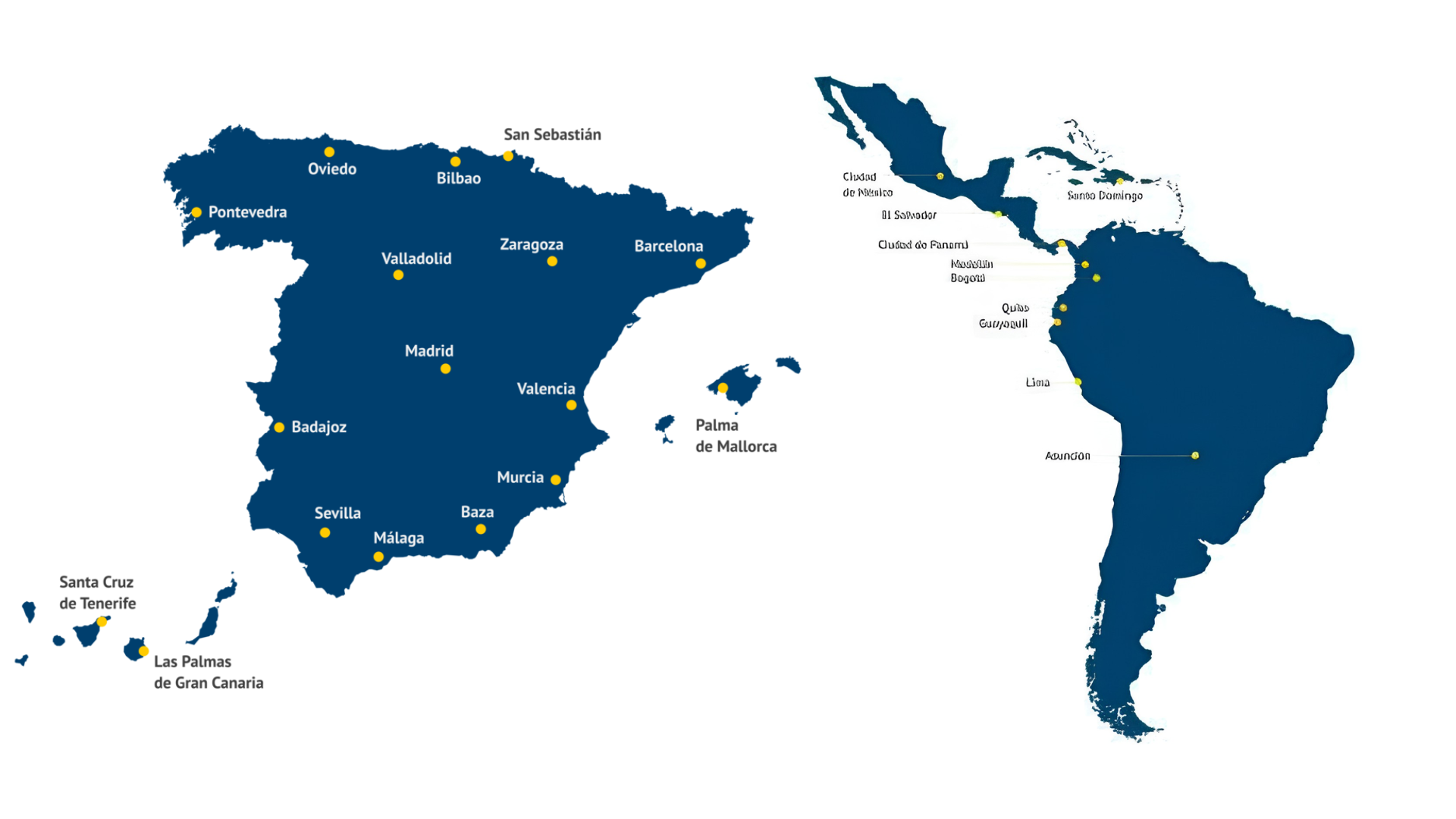
Furthermore, as a student at UAX Online, you’ll have access to our Campus Hubs – a network of exclusive physical spaces where you can study, access libraries, work in co-working areas and connect with other students. Because studying online doesn’t mean studying alone.
Campus Hubs available in: Alcobendas, Alcorcón, Valencia San Vicente, Murcia, Barcelona, Málaga, Seville and Arganda.
Access is granted with your UAX student card, subject to availability and the opening hours of each centre.
NeuronUP
The leading neurorehabilitation platform that integrates assessment, intervention and data analysis within a digital clinical environment, bringing students closer to real-world professional practice from day one.
Through customisable exercises and continuous monitoring, it enables students to work on key functions such as memory, attention and executive functions, facilitating evidence-based intervention tailored to each patient.
Its use in the programme is geared towards practical application at different stages of the life cycle, and is integrated into modules such as:

On the UAX Master’s Degree in General Health Psychology, the course goes beyond theory. That is why, as part of our master’s programme, we have designed a programme comprising between 8 and 12 masterclasses delivered by practising psychologists, which are integrated into the Practical Training I and II modules. Furthermore, for each intake, we choose the topics in consultation with the students so that the sessions address your real concerns. Some of the masterclasses we have already held include:
It’s not just further training. It’s your gateway to the professional world.
Get ready to lead the transformation of healthcare
Discover how digital technologies are transforming healthcare and gain an innovative insight into the future of health with this certification from Imperial College London.
Senate
Degree in Psychology, Master in Human Resources and Communication. Specialist in artificial intelligence, marketing and therapeutic strategies. Participates in the PEAR-PAD project on the use of virtual reality applied to Psychology.

PhD in Psychology, Master in General Health Psychology and Master in Cognitive Neuropsychology, and Expert in Multivariate Statistics. His research focuses on ageism and self-perceptions of ageing and its relationship with cognition in older people. He has experience in neuropsychological rehabilitation in acquired brain injury and neurodegenerative diseases.

Graduate in biology and psychology, master's degree in research in psychology from the UNED, PhD from the Autonomous University of Madrid, expert in child abuse. Researcher and psychology teacher since 2009.

Degree and PhD in Psychology. Master in Cognitive-Behavioural Psychotherapy, with more than 20 years of experience in clinical and health psychology. Specialist in couple and sexual therapy, and in research on behaviour and animal welfare, with publications and presentations at international congresses.

Doctor and Graduate in Psychology. Specialist in Clinical Psychology and Psychotherapist, with experience in various hospitals, including the Complejo Hospitalario Universitario de Toledo. Lecturer in master's degrees and supervisor of residents. She directs the project "Psychological vulnerability in eating disorders" and has participated in projects of the National R&D&I Plan.

PhD in Health Sciences and Degree in Clinical Psychology. He has more than 20 publications and has been principal investigator in several competitive projects. He is a specialist in neuropsychological bases linked to learning difficulties, as well as in psychotherapy of grief, ageing and dementia processes.

PhD in Clinical, Legal and Forensic Psychology, specialist in Forensic Psychology and with a postgraduate degree in training for professionals working with victims of gender violence. A professional with a long career and numerous publications, she is part of the Mental Health Research Group at UAX, where she addresses the relationship between attachment, traumatic beliefs and traumatic symptomatology.

PhD in Psychology and graduate from the University of Jaén. She has 10 years of professional experience, in addition to 6 years of postgraduate teaching experience and 2 years of undergraduate teaching experience. Author of several scientific articles.

PhD in Psychology and Bachelor's Degree in Psychology. Master in Family and Couple Therapy for Health Professionals and Master in Mediation and Conflict Management. Her professional career has been developed in the private clinical setting and in Social Services. She participates in several research groups and is the author of several scientific publications, as well as a speaker at conferences and specialised seminars.

Graduate in Psychology and Master's Degree in Clinical and Health Psychology. He has more than 25 years of professional experience and extensive teaching experience in masters and postgraduate courses. He is the author of several book chapters and scientific articles, and has participated in competitive research projects.

PhD in Neurosciences, specialising in Neuropsychology, and Master's Degree in Teacher Training. Research coordinator of the Dean's Office of Nursing and Psychology at the UAX, with experience in national and regional research projects. Author of articles in indexed journals and participant in multiple publications.

Graduate in Psychology and Master's Degree in General Health Psychology. He has supervised doctoral theses and has extensive experience in funded research projects, as well as multiple publications and participations in national and international conferences.

Doctor in Clinical and Forensic Psychology, health psychologist, forensic psychologist and specialist in neuropsychology. Author of numerous articles, book chapters and presentations at conferences. Director of the Expert Unit in the private sphere and judicial expert witness in the public defender's office of the Official College of Psychology of Madrid. He collaborates with the National Police and Civil Guard in the gender violence homicide investigation team (VioGen).

Bachelor’s degree in Psychology, with a Master’s degree in Cognitive Behavioural Therapy. Expert in Eating Disorders (EDs) and child and adolescent psychopathology. Advanced EMDR therapist, certified by the EMDR Europe Association, specialising in EDs, OCD, IDD, BPD, obesity, PTSD and emergency psychopathology, including interventions during the COVID-19 pandemic.

Degree in Psychology, with specialisation in Industrial and Clinical Psychology and teaching training. Head of Training and Development, with over 25 years' experience in Human Resources. Teacher specialising in interview, personality and psycho-technical skills, with experience in preparing for competitive examinations for security forces and public administration. Since 2019, Ensign Psychologist RV in the Military Emergency Unit (UCO: CG UME).
The Online Master’s Degree in General Health Psychology qualifies you to practise as a General Health Psychologist; this qualification is the sole requirement for practising professionally within the healthcare sector. You will be able to pursue a career in:
This degree qualifies you to work either as a self-employed professional or in an employed capacity within the healthcare sector, opening the door to a constantly growing job market.
We need to know a little bit about you so that we can provide you with a personalised service.
All fields are required
Scholarships and grants for studying at UAX
We know that studying is an investment. That’s why we want to remove financial barriers and make things easier for you. Fill in the form and let our advisers help you discover the scholarships, agreements and personalised financial support that best suit your situation.

Ministry of Education, Vocational Training and Sport
Find out about the scholarships and grants offered by the Ministry of Education, Vocational Training and Sport, categorised by type and level of education.
Attracting Pre-doctoral Research Talent
Financial support for outstanding students who wish to carry out innovative research and contribute to the advancement of knowledge in their disciplines.
If you’ve already decided to take the plunge, enrol early and benefit from a direct grant. It’s a way of rewarding your commitment and giving you a head start in planning your future.

Students from Ibero-America
This programme is aimed at Ibero-American citizens or foreign nationals legally resident in countries within the OEI’s sphere of influence. The scholarship covers a 50 per cent discount on the total tuition fees.
Students from Ecuador
This programme is aimed at citizens with Ecuadorian nationality and/or residence who wish to undertake an online master’s degree in Spain. The scholarship covers a 50 per cent discount on the total tuition fees.
2025, 2nd Edition
Grants for students on higher-level vocational training, undergraduate, postgraduate or master’s programmes enrolled at Spanish universities with a Santander agreement. A financial supplement to support you whilst undertaking your work placements.
If you graduated from UAX and are now thinking of studying for a new degree, we want to continue supporting you. That’s why we’re offering you a 10% discount on tuition fees.
If you have an immediate family member (up to second degree of kinship) enrolled at UAX, you can benefit from a 5 per cent discount on tuition fees. Because studying as a family is even better.
Studying for two degrees at the same time is a challenge, and we want to support you. If you’re already at UAX and enrol on a second degree programme, you’ll receive a grant towards your booking fee and tuition fees.
If you’d like to continue your studies with us and progress from vocational training to a bachelor’s degree, from one bachelor’s degree to another, or from a bachelor’s degree to a postgraduate degree, we’re here to support you with a grant covering up to 25 per cent of your tuition fees.
If you have a strong academic record, we would like to recognise your talent with a scholarship designed for new students. (Excludes the degree in Medicine).
*Terms and conditions to be published
If you’re a high-performance athlete, at UAX we want to help you balance your passion with your studies. We offer specific grants that can cover up to 50 per cent of your tuition fees.
Access to the Master's Degree in General Health Psychology is open to graduates with a degree in Psychology and 90 ECTS of a clinical/health nature. It is also a requirement to have at least a B2 level in Spanish.
If you have completed a degree in psychology or an online degree in psychology , you meet the requirements to access the master's degree in general health psychology.
Sí. El Máster Universitario en Psicología General Sanitaria incluye prácticas externas obligatorias, una parte esencial de esta titulación habilitante.
Durante las prácticas, el estudiante aplica los conocimientos adquiridos en contextos profesionales reales vinculados al ámbito sanitario, desarrollando competencias relacionadas con la evaluación, intervención, seguimiento psicológico y trabajo con otros profesionales.
El Máster Universitario en Psicología General Sanitaria habilita para ejercer como psicólogo general sanitario, adquiriendo las competencias adecuadas para la realización de investigaciones, evaluaciones e intervenciones psicológicas sobre los distintos comportamientos.
The Master's Degree in General Health Psychology qualifies you to work as a General Health Psychologist in the health sector, mainly in centres, clinics, offices and private or subsidised health services.
The PIR is a specialised health training pathway that allows you to obtain the title of Specialist in Clinical Psychology. Both routes are related to professional practice in mental health, but have different access processes, duration and professional opportunities.
The UAX Master’s Degree in General Health Psychology, which is delivered online, combines online classes with face-to-face sessions focused on clinical practice.
This approach allows students to engage with the theoretical content flexibly and to consolidate their learning through applied activities, clinical case studies and practical sessions relating to psychological assessment, diagnosis and intervention.
The blended mode facilitates the organisation of study by combining online classes, digital resources and face-to-face sessions. This allows for greater flexibility than a fully face-to-face mode.
Even so, this is a 90 ECTS qualifying master's degree that requires constant dedication and the completion of compulsory external internships, so it is advisable to plan the course load and face-to-face periods carefully.
During the master's degree you will develop competencies oriented towards psychological assessment, diagnosis, intervention and monitoring in the healthcare environment.
The programme allows you to work on skills related to therapeutic communication, case analysis, the application of intervention techniques, the preparation of reports, clinical decision-making and working in coordination with other professionals.
The Master's Degree in General Health Psychology allows you to work as a General Health Psychologist in health centres, psychological offices, private practices, socio-health centres, specialised units, mental health prevention and intervention programmes and multidisciplinary teams.
It also allows you to carry out psychological assessment, intervention, treatment and monitoring functions in the healthcare field, as well as to participate in projects linked to the promotion of health and psychological well-being.
Other related qualifications
We offer a wide range of courses, so you’re sure to find a programme that suits you.
Online Degree in Psychology
Start:
October
Length:
4 years

Master's Degree in Forensic Psychology (Online)
Start:
October
Length:
9 months

Master's Degree in Clinical Neuropsychology (Online)
Start:
October
Length:
9 months

Master's Degree in Psychopedagogy (online)
In collaboration with:
Start:
October
Length:
9 months

Master’s Degree in Educational Neuropsychology (Online)
In collaboration with:

Start:
October
Length:
9 months

Online Expert in Psychology of High Performance Sport
In collaboration with:

Start:
November
Length:
4 months

Online Master's Degree in Human Resources Management and Administration
In collaboration with:

Start:
October
Length:
9 months

Master's Degree in Healthcare Management (Online)
In collaboration with:

Start:

October
Length:

9 months
Access for queries, complaints and claims
We listen to the real demands of our students and employees, because we believe in the continuous improvement of results. Therefore, we always want to hear what you want to tell us.
If you already belong to UAX, through the virtual campus in the section Customer Service: complaints, suggestions and congratulations, entering your username and password.
Telephone: 91 810 94 00
E-mail: paramejorar@uax.es
Opening hours: Monday to Friday from 9:00h to 18:00h
You can consult the different indicators in the following links:
Main action plans for the degree:
Link to the SICAM degree search engine: SICAM (madrimasd.org)
UAX promotes a culture of quality within the university community through the UAX Quality System (SIUAX), for which the University Management bears ultimate responsibility, ensuring that the system’s planning is implemented to effectively meet quality objectives and satisfy the needs, requirements and expectations of customers and stakeholders.
The bodies responsible are:
This organisational structure facilitates two-way communication regarding the various improvement initiatives, thereby enabling and ensuring the development of a culture of quality within the University.
The Degree Programme Monitoring and Improvement Committee for the 2025–26 academic year is composed of: