

See all Online Master's Degrees in Health


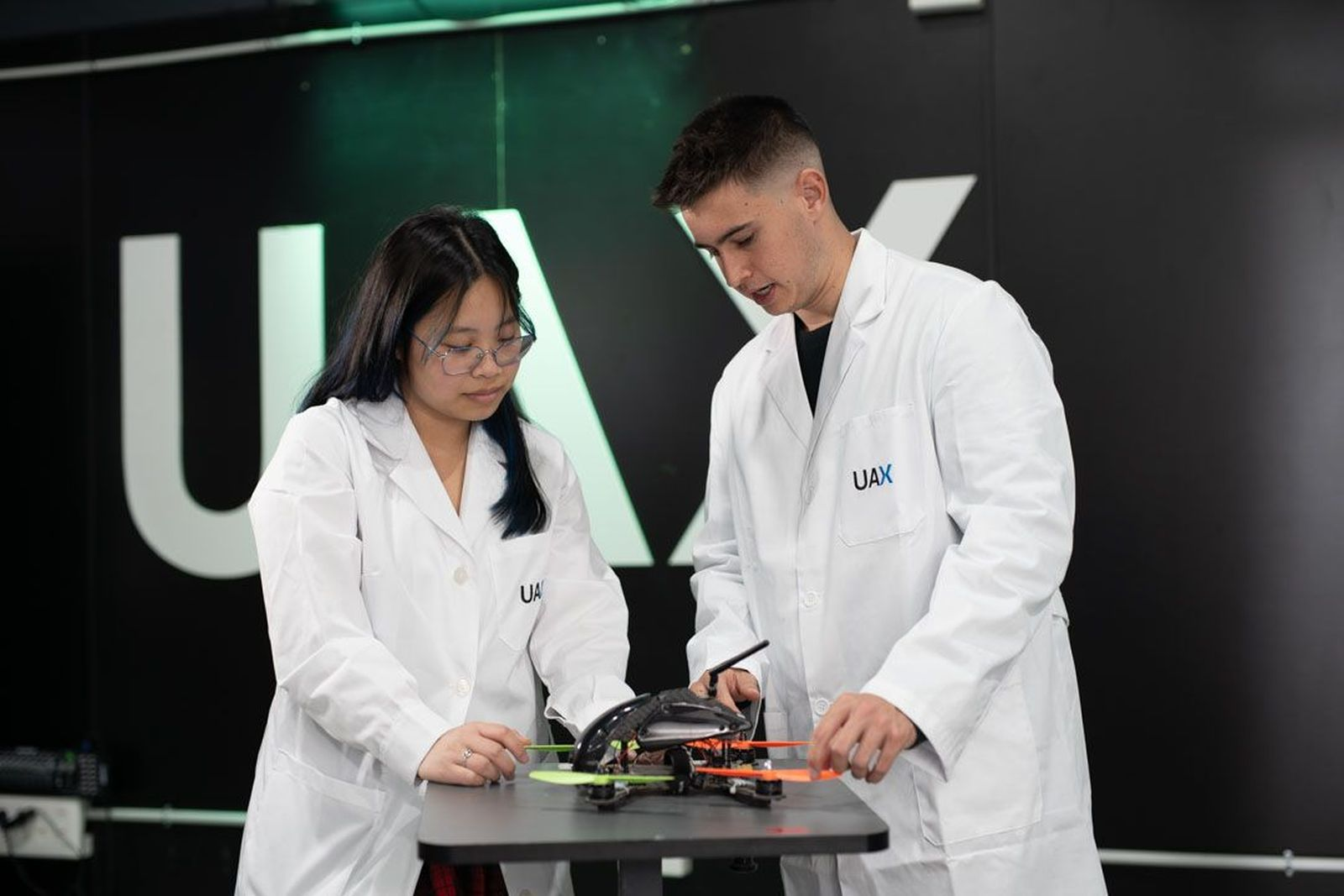
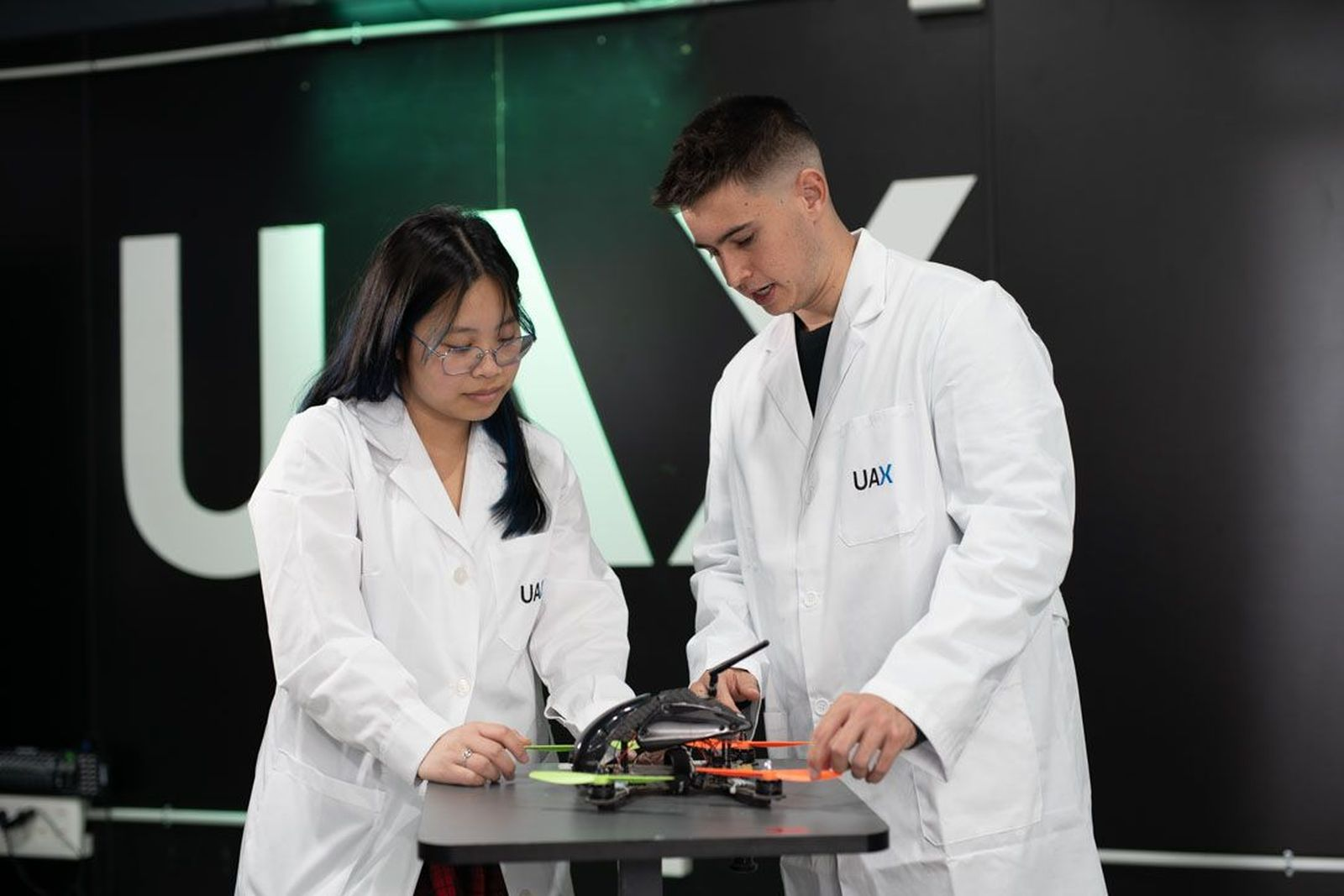



See all Master's Degrees in Engineering
Most searched curriculums
Official qualification
Madrid
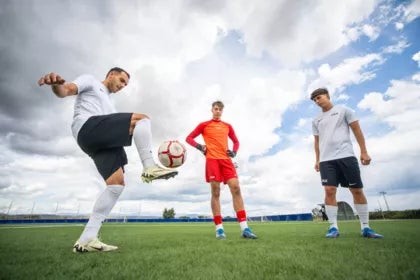
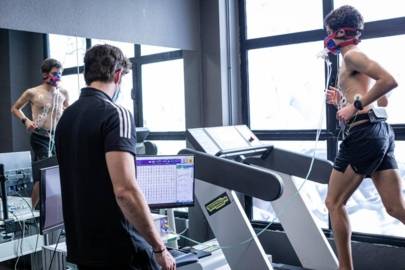
Boost your future with the double degree in Sports Science and Nutrition, one of the most sought-after profiles in the sector. Train with experts in high performance and health, in first-class facilities, and obtain 5 exclusive certifications. Do internships in top entities such as Rafa Nadal Academy, LALIGA or Quirónsalud, with the support of the UAX Rafa Nadal University School. Multiply your opportunities and make a difference!

In collaboration with:


Become part of the pool of professionals needed by the sports industry, specialising in both areas, with the Double Degree in Physical Activity and Sports Sciences (formerly INEF) and Nutrition.
Thanks to the combination of face-to-face and online classes, you’ll be able to study the dual degree in Physical Activity and Sport Sciences + Human Nutrition and Dietetics in a way that’s fully compatible with your personal or professional life.
This format allows you to:
A curriculum designed for success
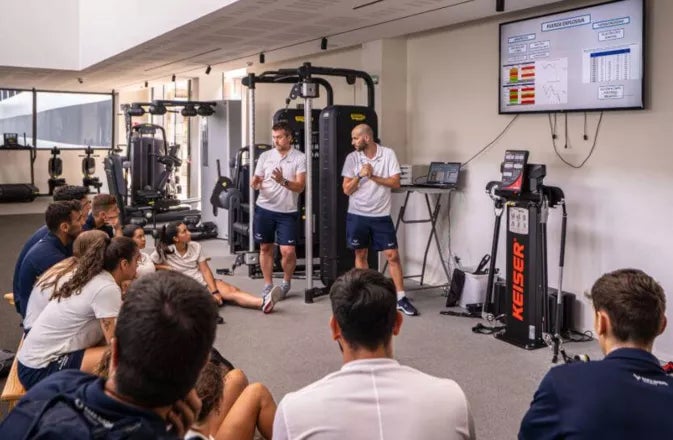
Focusing on topics of real application: specialities or master's degrees in football, tennis, etc., performance improvement and recovery in elite sportsmen and women, functional assessment of sports performance, biomechanics, sports planning and management, entrepreneurship, etc.
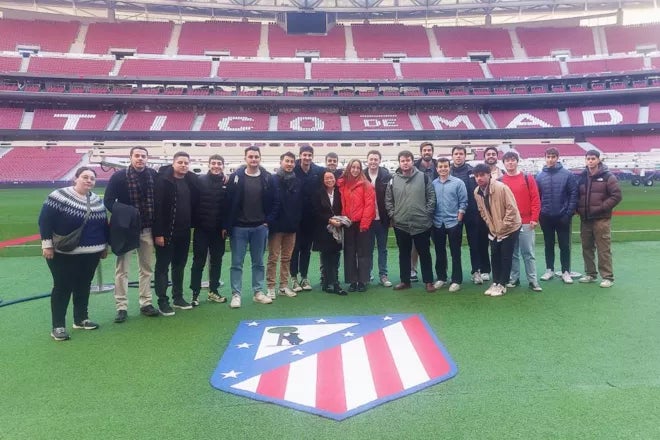
Access to internships at the club and its Sports City, participation of Atlético de Madrid professionals in course delivery, an exclusive immersive experience, and the opportunity to boost your talent through Maker Projects and applied research lines focused on performance and health.

Masterclass in 1Q and clinics in 2Q on nutrition adapted to the physical activity and metabolism of each athlete in order to improve performance.

Workshop on oil tasting. Visits to cheese factories, oil mills and wineries. IMIDRA: centre for gastronomic innovation. Mahou factory.

Licences for the use of EasyDiet (a software designed for the management of the dietician-nutritionist's practice), seminars and continuing education courses with discounts and the possibility of membership.

Exclusive online training programme based on the values that have made Rafa Nadal successful: effort, cooperation, empathy, leadership, professional ethics, resilience, work discipline, among others.
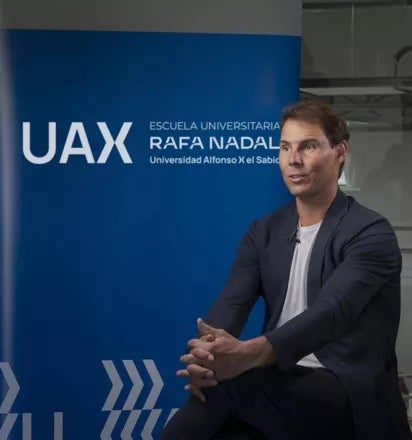
As part of the proposal of the UAX Rafa Nadal University School, our students will be able to learn first-hand the tennis techniques and values that have led Rafael Nadal to become the best tennis player in history on clay courts, in a day of training and face-to-face masterclass with the athlete.
By studying the dual degree in CAFYD and Nutrition, you will master the most widely used technological tools in the sports sector, enabling you to obtain certifications that will give you a competitive edge.

Expert Certificate in Clinical Nutrition in Primary Care with specialised training in all areas: clinical and hospital nutrition, food industry, quality, and focus on sports nutrition.

Specialist in the use of technology for muscle recovery and activation.

Specialist certificate in training with pneumatic strength machines.

Oxygen therapy specialist, one of the most advanced and innovative technologies on the market in simulated altitude training.

The only university where you can obtain one of the world's most prestigious certifications in the field of fitness and strength training.

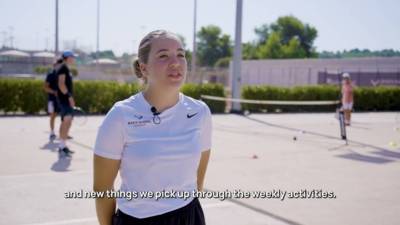
You will learn the keys to become a qualified professional in sports and nutrition with a profile oriented to the employment demand of today's society.
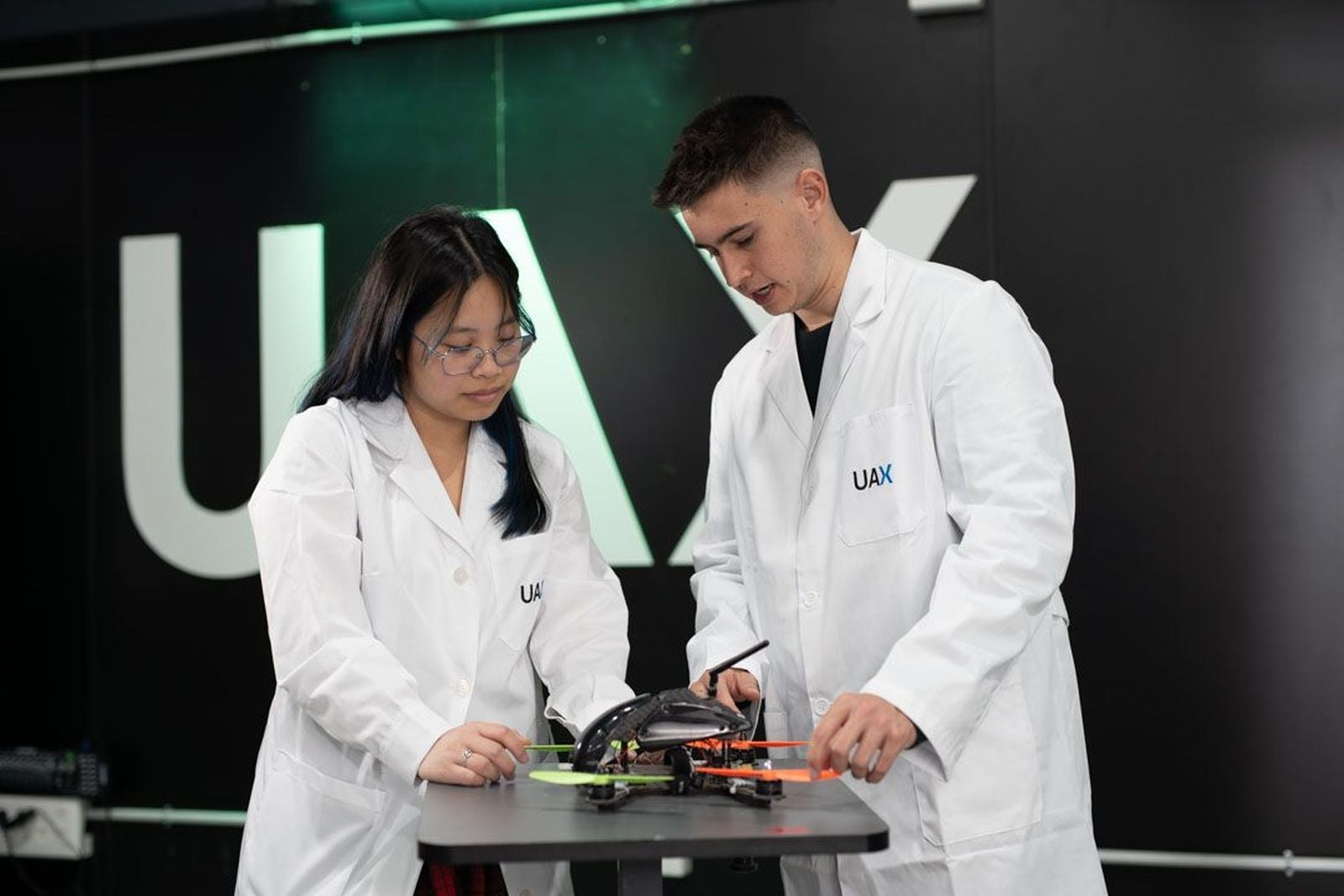
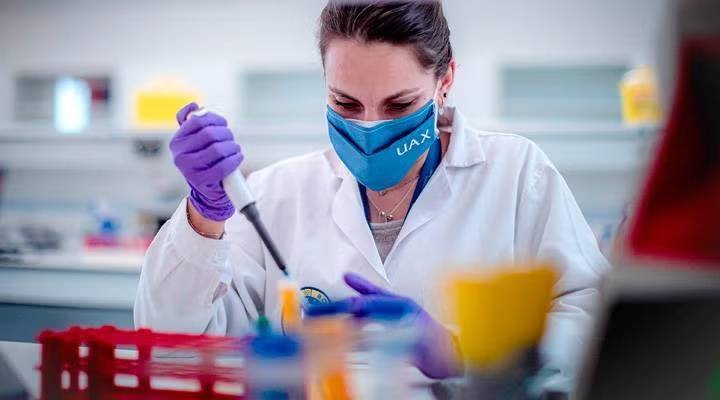
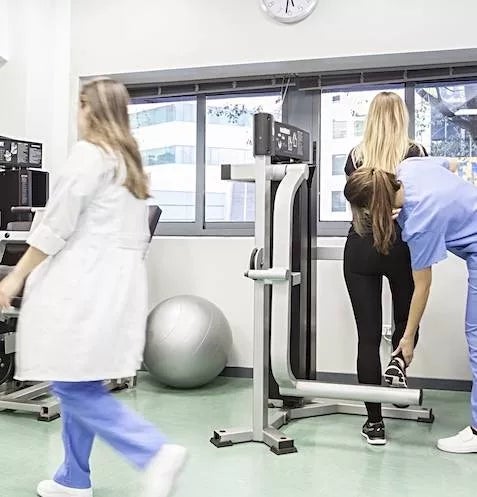
You will study transversal and specific subjects in the innovative facilities of the UAX, which include laboratories and a gym, always accompanied by an expert tutor to reinforce your knowledge.
Bachelor’s Degree in Physical Activity and Sport + Bachelor’s Degree in Human Nutrition and Dietetics
First Year
ANNUAL SUBJECTS
| Code | Subjects | Character* | ECTS | ||||||||||||||||||||||||||||||||||||||||||||||||||||||||||||||||||||||||||||||||||||||||||||||||||||||||||||||||||||||||||||||||||||||||||||||||||||||||||||||||||||||||||||||||||||||||||||||||||||||||||||||||||||||||||||||||||||||||||||||||||||||||||||||||||||||||||||||||||||||||||||||||||||||||||||||||||||||||||||||||||||||||||||||||
|---|---|---|---|---|---|---|---|---|---|---|---|---|---|---|---|---|---|---|---|---|---|---|---|---|---|---|---|---|---|---|---|---|---|---|---|---|---|---|---|---|---|---|---|---|---|---|---|---|---|---|---|---|---|---|---|---|---|---|---|---|---|---|---|---|---|---|---|---|---|---|---|---|---|---|---|---|---|---|---|---|---|---|---|---|---|---|---|---|---|---|---|---|---|---|---|---|---|---|---|---|---|---|---|---|---|---|---|---|---|---|---|---|---|---|---|---|---|---|---|---|---|---|---|---|---|---|---|---|---|---|---|---|---|---|---|---|---|---|---|---|---|---|---|---|---|---|---|---|---|---|---|---|---|---|---|---|---|---|---|---|---|---|---|---|---|---|---|---|---|---|---|---|---|---|---|---|---|---|---|---|---|---|---|---|---|---|---|---|---|---|---|---|---|---|---|---|---|---|---|---|---|---|---|---|---|---|---|---|---|---|---|---|---|---|---|---|---|---|---|---|---|---|---|---|---|---|---|---|---|---|---|---|---|---|---|---|---|---|---|---|---|---|---|---|---|---|---|---|---|---|---|---|---|---|---|---|---|---|---|---|---|---|---|---|---|---|---|---|---|---|---|---|---|---|---|---|---|---|---|---|---|---|---|---|---|---|---|---|---|---|---|---|---|---|---|---|---|---|---|---|---|---|---|---|---|---|---|---|---|---|---|---|---|---|---|---|---|---|---|---|---|---|---|---|---|---|---|---|---|---|---|---|---|---|---|---|---|---|---|
| 0130512 | Team sports I | OB | 8 | ||||||||||||||||||||||||||||||||||||||||||||||||||||||||||||||||||||||||||||||||||||||||||||||||||||||||||||||||||||||||||||||||||||||||||||||||||||||||||||||||||||||||||||||||||||||||||||||||||||||||||||||||||||||||||||||||||||||||||||||||||||||||||||||||||||||||||||||||||||||||||||||||||||||||||||||||||||||||||||||||||||||||||||||||
Team sports ICódigo: 0130512 Imprimir Year 1. Annual module. Compulsory. 8 credits. Profesores
Objectives - To gain an understanding of the basics of football, handball and rugby: structure, rules, basic techniques and their application to the educational setting and grassroots sport. - To acquire the skills to design sessions focused on both the educational setting and the early stages of sporting participation. - To enhance motor skills by practising the basic techniques of the sport Prerequisites No prerequisites have been set Learning outcomes - C.E.54. Understand and master the technical and tactical fundamentals, both individual and collective, in different sports. - C.E.55. To understand and apply the rules and regulations governing different sports. - C.E.56. To understand and master, with a reasonable degree of autonomy, specific technical elements and their application to the game and competition. Learning outcomes The criteria that may be used to assess the competences in terms of learning outcomes will include, amongst others, the following: - Demonstrate sufficient knowledge of the various content areas covered by answering theoretical questions. - Carry out practical work applying the concepts covered in class. -Apply what is covered theoretically in class to real-life situations through practical scenarios. -Reproducing the technical models developed in class, with an appropriate level of execution. -Compile a repertoire of exercises and games, knowing how to adapt them to various physical and sporting contexts. -Design learning situations based on the context and the characteristics of the target group. Description of the content FOOTBALL: THEORETICAL MODULE Topic 1: A Brief History of Football. Topic 2: Technique. Topic 3: Ball control. Topic 4: Skill and Dexterity. Topic 5: Dribbling. Topic 6: Shooting. Topic 7: Dribbling. Topic 8: Shooting. Topic 9: Passing. Topic 10: Passing and Combined Moves. Topic 11: Defensive techniques. Topic 12: The goalkeeper. Topic 13: Tactics. Topic 14: Training Methodology. Topic 15: Laws of the Game. PRACTICAL SECTION Practical Session 1. Initial assessment of students’ procedural knowledge. Practical Session 2. General Methodology: Dribbling, Control, Passing. Practical Session 3. Heading, Dribbling, Technical Marking. Practical Session 4. Shooting. Practical Session 5. Dribbling, feinting and tackling. Session 6. Control, passing and interception. Session 7. Identifying technical actions in a real match. Session 8. Shooting. Defensive and offensive blocking. Session 9. Comprehensive methodology: dribbling, ball control, passing, feinting and shooting. Session 10. Passing. Combined Moves and Play Patterns. Session 11. Defensive technical skills. Practical Session 12. The Goalkeeper: technique and tactics. 24/4/23, 13:53 Course programme for the Bachelor’s Degree in Physical Activity and Sport Sciences https://campus.uax.es/central/ 3/8 Practical Session 13. Different teaching methodologies in football. Practical Session 14. Tactical systems. F7 and F11. Practical Session 15. Practical Assessment I. HANDBALL – THEORETICAL MODULE Topic 0: History and development of handball worldwide and in Spain. Topic 1: Technical elements and their classification. Topic 2: Individual attacking and defensive techniques. Topic 3: Individual Offensive Techniques. Topic 4: Individual Defensive Techniques. Topic 5: Team Tactics and Playing Systems. Topic 6: The Goalkeeper. Topic 7: Laws of the Game. Basic Knowledge. HANDBALL – PRACTICAL MODULE Practice Session 1. Initial assessment and fundamental positions. Practice Session 2. Individual Offensive Technique: basic stances and ways of catching the ball. Practice 3. Individual Offensive Technique: Passes and Receives. Practical Session 4. Individual Offensive Technique: dribbling and shooting. Practical Session 5. Individual Offensive Technique: feints, changes of direction whilst dribbling and running off the ball. Session 6. Individual Defensive Technique: marking, blocking and winning the ball back. Session 7. Team Tactics and Playing Systems. Session 8. The Goalkeeper. Session 9. Attacking and defensive systems. Session 10. Practical Assessment. RUGBY - Teaching methodology for tag rugby. - Theory and practice of the basic technical fundamentals of rugby. - Theory and practice of the basic rules of rugby. - Theory and practice of the basic tactical aspects of rugby. - History: the origins, development and current state of rugby. Training activities The training activities designed to enable students to acquire the intended competences during this module and to achieve the expected outcomes of the work undertaken will be: 1) Lectures on concepts relating to the fundamentals of human motor skills: sport, games, dance, physical expression, etc. (30 hours). 2) Practical sessions in laboratories or sports facilities, in small groups, enabling students to gradually develop the ability to work independently in problem-solving and decision-making (60 hours). 3) Individual and group tutorials (10 hours). 4) Oral, written and practical assessment tests (7 hours). Assessment system and criteria Without prejudice to any other requirements that may be specified in the relevant course syllabus, as a general rule, failure to attend more than 70 per cent of the course’s teaching activities—which require the student’s physical or virtual presence—will result in the loss of the right to continuous assessment during the regular examination period. In this case, the examination to be held during the official period set by the University will be the sole assessment criterion, with the weighting specified in the course syllabus. ---- CONTINUOUS ASSESSMENT: Final knowledge assessments (50 per cent). - Written examinations covering the full range of teaching activities. Practical activities (30%). - Practical assessments carried out within the specific context of each sport. Portfolio (20%). - Supplementary assignments involving the collection of information, such as a session log or similar. ONE-OFF ASSESSMENT (100%) - This will consist of two distinct parts: a theoretical component worth 60% and a practical component worth 40%, both of which must be passed with a mark of 5 out of 10 in order to pass the module. This assessment model will only apply on official assessment dates, whether during the regular or supplementary examination periods. Timetable Click on this link to view the detailed timetable in Excel
Bibliography Supplementary: 1. SANTIAGO VIEITEZ MENDEZ BASIC PRINCIPLES OF TECHNIQUE AND TACTICS FROM THE PERSPECTIVE OF A FOOTBALL ANALYST MURILLO SAIF (MCSPORTS. 2018. ISBN: 9788494857867 |
|||||||||||||||||||||||||||||||||||||||||||||||||||||||||||||||||||||||||||||||||||||||||||||||||||||||||||||||||||||||||||||||||||||||||||||||||||||||||||||||||||||||||||||||||||||||||||||||||||||||||||||||||||||||||||||||||||||||||||||||||||||||||||||||||||||||||||||||||||||||||||||||||||||||||||||||||||||||||||||||||||||||||||||||||||
| 0130513 | Individual sports | FB | 12 | ||||||||||||||||||||||||||||||||||||||||||||||||||||||||||||||||||||||||||||||||||||||||||||||||||||||||||||||||||||||||||||||||||||||||||||||||||||||||||||||||||||||||||||||||||||||||||||||||||||||||||||||||||||||||||||||||||||||||||||||||||||||||||||||||||||||||||||||||||||||||||||||||||||||||||||||||||||||||||||||||||||||||||||||||
Individual sportsCódigo: 0130513 Imprimir Year 1. Annual module. Foundation course. 12 credits. Profesores
Objectives The objectives of the degree programme are aligned with the competences/learning outcomes set out in the Resolution of 18 September 2018 of the General Secretariat for Universities, publishing the Agreement of the Council of Universities of 17 September 2018, which sets out recommendations for universities’ proposals for verification reports for the official Bachelor’s degree in Physical Activity and Sport Sciences. In this regard, the following objectives are set out: • To understand, develop and be able to apply the procedures, strategies, activities, resources, techniques and methods involved in the teaching-learning process efficiently, carrying out all activities across all areas of professional practice in physical activity and sport (formal and informal physical and sporting education; physical and sports training; physical exercise for health; management of physical activity and sport). • To communicate and interact appropriately and effectively in the fields of physical activity and sport across diverse contexts, demonstrating teaching skills in a conscious, natural and consistent manner. • Design and apply the methodological process comprising observation, reflection, analysis, diagnosis, implementation, technical and scientific evaluation and/or dissemination in different contexts and across all sectors of professional practice in physical activity and sport. • Adapt educational intervention to the individual characteristics and needs of the entire population, with an emphasis on specific groups such as: schoolchildren, older people (the elderly), people with reduced mobility, and people with medical conditions, health problems or similar issues (diagnosed and/or prescribed by a doctor), whilst taking gender and diversity into account. • Be able to guide, design, implement and evaluate physical exercise and physical fitness at an advanced level, based on scientific evidence, across different settings, contexts and types of activities for the entire population, with an emphasis on specific groups such as: older people (senior citizens), schoolchildren, people with disabilities, and people with medical conditions, health problems or similar issues (diagnosed and/or prescribed by a doctor), taking gender and diversity into account. • To design and implement, with fluency, ease, awareness and consistency, physical exercise and physical conditioning programmes that are appropriate, efficient, systematic, varied and based on scientific evidence, for the development of adaptation processes and the improvement or rehabilitation of specific abilities in each individual in relation to human movement and its optimisation; with the aim of being able to solve unstructured, increasingly complex and unpredictable problems, with an emphasis on special populations. • To analyse, identify, diagnose, promote, guide and evaluate strategies, actions and activities that encourage adherence to an active lifestyle and the regular, healthy participation in and practice of physical activity, sport and exercise in an appropriate, efficient and safe manner by members of the public, with the aim of improving their overall health, well-being and quality of life, with a focus on specific population groups such as: older people (the elderly), schoolchildren, people with disabilities, and people with medical conditions, health problems or similar issues (diagnosed and/or prescribed by a doctor), taking gender and diversity into account. • To be able to promote, advise on, design, implement and evaluate, from a technical and scientific perspective, appropriate and varied programmes of physical activity, physical exercise and sport, adapted to the needs, requirements and individual and group characteristics of the entire population, with an emphasis on older people (senior citizens), women and diversity, schoolchildren, people with disabilities, and people with medical conditions, health problems or similar issues (diagnosed and/or prescribed by a doctor). • To fluently develop procedures and protocols to solve unstructured, unpredictable and increasingly complex problems, coordinating and demonstrating a command of the elements, methods, procedures, activities, resources, techniques and processes relating to physical fitness and physical exercise in an appropriate, efficient, systematic, diverse and methodologically integrated manner for the entire population, with an emphasis on specific groups such as: older people (the elderly), schoolchildren, people with disabilities and people with medical conditions, health problems or similar issues (diagnosed and/or prescribed by a doctor), taking into account gender and diversity, and across any sector of professional practice within physical activity and sport. • To identify, organise, direct, plan, coordinate, implement and carry out technical and scientific evaluation of the various types of physical and sporting activities adapted to the development, characteristics and needs of individuals and the nature of the activity, venue and organisation, across all types of physical activity and sport services, including sporting events, and in any type of organisation, population, context, setting and population, with an emphasis on special populations such as: older people (the elderly), schoolchildren, people with disabilities and people with medical conditions, health problems or similar issues (diagnosed and/or prescribed by a doctor) and in any sector of professional practice within physical activity and sport (formal and informal physical education and sport; physical and sports training; physical exercise for health; management of physical activity and sport), ensuring safety, efficiency and professionalism in the work carried out in compliance with current regulations. • To articulate and present, with rigour and a scientific approach, the justifications upon which to consistently and professionally develop, support, substantiate and justify all actions, decisions, processes, procedures, interventions, activities, tasks, conclusions, reports and professional performance. • Understand and be able to apply ethical and deontological principles, as well as those of social justice, in professional practice and engagement; demonstrate a commitment to scientific and professional rigour; and maintain a consistent attitude of service to the public in the exercise of their professional practice, with a view to achieving improvement, excellence, quality and efficiency. • Understand, develop and be able to apply the ethical and professional conduct requirements, structural and organisational factors, professional performance standards and regulations governing the professional practice of graduates in Physical Activity and Sport Sciences, in any professional sector of physical activity and sport (formal and informal physical and sports education; physical and sports training; physical exercise for health; management of physical activity and sport); as well as being able to carry out multidisciplinary work. • To understand, explain and communicate the roles, responsibilities and importance of a competent graduate in Physical Activity and Sport Sciences, as well as to analyse, understand, identify and reflect critically and independently on their professional identity, training and performance in order to achieve the aims and benefits inherent in physical activity and sport in an appropriate, safe, healthy and efficient manner across all physical and sporting services offered and provided, and within any professional sector of physical activity and sport. Training activities: The training activities designed to enable students to acquire the intended competences during this module and to achieve the expected outcomes of the work undertaken will be: 1) Lectures on concepts relating to the fundamentals of human motor skills: sports, games, dance, physical expression, etc. 2) Practical sessions in laboratories or sports facilities, in small groups, enabling students to gradually develop the ability to work independently in problem-solving and decision-making 3) Seminars, workshops, etc. 4) Individual and group tutorials 5) Students’ independent work, including study, e-learning (interactive distance learning via the virtual campus), literature reviews, report writing and practical work, both individually and in groups, etc. 6) Oral, written and practical assessments. Course content - ATHLETICS U.D.1. The sport of athletics. • Historical development. • Fundamental concepts and rules. Unit 2. Running events: sprinting, hurdles, middle-distance and long-distance running. • Description and technical analysis. • Rules. • Relays. • Teaching and methodology. U.D.3. Jumps. Long jump, triple jump, high jump and pole vault. • Description and technical analysis. • Rules. • Teaching and methodology. Unit 4. Throwing events. Shot put, discus throw, javelin throw and hammer throw. • Description and technical analysis. • Rules. • Teaching and methodology. Unit 5. Race walking and combined events. • Description and technical analysis. • Rules. • Teaching and methodology. GYMNASTICS – GYMNASTIC SKILLS. Topic 0: Conceptual and historical introduction to gymnastics. 0.1 Description and classification. 0.2 History of gymnastics. 0.3 General rules and regulations. Topic 1: Women’s Artistic Gymnastics (WAG). 1.1 Floor exercise. Non-aerial acrobatic elements: Forward somersault, Backward somersault, Handstand, Five-count, Side roll. Technical analysis of the elements. Methodological progressions and corrections. 1.2 Vault. Technical analysis of the elements: Inward straddle, Outward straddle, Straight-leg jump. Methodological progressions and corrections. 1.3 Asymmetrical parallel bars. Technical analysis of the elements: Twist, Take-off, Back flip, Forward swing, Swings, Sideways pass. Methodological progressions and corrections. 1.4 Balance beam. Technical analysis of the elements: Movements, Jumps, Non-flying acrobatics, Spins, Exits. Methodological progressions and corrections. Topic 2: Men’s Artistic Gymnastics (MAG) 2.1 Rings. Technical analysis of the elements. Methodological progressions and corrections. 2.2 Parallel bars. Technical analysis of the elements. Methodological progressions and corrections. Topic 3: Aids in gymnastics. 3.1 The assistant and the student gymnast. Topic 4: Physical preparation and conditioning in gymnastics. 4.1 Key principles. Basic physical training. Topic 5: Gymnastic skills applied to the educational setting. 5.1 Technical equipment and safety. Gyms, apparatus, and procedures for assistance and protection. 5.2 Characteristics and structure of training sessions. Topic 6: Other gymnastics disciplines. 6.1 Acrosport. Routines and choreography. SWIMMING. Block 1. Fundamentals of swimming Topic 1: History of swimming Topic 2: Biomechanical principles of swimming Block 2. Teaching swimming Topic 3: Stages of learning aquatic skills a. Familiarisation with the aquatic environment b. Breathing c. Floating d. Basic propulsion e. Basic skills and abilities for adapting to and mastering the aquatic environment Topic 4: Different approaches to aquatic activities Topic 5: Teaching styles in the aquatic environment Block 3. Technical fundamentals of swimming Topic 6: Starts and turns Topic 7: Technique for the front crawl and backstroke Topic 8: Breaststroke and butterfly techniques Topic 9: Technical assessment of swimming strokes Block 4: Other Olympic disciplines Topic 10: Other Olympic disciplines a. Water polo b. Synchronised swimming c. Diving d. Open-water swimming Training activities The training activities designed to enable students to acquire the intended competences during this module and to achieve the expected outcomes of the work undertaken will be: - Lectures on concepts relating to the fundamentals of human motor skills: biological, mechanical, behavioural, social and scientific (30 hours). - Individual and group tutorials (14 hours). - Practical sessions in laboratories or sports facilities, in small groups, enabling students to gradually develop the ability to work independently in problem-solving and decision-making (90 hours). - Oral, written and practical assessment tests (7 hours). Assessment system and criteria Without prejudice to any other requirements that may be specified in the relevant course syllabus, as a general rule, failure to attend more than 70 per cent of the course’s teaching activities—which require the student’s physical or virtual presence—will result in the loss of the right to continuous assessment during the standard examination period. In this case, the examination to be held during the official period set by the University will be the sole assessment criterion, with the weighting specified in the course syllabus. ---- The final mark will be calculated as the average of the marks for each sport. In order to calculate this average, students must pass all sports with a minimum pass mark. For each sport, the general assessment criteria will be as follows: • CONTINUOUS ASSESSMENT: To be eligible for this type of assessment, attendance at practical classes must be at least 70 per cent, on the understanding that attendance is compulsory and essential for the best possible learning of the course content. o Final knowledge tests (50%) o Practical activities (30%) o Portfolio (20%) Should a student fail any of the modules in the ordinary assessment period, they will sit the supplementary assessment for the failed modules • NON-CONTINUOUS ASSESSMENT: All students who do not meet the attendance requirement or who opt for this type of assessment will sit a final examination in both the ordinary and supplementary examination periods, if necessary, with the following weightings: o Theoretical component: 60% o Practical component: 40% It will be essential to achieve at least 5 out of 10 in the practical component in order to calculate the average with the theoretical component. Timetable Click on this link to view the detailed timetable in Excel
Bibliography Core: 1. Cancela, J.M.; Pariente, S.; Camiña, F.; Lorenzo, R. A Treatise on Swimming: From Beginners to Advanced. Paidotribo. 2010. ISBN: 9788480199544 2. Elisa Estape GYMNASTIC AND ACROBATIC SKILLS IN EDUCATION: THE JOY OF LEARNING INDE. 1999. ISBN: 9788487330841 3. Javier Brazo-Sayavera Teaching manual for university athletics instruction University of the Republic. 2022. ISBN: 978-99-740-19 4. Maglischo, E. Swimming: Technique, Training and Competition Paidotribo. 2009. ISBN: 9788480190459 5. Navarro, F.; Díaz Ureña, G.; González Vegas, M.J. How to Swim Well editec@rec. 2012. ISBN: 9788493918064 6. Rius Sant, Joan Methodology and Techniques in Athletics Barcelona: Paidotribo, 2009. 2009. ISBN: 9788480198295 |
|||||||||||||||||||||||||||||||||||||||||||||||||||||||||||||||||||||||||||||||||||||||||||||||||||||||||||||||||||||||||||||||||||||||||||||||||||||||||||||||||||||||||||||||||||||||||||||||||||||||||||||||||||||||||||||||||||||||||||||||||||||||||||||||||||||||||||||||||||||||||||||||||||||||||||||||||||||||||||||||||||||||||||||||||||
| TOTAL: | 20 | ||||||||||||||||||||||||||||||||||||||||||||||||||||||||||||||||||||||||||||||||||||||||||||||||||||||||||||||||||||||||||||||||||||||||||||||||||||||||||||||||||||||||||||||||||||||||||||||||||||||||||||||||||||||||||||||||||||||||||||||||||||||||||||||||||||||||||||||||||||||||||||||||||||||||||||||||||||||||||||||||||||||||||||||||||
FIRST FOUR-MONTH PERIOD
| Code | Subjects | Character* | ECTS | ||||||||||||||||||||||||||||||||||||||||||||||||||||||||||||||||||||||||||||||||||||||||||||||||||||||||||||||||||||||||||||||||||||||||||||||||||||||||||||||||||||||||||||||||||||||||||||||||||||||||||||||||||||||||||||||||||||||||||||||||||||||||||||
|---|---|---|---|---|---|---|---|---|---|---|---|---|---|---|---|---|---|---|---|---|---|---|---|---|---|---|---|---|---|---|---|---|---|---|---|---|---|---|---|---|---|---|---|---|---|---|---|---|---|---|---|---|---|---|---|---|---|---|---|---|---|---|---|---|---|---|---|---|---|---|---|---|---|---|---|---|---|---|---|---|---|---|---|---|---|---|---|---|---|---|---|---|---|---|---|---|---|---|---|---|---|---|---|---|---|---|---|---|---|---|---|---|---|---|---|---|---|---|---|---|---|---|---|---|---|---|---|---|---|---|---|---|---|---|---|---|---|---|---|---|---|---|---|---|---|---|---|---|---|---|---|---|---|---|---|---|---|---|---|---|---|---|---|---|---|---|---|---|---|---|---|---|---|---|---|---|---|---|---|---|---|---|---|---|---|---|---|---|---|---|---|---|---|---|---|---|---|---|---|---|---|---|---|---|---|---|---|---|---|---|---|---|---|---|---|---|---|---|---|---|---|---|---|---|---|---|---|---|---|---|---|---|---|---|---|---|---|---|---|---|---|---|---|---|---|---|---|---|---|---|---|---|---|---|---|
| 0130515 | Professional communication and documentation | FB | 6 | ||||||||||||||||||||||||||||||||||||||||||||||||||||||||||||||||||||||||||||||||||||||||||||||||||||||||||||||||||||||||||||||||||||||||||||||||||||||||||||||||||||||||||||||||||||||||||||||||||||||||||||||||||||||||||||||||||||||||||||||||||||||||||||
Professional communication and documentationCódigo: 0130515 Imprimir Course 1: First-term module. Basic training. 6 credits. Profesores
Objectives The objectives of the degree programme are aligned with the competences/learning outcomes set out in the Resolution of 18 September 2018 of the General Secretariat for Universities, publishing the Agreement of the Council of Universities of 17 September 2018, which sets out recommendations for universities’ proposals for verification reports for the official Bachelor’s degree in Physical Activity and Sport Sciences. Accordingly, the following objectives are set out: • To communicate and interact appropriately and efficiently in the fields of physical activity and sport, across a range of intervention contexts, demonstrating teaching skills in a conscious, natural and sustained manner. • To promote education, dissemination, information and ongoing guidance for individuals and leaders regarding the benefits, significance, characteristics and positive effects of regular participation in physical activity, sport and exercise; the risks and harms of inappropriate practice; and the elements and criteria that define its proper execution, as well as providing information, guidance and advice on suitable opportunities for physical activity and sport within their environment, across all sectors of professional practice. • To organise the promotion of policies, strategies and educational programmes on public health issues relating to physical activity and sport (for the prevention of risk factors and diseases); and to cooperate with other stakeholders involved in this field: in any sector of professional practice relating to physical activity and sport. • Understand the different forms of communication in professional and educational contexts and their application in the fields of health and sporting performance Prerequisites No prerequisites have been established Competencies The main competences related to the subjects covered in this module that students will acquire upon completion are as follows: - C.E.33. Develop communication and interpersonal skills. - C.E.34. Communicate (gathering, analysing and synthesising information, negotiating, managing conflicts, conveying information and instructions, etc.) with laypeople and with experts from other fields. - C.E.35. Understand the fundamentals of human communication. - C.E.36. Distinguish between the characteristics of spoken and written expression. - C.E.37. Define a topic and organise ideas appropriately. - C.E.38. Conduct effective research. - C.E.39. Use the main databases in the Health Sciences. - L.O.40. Write a text correctly and compose a speech following a logical order, providing accurate information and in accordance with established grammatical and lexical rules. - C.E.41. Structure the text into paragraphs. - C.E.42. Use precise, appropriate and varied vocabulary that is suited to the situation. - C.E.43. Understand, draft and complete administrative and professional documents. - C.E.44. Make correct use of the expressive possibilities of oral communication. Present a case or topic to a specific audience. Handle an interview, a meeting or a situation requiring a degree of improvisation. Learning outcomes The elements that may be used to assess competences in terms of learning outcomes will include, amongst others, the following: - Demonstrate sufficient knowledge of the various content areas covered by answering theoretical questions. Carry out assignments applying the concepts developed in class. - Applying what is covered in class at a theoretical level to real-life situations through practical scenarios. - Independently explore any topic through research and personal study. - Making appropriate use of ICT. - Improve the student’s various communication skills: - Expressive skills: Being able to describe a situation or an object within the subject area. Being able to evaluate a situation or an object. Being able to argue a case on a topic. Being able to defend a point of view or a set of facts. Being able to convey an idea concisely. Be able to explain a point on a subject clearly to an audience. Be able to assess a situation in order to make a decision. Be able to be precise. - Textual skills: Being able to evaluate texts. Being able to use methods and processes for writing and improving quality (pre-writing, text production, revision and correction). - Contextual and pragmatic skills: Be able to produce short speeches tailored to the context in which they will be delivered. Deliver effective presentations and conduct productive meetings. Apply active listening techniques. Distinguish and filter information within a business context. Produce short speeches tailored to the context in which they will be delivered. Communicate professionally, conduct interviews efficiently and work effectively as part of a team. Manage time. - Document-based skills: To equip students with the skills to resolve their information-related problems: To be able to locate and understand relevant information. To be able to summarise and synthesise spoken and written texts. To be familiar with the main sources of biomedical information. To assess the validity and relevance of academic and scientific information. To make decisions based on this information and to manage personal documentation and health records. To know how to use information ethically in a speech. To know how to cite and reference bibliographies. To know how to complete specialised records and documents. - Lexical and terminological resources: Expand general vocabulary. Understand word formation and neologisms in Spanish. Recognise and expand the use of terminology, sub-technical vocabulary and UFE. Description of the content Module I. Introduction to Communication 1.1. Communication theory 1.2. Verbal communication (spoken and written) Module II. Oral Communication 2.1. Communication strategies 2.2. Non-verbal communication 2.3. Oral presentation 2.4. Types of speech 2.5. How to prepare an oral presentation Module III. Written Communication 3.1. Writing techniques 3.2. Summary techniques Module IV. Specialised Communication 4.1. Academic work. APA citation 4.2. The podcast 4.3. The elevator pitch 4.4. Scripts and running orders Learning Activities The training activities designed to enable students to acquire the intended competences during this module and to achieve the expected outcomes of the work undertaken will be: • Lectures on concepts relating to behavioural, social and scientific principles (30 hours). • Individual and group tutorials (5 hours). • Seminars, workshops, etc. (30 hours). • Students’ independent work, including study, e-learning (interactive distance learning via the virtual campus), literature reviews, report writing and practical work, both individually and in groups, etc. (78 hours). • Oral, written and practical assessments (5 hours). Assessment system and criteria Without prejudice to any other requirements that may be specified in the relevant course syllabus, as a general rule, failure to attend more than 70 per cent of the course’s teaching activities—which require the student’s physical or virtual presence—will result in the loss of the right to continuous assessment during the standard examination period. In this case, the examination to be held during the official period set by the University will be the sole assessment criterion, with the weighting specified in the course syllabus. ---- Assessment system and criteria The assessment process will consist of verifying and evaluating the student’s acquisition of the learning outcomes. To this end, the following assessment activities will be used to determine the extent to which each of the listed learning outcomes has been achieved: Final knowledge assessments (60%) 1) Written examination (30%). Minimum mark: 5. Date: 26 January 2026. Time: 11.00 am. Classroom: to be confirmed. 2) Oral exam (30%). Minimum mark: 5. Date: the final class sessions. It is compulsory to sit both assessments to pass in the standard examination session. Practical activities (15%) 1) Coursera (5%). From 13 October to 14 November 2025. 2) Knowledge test (10%). Test covering the content covered in the module and on Coursera. 20 questions (multiple-choice and short-answer) Portfolio (25 per cent) 1) Discourse analysis (25%). A minimum attendance rate of 70% is required by the end of the term. Non-continuous assessment (sitting) (100%). Students who need to sit the resit examination must sit both the oral and written components. Oral examination (40%). Minimum mark: 5. Date: 23 June 2026. Classroom: to be confirmed. Written examination (60%). Minimum mark: 5. Date: 23 January 2026. 1.30 pm. Classroom: to be confirmed The number of official examination sittings a student may take per module is limited to 4. Timetable Click on this link to view the detailed timetable in Excel
Bibliography Essential: 1. Blanco Pastor, A. Effective Communication and Smart Presentations Pirámide. 2019. ISBN: 978-84-368-40 2. Davis, Flora Non-verbal Communication : Alianza. 2004. ISBN: 8420639540 3. Felipe Portocarrero Profitable Writing SM. 2001. ISBN: 9788434876026 4. Florentino Paredes García, Salvador Álvaro, Zaida Núñez Bayo, Luna Paredes Zurdo The Book of Correct Spanish: Keys to Speaking and Writing Spanish Well Instituto Cervantes. 2012. ISBN: 978-84-670-09 5. Fundéu BBVA; Javier Bezos López (ed.) Urgent Spanish Handbook Debate. 2015. ISBN: 978-84-9992-5 6. Gómez de Enterría y Sánchez, Josefa Oral Communication in Business Madrid: Arco Libros, [2008]. 2008. ISBN: 9788476357095 7. Jesús Sánchez Lobato How to Write Madrid: Aguilar, 2006. 2006. ISBN: 8403097239 8. Lucas Marín, Antonio Communication in Business and Organisations : Bosch. 1997. ISBN: 8476763824 9. María Luisa Regueiro Rodríguez, Daniel Moisés Sáez Rivera Academic Spanish: A Practical Guide to Writing Academic Texts Arco Libros. 2015. ISBN: 978-84-7635-8 10. Portocarrero, Felipe; Gironella, Natalia Professional Writing: Writing Techniques for 21st-Century Businesses netbilo. 2009. ISBN: 9788497452472 11. Various authors The Art of Speaking Aguilar. 2008. ISBN: 9788403098060 Supplementary: 12.- Carlos Cachán Alcolea, Marián García; Mar Ramos Rodríguez (eds.), Antonio Calvo Roy (int.) Anticipatory communication in healthcare Thomson Reuters Aranzadi: Bristol-Myers Squibb: Antonio de Nebrija University. 2020. ISBN: 978-84-1308-8 13.- Cassany, D. The Art of Writing Anagrama. 1995. ISBN: 8433913921 14. Fernando Martínez Vallvey, Víctor Núñez Fernández (eds.) Communication and its Structure in the Digital Age Centre for Financial Studies – CEF. 2016. ISBN: 978-84-454-32 15. Gómez de Enterría y Sánchez, Josefa Written Communication in Business Madrid: Arco/Libros, 2002. 2002. ISBN: 8476355009 16. José María López Rodríguez Analysis of Communication and Movement in Physical Education: Application to Body Expression Murcia. 2002. ISBN: 84-699-7635-4 17. José Ramón Belda Medina, Ricardo Casañ Pitarch (eds.) Discourse Analysis in the Digital Age: A Compilation of Case Studies Comares. 2020. ISBN: 9788490459997 18. María del Mar Ortiz Camacho Description and analysis of certain non-verbal communication skills: a case study in the initial training of specialist physical education teachers University of Granada. 2000. ISBN: 84-338-2701-4 19. Rafael López Pérez, Fernando Gordillo León, Marta Grau Olivares (eds.) Non-verbal behaviour beyond communication and language Pirámide. 2016. ISBN: 978-84-368-35 Others: 20. Manuel Campo Vidal Why don’t professionals communicate better? RBA Books. 2011. ISBN: 9788490061244 |
|||||||||||||||||||||||||||||||||||||||||||||||||||||||||||||||||||||||||||||||||||||||||||||||||||||||||||||||||||||||||||||||||||||||||||||||||||||||||||||||||||||||||||||||||||||||||||||||||||||||||||||||||||||||||||||||||||||||||||||||||||||||||||||||
| 0130517 | Applied Computer Science | FB | 6 | ||||||||||||||||||||||||||||||||||||||||||||||||||||||||||||||||||||||||||||||||||||||||||||||||||||||||||||||||||||||||||||||||||||||||||||||||||||||||||||||||||||||||||||||||||||||||||||||||||||||||||||||||||||||||||||||||||||||||||||||||||||||||||||
Applied Computer ScienceCódigo: 0130517 Imprimir Course 1: First-semester module. Foundation course. 6 credits. Profesores
Objectives To build a foundation of knowledge and skills based on the optimal use of IT resources and tools designed for academic, educational and professional purposes. • To foster information and knowledge management skills. • To provide a useful foundation for management and learning based on independent research using IT tools. • Ability to apply general knowledge of office automation and new information technologies in current practice and in future professional contexts. Prerequisites No prerequisites have been established. Competencies The main competences related to the subjects in this module that students will acquire upon completion are as follows: C.E.29. To understand and apply techniques for editing, layout, sharing and distribution of digital content, as well as the use of this content in a range of professional settings. C.E.30. To manage a professional digital information processing environment that covers the most commonly required processing tasks in day-to-day use. C.E.31. Create presentations that enable the defence of ideas and projects. C.E.32. Create digital content that integrates various types of media. Learning outcomes The elements that may be used to assess competences in terms of learning outcomes will include, amongst others, the following: - Demonstrate sufficient knowledge of the various content modules covered by answering theoretical questions. Carry out assignments applying the concepts developed in class. - Apply what is covered in class at a theoretical level to real-life situations through practical scenarios. - Independently explore any topic through research and personal study. - Making appropriate use of ICT. - Produce reports with a professional layout that integrate content from different media. - Reports analysing information and data that enable the defence of an idea or project. Course content Information systems, data analysis and retrieval, etc. Document management. Document layout using software and the creation of templates and styles. Introduction to, handling, organisation and filtering of data. Types of charts, options and features of data charts. Creation and configuration of a complete presentation. Integration and manipulation of digital images. Training activities The training activities designed to enable students to acquire the intended competences during this module and to achieve the expected outcomes of the work undertaken will be: • Individual and group tutorials (5 hours). • Seminars, workshops, etc. (60 hours). • Students’ independent work, including study, e-learning (interactive distance learning via the virtual campus), literature searches, report writing and practical work, both individually and in groups, etc. (78 hours). • Oral, written and practical assessments (5 hours). Assessment system and criteria Without prejudice to any other requirements that may be specified in the relevant course syllabus, as a general rule, failure to attend more than 70 per cent of the course’s teaching activities—which require the student’s physical or virtual presence—will result in the loss of the right to continuous assessment during the standard examination period. In this case, the examination to be held during the official period set by the University will be the sole assessment criterion, with the weighting specified in the course syllabus. ---- Continuous assessment The following actions or activities will be carried out to assess students on a continuous basis: • Final knowledge assessments (60%) • Practical activities (20%) • Portfolio (20%) Bearing in mind that attendance of over 70% is required and that the course syllabus is divided into 3–4 blocks or modules with the following percentage breakdown: Artificial Intelligence (30 per cent), Data Analysis and Spreadsheets using Excel (40 per cent), Word Processing using Word (30 per cent). Regular examination The final exam for the ordinary examination session will consist of a theoretical and practical test with the following breakdown: 60 per cent theoretical and 40 per cent practical; it is essential to achieve at least 5 out of 10 in the practical part. Supplementary Examination In the supplementary examination session, students must be examined on the entire syllabus of the module. The final exam for the supplementary sitting will consist of a theoretical and practical test with the following weighting: 60% theoretical and 40% practical; it is essential to achieve at least 5 out of 10 in the practical part. Timetable Click on this link to view the detailed timetable in Excel
|
|||||||||||||||||||||||||||||||||||||||||||||||||||||||||||||||||||||||||||||||||||||||||||||||||||||||||||||||||||||||||||||||||||||||||||||||||||||||||||||||||||||||||||||||||||||||||||||||||||||||||||||||||||||||||||||||||||||||||||||||||||||||||||||||
| 0130521 | Human Anatomy | FB | 6 | ||||||||||||||||||||||||||||||||||||||||||||||||||||||||||||||||||||||||||||||||||||||||||||||||||||||||||||||||||||||||||||||||||||||||||||||||||||||||||||||||||||||||||||||||||||||||||||||||||||||||||||||||||||||||||||||||||||||||||||||||||||||||||||
Human AnatomyCódigo: 0130521 Imprimir Course 1: First-semester module. Foundation course. 6 credits. Profesores
Objectives The elements that can be used to assess competences in terms of learning outcomes will include, amongst others, the following: ▪ Demonstrating sufficient knowledge of the various content areas covered by answering theoretical questions. ▪ Carry out assignments applying the concepts covered in class. ▪ Apply what is covered theoretically in class to real-life situations through practical case studies. ▪ To independently explore any topic through research and personal study. ▪ Make appropriate use of ICT. Relation to the degree programme’s learning outcomes: 1) C.G.3. To know and understand the physiological and biomechanical factors that influence the practice of physical activity and sport. 2) C.G.5. To know and understand the effects of physical exercise on the structure and function of the human body. 3) C.G.2. Acquire basic scientific knowledge applied to physical activity and sport in their various forms. Description of the course content The Anatomy module comprises 6 ECTS credits and is a core module. This module is taught in the first year and has the following objectives: 1. The general elements that constitute the macroscopic and microscopic anatomy of the human body, 2. The factors influencing human growth and development throughout the lifespan. 3. The general principles and theories of biology, physics and chemistry as they apply to human biology. 4. The general theoretical foundations of human morphology and its implications for other subjects on the degree programme. These objectives are fundamental and necessary for laying the foundations for future learning in subjects related to exercise physiology, sports training, sports nutrition and the assessment of physical and sporting performance. 2 What is expected of your learning? Competencies: The main competences related to the subjects in this module that students will acquire upon completion are as follows: C.E.15. To know and understand the different anatomical structures and the physiological responses and adaptations that the body undergoes when subjected to acute physical exercise sessions and periods of chronic training. C.E.16. To study the cardiovascular, respiratory, haematological, endocrine and neuromuscular responses and adaptations. C.E.17. To study the body’s specific responses and adaptations to exercise in relation to gender, degree of biological maturity, environmental conditions and the presence or absence of pathology Assessment system and criteria Class attendance is compulsory. A number of (unexcused) absences exceeding 30 per cent per term will result in exclusion from continuous assessment. To assess theoretical concepts, multiple-choice tests, short-answer questions, essay questions and/or oral examinations will be set throughout the course. The type of examination will be specified prior to the examination session. In multiple-choice examinations, incorrectly answered questions are marked down by a factor of one-third. To pass these assessments, 50 per cent of the exam questions must be answered correctly, resulting in a mark of 5.0 Assessment of the theoretical concepts will be carried out as follows: One test (which counts towards the final mark) will be held during the four-month term. To pass this part of the course, a mark of 6 or above is required. Attendance at practical classes is compulsory. If a student’s number of (unexcused) absences exceeds 30 per cent over the four-month term, they will fail this part of the module. The lecturer will assess the practical content on a continuous basis, taking into account attendance, student participation, tests and the submission of assigned work, which will account for 50 per cent of the final practical mark. At the end of each term, there will be an assessment comprising multiple-choice questions, short-answer questions, essay questions and/or oral examinations covering the practical content taught. The type of examination will be specified prior to the examination session. In multiple-choice exams, marks are deducted from incorrect answers at a rate of one-third. This assessment will account for the remaining 50 per cent of the overall practical course mark. Students must achieve a pass mark of 50 per cent to be considered to have passed the practical course (grade 5). If, at the end of the term, the practicals mark is below 5, the student must sit an examination covering the entire practicals syllabus for that term in the February examinations. If the practicals are not passed, regardless of whether the theory has been passed, the published mark will be NP FINAL MARK 60% theory mark (lecture content) 40% practical mark (assignments and lab work) Continuous assessment: maximum 1 mark Students must meet all assessment criteria and achieve an overall mark of more than 50 per cent in each part of the module to be deemed to have passed. If a student fails any part of the module, these percentages will not apply. The mark recorded will be the lowest score. FINAL ASSESSMENT The final examination for the module must be taken during the official examination period. Examinations held during the official examination period will be divided into two parts: a theoretical part accounting for 60 per cent, covering the topics taught in the sessions, and a practical part, accounting for 40 per cent of the final mark, covering material taught in both the laboratory sessions and the seminars. Addendum Teaching team: This consists of six lecturers who will deliver the classes in person; they will meet regularly to coordinate the implementation and assessment of the course criteria. |
|||||||||||||||||||||||||||||||||||||||||||||||||||||||||||||||||||||||||||||||||||||||||||||||||||||||||||||||||||||||||||||||||||||||||||||||||||||||||||||||||||||||||||||||||||||||||||||||||||||||||||||||||||||||||||||||||||||||||||||||||||||||||||||||
| 0130523 | Systematics and Exercise Kinesiology | OB | 4 | ||||||||||||||||||||||||||||||||||||||||||||||||||||||||||||||||||||||||||||||||||||||||||||||||||||||||||||||||||||||||||||||||||||||||||||||||||||||||||||||||||||||||||||||||||||||||||||||||||||||||||||||||||||||||||||||||||||||||||||||||||||||||||||
Systematics and Exercise KinesiologyCódigo: 0130523 Imprimir Course 1: First-term module. Compulsory. 4 credits. Profesores
Aims The aim of this module is to study the fundamentals, characteristics and potential of human movement, to develop an awareness of one’s own abilities, and to learn the ways to improve and refine them through structured physical exercise or gymnastic exercise. The general objectives of the module are set out below. To understand the characteristics of structured physical exercise, the criteria for its classification, specific terminology and graphical representation. To analyse, understand and compare the various historical milestones that have driven the need for the systematisation of physical exercise. To study the mechanical aspects of body movement, analysing it from the perspectives of the joints and muscles. Understand the application of exercise with the aim of developing psychophysical qualities. To develop ingenuity and imagination so that students, using any type of equipment, are able to devise exercises, whilst also understanding the effects they produce. Description of the course content The module consists of two distinct yet complementary parts: The first section covers the study of physical exercise and its characteristics, criteria for its classification, specific terminology and its graphical representation. The second section focuses on understanding the mechanical aspects of movement by analysing it from the perspectives of the joints and muscles. The third module explains the fundamentals of physical exercise in relation to physical fitness so that the student can identify exercises to develop the four basic physical abilities, recognising the effects of proper training during a session, including carrying out the correct warm-up and cool-down. To summarise, we will outline the content covered over the course of the module: BLOCK I: SYSTEMATICS OF PHYSICAL EXERCISE - - - - TOPIC 1: DRAWING EXERCISES. Definitions and approaches to drawing. Starting . Planes and axes. Terms of orientation. Joint movements. Drawing the human figure. TOPIC 2: DESCRIPTION AND REPRESENTATION OF MOVEMENT IN CONTENT BLOCKS. Structure of the warm-up in the session. Analysis of the content. Exercise terminology. Concise notes by objective. Practical workshop on stretching exercises focused on the transcription of the exercise. TOPIC 3: INTRODUCTION TO THE SYSTEMATICS OF EXERCISE. Clarification of concepts. . Gymnastic exercise. Concept and characteristics. Structural aspects of physical exercise. Intent, location and intensity. Classification of gymnastic exercise. TOPIC 4: HISTORICAL EVOLUTION OF PHYSICAL ACTIVITY, PHYSICAL EXERCISE AND GYMNASTICS. Physical exercise in Prehistory, pre-Hellenic civilisations, the Middle Ages and the Renaissance. The era modern gymnastics. BLOCK 2: MECHANICAL ANALYSIS OF EXERCISE - - TOPIC 5: MECHANICAL ANALYSIS OF EXERCISE. Joint complexes of the shoulder, elbow, spine, hip, knee and ankle. TOPIC 6: ANALYSIS OF POSITIONS AND MOVEMENTS. Joint and muscular perspectives. Types of contraction, phases of movement, motor muscles. Analysis of basic muscle toning. BLOCK 3: FUNCTIONAL ANALYSIS OF EXERCISE. - - Topic 7: Functional and Structural Analysis of the Warm-up and Cool-down. Topic 8: Physical Qualities. Effects on the body. Strength, Endurance, Speed, Flexibility. Coordination, balance and agility. SUMMARY FOR TRANSLATION: The ‘Exercise Systematics’ module of the Bachelor’s Degree in Physical Activity and Sport at Alfonso X el Sabio University aims to study the foundations, characteristics and possibilities of human movement, to develop an awareness of one’s own abilities and to understand the means for improving and refining them through systematic physical exercise or gymnastic exercise Assessment system and criteria The assessment process will be carried out taking into account the various learning outcomes. To this end, the following assessment activities, which will enable us to determine the extent to which each of the skills listed. Given the nature of the subject, which is eminently practical, and the way it is taught , continuous assessment is the most recommended method for evaluating the learning process experienced by each student. Physical activities will be set on a daily basis, designed educational in nature and requiring the student’s active participation. ASSESSMENT CRITERIA FOR STUDENTS UNDERGOING CONTINUOUS ASSESSMENT: ▪ Assessments that follow the learning process and capture the skills the student acquires. ▪ Assessment of reports on various practical case studies set for resolution by applying the knowledge acquired in the various subjects. ▪ Submission of practical assignments and reports on their progress, as well as the student’s performance in the laboratory whilst carrying out the practical work. ▪ Practical examinations covering the full range of practical training activities carried out. ▪ Written examinations covering the full range of learning activities carried out in the classroom. For students on the Continuous Assessment scheme, the weighting of tasks according to the above percentages is as follows: ▪ 40% FINAL KNOWLEDGE ASSESSMENTS: theoretical knowledge tests (C.O). Multiple-choice exam (30–40 questions) covering theoretical and practical content. There is no cut-off exam; it takes place on the official ordinary examination session. Pass mark: 4 marks. ▪ 30% PRACTICAL ACTIVITIES: o 20% of the mark: practical test and assessment sheet. Exam taken prior to the ordinary examination period. If a fail, that part can be resat in the ordinary or supplementary examination session. It is even possible to sit to improve your mark. (5 per cent is for the worksheet (SEQUENCE OF 5 ‘EIGHTS’). It must be submitted before the exam; failure to submit it means the practical must be completed on the day of the ordinary examination session). o 10% group stretching routine (5% group stretching routine and 5% individual stretching worksheet ) ▪ 30% PORTFOLIO: Live performance marks. Submission of exercises set during practical sessions, , transcription exercises, analyses, Kahoot quizzes completed in theory classes… ▪ Attendance at 70 per cent of theoretical and practical classes. Students who have achieved a pass in continuous assessment but have not passed the theory exam may sit only that exam in the supplementary sitting; the marks relating to the practical component will continue to be recorded as part of their continuous assessment until the supplementary examination of the same academic year. The lecturer reserves the right to deal with individual cases when calculating averages, with theoretical marks above 4.5 for students who demonstrate very good continuous assessment results. ASSESSMENT CRITERIA FOR STUDENTS WHO DO NOT OPT FOR CONTINUOUS ASSESSMENT: Students who choose to opt out of continuous assessment (those who do not attend classes on a , have more than three absences and lose their daily marks), in the ordinary January examination session and/or the extraordinary examination session in July, the mark will be determined by the final theoretical and practical examination for that examination period. 100 per cent of the final mark is based on a theoretical and practical examination, with the following breakdown: It will be essential to achieve at least 5 out of 10 in the practical part in order to average this with the theory section. • Theoretical part: 60% theoretical test • Practical part: 40%, comprising: - - 30% mark: Figure-of-eight sequence (4 figure-of-eights recorded on video, identical to the continuous assessment sequence + 1 individual figure-eight that does not repeat movements from the previous ones and contains different arm and leg patterns throughout the exercise). The student must take the exam in appropriate attire: comfortable sportswear that allows the movements to be clearly seen, not everyday . 10% mark: Transcription of the five ‘eights’ onto a worksheet. The publication and review of marks will be announced on the day of the exam and published under ‘notices’ on the course portal. To avoid any issues regarding potential appeals against practical marks, the exams will be video-recorded; if any student does not wish to be recorded, they must indicate this before the exam and, in the event of a marks appeal, they will have to accept the lecturer’s subjective assessment. In the event of injury, a medical certificate must be submitted to justify non-participation in the practical part of the session. An injured student is not exempt from attending classes, except in exceptional cases where express medical advice. Addendum ▪ Students will not be permitted to enter the class once the start time has passed. ▪ Proof of absence does not excuse the absence itself. It will be taken into account for assessment purposes. ▪ It is important to wear suitable clothing for practical classes: preferably close-fitting clothing and/or and a short-sleeved T-shirt. |
|||||||||||||||||||||||||||||||||||||||||||||||||||||||||||||||||||||||||||||||||||||||||||||||||||||||||||||||||||||||||||||||||||||||||||||||||||||||||||||||||||||||||||||||||||||||||||||||||||||||||||||||||||||||||||||||||||||||||||||||||||||||||||||||
| 0131001 | Biology | FB | 6 | ||||||||||||||||||||||||||||||||||||||||||||||||||||||||||||||||||||||||||||||||||||||||||||||||||||||||||||||||||||||||||||||||||||||||||||||||||||||||||||||||||||||||||||||||||||||||||||||||||||||||||||||||||||||||||||||||||||||||||||||||||||||||||||
BiologyCódigo: 0131001 Imprimir Course 1: First-term module. Basic training. 6 credits. Profesores
Objectives 1. To learn about different living organisms and the possible forms of cellular organisation (prokaryotic and eukaryotic organisation). 2. To understand the structure and organisation of the eukaryotic cell, its organelles and the function of each one. 3. To understand the structure and organisation of the prokaryotic cell, its organelles and the function of each one. 4. To understand the cell cycle, the processes of cell division and cell death. 5. To understand the structure of the genome within the cell and the organisation of DNA. 6. To understand the molecular basis of inheritance. To understand the processes of replication, transcription and translation. 7. To understand the transmission of hereditary traits, Mendelian genetics and the processes of genetic recombination. Prerequisites There are no prerequisites Learning outcomes CB1 Students have demonstrated that they possess and understand knowledge in a field of study building on the foundations of general secondary education; this is typically at a level which, whilst drawing on advanced textbooks, also includes some aspects requiring knowledge from the cutting edge of their field of study. CB2 Students should be able to apply their knowledge to their work or profession in a professional manner and possess the skills typically demonstrated through the formulation and defence of arguments and the resolution of problems within their field of study. CB3 Students should be able to gather and interpret relevant data (usually within their field of study) in order to make judgements that include reflection on relevant social, scientific or ethical issues. CB4 Students should be able to communicate information, ideas, problems and solutions to both specialist and non-specialist audiences. CB5 Students should have developed the learning skills necessary to undertake further study with a high degree of autonomy. CG2 To practise the profession with respect for other health professionals, acquiring teamwork skills. CG5 Communicate effectively, both orally and in writing, with members of the public, health professionals, industry representatives and the media, whilst being able to use information and communication technologies, particularly those related to nutrition and lifestyle. CG6 Understand, critically evaluate, and know how to use and apply sources of information relating to nutrition, diet, lifestyles and health issues CG12 Understand nutrients, their function in the body, their bioavailability, nutritional requirements and recommendations, and the principles of energy and nutritional balance. CG29 Acquire the basic training required for research activity, being able to formulate hypotheses, collect and interpret information for problem-solving in accordance with the scientific method, and understand the importance and limitations of scientific thinking in the fields of health and nutrition. CE1 Understand the chemical, biochemical and biological principles applicable to human nutrition and dietetics CE2 Understand the structure and function of the human body, from the molecular level to the whole organism, across the different stages of life CE7 Acquire teamwork skills as part of a unit in which professionals and other staff involved in the diagnostic assessment and treatment of dietetics and nutrition are organised in a mono-, multi- or interdisciplinary manner. CE11 Modern Language - Acquire the ability to communicate orally in the foreign language, in accordance with the level of proficiency studied. - Be competent in the use of the foreign language to understand and communicate in that language, both in writing and orally, on matters relating to nutrition. - To acquire the ability to communicate in writing in the foreign language, in accordance with the level of the language studied. - To be competent in handling written and/or digital texts in a foreign language. - To acquire the ability to understand clear, non-specialist spoken language, in accordance with the level of the language studied. - Be competent in the use of the foreign language to understand and communicate in that language, both in writing and orally, on topics related to nutrition. CE12 Communication Understand the fundamentals of human communication. Communicate (gathering, analysing and synthesising information, negotiating, managing conflicts, conveying news and instructions, etc.) with laypeople and with experts from other fields. Distinguish between the characteristics of spoken and written expression. Define a topic and organise ideas appropriately. Conduct effective research. Use the main databases in the Health Sciences Learning outcomes Acquisition of knowledge of fundamental concepts relating to Food Toxicology. Acquiring knowledge of the mechanisms of uptake, transformation and excretion of chemical contaminants, as well as the mechanisms at the molecular and cellular levels of toxic processes and the methods used to assess toxicity. Acquiring knowledge of the basic concepts of risk assessment as a technique that provides the necessary tools to identify and characterise the most significant problems. Ability to study the risks to human health arising from exposure to various toxicants. Acquiring skills in the search for, selection, organisation and analysis of information on toxicology. Recognise and distinguish the pharmacological properties, potential adverse reactions and toxicity of different therapeutic groups and toxic substances. To produce assessment reports on risk control systems for food and food products. Sit examinations demonstrating the acquisition of the required competences and knowledge. Course content Topic 1. Chemical composition of the cell. Cellular organisation. Topic 2. Major macromolecules. Topic 3. Biological membranes. Topic 4. Membrane transport. Topic 5. Extracellular matrix and cell junctions. Topic 6. Cytoskeleton. Topic 7. Endoplasmic reticulum, Golgi apparatus and peroxisomes. Topic 8. Mitochondria and chloroplasts. Topic 9. The nucleus. The cell cycle. Genes and inheritance. Topic 10. Replication, transcription and translation. Ribosomes. Learning activities Face-to-face lectures Face-to-face seminars Face-to-face laboratory sessions Personalised tutorials Face-to-face assessment Assessment system and criteria Without prejudice to any other requirements that may be specified in the relevant course syllabus, as a general rule, failure to attend more than 70 per cent of the course’s teaching activities—which require the student’s physical or virtual presence—will result in the loss of the right to continuous assessment during the standard examination period. In this case, the examination to be held during the official period set by the University will be the sole assessment criterion, with the weighting specified in the course syllabus. ---- ASSESSMENT SYSTEM: 1. THEORY EXAMS: 60 per cent of the mark. 2. LABORATORY PRACTICALS: 20% of the mark. 3. CONTINUOUS ASSESSMENT: this will consist of a presentation and the student’s participation. It accounts for 20 per cent of the mark. EXAM FORMAT: • During the course, there will be two mid-term exams, both of which are compulsory. • Students will be notified of the dates of these exams via the Virtual Campus and at the start of the course during face-to-face classes. • Exams may consist of a multiple-choice section or two parts: a multiple-choice section and open-ended questions • The multiple-choice section will consist of 20 questions, each with four options, only one of which is correct; an incorrect answer will result in a 33 per cent deduction from the mark for that question. • If included, the essay questions will be marked out of 10 marks. • If there are two parts, the mark for each exam will be the average of the marks for the multiple-choice section and the essay questions. • A mark of less than 5 in any of the exams/mid-terms may be offset by the mark from the other exam, the laboratory mark and/or the assignment mark, provided that the exam mark is 3 or above. • If the final mark is below 5, the failed mid-term exam(s) must be retaken in the January examination session. • During the examinations, the use of any reference materials, calculators or mobile phones will NOT be permitted. REGULAR EXAM SESSION (JANUARY): • Students whose overall course mark is below 5 must sit this session. There will be one exam for each part (mid-term exam) failed. The final mark will take into account, applying the corresponding percentages, the mark for Continuous Assessment and the Laboratory mark. • If the final mark is 5 or above, the student will have passed the module. • If a student fails (or does not sit) the January exam, they will have to sit the exam in the Extraordinary Examination Period in July. EXTRAORDINARY EXAMINATION SESSION: • Students whose mark, following the Ordinary Examination Period, is below 5 must sit this examination. There will be one exam for each part (mid-term) in which they have failed. The final mark will be calculated by applying the relevant weightings to the marks for Continuous Assessment and the Laboratory work. • If the final mark is 5 or above, the student will have passed the module. PRESENTATION ASSIGNMENTS: • The content of the required assignments will be assessed: sources used, degree of original work, content, and depth of study. • Assignments will only be assessed if submitted by the set deadline. • Attendance at all students’ presentations is compulsory, and active participation will be positively assessed. • Students will be required to work on these at home. Questions regarding their preparation may be addressed in class. • Questions relating to the projects presented in class will be asked, and students’ answers will be assessed. Bibliography Core reading: 1. Alberts et al. Introduction to Cell Biology Panamericana. 2023. ISBN: 978-607-8546- 2. Cooper et al. The Cell Marbán. 2021. ISBN: 9788471019479 Supplementary: 3.- Feduchi Canosa E, Romero Magdalena C, Yáñez Conde E, García-Hoz Jiménez C. Biochemistry. Essential Concepts. 3rd ed. Médica Panamericana. 2025. ISBN: 9788491106807 |
|||||||||||||||||||||||||||||||||||||||||||||||||||||||||||||||||||||||||||||||||||||||||||||||||||||||||||||||||||||||||||||||||||||||||||||||||||||||||||||||||||||||||||||||||||||||||||||||||||||||||||||||||||||||||||||||||||||||||||||||||||||||||||||||
| 0131004 | Chemistry | FB | 6 | ||||||||||||||||||||||||||||||||||||||||||||||||||||||||||||||||||||||||||||||||||||||||||||||||||||||||||||||||||||||||||||||||||||||||||||||||||||||||||||||||||||||||||||||||||||||||||||||||||||||||||||||||||||||||||||||||||||||||||||||||||||||||||||
ChemistryCódigo: 0131004 Imprimir Course 1: First-semester module. Foundation course. 6 credits. Profesores
Objectives This module aims to enable students to: - Recognise the relationship between chemistry and the health sciences. - Develop their critical thinking skills. - Understand the basic principles of chemistry. - Develop their ability to work in a team. Prerequisites Basic knowledge of chemistry Competencies CB1 Students have demonstrated that they possess and understand knowledge in a field of study building on the foundations of general secondary education, typically at a level which, whilst drawing on advanced textbooks, also includes some aspects requiring knowledge from the cutting edge of their field of study. CB2 Students are able to apply their knowledge to their work or profession in a professional manner and possess the skills typically demonstrated through the formulation and defence of arguments and the resolution of problems within their field of study. CB3 Students should be able to gather and interpret relevant data (usually within their field of study) in order to make judgements that include reflection on relevant social, scientific or ethical issues. CB4 Students should be able to communicate information, ideas, problems and solutions to both specialist and non-specialist audiences. CB5 Students should have developed the learning skills necessary to undertake further study with a high degree of autonomy. CG2 To develop the profession whilst showing respect for other health professionals, acquiring skills for working in a team. CG3 Recognise the need to maintain and update professional competence, placing particular emphasis on the autonomous and continuous acquisition of new knowledge, products and techniques in nutrition and dietetics, as well as a commitment to quality CG4 Understand the boundaries of the profession and its scope of practice, recognising when interdisciplinary treatment or referral to another professional is necessary. CG5 Communicate effectively, both orally and in writing, with members of the public, health professionals, industry representatives and the media, and be able to use information and communication technologies, particularly those related to nutrition and lifestyle habits CG12 Understand nutrients, their function in the body, their bioavailability, nutritional requirements and recommendations, and the principles of energy and nutritional balance. CG29 Acquire the basic training required for research activity, being able to formulate hypotheses, collect and interpret information to solve problems using the scientific method, and understand the importance and limitations of scientific thinking in the fields of health and nutrition. CE1 Understand the chemical, biochemical and biological principles applicable to human nutrition and dietetics. CE2 Understand the structure and function of the human body from the molecular level to the whole organism across the different stages of life. CE7 To acquire teamwork skills within a unit in which professionals and other staff involved in the diagnostic assessment and treatment of dietetics and nutrition are organised in a mono-, multi- or interdisciplinary manner. CE11 Modern Language - Acquire the ability to communicate orally in the foreign language, in accordance with the level of proficiency studied. - Be competent in the use of the foreign language to understand and communicate in that language, both in writing and orally, on matters relating to nutrition. - To acquire the ability to communicate in writing in the foreign language, in accordance with the level of the language studied. - To be competent in handling written and/or digital texts in a foreign language. - To acquire the ability to understand clear, non-specialist spoken language, in accordance with the level of the language studied. - Be competent in the use of the foreign language to understand and communicate in that language, both in writing and orally, on topics related to nutrition. CE12 Communication Understand the fundamentals of human communication. Communicate (gathering, analysing and synthesising information, negotiating, managing conflicts, conveying news and instructions, etc.) with laypeople and with experts from other fields. Distinguish between the characteristics of spoken and written expression. Define a topic and organise ideas appropriately. Conduct effective research. Use the main databases in the Health Sciences. Learning outcomes 1. Describe and analyse the chemical principles applicable to human nutrition and dietetics. 2. Produce reports on practical sessions carried out in the various laboratories. 3. Sit examinations demonstrating the acquisition of skills and knowledge. 4. Recognise the chemical structure of an active ingredient, describing its functional groups and classifying it within the chemical family to which it belongs. 5. Acquire skills and proficiency in an experimental chemistry laboratory. 6. Be able to use the chemical terminology employed in health sciences. 7. Understand the chemical principles applicable to food and its most important chemical reactions Description of the content * Nomenclature in inorganic and organic chemistry. BLOCK 1: Organic and inorganic chemical formulation BLOCK 2: Composition of matter: - Classification of matter. - Atoms. - The periodic table and periodic variations. - Molecules and ions. - Chemical formulae and molecular mass. BLOCK 3: Chemical bonding: - Ionic bonding - Metallic bonding - Covalent bonding - Molecular geometry. Valence shell electron pair repulsion theory (VSEPR). - Bond polarity. BLOCK 4: States of matter: - Gases. Liquids. Intermolecular forces. - Solids. - Phase or state changes. - Phase diagrams. SECTION 5: Solutions: - Types of solutions. - Formation of solutions. - Types of solutes. - Ways of expressing concentration. - Preparation of solutions. - Variables affecting solubility. - Colligative properties. BLOCK 6: Chemical reactions. - Chemical equations. - Stoichiometric relationships. - Limiting reactant and reaction yield. - Chemical reactions in aqueous solution. BLOCK 7: Chemical equilibria: - Chemical equilibrium and equilibrium constant. - Le Chatelier’s principle. - Proton transfer equilibria. - Solubility equilibria. - Electron transfer equilibria. BLOCK 8: Electrochemistry - Electrochemical cells. - Types of cells. Learning activities Lecture Face-to-face laboratory sessions Face-to-face seminar Tutorials Independent study Assessment Assessment system and criteria Without prejudice to any other requirements that may be set out in the relevant course syllabus, as a general rule, failure to attend more than 70 per cent of the course’s teaching activities—which require the student’s physical or virtual presence—will result in the loss of the right to continuous assessment during the standard examination period. In this case, the examination to be held during the official period set by the University will be the sole assessment criterion, with the weighting specified in the course syllabus. ---- To pass this module, students must: 1. Have completed ALL the laboratory practicals. 2. Achieve a mark of five points or higher by adding together the percentages set out below: CONTINUOUS ASSESSMENT: 1. Material covered in class (topics 1–8): 50% * Mid-term exam 1 (25%) * Mid-term exam 2 (25%) These two mid-term exams are qualifying exams, with a mark of 5 or above required to pass. The marks for the two mid-term exams may be averaged if a mark of 4 or above is achieved. If a student fails or is unable to average the marks, they must sit the exam for the failed component(s) in the ordinary and/or supplementary examination sessions. 2. Problem-solving exam: 5%. A MARK OF 5 OR HIGHER IS REQUIRED TO PASS. 3. Student’s coursework: 25% * 15% Class activities (submission of assignments, contributions at the blackboard, etc.) * 5% Jove Platform test * 5% Coursera course 4. Practical work: 20%. COMPLETION OF THE PRACTICAL WORK IS COMPULSORY. The practical work will be assessed via a final exam. Minimum mark required to be included in the average: 4 TO QUALIFY FOR CONTINUOUS ASSESSMENT, THE STUDENT MUST ACHIEVE A MINIMUM AVERAGE MARK OF 5 POINTS ACROSS THE TWO MID-TERM EXAMS. The maximum final mark will be 10 marks. To pass the module, the final mark must be 5 marks or higher. REGULAR EXAMINATION PERIOD: If a student does not meet the requirements for the continuous assessment criteria to apply, they must sit the ordinary examination for any failed components – written assignments, mid-term exam(s) and/or practicals – with the percentages described above being applied to calculate their final mark. To pass, students must achieve a final mark of 5 out of 10. EXTRAORDINARY EXAMINATION PERIOD: If a student fails the ordinary assessment, they must sit the extraordinary assessment for those parts of the module in which they have failed – written assignments, mid-term exams and/or practicals – with the percentages described above being applied to calculate their final mark. To pass, students must achieve a final mark of 5 out of 10. Exam format: - Mid-term examinations: These will consist of a section of short theoretical questions (multiple-choice) and a section of problems. - Practical examination: The practicals will be assessed by means of an individual examination on the LAST DAY of the practicals. This examination will consist of a multiple-choice test and problems relating to the practicals undertaken. Attendance at practical sessions is compulsory. Students are not permitted to miss any practical sessions unless there is a very valid reason. Bibliography Core: 1.- Chang, Raymond Chemistry 10th ed. Mexico: McGraw-Hill, 2020. 2020. ISBN: 9780073511092 2. Timberlake, Karen C. Chemistry : Pearson. 2011. ISBN: 9788483227435 Links Current rules for chemical formulae – SUMMARY OF THE 2005 IUPAC RULES FOR INORGANIC CHEMICAL NOMENCLATURE FOR USE IN SECONDARY EDUCATION AND TEACHING RECOMMENDATIONS. |
|||||||||||||||||||||||||||||||||||||||||||||||||||||||||||||||||||||||||||||||||||||||||||||||||||||||||||||||||||||||||||||||||||||||||||||||||||||||||||||||||||||||||||||||||||||||||||||||||||||||||||||||||||||||||||||||||||||||||||||||||||||||||||||||
| TOTAL: | 34 | ||||||||||||||||||||||||||||||||||||||||||||||||||||||||||||||||||||||||||||||||||||||||||||||||||||||||||||||||||||||||||||||||||||||||||||||||||||||||||||||||||||||||||||||||||||||||||||||||||||||||||||||||||||||||||||||||||||||||||||||||||||||||||||||
SECOND FOUR-MONTH TERM
| Code | Subjects | Character* | ECTS | ||||||||||||||||||||||||||||||||||||||||||||||||||||||||||||||||||||||||||||||||||||||||||||||||||||||||||||||||||||||||||||||||||||||||||||||||||||||||||||||||||||||||||||||||||||||||||||||||||||||||||||||||||||||||||||||||||||||||||||||||||||||||||||||||||||||||||||||||||||||||||||||||||||||||||||||||||||||||||||||||||||||||||||||||
|---|---|---|---|---|---|---|---|---|---|---|---|---|---|---|---|---|---|---|---|---|---|---|---|---|---|---|---|---|---|---|---|---|---|---|---|---|---|---|---|---|---|---|---|---|---|---|---|---|---|---|---|---|---|---|---|---|---|---|---|---|---|---|---|---|---|---|---|---|---|---|---|---|---|---|---|---|---|---|---|---|---|---|---|---|---|---|---|---|---|---|---|---|---|---|---|---|---|---|---|---|---|---|---|---|---|---|---|---|---|---|---|---|---|---|---|---|---|---|---|---|---|---|---|---|---|---|---|---|---|---|---|---|---|---|---|---|---|---|---|---|---|---|---|---|---|---|---|---|---|---|---|---|---|---|---|---|---|---|---|---|---|---|---|---|---|---|---|---|---|---|---|---|---|---|---|---|---|---|---|---|---|---|---|---|---|---|---|---|---|---|---|---|---|---|---|---|---|---|---|---|---|---|---|---|---|---|---|---|---|---|---|---|---|---|---|---|---|---|---|---|---|---|---|---|---|---|---|---|---|---|---|---|---|---|---|---|---|---|---|---|---|---|---|---|---|---|---|---|---|---|---|---|---|---|---|---|---|---|---|---|---|---|---|---|---|---|---|---|---|---|---|---|---|---|---|---|---|---|---|---|---|---|---|---|---|---|---|---|---|---|---|---|---|---|---|---|---|---|---|---|---|---|---|---|---|---|---|---|---|---|---|---|---|---|---|---|---|---|---|---|---|---|---|---|---|---|---|---|---|---|---|---|---|---|---|---|---|---|---|
| 0130518 | Combat sports | OB | 4 | ||||||||||||||||||||||||||||||||||||||||||||||||||||||||||||||||||||||||||||||||||||||||||||||||||||||||||||||||||||||||||||||||||||||||||||||||||||||||||||||||||||||||||||||||||||||||||||||||||||||||||||||||||||||||||||||||||||||||||||||||||||||||||||||||||||||||||||||||||||||||||||||||||||||||||||||||||||||||||||||||||||||||||||||||
Combat sportsCódigo: 0130518 Imprimir Course 1: Second-term module. Compulsory. 4 credits. Profesores
Objectives The objectives of the degree programme are aligned with the competences/learning outcomes set out in the Resolution of 18 September 2018 of the General Secretariat for Universities, publishing the Agreement of the Council of Universities of 17 September 2018, which sets out recommendations for universities’ proposals for verification reports for the official Bachelor’s degree in Physical Activity and Sport Sciences. In this regard, the following objectives are set out: • To adapt educational provision to the individual characteristics and needs of the entire population, with an emphasis on specific groups such as: schoolchildren, older people (the elderly), people with reduced mobility, and people with medical conditions, health problems or similar issues (diagnosed and/or prescribed by a doctor), whilst taking gender and diversity into account. • To be able to guide, design, implement and evaluate physical exercise and physical fitness at an advanced level, based on scientific evidence, across different settings, contexts and types of activities for the entire population, with an emphasis on specific groups such as: older people (senior citizens), schoolchildren, people with disabilities, and people with medical conditions, health problems or similar issues (diagnosed and/or prescribed by a doctor), taking gender and diversity into account. • To design and implement, with fluency, ease, awareness and consistency, physical exercise and physical conditioning programmes that are appropriate, efficient, systematic, varied and based on scientific evidence, for the development of adaptation processes and the improvement or rehabilitation of specific abilities in each individual in relation to human movement and its optimisation; with the aim of being able to solve unstructured, increasingly complex and unpredictable problems, with an emphasis on special populations. • To analyse, identify, diagnose, promote, guide and evaluate strategies, actions and activities that encourage adherence to an active lifestyle and the regular, healthy participation in and practice of physical activity, sport and exercise in an appropriate, efficient and safe manner by members of the public, with the aim of improving their overall health, well-being and quality of life, with a focus on specific population groups such as: older people (the elderly), schoolchildren, people with disabilities, and people with medical conditions, health problems or similar issues (diagnosed and/or prescribed by a doctor), taking gender and diversity into account. • To be able to promote, advise on, design, implement and evaluate, from a technical and scientific perspective, appropriate and varied programmes of physical activity, physical exercise and sport, adapted to the needs, requirements and individual and group characteristics of the entire population, with an emphasis on older people (senior citizens), women and diversity, schoolchildren, people with disabilities, and people with medical conditions, health problems or similar issues (diagnosed and/or prescribed by a doctor). Description of the course content The content to be covered focuses on understanding and learning the basic aspects of this sport and aims to address the various facets of judo. The topics to be covered are: Topic 1: History of judo 1.1 Origins 1.2 Development 1.3 Evolution 1.4 The present day Topic 2: Fundamentals and skills of judo. 2.1 Fundamentals of standing judo 2.2 Fundamentals of ground judo Topic 3: Judo techniques 3.1 Standing judo techniques 3.2 Ground judo techniques Topic 4: Rules and refereeing. 4.1 Scoring 4.2 Shidos and penalties 4.3 Scoreboard Topic 5: Katas 5.1 History of Katas 5.2 Kodokan Katas 5.3 Nage no kata Assessment system and criteria Continuous Assessment To be eligible for this assessment, you must have attended 70 per cent of all classes. This assessment will be divided into three sections. • Final knowledge tests (50 per cent): - Theoretical examination • Practical activities (30 per cent): -Practical assessment • Portfolio (20 per cent): -Technical glossary In order to calculate the average mark and obtain a final grade, it is essential to achieve a mark of 5 out of 10 in the final assessments. The module will be deemed passed when the sum of all marks, taking into account the above considerations, is 5 or higher. If a student fails one of the examinations but has passed all other components, they must sit the Ordinary Examination Session for the examination they have failed. If a student fails two of the components, they will automatically sit the Ordinary Examination Session for the entire course. Should the average mark be a fail, the student must sit the Ordinary Examination for the entire module, without having to retake the Technical Glossary. Non-continuous (final) assessment This assessment will be marked on the basis of a theoretical and practical examination, with the following percentage breakdown by section. • Theoretical section (60%) • Practical part (40%) It is essential to achieve a mark of 5 out of 10 in the practical section in order for this to be averaged with the theoretical section. The module will be deemed passed when the sum of all marks, taking into account the above considerations, is 5 or higher. Addendum The public health crisis caused by the COVID-19 pandemic has led to the adoption of exceptional safety measures which, whilst aimed at preventing the spread of the virus, have inevitably affected the way in which teachers and students interact in the context of face-to-face teaching. This has had an impact on the standard teaching timetable which, whilst these measures remain in force, may be subject to change, particularly affecting teaching and assessment methods. In accordance with the provisions approved by the competent authority and in line with the agreements adopted by the governing bodies of the University and its faculties, the following outlines the extent to which teaching activities and the assessment systems and criteria for the module may be affected whilst the exceptional safety measures referred to in the previous paragraph remain in force. Teaching activities All teaching hours for face-to-face teaching activities will be delivered in full; however, the number of hours delivered physically in the classroom will be reduced by 40 per cent. These hours will be delivered synchronously via the virtual classroom. Classes delivered virtually will be recorded. These recordings will remain on the course’s virtual campus, available to enrolled students throughout the academic year, so that they can be viewed an unlimited number of times. Should the exceptional circumstances give rise to measures restricting individual movement, the proportion of teaching hours delivered virtually will be increased. If this becomes necessary, provision has been made for 100 per cent of the weekly teaching hours to be delivered virtually. Assessment systems and criteria With regard to individual or group assignments for which a public oral presentation has been scheduled, such presentations will take place via the University’s virtual learning platform. Exams will be held in person in the physical classrooms designated for this purpose during the period set out in the University’s academic calendar. Only in the event that the authorities adopt mandatory measures restricting individual movement will exams be conducted remotely. The changes and provisions set out in this section are provisional and may be subject to change as determined by the academic authorities or where circumstances so require. Timetable Click on this link to view the detailed timetable in Excel
Bibliography Essential: 1. Carratalá and Carratalá Physical Education and Extracurricular Sports in Schools: JUDO. Ministry of Education. 2001. ISBN: 2910008051875 2. Casterlanas and Molina Judo in School Physical Education Editorial Hispano Europea. 2002. ISBN: 978-84-255-14 3. Taira The Essence of Judo Satori Publications. 2014. ISBN: 9788494239052 4. Villamón, M Introduction to Judo Editorial Hispano Europea. 2013. ISBN: 9788425512964 |
|||||||||||||||||||||||||||||||||||||||||||||||||||||||||||||||||||||||||||||||||||||||||||||||||||||||||||||||||||||||||||||||||||||||||||||||||||||||||||||||||||||||||||||||||||||||||||||||||||||||||||||||||||||||||||||||||||||||||||||||||||||||||||||||||||||||||||||||||||||||||||||||||||||||||||||||||||||||||||||||||||||||||||||||||||
| 0130519 | Body expression and dance | OB | 4 | ||||||||||||||||||||||||||||||||||||||||||||||||||||||||||||||||||||||||||||||||||||||||||||||||||||||||||||||||||||||||||||||||||||||||||||||||||||||||||||||||||||||||||||||||||||||||||||||||||||||||||||||||||||||||||||||||||||||||||||||||||||||||||||||||||||||||||||||||||||||||||||||||||||||||||||||||||||||||||||||||||||||||||||||||
Body expression and danceCódigo: 0130519 Imprimir Course 1: Second-term module. Compulsory. 4 credits. Profesores
Objectives • To learn about the history of physical expression and dance • To master the key aspects of the various dimensions, and to learn the teaching methodology and styles specific to body expression and dance. • To be able to create a story, incorporating elements of dance. Course content • Unit 1. Body Expression as a subject within CAFYD. • Unit 2. Dance: history, concept, key figures and classification. • Unit 3. The expressive dimension. • Unit 4. The communicative dimension. • Unit 5. The creative dimension. • Unit 6. Methodology and teaching styles in Body Expression and dance. Training activities The training activities designed to enable students to acquire the intended competences during this module and to achieve the expected outcomes of the work undertaken will be: - Lectures on concepts relating to the fundamentals of human motor skills: biological, mechanical, behavioural, social and scientific (15 hours). - Individual and group tutorials (5 hours). - Practical classes in laboratories or sports facilities, in small groups, enabling students to gradually develop the ability to work independently in problem-solving and decision-making (30 hours). - Students’ independent work, including study, e-learning (interactive distance learning via the virtual campus), literature reviews, report writing and practical work carried out both individually and in groups, etc. (53 hours). - Oral, written and practical assessments (5 hours). Assessment system and criteria Continuous assessment The necessary requirements are set out below: • A minimum attendance rate of 70 per cent of all practical and theoretical sessions is compulsory. • A justified absence does not count as attendance. • Students must achieve a mark of at least 5 in each part of the module. • Students may not enter the classroom more than 15 minutes after the start of the session. Doing so will be treated as a marked absence. Below is a summary table showing the assessment activities corresponding to each specific learning outcome, the assessment methods to be used, and the percentage of the overall mark allocated to each activity: • Final knowledge assessments (50 per cent). • Practical activities (30%). • Portfolio (20%). Non-continuous assessment The alternative to continuous assessment is the final assessment. Students must achieve a mark of at least 5 in each part of the module. The following table summarises the assessment components: • Final knowledge assessments (60%). • Practical activities (40%). |
|||||||||||||||||||||||||||||||||||||||||||||||||||||||||||||||||||||||||||||||||||||||||||||||||||||||||||||||||||||||||||||||||||||||||||||||||||||||||||||||||||||||||||||||||||||||||||||||||||||||||||||||||||||||||||||||||||||||||||||||||||||||||||||||||||||||||||||||||||||||||||||||||||||||||||||||||||||||||||||||||||||||||||||||||||
| 0130520 | Outdoor physical activities | OB | 4 | ||||||||||||||||||||||||||||||||||||||||||||||||||||||||||||||||||||||||||||||||||||||||||||||||||||||||||||||||||||||||||||||||||||||||||||||||||||||||||||||||||||||||||||||||||||||||||||||||||||||||||||||||||||||||||||||||||||||||||||||||||||||||||||||||||||||||||||||||||||||||||||||||||||||||||||||||||||||||||||||||||||||||||||||||
Outdoor physical activitiesCódigo: 0130520 Imprimir Course 1: Second-term module. Compulsory. 4 credits. Profesores
Objectives The aim of this module is to equip students of Physical Activity and Sport Sciences with the knowledge and skills required to programme, analyse, design, plan, deliver and evaluate outdoor activities from a professional perspective. Graduates in Physical Activity and Sport Sciences must be able to tackle professional challenges in a comprehensive manner within the sporting and recreational sectors, contributing to their working environment the necessary tools, resources and knowledge required to develop physical education and sports programmes, as well as specific programmes for physical and technical training in various sporting disciplines; and, in the case of mountain and outdoor activities, to act as a guide for individuals and groups on mountain trails and in mountain environments. The general objectives set for this course are as follows: - To analyse the opportunities offered by the natural environment for physical and sporting activities and for professional development. - To foster cooperation amongst students and to value the educational and social aspects involved in these activities. - To understand and design outdoor activities that have a low environmental impact, thereby contributing to the conservation and improvement of the environment. - To respect the environment and value it as a resource-rich setting for sporting and recreational activities. As for the specific objectives of the module, we highlight the following: 1. To plan and evaluate sports education activities in natural and mountain environments. 2. To train and oversee the physical preparation of athletes at basic, intermediate and advanced levels in mountain sports disciplines in which the student has specific technical training and specialisation. 3. To manage and coordinate leisure and sports tourism programmes, provided they take place in contact with nature or in the natural environment. 4. To act as a guide for individuals and groups along trails and through natural areas, where the level of risk is low and controlled. Prerequisites We are all aware of the changes taking place in our society, with new fields of activity being explored. This is primarily due to our new outlook on life, one that continues to take root as time goes on. Alfonso X el Sabio University has successfully embraced this evolution and incorporated it into its Physical Activity and Sport Sciences curriculum. We are, of course, referring to the concepts of sport, recreation and health. Physical and Sporting Activity in the Natural Environment (AFDMN) provides the perfect framework for delivering a more comprehensive education to our students; it is a fundamental resource in teaching processes and, increasingly, a growing career option. The day-to-day running of this module’s programme is no different from the standard procedures for other modules within the curriculum of the Faculty of Physical Activity and Sport Sciences, therefore the requirements for undertaking and completing the course content are the same as those required for the rest of the degree programme. Activities in the Natural Environment also require a degree of adaptability to changing circumstances (weather, transport, etc.) and situations that may be unfamiliar to some students, such as spending the night outdoors, travelling through woodland and scrubland, along footpaths and in mountainous areas; as well as the use of technical equipment that is often new to them and which will be essential for the smooth running of the course and for making the most of the teaching content. As with any physical activity, it is advisable to maintain a level of physical fitness appropriate to the characteristics described, enabling students to undertake the practical component in the great outdoors without any difficulty. Given the specific nature of the basic technical equipment used in the Activities and Sports related to the Natural Environment and in this course, Alfonso X University provides a large part of the necessary shared equipment, as well as all the support staff required for these practical sessions. Similarly, each student will provide the individual technical and specific equipment necessary to ensure complete safety during their training (clothing, footwear, rucksack, torch, overnight kit, etc.). Competencies 1) C.E.48. To understand and analyse the different forms of motor activity, as well as their application to the physical and sporting context. 2) C.E.49. To gain as wide a range of motor experiences as possible, relating to motor skills and patterns. 3) C.E.50. Understand the fundamentals of physical fitness, physical abilities and their development, with a focus on both health and the school setting. 4) C.E.51. To understand and apply the theoretical and practical foundations of aerobics as a music-based fitness activity, with a view to its potential use as a tool and method of work in the fields of education or health. 5) C.E.52. To understand the theoretical foundations of play, its application in educational and recreational contexts, as well as its potential use as a resource for the development of physical fitness in general. 6) C.E.53. To experience, understand and develop bodily expression, using the body as a means of expression and communication with others. Learning outcomes The elements that can be used to assess competences in in terms of learning outcomes will include, amongst others, the following: - Demonstrating sufficient knowledge of the various content blocks content covered by answering theoretical questions. - Carrying out assignments that apply the concepts covered in class. Applying, through practical scenarios, to real-life situations what is is covered in class at a theoretical level. - Reproduce the technical models developed in class, with a execution. - Design learning situations based on the context and the characteristics of the target group. In this module, particular emphasis will be placed on the process of continuous assessment, in which we expect the student to take the lead, and for their work, attitude and participation to be the investment that yields the expected and satisfactory results. The extensive practical content and the high number of hours devoted to hands-on experience and the experiential development of the subject matter will require a commitment from both students and teaching staff, which must result in the achievement of the set objectives in an active and meaningful way, in a manner that is enduring and useful for the subsequent professional development of our students. The assessment of these processes is described in percentage and numerical terms in the previous sections, but the educational value of the teaching-learning process will be reflected in each of the steps or procedures we undertake in each content block or teaching unit. Description of the content The content is organised into nine topics that follow a plan and a temporal and spatial sequence which we shall endeavour to adhere to at all times. It may be necessary to make some adjustments to accommodate the dates of practical placements scheduled outside the University. Such dates or changes will always be notified well in advance. Topic 1. – New spaces and sporting activities. Hiking Topic 2. – Mountain orienteering and the sport of orienteering Topic 3. – Risk management in mountain activities Topic 4. – Climbing and abseiling. Essential equipment Topic 5. – Designing Activities in the Natural Environment Topic 6. – Landscape interpretation Topic 7. – Games and Challenge and Adventure Activities Topic 8. – Clothing, footwear and equipment Topic 9. - First Aid in the Mountains The content will be adapted to suit the group’s needs and the progression of the teaching and learning process. Training activities The training activities designed to enable students to acquire the intended competences during this module and to achieve the expected outcomes of the work undertaken will be: 1) Lectures on concepts relating to the fundamentals of human motor skills: sports, games, dance, physical expression, etc. (15 hours). 2) Practical sessions in laboratories or sports facilities, in small groups, enabling students to gradually develop the ability to work independently in problem-solving and decision-making (30 hours). 3) Individual and group tutorials (5 hours). 4) Students’ independent work, including study, e-learning (interactive distance learning via the virtual campus), literature reviews, report writing and practical work carried out both individually and in groups, etc. (53 hours). 5) Oral, written and practical assessments (5 hours). Details of the training activities: The teaching activities and pedagogical methods will be varied, aiming to adapt as closely as possible to the characteristics of the students and the group; they will foster the ability to learn independently and to work in teams, whilst promoting creativity and dynamism. We will encourage an active methodology that involves all students, reinforcing meaningful learning. Working groups will be established to improve organisation and to differentiate the role of each student. Personalised attention and group cohesion should foster a positive atmosphere in the classroom and throughout the programme. To make it easier to follow classroom presentations, where possible, theoretical content will be covered using an outline from a bibliographic source accessible to all and provided in the supporting documentation; however, it is recommended that students prepare and study their own notes. Should any student be unable to undertake a practical component of the module due to any issue, they are expected to contact the lecturer as soon as possible and provide a valid reason. Assessment system and criteria Without prejudice to any other requirements that may be set out in the relevant course syllabus, as a general rule, failure to attend more than 70 per cent of the course’s teaching activities requiring the student’s physical presence will result in the loss of the right to continuous assessment in the standard examination session. In this case, the examination to be held during the official period set by the University will be the sole assessment criterion, with the weighting specified in the course syllabus. Assessment is regarded as a tool for monitoring the educational process, affecting students, lecturers and the teaching-learning process alike. Students may opt for the Continuous Assessment system, which is structured in three blocks, in line with the general organisation of the degree programme, allowing the module to be studied progressively. This approach combines theoretical study with the monitoring of practical work and independent study. The final mark will be allocated according to the following percentages: 1. Final knowledge assessments (50%) A written examination will be held at the end of the teaching period to assess the theoretical foundations required for the analysis and development of physical activities in the natural environment. A minimum mark of 5 out of 10 must be obtained in order for this to be included in the overall average with the other sections. • Final theory exam on the core content of the module. 2. Practical activities (30%) This section covers the practical evidence of students’ learning. Active participation in face-to-face practical sessions in a natural environment (Sierra de Guadarrama), with continuous assessment through individual and group practical exercises related to the content covered. On the final day of activities, a practical test will be held in which students must demonstrate mastery of techniques such as navigation (map, compass, GPS), climbing, rope progression, first aid, group guiding, knots and appropriate clothing. Attendance at the face-to-face practical sessions is compulsory. Only absences justified on duly documented medical grounds will be accepted. In such cases, the lecturer may require students to complete a substitute assignment. 3. Portfolio (20%) The portfolio will showcase the student’s independent work and their use of ICT in relation to the module. Creativity, originality and the ability to apply the course content in a digital format will be assessed. • Group production of an audiovisual project (video or other digital format) related to physical activities in the natural environment. • The project must include a technical specification sheet listing the authors, content, tools used, music, design and bibliography. • The deadline for submission is before the final exam. Attendance requirement: Failure to attend more than 30 per cent of the teaching activities requiring physical presence will result in the loss of the right to continuous assessment. In this case, the student must opt for non-continuous assessment. Non-continuous (final) assessment Students who do not undertake continuous assessment must sit a final theoretical and practical examination, which will account for 100 per cent of the mark. This examination will take place during the official examination period set by the University. • Theoretical component (60 per cent): Written assessment of the course’s theoretical content. • Practical component (40 per cent): Demonstration of the practical skills acquired. It will be essential to achieve at least 5 out of 10 in the practical part in order for this to be averaged with the theoretical part. Timetable Click on this link to view the detailed timetable in Excel
|
|||||||||||||||||||||||||||||||||||||||||||||||||||||||||||||||||||||||||||||||||||||||||||||||||||||||||||||||||||||||||||||||||||||||||||||||||||||||||||||||||||||||||||||||||||||||||||||||||||||||||||||||||||||||||||||||||||||||||||||||||||||||||||||||||||||||||||||||||||||||||||||||||||||||||||||||||||||||||||||||||||||||||||||||||||
| 0130522 | Human Physiology | FB | 6 | ||||||||||||||||||||||||||||||||||||||||||||||||||||||||||||||||||||||||||||||||||||||||||||||||||||||||||||||||||||||||||||||||||||||||||||||||||||||||||||||||||||||||||||||||||||||||||||||||||||||||||||||||||||||||||||||||||||||||||||||||||||||||||||||||||||||||||||||||||||||||||||||||||||||||||||||||||||||||||||||||||||||||||||||||
Human PhysiologyCódigo: 0130522 Imprimir Course 1. Second-term module. Foundation course. 6 credits. Profesores
Objectives The objectives of the Physiology module are as follows: To understand the general elements that constitute human physiological functions, at both the cellular and systemic levels. To analyse the factors that influence human physiological responses and adaptations throughout the lifespan. To understand the general principles and theories of biology, physics and chemistry as they apply to the functioning of the human body. To establish the general theoretical foundations of physiological processes and their relevance to other subjects within the degree programme. These objectives are fundamental for laying the foundations for future learning in subjects related to exercise physiology, sports training, sports nutrition and the assessment of physical and sporting performance. Teaching activities The module will be delivered through the following teaching activities, which aim to enable students to acquire competences and achieve the expected learning outcomes: - Lectures (45 hours): Lectures (face-to-face or online) will be delivered to address concepts relating to the fundamentals of human motor function: biological, mechanical and scientific. These lectures will cover the physiological responses and adaptations that the body undergoes in response to acute physical exercise and chronic training. Cardiovascular, respiratory, haematological, endocrine and neuromuscular responses and adaptations will be studied. The body’s specific responses and adaptations to exercise will also be analysed in relation to gender, degree of biological maturity, environmental conditions and the presence or absence of medical conditions. The various parameters related to physical performance and the quantification of physical abilities will be addressed. -Seminars (7 hours): Face-to-face seminars will be held to explore the theoretical and practical content in greater depth. -Laboratory sessions (15 hours): Practical laboratory sessions will be held in small groups, enabling students to develop autonomy in problem-solving and decision-making. Students will undertake assignments applying the concepts covered in class and will apply theory to real-life situations through practical scenarios. -Independent study (70 hours): This includes independent study, interactive e-learning on the virtual campus, literature reviews, report writing, and individual and group practical work. Students will be encouraged to explore any topic independently through research and personal work, as well as the appropriate use of ICT. - Various types of assessment (5 hours). Assessment system and criteria General attendance rule: Attendance at classes is compulsory. Unexcused absences exceeding 30 per cent per term will result in exclusion from continuous assessment. In this case, the examination held during the officially designated period will be the sole criterion for assessment. CONTINUOUS ASSESSMENT: To be eligible for continuous assessment, students must meet the attendance requirement. It will be assessed as follows: Final assessments (60% of the final mark): Tests will be held throughout the course (multiple-choice, short-answer, essay-type questions and/or oral assessments) to assess theoretical concepts. The type of exam will be specified before the exam session. Incorrect answers in multiple-choice tests will be marked down by a factor of 1/3. To pass these assessments, students must answer 50 per cent of the exam questions correctly, achieving a mark of 5.0. Two eliminatory assessments will be held during the term. To pass the module, students must achieve a mark of 6 or above. Practical activities (30% of the final mark). Portfolio: (10%) of the final mark. Attendance at practical classes is compulsory. More than 30 per cent of unexcused absences per term will result in a fail for this part of the module. The lecturer will assess the practical component on a continuous basis, taking into account attendance, student participation, assessments and the submission of assigned work. This will account for 50 per cent of the final practical mark. At the end of each term, there will be an assessment of the practical content (multiple-choice questions, short answers, essay questions and/or oral examinations), which will account for the remaining 50 per cent of the overall practical mark. Students must achieve a pass mark of 50% to be considered to have passed the practical component (grade 5). If, at the end of the term, the practical course mark is below 5, the student must sit an examination covering the entire practical course content for that term in the February examinations. If the practical component is not passed, regardless of whether the theory has been passed or not, the published mark will be ‘NP’. FINAL GRADE (GENERAL CRITERIA): The final mark will consist of 60 per cent of the theory mark and 40 per cent of the practicals mark. Students must meet all assessment criteria and achieve an overall mark of more than 5 in each part of the module to be considered to have passed. If any part of the module is not passed, these percentages will not apply, and the mark recorded will be the lowest mark obtained. Continuous assessment may contribute a maximum of 1 additional mark. Addendum Upon completing the Human Physiology module, students will have acquired the following competences: To know and understand the physiological responses and adaptations that the body undergoes when subjected to acute physical exercise sessions and periods of chronic training. To study the cardiovascular, respiratory, haematological, endocrine and neuromuscular responses and adaptations. To study the body’s specific responses and adaptations to exercise depending on gender, degree of biological maturity, environmental conditions and the presence or absence of pathology. To know and understand the different parameters related to physical performance and the quantification of physical abilities. To recognise and understand the physiological and biomechanical factors that influence the practice of physical activity and sport. To recognise and understand the effects of physical exercise on the structure and function of the human body. To acquire basic scientific knowledge applied to physical activity and sport in their various forms. Bibliography Core: 1. Guyton Compendium of Medical Physiology Elsevier. 2021. ISBN: 9788491139546 2. Patton Anatomy and Physiology 11th ed. Elsevier. 2023. ISBN: 9788413825427 3. Prometheus Anatomy Textbook and Atlas Panamericana. 2022. ISBN: 978-84-9835-2 4. Tortora Derrickson Principles of Anatomy and Physiology Panamericana. 2021. ISBN: 9788411060264 |
|||||||||||||||||||||||||||||||||||||||||||||||||||||||||||||||||||||||||||||||||||||||||||||||||||||||||||||||||||||||||||||||||||||||||||||||||||||||||||||||||||||||||||||||||||||||||||||||||||||||||||||||||||||||||||||||||||||||||||||||||||||||||||||||||||||||||||||||||||||||||||||||||||||||||||||||||||||||||||||||||||||||||||||||||||
| 0131005 | Anthropology and Psychology of Food | FB | 6 | ||||||||||||||||||||||||||||||||||||||||||||||||||||||||||||||||||||||||||||||||||||||||||||||||||||||||||||||||||||||||||||||||||||||||||||||||||||||||||||||||||||||||||||||||||||||||||||||||||||||||||||||||||||||||||||||||||||||||||||||||||||||||||||||||||||||||||||||||||||||||||||||||||||||||||||||||||||||||||||||||||||||||||||||||
Anthropology and Psychology of FoodCódigo: 0131005 Imprimir Course 1. Second-term module. Foundation course. 6 credits. Profesores
Objectives To understand the psychological foundations and biopsychosocial factors that influence human behaviour. To understand the aspects of psychology that affect eating behaviour. To analyse the fundamental aspects of eating disorders. To understand the anthropological approach to eating behaviour and how the consequences that diet has had on our species throughout history are addressed as a factor in evolutionary progress. To gain an insight into human eating behaviour, viewing humans as a zoological species and treating their distinctive characteristics as a consequence of their evolution and adaptation to the environment. Prerequisites Basic knowledge of Biology Skills Basic competences CB1 Students have demonstrated that they possess and understand knowledge in a field of study building on the foundations of general secondary education; this is typically at a level which, whilst drawing on advanced textbooks, also includes some aspects requiring knowledge from the cutting edge of their field of study. CB2 Students should be able to apply their knowledge to their work or profession in a professional manner and possess the skills typically demonstrated through the formulation and defence of arguments and the resolution of problems within their field of study. CB3 Students should be able to gather and interpret relevant data (usually within their field of study) in order to make judgements that include reflection on relevant social, scientific or ethical issues. CB4 Students should be able to communicate information, ideas, problems and solutions to both specialist and non-specialist audiences. CB5 Students should have developed the learning skills necessary to undertake further study with a high degree of autonomy. General competences CG2 To practise the profession with respect for other health professionals, acquiring teamwork skills. CG5 Communicate effectively, both orally and in writing, with members of the public, health professionals, industry representatives and the media, whilst being able to use information and communication technologies, particularly those related to nutrition and lifestyle. CG6 Understand, critically evaluate, and know how to use and apply sources of information relating to nutrition, diet, lifestyles and health issues. CG12 Understand nutrients, their function in the body, their bioavailability, nutritional requirements and recommendations, and the principles of energy and nutritional balance. CG29 Acquire the basic training required for research activity, being able to formulate hypotheses, collect and interpret information to solve problems using the scientific method, and understand the importance and limitations of scientific thinking in the fields of health and nutrition Specific competences CE3 Understand statistics as applied to Health Sciences. Understand the psychological foundations and the biopsychosocial factors that influence human behaviour. CE7 Acquire teamwork skills within a unit in which professionals and other staff involved in the diagnostic assessment and treatment of dietetics and nutrition are organised in a mono-, multi- or interdisciplinary manner. CE11 Modern Language - To acquire the ability to communicate orally in the foreign language, in accordance with the level of proficiency studied. - Be competent in the use of the foreign language to understand and communicate in that language, both in writing and orally, on matters relating to nutrition. - To acquire the ability to communicate in writing in the foreign language, in accordance with the level of the language studied. - To be competent in handling written and/or digital texts in a foreign language. - To develop the ability to understand clear, non-specialised spoken language, in accordance with the level of the language studied. - Be competent in the use of the foreign language to understand and communicate in that language, both in writing and orally, on topics related to nutrition. CE12 Communication Understand the fundamentals of human communication. Communicate (gathering, analysing and synthesising information, negotiating, managing conflicts, conveying news and instructions, etc.) with laypeople and with experts from other fields. Distinguish between the characteristics of spoken and written expression. Define a topic and organise ideas appropriately. Conduct effective research. Use the main databases in the Health Sciences. Learning outcomes Describe the anthropological foundations of human nutrition and discuss the cultural and social inequalities that may influence eating habits. Oral presentations – both individual and in groups – on issues relating to the anthropology of different cultures in the context of diet. Sit examinations demonstrating the acquisition of skills and knowledge. Understand the foundations of cultural eating behaviour, learning the basic principles for the socio-anthropological analysis of food consumption, preparation and eating habits. To understand the diversity of different perspectives on food. To be able to apply basic concepts relating to anthropology to human nutrition and dietetics. To understand psychological functions, their alterations and their development throughout the life cycle. To be able to develop communication skills at both the interpersonal level and within large and small groups. To understand the foundations of the therapeutic relationship and to explore the various psychosocial intervention techniques that are useful in the Health Sciences. Course content description Unit 1. Introduction to Psychology Unit 2. Eating behaviour Unit 3. Psychology and eating Unit 4. The development of eating behaviour Unit 5. Psychopathology of eating Unit 6. Anthropology of Food Learning activities Lecture Face-to-face seminar Tutorials Independent study Assessment Assessment system and criteria Without prejudice to any other requirements that may be set out in the relevant course syllabus, as a general rule, failure to attend more than 70 per cent of the course’s teaching activities—which require the student’s physical or virtual presence—will result in the loss of the right to continuous assessment during the standard examination period. In this case, the examination to be held during the official period set by the University will be the sole assessment criterion, with the weighting specified in the course syllabus. ---- To pass this module, students must: 1. Have completed all practical exercises and projects, and have achieved an average mark of five or above in them. 2. Have achieved a mark of five or above in the face-to-face final examination. 3. Achieve a mark of five or above by adding together the percentages set out below for each part of the module: a) Practical assessment tests: 25 per cent of the final mark. Students will undertake an assignment relating to the practical application of anthropometry. b) Assignments, projects or case studies: 25 per cent of the final mark. These will consist of carrying out a mental health prevention project. c) Final examination: 50 per cent of the final mark. The final examination will consist of a multiple-choice test comprising 40 questions. 4. A mid-term exam will be held halfway through the term as part of continuous assessment, which will count towards the mark for the lecture component. July resit: This will be a multiple-choice exam comprising 40 questions. The same weightings as for the main examination period will apply. Bibliography Supplementary: 1. Esteban, Mari Luz Anthropology of the Body: : Edicions Bellaterra. 2004. ISBN: 8472902706 2. Kottak, Conrad Phillip Cultural Anthropology : : McGraw-Hill. 2006. ISBN: 9788448146344 3. Singer, Peter We Are What We Eat : : Paidós. 2009. ISBN: 9788449322716 |
|||||||||||||||||||||||||||||||||||||||||||||||||||||||||||||||||||||||||||||||||||||||||||||||||||||||||||||||||||||||||||||||||||||||||||||||||||||||||||||||||||||||||||||||||||||||||||||||||||||||||||||||||||||||||||||||||||||||||||||||||||||||||||||||||||||||||||||||||||||||||||||||||||||||||||||||||||||||||||||||||||||||||||||||||||
| 0131006 | Biochemistry | FB | 6 | ||||||||||||||||||||||||||||||||||||||||||||||||||||||||||||||||||||||||||||||||||||||||||||||||||||||||||||||||||||||||||||||||||||||||||||||||||||||||||||||||||||||||||||||||||||||||||||||||||||||||||||||||||||||||||||||||||||||||||||||||||||||||||||||||||||||||||||||||||||||||||||||||||||||||||||||||||||||||||||||||||||||||||||||||
BiochemistryCódigo: 0131006 Imprimir Course 1. Second-term module. Foundation course. 6 credits. Profesores
Objectives 1. To understand the basic principles of biochemistry, the formation of molecules and their interactions. 2. To understand the main types of reactions that take place within the cell: acid-base, oxidation-reduction and condensation reactions. 3. To understand the main structural characteristics of biomolecules: carbohydrates, lipids, proteins and nucleic acids, as well as their relationship to the functions they perform in metabolism. 4. To understand the mechanisms by which enzymes act. 5. To understand the basic concepts of thermodynamics. 6. Be able to explain the mechanisms of interaction between the main anabolic and catabolic pathways of metabolism. 7. To understand the metabolic pathways involved in the synthesis and breakdown of the main biomolecules: carbohydrates, lipids and proteins, as well as the diseases associated with them. 8. Be able to integrate metabolic pathways across the body’s different tissues. 9. Understand and be able to carry out the basic experimental techniques used in a biochemistry and molecular biology laboratory 10. To practise, under supervision, the main quantitative techniques: spectrophotometry. 11. To practise, under supervision, the main techniques for the separation and quantification of proteins. 12. To practise, under supervision, determining enzyme activity and interpreting its kinetics. 13. To practise techniques for identifying different carbohydrates. 14. To practise techniques for the separation of lipid compounds using TLC Prerequisites Basic knowledge of chemistry and biology Competencies Basic competences CB1 Students have demonstrated that they possess and understand knowledge in a field of study building on the foundations of general secondary education; this is typically at a level which, whilst drawing on advanced textbooks, also includes some aspects requiring knowledge from the cutting edge of their field of study. CB2 Students should be able to apply their knowledge to their work or profession in a professional manner and possess the skills typically demonstrated through the formulation and defence of arguments and the resolution of problems within their field of study. CB3 Students should be able to gather and interpret relevant data (usually within their field of study) in order to make judgements that include reflection on relevant social, scientific or ethical issues. CB4 Students should be able to communicate information, ideas, problems and solutions to both specialist and non-specialist audiences. CB5 Students should have developed the learning skills necessary to undertake further study with a high degree of autonomy. General competences CG2 To practise the profession with respect for other health professionals, acquiring teamwork skills. CG5 Communicate effectively, both orally and in writing, with members of the public, health professionals, industry representatives and the media, whilst being able to use information and communication technologies, particularly those related to nutrition and lifestyle CG6 – Understand, critically evaluate, and know how to use and apply sources of information relating to nutrition, diet, lifestyles and health issues CG12 Understand nutrients, their function in the body, their bioavailability, nutritional requirements and recommendations, and the principles of energy and nutritional balance. CG29 Acquire the basic training required for research activity, being able to formulate hypotheses, collect and interpret information to solve problems using the scientific method, and understand the importance and limitations of scientific thinking in the fields of health and nutrition. Specific competences CE1 Understand the chemical, biochemical and biological principles applicable to human nutrition and dietetics. CE2 Understand the structure and function of the human body from the molecular level to the whole organism across the different stages of life. CE7 Acquire teamwork skills within a unit in which professionals and other staff involved in the diagnostic assessment and treatment of dietetics and nutrition are organised in a mono-, multi- or interdisciplinary manner. CE11 Modern Language - To acquire the ability to communicate orally in the foreign language, in accordance with the level of proficiency studied. - Be competent in the use of the foreign language to understand and communicate in that language, both in writing and orally, on matters relating to nutrition. - To acquire the ability to communicate in writing in the foreign language, in accordance with the level of the language studied. - To be competent in handling written and/or digital texts in a foreign language. - To acquire the ability to understand clear, non-specialist spoken language, in accordance with the level of the language studied. - Be competent in the use of the foreign language to understand and communicate in that language, both in writing and orally, on topics related to nutrition. CE12 Communication Understand the fundamentals of human communication. Communicate (gathering, analysing and synthesising information, negotiating, managing conflicts, conveying news and instructions, etc.) with laypeople and with experts from other fields. Distinguish between the characteristics of spoken and written expression. Define a topic and organise ideas appropriately. Conduct effective research. Use the main databases in the Health Sciences. Learning outcomes Describe and analyse the chemical, biochemical and biological principles applicable to human nutrition and dietetics. Prepare reports on practical work carried out in the various laboratories. Sit examinations that demonstrate the acquisition of skills and knowledge. Demonstrate knowledge of the biochemical principles applicable to human nutrition and dietetics. Understand the molecular mechanisms responsible for DNA replication and repair and their regulation in prokaryotes and eukaryotes. Understand the molecular mechanisms responsible for RNA transcription and processing and their regulation in prokaryotes and eukaryotes. Understand the molecular mechanisms responsible for mRNA translation and its regulation in prokaryotes and eukaryotes. To know and understand the molecular and cellular basis of disease Course content description 1. MOLECULAR BASES. 2. CARBOHYDRATES 3. LIPIDS 4. AMINO ACIDS AND PROTEINS 5. NUCLEOTIDES AND NUCLEIC ACIDS 6. THERMODYNAMICS AND ENZYMOLOGY 7. CARBOHYDRATE METABOLISM 8. INTERMEDIATE METABOLISM 9. LIPID METABOLISM 10. METABOLISM OF NITROGEN-CONTAINING COMPOUNDS Teaching activities Lecture Face-to-face laboratory sessions Face-to-face seminar Tutorials Independent study Assessment Assessment system and criteria Without prejudice to any other requirements that may be set out in the relevant course syllabus, as a general rule, failure to attend more than 70 per cent of the course’s teaching activities—which require the student’s physical or virtual presence—will result in the loss of the right to continuous assessment during the standard examination period. In this case, the examination to be held during the official period set by the University will be the sole assessment criterion, with the weighting specified in the course syllabus. ---- ASSESSMENT SYSTEM 1. THEORY EXAMS: 60% 2. Continuous assessment (ACTIVITIES): 10% 3. LABORATORY PRACTICALS and case studies: 30% THEORY ASSESSMENT 1. During the course, there will be two eliminatory mid-term exams. 2. These exams also include seminar questions. 3. The exams are multiple-choice. They will consist of 20 questions, each with four options, only one of which is correct. Incorrect answers result in negative marks. A pass is achieved with a mark of 5 out of 10. 4. The theory mark will be the average of the two mid-term exams, provided that the mark for both exams is at least 3 out of 10. 5. If the average mark for the mid-term exams is below 5, if any mid-term exam has a mark below 3, or if it is marked NP (not taken), the student must retake the failed mid-term exam(s) in the Ordinary Examination Period (June). 6. If, following the Ordinary Examination Period, the mark is still below 5, the student will be required to retake the failed mid-term exam(s) during the Extraordinary Examination Period (July). ASSESSMENT OF ACTIVITIES 1. This will consist of completing self-assessment exercises for each topic of the module via the module’s platform 2. The mark will be the average of the activities completed. LABORATORY ASSESSMENT 1. The laboratory practicals consist of FIVE SESSIONS. 2. The exam will be a multiple-choice test comprising 20 questions, each with four options. Incorrect answers result in marks being deducted. A pass is achieved with a score of 5 out of 10. 3. Attendance at and sitting of the laboratory examinations IS COMPULSORY FOR ALL STUDENTS. Each instance of non-attendance during the practical sessions results in a 25 per cent deduction from the laboratory mark. 4. Failure to undertake the practical sessions will result in a fail for the laboratory module and the course. 5. Students who have attended the practical sessions but have not passed the exam must retake the laboratory multiple-choice exam during the Ordinary Examination Period. 6. Failing the exam in the Ordinary Examination Period means that students must retake the laboratory multiple-choice exam in the Supplementary Examination Period. Bibliography Essential: 1. Feduchi Canosa E, Romero Magdalena C, Yáñez Conde E, García-Hoz Jiménez C. Biochemistry. Essential Concepts. 3rd ed. Médica Panamericana. 2025. ISBN: 9788491106807 2.- Lehninger AL, Nelson DL, Cox MM and Cuchillo Foix CM. Lehninger. Principles of Biochemistry 7th ed. Omega. 2018. ISBN: 9788428216678 3. Meisenberg, Simmons Principles of Medical Biochemistry 4th ed. Elsevier. 2018. ISBN: 9788491132974 |
|||||||||||||||||||||||||||||||||||||||||||||||||||||||||||||||||||||||||||||||||||||||||||||||||||||||||||||||||||||||||||||||||||||||||||||||||||||||||||||||||||||||||||||||||||||||||||||||||||||||||||||||||||||||||||||||||||||||||||||||||||||||||||||||||||||||||||||||||||||||||||||||||||||||||||||||||||||||||||||||||||||||||||||||||||
| TOTAL: | 30 | ||||||||||||||||||||||||||||||||||||||||||||||||||||||||||||||||||||||||||||||||||||||||||||||||||||||||||||||||||||||||||||||||||||||||||||||||||||||||||||||||||||||||||||||||||||||||||||||||||||||||||||||||||||||||||||||||||||||||||||||||||||||||||||||||||||||||||||||||||||||||||||||||||||||||||||||||||||||||||||||||||||||||||||||||||
Second Year
ANNUAL SUBJECTS
| Code | Subjects | Character* | ECTS | ||||||||||||||||||||||||||||||||||||||||||||||||||||||||||||||||||||||||||||||||||||||||||||||||||||||||||||||||||||||||||||||||||||||||||||||||||||||||||||||||||||||||||||||||||||||||||||||||||||||||||||||||||||||||||||||||||||||||||||||||||||||||||||||||||||||||||||||||||||||||||||||||||||||||||||||||||||||||||||||||||||||||||||||||||||||||||||||||||||||||||||||||||||||||||||||||||||||||||||||||||||||||||||||||||||||||||||||||||||||||||||||||||||||||||||||||||||||||||||||||||||||||||||||||||||||||||||||||||||||||||||||||||||||||||||||||||||||||||||||||||||||||||||||||||||||||||||||||||||||||||||||||||||||||||||||||||||||||||||||||||||||||||||||||||||||||||||||||||||||||||||||||||||||||||||||||||||||||||||||||||||||
|---|---|---|---|---|---|---|---|---|---|---|---|---|---|---|---|---|---|---|---|---|---|---|---|---|---|---|---|---|---|---|---|---|---|---|---|---|---|---|---|---|---|---|---|---|---|---|---|---|---|---|---|---|---|---|---|---|---|---|---|---|---|---|---|---|---|---|---|---|---|---|---|---|---|---|---|---|---|---|---|---|---|---|---|---|---|---|---|---|---|---|---|---|---|---|---|---|---|---|---|---|---|---|---|---|---|---|---|---|---|---|---|---|---|---|---|---|---|---|---|---|---|---|---|---|---|---|---|---|---|---|---|---|---|---|---|---|---|---|---|---|---|---|---|---|---|---|---|---|---|---|---|---|---|---|---|---|---|---|---|---|---|---|---|---|---|---|---|---|---|---|---|---|---|---|---|---|---|---|---|---|---|---|---|---|---|---|---|---|---|---|---|---|---|---|---|---|---|---|---|---|---|---|---|---|---|---|---|---|---|---|---|---|---|---|---|---|---|---|---|---|---|---|---|---|---|---|---|---|---|---|---|---|---|---|---|---|---|---|---|---|---|---|---|---|---|---|---|---|---|---|---|---|---|---|---|---|---|---|---|---|---|---|---|---|---|---|---|---|---|---|---|---|---|---|---|---|---|---|---|---|---|---|---|---|---|---|---|---|---|---|---|---|---|---|---|---|---|---|---|---|---|---|---|---|---|---|---|---|---|---|---|---|---|---|---|---|---|---|---|---|---|---|---|---|---|---|---|---|---|---|---|---|---|---|---|---|---|---|---|---|---|---|---|---|---|---|---|---|---|---|---|---|---|---|---|---|---|---|---|---|---|---|---|---|---|---|---|---|---|---|---|---|---|---|---|---|---|---|---|---|---|---|---|---|---|---|---|---|---|---|---|---|---|---|---|---|---|---|---|---|---|---|---|---|---|---|---|---|---|---|---|---|---|---|---|---|---|---|---|---|---|---|---|---|---|---|---|---|---|---|---|---|---|---|---|---|---|---|---|---|---|---|---|---|---|---|---|---|---|---|---|---|---|---|---|---|---|---|---|---|---|---|---|---|---|---|---|---|---|---|---|---|---|---|---|---|---|---|---|---|---|---|---|---|---|---|---|---|---|---|---|---|---|---|---|---|---|---|---|---|---|---|---|---|---|---|---|---|---|---|---|---|---|---|---|---|---|---|---|---|---|---|---|---|---|---|---|---|---|---|---|---|---|---|---|---|---|---|---|---|---|---|---|---|---|---|---|---|---|---|---|---|---|---|---|---|---|---|---|---|---|---|---|---|---|---|---|---|---|---|---|---|---|---|---|---|---|---|---|---|---|---|---|---|---|---|---|---|---|---|---|---|---|---|---|---|---|---|---|---|---|---|---|---|---|---|---|---|---|---|---|---|---|---|---|---|---|---|---|---|---|---|---|---|---|---|---|---|---|---|---|---|---|---|---|---|---|---|---|---|---|---|---|---|---|---|---|---|---|---|---|---|---|---|---|---|---|---|---|---|---|---|---|---|---|---|---|---|---|---|---|---|---|---|---|---|---|---|---|---|---|---|---|---|---|---|---|---|---|---|---|---|---|---|---|---|---|---|---|---|---|---|---|---|---|---|---|---|---|---|---|---|---|---|---|---|---|---|---|---|---|---|---|---|---|---|---|---|---|
| 0230513 | Biomechanics | FB | 6 | ||||||||||||||||||||||||||||||||||||||||||||||||||||||||||||||||||||||||||||||||||||||||||||||||||||||||||||||||||||||||||||||||||||||||||||||||||||||||||||||||||||||||||||||||||||||||||||||||||||||||||||||||||||||||||||||||||||||||||||||||||||||||||||||||||||||||||||||||||||||||||||||||||||||||||||||||||||||||||||||||||||||||||||||||||||||||||||||||||||||||||||||||||||||||||||||||||||||||||||||||||||||||||||||||||||||||||||||||||||||||||||||||||||||||||||||||||||||||||||||||||||||||||||||||||||||||||||||||||||||||||||||||||||||||||||||||||||||||||||||||||||||||||||||||||||||||||||||||||||||||||||||||||||||||||||||||||||||||||||||||||||||||||||||||||||||||||||||||||||||||||||||||||||||||||||||||||||||||||||||||||||||
BiomechanicsCódigo: 0230513 Imprimir Year 2. Annual module. Foundation course. 6 credits. Profesores
Objectives The objectives of the degree programme are aligned with the competences/learning outcomes set out in the Resolution of 18 September 2018 of the General Secretariat for Universities, publishing the Agreement of the Council of Universities of 17 September 2018, which sets out recommendations for universities’ submission of verification reports for the official Bachelor’s degree in Physical Activity and Sport Sciences. In this regard, the following objectives are set out - To be able to guide, design, implement and evaluate physical exercise and physical fitness from a technical and scientific perspective at an advanced level, based on scientific evidence, across different settings, contexts and types of activities for the entire population, with an emphasis on specific groups such as: older people (the elderly), schoolchildren, people with disabilities, and people with medical conditions, health problems or similar issues (diagnosed and/or prescribed by a doctor), taking gender and diversity into account. - To identify, communicate and apply scientific anatomical, physiological and biomechanical criteria at an advanced level of proficiency in the design, development and technical-scientific evaluation of appropriate procedures, strategies, actions, activities and guidelines; to prevent, minimise and/or avoid health risks associated with the practice of physical activity and sport across all population groups. - To design and implement, with fluency, naturalness, awareness and consistency, physical exercise and physical conditioning that is appropriate, efficient, systematic, varied and based on scientific evidence, for the development of adaptation processes and the improvement or rehabilitation of specific abilities in each individual in relation to human movement and its optimisation; with the aim of being able to solve unstructured, increasingly complex and unpredictable problems, with an emphasis on special populations. - To demonstrate and apply an advanced level of proficiency in the analysis, design and evaluation of tests for assessing and monitoring physical fitness and physical and sporting performance. - Be able to promote, advise on, design, implement and evaluate, from a technical and scientific perspective, appropriate and varied programmes of physical activity, physical exercise and sport, adapted to the needs, demands and individual and group characteristics of the entire population, with a focus on older people (the elderly), women and people from diverse backgrounds, schoolchildren, people with disabilities, and people with medical conditions, health problems or similar issues (diagnosed and/or prescribed by a doctor). Course content description - Topic 1: Concept, historical background, objectives and fields of application of biomechanics - Topic 2: Measurements - Topic 3: Measurement in biomechanics - Topic 4: Types of movement - Topic 5: Linear dynamics - Topic 6: Angular dynamics - Topic 7: Skeletal muscle mechanics - Topic 8: Mechanics of Muscle Contraction - Topic 9. General mechanics of force - Topic 10. Moment of force and levers - Topic 11. Biomechanics of strength training exercises - Topic 12: Forces and resistances exerted by fluids - Topic 13. Biomechanics of Jumping - Topic 14. Biomechanics of walking - Topic 15. Stability and balance Learning activities The training activities designed to enable students to acquire the intended competences during this module and to achieve the expected outcomes of the work undertaken will be: • Individual and group tutorials (8 hours). • Practical classes in laboratories or sports facilities, in small groups, enabling students to gradually develop the ability to work independently in problem-solving and decision-making (30 hours). • Seminars, workshops, etc. (30 hours). • Students’ independent work, including study, e-learning (interactive distance learning via the virtual campus), literature reviews, report writing and practical work, both individually and in groups, etc. (70 hours). • Oral, written and practical assessments (5 hours). Assessment system and criteria There are two forms of assessment: continuous and final. The assessment criteria for continuous assessment are explained below. Continuous assessment Final knowledge assessments (60 per cent) • January theoretical and practical examination (30%) A theoretical and practical examination will be held covering the content taught during the first term. The exam will consist of two parts: a theoretical part (60% of the exam mark) and a practical part (40%). To pass this exam (‘clear the module’), students must achieve an average mark of 5 or above across both parts. • May theoretical-practical exam (30%) This exam will focus on the content covered in the second term for those students who have passed the January exam. If a student has not passed the module in the first exam, the May exam will include questions from both terms and will account for 60 per cent of the final mark for the module. In both cases, the exam structure will be the same: a theoretical section (60 per cent) and a practical section (40 per cent). Both examinations will take place on the scheduled dates for the ordinary assessment period (January and May) as per the official timetable. They will be multiple-choice, with a penalty of 0.33 marks for each incorrect answer. In addition, a practical case study will be included, involving several problems related to the topics covered in the course. Practical activities (30%) • Practical workbook Students must complete a workbook containing the practical activities carried out in class, which must be handed in at the end of the course. o Only those who have attended at least 70 per cent of the theory and practical sessions and are following the continuous assessment scheme may submit it. o Practical work relating to sessions which the student has not attended will not be accepted. o Spelling mistakes will be penalised, with 0.1 marks deducted from the workbook’s final mark for each error. o All workbooks submitted will be checked using the Turnitin plagiarism detection tool. Should the report show a similarity percentage exceeding 30 per cent, whether due to plagiarism or the use of artificial intelligence tools, the work will automatically be marked as 0. Portfolio (10%) • The portfolio will consist of an individual biomechanical mini-case study. Students must select a motor action or physical exercise (for example, vertical jump, squat, throw, sprint, amongst others) and carry out a basic biomechanical analysis, applying the theoretical content of the module to a real-life practical situation. The module will be deemed to have been passed if the average mark across all assessable components of the module is 5 or above. In order for the marks from the different components to be averaged, the exam must have a mark of 5 or above. Non-continuous assessment Theoretical-practical component (100 per cent) The final exam consists of two parts: a theoretical part and a practical part. • Theoretical part: this consists of a multiple-choice exam. Incorrect answers are penalised, with 33.3 per cent deducted from the value of a correct answer. • Practical part: this involves solving two practical problems. The final exam mark will be calculated by weighting both parts: • Theoretical section: 60% • Practical part: 40% To pass the exam, it is essential to achieve at least 5 out of 10 in the practical section. Furthermore, the weighted sum of both sections must result in a final mark of 5 or higher. The date will be determined in accordance with the examination timetable for the ordinary and supplementary assessments of the second term. Students who do not meet the minimum 70 per cent attendance requirement for the theory and practical classes will be assessed under this arrangement. Timetable Click on this link to view the detailed timetable in Excel
Bibliography Essential: 1. Biomechanics of Muscle Strength and its Assessment: Analysis Madrid: Higher Sports Council, 2000. 2000. ISBN: 8479490950 2.- Aguado Jódar, Xavier Biomechanics inside and outside the laboratory León: University of León, Publications Service. 1997. ISBN: 8477196265 3. Aguado Jósar, Xavier Efficiency and sporting technique Self-published. 1993. ISBN: 8487330207 4. Gutiérrez Dávila, Marcos Sports Biomechanics Madrid: Síntesis. 1998. ISBN: 8477386102 5. Izquierdo, Mikel Biomechanics and Neuromuscular Foundations of Physical Activity and Sport Editorial Médica Panamericana. 2008. ISBN: 9788498350234 6. Leal, L., Martínez, D., Sieso, E. Fundamentals of Exercise Mechanics Resistance Institute. 2012. ISBN: 97884615 8003 7. Viel, Eric Human Walking, Running and Jumping: Biomechanics, Research Barcelona [etc.]: Masson, 2002. 2002. ISBN: 8445811096 8. Wirhed, Rolf Athletic Ability and the Anatomy of Movement, 2nd edition Edika Med. 1998. ISBN: 8478772065 |
|||||||||||||||||||||||||||||||||||||||||||||||||||||||||||||||||||||||||||||||||||||||||||||||||||||||||||||||||||||||||||||||||||||||||||||||||||||||||||||||||||||||||||||||||||||||||||||||||||||||||||||||||||||||||||||||||||||||||||||||||||||||||||||||||||||||||||||||||||||||||||||||||||||||||||||||||||||||||||||||||||||||||||||||||||||||||||||||||||||||||||||||||||||||||||||||||||||||||||||||||||||||||||||||||||||||||||||||||||||||||||||||||||||||||||||||||||||||||||||||||||||||||||||||||||||||||||||||||||||||||||||||||||||||||||||||||||||||||||||||||||||||||||||||||||||||||||||||||||||||||||||||||||||||||||||||||||||||||||||||||||||||||||||||||||||||||||||||||||||||||||||||||||||||||||||||||||||||||||||||||||||||||
| 0230514 | Team Sports II | OB | 8 | ||||||||||||||||||||||||||||||||||||||||||||||||||||||||||||||||||||||||||||||||||||||||||||||||||||||||||||||||||||||||||||||||||||||||||||||||||||||||||||||||||||||||||||||||||||||||||||||||||||||||||||||||||||||||||||||||||||||||||||||||||||||||||||||||||||||||||||||||||||||||||||||||||||||||||||||||||||||||||||||||||||||||||||||||||||||||||||||||||||||||||||||||||||||||||||||||||||||||||||||||||||||||||||||||||||||||||||||||||||||||||||||||||||||||||||||||||||||||||||||||||||||||||||||||||||||||||||||||||||||||||||||||||||||||||||||||||||||||||||||||||||||||||||||||||||||||||||||||||||||||||||||||||||||||||||||||||||||||||||||||||||||||||||||||||||||||||||||||||||||||||||||||||||||||||||||||||||||||||||||||||||||
Team Sports IICódigo: 0230514 Imprimir Year 2. Annual module. Compulsory. 8 credits. Profesores
Objectives The objectives of the degree programme are aligned with the competences/learning outcomes set out in the Resolution of 18 September 2018 of the General Secretariat for Universities, publishing the Agreement of the Council of Universities of 17 September 2018, which sets out recommendations for universities’ proposals for verification reports for the official Bachelor’s degree in Physical Activity and Sport Sciences. In this regard, the following objectives are set out: • To understand, develop and be able to apply the procedures, strategies, activities, resources, techniques and methods involved in the teaching-learning process efficiently, carrying out all activities across all areas of professional practice in physical activity and sport (formal and informal physical and sporting education; physical and sports training; physical exercise for health; management of physical activity and sport). • To communicate and interact appropriately and effectively in the fields of physical activity and sport, across diverse contexts of practice, demonstrating teaching skills in a conscious, natural and consistent manner. • Design and apply the methodological process comprising observation, reflection, analysis, diagnosis, implementation, technical and scientific evaluation and/or dissemination in different contexts and across all sectors of professional practice in physical activity and sport. • Adapt educational intervention to the individual characteristics and needs of the entire population, with an emphasis on specific groups such as: schoolchildren, older people (the elderly), people with reduced mobility, and people with medical conditions, health problems or similar issues (diagnosed and/or prescribed by a doctor), whilst taking gender and diversity into account. • Be able to guide, design, implement and evaluate physical exercise and physical fitness at an advanced level, based on scientific evidence, across different fields, contexts and types of activities for the entire population, with an emphasis on specific groups such as: older people (senior citizens), schoolchildren, people with disabilities, and people with medical conditions, health problems or similar issues (diagnosed and/or prescribed by a doctor), taking gender and diversity into account. • To design and implement, with fluency, naturalness, awareness and consistency, physical exercise and physical conditioning programmes that are appropriate, efficient, systematic, varied and based on scientific evidence, for the development of processes of adaptation and improvement or rehabilitation of specific abilities in each individual in relation to human movement and its optimisation; with the aim of being able to solve unstructured, increasingly complex and unpredictable problems, with an emphasis on special populations. • To analyse, identify, diagnose, promote, guide and evaluate strategies, measures and activities that encourage adherence to an active lifestyle and the regular, healthy participation in and practice of physical activity, sport and exercise in an appropriate, efficient and safe manner by members of the public, with the aim of improving their overall health, well-being and quality of life, with a focus on specific population groups such as: older people (the elderly), schoolchildren, people with disabilities, and people with medical conditions, health problems or similar issues (diagnosed and/or prescribed by a doctor), taking gender and diversity into account. • To be able to promote, advise on, design, implement and evaluate, from a technical and scientific perspective, appropriate and varied programmes of physical activity, physical exercise and sport, adapted to the needs, requirements and individual and group characteristics of the entire population, with an emphasis on older people (senior citizens), women and diversity, schoolchildren, people with disabilities, and people with medical conditions, health problems or similar issues (diagnosed and/or prescribed by a doctor). • Be able to fluently develop procedures and protocols to solve unstructured, unpredictable and increasingly complex problems, coordinating and demonstrating mastery of the elements, methods, processes, activities, resources and techniques that make up basic motor skills, physical activities, sporting skills, play, expressive movement and dance activities, and outdoor activities in an appropriate, efficient, systematic, varied and methodologically integrated manner for the entire population, with an emphasis on specific groups such as: older people (senior citizens), schoolchildren, people with disabilities, and people with medical conditions, health problems or similar issues (diagnosed and/or prescribed by a doctor), taking into account gender and diversity, and in any sector of of physical activity and sport (formal and informal physical education and sport; physical and sports training; physical exercise for health; management of physical activity and sport). • To fluently develop procedures and protocols to solve unstructured, unpredictable and increasingly complex problems, articulating and demonstrating a command of the elements, methods, procedures, activities, resources, techniques and processes relating to physical fitness and physical exercise in an appropriate, efficient, systematic, diverse and methodologically integrated manner for the entire population, with an emphasis on specific groups such as: older people (the elderly), schoolchildren, people with disabilities, and people with medical conditions, health problems or similar issues (diagnosed and/or prescribed by a doctor), taking into account gender and diversity, and across any sector of professional practice within physical activity and sport. • To identify, organise, direct, plan, coordinate, implement and carry out technical and scientific evaluation of the various types of physical and sporting activities adapted to the development, characteristics and needs of individuals and the nature of the activity, venue and organisation, across all types of physical activity and sport services, including sporting events, and in any type of organisation, population, context, setting and population, with an emphasis on special populations such as: older people (senior citizens), schoolchildren, people with disabilities and people with medical conditions, health problems or similar issues (diagnosed and/or prescribed by a doctor) and in any sector of professional practice within physical activity and sport (formal and informal physical education and sport; physical and sports training; physical exercise for health; management of physical activity and sport), ensuring safety, efficiency and professionalism in the work carried out in compliance with current regulations. • To articulate and present, with rigour and a scientific approach, the justifications upon which to consistently and professionally develop, support, substantiate and justify all actions, decisions, processes, procedures, interventions, activities, tasks, conclusions, reports and professional performance. Prerequisites No prerequisites have been established Competencies - C.E.54. To understand and master the technical and tactical fundamentals, both individual and collective, in the various sports disciplines. - C.E.55. To understand and apply the regulatory aspects of the various sports disciplines. - C.E.56. Understand and master, with a reasonable degree of independence, specific technical elements and their application to the game and competition. Learning outcomes The criteria that may be used to assess the competences in terms of learning outcomes will include, amongst others, the following: - Demonstrate sufficient knowledge of the various content areas covered by answering theoretical questions. - Carry out practical work applying the concepts covered in class. - Applying what is covered theoretically in class to real-life situations through practical scenarios. - Reproducing the technical models developed in class, to an appropriate standard. - Compile a repertoire of exercises and games, knowing how to adapt them to various physical and sporting contexts. - Design learning situations based on the context and the characteristics of the target group. Description of the content VOLLEYBALL 1. History: the origins, development and current state of volleyball. 2. Organisation of volleyball resources (equipment, sports facilities, spaces, maintenance of facilities). 3. Teaching methodology for volleyball. 4. Theory and practice of the basic technical skills in volleyball. 5. Theory and practice of the basic rules of volleyball. 6. Theory and practice of the basic tactical aspects of volleyball. BASKETBALL 1. History: the origins, development and current state of basketball. 2. Organisation of basketball resources (equipment, sports facilities, spaces, maintenance of facilities). 3. Teaching methodology for basketball. 4. Theory and practice of the basic technical fundamentals of basketball. 5. Theory and practice of the basic rules of basketball. 6. Theory and practice of the basic tactical aspects of basketball. Training activities The training activities designed to enable students to acquire the intended competences during this module and to achieve the expected outcomes of the work undertaken will be: 1) Lectures on concepts relating to the fundamentals of human motor skills: sport, games, dance, physical expression, etc. (20 hours). 2) Practical sessions in laboratories or sports facilities, in small groups, enabling students to gradually develop the ability to work independently in problem-solving and decision-making (60 hours). 3) Individual and group tutorials (10 hours). 4) Oral, written and practical assessment tests (7 hours). Assessment system and criteria Without prejudice to any other requirements that may be specified in the relevant course syllabus, as a general rule, failure to attend more than 70 per cent of the course’s teaching activities—which require the student’s physical or virtual presence—will result in the loss of the right to continuous assessment during the regular examination period. In this case, the examination to be held during the official period set by the University will be the sole assessment criterion, with the corresponding weighting as specified in the course syllabus. The module comprises two different sports, Volleyball and Basketball; it is COMPULSORY to pass both sports in order to pass the module. Once both have been passed, the average of the two marks will be calculated to determine the final mark for the module. VOLLEYBALL AND BASKETBALL Continuous Assessment Students who meet the 70 per cent compulsory attendance requirement will be eligible for continuous assessment, which is detailed below: Final knowledge assessments (50 per cent) These will consist of a theory exam covering the course content, accounting for 50 per cent of the final mark. Practical activities (30%) This section will be divided into two parts: 1) A practical examination covering the course content (20 per cent). 2) Participation and attendance at the scheduled masterclasses (10%). Portfolio (20 per cent) This will consist of completing an assignment related to the course content, accounting for 20 per cent of the final mark. Non-continuous (final) assessment Students who do not meet the 70 per cent compulsory attendance requirement will not be eligible for the continuous assessment system. Instead, they must sit a final assessment consisting of a theoretical and practical examination, which will account for 100 per cent of the final mark. This examination will comprise two parts: Theoretical part (60%) Practical part (40%) It will be essential to achieve at least 5 out of 10 in the practical part in order for it to be averaged with the theoretical part. Timetable Click on this link to view the detailed timetable in Excel
|
|||||||||||||||||||||||||||||||||||||||||||||||||||||||||||||||||||||||||||||||||||||||||||||||||||||||||||||||||||||||||||||||||||||||||||||||||||||||||||||||||||||||||||||||||||||||||||||||||||||||||||||||||||||||||||||||||||||||||||||||||||||||||||||||||||||||||||||||||||||||||||||||||||||||||||||||||||||||||||||||||||||||||||||||||||||||||||||||||||||||||||||||||||||||||||||||||||||||||||||||||||||||||||||||||||||||||||||||||||||||||||||||||||||||||||||||||||||||||||||||||||||||||||||||||||||||||||||||||||||||||||||||||||||||||||||||||||||||||||||||||||||||||||||||||||||||||||||||||||||||||||||||||||||||||||||||||||||||||||||||||||||||||||||||||||||||||||||||||||||||||||||||||||||||||||||||||||||||||||||||||||||||||
| 0230515 | Equipment-based sports | OB | 6 | ||||||||||||||||||||||||||||||||||||||||||||||||||||||||||||||||||||||||||||||||||||||||||||||||||||||||||||||||||||||||||||||||||||||||||||||||||||||||||||||||||||||||||||||||||||||||||||||||||||||||||||||||||||||||||||||||||||||||||||||||||||||||||||||||||||||||||||||||||||||||||||||||||||||||||||||||||||||||||||||||||||||||||||||||||||||||||||||||||||||||||||||||||||||||||||||||||||||||||||||||||||||||||||||||||||||||||||||||||||||||||||||||||||||||||||||||||||||||||||||||||||||||||||||||||||||||||||||||||||||||||||||||||||||||||||||||||||||||||||||||||||||||||||||||||||||||||||||||||||||||||||||||||||||||||||||||||||||||||||||||||||||||||||||||||||||||||||||||||||||||||||||||||||||||||||||||||||||||||||||||||||||
Equipment-based sportsCódigo: 0230515 Imprimir Year 2. Annual module. Compulsory. 6 credits. Profesores
Objectives 1. To understand the basic motor skills and their application in sports involving equipment. 2. To understand the basic technical principles of tennis and padel. 3. To apply basic methodological principles to the teaching of tennis and padel. 4. To design motor activities and games related to tennis and padel. 5. To understand the basic historical aspects of tennis and padel. 6. Understand the basic rules of tennis and padel. 7. Acquire a basic command of the skills specific to tennis and padel. Description of the content • To gain as many motor experiences as possible, relating to motor skills and patterns. • To understand the theoretical foundations of the game, its application in educational and recreational contexts, and its potential use as a resource for developing general physical fitness. • To understand and master the technical and tactical fundamentals, both individual and team-based, in the various sports disciplines. • To understand and apply the rules governing the various sports. • To understand and master, with a reasonable degree of independence, specific technical elements and their application to the game and competition. Training activities The training activities to be undertaken by students throughout the course will be as follows: - Lectures or masterclasses (20 hours). - Practical classes (facilities, laboratory, etc.) (40 hours). - Individual and group tutorials (8 hours). - Assessment (7 hours). Assessment system and criteria STUDENTS MAY CHOOSE BETWEEN CONTINUOUS ASSESSMENT OR NON-CONTINUOUS ASSESSMENT. EACH OF THE TWO SPORTS IN THE COURSE (TENNIS AND PÁDEL) WILL ACCOUNT FOR 50% OF THE GRADE AND WILL BE ASSESSED AS FOLLOWS: CONTINUOUS ASSESSMENT: Attendance at 50 per cent of the theory classes is compulsory. Attendance and participation in practical sessions are compulsory for 80 per cent of them. The mark breakdown is as follows: • FINAL KNOWLEDGE ASSESSMENTS (50%): Written examinations based on the content covered in the syllabus. • PRACTICAL ACTIVITIES (30%): 15 per cent of the mark will be assessed through the development and/or presentation of a practical session in groups. The remaining 15 per cent will be assessed via the Performance Exam. • PORTFOLIO (20%) - PRACTICAL WORKBOOK The final mark will be the average of the marks obtained in both sports (tennis and padel). The assessment is entirely summative, meaning that all marks count towards the final mark. The mark for the Final Knowledge Tests MUST BE ABOVE 5 IN ORDER TO BE INCLUDED IN THE OVERALL TOTAL. OTHERWISE, THE STUDENT WILL BE CONSIDERED TO HAVE FAILED. A mark of 5 or above in the final assessment for each sport is required to pass. Teachers may award a pass if a pupil scores above 4 in one sport and the combined total with the other sport gives a mark of 5 or above (EXAMPLE – 4 IN TENNIS AND 6 IN PÁDEL WOULD GIVE A FINAL MARK OF 5) NON-CONTINUOUS ASSESSMENT: -All students who do not meet the attendance requirement will sit a NON-CONTINUOUS assessment (June) THEORETICAL SECTION: 60% Multiple-choice theory exam (FULL YEAR) PRACTICAL SECTION: 40% Practical case studies in the exam (FULL YEAR) SUPPLEMENTARY EXAM (JULY) Any student who has to sit an exam at this stage will sit an exam of this type. THEORETICAL SECTION: 60% (FULL COURSE) PRACTICAL SECTION: 40% (FULL COURSE) The mark obtained in this exam is the final mark for the module. Addendum BIBLIOGRAPHY 1. - Pascual M.J. History of the Rules of Tennis. Gymnos 1991. 2. - International Tennis Federation. Tennis Training for Children and Young People. Gymnos. 1993. 3. - Del Freo A. 1,500 Exercises. Paidotribo. 2007. 4. - Various authors. An Introduction to Racket Sports. Paidotribo. 2007. 5. - Richard Schonborn. Technical Training. Tutor. 1999 6. - Sanz Rivas D. Tennis in Schools. Paidotribo. 2004. 7. - Tous J. New Trends in Strength and Bodybuilding. Ergo. 1999. 8. - Ruiz Pérez, Luis M. Sport and Learning: The Process of Skill Acquisition and Development. Visor. 1994. 9. - Groppel, J. Tennis for Advanced Players. Gymnos. 1993. Bibliography Core: 1.- Del Freo, Alessandro 1,500 Exercises for Developing Technique, Speed and Rhythm in Tennis Paidotribo Publishers. 1998. ISBN: 8480193670 2. International Tennis Federation Tennis Training for Children and Young People Madrid: Gimnos, 1993. 1993. ISBN: 8480130075 3. Moyano, J. 1001 padel games and exercises. Wancuelen. 2013. ISBN: 8499932258 4. Moyano, J. Padel: Strokes, Training and More Wancuelen. 2016. ISBN: 9788499934204 5. Navarro, S. The Fundamentals of Padel: The Secrets of Effective Training for Athletes. Paidotribo. 2014. ISBN: 8499105491 6. Pascual M.J. History of the Rules of Tennis GYMNOS. 1991. ISBN: 8485945948 7. Ruiz Pérez, Luis Miguel Sport and Learning: Processes of Acquisition and Development 2nd ed. Madrid: Visor, 1997. 1997. ISBN: 847774095X 8. Sanz Rivas D Tennis in Schools Paidotribo. 2004. ISBN: 84-8019-734-X 9. Sanz Rivas, David Tennis at School : Paidotribo. 2004. ISBN: 84-8019-734- 10. Various authors An Introduction to Racket Sports Paidotribo. 2007. ISBN: 9788480199469 |
|||||||||||||||||||||||||||||||||||||||||||||||||||||||||||||||||||||||||||||||||||||||||||||||||||||||||||||||||||||||||||||||||||||||||||||||||||||||||||||||||||||||||||||||||||||||||||||||||||||||||||||||||||||||||||||||||||||||||||||||||||||||||||||||||||||||||||||||||||||||||||||||||||||||||||||||||||||||||||||||||||||||||||||||||||||||||||||||||||||||||||||||||||||||||||||||||||||||||||||||||||||||||||||||||||||||||||||||||||||||||||||||||||||||||||||||||||||||||||||||||||||||||||||||||||||||||||||||||||||||||||||||||||||||||||||||||||||||||||||||||||||||||||||||||||||||||||||||||||||||||||||||||||||||||||||||||||||||||||||||||||||||||||||||||||||||||||||||||||||||||||||||||||||||||||||||||||||||||||||||||||||||||
| 0230516 | Exercise physiology | FB | 6 | ||||||||||||||||||||||||||||||||||||||||||||||||||||||||||||||||||||||||||||||||||||||||||||||||||||||||||||||||||||||||||||||||||||||||||||||||||||||||||||||||||||||||||||||||||||||||||||||||||||||||||||||||||||||||||||||||||||||||||||||||||||||||||||||||||||||||||||||||||||||||||||||||||||||||||||||||||||||||||||||||||||||||||||||||||||||||||||||||||||||||||||||||||||||||||||||||||||||||||||||||||||||||||||||||||||||||||||||||||||||||||||||||||||||||||||||||||||||||||||||||||||||||||||||||||||||||||||||||||||||||||||||||||||||||||||||||||||||||||||||||||||||||||||||||||||||||||||||||||||||||||||||||||||||||||||||||||||||||||||||||||||||||||||||||||||||||||||||||||||||||||||||||||||||||||||||||||||||||||||||||||||||
Exercise physiologyCódigo: 0230516 Imprimir Year 2. Annual module. Foundation course. 6 credits. Profesores
Objectives The overall objective of the Exercise Physiology module is for students on the Bachelor’s Degree in Physical Activity and Sport Sciences to acquire knowledge of and understand the physiological mechanisms underlying responses to and adaptations from physical exercise, as a basis for establishing the criteria upon which to develop intervention programmes. Thus, by the end of the academic year, students who have passed the module should be familiar with the physiological principles relating to the cardiorespiratory, metabolic, neuromuscular, endocrine and immune systems, and their adaptations to sports training and functional capacity, as well as their application in physiological assessment and other determinants of sporting performance. OBJECTIVES (in terms of learning outcomes) - To understand the physiological principles related to sports training and regular physical activity. - To understand the scientific literature in the field of exercise physiology and the physiological adaptations related to human and sporting performance. - To be able to justify the assessment of physical fitness and the prescription of health-oriented physical exercises. - To identify the risks associated with inappropriate practice in relation to maintaining physical fitness and sporting performance. - To study the physiological responses and adaptations undergone by the psychobiological system when subjected to acute and chronic physical exercise sessions. - To understand the scientific literature in the field of exercise physiology and the physiological adaptations related to human and sporting performance. - To understand the energy sources utilised during exercise and how these interact depending on the type of exercise performed. - To study the haematological, neuroendocrine and renal physiological responses and adaptations that the body undergoes when subjected to acute and chronic physical exercise sessions. - To study the cardiorespiratory physiological responses and adaptations that the body undergoes when subjected to acute and chronic physical exercise sessions. Course content Topic 1. Fundamentals of motor control Topic 2. Physical exercise and the neuromuscular system Topic 3. Physical exercise, bioenergetics and metabolism Topic 4. Physical exercise and the cardiorespiratory system Topic 5. Physical exercise and the endocrine system Topic 6. Physical exercise and the immune system Topic 7. Molecular physiology of exercise Topic 8. Physical exercise and genetics Topic 9. Physical exercise and specific physiological responses Learning activities The learning activities to be undertaken by students throughout the module will be as follows: - Seminars, workshops, etc. (30 hours). - Practical sessions (facilities, laboratory, etc.) (30 hours). - Individual and group tutorials (8 hours). - Assessment (5 hours). - Students’ independent work (study, e-learning, literature review, etc.) (70 hours). Assessment system and criteria Without prejudice to any other requirements that may be set out in the relevant course syllabus, as a general rule, failure to attend more than 70 per cent of the course’s teaching activities—which require the student’s physical or virtual presence—will result in the loss of the right to continuous assessment in the standard examination period. The final mark for the module will be out of 10, and may be obtained through: A. CONTINUOUS ASSESSMENT This applies to students who attend classes and meet the required attendance rate (70 per cent). Final knowledge assessments (60%) Practical activities (20 per cent) Portfolio (20%) B. NON-CONTINUOUS (final) ASSESSMENT: 100 per cent of the final mark is based on a theoretical and practical examination, with the following breakdown: Theoretical section: 60% Practical part: 40% It is essential to achieve at least 5 out of 10 in the practical section in order for it to be averaged with the theoretical section. Addendum The use of artificial intelligence (AI)-based tools in the preparation of this work is restricted to auxiliary functions such as grammar checking, the generation of outlines or the search for general information. Any use of AI must be properly cited, specifying the tool used, its specific function and when it was applied. The use of AI to draft substantial content, carry out critical analysis or interpret results compromises the originality and authorship of the work. Checks for plagiarism and/or the use of AI will be carried out using the tool available on the virtual campus and will be assessed by the tutor to verify the integrity of the work submitted. Bibliography Essential: 1. Guyton A. C. Compendium of Medical Physiology Elsevier. 2021. ISBN: 9788491139546 2. López Chicarro JL, Fernández Vaquero A. Exercise Physiology. 3rd edition Editorial Médica Panamericana. 2006. ISBN: 8479039833 3. López Chicharro JL Aerobic–Anaerobic Transition. Concept, Methodology for Determination and Applications. Master Line. 2004. ISBN: 8493250562 4. McArdle WD, Katch FI, Katch VL. Fundamentals of Exercise Physiology. 2nd edition. McGraw Hill. 2004. ISBN: 9788448605988 5. Mora Rodríguez R. Physiology of Sport and Exercise. Field and Laboratory Practice. Editorial Médica Panamericana. 2009. ISBN: 9788498352702 6. Verónique Billat Physiology and Training Methodology Paidotribo. 2002. ISBN: 8480196270 7. Willmore JH, Costill DL. Physiology of Exercise and Sport. 4th edition. Paidotribo. 2007. ISBN: 9788480199162 |
|||||||||||||||||||||||||||||||||||||||||||||||||||||||||||||||||||||||||||||||||||||||||||||||||||||||||||||||||||||||||||||||||||||||||||||||||||||||||||||||||||||||||||||||||||||||||||||||||||||||||||||||||||||||||||||||||||||||||||||||||||||||||||||||||||||||||||||||||||||||||||||||||||||||||||||||||||||||||||||||||||||||||||||||||||||||||||||||||||||||||||||||||||||||||||||||||||||||||||||||||||||||||||||||||||||||||||||||||||||||||||||||||||||||||||||||||||||||||||||||||||||||||||||||||||||||||||||||||||||||||||||||||||||||||||||||||||||||||||||||||||||||||||||||||||||||||||||||||||||||||||||||||||||||||||||||||||||||||||||||||||||||||||||||||||||||||||||||||||||||||||||||||||||||||||||||||||||||||||||||||||||||||
| 0231000 | Nutrition | OB | 12 | ||||||||||||||||||||||||||||||||||||||||||||||||||||||||||||||||||||||||||||||||||||||||||||||||||||||||||||||||||||||||||||||||||||||||||||||||||||||||||||||||||||||||||||||||||||||||||||||||||||||||||||||||||||||||||||||||||||||||||||||||||||||||||||||||||||||||||||||||||||||||||||||||||||||||||||||||||||||||||||||||||||||||||||||||||||||||||||||||||||||||||||||||||||||||||||||||||||||||||||||||||||||||||||||||||||||||||||||||||||||||||||||||||||||||||||||||||||||||||||||||||||||||||||||||||||||||||||||||||||||||||||||||||||||||||||||||||||||||||||||||||||||||||||||||||||||||||||||||||||||||||||||||||||||||||||||||||||||||||||||||||||||||||||||||||||||||||||||||||||||||||||||||||||||||||||||||||||||||||||||||||||||
NutritionCódigo: 0231000 Imprimir Year 2. Annual module. Compulsory. 12 credits. Profesores
Objectives 1. To understand the basic concepts of nutrition. 2. To learn about the history of nutrition and advances in nutritional science. 3. To identify the relationship between nutrition and health. 4. To understand the role of energy and nutrients in the body and in maintaining good health. 5. To understand the effect of alcohol on nutritional status. 6. Understand the organic compounds of nutritional importance. 7. Understand the various phytochemicals present in food that help maintain health. 8. Understand nutritional recommendations and the main characteristics of a healthy diet. 9. Understand the methodology for assessing nutritional status at different stages of life. 10. To skilfully assess an individual’s nutritional status in terms of body composition, dietary history and the biochemical and metabolic evaluation of nutritional status. 11. Acquire knowledge of the physiology of the human body and the changes that occur at different stages of life, and how nutritional requirements change according to each stage. 12. Acquire the knowledge to calculate energy and nutrient requirements at different stages of life. Prerequisites Knowledge of biology, biochemistry and chemistry Competencies CB1 Students have demonstrated that they possess and understand knowledge in a field of study building on the foundations of general secondary education; this is typically at a level which, whilst drawing on advanced textbooks, also includes some aspects requiring knowledge from the cutting edge of their field of study. CB2 Students should be able to apply their knowledge to their work or profession in a professional manner and possess the skills typically demonstrated through the formulation and defence of arguments and the resolution of problems within their field of study. CB3 Students should be able to gather and interpret relevant data (usually within their field of study) in order to make judgements that include reflection on relevant social, scientific or ethical issues. CB4 Students should be able to communicate information, ideas, problems and solutions to both specialist and non-specialist audiences. CB5 Students should have developed the learning skills necessary to undertake further study with a high degree of autonomy CG1 Recognise the essential elements of the dietitian-nutritionist profession, including ethical principles, legal responsibilities and the practice of the profession, applying the principle of social justice to professional practice and carrying it out with respect for people, their habits, beliefs and cultures. CG2 To practise the profession with respect for other health professionals, acquiring skills for working in a team. CG3 Recognise the need to maintain and update professional competence, placing particular emphasis on the autonomous and continuous acquisition of new knowledge, products and techniques in nutrition and dietetics, as well as a commitment to quality CG4 Understand the boundaries of the profession and its scope of practice, identifying when interdisciplinary treatment or referral to another professional is necessary CG5 Communicate effectively, both orally and in writing, with members of the public, health professionals, industry representatives and the media, whilst being able to use information and communication technologies, particularly those related to nutrition and lifestyle. CG6 Understand, critically evaluate, and know how to use and apply sources of information relating to nutrition, diet, lifestyles and health issues. CG7 Be able to draw up reports and complete records relating to the professional practice of the Dietitian-Nutritionist. CG10 Compile, interpret and manage food composition tables and databases. CG11 Understand the microbiology, parasitology and toxicology of food CG12 Understand nutrients, their function in the body, their bioavailability, requirements and recommendations, and the principles of energy and nutritional balance CG18 To be involved in the organisation, management and implementation of the various forms of hospital-based feeding and nutritional support, as well as outpatient dietary and nutritional treatment CG29 Acquire the basic training required for research activity, being able to formulate hypotheses, collect and interpret information for problem-solving in accordance with the scientific method, and understand the importance and limitations of scientific thinking in the fields of health and nutrition. CE28 Apply Food and Nutrition Sciences to dietary practice. CE29 Understand nutrients, their functions and their metabolic utilisation. Understand the principles of nutritional balance and its regulation. CE30 Assess and calculate nutritional requirements in situations of health and illness at any stage of the life cycle. CE31 Identify the principles of a healthy diet (sufficient, balanced, varied and tailored). CE32 Participate in the design of total diet studies. CE33 Understand, detect at an early stage and assess quantitative and qualitative deviations—whether due to excess or deficiency—in nutritional balance. CE42 Participate as part of the multidisciplinary team in a Hospital Nutrition Unit. CE43 Understand the various techniques and products used in basic and advanced nutritional support. CE44 Develop and implement dietary and nutritional transition plans. CE47 Be able to use the basic ICT tools employed in the field of Food, Nutrition and Dietetics Learning outcomes Integrate and evaluate the relationship between diet and nutrition in healthy individuals and in pathological conditions. 2. Be able to use and interpret food composition tables and tables of recommended energy and nutrient intakes. Assess and calculate nutritional requirements in both healthy and diseased states, at any stage of the life cycle. Skilfully assess an individual’s nutritional status from the perspective of body composition, dietary history and the biochemical and metabolic evaluation of nutritional status. Provide nutritional advice to service users in the establishments where they work and facilitate the application of nutritional concepts to healthcare practice. Recognise the need for ongoing commitment to maintaining, updating and reviewing professional competence, placing particular emphasis on independent learning and the ability to adapt to rapidly evolving knowledge in the field of nutrition. To compile personal dietary histories and assess the nutritional status of both healthy and unwell individuals. Implement a dietary and nutritional treatment plan, acting as a member of the relevant multidisciplinary team. Interpret artificial feeding protocols and implement the appropriate techniques and care. Assess different dietary treatments and their potential incompatibilities, specifically those related to food-medication interactions. Advise on ergogenic aids and distinguish them from doping. Design a simple, practical and personalised physical exercise programme, combining it with an appropriate dietary plan for each medical condition or physiological situation. Undertake assessments to demonstrate the acquisition of skills and knowledge Description of the content Unit 1. Introduction to nutrition. Topic 1. Basic concepts of nutrition. Topic 2. History of nutrition. Topic 3. The importance of nutrition in health. Unit 2. Energy and macronutrients Topic 4. Energy Topic 5. Carbohydrates Topic 6. Proteins Topic 7. Lipids Unit 3. Fibre and micronutrients Topic 8. Fibre Topic 9. Vitamins Topic 10. Minerals Unit 4. Water and other components Topic 11. Water Topic 12. Alcohol and other components Topic 13. Organic and bioactive compounds of nutritional importance Unit 5. Nutritional requirements and recommendations. Healthy eating guidelines Topic 14. Dietary Reference Intakes for energy and nutrients. Topic 15. Nutritional objectives and dietary guidelines Topic 16. A healthy diet. Unit 6. The nutritional care process. I Topic 17.1. Nutritional assessment: Screening Topic 17.2. Nutritional assessment: Nutritional evaluation Topic 17.3. Nutritional assessment: Nutritional evaluation (dietary assessment) Unit 7. Nutrition at different stages of life Topic 18. Nutrition in the first year of life Topic 19. Children aged 1 to 3 years Topic 20. Pre-school and school-age children Topic 21. Adolescence. Topic 22. Eating disorders. Topic 23. Reproductive years and premenstrual syndrome Topic 24. Pregnancy. Topic 25. Breastfeeding. Topic 26. Menopause. Topic 27. Old age. Unit 8. Body weight Topic 28. Weight and body composition Topic 29. Body weight regulation: hunger and satiety Topic 30. Body weight imbalance: Overweight and obesity Seminars - Nutrient metabolism - Use of food composition tables - Handling edible portions and calculating the energy and nutrient content of foods - Calculating the alcohol content of alcoholic drinks - The importance of the portion size consumed in determining a food’s nutritional value - Calculating daily energy expenditure - Directly from the recommended intake (RI) tables. - Based on resting energy expenditure (REE) and average physical activity factors. - Based on REE and an individual physical activity factor. - Using tables showing energy expenditure by physical activity. - Estimation of recommended nutrient intakes - Use of food exchanges (I) or food equivalents - Assessment of the nutritional quality of the diet - Ultra-processed foods and health. - Functional foods - The detective in the supermarket. Food labelling. - Food research - A new generation of medicines for obesity and diabetes - The diet wars PRACTICAL SESSIONS 1st Term - Nutritional care process. - Dietary history. - Anthropometric assessment. 2nd Term - Nutritional intervention Other content: UAX Skill School Course: Introduction to Data Analysis (Analytical Thinking) Compulsory completion: From 8 September. Video on how to access a course on the UAX Skill School (https://youtu.be/jNAprtEXasw), register on the platform, and get an overview of the course and Coursera Issues within Coursera: video and guide: https://www.coursera.support/s/learner-help-center?language=es Learning activities Face-to-face lectures Face-to-face seminars In-person practical sessions Individual tutorials In-person assessment Assessment system and criteria Without prejudice to any other requirements that may be specified in the relevant course syllabus, as a general rule, failure to attend more than 70 per cent of the course’s teaching activities requiring the student’s physical presence will result in the loss of the right to continuous assessment in the standard examination period. In this case, the examination to be held during the official period set by the University will be the sole assessment criterion, with the weighting specified in the course syllabus. #GENERAL ASSESSMENT CRITERIA# To pass this module, students must: 1. Have completed and submitted all seminar/TRAB activities. 2. Have attended and completed all laboratory practicals. 3. Have achieved a mark of 5 or above in each of the continuous assessment examinations for the lectures and seminars 4. And achieve a mark of 5 or above when the percentages set out below are added together: - Lectures and seminar assignments: 60 per cent of the final mark. -Practical sessions: 20 per cent of the final mark. (exam and workbook) - Exercises and forums: 15 per cent of the final mark. -Self-assessment tests on campus and at UAX Skill School*: 5% *Students in their second year of enrolment who already achieved a passing mark in the previous academic year are exempt from the UAX Skill School. #ASSESSMENT CRITERIA FOR PASSING THIS MODULE UNDER THE CONTINUOUS ASSESSMENT SYSTEM# The percentages indicated above in the general criteria will apply. - Lectures and seminars (60%): Lectures (45%): There will be four continuous assessment exams, two in the first term and two in the second term. These exams will assess the content covered in both the lectures and the seminars. To pass the course, students must achieve a mark of 5 or above in each of the continuous assessment examinations for the lectures and seminars. The 2nd and 4th examinations will coincide with the ordinary examination session. Seminars (15 per cent): Assessment will be based on the completion of exercises and case studies set during the TRAB sessions. These activities cannot be resubmitted after the deadline set for their submission. - Practical sessions (20%): Attendance at the practical sessions is COMPULSORY. Students will not be able to pass the module unless they attend the sessions and submit the corresponding assignments. A short multiple-choice test will be held on the final day of the practical sessions; the mark for this will form part of the practicals mark. Students must complete and submit a dietary and anthropometric report based on the individual nutritional assessment. A case study must be completed, submitted and presented. PRACTICAL ASSIGNMENTS CANNOT BE RETAKEN. - Exercises and forums (15%): Completion and submission of exercises and practical case studies, and participation in the online FORUMS via the virtual campus. #MAY REGULAR EXAM SESSION# Students will sit the mid-term exam covering the lectures and seminars not yet covered in the continuous assessment period, or the entire syllabus (if they have not yet covered or taken any mid-term exams), and will be assessed according to the weightings set out in the assessment criteria. #JUNE EXTRAORDINARY EXAM SESSION# Students will sit the mid-term exam for lectures and seminars not yet exempted during the continuous assessment period, or the entire syllabus (if they have not been exempted from or taken any mid-term exams), and will be assessed according to all the weightings set out in the assessment criteria, as in the ordinary assessment period #STUDENTS WITH AN ACADEMIC EXEMPTION# Students with academic leave who do not opt for continuous assessment must sit the examination during the ordinary and/or extraordinary examination period by taking an examination covering the entire syllabus, except for TRAB/seminar assignments and practical work, which must be handed in on campus; please note that these cannot be resubmitted. Students with an academic exemption are only exempt from attending lectures and seminars. However, they must submit any assignments requested during the course and must attend and complete the practical sessions, which are compulsory. Timetable Click on this link to view the detailed timetable in Excel
Bibliography Essential: 1. E. Brown, Judith Nutrition at Different Stages of Life. McGraw-Hill. 2011. ISBN: 9786071503022 2. Gil, Á. Treatise on Nutrition Médica Panamericana. 2017. ISBN: 9788491101956 3. JANICE L. RAYMOND KELLY MORROW KRAUSE. MAHAN Diet Therapy Elsevier. 2021. ISBN: 978-84-9113-9 4. Kathleen Mahan, L. Krause’s Nutrition and Diet Therapy 9th ed. Mexico: McGraw Hill, 1998. 1998. ISBN: 9701014510 5. Mataix Verdú, José Nutrition for Educators Madrid: Díaz de Santos, 1995. 1995. ISBN: 8479782099 6. Ortega RM Clinical Nutrition and Nutritional Health Medica Panamericana. 2023. ISBN: 9788491109044 7. Pond, W. G. Fundamentals of Animal Nutrition and Feeding Limusa Wiley. 2003. ISBN: 9681852990 Links Kellogg’s Nutrition Handbook – The Kellogg’s Practical Handbook of Nutrition and Health. Nutrition for the prevention and management of common diseases is a unique publication on nutrition due to its size, illustrations and up-to-date content. Medical Dictionary. University of Navarra. – Medical Dictionary US National Library of Medicine – US National Library of Medicine Spanish Food Code (CAE). – Spanish Food Code (CAE). Consolidated version. The Nutrition Source – Information on nutrition Glycaemic Index and Glycaemic Load – Publication on the glycaemic index and glycaemic load. Centres for Disease Control and Prevention – Contains information on nutrition White Paper on Nutrition in Spain – White Paper on Nutrition |
|||||||||||||||||||||||||||||||||||||||||||||||||||||||||||||||||||||||||||||||||||||||||||||||||||||||||||||||||||||||||||||||||||||||||||||||||||||||||||||||||||||||||||||||||||||||||||||||||||||||||||||||||||||||||||||||||||||||||||||||||||||||||||||||||||||||||||||||||||||||||||||||||||||||||||||||||||||||||||||||||||||||||||||||||||||||||||||||||||||||||||||||||||||||||||||||||||||||||||||||||||||||||||||||||||||||||||||||||||||||||||||||||||||||||||||||||||||||||||||||||||||||||||||||||||||||||||||||||||||||||||||||||||||||||||||||||||||||||||||||||||||||||||||||||||||||||||||||||||||||||||||||||||||||||||||||||||||||||||||||||||||||||||||||||||||||||||||||||||||||||||||||||||||||||||||||||||||||||||||||||||||||||
| TOTAL: | 38 | ||||||||||||||||||||||||||||||||||||||||||||||||||||||||||||||||||||||||||||||||||||||||||||||||||||||||||||||||||||||||||||||||||||||||||||||||||||||||||||||||||||||||||||||||||||||||||||||||||||||||||||||||||||||||||||||||||||||||||||||||||||||||||||||||||||||||||||||||||||||||||||||||||||||||||||||||||||||||||||||||||||||||||||||||||||||||||||||||||||||||||||||||||||||||||||||||||||||||||||||||||||||||||||||||||||||||||||||||||||||||||||||||||||||||||||||||||||||||||||||||||||||||||||||||||||||||||||||||||||||||||||||||||||||||||||||||||||||||||||||||||||||||||||||||||||||||||||||||||||||||||||||||||||||||||||||||||||||||||||||||||||||||||||||||||||||||||||||||||||||||||||||||||||||||||||||||||||||||||||||||||||||||
FIRST FOUR-MONTH PERIOD
| Code | Subjects | Character* | ECTS | ||||||||||||||||||||||||||||||||||||||||||||||||||||||||||||||||||||||||||||||||||||||||||||||||||||||||||||||||||||||||||||||||||||||||||
|---|---|---|---|---|---|---|---|---|---|---|---|---|---|---|---|---|---|---|---|---|---|---|---|---|---|---|---|---|---|---|---|---|---|---|---|---|---|---|---|---|---|---|---|---|---|---|---|---|---|---|---|---|---|---|---|---|---|---|---|---|---|---|---|---|---|---|---|---|---|---|---|---|---|---|---|---|---|---|---|---|---|---|---|---|---|---|---|---|---|---|---|---|---|---|---|---|---|---|---|---|---|---|---|---|---|---|---|---|---|---|---|---|---|---|---|---|---|---|---|---|---|---|---|---|---|---|---|---|---|---|---|---|---|---|---|---|---|---|---|---|---|
| 0230518 | Basic physical education and motor games | OB | 6 | ||||||||||||||||||||||||||||||||||||||||||||||||||||||||||||||||||||||||||||||||||||||||||||||||||||||||||||||||||||||||||||||||||||||||||
Basic physical education and motor gamesCódigo: 0230518 Imprimir Year 2, Course 2. First term. Compulsory. 6 credits. Profesores
Objectives The objectives of the degree programme are aligned with the competences/learning outcomes set out in the Resolution of 18 September 2018 of the General Secretariat for Universities, publishing the Agreement of the Council of Universities of 17 September 2018, which sets out recommendations for universities’ proposals for verification reports for the official Bachelor’s degree in Physical Activity and Sport Sciences. In this regard, the following objectives are set out: • To understand, develop and be able to apply the procedures, strategies, activities, resources, techniques and methods involved in the teaching-learning process efficiently, carrying out all activities across all areas of professional practice in physical activity and sport (formal and informal physical and sporting education; physical and sports training; physical exercise for health; management of physical activity and sport). • To communicate and interact appropriately and effectively in the fields of physical activity and sport across diverse contexts, demonstrating teaching skills in a conscious, natural and consistent manner. • Adapt educational intervention to the individual characteristics and needs of the entire population, with an emphasis on specific groups such as: schoolchildren, older people (the elderly), people with reduced mobility, and people with medical conditions, health problems or similar issues (diagnosed and/or prescribed by a doctor), whilst taking gender and diversity into account. • Fluently develop procedures and protocols to solve unstructured, unpredictable and increasingly complex problems, articulating and demonstrating mastery of the elements, methods, processes, activities, resources and techniques that make up basic motor skills, physical activities, sporting skills, play, expressive movement and dance activities, and outdoor activities in an appropriate, efficient, systematic, varied and methodologically integrated manner for the entire population, with an emphasis on specific groups such as: older people (the elderly), schoolchildren, people with disabilities and people with medical conditions, health problems or similar issues (diagnosed and/or prescribed by a doctor), taking into account gender and diversity, and across any sector of professional practice within physical activity and sport (formal and informal physical and sporting education; physical and sports training; health-related physical exercise; and physical activity and sport management). • To understand, explain and communicate the roles, responsibilities and importance of a qualified graduate in Physical Activity and Sport Sciences, as well as to analyse, understand, identify and reflect critically and independently on their identity, training and professional performance in order to achieve the aims and benefits inherent in physical activity and sport in an appropriate, safe, healthy and efficient manner across all physical and sporting services offered and provided, and in any professional sector of physical activity and sport. • To understand, develop and apply the ethical and deontological, structural and organisational, and professional performance considerations, as well as the regulations governing the professional practice of graduates in Physical Activity and Sport Sciences, within any professional sector of physical activity and sport (formal and informal physical activity and sport education; physical and sports training; physical exercise for health; management of physical activity and sport); as well as being able to carry out multidisciplinary work. Description of the course content The content to be covered focuses on understanding and learning the basic aspects of this sport and aims to address the various facets of judo. The topics to be covered are: Topic 1. History of Physical Education and Play 1.1. History of Physical Education 1.2. History of play Topic 2: Designing Training Sessions 2.1. Definition 2.2. Structure and elements of a session 2.3. Organisation of the session 2.4. Documentation Topic 3: The game 3.1. Definition 3.2. Characteristics of play 3.3. General guidelines for play 3.4. Classification and types of games Topic 4. Motor behaviour 4.1. Definition 4.2. Development of motor behaviour 4.3. Implications for play/sport Topic 5. Motor skills 5.1. Definition 5.2 Types of skills 5.3. Characteristics 5.4. The role of basic motor skills in play Topic 6. Perceptual-motor skills 6.1. Definition 6.2. Characteristics 6.3. Types of abilities 6.4. Role in play Topic 7. Basic physical abilities 7.1. Definition 7.2. Characteristics 7.3. Development 7.4. Role in sport Training Activities The training activities to be undertaken by students throughout the module will be as follows: - Lectures or masterclasses (15 hours). - Practical classes (facilities, laboratory, etc.) (45 hours). - Individual and group tutorials (7 hours). - Assessment (5 hours). - Students’ independent work (study, e-learning, literature review, etc.) (54 hours). Assessment system and criteria Continuous assessment To be eligible for this assessment, students must attend at least 70 per cent of all classes. This assessment will be divided into three sections. • Final knowledge assessments (50 per cent): - Theoretical examination • Practical activities (30 per cent): -Practical assessment • Portfolio (20 per cent): -Practical placement diary In order to calculate the average mark and obtain a final grade, it is essential to achieve a mark of 5 out of 10 in the final assessments. The module will be deemed passed when the sum of all marks, taking into account the above considerations, is 5 or higher. If a student fails one of the examinations but has passed all other components, they must sit the Ordinary Examination Session for the examination they have failed. If a student fails two of the components, they will automatically sit the Ordinary Examination Session for the entire module. If the average mark is a fail, the student must sit the Ordinary Examination for the entire module, without having to repeat the Practical Training Log. Non-continuous (final) assessment This assessment will be marked on the basis of a theoretical and practical examination, with the following percentage breakdown by section. • Theoretical section (60%) • Practical part (40%) It is essential to achieve a mark of 5 out of 10 in the practical part in order for it to be included in the overall mark alongside the theoretical part. The module will be deemed passed when the sum of all marks, taking into account the above considerations, is 5 or higher. Addendum The public health crisis caused by the COVID-19 pandemic has led to the adoption of exceptional safety measures which, whilst aimed at preventing the spread of the virus, have inevitably affected the way in which teachers and students interact in the context of face-to-face teaching. This has had an impact on the standard teaching timetable which, whilst these measures remain in force, may be subject to change, particularly affecting teaching and assessment methods. In accordance with the provisions approved by the competent authority and in line with the agreements adopted by the governing bodies of the University and its faculties, the following sets out the extent to which teaching activities and the assessment systems and criteria for the module may be affected whilst the exceptional safety measures referred to in the previous paragraph remain in force. Teaching activities All teaching hours for face-to-face teaching activities will be delivered in full; however, the number of hours delivered physically in the classroom will be reduced by 40 per cent. These hours will be delivered synchronously via the virtual classroom. Classes delivered virtually will be recorded. These recordings will remain available on the course’s virtual campus to enrolled students throughout the academic year, so that they can be viewed an unlimited number of times. Should the exceptional circumstances give rise to measures restricting individual movement, the proportion of teaching hours delivered virtually will be increased. If this becomes necessary, provision has been made for 100 per cent of the weekly teaching hours to be delivered virtually. Assessment systems and criteria With regard to individual or group assignments for which a public oral presentation has been scheduled, such presentations will take place via the University’s virtual learning platform. Exams will be held in person in the physical classrooms designated for this purpose during the period set out in the University’s academic calendar. Only in the event that the authorities adopt mandatory measures restricting individual movement will exams be held remotely. The amendments and provisions set out in this section are provisional and may be subject to change as determined by the academic authorities or where circumstances so require. Timetable Click on this link to view the detailed timetable in Excel
|
|||||||||||||||||||||||||||||||||||||||||||||||||||||||||||||||||||||||||||||||||||||||||||||||||||||||||||||||||||||||||||||||||||||||||||||
| 0230519 | Structure and function of the musculoskeletal system | FB | 6 | ||||||||||||||||||||||||||||||||||||||||||||||||||||||||||||||||||||||||||||||||||||||||||||||||||||||||||||||||||||||||||||||||||||||||||
Structure and function of the musculoskeletal systemCódigo: 0230519 Imprimir Year 2, Course 2. First term. Foundation module. 6 credits. Profesores
Objectives The objectives of the degree programme are aligned with the competences/learning outcomes set out in the Resolution of 18 September 2018 of the General Secretariat for Universities, publishing the Agreement of the Council of Universities of 17 September 2018, which sets out recommendations for universities’ submission of verification reports for the official Bachelor’s degree in Physical Activity and Sport Sciences. In this regard, the following objectives are set out: • To identify, communicate and apply scientific anatomical, physiological and biomechanical criteria at an advanced level of proficiency in the design, development and technical-scientific evaluation of appropriate procedures, strategies, actions, activities and guidelines; to prevent, minimise and/or avoid health risks arising from the practice of physical activity and sport across all population groups. • Demonstrate an advanced level of competence in the planning, implementation, monitoring and evaluation of physical and sports training programmes. • Be able to promote, advise on, design, implement and evaluate, from a technical and scientific perspective, appropriate and varied programmes of physical activity, physical exercise and sport, adapted to the needs, demands and individual and group characteristics of the entire population, with an emphasis on older people (the elderly), women and diversity, schoolchildren, people with disabilities, and people with medical conditions, health problems or similar issues (diagnosed and/or prescribed by a doctor). • Be able to guide, design, implement and evaluate, from a technical and scientific perspective, physical exercise and physical fitness at an advanced level, based on scientific evidence, across different settings, contexts and types of activities for the entire population, with an emphasis on special populations such as: older people (senior citizens), schoolchildren, people with disabilities, and people with medical conditions, health problems or similar issues (diagnosed and/or prescribed by a doctor), taking gender and diversity into account. Description of the content GENERAL THEMATIC BLOCK: Topic 1 – Anatomical position. Axes and planes. Anatomical terminology. Musculoskeletal system. General overview. Development. SPECIFIC THEMATIC BLOCK: Topic 2 – Upper Limb: Bones of the upper limb: Clavicle. Scapula. Humerus. Ulna. Radius. Carpal bones. Bones of the hand. Overview of the skeletal structure of the upper limb. Joints of the shoulder girdle: Acromioclavicular joint. Sternoclavicular joint. Ligaments. Biomechanics. Scapulohumeral joint: Ligaments. Joint biomechanics. General overview. Classification. Intrinsic muscles of the upper limb: dorsal and ventral muscles. Thoracozonal muscles. Topic 3. – Elbow joint. Ligaments. Joint biomechanics. Static analysis. Distal radiocubital joint. Interosseous membrane. Wrist joint. Carpo-metacarpal joints. Interphalangeal joints. Ligaments. Joint biomechanics Overview and classification of the muscles of the arm. Ventral muscles. Dorsal muscles. Topographical anatomy of the arm. Topic 4.- Joints of the wrist and hand. Ligaments. Joint biomechanics. Topic 5. – Lower Limb: Bones of the lower limb. Coxal bone. Femur. Tibia. Fibula. Skeletal foot. Overview of the skeletal structure of the lower limb. Hip joint. Ligaments. Joint biomechanics. Static analysis. Topic 6.- Muscles of the hip. General overview. Classification. Anterior dorsal muscles. Posterior dorsal muscles. Ventral muscles. Topographical anatomy of the hip. Surface anatomy of the hip Topic 7.- Knee joint. Ligaments. Joint biomechanics. Static analysis. Classification and general overview of the thigh muscles. Dorsal muscles. Ventral muscles. Topic 8. – Ankle and foot joints. Ligaments. Joint biomechanics. Role of the foot in the statics and dynamics of the lower limb. Arch of the foot. Gait analysis. Topic 9.- Muscles of the lower leg: General overview. Classification. Anterior dorsal muscles. Lateral dorsal muscles. Ventral muscles. Topographical anatomy of the lower leg and ankle. Muscles of the foot: General overview. Classification. Dorsal muscles. Muscles of the mid-plantar region. Muscles of the medial plantar region. Muscles of the lateral plantar region. Superficial anatomy of the lower limb. Topic 10. – The Spine. Study of the vertebrae: Typical vertebra. Regional characteristics. Individual characteristics. The spine: Morphology. Joints. Ligaments. Joint biomechanics. Overall study. Intrinsic dorsal muscles of the trunk. Topic 11. – Pelvis: Types. Sexual characteristics. Pelvic inlets. Joints. Ligaments. Biomechanics. Overall study of the bony pelvis. Perineum. Boundaries. Muscles of the perineum. Topic 12. – Skeletal system of the thorax: Overview. Bones of the thorax: Ribs. Sternum. Joints of the thorax. Ligaments. Joint biomechanics. Overview of the bony thorax. Muscles of the thorax. General principles. Classification. Topic 13.- Diaphragm. Respiratory mechanics. Abdominal muscles. General overview. Classification. Anterior group. Lateral group. Posterior group. Aponeuroses and ligaments of the broad abdominal muscles. Sheath of the rectus muscles. Weak points of the abdominal wall. Superficial anatomy of the abdomen. Topic 14. – Muscles of the neck. General information. Classification. Learning activities The training activities designed to enable students to acquire the intended competences during this module and to achieve the expected outcomes of the work undertaken will be: - Lectures on concepts relating to the fundamentals of human motor function: biological, mechanical, behavioural, social and scientific. (30 hours) - Individual and group tutorials (7 hours). - Practical sessions in laboratories or sports facilities, in small groups, enabling students to gradually develop the ability to work independently in problem-solving and decision-making (30 hours). - Students’ independent work, including study, e-learning (interactive distance learning via the virtual campus), literature searches, report writing and practical work, both individually and in groups, etc. (70 hours). - Oral, written and practical assessments (5 hours). Assessment system and criteria Without prejudice to any other requirements that may be specified in the relevant course syllabus, as a general rule, failure to attend more than 70 per cent of the course’s teaching activities—which require the student’s physical or virtual presence—will result in the loss of the right to continuous assessment during the standard examination period. In this case, the examination to be held during the official period set by the University will be the sole assessment criterion, with the weighting specified in the course syllabus. ---- CONTINUOUS ASSESSMENT Final knowledge assessments (60%) Written examinations at the end of the term covering the full range of learning activities undertaken in the module (60%). Practical activities (20%) Practical assignment that will bring together the knowledge acquired in the course’s laboratory sessions Portfolio (20%) A project bringing together the theoretical work carried out in all lectures throughout the semester NON-CONTINUOUS ASSESSMENT Final assessments (100%) The final exam mark will be calculated by weighting both parts: Theoretical section: 60% Practical part: 40% To pass the exam, it is essential to achieve at least 5 out of 10 in the practical part. Furthermore, the weighted sum of both parts must result in a final mark of 5 or higher. Bibliography Basic: 1. Michael Schunke, Erik Schulte and Udo Schumacher Prometheus, General Anatomy and the Musculoskeletal System Editorial Médica Panamericana. 2012. ISBN: 978-84-9835-7 2. Nick Evans Anatomy of Bodybuilding Tutor. 2007. ISBN: 978-84-7902-6 Supplementary: 3.- A. I. Kapandji Joint Physiology Panamericana Medical Publishers. 2007. ISBN: 978-84-9835-0 |
|||||||||||||||||||||||||||||||||||||||||||||||||||||||||||||||||||||||||||||||||||||||||||||||||||||||||||||||||||||||||||||||||||||||||||||
| 0230523 | Physical activity and sport for people with disabilities | OB | 4 | ||||||||||||||||||||||||||||||||||||||||||||||||||||||||||||||||||||||||||||||||||||||||||||||||||||||||||||||||||||||||||||||||||||||||||
Physical activity and sport for people with disabilitiesCódigo: 0230523 Imprimir Year 2 Course. First term. Compulsory. 4 credits. Profesores
Objectives Objectives The objectives of the degree programme are aligned with the competences/learning outcomes set out in the Resolution of 18 September 2018 of the General Secretariat for Universities, publishing the Agreement of the Council of Universities of 17 September 2018, which sets out recommendations for universities’ submission of verification reports for the official Bachelor’s degree in Physical Activity and Sport Sciences. Accordingly, the following objectives are set out: • To adapt educational provision to the individual characteristics and needs of the entire population, with an emphasis on specific groups such as: schoolchildren, older people (the elderly),people with reduced mobility, and people with medical conditions, health problems or similar issues (diagnosed and/or prescribed by a doctor), whilst taking gender and diversity into account. • To be able to guide, design, implement and evaluate physical exercise and physical fitness at an advanced level, based on scientific evidence, across different settings, contexts and types of activities for the entire population, with an emphasis on specific groups such as: older people (senior citizens), schoolchildren, people with disabilities, and people with medical conditions, health problems or similar issues (diagnosed and/or prescribed by a doctor), taking gender and diversity into account. • To design and implement, with fluency, naturalness, awareness and consistency, physical exercise and physical conditioning programmes that are appropriate, efficient, systematic, varied and based on scientific evidence, for the development of processes of adaptation and improvement or rehabilitation of specific abilities in each individual in relation to human movement and its optimisation; with the aim of being able to solve unstructured, increasingly complex and unpredictable problems, with an emphasis on special populations. • Be able to rehabilitate, retrain and/or re-educate individuals, groups or teams with injuries and medical conditions (diagnosed and/or prescribed by a doctor), whether they compete or not, through physical and sporting activities and physical exercises suited to their characteristics and needs. • Be able to promote, advise on, design, implement and evaluate, from a technical and scientific perspective, appropriate and varied programmes of physical activity, physical exercise and sport, adapted to the individual and group needs, demands and characteristics of the entire population, with an emphasis on older people (the elderly), women and diversity, schoolchildren, people with disabilities and people with medical conditions or related health issues (diagnosed and/or prescribed by a doctor). Description of the content Description of the content The main competences related to the subjects in this module that students will acquire upon completion are as follows: 1) C.E.78. To be familiar with the key developments in current scientific evidence regarding physical activity and health, and the design of health-oriented physical activity programmes. 2) C.E.79. To design health-oriented physical activity and fitness programmes, following an assessment of the characteristics and needs of the individuals for whom they are intended. 3) Learning Outcome 80. To be familiar with and able to utilise the main sources of literature relating to physical activity and health. 4) C.E.81. Understand the theoretical basis of the most common pathological processes and the prescription of individualised exercise programmes in each case. 5) C.E.82. The inclusion of pupils with special educational needs is one of the challenges currently facing graduates with a degree in Physical Activity and Sport. Both at a conceptual and legislative level, there is unanimous agreement that all children have the same rights to receive a quality education that takes into account both their potential and their limitations, not to be discriminated against on account of the nature of their particular conditions, and therefore, to be included, just like any other pupil, in the classroom and in any other setting, be it extracurricular, recreational or sporting. 6) C.E.83. To be familiar with the main physical, mental and sensory disabilities. 7) C.E.84. Understand the importance of physical activity programmes in the inclusion of children with special educational needs. 8) C.E.85. Plan activities adapted for pupils with special educational needs. 9) C.E.86. Make appropriate use of ICT and other resources to find information relating to physical activity and health. Relation to the degree programme’s learning outcomes This module specifically contributes to the following competences defined for the degree programme as a whole, although there are other competences to which it may also contribute: 1) C.E.5. Assess physical fitness and prescribe health-oriented physical exercises. 2) C.E.6. Promote and evaluate the development of lasting and independent habits regarding physical activity and sport amongst the adult population, older people and people with disabilities. 3) C.E.7. Identify the health risks arising from the practice of inappropriate physical activities amongst people who engage in health-oriented physical activity. Learning activities The training activities to be undertaken by students throughout the module will be as follows: - Lectures or masterclasses (15 hours). - Practical classes (facilities, laboratory, etc.) (30 hours). - Individual and group tutorials (4 hours). - Assessment (6 hours). - Students’ independent work (study, e-learning, literature review, etc.) (70 hours). Assessment system and criteria Assessment system and criteria Without prejudice to any other requirements that may be specified in the relevant course syllabus, as a general rule, failure to attend more than 70 per cent of the course’s teaching activities—which require the student’s physical or virtual presence—will result in the loss of the right to continuous assessment in the standard examination session. In this case, the examination to be held during the official period set by the University shall be the sole assessment criterion, with the corresponding weighting as specified in the course syllabus. ---- The assessment process will be carried out taking into account the various learning outcomes. To this end, the following assessment activities will be used to determine the extent to which each of the listed learning outcomes has been achieved: Continuous Assessment (≥ 70% physical or virtual attendance) Final knowledge assessments – 50% - Theoretical examinations Practical activities – 30% - In-class delivery of the practical activity - Presentation of the practical activity Portfolio – 20% - Assessment of the theoretical document for the practical activity Final Assessment (< 70% attendance, either in person or online) Theoretical component – 60% - Theoretical exam Practical component – 40% - Assignment demonstrating the practical application of the course’s theoretical concepts Students sitting the final assessment must pass the theoretical-practical examination. Passing both parts (theoretical and practical) is compulsory in order to pass the module. Therefore, it is compulsory to obtain at least a 5 in the practical part so that this can be averaged with the theoretical part. Attendance at the course must be at least 70 per cent of the sessions in order to be eligible for continuous assessment. Students who do not achieve 70 per cent attendance will be assessed via the final assessment. Addendum Addendum Learning outcomes The criteria used to assess competences in in terms of learning outcomes will include, amongst others, the following: - Demonstrating sufficient knowledge of the various content modules content modules set out through the completion of theoretical and practical questions. - Carrying out assignments and practical work applying the subject matter the subject. - Carry out a basic assessment of a subject’s state of health, prior to the commencement of an exercise programme. - Assessment of the parameters of healthy physical fitness. - Solve practical case studies involving the prescription of exercise for health for different types of individuals. - Basic assessment of the main physical, mental and sensory impairments. Bibliography Core: 1. Arráez Martínez, Juan Miguel Motor skills, self-concept and integration of blind children : Granada: University: Andalusian Institute of Sport ISBN: 8433824783 2. Various authors Adapted physical education for primary schools: first cycle : Barcelona : INDE, 2003 ISBN: 8495114666 3. Cati Gómez Lecumberri; Núria Puig Barata; Gaspar Maza Gutiérrez Sport and social integration. A guide to educational intervention through sport : INDE ISBN: 9788497291552 4. Francisco Javier Hernández Vázquez Inclusion in Physical Education. The keys to success for the inclusion of pupils with different abilities : INDE ISBN: 9788497293082 5. Rios Hernández, Merche A Handbook on Adapted Physical Education for Pupils with Disabilities : Barcelona : Paidotribo, 2003 ISBN: 8480196858 6. Sanz Rivas, David; Reina Vaíllo, Raúl. PHYSICAL ACTIVITIES AND ADAPTED SPORTS FOR PEOPLE WITH DISABILITIES : Paidotribo ISBN: 9788499101576 |
|||||||||||||||||||||||||||||||||||||||||||||||||||||||||||||||||||||||||||||||||||||||||||||||||||||||||||||||||||||||||||||||||||||||||||||
| TOTAL: | 16 | ||||||||||||||||||||||||||||||||||||||||||||||||||||||||||||||||||||||||||||||||||||||||||||||||||||||||||||||||||||||||||||||||||||||||||||
SECOND FOUR-MONTH TERM
| Code | Subjects | Character* | ECTS | ||||||||||||||||||||||||||||||||||||||||||||||||||||||||||||||||||||||||||||||||||||||||||||||||||||||||||||||||||||||||||||||||||||||||||||||||||||||||||||||||||||||||||||||||||||||||||||||||||||||||||||||||||||||||||||||||||||||||||||||||||||||||||||||||||||||||||
|---|---|---|---|---|---|---|---|---|---|---|---|---|---|---|---|---|---|---|---|---|---|---|---|---|---|---|---|---|---|---|---|---|---|---|---|---|---|---|---|---|---|---|---|---|---|---|---|---|---|---|---|---|---|---|---|---|---|---|---|---|---|---|---|---|---|---|---|---|---|---|---|---|---|---|---|---|---|---|---|---|---|---|---|---|---|---|---|---|---|---|---|---|---|---|---|---|---|---|---|---|---|---|---|---|---|---|---|---|---|---|---|---|---|---|---|---|---|---|---|---|---|---|---|---|---|---|---|---|---|---|---|---|---|---|---|---|---|---|---|---|---|---|---|---|---|---|---|---|---|---|---|---|---|---|---|---|---|---|---|---|---|---|---|---|---|---|---|---|---|---|---|---|---|---|---|---|---|---|---|---|---|---|---|---|---|---|---|---|---|---|---|---|---|---|---|---|---|---|---|---|---|---|---|---|---|---|---|---|---|---|---|---|---|---|---|---|---|---|---|---|---|---|---|---|---|---|---|---|---|---|---|---|---|---|---|---|---|---|---|---|---|---|---|---|---|---|---|---|---|---|---|---|---|---|---|---|---|---|---|---|---|---|---|---|---|---|---|---|---|
| 0230520 | Communication in a Foreign Language I | OB | 6 | ||||||||||||||||||||||||||||||||||||||||||||||||||||||||||||||||||||||||||||||||||||||||||||||||||||||||||||||||||||||||||||||||||||||||||||||||||||||||||||||||||||||||||||||||||||||||||||||||||||||||||||||||||||||||||||||||||||||||||||||||||||||||||||||||||||||||||
Communication in a Foreign Language ICódigo: 0230520 Imprimir Year 2 Course. Second term module. Compulsory. 6 credits. Profesores
Learning activities The training activities to be undertaken by students throughout the course will be as follows: - Lectures or masterclasses (30 hours). - Seminars, workshops, etc. (30 hours). - Individual and group tutorials (7 hours). - Assessment (5 hours). - Students’ independent work (study, e-learning, literature review, etc.) (78 hours). Assessment system and criteria Without prejudice to any other requirements that may be specified in the relevant course syllabus, as a general rule, failure to attend more than 70 per cent of the course’s teaching activities—which require the student’s physical or virtual presence—will result in the loss of the right to continuous assessment during the standard examination period. In this case, the examination to be held during the official period set by the University will be the sole assessment criterion, with the weighting specified in the course syllabus. The assessment process will be carried out with the aim of achieving the learning outcomes set out in the course description. The assessments carried out will evaluate the four language skills (reading comprehension, listening comprehension, written expression and oral expression). These tests will be: • Writing tests. • Written tests comprising multiple-choice questions, true or false questions, fill-in-the-blank exercises and short-answer questions. • Reading and reading comprehension exercises. • Vocabulary and grammar exercises. • Completing and presenting assignments. • Listening comprehension tests. • Oral expression tests. CONTINUOUS ASSESSMENT Students will be assessed through continuous assessment, as follows: Final Knowledge Tests (Total 60 per cent): Mid-term Test 1 (30%) Mid-term Test 2 (30%) Skills: Technical Vocabulary Reading Listening Grammar & Use of English Practical Activities (30 per cent): Speaking Test It will be essential to achieve at least 5 out of 10 in these sections (each part of the final knowledge tests and the practical activities) in order to be eligible for continuous assessment. Portfolio (10%) - Tasks focusing on oral and written expression set by the lecturer during classes throughout the term. NON-CONTINUOUS ASSESSMENT/REGULAR AND/OR SESSIONAL EXAM (Final) Should a student have failed to sit any of the partial assessments or have failed them, the corresponding official examination will count for 100 per cent. In this case, students will be assessed via a theoretical and practical examination, with the following breakdown: Theoretical section: 60 per cent Practical part (Speaking test): 40 per cent - It is essential to achieve at least 5 out of 10 in the practical part in order for it to be averaged with the theoretical part. Note 1: AT THE DISCRETION OF EACH LECTURER, the results of the oral tests for continuous assessment may be carried over to the regular examination (never the resit) within the academic term in question. The results of the written tests MAY NOT BE CARRIED OVER UNDER ANY CIRCUMSTANCES FOR ANY OTHER EXAMINATION SESSION. Therefore, both continuous assessment and the ordinary and extraordinary examination sessions will have written test results that are UNIQUE AND SPECIFIC to each session. Bibliography Core: 1. Virginia Evans and Jenny Dooley It’s Grammar Time 4 Express Publishing. 2016. ISBN: 9781471538100 2. Virginia Evans and Jenny Dooley It’s Grammar Time 4 Express Publishing. 2016. ISBN: 9781471538100 3. Virginia Evans, Jenny Dooley and Alan Graham Career Paths: Sport Express Publishing. 2016. ISBN: 9781471505737 Supplementary: 4. Brinks Lockwood, Robyn and David Bohlke Skillful Listening and Speaking Level 2 Macmillan Education. 2013. ISBN: 978230431935 5. Rogers, Louis Skillful 2 Reading and Writing Macmillan Education. 2018. ISBN: 9781380010650 |
|||||||||||||||||||||||||||||||||||||||||||||||||||||||||||||||||||||||||||||||||||||||||||||||||||||||||||||||||||||||||||||||||||||||||||||||||||||||||||||||||||||||||||||||||||||||||||||||||||||||||||||||||||||||||||||||||||||||||||||||||||||||||||||||||||||||||||||
| 0230521 | Statistics | OB | 6 | ||||||||||||||||||||||||||||||||||||||||||||||||||||||||||||||||||||||||||||||||||||||||||||||||||||||||||||||||||||||||||||||||||||||||||||||||||||||||||||||||||||||||||||||||||||||||||||||||||||||||||||||||||||||||||||||||||||||||||||||||||||||||||||||||||||||||||
StatisticsCódigo: 0230521 Imprimir Year 2, Second Term. Compulsory. 6 credits. Profesores
Objectives The objectives of the degree programme are aligned with the competences/learning outcomes set out in the Resolution of 18 September 2018 of the General Secretariat for Universities, publishing the Agreement of the Council of Universities of 17 September 2018, which sets out recommendations for universities’ submission of verification reports for the official Bachelor’s degree in Physical Activity and Sport Sciences. In this regard, the following objectives are set out: • To design and implement the methodological process comprising observation, reflection, analysis, diagnosis, execution, technical and scientific evaluation and/or dissemination in different contexts and across all sectors of professional practice in physical activity and sport. • To organise and implement the provision of advice, certification and technical-scientific evaluation of physical and sporting activities and resources across all physical activity and sport services, contexts, settings and sectors of professional practice in physical activity and sport, as well as in the design and preparation of technical reports across all physical activity and sport services. • To be familiar with and understand the fundamentals of scientific research methodology. • To analyse, review and assess the impact and effectiveness of research methods, techniques and resources, as well as scientific working methodology, in solving problems that require the use of creative and innovative ideas. Prerequisites None have been established. Competencies Competencies Knowledge 1. C.G.21. Understand the basic concepts of biostatistics and their applicability to the biomedical sciences. 2. C.E.105. Design and analyse simple studies. 3. C.E.106. The usefulness and applications of statistical software. 4. C.E.107. Distinguish between a sample and a population, as well as between random and non-random samples. 5. C.E.108. Analyse a dataset descriptively. 6. C.E.109. Understand the most important distributions and know when to use them. 7. C.E.110. Construct and interpret confidence intervals for means and proportions. 8. C.E.111. Formulate the hypotheses for a hypothesis test based on the aim of the experiment, and understand their limitations and interpretation. 11. C.E.112. Understand the relationship between confidence intervals and hypothesis testing. 12. C.E.113. Interpret the p-value and draw conclusions. 13. C.E.114. Distinguish between independent and paired samples. 14. C.E.115. Distinguish between parametric and non-parametric methods. 15. C.E.116. Test one or two means or proportions depending on the type and number of data points. 16. C.E.117. The applications of the chi-squared test; understand the limitations of the technique and analyse the reasons for its significance. 17. C.E.118. Understand the concepts of risk factor, relative risk, odds ratio and aetiological fraction. 18. C.E.119. The problem of multiple comparisons and the Bonferroni correction. 19. C.E.120. Understanding the concept and interpretation of simple linear regression and correlation studies 20. C.E.121. Understand the concept and interpretation of survival analysis. The Kaplan-Meier method. 21. C.E.122. Understand the concept, purpose and design of a clinical trial. Meta-analysis. PRACTICAL SKILLS Competent practical skills (routinely and without supervision) 1. C.E.123. Interpret the levels of precision, confidence and error in the conclusions of a statistical study. 2. C.E.124. Use a statistical software package at user level. 3. C.E.125. Analyse data descriptively. 4. C.E.126. Calculate confidence intervals for means and proportions, determining the appropriate sample size. 5. C.E.127. Formulate the hypotheses for a hypothesis test. 6. C.E.128. Calculate the p-value. 7. C.E.129. Compare two means. 8. C.E.130. Compare two proportions. 9. C.E.131. Analyse a contingency table using the chi-squared test. 10. C.E.132. Apply the Bonferroni method. 11. C.E.133. Obtain the scatter plot, regression line and correlation for two variables. 12. C.E.134. Calculate Spearman’s correlation coefficient. 13. C.E.135. Create a database. To have practised this under supervision (under the supervision of the tutor) 1. C.E.136. Break down contingency tables to identify the reasons for the significance of a chi-squared test. 2. C.E.137. Transform variables so that the specifications of the model to be used are met. 3. C.E.138. Obtain normality intervals in linear regression. 4. C.E.139. Calculate the appropriate measure in an epidemiological study. 5. C.E.140. Evaluate a binary diagnostic method. Perform exact tests for two proportions. 6. C.E.141. Compare several means using parametric and non-parametric methods. 7. C.E.142. Perform multiple regression. Learning outcomes The elements that can be used to assess competences in in terms of learning outcomes will include, amongst others, the following: - Ability to understand and assimilate basic concepts - Ability to apply statistical calculations. Relation to the degree programme’s competences C.G.22. Effectively utilise knowledge, procedures and results relating to statistics Description of the course content THEORETICAL AND PRACTICAL CONTENT Topic 1: Introduction to research. Topic 2: Information retrieval and statistical software. Topic 3: Basic concepts in applied statistics. Topic 4: Descriptive statistics and data visualisation. Topic 5: Probability distributions. Topic 6: Confidence intervals and hypothesis testing. Topic 7. Database management and cleaning tools. Topic 8. Linear and bivariate correlations. Topic 9. Comparison of two groups. Topic 10. Comparison of K groups. Topic 11. Chi-square test Topic 12. Presentation of results Topic 13. An introduction to emerging statistical methods: meta-analysis and regression. Topic 14. An introduction to emerging statistical methods: mixed and linear models Learning activities The training activities designed to enable students to acquire the intended competences during this module and to achieve the expected outcomes of the work undertaken will be: 1) Lectures on concepts related to statistics (30 hours) 2) Seminars, workshops, etc. (30 hours) 3) Individual and group tutorials (7 hours). 4) Students’ independent work, including study, e-learning (interactive distance learning via the virtual campus), literature searches, report writing and practical work, both individually and in groups, etc. (78 hours). 5) Oral, written and practical assessments (5 hours). Assessment system and criteria Without prejudice to any other requirements that may be specified in the relevant course syllabus, as a general rule, failure to attend more than 70 per cent of the course’s teaching activities—which require the student’s physical or virtual presence—will result in the loss of the right to continuous assessment during the regular examination period. In this case, the examination to be held during the official period established by the University shall be the sole assessment criterion, with the weighting specified in the course syllabus. ---- The assessment system will consist of: oral examinations, written multiple-choice tests, written essay-type tests, the completion and presentation of assignments, tutorial supervision, and attendance and participation in seminars and practical demonstrations. a) CONTINUOUS ASSESSMENT: This comprises several parts: Final knowledge assessments (50%) - Final examination (50%). The theoretical and practical examination may consist of multiple-choice questions, short-answer or essay-style questions, or case studies. In multiple-choice questions, correct answers will be marked, bearing in mind that incorrect answers will result in a percentage deduction based on the number of answers provided. The exam will be marked out of 10 marks. Practical activities (30%) - Data analysis assignment with a written report: Students will carry out a practical assignment, either individually or in pairs, which involves analysing a set of real or simulated data using the statistical techniques covered in the module. Portfolio (20%) - Practical work log (20 per cent). This individual practical work log must be completed during practical sessions. It will cover all the practical work carried out in class, which will be saved on the computers. Students must individually submit a log for marking. Each student must therefore compile their portfolio solely from the practical sessions carried out in class or as specified by the lecturer throughout the course. b) NON-CONTINUOUS ASSESSMENT: If students opt for the final assessment or forfeit their right to continuous assessment, they must sit the COURSE EXAMS IN JANUARY OR JULY. Final knowledge assessments (100%) - Final exam 100%. The exam, covering both theoretical and practical content, may consist of multiple-choice questions, short-answer or essay questions, or case studies. For multiple-choice questions, correct answers will be awarded marks, whilst incorrect answers will result in a percentage deduction based on the number of options in the question. The exam will be marked out of 10 marks. - The theoretical section will account for 60 per cent of the final mark. - The practical section will account for 40 per cent of the final mark. It is an essential requirement to achieve a minimum mark of 5 out of 10 in the practical section in order for it to be included in the overall calculation with the theoretical section. CLASS ATTENDANCE. STUDENTS WILL LOSE THEIR RIGHT TO CONTINUOUS ASSESSMENT if their attendance rate is less than 70 per cent EXCUSES FOR ABSENCES Justification for absences must be submitted within a maximum of two weeks of the absence; after this period, the justification will no longer be valid. Timetable Click on this link to view the detailed timetable in Excel
|
|||||||||||||||||||||||||||||||||||||||||||||||||||||||||||||||||||||||||||||||||||||||||||||||||||||||||||||||||||||||||||||||||||||||||||||||||||||||||||||||||||||||||||||||||||||||||||||||||||||||||||||||||||||||||||||||||||||||||||||||||||||||||||||||||||||||||||||
| 0230522 | A History of the Olympic Movement, Physical Activity and Sport | FB | 6 | ||||||||||||||||||||||||||||||||||||||||||||||||||||||||||||||||||||||||||||||||||||||||||||||||||||||||||||||||||||||||||||||||||||||||||||||||||||||||||||||||||||||||||||||||||||||||||||||||||||||||||||||||||||||||||||||||||||||||||||||||||||||||||||||||||||||||||
A History of the Olympic Movement, Physical Activity and SportCódigo: 0230522 Imprimir Year 2, Course 2. Second term. Foundation module. 6 credits. Profesores
Objectives Skills 1. To be familiar with and able to apply the essential theoretical tools that enable students to understand sport as a social and cultural phenomenon and, as such, one that is constantly evolving and interacting with other systems within the social structure (education, politics, the economy, the media, etc.). 2. To reflect on the complex and ambivalent roles that sport plays in modern societies. 3. To understand the process of human development and its stages, in order to subsequently adapt the practice of physical and sporting activities accordingly. Programme outcomes 1) To know and understand the effects of physical exercise on the structure and function of the human body. 2) To know and understand the subject matter of the Sciences of Physical Activity and Sport. Relationship with the degree programme’s learning outcomes This module specifically contributes to the following competences defined for the degree programme as a whole: 1) C.G.3. To know and understand the physiological and biomechanical factors that influence the practice of physical activity and sport. 2) C.G.5. To know and understand the effects of physical exercise on the structure and function of the human body. 3) C.G.4. To know and understand the behavioural and social factors that influence the practice of physical activity and sport. 4) C.G.6. To know and understand the effects of physical exercise on the psychological and social aspects of human beings. 5) C.G.1. To know and understand the subject matter of the Sciences of Physical Activity and Sport. 6) C.G.2. To acquire basic scientific knowledge applied to physical activity and sport in their various forms. Learning outcomes The elements that may be used to assess competences in terms of learning outcomes shall include, amongst others, the following: - Demonstrating sufficient knowledge of the various content modules covered by answering theoretical questions. - Carry out assignments applying the concepts covered in class. - Applying what is covered in class at a theoretical level to real-life situations through practical scenarios. - Independently exploring any topic through research and personal study. - Make appropriate use of ICT. Learning activities The learning activities designed to enable students to acquire the intended competences during this module and to achieve the expected outcomes of the work undertaken will be: • Lectures on concepts relating to the fundamentals of human motor function: biological, mechanical, behavioural, social and scientific. • Individual and group tutorials • Practical sessions in laboratories or sports facilities, in small groups, enabling students to gradually develop the ability to work independently in problem-solving and decision-making. • Seminars, workshops, etc. • Independent study, including self-directed learning, e-learning (interactive distance learning via the virtual campus), literature reviews, report writing and practical work, both individually and in groups, etc. • Oral, written and practical assessments. Course content SYLLABUS TOPIC 1: Introduction to the theory of sport. TOPIC 2: Sport in the earliest historical civilisations. TOPIC 3: Mesoamerica. TOPIC 4: Ancient Greece. TOPIC 5: Roman civilisation. TOPIC 6: The Middle Ages. TOPIC 7: The Olympic Games and sport in the 21st century. Pierre de Coubertin. TOPIC 8: The Modern Olympic Games. Learning Activities The learning activities to be undertaken by students throughout the course will be as follows: - Lectures or masterclasses (30 hours). - Seminars, workshops, etc. (30 hours). - Individual and group tutorials (7 hours). - Assessment (5 hours). - Students’ independent work (study, e-learning, literature review, etc.) (78 hours). Assessment system and criteria Continuous assessment Without prejudice to any other requirements that may be set out in the relevant course syllabus, as a general rule, failure to attend more than 70 per cent of the course’s teaching activities—which require the student’s physical or virtual presence—will result in the loss of the right to continuous assessment in the standard examination session. Academic exemption shall only apply to lectures or theoretical classes, and not to practical classes designated as ‘TRAB’. In this case, the examination to be held during the official period established by the University shall be the sole assessment criterion, with the corresponding weighting as set out in the course syllabus. • Final knowledge assessments (50%) Written examinations covering the full range of learning activities carried out in the classroom. 50 per cent. • Practical activities (20%) Submission of practical work and presentation. 20 per cent. • Portfolio (30%) Course on Olympic content. 10% Individual assignment on supplementary content. 20% Final assessment 100 per cent of the final mark will be based on a theoretical and practical examination, broken down as follows: • Theoretical section: 60% • Practical component: 40% It will be essential to achieve at least 5 out of 10 in the practical part in order to have this averaged with the theoretical part. Bibliography Essential: 1. Blázquez, D. Physical Education INDE. 2010. ISBN: 9788497292047 2. Gilles Massardier Stories and Legends of the Olympic Games Anaya. 2004. ISBN: 978-84-667-27 3. Monroy, A., & Sáez, G. History of Sport: From Prehistory to the Renaissance. WANCEULEN, S.L. 2007. ISBN: 9788498232226 4. Pérez Ramírez, C The Historical Development of Physical Education. Apunts Journal. Physical Education and Sport. 1994. ISBN: 2014-0983 https://revista-apunts.com/evolucion-historica-de-la-educacion-fisica/ 5.- Vicente Muñoz Puelles A journey through the Olympic Games Anaya. 2020. ISBN: 978-84-698-65 |
|||||||||||||||||||||||||||||||||||||||||||||||||||||||||||||||||||||||||||||||||||||||||||||||||||||||||||||||||||||||||||||||||||||||||||||||||||||||||||||||||||||||||||||||||||||||||||||||||||||||||||||||||||||||||||||||||||||||||||||||||||||||||||||||||||||||||||||
| 0231007 | Food technology | OB | 6 | ||||||||||||||||||||||||||||||||||||||||||||||||||||||||||||||||||||||||||||||||||||||||||||||||||||||||||||||||||||||||||||||||||||||||||||||||||||||||||||||||||||||||||||||||||||||||||||||||||||||||||||||||||||||||||||||||||||||||||||||||||||||||||||||||||||||||||
Food technologyCódigo: 0231007 Imprimir Year 2 Course. Second term module. Compulsory. 6 credits. Profesores
Objectives 1. To understand the current importance of food technology and the main challenges facing the food industry. 2. To understand the properties of food raw materials and various aspects of food processing 3. To understand the preliminary operations involved in preparing raw materials and their effects on food. 4. To understand the main causes of food spoilage and current preservation methods. 5. To understand the production systems and basic processes involved in the preparation and processing of the main foodstuffs. 6. To understand techniques for maintaining food quality, including storage and packaging. Prerequisites Knowledge of food science Competencies Core competences CB1 Students have demonstrated that they possess and understand knowledge in a field of study building on the foundations of general secondary education; this is typically at a level which, whilst drawing on advanced textbooks, also includes some aspects requiring knowledge from the cutting edge of their field of study. CB2 That students are able to apply their knowledge to their work or profession in a professional manner and possess the skills typically demonstrated through the formulation and defence of arguments and the resolution of problems within their field of study. CB3 Students should be able to gather and interpret relevant data (usually within their field of study) in order to make judgements that include reflection on relevant social, scientific or ethical issues. CB4 Students should be able to communicate information, ideas, problems and solutions to both specialist and non-specialist audiences. CB5 Students should have developed the learning skills necessary to undertake further study with a high degree of autonomy. General competences CG2 To practise the profession with respect for other health professionals, acquiring teamwork skills. CG3 Recognise the need to maintain and update professional competence, placing particular emphasis on the autonomous and continuous acquisition of new knowledge, products and techniques in nutrition and dietetics, as well as a commitment to quality CG5 Communicate effectively, both orally and in writing, with members of the public, health professionals, industry representatives and the media, whilst being able to use information and communication technologies, particularly those related to nutrition and lifestyle. CG6 Understand, critically evaluate, and know how to use and apply sources of information relating to nutrition, food, lifestyles and health issues CG8 Identify and classify foods and food products. Be able to analyse and determine their composition, properties, nutritional value, the bioavailability of their nutrients, organoleptic characteristics and the changes they undergo as a result of technological and culinary processes CG12 Understand nutrients, their function in the body, their bioavailability, requirements and recommendations, and the principles of energy and nutritional balance CG29 Acquire the basic training required for research activity, being able to formulate hypotheses, collect and interpret information to solve problems using the scientific method, and understand the importance and limitations of scientific thinking in the fields of health and nutrition Specific competences CE14 Understand the chemical composition, physico-chemical properties, nutritional value, bioavailability and organoleptic characteristics of foods, as well as the changes they undergo as a result of technological and culinary processes. CE15 Understand the production systems and basic processes involved in the preparation, processing and preservation of the main foodstuffs Learning outcomes To advise on the best methods for preserving the quality of raw food materials. Be able to identify the main causes of food spoilage in order to prevent it within the scope of their competence. Identify the best options for food preservation in order to maintain its quality. Advise consumers on understanding the various methods of food processing. Identify the main aspects of food safety as well as the environmental impact of food processing. Draw up reports on the composition of food products. Produce a practical report on food analysis carried out in the laboratory, justifying the technique used, its advantages and/or limitations, etc. Sit examinations demonstrating the acquisition of skills and knowledge Description of the course content UD1. Introduction to food technology Unit 2. Food preservation Unit 3. Operations and processes involved in conditioning and preparation prior to food processing U3.1 Cleaning, selection and grading U3.2 Size reduction. Mixing. Emulsification and homogenisation Unit 4. Separation operations and processes U4.1 Decantation, Centrifugation, Filtration, Membrane Separation U4.2 Evaporation. Pressure extraction. Solid-liquid extraction liquid extraction. SFE extraction UD5. Food preservation by heat U5.1 Heat treatment using water or steam (blanching) U5.2 Heat treatment using hot air (baking and smoking) U5.3 Heat treatment using hot oils (frying) UD6. Preservation by application of low temperatures U6.1 Refrigeration U6.2 Freezing UD7. Preservation by reducing water content Drying or dehydration. Freeze-drying. Concentration UD8. New technologies in food preservation. Minimal processing methods U8.1 Minimally processed methods U8.2 Ionising radiation U8.3 Other minimally processed methods under investigation UD9. Post-processing operations Packaging Filling and sealing of containers (rigid and flexible). Handling, storage and distribution of materials Seminars Seminar 1 Food spoilage 2 Application in the food industry: Production of virgin and refined olive oil 3 Application in the IA: Production 4 Alternative methods of heat preservation 5 Preservation using chemical methods: Application in the food industry – Beer production 6 Preservation by reduction of Aw – Application in the food industry Training activities Face-to-face lecture Face-to-face seminar Tutorials Independent study Assessment Assessment system and criteria Without prejudice to any other requirements that may be set out in the relevant course syllabus, as a general rule, failure to attend more than 70 per cent of the course’s teaching activities—which require the student’s physical or virtual presence—will result in the loss of the right to continuous assessment during the standard examination period. In this case, the examination to be held during the official period set by the University will be the sole assessment criterion, with the weighting specified in the course syllabus. ---- To pass this module, students must: 1. Achieve a mark of five points or higher by adding together the percentages set out below: • Final examination (theoretical and practical content covered in the seminars): 60% of the final mark • Coursework (submission and presentation of a group project): 15 per cent of the final mark • Attendance and completion of the practical workbook: 15 per cent of the final mark • Short individual activities and unit-based questionnaires uploaded to the campus platform, to be completed during the course: 10 per cent of the final mark 2. Achieve a mark of five or above in each theory exam. ASSESSMENT CRITERIA for passing this module under the CONTINUOUS ASSESSMENT system: Assessment of the theoretical component: one qualifying exam will be held halfway through the term. This exam will exempt students from further assessment on material covered from a mark of 5 upwards. It will cover 50% of the syllabus, and the second exam will take place at the end of the term, on the day of the ordinary examination session. MAY REGULAR EXAM SESSION This exam will assess the content of the second half of the syllabus (not covered in the continuous assessment mid-term exam) and will also assess the first half of the syllabus (for those students who did not sit the exam or did not pass the relevant section in the continuous assessment). In the case of group work, practicals, course activities and questionnaires, the marks already obtained will stand. In the case of failed or absent students, these marks cannot be recovered. The same criteria outlined above will apply for passing the module. JUNE SPECIAL EXAM SESSION A comprehensive course examination for those who did not pass in the ordinary examination period or did not sit the exam. It will cover the entire syllabus taught in lectures and seminars Grades for group work, practicals, course activities and quizzes will be retained. None of these can be retaken. To pass the module, a mark of 5 or above is required; the exam mark will be the final mark for the module. Bibliography Essential: 1. Caballero Abellán, M.J., Food Preparation and Preservation Techniques. Ed. Síntesis. 2018. ISBN: 978-84-917118 2. Caballero Abellán, M.J., Food Preparation and Preservation Techniques. Published by Síntesis. 2018. ISBN: 9788491711889 3. Fellows, P. Food Processing Technology: Principles and Practice Published by Acribia S.A. 2000. ISBN: 978-84-200-10 4. Fellows, P. Food Processing Technology: Principles and Practice 2nd ed. Published by Acribia S.A. 2000. ISBN: 9788420010939 5. Ordóñez, J.A. et al. Food Technology. Vol. I. Food Components and Processes Published by Síntesis. 1998. ISBN: 978-84-773857 6. Ordóñez J.A. et al. Food Technology. Vol. I. Food Components and Processes Published by Síntesis. 1998. ISBN: 9788477385752 7. Rodríguez, F. et al. Food Industry Engineering. Vol. II. Food Processing Operations. Published by Síntesis. 2002. ISBN: 978-84-773893 8. Rodríguez, F. et al. Food Industry Engineering. Vol. II. Food Processing Operations. Published by Síntesis. 2002. ISBN: 9788477389385 9. Rodríguez, F. et al. Food Industry Engineering. Vol. III. Food Preservation Operations Published by Síntesis. 2002. ISBN: 978-84-773893 10. Rodríguez, F. et al. Food Industry Engineering. Vol. III. Food Preservation Operations Published by Síntesis. 2002. ISBN: 9788477389392 11. Tucker, G.S. et al. Fundamentals of Thermal Food Processing Published by Madrid Vicente. 2020. ISBN: 978-84-122394 12. Tucker, G.S. et al. Fundamentals of Thermal Food Processing Published by Madrid Vicente. 2020. ISBN: 9788412239416 Supplementary: 13.- Casp Vanaclocha, A., Food Preservation Processes Published by Mundi-Prensa. 2003. ISBN: 978-84-711481 14. Casp Vanaclocha, A., Food Preservation Processes Published by Mundi-Prensa. 2003. ISBN: 9788471148100 15. Cenzano, A.M. and Cenzano, J.M., Food Freezing Technology Published by Madrid Vicente. 2015. ISBN: 978-84-943451 16. Cenzano, A.M. and Cenzano, J.M., Food Freezing Technology Published by Vicente, Madrid. 2015. ISBN: 9788494345166 17. Miranda-Zamora, W.R. and Heldman, D.R. Thermal and High-Pressure Food Process Design Published by Vicente, Madrid. 2018. ISBN: 978-84-948919 18. Miranda-Zamora, W.R. and Heldman, D.R Design of Thermal and High-Pressure Food Processing Published by Madrid Vicente. 2018. ISBN: 9788494891922 |
|||||||||||||||||||||||||||||||||||||||||||||||||||||||||||||||||||||||||||||||||||||||||||||||||||||||||||||||||||||||||||||||||||||||||||||||||||||||||||||||||||||||||||||||||||||||||||||||||||||||||||||||||||||||||||||||||||||||||||||||||||||||||||||||||||||||||||||
| 0231008 | Toxicology | OB | 6 | ||||||||||||||||||||||||||||||||||||||||||||||||||||||||||||||||||||||||||||||||||||||||||||||||||||||||||||||||||||||||||||||||||||||||||||||||||||||||||||||||||||||||||||||||||||||||||||||||||||||||||||||||||||||||||||||||||||||||||||||||||||||||||||||||||||||||||
ToxicologyCódigo: 0231008 Imprimir Year 2, Second Term. Compulsory. 6 credits. Profesores
Objectives 1. To provide students with the basic concepts of toxicology 2. To develop skills in searching for, selecting, organising and analysing information on toxicology 3. To understand the mechanisms of uptake, metabolism and excretion of chemical pollutants, as well as to study: a. The mechanisms at the molecular and cellular levels involved in toxic processes b. The methods used to assess toxicity 4. To review the main toxicants present in food Prerequisites Prior knowledge of food science, biochemistry and physiology Competencies Core competences: CB1 Students have demonstrated that they possess and understand knowledge in a field of study building on the foundations of general secondary education; this is typically at a level which, whilst drawing on advanced textbooks, also includes some aspects requiring knowledge from the cutting edge of their field of study. CB2 Students are able to apply their knowledge to their work or profession in a professional manner and possess the skills typically demonstrated through the formulation and defence of arguments and the resolution of problems within their field of study. CB3 Students should be able to gather and interpret relevant data (usually within their field of study) in order to make judgements that include reflection on relevant social, scientific or ethical issues. CB4 Students should be able to communicate information, ideas, problems and solutions to both specialist and non-specialist audiences. CB5 Students should have developed the learning skills necessary to undertake further study with a high degree of autonomy. General competences CG2 To practise the profession with respect for other health professionals, acquiring teamwork skills. CG3 Recognise the need to maintain and update professional competence, placing particular emphasis on the autonomous and continuous acquisition of new knowledge, products and techniques in nutrition and dietetics, as well as a commitment to quality CG5 Communicate effectively, both orally and in writing, with members of the public, health professionals, industry representatives and the media, whilst being able to use information and communication technologies, particularly those related to nutrition and lifestyle. CG6 Understand, critically evaluate, and know how to use and apply sources of information relating to nutrition, diet, lifestyles and health issues. CG8 Identify and classify foods and food products. Be able to analyse and determine their composition, properties, nutritional value, the bioavailability of their nutrients, organoleptic characteristics and the changes they undergo as a result of technological and culinary processes. CG12 Understand nutrients, their function in the body, their bioavailability, requirements and recommendations, and the principles of energy and nutritional balance CG29 Acquire the basic training required for research activity, being able to formulate hypotheses, collect and interpret information for problem-solving in accordance with the scientific method, and understand the importance and limitations of scientific thinking in the fields of health and nutrition. Specific competences CE18 Understand the microbiology, parasitology and toxicology of food. Learning outcomes Acquisition of knowledge of fundamental concepts related to Food Toxicology. Acquiring knowledge of the mechanisms of uptake, transformation and excretion of chemical contaminants, as well as the molecular and cellular mechanisms of toxic processes and the methods used to assess toxicity. Acquiring knowledge of the basic concepts of risk assessment as a technique that provides the necessary tools to identify and characterise the most significant problems. Ability to study the risks to human health arising from exposure to various toxicants. Acquiring skills in the search for, selection, organisation and analysis of information on toxicology. Recognise and distinguish the pharmacological properties, potential adverse reactions and toxicity of different therapeutic groups and toxic substances. To produce assessment reports on risk control systems for food and food products. Undertake examinations demonstrating the acquisition of competences and knowledge Course content description Lectures Topic 1. Introduction to Toxicology. Development and historical evolution of toxicology. Topic 2. Toxicokinetics. Topic 3. Mechanisms of toxicity. Topic 4. Main clinical presentations. Topic 5. Toxicity assessment. Topic 6. Natural toxins in food. Topic 7. Marine biotoxins and cyanobacterial toxins. Topic 8. Mycotoxins. Topic 9. Toxic compounds arising from food processing. Topic 10. Irradiated food. Topic 11. Residues of veterinary medicines and pesticides. Topic 12. Migrated residues from materials in contact with food. Topic 13. Additives. Novel foods. Genetically modified organisms. Topic 14. Biological and organic contaminants Seminars - NOAEL, LOAEL, LD50. - Ionisation issues. - Influence of the microbiota. - Various toxic substances present in water and food: heavy metals, food additives (sweeteners, colourings, antioxidants, preservatives, etc.), substances causing food allergies and intolerances, mushrooms, residues of veterinary substances (e.g. clenbuterol), GMOs, biogenic amines, medicinal plants, etc. UAX SKILL SCHOOL: the importance of developing your skills through the UAX Skill School: Ethical leadership through giving voice to values. Training activities Face-to-face masterclass Face-to-face workshops Face-to-face seminar Tutorials Independent study In-person assessment Assessment system and criteria Assessment: - Final written examination covering the topics covered in the lectures and seminars. - Individual effort and interest demonstrated by the student in their work. The following will be assessed: interest in the subject, depth of analysis, methods used to present the work, clarity of communication, etc. - Compulsory attendance and participation in laboratory practicals. Assessment of the laboratory practical sessions. - UAX Skill School: Ethical leadership through giving voice to values. Marks obtained in the various assessments included in the course. The presentation of the assignment is compulsory; the only students exempt are those with a valid exemption and those who can provide written justification from the Psychopedagogical Office (GP) of Alfonso X el Sabio University, not for failing to complete the assignment. Attendance at practical sessions is compulsory in order to pass the module. The assessment criteria and final mark for this examination session: * FINAL GRADE, which will consist of: - Exam: Questions from lectures and seminars: 60% of the mark. - Completion of the assignment: 10% of the mark - Laboratory practicals: 20% of the mark. - UAX Skill School course: 10% of the mark * It is possible to be exempted from parts of the final exam by: - Sitting an exam covering the topics and seminars taught up to the halfway point of the term and another at the end. - Completing and presenting the assignment (the presentation is compulsory except for students with an exemption and a doctor’s note). - Compulsory attendance at the practical sessions and completion of the laboratory practicals exam during the week in which they take place. IMPORTANT - To be exempted from this module, the mark for each of the above points must be 5 or above. Timetable Click on this link to view the detailed timetable in Excel
Bibliography Core: 1. Cameán, A.M. and Repetto, M. Food Toxicology Díaz de Santos. 2006. ISBN: 9788479787271 |
|||||||||||||||||||||||||||||||||||||||||||||||||||||||||||||||||||||||||||||||||||||||||||||||||||||||||||||||||||||||||||||||||||||||||||||||||||||||||||||||||||||||||||||||||||||||||||||||||||||||||||||||||||||||||||||||||||||||||||||||||||||||||||||||||||||||||||||
| TOTAL: | 30 | ||||||||||||||||||||||||||||||||||||||||||||||||||||||||||||||||||||||||||||||||||||||||||||||||||||||||||||||||||||||||||||||||||||||||||||||||||||||||||||||||||||||||||||||||||||||||||||||||||||||||||||||||||||||||||||||||||||||||||||||||||||||||||||||||||||||||||||
Third Year
ANNUAL SUBJECTS
| Code | Subjects | Character* | ECTS | ||||||||||||||||||||||||||||||||||||||||||||||||||||||||||||||||||||||||||||||||||||||||||||||||||||||||||||||||||||||||||||||||||||||||||||||||||||||||||||||||||||||||||||||||||||||||||||||||||||||||||||||||||||||||||||||||||||||||||||||||||||||||||||||||||||||||||||||||||||||||||||||||||||||||||||||||||||||||||||||||||||||||||||||||||||||||||||||||||||||||||||||||||||||||||||||||||||||||||||||||||||||||||||||||||||||||||||||||||||||||||||||||||||||||||||||||||||||||||||||||||||||||||||||
|---|---|---|---|---|---|---|---|---|---|---|---|---|---|---|---|---|---|---|---|---|---|---|---|---|---|---|---|---|---|---|---|---|---|---|---|---|---|---|---|---|---|---|---|---|---|---|---|---|---|---|---|---|---|---|---|---|---|---|---|---|---|---|---|---|---|---|---|---|---|---|---|---|---|---|---|---|---|---|---|---|---|---|---|---|---|---|---|---|---|---|---|---|---|---|---|---|---|---|---|---|---|---|---|---|---|---|---|---|---|---|---|---|---|---|---|---|---|---|---|---|---|---|---|---|---|---|---|---|---|---|---|---|---|---|---|---|---|---|---|---|---|---|---|---|---|---|---|---|---|---|---|---|---|---|---|---|---|---|---|---|---|---|---|---|---|---|---|---|---|---|---|---|---|---|---|---|---|---|---|---|---|---|---|---|---|---|---|---|---|---|---|---|---|---|---|---|---|---|---|---|---|---|---|---|---|---|---|---|---|---|---|---|---|---|---|---|---|---|---|---|---|---|---|---|---|---|---|---|---|---|---|---|---|---|---|---|---|---|---|---|---|---|---|---|---|---|---|---|---|---|---|---|---|---|---|---|---|---|---|---|---|---|---|---|---|---|---|---|---|---|---|---|---|---|---|---|---|---|---|---|---|---|---|---|---|---|---|---|---|---|---|---|---|---|---|---|---|---|---|---|---|---|---|---|---|---|---|---|---|---|---|---|---|---|---|---|---|---|---|---|---|---|---|---|---|---|---|---|---|---|---|---|---|---|---|---|---|---|---|---|---|---|---|---|---|---|---|---|---|---|---|---|---|---|---|---|---|---|---|---|---|---|---|---|---|---|---|---|---|---|---|---|---|---|---|---|---|---|---|---|---|---|---|---|---|---|---|---|---|---|---|---|---|---|---|---|---|---|---|---|---|---|---|---|---|---|---|---|---|---|---|---|---|---|---|---|---|---|---|---|---|---|---|---|---|---|---|---|---|---|---|---|---|---|---|---|---|---|---|---|---|---|---|---|---|---|---|---|---|---|---|---|---|---|---|---|---|---|---|---|---|---|---|---|---|---|---|---|---|---|---|---|---|---|---|---|---|---|---|---|---|---|---|---|---|---|---|---|---|---|---|---|---|---|---|---|---|
| 0330508 | Physical activity and health | OB | 8 | ||||||||||||||||||||||||||||||||||||||||||||||||||||||||||||||||||||||||||||||||||||||||||||||||||||||||||||||||||||||||||||||||||||||||||||||||||||||||||||||||||||||||||||||||||||||||||||||||||||||||||||||||||||||||||||||||||||||||||||||||||||||||||||||||||||||||||||||||||||||||||||||||||||||||||||||||||||||||||||||||||||||||||||||||||||||||||||||||||||||||||||||||||||||||||||||||||||||||||||||||||||||||||||||||||||||||||||||||||||||||||||||||||||||||||||||||||||||||||||||||||||||||||||||
Physical activity and healthCódigo: 0330508 Imprimir Year 3. Annual module. Compulsory. 8 credits. Profesores
Objectives The objectives of the degree programme are aligned with the competences/learning outcomes set out in the Resolution of 18 September 2018 of the General Secretariat for Universities, publishing the Agreement of the Council of Universities of 17 September 2018, which sets out recommendations for universities’ submission of verification reports for the official Bachelor’s degree in Physical Activity and Sport Sciences. In this regard, the following objectives are set out • To understand, develop and be able to apply the procedures, strategies, activities, resources, techniques and methods involved in the teaching-learning process efficiently, carrying out all these activities across all areas of professional practice in physical activity and sport (formal and informal physical and sporting education; physical and sports training; physical exercise for health; management of physical activity and sport). • To design and apply the methodological process comprising observation, reflection, analysis, diagnosis, implementation, technical and scientific evaluation and/or dissemination in different contexts and across all sectors of professional practice in physical activity and sport. • Be able to guide, design, implement and evaluate physical exercise and physical fitness at an advanced level, based on scientific evidence, across different settings, contexts and types of activities for the entire population, with an emphasis on specific groups such as: older people (the elderly), schoolchildren, people with disabilities, and people with medical conditions, health problems or similar issues (diagnosed and/or prescribed by a doctor), whilst taking gender and diversity into account. • To design and implement, with fluency, naturalness, awareness and consistency, physical exercise and physical conditioning programmes that are appropriate, efficient, systematic, varied and based on scientific evidence, for the development of processes of adaptation and improvement or rehabilitation of specific abilities in each individual in relation to human movement and its optimisation; with the aim of resolving unstructured, increasingly complex and unpredictable problems, with an emphasis on special populations. • Be able to rehabilitate, retrain and/or re-educate individuals, groups or teams with injuries and medical conditions (diagnosed and/or prescribed by a doctor), whether they compete or not, through physical and sporting activities and physical exercises suited to their characteristics and needs. • Demonstrate an advanced level of competence in the planning, implementation, monitoring and evaluation of physical and sports training programmes. • Be able to promote, advise on, design, implement and evaluate, from a technical and scientific perspective, appropriate and varied programmes of physical activity, physical exercise and sport, adapted to the individual and group needs, requirements and characteristics of the entire population, with an emphasis on older people (the elderly), women and diversity, schoolchildren, people with disabilities, and people with medical conditions, health problems or similar issues (diagnosed and/or prescribed by a doctor). • To organise and implement programmes for the promotion, guidance, coordination, supervision and technical-scientific evaluation of physical activity, exercise and sport for the entire population, with a focus on specific population groups, whether led by a professional or undertaken independently by the individual, in various types of settings and across all sectors of professional practice relating to physical activity and sport (formal and informal physical and sporting education; physical and sports training; health-related physical exercise; management of physical activity and sport) in accordance with citizens’ capabilities and needs, with the aim of fostering their autonomy, understanding, and the greatest possible and appropriate engagement in physical activity and sport. • To fluently develop procedures and protocols for resolving unstructured, unpredictable and increasingly complex problems, by articulating and applying a mastery of the elements, methods, processes, activities, resources and techniques that make up basic motor skills, physical activities, sporting skills, play, expressive movement and dance activities, and outdoor activities in an appropriate, efficient, systematic, varied and methodologically integrated manner for the entire population, with an emphasis on specific groups such as: older people (the elderly), schoolchildren, people with disabilities and people with medical conditions, health problems or similar issues (diagnosed and/or prescribed by a doctor), taking into account gender and diversity, and across any sector of professional practice within physical activity and sport (formal and informal physical and sporting education; physical and sports training; health-related physical exercise; management of physical activity and sport). • To fluently develop procedures and protocols to solve unstructured, unpredictable and increasingly complex problems, articulating and demonstrating a command of the elements, methods, procedures, activities, resources, techniques and processes relating to physical fitness and physical exercise in an appropriate, efficient, systematic, diverse and methodologically integrated manner for the entire population, with an emphasis on specific groups such as: older people (the elderly), schoolchildren, people with disabilities and people with medical conditions, health problems or similar issues (diagnosed and/or prescribed by a doctor), taking into account gender and diversity, and across any sector of professional practice within physical activity and sport. • To identify, organise, direct, plan, coordinate, implement and carry out technical and scientific evaluation of the various types of physical and sporting activities adapted to the development, characteristics and needs of individuals and the nature of the activity, venue and organisation, across all types of physical activity and sport services, including sporting events, and in any type of organisation, population, context, setting and population, with an emphasis on special populations such as: older people (the elderly), schoolchildren, people with disabilities and people with medical conditions, health problems or similar issues (diagnosed and/or prescribed by a doctor) and in any sector of professional practice within physical activity and sport (formal and informal physical education and sport; physical and sports training; physical exercise for health; management of physical activity and sport), ensuring safety, efficiency and professionalism in the work carried out in compliance with current regulations. • To articulate and present, with rigour and a scientific approach, the justifications upon which to consistently and professionally develop, support, substantiate and justify all actions, decisions, processes, procedures, interventions, activities, tasks, conclusions, reports and professional performance. • Understand and be able to apply ethical, deontological and social justice principles in professional practice and engagement, whilst maintaining a commitment to scientific and professional rigour and a consistent attitude of service to the public in the exercise of their professional practice, with a view to achieving improvement, excellence, quality and efficiency. Prerequisites No prerequisites have been established. Competencies The main competences related to the subjects covered in this module that students will acquire upon completion are as follows: 1) C.E.78. To be familiar with the main developments in current scientific evidence relating to physical activity and health, and to the design of health-oriented physical activity programmes. 2) C.E.79. To design health-oriented physical activity and fitness programmes, following an assessment of the characteristics and needs of the individuals for whom they are intended. 3) C.E.80. To be familiar with and able to utilise the main sources of literature relating to physical activity and health. 4) C.E.81. Understand the theoretical basis of the most common pathological processes and the prescription of individualised exercise programmes in each case. 5) C.E.82. The inclusion of pupils with special educational needs is one of the challenges currently facing graduates with a Bachelor’s degree in Physical Activity and Sport. Both at a conceptual and legislative level, there is unanimous agreement that all children have the same rights to receive a quality education that takes into account both their potential and their limitations, not to be discriminated against on account of the nature of their particular conditions, and therefore, to be included, just like any other pupil, in the classroom and in any other setting, be it extracurricular, recreational or sporting. 6) C.E.83. To understand the main physical, mental and sensory disabilities. 7) C.E.84. Understand the importance of physical activity programmes in the inclusion of children with special educational needs. 8) C.E.85. Plan activities adapted to pupils with special educational needs. 9) C.E.86. Make appropriate use of ICT and other resources to find information relating to physical activity and health. Relation to the degree programme’s learning outcomes This module specifically contributes to the following competences defined for the degree programme as a whole, although there are other competences to which it may also contribute: 1) C.E.5. Assess physical fitness and prescribe health-oriented physical exercises. 2) C.E.6. Promote and evaluate the development of lasting and independent habits regarding physical activity and sport amongst the adult population, older people and people with disabilities. 3) C.E.7. Identify the health risks arising from the practice of inappropriate physical activities amongst people who engage in health-oriented physical activity. Learning outcomes The elements that can be used to assess competences in in terms of learning outcomes will include, amongst others, the following: - Demonstrating sufficient knowledge of the various content modules content modules set out through the completion of theoretical and practical questions. - Carrying out assignments and practical exercises applying the subject-specific the subject. - Carry out a basic assessment of a subject’s state of health prior to commencing an exercise programme. - Assessment of the parameters of healthy physical fitness. - Solve practical case studies involving the prescription of exercise for health for different types of individuals. - Basic assessment of the main physical, mental and sensory impairments. Course description First term: A) Unit 1: Theoretical content. 1. Fundamentals of Physical Activity applied to Health: Benefits and Risks. 2. Health assessment: Pre-exercise assessment. 3. Health-related fitness tests and interpretation. 4. General principles of exercise prescription Unit 2: Pre-registration for physical exercise applied to health. 5. Physical activity for the healthy population with special considerations: children and adolescents, older people and pregnancy. 6. Physical activity for people with cardiovascular and pulmonary diseases: cardiovascular, peripheral arterial and pulmonary diseases. B) Practical content: 1. Training variables to be monitored in fitness and health programmes: metabolic calculations and methods for prescribing exercise intensity. 2. Health assessment: Risks and benefits of physical activity. 3. Exercise planning and programming in health-focused fitness programmes. 4. Exercise dose-response relationship for the healthy population, with special consideration. Second term: A) Theoretical content: 7. Exercise prescription for people with metabolic disorders and risk factors for cardiovascular disease: diabetes mellitus, dyslipidaemia, hypertension, metabolic syndrome, overweight and obesity. Unit 3: 8. Exercise prescription for populations with other chronic diseases and health problems: arthritis, cancer, fibromyalgia, kidney disease, multiple sclerosis, osteoporosis, spinal cord injury, multiple chronic diseases and health disorders. 9. Brain health and brain-related disorders: Attention deficit disorders, Alzheimer’s disease, anxiety and depression, cerebral palsy and Parkinson’s disease. Unit 4: 10. Behavioural theories and strategies for promoting exercise. B) Practical content: 5. Assessing exercise intensity for people with metabolic disorders 6. Assessing exercise intensity for people with cardiovascular disease 7. Designing exercise programmes for people with chronic conditions 8. Designing exercise programmes focused on brain health. 9. Student-led sessions and presentations. Training activities The training activities designed to enable students to acquire the intended competences during this module and to achieve the expected outcomes of the work undertaken will be: 1) Lectures on concepts relating to the practice of health-oriented physical and sporting activities (60 hours). 2) Practical classes in laboratories and sports facilities, in small groups, enabling students to gradually develop the ability to work independently in problem-solving and decision-making within the fields of physical activity and health, and physical activity and sport for people with disabilities (30 hours). 3) Individual and group tutorials (8 hours). 4) Students’ independent work, including study, e-learning (interactive distance learning via the virtual campus), literature reviews, report writing and practical work carried out both individually and in groups, etc. (71 hours). 5) Oral, written and practical assessments (6 hours). Assessment system and criteria Without prejudice to any other requirements that may be specified in the relevant course syllabus, as a general rule, failure to attend more than 70 per cent of the course’s teaching activities—which require the student’s physical or virtual presence—will result in the loss of the right to continuous assessment during the standard examination period. In this case, the examination to be held during the official period set by the University will be the sole assessment criterion, with the weighting specified in the course syllabus. ---- CONTINUOUS ASSESSMENT The elements to be taken into account in the assessment and their weightings shall be as follows: 1. Final knowledge assessments (50%) This section will comprise the following components: January ordinary examination (30 per cent): This will consist of two parts: • 40 single-choice multiple-choice questions, with one correct answer deducted for every three incorrect answers. • A case study related to the course content. To pass both parts, the minimum mark required is 5; under no circumstances may a mark lower than 5 be averaged in. June ordinary examination (20 per cent): • 40 single-choice multiple-choice questions, with one correct answer deducted for every three incorrect answers. To pass, the minimum mark required is 5; under no circumstances may a mark lower than 5 be used to pass. Should a student fail either of these assessments in the regular examination sessions, they must retake it in July during the supplementary examination session. 2. Practical activities (30 per cent): Submission of individual and group learning activities (10%), as well as performance during practical sessions or in the presentation of these activities, with this weighting divided into 5% in the first term and 5% in the second term. This will account for 10 per cent of the overall mark for the module and may determine whether the student achieves a PASS (5 marks). If a ‘FAIL’ is obtained, this must be remedied by completing a remedial assignment. Final course project (20 per cent): in which the student will apply the skills, knowledge and competences acquired during the course. This will account for 30 per cent of the mark, with a mark ranging from 5 to 10 points, and will allow students to make up for the previous section if they have been assessed as ‘FAIL’. 3. Portfolio (20 per cent): First-term practical workbook (10 per cent); to achieve a ‘PASS’, a minimum mark of 5 must be obtained, whilst meeting the minimum assessment criteria set out in the assessment rubric. If a ‘FAIL’ is obtained, this must be remedied by completing a remedial assignment. Second term practical workbook (10 per cent): to achieve a ‘PASS’, a minimum mark of 5 must be obtained, whilst meeting the minimum assessment criteria set out in the assessment rubric. This percentage includes the possibility of undertaking supplementary activities such as ‘U-LAB’; should these take place, the weighting would be divided into 5% for the submission of laboratory assignments and 5% for the completion of the U-Lab. If a ‘FAIL’ is obtained, students must retake the assessment by completing a resit assignment. In order to be eligible for the continuous assessment model, the following attendance criteria apply: o Attendance at laboratory sessions: Attendance at laboratory sessions is COMPULSORY. The maximum number of absences permitted is 20 per cent. o Overall attendance for the module: Overall attendance for all classes (lectures + laboratory sessions) must be 70 per cent. Passing the module is conditional upon achieving a mark of 5 or above in each of the sections mentioned above. Failure to achieve the minimum mark of 5 in any of these sections will require the student to sit an examination covering all the content covered during the course, in the ordinary or supplementary examination session set by the University. Students who DO NOT MEET the attendance requirement must be assessed under the NON-CONTINUOUS (final) ASSESSMENT model. Students who do not meet the requirements set for the continuous assessment model (attendance, submission of practical work, assignments and tasks) may opt for the ‘Final Assessment Model’. In this case, their mark will depend exclusively on the results obtained in the corresponding examinations during the official examination sessions. To this end, the mark in this case will be allocated as follows: Theoretical and practical test: 100% • Theoretical part: 60% • Practical part: 40% To pass both parts, students must achieve a minimum mark of 5. Furthermore, it is essential to achieve at least 5 out of 10 in the practical part in order for the mark to be averaged with the theoretical part. Timetable Click on this link to view the detailed timetable in Excel
Bibliography Essential: 1. American College of Sports Medicine ACSM Manual for the Assessment and Prescription of Exercise Barcelona: Paidotribo. 2014. ISBN: 8499104258 2. American College of Sports Medicine Reference Manual for the Monitoring and Prescription of Exercise Barcelona: Paidotribo, 2000. 2000. ISBN: 8480194340 3. Heyward, V.H. Assessment and Prescription of Exercise Paidotribo. 2004. ISBN: 8480192607 4. Luis López Mojares Physical Activity and Health for Executives and Professionals Cie Inversiones Editoriales Dossat. 2002. ISBN: 8495312875 5. Souchard, P.E. Active Global Stretching I. Paidotribo. 2000. ISBN: 8480192852 Supplementary: 6. American College of Sports Medicine ACSM’s Metabolic Calculations Handbook Lippincott Williams. 2005. ISBN: 0781742382 7. Souchard, P.E. Active Global Stretching II Paidotribo. 2006. ISBN: 8480193727 Links National Strength and Conditioning Association – NSCA website: National (American) Strength and Conditioning Association American College of Sports Medicine – Website of the American College of Sports Medicine |
|||||||||||||||||||||||||||||||||||||||||||||||||||||||||||||||||||||||||||||||||||||||||||||||||||||||||||||||||||||||||||||||||||||||||||||||||||||||||||||||||||||||||||||||||||||||||||||||||||||||||||||||||||||||||||||||||||||||||||||||||||||||||||||||||||||||||||||||||||||||||||||||||||||||||||||||||||||||||||||||||||||||||||||||||||||||||||||||||||||||||||||||||||||||||||||||||||||||||||||||||||||||||||||||||||||||||||||||||||||||||||||||||||||||||||||||||||||||||||||||||||||||||||||||||
| 0330509 | Teaching Physical Activity and Sport I | OB | 6 | ||||||||||||||||||||||||||||||||||||||||||||||||||||||||||||||||||||||||||||||||||||||||||||||||||||||||||||||||||||||||||||||||||||||||||||||||||||||||||||||||||||||||||||||||||||||||||||||||||||||||||||||||||||||||||||||||||||||||||||||||||||||||||||||||||||||||||||||||||||||||||||||||||||||||||||||||||||||||||||||||||||||||||||||||||||||||||||||||||||||||||||||||||||||||||||||||||||||||||||||||||||||||||||||||||||||||||||||||||||||||||||||||||||||||||||||||||||||||||||||||||||||||||||||
Teaching Physical Activity and Sport ICódigo: 0330509 Imprimir Year 3. Annual module. Compulsory. 6 credits. Profesores
Objectives 1. To understand and analyse the basic and fundamental concepts of motor learning. 2. To understand and apply the basic principles of teaching physical activity in primary education and compulsory secondary education (ESO). 3. To distinguish between and apply the different teaching styles, depending on the educational context. 4. To be able to develop a teaching unit (TU) and apply it at the different stages of the Spanish education system. 5. To analyse, understand and apply assessment criteria and tools in any educational process, thereby monitoring that teaching and learning process. 6. Be able to creatively design learning tools related to ICT (Information and Communication Technologies), curricular adaptations, the organisation of the school, and current legislation relating to our education system. Prerequisites No prerequisites have been established. Competencies Course competences: 1) C.E.57. To study the process of acquiring different motor skills, analysing the factors involved in this process. 2) C.E.58. Understand and apply the basic principles of teaching Physical Activity and Sport. 3) Learning Outcome 59. Distinguish between existing teaching styles and know how to apply them according to the context in which we find ourselves. 4) Learning Outcome 60. Understand the current structure of the Spanish education system. 5) Learning Outcome 61. To understand the planning processes in Physical Education and know how to apply them to any year group within secondary education. 6) C.E.62. Be familiar with and know how to apply assessment criteria and tools in different educational contexts, thereby learning to monitor the teaching and learning process. 7) C.E.63. To be familiar with and know how to apply Information and Communication Technologies (ICT) in an educational context. 8) C.E.64. Understand the functioning and organisation of the school. Qualification competences: 1. Learning Outcome 1. To design, develop and evaluate teaching and learning processes relating to physical activity and sport, taking into account the individual and contextual characteristics of participants. 2. C.E.2. To promote and evaluate the development of lasting and independent habits of physical activity and sport amongst the school population. Learning outcomes The elements that may be used to assess the learning outcomes in terms of learning outcomes will include, amongst others, the following: 1. Demonstrate sufficient knowledge of the various content areas covered by answering theoretical questions. 2. Carry out practical tasks applying the concepts covered in secondary school PE lessons. 3. Draw up an annual PE programme for any year group within the stage 4. Applying what is covered in class at a theoretical level to real-life situations through practical scenarios. 5. Understand how different pedagogical variables influence the teaching and learning process. 6. To independently explore any topic through research and personal study 7. Understand how to apply the principles and models of pedagogical intervention in any educational context. 8. Make appropriate use of ICT Course content description BLOCK I: MOTOR LEARNING TOPIC 0 – INTRODUCTION. FUNDAMENTAL CONCEPTS OF MOTOR DEVELOPMENT. TOPIC 1.- BASIC CONSIDERATIONS REGARDING MOTOR AND SPORTING LEARNING. TOPIC 2. – THEORIES AND MODELS OF LEARNING. TOPIC 3. – MOTOR CONTROL AND LEARNING. TOPIC 4. – THE ACQUISITION OF MOTOR AND SPORTING SKILLS. TOPIC 5.- COGNITIVE VARIABLES IN MOTOR LEARNING. BLOCK II: TEACHING PHYSICAL ACTIVITY AND SPORT. BASIC CONCEPTS. TOPIC 1.- TEACHING UNIT. TOPIC 2.- FUNDAMENTALS OF TEACHING METHODOLOGY. TOPIC 3.- TEACHING TECHNIQUES. DIDACTIC COMMUNICATION. TOPIC 4.- ORGANISATION AND MONITORING OF PHYSICAL ACTIVITY AND SPORT. TOPIC 5. – THE CURRICULUM: VISIBLE AND INVISIBLE TOOLS. BLOCK III: PLANNING AND PROGRAMMING IN THE EDUCATIONAL AND PHYSICAL-SPORTING CONTEXT. TOPIC 1. – THE EDUCATION SYSTEM. TOPIC 2.- THE CURRICULUM. CONCEPT, LEVELS OF SPECIFICATION AND TYPES. TOPIC 3.- BASIC COMPETENCIES, OBJECTIVES AND EDUCATIONAL CONTENT. TOPIC 4. – PROGRAMMING IN PHYSICAL EDUCATION. TOPIC 5. PHYSICAL EDUCATION SESSIONS. TOPIC 6. ASSESSMENT IN THE FIELD OF PHYSICAL EDUCATION AND SPORT. TOPIC 7.- ADDRESSING DIVERSITY AMONGST PUPILS. TOPIC 8.- RESOURCES AND TEACHING MATERIALS IN PHYSICAL EDUCATION. BLOCK IV – METHODS AND TECHNIQUES FOR TEACHING PHYSICAL ACTIVITY AND SPORT. TOPIC 1. TEACHING STYLES: CONCEPT AND CLASSIFICATION. TOPIC 2. – TRADITIONAL TEACHING STYLES. TOPIC 3. TEACHING STYLES THAT PROMOTE INDIVIDUALISED TEACHING. TOPIC 4. TEACHING STYLES THAT ENABLE PUPIL PARTICIPATION. TOPIC 5. TEACHING STYLES THAT ENGAGE STUDENTS COGNITIVELY. TOPIC 6. TEACHING STYLES THAT ENABLE STUDENT PARTICIPATION AND PROMOTE CREATIVITY. TOPIC 7.- TEACHING PROGRESSIONS. Training activities 1. Lectures on concepts relating to the teaching processes of physical activity and sport (30 hours). 2. Seminars, workshops, etc. (30 hours). 3. Individual and group tutorials (8 hours). 4. Students’ independent work, including study, e-learning (interactive distance learning via the virtual campus), literature reviews, report writing and practical work, both individually and in groups, etc. (83 hours). 5. Oral, written and practical assessments (5 hours). Assessment system and criteria Without prejudice to any other requirements that may be specified in the relevant course syllabus, as a general rule, failure to attend more than 70 per cent of the course’s teaching activities—which require the student’s physical or virtual presence—will result in the loss of the right to continuous assessment during the standard examination period. In this case, the examination to be held during the official period set by the University will be the sole assessment criterion, with the weighting specified in the course syllabus. ---- CONTINUOUS ASSESSMENT. The continuous assessment section is organised into three parts: Final knowledge assessments, Practical activities and Portfolio. For this module, the weightings established for each section are: • Final knowledge assessments: 60% This section includes the final submissions covering the theoretical content taught in class • Practical activities: 30% Throughout the course, various seminars will be held, with assignments to be prepared and submitted during class time • Portfolio: 10% Submission of all work completed during the course, in due time and form TO BE ELIGIBLE FOR CONTINUOUS ASSESSMENT, ATTENDANCE AT BOTH THEORETICAL AND PRACTICAL CLASSES IS MANDATORY FOR AT LEAST 70 PER CENT OF THEM. NON-CONTINUOUS ASSESSMENT. 100 per cent of the mark will be based on a single theoretical and practical examination. This examination will be divided into two parts: • Theoretical part: 60% • Practical part: 40% It is an essential requirement to achieve a minimum mark of 5 out of 10 in the practical part in order for this to be averaged with the theoretical part. Timetable Click on this link to view the detailed timetable in Excel
Bibliography Core: 1. Bravo Berrocal, Rafael Educational and complementary activities in the natural environment: games Archidona (Málaga): Aljibe, 1998. 1998. ISBN: 8487767850 2. Calzada Arija, Amando Curriculum project for Secondary Education (E.S.O.) and the first year of the Baccalaureate Madrid: Gymnos, 1995. 1995. ISBN: 8480130350 3. Castejón Oliva, Francisco Javier Evaluation of Physical Education Programmes Madrid: Gymnos, 1996. 1996. ISBN: 8480130458 4. Castillo Arredondo, Santiago Theoretical Foundations of Physical Education; Learning and Motor Development Madrid: National University of Distance Education, 1998Physical description: v.; 24 cm ISBN: 84-362-3767-6 Subjects: Physical education Primary education Pedagogy Motor learning Motor development Authors: Castillo Arredondo, Santiago A. 1998. ISBN: 8436237676 5. Cratty, Bryant J. Perceptual and Motor Development in Children Barcelona: Paidós, 1982. 1982. ISBN: 8475091946 6. F. Ureña … [et al.] Didactic Aspects of Physical Education. 3 / Zaragoza: University, Institute of Educational Sciences. 1995. ISBN: 8477911320 7. Fernández Truán, Juan Carlos The didactic application of material resources in the design of the Physical Education curriculum [Seville]: San Pablo Andalucía Foundation Publishing House, 1999. ISBN: 8492225289 8. Galera, Antonio D. A Handbook of Physical Education Pedagogy: A Multicultural Perspective Barcelona; Buenos Aires; Mexico: Paidós, 2001. 2001. ISBN: 8449310717 9. García, Antonio Learning and Teaching in Physical Education: The Challenge of Implementing Reflective Practices Córdoba, Argentina: Institute for Physical Education Teachers, [2001]. 2001. ISBN: 9879540743 10. Gil Madrona, Pedro Evaluation of the Physical Education Curriculum in Teaching Madrid: Gymnos, 1999. 1999. ISBN: 8480131543 11. Gomendio, Margarita Physical Education for the Integration of Children with Special Needs Madrid: Gymnos. 2000. ISBN: 848013240X 12. Granda, Juan Manual on Motor Learning and Development: A Perspective on Barcelona: Paidós, 2002. 2002. ISBN: 8449312744 13. J. Gazol … [et al.] Didactic Aspects of Physical Education. 2 / Zaragoza: Institute of Educational Sciences, University of Zaragoza, 1998. ISBN: 8477911576 14. Conference on the Didactics of Physical Education (1st, 1994, Granada) Proceedings of the 1st Conference on the Didactics of Physical Education Seville: Regional Government of Andalusia, Department of Education and Science [et al.], 1994. ISBN: 8487387748 15. Le Boulch, Jean Psychomotor Development from Birth to Age 6 Barcelona: Paidós, 1999. 1999. ISBN: 8449300967 16. Le Boulch, Jean Education through Movement in School-Age Children Barcelona; Buenos Aires; Mexico: Paidós, 1996. 1996. ISBN: 8475091172 17. LUIS MIGUEL RUIZ PEREZ Development, Motor Behaviour and Sport Madrid: Síntesis, 2001. 2001. ISBN: 8477388261 18. Mosston, Muska Teaching Physical Education: The Reform of Teaching Styles Barcelona: Hispano Europea, 1996. 1996. ISBN: 842550970X 19. Piéron, Maurice Teaching Physical and Sporting Activities Madrid: Gymnos, 1988. 1988. ISBN: 8485945441 20. R. Gericó... [et al.] Didactic Aspects of Physical Education, 1 / Zaragoza: University of Zaragoza, Institute of Educational Sciences. 1985. ISBN: 8460038521 21.- R. Pérez... [et al.] Didactic aspects of physical education. 5 / Zaragoza: Institute of Educational Sciences, University of Zaragoza. 2004. ISBN: 8477912106 22. Ruiz Pérez, Luis Miguel Sport and learning: processes of acquisition and development 2nd ed. Madrid: Visor, 1997. 1997. ISBN: 847774095X 23. Ruiz Pérez, Luis Miguel Motor Development and Physical Activities Madrid: Gymnos, 1994. 1994. ISBN: 8485945336 24. Sánchez Bañuelos, Fernando Foundations for the Teaching of Physical Education and Sport 2nd ed. Madrid: Gymnos, 1992. 1992. ISBN: 848594531X 25. Seners, Patrick The Physical Education Lesson Barcelona: INDE. 2001. ISBN: 8495114496 26. Various authors Motor Control and Learning Madrid: Síntesis, 1999. 1999. ISBN: 8477386870 27. Various authors Fundamentals of Motor Skills: Theoretical, Practical and Madrid: Gymnos, 2000. 2000. ISBN: 8480132833 28. Various authors Physical Education in Secondary Schools: Development of Teaching Materials Barcelona: INDE, 1997. 1997. ISBN: 8487330673 |
|||||||||||||||||||||||||||||||||||||||||||||||||||||||||||||||||||||||||||||||||||||||||||||||||||||||||||||||||||||||||||||||||||||||||||||||||||||||||||||||||||||||||||||||||||||||||||||||||||||||||||||||||||||||||||||||||||||||||||||||||||||||||||||||||||||||||||||||||||||||||||||||||||||||||||||||||||||||||||||||||||||||||||||||||||||||||||||||||||||||||||||||||||||||||||||||||||||||||||||||||||||||||||||||||||||||||||||||||||||||||||||||||||||||||||||||||||||||||||||||||||||||||||||||||
| 0330510 | Sports specialisation | OB | 6 | ||||||||||||||||||||||||||||||||||||||||||||||||||||||||||||||||||||||||||||||||||||||||||||||||||||||||||||||||||||||||||||||||||||||||||||||||||||||||||||||||||||||||||||||||||||||||||||||||||||||||||||||||||||||||||||||||||||||||||||||||||||||||||||||||||||||||||||||||||||||||||||||||||||||||||||||||||||||||||||||||||||||||||||||||||||||||||||||||||||||||||||||||||||||||||||||||||||||||||||||||||||||||||||||||||||||||||||||||||||||||||||||||||||||||||||||||||||||||||||||||||||||||||||||
Sports specialisationCódigo: 0330510 Imprimir Year 3. Annual module. Compulsory. 6 credits. Profesores
Objectives The objectives of the degree programme are aligned with the competences/learning outcomes set out in the Resolution of 18 September 2018 of the General Secretariat for Universities, publishing the Agreement of the Council of Universities of 17 September 2018, which sets out recommendations for universities’ proposals for verification reports for the official Bachelor’s degree in Physical Activity and Sport Sciences. In this regard, the following objectives are set out: • To understand, develop and be able to apply the procedures, strategies, activities, resources, techniques and methods involved in the teaching-learning process efficiently, carrying out all activities across all areas of professional practice in physical activity and sport (formal and informal physical and sporting education; physical and sports training; physical exercise for health; management of physical activity and sport). • To be able to guide, design, implement and evaluate physical exercise and physical fitness at an advanced level, based on scientific evidence, across different settings, contexts and types of activities for the entire population, with an emphasis on specific groups such as: older people (the elderly), schoolchildren, people with disabilities, and people with medical conditions, health problems or similar issues (diagnosed and/or prescribed by a doctor), taking gender and diversity into account. • To identify, communicate and apply scientific anatomical, physiological and biomechanical criteria at an advanced level of proficiency in the design, development and technical-scientific evaluation of appropriate procedures, strategies, actions, activities and guidelines; to prevent, minimise and/or avoid health risks associated with the practice of physical activity and sport across all population groups. • Design and implement, with fluency, naturalness, and in a conscious and continuous manner, physical exercise and physical conditioning that is appropriate, efficient, systematic, varied and based on scientific evidence, for the development of adaptation processes and the improvement or rehabilitation of specific abilities in each individual in relation to human movement and its optimisation; with the aim of being able to solve unstructured, increasingly complex and unpredictable problems, with an emphasis on special populations. • Demonstrate an advanced level of proficiency in the analysis, design and evaluation of tests for assessing and monitoring physical fitness and physical and sporting performance. • Demonstrate an advanced level of competence in the planning, implementation, monitoring and evaluation of physical and sports training programmes. • To articulate and demonstrate, with rigour and a scientific approach, the rationale upon which to consistently and professionally develop, support, substantiate and justify all actions, decisions, processes, procedures, interventions, activities, tasks, conclusions, reports and professional performance. Prerequisites No prerequisites have been established Course content • General Principles • History, Terminology and General Aspects • Interpretation and Application of the Laws of the Game • General and specific dynamic coordination. Skills and abilities. • Technique and tactics of the sport. • Regulations Training Activities The training activities designed to enable students to acquire the intended competences during this module and to achieve the expected outcomes of the work undertaken will be: 1) Lectures on concepts relating to the fundamentals of human motor skills: sports, games, dance, physical expression, etc. (30 hours). 2) Practical sessions in laboratories or sports facilities, in small groups, enabling students to gradually develop the ability to work independently in problem-solving and decision-making (30 hours). 3) Individual and group tutorials (7 hours). 4) Students’ independent work, including study, e-learning (interactive distance learning via the virtual campus), literature reviews, report writing and practical work carried out both individually and in groups, etc. (77 hours). 5) Oral, written and practical assessments (6 hours). Assessment system and criteria Without prejudice to any other requirements that may be specified in the relevant course syllabus, as a general rule, failure to attend more than 70 per cent of the course’s teaching activities—which require the student’s physical or virtual presence—will result in the loss of the right to continuous assessment during the standard examination period. In this case, the examination to be held during the official period set by the University will be the sole assessment criterion, with the weighting specified in the course syllabus. ---- For each sport, the general assessment criteria shall be as follows: CONTINUOUS ASSESSMENT: The final mark for the module will be out of 10, and may be obtained either through continuous assessment throughout the course or by sitting the non-continuous assessment. - Final knowledge assessments (50%). A theoretical and practical examination will be held, which may consist of multiple-choice questions, short-answer or essay questions, or practical case studies. For multiple-choice questions, correct answers will be marked, bearing in mind that incorrect answers will result in a percentage deduction based on the number of answers provided. The exam will be marked out of 10 marks. - Practical activities (50%). One or more assignments to be completed in accordance with the regulations. The total mark for these assignments will be out of 10 marks. NON-CONTINUOUS ASSESSMENT: If students opt for the final assessment or forfeit their right to continuous assessment, they must sit the COURSE EXAMS IN MAY OR JULY. - Final knowledge assessments (100%) Final exam 100%. The exam, covering both theoretical and practical content, may consist of multiple-choice questions, short-answer or essay-style questions, or case studies. For multiple-choice questions, correct answers will be marked, bearing in mind that incorrect answers will result in a percentage deduction based on the number of options in the question. The exam will be marked out of 10 marks. The theoretical section will account for 60 per cent of the final mark. The practical section will account for 40 per cent of the final mark. It is an essential requirement to achieve a minimum mark of 5 out of 10 in the practical section in order for it to be averaged with the theoretical section. Timetable Click on this link to view the detailed timetable in Excel
|
|||||||||||||||||||||||||||||||||||||||||||||||||||||||||||||||||||||||||||||||||||||||||||||||||||||||||||||||||||||||||||||||||||||||||||||||||||||||||||||||||||||||||||||||||||||||||||||||||||||||||||||||||||||||||||||||||||||||||||||||||||||||||||||||||||||||||||||||||||||||||||||||||||||||||||||||||||||||||||||||||||||||||||||||||||||||||||||||||||||||||||||||||||||||||||||||||||||||||||||||||||||||||||||||||||||||||||||||||||||||||||||||||||||||||||||||||||||||||||||||||||||||||||||||||
| 0330511 | New trends in fitness training | OB | 8 | ||||||||||||||||||||||||||||||||||||||||||||||||||||||||||||||||||||||||||||||||||||||||||||||||||||||||||||||||||||||||||||||||||||||||||||||||||||||||||||||||||||||||||||||||||||||||||||||||||||||||||||||||||||||||||||||||||||||||||||||||||||||||||||||||||||||||||||||||||||||||||||||||||||||||||||||||||||||||||||||||||||||||||||||||||||||||||||||||||||||||||||||||||||||||||||||||||||||||||||||||||||||||||||||||||||||||||||||||||||||||||||||||||||||||||||||||||||||||||||||||||||||||||||||
New trends in fitness trainingCódigo: 0330511 Imprimir Year 3. Annual module. Compulsory. 8 credits. Profesores
Objectives 1. To learn about the latest training trends in the fitness sector 2. To understand and identify the strengths and weaknesses of programmes based on new training trends 3. To improve motor skills through practical exercises. Prerequisites No prerequisites have been set. Course content 1. History and evolution of fitness. Components of fitness 2. The role of a personal trainer (current situation) 3. Online training / coaching 4. New technologies: force platforms, photocells, massage guns, mobile apps 5. Wellness: the Pilates method, hypopressive exercises, joint mobility, pelvic floor exercises, foam rollers. 6. Fitness: Olympic movements, group classes (Les Mills, F45 Training, Trib3), new hybrid sports disciplines (CrossFit, Hyrox, OCR), barefoot training (Animal Flow, Ground, Handstand), kettlebell training, functional training. 7. New training methods: occlusive training, variable load training, oscillatory training, post-activation potentiation. Training activities The training activities to be undertaken by students throughout the module will be as follows: - Lectures or masterclasses (30 hours). - Seminars, workshops, etc. (20 hours). - Practical classes (facilities, laboratory, etc.) (30 hours). - Individual and group tutorials (10 hours). - Assessment (6 hours). - Students’ independent work (study, e-learning, literature review, etc.) (79 hours). Assessment system and criteria System 1. Regarding class attendance: a) Students must attend at least 80 per cent of classes during the academic year. b) Each day of absence, or any lateness exceeding 10 minutes from the start of the class, will be counted as one absence. c) Students are responsible for keeping track of their own number of absences. If a student is absent from class for more than 3 days, they must contact the teacher immediately after the absence. d) After 3 absences, students lose the right to sit the pre-exam, in which they must achieve a mark of 6 points. This applies regardless of whether the absences are authorised or unauthorised. Assessment Criteria 1. CONTINUOUS ASSESSMENT This applies to students who attend classes and meet the required attendance percentage. - Final knowledge assessments (60%) - Practical activities (40%) 2. NON-CONTINUOUS ASSESSMENT (final): 100 per cent of the final mark is based on a theoretical and practical examination, with the following breakdown: o Theoretical section: 60% o Practical part: 40% It is essential to achieve at least 5 out of 10 in the practical section in order for it to be averaged with the theoretical section. * Students must submit ALL assignments requested in class on time and in the correct format. This means that students must upload the relevant practical assignment before the deadline, in the specific section provided for each assignment. Any assignment submitted after the specified date and time, or submitted in a format other than that defined in class, will be counted as NOT SUBMITTED; a maximum of one assignment may be submitted on time and in the correct format. In such cases, the maximum mark will be 5 marks. If the second assignment is not submitted, it will be recorded as ‘not submitted’ and ‘not assessable’. (The practical workbook is excluded from this criterion). * Individual assignments must be unique; there must not be two identical assignments . If two assignments are found to have the same content and explanation, they will be considered as NOT SUBMITTED. Timetable Click on this link to view the detailed timetable in Excel
|
|||||||||||||||||||||||||||||||||||||||||||||||||||||||||||||||||||||||||||||||||||||||||||||||||||||||||||||||||||||||||||||||||||||||||||||||||||||||||||||||||||||||||||||||||||||||||||||||||||||||||||||||||||||||||||||||||||||||||||||||||||||||||||||||||||||||||||||||||||||||||||||||||||||||||||||||||||||||||||||||||||||||||||||||||||||||||||||||||||||||||||||||||||||||||||||||||||||||||||||||||||||||||||||||||||||||||||||||||||||||||||||||||||||||||||||||||||||||||||||||||||||||||||||||||
| 0330512 | Sports nutrition | OB | 6 | ||||||||||||||||||||||||||||||||||||||||||||||||||||||||||||||||||||||||||||||||||||||||||||||||||||||||||||||||||||||||||||||||||||||||||||||||||||||||||||||||||||||||||||||||||||||||||||||||||||||||||||||||||||||||||||||||||||||||||||||||||||||||||||||||||||||||||||||||||||||||||||||||||||||||||||||||||||||||||||||||||||||||||||||||||||||||||||||||||||||||||||||||||||||||||||||||||||||||||||||||||||||||||||||||||||||||||||||||||||||||||||||||||||||||||||||||||||||||||||||||||||||||||||||
Sports nutritionCódigo: 0330512 Imprimir Year 3. Annual module. Compulsory. 6 credits. Profesores
Objectives This module aims to achieve the following objectives: 1- To provide students with a comprehensive overview of general nutrition so that they can understand the concepts associated with sports nutrition. 2- To teach students the methodology for conducting a proper nutritional assessment and interpreting the results in relation to a person’s state of health, and to adapt their diet to the sport they practise 3- To foster critical thinking in students so they can assess the accuracy of information received regarding nutrition and, in doing so, prevent the acceptance and spread of false myths. 4- To develop tools for improving one’s daily diet, as well as greater awareness of the use of food, supplements and other products consumed. 5- To address topics of interest relating to nutrition and dietetics, providing additional reference material to explore the subject further 6- To guide and evaluate the various initiatives that promote adherence to an active lifestyle and the regular, healthy participation in and practice of physical activity and sport. 7- Draw up appropriate nutritional recommendations tailored to the individual’s specific context, in line with the most up-to-date scientific knowledge in the field of sports nutrition 8- Understand the different macronutrients and know how to apply them in a sporting context to maximise performance or aid an athlete’s recovery under specific conditions Course content Syllabus THEORY TOPIC 1: Introduction to nutrition TOPIC 2: Energy substrates TOPIC 3: Proteins in physical activity and sport TOPIC 4: Carbohydrates in physical activity and sport TOPIC 5: Lipids in physical activity and sport TOPIC 6: Vitamins in physical activity and sport TOPIC 7: Minerals in physical activity and sport TOPIC 8: Hydration in physical activity and sport TOPIC 9: Functional foods and ergogenic aids SEMINARS SEMINAR 1: Food composition tables SM2: Recommended intakes. Dietary guidelines. Energy expenditure SM4: Miracle diets SM5: Eating disorders SM6: Nutritional assessment of athletes SM7: Assessment of sports drinks SM8: Nutrition in strength and endurance sports SM9: Nutrition in team sports Learning Activities The training activities to be undertaken by students throughout the module will be as follows: - Lectures or masterclasses (30 hours). - Practical classes (facilities, laboratory, etc.) (30 hours). - Individual and group tutorials (8 hours). - Assessment (5 hours). - Students’ independent work (study, e-learning, literature review, etc.) (70 hours). Assessment system and criteria In the course’s virtual classroom, you will be able to view in detail the activities you are required to complete, as well as the submission dates, assessment criteria and marking schemes for each one. To be eligible for CONTINUOUS ASSESSMENT, a minimum attendance of 70 per cent at both theory and practical classes is compulsory. Failure to meet this requirement will result in the loss of the right to Continuous Assessment, and students will instead sit the non-continuous assessment during the official examination sessions. Continuous assessment will be distributed as follows: Final knowledge assessments (60%) -Exams assessing the knowledge acquired from the theoretical concepts studied in class. Practical activities (20%) -Solving practical case studies based on information previously studied in laboratory activities. Students will be set exercises to complete relating to the concepts covered in the session or tasked with searching for scientific articles on a specific topic, to develop critical reading skills. Portfolio (20 per cent) - Compilation of a portfolio in which the theoretical concepts covered in class are applied in a practical manner. Non-continuous assessment will be distributed as follows: Theoretical-Practical Test (100%) - A written examination covering the theoretical knowledge of the subject (60%) - A practical examination assessing the practical skills acquired. It is an essential requirement to achieve a minimum mark of 5 out of 10 in the practical section in order for this to be averaged with the theoretical mark. (40%) The examinations will be multiple-choice, except for the practical sections, which may involve solving a problem similar to those worked on in class. Incorrect answers in the multiple-choice examination are marked negatively. In the course/module’s virtual classroom, you will be able to view in detail the activities you are required to complete, as well as the submission dates, assessment criteria and marking schemes for each one. 5.1. Ordinary examination session To pass the course/module in the ordinary assessment period, you must achieve a mark of 5.0 out of 10.0 or higher in the final mark (weighted average) for the course and, in addition: The average mark for all activities in each course/module must be 5.0 out of 10.0 or higher to be included in the overall average with the exam. Similarly, the exam mark must be 5.0 out of 10.0 or higher to be included in the overall average with the activities. 5.2. Extraordinary examination session To pass the module in the resit, students must achieve a final mark (weighted average) of 5.0 out of 10.0 or higher. Students must submit any assignments that were not passed during the ordinary examination period, after receiving the relevant feedback from the lecturer, or any assignments that were not submitted at all. Bibliography Core: 1. Marcela Glez-Gross Sports Nutrition: From Physiology to Practice Panamericana. 2020. ISBN: 9788491106036 Supplementary: 2. Ángel Gil Treatise on Nutrition 3rd ed. Panamericana. 2017. ISBN: 9788491101956 3. Jeukendrup, Asker, Sport Nutrition/ 4th ed. Human Kinetics, 2024. ISBN: 9781718221703 4. José Matáix Verdú Nutrition and Human Diet Ergon. 2009. ISBN: 9788484736646 5. Pablo Veiga Herreros Theoretical and Practical Handbook of Nutrition and Dietetics Bellisco. 2009. ISBN: 9788495277008 |
|||||||||||||||||||||||||||||||||||||||||||||||||||||||||||||||||||||||||||||||||||||||||||||||||||||||||||||||||||||||||||||||||||||||||||||||||||||||||||||||||||||||||||||||||||||||||||||||||||||||||||||||||||||||||||||||||||||||||||||||||||||||||||||||||||||||||||||||||||||||||||||||||||||||||||||||||||||||||||||||||||||||||||||||||||||||||||||||||||||||||||||||||||||||||||||||||||||||||||||||||||||||||||||||||||||||||||||||||||||||||||||||||||||||||||||||||||||||||||||||||||||||||||||||||
| 0330513 | Theory and practice of sports training | OB | 8 | ||||||||||||||||||||||||||||||||||||||||||||||||||||||||||||||||||||||||||||||||||||||||||||||||||||||||||||||||||||||||||||||||||||||||||||||||||||||||||||||||||||||||||||||||||||||||||||||||||||||||||||||||||||||||||||||||||||||||||||||||||||||||||||||||||||||||||||||||||||||||||||||||||||||||||||||||||||||||||||||||||||||||||||||||||||||||||||||||||||||||||||||||||||||||||||||||||||||||||||||||||||||||||||||||||||||||||||||||||||||||||||||||||||||||||||||||||||||||||||||||||||||||||||||
Theory and practice of sports trainingCódigo: 0330513 Imprimir Year 3. Annual module. Compulsory. 8 credits. Profesores
Objectives The module ‘Theory and Practice of Sports Training’ is designed with a view to students’ future professional roles as those responsible for improving the physical fitness of athletes and the general population, aiming to develop skills grounded in scientific evidence. The overall objective of the module is to ensure that students acquire the fundamental knowledge (‘knowing’) and skills (‘knowing how to do’ and ‘knowing what to do’) necessary to: 1) assess the necessity and influence of each physical capacity on training and on general and specific motor performance, 2) interpret the principles governing the training of physical qualities and apply effective and safe stimuli to improve physical fitness; 3) design training programmes for athletes and the general population. Objectives 1 and 3 will be fully achieved following the completion of other modules such as ‘Functional Assessment of Physical and Sports Performance’ and ‘Organisation and Planning of Sports Training’. - To understand the principles of training, the concept of training load and its application to achieve adaptations. - Understand physical abilities and the methods for improving them in the general population and athletes. - To know how to apply the various training methods to improve physical fitness. Prerequisites No prerequisites have been established. Competencies The main competences related to the subjects covered in this module that students will acquire upon completion are as follows: 1) C.E.65. To be familiar with and understand the effects that a training programme has on athletes’ physical fitness. 2) C.E.66. To master the key concepts of the sports training process. 3) C.E.67. To recognise and practise the different systems and methods for training physical qualities (strength, endurance, flexibility and speed). 4) Learning Outcome 68. To understand, develop and apply the basic concepts of sports planning and training. 5) C.E.69. Apply training principles to different contexts related to the practice of physical activity and sport. (green, grey) 6) C.E.70. Understand and be able to develop the physical, technical and tactical skills required for the chosen sport. 7) C.E.71. Understand the methodology and specific training methods of the chosen sport. 8) C.E.72. Understand and analyse the characteristics of athletes from a physiological and biomechanical perspective. 9) C.E.73. Know how to plan and evaluate training and competition in the chosen sport. (green, purple) 10) C.E.74. Understand the benefits, limitations and interpretation of the main functional assessment tests used in the fields of health and sport. 11) C.E.75. To critically read articles from the scientific literature dealing with different aspects of exercise physiology and the functional assessment of physical performance. Relation to the degree programme’s learning outcomes This module specifically contributes to the following competences defined for the degree programme as a whole, although there are other competences to which it may also contribute: 1) C.E.3. Plan, develop and monitor the training process at its various levels. 2) C.E.4. Apply physiological, biomechanical and behavioural principles when supervising sports training. 3) C.E.5. Assess physical fitness and prescribe health-oriented physical exercises. 4) C.E.8. Plan, develop and evaluate the delivery of recreational physical and sporting activities. 5) C.E.10. Select and know how to use sports materials and equipment appropriate for each type of recreational physical and sporting activity. Learning outcomes The elements that may be used to assess competences in terms of learning outcomes include, amongst others, the following: • Demonstrate sufficient knowledge of the various content areas covered by answering theoretical questions. • Apply what is learnt in theory in class to real-life situations through practical scenarios. • Plan and periodise a season, or part thereof, in the chosen sport. • Independently develop any content through research and personal study. • Be able to apply the principles and methods of sports training to develop the various basic physical qualities, taking into account the relevant context. • Apply the technical and tactical knowledge acquired in relation to the chosen sport. • Carry out practical functional assessments of those abilities that can be evaluated through testing (e.g. joint mobility, strength, endurance, speed, etc.) • Make appropriate use of ICT. Course content description Topic 1. Basic criteria for the design of training programmes. Topic 2. Strength: concepts and training variables. Topic 3. Methodology and selection of exercises for strength training. Topic 4. Core control and stability training to improve performance and health. Topic 5. Speed: concepts, variables and training methodology. Topic 6. Endurance: concepts and training variables. Topic 7. Methodology and selection of exercises for endurance training Topic 8. Mobility/flexibility: concepts and training variables. Topic 9. Methodology and selection of exercises for range of motion and flexibility training. Topic 10. Introduction to new technologies for monitoring and adjusting training. Topic 1. Basic criteria for the design of training programmes 1.1. Definition of load/stimulus, its relationship to adaptation and its application to training. 1.2. Components of training load. 1.3. Training load and recovery. 1.4. The training process: analysis and update. 1.5. The systematisation of the training process: origins, evolution and review. 1.6. Programming: practical implementation and the decision-making process in training programmes. Topic 2. Strength: training concepts and variables. 2.1 The concept of strength, terminological update and its application in the field of Physical Education and Sport. 2.1.1. Applied force, Peak Force (PF) and Rate of Force Development (RFD). 2.1.2. Force-time and force-velocity curves: understanding and application to training. 2.1.3. Power as a result of strength training 2.1.2. Load-velocity curve: application for load control and the effects of training (“force-velocity profile”). 2.2. Strength deficit. 2.3. Strength training objectives by sport: analysis and strength requirements in sport. 2.4. Strength training in healthy physical conditioning programmes (HPCPs). 2.5. Definition and decision-making regarding strength training load variables: 2.5.1. Training frequency (Fen). 2.5.2. Training volume (Ven). 2.5.3. Training intensity (Ien). 2.5.4. Nature of the effort (CE) and Effort Index (IE). 2.5.5. Recovery (Ren) and training density (Den). Topic 3. Methodology and selection of exercises for strength training. 3.1. Definition of a training method, analysis of proposals and updating. 3.2. Vertical Progression Methods: 3.2.1. Circuit Methods (General, Concentrated, Blocks) 3.2.2. Exercise Grouping Methods for a Set (AES) 3.3. Horizontal Progression Methods: 3.3.1. Methods of Grouping Sets for a Single Exercise (ASE): uniform load, variable load. 3.4. Criteria for the selection of exercises in strength training 3.4.1. Variables in exercise selection. 3.4.2. According to exercise characteristics: simple, combined and sequential. 3.4.3. According to the nature of the tasks: conditioning, technical-tactical-conditioning (integrated and comprehensive). 3.4.4. According to training focus/effects: GD (non-specific but useful), specific and competitive. Topic 4. Training of trunk control and stability to improve performance and health. 4.1. Terminological and conceptual analysis relating to the concept of ‘core stability’ 4.2. Static and dynamic stability and their implications for performance and injury prevention 4.3. Fundamentals of ‘core’ training: 4.3.1. The neutral zone and its implications for health and performance. 4.3.2. Selection of exercises and methodology for improving core control and stability. 4.3.3. Variables for defining and controlling load in ‘core’ training: current proposals Topic 5. ‘Speed’: concepts, variables and training methodology. 5.1. ‘Speed’ as a resulting physical fitness capacity. 5.2. Criteria for improving execution speed in a sporting context. 5.3. Selection of exercises and training methods to improve ‘speed’ in sport. Topic 6. Endurance: concepts and training variables 6.1. Endurance: introduction and an update on terminology and concepts 6.2. Analysis and structure of endurance in sport for application to training 6.2.1. Endurance training in cyclic sports 6.2.2. Endurance training in complex non-cyclic sports 6.2.3. Endurance training in health and fitness programmes 6.3. Definition and decision-making regarding the variables of resistance training load: 6.3.1. Training frequency (Fen). 6.3.2. Training volume (Ven). 6.3.3. Training intensity (Ien). 6.3.4. Recovery (Ren) and training density (Den). 6.4. ‘Concurrent’ training: strength and endurance training Topic 7. Methodology and selection of exercises for endurance training. 7.1. Continuous Methods (CM): 7.1.1. Uniform CM. 7.1.2. Variable CM. 7.2. Interval Methods (IM): 7.2.1. Interval Interval Methods (IIM). 7.2.2. Repetition-Based Interval Training (MFR). 7.2.3. ‘High-Intensity’ Interval Training (HIIT): a review of terminology and concepts. 7.2.4. Evidence and applications of HIIT: short and long HIIT intervals, RST, RSA. 7.2.5. Competition/Control Method (MCC). 7.2.6. Criteria for selecting exercises to improve endurance: analysis and practical applications. Topic 8. Range of Motion (ROM)/flexibility: concepts and training variables 8.1. Flexibility/range of motion (ROM) training: application to sporting performance and health. 8.1. Definition, factors and components of ROM/flexibility, 8.2. Joint mobility. 8.3. Concepts of ‘stretching’, elasticity, stiffness and compliance. 8.4. Laxity, stiffness and stability in relation to possible ROM dysfunctions. 8.5. Biostructural and neurophysiological foundations of flexibility/ROM training. 8.6. Requirements for ROM/flexibility in the context of sport. 8.7. Requirements for joint mobility/functional flexibility in healthy fitness programmes. Topic 9. Methodology and selection of exercises for ADM/flexibility training. 9.1. Flexibility/ADM within the basic structures of periodisation (intra-session). 9.2. Selection of exercises for flexibility/ADM training. 9.3. Methodology and techniques for flexibility/ADM training. 9.3.1. Static Stretching (SS): Passive Stretching (PS);;;;;;;; Active Stretching (AS);;;;;;;; Dynamic Stretching (DS). 9.3.2. Combined Techniques. 9.3.3. Stretching and Electrical Muscle Stimulation (EEM). 9.3.4. Myofascial self-release. 9.3.5. Review of proposals and controversies regarding ‘stretching’. Topic 10. Introduction to new technologies for monitoring and measuring training load. 10.1. Technology for the assessment and monitoring of strength training load. 10.2. Technology for the assessment and monitoring of endurance training load. 10.3. Technology for the assessment and monitoring of training load to improve core stability. 10.4. Technology for the assessment and monitoring of training load to improve range of motion (ROM)/flexibility. Training activities 1. Lectures (MG) on concepts relating to sports training, as well as those relating to the technical and tactical aspects applied to sports training (60 hours) 2. Practical classes (LB) in laboratories and sports facilities, in small groups, enabling students to gradually acquire the ability to work independently in problem-solving and decision-making within the field of sports training and the functional assessment of physical performance (30 hours). 3. Individual and group tutorials (10 hours). 4. Students’ independent work, including study, e-learning (interactive distance learning via the virtual campus), literature reviews, report writing and practical work carried out both individually and in groups, etc. (79 hours). 5. Oral, written and practical assessment tests (7 hours). Assessment system and criteria Without prejudice to any other requirements that may be specified in the relevant course syllabus, as a general rule, failure to attend more than 70 per cent of the course’s teaching activities—which require the student’s physical or virtual presence—will result in the loss of the right to continuous assessment during the standard examination period. In this case, the examination to be held during the official period set by the University will be the sole assessment criterion, with the weighting specified in the course syllabus. ---- The final mark for the module will be out of 10, and may be obtained through: A. CONTINUOUS ASSESSMENT This applies to students who attend classes and meet the required attendance rate (70 per cent). Final knowledge assessments (60%) Practical activities (40%) B. NON-CONTINUOUS ASSESSMENT (final): 100 per cent of the final mark is based on a theoretical and practical examination, with the following breakdown: Theoretical section: 60% Practical part: 40% It is essential to achieve at least 5 out of 10 in the practical section in order for it to be averaged with the theoretical section. Addendum The use of artificial intelligence (AI)-based tools in the preparation of this work is restricted to auxiliary functions such as grammar checking, the generation of outlines or the search for general information. Any use of AI must be properly cited, specifying the tool used, its specific function and when it was applied. The use of AI to draft substantial content, carry out critical analysis or interpret results compromises the originality and authorship of the work. Checks for plagiarism and/or the use of AI will be carried out using the tool available on the virtual campus and will be assessed by the tutor to verify the integrity of the work submitted. Timetable Click on this link to view the detailed timetable in Excel
Bibliography Essential: 1. González Badillo, Juan José Fundamentals of Strength Training Programming Barcelona: INDE, 2002. 2002. ISBN: 8497290135 2. Juan José González Badillo Fundamentals of Strength Training: Application to High-Performance Sport INDE. 1997. ISBN: 848733038 X 3. Fernando Navarro Valdivielso Endurance Madrid: Gymnos, 1998. 1998. ISBN: 8480131144 Supplementary: 4. García Manso, Juan Manuel Theoretical Foundations of Sports Training: Principles and Applications Madrid: Gymnos, 1996. 1996. ISBN: 8480130539 5. González Ravé, José María Sports Training: Madrid: Médica Panamericana, 2014. 2014. ISBN: 9788498357837 6. Naclerio, Fernando Sports Training Buenos Aires: Editorial Médica Panamericana, 201. 2011. ISBN: 9788498353310 0. |
|||||||||||||||||||||||||||||||||||||||||||||||||||||||||||||||||||||||||||||||||||||||||||||||||||||||||||||||||||||||||||||||||||||||||||||||||||||||||||||||||||||||||||||||||||||||||||||||||||||||||||||||||||||||||||||||||||||||||||||||||||||||||||||||||||||||||||||||||||||||||||||||||||||||||||||||||||||||||||||||||||||||||||||||||||||||||||||||||||||||||||||||||||||||||||||||||||||||||||||||||||||||||||||||||||||||||||||||||||||||||||||||||||||||||||||||||||||||||||||||||||||||||||||||||
| TOTAL: | 42 | ||||||||||||||||||||||||||||||||||||||||||||||||||||||||||||||||||||||||||||||||||||||||||||||||||||||||||||||||||||||||||||||||||||||||||||||||||||||||||||||||||||||||||||||||||||||||||||||||||||||||||||||||||||||||||||||||||||||||||||||||||||||||||||||||||||||||||||||||||||||||||||||||||||||||||||||||||||||||||||||||||||||||||||||||||||||||||||||||||||||||||||||||||||||||||||||||||||||||||||||||||||||||||||||||||||||||||||||||||||||||||||||||||||||||||||||||||||||||||||||||||||||||||||||||
FIRST FOUR-MONTH PERIOD
| Code | Subjects | Character* | ECTS | ||||||||||||||||||||||||||||||||||||||||||||||||||||||||||||||||||||||||||||||||||||||||||||||||||||||||||||||||||||||||||||||||||||||||||||||||||||||||||||||||||||||||||||||||||||||||||||||||||||||||||
|---|---|---|---|---|---|---|---|---|---|---|---|---|---|---|---|---|---|---|---|---|---|---|---|---|---|---|---|---|---|---|---|---|---|---|---|---|---|---|---|---|---|---|---|---|---|---|---|---|---|---|---|---|---|---|---|---|---|---|---|---|---|---|---|---|---|---|---|---|---|---|---|---|---|---|---|---|---|---|---|---|---|---|---|---|---|---|---|---|---|---|---|---|---|---|---|---|---|---|---|---|---|---|---|---|---|---|---|---|---|---|---|---|---|---|---|---|---|---|---|---|---|---|---|---|---|---|---|---|---|---|---|---|---|---|---|---|---|---|---|---|---|---|---|---|---|---|---|---|---|---|---|---|---|---|---|---|---|---|---|---|---|---|---|---|---|---|---|---|---|---|---|---|---|---|---|---|---|---|---|---|---|---|---|---|---|---|---|---|---|---|---|---|---|---|---|---|---|---|---|---|---|---|---|---|---|
| 0231002 | Applied Endocrinology | OB | 6 | ||||||||||||||||||||||||||||||||||||||||||||||||||||||||||||||||||||||||||||||||||||||||||||||||||||||||||||||||||||||||||||||||||||||||||||||||||||||||||||||||||||||||||||||||||||||||||||||||||||||||||
Applied EndocrinologyCódigo: 0231002 Imprimir Year 3, First-term module. Compulsory. 6 credits. Profesores
Objectives To provide students with an understanding of endocrine disorders and their relationship with nutrition. To provide the knowledge required to identify the basic signs and symptoms of various endocrine syndromes. To familiarise students with the most common endocrine and metabolic disorders, their aetiology and classification. To relate nutrition and dietetics to the various endocrine disorders. Prerequisites Knowledge of Anatomy, Physiology, Pathophysiology, Biochemistry and Biology Competencies Core competences: CB1 Students have demonstrated that they possess and understand knowledge in a field of study building on the foundations of general secondary education; this is typically at a level which, whilst drawing on advanced textbooks, also includes some aspects requiring knowledge from the cutting edge of their field of study. CB2 Students should be able to apply their knowledge to their work or profession in a professional manner and possess the skills typically demonstrated through the formulation and defence of arguments and the resolution of problems within their field of study. CB3 Students should be able to gather and interpret relevant data (usually within their field of study) in order to make judgements that include reflection on relevant social, scientific or ethical issues. CB4 Students should be able to communicate information, ideas, problems and solutions to both specialist and non-specialist audiences. CB5 Students should have developed the learning skills necessary to undertake further study with a high degree of autonomy. General competences CG1 Recognise the essential elements of the dietitian-nutritionist profession, including ethical principles, legal responsibilities and the practice of the profession, applying the principle of social justice to professional practice and carrying it out with respect for people, their habits, beliefs and cultures. CG2 To practise the profession with respect for other health professionals, acquiring teamwork skills. CG3 Recognise the need to maintain and update professional competence, placing particular emphasis on the independent and continuous acquisition of new knowledge, products and techniques in nutrition and dietetics, as well as a commitment to quality CG4 Understand the boundaries of the profession and its scope of practice, identifying when interdisciplinary treatment or referral to another professional is necessary. CG5 Communicate effectively, both orally and in writing, with members of the public, health professionals, industry representatives and the media, whilst being able to use information and communication technologies, particularly those related to nutrition and lifestyle. CG6 Understand, critically evaluate, and know how to use and apply sources of information relating to nutrition, diet, lifestyles and health issues. CG7 Be able to draw up reports and complete records relating to the professional practice of the Dietitian-Nutritionist CG12 Understand nutrients, their function in the body, their bioavailability, requirements and recommendations, and the principles of energy and nutritional balance CG13 Integrate and evaluate the relationship between diet and nutrition in healthy individuals and in pathological conditions. CG14 Apply scientific knowledge of physiology, pathophysiology, nutrition and diet to dietary planning and advice for individuals and groups throughout the life course, whether healthy or unwell. CG15 Design and implement protocols for assessing nutritional status, identifying nutritional risk factors. CG16 Interpret nutritional diagnoses, assess the nutritional aspects of a clinical history and draw up a dietary action plan. CG17 Understand the structure of food services and hospital food and nutrition units, identifying and developing the roles of the Dietitian-Nutritionist within the multidisciplinary team. CG18 Contribute to the organisation, management and implementation of the various forms of hospital feeding and nutritional support, as well as outpatient dietary and nutritional treatment CG29 Acquire the basic training required for research activity, being able to formulate hypotheses, collect and interpret information for problem-solving in accordance with the scientific method, and understand the importance and limitations of scientific thinking in the fields of health and nutrition. Specific competences CE35 Understand the pathophysiological aspects of nutrition-related diseases CE37 Compile and interpret a dietary history in healthy and unwell individuals. Interpret a clinical history. Understand and use the terminology employed in health sciences. CE38 Interpret and integrate clinical, biochemical and pharmacological data into the nutritional assessment of the patient and their dietary and nutritional treatment. CE41 Understand hospital organisation and the different stages of the food service. CE42 Participate as part of the multidisciplinary team in a Hospital Nutrition Unit. Learning outcomes Distinguish between the concepts of health and illness. Recognise the various pathophysiological processes that take place in the body and their influence on nutritional status. Assess the effects of various medical conditions on the nutritional status of individuals and/or groups, particularly those arising from endocrine disorders. Identify the hereditary aspects of nutrition-related diseases. Gather information on functional disturbances in the different systems that make up the body, as well as on the aetiopathogenic mechanisms involved in the disturbance and the symptoms of each disease. Identify the nutritional implications of various medical conditions. Undertake assessments to demonstrate the acquisition of skills and knowledge Description of the content BLOCK I: HYPOTHALAMUS-PITUITARY AXIS Chapter 1.1. Introduction to the Endocrine System. 1.1.2. Hypothalamic and pituitary hormones, the interaction of hormones with their target cells, their specific receptors and the regulation of hormone release. Chapter 2. Pathophysiology of hypothalamic-pituitary disorders. 2.1. Review of hypothalamic–pituitary anatomy. 2.1.2. Anatomical relationship, blood supply, drainage and innervation 2.1.3. Regulation of the hypothalamic-pituitary axis Chapter 3. Disorders of the hypothalamic-pituitary gland 3.1. Hyperpituitarism: aetiology, clinical presentation, clinical manifestations and treatment. 3.2. Hypopituitarism: aetiology, clinical features, clinical manifestations and treatment. 3.3. Panhypopituitarism: aetiology, clinical features, clinical manifestations and treatment.
BLOCK II: THYROID Chapter 4. Review of the anatomy of the thyroid gland 4.1. Anatomical relationships and histology. Chapter 5. Pathophysiology of thyroid disorders. 5.1. Interaction and formation of iodine 5.2. Regulation of the hypothalamic-pituitary-thyroid axis Chapter 6. Thyrotoxicosis 6.1. Graves’ disease 6.1.1. Aetiology, clinical manifestations, diagnosis and treatment. 6.2. Thyroiditis 6.3. Effects of amiodarone 6.4. The thyroid during pregnancy 6.5. Goitre Chapter 7. Hypothyroidism. 7.1. Congenital hypothyroidism 7.2. Autoimmune hypothyroidism SECTION III: PARATHYROID GLANDS Chapter 8. Pathophysiology of disorders of calcium and phosphate metabolism. Chapter 9. Osteoporosis and other bone disorders. Vitamin D deficiency. Hypercalcaemia and hypocalcaemia. Chapter 10. Hyperparathyroidism and hypoparathyroidism. Chapter 11. Calcitonin
SECTION IV: ADRENALS Chapter 12. Review of anatomy and its relationships with neighbouring organs. Chapter 13. Pathophysiology of adrenal gland disorders. 13.1. Adrenal medulla 13.1.2. Catecholamine synthesis 13.1.3 Metabolism Chapter 14. Cushing’s syndrome. Addison’s syndrome. Hyperaldosteronism. SECTION V: REPRODUCTION Chapter 15. Pathophysiology of the menstrual cycle. Polycystic ovary syndrome. Female hypogonadism. Hirsutism. Chapter 16. Endocrinology of pregnancy. Chapter 17. Menopause. Chapter 18. Pathophysiology of the testis. Male hypogonadism. Gynaecomastia. Erectile dysfunction. SECTION VI: DIABETES MELLITUS Chapter 19. Carbohydrate metabolism. Chapter 20. Diabetes Mellitus: aetiology, epidemiology, classification and clinical manifestations. Chapter 21. Diabetes Mellitus: Diagnosis and therapeutic management. Chapter 22. Diabetes mellitus in pregnancy and childhood. SECTION VII: METABOLISM Chapter 23. Lipid Metabolism. Chapter 24. Basic Concepts. Chapter 25. Hyperlipidaemia and Atherosclerosis. Chapter 26. Metabolic syndrome and obesity. Training activities Face-to-face lectures Face-to-face seminars Face-to-face laboratory sessions Personalised tutorials Face-to-face assessment Assessment system and criteria Without prejudice to any other requirements that may be specified in the relevant course syllabus, as a general rule, failure to attend more than 70 per cent of the course’s teaching activities—which require the student’s physical or virtual presence—will result in the loss of the right to continuous assessment during the standard examination period. In this case, the examination to be held during the official period set by the University will be the sole assessment criterion, with the weighting specified in the course syllabus. ---- Lecture component: 70 per cent of the final mark for the module Seminars/Assignments: 30% of the final mark for the module. Assessment of the Seminars/Assignments will be based on the submission of assignments and the presentation of clinical cases ASSESSMENT CRITERIA using the CONTINUOUS ASSESSMENT system: Two examinations covering the syllabus taught in class throughout the term will be held, each accounting for 35 per cent of the mark; one will take place halfway through the term and the other during the ordinary January examination period. These examinations will exempt students from further assessment from the 5th onwards. JANUARY REGULAR EXAM SESSION: Exam covering the part(s) not covered by the continuous assessment JULY SUPPLEMENTARY EXAM SESSION Exam covering the part(s) not covered by the continuous assessment Bibliography Essential: 1. Gómez Saez, José Manuel An Update on Neuroendocrinology. / Elsevier, 2014. ISBN: 9788490225387 2. Greenstein, Ben Endocrinology: Editorial Médica Panamericana, 2016. ISBN: 9788479033941 3. Jara Albarrán, Antonino Endocrinology : Panamericana. 2003. ISBN: 8479035358 |
|||||||||||||||||||||||||||||||||||||||||||||||||||||||||||||||||||||||||||||||||||||||||||||||||||||||||||||||||||||||||||||||||||||||||||||||||||||||||||||||||||||||||||||||||||||||||||||||||||||||||||||
| 0231004 | Microbiology and parasitology | OB | 6 | ||||||||||||||||||||||||||||||||||||||||||||||||||||||||||||||||||||||||||||||||||||||||||||||||||||||||||||||||||||||||||||||||||||||||||||||||||||||||||||||||||||||||||||||||||||||||||||||||||||||||||
Microbiology and parasitologyCódigo: 0231004 Imprimir Year 3 Course. First term. Compulsory. 6 credits. Profesores
Objectives To understand the main characteristics of bacteria, viruses, fungi, parasites and prions. To identify the microorganisms and parasites that are transmitted through the consumption of contaminated water and food, causing infections and food poisoning. To understand the beneficial effects of certain microorganisms in food To be able to carry out basic techniques for the cultivation and identification of microorganisms in a microbiology laboratory. Prerequisites Knowledge of biology, chemistry and biochemistry Competencies Core competences: CB1 Students have demonstrated that they possess and understand knowledge in a field of study building on the foundations of general secondary education; this is typically at a level which, whilst drawing on advanced textbooks, also includes some aspects requiring knowledge from the cutting edge of their field of study. CB2 Students are able to apply their knowledge to their work or profession in a professional manner and possess the skills typically demonstrated through the formulation and defence of arguments and the resolution of problems within their field of study. CB3 Students should be able to gather and interpret relevant data (usually within their field of study) in order to make judgements that include reflection on relevant social, scientific or ethical issues. CB4 Students should be able to communicate information, ideas, problems and solutions to both specialist and non-specialist audiences. CB5 Students should have developed the learning skills necessary to undertake further study with a high degree of autonomy. General competences CG2 To practise the profession with respect for other health professionals, acquiring teamwork skills. CG3 Recognise the need to maintain and update professional competence, placing particular emphasis on the autonomous and continuous acquisition of new knowledge, products and techniques in nutrition and dietetics, as well as a commitment to quality CG5 Communicate effectively, both orally and in writing, with members of the public, health professionals, industry representatives and the media, whilst being able to use information and communication technologies, particularly those related to nutrition and lifestyle. CG6 To understand, critically evaluate, and know how to use and apply sources of information relating to nutrition, diet, lifestyles and health issues. CG8 Identify and classify foods and food products. Be able to analyse and determine their composition, properties, nutritional value, the bioavailability of their nutrients, organoleptic characteristics and the changes they undergo as a result of technological and culinary processes. CG12 Understand nutrients, their function in the body, their bioavailability, requirements and recommendations, and the principles of energy and nutritional balance CG29 Acquire the basic training required for research activity, being able to formulate hypotheses, collect and interpret information for problem-solving in accordance with the scientific method, and understand the importance and limitations of scientific thinking in the fields of health and nutrition. Specific competences CE18 Understand the microbiology, parasitology and toxicology of food. Learning outcomes Understand the human microbiota and its importance in nutrition Understand the mechanisms of transmission of infectious diseases Understand the main groups of antibiotics used to treat infectious diseases Understand food microbiology. To understand the main pathogenic microorganisms associated with foodborne infections and food poisoning To understand microbiological control of food. Demonstrate knowledge of foodborne diseases of biological origin. Understand the microbiological processes applied in food technology Understand the life cycles of the main parasites of human concern Understand the mechanisms of transmission of the main parasites that cause parasitic diseases Understand food parasitology. Demonstrate knowledge of the application of parasitology to food science Course content BLOCK 1: Introduction to Microbiology. Bacteriology TOPIC 1: Introduction to microbiology. General bacteriology TOPIC 2: Bacterial structure: Obligate components TOPIC 3: Bacterial structure: Facultative components TOPIC 4: Bacterial metabolism and growth TOPIC 5: Determinants of pathogenicity TOPIC 6: Microbiota or normal flora BLOCK 2: Foodborne Bacterial Diseases and Food Poisoning I TOPIC 7: Introduction to foodborne bacterial infections TOPIC 8: Foodborne infections caused by Enterobacteria SECTION 3: Foodborne Bacterial Diseases and Food Poisoning II TOPIC 9: Foodborne infections caused by Gram-negative bacilli other than Enterobacteria TOPIC 10: Foodborne infections caused by Gram-positive bacilli. Food poisoning. SECTION 4: Food-borne Viruses, Prions and Fungi TOPIC 11: Viruses TOPIC 12: Prions TOPIC 13: Fungi BLOCK 5: Food Parasitology TOPIC 14: Parasitology: general aspects. Protozoa TOPIC 15: Helminths BLOCK 6: Beneficial Microorganisms in Food Topic 16: Types of food spoilage. Topic 17: Microorganisms in food: meat, fish, fruit and vegetables. Topic 18: Microorganisms in fermented products. Training activities Virtual lecture Face-to-face laboratory sessions Online seminar Tutorials Independent study In-person assessment Assessment system and criteria Without prejudice to any other requirements that may be set out in the relevant course syllabus, as a general rule, failure to attend more than 70 per cent of the course’s teaching activities—which require the student’s physical or virtual presence—will result in the loss of the right to continuous assessment during the standard examination period. In this case, the examination to be held during the official period set by the University will be the sole assessment criterion, with the weighting specified in the course syllabus. ---- GENERAL ASSESSMENT CRITERIA To pass this module, students must: 1. Have completed all laboratory practicals. Failure to complete these will prevent the student from sitting the final examination for the module and, consequently, the student would have to re-enrol the following academic year. 2. Have achieved a minimum mark of 5 in the theoretical component. 3. Achieve a mark of five or above by adding together the percentages set out below: • Final exam for the theoretical component (including the theoretical part of the seminars): 70 per cent of the final mark. (Competencies CB1–CB5, CG2, CG3, CG5, CG6, CG8, CG12, CG29 and CE18) • Laboratory practicals: 20 per cent of the final mark. (Competencies CB1–CB5, CG2, CG3, CG5, CG6, CG8, CG12, CG29 and CE18) •Seminars: 10 per cent of the final mark. (Competencies CB1–CB5, CG2, CG3, CG5, CG6, CG8, CG12, CG29 and CE18) ASSESSMENT CRITERIA: The percentages indicated above in the general criteria will apply. The theoretical component may be passed through continuous assessment or in the official examination sessions. CONTINUOUS ASSESSMENT: To pass the theoretical part of this module under the continuous assessment system, students must sit qualifying exams. A mark of 5 or above in an exam will exempt the student from further assessment on that topic, whilst a mark of 4.5 or above will count towards the final exam mark. JANUARY/FEBRUARY REGULAR EXAMINATION PERIOD: Students who have obtained a mark of less than 4.5 in the continuous assessment examinations must sit an examination covering the entire syllabus. Students who have passed any of the continuous assessment examinations must sit the examination only for the relevant section. The final mark for the module will be determined by applying the general assessment criteria. JULY EXTRAORDINARY EXAMINATION SESSION If a student has not passed the module in the ordinary June sitting, they will be offered a supplementary sitting in which they will be examined on the parts they failed. The final mark for the module will be determined by applying the general assessment criteria. TYPES OF EXAM - Practical exams: Multiple-choice - Theoretical exams: Multiple-choice and essay-style. Bibliography Essential: 1. Ash, LR Atlas of Human Parasitology 5th ed. Panamericana. 2010. ISBN: 9789500601283 2. Becerril Flores, M Medical Parasitology: From Molecules to Disease McGraw-Hill Interamericana. 2011. ISBN: 9786071505125 3. Murray, Patrick R. Medical Microbiology/ Elsevier. 2017. ISBN: 9788491130765 4. Prats, Guillem Medical Microbiology and Parasitology Buenos Aires: Editorial Medica Panamericana, 2012. 2012. ISBN: 9788498354294 5. Quinn, P. J. Elements of Veterinary Microbiology : Acribia. 2005. 6. Tortora, Gerard J. Principles of Anatomy and Physiology. / Editorial Médica Panamericana. 2018. ISBN: 9786078546114 |
|||||||||||||||||||||||||||||||||||||||||||||||||||||||||||||||||||||||||||||||||||||||||||||||||||||||||||||||||||||||||||||||||||||||||||||||||||||||||||||||||||||||||||||||||||||||||||||||||||||||||||||
| 0330514 | Sport and leisure | OB | 4 | ||||||||||||||||||||||||||||||||||||||||||||||||||||||||||||||||||||||||||||||||||||||||||||||||||||||||||||||||||||||||||||||||||||||||||||||||||||||||||||||||||||||||||||||||||||||||||||||||||||||||||
Sport and leisureCódigo: 0330514 Imprimir Year 3 Course. First term. Compulsory. 4 credits. Profesores
Objectives The objectives of the degree programme are aligned with the competences/learning outcomes set out in the Resolution of 18 September 2018 of the General Secretariat for Universities, publishing the Agreement of the Council of Universities of 17 September 2018, which sets out recommendations for universities’ submission of verification reports for the official Bachelor’s degree in Physical Activity and Sport Sciences. In this regard, the following objectives are set out: • To design and apply the methodological process comprising observation, reflection, analysis, diagnosis, implementation, technical and scientific evaluation and/or dissemination in different contexts and across all sectors of professional practice in physical activity and sport, • To communicate and interact appropriately and efficiently in the fields of physical activity and sport, across diverse intervention contexts, demonstrating teaching skills in a conscious, natural and continuous manner. • To design and implement, with fluency, naturalness, and in a conscious and continuous manner, physical exercise and physical conditioning that is appropriate, efficient, systematic, varied and based on scientific evidence, for the development of processes of adaptation and improvement or rehabilitation of specific abilities in each individual in relation to human movement and its optimisation; with the aim of resolving unstructured, increasingly complex and unpredictable problems, with an emphasis on special populations. • To organise and implement programmes for the promotion, guidance, coordination, supervision and technical-scientific evaluation of physical activity, physical exercise and sport for the entire population, with a focus on special populations, whether supervised by a professional or carried out independently by the individual, in various settings and across all sectors of professional practice relating to physical activity and sport (formal and informal physical and sporting education; physical and sports training; health-related physical exercise; management of physical activity and sport) in accordance with citizens’ capabilities and needs, with the aim of fostering their autonomy, understanding, and the greatest possible and appropriate engagement in physical activity and sport. • To understand and be able to apply ethical and deontological principles, as well as those of social justice, in professional practice and engagement; and to maintain a commitment to scientific and professional rigour, alongside a consistent attitude of service to the public in the exercise of their professional practice, with a view to achieving improvement, excellence, quality and efficiency. • To understand, formulate and apply the ethical and professional standards, structural and organisational factors, professional performance criteria and regulations governing the professional practice of graduates in Physical Activity and Sport Sciences, across any professional sector within physical activity and sport (formal and informal physical and sporting education; physical and sports coaching; physical exercise for health; management of physical activity and sport); as well as being able to carry out multidisciplinary work. Prerequisites No prerequisites have been established. Competencies The main competences related to the subjects in this module that students will acquire upon completion are as follows: 1) C.E.87. To be familiar with the most recent concepts and techniques relating to organisational management, with particular emphasis on those applicable to sports organisations. 2) C.E.88. To understand and apply a strategic management methodology that can be applied to sports organisations. 3) C.E.89. To have a thorough understanding of the basic types of facilities where students carry out their work activities, in order to subsequently analyse their needs and resource options in each of them. 4) C.E.90. To understand and apply organisational variables according to the types of competition and activity, in line with the prevailing trends in sport today: social, technical and economic. 5) C.E.91. To understand and apply the principles of managing and promoting different events: sporting, social and mixed. 6) Learning Outcome 92. To understand current legislation and its application in the field of physical activity and sport. 7) C.E.93. To practise and organise physical, sporting and recreational activities, adapting them to different contexts: leisure, recreation, tourism, etc. This module specifically contributes to the following competences defined for the degree programme as a whole, although there are other competences to which it may also contribute: 1) C.E.11. To manage, supervise and evaluate programmes of recreational physical and sporting activities. 2) C.E.12. Manage a sports organisation, body or facility. 3) C.E.13. Select and know how to use sports materials and equipment appropriate for each type of recreational physical and sporting activity. Learning outcomes The elements that may be used to assess these competences in terms of learning outcomes include, amongst others, the following: - Demonstrate sufficient knowledge of the various content modules covered by answering theoretical and practical questions. - Carry out assignments and practical work applying the subject matter. - Make appropriate use of ICT and other resources to find information relating to the management of sports facilities. - Planning recreational physical and sporting activities for any population group. Description of the content The course content is organised into seven topics, following a temporal and spatial sequence which we will endeavour to adhere to at all times. It may be necessary to make some adjustments to accommodate the dates of scheduled practical sessions, which complement the classroom lectures and planned assignments. These dates or changes will always be notified well in advance. Topic 1: Free Time, Leisure and Recreation. Topic 2: Play and Recreational Sport. Topic 3: Teaching Styles Applied to the Field of Recreation. Topic 4: Designing Activities and Experiences for Active Leisure. Topic 5: The ‘Alternative Sports’ model Topic 6: Professional fields within recreation. Topic 7: Municipalisation of Sport. The content will be adapted according to the group’s needs and the progression of the teaching-learning process. Training Activities The training activities designed to enable students to acquire the intended competences during this module and to achieve the expected outcomes of the work undertaken will be: 1) Lectures on concepts relating to the management and organisation of physical, sporting and recreational activities (15 hours). 2) Practical sessions in laboratories and sports facilities, in small groups, enabling students to gradually develop the ability to work independently in problem-solving and decision-making within the fields of sports management and planning, sports legislation, and sport and recreation (30 hours). 3) Individual and group tutorials (5 hours). 5) Students’ independent work, including study, e-learning (interactive distance learning via the virtual campus), literature searches, report writing and practical work carried out both individually and in groups, etc. (45 hours). 6) Oral, written and practical assessment tests (5 hours). Assessment system and criteria Without prejudice to any other requirements that may be specified in the relevant course syllabus, as a general rule, failure to attend more than 70 per cent of the course’s teaching activities requiring the student’s physical presence will result in the loss of the right to continuous assessment. In this case, the examination to be held during the official examination period set by the University will be the sole assessment criterion, with the weighting specified in the course syllabus. In this module, particular emphasis will be placed on the continuous assessment process, in which we expect the student to take the lead, and for their work, attitude and participation to be the investment that yields the expected and satisfactory results. The highly practical content and the large number of hours devoted to practical experience and the experiential development of the course material will require a commitment from both students and teaching staff, which must result in the achievement of the set objectives in an active and meaningful way, in a manner that is enduring and useful for our students’ future professional development. The assessment of these processes is described in percentage and numerical terms as follows: Continuous assessment Continuous assessment for this module is structured around three sections, in accordance with the standard regulations for the Bachelor’s degree: 1. Final knowledge assessments (50 per cent) - A written examination will be held at the end of the teaching period to assess the theoretical knowledge acquired throughout the course. - A minimum mark of 5 out of 10 must be obtained in order for this to be included in the overall average with the other sections. 2. Practical activities (40%) This section covers the applied activities that students will undertake throughout the academic year. Assessment will focus on commitment, attitude, active participation and the quality of the work produced. Assessable evidence includes: - Preparation and delivery of a teaching session (20 per cent): Group work involving the submission of a guidance sheet and a practical presentation in class. - Design and presentation of a recreational and sporting event (20 per cent): Group work involving monitoring of the process and a final presentation to an assessment panel. 3. Portfolio (10%) The portfolio will document the student’s learning process through the compilation of meaningful evidence. Critical reflection, personal progression and the ability to self-assess will be assessed. It will include: - Results of comprehension tests using Kahoot (10 per cent): Short, regular assessments prior to sessions, together with specific independent reading activities using the flipped classroom methodology. Note: Failure to attend more than 30 per cent of the teaching activities requiring physical attendance will result in the loss of the right to continuous assessment. In this case, the student must opt for non-continuous assessment. Non-continuous (final) assessment Students who do not undertake continuous assessment must sit a final theoretical and practical examination, which will account for 100 per cent of the mark. This examination will take place during the official examination period set by the University. Breakdown of the final examination: • Theoretical section: 60% • Practical part: 40% It will be essential to achieve at least 5 out of 10 in the practical part in order for it to be averaged with the theoretical part. Timetable Click on this link to view the detailed timetable in Excel
|
|||||||||||||||||||||||||||||||||||||||||||||||||||||||||||||||||||||||||||||||||||||||||||||||||||||||||||||||||||||||||||||||||||||||||||||||||||||||||||||||||||||||||||||||||||||||||||||||||||||||||||||
| 0330515 | Psychology of Physical Activity and Sport | OB | 6 | ||||||||||||||||||||||||||||||||||||||||||||||||||||||||||||||||||||||||||||||||||||||||||||||||||||||||||||||||||||||||||||||||||||||||||||||||||||||||||||||||||||||||||||||||||||||||||||||||||||||||||
Psychology of Physical Activity and SportCódigo: 0330515 Imprimir Year 3, First-term module. Compulsory. 6 credits. Profesores
Objectives • To understand the most important aspects of PAFD: its history, conceptualisation, usefulness and areas of application. • To master and assess all the psychological variables in sports psychology: motivation (activation, stress and anxiety); personality and self-confidence; attention and concentration; leadership, team cohesion and communication. • To know how to apply the main psychological intervention strategies, and to learn about other areas of application of the PAFD: eating disorders, injuries, disability, burnout and retirement from sport. Course content description Course programme • Unit 1. Origins and history of the Psychology of Physical Activity and Sport (PAFD). • Unit 2. Psychology of Physical Activity and Sport: concept, utility and aims. • Unit 3. Areas of application of PAFD. • Unit 4. Motivation: the ‘driving force’ in sport. • Unit 5. Arousal, stress and anxiety. • Unit 6. Personality and self-confidence. • Unit 7. Attention and concentration. • Unit 8. Leadership, communication and team cohesion. • Unit 9. Psychological strategies for intervention in the PAFD. • Unit 10. Other areas of application: eating disorders, injuries, burnout and retirement from sport. Training activities The training activities to be undertaken by students throughout the module will be as follows: - Lectures or masterclasses (30 hours). - Seminars, workshops, etc. (30 hours). - Individual and group tutorials (7 hours). - Assessment (5 hours). - Students’ independent work (study, e-learning, literature review, etc.) (78 hours). Assessment system and criteria Continuous assessment • A minimum attendance rate of 70 per cent of all practical and theoretical sessions is compulsory. • An excused absence does not count as attendance. • Students must achieve a mark of at least 5 in each part of the module. • Students may not enter the classroom more than 15 minutes after the start of the session. Doing so will be treated as a marked absence. Below is a summary table showing the assessment activities corresponding to each specific learning outcome, the assessment methods to be used, and the percentage of the overall mark allocated to each activity: • Final knowledge assessments (50 per cent). • Practical activities (30%). • Portfolio (10%). Final assessment The alternative to continuous assessment is the final assessment. Students must achieve a mark of at least 5 in each part of the module. The following table summarises the assessment components: • Final knowledge assessments (60%). • Practical activities (40%). Bibliography Core: 1. Beauchamp, M.R. and Eys, M.A. Group Dynamics in Exercise and Sport Psychology Paidotribo. 2017. ISBN: 978-84-9910-5 2. Olmedilla, A., Abenza, L., Boladeras, A. and Ortín, F.J. Handbook of the Psychology of Physical Activity and Sport Murcia: Diego Marín. 2012. ISBN: 978-84-8425-9 3. Weinberg, R. S. and Weinberg, R. S. Fundamentals of Sport and Exercise Psychology 4th ed. Médica Panamericana. 2012. ISBN: 9788498352078 Supplementary: 4.- Beauchamp, M.R. and Eys, M.A. Foundations of Sport and Exercise Psychology Human Kinetics. 2015. ISBN: 9780736064675 5. Goleman, D. Leadership: The Power of Emotional Intelligence Novoprint. 2018. ISBN: 9788490194324 6. Moran, A. and Toner, J. Sports Psychology Manual Moderno. 2018. ISBN: 9786074486919 7. Rotella, B. How Champions Think, in Sport and in Life Tutor Editions. 2017. ISBN: 9788416676224 |
|||||||||||||||||||||||||||||||||||||||||||||||||||||||||||||||||||||||||||||||||||||||||||||||||||||||||||||||||||||||||||||||||||||||||||||||||||||||||||||||||||||||||||||||||||||||||||||||||||||||||||||
| TOTAL: | 22 | ||||||||||||||||||||||||||||||||||||||||||||||||||||||||||||||||||||||||||||||||||||||||||||||||||||||||||||||||||||||||||||||||||||||||||||||||||||||||||||||||||||||||||||||||||||||||||||||||||||||||||||
SECOND FOUR-MONTH TERM
| Code | Subjects | Character* | ECTS | ||||||||||||||||||||||||||||||||||||||||||||||||||||||||||||||||||||||||||||||||||||||||||||||||||||||||||||||||||||||||||||||||
|---|---|---|---|---|---|---|---|---|---|---|---|---|---|---|---|---|---|---|---|---|---|---|---|---|---|---|---|---|---|---|---|---|---|---|---|---|---|---|---|---|---|---|---|---|---|---|---|---|---|---|---|---|---|---|---|---|---|---|---|---|---|---|---|---|---|---|---|---|---|---|---|---|---|---|---|---|---|---|---|---|---|---|---|---|---|---|---|---|---|---|---|---|---|---|---|---|---|---|---|---|---|---|---|---|---|---|---|---|---|---|---|---|---|---|---|---|---|---|---|---|---|---|---|---|---|---|---|---|---|---|---|
| 0231005 | Nutrition | OB | 6 | ||||||||||||||||||||||||||||||||||||||||||||||||||||||||||||||||||||||||||||||||||||||||||||||||||||||||||||||||||||||||||||||||
NutritionCódigo: 0231005 Imprimir Year 3, Second Term. Compulsory. 6 credits. Profesores
Objectives 1. To understand the basic concepts used in the field of dietetics. 2. To identify the biological, psychological, social, cultural, religious and economic factors that influence food consumption. 3. To identify the characteristics of a recommended diet. 4. To analyse alternative patterns of food consumption. 5. To analyse different types of diets currently in use. 6. Use food composition tables and databases to design diets. 7. Learn to use the various methods for calculating diets. 8. Calculate appropriate, personalised diets in accordance with the biological, psychological, social, religious, cultural and economic characteristics of individuals at different stages of life and healthy groups. 9. Calculate menus for individuals, families and healthy groups. Prerequisites Knowledge of Nutrition, Biochemistry and Food Science Competencies Core competences CB1 Students have demonstrated that they possess and understand knowledge in a field of study building on the foundations of general secondary education; this is typically at a level which, whilst drawing on advanced textbooks, also includes some aspects requiring knowledge from the cutting edge of their field of study. CB2 Students should be able to apply their knowledge to their work or profession in a professional manner and possess the skills typically demonstrated through the formulation and defence of arguments and the resolution of problems within their field of study. CB3 Students should be able to gather and interpret relevant data (usually within their field of study) in order to make judgements that include reflection on relevant social, scientific or ethical issues. CB4 Students should be able to communicate information, ideas, problems and solutions to both specialist and non-specialist audiences. CB5 Students should have developed the learning skills necessary to undertake further study with a high degree of autonomy. General competences CG1 Recognise the essential elements of the dietitian-nutritionist profession, including ethical principles, legal responsibilities and the practice of the profession, applying the principle of social justice to professional practice and carrying it out with respect for people, their habits, beliefs and cultures. CG2 To practise the profession with respect for other health professionals, acquiring teamwork skills. CG3 Recognise the need to maintain and update professional competence, placing particular emphasis on the autonomous and continuous acquisition of new knowledge, products and techniques in nutrition and dietetics, as well as a commitment to quality CG4 Understand the boundaries of the profession and its scope of practice, identifying when interdisciplinary treatment or referral to another professional is necessary. CG5 Communicate effectively, both orally and in writing, with members of the public, health professionals, industry representatives and the media, whilst being able to use information and communication technologies, particularly those related to nutrition and lifestyle. CG6 Understand, critically evaluate, and know how to use and apply sources of information relating to nutrition, diet, lifestyles and health issues. CG7 Be able to draw up reports and complete records relating to the professional practice of the Dietitian-Nutritionist CG10 Compile, interpret and manage food composition tables and databases. CG12 Understand nutrients, their function in the body, their bioavailability, requirements and recommendations, and the principles of energy and nutritional balance CG13 – Integrate and evaluate the relationship between diet and nutrition in both healthy individuals and those with medical conditions CG14 – Apply scientific knowledge of physiology, pathophysiology, nutrition and diet to the planning and provision of dietary planning and advice for individuals and groups throughout the life course, whether healthy or unwell. CG16 – Interpret nutritional assessments, evaluate the nutritional aspects of a medical history and draw up a dietary management plan. CG17 – Understand the structure of food services and hospital food and nutrition units, identifying and outlining the roles of the Dietitian-Nutritionist within the multidisciplinary team. CG18 Contribute to the organisation, management and implementation of the various forms of hospital catering and nutritional support, as well as outpatient dietary and nutritional treatment CG29 – Acquire the basic training required for research activity, being able to formulate hypotheses, collect and interpret information to solve problems using the scientific method, and understanding the importance and limitations of scientific thinking in the fields of health and nutrition. Specific competences CE28 – Apply Food and Nutrition Sciences to dietary practice CE30 – Assess and calculate nutritional requirements in situations of health and illness at any stage of the life cycle. CE31 – Identify the principles of a healthy diet (sufficient, balanced, varied and tailored). CE32 Participate in the design of total diet studies. CE33 Understand, detect at an early stage and assess quantitative and qualitative deviations from nutritional balance, whether due to excess or deficiency. CE34 Plan, carry out and interpret the assessment of the nutritional status of individuals and/or groups, both healthy (in all physiological situations) and unwell. CE35 - Understand the pathophysiological aspects of nutrition-related diseases. CE36 Identify patients’ dietary and nutritional problems, as well as risk factors and inappropriate practices. CE37 Compile and interpret a dietary history in healthy and ill individuals. Interpret a clinical history. Understand and use the terminology employed in health sciences. CE38 Interpret and integrate clinical, biochemical and pharmacological data into the nutritional assessment of the patient and their dietary and nutritional treatment CE40 Plan, implement and evaluate therapeutic diets for individuals and/or groups CE42 Participate in the multidisciplinary team of a Hospital Nutrition Unit CE44 Develop and implement dietary and nutritional transition plans CE45 Plan and deliver dietary and nutritional education programmes for healthy and sick individuals CE47 Use the basic ICT tools employed in the field of Food, Nutrition and Dietetics CE48 Understand the legal and ethical boundaries of dietetic practice. CE49 Prescribe specific treatment within the scope of practice of a dietitian-nutritionist CE50 Be able to justify the scientific principles underpinning the dietitian-nutritionist’s intervention, basing their professional practice on scientific evidence Learning outcomes Apply the basic techniques used in the field of Dietetics. Interpret food composition tables and databases for the preparation of diets. Compile personal dietary histories and carry out nutritional status assessments. Provide dietary and nutritional advice for the implementation of diets for healthy or unwell individuals or groups. Design diets using existing computer software. Design dietary and nutritional intervention strategies for healthy and unwell individuals. Undertake assessments to demonstrate the acquisition of skills and knowledge Course content description Topic 1. Introduction to dietetics. Topic 2. Factors influencing eating behaviour. Topic 3. The nutritional care process. Assessment of nutritional status. Topic 4. Methods for dietary assessment. Topic 5. Nutritional recommendations Topic 6. Characteristics of a healthy and balanced diet. Topic 7. Food consumption patterns Topic 8. Other consumption patterns and alternative diets. Topic 9. Types of ‘miracle’ diets currently in use. Topic 10. Dietary planning: General aspects Topic 11. Methods for designing diets: By weight and portions Topic 12. Methods for designing diets. Food exchange or equivalents system. Topic 13. Designing meal plans for children and adolescents. Topic 14. Designing meal plans for adults. Reproductive years, pregnancy, breastfeeding and the menopause. Topic 15. Designing meal plans for older adults. Topic 16. Catering in educational establishments. Topic 17. Catering in workplaces, on aeroplanes and in prisons. Topic 18. Nutrition for the elderly. Care homes. Seminars Dietary surveys Assessment of nutritional status and calculation of requirements, IR Methods of dietary assessment and management of assessment programmes Exchange-based diets Catering for groups Training activities Face-to-face lecture Face-to-face seminar Tutorials Independent study Assessment Assessment system and criteria Without prejudice to any other requirements that may be set out in the relevant course syllabus, as a general rule, failure to attend more than 70 per cent of the course’s teaching activities—which require the student’s physical or virtual presence—will result in the loss of the right to continuous assessment during the standard examination period. In this case, the examination to be held during the official period set by the University will be the sole assessment criterion, with the weighting specified in the course syllabus. ---- GENERAL ASSESSMENT CRITERIA To pass this module, students must: Achieve a mark of five points or higher by adding together the percentages set out below: 1. Seminars and coursework: 30 per cent of the final mark (10 per cent each) 2. Final examination (including practical case studies): 70% of the final mark 3. Attendance at all seminars is compulsory. Failure to attend lectures and/or seminars (10% of attendance) and failure to complete the scheduled theoretical and/or practical assignments will result in the loss of the right to sit the examination in both the ordinary and supplementary examination sessions for the academic year 4. A minimum mark of 5 must be obtained in the final examination 5. A minimum mark of 5 must be obtained for the seminar and coursework component of the module. 6. Students with academic exemption who do not opt for continuous assessment must sit an examination covering the theoretical component (lectures and seminars), which accounts for 70 per cent of the final mark; to this will be added 30 per cent from the assignments and activities scheduled for the module during the ordinary and/or supplementary examination periods of the current academic year. ASSESSMENT CRITERIA for passing this module using the CONTINUOUS ASSESSMENT system: -The percentages indicated above in the general criteria will apply. For the assessment of the theoretical component, one qualifying examination will be held during the four-month term. This examination will exempt students from further assessment in that section if a mark of 5 or above is achieved, and may be used to make up for the mark in the ordinary examination session. These examinations may be used to make up for each other, provided that a mark of 5 or above is achieved in both parts. REGULAR JUNE EXAM SESSION: The FINAL GRADE for the module will be calculated by applying the percentages indicated above in the general assessment criteria and having obtained a minimum mark of 5 in the assignments and seminars scheduled for the module. Failure to complete one or more of the course’s practical activities will result in the loss of the right to sit the examination in both the ordinary and supplementary examination sessions for the academic year. EXAMINATION FORMAT: -Theoretical and practical examination: Consists of two parts: a theoretical section (70% short-answer questions) and a practical section (30% clinical case studies) JULY SUPPLEMENTARY EXAMINATION SESSION If a student has not passed the module in the ordinary June sitting, they will be eligible for an extraordinary sitting in which they will be examined on the entire syllabus of the module. The final mark for the module will be calculated by applying the percentages indicated above in the general assessment criteria; a minimum mark of 5 is required in the final exam, and a minimum mark of 5 must also have been obtained in the seminar and coursework component of the module. TYPE OF EXAM -Theoretical and practical examination: This consists of two parts: the theoretical part (70% short-answer questions) and the practical part (30% clinical case studies) Bibliography Core: 1. Courtney Moore, Mary Nutrition and Dietetics : Mosby. 1993. ISBN: 8480860839 2. Entrala Bueno, Alfredo Handbook of Dietetics Aula Médica Group. 1994. ISBN: 8478850481 3. González de Agüero Laborda, Rafael Nutrition and Dietetics during Pregnancy : Masson. 1996. ISBN: 8445803727 4. Martínez, J. Alfredo Theoretical and Practical Foundations of Nutrition and Dietetics McGraw Hill. 1998. ISBN: 8448602072 5. Moreiras, Olga Food Composition Tables : Pirámide. 1998. ISBN: 8436812557 6. Thoulon-Page, CH. Dietetics Notebooks, 2, Nutrition for Healthy People Barcelona: Masson, 1991. 1991. ISBN: 8445804235 Links Spanish Food Code – Spanish Food Code Small changes for better eating. – Catalan Public Health Agency. Small changes for better eating. Barcelona: published by the Catalan Public Health Agency, 2019. In Spanish. Last accessed: 10 October 2019. Available at: Magic diets - Magic diets ANIBES Study - ANIBES Study Guide to Healthy Eating for Primary Care and Community Groups – Guide to Healthy Eating for Primary Care and Community Groups SENC-Planeta: Madrid, Spain, 2018. Dietary Principles for Food and Nutrition in Care Homes for the Elderly and Care Centres for People with Intellectual Disabilities. - Dietary Principles for Food and Nutrition in Care Homes for the Elderly and Care Centres for People with Intellectual Disabilities. |
|||||||||||||||||||||||||||||||||||||||||||||||||||||||||||||||||||||||||||||||||||||||||||||||||||||||||||||||||||||||||||||||||||
| 0231006 | Pathophysiology | OB | 6 | ||||||||||||||||||||||||||||||||||||||||||||||||||||||||||||||||||||||||||||||||||||||||||||||||||||||||||||||||||||||||||||||||
PathophysiologyCódigo: 0231006 Imprimir Year 3, Subject, Second term. Compulsory. 6 credits. Profesores
Objectives To understand the pathophysiological mechanisms affecting the various organs, systems and apparatuses when they are subjected to alterations caused by the different aetiological factors underlying these disorders To describe the most common disorders, their names, pathophysiological basis, and the symptoms and signs associated with each disorder at its various stages of presentation and progression To determine the use and meaning of the terms used to describe the various conditions Prerequisites Prior knowledge of human anatomy, biology, biochemistry and human physiology Competencies Core competences: CB1 Students have demonstrated that they possess and understand knowledge in a field of study building on the foundations of general secondary education, typically at a level which, whilst drawing on advanced textbooks, also includes some aspects requiring knowledge from the cutting edge of their field of study. CB2 Students are able to apply their knowledge to their work or profession in a professional manner and possess the skills typically demonstrated through the formulation and defence of arguments and the resolution of problems within their field of study. CB3 Students should be able to gather and interpret relevant data (usually within their field of study) in order to make judgements that include reflection on relevant social, scientific or ethical issues. CB4 Students should be able to communicate information, ideas, problems and solutions to both specialist and non-specialist audiences. CB5 Students should have developed the learning skills necessary to undertake further study with a high degree of autonomy. General competences CG1 To recognise the essential elements of the dietitian-nutritionist profession, including ethical principles, legal responsibilities and professional practice, applying the principle of social justice to professional practice and carrying it out with respect for individuals, their habits, beliefs and cultures. CG2 To practise the profession with respect for other health professionals, acquiring teamwork skills. CG3 Recognise the need to maintain and update professional competence, placing particular emphasis on the autonomous and continuous acquisition of new knowledge, products and techniques in nutrition and dietetics, as well as a commitment to quality CG4 Understand the boundaries of the profession and its scope of practice, recognising when interdisciplinary treatment or referral to another professional is necessary. CG5 Communicate effectively, both orally and in writing, with members of the public, health professionals, industry representatives and the media, whilst being able to use information and communication technologies, particularly those related to nutrition and lifestyle. CG6 Understand, critically evaluate, and know how to use and apply sources of information relating to nutrition, diet, lifestyles and health issues. CG7 Be able to draw up reports and complete records relating to the professional practice of the Dietitian-Nutritionist CG10 Compile, interpret and manage food composition tables and databases. CG12 Understand nutrients, their function in the body, their bioavailability, requirements and recommendations, and the principles of energy and nutritional balance CG13 Integrate and evaluate the relationship between diet and nutrition in healthy individuals and in pathological conditions. CG14 Apply scientific knowledge of physiology, pathophysiology, nutrition and diet to dietary planning and advice for individuals and groups throughout the life course, whether healthy or unwell. CG15 Design and implement protocols for assessing nutritional status, identifying nutritional risk factors. CG16 Interpret nutritional diagnoses, assess the nutritional aspects of a clinical history and draw up a dietary action plan. CG17 Understand the structure of food services and hospital food and nutrition units, identifying and developing the roles of the Dietitian-Nutritionist within the multidisciplinary team. CG18 Contribute to the organisation, management and implementation of the various forms of hospital feeding and nutritional support, as well as outpatient dietary and nutritional treatment CG29 Acquire the basic training required for research activity, being able to formulate hypotheses, collect and interpret information for problem-solving in accordance with the scientific method, and understand the importance and limitations of scientific thinking in the fields of health and nutrition Specific competences CE35 Understand the pathophysiological aspects of nutrition-related diseases CE37 Compile and interpret a dietary history in healthy and sick individuals. Interpret a clinical history. Understand and use the terminology employed in health sciences. CE38 Interpret and integrate clinical, biochemical and pharmacological data into the nutritional assessment of the patient and their dietary and nutritional treatment. CE39 Apply the principles of clinical nutrition to diet therapy CE42 Work as part of the multidisciplinary team in a Hospital Nutrition Unit. CE43 Be familiar with the various techniques and products used in basic and advanced nutritional support. CE47 Use the basic ICT tools employed in the field of Food, Nutrition and Dietetics Learning outcomes Distinguish between the concepts of health and illness. Recognise the various pathophysiological processes that take place in the body and their influence on nutritional status. Assess the effects of various medical conditions on the nutritional status of individuals and/or groups, particularly those arising from endocrine disorders. Identify the hereditary aspects of nutrition-related diseases. Gather information on functional disturbances in the different systems that make up the body, as well as on the aetiopathogenic mechanisms involved in the disturbance and the symptoms of each disease. Identify the nutritional implications of various medical conditions. Undertake assessments to demonstrate the acquisition of skills and knowledge Description of the content TEACHING UNIT I • Topic 1. Introduction to Pathophysiology • Topic 2. Cell damage and cell death • Topic 3. Non-specific reactions: inflammation, fever, pain, oedema TEACHING UNIT II. Pathophysiology of the Blood • Topic 4. Disorders of the erythrocytes. Anaemias. Polyglobulia, polycythaemia and erythrocytosis. • Topic 5. Leucocyte disorders. Quantitative leucocyte abnormalities. Proliferative leucocyte abnormalities. • Topic 6. Haemostatic disorders. Primary haemostatic disorders. Secondary haemostatic disorders. TEACHING UNIT III. Pathophysiology of the Cardiovascular System. • Topic 7. Disorders of the heart. Heart failure. Cardiac arrhythmias. Valvular heart disease. Infectious endocarditis. Ischaemic heart disease. • Topic 8. Atherosclerosis. Definition, pathophysiology and types of atherosclerosis. TEACHING UNIT IV. Pathophysiology of the Respiratory System. • Topic 9. Ventilation disorders. Ventilatory failure. Respiratory failure. • Topic 10. Obstructive and restrictive disorders. Chronic obstructive pulmonary disease: chronic bronchitis and emphysema. Bronchial asthma. • Topic 11. Respiratory infections. Pneumonia. Pulmonary tuberculosis. TEACHING UNIT V. Pathophysiology of the Urinary System. • Topic 12. Acute and chronic renal failure • Topic 13. Glomerulonephritis. • Topic 14. Urinary tract infections. • Topic 15. Kidney stones • Topic 16. Renal cancer and prostate cancer. TEACHING UNIT VI. Pathophysiology of the Digestive System. • Topic 17. Diseases of the oesophagus. Gastro-oesophageal reflux disease. Oesophagitis • Topic 18. Diseases of the stomach. Gastritis. Peptic ulcer disease. Upper gastrointestinal haemorrhage. • Topic 19. Diseases of the small intestine. Maldigestion-malabsorption syndrome. Coeliac disease. • Topic 20. Inflammatory bowel disease. • Topic 21. Diseases of the colon. Diverticular disease of the colon. Irritable bowel syndrome. Lower gastrointestinal haemorrhage. Colon cancer Training activities Face-to-face lecture Face-to-face seminar Tutorials Self-study In-person assessment Assessment system and criteria Without prejudice to any other requirements that may be set out in the relevant course syllabus, as a general rule, failure to attend more than 70 per cent of the course’s teaching activities—which require the student’s physical or virtual presence—will result in the loss of the right to continuous assessment during the standard examination period. In this case, the examination to be held during the official period set by the University will be the sole assessment criterion, with the weighting specified in the course syllabus. ---- Assessment criteria: - To pass the module, students must: Achieve a mark of 5 or above by adding together the percentages set out below: • Final exam: 60 per cent of the final mark • Final assignment: 20% of the final mark • TRAB activities: 20 per cent of the final mark. Two mid-term exams will be held during the term: - Assessment of the theoretical component: two mid-term exams will be held throughout the four-month term. The exams will exempt students from further assessment of material once a mark of 5 or above is achieved. The first continuous assessment exam will take place once approximately 50 per cent of the syllabus has been covered. The second continuous assessment exam will will take place once the remaining 50 per cent has been covered. Each exam will account for 30 per cent of the final mark for the subject. - Students who do not hand in the course’s TRAB assignments will have to sit an assignment exam to make up for them. Bibliography Essential: 1. Delgado, Juan P. Basic Physiopathology and General Pathology for Health Sciences. Elsevier. 2023. ISBN: 978-84-1382- 2. Robbins and Cotran. Structural and Functional Pathology Elsevier. 2021. ISBN: 978-0-323-531 |
|||||||||||||||||||||||||||||||||||||||||||||||||||||||||||||||||||||||||||||||||||||||||||||||||||||||||||||||||||||||||||||||||||
| 0330516 | Sports legislation | OB | 4 | ||||||||||||||||||||||||||||||||||||||||||||||||||||||||||||||||||||||||||||||||||||||||||||||||||||||||||||||||||||||||||||||||
Sports legislationCódigo: 0330516 Imprimir Year 3, Second Term. Compulsory. 4 credits. Profesores
Objectives To provide effective training in current legislation relating to physical activity and sport. National and international sports organisations. This module aims to equip students with the basic knowledge and tools regarding the Spanish legal framework as it relates to the work of professionals in physical activity and sport. An overview of the various existing legal institutions will be provided, taking into account both their territorial scope and their legal nature (public and private). This module will cover content relating primarily to administrative law, and the different powers of legal institutions in the public and private sectors, as well as an understanding of the legal structure of the law. Furthermore, students will be introduced to basic legislative concepts and their hierarchy, ranging from the Constitution and Organic Laws to Ministerial Orders, Regulations and Statutes. Sports regulation at international, national, regional and local levels, covering both public and private sports organisations Prerequisites No prerequisites have been established. Learning Outcomes The main learning outcomes related to the subjects covered in this module, which students will have acquired upon completion, are as follows: 1) C.E.87. To be familiar with the most recent concepts and techniques relating to the management of organisations, with particular emphasis on those applicable to sports organisations. 2) C.E.88. To understand and apply a strategic management methodology that can be applied to sports organisations. 3) C.E.89. To have a thorough understanding of the basic types of facilities where students carry out their work activities, in order to subsequently analyse their needs and resource options in each of them. 4) C.E.90. To understand and apply organisational variables according to the types of competition and activity, in line with the prevailing trends in sport today: social, technical and economic. 5) C.E.91. To understand and apply the principles of management and promotion of different events: sporting, social and mixed. 6) Learning Outcome 92. To understand current legislation and its application in the field of physical activity and sport. This module specifically contributes to the following competences defined for the degree programme as a whole, although there are other competences to which it may also contribute: 1) C.E.11. To manage, supervise and evaluate programmes of recreational physical and sporting activities. 2) C.E.12. Manage a sports organisation, body or facility. Learning outcomes The elements that may be used to assess the competences in terms of learning outcomes include, amongst others, the following: - Demonstrating sufficient knowledge of the various content modules through the completion of theoretical and practical questions. - Carry out assignments and practical work applying the subject matter. - Carrying out and analysing a market study. - Planning a project to set up a sports business. - Knowledge of the various strategies for sports management and marketing. - Make appropriate use of ICT and other resources to find information relating to the management of sports resources. - Manage, administer and oversee the technical direction of various sports organisations. - Understanding and applying the principles of sports facility maintenance. Description of the content THEORETICAL MODULE Topic 1. Introduction to the structure of the national and regional sports system. Topic 2. Powers of public authorities in the field of sport. Topic 3. Powers and legislation relating to doping. National and international. Topic 4. Sports organisations and associations. SAD. Topic 5. Sports federations. Topic 6. International organisation of sport. Topic 7. Sport Discipline. Regulations. TAD Topic 8. TAS/CAS Topic 9. Elite sport. Regulations and operation. Topic 10. Competencies of graduates with a Bachelor’s degree in Physical Activity and Sport Sciences. Topic 11. Labour Relations. Topic 12. Entry into the civil service. Employment with the public administration. Topic 13. Introduction to professional responsibility. Topic 14. Working with minors. Topic 15. Responsibilities of those involved in the athlete’s environment. PRACTICAL MODULE 1. Comparison of the Spanish structure with that of neighbouring countries. 2. Research and comparison of regional competences. 3. Analysis of the World Anti-Doping Code. How to apply for and obtain therapeutic use exemptions. 4. Setting up a basic or entry-level sports club? 5. Transforming a club into a SAD. Steps to follow. 6. Structure of international federations; comparison with national federations. 7. How to conduct disciplinary proceedings 8. CAS rulings. Dispute resolution – arbitration – TEAD. 9. Understanding ADO. What it is and how it works 10. Learning to distinguish between one’s own remit and that of other professionals in the field of physical activity. Unauthorised practice. 11. Distinguishing between civil and employment service contracts. Understanding the differences and similarities, and detecting legal fraud. 12. How to create jobs. Trade and self-employment. 13. Understanding the legal areas governing professional, civil, criminal, administrative and employment liability. 14. Criminal and administrative liability. 15. Criminal, administrative and professional disciplinary consequences. Understanding and analysing them. Training activities The training activities designed to enable students to acquire the intended competences during this module and to achieve the expected outcomes of the work undertaken will be: 1) Lectures on concepts relating to the management and organisation of physical, sporting and recreational activities (30 hours). 2) Seminars, workshops and assignments (15 hours). 3) Individual and group tutorials (5 hours). 4) Students’ independent work, including study, e-learning (interactive distance learning via the virtual campus), literature reviews, report writing and practical work carried out both individually and in groups, etc. (60 hours). 5) Oral, written and practical assessments (6 hours). Assessment system and criteria Without prejudice to any other requirements that may be specified in the relevant course syllabus, as a general rule, failure to attend more than 70 per cent of the course’s teaching activities—which require the student’s physical or virtual presence—will result in the loss of the right to continuous assessment during the standard examination period. In this case, the examination to be held during the official period set by the University will be the sole assessment criterion, with the weighting specified in the course syllabus. ---- 1-CONTINUOUS ASSESSMENT This applies to students who attend classes and meet the required attendance percentage in accordance with Faculty regulations. It consists of the following components: -Final knowledge assessments 60% (based on the syllabus covered during the course) -Portfolio: 40%, It will be essential to achieve at least 5 out of 10 in the practical component in order to calculate the average with the theoretical component. It is essential to achieve at least 5 out of 10 in the theoretical component in order for it to be included in the overall mark. 2-NON-CONTINUOUS ASSESSMENT (final): For those students who do not meet the minimum attendance requirement (70 per cent) 100 per cent of the final mark is based on a theoretical and practical examination, with the following breakdown: - Theoretical part: 60% (based on the syllabus covered during the course) -Practical part: 40% (based on the practical work carried out during the course) It is essential to achieve at least 5 out of 10 in the theoretical part in order for it to be averaged with the practical part. Timetable Click on this link to view the detailed timetable in Excel
|
|||||||||||||||||||||||||||||||||||||||||||||||||||||||||||||||||||||||||||||||||||||||||||||||||||||||||||||||||||||||||||||||||||
| 0330517 | Injury prevention and first aid | OB | 4 | ||||||||||||||||||||||||||||||||||||||||||||||||||||||||||||||||||||||||||||||||||||||||||||||||||||||||||||||||||||||||||||||||
Injury prevention and first aidCódigo: 0330517 Imprimir Year 3, Second Term. Compulsory. 4 credits. Profesores
Objectives - To understand the scope and limitations of a coach’s responsibility when providing first aid to an injured athlete. - To learn the basic techniques of cardiopulmonary resuscitation (CPR). - To learn how to draw up an emergency action plan for the evacuation of an injured person. - To understand the most serious emergencies that may arise in a sporting context. - To learn how to put together a first-aid kit. - To understand basic functional assessments to prevent injuries - Learn how to administer first aid in the emergency treatment of some of the most common traumatic injuries in sport. - To identify and eliminate risk factors that predispose athletes to injury and which can be modified through appropriate training planning and periodisation. - To understand proprioceptive training for injury prevention. Prerequisites No prerequisites have been set. Competencies C.E.24. To understand the most common injuries and traumas in different sports and during physical activity, as well as how to prevent them. C.E.25. Understand the procedures to follow in the event of a sports-related accident. Learning Outcome 26. Be familiar with the minimum contents of a first-aid kit and the instructions for use of the substances and medicines it contains. Learning Outcome 27. Recognise high-risk situations and know how to respond during the acute phase of a sports injury. C.E.28. Identify the health risks arising from the practice of inappropriate physical activities amongst people who engage in health-oriented physical activity. Learning outcomes The elements that can be used to assess competences in terms of learning outcomes will include, amongst others, the following: - Demonstrating sufficient knowledge of the various content areas covered by answering theoretical questions. - Carry out assignments applying the concepts covered in class. - Applying what is covered in class at a theoretical level to real-life situations through practical scenarios. - Independently explore any topic through research and personal study. - Make appropriate use of ICT. Description of the content BLOCK I: EMERGENCIES & FIRST AID IN SPORT - TOPIC 1: Introduction to first aid -TOPIC 2: Basic Life Support. -TOPIC 3: Advanced Life Support (Use of an AED) -TOPIC 4: Traumatic injuries -TOPIC 5: First aid for traumatic injuries -TOPIC 6: Sports injuries. -TOPIC 7: Mobilisation and immobilisation of these injuries BLOCK II: Functional assessments. Topic 8: The injury process. Characteristics and stages TOPIC 9: Main tests (Deep Squat, Hurdle Step, In-Line Lunge) TOPIC 10: Secondary tests (Shoulder Mobility, Active Straight, Trunk Stability, Rotational Stability). Topic 11: Proprioception. Topic 12: Eccentric training. Topic 15: Injury prevention in team sports. Training activities The training activities designed to enable students to acquire the intended competences during this module and to achieve the expected outcomes of the work undertaken will be: • Lectures on concepts relating to the fundamentals of human motor function: biological, mechanical, behavioural, social and scientific (15 hours). • Individual and group tutorials (5 hours). • Practical sessions in laboratories or sports facilities, in small groups, enabling students to gradually develop the ability to work independently in problem-solving and decision-making (30 hours). • Students’ independent work, including study, e-learning (interactive distance learning via the virtual campus), literature searches, report writing and practical work, both individually and in groups, etc. (70 hours). • Oral, written and practical assessments (5 hours). Assessment system and criteria Without prejudice to any other requirements that may be specified in the relevant course syllabus, as a general rule, failure to attend more than 70 per cent of the course’s teaching activities—which require the student’s physical or virtual presence—will result in the loss of the right to continuous assessment during the standard examination period. In this case, the examination to be held during the official period set by the University will be the sole assessment criterion, with the weighting specified in the course syllabus. ---- The assessment process will be carried out taking into account the various learning outcomes. To this end, the following assessment activities will be used to determine the extent to which each of the listed learning outcomes has been achieved: With regard to continuous assessment: This applies to students who attend classes and meet the required attendance rate. It is structured around the following sections: 1. Final knowledge assessments (60 per cent) 2. Practical activities (20 per cent) 3. Portfolio (20%). With regard to the non-continuous (final) assessment: 100 per cent of the final mark is based on a theoretical and practical assessment, broken down as follows: It is essential to achieve at least 5 out of 10 in the practical section in order for this to be averaged with the theoretical section. Theoretical part: 60% Practical part: 40% Timetable Click on this link to view the detailed timetable in Excel
Bibliography Core: 1. Ben Kibler W ACSM Sports Medicine Paidotribo. 1998. ISBN: 9788480193412 2. – Sherry E. The Oxford Handbook of Sports Medicine Paidotribo. 2002. ISBN: 9788499100197 |
|||||||||||||||||||||||||||||||||||||||||||||||||||||||||||||||||||||||||||||||||||||||||||||||||||||||||||||||||||||||||||||||||||
| TOTAL: | 20 | ||||||||||||||||||||||||||||||||||||||||||||||||||||||||||||||||||||||||||||||||||||||||||||||||||||||||||||||||||||||||||||||||||
Year 4
ANNUAL SUBJECTS
| Code | Subjects | Character* | ECTS | ||||||||||||||||||||||||||||||||||||||||||||||||||||||||||||||||||||||||||||||||||||||||||||||||||||||||||||||||||||||||||||||||||||||||||||||||||||||||||||||||||||||||||||||||||||||||||||||||||||||||||||||||||||||||||||||||||||||||||||||||||||||||||||||||||||||||||||||||||
|---|---|---|---|---|---|---|---|---|---|---|---|---|---|---|---|---|---|---|---|---|---|---|---|---|---|---|---|---|---|---|---|---|---|---|---|---|---|---|---|---|---|---|---|---|---|---|---|---|---|---|---|---|---|---|---|---|---|---|---|---|---|---|---|---|---|---|---|---|---|---|---|---|---|---|---|---|---|---|---|---|---|---|---|---|---|---|---|---|---|---|---|---|---|---|---|---|---|---|---|---|---|---|---|---|---|---|---|---|---|---|---|---|---|---|---|---|---|---|---|---|---|---|---|---|---|---|---|---|---|---|---|---|---|---|---|---|---|---|---|---|---|---|---|---|---|---|---|---|---|---|---|---|---|---|---|---|---|---|---|---|---|---|---|---|---|---|---|---|---|---|---|---|---|---|---|---|---|---|---|---|---|---|---|---|---|---|---|---|---|---|---|---|---|---|---|---|---|---|---|---|---|---|---|---|---|---|---|---|---|---|---|---|---|---|---|---|---|---|---|---|---|---|---|---|---|---|---|---|---|---|---|---|---|---|---|---|---|---|---|---|---|---|---|---|---|---|---|---|---|---|---|---|---|---|---|---|---|---|---|---|---|---|---|---|---|---|---|---|---|---|---|---|---|---|---|---|---|
| 0430510 | Functional assessment of physical and sporting performance | OB | 6 | ||||||||||||||||||||||||||||||||||||||||||||||||||||||||||||||||||||||||||||||||||||||||||||||||||||||||||||||||||||||||||||||||||||||||||||||||||||||||||||||||||||||||||||||||||||||||||||||||||||||||||||||||||||||||||||||||||||||||||||||||||||||||||||||||||||||||||||||||||
Functional assessment of physical and sporting performanceCódigo: 0430510 Imprimir Year 4. Annual module. Compulsory. 6 credits. Profesores
Objectives The learning outcomes for this module are: 1. To outline the methodological foundations of measurement and assessment. 2. To explain the benefits, limitations and interpretation of the main functional assessment tests used in the fields of health and sport. 3. To learn how to apply and interpret the main tests used in the functional and technical-tactical assessment of physical and sporting performance. 4. To carry out practical functional assessments of those abilities that can be evaluated through testing (e.g. strength, endurance, speed, etc.). 5. To learn how to draw conclusions, based on test results, regarding an individual’s state of health and/or physical fitness. 6. To learn how to apply test results to exercise prescription and personalised training planning, as well as to predicting potential competition outcomes. 7. To learn to critically analyse articles in the scientific literature dealing with different aspects of exercise physiology and the functional assessment of physical and sporting performance. 8. To learn the methodological foundations for designing research protocols applied to sports science. Description of the course content DESCRIPTION OF CONTENT THEORETICAL CONTENT Topic 1. General considerations regarding physical and sporting assessment Topic 2. Characteristics and classification of sports physical assessment Topic 3. Endurance assessment Topic 4. Assessment of body composition Topic 5. Strength assessment Topic 6. Assessment of jumping ability Topic 7. Speed and agility assessment Topic 8. Functional assessment in older people Topic 9. Comprehensive management of athletes PRACTICAL CONTENT Block 0. Artificial Intelligence. Module 1. Endurance Assessment Module 2. Body Composition Assessment Module 3. Strength Assessment Module 4. Jumping Assessment Module 5. Speed and agility assessment Section 6. Functional assessment in older people TRAINING ACTIVITIES - Lectures. - Practical sessions (facilities, laboratory, etc.). - Individual and group tutorials. - Independent study by students. - Written and practical assessments. Learning activities The learning activities to be undertaken by students throughout the module will be as follows: - Lectures or masterclasses (30 hours). - Practical classes (facilities, laboratory, etc.) (30 hours). - Individual and group tutorials (7 hours). - Assessment (7 hours). - Students’ independent work (study, e-learning, literature review, etc.) (76 hours). Assessment system and criteria Without prejudice to any other requirements that may be specified in the relevant course syllabus, as a general rule, failure to attend more than 70 per cent of the course’s teaching activities—which require the student’s physical or virtual presence—will result in the loss of the right to continuous assessment during the standard examination period. In this case, the examination to be held during the official period set by the University will be the sole assessment criterion, with the corresponding weighting as specified in the course syllabus. Students assessed via continuous assessment (a minimum mark of 5 out of 10 must be obtained in each section to pass the module): - Final knowledge tests (50 per cent): these tests will consist of multiple-choice questions and/or short-answer or essay questions, as well as possible practical scenarios based on the content covered. - Practical activities (20 per cent): Within this section, students’ participation in classes will be assessed based on the activities carried out during those sessions, whether they are TRAB or LB sessions. These activities may consist of practical scenarios, group projects or proposals designed to ensure students have properly assimilated the assessment methodology for the subjects. - Oral presentations and session presentations (30%): This section includes both session presentations, in which students must demonstrate their mastery of the assessment, and oral presentations in which they will present the results of the data collected during the sessions. Students not subject to continuous assessment, i.e. those with an exemption or an attendance rate of less than 70 per cent: - Theoretical component (60 per cent): this assessment will consist of multiple-choice questions and/or short-answer or essay-style questions to be answered by the student. - Practical component (40 per cent): this assessment will consist of practical scenarios that apply, in a practical manner, all the content covered in the module. |
|||||||||||||||||||||||||||||||||||||||||||||||||||||||||||||||||||||||||||||||||||||||||||||||||||||||||||||||||||||||||||||||||||||||||||||||||||||||||||||||||||||||||||||||||||||||||||||||||||||||||||||||||||||||||||||||||||||||||||||||||||||||||||||||||||||||||||||||||||||
| 0430511 | Master’s in Sport | OB | 6 | ||||||||||||||||||||||||||||||||||||||||||||||||||||||||||||||||||||||||||||||||||||||||||||||||||||||||||||||||||||||||||||||||||||||||||||||||||||||||||||||||||||||||||||||||||||||||||||||||||||||||||||||||||||||||||||||||||||||||||||||||||||||||||||||||||||||||||||||||||
Master’s in SportCódigo: 0430511 Imprimir Year 4. Annual module. Compulsory. 6 credits. Profesores
Objectives The objectives of the degree programme are aligned with the competences/learning outcomes set out in the Resolution of 18 September 2018 of the General Secretariat for Universities, publishing the Agreement of the Council of Universities of 17 September 2018, which sets out recommendations for universities’ proposals for verification reports for the official Bachelor’s degree in Physical Activity and Sport Sciences. In this regard, the following objectives are set out: • To understand, develop and be able to apply the procedures, strategies, activities, resources, techniques and methods involved in the teaching-learning process efficiently, carrying out all activities across all areas of professional practice in physical activity and sport (formal and informal physical and sporting education; physical and sports training; physical exercise for health; management of physical activity and sport). • To be able to guide, design, implement and evaluate physical exercise and physical fitness at an advanced level, based on scientific evidence, across different settings, contexts and types of activities for the entire population, with an emphasis on specific groups such as: older people (the elderly), schoolchildren, people with disabilities, and people with medical conditions, health problems or similar issues (diagnosed and/or prescribed by a doctor), taking gender and diversity into account. • To identify, communicate and apply scientific anatomical, physiological and biomechanical criteria at an advanced level of proficiency in the design, development and technical-scientific evaluation of appropriate procedures, strategies, actions, activities and guidelines; to prevent, minimise and/or avoid health risks associated with the practice of physical activity and sport across all population groups. • To design and implement, with fluency, naturalness, awareness and consistency, physical exercise and physical conditioning that is appropriate, efficient, systematic, varied and based on scientific evidence, for the development of adaptation processes and the improvement or rehabilitation of specific abilities in each individual in relation to human movement and its optimisation; with the aim of being able to solve unstructured, increasingly complex and unpredictable problems, with an emphasis on populations with special needs. • Demonstrate an advanced level of proficiency in the analysis, design and evaluation of tests for assessing and monitoring physical fitness and physical and sporting performance. • Demonstrate an advanced level of competence in the planning, implementation, monitoring and evaluation of physical and sports training programmes. • To articulate and apply, with rigour and a scientific approach, the rationale upon which to consistently and professionally develop, support, substantiate and justify all actions, decisions, processes, procedures, interventions, activities, tasks, conclusions, reports and professional performance. • To understand and be able to apply ethical and deontological principles, as well as those of social justice, in professional conduct and engagement; and to maintain habits of scientific and professional rigour and a consistent attitude of service to the public in the exercise of their professional practice, with a view to achieving improvement, excellence, quality and efficiency. • Understand, develop and be able to apply the ethical and professional conduct, structural and organisational, and professional performance considerations, as well as the regulations governing the professional practice of graduates in Physical Activity and Sport Sciences, in any professional sector of physical activity and sport (formal and informal physical and sporting education; physical and sports training; physical exercise for health; management of physical activity and sport); as well as being able to carry out multidisciplinary work • To understand, explain and communicate the roles, responsibilities and importance of a competent graduate in Physical Activity and Sport Sciences, as well as to analyse, understand, identify and reflect critically and independently on their professional identity, training and performance in order to achieve the aims and benefits inherent in physical activity and sport in an appropriate, safely, healthily and efficiently in all physical and sporting services offered and provided, and in any professional sector within physical activity and sport. Prerequisites No prerequisites have been established Course content • Advanced General Principles • History, Terminology and Advanced General Aspects • Interpretation and application of the Laws of the Game. • General and specific dynamic coordination. Specific skills and abilities. • Advanced sport technique and tactics. • Regulations Training Activities The training activities designed to enable students to acquire the intended competences during this module and to achieve the expected outcomes of the work undertaken will be: 1) Lectures on concepts relating to the fundamentals of human motor skills: sports, games, dance, physical expression, etc. (30 hours). 2) Practical sessions in laboratories or sports facilities, in small groups, enabling students to gradually develop the ability to work independently in problem-solving and decision-making (30 hours). 3) Individual and group tutorials (7 hours). 4) Students’ independent work, including study, e-learning (interactive distance learning via the virtual campus), literature reviews, report writing and practical work carried out both individually and in groups, etc. (77 hours). 5) Oral, written and practical assessments (6 hours). Assessment system and criteria Without prejudice to any other requirements that may be specified in the relevant course syllabus, as a general rule, failure to attend more than 70 per cent of the course’s teaching activities—which require the student’s physical or virtual presence—will result in the loss of the right to continuous assessment during the standard examination period. In this case, the examination to be held during the official period set by the University will be the sole assessment criterion, with the weighting specified in the course syllabus. ---- For each sport, the general assessment criteria shall be as follows: CONTINUOUS ASSESSMENT: To be eligible for this type of assessment, attendance at theoretical and practical classes must be at least 70 per cent, on the understanding that attendance is compulsory and essential for the best possible learning of the course content. Final knowledge assessments (50%) - Written examinations covering the full range of learning activities carried out in the classroom. Practical activities (50 per cent) - Assessments that follow the learning process and evaluate the skills the student acquires as they progress. NON-CONTINUOUS ASSESSMENT: - A final examination covering both the practical and theoretical content of the module. This examination will account for 100 per cent of the final mark. Similarly, this exam will comprise a theoretical section, worth 60 per cent of the total mark, and a practical section, worth 40 per cent of the total mark. Furthermore, students must pass this practical section in order to pass the module. This non-continuous assessment method will take place solely and exclusively on official examination dates, whether ordinary or supplementary. Timetable Click on this link to view the detailed timetable in Excel
|
|||||||||||||||||||||||||||||||||||||||||||||||||||||||||||||||||||||||||||||||||||||||||||||||||||||||||||||||||||||||||||||||||||||||||||||||||||||||||||||||||||||||||||||||||||||||||||||||||||||||||||||||||||||||||||||||||||||||||||||||||||||||||||||||||||||||||||||||||||||
| 0430512 | Sports planning and management | OB | 6 | ||||||||||||||||||||||||||||||||||||||||||||||||||||||||||||||||||||||||||||||||||||||||||||||||||||||||||||||||||||||||||||||||||||||||||||||||||||||||||||||||||||||||||||||||||||||||||||||||||||||||||||||||||||||||||||||||||||||||||||||||||||||||||||||||||||||||||||||||||
Sports planning and managementCódigo: 0430512 Imprimir Year 4. Annual module. Compulsory. 6 credits. Profesores
Objectives 1. To develop a sufficient understanding of how sports organisations are managed: their composition, structure, hierarchy, programme development and planning. 2. To familiarise oneself with the key aspects of the management and administration of sports facilities. 3. To learn how to lead and manage sports organisations 4. To facilitate the development of medium-scale marketing campaigns 5. Make sound decisions that affect a sports organisation as a whole 6. Improve the capabilities and financial performance of a sports organisation 7. Develop a sports business model as a manager. Course content Theory: Management, strategic planning, business organisation, budgeting, strategic thinking, new management models, teamwork, leadership, quality and excellence, analysis, etc. Practical: 1. Development of the main project, presented and explained in class. Annual timetable. 2. Supplementary assignments listed and outlined in the timetable, to be carried out during the course Learning activities The learning activities to be undertaken by the student throughout the module will be as follows: - Lectures or masterclasses (30 hours). - Seminars, workshops, etc. (30 hours). - Individual and group tutorials (8 hours). - Assessment (5 hours). - Students’ independent work (study, e-learning, literature review, etc.) (61 hours). Assessment system and criteria The final mark for the module will be out of 10, which may be obtained through continuous assessment throughout the course or by sitting a non-continuous assessment. The assessment process for the Sports Planning and Management module is as follows: CONTINUOUS ASSESSMENT Final knowledge assessments (50%) • THEORETICAL EXAMS. There will be two theoretical exams. These exams will account for 50 per cent of the final mark. Students must achieve a minimum mark of 5 in each exam to pass that section of the course. Otherwise, the section will be carried over to the next exam. Students must achieve a minimum mark of 5 in this section to pass the module; otherwise, the module will be marked as failed. Portfolio (50%) • The presentation, development and exhibition of practical work will be divided into the following: 1. Practical assignment Q1 = 15% 2. Practical assignment Q2 REAL PROJECT = 15% • During the theory classes, internal assignments related to the syllabus we are covering are set each week. The completion of these small assignments and their correct presentation throughout the course (20%) NON-CONTINUOUS ASSESSMENT Students who do not meet the attendance requirements may be assessed via the non-continuous assessment mechanism, which will be processed as follows. • Exam in June comprising: 1. Theoretical section – 60% 2. Practical component – 40% It is an ESSENTIAL requirement to achieve a minimum mark of 5 out of 10 in the practical component. SPECIAL ASSESSMENT Students who need to sit this stage will be assessed as follows. 1. Students who meet the attendance and continuous assessment requirements will sit a theory exam covering the part they have failed. This will then be combined with the rest of the course for a final mark. 2. Students who do not meet the requirements for continuous assessment will be examined in exactly the same way as in the non-continuous assessment. Appendix 1. Acosta Hernández, R. Leadership, Management and Administration of Sports Organisations. Paidotribo. 1999 2. Rodríguez Romo, G; Mestre Sancho, J.A. The Sports Manager and Sports Facilities. Inde. 2007. 3. Cepeda Camión, G.A.; Martelo Landroguez, S. Administration and Management of Sports Organisations. Pirámide. 2018. 4. Díaz Morán, J. Management of Sports Facilities. IC Editorial. 2021. 5. Quesada Rettschlag, S; Díez García, M.D. Management of sports centres. Key roles and skills of the sports director. Paidotribo. 2012 6. Dorado Suárez, A. Management Strategies for Achieving Excellence. Circulo de gestores. 2005 7. Gallardo Guerrero, L. A Handbook on the Management of Sports Facilities: New Challenges for the Future. Circulo de gestores. 2005 8. Sánchez Buján, P. Towards quality management in sports centres. Gymnos. 2004 |
|||||||||||||||||||||||||||||||||||||||||||||||||||||||||||||||||||||||||||||||||||||||||||||||||||||||||||||||||||||||||||||||||||||||||||||||||||||||||||||||||||||||||||||||||||||||||||||||||||||||||||||||||||||||||||||||||||||||||||||||||||||||||||||||||||||||||||||||||||||
| 0430517 | External academic placements | OB | 12 | ||||||||||||||||||||||||||||||||||||||||||||||||||||||||||||||||||||||||||||||||||||||||||||||||||||||||||||||||||||||||||||||||||||||||||||||||||||||||||||||||||||||||||||||||||||||||||||||||||||||||||||||||||||||||||||||||||||||||||||||||||||||||||||||||||||||||||||||||||
External academic placementsCódigo: 0430517 Imprimir Year 4. Annual module. Compulsory. 12 credits. Profesores
Objectives The objectives of the degree programme are aligned with the competences/learning outcomes set out in the Resolution of 18 September 2018 of the General Secretariat for Universities, publishing the Agreement of the Council of Universities of 17 September 2018, which sets out recommendations for universities’ proposals for verification reports for the official Bachelor’s degree in Physical Activity and Sport Sciences. In this regard, the following objectives are set out: • To verify the specific knowledge acquired and set out in the degree programme’s learning outcomes, in relation to real-life situations encountered during external placements. • To apply the specific knowledge acquired in the different professional profiles (Sports Coaching, Physical Education Teaching, Sports Management and Recreation, Physical Activity and Quality of Life) in a professional capacity through external placements. • The ability to analyse and synthesise the work carried out, as well as the ability to communicate through the presentation of written professional reports and presenting them orally. • Skills relating to information management. • Ability to offer constructive criticism and analysis. • Motivation for high-quality work and professional development. • Ability to learn independently and to self-assess. • Ethical and personal commitment and engagement. Description of the content The content of the external work placements to be undertaken by students will be based on work experience at a centre linked to the training of any of the professional development profiles related to Physical Activity and Sport Sciences. These organisations have a direct link with the University through an agreement which expressly sets out the external placement activities to be carried out at that organisation. The chosen topic will be finalised before the student’s placement begins. Placement selection criteria The selection of the placement organisation will be carried out in two ways: • A proposal from the University based on existing agreements with companies, clubs, educational institutions and other organisations related to the professional field of the degree programme. • A proposal by the student for a centre that meets the criteria relating to the degree programme’s professional development pathways, subject to the signing of a new work placement agreement and provided that a professional in the field of Physical Activity and Sport Sciences is present to supervise the student during their external academic work placement. In the event that several students apply to the same organisation, and the number of places is limited, selection will be based on the average mark achieved to date. Before allocating the placement organisation, a brief personal interview will also be conducted with the student. Training activities The training activities to be undertaken by the student throughout the module will be as follows: - Placement at the placement centre (240 hours). - Individual and group tutorials (5 hours). - Student’s independent work (study, e-learning, literature review, etc.) (55 hours). Assessment system and criteria Assessment system and criteria The assessment process will be carried out taking into account the various competences. To this end, the following assessment activities will be used to determine the extent to which each of the listed competences has been acquired: a) Report from the external work placement supervisor: Assessment by the company supervisor (external) regarding the work carried out at the external organisation: punctuality, commitment, work ethic, relationships with colleagues, relationships with superiors, level of engagement, etc. 50% b) Report from the academic supervisor of the external academic placement: Assessment by the academic supervisor, broken down into two sections. • Assessment of the final report submitted, organisational skills and the level of maturity demonstrated throughout the process of monitoring the student during the placement. 40% • Complementary training activities offered as part of this module, as well as written, practical and oral examinations. 10% The placement report is intended to be a document reflecting the knowledge acquired, the practical experiences gained, and the reflection and conclusions arising from the professional placement. It shall include the following sections: 1. Introduction 2. Description and analysis of the organisation and its structure 3. Description and analysis of the project or programme within which the student’s professional activities take place. 4. Description of the tasks carried out, in the form of a diary. 5. Analysis and assessment of the activities carried out 6. Personal contributions 7. Conclusions (these will include an overall assessment of the external academic placement) 8. Appendices 9. Bibliography |
|||||||||||||||||||||||||||||||||||||||||||||||||||||||||||||||||||||||||||||||||||||||||||||||||||||||||||||||||||||||||||||||||||||||||||||||||||||||||||||||||||||||||||||||||||||||||||||||||||||||||||||||||||||||||||||||||||||||||||||||||||||||||||||||||||||||||||||||||||||
| TOTAL: | 30 | ||||||||||||||||||||||||||||||||||||||||||||||||||||||||||||||||||||||||||||||||||||||||||||||||||||||||||||||||||||||||||||||||||||||||||||||||||||||||||||||||||||||||||||||||||||||||||||||||||||||||||||||||||||||||||||||||||||||||||||||||||||||||||||||||||||||||||||||||||||
FIRST FOUR-MONTH PERIOD
| Code | Subjects | Character* | ECTS | ||||||||||||||||||||||||||||||||||||||||||||||||||||||||||||||||||||||||||||||||||||||||||||||||||||||||||||||||||||||||||||||||||||||||||||||||||||||||||||||||||||||||||||||||||||||||||||||||||||||||||||||||||||||||||||||||||||||||||||||||||||||||||||||||||||||||||||||||||||||||||||||||||||||||||||||||||||||||
|---|---|---|---|---|---|---|---|---|---|---|---|---|---|---|---|---|---|---|---|---|---|---|---|---|---|---|---|---|---|---|---|---|---|---|---|---|---|---|---|---|---|---|---|---|---|---|---|---|---|---|---|---|---|---|---|---|---|---|---|---|---|---|---|---|---|---|---|---|---|---|---|---|---|---|---|---|---|---|---|---|---|---|---|---|---|---|---|---|---|---|---|---|---|---|---|---|---|---|---|---|---|---|---|---|---|---|---|---|---|---|---|---|---|---|---|---|---|---|---|---|---|---|---|---|---|---|---|---|---|---|---|---|---|---|---|---|---|---|---|---|---|---|---|---|---|---|---|---|---|---|---|---|---|---|---|---|---|---|---|---|---|---|---|---|---|---|---|---|---|---|---|---|---|---|---|---|---|---|---|---|---|---|---|---|---|---|---|---|---|---|---|---|---|---|---|---|---|---|---|---|---|---|---|---|---|---|---|---|---|---|---|---|---|---|---|---|---|---|---|---|---|---|---|---|---|---|---|---|---|---|---|---|---|---|---|---|---|---|---|---|---|---|---|---|---|---|---|---|---|---|---|---|---|---|---|---|---|---|---|---|---|---|---|---|---|---|---|---|---|---|---|---|---|---|---|---|---|---|---|---|---|---|---|---|---|---|---|---|---|---|---|---|---|---|---|---|---|---|---|---|---|---|---|---|---|---|---|---|---|---|---|---|---|---|---|
| 0231001 | Food Science | OB | 6 | ||||||||||||||||||||||||||||||||||||||||||||||||||||||||||||||||||||||||||||||||||||||||||||||||||||||||||||||||||||||||||||||||||||||||||||||||||||||||||||||||||||||||||||||||||||||||||||||||||||||||||||||||||||||||||||||||||||||||||||||||||||||||||||||||||||||||||||||||||||||||||||||||||||||||||||||||||||||||
Food ScienceCódigo: 0231001 Imprimir Course 4. First-semester module. Compulsory. 6 credits. Profesores
Objectives •To acquire knowledge about food in all its aspects: origin, chemical and nutritional composition, changes, processing, preservation and specific characteristics. •To be able to determine the nutritional value of different foods and their importance in the diet in relation to health. •To provide theoretical and practical knowledge on the general and specific analysis of food. •To acquire knowledge for the development and control of high-quality food. •Knowledge of food safety. •Proper use and application of current food legislation. •To carry out research projects within the scope of the module •To integrate the knowledge acquired during the course into the Bachelor’s degree in Human Nutrition and Dietetics •Developing analytical skills and a critical approach to information relating to food in the media and in society at large. Prerequisites Knowledge of chemistry, biology and biochemistry Competencies CB1 Students have demonstrated that they possess and understand knowledge in an area of study building on the foundations of general secondary education; this is typically at a level which, whilst drawing on advanced textbooks, also includes some aspects requiring knowledge from the cutting edge of their field of study. CB2 Students should be able to apply their knowledge to their work or profession in a professional manner and possess the skills typically demonstrated through the formulation and defence of arguments and the resolution of problems within their field of study. CB3 Students should be able to gather and interpret relevant data (usually within their field of study) in order to make judgements that include reflection on relevant social, scientific or ethical issues. CB4 Students should be able to communicate information, ideas, problems and solutions to both specialist and non-specialist audiences. CB5 Students should have developed the learning skills necessary to undertake further study with a high degree of autonomy. CG2 To develop the profession whilst showing respect for other health professionals, acquiring skills for working in a team. CG3 Recognise the need to maintain and update professional competence, placing particular emphasis on the autonomous and continuous acquisition of new knowledge, products and techniques in nutrition and dietetics, as well as a commitment to quality CG5 To communicate effectively, both orally and in writing, with members of the public, health professionals, industry representatives and the media, whilst being able to use information and communication technologies, particularly those related to nutrition and lifestyle. CG6 Understand, critically evaluate, and know how to use and apply sources of information relating to nutrition, diet, lifestyles and health issues. CG8 Identify and classify foods and food products. Be able to analyse and determine their composition, properties, nutritional value, the bioavailability of their nutrients, organoleptic characteristics and the changes they undergo as a result of technological and culinary processes. CG12 Understand nutrients, their function in the body, their bioavailability, dietary requirements and recommendations, and the principles of energy and nutritional balance. CG29 Acquire the basic training required for research activity, being able to formulate hypotheses, collect and interpret information for problem-solving using the scientific method, and understand the importance and limitations of scientific thinking in the fields of health and nutrition. CE13 Identify and classify foods, food products and food ingredients. CE14 Understand their chemical composition, physico-chemical properties, nutritional value, bioavailability, organoleptic characteristics and the changes they undergo as a result of technological and culinary processes. CE16 Understand and apply the principles of bromatological and sensory analysis of food products. CE17 Interpret and use food composition databases and tables. Learning outcomes Demonstrate a broad knowledge of, and practical application regarding, different foods, their chemical composition, nutritional value and properties. Use and interpret food composition databases and tables in a practical manner. Apply the principles of food analysis. Prepare reports on the composition of food products. Produce practical reports on food analysis carried out in the laboratory, justifying the technique used, its advantages and/or limitations, etc. Sit examinations demonstrating the acquisition of skills and knowledge. Demonstrate a broad knowledge of and practical application of different foods, their chemical composition, nutritional value and properties. Handle and interpret food composition databases and tables in a practical manner. Apply the principles of food analysis. Prepare reports on the composition of food products. Produce practical reports on food analysis carried out in the laboratory, justifying the technique used, its advantages and/or limitations, etc. Sit examinations demonstrating the acquisition of skills and knowledge. Description of the content MODULE I. FOOD AND ITS COMPONENTS Food and the relevant legislation. Nutrients. Additives. SECTION II. PROTEIN-RICH FOODS OF ANIMAL ORIGIN Milk and dairy products. Eggs and egg products. Meat and meat products. Fish, seafood and derived products. SECTION III. SEEDS Cereals and cereal products. Pulses and derived products. Nuts and derived products. SECTION IV. VEGETABLES AND EDIBLE FUNGI Fruit, vegetables, seaweed and edible fungi. Derived products. SECTION V. OTHER COMMONLY CONSUMED FOODS Oils, fats and derived products. Sweeteners and derived products. Water and non-alcoholic drinks. Alcoholic drinks. Coffee, tea, cocoa and derived products. Spices and seasonings. Training activities Face-to-face lectures Face-to-face seminars In-person practical sessions Personalised tutorials Face-to-face assessment Assessment system and criteria Without prejudice to any other requirements that may be specified in the relevant course syllabus, as a general rule, failure to attend more than 70 per cent of the course’s teaching activities—which require the student’s physical or virtual presence—will result in the loss of the right to continuous assessment during the standard examination period. In this case, the examination to be held during the official period set by the University will be the sole assessment criterion, with the weighting specified in the course syllabus. ---- GENERAL ASSESSMENT CRITERIA To pass this module, students must: 1. Have completed all laboratory practicals. Failure to complete these will prevent students from sitting the final examination for the module, except in cases of duly justified absence due to force majeure, which must not exceed 50 per cent of the total. 2. Achieve a final mark of five points or higher by adding together the percentages set out below, with the requirement that a mark of 5 or higher must be obtained in the final examination: • Laboratory practicals: 20 per cent of the final mark • Course activities: 20 per cent of the final mark • Final examination: 60 per cent of the final mark CONTINUOUS ASSESSMENT CRITERIA 1. The percentages indicated in the general criteria will apply, but the assessment of the content covered in the lectures will be divided into two examinations throughout the course, each accounting for 30 per cent of the final mark. The corresponding module will be considered passed from a mark of 5 upwards. 2. Assessment of the course activities will be based on: - Submission and oral presentation of an individual review assignment (without the oral presentation, the assignment will not be assessed and will be marked as ‘Not Submitted’ (NS) in the final mark for the module). 3. The laboratory component will be assessed by means of a multiple-choice exam, problem-solving exercises and essay questions. JANUARY REGULAR EXAM SESSION Exam covering any mid-term exam or mid-term exams not exempted under continuous assessment, and will carry the same weightings as in the continuous assessment. JULY SUPPLEMENTARY EXAMINATION SESSION Exam covering the ENTIRE SYLLABUS, including the content covered in practical sessions. For the final mark, seminar and practical marks previously obtained through continuous assessment will not be taken into account; however, the requirement for prior attendance at practical sessions and the compulsory presentation of the assignment will still apply. STUDENTS WITH AN ACADEMIC EXEMPTION Students with academic exemption who do not opt for continuous assessment must sit the examination during the ordinary and/or extraordinary examination periods, covering the entire syllabus; this will account for 100 per cent of the mark. EXAM TYPE (LECTURES) 40 multiple-choice questions with four possible options and only one correct answer. Timetable Click on this link to view the detailed timetable in Excel
|
|||||||||||||||||||||||||||||||||||||||||||||||||||||||||||||||||||||||||||||||||||||||||||||||||||||||||||||||||||||||||||||||||||||||||||||||||||||||||||||||||||||||||||||||||||||||||||||||||||||||||||||||||||||||||||||||||||||||||||||||||||||||||||||||||||||||||||||||||||||||||||||||||||||||||||||||||||||||||||
| 0231003 | Applied Pharmacology | OB | 6 | ||||||||||||||||||||||||||||||||||||||||||||||||||||||||||||||||||||||||||||||||||||||||||||||||||||||||||||||||||||||||||||||||||||||||||||||||||||||||||||||||||||||||||||||||||||||||||||||||||||||||||||||||||||||||||||||||||||||||||||||||||||||||||||||||||||||||||||||||||||||||||||||||||||||||||||||||||||||||
Applied PharmacologyCódigo: 0231003 Imprimir Course 4. First-semester module. Compulsory. 6 credits. Profesores
Objectives To acquire a basic understanding of pharmacology. To provide students with a sound grounding in pharmacology, enabling them to carry out their professional duties with confidence through the rational, safe and effective use of medicines. To assess the basic aspects of pharmacokinetics and how these may be affected by the combined administration of medicines and nutrients. To enable students to understand the mechanism of action and therapeutic indications of medicines, as well as their adverse reactions and side effects Prerequisites Prior knowledge of Biology, Chemistry, Biochemistry, Human Anatomy, Physiology and Pathophysiology Competencies CB1 Students have demonstrated that they possess and understand knowledge in a field of study building on the foundations of general secondary education; this is typically at a level which, whilst drawing on advanced textbooks, also includes some aspects requiring knowledge from the cutting edge of their field of study. CB2 Students should be able to apply their knowledge to their work or profession in a professional manner and possess the skills typically demonstrated through the formulation and defence of arguments and the resolution of problems within their field of study. CB3 Students should be able to gather and interpret relevant data (usually within their field of study) in order to make judgements that include reflection on relevant social, scientific or ethical issues. CB4 Students should be able to communicate information, ideas, problems and solutions to both specialist and non-specialist audiences. CB5 Students should have developed the learning skills necessary to undertake further study with a high degree of autonomy. CG2 To practise the profession with respect for other health professionals, acquiring teamwork skills. CG5 Communicate effectively, both orally and in writing, with members of the public, health professionals, industry representatives and the media, whilst being able to use information and communication technologies, particularly those related to nutrition and lifestyle. CG6 Understand, critically evaluate, and know how to use and apply sources of information relating to nutrition, diet, lifestyles and health issues CG7 Be able to draw up reports and complete records relating to the professional practice of the Dietitian-Nutritionist CG10 Compile, interpret and manage food composition tables and databases. CG12 Understand nutrients, their function in the body, their bioavailability, requirements and recommendations, and the principles of energy and nutritional balance. CG13 Integrate and evaluate the relationship between diet and nutrition in both healthy individuals and those with medical conditions. CG14 Apply scientific knowledge of physiology, pathophysiology, nutrition and diet to dietary planning and advice for individuals and groups throughout the life course, whether healthy or unwell. CG15 Design and implement protocols for assessing nutritional status, identifying nutritional risk factors. CG16 Interpret the nutritional diagnosis. CG17 Understand the structure of food services and hospital food and nutrition units, identifying and developing the roles of the Dietitian-Nutritionist within the multidisciplinary team. CG17 Understand the structure of food services and hospital food and nutrition units, identifying and developing the roles of the Dietitian-Nutritionist within the multidisciplinary team. CG18 Contribute to the organisation, management and implementation of the various forms of hospital feeding and nutritional support, as well as outpatient dietary and nutritional treatment CG29 Acquire the basic training required for research activity, being able to formulate hypotheses, collect and interpret information for problem-solving in accordance with the scientific method, and understand the importance and limitations of scientific thinking in the fields of health and nutrition. CE37 Compile and interpret a dietary history in healthy and sick individuals. Interpret a clinical history. Understand and use the terminology employed in health sciences. CE38 Interpret and integrate clinical, biochemical and pharmacological data into the nutritional assessment of the patient and their dietary and nutritional treatment. CE42 Participate as part of the multidisciplinary team in a Hospital Nutrition Unit. CE43 Be familiar with the various techniques and products used in basic and advanced nutritional support. CE46 Understand clinical pharmacology and the interaction between drugs and nutrients. CE47 Be able to use the basic ICT tools employed in the field of Food, Nutrition and Dietetics. Learning outcomes Assess the various dietary treatments and their potential incompatibilities, specifically those relating to food-drug interactions. Provide advice on pharmacological treatment for conditions related to Food and Nutrition. Sit examinations demonstrating the acquisition of skills and knowledge. Course content TOPIC 1 HISTORY OF PHARMACOLOGY. EVOLUTION THROUGH THE AGES TO THE PRESENT DAY; DEFINITIONS OF PHARMACOLOGY, MEDICINE, DRUG, PHARMACOKINETICS, DIFFERENT BRANCHES OF PHARMACOLOGY; CLINICAL TRIALS. TYPES AND CHARACTERISTICS. EVALUATION OF THESE TOPIC 2 PHARMACOKINETICS. DEFINITION OF THE LADME SERIES. DELIVERY METHODS. CHARACTERISTICS OF DELIVERY DEVICES. TOPIC 3 ABSORPTION, CHARACTERISTICS OF ABSORPTION. BIOAVAILABILITY CURVES. DEFINITIONS AND CHARACTERISTICS TOPIC 4 DISTRIBUTION, CHARACTERISTICS AND EXAMPLES TOPIC 5 METABOLISATION OF DRUGS. THEIR EXCREATION TOPIC 6 PHARMACODYNAMICS. TISSUE DISTRIBUTION. APPARENT VOLUME OF DISTRIBUTION TOPIC 7 PHARMACODYNAMICS. DOSE-RESPONSE CURVES. CASE STUDIES TOPIC 8: THE AUTONOMIC NERVOUS SYSTEM – DEFINITION, CHARACTERISTICS, CHOLINERGIC AGONISTS, MECHANISMS OF ACTION AND CHARACTERISTICS OF SYMPATHOMIMETIC DRUGS; CHOLINERGIC ANTAGONISTS: MECHANISMS OF ACTION AND CHARACTERISTICS OF SYMPATHOLYTIC DRUGS TOPIC 9 ADRENERGIC AGONISTS: MECHANISMS OF ACTION AND CHARACTERISTICS OF PARASYMPATHOMIMETIC DRUGS. ADRENERGIC ANTAGONISTS: MECHANISMS OF ACTION AND CHARACTERISTICS OF PARASYMPATHOLYTIC DRUGS TOPIC 9 ADRENERGIC NERVOUS SYSTEM DRUGS TOPIC 10 Non-steroidal anti-inflammatory drugs (NSAIDs). Study of the different groups. DIFFERENT TYPES OF DRUGS AND MECHANISMS OF ACTION TOPIC 11 OPIATES. TYPES, DRUGS OF ABUSE, STUDY OF THE CURRENT CRISIS TOPIC 11 GLUCOCORTICOID DRUGS. DIFFERENT THERAPEUTIC INDICATIONS AND ISSUES RELATED TO DOPING AND ABUSE TOPIC 12 ANTI-ULCER DRUGS IN NUTRITION TOPIC 13 HYPERTENSION. DRUGS FOR THE TREATMENT OF ARTERIAL HYPERTENSION (HYPERTENSION). ACE Inhibitors. Angiotensin-Converting Enzyme (ACE) Inhibitors. ARB. Angiotensin Receptor Blockers. Calcium Channel Blockers TOPIC 14 DRUGS FOR THE TREATMENT OF HEART FAILURE (HF) TOPIC 15 NEW BIOLOGICAL DRUGS. THE FUTURE OF PHARMACOLOGY. ADVANCES IN DIABETES AND WEIGHT-LOSS DRUGS Seminar 1: Medicines Seminar 2: Drugs of abuse Training activities Face-to-face lectures Face-to-face seminars Face-to-face practical sessions Personalised tutorials Face-to-face assessment Assessment system and criteria Without prejudice to any other requirements that may be specified in the relevant course syllabus, as a general rule, failure to attend more than 70 per cent of the course’s teaching activities—which require the student’s physical or virtual presence—will result in the loss of the right to continuous assessment during the standard examination period. In this case, the examination to be held during the official period set by the University will be the sole assessment criterion, with the weighting specified in the course syllabus. ---- The assessment system will be based primarily on written examinations (in exceptional cases, oral examinations and presentations of work may be held at the lecturer’s discretion), tutorial supervision, and attendance and participation in all scheduled teaching activities. Written assessments may take the following forms: 1. Multiple-choice, with several options and only one correct answer; no marks will be deducted for incorrect answers. Students must answer 70 per cent of the questions correctly to achieve a mark of 5 (out of 10) in continuous assessment tests (partial syllabus) and 60 per cent of the questions to achieve a mark of 5 (out of 10) in examinations where students are assessed on 100 per cent of the course content. 2. Short-answer and essay-type questions (marked out of 10). 3. Problem-solving/clinical case studies (marked out of 10). 4. Essay questions (marked out of 10). To pass the module through continuous assessment in the standard examination period, students must: 1. Have attended all laboratory practicals (LB) and have correctly completed all the laboratory practical worksheets (LB). ATTENDANCE AT LABORATORY PRACTICALS IS COMPULSORY; FAILURE TO PASS THEM MEANS YOU WILL NOT BE ALLOWED TO SIT THE EXAM FOR THE REST OF THE MODULE. It is compulsory to wear a lab coat in the laboratories, and lab coats are NOT provided there 2. You must have attended and successfully completed all seminars (SM). 3. Have attended all the lectures (MG). 4. Have completed all continuous assessment tests during the academic year. a. Mid-term assessment cq1 (theory: MG and SM): 30 per cent of the final mark for the standard assessment period. b. Practical examination (LB) for the second semester: 10 per cent of the final mark for the standard assessment period. c. CQ2 exam (theory: MG and SM): 60% of the final mark for the standard assessment period. : Students who do not meet the above continuous assessment requirements may pass the module in the ordinary examination period if they achieve a mark of 5 (out of 10) in an examination covering 100 per cent of all theoretical and practical content (MG, SM and LB) taught during the academic year. IN BOTH THE REGULAR AND SUPPLEMENTARY EXAMINATION PERIODS, NO EXEMPTIONS FROM COURSE CONTENT ARE GRANTED. STUDENTS MUST BE EXAMINED ON 100% OF THE COURSE CONTENT Extraordinary examination period: Students may pass the module in the extraordinary examination period if they achieve a mark of 5 (out of 10) in the extraordinary examination (covering 100 per cent of the theoretical and practical content—MG, SM and LB—taught during the academic year). Other points: 1. Theoretical assessments are those relating to the evaluation of content taught in lectures (MG) and seminars (SM). 2. Practical assessments are those covering the content taught in laboratory classes (pre-clinical practicals LB). Other points: 3. Failure to sit the official examination in the ordinary or supplementary examination period will result in a ‘NO SHOW’ being recorded in the final mark for the module in that examination period, regardless of any marks previously obtained through continuous assessment. Timetable Click on this link to view the detailed timetable in Excel
Bibliography Essential: 1. Fatima Vega Romero, María Aránzazu Sánchez Calabuig Pharmacology Handbook BDS Publishing House. 2013. ISBN: 9788495277350 2. Jesús Flórez Human Pharmacology, 6th edition 5th ed. Elsevier. 2013. ISBN: 9788445818619 3. Lorenzo / Moreno / Leza / Lizasoain / Moro Velázquez. Basic and Clinical Pharmacology. 18th edition (Includes website) Editorial Médica Panamericana. 2008. ISBN: 9788498351682 4. Mestres / Durán Pharmacology in Nutrition, 1st ed. Editorial Médica Panamericana. 2011. ISBN: 9788498353327 |
|||||||||||||||||||||||||||||||||||||||||||||||||||||||||||||||||||||||||||||||||||||||||||||||||||||||||||||||||||||||||||||||||||||||||||||||||||||||||||||||||||||||||||||||||||||||||||||||||||||||||||||||||||||||||||||||||||||||||||||||||||||||||||||||||||||||||||||||||||||||||||||||||||||||||||||||||||||||||||
| 0331003 | Public Health | OB | 6 | ||||||||||||||||||||||||||||||||||||||||||||||||||||||||||||||||||||||||||||||||||||||||||||||||||||||||||||||||||||||||||||||||||||||||||||||||||||||||||||||||||||||||||||||||||||||||||||||||||||||||||||||||||||||||||||||||||||||||||||||||||||||||||||||||||||||||||||||||||||||||||||||||||||||||||||||||||||||||
Public HealthCódigo: 0331003 Imprimir Course 4. First-semester module. Compulsory. 6 credits. Profesores
Objectives 1. To understand the basic principles of public health and their relationship with diet and nutrition. 2. To analyse the determinants of health and disease. 3. To analyse the main causes of nutrition-related morbidity and mortality in the population. 4. To acquire a basic understanding of the principles of epidemiology. 5. To apply the various tools used in epidemiological analysis. 6. To understand the basic principles of health promotion, health education and nutrition education. 7. To understand the main preventive measures targeting the primary causes of nutrition-related morbidity and mortality. 8. To analyse the various intervention programmes and health and nutrition policies at local and international levels. Prerequisites Knowledge of biostatistics Competencies Core competences: CB1 Students have demonstrated that they possess and understand knowledge in an area of study building on the foundations of general secondary education; this is typically at a level which, whilst drawing on advanced textbooks, also includes some aspects requiring knowledge from the cutting edge of their field of study. CB2 Students should be able to apply their knowledge to their work or profession in a professional manner and possess the skills typically demonstrated through the formulation and defence of arguments and the resolution of problems within their field of study. CB3 Students should be able to gather and interpret relevant data (usually within their field of study) in order to make judgements that include reflection on relevant social, scientific or ethical issues. CB4 Students should be able to communicate information, ideas, problems and solutions to both specialist and non-specialist audiences. CB5 Students should have developed the learning skills necessary to undertake further study with a high degree of autonomy. General competences CG1 Recognise the essential elements of the dietitian-nutritionist profession, including ethical principles, legal responsibilities and professional practice, applying the principle of social justice to professional practice and carrying it out with respect for people, their habits, beliefs and cultures. CG2 To practise the profession with respect for other health professionals, acquiring teamwork skills. CG3 Recognise the need to maintain and update professional competence, placing particular emphasis on the autonomous and continuous acquisition of new knowledge, products and techniques in nutrition and dietetics, as well as a commitment to quality CG4 Understand the boundaries of the profession and its scope of practice, identifying when interdisciplinary treatment or referral to another professional is necessary. CG5 Communicate effectively, both orally and in writing, with members of the public, health professionals, industry representatives and the media, whilst being able to use information and communication technologies, particularly those related to nutrition and lifestyle. CG6 Understand, critically evaluate, and know how to use and apply sources of information relating to nutrition, diet, lifestyles and health issues. CG7 Be able to draw up reports and complete records relating to the professional practice of the Dietitian-Nutritionist CG19 Be familiar with national and international health organisations, as well as different health systems, recognising the role of the Dietitian-Nutritionist. CG20 Understand and contribute to the design, implementation and validation of nutritional epidemiological studies, as well as participate in the planning, analysis and evaluation of dietary and nutritional intervention programmes in various settings. CG21 Be able to participate in health promotion activities and the prevention of disorders and diseases related to nutrition and lifestyle, by providing dietary and nutritional education to the population. CG22 Collaborate in the planning and development of policies on food, nutrition and food security based on the needs of the population and the protection of health. CG24 Interpret reports and administrative records relating to food products and ingredients. CG26 To draw up, monitor and collaborate on the planning of menus and diets tailored to the characteristics of the target group CG29 Acquire the basic training required for research activity, being able to formulate hypotheses, collect and interpret information for problem-solving using the scientific method, and understand the importance and limitations of scientific thinking in the fields of health and nutrition CE51 Be familiar with national and international health organisations and systems, as well as health policies. CE52 Participate in the analysis, planning, implementation and evaluation of epidemiological studies and intervention programmes relating to diet and nutrition in various fields. CE53 Design and carry out nutritional assessments to identify the population’s needs in terms of diet and nutrition, as well as to identify the determinants of nutritional health. CE55 Collaborate in the planning of food and nutrition policies for the food and nutrition education of the population. CE56 Acquire the ability to contribute to promotion, prevention and protection projects using a community-based and public health approach. Learning outcomes Be able to analyse existing food policies. Be able to participate in promotion, prevention and protection projects using a public health approach. Understand the stages involved in designing a public health programme, and be able to develop and implement such programmes, subsequently evaluating them. Understand the principles and applications of epidemiology, and develop an interest in research. Be able to interpret the results of epidemiological studies. To participate in the planning, implementation and evaluation of epidemiological studies. Demonstrate the ability to use the various educational methods applicable to health sciences, as well as communication techniques applicable to human nutrition and diet. Be able to evaluate the various initiatives carried out in Health Education and Communication. Be able to identify and assess nutritional problems within the community Be familiar with techniques for assessing nutritional status in populations Collaborate in the planning of food and nutrition policies for the food and nutrition education of the population Acquire skills in the design of food policies, health promotion programmes and nutritional education plans To design, organise, implement and evaluate nutritional intervention programmes using a range of strategies targeted at the workplace, schools, at-risk groups or the general population. Be able to design, implement and deliver dietary and nutritional education programmes, as well as training in nutrition and dietetics. To understand the importance of empathy with the patient To learn how to foster communication and build trust between the patient and the nutritionist Description of the course content THEORETICAL CONTENT: Unit 1. Introduction to public health: - The concept of health and its determinants - The concept and functions of public health - The natural history of disease. Levels of prevention. Unit 2. Demography and public health: - The concept and functions of demography. - Demographic indicators - Static and dynamic demography. - Demography and nutrition. Unit 3. Introduction to epidemiology. - Concepts and applications of epidemiology. Classification of epidemiological studies. - Causal inference - Measures of frequency. Incidence and prevalence. - Measures of association and impact. - Validity and precision of estimates. Random and systematic errors. Selection bias and information bias. - Confounding and interaction. - Assessment of food intake in populations. Dietary surveys. Usual diet, current diet. Validity and reproducibility of dietary surveys. Sources of error. Unit 4. Epidemiological studies. - The scientific method. Types of studies. - Descriptive studies. - Ecological studies. - Cross-sectional studies. - Cohort studies. - Case-control studies. - Experimental studies. - Systematic reviews and meta-analyses. Unit 5. Epidemiology of disease: - Communicable diseases. Stages of communicable diseases; characteristics of causative agents. Epidemiological chain. Food safety. - Chronic diseases. Epidemiology and prevention of obesity, metabolic syndrome and diabetes. Epidemiology and prevention of cancer. Epidemiology and prevention of cardiovascular diseases. UN6. Environment and Health - Environmental determinants of health. - Health aspects of drinking water. Sanitation. - Waste management. - Urban environment and health. UD7. Public Health Strategies: - Epidemiological surveillance. - Health education and promotion amongst different population groups. - National and international health and nutrition campaigns. SEMINARS: 1. Demographic information systems. - National Institute of Statistics (INE) - Ministry of Agriculture, Fisheries and Food. 2. Types of epidemiological studies. 3. Measures of frequency. 4. Measures of association and impact. 5. Assessment of food intake. Food surveys. 6. Diagnostic and screening tests. 7. Development of nutrition-related health campaigns. 8. Epidemiology applied to nutritional consultations. Training activities Face-to-face lecture Face-to-face seminar Tutorials Independent study In-person assessment Assessment system and criteria Without prejudice to any other requirements that may be set out in the relevant course syllabus, as a general rule, failure to attend more than 70 per cent of the course’s teaching activities—which require the student’s physical or virtual presence—will result in the loss of the right to continuous assessment during the standard examination period. In this case, the examination to be held during the official period set by the University will be the sole assessment criterion, with the weighting specified in the course syllabus. ---- To pass this module, students must: 1. Attendance of more than 70 per cent of classes. 2. Achieve a mark of 6 or above in the two qualifying examinations for the module. 3. Achieve a mark of 5 or above by adding together the percentages set out below: -Exams: 60 per cent of the final mark. Two exams will be held during the course; these are qualifying exams, and a mark of 6 or above is required to pass. Each exam will account for 30 per cent of the final mark. If a mark below 6 is obtained, students must sit the exam during the ordinary and/or supplementary examination sessions. -Seminars: 30 per cent of the final mark. Submission and presentation of a final assignment. -Coursera: 10 per cent of the final mark. REGULAR EXAM SESSION: Students will sit the mid-term exam, or mid-term exams (lecture-based), if they have not passed the continuous assessment exam. SUPPLEMENTARY EXAMINATION SESSION Students will sit an exam covering the entire module if they do not achieve a mark of 5 or above in the ordinary assessment. The final mark will carry the same weighting as in the ordinary assessment period, i.e. 60 per cent. The marks and weightings for the seminars (30 per cent) and Coursera (10 per cent) will be retained. STUDENTS WITH ACADEMIC EXEMPTION Students with academic exemption who do not opt for continuous assessment must sit the examination in the ordinary and/or extraordinary examination period, covering the entire syllabus, which will account for 100 per cent of the mark. EXAMINATION FORMAT - Exams will consist of multiple-choice, matching and short-answer questions, plus one problem similar to those covered in the seminars. There is NO penalty for incorrect multiple-choice answers. Addendum BIBLIOGRAPHY - Hernández Aguado, I.; Hernández Aguado, I.; Lumbreras Lacarra, B.; Parker, L. A.; Álvarez-Dardet Díaz, C.; Lumbreras Lacarra, B.; Parker, L. A.; Álvarez-Dardet Díaz, C. Manual of Epidemiology and Public Health for Undergraduate Health Sciences Students, 3rd ed.; Médica Panamericana: Madrid, 2018. - Martínez González MA, Bes-Rastrollo M. Concepts of Public Health and Preventive Strategies: A Textbook for Health Sciences. 2nd ed. Barcelona: Elsevier; 2018. - Joaquín Fernández-Crehuet Navajas; Juan Jesús Gestal Otero; Miguel Delgado Rodríguez; Francisco Bolúmar Montrull; Rafael Herruzo Cabrera; Lluís Serra Majem. Piédrola Gil. Preventive Medicine and Public Health. 12th ed. Elsevier; 2015. Bibliography : 1.- Nutrition and Public Health 2nd ed.: Masson. 2006. ISBN: 8445815288 |
|||||||||||||||||||||||||||||||||||||||||||||||||||||||||||||||||||||||||||||||||||||||||||||||||||||||||||||||||||||||||||||||||||||||||||||||||||||||||||||||||||||||||||||||||||||||||||||||||||||||||||||||||||||||||||||||||||||||||||||||||||||||||||||||||||||||||||||||||||||||||||||||||||||||||||||||||||||||||||
| 0430514 | Choreographed activities and fitness training set to music | OB | 4 | ||||||||||||||||||||||||||||||||||||||||||||||||||||||||||||||||||||||||||||||||||||||||||||||||||||||||||||||||||||||||||||||||||||||||||||||||||||||||||||||||||||||||||||||||||||||||||||||||||||||||||||||||||||||||||||||||||||||||||||||||||||||||||||||||||||||||||||||||||||||||||||||||||||||||||||||||||||||||
Choreographed activities and fitness training set to musicCódigo: 0430514 Imprimir Course 4. Subject: First term. Compulsory. 4 credits. Profesores
Objectives The objectives of the degree programme are aligned with the competences/learning outcomes set out in the Resolution of 18 September 2018 of the General Secretariat for Universities, publishing the Agreement of the Council of Universities of 17 September 2018, which sets out recommendations for universities’ proposals for verification reports for the official Bachelor’s degree in Physical Activity and Sport Sciences. Accordingly, the following objectives are set out: • To communicate and interact appropriately and efficiently in the fields of physical activity and sport, across a range of intervention contexts, demonstrating teaching skills in a conscious, natural and sustained manner. • To adapt educational intervention to the individual characteristics and needs of the entire population, with an emphasis on specific groups such as: schoolchildren, older people (the elderly), people with reduced mobility, and people with medical conditions, health problems or similar issues (diagnosed and/or prescribed by a doctor), whilst taking gender and diversity into account. • Be able to guide, design, implement and evaluate physical exercise and physical fitness at an advanced level, based on scientific evidence, across different fields, contexts and types of activities for the entire population, with an emphasis on specific groups such as: older people (senior citizens), schoolchildren, people with disabilities, and people with medical conditions, health problems or similar issues (diagnosed and/or prescribed by a doctor), taking gender and diversity into account. • To design and implement, with fluency, naturalness, awareness and consistency, physical exercise and physical conditioning programmes that are appropriate, efficient, systematic, varied and based on scientific evidence, for the development of processes of adaptation and improvement or rehabilitation of specific abilities in each individual in relation to human movement and its optimisation; with the aim of resolving unstructured, increasingly complex and unpredictable problems, with an emphasis on special populations. • To demonstrate an advanced level of proficiency in the analysis, design and evaluation of tests for assessing and monitoring physical fitness and physical and sporting performance. SPECIFIC OBJECTIVES OF THE MODULE: For students to acquire the ability to: • Select the most appropriate music for different choreographic compositions suitable for use in group fitness programmes with musical accompaniment, identifying their structural elements and potential applications. • Identify the rhythmic parameters (tempo, accent, metre) that enable the execution and cadence of specific choreographic patterns to be adapted to music of various styles. • When faced with specific musical compositions, analyse their potential for application in aerobics and related activities. • Design choreographies and choreographic sequences typical of group fitness classes set to music, for use in group fitness programmes set to music. Description of the content CONTENT PROGRAMME TOPIC 1: FITNESS. 1.1 Trends in fitness. 1.2 Leading organisations in the fitness sector. TOPIC 2: SPECIALISED GROUP ACTIVITIES WITH MUSICAL ACCOMPANIMENT. 2.1 Characteristics of group activities set to music: 2.1.1 Indoor cycling. Introduction and basics. 2.1.2 Aerobics. 2.1.3 Step aerobics. 2.1.4 Aerobox. 2.2 Profile of the sports coach specialising in this type of activity. 2.3 Communication techniques. 2.4 Criteria for selecting clothing. TOPIC 3: MUSICAL ACCOMPANIMENT. 3.1 Musical composition. 3.2 Tempo of the music. 3.3 Music planning. 3.4 Software for music editing and audio mixing. TOPIC 4: CHOREOGRAPHY DESIGN. 4.1 Choreography Composition. Types. Choreography notation systems. 4.2 Specific methodology for teaching choreography. 4.3 Structure of group activity sessions with music. TOPIC 5: LEADING SPECIALISED GROUP ACTIVITY SESSIONS WITH MUSICAL ACCOMPANIMENT. 5.1 Specific techniques and potentially injurious movements. 5.2 Parameters and basic rules for safe use. Safety regulations for step and aerobics. Appropriate technique for step training. TOPIC 6: OTHER DISCIPLINES. 6.1 Unstable surfaces. 6.2 TRX. 6.3 Resistance bands. Training activities 1. Lectures (SESSIONS) on concepts relating to sports training, as well as those relating to the technical and tactical aspects applied to sports training (15 hours). 2. Practical classes (LB) in laboratories and sports facilities, in small groups, enabling students to gradually develop the ability to work independently in problem-solving and decision-making within the field of sports training and the functional assessment of physical performance (30 hours). 3. Individual and group tutorials (5 hours). 4. Students’ independent work, including study, e-learning (interactive distance learning via the virtual campus), literature reviews, report writing and practical work carried out both individually and in groups, etc. (79 hours). 5. Oral, written and practical assessment tests (6 hours). Assessment system and criteria Without prejudice to any other requirements that may be specified in the relevant course syllabus, as a general rule, failure to attend more than 70 per cent of the course’s teaching activities—which require the student’s physical or virtual presence—will result in the loss of the right to continuous assessment during the standard examination period. In this case, the examination to be held during the official period set by the University will be the sole assessment criterion, with the weighting specified in the course syllabus. ---- CONTINUOUS ASSESSMENT: Continuous assessment is the most recommended method for evaluating each student’s learning process: Final knowledge assessments (50 per cent): - 50% of the Continuous Assessment mark. - It will cover all the theoretical content covered in the lectures and practical sessions. - This will be assessed via a face-to-face theory exam. - The exam will consist of multiple-choice questions and essay questions. Practical activities (50 per cent): - 50% of the Continuous Assessment mark: 20% Creation and presentation of a group choreography, delivered in person and submitted in writing via the campus platform. The final laboratory session will be assessed. 30% Delivery of two sessions to their classmates. Students must work in pairs and/or individually. This will be assessed in person and in writing via the campus platform. NOTE 1: A minimum attendance rate of 70% is required to be eligible for continuous assessment. Any student who does not meet this first requirement must sit the examination in the ordinary January sitting. NOTE 2: The final mark must be 5 out of 10 or higher in each section; otherwise, the student must sit the examination in the ordinary January session for the failed section. NOTE 3: For choreography activities, both the theoretical and practical components, as well as the practical case study (class dictation), must be passed with a mark of 5 or above. If a student fails any of these components, no average will be calculated and they must sit the exam in the REGULAR examination session. NOTE 4: Students who have passed the continuous assessment but have not passed the theory exam may retake only that exam in the REGULAR EXAM SESSION, whilst the practical component is retained as part of their continuous assessment. Otherwise, they must follow the regulations for the Ordinary and Extraordinary examination sessions (as explained in the table below). NOTE 5: In the EXTRAORDINARY EXAMINATION SESSION, no marks are carried over and students must sit all parts (practical and theoretical) without exception, as explained below. NOTE 6: In the event of injury, a medical certificate must be submitted to justify non-participation in the practical part of the session. An injured student is not exempt from attending classes, unless, in exceptional cases, expressly indicated by a doctor. NON-CONTINUOUS ASSESSMENT: Students who forfeit their right to, or choose to waive, continuous assessment must sit the Ordinary examination in JANUARY and/or the Extraordinary examination in JULY, as a non-continuous assessment. The mark will be based on a single final theoretical and practical examination held during that examination period: Theoretical Part (60 per cent): 60 per cent of the final mark. - This involves a test of theoretical knowledge. - It will be assessed via a face-to-face theoretical examination. - The exam consists of two parts: an essay section and a multiple-choice section. Practical Part (40 per cent): 40 per cent of the final mark. - This involves the presentation of an individual choreography based on the topics covered in class and the presentation of a practical case study. NOTE 1: The final mark for the module will be the sum of the marks obtained in the theoretical, practical and supplementary components, provided that each of these has been passed with 5 or more marks out of 10. Addendum CONTEXT OF THE COURSE: Among the services available at clubs and health and fitness centres are the so-called ‘GUIDED ACTIVITIES’, which are characterised by being carried out in a group setting, with an instructor or coach leading the activity. They form a fundamental part of the services offered by these establishments for various reasons; amongst them, the fact that the activity takes place in a group creates a distinctive atmosphere that undoubtedly reinforces the social values of exercise, increasing motivation and, consequently, adherence to the practice. Thus, Group Fitness is also understood as a specific response to the needs of the people for whom it is intended. Group classes cater to a large number of clients with little time available for physical training, who, for various reasons, choose to train in a group. For this reason, a specific professional profile is required: an instructor who teaches and educates, who leads a variety of classes that complement one another, and who can organise training sessions and motivate clients to achieve the desired results. Indeed, in the module in question, our primary aim is to build a solid, broad and diverse foundation of specific movement experiences that contributes to the training of both the instructor and the participants, with a thorough mastery of the fundamentals, methodology, technique and possibilities for future application in both formal and non-formal settings. The approach of this module encompasses both theoretical and practical content. The former provide the framework upon which the practical content is based. Timetable Click on this link to view the detailed timetable in Excel
|
|||||||||||||||||||||||||||||||||||||||||||||||||||||||||||||||||||||||||||||||||||||||||||||||||||||||||||||||||||||||||||||||||||||||||||||||||||||||||||||||||||||||||||||||||||||||||||||||||||||||||||||||||||||||||||||||||||||||||||||||||||||||||||||||||||||||||||||||||||||||||||||||||||||||||||||||||||||||||||
| 0430515 | An Introduction to Research in Physical Activity and Sport Sciences | OB | 4 | ||||||||||||||||||||||||||||||||||||||||||||||||||||||||||||||||||||||||||||||||||||||||||||||||||||||||||||||||||||||||||||||||||||||||||||||||||||||||||||||||||||||||||||||||||||||||||||||||||||||||||||||||||||||||||||||||||||||||||||||||||||||||||||||||||||||||||||||||||||||||||||||||||||||||||||||||||||||||
An Introduction to Research in Physical Activity and Sport SciencesCódigo: 0430515 Imprimir Course 4. Subject: First term. Compulsory. 4 credits. Profesores
Objectives The objectives of the degree programme are aligned with the competences/learning outcomes set out in the Resolution of 18 September 2018 of the General Secretariat for Universities, publishing the Agreement of the Council of Universities of 17 September 2018, which sets out recommendations for universities’ submission of verification reports for the official Bachelor’s degree in Physical Activity and Sport Sciences. In this regard, the following objectives are set out: • To design and implement the methodological process comprising observation, reflection, analysis, diagnosis, implementation, technical and scientific evaluation and/or dissemination in different contexts and across all sectors of professional practice in physical activity and sport. • To organise and implement the provision of advice, certification and technical-scientific evaluation of physical and sporting activities and resources across all physical activity and sport services, contexts, settings and sectors of professional practice in physical activity and sport, as well as in the design and preparation of technical reports across all physical activity and sport services. • To be familiar with and understand the fundamentals of scientific research methodology. • To analyse, review and assess the impact and effectiveness of research methods, techniques and resources, as well as scientific working methodology, in solving problems that require the use of creative and innovative ideas. Course competences 1. To be familiar with and able to use the essential theoretical tools that enable students to understand sport as a social and cultural phenomenon and, as such, one that is constantly evolving and interacting with other systems within the social structure (educational, political, economic, media, etc.) 2. To gain an introduction to research methodology in the sciences of physical activity and sport. Degree programme learning outcomes 1. To be familiar with and understand the subject matter of the Sciences of Physical Activity and Sport. 2. To acquire basic scientific training applied to physical activity and sport in their various forms. 3. To understand the scientific literature in the field of physical activity and sport in English and in other languages of significant use in the scientific community. 4. Be able to apply information and communication technologies (ICT) to the field of Physical Activity and Sport Sciences. 5. To develop skills for adapting to new situations, problem-solving and independent learning. 6. Develop a commitment to excellence and quality in professional practice. Learning outcomes The elements that may be used to assess competences in terms of learning outcomes shall include, amongst others, the following: - Demonstrate sufficient knowledge of the various content modules covered by answering theoretical questions. - Carry out assignments applying the concepts covered in class. - Independently explore any topic through research and personal study. - Making appropriate use of ICT. Description of the content Topic 1: The scientific approach Topic 2: Science in Physical Activity and Sport Topic 3: Literature review Topic 4: The different parts of a research study Topic 5: Formulating the research question Topic 6: Types of quantitative studies: Descriptive, cross-sectional and ecological Topic 7: Types of quantitative studies II: Cohort studies Topic 8: Types of quantitative studies III: Case-control studies Topic 9: Other types of quantitative studies: Clinical and quasi-experimental trials Topic 10: Qualitative and mixed-methods studies in research Topic 11: Systematic reviews and meta-analyses Topic 12: Population, sample size, sampling strategies and group formation. Topic 13: Variables and Measurements Topic 14: Ethics in scientific research Topic 15: Writing and presenting a research paper Learning activities The learning activities to be undertaken by students throughout the module will be as follows: - Lectures or masterclasses (15 hours). - Seminars, workshops, etc. (30 hours). - Individual and group tutorials (5 hours). - Assessment (5 hours). - Students’ independent work (study, e-learning, literature review, etc.) (45 hours). Assessment system and criteria Without prejudice to any other requirements that may be specified in the relevant course syllabus, as a general rule, failure to attend more than 70 per cent of the course’s teaching activities—which require the student’s physical or virtual presence—will result in the loss of the right to continuous assessment in the standard examination session. In this case, the examination to be held during the official period set by the University will be the sole assessment criterion, with the weighting specified in the course syllabus. The final mark for the module will be out of 10 and may be obtained either through continuous assessment throughout the course or by sitting the non-continuous assessment: a) CONTINUOUS ASSESSMENT: This consists of several parts: Final knowledge tests (50%) - Final exam (50%). The exam, covering both theoretical and practical content, may consist of multiple-choice questions, short-answer or essay questions, or practical case studies. For multiple-choice questions, correct answers will be marked, bearing in mind that incorrect answers will result in a percentage deduction depending on the number of options in the question. The exam will be marked out of 10 marks. Portfolio (50 per cent) - Practical work diary (25 per cent). This practical work dossier must be compiled during practical classes. It will cover all the practical work carried out in class, which will be collected and kept on file. Each student must submit an individual dossier for marking. Each student must therefore compile their portfolio solely from the practical work carried out in class or as specified by the lecturer throughout the course. - Presentation and defence of an experimental proposal 25 per cent: Students, either individually or in groups, will draw up an experimental proposal related to a topic covered in the course. They will then give an oral presentation in which they will outline their experimental design and answer questions from the audience and the lecturer, justifying their methodological decisions. b) NON-CONTINUOUS ASSESSMENT: If students opt for the final assessment or forfeit their right to continuous assessment, they must sit the COURSE EXAMS IN JANUARY OR JULY. Final assessments (100%) - Final exam 100%. The exam, covering both theoretical and practical content, may consist of multiple-choice questions, short-answer or essay-style questions, or case studies. For multiple-choice questions, correct answers will be awarded marks, whilst incorrect answers will result in a percentage deduction based on the number of options available for that question. The exam will be marked out of 10 marks. - The theoretical section will account for 60 per cent of the final mark. - The practical section will account for 40 per cent of the final mark. It is an essential requirement to achieve a minimum mark of 5 out of 10 in the practical section in order for it to be included in the overall mark alongside the theoretical section. CLASS ATTENDANCE. THE RIGHT TO CONTINUOUS ASSESSMENT WILL BE FORFEITED if attendance falls below 70 per cent Addendum Bibliography Core: 1. Marcos Gutiérrez Dávila and Antonio Oña Sicilia, Methodology in Sports Sciences: Synthesis, ISSN: 978-84-9756-3 Supplementary: 2. Almudena Sánchez Villegas, Francisco Javier Faulín Fajardo and Miguel Ángel Martínez González Biostatistics Made Easy: Díaz de Santos ISSN: 84-7978-791-0 3.- Benito Peinado, Pedro José; Díaz Molina, Víctor; Calderón Montero, Francisco Javier; Peinado Lozano, Ana Belén; Martín Caro, Carlos; Álvarez Sánchez, María; Pérez Tejero, Javier Systematic Literature Review in Exercise Physiology: Practical Recommendations: International Journal of Sports Sciences, 6 (3), 1–11. ISSN: 1885-3137 4.- Josep Maria Argimon Pallàs and Josep Jiménez Villa Clinical and Epidemiological Research Methods: Elsevier ISBN: 9788491136002 5. Miguel Delgado Rodríguez, Josep Maria Doménech i Massons, Roser Granero Fundamentals of Design and Statistics, Unit 7: Scientific Research: Signo ISSN: 978-84-8049-6 Bibliography Basic: 1. Marcos Gutiérrez Dávila and Antonio Oña Sicilia Methodology in Sports Sciences Synthesis. 2007. ISBN: 978-84-9756-3 Supplementary: 2.- Almudena Sánchez Villegas, Francisco Javier Faulín Fajardo and Miguel Ángel Martínez González Biostatistics Made Easy Díaz de Santos. 2006. ISBN: 84-7978-791-0 3.- Benito Peinado, Pedro José; Díaz Molina, Víctor; Calderón Montero, Francisco Javier; Peinado Lozano, Ana Belén; Martín Caro, Carlos; Álvarez Sánchez, María; Pérez Tejero, Javier Systematic Literature Review in Exercise Physiology: Practical Recommendations International Journal of Sports Sciences, 6 (3), 1–11. 2007. ISBN: 1885-3137 4.- Josep Maria Argimon Pallàs and Josep Jiménez Villa Clinical and epidemiological research methods Elsevier. 2004. ISBN: 9788491136002 5. Miguel Delgado Rodríguez, Josep Maria Doménech i Massons, Roser Granero Fundamentals of Design and Statistics Unit 7: Scientific Research Signo. 2015. ISBN: 978-84-8049-6 |
|||||||||||||||||||||||||||||||||||||||||||||||||||||||||||||||||||||||||||||||||||||||||||||||||||||||||||||||||||||||||||||||||||||||||||||||||||||||||||||||||||||||||||||||||||||||||||||||||||||||||||||||||||||||||||||||||||||||||||||||||||||||||||||||||||||||||||||||||||||||||||||||||||||||||||||||||||||||||||
| TOTAL: | 26 | ||||||||||||||||||||||||||||||||||||||||||||||||||||||||||||||||||||||||||||||||||||||||||||||||||||||||||||||||||||||||||||||||||||||||||||||||||||||||||||||||||||||||||||||||||||||||||||||||||||||||||||||||||||||||||||||||||||||||||||||||||||||||||||||||||||||||||||||||||||||||||||||||||||||||||||||||||||||||||
SECOND FOUR-MONTH TERM
| Code | Subjects | Character* | ECTS | ||||||||||||||||||||||||||||||||||||||||||||||||||||||||||||||||||
|---|---|---|---|---|---|---|---|---|---|---|---|---|---|---|---|---|---|---|---|---|---|---|---|---|---|---|---|---|---|---|---|---|---|---|---|---|---|---|---|---|---|---|---|---|---|---|---|---|---|---|---|---|---|---|---|---|---|---|---|---|---|---|---|---|---|---|---|---|---|
| 0331005 | Food legislation and ethics | OB | 6 | ||||||||||||||||||||||||||||||||||||||||||||||||||||||||||||||||||
Food legislation and ethicsCódigo: 0331005 Imprimir Course 4. Second-term module. Compulsory. 6 credits. Profesores
Objectives To recognise the essential elements of the dietitian-nutritionist profession, including ethical principles, legal responsibilities and the practice of the profession, applying the principle of social justice to professional practice and carrying it out with respect for individuals, their habits, beliefs and cultures. To interpret national and international food legislation. Sit examinations demonstrating the acquisition of skills and knowledge. - To gain a deeper understanding of the ethical values underpinning professional practice, in relation to oneself, other professionals and clients/patients. - To become aware of the value of human life in a technological society. To understand the value of human dignity through the necessary knowledge of bioethics. - Problem-solving and ethical decision-making in the various situations in which a food professional may find themselves involved. - Understanding the role of ethics committees and the scope and significance of conscientious objection and the unauthorised practice of a profession. Prerequisites No prerequisites Competencies Core competences: CB1 Students have demonstrated that they possess and understand knowledge in an area of study building on the foundations of general secondary education; this is typically at a level which, whilst drawing on advanced textbooks, also includes some aspects requiring knowledge from the cutting edge of their field of study. CB2 Students are able to apply their knowledge to their work or profession in a professional manner and possess the skills typically demonstrated through the formulation and defence of arguments and the resolution of problems within their field of study. CB3 Students should be able to gather and interpret relevant data (usually within their field of study) in order to make judgements that include reflection on relevant social, scientific or ethical issues. CB4 Students should be able to communicate information, ideas, problems and solutions to both specialist and non-specialist audiences. CB5 Students should have developed the learning skills necessary to undertake further study with a high degree of autonomy. General competences CG1 Recognise the essential elements of the dietitian-nutritionist profession, including ethical principles, legal responsibilities and professional practice, applying the principle of social justice to professional practice and carrying it out with respect for individuals, their habits, beliefs and cultures. CG2 To practise the profession with respect for other health professionals, acquiring teamwork skills. CG3 Recognise the need to maintain and update professional competence, placing particular emphasis on the autonomous and continuous acquisition of new knowledge, products and techniques in nutrition and dietetics, as well as a commitment to quality CG4 Understand the boundaries of the profession and its scope of practice, recognising when interdisciplinary treatment or referral to another professional is necessary. CG5 Communicate effectively, both orally and in writing, with members of the public, health professionals, industry representatives and the media, whilst being able to use information and communication technologies, particularly those related to nutrition and lifestyle. CG6 Understand, critically evaluate, and know how to use and apply sources of information relating to nutrition, diet, lifestyles and health issues. CG7 Be able to draw up reports and complete records relating to the professional practice of the Dietitian-Nutritionist CG19 Be familiar with national and international health organisations, as well as different health systems, recognising the role of the Dietitian-Nutritionist. CG20 Understand and contribute to the design, implementation and validation of nutritional epidemiological studies, as well as participate in the planning, analysis and evaluation of dietary and nutritional intervention programmes in various settings. CG21 Be able to participate in health promotion activities and the prevention of disorders and diseases related to nutrition and lifestyle, by providing dietary and nutritional education to the population. CG22 Collaborate in the planning and development of policies on food, nutrition and food security based on the needs of the population and the protection of health. CG24 Interpret reports and administrative records relating to food products and ingredients. CG25 Participate in the management, organisation and development of food services. CG26 Develop, monitor and contribute to the planning of menus and diets tailored to the characteristics of the target group. CG29 Acquire the basic training required for research activity, being able to formulate hypotheses, collect and interpret information for problem-solving using the scientific method, and understand the importance and limitations of scientific thinking in the fields of health and nutrition. Specific competences CE51 Understand national and international health organisations and systems, as well as health policies. CE52 Participate in the analysis, planning, implementation and evaluation of epidemiological studies and intervention programmes on diet and nutrition in different areas. CE55 Collaborate in the planning of food and nutrition policies for the food and nutrition education of the population. Learning outcomes Recognise the essential elements of the dietitian-nutritionist profession, including ethical principles, legal responsibilities and the practice of the profession, applying the principle of social justice to professional practice and carrying it out with respect for people, their habits, beliefs and cultures. Interpret national and international food legislation. Undertake examinations demonstrating the acquisition of skills and knowledge Course content A) PROFESSIONAL ETHICS • Ethics: Concept. Individual ethics and collective ethics. Ethical issues of our time. • The person: Human life. The concept of the person. Human dignity. • Bioethics: Concept, characteristics, principles, competencies. • Recognition of fundamental human rights. Promotion of health and social wellbeing. Genetically modified organisms: benefits and risks, bioethical dilemmas. • Axiology: Moral value and the moral law. Morality and the law. Foundations of ethics: the good, freedom, truth and conscience. • Deontology: Concept; professional ethics. The Hippocratic Oath. European codes of ethics. Essential constitutive principles. Professional Association for Ethics and Deontology. Code of Ethics for Nutritionists. • Information and informed consent. • The right to privacy and professional confidentiality. • Medical records and data protection. • Conscientious objection and ethics committees. Teamwork. Working conditions. • Ethics in education, research and scientific dissemination. Professional study and competence; setting an example. • Professional responsibility. B) LEGISLATION. • The law. General issues. • The right to health. • Specific food legislation: Codex Alimentarius. International, European, national and regional regulations. • Healthcare professions. Professional bodies. The offence of practising without authorisation. • Competency profile for university graduates in Human Nutrition and Dietetics. Consensus Document (February 2003) • Consumer and User Rights and Protection. • Food safety and nutrition. European Food Safety Authority. • Food hygiene and handling. • Food labelling and advertising. • Retail trade. • Legal liability: General issues and types. Specific offences under the NHD. • Access to the labour market. Training activities Face-to-face lecture Face-to-face seminar Tutorials Independent study In-person assessment Assessment system and criteria Without prejudice to any other requirements that may be set out in the relevant course syllabus, as a general rule, failure to attend more than 70 per cent of the course’s teaching activities—which require the student’s physical or virtual presence—will result in the loss of the right to continuous assessment in the standard examination session. In this case, the examination to be held during the official period set by the University will be the sole assessment criterion, with the weighting specified in the course syllabus. ---- REGULAR EXAMINATION PERIOD: To pass the module through continuous assessment: a) Students must sit two assessed and qualifying examinations during the term. Each examination accounts for 30 per cent of the final mark for the module. To pass this part through continuous assessment, a mark of 5/10 or higher must be obtained in each examination. Total weighting of this component in the final mark (60%) b) Two assessed assignments, which may consist of individual text analyses, presentations, attendance, group case studies and participation in class activities, each of which accounts for 15 per cent of the final mark for the module. These may only be submitted via the application created for this purpose on the Virtual Campus. Total weighting of this component in the final mark (30%) c) Continuous assessment by the lecturer: a maximum of 10% of the final mark for the module. This assessment will take into account attendance (in person or online, as applicable) unless there is a valid reason for absence, participation in seminars, the student’s attitude and interest, and completion of activities set in class SPECIAL EXAMINATION SESSION: - This will consist of an examination testing the knowledge acquired, in the form of a predominantly theoretical multiple-choice test, which will account for 100% of the course mark; the course will be passed by achieving a mark of 5/10 or higher. Bibliography Essential: 1. Ayllón, José Ramón Reasoned Ethics. Palabra. 5th edition. 2004. ISBN: 8482398407 2. Literary Editor: Deleuze Isasi, Paloma FOOD LEGISLATION TECNOS. 2006. ISBN: 9788430943142 3. Sánchez-Caro and Abellán The Pharmacist–Patient Clinical Relationship COMARES. 2007. ISBN: 9788498362459 4. Sánchez-Caro, Javier Handbook of Practical Cases in Bioethics and Health Law. BOCM. 2009. ISBN: M265392009 5. Tomás Garrido, Gloria Mª Handbook of Bioethics Ariel Ciencia. 2001. ISBN: 8434480409 6. Vila-Coro Barrachina, María Dolores Introduction to Bio-law Madrid: Complutense University, Publications Service. 1995. ISBN: 8486926882 Supplementary: 7.- Junquera de Estéfani, Rafael (ed.) Some Issues in Bioethics and their Legal Regulation Grupo Nacional de Editores. 2004. ISBN: 849622614X 8. – Laws Spanish Food Code Tecnos-Aranzadi-Colex-Civitas. 2005. ISBN: 84-309-3828-1 9. Recall Girela, Miguel Ángel Treatise on Food Law Thomson Reuters. 2011. ISBN: 9788499039039 10. Sánchez-Caro, Javier Pharmaceutical Care and Professional Liability Granada: Comares, 2004. 2004. ISBN: 8484448916 |
|||||||||||||||||||||||||||||||||||||||||||||||||||||||||||||||||||||
| 0331006 | Clinical Nutrition | OB | 6 | ||||||||||||||||||||||||||||||||||||||||||||||||||||||||||||||||||
Clinical NutritionCódigo: 0331006 Imprimir Course 4. Second-term module. Compulsory. 6 credits. Profesores
Objectives A. GENERAL. The systematic acquisition of the skills, competences and theoretical knowledge that will enable students to carry out prevention, diagnosis and therapeutic intervention activities competently within the field of Clinical Nutrition. The aim is to: • To study the relationship between clinical nutrition and disease. • To acquire methodological skills in identification, screening and clinical-nutritional assessment. • To incorporate nutritional diagnosis into the clinical history of the disease, promoting the recognition of malnutrition, its severity and type. • To acquire knowledge of metabolic, organic or functional, systemic or localised conditions, relating to their aetiopathogenesis, diagnosis, progression and nutritional implications. • Training in the nutritional management and/or specialised nutritional support for various conditions. • Planning and monitoring the nutritional approach in specific pathological situations. • Ability to work as part of a team. • Critical and self-critical thinking. Ability to make decisions when resolving clinical cases. • To provide objective criteria for good practice and ethical considerations relating to current treatments in Clinical Nutrition. B. SPECIFIC OBJECTIVES • Comprehensive assessment of nutritional status from a clinical perspective. • Identification of patients likely to benefit from nutritional support. • Knowledge and application of the various nutritional screening scales most commonly used in hospital settings. • Acquisition of the conceptual and practical foundations for assessing, managing and monitoring a patient’s nutritional status in specific clinical conditions. Description of the course content THEORETICAL CONTENT OF THE MODULE Unit 1: ASSESSMENT OF NUTRITIONAL STATUS • NUTRITIONAL STATUS. STAGES • NUTRITIONAL SCREENING METHODS. • NUTRITIONAL ASSESSMENT. Unit 2: Malnutrition • DEFINITION OF MALNUTRITION. • DEFICIENCY MALNUTRITION. • CACHEXIA. • SARCOPENIA. • FRAGILITY. • EXCESSIVE NUTRITION. OVERWEIGHT AND OBESITY. Unit 3: Nutrition in Gastrointestinal Conditions and Diseases. • DISEASES OF THE OESOPHAGUS AND STOMACH: DYSPHAGIA. DYSPEPSIA OR INDIGESTION. GASTRO-OESOPHAGEAL REFLUX (GERD). PEPTIC ULCER. GASTRITIS. • DISEASES OF THE SMALL INTESTINE: IRRITABLE BOWEL SYNDROME (IBS). SHORT BOWEL SYNDROME (SBS). • DISEASES OF THE LARGE INTESTINE: INFLAMMATORY BOWEL DISEASE (IBD). CROHN’S DISEASE. ULCERATIVE COLITIS Unit 4: Nutrition in Surgery and Situations of Metabolic Stress. • STOMACH SURGERY: GASTRIC RESECTIONS. GASTRECTOMY. BARIATRIC SURGERY (BS). • SMALL BOWEL SURGERY: INTESTINAL RESECTIONS. • LARGE INTESTINE SURGERY: COLLECTOMY. ILEOSTOMIES AND COLOSTOMIES. • METABOLIC STRESS CONDITIONS: TRAUMA, MAJOR SURGERY AND BURNS. SEPSIS. Unit 5: Nutrition and Other Conditions. • NUTRITION IN DISORDERS OF THE CENTRAL NERVOUS SYSTEM: CEREBROVASCULAR DISEASE (STROKE). ALZHEIMER’S DISEASE (AD). PARKINSON’S DISEASE. EPILEPSY. • NUTRITION IN CARDIOVASCULAR DISORDERS. • NUTRITION AND SUBSTANCE ABUSE: ALCOHOLISM AND RECOVERY FROM ALCOHOLISM. • NUTRITION AND CANCER. Unit 6: Diabetes mellitus. • DEFINITION. • DIAGNOSTIC CRITERIA. • HYPERGLYCAEMIA AND HYPOGLYCAEMIA. • NUTRITIONAL SUPPORT. Unit 7: Liver Disease and Nutritional Support. • CAUSES. • METABOLIC ABNORMALITIES IN LIVER DISEASES. • PATHOGENESIS. • NUTRITIONAL ASSESSMENT. • NUTRITIONAL TREATMENT. Unit 8: Nutritional Care in Food Allergies and Intolerances. • ALLERGY AND IMMUNE RESPONSE. • MOST COMMON ALLERGENS. • INTOLERANCE AND IMMUNE RESPONSE. • MAIN SUBSTANCES THAT CAUSE INTOLERANCE. • DIAGNOSIS. • TREATMENT. Unit 9: Enteral, Parenteral and Home-Based Artificial Nutrition. • ENTERAL NUTRITION. • PARENTERAL NUTRITION. • HOME ARTIFICIAL NUTRITION. PRACTICAL CONTENT OF THE MODULE • Seminar 1. Nutritional assessment. • Seminar 2. Nutritional screening methods. • Seminar 3. Clinical case study. Malnutrition vs. cachexia. • Seminar 4. Interpretation of blood test results. • Seminar 5. Adapted basic diet (ABA). • Seminar 6. The FODMAP diet. • Seminar 7. Clinical case study. Trauma. • Seminar 8. Clinical case study: Cancer patient. • Seminar 9. Enteral nutrition formulas: classification and clinical application. • Seminar 10. Microbiota. Assessment system and criteria Without prejudice to any other requirements that may be specified in the relevant course syllabus, as a general rule, failure to attend more than 70 per cent of the course’s teaching activities—which require the student’s physical or virtual presence—will result in the loss of the right to continuous assessment in the standard examination session. In this case, the examination to be held during the official period set by the University will be the sole assessment criterion, with the weighting specified in the course syllabus. ---- To pass this module, students must achieve a mark of five points or higher, calculated by adding together the following assessment criteria: - Lecture component. Exams: 70 per cent - Seminar component: 30 per cent • Exams 1) Continuous assessment exam (35 per cent). April. 2) Continuous assessment exam (35 per cent). May. * If a mark of 5 or above is achieved in each of these two exams, the lecture component of the module will be passed. 3) Ordinary examination session. June. Students will only need to sit the part they have not already passed through continuous assessment, and the marks obtained in the parts they have passed during continuous assessment will be retained. If they have not passed any part, they will be examined on the entire course during this sitting. 4) Extraordinary examination session (70 per cent). July. An examination covering the entire lecture component of the module will be held, regardless of whether the student has passed any of the parts during continuous assessment. Marks from examinations taken during the other three examination sessions will not be carried forward. Students wishing to improve their overall mark for the lecture component may also sit this examination. • Seminars Seminar exercises will consist of practical activities related to the lecture component or a theoretical part of it, together with the associated activity. Students will complete a total of 10 activities or assignments, depending on the nature of the content in each unit. Work will be carried out in groups of 2–3 people during the remaining time of the class. The seminar assignments will be presented orally over the following two weeks for assessment and then, if necessary, revised by the student before being submitted via the virtual classroom in the relevant activity. To pass this part of the module, students must submit all 10 activities. Failure to do so will result in this part of the module being marked as zero. Bibliography Supplementary: 1. De Luis, DA; Bellido, D; García, PP et al. Diet Therapy, Clinical Nutrition and Metabolism Aula Médica. 2017. ISBN: 8479789646 2. Liliana P. Rodota, María Eugenia Castro Clinical Nutrition and Diet Therapy Editorial Médica Panamericana. 2019. ISBN: 9789500695756 3. Olveira Fuster, Gabriel et al. Handbook of Clinical Nutrition and Dietetics Díaz de Santos. 2016. ISBN: 8479788062 |
|||||||||||||||||||||||||||||||||||||||||||||||||||||||||||||||||||||
| 0430516 | Final Year Project | OB | 6 | ||||||||||||||||||||||||||||||||||||||||||||||||||||||||||||||||||
Final Year ProjectCódigo: 0430516 Imprimir Course 4. Second-term module. Compulsory. 6 credits. Profesores
Objectives The objectives relating to the Final Year Project are: - To manage, supervise and evaluate programmes of recreational physical and sporting activities. - To manage a sports organisation, body or facility. - To select and know how to use sports materials and equipment appropriate for each type of recreational physical and sporting activity. - To assess physical fitness and prescribe health-oriented physical exercises. - To promote and evaluate the development of lasting and independent habits regarding physical activity and sport amongst the adult population, older people and people with disabilities. - Identify the health risks arising from the practice of inappropriate physical activities amongst people who engage in health-oriented physical activity. - To plan, develop and monitor the training process at its various levels. - Apply physiological, biomechanical and behavioural principles when supervising sports training. - To design, develop and evaluate teaching and learning processes relating to physical activity and sport, taking into account the individual and contextual characteristics of participants. - To promote and evaluate the development of lasting and independent habits of physical activity and sport amongst schoolchildren. . Upon completion of the course, the student must present and defend their work before a panel comprising lecturers from the degree programme. The expected outcomes must demonstrate the student’s competence and acquisition of the general and specific knowledge required for the degree. Prerequisites Students enrolled on this module may not present or defend their Final Year Project until they have successfully completed the remaining compulsory and optional ECTS credits required to obtain the bachelor’s degree. Competencies The final-year project must demonstrate that the student has acquired the following competences: - The general skills and competences described in the objectives of this degree programme. - Specific skills relating to academic orientation or professional development, based on each of the established career pathways. Learning Outcomes The elements that may be used to assess these competences in terms of learning outcomes shall include, amongst others, the following: - Submission of a written report on the Final-Year Project - Defending the dissertation before an academic panel comprising lecturers from the degree programme, presenting it coherently and demonstrating mastery of the concepts and procedures, as well as the attitudes required for its preparation. To assist students with the methodological, documentation and communication aspects of their final-year projects, students will have access to suitable workspaces. This work must be carried out under the appropriate supervision of the teaching staff responsible for the Bachelor’s Degree in Physical Activity and Sport Sciences. Description of the content The content will be specific and relate to the topic covered by the final project and the specialisation chosen by the student. The Final Year Project will be selected by the student, and the Head of Studies will be responsible for assigning the appropriate tutor-supervisor. The supervisor will be responsible for planning, supervising, monitoring and assigning tasks to the student. This project will be based on the skills acquired in accordance with the chosen career path. It must be designed in such a way that the student’s total commitment corresponds to the 6 ECTS credits allocated to this module. The final project must be supervised by a tutor from the degree programme. Once the final project has been completed, the student must present and defend it before an examination board comprising lecturers from the degree programme. The expected outcomes must demonstrate the student’s competence and acquisition of the general and specific knowledge required for the degree programme. Learning activities The learning activities to be carried out to ensure that students acquire the intended competences during this module and are able to achieve the expected learning outcomes of the work undertaken will be: 1) Individual and group tutorials to introduce the concepts related to the preparation of the dissertation (12 hours). 2) Students’ independent work (study, e-learning, literature searches, etc.) (134 hours) 3) Assessment (2 hours). 4) Introductory session and presentation of the Final Year Project (2 hours). Assessment system and criteria ASSESSMENT CRITERIA 1. FINAL YEAR PROJECT REPORT In order to submit the final year project, students must obtain their tutor’s approval based on the following criteria: - Adherence to and completion of the programme (effective use of tutorials) - Content of the Final Year Project document (FYP assessment) The tutor’s mark (0–10 marks) will account for 40 per cent of the final mark. 2. DEFENCE AND PRESENTATION BEFORE THE EXAMINATION BOARD Following the submission of the Final Year Project, students will defend it before an Examination Board comprising lecturers from the degree programme, at least the chair of which must hold a PhD. The panel’s mark (0–10 marks) will account for 60 per cent of the final mark. Addendum The Final Year Project (TFG) or Master’s Thesis (TFM) must be an unpublished document, for which the student bears full responsibility for authorship. The use of artificial intelligence (AI)-based tools in its preparation is restricted to auxiliary functions such as grammatical correction, the generation of outlines or the search for general information. Any use of AI must be properly cited, specifying the tool used, its specific function and when it was applied. The use of AI to draft substantial content, carry out critical analysis or interpret results compromises the originality and authorship of the work. Checks for plagiarism and/or the use of AI will be carried out using the tool provided on the virtual campus and will be assessed by the tutor to verify the integrity of the work submitted. Timetable Click on this link to view the detailed timetable in Excel
|
|||||||||||||||||||||||||||||||||||||||||||||||||||||||||||||||||||||
| TOTAL: | 18 | ||||||||||||||||||||||||||||||||||||||||||||||||||||||||||||||||||||
OPTIONAL SUBJECTS
| Code | Subjects | Character* | ECTS |
|---|---|---|---|
| N/A | Elective | OP | 12 |
| TOTAL: | 12 | ||
Year 5
FIRST FOUR-MONTH PERIOD
| Code | Subjects | Character* | ECTS | ||||||||||||||||||||||||||||||||||||||||||||||||||||||||||||||||||||||||||||||||||||||||||||||||||||||||||||||||||||||||||||||||||||||||||||||||||||||||||||||||||||||||||||||||||||||||||||||||||||||||||||||||||||||||||||||||||||||||||||||||||||||||||||||||||||||||||||||||||||||||||||||||||||||||||||||||||||||||||||||||||||||||||||||||||||||||||||||||||||||||||||||||||||||||||||||||||||||||||
|---|---|---|---|---|---|---|---|---|---|---|---|---|---|---|---|---|---|---|---|---|---|---|---|---|---|---|---|---|---|---|---|---|---|---|---|---|---|---|---|---|---|---|---|---|---|---|---|---|---|---|---|---|---|---|---|---|---|---|---|---|---|---|---|---|---|---|---|---|---|---|---|---|---|---|---|---|---|---|---|---|---|---|---|---|---|---|---|---|---|---|---|---|---|---|---|---|---|---|---|---|---|---|---|---|---|---|---|---|---|---|---|---|---|---|---|---|---|---|---|---|---|---|---|---|---|---|---|---|---|---|---|---|---|---|---|---|---|---|---|---|---|---|---|---|---|---|---|---|---|---|---|---|---|---|---|---|---|---|---|---|---|---|---|---|---|---|---|---|---|---|---|---|---|---|---|---|---|---|---|---|---|---|---|---|---|---|---|---|---|---|---|---|---|---|---|---|---|---|---|---|---|---|---|---|---|---|---|---|---|---|---|---|---|---|---|---|---|---|---|---|---|---|---|---|---|---|---|---|---|---|---|---|---|---|---|---|---|---|---|---|---|---|---|---|---|---|---|---|---|---|---|---|---|---|---|---|---|---|---|---|---|---|---|---|---|---|---|---|---|---|---|---|---|---|---|---|---|---|---|---|---|---|---|---|---|---|---|---|---|---|---|---|---|---|---|---|---|---|---|---|---|---|---|---|---|---|---|---|---|---|---|---|---|---|---|---|---|---|---|---|---|---|---|---|---|---|---|---|---|---|---|---|---|---|---|---|---|---|---|---|---|---|---|---|---|---|---|---|---|---|---|---|---|---|---|---|---|---|---|---|---|---|---|---|---|---|---|---|---|---|---|---|---|---|---|---|---|---|---|---|---|---|---|---|---|---|---|---|---|---|---|---|---|---|---|---|---|
| 0331000 | Diet therapy | OB | 6 | ||||||||||||||||||||||||||||||||||||||||||||||||||||||||||||||||||||||||||||||||||||||||||||||||||||||||||||||||||||||||||||||||||||||||||||||||||||||||||||||||||||||||||||||||||||||||||||||||||||||||||||||||||||||||||||||||||||||||||||||||||||||||||||||||||||||||||||||||||||||||||||||||||||||||||||||||||||||||||||||||||||||||||||||||||||||||||||||||||||||||||||||||||||||||||||||||||||||||||
Diet therapyCódigo: 0331000 Imprimir Course 5. First-term module. Compulsory. 6 credits. Profesores
Objectives GENERAL 1. To study the relationship between nutrition and disease 2. To understand the role of the dietitian-nutritionist within a multidisciplinary team 3. To acquire theoretical and practical knowledge of diet therapy in different clinical contexts 4. To acquire methodological skills in nutritional screening, assessment and diagnosis in clinical practice 5. To plan and monitor nutritional treatment for various conditions and syndromes 6. Ability to make decisions when resolving clinical cases SPECIFIC OBJECTIVES 1. To identify the various nutritional screening tools used in different healthcare settings 2. Acquire knowledge of and practical experience with dietary and nutritional guidelines in a hospital setting 3. Understand the principles of diet therapy in various pathophysiological conditions Prerequisites Prior knowledge of Anatomy, Physiology, Pathophysiology, Biochemistry, Food Science and Dietetics Competencies Core competences: CB1 Students have demonstrated that they possess and understand knowledge in an area of study building on the foundations of general secondary education; this is typically at a level which, whilst drawing on advanced textbooks, also includes some aspects requiring knowledge from the cutting edge of their field of study. CB2 Students are able to apply their knowledge to their work or profession in a professional manner and possess the skills typically demonstrated through the formulation and defence of arguments and the resolution of problems within their field of study. CB3 Students should be able to gather and interpret relevant data (usually within their field of study) in order to make judgements that include reflection on relevant social, scientific or ethical issues. CB4 Students should be able to communicate information, ideas, problems and solutions to both specialist and non-specialist audiences. CB5 Students should have developed the learning skills necessary to undertake further study with a high degree of autonomy. General competences CG1 To recognise the essential elements of the dietitian-nutritionist profession, including ethical principles, legal responsibilities and professional practice, applying the principle of social justice to professional practice and carrying it out with respect for individuals, their habits, beliefs and cultures. CG2 To practise the profession with respect for other health professionals, acquiring teamwork skills. CG3 Recognise the need to maintain and update professional competence, placing particular emphasis on the autonomous and continuous acquisition of new knowledge, products and techniques in nutrition and dietetics, as well as a commitment to quality CG4 Understand the boundaries of the profession and its scope of practice, identifying when interdisciplinary treatment or referral to another professional is necessary. CG5 Communicate effectively, both orally and in writing, with members of the public, health professionals, industry representatives and the media, whilst being able to use information and communication technologies, particularly those related to nutrition and lifestyle. CG6 To understand, critically evaluate, and know how to use and apply sources of information relating to nutrition, diet, lifestyles and health issues. CG7 Be able to draw up reports and complete records relating to the professional practice of the Dietitian-Nutritionist CG10 Compile, interpret and manage food composition tables and databases CG12 Understand nutrients, their function in the body, their bioavailability, requirements and recommendations, and the principles of energy and nutritional balance CG13 Integrate and evaluate the relationship between diet and nutrition in healthy individuals and in pathological conditions. CG14 Apply scientific knowledge of physiology, pathophysiology, nutrition and diet to dietary planning and advice for individuals and groups throughout the life course, whether healthy or unwell. CG15 Design and implement protocols for assessing nutritional status, identifying nutritional risk factors. CG16 Interpret nutritional diagnoses, assess the nutritional aspects of a clinical history and draw up a dietary action plan. CG17 Understand the structure of food services and hospital food and nutrition units, identifying and developing the roles of the Dietitian-Nutritionist within the multidisciplinary team. CG18 Contribute to the organisation, management and implementation of the various forms of hospital feeding and nutritional support, as well as outpatient dietary and nutritional treatment CG29 Acquire the basic training required for research activity, being able to formulate hypotheses, collect and interpret information for problem-solving in accordance with the scientific method, and understand the importance and limitations of scientific thinking in the fields of health and nutrition. Specific competences CE28 Apply Food and Nutrition Sciences to dietary practice CE30 Assess and calculate nutritional requirements in both healthy and diseased states at any stage of the life cycle. CE31 Identify the principles of a healthy diet (sufficient, balanced, varied and tailored). CE32 Participate in the design of total diet studies. CE33 Recognise, detect at an early stage and assess quantitative and qualitative deviations from nutritional balance, whether due to excess or deficiency CE34 Plan, carry out and interpret the assessment of the nutritional status of individuals and/or groups, both healthy (in all physiological situations) and unwell. CE35 Understand the pathophysiological aspects of nutrition-related diseases. CE36 Identify patients’ dietary and nutritional problems, as well as risk factors and inappropriate practices. CE37 Compile and interpret a dietary history in healthy and ill individuals. Interpret a clinical history. Understand and use the terminology employed in health sciences. CE38 Interpret and integrate clinical, biochemical and pharmacological data into the nutritional assessment of the patient and their dietary and nutritional treatment. CE39 Apply the principles of clinical nutrition to diet therapy. CE40 Plan, implement and evaluate therapeutic diets for individuals and/or groups. CE41 Understand hospital organisation and the different stages of the food service. CE42 Participate in the multidisciplinary team of a Hospital Nutrition Unit. CE43 Understand the various techniques and products used in basic and advanced nutritional support. CE44 Develop and implement dietary and nutritional transition plans. CE45 Plan and deliver dietary and nutritional education programmes for healthy and sick individuals CE46 Understand clinical pharmacology and the interaction between drugs and nutrients CE47 Be able to use the basic ICT tools employed in the field of Food, Nutrition and Dietetics. CE48 Understand the legal and ethical boundaries of dietetic practice. CE49 Prescribe specific treatment within the scope of practice of the dietitian-nutritionist. CE50 Be able to justify the scientific principles underpinning the dietitian-nutritionist’s intervention, basing their professional practice on scientific evidence. Learning outcomes Apply the basic techniques used in the field of Dietetics. Interpret food composition tables and databases for the preparation of diets. Compile personal dietary histories and carry out nutritional status assessments. Provide dietary and nutritional advice for the implementation of diets for healthy or unwell individuals or groups. Design diets using existing computer programmes. Design dietary and nutritional intervention strategies for healthy and unwell individuals. Undertake assessments to demonstrate the acquisition of skills and knowledge Course content description *Unit 1. INTRODUCTION TO DIET THERAPY* TOPIC 1. Diet therapy: concept and relationship with health and illness TOPIC 2. Assessment of nutritional status TOPIC 3. Nutritional diagnosis, intervention, monitoring and follow-up *Unit 2. Areas and Methods of Nutritional Support* TOPIC 4. Hospital diets TOPIC 5. Enteral and parenteral nutrition *Unit 3. Dietary Therapy for Metabolic Disorders* TOPIC 6. Dietary therapy for overweight and obesity TOPIC 7. Dietary therapy for diabetes TOPIC 8. Dietary therapy for dyslipidaemia TOPIC 9. Dietary therapy for high blood pressure TOPIC 10. Dietary therapy for inborn errors of metabolism *Module 4. DIETARY MANAGEMENT OF GASTROINTESTINAL DISEASES* TOPIC 11. Dietary therapy for oral, oesophageal and gastric disorders TOPIC 12. Dietary therapy for intestinal disorders TOPIC 13. Dietary therapy for liver and biliary disorders TOPIC 14. Dietary therapy for pancreatic diseases *Module 5. Dietary Therapy in Other Relevant Conditions* TOPIC 15. Dietary therapy for cardiovascular diseases TOPIC 16. Dietary therapy in lung diseases TOPIC 17. Dietary therapy for kidney diseases TOPIC 18. Dietary therapy for cancer patients TOPIC 19. Dietary therapy for neurological conditions TOPIC 20. Dietary therapy for diseases of the immune system Training activities Face-to-face lecture Face-to-face seminar Tutorials Independent study In-person assessment Assessment system and criteria Without prejudice to any other requirements that may be specified in the relevant course syllabus, as a general rule, failure to attend more than 70 per cent of the course’s teaching activities requiring the student’s physical presence will result in the loss of the right to continuous assessment in the standard examination period. In this case, the examination to be held during the official period set by the University will be the sole assessment criterion, with the weighting specified in the course syllabus. ---- GENERAL ASSESSMENT CRITERIA To pass this module, students must: Achieve a mark of five points or higher by adding together the percentages set out below: 1. Seminars and coursework: 30% of the final mark 2. Final exam: 70% of the final mark 3. Attendance at all seminars is compulsory, and a minimum attendance rate of 70 per cent is required. Failure to attend will result in the loss of the benefits of continuous assessment. 4. To have achieved a minimum mark of 5 in the final exam 5. A minimum mark of 5 must be obtained for the seminars and coursework component of the module. 6. Students with academic exemption who do not opt for continuous assessment must sit an examination covering the theoretical component (lectures and seminars), which accounts for 70 per cent of the final mark; to this will be added 30 per cent from the assignments and activities scheduled for the module during the ordinary and/or supplementary examination periods of the current academic year. ASSESSMENT CRITERIA for passing this module using the CONTINUOUS ASSESSMENT system: -The percentages indicated above in the general criteria will apply. For the assessment of the theoretical component, one qualifying examination will be held during the four-month term. This examination will exempt students from further assessment in that section if a mark of 5 or above is achieved, and may be used to make up for the mark in the ordinary examination session. These examinations may be used to make up for each other, provided that a mark of 5 or above is achieved in both parts. JANUARY REGULAR EXAMINATION SESSION: The FINAL GRADE for the module will be calculated by applying the percentages set out above in the general assessment criteria and having achieved a minimum mark of 5 in the assignments and seminars scheduled for the module. Failure to complete one or more of the course’s practical activities will result in the loss of the continuous assessment mark. JULY SUPPLEMENTARY EXAMINATION SESSION If a student has not passed the module in the January ordinary examination session, they will be eligible for an extraordinary examination session in which they will be examined on the entire syllabus of the module. The final mark for the module will be calculated by applying the percentages set out above in the general assessment criteria; a minimum mark of 5 is required in the final exam, and a minimum mark of 5 must also have been obtained in the seminar and assignment component of the module. TYPE OF EXAM -Theoretical and practical examination: This consists of two parts: the theoretical part (90% multiple-choice questions with 4 options and 1 correct answer) and the practical part (10% clinical case studies) Timetable Click on this link to view the detailed timetable in Excel
Bibliography Essential: 1. Ángel Gil Hernández Treatise on Nutrition: Volume 5. Nutrition and Disease Médica Panamericana. 2021. ISBN: 978-849110194 2. Janice L Raymond Krause’s Diet Therapy Elsevier. 2019. ISBN: 978-849113937 3. Jordi Salas Salvadó Nutrition and Clinical Dietetics 4th ed. Elsevier. 2019. ISBN: 9788491133032 Supplementary: 4.- Rodota L Clinical Nutrition and Diet Therapy Panamericana. 2012. ISBN: 9789500602723 |
|||||||||||||||||||||||||||||||||||||||||||||||||||||||||||||||||||||||||||||||||||||||||||||||||||||||||||||||||||||||||||||||||||||||||||||||||||||||||||||||||||||||||||||||||||||||||||||||||||||||||||||||||||||||||||||||||||||||||||||||||||||||||||||||||||||||||||||||||||||||||||||||||||||||||||||||||||||||||||||||||||||||||||||||||||||||||||||||||||||||||||||||||||||||||||||||||||||||||||||
| 0331001 | Food Hygiene and Safety | OB | 6 | ||||||||||||||||||||||||||||||||||||||||||||||||||||||||||||||||||||||||||||||||||||||||||||||||||||||||||||||||||||||||||||||||||||||||||||||||||||||||||||||||||||||||||||||||||||||||||||||||||||||||||||||||||||||||||||||||||||||||||||||||||||||||||||||||||||||||||||||||||||||||||||||||||||||||||||||||||||||||||||||||||||||||||||||||||||||||||||||||||||||||||||||||||||||||||||||||||||||||||
Food Hygiene and SafetyCódigo: 0331001 Imprimir Course 5. First-term module. Compulsory. 6 credits. Profesores
Objectives - To familiarise students with the various concepts relating to foodborne illnesses and the main methods of controlling the microbial population in food. - To facilitate an understanding of the factors influencing microbial contamination originating from staff, and the hygiene practices that workers carrying out tasks at different stages of the food chain must follow. - To provide knowledge of the microbial ecology of the main groups of microorganisms that cause foodborne infections and poisoning, including emerging pathogens. - To review the main groups of substances that cause food contamination, as well as the control of parameters that may influence their presence in food. - To explain how to prevent the presence of infectious vectors in the food industry. - To emphasise that students should be familiar with all the different types of detergents and disinfectants used in the food industry, as well as the properties required of facilities, equipment, materials and products, and their correct application to achieve maximum effectiveness. Prerequisites Prior knowledge of Microbiology, Biochemistry and Food Science Competencies CB1 Students have demonstrated that they possess and understand knowledge in a field of study building on the foundations of general secondary education; this is typically at a level which, whilst drawing on advanced textbooks, also includes some aspects requiring knowledge from the cutting edge of their field of study. CB2 Students should be able to apply their knowledge to their work or profession in a professional manner and possess the skills typically demonstrated through the formulation and defence of arguments and the resolution of problems within their field of study. CB3 Students should be able to gather and interpret relevant data (usually within their field of study) in order to make judgements that include reflection on relevant social, scientific or ethical issues. CB4 Students should be able to communicate information, ideas, problems and solutions to both specialist and non-specialist audiences. CB5 Students should have developed the learning skills necessary to undertake further study with a high degree of autonomy. CG2 To develop the profession whilst showing respect for other health professionals, acquiring skills for working in a team. CG3 Recognise the need to maintain and update professional competence, placing particular emphasis on the autonomous and continuous acquisition of new knowledge, products and techniques in nutrition and dietetics, as well as a commitment to quality CG5 To communicate effectively, both orally and in writing, with members of the public, health professionals, industry representatives and the media, whilst being able to use information and communication technologies, particularly those related to nutrition and lifestyle. CG6 To understand, critically evaluate, and know how to use and apply sources of information relating to nutrition, food, lifestyles and health issues. CG27 Contribute to food quality and safety in relation to products, facilities and processes. CG28 Provide appropriate training in hygiene, health, diet and nutrition to staff involved in catering services. CG29 Acquire basic training in research, being able to formulate hypotheses, collect and interpret information for problem-solving in accordance with the scientific method, and understanding the imCE20 Develop, implement, evaluate and maintain appropriate hygiene and food safety practices and risk control systems, in accordance with current legislation. CE21 Participate in the design, organisation and management of various food services. CE22 Collaborate in the implementation of quality systems. CE25 Provide scientific and technical advice on food products and their development. Assess compliance with such advice. CE26 Participate in business teams dealing with social marketing, advertising and health claims. CE27 Collaborate on consumer protection within the framework of food safety Learning outcomes Understand and explain the main structural characteristics of facilities in relation to their hygienic design. Understand how to combat potential hazards that may arise throughout the production process, as well as the diseases associated with them. Understand good hygiene practices, as well as the legal provisions governing them. Understand self-monitoring practices aimed at preventing hazards arising from malpractice. Be able to explain how cleaning and disinfection protocols work. Understand the effectiveness of traceability and raw material control procedures. To be familiar with and understand the mechanisms of action of sanitising products and their practical application. To be familiar with and able to carry out the basic experimental techniques used in a testing laboratory. To be familiar with good hygiene practices, food safety and risk control systems. Understand the fundamentals of Quality Management Systems in the food industry, based on Hazard Analysis and Critical Control Points (HACCP). Be able to develop and implement self-monitoring systems in the food industry. To be familiar with the most important current legislation relating to food hygiene and safety. Be able to draw up a crisis response manual for a food crisis. Understand the Spanish Health System and, in particular, the administrative organisation relating to food matters. To be able to interpret administrative reports and records relating to a food business and food products. Sit examinations to demonstrate the acquisition of skills and knowledge. To produce assessment reports on risk control systems for food and food products. Course content - Unit 1. FOOD HYGIENE. Definitions. Food safety issues. Factors contributing to outbreaks of food poisoning. Safe food. - Unit 2. HYGIENE OF FOOD HANDLERS. Intrinsic factors influencing microbial contamination caused by staff. Workwear. Hand washing. Hygiene practices. Medical check-ups. Carriers. Staff assessment and training. - Unit 3. BIOLOGICAL CONTAMINANTS. Food spoilage. Biological contamination: bacterial toxins, Salmonella, Shigella, Staphylococcus aureus, Clostridium perfringens, Clostridium botulinum, Bacillus cereus, Escherichia coli. Emerging pathogens in the agri-food sector: Campylobacter, Vibrio, Yersinia enterocolitica, Aeromonas, Plesiomonas shigelloides, Listeria monocytogenes. Legionella pneumophila. Moulds. Yeasts. Viruses: rotavirus, Norwalk virus and Norwalk-like viruses (SRSV), hepatitis A. Parasitic infestation: protozoa, helminths. - Unit 4. CHEMICAL CONTAMINANTS AND THEIR PREVENTION. Main groups of contaminants: Intensive farming. Genetically modified organisms (GMOs). Residues of veterinary medicines. Animal meal. Plant protection treatments. Contamination by dioxins and PCBs. Mineral elements. Marine toxins. Plant toxins. Fungal toxins. Other toxins. Packaging materials. Additives and processing aids. Allergens. Substances produced during food processing. - Unit 5. PEST CONTROL. Protection of premises. Insect infestations: cockroaches, flies, ants, silverfish, wasps. Pesticides: fumigants, use of baits. Mechanical methods. Rodents. Bird infestations. - Unit 6. CLEANING AND DISINFECTION. Dirt. Microbial biofilms. Definitions. Water in cleaning operations. Detergents. Cleaning methods. Disinfectants. Sanitation programme. Verification of sanitation effectiveness. Evaluation of disinfectants. Training activities Face-to-face lecture Face-to-face seminar Tutorials Independent study In-person assessment Assessment system and criteria Without prejudice to any other requirements that may be set out in the relevant course syllabus, as a general rule, failure to attend more than 70 per cent of the course’s teaching activities—which require the student’s physical or virtual presence—will result in the loss of the right to continuous assessment during the standard examination period. In this case, the examination to be held during the official period set by the University will be the sole assessment criterion, with the weighting specified in the course syllabus. To pass this module, students must achieve a mark of 5 out of 10 or higher, calculated by adding the following percentages: 70% Final mark for exams/mid-term tests (continuous assessment/ordinary examination/supplementary examination). 20% Practical Case Studies (Seminars) (completion of all practical case studies is compulsory. Late submission, without a valid reason, will result in a 20% deduction from the final mark for the relevant assignment). Teamwork: Food Outbreak Simulation. 10% Questionnaires, class attendance, simulation exercise and participation. Regarding the component constituting 70% of the mark: CONTINUOUS ASSESSMENT In this assessment, students are offered the opportunity to sit two mid-term exams, each covering half the course content. In the first mid-term exam, students will be assessed on the content of the first half of the syllabus and seminars delivered to date. The structure of this exam will consist of 30 multiple-choice questions, one short-answer question and the resolution of a practical case study. The second half of the syllabus and seminars will be assessed in a second mid-term exam, which will be identical in format to the first. To pass and be exempted from this content, a mark of 5 or above is required. Should students fail these mid-term exams, they may sit them during the ordinary examination period. If students achieve a mark of 5 out of 10 or higher in the mid-term exams, they will pass the module through continuous assessment, without needing to sit the ordinary or supplementary examination sessions. REGULAR EXAMINATION SESSION Students who have failed any of the mid-term exams may sit an exam on the failed section of the syllabus during the ordinary examination period. To pass, a mark of 5 or above is required. Otherwise, they must sit the supplementary examination covering the entire course syllabus. Finally, if a student has passed the continuous assessment tests or the ordinary assessment exam, to pass the module they must achieve a mark of five or above by adding together the percentages set out below: • 70 per cent from the tests • 20% average mark for all practical assignments submitted via the virtual campus. Food outbreak simulation* • 10 per cent: Average mark for the practice tests, attendance at the food outbreak drill and participation in forums. To earn an additional 0.10 marks, you must achieve 80 per cent attendance by the end of the module *Completion of all practical case studies and the simulation is compulsory in order to pass the module. SPECIAL ASSESSMENT In the case of a resit: the exam or test will account for 70% of the mark; 20% will be based on the practical case studies and the simulation; and 10% will be based on the average mark for the self-assessment tests and attendance at the food outbreak simulation TEST FORMAT Test structure: Multiple-choice and short-answer questions, plus the resolution of a practical case study. The first written test or first mid-term exam covers the content of the units ‘Introduction’, 1, 2 and 3, and the seminars. Students who achieve a mark of over 5 out of 10 in this first mid-term exam will only be examined on Units 4, 5 and 6 and the seminars in the second mid-term exam. Should students fail either of the two mid-term exams or fail to sit them, they may sit these exams during the ordinary examination period. Exams will be held in person in the classrooms designated for this purpose during the period set out in the university’s academic calendar. Only in the event that the authorities introduce mandatory measures restricting individual movement will exams be held remotely. Bibliography Essential: 1. Carolina Aguilera Juarros Food Safety: HACCP Systems IC Publishers. 2009. ISBN: 8483641720 2. GINES CAMPOS, F. Food Safety? 200 answers to the most frequently asked questions. Published by AMV. 2011. ISBN: 978-849670972 3. GINES CAMPOS, F. Food Safety? 200 answers to the most frequently asked questions. Published by AMV. 2011. ISBN: 978-849670972 4. GLORIA FERRANDIS GARCIA APARISI FOOD SAFETY, HYGIENE AND QUALITY MANAGEMENT (2nd updated ed.) Published by Síntesis. 2019. ISBN: 9788490770092 5. Various Authors SAFETY AND HYGIENE IN FOOD HANDLING Published by Altamar. 2020. ISBN: 9788417872366 6. WILDBRETT, G. Cleaning and Disinfection in the Food Industry Published by Acribia. 2000. ISBN: 84-200-0913-X Supplementary: 7. ESPERANZA DORADO MARTIN Traceability and food safety. HACCP system Published by Exlibric. 2018. ISBN: 8417334440 8.- HAZELWOOD, D. AND MCLEAN, A.D. Hygiene course for food handlers . Published by Acribia. 1993. ISBN: 10: 842000753 |
|||||||||||||||||||||||||||||||||||||||||||||||||||||||||||||||||||||||||||||||||||||||||||||||||||||||||||||||||||||||||||||||||||||||||||||||||||||||||||||||||||||||||||||||||||||||||||||||||||||||||||||||||||||||||||||||||||||||||||||||||||||||||||||||||||||||||||||||||||||||||||||||||||||||||||||||||||||||||||||||||||||||||||||||||||||||||||||||||||||||||||||||||||||||||||||||||||||||||||||
| 0331002 | Community Nutrition | OB | 6 | ||||||||||||||||||||||||||||||||||||||||||||||||||||||||||||||||||||||||||||||||||||||||||||||||||||||||||||||||||||||||||||||||||||||||||||||||||||||||||||||||||||||||||||||||||||||||||||||||||||||||||||||||||||||||||||||||||||||||||||||||||||||||||||||||||||||||||||||||||||||||||||||||||||||||||||||||||||||||||||||||||||||||||||||||||||||||||||||||||||||||||||||||||||||||||||||||||||||||||
Community NutritionCódigo: 0331002 Imprimir Course 5. First-term module. Compulsory. 6 credits. Profesores
Objectives To design, implement and carry out community nutrition programmes. To train students to assess a patient’s nutritional status and draw up guidelines for improvement. Case studies relating to the nutritional status of healthy or unwell individuals, at an individual or group level. Training in criteria for assessing determinants of eating behaviour and their potential implications. Prerequisites Knowledge of nutrition, public health and food science Competencies Core competences: CB1 Students have demonstrated that they possess and understand knowledge in a field of study building on the foundations of general secondary education; this is typically at a level which, whilst drawing on advanced textbooks, also includes some aspects requiring knowledge from the cutting edge of their field of study. CB2 Students are able to apply their knowledge to their work or profession in a professional manner and possess the skills typically demonstrated through the formulation and defence of arguments and the resolution of problems within their field of study. CB3 Students should be able to gather and interpret relevant data (usually within their field of study) in order to make judgements that include reflection on relevant social, scientific or ethical issues. CB4 Students should be able to communicate information, ideas, problems and solutions to both specialist and non-specialist audiences. CB5 Students should have developed the learning skills necessary to undertake further study with a high degree of autonomy. General competences CG1 To recognise the essential elements of the dietitian-nutritionist profession, including ethical principles, legal responsibilities and professional practice, applying the principle of social justice to professional practice and carrying it out with respect for individuals, their habits, beliefs and cultures. CG2 To practise the profession with respect for other health professionals, acquiring teamwork skills. CG3 Recognise the need to maintain and update professional competence, placing particular emphasis on the autonomous and continuous acquisition of new knowledge, products and techniques in nutrition and dietetics, as well as a commitment to quality CG4 Understand the boundaries of the profession and its scope of practice, recognising when interdisciplinary treatment or referral to another professional is necessary. CG5 Communicate effectively, both orally and in writing, with members of the public, health professionals, industry representatives and the media, whilst being able to use information and communication technologies, particularly those related to nutrition and lifestyle. CG6 Understand, critically evaluate, and know how to use and apply sources of information relating to nutrition, diet, lifestyles and health issues. CG7 Be able to draw up reports and complete records relating to the professional practice of the Dietitian-Nutritionist CG19 Be familiar with national and international health organisations, as well as different health systems, recognising the role of the Dietitian-Nutritionist. CG20 Understand and contribute to the design, implementation and validation of nutritional epidemiological studies, as well as participate in the planning, analysis and evaluation of dietary and nutritional intervention programmes in various settings. CG21 Be able to participate in health promotion activities and the prevention of disorders and diseases related to nutrition and lifestyle, by providing dietary and nutritional education to the population. CG22 Collaborate in the planning and development of policies on food, nutrition and food security based on the needs of the population and the protection of health. CG24 Interpret reports and administrative records relating to food products and ingredients. CG26 To draw up, monitor and collaborate on the planning of menus and diets tailored to the characteristics of the target group CG29 Acquire the basic training required for research activity, being able to formulate hypotheses, collect and interpret information for problem-solving using the scientific method, and understand the importance and limitations of scientific thinking in the fields of health and nutrition CE52 Participate in the analysis, planning, implementation and evaluation of epidemiological studies and intervention programmes on diet and nutrition in different areas. CE53 Design and carry out nutritional assessments to identify the population’s needs in terms of diet and nutrition, as well as to identify the determinants of nutritional health. CE54 Design, implement and deliver dietary and nutritional education programmes and training in nutrition and dietetics. CE55 Collaborate in the planning of food and nutrition policies for the food and nutrition education of the population. CE56 Acquire the ability to contribute to promotion, prevention and protection projects with a community-based and public health approach. Learning outcomes Be familiar with community nutrition programmes in Spain and other countries Understand nutritional reference parameters (Recommended Intakes and Nutritional Objectives) and the correct use of dietary guidelines. To provide nutritional advice to different groups and to resolve any nutritional problems encountered using the most appropriate preventive methods. Apply techniques for assessing the nutritional status of populations. Interpret the results of nutritional studies. To design and plan intervention strategies in community nutrition. Use techniques for the planning, design and evaluation of nutritional education and intervention programmes. Recognise the essential elements of the dietitian-nutritionist profession, including ethical principles, legal responsibilities and the practice of the profession, applying the principle of social justice to professional practice and carrying it out with respect for individuals, their habits, beliefs and cultures. Interpret national and international food legislation. Sit examinations demonstrating the acquisition of the required competences and knowledge Course content description Lectures 1. Introduction. Community intervention policies and strategies. 2. Recommended intakes. Nutritional objectives. Dietary guidelines. 3. Methods for assessing nutritional status in populations. Dietary surveys 4. Collective catering in different settings: schools, workplaces and care homes. 5. Health and food biotechnology: novel foods, functional foods, genetically modified foods. 6. Fad diets, myths and nutritional misconceptions amongst the general public. 7. Eating habits and the media. 8. Genetics and nutrition. 9. Prevention of chronic diseases. Seminars 1. School meals 2. Food legislation 3. Examples of nutritional policies 4. Nutritional information and surveillance systems 5. Community nutrition intervention strategies. Supplementary work Training activities Face-to-face lecture Face-to-face seminar Tutorials Independent study In-person assessment Assessment system and criteria Without prejudice to any other requirements that may be set out in the relevant course syllabus, as a general rule, failure to attend more than 70 per cent of the course’s teaching activities—which require the student’s physical or virtual presence—will result in the loss of the right to continuous assessment in the standard examination session. In this case, the examination to be held during the official period set by the University will be the sole assessment criterion, with the weighting specified in the course syllabus. ---- To pass this module, students must: 1. Achieve a mark of five points or higher by adding together the percentages set out below: • Final exam: 60% of the final mark • Supplementary assignment: 20 per cent of the final mark • Course activities: 20 per cent of the final mark 2. Achieve a mark of five points or higher in each theory exam. ASSESSMENT CRITERIA for passing this module under the CONTINUOUS ASSESSMENT system: To be eligible for continuous assessment, a minimum of 70 per cent class attendance is required. • Assessment of the theoretical component: one qualifying exam will be held during the term. This exam will exempt students from further assessment on material covered from a mark of 5 upwards. This exam will take place once approximately 50 per cent of the syllabus has been covered. The remainder of the syllabus will be covered in the second mid-term exam. Each exam will account for 30 per cent of the final mark for the module. • Assessment of the seminar component will be based on the submission of seminar assignments. If the assignments are not submitted, an exam covering the material taught will be set (20 per cent of the final mark for the module). • The supplementary assignment will be assessed through the submission and presentation of a piece of work (20 per cent of the final mark). REGULAR FEBRUARY EXAM SESSION Mid-term exams not covered by continuous assessment and/or seminars will carry the same weightings as in the continuous assessment. The marks for the supplementary assignment and course activities will stand; neither can be retaken. The same criteria set out above for passing the module will apply. JULY SUPPLEMENTARY EXAMINATION SESSION Mid-term exams not covered by continuous assessment and/or seminars will carry the same weightings as in the continuous assessment. The marks for supplementary work and course activities will be retained; neither of these can be retaken. The same criteria as those previously set out for passing the module will apply. Students with an exemption are subject to the same assessment criteria as all other students Bibliography Essential: 1. Ángel Gil Treatise on Nutrition 3rd ed. Panamericana. 2017. ISBN: 9788491101956 2. Aranceta Bartrina, Javier Community Nutrition Barcelona [etc.]: Masson, 2013. 2013. ISBN: 9788445821374 3. José Luis Castillo Hernández Community Nutrition: Methods and Strategies Elsevier. 2015. ISBN: 978-849022899 4. Mataix Verdú, J Nutrition and Human Diet Ergon. 2009. ISBN: 9788473664 5. Ortega RM Clinical Nutrition and Nutritional Health Medica Panamericana. 2023. ISBN: 9788491109044 6. Serra Majem, Ll. Aranceta J Nutrition and Public Health: Methods, Scientific Bases and Applications Barcelona: Masson, 2006. 2006. ISBN: 8445815288 |
|||||||||||||||||||||||||||||||||||||||||||||||||||||||||||||||||||||||||||||||||||||||||||||||||||||||||||||||||||||||||||||||||||||||||||||||||||||||||||||||||||||||||||||||||||||||||||||||||||||||||||||||||||||||||||||||||||||||||||||||||||||||||||||||||||||||||||||||||||||||||||||||||||||||||||||||||||||||||||||||||||||||||||||||||||||||||||||||||||||||||||||||||||||||||||||||||||||||||||||
| 0331004 | Culinary technology | OB | 6 | ||||||||||||||||||||||||||||||||||||||||||||||||||||||||||||||||||||||||||||||||||||||||||||||||||||||||||||||||||||||||||||||||||||||||||||||||||||||||||||||||||||||||||||||||||||||||||||||||||||||||||||||||||||||||||||||||||||||||||||||||||||||||||||||||||||||||||||||||||||||||||||||||||||||||||||||||||||||||||||||||||||||||||||||||||||||||||||||||||||||||||||||||||||||||||||||||||||||||||
Culinary technologyCódigo: 0331004 Imprimir Course 5. First-term module. Compulsory. 6 credits. Profesores
Objectives Objectives - To understand and explain the main techniques used to transform food into dishes and menus suitable for human consumption. -To understand the correct practices involved in using equipment and appliances that do not utilise heat for the preparation of the various food dishes that form part of gastronomy, as well as the problems that may arise from a lack of knowledge or incorrect use. -To understand the correct practices involved in using equipment and appliances that utilise heat for the processing of food groups and their main culinary applications in gastronomy, as well as the problems that may arise from a lack of knowledge or incorrect use. -To understand the areas that form part of the basic kitchen layout, particularly with regard to facilities used in catering, including the design of spaces, appropriate dimensions and equipment. -Be able to explain the physico-chemical mechanisms by which the nutrients in each food group are transformed when subjected to different treatments. -Understand the principles governing the layout, workspaces and workflow in kitchen facilities. -To be familiar with the essential equipment used in each cooking technique -Understand the characteristics of foodstuffs as they are altered during cooking processes. -Understand and be able to carry out the basic culinary techniques used in a kitchen -To produce reports on the composition of food products. -To produce practical reports focusing on the application of culinary techniques and the analysis of their effects on the sensory and physicochemical characteristics of food, justifying the technique used, its principles, advantages, limitations and the results obtained. -Sit examinations demonstrating the acquisition of skills and knowledge. Prerequisites Prior knowledge of Food Science, Chemistry and Biochemistry Competencies CB1 Students have demonstrated that they possess and understand knowledge in a field of study building on the foundations of general secondary education; this is typically at a level which, whilst drawing on advanced textbooks, also includes some aspects requiring knowledge from the cutting edge of their field of study. CB2 Students should be able to apply their knowledge to their work or profession in a professional manner and possess the skills typically demonstrated through the formulation and defence of arguments and the resolution of problems within their field of study. CB3 Students should be able to gather and interpret relevant data (usually within their field of study) in order to make judgements that include reflection on relevant social, scientific or ethical issues. CB4 Students should be able to communicate information, ideas, problems and solutions to both specialist and non-specialist audiences. CB5 Students should have developed the learning skills necessary to undertake further study with a high degree of autonomy. CG2 To develop the profession whilst showing respect for other health professionals, acquiring skills for working in a team. CG3 Recognise the need to maintain and update professional competence, placing particular emphasis on the autonomous and continuous acquisition of new knowledge, products and techniques in nutrition and dietetics, as well as a commitment to quality CG5 To communicate effectively, both orally and in writing, with members of the public, health professionals, industry representatives and the media, whilst being able to use information and communication technologies, particularly those related to nutrition and lifestyle. CG6 Understand, critically evaluate, and know how to use and apply sources of information relating to nutrition, diet, lifestyles and health issues. CG8 Identify and classify foods and food products. Be able to analyse and determine their composition, properties, nutritional value, the bioavailability of their nutrients, organoleptic characteristics and the changes they undergo as a result of technological and culinary processes CG12 Understand nutrients, their function in the body, their bioavailability, dietary requirements and recommendations, and the principles of energy and nutritional balance CG29 Acquire the basic training required for research activity, being able to formulate hypotheses, collect and interpret information for problem-solving using the scientific method, and understand the importance and limitations of scientific thinking in the fields of health and nutrition. CE13 Identify and classify foods, food products and food ingredients. CE14 Understand their chemical composition, physico-chemical properties, nutritional value, bioavailability, organoleptic characteristics and the changes they undergo as a result of technological and culinary processes CE19 Understand the culinary techniques used to optimise the organoleptic and nutritional characteristics of foods, whilst respecting traditional gastronomy Learning outcomes Understand and explain the main techniques used to transform food into dishes and menus suitable for human consumption. Understand the correct practices involving the use of equipment and appliances that do not use heat for the preparation of the various food dishes that form part of gastronomy, as well as the problems that may arise from a lack of knowledge or malpractice. Understand the correct practices involved in using equipment and appliances that utilise heat for the processing of food groups and their main culinary applications in gastronomy, as well as the problems that may arise from a lack of knowledge or incorrect use. To understand the areas that form part of the basic kitchen layout, particularly with regard to facilities used in catering, including the design of spaces, appropriate dimensions and equipment. Be able to explain the physical and chemical mechanisms involved in the transformation of the nutrients found in each food group when subjected to different treatments. Understand the principles governing the layout and workflow of kitchen facilities. Understand the essential equipment used in each cooking technique Understand the characteristics of foodstuffs as they are altered during cooking processes. Understand and be able to carry out the basic culinary techniques used in a kitchen To produce reports on the composition of food products. To produce a practical report on food analysis carried out in the laboratory, in which the technique used, its advantages and/or limitations, etc., must be justified. Sit examinations demonstrating the acquisition of skills and knowledge Description of the content TEACHING UNIT 1: GENERAL PRINCIPLES OF CULINARY TECHNOLOGY Topic 1: History of the kitchen. Historical development of the kitchen as a space. Concept and objectives of culinary technology. Topic 2: Applications of culinary technology: Home cooking and commercial cooking and catering. Current catering systems. Topic 3: The professional culinary space. Description of areas and basic equipment. Requirements for a professional kitchen. Layout design and the ‘forward flow’ principle. TEACHING UNIT 2: KITCHEN STRUCTURES AND WORK REQUIREMENTS Topic 4: Professional roles and work dynamics in a kitchen. Professional roles at national and international level. Topic 5: Food handlers. Topic 6: Consumption control tools: cost sheets and technical data sheets, checking raw materials on receipt and waste records. TEACHING UNIT 3: PRELIMINARY CULINARY OPERATIONS IN CULINARY TECHNOLOGY Topic 7: Selection, cleaning, peeling and cutting of meat, fish, vegetables and greens. The impact of processing. Topic 8: Operations for the preservation of ingredients: application of low temperatures, application of high temperatures, application of chemical substances and other preservation methods. Effect on food Topic 9: Operations for combining ingredients: emulsions, foams, gels and homogenisation TEACHING UNIT 4: CULINARY PROCESSES INVOLVING THE APPLICATION OF HEAT IN AQUEOUS AND MIXED MEDIA Topic 10: Cooking processes. Concepts of cooking. Heating equipment and sources of thermal energy. Heat transfer to food. General effects of cooking. Topic 11: Cooking in an aqueous medium: blanching, parboiling, poaching, boiling, steaming, pressure cooking. The aqueous medium. Effects on food. Topic 12: Cooking in a fatty medium: sautéing, braising, confit, deep-frying. Properties of frying fats. Oils and fats. Effects on food. TEACHING UNIT 5: CULINARY PROCESSES INVOLVING THE APPLICATION OF HEAT IN MIXED MEDIA, IN THE OPEN AIR AND OTHER PROCESSES Topic 13: Mixed cooking methods: stewing, braising and simmering. Cooking methods in other countries. Effects on food. Topic 14: Air cooking: roasting, toasting and gratinating. Media (air, water vapour, smoke, vacuum). Effects on food. Topic 15: Microwave heating. Vacuum cooking (sous-vide). Effects on food TEACHING UNIT 6: GASTRONOMY AND NEW INGREDIENTS IN CULINARY TECHNOLOGY Topic 16: Molecular gastronomy: objectives. The role of the senses, ingredients and techniques. Molecular mixology. Topic 17: New ingredients in culinary technology. Food additives and colloidal systems. Topic 18: Gastronomy and science. Learning activities Face-to-face masterclass Face-to-face seminar Tutorials Independent study In-person assessment Assessment system and criteria Without prejudice to any other requirements that may be set out in the relevant course syllabus, as a general rule, failure to attend more than 70 per cent of the course’s teaching activities—which require the student’s physical or virtual presence—will result in the loss of the right to continuous assessment in the standard examination period. In this case, the examination to be held during the official period set by the University will be the sole assessment criterion, with the weighting specified in the course syllabus. The final mark for the module will be calculated as follows: 1. Practical assignment and attendance at the TRABs (30%) — COMPULSORY - Accounts for 30% of the final mark for the module. - 15 per cent will be awarded based on participation and attendance (as attendance is not compulsory, marks may be improved through an activity). -The remaining 15% will be linked to the assessment of the practical challenge. - A minimum mark of 5/10 must be achieved. -Instructions will be provided. -The work must be uploaded in full to the virtual campus no later than the day before the final theory exam. 2. Theoretical content (70%) -70 per cent of the final mark for the module -In-person exams: a maximum of 40 multiple-choice questions. Points are deducted for incorrect answers -Duration: 1 hour 15 minutes -Mid-term exams (2 exams): -A mark of 5/10 is required to pass each mid-term exam -The percentage of the final mark attributed to the exam will depend on the number of topics included in the assessment ---- Attendance at face-to-face teaching sessions is compulsory. Students must achieve a minimum attendance rate of 70 per cent to retain their right to continuous assessment. Failure to meet this requirement will result in the loss of continuous assessment, and students will be required to sit a single exam during the official examination period. Bibliography Core: 1.- Bello Gutiérrez, José Culinary Science and Technology : Díaz de Santos. 1998. ISBN: 8479783796 2. Pozuelo Talavera, Juan Culinary Techniques : Paraninfo. 2000. ISBN: 84-283-2578-2 |
|||||||||||||||||||||||||||||||||||||||||||||||||||||||||||||||||||||||||||||||||||||||||||||||||||||||||||||||||||||||||||||||||||||||||||||||||||||||||||||||||||||||||||||||||||||||||||||||||||||||||||||||||||||||||||||||||||||||||||||||||||||||||||||||||||||||||||||||||||||||||||||||||||||||||||||||||||||||||||||||||||||||||||||||||||||||||||||||||||||||||||||||||||||||||||||||||||||||||||||
| 0431000 | Food and Culture | OB | 6 | ||||||||||||||||||||||||||||||||||||||||||||||||||||||||||||||||||||||||||||||||||||||||||||||||||||||||||||||||||||||||||||||||||||||||||||||||||||||||||||||||||||||||||||||||||||||||||||||||||||||||||||||||||||||||||||||||||||||||||||||||||||||||||||||||||||||||||||||||||||||||||||||||||||||||||||||||||||||||||||||||||||||||||||||||||||||||||||||||||||||||||||||||||||||||||||||||||||||||||
Food and CultureCódigo: 0431000 Imprimir Course 5. First-term module. Compulsory. 6 credits. Profesores
Objectives 1. To understand the term ‘culture’ from an anthropological perspective 2. To learn about the mechanisms through which culture is transmitted and learnt 3. To understand the influence of human history on our diet 4. To understand the various factors that shape our diet 5. To understand the different dimensions of diet 6. To understand how taste is formed 7. To understand the stages of the modern food chain 8. To understand the impact of culture on obesity, anorexia and bulimia nervosa 9. Understand the impact of culture on diet Prerequisites There are no prerequisites Learning outcomes CB1 Students have demonstrated that they possess and understand knowledge in a field of study building on the foundations of general secondary education, typically at a level which, whilst drawing on advanced textbooks, also includes some aspects requiring knowledge from the cutting edge of their field of study. CB2 Students should be able to apply their knowledge to their work or profession in a professional manner and possess the skills typically demonstrated through the formulation and defence of arguments and the resolution of problems within their field of study. CB3 Students should be able to gather and interpret relevant data (usually within their field of study) in order to make judgements that include reflection on relevant social, scientific or ethical issues. CB4 Students should be able to communicate information, ideas, problems and solutions to both specialist and non-specialist audiences. CB5 Students should have developed the learning skills necessary to undertake further study with a high degree of autonomy. CG1 Recognise the essential elements of the dietitian-nutritionist profession, including ethical principles, legal responsibilities and the practice of the profession, applying the principle of social justice to professional practice and carrying it out with respect for people, their habits, beliefs and cultures. CG2 To practise the profession with respect for other health professionals, acquiring teamwork skills. CG3 Recognise the need to maintain and update professional competence, placing particular emphasis on the autonomous and continuous acquisition of new knowledge, products and techniques in nutrition and dietetics, as well as a commitment to quality CG4 Understand the boundaries of the profession and its scope of practice, identifying when interdisciplinary treatment or referral to another professional is necessary CG5 Communicate effectively, both orally and in writing, with members of the public, health professionals, industry representatives and the media, whilst being able to use information and communication technologies, particularly those related to nutrition and lifestyle. CG6 Understand, critically evaluate, and know how to use and apply sources of information relating to nutrition, diet, lifestyles and health issues. CG7 Be able to draw up reports and complete records relating to the professional practice of the Dietitian-Nutritionist. CG19 Be familiar with national and international health organisations, as well as different health systems, recognising the role of the Dietitian-Nutritionist. CG20 Understand and contribute to the design, implementation and validation of nutritional epidemiological studies, as well as participate in the planning, analysis and evaluation of dietary and nutritional intervention programmes in various settings. CG21 Be able to participate in health promotion activities and the prevention of disorders and diseases related to nutrition and lifestyle, by providing dietary and nutritional education to the population. CG22 Collaborate in the planning and development of policies on food, nutrition and food security based on the needs of the population and the protection of health. CG24 Interpret reports and administrative records relating to food products and ingredients. CG25 Participate in the management, organisation and development of food services. CG26 Develop, monitor and contribute to the planning of menus and diets tailored to the characteristics of the target group CG29 Acquire the basic training required for research activity, being able to formulate hypotheses, collect and interpret information for problem-solving using the scientific method, and understanding the importance and limitations of scientific thinking in the fields of health and nutrition CE55 Collaborate in the planning of food and nutrition policies for the food and nutrition education of the population. CE56 Acquire the ability to contribute to promotion, prevention and protection projects with a community-based and public health approach. Learning outcomes Carry out nutritional assessments to identify the population’s needs in terms of diet and nutrition. Design and plan menus for different groups, tailored to the requirements of institutional catering, using various tools (computer software, dietary guidelines, recommended intakes). Carry out projects involving the planning of food and nutrition policies for both healthy and sick populations. Identify developments in food, nutrition and dietetics. Describe and analyse the cultural and social inequalities that may influence dietary habits. Produce reports on the influence of different factors on diet. Produce reports on debunking certain beliefs. Sit examinations demonstrating the acquisition of skills and knowledge Description of the course content 1. Culture in Anthropology 2. Learning and the transmission of culture 3. The historical evolution of humanity and diet 4. Dimensions of diet 5. Types of rituals 6. The development of taste 7. The process of food acculturation in Spain 8. Stages of the current food chain 9. ‘Food crisis’ and ‘food security’ 10. Culture and obesity 11. Culture and anorexia/bulimia nervosa 12. Myths relating to food 13. Diet and culture Training activities Face-to-face lectures Face-to-face seminars Personalised tutorials In-person assessment Assessment system and criteria Without prejudice to any other requirements that may be specified in the relevant course syllabus, as a general rule, failure to attend more than 70 per cent of the course’s teaching activities—which require the student’s physical or virtual presence—will result in the loss of the right to continuous assessment during the standard examination period. In this case, the examination to be held during the official period set by the University will be the sole assessment criterion, with the weighting specified in the course syllabus. ---- GENERAL ASSESSMENT CRITERIA REGULAR EXAMINATION PERIOD To pass this module, students must: 1. Achieve a mark of 5 or above in the final exam or have passed each mid-term exam with a mark of 5 or above. To be exempted via mid-term assessments (continuous assessment), a minimum attendance rate of 70 per cent is required. Whether this part is assessed via the final exam or mid-term assessments (continuous assessment), it accounts for 60 per cent of the final mark. 2. Achieve a mark of 5 or above in the component comprising assignments and projects set throughout the term. 30 per cent of the final mark Therefore, the module is passed when a score of 5 or more out of 10 is achieved in the components listed in points 1 and 2. 3. Compulsory Coursera course to be completed by students (‘Storytelling: The Power of a Good Story’): 10 per cent of the final mark EXAMINATION DETAILS FOR THE REGULAR EXAM SESSION Final exam: 40 multiple-choice questions (4 options). A pass requires 26 questions answered correctly. Incorrectly answered or unanswered questions do not result in marks being deducted. SUPPLEMENTARY EXAMINATION SESSION Students must pass the exam and/or any assignments they failed in the regular examination period. EXAMINATION DETAILS FOR THE SUPPLEMENTARY SESSION • Exam. Lecture-based: 40 multiple-choice questions (same marking criteria as the ordinary examination session): 60% of the final mark for the module • Assignment(s) not submitted or not passed during the ordinary examination period must be submitted during this session in order to pass the module and achieve a minimum mark of 5 out of 10 in this section; this accounts for 40% of the final mark for the module Timetable Click on this link to view the detailed timetable in Excel
Bibliography Basic: 1. Esteban ML Anthropology of the Body: Gender, Bodily Journeys, Identity and Change Bellaterra. 2005. ISBN: 8472902706 2. Kottak, Conrad Phillip Cultural Anthropology: 11th edition Madrid [etc.]: McGraw-Hill, 2006. 2006. ISBN: 9788448146344 Supplementary: 3.- Singer, Peter We Are What We Eat: : Paidós. 2009. ISBN: 9788449322716 |
|||||||||||||||||||||||||||||||||||||||||||||||||||||||||||||||||||||||||||||||||||||||||||||||||||||||||||||||||||||||||||||||||||||||||||||||||||||||||||||||||||||||||||||||||||||||||||||||||||||||||||||||||||||||||||||||||||||||||||||||||||||||||||||||||||||||||||||||||||||||||||||||||||||||||||||||||||||||||||||||||||||||||||||||||||||||||||||||||||||||||||||||||||||||||||||||||||||||||||||
| 0431001 | Quality Control | OB | 6 | ||||||||||||||||||||||||||||||||||||||||||||||||||||||||||||||||||||||||||||||||||||||||||||||||||||||||||||||||||||||||||||||||||||||||||||||||||||||||||||||||||||||||||||||||||||||||||||||||||||||||||||||||||||||||||||||||||||||||||||||||||||||||||||||||||||||||||||||||||||||||||||||||||||||||||||||||||||||||||||||||||||||||||||||||||||||||||||||||||||||||||||||||||||||||||||||||||||||||||
Quality ControlCódigo: 0431001 Imprimir Course 5. First-term module. Compulsory. 6 credits. Profesores
Objectives To understand the stages in the evolution of quality, its key figures and total quality. To understand the documented information within a quality management system, as well as the leading quality standard: UNE-EN ISO 9001: 2015. To understand the self-monitoring system established in the agri-food sector. Traceability implemented in the food industry and the Hazard Analysis and Critical Control Points (HACCP) self-monitoring system. To understand official controls carried out by the competent authorities. To understand and apply the mandatory information that must accompany a food product. To understand the standard quality requirements that food must meet and products with differentiated quality. To understand the nutritional quality of food and the factors that influence it. To understand the analyses carried out to determine the main nutrients present in food, food quality control and the hazards that pose a risk to food safety. Understand what standardisation is and the Spanish Standardisation Organisation (UNE), as well as European and international bodies; certification and the National Accreditation Body (ENAC). To understand the food safety standards and certification schemes: ISO 22000, FSSC 22000, BRC and IFS. To understand the methodology behind audits of quality and food safety systems. Prerequisites Prior knowledge of the following disciplines: Biology, Biochemistry, Food Science, Food Technology, Culinary Technology, Food Hygiene and Safety, Food Legislation Competencies CB1 Students have demonstrated that they possess and understand knowledge in a field of study building on the foundations of general secondary education; this is typically at a level which, whilst drawing on advanced textbooks, also includes some aspects requiring knowledge from the cutting edge of their field of study. CB2 Students are able to apply their knowledge to their work or profession in a professional manner and possess the skills typically demonstrated through the formulation and defence of arguments and the resolution of problems within their field of study. CB3 Students should be able to gather and interpret relevant data (usually within their field of study) in order to form judgements that include reflection on relevant social, scientific or ethical issues. CB4 Students should be able to communicate information, ideas, problems and solutions to both specialist and non-specialist audiences. CB5 Students should have developed the learning skills necessary to undertake further study with a high degree of autonomy. CG2 To develop the profession whilst showing respect for other health professionals, acquiring skills for working in a team. CG3 Recognise the need to maintain and update professional competence, placing particular emphasis on the autonomous and continuous acquisition of new knowledge, products and techniques in nutrition and dietetics, as well as a commitment to quality CG5 To communicate effectively, both orally and in writing, with members of the public, health professionals, industry representatives and the media, whilst being able to use information and communication technologies, particularly those related to nutrition and lifestyle. CG6 To understand, critically evaluate, and know how to use and apply sources of information relating to nutrition, food, lifestyles and health issues. CG27 Contribute to food quality and safety in relation to products, facilities and processes. CG28 Provide appropriate training in hygiene, health, diet and nutrition to staff involved in catering services. CG29 Acquire basic training in research, being able to formulate hypotheses, collect and interpret information for problem-solving using the scientific method, and understand the importance and limitations of scientific thinking in health and nutrition. CE20 Develop, implement, evaluate and maintain appropriate hygiene and food safety practices and risk control systems, in accordance with current legislation. CE21 Participate in the design, organisation and management of various catering services. CE22 Collaborate in the implementation of quality systems. CE23 Assess, monitor and manage aspects of traceability within the food chain. CE24 Understand aspects relating to the economics and management of food businesses. CE25 Provide scientific and technical advice on food products and their development. Assess compliance with such advice. CE26 Participate in business teams specialising in social marketing, advertising and health claims. CE27 Contribute to consumer protection within the framework of food safety. Learning outcomes Assess, monitor and manage aspects of traceability within the food chain. Provide scientific and technical advice on food products and their development. Assess compliance with scientific and technical advice on food products. Analyse and interpret legislative provisions relating to food. Produce assessment reports on risk control systems for food and food products. Set examinations to demonstrate the acquisition of skills and knowledge. Course content Topic 1. Historical development of quality and Total Quality. - The origins and historical development of quality. - The evolution of the concept of quality. - Stages of quality. - Total Quality. Topic 2. Quality Documentation and UNE-EN ISO 9001:2015. - Definitions of the quality system. - Documentation system. - ISO 9001:2015. Topic 3. Traceability and HACCP. - Traceability. Concept and types. - HACCP system. - Prerequisites. - 7 Principles. Topic 4. Official food controls. - Legal framework. - Official control of foodstuffs and animal feed. - Activities arising from official controls. - Obligations of the industry and official control bodies. - National Plan for the Official Control of the Food Chain (PNCOCA). Topic 5. Consumer information. - Regulations. - Mandatory information to be included on labelling. Topic 6. Regulatory Quality and Differentiated Quality. - Standard quality. - Differentiated quality: PDO, PGI, TSG. - Organic and integrated production. - Halal certification - Kosher certification. Topic 7. Nutritional Quality. - Introduction to the concept of nutritional quality. - The role of organic and GMO foods. - Novel foods. - Functional foods. - Nutritional profile. Topic 8. Food analysis (macronutrients, physicochemical and sensory analysis). - Physicochemical analysis of food. - Reference materials. - Microbiological analysis of food and water. - Microbiological analysis of surfaces, environments and food handlers. - Sensory analysis. Topic 9. Food Safety Schemes. - GFSI. - ISO 22000. - FSCC 22000. - IFS. - BRC. - GLOBALGAP. Topic 10. Quality System Audits. - Definitions. - Types of audits. - Audit programme and audit plan. - Auditors. - Audit process. - Audit report. SM1. AESAN website and health alert systems. - Website of the Spanish Agency for Food Safety and Nutrition. - Health alert systems at national (SCIRI), EU (RASFF) and international (INFOSAN) levels. SM2. Standardisation, certification and accreditation. - The role of each of these in quality. SM3. Implementation of a HACCP System. Practical application (using an example) of how to draw up an HACCP Plan. SM4. Food fraud. - Fraud in the agri-food sector. - EU mechanisms for controlling it; Annual report on this risk. SM5. Nutritional and functional properties. Product labelling. - Establishing the conditions under which nutritional and health claims may be made on food labels. SM6. Front-of-pack labelling. - Development and review of the Nutriscore labelling scheme. SM7. Technical specifications for raw materials and finished products. - Requirements for suppliers and commitments to customers. - Development. SM8. Food quality and safety regulations. - Application of certain horizontal regulations (additives, pesticides, residues, etc.) and vertical regulations (specific to each food group). SM9. Quality control laboratory. - Quality requirements set out in the UNE-EN ISO/IEC 17025:2017 standard. SM10. Analytical techniques for quality control. - Traditional analytical techniques. - Instrumental techniques such as UV-Vis molecular spectroscopy, atomic spectroscopy, chromatography, capillary electrophoresis, immunological techniques and molecular biology. SM11. Food Defence. - Assessment of this risk at all stages of production. - Mitigation measures. Activity 1 – Quality policy and objectives. Draw up a quality policy and objectives for a hypothetical nutrition clinic. Activity 2: Health alert. Select a health alert from the past year and present it with supporting documentation. Activity 3: Food fraud. Select a recent case of food fraud and present it in writing. Activity 4: Labelling. A label is provided; students must identify the mandatory information and claims, and calculate the Nutriscore. Activity 5: Regulations. Assess which regulatory checks must be carried out on a new supplier and the statutory limits for the relevant compounds or nutrients in a food product. Training activities Lectures Individual tutorials Face-to-face seminars Face-to-face assessment Assessment system and criteria Without prejudice to any other requirements that may be set out in the relevant course syllabus, as a general rule, failure to attend more than 70 per cent of the course’s teaching activities—which require the student’s physical or virtual presence—will result in the loss of the right to continuous assessment during the standard examination period. In this case, the examination to be held during the official period set by the University will be the sole assessment criterion, with the weighting specified in the course syllabus. ---- To pass this module, students must: Seminars and activities (40% of the final mark): - Acquisition of knowledge: written examination (20% of the final mark) Achieve an overall mark of five points or higher. - Submit at least 80 per cent of the assignments with a mark higher than 5 (each assignment is marked out of 10) (20 per cent of the final mark). Lectures (60% of the final mark): - Knowledge acquisition: written examination. There will be a mid-term exam and a final exam, both of which will count towards the final mark provided the mark is 5 or above. There will be a final examination for the module, the date of which will be set by the University (regular January sitting). Students who have not passed either of the two continuous assessment sittings must sit this examination. A mark of 5 is required to pass both. EXAMS Mid-term exam 1 (eliminatory) The exam will consist of 30–40 multiple-choice questions with four options, of which only one is correct, covering the lecture and seminar sections. The exam will last approximately 50 minutes and will be taken on your own laptops, which must be fully charged; the Respondus system will be used. - Topics covered (to be confirmed during the course) Lectures 1 to 6 and Seminars 1 to 6 Mid-term exam 2 (eliminatory) The exam will consist of 30–40 multiple-choice questions with four options, of which only one is correct, covering the lecture series and the corresponding seminars. The exam will last approximately 50 minutes and will be taken on your own computers, which must be fully charged; the Respondus system will be used. - Topics to be covered (to be confirmed during the course) Lectures 7 to 10 and Seminars 7 to 11 On that day, you will also be able to retake the part of the first exam that you failed, the content of which is as indicated above. Each exam is passed with a mark of 5. Students who fail any of the continuous assessment exams must sit the relevant part(s) during the regular examination period. Timetable Click on this link to view the detailed timetable in Excel
Bibliography Essential: 1. AENOR Quality Management AENOR. 2010. ISBN: 9788481437034 |
|||||||||||||||||||||||||||||||||||||||||||||||||||||||||||||||||||||||||||||||||||||||||||||||||||||||||||||||||||||||||||||||||||||||||||||||||||||||||||||||||||||||||||||||||||||||||||||||||||||||||||||||||||||||||||||||||||||||||||||||||||||||||||||||||||||||||||||||||||||||||||||||||||||||||||||||||||||||||||||||||||||||||||||||||||||||||||||||||||||||||||||||||||||||||||||||||||||||||||||
| 0431002 | Food Economics and Management | OB | 6 | ||||||||||||||||||||||||||||||||||||||||||||||||||||||||||||||||||||||||||||||||||||||||||||||||||||||||||||||||||||||||||||||||||||||||||||||||||||||||||||||||||||||||||||||||||||||||||||||||||||||||||||||||||||||||||||||||||||||||||||||||||||||||||||||||||||||||||||||||||||||||||||||||||||||||||||||||||||||||||||||||||||||||||||||||||||||||||||||||||||||||||||||||||||||||||||||||||||||||||
Food Economics and ManagementCódigo: 0431002 Imprimir Course 5. First-term module. Compulsory. 6 credits. Profesores
Objectives Do you think these concepts have anything to do with your future career? - Business Angel - Customer Journey - Database (DB) - Customer Relationship Manager (CRM) - Market segmentation - Distribution channels - SEO optimisation - Digital marketing - Influential clients - Team - Balance sheet - Profit and Loss Account - Working capital - Solvency ratios - SWOT analysis - Business Plan The subject of Food Economics and Management provides an introduction to the world of organisations in general and business in particular, within the context of the economy and society. The new skills that businesses demand from qualified professionals are undoubtedly linked to the most advanced technical and technological knowledge. There is no doubt that social and emotional skills, as well as strategic, organisational and planning abilities, are also required. In other words, this profession seeks multifunctional professionals with a positive attitude towards change and a strong capacity for learning. For this reason, graduates in human nutrition and dietetics need to supplement their training with a basic understanding of business economics and management. As a professional, you will develop your expertise within various organisations, and within the framework of these organisations you will need to maintain a range of professional and social relationships as a member of those organisations. In this module, we will explore the idea that the Nutrition/Dietetics Professional is not merely a technician but also a manager, whose aim is to know how to run a business. With this in mind, the objectives of this module are to ensure you acquire the basic skills required to practise your profession within business organisations, where you will need to address the following aspects of their general operations: - Decision-making and the resolution of complex problems. - Setting the objective of growing profitably and generating profits (although losses may sometimes occur). - Strategies for generating sales and optimising purchasing. - Carrying out calculations, forecasts, estimates, indices and ratios, etc. - Managing human resources: employees require management, motivation and team or individual objectives. - It is essential to manage financial resources. - Understanding trends in marketing management and planning. - Businesses are set up and are also sold or transferred, and one must know how to value them. Prerequisites Basic knowledge of mathematics and biostatistics Skills Core competences: CB1 Students have demonstrated that they possess and understand knowledge in a field of study building on the foundations of general secondary education; this is typically at a level which, whilst drawing on advanced textbooks, also includes some aspects requiring knowledge from the cutting edge of their field of study. CB2 Students should be able to apply their knowledge to their work or profession in a professional manner and possess the skills typically demonstrated through the formulation and defence of arguments and the resolution of problems within their field of study. CB3 Students should be able to gather and interpret relevant data (usually within their field of study) in order to make judgements that include reflection on relevant social, scientific or ethical issues. CB4 Students should be able to communicate information, ideas, problems and solutions to both specialist and non-specialist audiences. CB5 Students should have developed the learning skills necessary to undertake further study with a high degree of autonomy. General competences CG2 To practise the profession with respect for other health professionals, acquiring teamwork skills. CG3 Recognise the need to maintain and update professional competence, placing particular emphasis on the autonomous and continuous acquisition of new knowledge, products and techniques in nutrition and dietetics, as well as a commitment to quality CG5 Communicate effectively, both orally and in writing, with members of the public, health professionals, industry representatives and the media, whilst being able to use information and communication technologies, particularly those related to nutrition and lifestyle. CG6 Understand, critically evaluate, and know how to use and apply sources of information relating to nutrition, food, lifestyles and health issues CG27 Contribute to food quality and safety in relation to products, facilities and processes. CG28 Provide appropriate training in hygiene, health, diet and nutrition to staff involved in catering services. CG29 Acquire basic training in research, being able to formulate hypotheses, collect and interpret information for problem-solving using the scientific method, and understand the importance and limitations of scientific thinking in health and nutrition. Specific competences CE20 Develop, implement, evaluate and maintain appropriate hygiene and food safety practices and risk control systems, in accordance with current legislation. CE21 Participate in the design, organisation and management of various food services. CE22 Collaborate in the implementation of quality systems. CE23 Assess, monitor and manage aspects of traceability within the food chain. CE24 Understand aspects relating to the economics and management of food businesses. CE26 Participate in business teams working on social marketing, advertising and health claims. CE27 Collaborate on consumer protection within the framework of food safety. Learning outcomes Understand the main aspects relating to the economics and management of food businesses. Understand the basic concepts and develop the necessary skills for a managerial role, and be able to design and interpret a balanced scorecard. Understand negotiation techniques and learn to work as part of a team in different situations. Understand and participate in the design, organisation and management of various food services, whilst being able to collaborate in the implementation of quality systems. Be able to provide scientific and technical advice on food products and their development. Demonstrate knowledge of the current state of the food market in Spain and its trends. Understand marketing aspects within business teams, and be able to participate in a working group Interpret and implement aspects relating to the economics and management of food businesses, including the development, marketing, labelling, communication and marketing of food products. Apply the practical and theoretical principles required to participate in business teams specialising in social marketing, advertising and health claims. Sit examinations demonstrating the acquisition of the relevant skills and knowledge Course content description The course content has been designed so that, through study and learning, students acquire specific business and economic skills and knowledge that are essential for professional development: - To understand and apply recent trends in management and planning within an SME. - Know how to set up a business, specifically a consultancy, practice or company specialising in nutrition and dietetics. - To use standard business decision-making and problem-solving tools with confidence. - To apply and interpret the main economic indicators. - Apply the key estimation methods in the fields of investment and finance, as commonly used in a business. - Analyse the various purchasing and procurement processes within an SME. - Understand the specific marketing characteristics of an SME. - Understand how merchandising techniques are implemented. - Analyse and understand how to manage cash flow and credit effectively. - Know how to select and manage the various aspects relating to human resources, as applied to employees in an SME. - To understand and acquire knowledge of the characteristics of business planning and sales management This course is divided into 6 teaching units and, to study each one, you must read, study and successfully complete all the activities and teaching content included in each unit, which are: Unit 1: GENERAL CONCEPTS • Introduction. Business economics. The concept of a business. The business as a system. Types of businesses. The entrepreneur. The production process. Business performance. Service businesses. • Business objectives. Management and initiative. Innovation. Investment and risk. The economics of private enterprises and in an economy of public enterprises. The short and long term. • Food Management. Management functions: Planning, Organisation, Leadership, Human Resources, Control, Evaluation. Ten Commandments. • Financing. The concept of a share. Share value. Types of shares. Capital increases. Self-financing. Grants. Unit 2: PURCHASING AND STOCK MANAGEMENT • Procurement Management within the company. Procurement methods. The procurement process. Storage. Receipt. Stock: classification. Management. Stock control. Physical and continuous stocktaking. Costs in stock management. The ABC classification system. Suppliers: evaluation. Sources of information. Audits. Negotiation. Orders: components. Preparation. Monitoring. Types of suppliers. Centralised purchasing. Purchase specifications. Agreed quality standards. Unit 3 – BUDGETING AND BUSINESS PERFORMANCE. • Budgets. Management by objectives. Programme-based budgets. • Business performance. Financial performance. Added value. Business profit. Gross and net margins. Gross margin after tax (cash flow). Business growth as a measure of performance. Unit 4 – COST ANALYSIS • Accounting: Financial and management accounting. Cost accounting. • Calculation of depreciation. Taxes. • Break-even point. Cost-volume-profit analysis. Unit 5 – FINANCIAL REPORTING • Description of accounts • The profit and loss account • Variance analysis • Periodic reports • Scorecard • The balance sheet • Methods for carrying out economic and financial analysis • Working capital • Financial ratios • Measurement tools • Audits Unit 6 – BUSINESS DESIGN AND PLANNING. MARKETING MIX • Business planning. Market penetration and positioning strategy. Optimal location and scale in the food industry. • Commercial costs: classification. • The market. Classification. Market segmentation. Distribution channels (marketing). Channels with a concentrated supply. Channels with a decentralised supply. • Strategies in the food industry. Strategies of market leaders and non-leaders. Corporate pricing policy. Market skimming. Product offering and promotion. Advertising strategy. Market research. Operational practices. • The revolution in the ‘Ps’ of the marketing mix in food, nutrition and dietetics companies Training activities Face-to-face lectures Face-to-face seminars Personalised tutorials In-person assessment Assessment system and criteria The assessment systems used to verify and evaluate students’ acquisition of competences can be divided into two types: - E1: Written tests throughout the semester, to assess the technical skills associated with the module acquired through the student’s independent study. - E3: Problem-solving, completing assignments, drafting reports, and presenting and defending case studies or projects (either individually or in groups). Assessment criteria and marking schemes: To pass the module, students must successfully complete the assessment tasks set out below: - Theoretical content and exercises/case studies, which will be explained and worked on in class, and which you must read, study and complete independently. - Assessable assignments/exercises to be completed individually or in groups via distance learning. - Self-assessment tests/questionnaires for each teaching unit. These will be completed individually and remotely. - End-of-course project for the module - Active participation in class, completion of the assessed tests and submission of the assessed assignments will contribute to the final mark. Assessment criteria and marking schemes: - To pass the module, students must achieve a final mark of five points or higher. The mark and any modules exempted are not carried over to subsequent academic years. - Continuous assessment will be carried out via mid-term exams, allowing students to be exempted from parts of the final exam provided they have obtained a mark of 5.0 or above in each of these mid-term exams. If a student has not achieved a mark of 5 in any of these, they must sit the official final exam in the ordinary examination session to retake the module. The mark for the ordinary examination session will be calculated by adding together the following percentages: * 60% of the GRADE: Two mid-term exams exempting students from the final exam, 30% each. Or, where applicable, the mark from the official final exam in the regular examination period. * 40% of the GRADE: This comprises: 10 per cent of the mark: Regular assessments. Self-assessment tests. 20 per cent of the mark: Final assignment (voluntary oral presentations) 10% OF THE GRADE: Tutor’s assessment (attitude and class participation) A very important point: attendance is compulsory, with a minimum requirement of 70 per cent; students failing to meet this requirement will lose their right to continuous assessment and must sit the official final exam in the regular examination session. Addendum A very important point: attendance is compulsory, with a minimum requirement of 70 per cent; students who fail to meet this requirement will lose their right to continuous assessment Timetable Click on this link to view the detailed timetable in Excel
|
|||||||||||||||||||||||||||||||||||||||||||||||||||||||||||||||||||||||||||||||||||||||||||||||||||||||||||||||||||||||||||||||||||||||||||||||||||||||||||||||||||||||||||||||||||||||||||||||||||||||||||||||||||||||||||||||||||||||||||||||||||||||||||||||||||||||||||||||||||||||||||||||||||||||||||||||||||||||||||||||||||||||||||||||||||||||||||||||||||||||||||||||||||||||||||||||||||||||||||||
| 0431003 | Nutrition Education | OB | 6 | ||||||||||||||||||||||||||||||||||||||||||||||||||||||||||||||||||||||||||||||||||||||||||||||||||||||||||||||||||||||||||||||||||||||||||||||||||||||||||||||||||||||||||||||||||||||||||||||||||||||||||||||||||||||||||||||||||||||||||||||||||||||||||||||||||||||||||||||||||||||||||||||||||||||||||||||||||||||||||||||||||||||||||||||||||||||||||||||||||||||||||||||||||||||||||||||||||||||||||
Nutrition EducationCódigo: 0431003 Imprimir Course 5. First-term module. Compulsory. 6 credits. Profesores
Objectives To design, implement and deliver programmes on dietary and nutritional education, as well as training in nutrition and dietetics. Resolving cases relating to dietary and nutritional advice for healthy or unwell individuals, on an individual or group basis. Sit examinations to demonstrate the acquisition of skills and knowledge. Prerequisites Knowledge of nutrition and community nutrition Competencies CB1 Students have demonstrated that they possess and understand knowledge in a field of study building on the foundations of general secondary education; this is typically at a level which, whilst drawing on advanced textbooks, also includes some aspects requiring knowledge from the cutting edge of their field of study. CB2 Students should be able to apply their knowledge to their work or profession in a professional manner and possess the skills typically demonstrated through the formulation and defence of arguments and the resolution of problems within their field of study. CB3 Students should be able to gather and interpret relevant data (usually within their field of study) in order to make judgements that include reflection on relevant social, scientific or ethical issues. CB4 Students should be able to communicate information, ideas, problems and solutions to both specialist and non-specialist audiences. CB5 Students should have developed the learning skills necessary to undertake further study with a high degree of autonomy. CG1 Recognise the essential elements of the dietitian-nutritionist profession, including ethical principles, legal responsibilities and professional practice, applying the principle of social justice to professional practice and carrying it out with respect for individuals, their habits, beliefs and cultures. CG2 To practise the profession with respect for other health professionals, acquiring teamwork skills. CG3 Recognise the need to maintain and update professional competence, placing particular emphasis on the autonomous and continuous acquisition of new knowledge, products and techniques in nutrition and dietetics, as well as a commitment to quality CG4 Understand the boundaries of the profession and its scope of practice, identifying when interdisciplinary treatment or referral to another professional is necessary CG5 Communicate effectively, both orally and in writing, with members of the public, health professionals, industry representatives and the media, whilst being able to use information and communication technologies, particularly those related to nutrition and lifestyle. CG6 Understand, critically evaluate, and know how to use and apply sources of information relating to nutrition, diet, lifestyles and health issues. CG7 Be able to draw up reports and complete records relating to the professional practice of the Dietitian-Nutritionist. CG19 Be familiar with national and international health organisations, as well as different health systems, recognising the role of the Dietitian-Nutritionist. CG20 Understand and contribute to the design, implementation and validation of nutritional epidemiological studies, as well as participate in the planning, analysis and evaluation of dietary and nutritional intervention programmes in various settings. CG21 Be able to participate in health promotion activities and the prevention of disorders and diseases related to nutrition and lifestyle, by providing dietary and nutritional education to the population. CG22 Collaborate in the planning and development of policies on food, nutrition and food security based on the needs of the population and the protection of health. CG24 Interpret reports and administrative records relating to food products and ingredients. CG25 Participate in the management, organisation and development of food services. CG26 Develop, monitor and contribute to the planning of menus and diets tailored to the characteristics of the target group CG29 Acquire the basic training required for research activity, being able to formulate hypotheses, collect and interpret information for problem-solving using the scientific method, and understand the importance and limitations of scientific thinking in the fields of health and nutrition CE52 Participate in the analysis, planning, implementation and evaluation of epidemiological studies and intervention programmes relating to food and nutrition in various fields CE54 Design, implement and deliver dietary and nutritional education programmes, as well as training programmes in nutrition and dietetics. CE55 Collaborate in the planning of food and nutrition policies for the food and nutrition education of the population. CE56 Acquire the ability to contribute to promotion, prevention and protection projects with a community-based and public health approach. Learning outcomes Design, implement and carry out dietary and nutritional education programmes and training programmes in nutrition and dietetics. Resolve cases relating to dietary and nutritional counselling for healthy or unwell individuals, at an individual or group level. Undertake examinations demonstrating the acquisition of competences and knowledge. Course content Lectures Teaching units Topic 1. Introduction to nutritional education. Factors influencing food choices. Topic 2. The nutritional care process. Nutritional consultation. Topic 3. Methodology of nutritional counselling I Topic 4. Methodology of nutritional counselling II. Topic 4. Communication. Teaching techniques and resources. Group dynamics. Topic 6. Nutrition education for different groups. Seminars Dietary Guidelines and Choosing Healthy Foods Identifying determinants of eating behaviour The nutritional care process Identifying stages of change Practical nutritional consultation Nutritional coaching tools ICTs applied to nutrition education. Communication in nutritional education. Group dynamics The seminars will include activities such as producing videos and infographics, as well as practical exercises covering the different stages of a nutritional consultation. Supplementary work Presentation of the work in class Training activities Face-to-face lectures Face-to-face seminars Personalised tutorials In-person assessment Assessment system and criteria Without prejudice to any other requirements that may be specified in the relevant course syllabus, as a general rule, failure to attend more than 70 per cent of the course’s teaching activities—which require the student’s physical or virtual presence—will result in the loss of the right to continuous assessment during the standard examination period. In this case, the examination to be held during the official period set by the University will be the sole assessment criterion, with the weighting specified in the course syllabus. ---- To pass this module, students must: 1. Achieve a mark of five points or higher by adding together the percentages set out below: Final exam: 60% of the final mark Supplementary assignment: 20 per cent of the final mark Uax Skill School: 10 per cent of the final mark Seminar activities: 10 per cent of the final mark 2. Achieve a mark of five points or higher in each masterclass exam. ASSESSMENT CRITERIA for passing this module under the CONTINUOUS ASSESSMENT system: • Assessment of the theoretical component: one qualifying exam will be held during the term. This exam will exempt students from further assessment on material covered from a mark of 5 upwards. This exam will take place once approximately 50 per cent of the syllabus has been covered. The remainder of the syllabus will be covered in a second mid-term exam. Each exam will account for 30 per cent of the final mark for the module. Assessment of the seminar component will be based on course activities and supplementary assignments: Supplementary work will be assessed through the submission and presentation of assignments (20 per cent of the final mark). Course activities will take place during the seminars (10 per cent of the final mark). Assessment of the seminar component will also be based on a Coursera module (10 per cent of the final mark). Attendance at at least 70 per cent of the classes is compulsory. REGULAR FEBRUARY EXAM SESSION Mid-term exams not exempted from continuous assessment and/or seminars will carry the same weightings as in the continuous assessment. The marks for supplementary work and course activities will stand; neither can be retaken. The same criteria set out above for passing the module will apply. JULY SUPPLEMENTARY EXAMINATION SESSION Mid-term exams not covered by continuous assessment and/or seminars will carry the same weightings as in the continuous assessment. The marks for supplementary work and course activities will be retained; neither can be retaken. The same criteria set out previously for passing the module will apply. Students with an exemption are subject to the same assessment criteria as all other students Timetable Click on this link to view the detailed timetable in Excel
|
|||||||||||||||||||||||||||||||||||||||||||||||||||||||||||||||||||||||||||||||||||||||||||||||||||||||||||||||||||||||||||||||||||||||||||||||||||||||||||||||||||||||||||||||||||||||||||||||||||||||||||||||||||||||||||||||||||||||||||||||||||||||||||||||||||||||||||||||||||||||||||||||||||||||||||||||||||||||||||||||||||||||||||||||||||||||||||||||||||||||||||||||||||||||||||||||||||||||||||||
| TOTAL: | 48 | ||||||||||||||||||||||||||||||||||||||||||||||||||||||||||||||||||||||||||||||||||||||||||||||||||||||||||||||||||||||||||||||||||||||||||||||||||||||||||||||||||||||||||||||||||||||||||||||||||||||||||||||||||||||||||||||||||||||||||||||||||||||||||||||||||||||||||||||||||||||||||||||||||||||||||||||||||||||||||||||||||||||||||||||||||||||||||||||||||||||||||||||||||||||||||||||||||||||||||||
SECOND FOUR-MONTH TERM
| Code | Subjects | Character* | ECTS | ||||
|---|---|---|---|---|---|---|---|
| 0431004 | Work Placements | OB | 24 | ||||
Work PlacementsCódigo: 0431004 Imprimir Course 5. Second-term module. Compulsory. 24 credits. Profesores
Objectives To integrate the knowledge and skills of dietitians and nutritionists into the professional fields of the discipline. Application of the knowledge, skills and attitudes developed throughout the learning process Prerequisites Mastery of the subject matter covered in all modules taken as part of the Bachelor’s degree Competencies Core competences: CB1 Students have demonstrated that they possess and understand knowledge in a field of study building on the foundations of general secondary education; this is typically at a level which, whilst drawing on advanced textbooks, also includes some aspects requiring knowledge from the cutting edge of their field of study. CB2 Students are able to apply their knowledge to their work or profession in a professional manner and possess the competences typically demonstrated through the formulation and defence of arguments and the resolution of problems within their field of study. CB3 Students should be able to gather and interpret relevant data (usually within their field of study) in order to make judgements that include reflection on relevant social, scientific or ethical issues. CB4 Students should be able to communicate information, ideas, problems and solutions to both specialist and non-specialist audiences. CB5 Students should have developed the learning skills necessary to undertake further study with a high degree of autonomy. General competences CG1 Recognise the essential elements of the dietitian-nutritionist profession, including ethical principles, legal responsibilities and professional practice, applying the principle of social justice to professional practice and carrying it out with respect for people, their habits, beliefs and cultures. CG2 To practise the profession with respect for other health professionals, acquiring teamwork skills. CG3 Recognise the need to maintain and update professional competence, placing particular emphasis on the autonomous and continuous acquisition of new knowledge, products and techniques in nutrition and dietetics, as well as a commitment to quality CG4 Understand the boundaries of the profession and its scope of practice, recognising when interdisciplinary treatment or referral to another professional is necessary. CG5 Communicate effectively, both orally and in writing, with members of the public, health professionals, industry representatives and the media, whilst being able to use information and communication technologies, particularly those related to nutrition and lifestyle. CG6 Understand, critically evaluate, and know how to use and apply sources of information relating to nutrition, diet, lifestyles and health issues. CG7 Be able to draw up reports and complete records relating to the professional practice of the Dietitian-Nutritionist CG8 Identify and classify foods and food products. Be able to analyse and determine their composition, properties, nutritional value, the bioavailability of their nutrients, organoleptic characteristics and the changes they undergo as a result of technological and culinary processes. CG9 Understand the basic processes involved in the preparation, processing and preservation of foods of animal and plant origin CG10 Compile, interpret and manage food composition tables and databases. CG11 Understand the microbiology, parasitology and toxicology of food. CG12 Understand nutrients, their function in the body, their bioavailability, dietary requirements and recommendations, and the principles of energy and nutritional balance CG13 Integrate and evaluate the relationship between diet and nutrition in healthy individuals and in pathological conditions. CG14 Apply scientific knowledge of physiology, pathophysiology, nutrition and diet to dietary planning and advice for individuals and groups throughout the life course, whether healthy or unwell. CG15 Design and implement protocols for assessing nutritional status, identifying nutritional risk factors. CG16 Interpret nutritional diagnoses, assess the nutritional aspects of a clinical history and draw up a dietary action plan. CG17 Understand the structure of food services and hospital food and nutrition units, identifying and developing the roles of the Dietitian-Nutritionist within the multidisciplinary team. CG18 Contribute to the organisation, management and implementation of the various forms of hospital feeding and nutritional support, as well as outpatient dietary and nutritional treatment CG19 Understand national and international health organisations, as well as different health systems, recognising the role of the Dietitian-Nutritionist. CG20 Understand and contribute to the design, conduct and validation of nutritional epidemiological studies, as well as participate in the planning, analysis and evaluation of dietary and nutritional intervention programmes in various settings. CG21 Be able to participate in health promotion activities and the prevention of disorders and diseases related to nutrition and lifestyle, by providing dietary and nutritional education to the population. CG22 Collaborate in the planning and development of policies on food, nutrition and food security based on the needs of the population and the protection of health. CG23 To advise on the development, commercialisation, labelling, communication and marketing of food products in accordance with social needs, scientific knowledge and current legislation. CG24 Interpret reports and administrative records relating to food products and ingredients. CG25 Participate in the management, organisation and development of food services. CG26 To draw up, monitor and collaborate on the planning of menus and diets tailored to the characteristics of the target group. CG27 Contribute to food quality and safety in relation to products, facilities and processes. CG28 Provide appropriate training in hygiene, health, diet and nutrition to staff involved in catering services. CG29 Acquire basic training in research, being able to formulate hypotheses, collect and interpret information for problem-solving using the scientific method, and understand the importance and limitations of scientific thinking in the fields of health and nutrition. Specific competences CE57 Pre-professional placements, with a final assessment of competencies, in hospitals, primary care and social-health centres, community organisations, and the food and catering industries, enabling students to incorporate the professional values and competencies specific to the clinical, administrative or public health fields relating to human nutrition and dietetics. Learning outcomes The learning outcomes of this module are that students will be able to integrate the knowledge and competences of a Dietitian-Nutritionist within one of the discipline’s professional fields. In this way, students will be able to apply the professional values and competences specific to the clinical, administrative or public health sectors relating to human nutrition and dietetics. In this module, students will be guided at all times by a professional specialising in their chosen area of specialisation and will begin their professional placement by observing, analysing and, on some occasions, putting into practice the knowledge and skills acquired. Course content description In this module, students will apply the knowledge, skills and attitudes they have developed throughout their studies, which, as set out in Ministerial Order CIN/730/2009 of 18 March, involve: “to undertake pre-professional placements, with a final assessment of competences, in hospitals, primary care and social-health centres, community organisations, and the food and catering industries, enabling them to incorporate the professional values and competencies specific to the clinical, administrative or public health sectors relating to human nutrition and dietetics”. External placements will take place in public and private services or centres that have been selected both for their relevance and for the professional calibre of the staff who will supervise these placements. The necessary agreements have been established with the relevant organisations and centres to facilitate these placements. The timetables for the placements will be drawn up in accordance with the nature of the placements and the availability of the partner institution. In all cases, the timetables will be compatible with the student’s academic, training, and representative and participatory activities at the University. Training activities Completion of external work placements Writing the Internship Report Independent study Assessment of external work placements Presentation masterclass Assessment system and criteria * Assessment by the placement supervisor/academic and certificate of attendance: 50% of the final mark * Placement report: 50% of the final mark. Within this percentage, completion of the Coursera course ‘High Performance Collaboration: Leadership, Teamwork and Negotiation’ will account for 10%. |
|||||||
| 0431005 | Final Year Project | OB | 6 | ||||
Final Year ProjectCódigo: 0431005 Imprimir Course 5. Second-term module. Compulsory. 6 credits. Profesores
Objectives To plan, develop, justify, present and defend a project related to the professional profile. Prerequisites Acquisition of the knowledge covered in the modules taken during the Bachelor’s degree and knowledge of research methodology Competences Core competences: CB1 Students have demonstrated that they possess and understand knowledge in an area of study building on the foundations of general secondary education; this is typically at a level which, whilst drawing on advanced textbooks, also includes some aspects requiring knowledge from the cutting edge of their field of study. CB2 Students are able to apply their knowledge to their work or vocation in a professional manner and possess the competences typically demonstrated through the formulation and defence of arguments and the resolution of problems within their field of study. CB3 Students should be able to gather and interpret relevant data (usually within their field of study) in order to form judgements that include reflection on relevant social, scientific or ethical issues. CB4 Students should be able to communicate information, ideas, problems and solutions to both specialist and non-specialist audiences. CB5 Students should have developed the learning skills necessary to undertake further study with a high degree of autonomy. General competences CG29 To acquire the basic training required for research activity, being able to formulate hypotheses, collect and interpret information for problem-solving using the scientific method, and understanding the importance and limitations of scientific thinking in the fields of health and nutrition. Specific competences CE58 Final-year project: A cross-disciplinary module involving work carried out in conjunction with various other modules. Learning outcomes The student will prepare and present a research project on a topic related to Human Nutrition and Dietetics, engaging with a learning environment that enables them to construct knowledge in an integrated manner and involves them in the professional world, demonstrating a high degree of autonomy and confidence in their own judgement. To plan, develop, justify, present and defend a project related to the professional profile. Description of the content The project will consist of putting into practice the knowledge, skills and attitudes that students have developed throughout their course of study. Students must produce a coherent project of a realistic duration in relation to the intended objectives. The aim is to produce an original piece of work, based on research into sources and the student’s own personal contribution. If the project is of an experimental nature, analytical methods must be used, forming the core of the work, rather than a review of the literature, which, however, must never be omitted. The topic of the project will be cross-disciplinary, covering one or more of the subjects studied in the modules on Food Science, Nutrition Sciences, Dietetics and Health, Hygiene, Food Safety and Quality Management, or Public Health and Community Nutrition Teaching activities Introductory session for the Final Year Project Preparation of the Final Year Project Assessment of the Final-Year Project Independent study Assessment system and criteria The project will be assessed by a panel of four lecturers: the student’s own Final Year Project tutor and a three-member panel during the presentation. The numerical mark will be calculated as follows: 1. Scientific quality, clarity and accuracy of the text (both written and graphical), integration of knowledge, literature review, handling of information and citations, ability to synthesise, and readability. 70% of the mark 2. Oral and public presentation of the final-year project: Communication skills, clarity in the defence, and the quality of responses and debate will be assessed. 30% of the mark The Final Year Project (TFG) or Master’s Thesis (TFM) must be an unpublished document, for which the student bears full responsibility as the sole author. The use of artificial intelligence (AI)-based tools in its preparation is restricted to auxiliary functions such as grammatical correction, the generation of outlines or the search for general information. Any use of AI must be properly cited, specifying the tool used, its specific function and the point at which it was applied. The use of AI to draft substantial content, carry out critical analysis or interpret results compromises the originality and authorship of the work. Checks for plagiarism and/or the use of AI will be carried out using the tool provided on the virtual campus and will be assessed by the tutor to verify the integrity of the work submitted. |
|||||||
| TOTAL: | 30 | ||||||
OPTIONAL SUBJECTS
| Code | Subjects | Character* | ECTS |
|---|---|---|---|
| N/A | Elective | OP | 6 |
| TOTAL: | 6 | ||
List of Elective Modules
FIRST FOUR-MONTH PERIOD
| Code | Subjects | Character* | ECTS | ||
|---|---|---|---|---|---|
| 0431030 | Phytotherapy | OP | 6 | ||
PhytotherapyCódigo: 0431030 Imprimir Course 5. Subject: First term. Elective. 6 credits. Profesores
Objectives To identify the most appropriate medicinal plant to prescribe to a patient based on their needs and medical conditions. To understand the most commonly used quality control methods in the pharmaceutical industry with regard to plant-based products. To be able to critically evaluate, use and apply sources of information relating to phytotherapy. To understand the most common interactions between medicinal plants and food, and between medicines and medicinal plants. Prerequisites Knowledge of Biology, Physiology and Pharmacology Competencies General competences CG1 – Recognise the essential elements of the dietitian-nutritionist profession, including ethical principles, legal responsibilities and the practice of the profession, applying the principle of social justice to professional practice and carrying it out with respect for people, their habits, beliefs and cultures. CG2 – To practise the profession with respect for other healthcare professionals, whilst developing teamwork skills. GC3 – Recognise the need to maintain and update professional competence, placing particular emphasis on autonomous and continuous learning of new knowledge, products and techniques in nutrition and dietetics, as well as a commitment to quality CG4 – Understand the boundaries of the profession and its scope of practice, recognising when interdisciplinary treatment or referral to another professional is necessary. CG5 – Communicate effectively, both orally and in writing, with members of the public, health professionals, industry representatives and the media, whilst being able to use information and communication technologies, particularly those related to nutrition and lifestyle. CG6 - To understand, critically evaluate, and know how to use and apply sources of information relating to nutrition, diet, lifestyles and health issues. CG7 – Be able to draw up reports and complete records relating to the professional practice of the Dietitian-Nutritionist. CG8 - Identify and classify foods and food products. Be able to analyse and determine their composition, properties, nutritional value, the bioavailability of their nutrients, organoleptic characteristics and the changes they undergo as a result of technological and culinary processes. CG9 – Understand the basic processes involved in the preparation, processing and preservation of foods of animal and plant origin. CG10 – Compile, interpret and manage food composition tables and databases. CG11 - Understand the microbiology, parasitology and toxicology of food. CG12 - Understand nutrients, their function in the body, their bioavailability, dietary requirements and recommendations, and the principles of energy and nutritional balance. CG13 - Integrate and evaluate the relationship between diet and nutrition in healthy individuals and in pathological conditions. CG14 - Apply scientific knowledge of physiology, pathophysiology, nutrition and diet to dietary planning and advice for individuals and groups throughout the life course, whether healthy or unwell. CG15 - Design and implement protocols for assessing nutritional status, identifying nutritional risk factors. CG16 - Interpret nutritional assessments, evaluate the nutritional aspects of a clinical history and draw up a dietary action plan. CG17 – Understand the structure of food services and hospital food and nutrition units, identifying and developing the roles of the Dietitian-Nutritionist within the multidisciplinary team. CG18 – Contribute to the organisation, management and implementation of the various forms of hospital feeding and nutritional support, as well as outpatient dietary and nutritional treatment CG19 - Understand national and international health organisations, as well as different health systems, recognising the role of the Dietitian-Nutritionist. CG20 - Understand and contribute to the design, conduct and validation of nutritional epidemiological studies, as well as participate in the planning, analysis and evaluation of dietary and nutritional intervention programmes in various settings. CG21 - Be able to participate in health promotion activities and the prevention of disorders and diseases related to nutrition and lifestyle, by providing dietary and nutritional education to the population. CG22 – To collaborate in the planning and development of policies on food, nutrition and food security based on the needs of the population and the protection of health. CG23 – To advise on the development, commercialisation, labelling, communication and marketing of food products in accordance with social needs, scientific knowledge and current legislation. CG24 – Interpret reports and administrative records relating to food products and ingredients. CG25 – Participate in the management, organisation and development of food services. CG26 – Develop, monitor and collaborate on the planning of menus and diets tailored to the characteristics of the target group . CG27 – Contribute to food quality and safety in relation to products, facilities and processes. CG28 - Provide appropriate training in hygiene, health, diet and nutrition to staff involved in catering services. CG29 – Acquire basic training in research, being able to formulate hypotheses, collect and interpret information for problem-solving using the scientific method, and understand the importance and limitations of scientific thinking in the fields of health and nutrition. Core competences CB1 – Students must have demonstrated that they possess and understand knowledge in an area of study building on the foundations of general secondary education, typically at a level which, whilst drawing on advanced textbooks, also includes certain aspects requiring knowledge from the cutting edge of their field of study CB2 – Students are able to apply their knowledge to their work or profession in a professional manner and possess the skills typically demonstrated through the formulation and defence of arguments and the resolution of problems within their field of study CB3 – Students should be able to gather and interpret relevant data (usually within their field of study) in order to make judgements that include reflection on relevant social, scientific or ethical issues CB4 – Students should be able to communicate information, ideas, problems and solutions to both specialist and non-specialist audiences CB5 – Students should have developed the learning skills necessary to undertake further study with a high degree of autonomy Specific competences CE1 – To understand the chemical, biochemical and biological principles applicable to human nutrition and dietetics. CE2 – To understand the structure and function of the human body from the molecular level to the whole organism across the different stages of life. CE3 - To understand statistics as applied to Health Sciences. To understand the psychological foundations and the biopsychosocial factors that influence human behaviour. CE4 - To understand the historical, anthropological and sociological development of food, nutrition and dietetics in the context of health and disease. CE5 – To understand the various educational methods used in health sciences, as well as the communication techniques applicable to human food and nutrition. CE6 - To understand the principles and foundations of human diet and nutrition. CE7 - To acquire teamwork skills as part of a unit in which professionals and other staff involved in the diagnostic assessment and treatment of dietetics and nutrition are organised in a mono-, multi- or interdisciplinary manner. CE8 – To understand the Spanish healthcare system and the basic aspects of health service management, particularly those relating to nutritional issues. CE9 - To describe the anthropological foundations of human diet. To describe and analyse the cultural and social inequalities that may influence dietary habits. CE10 – Applied IT: – Understand and apply techniques for editing, layout, sharing and distribution of digital content, as well as the use of this content in a range of professional settings. – Manage a professional digital information processing environment digital information processing environment that covers the most commonly required processing tasks in an everyday setting. CE11 - Modern Language -- Acquire the ability to communicate orally in the foreign language, according to the level studied. - Be competent in the use of the foreign language to understand and communicate in that language, both in writing and orally, on matters relating to nutrition. - Acquire the ability to communicate in writing in the foreign language, in accordance with the language level studied. - Be competent in handling written and/or digital texts in a foreign language. - Acquire the ability to understand clear, non-specialised spoken discourse, in accordance with the language level studied. - Be competent in the use of the foreign language to understand and communicate in that language, both in writing and orally, on matters relating to nutrition. CE12 – Communication – Understand the fundamentals of human communication. – Communicate (gathering, analysing and synthesising information, negotiating, conflict resolution, conveying information and instructions, etc.) with laypeople and with experts from other fields. - Distinguish between the characteristics of spoken and written expression. - Define a topic and organise ideas appropriately. - Conduct effective research. - Use the main databases in the Health Sciences. CE13 - Identify and classify foods, food products and food ingredients. CE14 - Understand their chemical composition, physico-chemical properties, nutritional value, bioavailability, organoleptic characteristics and the changes they undergo as a result of technological and culinary processes. CE15 - Understand the production systems and basic processes involved in the preparation, processing and preservation of the main foodstuffs. CE16 – Understand and apply the fundamentals of bromatological and sensory analysis of food products. CE17 – Interpret and use food composition databases and tables. CE18 - Understand the microbiology, parasitology and toxicology of food. CE19 - Understand the culinary techniques used to optimise the organoleptic and nutritional characteristics of food, whilst respecting traditional gastronomy CE20 - Develop, implement, evaluate and maintain appropriate hygiene and food safety practices, as well as risk control systems, in accordance with current legislation. CE21 - Participate in the design, organisation and management of various food services. CE22 - Collaborate in the implementation of quality systems. CE23 - Assess, monitor and manage aspects of traceability within the food chain. CE24 - Understand aspects relating to the economics and management of food businesses. CE25 - Provide scientific and technical advice on food products and their development. Assess compliance with such advice. CE26 - Participate in business teams specialising in social marketing, advertising and health claims. CE27 - Contribute to consumer protection within the framework of food safety. CE28 - Apply food and nutrition sciences to dietary practice. CE29 - Understand nutrients, their functions and their metabolic utilisation. Understand the principles of nutritional balance and its regulation. CE30 - Assess and calculate nutritional requirements in situations of health and illness at any stage of the life cycle. CE31 - Identify the principles of a healthy diet (sufficient, balanced, varied and tailored). CE32 - Participate in the design of total diet studies. CE33 - Understand, detect at an early stage and assess quantitative and qualitative deviations from nutritional balance, whether due to excess or deficiency. CE34 - Plan, carry out and interpret the assessment of the nutritional status of individuals and/or groups, both healthy (in all physiological situations) and unwell. CE35 - Understand the pathophysiological aspects of nutrition-related diseases. CE36 - Identify patients’ dietary and nutritional problems, as well as risk factors and inappropriate practices. CE37 - Compile and interpret a dietary history in healthy and unwell individuals. Interpret a clinical history. Understand and use the terminology employed in the health sciences. CE38 - Interpret and integrate clinical, biochemical and pharmacological data into the nutritional assessment of the patient and their dietary and nutritional treatment. CE39 - Apply the principles of clinical nutrition to diet therapy. CE40 - Plan, implement and evaluate therapeutic diets for individuals and/or groups. CE41 - Understand hospital organisation and the different stages of the food service. CE42 - Participate in the multidisciplinary team of a Hospital Nutrition Unit. CE43 - Understand the various techniques and products used in basic and advanced nutritional support. CE44 - Develop and implement dietary and nutritional transition plans. CE45 - Plan and carry out dietary and nutritional education programmes for healthy and sick individuals. CE46 - Understand clinical pharmacology and the interaction between drugs and nutrients CE47 - Use the basic ICT tools employed in the field of Food, Nutrition and Dietetics. CE48 – Understand the legal and ethical boundaries of dietetic practice. CE49 – Prescribe specific treatment within the scope of practice of the dietitian-nutritionist. CE50 - Be able to justify the scientific principles underpinning the dietitian-nutritionist’s intervention, basing their professional practice on scientific evidence. CE51 - Understand national and international health organisations and systems, as well as health policies. CE52 - Participate in the analysis, planning, implementation and evaluation of epidemiological studies and intervention programmes relating to diet and nutrition in different areas. CE53 – Design and carry out nutritional assessments to identify the population’s needs in terms of diet and nutrition, as well as to identify the determinants of nutritional health. CE54 – Design, implement and deliver dietary and nutritional education programmes, as well as training programmes in nutrition and dietetics. CE55 – Collaborate in the planning of food and nutrition policies for the food and nutrition education of the population. CE56 – Acquire the ability to contribute to promotion, prevention and protection projects with a community-based and public health approach. CE58 – Final-year project: A cross-disciplinary module involving work carried out in conjunction with various other modules. Learning outcomes To identify the most appropriate medicinal plant to prescribe to a patient based on their needs and medical conditions. To be familiar with the most commonly used quality control methods in the pharmaceutical industry with regard to plant-based products. Be able to critically evaluate, use and apply sources of information relating to phytotherapy. To identify the most common interactions between medicinal plants and food, and between medicines and medicinal plants. Demonstrate teamwork skills Be able to communicate (gathering, analysing and synthesising information, negotiating, managing conflicts, communicating news and prescriptions, etc.) with laypeople and with experts from other fields. Course content History of pharmacognosy and phytotherapy Plant biology: General concepts Phytochemistry: General concepts Toxicity of medicinal plants Quality control in phytotherapy Phytotherapy in weight-loss diets Phytotherapy for digestive disorders Phytotherapy for liver disorders Phytotherapy in metabolic disorders Phytotherapy for women’s health conditions Phytotherapy for inflammatory disorders Phytotherapy for disorders of the reproductive system Phytotherapy for the circulatory system Aromatherapy Training activities Face-to-face masterclass Face-to-face seminar Tutorials Independent study In-person assessment Assessment system and criteria Without prejudice to any other requirements that may be set out in the relevant course syllabus, as a general rule, failure to attend more than 70 per cent of the course’s teaching activities—which require the student’s physical or virtual presence—will result in the loss of the right to continuous assessment during the standard examination period. In this case, the examination to be held during the official period set by the University will be the sole assessment criterion, with the weighting specified in the course syllabus. ---- Final face-to-face assessment: 60% of the final mark Participation in forums and other participatory activities: 5% of the final mark Practical assessment: designed to put the concepts studied into practice: 10 per cent of the final mark Seminars: activities submitted (assignments, projects or case studies) via the virtual classroom: 25 per cent of the final mark Bibliography Core: 1. Castillo Garcia E Manual of Phytotherapy Masson. 2007. ISBN: 9788445817971 2. Gabriel y Galán Moris, José María Plant Biology Madrid: Bellisco, 2002. 2002. ISBN: 8495279592 |
|||||
| 0431031 | Modern Language II | OP | 6 | ||
Modern Language IICódigo: 0431031 Imprimir Course 5. Subject: First term. Elective. 6 credits. Objectives To acquire the skills necessary to achieve a B2 level in English, with particular emphasis on individual expression (spoken and written), the communicative process (speaking and listening), the correct use of spoken and written language (accuracy, coherence and appropriateness, lexical accuracy, spelling, vocabulary, pronunciation and creativity) and reading texts (reading, comprehension and critical thinking). Prerequisites Prior knowledge of Modern Language I or official certification of language proficiency Competences General competences CG1 – Recognise the essential elements of the dietitian-nutritionist profession, including ethical principles, legal responsibilities and the practice of the profession, applying the principle of social justice to professional practice and carrying it out with respect for people, their habits, beliefs and cultures. CG2 – To practise the profession with respect for other health professionals, acquiring skills for working in a team. CG3 – Recognise the need to maintain and update professional competence, placing particular emphasis on the independent and continuous acquisition of new knowledge, products and techniques in nutrition and dietetics, as well as a commitment to quality CG4 – Understand the boundaries of the profession and its scope of practice, recognising when interdisciplinary treatment or referral to another professional is necessary. CG5 – Communicate effectively, both orally and in writing, with members of the public, health professionals, industry representatives and the media, whilst being able to use information and communication technologies, particularly those related to nutrition and lifestyle. CG6 – To understand, critically evaluate, and know how to use and apply sources of information relating to nutrition, diet, lifestyles and health issues. CG7 – Be able to draw up reports and complete records relating to the professional practice of the Dietitian-Nutritionist. CG8 - Identify and classify foods and food products. Be able to analyse and determine their composition, properties, nutritional value, the bioavailability of their nutrients, organoleptic characteristics and the changes they undergo as a result of technological and culinary processes. CG9 – Understand the basic processes involved in the preparation, processing and preservation of foods of animal and plant origin. CG10 – Compile, interpret and manage food composition tables and databases. CG11 – Understand the microbiology, parasitology and toxicology of food. CG12 - Understand nutrients, their function in the body, their bioavailability, dietary requirements and recommendations, and the principles of energy and nutritional balance. CG13 - Integrate and evaluate the relationship between diet and nutrition in healthy individuals and in pathological conditions. CG14 - Apply scientific knowledge of physiology, pathophysiology, nutrition and diet to dietary planning and advice for individuals and groups throughout the life course, whether healthy or unwell. CG15 - Design and implement protocols for assessing nutritional status, identifying nutritional risk factors CG16 - Interpret nutritional assessments, evaluate the nutritional aspects of a clinical history and draw up a dietary action plan. CG17 – Understand the structure of food services and hospital food and nutrition units, identifying and developing the roles of the Dietitian-Nutritionist within the multidisciplinary team. CG18 - Contribute to the organisation, management and implementation of the various forms of hospital feeding and nutritional support, as well as outpatient dietary and nutritional treatment CG19 – Understand national and international health organisations, as well as different health systems, recognising the role of the Dietitian-Nutritionist. CG20 - Understand and contribute to the design, conduct and validation of nutritional epidemiological studies, as well as participate in the planning, analysis and evaluation of dietary and nutritional intervention programmes in various settings. CG21 - Be able to participate in health promotion activities and the prevention of disorders and diseases related to nutrition and lifestyle, by providing dietary and nutritional education to the population. CG22 – To collaborate in the planning and development of policies on food, nutrition and food security based on the needs of the population and the protection of health. CG23 - To advise on the development, commercialisation, labelling, communication and marketing of food products in accordance with social needs, scientific knowledge and current legislation CG24 – Interpret reports and administrative records relating to food products and ingredients. CG25 – Participate in the management, organisation and development of food services. CG26 – Develop, monitor and collaborate on the planning of menus and diets tailored to the characteristics of the target group. CG27 – Contribute to food quality and safety in relation to products, facilities and processes. CG28 – Provide appropriate training in hygiene, health, diet and nutrition to staff involved in catering services. CG29 - Acquire basic training in research, being able to formulate hypotheses, collect and interpret information to solve problems using the scientific method, and understanding the importance and limitations of scientific thinking in the fields of health and nutrition. Participate in the planning and development of policies on food, nutrition and food safety based on the needs of the population and the protection of health. Core competences CB1 – Students should have demonstrated that they possess and understand knowledge in an area of study building on the foundations of general secondary education; this is typically at a level which, whilst drawing on advanced textbooks, also includes some aspects requiring knowledge from the cutting edge of their field of study CB2 – Students are able to apply their knowledge to their work or profession in a professional manner and possess the skills typically demonstrated through the formulation and defence of arguments and the resolution of problems within their field of study CB3 – Students should be able to gather and interpret relevant data (usually within their field of study) in order to make judgements that include reflection on relevant social, scientific or ethical issues CB4 – Students should be able to communicate information, ideas, problems and solutions to both specialist and non-specialist audiences CB5 – Students should have developed the learning skills necessary to undertake further study with a high degree of autonomy Specific competences CE1 – To understand the chemical, biochemical and biological principles applicable to human nutrition and dietetics. CE2 – To understand the structure and function of the human body from the molecular level to the whole organism across the different stages of life. CE3 - To understand statistics as applied to Health Sciences. To understand the psychological foundations and the biopsychosocial factors that influence human behaviour. CE4 - To understand the historical, anthropological and sociological development of food, nutrition and dietetics in the context of health and disease. CE5 – To understand the various educational methods used in health sciences, as well as the communication techniques applicable to human food and nutrition. CE6 - To understand the principles and foundations of human diet and nutrition. CE7 - To acquire teamwork skills as part of a unit in which professionals and other staff involved in the diagnostic assessment and treatment of dietetics and nutrition are organised in a mono-, multi- or interdisciplinary manner. CE8 – To understand the Spanish healthcare system and the basic aspects of health service management, particularly those relating to nutritional issues. CE9 - To describe the anthropological foundations of human diet. To describe and analyse the cultural and social inequalities that may influence dietary habits. CE10 – Applied IT: – Understand and apply techniques for editing, layout, sharing and distribution of digital content, as well as the use of this content in a range of professional settings. – Manage a professional digital information processing environment digital information processing environment that covers the most commonly required processing tasks in an everyday setting. CE11 - Modern Language -- Acquire the ability to communicate orally in the foreign language, in accordance with the language level studied. - Be competent in the use of the foreign language to understand and communicate in that language both in writing and orally, in matters relating to nutrition. - Acquire the ability to communicate in writing in the foreign language, in accordance with the level of the language studied. - Be competent in handling written and/or digital texts in a foreign language. - To acquire the ability to understand clear, non-specialised spoken language, in accordance with the language level studied. - To be competent in the use of the foreign language to understand and communicate in that language, both in writing and orally, on matters relating to nutrition. CE12 – Communication – Understand the fundamentals of human communication. – Communicate (gathering, analysing and synthesising information, negotiating, conflict resolution, conveying news and instructions, etc.) with laypeople and with experts from other fields. - Distinguish between the characteristics of spoken and written expression. - Define a topic and organise ideas appropriately. - Conduct effective research. - Use the main databases in the Health Sciences. CE13 - Identify and classify foods, food products and food ingredients. CE14 - Understand their chemical composition, physico-chemical properties, nutritional value, bioavailability, organoleptic characteristics and the changes they undergo as a result of technological and culinary processes. CE15 - Understand the production systems and basic processes involved in the preparation, processing and preservation of the main foodstuffs. CE16 – Understand and apply the fundamentals of bromatological and sensory analysis of food products. CE17 – Interpret and use food composition databases and tables. CE18 - Understand the microbiology, parasitology and toxicology of food. CE19 - Understand the culinary techniques used to optimise the organoleptic and nutritional characteristics of food, whilst respecting traditional gastronomy CE20 - Develop, implement, evaluate and maintain appropriate hygiene and food safety practices, as well as risk control systems, in accordance with current legislation. CE21 - Participate in the design, organisation and management of various food services. CE22 - Collaborate in the implementation of quality systems. CE23 - Assess, monitor and manage aspects of traceability within the food chain. CE24 - Understand aspects relating to the economics and management of food businesses. CE25 - Provide scientific and technical advice on food products and their development. Assess compliance with such advice. CE26 - Participate in business teams specialising in social marketing, advertising and health claims. CE27 - Contribute to consumer protection within the framework of food safety. CE28 - Apply food and nutrition sciences to dietary practice. CE29 - Understand nutrients, their functions and their metabolic utilisation. Understand the principles of nutritional balance and its regulation. CE30 - Assess and calculate nutritional requirements in situations of health and illness at any stage of the life cycle. CE31 - Identify the principles of a healthy diet (sufficient, balanced, varied and tailored). CE32 - Participate in the design of total diet studies. CE33 - Understand, detect at an early stage and assess quantitative and qualitative deviations from nutritional balance, whether due to excess or deficiency. CE34 - Plan, carry out and interpret the assessment of the nutritional status of individuals and/or groups, both healthy (in all physiological situations) and unwell. CE35 - Understand the pathophysiological aspects of nutrition-related diseases. CE36 - Identify patients’ dietary and nutritional problems, as well as risk factors and inappropriate practices. CE37 - Compile and interpret a dietary history in healthy and unwell individuals. Interpret a clinical history. Understand and use the terminology employed in health sciences. CE38 - Interpret and integrate clinical, biochemical and pharmacological data into the nutritional assessment of the patient and their dietary and nutritional treatment. CE39 - Apply the principles of clinical nutrition to diet therapy. CE40 - Plan, implement and evaluate therapeutic diets for individuals and/or groups. CE41 - Understand hospital organisation and the different stages of the food service. CE42 - Participate in the multidisciplinary team of a Hospital Nutrition Unit. CE43 - Understand the various techniques and products used in basic and advanced nutritional support. CE44 - Develop and implement dietary and nutritional transition plans. CE45 - Plan and carry out dietary and nutritional education programmes for healthy and sick individuals. CE46 - Understand clinical pharmacology and the interaction between drugs and nutrients. CE47 - Be able to use the basic ICT tools employed in the field of Food, Nutrition and Dietetics. CE48 – Understand the legal and ethical boundaries of dietetic practice. CE49 - Prescribe specific treatment within the dietitian-nutritionist’s scope of practice. CE50 - Be able to justify the scientific principles underpinning the dietitian-nutritionist’s intervention, basing their professional practice on scientific evidence. CE51 – To be familiar with national and international health organisations and systems, as well as health policies. CE52 - Participate in the analysis, planning, implementation and evaluation of epidemiological studies and intervention programmes relating to diet and nutrition in different areas. CE53 – Design and carry out nutritional assessments to identify the population’s needs in terms of diet and nutrition, as well as to identify the determinants of nutritional health. CE54 – Design, implement and deliver dietary and nutritional education programmes and training in nutrition and dietetics. CE55 – Collaborate in the planning of food and nutrition policies for the food and nutrition education of the population. CE56 – Acquire the ability to contribute to promotion, prevention and protection projects with a community-based and public health approach. CE58 – Final-year project: A cross-disciplinary module involving work carried out in conjunction with various other modules. Learning outcomes To understand clear, non-specialist discourse, in accordance with the level of language studied, and to encourage the use of the second language relevant to one’s professional field. Understand texts written in a language of everyday use, in accordance with the language level studied. Translate coherent written texts, in accordance with the language level being studied, on a variety of topics that are familiar to the student or in which they have a personal interest. Participate orally and spontaneously in conversations on a variety of topics, in accordance with the language level being studied. Demonstrate knowledge of grammar and use the vocabulary appropriate to the required language level correctly. Description of the content A) Functional content: Listen to and comment on current affairs Listen to and discuss matters of personal interest: habits Describe events Asking questions Write personal and informal texts, as well as technical and/or formal Write relatively complex texts on general, specific topics and personal interests. Express oneself orally in everyday, informal, professional and formal situations. Talk about personal goals, new technologies, , and future plans. Leave voicemail messages Express and defend an opinion;;;;;;;; make suggestions, and express agreement and disagreement. B) Grammar: Present tenses (simple present, present continuous, simple past, present perfect continuous) Past tenses (simple past, past perfect, past perfect simple and perfect) ‘Used to’ Different ways of expressing the future Conditionals Modal verbs Wish, if only, hope Look, seem, appear The passive voice Verbs followed by the infinitive and/or -ing Adjectives ending in –ed / -ing Comparative forms of adjectives and adverbs Indirect questions C) Vocabulary Personal interests Collocations Abstract nouns Countable and uncountable nouns Phrasal verbs related to consumption. Expressions for showing agreement and disagreement Training activities Face-to-face lectures Face-to-face seminars Tutorials Independent study In-person assessment Assessment system and criteria Without prejudice to any other requirements that may be specified in the relevant course syllabus, as a general rule, failure to attend more than 70 per cent of the course’s teaching activities—which require the student’s physical or virtual presence—will result in the loss of the right to continuous assessment during the standard examination period. In this case, the examination to be held during the official period set by the University will be the sole assessment criterion, with the weighting specified in the course syllabus. ---- Final face-to-face assessment: 60% Participation in forums and other participatory activities: 5% Practical assessment: designed to apply the concepts studied: 15% Submission of assignments and projects via the course portal: 20% Bibliography Core: 1. Angela Christaki and Jenny Dooley Nutrition and Dietetics Express Publishing. 2018. ISBN: 9781471572210 Supplementary: 2. Betsy BB and Beto JA Nutrition counselling and education skills for dietetics professionals Wolters Kluwer/Lippincott Williams. 2013. ISBN: 9781451120387 |
|||||
| 0431032 | Work Placement II | OP | 6 | ||
Work Placement IICódigo: 0431032 Imprimir Course 5. Subject: First term. Elective. 6 credits. Profesores
Objectives Work Placement I is the first introduction to the working world for Dietitians and Nutritionists, where students will apply the knowledge acquired during their degree programme under the supervision of a professional mentor. Prerequisites Work Placement I is the first introduction to the professional world of dietitians and nutritionists, where students will apply the knowledge gained during their degree programme under the guidance of a professional mentor. Competencies Specific competences CE1 – To understand the chemical, biochemical and biological principles applicable to human nutrition and dietetics. CE2 – To understand the structure and function of the human body, from the molecular level to the whole organism, across the different stages of life. CE3 – To understand statistics as applied to Health Sciences. To understand the psychological foundations and the biopsychosocial factors that influence human behaviour. CE4 - To understand the historical, anthropological and sociological development of food, nutrition and dietetics in the context of health and disease. CE5 – To understand the various educational methods used in health sciences, as well as the communication techniques applicable to human food and nutrition. CE6 - To understand the principles and foundations of human diet and nutrition. CE7 - To acquire teamwork skills as part of a unit in which professionals and other staff involved in the diagnostic assessment and treatment of dietetics and nutrition are organised in a mono-, multi- or interdisciplinary manner. CE8 – To understand the Spanish healthcare system and the basic aspects of health service management, particularly those relating to nutritional issues. CE9 - To describe the anthropological foundations of human diet. To describe and analyse the cultural and social inequalities that may influence dietary habits. CE10 – Applied IT: – Understand and apply techniques for editing, layout, sharing and distribution of digital content, as well as the use of this content in a range of professional settings. – Manage a professional digital information processing environment digital information processing environment that covers the most commonly required processing tasks in an everyday setting. CE11 – Modern Language -- Acquire the ability to communicate orally in the foreign language, in accordance with the level of proficiency studied. - Be competent in the use of the foreign language to understand and communicate in that language both in writing and orally, in matters relating to nutrition. - Acquire the ability to communicate in writing in the foreign language, in accordance with the level of the language studied. - Be competent in handling written and/or digital texts in a foreign language. - To acquire the ability to understand clear, non-specialist spoken language, in accordance with the language level studied. - Be competent in the use of the foreign language to understand and communicate in that language, both in writing and orally, on matters relating to nutrition. CE12 – Communication – Understand the fundamentals of human communication. – Communicate (gathering, analysing and synthesising information, negotiating, conflict resolution, conveying news and instructions, etc.) with laypeople and with experts from other fields. - Distinguish between the characteristics of spoken and written expression. - Define a topic and organise ideas appropriately. - Conduct effective research. - Use the main databases in the Health Sciences. CE13 - Identify and classify foods, food products and food ingredients. CE14 - Understand their chemical composition, physico-chemical properties, nutritional value, bioavailability, organoleptic characteristics and the changes they undergo as a result of technological and culinary processes. CE15 - Understand the production systems and basic processes involved in the preparation, processing and preservation of the main foodstuffs. CE16 – Understand and apply the fundamentals of bromatological and sensory analysis of food products. CE17 – Interpret and use food composition databases and tables. CE18 - Understand the microbiology, parasitology and toxicology of food. CE19 - Understand the culinary techniques used to optimise the organoleptic and nutritional characteristics of food, whilst respecting traditional gastronomy CE20 - Develop, implement, evaluate and maintain appropriate hygiene and food safety practices, as well as risk control systems, in accordance with current legislation. CE21 - Participate in the design, organisation and management of various food services. CE22 - Collaborate in the implementation of quality systems. CE23 - Assess, monitor and manage aspects of traceability within the food chain. CE24 - Understand aspects relating to the economics and management of food businesses. CE25 - Provide scientific and technical advice on food products and their development. Assess compliance with such advice. CE26 - Participate in business teams specialising in social marketing, advertising and health claims. CE27 - Contribute to consumer protection within the framework of food safety. CE28 - Apply food and nutrition sciences to dietary practice. CE29 – Understand nutrients, their functions and their metabolic utilisation. Understand the principles of nutritional balance and its regulation. CE30 - Assess and calculate nutritional requirements in situations of health and illness at any stage of the life cycle. CE31 - Identify the principles of a healthy diet (sufficient, balanced, varied and tailored). CE32 - Participate in the design of total diet studies. CE33 - Understand, detect at an early stage and assess quantitative and qualitative deviations from nutritional balance, whether due to excess or deficiency. CE34 – Plan, carry out and interpret the assessment of the nutritional status of individuals and/or groups, both healthy (in all physiological situations) and unwell. CE35 - Understand the pathophysiological aspects of nutrition-related diseases. CE36 - Identify patients’ dietary and nutritional problems, as well as risk factors and inappropriate practices. CE37 - Compile and interpret a dietary history in healthy and unwell individuals. Interpret a clinical history. Understand and use the terminology employed in health sciences. CE38 - Interpret and integrate clinical, biochemical and pharmacological data into the nutritional assessment of the patient and their dietary and nutritional treatment. CE39 - Apply the principles of clinical nutrition to diet therapy. CE40 - Plan, implement and evaluate therapeutic diets for individuals and/or groups. CE41 - Understand hospital organisation and the different stages of the food service. CE42 - Participate in the multidisciplinary team of a Hospital Nutrition Unit. CE43 - Understand the various techniques and products used in basic and advanced nutritional support. CE44 - Develop and implement dietary and nutritional transition plans. CE45 - Plan and carry out dietary and nutritional education programmes for healthy and sick individuals. CE46 - Understand clinical pharmacology and the interaction between drugs and nutrients CE47 - Use the basic ICT tools employed in the field of Food, Nutrition and Dietetics. CE48 – Understand the legal and ethical boundaries of dietetic practice. CE49 – Prescribe specific treatment within the scope of practice of the dietitian-nutritionist. CE50 - Be able to justify the scientific principles underpinning the dietitian-nutritionist’s intervention, basing their professional practice on scientific evidence. CE51 – To be familiar with national and international health organisations and systems, as well as health policies. CE52 - Participate in the analysis, planning, implementation and evaluation of epidemiological studies and intervention programmes relating to diet and nutrition in various fields. CE53 – Design and carry out nutritional assessments to identify the population’s needs in terms of diet and nutrition, as well as to identify the determinants of nutritional health. CE54 - To design, implement and deliver dietary and nutritional education programmes and training in nutrition and dietetics. CE55 – Collaborate in the planning of food and nutrition policies for the food and nutrition education of the population. CE56 – Acquire the ability to contribute to promotion, prevention and protection projects with a community-based and public health approach. CE58 – Final-year project: A cross-disciplinary module involving work carried out in conjunction with various other modules General competences CG1 – Recognise the essential elements of the dietitian-nutritionist profession, including ethical principles, legal responsibilities and the practice of the profession, applying the principle of social justice to professional practice and carrying it out with respect for individuals, their habits, beliefs and cultures. CG2 – To practise the profession with respect for other health professionals, whilst acquiring teamwork skills. CG3 – Recognise the need to maintain and update professional competence, placing particular emphasis on the independent and continuous acquisition of new knowledge, products and techniques in nutrition and dietetics, as well as a commitment to quality CG4 – Understand the boundaries of the profession and its scope of practice, identifying when interdisciplinary treatment or referral to another professional is necessary. CG5 – Communicate effectively, both orally and in writing, with members of the public, health professionals, industry representatives and the media, whilst being able to use information and communication technologies, particularly those related to nutrition and lifestyle. CG6 – To understand, critically evaluate, and know how to use and apply sources of information relating to nutrition, diet, lifestyles and health issues. CG7 – Be able to draw up reports and complete records relating to the professional practice of the Dietitian-Nutritionist. CG8 – Identify and classify foods and food products. Be able to analyse and determine their composition, properties, nutritional value, the bioavailability of their nutrients, organoleptic characteristics and the changes they undergo as a a result of technological and culinary processes. CG9 – Understand the basic processes involved in the preparation, processing and preservation of foods of animal and plant origin. CG10 – Compile, interpret and manage food composition tables and databases. CG11 – Understand the microbiology, parasitology and toxicology of food. CG12 – Understand nutrients, their function in the body, their bioavailability, dietary requirements and recommendations, and the principles of energy and nutritional balance. CG13 - Integrate and evaluate the relationship between diet and nutrition in healthy individuals and in pathological conditions. CG14 - Apply scientific knowledge of physiology, pathophysiology, nutrition and diet to dietary planning and advice for individuals and groups throughout the life course, whether healthy or unwell. CG16 – Interpret nutritional assessments, evaluate the nutritional aspects of a clinical history and draw up a dietary action plan. CG17 – Understand the structure of food services and hospital food and nutrition units, identifying and developing the roles of the Dietitian-Nutritionist within the multidisciplinary team. CG18 – Contribute to the organisation, management and implementation of the various forms of hospital food provision and nutritional support, as well as outpatient dietary and nutritional treatment CG19 - Understand national and international health organisations, as well as different health systems, recognising the role of the Dietitian-Nutritionist. CG20 - Understand and contribute to the design, conduct and validation of nutritional epidemiological studies, as well as participate in the planning, analysis and evaluation of dietary and nutritional intervention programmes in various settings. CG21 - Be able to participate in health promotion activities and the prevention of disorders and diseases related to nutrition and lifestyle, by providing dietary and nutritional education to the population. CG22 – Collaborate in the planning and development of policies on food, nutrition and food security based on the needs of the population and the protection of health. CG23 – To advise on the development, commercialisation, labelling, communication and marketing of food products in accordance with social needs, scientific knowledge and current legislation. CG24 – Interpret reports and administrative records relating to food products and ingredients. CG25 – Participate in the management, organisation and development of food services. CG26 – To draw up, monitor and collaborate on the planning of menus and diets tailored to the characteristics of the target group. CG27 – Contribute to food quality and safety in relation to products, facilities and processes. CG28 – Provide appropriate training in hygiene, health, diet and nutrition to staff involved in catering services. CG29 - Acquire basic training in research, being able to formulate hypotheses, collect and interpret information for problem-solving using the scientific method, and understand the importance and limitations of scientific thinking in the fields of health and nutrition. CG15 – Design and implement protocols for assessing nutritional status, identifying nutritional risk factors. Core competences CB1 – Students must have demonstrated that they possess and understand knowledge in an area of study building on the foundations of general secondary education, typically at a level which, whilst drawing on advanced textbooks, also includes certain aspects requiring knowledge from the cutting edge of their field of study CB2 – Students should be able to apply their knowledge to their work or profession in a professional manner and possess the competences typically demonstrated through the formulation and defence of arguments and the resolution of problems within their field of study CB3 – Students should be able to gather and interpret relevant data (usually within their field of study) in order to make judgements that include reflection on relevant social, scientific or ethical issues CB4 – Students should be able to communicate information, ideas, problems and solutions to both specialist and non-specialist audiences CB5 – Students should have developed the learning skills necessary to undertake further study with a high degree of autonomy Learning outcomes Writing reports on the proposed case studies. Mastery of the techniques and tools specific to the subject area of the course undertaken. Addressing interdisciplinary topics and working as part of a team to solve complex problems Description of the content The work placement programme will be drawn up on an individual basis in accordance with the characteristics of the companies where the placements take place and will be clearly set out in the annex to the teaching collaboration agreement established between the University and the partner companies. Training activities Independent study Completion of external placements Writing the Internship Report Assessment of external work placements Synchronous virtual masterclass Assessment system and criteria Assessment by the workplace supervisor regarding the work carried out at the external organisation: punctuality, commitment, work ethic, relationships with colleagues, relationships with superiors, level of engagement, etc.: 25 per cent of the final mark Assessment by the academic tutor, taking into account the comments of the company tutor and evaluating the report submitted, organisational skills and the level of maturity demonstrated throughout the process of monitoring the student during the work placement. Personal interview: 25% of the final mark Work placement report: 50% of the final mark |
|||||
| 0431033 | Nutritional research and development techniques | OP | 6 | ||
Nutritional research and development techniquesCódigo: 0431033 Imprimir Course 5. Subject: First term. Elective. 6 credits. Profesores
Objectives To understand the process of generating scientific and technical information, as well as the sources and methods of information retrieval. To understand the basic methodological principles involved in designing a research study in nutrition. To be able to use the tools required for the correct collection, analysis and interpretation of data obtained in a research study. To write up and cite a research paper in accordance with standard conventions. To provide the tools required for the critical analysis and interpretation of scientific information. Prerequisites Prior knowledge of statistics, public health and community nutrition Competencies GENERAL COMPETENCIES CG1 Recognise the essential elements of the dietitian-nutritionist profession, including ethical principles, legal responsibilities and the practice of the profession, applying the principle of social justice to professional practice and carrying it out with respect for people, their habits, beliefs and cultures. CG2 To practise the profession with respect for other health professionals, acquiring skills for working in a team. CG3 Recognise the need to maintain and update professional competence, placing particular emphasis on autonomous and continuous learning of new knowledge, products and techniques in nutrition and dietetics, as well as a commitment to quality CG4 Understand the boundaries of the profession and its scope of practice, identifying when interdisciplinary treatment or referral to another professional is necessary. CG5 Communicate effectively, both orally and in writing, with members of the public, health professionals, industry representatives and the media, whilst being able to use information and communication technologies, particularly those related to nutrition and lifestyle. CG6 Understand, critically evaluate, and know how to use and apply sources of information relating to nutrition, diet, lifestyles and health issues. CG7 Be able to draw up reports and complete records relating to the professional practice of the Dietitian-Nutritionist. CG8 Identify and classify foods and food products. Be able to analyse and determine their composition, properties, nutritional value, the bioavailability of their nutrients, organoleptic characteristics and the changes they undergo as a result of technological and culinary processes. CG9 Understand the basic processes involved in the preparation, processing and preservation of foods of animal and plant origin. CG10 Compile, interpret and use food composition tables and databases. CG11 Understand the microbiology, parasitology and toxicology of food. CG12 Understand nutrients, their function in the body, their bioavailability, dietary requirements and recommendations, and the principles of energy and nutritional balance. CG13 Integrate and evaluate the relationship between diet and nutrition in healthy individuals and in pathological conditions. CG14 Apply scientific knowledge of physiology, pathophysiology, nutrition and diet to dietary planning and advice for individuals and groups throughout the life course, whether healthy or unwell. CG15 Design and implement protocols for assessing nutritional status, identifying nutritional risk factors. CG16 Interpret nutritional diagnoses, assess the nutritional aspects of a clinical history and draw up a dietary action plan. CG17 Understand the structure of food services and hospital food and nutrition units, identifying and developing the roles of the Dietitian-Nutritionist within the multidisciplinary team. CG18 Contribute to the organisation, management and implementation of the various forms of hospital feeding and nutritional support, as well as outpatient dietary and nutritional treatment CG19 Understand national and international health organisations, as well as different health systems, recognising the role of the Dietitian-Nutritionist. CG20 Understand and contribute to the design, conduct and validation of nutritional epidemiological studies, as well as participate in the planning, analysis and evaluation of dietary and nutritional intervention programmes in various settings. CG21 Be able to participate in health promotion activities and the prevention of disorders and diseases related to nutrition and lifestyle, by providing dietary and nutritional education to the population. CG22 Collaborate in the planning and development of policies on food, nutrition and food security based on the needs of the population and the protection of health. CG23 To advise on the development, commercialisation, labelling, communication and marketing of food products in accordance with social needs, scientific knowledge and current legislation. CG24 Interpret reports and administrative records relating to food products and ingredients CG25 Participate in the management, organisation and development of food services. CG26 Develop, monitor and collaborate on the planning of menus and diets tailored to the characteristics of the target group. CG27 Ensure food quality and safety in relation to products, facilities and processes. CG28 Provide appropriate training in hygiene, health, diet and nutrition to staff involved in catering services. CG29 Acquire basic training in research, being able to formulate hypotheses, collect and interpret information for problem-solving using the scientific method, and understand the importance and limitations of scientific thinking in health and nutrition matters BASIC COMPETENCIES CB1 Students must have demonstrated that they possess and understand knowledge in an area of study building on the foundations of general secondary education; this is typically at a level which, whilst drawing on advanced textbooks, also includes certain aspects requiring knowledge from the cutting edge of their field of study. CB2 Students should be able to apply their knowledge to their work or profession in a professional manner and possess the skills typically demonstrated through the formulation and defence of arguments and the resolution of problems within their field of study. CB3 Students should be able to gather and interpret relevant data (usually within their field of study) in order to make judgements that include reflection on relevant social, scientific or ethical issues. CB4 Students should be able to communicate information, ideas, problems and solutions to both specialist and non-specialist audiences. CB5 Students should have developed the learning skills necessary to undertake further study with a high degree of autonomy. SPECIFIC COMPETENCIES Core Competencies CE1 To understand the chemical, biochemical and biological principles applicable to human nutrition and dietetics. CE2 To understand the structure and function of the human body, from the molecular level to the whole organism, across the different stages of life. CE3 To understand statistics as applied to Health Sciences. To understand the psychological foundations and the biopsychosocial factors that influence human behaviour. CE4 Understand the historical, anthropological and sociological development of food, nutrition and dietetics in the context of health and disease. CE5 To understand the various educational methods used in health sciences, as well as the communication techniques applicable to human diet and nutrition. CE6 To understand the principles and foundations of human diet and nutrition. CE7 To acquire teamwork skills as part of a unit in which professionals and other staff involved in the diagnostic assessment and treatment of dietetics and nutrition are organised in a mono-, multi- or interdisciplinary manner. CE8 Understand the Spanish healthcare system and the basic aspects of health service management, particularly those relating to nutritional issues. CE9 Describe the anthropological foundations of human diet. Describe and analyse the cultural and social inequalities that may influence dietary habits. CE10 Applied IT: o Understand and apply techniques for editing, layout, sharing and distribution of digital content, as well as the use of this content in a range of professional settings. o Be able to work within a professional digital information processing environment that covers the most commonly required processing tasks in day-to-day use. CE11 Modern Language To acquire the ability to communicate orally in the foreign language, in accordance with the level of proficiency studied. - Be competent in the use of the foreign language to understand and communicate in that language, both in writing and orally, on matters relating to nutrition. - Acquire the ability to communicate in writing in the foreign language, in accordance with the level of the language studied. - To be competent in handling written and/or digital texts in a foreign language. - To acquire the ability to understand clear, non-specialist spoken language, in accordance with the level of the language studied. - Be competent in the use of the foreign language to understand and communicate in that language, both in writing and orally, on topics related to nutrition. CE12 Communication Understand the fundamentals of human communication. Communicate (gathering, analysing and synthesising information, negotiating, managing conflicts, conveying news and instructions, etc.) with laypeople and with experts from other fields. Distinguish between the characteristics of spoken and written expression. Define a topic and organise ideas appropriately. Conduct effective research. Use the main databases in Health Sciences. In Food Sciences CE13 Identify and classify foods, food products and food ingredients. CE14 Understand their chemical composition, physico-chemical properties, nutritional value, bioavailability, organoleptic characteristics and the changes they undergo as a result of technological and culinary processes. CE15 Understand the production systems and basic processes involved in the preparation, processing and preservation of the main foodstuffs. CE16 Understand and apply the fundamentals of bromatological and sensory analysis of food products. CE17 Interpret and use food composition databases and tables. CE18 Understand the microbiology, parasitology and toxicology of food. CE19 Understand the culinary techniques used to optimise the organoleptic and nutritional characteristics of food, whilst respecting traditional gastronomy Hygiene, Food Safety and Quality Management CE20 Develop, implement, evaluate and maintain appropriate hygiene and food safety practices and risk control systems, in accordance with current legislation. CE21 Participate in the design, organisation and management of various food services. CE22 Collaborate in the implementation of quality systems. CE23 Assess, monitor and manage aspects of traceability within the food chain. CE24 Understand the economic and management aspects of food businesses. CE25 Provide scientific and technical advice on food products and their development. Assess compliance with such advice. CE26 Participate in business teams specialising in social marketing, advertising and health claims. CE27 Collaborate on consumer protection within the framework of food safety. Nutrition, Dietetics and Health Sciences CE28 Apply Food and Nutrition Sciences to dietary practice. CE29 Understand nutrients, their functions and their metabolic utilisation. Understand the principles of nutritional balance and its regulation. CE30 Assess and calculate nutritional requirements in situations of health and illness at any stage of the life cycle. CE31 Identify the principles of a healthy diet (sufficient, balanced, varied and tailored). CE32 Participate in the design of total diet studies. CE33 Understand, detect at an early stage and assess quantitative and qualitative deviations—whether due to excess or deficiency—in nutritional balance. CE34 Plan, carry out and interpret the assessment of the nutritional status of individuals and/or groups, both healthy (in all physiological situations) and unwell. CE35 Understand the pathophysiological aspects of nutrition-related diseases. CE36 Identify patients’ dietary and nutritional problems, as well as risk factors and inappropriate practices. CE37 Compile and interpret a dietary history for healthy and unwell individuals. Interpret a clinical history. Understand and use the terminology employed in health sciences. CE38 Interpret and integrate clinical, biochemical and pharmacological data into the nutritional assessment of the patient and their dietary and nutritional treatment. CE39 Apply the principles of clinical nutrition to diet therapy. CE40 Plan, implement and evaluate therapeutic diets for individuals and/or groups. CE41 Understand hospital organisation and the different stages of the food service. CE42 Participate in the multidisciplinary team of a Hospital Nutrition Unit. CE43 Understand the various techniques and products used in basic and advanced nutritional support. CE44 Develop and implement dietary and nutritional transition plans. CE45 Plan and deliver dietary and nutritional education programmes for healthy and sick individuals. CE46 Understand clinical pharmacology and the interaction between drugs and nutrients. CE47 Be able to use the basic ICT tools employed in the field of Food, Nutrition and Dietetics. CE48 Understand the legal and ethical boundaries of dietetic practice. CE49 Prescribe specific treatment within the dietitian-nutritionist’s scope of practice. CE50 Be able to justify the scientific principles underpinning the dietitian-nutritionist’s intervention, basing their professional practice on scientific evidence. Public Health and Community Nutrition CE51 Understand national and international health organisations and systems, as well as health policies. CE52 Participate in the analysis, planning, implementation and evaluation of epidemiological studies and intervention programmes relating to diet and nutrition in different areas. CE53 Design and carry out nutritional assessments to identify the population’s needs in terms of diet and nutrition, as well as to identify the determinants of nutritional health. CE54 Design, implement and deliver dietary and nutritional education programmes, as well as training programmes in nutrition and dietetics. CE55 Collaborate in the planning of food and nutrition policies for the food and nutrition education of the population. CE56 Acquire the ability to contribute to promotion, prevention and protection projects with a community-based and public health approach. Learning outcomes Describe the nature of, and factors influencing, the interaction between nutrients and genes. Produce documents in a systematic and rigorous manner in the field of nutrigenomics. Develop research projects in the field of molecular nutrition. Apply knowledge of nutrients as regulators of metabolism to promote health. Sit examinations demonstrating the acquisition of skills and knowledge. Course content Topic 1: Introduction to research methodology. The concept of research, methodology, the foundations of methodology and the foundations of the scientific method. Topic 2: Evidence-based medicine. The concept of EBM, the concept of NuBE, the NuBE working protocol, and the development of PICO questions. Topic 3: Literature search. Formulating the research question; main literature databases; search engines; advanced search strategies. Topic 4: Scientific hypotheses. The concepts of hypotheses and objectives; correct formulation of scientific hypotheses; the working hypothesis and hypothesis testing. Topic 5: Experimental design. Fundamentals of experimental design, selection of samples and populations, classification of epidemiological studies and main types of epidemiological studies. Topic 6: Observational studies. Definition, case series, ecological studies, case-control studies, cohort studies and real-world studies. Topic 7: Experimental studies. Definition, uncontrolled clinical trials, quasi-experimental trials, randomised clinical trials. Topic 8: Literature review and systematic review. Definition, comparison, characteristics of a literature review and the development of a systematic review. Topic 9: Data analysis. Objectives, descriptive statistics, inferential statistics, hypothesis testing and data analysis tools. Topic 10: Scientific publication. Concept of a scientific article; title; abstract; materials and methods; results; discussion; conclusions; conflict of interest; references. Topic 11: Critical review of the scientific literature. Critical reading of an article, identification of strengths and weaknesses, and analysis of the experimental design. Topic 12: Research ethics. The concept of ethics, ethics in biomedical research, ethics committees, informed consent and other standard ethical protocols. Training activities Face-to-face lecture Face-to-face seminar Tutorials Independent study In-person assessment Assessment system and criteria Without prejudice to any other requirements that may be set out in the relevant course syllabus, as a general rule, failure to attend more than 70 per cent of the course’s teaching activities—which require the student’s physical or virtual presence—will result in the loss of the right to continuous assessment during the standard examination period. In this case, the examination to be held during the official period set by the University will be the sole assessment criterion, with the weighting specified in the course syllabus. ---- Exams (multiple-choice and short-answer questions): 50% Seminar assignments and submissions: 45% UAX Skill School: 5% |
|||||
| TOTAL: | 24 | ||||
SECOND FOUR-MONTH TERM
| Code | Subjects | Character* | ECTS | ||
|---|---|---|---|---|---|
| 0331030 | Functional foods | OP | 6 | ||
Functional foodsCódigo: 0331030 Imprimir Year 4, Second Term. Elective. 6 credits. Profesores
Objectives The aim of the module is for students to learn: • What a functional food is. • Legislation applicable to functional foods. • Labelling regulations and health claims. • The stages involved in developing a functional food. • The proteins most commonly used in functional foods. • The variety of bioactive amino acids and peptides used in functional foods and the benefits they may have for human health. • The classification of dietary fibre in foods, covering both soluble and insoluble fibre, and the permitted health claims for each. • The lipids most commonly used in functional foods. • The range of vitamins and minerals used in functional foods and the benefits they may have for human health. • The most commonly used flavonoids and carotenoids, the quantities permitted by the relevant authorities, and their potential effects on the body. • The role played by the gut microbiota and how it relates to various types of diseases. • The potential consequences of an imbalance in the gut microbiota. • The mechanisms by which probiotics and prebiotics act in different clinical situations and the health claims permitted under current legislation. • The main foods that may have a functional effect on various cardiovascular conditions. • Which nutrients may be effective in the prevention and treatment of obesity and diabetes. • The most extensively researched foods, nutrients and nutraceuticals in the treatment of cancer and neurodegenerative diseases. • The legislation and labelling requirements applicable to genetically modified foods. • Enhancements to proteins, vegetable oils, micronutrients and • phenolic compounds that can be made in foods, plants and crops. • The concept of an edible oral vaccine and its potential applications in plant crops, along with the advantages and disadvantages of its use. • Other genetically modified foods already developed that have represented a significant advance in the use of gene therapies in food. Prerequisites Knowledge of food science, food toxicology, food technology and culinary technology Competencies Core competences CB1 Students must have demonstrated that they possess and understand knowledge in a field of study building on the foundations of general secondary education; this is typically at a level which, whilst drawing on advanced textbooks, also includes some aspects requiring knowledge from the cutting edge of their field of study. CB2 Students are able to apply their knowledge to their work or profession in a professional manner and possess the skills typically demonstrated through the formulation and defence of arguments and problem-solving within their field of study. CB3 Students should be able to gather and interpret relevant data (usually within their field of study) in order to form judgements that include reflection on relevant social, scientific or ethical issues. CB4 Students should be able to communicate information, ideas, problems and solutions to both specialist and non-specialist audiences. CB5 Students should have developed the learning skills necessary to undertake further study with a high degree of autonomy. General competences CG1 To recognise the essential elements of the dietitian-nutritionist profession, including ethical principles, legal responsibilities and the practice of the profession, applying the principle of social justice to professional practice and carrying it out with respect for people, their habits, beliefs and cultures. CG2 To practise the profession with respect for other health professionals, acquiring teamwork skills. CG3 Recognise the need to maintain and update professional competence, placing particular emphasis on the autonomous and continuous acquisition of new knowledge, products and techniques in nutrition and dietetics, as well as a commitment to quality CG4 Understand the boundaries of the profession and its scope of practice, identifying when interdisciplinary treatment or referral to another professional is necessary. CG5 Communicate effectively, both orally and in writing, with members of the public, health professionals, industry representatives and the media, whilst being able to use information and communication technologies, particularly those related to nutrition and lifestyle. CG6 Understand, critically evaluate, and know how to use and apply sources of information relating to nutrition, diet, lifestyles and health issues. CG7 Be able to draw up reports and complete records relating to the professional practice of the Dietitian-Nutritionist CG8 Identify and classify foods and food products. Be able to analyse and determine their composition, properties, nutritional value, the bioavailability of their nutrients, organoleptic characteristics and the changes they undergo as a result of technological and culinary processes. CG9 Understand the basic processes involved in the preparation, processing and preservation of foods of animal and plant origin CG10 Compile, interpret and manage food composition tables and databases. CG11 Understand the microbiology, parasitology and toxicology of food. CG12 Understand nutrients, their function in the body, their bioavailability, dietary requirements and recommendations, and the principles of energy and nutritional balance CG13 Integrate and evaluate the relationship between diet and nutrition in healthy individuals and in pathological conditions. CG14 Apply scientific knowledge of physiology, pathophysiology, nutrition and diet to dietary planning and advice for individuals and groups throughout the life course, whether healthy or unwell. CG15 – Design and implement protocols for assessing nutritional status, identifying nutritional risk factors CG16 Interpret nutritional diagnoses, assess the nutritional aspects of a clinical history and draw up a dietary action plan. CG17 Understand the structure of food services and hospital food and nutrition units, identifying and developing the roles of the Dietitian-Nutritionist within the multidisciplinary team. CG18 Contribute to the organisation, management and implementation of the various forms of hospital feeding and nutritional support, as well as outpatient dietary and nutritional treatment CG19 Understand national and international health organisations, as well as different health systems, recognising the role of the Dietitian-Nutritionist. CG20 Understand and contribute to the design, conduct and validation of nutritional epidemiological studies, as well as participate in the planning, analysis and evaluation of dietary and nutritional intervention programmes in various settings. CG21 Be able to participate in health promotion activities and the prevention of disorders and diseases related to nutrition and lifestyle, by providing dietary and nutritional education to the population. CG22 Collaborate in the planning and development of policies on food, nutrition and food security based on the needs of the population and the protection of health. CG23 To advise on the development, commercialisation, labelling, communication and marketing of food products in accordance with social needs, scientific knowledge and current legislation. CG24 Interpret reports and administrative records relating to food products and ingredients. CG25 Participate in the management, organisation and development of food services. CG26 To draw up, monitor and collaborate on the planning of menus and diets tailored to the characteristics of the target group. CG27 Contribute to food quality and safety in relation to products, facilities and processes. CG28 Provide appropriate training in hygiene, health, diet and nutrition to staff involved in catering services. CG29 Acquire basic training in research, being able to formulate hypotheses, collect and interpret information for problem-solving using the scientific method, and understand the importance and limitations of scientific thinking in the fields of health and nutrition. Specific competences CE1 Understand the chemical, biochemical and biological principles applicable to human nutrition and dietetics. CE2 Understand the structure and function of the human body, from the molecular level to the whole organism, across the different stages of life. CE3 Understand statistics as applied to Health Sciences. Understand the psychological foundations and the biopsychosocial factors that influence human behaviour. CE4 To understand the historical, anthropological and sociological evolution of food, nutrition and dietetics in the context of health and disease. CE5 To understand the various educational methods used in health sciences, as well as the communication techniques applicable to human diet and nutrition. CE6 To understand the principles and foundations of human diet and nutrition. CE7 To acquire teamwork skills as part of a unit in which professionals and other staff involved in the diagnostic assessment and treatment of dietetics and nutrition are organised in a mono-, multi- or interdisciplinary manner. CE8 Understand the Spanish healthcare system and the basic aspects of health service management, particularly those relating to nutritional issues. CE9 Describe the anthropological foundations of human diet. Describe and analyse the cultural and social inequalities that may influence dietary habits. CE10 Applied Computing: Understand and apply techniques for editing, layout, sharing and distribution of digital content, as well as the use of this content in a range of professional settings. Be able to work within a professional digital information processing environment that covers the most commonly required processing tasks in day-to-day use. CE11 Modern Language Acquire the ability to communicate orally in the foreign language, in accordance with the level of the language studied. Be competent in the use of the foreign language to understand and communicate in that language, both in writing and orally, in matters relating to nutrition. Acquire the ability to communicate in writing in the foreign language, in accordance with the level of the language studied. Be competent in handling written and/or digital texts in a foreign language. To acquire the ability to understand clear, non-specialist spoken language, in accordance with the level of the language studied. Be competent in the use of the foreign language to understand and communicate in that language, both in writing and orally, on topics related to nutrition. CE12 Communication Understand the fundamentals of human communication. To communicate (gathering, analysing and synthesising information, negotiating, managing conflicts, conveying news and instructions, etc.) with laypeople and with experts from other fields. Distinguish between the characteristics of spoken and written expression. Define a topic and organise ideas appropriately. Conduct effective research. Use the main databases in the Health Sciences CE13 Identify and classify foods, food products and food ingredients. CE14 Understand their chemical composition, physico-chemical properties, nutritional value, bioavailability, organoleptic characteristics and the changes they undergo as a result of technological and culinary processes. CE15 Understand the production systems and basic processes involved in the preparation, processing and preservation of the main foodstuffs. CE16 Understand and apply the fundamentals of bromatological and sensory analysis of food products. CE17 Interpret and use food composition databases and tables. CE18 Understand the microbiology, parasitology and toxicology of food. CE19 Understand the culinary techniques used to optimise the organoleptic and nutritional characteristics of food, whilst respecting traditional gastronomy CE20 Develop, implement, evaluate and maintain appropriate hygiene practices, food safety measures and risk control systems, in accordance with current legislation. CE21 Participate in the design, organisation and management of various food services. CE22 Collaborate in the implementation of quality systems. CE23 Assess, monitor and manage aspects of traceability within the food chain. CE24 Understand aspects relating to the economics and management of food businesses. CE25 Provide scientific and technical advice on food products and their development. Assess compliance with such advice. CE26 Participate in business teams specialising in social marketing, advertising and health claims. CE27 Contribute to consumer protection within the framework of food safety. CE28 Apply food science and nutrition to dietary practice. CE29 Understand nutrients, their functions and their metabolic utilisation. Understand the principles of nutritional balance and its regulation. CE30 Assess and calculate nutritional requirements in situations of health and illness at any stage of the life cycle. CE31 Identify the principles of a healthy diet (sufficient, balanced, varied and tailored). CE32 Participate in the design of total diet studies. CE33 Understand, detect at an early stage and assess quantitative and qualitative deviations—whether due to excess or deficiency—in nutritional balance CE34 Plan, carry out and interpret the assessment of the nutritional status of individuals and/or groups, both healthy (in all physiological situations) and unwell. CE35 Understand the pathophysiological aspects of nutrition-related diseases. CE36 Identify patients’ dietary and nutritional problems, as well as risk factors and inappropriate practices. CE37 Compile and interpret a dietary history in healthy and ill individuals. Interpret a clinical history. Understand and use the terminology employed in health sciences. CE38 Interpret and integrate clinical, biochemical and pharmacological data into the nutritional assessment of the patient and their dietary and nutritional treatment. CE39 Apply the principles of clinical nutrition to diet therapy. CE40 Plan, implement and evaluate therapeutic diets for individuals and/or groups. CE41 Understand hospital organisation and the different stages of the food service. CE42 Participate in the multidisciplinary team of a Hospital Nutrition Unit. CE43 Understand the various techniques and products used in basic and advanced nutritional support. CE44 Develop and implement dietary and nutritional transition plans. CE45 Plan and deliver dietary and nutritional education programmes for healthy and sick individuals CE46 Understand clinical pharmacology and the interaction between drugs and nutrients CE47 Be able to use the basic ICT tools employed in the field of Food, Nutrition and Dietetics. CE48 Understand the legal and ethical boundaries of dietetic practice. CE49 Prescribe specific treatment within the scope of practice of the dietitian-nutritionist. CE50 Be able to justify the scientific principles underpinning the dietitian-nutritionist’s intervention, basing their professional practice on scientific evidence. CE51 Be familiar with national and international health organisations and systems, as well as health policies. CE52 Participate in the analysis, planning, implementation and evaluation of epidemiological studies and intervention programmes relating to diet and nutrition in different areas. CE53 Design and carry out nutritional assessments to identify the population’s needs in terms of diet and nutrition, as well as to identify the determinants of nutritional health. CE54 Design, implement and deliver dietary and nutritional education programmes and training in nutrition and dietetics. CE55 Collaborate in the planning of food and nutrition policies for the food and nutrition education of the population. CE56 Acquire the ability to contribute to promotion, prevention and protection projects with a community-based and public health approach. CE58 – Final-year project: A cross-disciplinary module involving work carried out in conjunction with various other modules. Learning outcomes Design and utilise functional foods in relation to the intended nutritional objective. Apply current legislation to this type of food. Undertake assessments demonstrating the acquisition of skills and knowledge. Course content • Unit 1. Legislation, nutrition claims and the development of novel foods. o History of functional foods. o Functional foods: concepts. o Legislation. o Labelling and nutritional claims. o Research and development of novel foods. • Unit 2. Nutrients (I). o Proteins. o Bioactive peptides. o Dietary fibre. • Unit 3. Nutrients (II). o Lipids. o Vitamins and minerals. o Phenolic compounds. o Carotenoids. • Unit 4. Microbiota: probiotics, prebiotics and synbiotics. o Microbiota. o Probiotics. o Prebiotics. o Synbiotics. • Unit 5. Functional genetically modified foods. o Genetically modified foods. Concept and enhancement of functional properties. o Protein enhancement. o Genetically engineered oil enhancement. o Modifications to micronutrient content: vitamins and minerals. o Increased levels of phenolic compounds. o Oral vaccines. o Other genetically modified foods with functional benefits. • Unit 6. Functional foods in a state of good health. o Functional foods and cardiovascular disease. o Functional foods and obesity. o Functional foods in diabetes. o Functional foods and cancer. o Functional foods in neurological and immunological conditions. SEMINAR 1. Labelling. SEMINAR 2. Bioactive compounds in breast milk. SEMINAR 3. The use of probiotics. SEMINAR 4. Genetically modified foods. Training activities Face-to-face lecture Face-to-face seminar Tutorials Independent study In-person assessment Assessment system and criteria Without prejudice to any other requirements that may be set out in the relevant course syllabus, as a general rule, failure to attend more than 70 per cent of the course’s teaching activities—which require the student’s physical or virtual presence—will result in the loss of the right to continuous assessment in the standard examination session. In this case, the examination to be held during the official period set by the University will be the sole assessment criterion, with the weighting specified in the course syllabus. ---- ASSESSMENT SYSTEM 1. THEORY EXAMS (with questions on the theoretical content of the practical activities): 60% 2. ASSESSMENT OF ACTIVITIES: 20% 3. SEMINAR AND WORKSHOP ASSESSMENT: 20% THEORY ASSESSMENT 1. During the course, there will be two eliminatory mid-term exams. 2. The exams consist of short-answer questions. A pass is achieved with a mark of 5 out of 10. 3. The theory mark will be the average of the two mid-term exams, provided that both exams are passed. 4. If the average mark for the mid-term exams is below 5, the student will have to retake the failed mid-term exam(s) in the Ordinary Examination Period (May–June). 5. If, following the Ordinary Examination Period, the mark is still below 5, the student will be required to retake the failed mid-term exam(s) during the Extraordinary Examination Period (July) ASSESSMENT OF ACTIVITIES AND ASSIGNMENTS 1. This will consist of the submission and presentation of COMPULSORY activities via the course platform 2. The mark will be the average of the activities completed. 3. Students must achieve a mark of 5 or above in the activities. 4. Failure to complete the activities will result in a fail for the course. 5. Students who fail the activities must sit an exam covering those activities during the Ordinary Examination Period. 6. Failing the Ordinary Examination session will result in the student having to retake the examination in the Supplementary Examination session. Bibliography Other: 1. Gil Hernández, Ángel. Nutrition and Health: Editorial Médica Panamericana, 2019. ISBN: 9788491101482 |
|||||
| 0331031 | Nutrigenomics | OP | 6 | ||
NutrigenomicsCódigo: 0331031 Imprimir Year 4, Second Term. Elective. 6 credits. Profesores
Objectives To describe the nature of, and factors influencing, the interaction between nutrients and genes. To produce documents in a systematic and rigorous manner in the field of nutrigenomics. To develop research projects in the field of molecular nutrition. Apply knowledge of nutrients as regulators of metabolism to promote health. Prerequisites Prior knowledge of Nutrition, Genetics, Biology, Biochemistry, Physiology and Pathophysiology Competencies Core competences CB1 Students have demonstrated that they possess and understand knowledge in a field of study building on the foundations of general secondary education, typically at a level which, whilst drawing on advanced textbooks, also includes some aspects requiring knowledge from the cutting edge of their field of study. CB2 Students should be able to apply their knowledge to their work or profession in a professional manner and possess the skills typically demonstrated through the formulation and defence of arguments and the resolution of problems within their field of study. CB3 Students should be able to gather and interpret relevant data (usually within their field of study) in order to make judgements that include reflection on relevant social, scientific or ethical issues. CB4 Students should be able to communicate information, ideas, problems and solutions to both specialist and non-specialist audiences. CB5 Students should have developed the learning skills necessary to undertake further study with a high degree of autonomy. General competences CG1 To recognise the essential elements of the dietitian-nutritionist profession, including ethical principles, legal responsibilities and professional practice, applying the principle of social justice to professional practice and carrying it out with respect for individuals, their habits, beliefs and cultures. CG2 To practise the profession with respect for other health professionals, acquiring teamwork skills. CG3 Recognise the need to maintain and update professional competence, placing particular emphasis on the independent and continuous acquisition of new knowledge, products and techniques in nutrition and dietetics, as well as a commitment to quality CG4 Understand the boundaries of the profession and its scope of practice, recognising when interdisciplinary treatment or referral to another professional is necessary. CG5 Communicate effectively, both orally and in writing, with members of the public, health professionals, industry representatives and the media, whilst being able to use information and communication technologies, particularly those related to nutrition and lifestyle. CG6 Understand, critically evaluate, and know how to use and apply sources of information relating to nutrition, diet, lifestyles and health issues. CG7 Be able to draw up reports and complete records relating to the professional practice of the Dietitian-Nutritionist CG8 Identify and classify foods and food products. Be able to analyse and determine their composition, properties, nutritional value, the bioavailability of their nutrients, organoleptic characteristics and the changes they undergo as a result of technological and culinary processes. CG9 Understand the basic processes involved in the preparation, processing and preservation of foods of animal and plant origin CG10 Compile, interpret and manage food composition tables and databases. CG11 Understand the microbiology, parasitology and toxicology of food. CG12 Understand nutrients, their function in the body, their bioavailability, dietary requirements and recommendations, and the principles of energy and nutritional balance CG13 Integrate and evaluate the relationship between diet and nutrition in healthy individuals and in pathological conditions. CG14 Apply scientific knowledge of physiology, pathophysiology, nutrition and diet to dietary planning and advice for individuals and groups throughout the life course, whether healthy or unwell. CG15 Design and implement protocols for assessing nutritional status, identifying nutritional risk factors. CG16 Interpret nutritional diagnoses, assess the nutritional aspects of a clinical history and draw up a dietary action plan. CG17 Understand the structure of food services and hospital food and nutrition units, identifying and developing the roles of the Dietitian-Nutritionist within the multidisciplinary team. CG18 Contribute to the organisation, management and implementation of the various forms of hospital feeding and nutritional support, as well as outpatient dietary and nutritional treatment CG19 Understand national and international health organisations, as well as different health systems, recognising the role of the Dietitian-Nutritionist. CG20 Understand and contribute to the design, conduct and validation of nutritional epidemiological studies, as well as participate in the planning, analysis and evaluation of dietary and nutritional intervention programmes in various settings. CG21 Be able to participate in health promotion activities and the prevention of disorders and diseases related to nutrition and lifestyle, by providing dietary and nutritional education to the population. CG22 Collaborate in the planning and development of policies on food, nutrition and food security based on the needs of the population and the protection of health. CG23 To advise on the development, commercialisation, labelling, communication and marketing of food products in accordance with social needs, scientific knowledge and current legislation. CG24 Interpret reports and administrative records relating to food products and ingredients. CG25 Participate in the management, organisation and development of food services. CG26 To draw up, monitor and collaborate on the planning of menus and diets tailored to the characteristics of the target group. CG27 Contribute to food quality and safety in relation to products, facilities and processes. CG28 Provide appropriate training in hygiene, health, diet and nutrition to staff involved in catering services. CG29 Acquire basic training in research, being able to formulate hypotheses, collect and interpret information for problem-solving using the scientific method, and understand the importance and limitations of scientific thinking in the fields of health and nutrition. Specific competences CE1 Understand the chemical, biochemical and biological principles applicable to human nutrition and dietetics. CE2 Understand the structure and function of the human body, from the molecular level to the whole organism, across the different stages of life. CE3 Understand statistics as applied to Health Sciences. Understand the psychological foundations and the biopsychosocial factors that influence human behaviour. CE4 To understand the historical, anthropological and sociological evolution of food, nutrition and dietetics in the context of health and disease. CE5 To understand the various educational methods used in health sciences, as well as the communication techniques applicable to human diet and nutrition. CE6 To understand the principles and foundations of human diet and nutrition. CE7 To acquire teamwork skills as part of a unit in which professionals and other staff involved in the diagnostic assessment and treatment of dietetics and nutrition are organised in a mono-, multi- or interdisciplinary manner. CE8 Understand the Spanish healthcare system and the basic aspects of health service management, particularly those relating to nutritional issues. CE9 Describe the anthropological foundations of human diet. Describe and analyse the cultural and social inequalities that may influence dietary habits. CE10 Applied Computing: Understand and apply techniques for editing, layout, sharing and distribution of digital content, as well as the use of this content in a range of professional settings. Be able to work within a professional digital information processing environment that covers the most commonly required processing tasks in day-to-day use. CE11 Modern Language Acquire the ability to communicate orally in the foreign language, in accordance with the level of the language studied. Be competent in the use of the foreign language to understand and communicate in that language, both in writing and orally, in matters relating to nutrition. Acquire the ability to communicate in writing in the foreign language, in accordance with the level of the language studied. Be competent in handling written and/or digital texts in a foreign language. To acquire the ability to understand clear, non-specialist spoken language, in accordance with the level of the language studied. Be competent in the use of the foreign language to understand and communicate in that language, both in writing and orally, on topics related to nutrition. CE12 Communication Understand the fundamentals of human communication. To communicate (gathering, analysing and synthesising information, negotiating, managing conflicts, conveying news and instructions, etc.) with laypeople and with experts from other fields. Distinguish between the characteristics of spoken and written expression. Define a topic and organise ideas appropriately. Conduct effective research. Use the main databases in the Health Sciences CE13 Identify and classify foods, food products and food ingredients. CE14 Understand their chemical composition, physico-chemical properties, nutritional value, bioavailability, organoleptic characteristics and the changes they undergo as a result of technological and culinary processes. CE15 Understand the production systems and basic processes involved in the preparation, processing and preservation of the main foodstuffs. CE16 Understand and apply the fundamentals of bromatological and sensory analysis of food products. CE17 Interpret and use food composition databases and tables. CE18 Understand the microbiology, parasitology and toxicology of food. CE19 Understand the culinary techniques used to optimise the organoleptic and nutritional characteristics of food, whilst respecting traditional gastronomy CE20 Develop, implement, evaluate and maintain appropriate hygiene practices, food safety measures and risk control systems, in accordance with current legislation. CE21 Participate in the design, organisation and management of various food services. CE22 Collaborate in the implementation of quality systems. CE23 Assess, monitor and manage aspects of traceability within the food chain. CE24 Understand aspects relating to the economics and management of food businesses. CE25 Provide scientific and technical advice on food products and their development. Assess compliance with such advice. CE26 Participate in business teams specialising in social marketing, advertising and health claims. CE27 Contribute to consumer protection within the framework of food safety. CE28 Apply food and nutrition sciences to dietary practice. CE29 Understand nutrients, their functions and their metabolic utilisation. Understand the principles of nutritional balance and its regulation. CE30 Assess and calculate nutritional requirements in situations of health and illness at any stage of the life cycle. CE31 Identify the principles of a healthy diet (sufficient, balanced, varied and tailored). CE32 Participate in the design of total diet studies. CE33 Understand, detect at an early stage and assess quantitative and qualitative deviations—whether due to excess or deficiency—in nutritional balance CE34 Plan, carry out and interpret the assessment of the nutritional status of individuals and/or groups, both healthy (in all physiological situations) and unwell. CE35 Understand the pathophysiological aspects of nutrition-related diseases. CE36 Identify patients’ dietary and nutritional problems, as well as risk factors and inappropriate practices. CE37 Compile and interpret a dietary history in healthy and ill individuals. Interpret a clinical history. Understand and use the terminology employed in health sciences. CE38 Interpret and integrate clinical, biochemical and pharmacological data into the nutritional assessment of the patient and their dietary and nutritional treatment. CE39 Apply the principles of clinical nutrition to dietary therapy. CE40 Plan, implement and evaluate therapeutic diets for individuals and/or groups. CE41 Understand hospital organisation and the various stages of the food service. CE42 Participate in the multidisciplinary team of a Hospital Nutrition Unit. CE43 Understand the various techniques and products used in basic and advanced nutritional support. CE44 Develop and implement dietary and nutritional transition plans. CE45 Plan and deliver dietary and nutritional education programmes for healthy and sick individuals CE46 Understand clinical pharmacology and the interaction between drugs and nutrients CE47 Be able to use the basic ICT tools employed in the field of Food, Nutrition and Dietetics. CE48 Understand the legal and ethical boundaries of dietetic practice. CE49 Prescribe specific treatment within the scope of practice of the dietitian-nutritionist. CE50 Be able to justify the scientific principles underpinning the dietitian-nutritionist’s intervention, basing their professional practice on scientific evidence. CE51 Be familiar with national and international health organisations and systems, as well as health policies. CE52 Participate in the analysis, planning, implementation and evaluation of epidemiological studies and intervention programmes relating to diet and nutrition in different areas. CE53 Design and carry out nutritional assessments to identify the population’s needs in terms of diet and nutrition, as well as to identify the determinants of nutritional health. CE54 Design, implement and deliver dietary and nutritional education programmes, as well as training programmes in nutrition and dietetics. CE55 Collaborate in the planning of food and nutrition policies for the food and nutrition education of the population. CE56 Acquire the ability to contribute to promotion, prevention and protection projects with a community-based and public health approach. CE58 – Final-year project: A cross-disciplinary module involving work carried out in conjunction with various other modules. Learning outcomes Describe the nature of, and factors influencing, the interaction between nutrients and genes. Produce documents in a systematic and rigorous manner in the field of nutrigenomics. Develop research projects in the field of Molecular Nutrition. Apply knowledge of nutrients as regulators of metabolism to promote health. Sit examinations demonstrating the acquisition of skills and knowledge Course content Unit 1 – Fundamentals of Nutritional Genomics Introduction to genetics and genomics The human genome and genetic variability Genetic variants and health Patterns of inheritance The ‘omics’ revolution in nutrition Nutrigenetics Nutrigenomics Nutritional epigenomics Applications of personalised nutrition Scientific quality and levels of evidence in nutrigenetics and nutrigenomics Molecular techniques in nutrigenetics Unit 2 – Gene expression, epigenetics and nutrition Gene expression Transcription Translation Epigenetics DNA methylation Histone modifications Non-coding RNA Genomic imprinting Diet and DNA methylation Methylenetetrahydrofolate reductase – MTHFR Epigenome and pregnancy Unit 3 – Nutrigenomics and nutrigenetics in complex diseases Introduction to complex diseases Study of complex diseases Basic concepts regarding GWAS and polygenic risk scores Neural tube defects The APOE gene Cardiovascular diseases Alzheimer’s disease Obesity Diabetes Cancer Peroxisome proliferator-activated receptors (PPARs) Unit 4 – Genes, diet and nutrigenetics Genetic variation associated with intolerances Lactose intolerance Gluten intolerance – coeliac disease Hereditary fructose intolerance Histamine intolerance (DAO deficiency) Genetic variation and response to micronutrients B vitamins Vitamin C Vitamin D Calcium Genetic variation and response to macronutrients Polyunsaturated fatty acids (PUFAs) Unit 5 – Behaviour, genes and nutrition Regulation of intake Genes involved in the regulation of intake Taste perception Genetics of eating disorders (EDs) Genetic mechanisms associated with coffee consumption Genetic mechanisms associated with alcohol consumption Unit 6 – Chrononutrition and translational nutrigenomics Introduction to chrononutrition Ethical considerations in nutrigenomics Direct-to-consumer genetic testing (DCT) Unit 7 – Microbiota Training activities Face-to-face lecture Face-to-face seminar Tutorials Independent study In-person assessment Assessment system and criteria Without prejudice to any other requirements that may be set out in the relevant course syllabus, as a general rule, failure to attend more than 70 per cent of the course’s teaching activities—which require the student’s physical or virtual presence—will result in the loss of the right to continuous assessment in the standard examination period. In this case, the examination to be held during the official period set by the University will be the sole assessment criterion, with the weighting specified in the course syllabus. ---- ASSESSMENT CRITERIA To pass this module, students must: Achieve a mark of five points or higher by adding together the percentages set out below: • Continuous assessment exam: 20 per cent of the final mark. The exam will consist of 20 multiple-choice questions. • Seminar exam: 40 per cent of the final mark • Regular examination: 40% of the final mark The exam will consist of 40 multiple-choice questions. The seminar will be assessed through a presentation on a date set by the course lecturers. The purpose of the presentation will be the critical analysis of a scientific article (review, association studies, clinical case, etc.) or any topic of the student’s choice related to the subject of nutrigenomics. The maximum duration of the presentation will be 30 minutes. There is no set structure for the seminar presentation; however, it is recommended that it include an introduction, followed by a presentation of the results and a discussion, concluding with a summary. At the end of each seminar, there will be an opportunity for participants and lecturers to discuss and clarify any queries that may have arisen during the presentation. Bibliography Other: 1. Gil Hernández, Ángel. Nutrition and Health: Editorial Médica Panamericana, 2019. ISBN: 9788491101482 |
|||||
| 0331032 | Nutritional research and development techniques | OP | 6 | ||
Nutritional research and development techniquesCódigo: 0331032 Imprimir Year 4, Second Term. Elective. 6 credits. Objectives 1. GENERAL: To acquire the theoretical and practical foundations of research in human nutrition. To encourage the use of the scientific method for professional development To prepare students to undertake their final-year dissertation. To introduce students who wish to pursue a Master’s or PhD in the future to research. Ability to work in a team. Ability to analyse, synthesise, discuss and interpret results based on scientific arguments. Critical and self-critical thinking. Critical reading of scientific articles. Ability to make decisions when critically reviewing medical literature. 2. SPECIFIC OBJECTIVES: Familiarisation with research methods and techniques in human nutrition. Proficiency in the statistical software required for the analysis and interpretation of data obtained in a research study. Summarise the information obtained from statistical analysis in graphs and tables for presentation in a scientific research paper. Produce a scientific publication Competencies Core competences CB1 Students have demonstrated that they possess and understand knowledge in a field of study building on the foundations of general secondary education; this is typically at a level which, whilst drawing on advanced textbooks, also includes some aspects requiring knowledge from the cutting edge of their field of study. CB2 Students should be able to apply their knowledge to their work or profession in a professional manner and possess the skills typically demonstrated through the development and defence of arguments and the resolution of problems within their field of study. CB3 Students should be able to gather and interpret relevant data (usually within their field of study) in order to make judgements that include reflection on relevant social, scientific or ethical issues. CB4 Students should be able to communicate information, ideas, problems and solutions to both specialist and non-specialist audiences. CB5 Students should have developed the learning skills necessary to undertake further study with a high degree of autonomy. General competences CG1 Recognise the essential elements of the dietitian-nutritionist profession, including ethical principles, legal responsibilities and professional practice, applying the principle of social justice to professional practice and carrying it out with respect for people, their habits, beliefs and cultures. CG2 To practise the profession with respect for other health professionals, acquiring teamwork skills. CG3 Recognise the need to maintain and update professional competence, placing particular emphasis on the autonomous and continuous acquisition of new knowledge, products and techniques in nutrition and dietetics, as well as a commitment to quality CG4 Understand the boundaries of the profession and its scope of practice, identifying when interdisciplinary treatment or referral to another professional is necessary. CG5 Communicate effectively, both orally and in writing, with members of the public, health professionals, industry representatives and the media, whilst being able to use information and communication technologies, particularly those related to nutrition and lifestyle. CG6 Understand, critically evaluate, and know how to use and apply sources of information relating to nutrition, diet, lifestyles and health issues. CG7 Be able to draw up reports and complete records relating to the professional practice of the Dietitian-Nutritionist CG8 Identify and classify foods and food products. Be able to analyse and determine their composition, properties, nutritional value, the bioavailability of their nutrients, organoleptic characteristics and the changes they undergo as a result of technological and culinary processes. CG9 Understand the basic processes involved in the preparation, processing and preservation of foods of animal and plant origin CG10 Compile, interpret and manage food composition tables and databases. CG11 Understand the microbiology, parasitology and toxicology of food. CG12 Understand nutrients, their function in the body, their bioavailability, dietary requirements and recommendations, and the principles of energy and nutritional balance CG13 Integrate and evaluate the relationship between diet and nutrition in healthy individuals and in pathological conditions. CG14 Apply scientific knowledge of physiology, pathophysiology, nutrition and diet to dietary planning and advice for individuals and groups throughout the life course, whether healthy or unwell. CG15 Design and implement protocols for assessing nutritional status, identifying nutritional risk factors. CG16 Interpret nutritional diagnoses, assess the nutritional aspects of a clinical history and draw up a dietary action plan. CG17 Understand the structure of food services and hospital food and nutrition units, identifying and developing the roles of the Dietitian-Nutritionist within the multidisciplinary team. CG18 Contribute to the organisation, management and implementation of the various forms of hospital feeding and nutritional support, as well as outpatient dietary and nutritional treatment CG19 Understand national and international health organisations, as well as different health systems, recognising the role of the Dietitian-Nutritionist. CG20 Understand and contribute to the design, conduct and validation of nutritional epidemiological studies, as well as participate in the planning, analysis and evaluation of dietary and nutritional intervention programmes in various settings. CG21 Be able to participate in health promotion activities and the prevention of disorders and diseases related to nutrition and lifestyle, by providing dietary and nutritional education to the population. CG22 Collaborate in the planning and development of policies on food, nutrition and food security based on the needs of the population and the protection of health. CG23 To advise on the development, commercialisation, labelling, communication and marketing of food products in accordance with social needs, scientific knowledge and current legislation. CG24 Interpret reports and administrative records relating to food products and ingredients. CG25 Participate in the management, organisation and development of food services. CG26 To draw up, monitor and collaborate on the planning of menus and diets tailored to the characteristics of the target group. CG27 Contribute to food quality and safety in relation to products, facilities and processes. CG28 Provide appropriate training in hygiene, health, diet and nutrition to staff involved in catering services. CG29 Acquire basic training in research, being able to formulate hypotheses, collect and interpret information for problem-solving using the scientific method, and understand the importance and limitations of scientific thinking in the fields of health and nutrition. Specific competences CE1 Understand the chemical, biochemical and biological principles applicable to human nutrition and dietetics. CE2 Understand the structure and function of the human body, from the molecular level to the whole organism, across the different stages of life. CE3 Understand statistics as applied to Health Sciences. Understand the psychological foundations and the biopsychosocial factors that influence human behaviour. CE4 Understand the historical, anthropological and sociological evolution of food, nutrition and dietetics in the context of health and disease. CE5 To understand the various educational methods used in health sciences, as well as the communication techniques applicable to human diet and nutrition. CE6 To understand the principles and foundations of human diet and nutrition. CE7 To acquire teamwork skills as part of a unit in which professionals and other staff involved in the diagnostic assessment and treatment of dietetics and nutrition are organised in a mono-, multi- or interdisciplinary manner. CE8 Understand the Spanish healthcare system and the basic aspects of health service management, particularly those relating to nutritional issues. CE9 Describe the anthropological foundations of human diet. Describe and analyse the cultural and social inequalities that may influence dietary habits. CE10 Applied Computing: Understand and apply techniques for editing, layout, sharing and distribution of digital content, as well as the use of this content in a range of professional settings. Be able to work within a professional digital information processing environment that covers the most commonly required processing tasks in day-to-day use. CE11 Modern Language Acquire the ability to communicate orally in the foreign language, in accordance with the level of proficiency studied. Be competent in the use of the foreign language to understand and communicate in that language, both in writing and orally, in matters relating to nutrition. Acquire the ability to communicate in writing in the foreign language, in accordance with the level of the language studied. Be competent in handling written and/or digital texts in a foreign language. To acquire the ability to understand clear, non-specialist spoken language, in accordance with the level of the language studied. Be competent in the use of the foreign language to understand and communicate in that language, both in writing and orally, on topics related to nutrition. CE12 Communication Understand the fundamentals of human communication. To communicate (gathering, analysing and synthesising information, negotiating, managing conflicts, conveying news and instructions, etc.) with laypeople and with experts from other fields. Distinguish between the characteristics of spoken and written expression. Define a topic and organise ideas appropriately. Conduct effective research. Use the main databases in the Health Sciences CE13 Identify and classify foods, food products and food ingredients. CE14 Understand their chemical composition, physical and chemical properties, nutritional value, bioavailability, organoleptic characteristics and the changes they undergo as a result of technological and culinary processes. CE15 Understand the production systems and basic processes involved in the preparation, processing and preservation of the main foodstuffs. CE16 Understand and apply the fundamentals of bromatological and sensory analysis of food products. CE17 Interpret and use food composition databases and tables. CE18 Understand the microbiology, parasitology and toxicology of food. CE19 Understand the culinary techniques used to optimise the organoleptic and nutritional characteristics of food, whilst respecting traditional gastronomy CE20 Develop, implement, evaluate and maintain appropriate hygiene practices, food safety measures and risk control systems, in accordance with current legislation. CE21 Participate in the design, organisation and management of various food services. CE22 Collaborate in the implementation of quality systems. CE23 Assess, monitor and manage aspects of traceability within the food chain. CE24 Understand aspects relating to the economics and management of food businesses. CE25 Provide scientific and technical advice on food products and their development. Assess compliance with such advice. CE26 Participate in business teams specialising in social marketing, advertising and health claims. CE27 Contribute to consumer protection within the framework of food safety. CE28 Apply food and nutrition sciences to dietary practice. CE29 Understand nutrients, their functions and their metabolic utilisation. Understand the principles of nutritional balance and its regulation. CE30 Assess and calculate nutritional requirements in situations of health and illness at any stage of the life cycle. CE31 Identify the principles of a healthy diet (sufficient, balanced, varied and tailored). CE32 Participate in the design of total diet studies. CE33 Understand, detect at an early stage and assess quantitative and qualitative deviations—whether due to excess or deficiency—in nutritional balance CE34 Plan, carry out and interpret the assessment of the nutritional status of individuals and/or groups, both healthy (in all physiological situations) and unwell. CE35 Understand the pathophysiological aspects of nutrition-related diseases. CE36 Identify patients’ dietary and nutritional problems, as well as risk factors and inappropriate practices. CE37 Compile and interpret a dietary history in healthy and ill individuals. Interpret a clinical history. Understand and use the terminology employed in health sciences. CE38 Interpret and integrate clinical, biochemical and pharmacological data into the nutritional assessment of the patient and their dietary and nutritional treatment. CE39 Apply the principles of clinical nutrition to diet therapy. CE40 Plan, implement and evaluate therapeutic diets for individuals and/or groups. CE41 Understand hospital organisation and the different stages of the food service. CE42 Participate in the multidisciplinary team of a Hospital Nutrition Unit. CE43 Understand the various techniques and products used in basic and advanced nutritional support. CE44 Develop and implement dietary and nutritional transition plans. CE45 Plan and deliver dietary and nutritional education programmes for healthy and sick individuals CE46 Understand clinical pharmacology and the interaction between drugs and nutrients CE47 Be able to use the basic ICT tools employed in the field of Food, Nutrition and Dietetics. CE48 Understand the legal and ethical boundaries of dietetic practice. CE49 Prescribe specific treatment within the scope of practice of the dietitian-nutritionist. CE50 Be able to justify the scientific principles underpinning the dietitian-nutritionist’s intervention, basing their professional practice on scientific evidence. CE51 Be familiar with national and international health organisations and systems, as well as health policies. CE52 Participate in the analysis, planning, implementation and evaluation of epidemiological studies and intervention programmes relating to diet and nutrition in different areas. CE53 Design and carry out nutritional assessments to identify the population’s needs in terms of diet and nutrition, as well as to identify the determinants of nutritional health. CE54 Design, implement and deliver dietary and nutritional education programmes, as well as training programmes in nutrition and dietetics. CE55 Collaborate in the planning of food and nutrition policies for the food and nutrition education of the population. CE56 Acquire the ability to contribute to promotion, prevention and protection projects with a community-based and public health approach. Learning outcomes Apply the scientific method to nutrition research Interpret, compile and draft reports and research papers. Disseminate and publicise research reports and papers. Apply scientific development and innovation and analyse their economic implications. Sit examinations demonstrating the acquisition of skills and knowledge Description of the course content MODULE 1. Introduction to research methodology Topic 1. Introduction to research methodology in human nutrition. The scientific method. Characteristics. The scientific cycle. Research methods in health sciences health sciences. Topic 2. Basic principles of research and statistics. Theoretical foundations. Topic 3. Introduction to study design in Nutrition. Phases of designing a scientific study. Topic 4. Classification of research studies. Types of studies in the health sciences. Topic 5. Introduction to statistics. Basic concepts. Role and application of statistics in the health sciences. Measures of scale and types of variables. MODULE 2. Statistics applied to health sciences Topic 6. Statistics applied to nutritional studies. Hypothesis testing. Types of analysis according to study design. Sample size estimation. Topic 7. Descriptive and inferential statistics. Quantitative variables. Qualitative variables. Choice of statistical tests. Graphical representation. Topic 8. Applied statistics. Correlation. Data presentation. Tables and graphs. Topic 9. Introduction to multivariate statistics. Definition and development of models in nutrition. Topic 10. Scientific publications. Presentation of statistical data. Types of scientific publications Training activities Face-to-face lecture Face-to-face seminar Tutorials Independent study In-person assessment Assessment system and criteria Without prejudice to any other requirements that may be set out in the relevant course syllabus, as a general rule, failure to attend more than 70 per cent of the course’s teaching activities—which require the student’s physical or virtual presence—will result in the loss of the right to continuous assessment in the standard examination session. In this case, the examination to be held during the official period set by the University will be the sole assessment criterion, with the weighting specified in the course syllabus. ---- GENERAL ASSESSMENT CRITERIA To pass this module, students must: Achieve a mark of five points or higher by adding together the percentages set out below: 1. Course practicals (60%) of the final mark 2. Course assignments (1): 30 per cent of the final mark 3. Seminars: 10 per cent of the final mark 4. Attendance at all practical sessions and seminars is compulsory. Failure to attend lectures, practical sessions and/or seminars (10% of attendance) and failure to completing the scheduled theoretical and/or practical assignments will result in the loss of the right to pass the module under the general assessment criteria in the ordinary and supplementary examination periods of the academic year. 5. Having met the established ASSESSMENT CRITERIA to pass this module under the CONTINUOUS ASSESSMENT system: -The percentages indicated above in the general criteria will apply - Assessment of seminars and practical sessions is based on attendance at the practical sessions (compulsory) at care homes and the assignments and activities scheduled as part of the module. MAY REGULAR EXAM SESSION: -The percentages indicated above in the general criteria will apply -Assessment of the seminars and practical sessions will be based on attendance, the submission of assignments and the activities scheduled and submitted to the lecturer during the academic year. Failure to complete one or more of the course’s practical activities will result in the loss of the right to pass the course in the ordinary and supplementary examination sessions for the academic year. - At least one assignment must be completed during the course, and its submission is required to pass the module. MAY REGULAR EXAM SESSION: The FINAL GRADE for the module will be calculated by applying the percentages indicated above in the general assessment criteria. EXTRAORDINARY EXAM SESSION IN JULY Assessment system and criteria If a student has not passed the module in the ordinary May assessment period, they will have the opportunity to undertake and submit the scheduled activities and assignments. The final mark for the module will be calculated by applying the percentages indicated above to the general assessment criteria; a minimum mark of 5. |
|||||
| 0331033 | Work Placement I | OP | 6 | ||
Work Placement ICódigo: 0331033 Imprimir Year 4, Second Term. Elective. 6 credits. Profesores
Objectives Work Placement I is the first introduction to the working world for Dietitians and Nutritionists, where students will apply the knowledge acquired during their degree programme under the supervision of a professional mentor. Prerequisites Work Placement I is the first introduction to the professional world of dietitians and nutritionists, where students will apply the knowledge gained during their degree programme under the supervision of a professional mentor. Competencies Specific competences CE1 – To understand the chemical, biochemical and biological principles applicable to human nutrition and dietetics. CE2 – To understand the structure and function of the human body, from the molecular level to the whole organism, across the different stages of life. CE3 – To understand statistics as applied to Health Sciences. To understand the psychological foundations and the biopsychosocial factors that influence human behaviour. CE4 - To understand the historical, anthropological and sociological development of food, nutrition and dietetics in the context of health and disease. CE5 – To understand the various educational methods used in health sciences, as well as the communication techniques applicable to human food and nutrition. CE6 - To understand the principles and foundations of human diet and nutrition. CE7 - To acquire teamwork skills as part of a unit in which professionals and other staff involved in the diagnostic assessment and treatment of dietetics and nutrition are organised in a mono-, multi- or interdisciplinary manner. CE8 – To understand the Spanish healthcare system and the basic aspects of health service management, particularly those relating to nutritional issues. CE9 - To describe the anthropological foundations of human diet. To describe and analyse the cultural and social inequalities that may influence dietary habits. CE10 – Applied IT: – Understand and apply techniques for editing, layout, sharing and distribution of digital content, as well as the use of this content in a range of professional settings. – Manage a professional digital information processing environment digital information processing environment that covers the most commonly required processing tasks in an everyday setting. CE11 – Modern Language -- Acquire the ability to communicate orally in the foreign language, in accordance with the level of proficiency studied. - Be competent in the use of the foreign language to understand and communicate in that language both in writing and orally, in matters relating to nutrition. - Acquire the ability to communicate in writing in the foreign language, in accordance with the level of the language studied. - Be competent in handling written and/or digital texts in a foreign language. - To acquire the ability to understand clear, non-specialist spoken language, in accordance with the language level studied. - Be competent in the use of the foreign language to understand and communicate in that language, both in writing and orally, on matters relating to nutrition. CE12 – Communication – Understand the fundamentals of human communication. – Communicate (gathering, analysing and synthesising information, negotiating, conflict resolution, conveying information and instructions, etc.) with laypeople and with experts from other fields. - Distinguish between the characteristics of spoken and written expression. - Define a topic and organise ideas appropriately. - Conduct effective research. - Use the main databases in the Health Sciences. CE13 - Identify and classify foods, food products and food ingredients. CE14 - Understand their chemical composition, physico-chemical properties, nutritional value, bioavailability, organoleptic characteristics and the changes they undergo as a result of technological and culinary processes. CE15 - Understand the production systems and basic processes involved in the preparation, processing and preservation of the main foodstuffs. CE16 – Understand and apply the fundamentals of bromatological and sensory analysis of food products. CE17 – Interpret and use food composition databases and tables. CE18 - Understand the microbiology, parasitology and toxicology of food. CE19 - Understand the culinary techniques used to optimise the organoleptic and nutritional characteristics of food, whilst respecting traditional gastronomy CE20 - Develop, implement, evaluate and maintain appropriate hygiene and food safety practices, as well as risk control systems, in accordance with current legislation. CE21 - Participate in the design, organisation and management of various food services. CE22 - Collaborate in the implementation of quality systems. CE23 - Assess, monitor and manage aspects of traceability within the food chain. CE24 - Understand aspects relating to the economics and management of food businesses. CE25 - Provide scientific and technical advice on food products and their development. Assess compliance with such advice. CE26 - Participate in business teams specialising in social marketing, advertising and health claims. CE27 - Contribute to consumer protection within the framework of food safety. CE28 - Apply food science and nutrition to dietary practice. CE29 – Understand nutrients, their functions and their metabolic utilisation. Understand the principles of nutritional balance and its regulation. CE30 - Assess and calculate nutritional requirements in situations of health and illness at any stage of the life cycle. CE31 - Identify the principles of a healthy diet (sufficient, balanced, varied and tailored). CE32 - Participate in the design of total diet studies. CE33 - Understand, detect at an early stage and assess quantitative and qualitative deviations from nutritional balance, whether due to excess or deficiency. CE34 - Plan, carry out and interpret the assessment of the nutritional status of individuals and/or groups, both healthy (in all physiological situations) and unwell. CE35 - Understand the pathophysiological aspects of nutrition-related diseases. CE36 - Identify patients’ dietary and nutritional problems, as well as risk factors and inappropriate practices. CE37 - Compile and interpret a dietary history in healthy and unwell individuals. Interpret a clinical history. Understand and use the terminology employed in health sciences. CE38 - Interpret and integrate clinical, biochemical and pharmacological data into the nutritional assessment of the patient and their dietary and nutritional treatment. CE39 - Apply the principles of clinical nutrition to diet therapy. CE40 - Plan, implement and evaluate therapeutic diets for individuals and/or groups. CE41 - Understand hospital organisation and the different stages of the food service. CE42 - Participate in the multidisciplinary team of a Hospital Nutrition Unit. CE43 - Understand the various techniques and products used in basic and advanced nutritional support. CE44 - Develop and implement dietary and nutritional transition plans. CE45 - Plan and carry out dietary and nutritional education programmes for healthy and sick individuals. CE46 - Understand clinical pharmacology and the interaction between drugs and nutrients CE47 - Use the basic ICT tools employed in the field of Food, Nutrition and Dietetics. CE48 – Understand the legal and ethical boundaries of dietetic practice. CE49 – Prescribe specific treatment within the scope of practice of the dietitian-nutritionist. CE50 - Be able to justify the scientific principles underpinning the dietitian-nutritionist’s intervention, basing their professional practice on scientific evidence. CE51 – To be familiar with national and international health organisations and systems, as well as health policies. CE52 - Participate in the analysis, planning, implementation and evaluation of epidemiological studies and intervention programmes relating to diet and nutrition in different areas. CE53 – Design and carry out nutritional assessments to identify the population’s needs in terms of diet and nutrition, as well as to identify the determinants of nutritional health. CE54 – Design, implement and deliver dietary and nutritional education programmes, as well as training programmes in nutrition and dietetics. CE55 – Collaborate in the planning of food and nutrition policies for the food and nutrition education of the population. CE56 – Acquire the ability to contribute to promotion, prevention and protection projects with a community-based and public health approach. CE58 – Final-year project: A cross-disciplinary module involving work carried out in conjunction with various other modules General competences CG1 – Recognise the essential elements of the dietitian-nutritionist profession, including ethical principles, legal responsibilities and the practice of the profession, applying the principle of social justice to professional practice and carrying it out with respect for individuals, their habits, beliefs and cultures. CG2 – To practise the profession with respect for other health professionals, whilst acquiring teamwork skills. CG3 – Recognise the need to maintain and update professional competence, placing particular emphasis on the independent and continuous acquisition of new knowledge, products and techniques in nutrition and dietetics, as well as a commitment to quality CG4 – Understand the boundaries of the profession and its scope of practice, identifying when interdisciplinary treatment or referral to another professional is necessary. CG5 – Communicate effectively, both orally and in writing, with members of the public, health professionals, industry representatives and the media, whilst being able to use information and communication technologies, particularly those related to nutrition and lifestyle. CG6 – To understand, critically evaluate, and know how to use and apply sources of information relating to nutrition, diet, lifestyles and health issues. CG7 – Be able to draw up reports and complete records relating to the professional practice of the Dietitian-Nutritionist. CG8 – Identify and classify foods and food products. Be able to analyse and determine their composition, properties, nutritional value, the bioavailability of their nutrients, organoleptic characteristics and the changes they undergo as a a result of technological and culinary processes. CG9 – Understand the basic processes involved in the preparation, processing and preservation of foods of animal and plant origin. CG10 – Compile, interpret and manage food composition tables and databases. CG11 - Understand the microbiology, parasitology and toxicology of food. CG12 - Understand nutrients, their function in the body, their bioavailability, dietary requirements and recommendations, and the principles of energy and nutritional balance. CG13 - Integrate and evaluate the relationship between diet and nutrition in healthy individuals and in pathological conditions. CG14 - Apply scientific knowledge of physiology, pathophysiology, nutrition and diet to dietary planning and advice for individuals and groups throughout the life course, whether healthy or unwell. CG16 – Interpret nutritional assessments, evaluate the nutritional aspects of a clinical history and draw up a dietary action plan. CG17 – Understand the structure of food services and hospital food and nutrition units, identifying and developing the roles of the Dietitian-Nutritionist within the multidisciplinary team. CG18 – Contribute to the organisation, management and implementation of the various forms of hospital food provision and nutritional support, as well as outpatient dietary and nutritional treatment CG19 – Understand national and international health organisations, as well as different health systems, recognising the role of the Dietitian-Nutritionist. CG20 - Understand and contribute to the design, conduct and validation of nutritional epidemiological studies, as well as participate in the planning, analysis and evaluation of dietary and nutritional intervention programmes in various settings. CG21 - Be able to participate in health promotion activities and the prevention of disorders and diseases related to nutrition and lifestyle, by providing dietary and nutritional education to the population. CG22 – To collaborate in the planning and development of policies on food, nutrition and food security based on the needs of the population and the protection of health. CG23 – To advise on the development, commercialisation, labelling, communication and marketing of food products in accordance with social needs, scientific knowledge and current legislation. CG24 – Interpret reports and administrative records relating to food products and ingredients. CG25 – Participate in the management, organisation and development of food services. CG26 – To draw up, monitor and collaborate on the planning of menus and diets tailored to the characteristics of the target group. CG27 – Contribute to food quality and safety in relation to products, facilities and processes. CG28 – Provide appropriate training in hygiene, health, diet and nutrition to staff involved in catering services. CG29 - Acquire basic training in research, being able to formulate hypotheses, collect and interpret information for problem-solving using the scientific method, and understand the importance and limitations of scientific thinking in the fields of health and nutrition. CG15 – Design and implement protocols for assessing nutritional status, identifying nutritional risk factors. Core competences CB1 – Students must have demonstrated that they possess and understand knowledge in an area of study building on the foundations of general secondary education, typically at a level which, whilst drawing on advanced textbooks, also includes certain aspects requiring knowledge from the cutting edge of their field of study CB2 – Students should be able to apply their knowledge to their work or profession in a professional manner and possess the competences typically demonstrated through the formulation and defence of arguments and the resolution of problems within their field of study CB3 – Students should be able to gather and interpret relevant data (usually within their field of study) in order to make judgements that include reflection on relevant social, scientific or ethical issues CB4 – Students should be able to communicate information, ideas, problems and solutions to both specialist and non-specialist audiences CB5 – Students should have developed the learning skills necessary to undertake further study with a high degree of autonomy Learning outcomes Writing reports on the proposed case studies. Mastery of the techniques and tools specific to the subject area of the course undertaken. Addressing interdisciplinary topics and working as part of a team to solve complex problems Description of the content The work placement programme will be drawn up on an individual basis in accordance with the characteristics of the companies where the placements take place and will be clearly set out in the annex to the teaching collaboration agreement established between the University and the partner companies. Training activities Independent study Completion of external placements Writing the Internship Report Assessment of external work placements Synchronous virtual masterclass Assessment system and criteria Assessment by the company supervisor regarding the work carried out at the external placement: punctuality, commitment, work ethic, relationships with colleagues, relationships with superiors, level of engagement, etc.: 25 per cent of the final mark Assessment by the academic tutor, taking into account the comments of the company tutor and evaluating the report submitted, organisational skills and the level of maturity demonstrated throughout the process of monitoring the student during the work placement. Personal interview: 25% of the final mark Work placement report: 50% of the final mark |
|||||
| TOTAL: | 24 | ||||
*Character: BT: Basic Training, Ob: Required, Op: Optional
We created this innovative programme in response to the growing needs of society, where there is an increasing demand for professionals with training oriented towards sport and health.
We structure the double degree as follows:
You will receive basic training where you will obtain all the general knowledge of subjects related to sport and its relationship with the human body. In addition, you will attend more specific training courses that respond to the demands of the profession, such as sports management, IT, research and legislation.
For the practical-clinical training, you will take part in on-site nutrition laboratories in innovative facilities where you can put your knowledge to the test to become a nutrition professional capable of improving people's quality of life through professional nutritional management based on personalised nutrition, the future of the profession:
Check here the calendar of on-site laboratories of the Online Degree in Nutrition and Dietetics.
We also have an agreement with health centres to complement your training from the second cycle onwards.
You will learn in modern facilities equipped with state-of-the-art equipment:
We work with Microsoft's Global Sports Innovation Center to update the degree with technological innovation, including a guided tour of their facilities in the centre of Madrid.
Olympic and high-performance sportsmen and women train at our facilities.
During your study programme, you'll have exclusive online training content that Rafa Nadal himself and his entire team have worked on, sharing their experiences and revealing the secrets that have led him to success: Toni Nadal, Carlos Moyá, Ángel Ruiz Cotorro, Rafael Maymó, Carlos Costa, Benito Pérez-Barbadillo, Gemma Bes and Maribel Nadal.
You'll access unique content that will help you hone the qualities today's job market demands: effort, cooperation, empathy, leadership, professional ethics, responsibility and commitment, humility and confidence, resilience, discipline, and hard work.
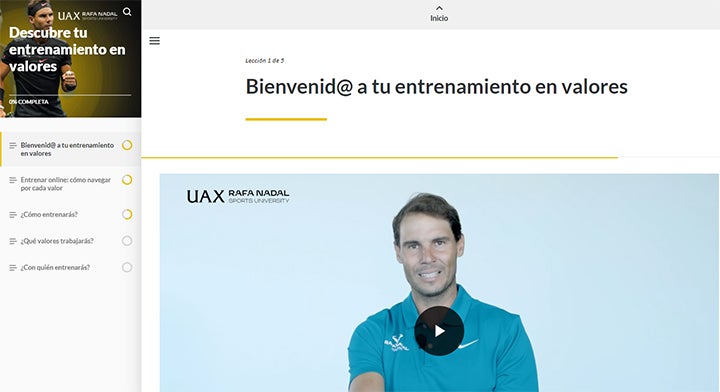
The Double Degree in Physical Activity and Sport Sciences and the degree in Nutrition has the Career Services where we provide you with everything you need to carry out your internships and institutions, to encourage contact with the professional world right from the start.
UAX has more than 100 internship agreements with top-level sports clubs and organisations, hospitals and leaders in the food industry:
Only UAX includes in your entrance exams to this university degree the compulsory stress test + full functional assessment report.
As you know, one of the requirements to access the degree in Physical Activity and Sport Sciences at any private university is to present the results of a stress test signed by a doctor. Normally this certificate can be obtained in specialised centres, but at UAX we save you this procedure, providing you with an exhaustive functional assessment report made up of the following:
Come and take the entrance tests and we will give you the results* together with your letter of admission. This not only saves you time, but also gives you valuable information about your performance and potential to start a career towards professional success.
Are you joining us? Start your admission process now.
*The results report submitted with your admission letter has no legal validity. The official legal certificate signed by the doctor will be given to you when you enrol.
You can consult the complete list of professors of the degree in nutrition and the list of professors of the degree in CAFYD .
You will undertake work placements at prestigious institutions, complementing your academic training with real-world experience at leading organisations.










Train with the best professionals
You will be taught by a team of experts and practising professionals from the sector, and you will receive specialist training from Rafa Nadal’s elite team, comprising coaches, fitness trainers and nutritionists (including Gemma Bes, who is also Carlos Sáinz’s nutritionist).
Coordinador de cantera y de fútbol base en el CD Leganés SAD. Ex entrenador de fútbol en la Escuela de la Real Federación Española de Fútbol, Real Madrid y Rayo Majadahonda.

Facultad de Ciencias de Salud y Deporte
Faculty of Health Sciences and Sport

Former coach and physical trainer Guangzhou Evergrande Football School (the biggest and most prominent team in the Chinese League) and Real Madrid Castilla (physical trainer). Head of High Performance at CD Leganés.

Physical trainer specialised in Gymnastics, training for 17 years with the National Rhythmic Gymnastics Team, twice world champion (2013 and 2014) and Olympic runner-up in Rio de Janeiro 2016.

PhD in Biochemistry and Molecular Biology from the Complutense University of Madrid. Research accredited by the CNEAI with 2 sexenios recognised, research activities at the Fundación Jiménez Díaz, as well as at Baylor College of Medicine, Houston, USA.
You’ll enjoy state-of-the-art facilities: over 1,000 m² of facilities, divided into 25 areas for practising around 20 different sports. You’ll be able to train at the UAX Fitness Centre, which has over 100 state-of-the-art machines, and you’ll undertake your studies at the sports science research unit.
Request visit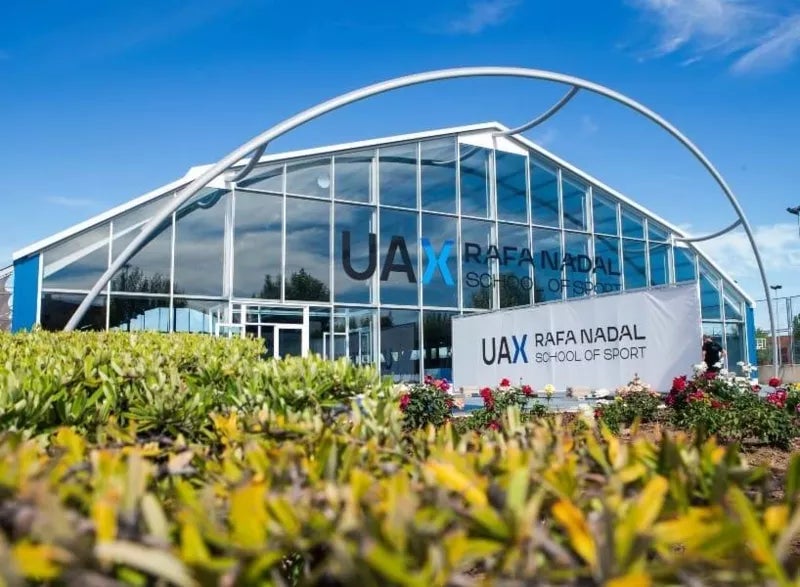
Unas instalaciones sostenibles de más de 2.000m2 con un diseño vanguardista y equipamiento de última generación con las que UAX amplía su campus y refuerza su apuesta por la excelencia en la formación en Salud y Deporte. Find out more

Cutting-edge sports facilities where you can carry out your work placement. Find out more
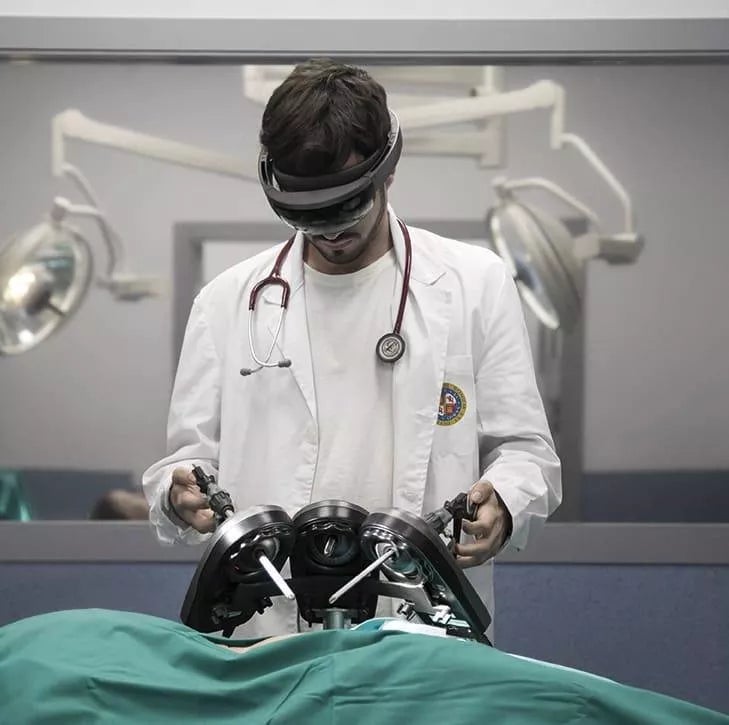
A unique facility in Spain where you can undergo your training in the most innovative and comprehensive manner. Find out more
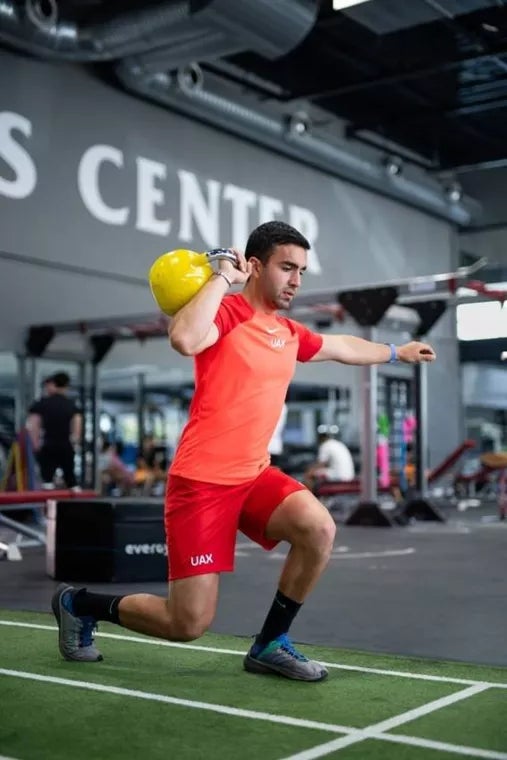
A unique, university-level sports club with the best facilities for multi-sport practice. Find out more
Prepare yourself to become a specialist in the area of health and sport. With the Double Degree in Physical Activity, Sport and Human Nutrition and Dietetics Sciences, you will be able to develop a career in various professions, including:
Not sure?
We will help you to see which programme suits your profile.

The first step is to contact our team of advisers to determine the best way to start your professional career with us, you can also arrange a personal visit from Monday to Saturday and get to know UAX first hand.

Help us get to know you a little better by starting the admission process. You will need to upload the documents required for the application to our portal.

You will take several tests, including a language test, a knowledge test and a video in which you will answer two short questions. We also need some additional information to complete the registration.

A student who does not wait for someone to offer solutions, but takes the initiative to research, learn and create on their own. Welcome!
We need to know a little bit about you so that we can provide you with a personalised service.
All fields are required
At UAX we know that studying is an investment, that's why we provide you with facilities so that you can access our degrees. Find out about some of our scholarships and grants to study the Double Degree in Physical Activity and Sport Sciences (CAFYD) and Human Nutrition and Dietetics:

This combination of studies will open many doors in the exciting world of health and sports performance.
There are several universities in Spain and other countries that offer this double degree. At UAX you will have a real health city where you can train with the best working professionals in the sports industry and the nutrition sector.
These are some of the facilities where you can study Sports Science + Nutrition with a practical approach (60% of the subject):
To study the Double Degree in CAFYD + Nutrition at UAX you can do it through the following access routes:
In addition, it is necessary to take a compulsory stress test signed by a doctor.
At UAX we save you this effort test procedure, providing you with an exhaustive functional assessment report made up of:
The Double Degree in Physical Activity Sciences + Human Nutrition and Dietetics has a duration of 5 years and 422 ECTS.
By studying the double degree in CAFYD + Human Nutrition and Dietetics you will obtain specialised training in the field of sports training, nutrition, sports performance and health.
Through a practical approach (60% of the degree) that will allow you to acquire the necessary skills for your professional development. You will have access to special facilities such as: Biological Laboratories, histology and pathological anatomy laboratories, physiology and metabolism laboratories, UAX Fitness Center with Motricity and Anatomy Room.
The double degree in Physical Activity and Nutrition Sciences at UAX is structured as follows:
In this way you will be able to implement the knowledge acquired about the human body and sports performance to Human Nutrition. As a result, you will become a professional profile expert in promoting health and sports planning by adding knowledge in diets and nutrition, all this from a 360º approach.
Once you have completed the Dual Degree in Physical Activity Sciences and Nutrition at UAX, you will be able to pursue a career in a range of professions, such as:
On the UAX blog, we have further information on career paths in human nutrition and dietetics , as well as those in INEF and CAFYD. We also cover the various specialisms within nutrition that you can explore to broaden your knowledge.
Other related qualifications
We offer a wide range of academic programmes, so you’re sure to find one that suits you.

Degree in Physical Activity and Sport Sciences (CAFYD)
In collaboration with:


Start:
September
Length:
4 years

Degree in Physical Activity and Sport Sciences (CAFYD) + Degree in Physiotherapy
In collaboration with:


Start:
September
Length:
5 years
Bachelor Degree in Physiotherapy
In collaboration with:

Start:
September
Length:
4 years

Bachelor’s Degree in Human Nutrition and Dietetics (Blended Learning)
In collaboration with:


Start:
October
Length:
4 years