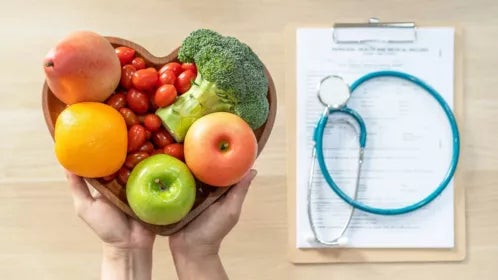


















Society is becoming increasingly aware of the importance of maintaining healthy lifestyle habits to enjoy good health and a good quality of life. Diet, as is well known, is essential for ensuring our bodies receive the nutrients they need on a day-to-day basis. In the vast majority of cases, our health and physical fitness depend on a balanced diet – though this must, of course, be combined with regular exercise.
On many occasions, it is necessary to seek the help of a professional specialising in nutrition and dietetics to assess our individual situation and offer us advice and a ‘tailor-made diet’, adapted to our body’s actual needs, so that we can eat properly, with all the necessary nutrients whilst maintaining the body’s balance.
Given this, it is no surprise that nutritionists and dietitians are increasingly in demand. However, to pursue this as a career, one must, of course, be properly prepared and trained to possess the skills and abilities required to successfully undertake this profession—which is so vital to society—whilst always bearing in mind the ultimate goal: maintaining the patient’s health.
Studying for a Bachelor’s Degree in Human Nutrition and Dietetics equips you to become an expert in dietetics and nutrition – a professional who demonstrates in-depth knowledge of the influence of a healthy diet on people’s health and who is capable, ultimately, to plan diets and create menus tailored to their patients’ actual needs.
Are you interested in studying this subject? Before making your decision, it is also important to consider the career opportunities offered by a university degree, in this case, Nutrition and Dietetics. This is the only way to know for certain what jobs we will be able to do after obtaining the degree, and whether we are genuinely motivated by the prospect of carrying out those types of jobs in the future.
Although it must be acknowledged that trying to predict future events and experiences, whatever they may be, is not always effective, as in life, the only way to truly know whether we like something or not is when we are actually doing it. So, the decision is in your hands.
Now, let’s suppose we’re the sort of people who want to know what the future holds for us, by finding out about the career prospects of that degree programme which, at first glance, we think is our future career choice – even though, naturally, there’s no 100 per cent guarantee that we’ll be happy doing that job later on. In such cases, look into it in more depth and find out what jobs you’ll be able to do.
A career as a nutritionist: everything you need to know
When studying for a Bachelor’s degree in Nutrition and Dietetics, you should be aware that, upon completing your university studies, you will be a multidisciplinary professional and will therefore have a wider and more diverse range of career options available to you.
An expert in food, nutrition and dietetics is a professional fully qualified to advise on people’s diets across a range of fields, such as: nutrition in health and illness, dietary advice, public health, government bodies, the food industry, research and teaching.

What are the career prospects for a nutritionist and dietitian?
- In their own practice. Setting up their own business – that is, working as a self-employed professional – is a very common career path for these professionals. In their own practice, they can advise and assist their clients with personalised diets, whilst also offering the services of an increasingly sought-after role: that of a nutritional adviser or coach.
- Hospitals, clinics and primary care centres. The role of the nutritionist-dietitian is becoming increasingly important in the public health sector. They assess each patient and compile their dietary history, enabling them to diagnose and design plans for each individual case.
- Units for the prevention and treatment of eating disorders. It is clear that in these units, nutritionists and dietitians play a vital role and provide essential professional support to doctors and psychiatrists.
- Geriatric centres, care homes, nurseries and schools. The diet and nutrition of both the elderly and children require special attention and expertise. Here, their work, as well as providing care, is also based on prevention and nutritional education to raise awareness of the importance of diet for health.
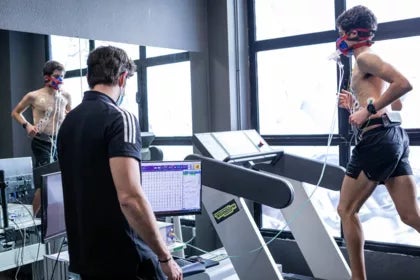
- Gyms and high-performance sports centres. Both professional athletes and those who exercise as part of their daily routine need to follow healthy eating habits. In this career path, it is an advantage if you study a dual degree in Physical Activity and Sport and in Human Nutrition and Dietetics.
- Food and pharmaceutical industries. There are excellent career opportunities in food companies and even in large supermarkets, helping to develop new food products, as well as working in the research, development and innovation department.
- Catering sector. In hotels, catering services, restaurants and canteens of all kinds, there is high demand for experts in nutrition and dietetics to plan healthy menus and diets and to ensure food quality and safety controls throughout the entire process.
- Public and international organisations. Professional nutritionists and dietitians can also work as advisers and policy designers in the food sector at national, regional or local level. Their work is also vital in developing countries, making them highly sought-after experts for NGOs or even international bodies such as the WHO or the FAO.
- Teaching and Research. Bear in mind that you could also work as a university lecturer or in vocational training, for example, and/or carry out research.
As you can see, if you choose to study a degree in Human Nutrition and Dietetics, you’ll have access to a wide variety of career options within the field of Health Sciences. Are you motivated to help others with their diet?