
See all Online Master's Degrees in Health
See all Master's Degrees in Engineering
Most searched curriculums
Official qualification
Take the leap into the legal profession with UAX.
An official Master’s degree developed in collaboration with the prestigious law firm Pérez-Llorca and with the participation of leading law firms, bringing you closer to the real-world practice of the legal sector.
100% pass rate in the Bar Exam.
In partnership with:

|

|

|

|

|
Developed in collaboration with the prestigious law firm Pérez-Llorca, this official Master’s programme prepares you using a practical, success-oriented methodology, which includes exam simulators with over 1,500 questions and specific training in partnership with the Mutualidad de la Abogacía.
Furthermore, the master’s programme involves leading law firms such as Cremades & Calvo-Sotelo, Babot Aranguren, Vilches Abogados and Montero Aramburu & Gómez-Villares Atencia, which give students a real-world insight into the practice of law. Added to this is access to a network of over 80 partner firms, including companies such as Deloitte, KPMG and Andersen, boosting your employability within the legal sector.
All this is delivered through a flexible online format, designed to allow you to balance your studies with your personal and professional life.
This Master’s degree is accredited by the Secretary of State for Justice and the Secretary General for Universities.
UAX is a member of AACSB, the world’s largest global alliance for business education. This affiliation with leading institutions in over 100 countries guarantees degrees of excellence that are internationally recognised and offer high employability.

You will acquire the technical, digital and professional skills needed to succeed in the legal profession.
Master all areas of law with up-to-date exam simulators and over 1500 questions.
Applying artificial intelligence and digital tools to transform legal practice
Learn how to set up and manage your own office with specialised training
Combine your official master's degree with certifications in compliance and legal cybersecurity
Access to an exclusive network of more than 80 offices and job opportunities
Develop soft skills in disruptive thinking, office management and leadership ethics.
Transform the way you work with generative artificial intelligence. This micro-credential enables you to apply tools such as ChatGPT, Copilot or Gemini in information analysis, content creation and decision-making, integrating innovative solutions in an ethical and responsible way in real professional environments.

Develop your professional potential through leadership and interpersonal skills. This micro-credential provides you with the keys to manage teams, communicate effectively and solve problems in real-world environments, combining personal leadership techniques with practical productivity and collaboration tools.
Master's Degree in Law and Public Procurement
First Year
FIRST FOUR-MONTH PERIOD
| Code | Subjects | Character* | ECTS | ||||||
|---|---|---|---|---|---|---|---|---|---|
| SM120514 | Skills for the Professional Environment of Lawyers and Solicitors | OB | 4 | ||||||
Skills for the Professional Environment of Lawyers and SolicitorsCódigo: SM120514 Imprimir Course 1: First-semester module. Compulsory. 4 credits. Profesores
Objectives The course aims to: 1. Legal public speaking. The art of oratory 2. Legal writing 3. Other skills for lawyers: database management, IT, legal tech. Skills for solicitors: legal IT and professional management, with particular reference to ICT-based judicial communication systems. Communication between solicitors and public registers Prerequisites None Competencies The competences that students must acquire during their studies, and which are required for the award of the degree, are set out in Article 10 of Royal Decree 64/2023 of 8 February, which approves the Regulations of Act 34/2006 of 30 October on access to the professions of solicitor and legal representative. 1. The Master’s Degree in Law and Legal Representation will provide students with the knowledge, skills and techniques necessary for the practice of law and legal representation, preparing them to pass the Professional Aptitude Test, as provided for in Article 7 of Law 34/2006, which has been amended by Law 15/2021 of 23 October and by Articles 16 et seq. of Royal Decree 64/2023 of 8 February, which approves the Regulations of Act 34/2006 of 30 October on access to the professions of lawyer and solicitor; this assessment is designed to verify that candidates have sufficient practical training to practise as a lawyer and solicitor, as well as knowledge of ethical and professional standards and, in particular, the acquisition of the competences that must be guaranteed by the training courses established by the Act and the Regulations on Access. 2. It will also provide students with the knowledge, skills and techniques necessary to identify the legal problems raised by their clients and their possible solutions and, consequently, to be able to provide them with legal advice, and, where necessary, to select and propose the correct strategy for the defence of their rights, either through alternative means to court proceedings or before the courts or public authorities, both nationally and internationally, in the case of lawyers; and, in the case of solicitors, it will provide the knowledge, skills and expertise regarding the procedural techniques necessary to carry out any acts entrusted to them by law or which they are authorised to perform within the various jurisdictions, as well as to ensure the correct and effective communication of information to the parties involved in the proceedings, and thus enable them to collaborate effectively with the courts in the enforcement of judicial decisions, whilst recognising and distinguishing between the private interests they represent and those of a public nature, the enforcement of which is entrusted to them by law and the courts. 3. Alfonso X El Sabio University will educate all its graduates through an educational programme that emphasises effective communication, teamwork, analytical thinking, creativity and ethical leadership, in support of the Sustainable Development Goals. All of this takes place within the framework of democratic values and respect for human rights and the social inclusion of all people, regardless of their race, gender or functional diversity. This approach is based on the acquisition of cross-cutting skills that are essential for 21st-century professionals and which are geared towards meeting the objectives for university education set out in Article 4 of Royal Decree 822/2021 and paragraphs 1 and 2 of Article 35 of Law 7/2021 of 20 May on climate change and the energy transition. Thus, according to Article 10 of Royal Decree 64/2023 of 8 February, which approves the Regulations of Act 34/2006 of 30 October on access to the professions of lawyer and solicitor, it is stipulated (quoted verbatim): “SPECIALISED TRAINING COURSES for the practice of the legal profession and the role of legal representative (including the Master’s degree) shall ensure the acquisition of at least the following professional competences (…). a) Possess skills enabling the application of the specialised knowledge acquired during the bachelor’s or master’s degree to professional practice before courts or public authorities, as well as in advisory roles. b) To be familiar with the techniques aimed at investigating and establishing the facts in the various types of proceedings, particularly the production of documents, cross-examinations and expert evidence. c) To be familiar with, and capable of integrating, the defence and assertion of clients’ rights within the framework of national and international systems of judicial protection. d) To be familiar with the various techniques for reconciling interests and to be able to find solutions to problems through alternative methods to judicial proceedings. e) To be familiar with procedural techniques and be able to carry out any acts entrusted to them or which they are authorised to perform within the various jurisdictions, paying particular attention to time limits, service of documents, enforcement and coercive measures. f) To develop the skills and abilities necessary for the correct and effective service of documents on the parties to the proceedings, and to collaborate effectively with the courts in the enforcement of judicial decisions, whilst understanding and distinguishing between the private interests they represent and those of a public nature, the enforcement of which is entrusted to them by law and the courts. g) To understand and be able to apply the professional ethical rights and duties in the relationships of a practising lawyer or solicitor with clients, other parties, courts or public authorities, and amongst other practising lawyers or solicitors, as well as with other professionals. h) To understand and assess the various responsibilities associated with the practice of the profession, including the basic functioning of legal aid and the promotion of social responsibility on the part of the practising lawyer or solicitor. i) To understand and apply the techniques for identifying and settling legal fees, tax obligations, the requirement to lodge court deposits, and covering whatever expenses and costs are necessary to ensure the effective judicial protection of their clients’ rights. j) Be able to identify conflicts of interest and understand the techniques for resolving them, establish the scope of professional secrecy and confidentiality, and preserve independence of judgement. k) Be able to identify the service and organisational requirements that are crucial for the provision of legal advice and representation in legal proceedings. l) Understand and be able to apply in practice the organisational, managerial and commercial aspects of the legal profession and legal representation, as well as the relevant legal framework governing professional bodies, taxation, employment and the protection of personal data. m) To develop the skills and abilities required to select the correct strategy for defending clients’ rights, taking into account the demands of the various areas of professional practice. n) To develop the ability to select the most appropriate means provided by the legal system for the provision of high-quality legal representation. ñ) To develop the skills and abilities necessary for the use of judicial procedures, protocols, systems and applications required for communication and cooperation with the administration of justice, with particular attention to those of an electronic, IT and telematic nature. o) Possess the necessary skills to make use of notarial and registry functions in the course of their work. p) Be able to develop skills that enable them to improve the efficiency of their work and enhance the overall functioning of the team or institution in which they work, through access to information sources, knowledge of languages, knowledge management and the use of relevant techniques and tools. q) To understand, organise and plan the individual and collective resources available for the practice of their profession in its various organisational forms. r) Be able to present facts orally and in writing, and to draw legal conclusions through argumentation, taking into account the context and the intended audience, in accordance, where applicable, with the specific procedures of each procedural field. s) Be able to carry out professional work within specific and interdisciplinary teams. t) Be able to develop interpersonal skills and abilities that facilitate professional practice in their dealings with the public, other professionals and institutions. In accordance with Article 13 of Royal Decree 64/2023 of 8 February, which approves the Regulations of Act 34/2006 of 30 October on access to the professions of solicitor and legal representative, the work placement programme shall have, amongst others, the following objectives: a) To address issues of professional ethics. b) To familiarise themselves with the functioning and challenges of institutions related to the practice of the legal profession and, where applicable, the legal representation profession. c) To gain an understanding of the work of other legal practitioners, as well as of professionals involved in the practice of their profession. d) To receive up-to-date information on career development and potential areas of practice, as well as on the tools available for managing one’s career. e) In general, to develop the competences and skills necessary for the practice of law and, where applicable, the practice of legal representation. RELATIONSHIP BETWEEN THE COMPETENCIES SET OUT IN THE REGULATIONS GOVERNING ACCESS TO THE LEGAL PROFESSION AND THE PROFESSION OF SOLICITOR AND THE PROPOSED LEARNING OUTCOMES d) To be familiar with the various techniques for the settlement of disputes and to know how to find solutions to problems through alternative methods to judicial proceedings. RK2: Describes in detail the various techniques for the settlement of disputes. ñ) Develop the skills and abilities necessary to use the judicial procedures, protocols, systems and applications required for communication and cooperation with the Administration of Justice, paying particular attention to those of an electronic, IT and telematic nature. RS6: Uses the judicial procedures, protocols, systems and applications required for communication and cooperation with the administration of justice, with particular attention to those of an electronic, IT and telematic nature. p) Be able to develop skills that enable them to improve the efficiency of their work and enhance the overall functioning of the team or institution in which they work, through access to information sources, language skills, knowledge management and the use of applied techniques and tools. RS7: Develops teamwork techniques aimed at achieving greater efficiency through access to information sources, knowledge of languages, knowledge management and the use of relevant techniques and tools. r) Be able to present facts orally and in writing, and to draw legal conclusions through reasoned argument, taking into account the context and the intended audience, in accordance, where applicable, with the specific procedures of each procedural field. RC6: Expresses themselves orally and in writing in a manner appropriate to the context and the specific needs or characteristics of each recipient, and derives legal consequences from the facts in a reasoned manner, across all procedural areas. Learning outcomes RK2: Describes in detail the various techniques for reconciling interests. RS6: Uses the judicial procedures, protocols, systems and applications required for communication and cooperation with the administration of justice, paying particular attention to those of an electronic, IT and telematic nature. RS7: Develops teamwork strategies aimed at achieving greater efficiency through access to information sources, language skills, knowledge management and the use of relevant techniques and tools. RC6: Expresses themselves orally and in writing in a manner appropriate to the context and the specific needs or characteristics of each recipient, and derives legal consequences from the facts in a reasoned manner, across all procedural areas. RODS: Develops effective communication, teamwork, analytical thinking, creativity and ethical leadership from a cross-cutting perspective, clearly inspired by democratic principles and values, as well as the Sustainable Development Goals, in order to operate with integrity in a professional environment. Description of course content 1. Legal public speaking. The art of public speaking 2. Legal writing 3. Other skills for lawyers: database management, IT, legal tech. Skills for solicitors: legal IT and professional management: with particular reference to ICT-based judicial communication systems. Communication between solicitors and public registers Training activities V1. Lectures V2. Interactive classes V3. Completing assignments or projects and solving challenges. V4. Independent study, case or problem-solving, and literature reviews. V5. Online tutoring V6. Knowledge assessments Assessment system and criteria Exams: 50 per cent. A pass is required Class activities: 20% Portfolio: 30% Reading list Core: 1. Ales, J. and Mata, J. D. The Magic of Mediation Aconcagua. 2010. ISBN: 9788496178359 2. Calonje Velázquez, C. Techniques of Legal Argumentation Aranzadi Publishers. 2014. ISBN: 9788490590850 3. Fábrega, J. Lawyers and Judges in World Literature Tirant lo Blanch. 2012. ISBN: 9788490336014 4. Madrid Bar Association Style Guide Marcial Pons, Legal and Social Publications. 2007. ISBN: 9788497685009 |
|||||||||
| SM120515 | Civil Procedure | OB | 6 | ||||||
Civil ProcedureCódigo: SM120515 Imprimir Course 1: First-semester module. Compulsory. 6 credits. Profesores
Objectives The course aims to: 1. Legal mechanisms for defence and representation, and strategies for defending clients’ rights. 2. The financial implications of legal proceedings. Legal aid. Settlement of court fees, expenses and costs necessary to ensure the effective judicial protection of the rights of those represented. 3. Procedural principles, procedural acts and acts of communication, with particular attention to time limits. 4. Organisation and structure of the courts and tribunals. Jurisdiction and competence, parties and subject-matter in civil proceedings 5. Declaratory proceedings and enforcement 6. Procedural specialisms and special proceedings Prerequisites None Competencies The competences that students must acquire during their studies, and which are required for the award of the degree, are set out in Article 10 of Royal Decree 64/2023 of 8 February, which approves the Regulations of Act 34/2006 of 30 October on access to the professions of solicitor and legal representative. 1. The Master’s Degree in Law and Legal Representation will provide students with the knowledge, skills and techniques necessary for the practice of law and legal representation, preparing them to pass the Professional Aptitude Test, as provided for in Article 7 of Law 34/2006, which has been amended by Law 15/2021 of 23 October and by Articles 16 et seq. of Royal Decree 64/2023 of 8 February, which approves the Regulations of Act 34/2006 of 30 October on access to the professions of solicitor and legal representative; this assessment is designed to verify that candidates have sufficient practical training to practise as a solicitor and legal representative, as well as knowledge of ethical and professional standards and, in particular, the acquisition of the competences that must be guaranteed by the training courses established by the Act and the Regulations on Access. 2. It will also provide students with the knowledge, skills and techniques necessary to identify the legal problems raised by their clients and their possible solutions and, consequently, to be able to provide them with legal advice, and, where necessary, to select and propose the correct strategy for the defence of their rights, either through alternative means to court proceedings or before the courts or public authorities, both nationally and internationally, in the case of lawyers; and, in the case of solicitors, it will provide the knowledge, skills and expertise regarding the procedural techniques necessary to carry out any acts entrusted to them by law or which they are authorised to perform within the various jurisdictions, as well as to ensure the correct and effective communication of information to the parties involved in the proceedings, and thus enable them to collaborate effectively with the courts in the enforcement of judicial decisions, whilst recognising and distinguishing between the private interests they represent and those of a public nature, the enforcement of which is entrusted to them by law and the courts. 3. Alfonso X El Sabio University will educate all its graduates through an educational programme that emphasises effective communication, teamwork, analytical thinking, creativity and ethical leadership, in support of the Sustainable Development Goals. All of this takes place within the framework of democratic values and respect for human rights and the social inclusion of all people, regardless of their race, gender or functional diversity. This approach is based on the acquisition of cross-cutting skills that are essential for 21st-century professionals and which are geared towards meeting the objectives for university education set out in Article 4 of Royal Decree 822/2021 and paragraphs 1 and 2 of Article 35 of Law 7/2021 of 20 May on climate change and the energy transition. Thus, according to Article 10 of Royal Decree 64/2023 of 8 February, which approves the Regulations of Act 34/2006 of 30 October on access to the professions of lawyer and solicitor, it is stipulated (quoted verbatim): “SPECIALISED TRAINING COURSES for the practice of the legal profession and the role of legal representative (including the Master’s degree) shall ensure the acquisition of at least the following professional competences (…). a) Possess skills enabling the application of the specialised knowledge acquired during the bachelor’s or master’s degree to professional practice before courts or public authorities, as well as in advisory roles. b) To be familiar with the techniques aimed at investigating and establishing the facts in the various types of proceedings, particularly the production of documents, cross-examinations and expert evidence. c) To be familiar with, and capable of integrating, the defence and assertion of clients’ rights within the framework of national and international systems of judicial protection. d) To be familiar with the various techniques for reconciling interests and to be able to find solutions to problems through alternative methods to judicial proceedings. e) To be familiar with procedural techniques and be able to carry out any acts entrusted to them or which they are authorised to perform within the various jurisdictions, paying particular attention to time limits, service of documents, enforcement and coercive measures. f) To develop the skills and abilities necessary for the correct and effective service of documents on the parties to the proceedings, and to collaborate effectively with the courts in the enforcement of judicial decisions, whilst understanding and distinguishing between the private interests they represent and those of a public nature, the enforcement of which is entrusted to them by law and the courts. g) To understand and be able to apply the professional ethical rights and duties in the relationships of a practising lawyer or solicitor with clients, other parties, courts or public authorities, and with other practising lawyers or solicitors, as well as with other professionals. h) To understand and assess the various responsibilities associated with the practice of the profession, including the basic functioning of legal aid and the promotion of social responsibility on the part of the practising lawyer or solicitor. i) To understand and apply the techniques for identifying and settling legal fees, tax obligations, the requirement to lodge court deposits, and covering whatever expenses and costs are necessary to ensure the effective judicial protection of their clients’ rights. j) Be able to identify conflicts of interest and understand the techniques for resolving them, establish the scope of professional secrecy and confidentiality, and preserve independence of judgement. k) Be able to identify the service and organisational requirements that are crucial for the provision of legal advice and representation in legal proceedings. l) Understand and be able to apply in practice the organisational, managerial and commercial aspects of the legal profession and the role of solicitors, as well as the relevant legal framework governing professional bodies, taxation, employment and the protection of personal data. m) To develop the skills and abilities required to select the correct strategy for defending clients’ rights, taking into account the demands of the various areas of professional practice. n) To develop the ability to select the most appropriate means provided by the legal system for the provision of high-quality legal representation. ñ) To develop the skills and abilities necessary for the use of judicial procedures, protocols, systems and applications required for communication and cooperation with the administration of justice, with particular attention to those of an electronic, IT and telematic nature. o) Possess the necessary skills to make use of notarial and registry functions in the course of their work. p) Be able to develop skills that enable them to improve the efficiency of their work and enhance the overall functioning of the team or institution in which they work, through access to information sources, knowledge of languages, knowledge management and the use of relevant techniques and tools. q) To understand, organise and plan the individual and collective resources available for the practice of their profession in its various organisational forms. r) Be able to present facts orally and in writing, and to draw legal conclusions through argumentation, taking into account the context and the intended audience, in accordance, where applicable, with the specific procedures of each procedural field. s) Be able to carry out professional work within specific and interdisciplinary teams. t) Be able to develop interpersonal skills and abilities that facilitate professional practice in their dealings with the public, other professionals and institutions. In accordance with Article 13 of Royal Decree 64/2023 of 8 February, which approves the Regulations of Act 34/2006 of 30 October on access to the professions of solicitor and legal representative, the work placement programme shall have, amongst others, the following objectives: a) To address issues of professional ethics. b) To familiarise themselves with the functioning and challenges of institutions related to the practice of the legal profession and, where applicable, the legal representation profession. c) To gain an understanding of the work of other legal practitioners, as well as of professionals involved in the practice of their profession. d) To receive up-to-date information on career development and potential areas of practice, as well as on the tools for managing one’s career. e) In general, to develop the competences and skills necessary for the practice of law and, where applicable, the practice of legal representation. RELATIONSHIP BETWEEN THE COMPETENCIES SET OUT IN THE REGULATIONS GOVERNING ACCESS TO THE LEGAL PROFESSION AND THE PROFESSION OF SOLICITOR AND THE PROPOSED LEARNING OUTCOMES b) To be familiar with the techniques aimed at ascertaining and establishing the facts in the various types of proceedings, in particular the production of documents, examinations and expert evidence. RK1: Recognises, in the drafting of procedural documents, during cross-examinations and in expert evidence, the techniques aimed at investigating and establishing the facts in different types of proceedings. d) Understand the various techniques for reconciling interests and know how to find solutions to problems through alternative methods to judicial proceedings. RK2: Describes in detail the various techniques for reconciling interests. j) Be able to identify conflicts of interest and understand the techniques for resolving them, establish the scope of professional secrecy and confidentiality, and preserve independence of judgement. RK4: Recognises situations of conflict of interest that may arise in professional practice. RK5: Identifies the most appropriate conflict resolution techniques for each situation and context. m) Develop the skills and abilities to choose the correct strategy for defending clients’ rights, taking into account the requirements of the various areas of professional practice. RK7: Determines the appropriate administrative or judicial body and the appropriate action or procedure for defending clients’ rights. n) Ability to select the most appropriate means provided by the legal system to deliver high-quality professional representation. RK8: Recognises the appropriate legal instrument for representing clients before third parties, public authorities and the courts. a) Possess the skills to apply the specialist knowledge acquired during the degree to professional practice before courts or public authorities, as well as in an advisory capacity. RS1: Correctly and appropriately applies the specialist knowledge acquired during the degree programme in professional practice before courts or public authorities, as well as in an advisory capacity, whilst respecting democratic principles and values and the Sustainable Development Goals. f) Develop the skills and abilities necessary for the correct and effective communication with the parties to the proceedings, and for effective collaboration with the courts in the enforcement of judicial decisions, whilst understanding and distinguishing between the private interests they represent and those of a public nature, the enforcement of which is entrusted to them by law and the courts. RS3: Carries out communications with the parties to the proceedings effectively and correctly. RS4: Distinguishes, clearly and precisely, between the private interests represented by legal professionals and those of a public nature, the enforcement of which is entrusted to them by law and the courts, in order to collaborate effectively with the courts in the enforcement of judicial decisions. j) Be able to identify conflicts of interest and understand the techniques for resolving them, establish the scope of professional secrecy and confidentiality, and preserve independence of judgement RS5: Applies the most appropriate conflict resolution techniques to each situation and context, establishes the scope of professional secrecy and preserves independence of judgement. ñ) Develop the skills and abilities necessary to use the judicial procedures, protocols, systems and applications required for communication and cooperation with the administration of justice, paying particular attention to those of an electronic, IT and telematic nature. RS6: Uses the judicial procedures, protocols, systems and applications required for communication and cooperation with the administration of justice, paying particular attention to those of an electronic, IT and telematic nature. c) Understand and be able to integrate the defence and assertion of clients’ rights within the framework of national and international systems of judicial protection. RC1: Understands and applies appropriately the right to defence and the procedural representation of clients within the framework of national and international systems of judicial protection. e) To be familiar with procedural techniques and be able to carry out any acts entrusted to them or which they are authorised to perform within the various jurisdictions, with particular attention to time limits, communications, enforcement and coercive measures. RC2: Understands and applies procedural techniques appropriately when carrying out actions within the various levels of the judicial system, paying particular attention to time limits, service of documents, enforcement and enforcement procedures. Learning outcomes RK,1 Recognises, in the drafting of procedural documents, during cross-examinations and in expert evidence, the techniques aimed at ascertaining and establishing the facts in the different types of proceedings. RK2. Describes in detail the various techniques for reconciling conflicting interests. RK5 Identifies the most appropriate conflict resolution techniques for each situation and context RK6 Formulates the key requirements regarding service provision and organisation in legal advice and litigation representation. RK7 Determines the appropriate administrative or judicial body and the appropriate action or procedure for the defence of clients’ rights. RK8 Recognises the appropriate legal instrument for representing interested parties before third parties, public authorities and the courts. RS1 Correctly and appropriately applies the specialist knowledge acquired during the degree programme in professional practice before courts or public authorities, as well as in advisory roles, whilst respecting democratic principles and values and the Sustainable Development Goals. RS3 Carries out, effectively and correctly, the acts of communication between the parties to the proceedings. RS4 Distinguishes, clearly and precisely, between the private interests represented by legal professionals and those of a public nature, the enforcement of which is entrusted to them by law and the courts, in order to collaborate effectively with the courts in the enforcement of judicial decisions. RS5 Applies the most appropriate conflict resolution techniques to each situation and context, establishes the scope of professional secrecy and preserves independence of judgement. RS6 Uses the judicial procedures, protocols, systems and applications required for communication and cooperation with the administration of justice, paying particular attention to those of an electronic, IT and telematic nature. RC1 Understands and applies appropriately the right to a defence and the procedural representation of clients within the framework of national and international systems of judicial protection. RC2 Understands and applies procedural techniques correctly when carrying out proceedings in the various jurisdictions, paying particular attention to time limits, notices of service, enforcement and coercive measures. Description of the content 1. Legal mechanisms for defence and representation, and strategies for defending clients’ rights. 2. Financial implications of legal proceedings. Legal aid. Calculation of fees, expenses and costs necessary to ensure the effective judicial protection of the rights of those represented. 3. Procedural principles, procedural acts and service of documents, with particular attention to time limits. 4. Organisation and structure of the courts and tribunals. Jurisdiction and competence, parties and subject-matter in civil proceedings 5. Declaratory proceedings and enforcement 6. Procedural specialisms and special proceedings Training activities V1. Lectures V2. Interactive classes V3. Completing assignments or projects and solving challenges. V4. Independent study, case studies or problem-solving, and literature reviews. V5. Online tutoring V6. Knowledge assessments Assessment system and criteria Exams: 50 per cent. A pass is required Class activities: 20% Portfolio: 30% Reading list Core: 1. Armenta Deu, M.ª T. Lessons in Civil Procedural Law (12th ed.) Marcial Pons, Ediciones Jurídicas y Sociales. 2020. ISBN: 9788413819938 2.- Banacloche Palao, J. and Cubillo López, I. Fundamental Aspects of Civil Procedure Law (4th ed.) La Ley. 2018. ISBN: 9788419905888 3. Gaberí Llobregat, J. Civil Procedural Law (5th ed.) Wolters Kluwer. 2019. ISBN: 9788490903889 Supplementary: 4.- Martín González, M. Acts of Communication and Their Link to the Effective Exercise of the Right of Defence Dykinson. 2023. ISBN: 9788411227360 5.- Valenzuela Serrano, A. G. The right to effective judicial protection Círculo Rojo. 2018. ISBN: 9788491837862 |
|||||||||
| SM120516 | Advisory services in the private sector, both nationally and internationally: Civil Law, Commercial Law, Employment Law | OB | 6 | ||||||
Advisory services in the private sector, both nationally and internationally: Civil Law, Commercial Law, Employment LawCódigo: SM120516 Imprimir Course 1: First-semester module. Compulsory. 6 credits. Profesores
Objectives The objectives of the module are: 1. Civil Law I: Regional law, the individual, family and inheritance 2. Civil Law II: Contracts 3. Civil Law III: Property rights, civil liability. Special reference to property registration law 4. Commercial Law 5. Private International Law 6. Employment Law Prerequisites None Learning Outcomes The competences that students must acquire during their studies, and which are required for the award of the degree, are set out in Article 10 of Royal Decree 64/2023 of 8 February, which approves the Regulations of Act 34/2006 of 30 October on access to the professions of solicitor and legal representative. 1. The Master’s Degree in Law and Legal Representation will provide students with the knowledge, skills and techniques necessary for the practice of law and legal representation, preparing them to pass the Professional Aptitude Test, as provided for in Article 7 of Law 34/2006, which has been amended by Law 15/2021 of 23 October and by Articles 16 et seq. of Royal Decree 64/2023 of 8 February, which approves the Regulations of Act 34/2006 of 30 October on access to the professions of lawyer and solicitor; this assessment is designed to verify that candidates have sufficient practical training to practise as a lawyer and solicitor, as well as knowledge of ethical and professional standards and, in particular, the acquisition of the competences that must be guaranteed by the training courses established by the Act and the Regulations on Access. 2. It will also provide students with the knowledge, skills and techniques necessary to identify the legal problems raised by their clients and their possible solutions and, consequently, to be able to provide them with legal advice, and, where necessary, to select and propose the correct strategy for the defence of their rights, either through alternative means to court proceedings or before the courts or public authorities, both nationally and internationally, in the case of lawyers; and, in the case of solicitors, it will provide the knowledge, skills and expertise regarding the procedural techniques necessary to carry out any acts entrusted to them by law or which they are authorised to perform within the various jurisdictions, as well as to ensure the correct and effective communication of information to the parties involved in the proceedings, and thus enable them to collaborate effectively with the courts in the enforcement of judicial decisions, whilst recognising and distinguishing between the private interests they represent and those of a public nature, the enforcement of which is entrusted to them by law and the courts. 3. Alfonso X El Sabio University will educate all its graduates through an educational programme that emphasises effective communication, teamwork, analytical thinking, creativity and ethical leadership, in support of the Sustainable Development Goals. All of this takes place within the framework of democratic values and respect for human rights and the social inclusion of all people, regardless of their race, gender or functional diversity. This approach is based on the acquisition of cross-cutting skills that are essential for 21st-century professionals and which are geared towards fulfilling the objectives for university education set out in Article 4 of Royal Decree 822/2021 and paragraphs 1 and 2 of Article 35 of Law 7/2021 of 20 May on climate change and the energy transition. Thus, according to Article 10 of Royal Decree 64/2023 of 8 February, which approves the Regulations of Act 34/2006 of 30 October on access to the professions of lawyer and solicitor, it is stipulated (quoted verbatim): “SPECIALISED TRAINING COURSES for the practice of the legal profession and the role of legal representative (including the Master’s degree) shall ensure the acquisition of at least the following professional competences (…). a) Possess skills enabling the application of the specialist knowledge acquired during the bachelor’s or master’s degree to professional practice before courts or public authorities, as well as in an advisory capacity. b) To be familiar with the techniques aimed at investigating and establishing the facts in the various types of proceedings, particularly the production of documents, cross-examinations and expert evidence. c) To be familiar with, and capable of integrating, the defence and assertion of clients’ rights within the framework of national and international systems of judicial protection. d) To be familiar with the various techniques for reconciling interests and to be able to find solutions to problems through alternative methods to judicial proceedings. e) To be familiar with procedural techniques and be able to carry out any acts entrusted to them or which they are authorised to perform within the various jurisdictions, paying particular attention to time limits, service of documents, enforcement and coercive measures. f) To develop the skills and abilities necessary for the correct and effective service of documents on the parties to the proceedings, and to collaborate effectively with the courts in the enforcement of judicial decisions, whilst understanding and distinguishing between the private interests they represent and those of a public nature, the enforcement of which is entrusted to them by law and the courts. g) To understand and be able to apply the professional ethical rights and duties in the relationships of a practising lawyer or solicitor with clients, other parties, courts or public authorities, and amongst other practising lawyers or solicitors, as well as with other professionals. h) To understand and assess the various responsibilities associated with the practice of the profession, including the basic functioning of legal aid and the promotion of social responsibility on the part of the practising lawyer or solicitor. i) To understand and apply the techniques for identifying and settling legal fees, tax obligations, the requirement to lodge court deposits, and covering whatever expenses and costs are necessary to ensure the effective judicial protection of their clients’ rights. j) Be able to identify conflicts of interest and understand the techniques for resolving them, establish the scope of professional secrecy and confidentiality, and preserve independence of judgement. k) Be able to identify the service and organisational requirements that are crucial for the provision of legal advice and representation in legal proceedings. l) Understand and be able to apply in practice the organisational, managerial and commercial aspects of the legal profession and legal representation, as well as the relevant legal framework governing professional bodies, taxation, employment and the protection of personal data. m) To develop the skills and abilities required to select the correct strategy for defending clients’ rights, taking into account the demands of the various areas of professional practice. n) To develop the ability to select the most appropriate means provided by the legal system for the provision of high-quality legal representation. ñ) To develop the skills and abilities necessary for the use of judicial procedures, protocols, systems and applications required for communication and cooperation with the administration of justice, with particular attention to those of an electronic, IT and telematic nature. o) Possess the necessary skills to make use of notarial and registry functions in the course of their work. p) Be able to develop skills that enable them to improve the efficiency of their work and enhance the overall functioning of the team or institution in which they work, through access to information sources, knowledge of languages, knowledge management and the use of relevant techniques and tools. q) To understand, organise and plan the individual and collective resources available for the practice of their profession in its various organisational forms. r) Be able to present facts orally and in writing, and to draw legal conclusions through argumentation, taking into account the context and the intended audience, in accordance, where applicable, with the specific procedures of each procedural field. s) Be able to carry out professional work within specific and interdisciplinary teams. t) Be able to develop interpersonal skills and abilities that facilitate professional practice in their dealings with the public, other professionals and institutions. In accordance with Article 13 of Royal Decree 64/2023 of 8 February, which approves the Regulations of Act 34/2006 of 30 October on access to the professions of solicitor and legal representative, the work placement programme shall have, amongst others, the following objectives: a) To address issues of professional ethics. b) To familiarise themselves with the functioning and challenges of institutions related to the practice of the legal profession and, where applicable, the legal representation profession. c) To gain an understanding of the work of other legal practitioners, as well as of professionals involved in the practice of their profession. d) To receive up-to-date information on career development and potential areas of practice, as well as on the tools available for managing one’s career. e) In general, to develop the competences and skills necessary for the practice of law and, where applicable, the practice of legal representation. RELATIONSHIP BETWEEN THE COMPETENCIES SET OUT IN THE REGULATIONS GOVERNING ACCESS TO THE LEGAL PROFESSION AND THE NOTARIAL PROFESSION AND THE PROPOSED LEARNING OUTCOMES o) Possess the skills necessary to make use of notarial and registration functions in the course of their professional practice. RK9: Identifies the legal acts which, to be valid, require notarial intervention and those which require registration. a) Possess the skills to apply the specialist knowledge acquired during the degree programme to professional practice before courts or public authorities, as well as in an advisory capacity. RS1: Correctly and appropriately applies the specialist knowledge acquired during the degree programme in professional practice before courts or public authorities, as well as in an advisory capacity, whilst respecting democratic principles and values and the Sustainable Development Goals. f) Develop the skills and abilities necessary for the correct and effective communication with the parties to the proceedings, and for effective collaboration with the courts in the enforcement of judicial decisions, whilst understanding and distinguishing between the private interests they represent and those of a public nature, the enforcement of which is entrusted to them by law and the courts. RS4: Distinguish, clearly and precisely, between the private interests represented by legal professionals and those of a public nature, the enforcement of which is entrusted to them by law and the courts, in order to collaborate effectively with the courts in the enforcement of judicial decisions. Learning outcomes RK9 Identifies the legal acts which, to be valid, require the involvement of a notary and those which require registration. RS1: Correctly and appropriately applies the specialist knowledge acquired during the degree programme in professional practice before courts or public authorities, as well as in advisory roles, whilst respecting democratic principles and values and the Sustainable Development Goals. RS4: Distinguishes, clearly and precisely, between the private interests represented by legal professionals and those of a public nature, the enforcement of which is entrusted to them by law and the courts, in order to collaborate effectively with the courts in the enforcement of judicial decisions. Description of course content 1. Civil Law I: Regional law, the individual, family and succession 2. Civil Law II: Contracts 3. Civil Law III: Property rights, civil liability. Special reference to property registration law 4. Commercial Law 5. Private International Law 6. Employment Law Teaching activities V1. Lectures V2. Interactive classes V3. Completing assignments or projects and solving challenges. V4. Independent study, case studies or problem-solving, and literature reviews. V5. Online tutoring V6. Knowledge assessments Assessment system and criteria Exams: 50 per cent. A pass is required Class activities: 20% Portfolio: 30% Reading list Core: 1. BROSETA PONT, M Handbook of Commercial Law, Volume I (30th ed.) Tecnos. 2023. ISBN: 9788430987931 2.- CARRASCO PERERA, A (ed.) ‘Civil Law’, Introduction, Sources, Personal Rights, Subjective Rights, Property Rights (5th ed.) Tecnos. 2016. ISBN: 9788430968596 3.- ESPLUGUES MOTA, C, IGLESIAS BUHIGUES, J.L., PALAO MORENO, G. Private International Law Tirant Lo Blanch. 2023. ISBN: 9788411699457 4.- MARTIN VALDERDE, A.; RODRIGUEZ-SAÑUDO GUTIERREZ, F; GARCIA MURCIA, J. Labour Law (latest edition) Tecnos. 2025. ISBN: 9788430958948 |
|||||||||
| SM120517 | Labour Procedure | OB | 4 | ||||||
Labour ProcedureCódigo: SM120517 Imprimir Course 1: First-semester module. Compulsory. 4 credits. Profesores
Objectives The objectives of the module are: 1. The jurisdiction of the Social Court 2. Ordinary proceedings and other procedural forms 3. The means of challenging decisions in labour matters 4. Enforcement in labour matters Bibliography Core: 1. Albiol Ortuño, M., Alfonso Mellado, C. and Blasco Pellicer, A Labour Procedural Law Tirant lo Blanch. 2015. ISBN: 9788490862612 2.- FOLGUERA CRESPO, J.A.; SALINAS MOLINA, F.; SEGOVIANO ASTABURUAGA, M.L., (EDS.) Commentary on the Act Regulating Labour Jurisdiction Lex Nova. 2022. ISBN: 9788498984491 3.- MONTOYA MELGAR, A; GALAINA MORENO, J.; SEMPERE NAVATTO, A.; RIOS SALMERÓN, B.; CAVAS MARTÍNEZ, F.; LUJÁN ALCARÁZ, J. Course on Labour Procedure Tecnos. 2016. ISBN: 9788416924585 |
|||||||||
| SM120518 | Administrative Litigation Procedure | OB | 4 | ||||||
Administrative Litigation ProcedureCódigo: SM120518 Imprimir Course 1: First-semester module. Compulsory. 4 credits. Profesores
Objectives The objectives of the module are: 1. Judicial review: scope and extent; bodies of the contentious-administrative jurisdiction; jurisdiction; parties; and subject matter of the appeal 2. Proceedings at first or sole instance; summary proceedings 3. Appeals in contentious-administrative proceedings and the enforcement of judgements 4. Special proceedings, time limits, interim measures, procedural incidents and the invalidity of procedural acts. Legal costs Prerequisites None Competencies The competences that students must acquire during their studies, and which are required for the award of the degree, are set out in Article 10 of Royal Decree 64/2023 of 8 February, which approves the Regulations of Act 34/2006 of 30 October on access to the professions of solicitor and legal representative. 1. The Master’s Degree in Law and Legal Representation will provide students with the knowledge, skills and techniques necessary for the practice of law and legal representation, preparing them to pass the Professional Aptitude Test, as provided for in Article 7 of Law 34/2006, which has been amended by Law 15/2021 of 23 October and by Articles 16 et seq. of Royal Decree 64/2023 of 8 February, which approves the Regulations of Act 34/2006 of 30 October on access to the professions of solicitor and legal representative; this assessment is designed to verify that candidates have sufficient practical training to practise as a solicitor and legal representative, as well as knowledge of ethical and professional standards and, in particular, the acquisition of the competences that must be guaranteed by the training courses established by the Act and the Regulations on Access. 2. It will also provide students with the knowledge, skills and techniques necessary to identify the legal problems raised by their clients and their possible solutions and, consequently, to be able to provide them with legal advice, and, where necessary, to select and propose the correct strategy for the defence of their rights, either through alternative means to court proceedings or before the courts or public authorities, both nationally and internationally, in the case of lawyers; and, in the case of solicitors, it will provide the knowledge, skills and expertise regarding the procedural techniques necessary to carry out any acts entrusted to them by law or which they are authorised to perform within the various jurisdictions, as well as to ensure the correct and effective communication of information to the parties involved in the proceedings, and thus enable them to collaborate effectively with the courts in the enforcement of judicial decisions, whilst recognising and distinguishing between the private interests they represent and those of a public nature, the enforcement of which is entrusted to them by law and the courts. 3. Alfonso X El Sabio University will educate all its graduates through an educational programme that emphasises effective communication, teamwork, analytical thinking, creativity and ethical leadership, in support of the Sustainable Development Goals. All of this takes place within the framework of democratic values and respect for human rights and the social inclusion of all people, regardless of their race, gender or functional diversity. This approach is based on the acquisition of cross-cutting skills that are essential for 21st-century professionals and which are geared towards meeting the objectives for university education set out in Article 4 of Royal Decree 822/2021 and paragraphs 1 and 2 of Article 35 of Law 7/2021 of 20 May on climate change and the energy transition. Thus, according to Article 10 of Royal Decree 64/2023 of 8 February, which approves the Regulations of Act 34/2006 of 30 October on access to the professions of lawyer and solicitor, it is stipulated (quoted verbatim): “SPECIALISED TRAINING COURSES for the practice of the legal profession and the role of legal representative (including the Master’s degree) shall ensure the acquisition of at least the following professional competences (…). a) Possess skills enabling the application of the specialised knowledge acquired during the bachelor’s or master’s degree to professional practice before courts or public authorities, as well as in advisory roles. b) To be familiar with the techniques aimed at investigating and establishing the facts in the various types of proceedings, particularly the production of documents, cross-examinations and expert evidence. c) To be familiar with, and capable of integrating, the defence and assertion of clients’ rights within the framework of national and international systems of judicial protection. d) To be familiar with the various techniques for reconciling interests and to be able to find solutions to problems through alternative methods to judicial proceedings. e) To be familiar with procedural techniques and be able to carry out any acts entrusted to them or which they are authorised to perform within the various jurisdictions, paying particular attention to time limits, service of documents, enforcement and coercive measures. f) To develop the skills and abilities necessary for the correct and effective service of documents on the parties to the proceedings, and to collaborate effectively with the courts in the enforcement of judicial decisions, whilst understanding and distinguishing between the private interests they represent and those of a public nature, the enforcement of which is entrusted to them by law and the courts. g) To understand and be able to apply the professional ethical rights and duties in the relationships of a practising lawyer or solicitor with clients, other parties, courts or public authorities, and amongst other practising lawyers or solicitors, as well as with other professionals. h) To understand and assess the various responsibilities associated with the practice of the profession, including the basic functioning of legal aid and the promotion of social responsibility on the part of the practising lawyer or solicitor. i) To understand and apply the techniques for identifying and settling legal fees, tax obligations, the requirement to lodge court deposits, and covering whatever expenses and costs are necessary to ensure the effective judicial protection of their clients’ rights. j) Be able to identify conflicts of interest and understand the techniques for resolving them, establish the scope of professional secrecy and confidentiality, and preserve independence of judgement. k) Be able to identify the service and organisational requirements that are crucial for the provision of legal advice and representation in legal proceedings. l) Understand and be able to apply in practice the organisational, managerial and commercial aspects of the legal profession and legal representation, as well as the relevant legal framework governing professional bodies, taxation, employment and the protection of personal data. m) To develop the skills and abilities required to select the correct strategy for defending clients’ rights, taking into account the demands of the various areas of professional practice. n) To develop the ability to select the most appropriate means provided by the legal system for the provision of high-quality legal representation. ñ) To develop the skills and abilities necessary for the use of judicial procedures, protocols, systems and applications required for communication and cooperation with the administration of justice, with particular attention to those of an electronic, IT and telematic nature. o) Possess the necessary skills to make use of notarial and registry functions in the course of their work. p) Be able to develop skills that enable them to improve the efficiency of their work and enhance the overall functioning of the team or institution in which they work, through access to information sources, knowledge of languages, knowledge management and the use of relevant techniques and tools. q) To understand, organise and plan the individual and collective resources available for the practice of their profession in its various organisational forms. r) Be able to present facts orally and in writing, and to draw legal conclusions through argumentation, taking into account the context and the intended audience, in accordance, where applicable, with the specific procedures of each procedural field. s) Be able to carry out professional work within specific and interdisciplinary teams. t) Be able to develop interpersonal skills and abilities that facilitate professional practice in their dealings with the public, other professionals and institutions. In accordance with Article 13 of Royal Decree 64/2023 of 8 February, which approves the Regulations of Act 34/2006 of 30 October on access to the professions of solicitor and legal representative, the work placement programme shall have, amongst others, the following objectives: a) To address issues of professional ethics. b) To familiarise themselves with the functioning and challenges of institutions related to the practice of the legal profession and, where applicable, the legal representation profession. c) To gain an understanding of the work of other legal practitioners, as well as of professionals involved in the practice of their profession. d) To receive up-to-date information on career development and potential areas of practice, as well as on the tools available for managing one’s career. e) In general, to develop the competences and skills necessary for the practice of law and, where applicable, the practice of legal representation. RELATIONSHIP BETWEEN THE COMPETENCIES SET OUT IN THE REGULATIONS GOVERNING ACCESS TO THE LEGAL PROFESSION AND THE PROFESSION OF SOLICITOR AND THE PROPOSED LEARNING OUTCOMES b) To be familiar with the techniques aimed at ascertaining and establishing the facts in the various types of proceedings, in particular the production of documents, examinations and expert evidence. RK1: Recognises, in the drafting of procedural documents, during cross-examinations and in expert evidence, the techniques aimed at investigating and establishing the facts in different types of proceedings. d) Understand the various techniques for reconciling interests and know how to find solutions to problems through alternative methods to judicial proceedings. RK2: Describes in detail the various techniques for reconciling interests. j) Be able to identify conflicts of interest and understand the techniques for resolving them, establish the scope of professional secrecy and confidentiality, and preserve independence of judgement. RK4: Recognises situations of conflict of interest that may arise in professional practice. RK5: Identifies the most appropriate conflict resolution techniques for each situation and context. m) Develop the skills and abilities to choose the correct strategy for defending clients’ rights, taking into account the requirements of the various areas of professional practice. RK7: Determines the appropriate administrative or judicial body and the appropriate action or procedure for defending clients’ rights. n) Ability to select the most appropriate means provided by the legal system to deliver high-quality professional representation. RK8: Recognises the appropriate legal instrument for representing clients before third parties, public authorities and the courts. a) Possess the skills to apply the specialist knowledge acquired during the degree programme to professional practice before courts or public authorities, as well as in an advisory capacity. RS1: Correctly and appropriately applies the specialist knowledge acquired during the degree programme in professional practice before courts or public authorities, as well as in an advisory capacity, whilst respecting democratic principles and values and the Sustainable Development Goals. f) Develop the skills and abilities necessary for the correct and effective communication with the parties to the proceedings, and for effective collaboration with the courts in the enforcement of judicial decisions, whilst understanding and distinguishing between the private interests they represent and those of a public nature, the enforcement of which is entrusted to them by law and the courts. RS3: Carries out communications with the parties to the proceedings effectively and correctly. RS4: Distinguishes, clearly and precisely, between the private interests represented by legal professionals and those of a public nature, the enforcement of which is entrusted to them by law and the courts, in order to collaborate effectively with the courts in the enforcement of judicial decisions. j) Be able to identify conflicts of interest and understand the techniques for resolving them, establish the scope of professional secrecy and confidentiality, and preserve independence of judgement RS5: Applies the conflict resolution techniques most relevant to each situation and context, establishes the scope of professional secrecy and preserves independence of judgement. ñ) Develop the skills and abilities necessary to use the judicial procedures, protocols, systems and applications required for communication and cooperation with the administration of justice, paying particular attention to those of an electronic, IT and telematic nature. RS6: Uses the judicial procedures, protocols, systems and applications required for communication and cooperation with the administration of justice, with particular attention to those of an electronic, IT and telematic nature. c) Understand and be able to integrate the defence and assertion of clients’ rights within the framework of national and international systems of judicial protection. RC1: Understands and applies appropriately the right to defence and the procedural representation of clients within the framework of national and international systems of judicial protection. e) To be familiar with procedural techniques and be able to carry out any acts entrusted to them or which they are authorised to perform within the various jurisdictions, with particular attention to time limits, communications, enforcement and coercive measures. RC2: Understands and applies procedural techniques appropriately when carrying out actions within the various levels of jurisdiction, paying particular attention to time limits, service of documents, enforcement and enforcement procedures. Learning outcomes RK,1 Recognises, in the drafting of procedural documents, during cross-examinations and in expert evidence, the techniques aimed at ascertaining and establishing the facts in the different types of proceedings. RK2. Describes in detail the various techniques for reconciling conflicting interests. RK5 Identifies the most appropriate conflict resolution techniques for each situation and context RK6 Formulates the key requirements regarding service provision and organisation in legal advice and litigation representation. RK7 Determines the appropriate administrative or judicial body and the appropriate action or procedure for the defence of clients’ rights. RK8 Recognises the appropriate legal instrument for representing interested parties before third parties, public authorities and courts. RS1 Correctly and appropriately applies the specialist knowledge acquired during the degree programme in professional practice before courts or public authorities, as well as in advisory roles, whilst respecting democratic principles and values and the Sustainable Development Goals. RS3 Carries out, effectively and correctly, the acts of communication between the parties to the proceedings. RS4 Distinguishes, clearly and precisely, between the private interests represented by legal professionals and those of a public nature, the enforcement of which is entrusted to them by law and the courts, in order to collaborate effectively with the courts in the enforcement of judicial decisions. RS5 Applies the most appropriate conflict resolution techniques to each situation and context, establishes the scope of professional secrecy and preserves independence of judgement. RS6 Uses the judicial procedures, protocols, systems and applications required for communication and cooperation with the administration of justice, paying particular attention to those of an electronic, IT and telematic nature. RC1 Understands and applies appropriately the right to a defence and the procedural representation of clients within the framework of national and international systems of judicial protection. RC2 Understands and applies procedural techniques correctly when carrying out proceedings in the various jurisdictions, paying particular attention to time limits, notices of service, enforcement and coercive measures. Description of the content 1. Judicial review: scope and extent; bodies of the contentious-administrative system; jurisdiction; parties; and subject matter of the appeal 2. Proceedings at first or sole instance; summary proceedings 3. Appeals in contentious-administrative proceedings and the enforcement of judgments 4. Special proceedings, time limits, interim measures, procedural incidents and the invalidity of procedural acts. Legal costs Training activities V1. Lectures V2. Interactive classes V3. Completion of assignments or projects and problem-solving. V4. Independent study, case studies or problem-solving, and literature reviews. V5. Online tutoring V6. Knowledge assessments Assessment system and criteria Exams: 50 per cent. A pass is required Class activities: 20% Portfolio: 30% Reading list Core: 1. Martín Contreras, Luis & Castillejo Manzanares, Raquel Handbook of Contentious-Administrative Procedural Law Aranzadi. 2022. ISBN: 9788413916774 2. Mozo Seoane, Antonio Handbook of Contentious-Administrative Jurisdiction Reus. 2017. ISBN: 9788429019582 3. Palomar Olmeda, Alberto Treatise on Contentious-Administrative Jurisdiction (Volumes I–II) Aranzadi. 2024. ISBN: 9788411633215 Supplementary: 4.- Bacigalupo, Mariano et al. Contentious-Administrative Jurisdiction Tirant lo Blanch. 2024. ISBN: 9788410714878 5.- Parejo Alfonso, Luciano & Descalzo, Antonio Law on Contentious-Administrative Jurisdiction Tirant lo Blanch. 2016. ISBN: 9788498762372 6. Sánchez Fernández, Benjamín; Barja de Quiroga, Jacobo (eds.) Law Regulating Contentious-Administrative Jurisdiction with Case Law Tirant lo Blanch. 2022. ISBN: 9788410562608 |
|||||||||
| SM120519 | Professional Practice Management within the Professional Body Framework | OB | 3 | ||||||
Professional Practice Management within the Professional Body FrameworkCódigo: SM120519 Imprimir Course 1: First-semester module. Compulsory. 3 credits. Profesores
Objectives The aim of the module is for students to gain an understanding of: The work of a solicitor in their practice: large firms, boutique firms, and new ways of practising. The work of a solicitor in their practice. The administrative and commercial aspects of the work of lawyers and solicitors. The lawyer and the solicitor in relation to their client’s interests: lawyer–client obligations; client–lawyer obligations; lawyer–solicitor obligations; and solicitor–lawyer obligations; solicitor–client obligations and client–solicitor obligations Lawyers and solicitors and their obligations: regulatory compliance. Particular reference to tax and employment obligations, and obligations regarding the protection of personal data. Prerequisites None Competencies The competences that students must acquire during their studies, and which are required for the award of the degree, are set out in Article 10 of Royal Decree 64/2023 of 8 February, which approves the Regulations of Act 34/2006 of 30 October on access to the professions of lawyer and solicitor. 1. The Master’s Degree in Law and Legal Representation will provide students with the knowledge, skills and techniques necessary for the practice of law and legal representation, preparing them to pass the Professional Aptitude Test, as provided for in Article 7 of Law 34/2006, which has been amended by Law 15/2021 of 23 October and by Articles 16 et seq. of Royal Decree 64/2023 of 8 February, which approves the Regulations of Act 34/2006 of 30 October on access to the professions of solicitor and legal representative; this assessment is designed to verify that candidates have sufficient practical training to practise as a solicitor and legal representative, as well as knowledge of ethical and professional standards and, in particular, the acquisition of the competences that must be guaranteed by the training courses established by the Act and the Regulations on Access. 2. It will also provide students with the knowledge, skills and techniques necessary to identify the legal problems raised by their clients and their possible solutions and, consequently, to be able to provide them with legal advice, and, where necessary, to select and propose the correct strategy for the defence of their rights, either through alternative means to court proceedings or before the courts or public authorities, both nationally and internationally, in the case of lawyers; and, in the case of solicitors, it will provide the knowledge, skills and expertise regarding the procedural techniques necessary to carry out any acts entrusted to them by law or which they are authorised to perform within the various jurisdictions, as well as to ensure the correct and effective communication of information to the parties involved in the proceedings, and thus enable them to collaborate effectively with the courts in the enforcement of judicial decisions, whilst recognising and distinguishing between the private interests they represent and those of a public nature, the enforcement of which is entrusted to them by law and the courts. 3. Alfonso X El Sabio University will educate all its graduates through an educational programme that emphasises effective communication, teamwork, analytical thinking, creativity and ethical leadership, in support of the Sustainable Development Goals. All of this takes place within the framework of democratic values and respect for human rights and the social inclusion of all people, regardless of their race, gender or functional diversity. This approach is based on the acquisition of cross-cutting skills that are essential for 21st-century professionals and which are geared towards fulfilling the objectives for university education set out in Article 4 of Royal Decree 822/2021 and paragraphs 1 and 2 of Article 35 of Law 7/2021 of 20 May on climate change and the energy transition. Thus, according to Article 10 of Royal Decree 64/2023 of 8 February, which approves the Regulations of Act 34/2006 of 30 October on access to the professions of lawyer and solicitor, it is stipulated (quoted verbatim): “SPECIALISED TRAINING COURSES for the practice of the legal profession and the role of legal representative (including the Master’s degree) shall ensure the acquisition of at least the following professional competences (…). a) Possess skills enabling the application of the specialised knowledge acquired during the bachelor’s or master’s degree to professional practice before courts or public authorities, as well as in advisory roles. b) To be familiar with the techniques aimed at investigating and establishing the facts in the various types of proceedings, particularly the production of documents, cross-examinations and expert evidence. c) To be familiar with, and capable of integrating, the defence and assertion of clients’ rights within the framework of national and international systems of judicial protection. d) To be familiar with the various techniques for reconciling interests and to be able to find solutions to problems through alternative methods to judicial proceedings. e) To be familiar with procedural techniques and be able to carry out any acts entrusted to them or which they are authorised to perform within the various jurisdictions, paying particular attention to time limits, service of documents, enforcement and coercive measures. f) To develop the skills and abilities necessary for the correct and effective service of documents on the parties to the proceedings, and to collaborate effectively with the courts in the enforcement of judicial decisions, whilst understanding and distinguishing between the private interests they represent and those of a public nature, the enforcement of which is entrusted to them by law and the courts. g) To understand and be able to apply the professional ethical rights and duties in the relationships of a practising lawyer or solicitor with clients, other parties, courts or public authorities, and with other practising lawyers or solicitors, as well as with other professionals. h) To understand and assess the various responsibilities associated with the practice of the profession, including the basic functioning of legal aid and the promotion of social responsibility on the part of the practising lawyer or solicitor. i) To understand and apply the techniques for identifying and settling legal fees, tax obligations, the requirement to lodge court deposits, and covering whatever expenses and costs are necessary to ensure the effective judicial protection of their clients’ rights. j) Be able to identify conflicts of interest and understand the techniques for resolving them, establish the scope of professional secrecy and confidentiality, and preserve independence of judgement. k) Be able to identify the service and organisational requirements that are crucial for the provision of legal advice and representation in legal proceedings. l) Understand and be able to apply in practice the organisational, managerial and commercial aspects of the legal profession and the role of solicitors, as well as the relevant legal framework governing professional associations, taxation, employment and the protection of personal data. m) To develop the skills and abilities required to select the correct strategy for defending clients’ rights, taking into account the demands of the various areas of professional practice. n) To develop the ability to select the most appropriate means provided by the legal system for the provision of high-quality legal representation. ñ) To develop the skills and abilities necessary for the use of judicial procedures, protocols, systems and applications required for communication and cooperation with the administration of justice, with particular attention to those of an electronic, IT and telematic nature. o) Possess the necessary skills to make use of notarial and registry functions in the course of their work. p) Be able to develop skills that enable them to improve the efficiency of their work and enhance the overall functioning of the team or institution in which they work, through access to information sources, knowledge of languages, knowledge management and the use of relevant techniques and tools. q) To understand, organise and plan the individual and collective resources available for the practice of their profession in its various organisational forms. r) Be able to present facts orally and in writing, and to draw legal conclusions through argumentation, taking into account the context and the intended audience, in accordance, where applicable, with the specific procedures of each procedural field. s) Be able to carry out professional work within specific and interdisciplinary teams. t) Be able to develop interpersonal skills and abilities that facilitate professional practice in their dealings with the public, other professionals and institutions. In accordance with Article 13 of Royal Decree 64/2023 of 8 February, which approves the Regulations of Act 34/2006 of 30 October on access to the professions of solicitor and legal representative, the work placement programme shall have, amongst others, the following objectives: a) To address issues of professional ethics. b) To familiarise themselves with the functioning and challenges of institutions related to the practice of the legal profession and, where applicable, the legal representation profession. c) To gain an understanding of the work of other legal practitioners, as well as of professionals involved in the practice of their profession. d) To receive up-to-date information on career development and potential areas of practice, as well as on the tools for managing one’s career. e) In general, to develop the competences and skills necessary for the practice of the legal profession and, where applicable, the profession of solicitor. RELATIONSHIP BETWEEN THE COMPETENCIES SET OUT IN THE REGULATIONS GOVERNING ACCESS TO THE LEGAL PROFESSION AND THE LEARNING OUTCOMES PROPOSED h) Understand and assess the various responsibilities associated with the practice of the profession, including the basic functioning of legal aid and the promotion of social responsibility on the part of those practising as lawyers or solicitors. RK3: Identifies the various responsibilities associated with the practice of the profession, including the basic functioning of legal aid and the promotion of social responsibility on the part of those practising as solicitors or legal representatives. j) Be able to identify conflicts of interest and understand the techniques for resolving them, establish the scope of professional secrecy and confidentiality, and preserve independence of judgement. RK4: Recognises situations of conflict of interest that may arise in professional practice. q) Understand, organise and plan the individual and collective resources available for the practice of the profession in its various organisational forms. RS8: Plans the organisational structure of the practice based on its human resources and the type of clients it serves. s) Be able to carry out professional work within specific and interdisciplinary teams. RS9: Carries out professional work within specialised and interdisciplinary teams. g) Understand and be able to apply the professional ethical rights and duties in the relationships of a practising lawyer or solicitor with clients, other parties, courts or public authorities, and amongst other practising lawyers or solicitors, as well as with other professionals. RC3: Applies the ethical rights and duties of a practising lawyer or solicitor in their dealings with clients, other parties, courts, authorities and other professionals. Learning outcomes RK3: Identifies the various responsibilities associated with the practice of the profession, including the basic functioning of legal aid and the promotion of social responsibility by lawyers and solicitors. RK4: Recognises situations of conflict of interest that may arise in professional practice. RS8: Plans the organisational structure of the practice based on its human resources and the type of clients it serves. RS9: Carries out professional work within specialised and interdisciplinary teams. RC3: Applies the ethical rights and duties of lawyers and solicitors in their dealings with clients, other parties, courts, authorities and other professionals. RC4: Understands and applies the most relevant techniques in each case aimed at identifying and settling legal fees, tax obligations, the establishment of court deposits, and covering whatever expenses and costs are necessary to ensure the effective legal protection of the rights of the clients they represent. RC5: Establishes the organisational structure of the practice in accordance with its human resources and the type of clients it serves, and sets out a protocol for the practice’s financial and tax management, compliance, and the protection against occupational risks and personal data breaches. RC7: Interacts appropriately with members of the public, institutions and other professionals. i) Understand and apply the techniques aimed at identifying and settling customs duties, tax liabilities, the establishment of court deposits, and covering whatever expenses and costs are necessary to ensure the effective judicial protection of the rights of the clients they represent. RC4: Understands and applies the most relevant techniques in each case aimed at identifying and settling customs duties, tax liabilities, the establishment of court deposits and the covering of whatever expenses and costs are necessary to ensure the effective judicial protection of the rights of the persons they represent. l) Understand and be able to apply in practice the organisational, managerial and commercial aspects of the legal profession and the role of solicitors, as well as the relevant legal framework governing professional associations, taxation, employment and the protection of personal data. RC5: Establish the organisational structure of the professional practice based on its human resources and the type of clients it serves, and set up a protocol for the practice’s financial and tax management, compliance, occupational health and safety, and personal data protection. t) Be able to develop interpersonal skills and abilities that facilitate professional practice in their dealings with members of the public, other professionals and institutions. RC7: Interact appropriately with members of the public, institutions and other professionals. Description of the content 1. The work of a solicitor in their practice: large firms, boutique firms, new forms of practice. 2. The work of the solicitor in their practice. Management and commercial aspects of the work of lawyers and solicitors. 3. The solicitor and the legal representative in relation to their client’s interests: solicitor–client obligations; client–solicitor obligations; solicitor–legal representative obligations; and legal representative–solicitor obligations; legal representative–client obligations and client–legal representative obligations 4. Lawyers and solicitors and their obligations: regulatory compliance. Particular reference to tax and employment obligations and personal data protection obligations. Training activities V1. Lectures V2. Interactive classes V3. Completing assignments or projects and solving challenges. V4. Independent study, case studies or problem-solving, and literature reviews. V5. Online tutoring V6. Knowledge assessments Assessment system and criteria Exams: 50 per cent. A pass is required Class activities: 20% Portfolio: 30% Reading list Core: 1. Various authors Everything on Tax Wolters Kluwer. 2023. ISBN: 9788499547749 2. Alonso Ayala, M. Key Aspects of Managing Professional Firms and Practices Almuzara. 2013. ISBN: 9788415828143 3. García-León, C. (ed.) Generation R: How to successfully manage law firms in the new era La Ley. 2020. ISBN: 978-841834984 |
|||||||||
| TOTAL: | 27 | ||||||||
SECOND FOUR-MONTH PERIOD
| Code | Subjects | Character* | ECTS | ||||||
|---|---|---|---|---|---|---|---|---|---|
| SM120520 | Criminal Procedure | OB | 6 | ||||||
Criminal ProcedureCódigo: SM120520 Imprimir Course 1. Second-term module. Compulsory. 6 credits. Profesores
Objectives Procedural system. Principles of criminal procedure. Jurisdiction and competence of the courts in criminal matters. Parties and subject matter of criminal proceedings. Ordinary proceedings: ordinary proceedings for serious offences, summary proceedings and trials for minor offences. Special proceedings. Appeals in criminal proceedings. Procedural status of legal persons Prerequisites None Competencies The competences that students must acquire during their studies, and which are required for the award of the degree, are set out in Article 10 of Royal Decree 64/2023 of 8 February, which approves the Regulations of Act 34/2006 of 30 October on access to the professions of solicitor and legal representative. 1. The Master’s Degree in Law and Legal Representation will provide students with the knowledge, skills and techniques necessary for the practice of law and legal representation, preparing them to pass the Professional Aptitude Test, as provided for in Article 7 of Law 34/2006, which has been amended by Law 15/2021 of 23 October and by Articles 16 et seq. of Royal Decree 64/2023 of 8 February, which approves the Regulations of Act 34/2006 of 30 October on access to the professions of solicitor and legal representative; this assessment is designed to verify that candidates have sufficient practical training to practise as a solicitor and legal representative, as well as knowledge of ethical and professional standards and, in particular, the acquisition of the competences that must be guaranteed by the training courses established by the Act and the Regulations on Access. 2. It will also provide students with the knowledge, skills and techniques necessary to identify the legal problems raised by their clients and their possible solutions and, consequently, to be able to provide them with legal advice, and, where necessary, to select and propose the correct strategy for the defence of their rights, either through alternative means to court proceedings or before the courts or public authorities, both nationally and internationally, in the case of lawyers; and, in the case of solicitors, it will provide the knowledge, skills and expertise regarding the procedural techniques necessary to carry out any acts entrusted to them by law or which they are authorised to perform within the various jurisdictions, as well as to ensure the correct and effective communication of information to the parties involved in the proceedings, and thus enable them to collaborate effectively with the courts in the enforcement of judicial decisions, whilst recognising and distinguishing between the private interests they represent and those of a public nature, the enforcement of which is entrusted to them by law and the courts. 3. Alfonso X El Sabio University will educate all its graduates through an educational programme that emphasises effective communication, teamwork, analytical thinking, creativity and ethical leadership, in support of the Sustainable Development Goals. All of this takes place within the framework of democratic values and respect for human rights and the social inclusion of all people, regardless of their race, gender or functional diversity. This approach is based on the acquisition of cross-cutting skills that are essential for 21st-century professionals and which are geared towards meeting the objectives for university education set out in Article 4 of Royal Decree 822/2021 and paragraphs 1 and 2 of Article 35 of Law 7/2021 of 20 May on climate change and the energy transition. Thus, according to Article 10 of Royal Decree 64/2023 of 8 February, which approves the Regulations of Act 34/2006 of 30 October on access to the professions of lawyer and solicitor, it is stipulated (quoted verbatim): “SPECIALISED TRAINING COURSES for the practice of the legal profession and the role of legal representative (including the Master’s degree) shall ensure the acquisition of at least the following professional competences (…). a) Possess skills enabling the application of the specialised knowledge acquired during the bachelor’s or master’s degree to professional practice before courts or public authorities, as well as in advisory roles. b) To be familiar with the techniques aimed at investigating and establishing the facts in the various types of proceedings, particularly the production of documents, cross-examinations and expert evidence. c) To be familiar with, and capable of integrating, the defence and assertion of clients’ rights within the framework of national and international systems of judicial protection. d) To be familiar with the various techniques for reconciling interests and to be able to find solutions to problems through alternative methods to judicial proceedings. e) To be familiar with procedural techniques and be able to carry out any acts entrusted to them or which they are authorised to perform within the various jurisdictions, paying particular attention to time limits, service of documents, enforcement and coercive measures. f) To develop the skills and abilities necessary for the correct and effective service of documents on the parties to the proceedings, and to collaborate effectively with the courts in the enforcement of judicial decisions, whilst understanding and distinguishing between the private interests they represent and those of a public nature, the enforcement of which is entrusted to them by law and the courts. g) To understand and be able to apply the professional ethical rights and duties in the relationships of a practising lawyer or solicitor with clients, other parties, courts or public authorities, and with other practising lawyers or solicitors, as well as with other professionals. h) To understand and assess the various responsibilities associated with the practice of the profession, including the basic functioning of legal aid and the promotion of social responsibility on the part of the practising lawyer or solicitor. i) To understand and apply the techniques for identifying and settling legal fees, tax obligations, the requirement to lodge court deposits, and covering whatever expenses and costs are necessary to ensure the effective judicial protection of their clients’ rights. j) Be able to identify conflicts of interest and understand the techniques for resolving them, establish the scope of professional secrecy and confidentiality, and preserve independence of judgement. k) Be able to identify the service and organisational requirements that are crucial for the provision of legal advice and representation in legal proceedings. l) Understand and be able to apply in practice the organisational, managerial and commercial aspects of the legal profession and legal representation, as well as the relevant legal framework governing professional bodies, taxation, employment and the protection of personal data. m) To develop the skills and abilities required to select the correct strategy for defending clients’ rights, taking into account the demands of the various areas of professional practice. n) To develop the ability to select the most appropriate means provided by the legal system for the provision of high-quality legal representation. ñ) To develop the skills and abilities necessary for the use of judicial procedures, protocols, systems and applications required for communication and cooperation with the administration of justice, with particular attention to those of an electronic, IT and telematic nature. o) Possess the necessary skills to make use of notarial and registry functions in the course of their work. p) Be able to develop skills that enable them to improve the efficiency of their work and enhance the overall functioning of the team or institution in which they work, through access to information sources, knowledge of languages, knowledge management and the use of relevant techniques and tools. q) To understand, organise and plan the individual and collective resources available for the practice of their profession in its various organisational forms. r) Be able to present facts orally and in writing, and to draw legal conclusions through argumentation, taking into account the context and the intended audience, in accordance, where applicable, with the specific procedures of each procedural field. s) Be able to carry out professional work within specific and interdisciplinary teams. t) Be able to develop interpersonal skills and abilities that facilitate professional practice in their dealings with the public, other professionals and institutions. In accordance with Article 13 of Royal Decree 64/2023 of 8 February, which approves the Regulations of Act 34/2006 of 30 October on access to the professions of solicitor and legal representative, the work placement programme shall have, amongst others, the following objectives: a) To address issues of professional ethics. b) To familiarise themselves with the functioning and challenges of institutions related to the practice of the legal profession and, where applicable, the legal representation profession. c) To gain an understanding of the work of other legal practitioners, as well as of professionals involved in the practice of their profession. d) To receive up-to-date information on career development and potential areas of practice, as well as on the tools available for managing one’s career. e) In general, to develop the competences and skills necessary for the practice of law and, where applicable, the practice of legal representation. RELATIONSHIP BETWEEN THE COMPETENCIES SET OUT IN THE REGULATIONS GOVERNING ACCESS TO THE LEGAL PROFESSION AND THE LEARNING OUTCOMES PROPOSED h) Understand and assess the various responsibilities associated with the practice of the profession, including the basic functioning of legal aid and the promotion of social responsibility on the part of those practising as lawyers or solicitors. RK3: Identifies the various responsibilities associated with the practice of the profession, including the basic functioning of legal aid and the promotion of social responsibility on the part of those practising as solicitors or legal representatives. j) Be able to identify conflicts of interest and understand the techniques for resolving them, establish the scope of professional secrecy and confidentiality, and preserve independence of judgement. RK4: Recognises situations of conflict of interest that may arise in professional practice. q) Understand, organise and plan the individual and collective resources available for the practice of the profession in its various organisational forms. RS8: Plans the organisational structure of the practice based on its human resources and the type of clients it serves. s) Be able to carry out professional work within specific and interdisciplinary teams. RS9: Carries out professional work within specialised and interdisciplinary teams. g) Understand and be able to apply the professional ethical rights and duties in the relationships of a practising lawyer or solicitor with clients, other parties, courts or public authorities, and amongst other practising lawyers or solicitors, as well as with other professionals. RC3: Applies the ethical rights and duties of a practising lawyer or solicitor in their dealings with clients, other parties, courts, authorities and other professionals. Learning outcomes RK1: Recognises, when drafting procedural documents, conducting cross-examinations and presenting expert evidence, the techniques aimed at ascertaining and establishing the facts in different types of proceedings. RK2: Describes in detail the various techniques for reconciling conflicting interests. RK5: Identifies the most appropriate conflict resolution techniques for each situation and context RK6: Formulates the key requirements regarding service provision and organisation in the context of legal advice and litigation representation. RK7: Determines the appropriate administrative or judicial body and the appropriate action or procedure for the defence of clients’ rights. RK8: Recognises the appropriate legal instrument for representing clients before third parties, public authorities and the courts. RS1: Correctly and appropriately applies the specialist knowledge acquired during the degree programme in professional practice before courts or public authorities, as well as in advisory roles, whilst respecting democratic principles and values and the Sustainable Development Goals. RS3: Carries out, effectively and correctly, the acts of communication between the parties to the proceedings. RS4: Distinguishes, clearly and precisely, between the private interests represented by legal professionals and those of a public nature, the enforcement of which is entrusted to them by law and the courts, in order to collaborate effectively with the courts in the enforcement of judicial decisions. RS5: Applies the most appropriate conflict resolution techniques to each situation and context, establishes the scope of professional secrecy and preserves independence of judgement. RS6: Uses the judicial procedures, protocols, systems and applications required for communication and cooperation with the administration of justice, paying particular attention to those of an electronic, IT and telematic nature. RC1: Understands and correctly applies clients’ rights of defence and procedural representation within the framework of national and international judicial protection systems. RC2: Understands and applies procedural techniques appropriately when carrying out proceedings in the various jurisdictions, paying particular attention to time limits, notices of service, enforcement and coercive measures. Description of the content Procedural system. Procedural principles. Jurisdiction and competence of courts in criminal proceedings. Parties and subject matter of criminal proceedings. Ordinary proceedings: ordinary proceedings for serious offences, summary proceedings and trials for minor offences. Special proceedings. Appeals in criminal proceedings. Procedural status of legal persons Enforcement in criminal matters Training activities V1. Lectures V2. Interactive classes V3. Completing assignments or projects and solving challenges. V4. Independent study, case studies or problem-solving, and literature reviews. V5. Online tutoring V6. Knowledge assessments Assessment system and criteria Regular assessment period: EV1 Practical activities: 20 per cent. This mark may be obtained either through attendance and participation in synchronous classes or through participation in the forum set up by the lecturer. EV2 Final knowledge assessments: 50%. Final multiple-choice exam. A pass mark of 5 is required EV3 Portfolio: 30%. 3 pieces of feedback, worth 10% each. These must be submitted by the dates set by the lecturer. Late submissions will not be accepted under any circumstances 2. Extraordinary examination session: During the resit periods set by the university, the final exam will account for 100% of the final mark. Bibliography Core: 1. Armenta Deu, Teresa Lessons in Criminal Procedural Law Marcial Pons, Ediciones Jurídicas y Sociales. 2021. ISBN: 9788413812519 2.- Banacloche Palao, Julio and Zarzalejo Nieto, Jesús Fundamental Aspects of Criminal Procedural Law (5th ed.) La Ley. 2021. ISBN: 9788418349171 3. Tomé García, José Antonio Course on Criminal Procedural Law Dykinson. 2022. ISBN: 9788410705760 |
|||||||||
| SM120521 | Constitutional and International Procedural Law | OB | 3 | ||||||
Constitutional and International Procedural LawCódigo: SM120521 Imprimir Course 1. Second-term module. Compulsory. 3 credits. Profesores
Bibliography Basic: 1. Mangas Martín, A. and Liñán Nogueras, D. Institutions and Law of the European Union Tecnos. 2016. ISBN: 9788430990535 2. Sánchez, V. M. European Union Law Huygens. 2017. ISBN: 9788415663836 3. Zárate Conde, A. Constitutional Law. A work adapted to the syllabus for the competitive examination for entry into the judicial and prosecutorial careers Ramón Areces University Press. 2018. ISBN: 9788499612744 Supplementary: 4.- Ferrer Mac-Gregor, E. Constitutional Procedural Law: Scientific Origins (1928–1956) Marcial Pons, Ediciones Jurídicas y Sociales. 2008. ISBN: 9788497685726 |
|||||||||
| SM120522 | Alternative Conflict Resolution Techniques | OB | 6 | ||||||
Alternative Conflict Resolution TechniquesCódigo: SM120522 Imprimir Course 1. Second-term module. Compulsory. 6 credits. Profesores
Objectives Competencies The competences that students must acquire during their studies, and which are required for the award of the degree, are set out in Article 10 of Royal Decree 64/2023 of 8 February, which approves the Regulations of Act 34/2006 of 30 October on access to the professions of solicitor and legal representative. 1. The Master’s Degree in Law and Legal Representation will provide students with the knowledge, skills and techniques necessary for the practice of law and legal representation, preparing them to pass the Professional Aptitude Test, provided for in Article 7 of Act 34/2006 and amended by Act 15/2021 of 23 October and by Articles 16 et seq. of Royal Decree 64/2023 of 8 February, which approves the Regulations of Act 34/2006 of 30 October on access to the professions of solicitor and legal representative; this assessment is designed to verify that candidates have sufficient practical training to practise as a solicitor and legal representative, as well as knowledge of ethical and professional standards and, in particular, the acquisition of the competences that must be guaranteed by the training courses established by the Act and the Regulations on Access. 2. It shall also provide students with the knowledge, skills and techniques necessary to identify the legal problems raised by their clients and their possible solutions and, consequently, to be able to provide them with legal advice, and, where necessary, to select and propose the correct strategy for the defence of their rights, either through alternative means to judicial proceedings or before the courts or public authorities, both nationally and internationally, in the case of lawyers; and, in the case of solicitors, it will provide the knowledge, skills and expertise regarding the procedural techniques necessary to carry out any acts entrusted to them by law or which they are authorised to perform within the various jurisdictions, as well as to ensure the correct and effective communication of information to the parties involved in the proceedings, and thus enable them to collaborate effectively with the courts in the enforcement of judicial decisions, whilst recognising and distinguishing between the private interests they represent and those of a public nature, the enforcement of which is entrusted to them by law and the courts. 3. Alfonso X El Sabio University will educate all its graduates through an educational programme that emphasises effective communication, teamwork, analytical thinking, creativity and ethical leadership, in support of the Sustainable Development Goals. All of this takes place within the framework of democratic values and respect for human rights and the social inclusion of all people, regardless of their race, gender or functional diversity. This approach is based on the acquisition of cross-cutting skills that are essential for 21st-century professionals and which are geared towards fulfilling the objectives for university education set out in Article 4 of Royal Decree 822/2021 and paragraphs 1 and 2 of Article 35 of Law 7/2021 of 20 May on climate change and the energy transition. Thus, according to Article 10 of Royal Decree 64/2023 of 8 February, which approves the Regulations of Act 34/2006 of 30 October on access to the professions of lawyer and solicitor, it is stipulated (quoted verbatim): “SPECIALISED TRAINING COURSES for the practice of the legal profession and the role of legal representative (including the Master’s degree) shall ensure the acquisition of at least the following professional competences (…). a) Possess skills enabling the application of the specialised knowledge acquired during the bachelor’s or master’s degree to professional practice before courts or public authorities, as well as in advisory roles. b) To be familiar with the techniques aimed at investigating and establishing the facts in the various types of proceedings, particularly the production of documents, cross-examinations and expert evidence. c) To be familiar with, and capable of integrating, the defence and assertion of clients’ rights within the framework of national and international systems of judicial protection. d) To be familiar with the various techniques for reconciling interests and to be able to find solutions to problems through alternative methods to judicial proceedings. e) To be familiar with procedural techniques and be able to carry out any acts entrusted to them or which they are authorised to perform within the various jurisdictions, paying particular attention to time limits, service of documents, enforcement and coercive measures. f) To develop the skills and abilities necessary for the correct and effective service of documents on the parties to the proceedings, and to collaborate effectively with the courts in the enforcement of judicial decisions, whilst understanding and distinguishing between the private interests they represent and those of a public nature, the enforcement of which is entrusted to them by law and the courts. g) To understand and be able to apply the professional ethical rights and duties in the relationships of a practising lawyer or solicitor with clients, other parties, courts or public authorities, and amongst other practising lawyers or solicitors, as well as with other professionals. h) To understand and assess the various responsibilities associated with the practice of the profession, including the basic functioning of legal aid and the promotion of social responsibility on the part of the practising lawyer or solicitor. i) To understand and apply the techniques for identifying and settling legal fees, tax obligations, the requirement to lodge court deposits, and covering whatever expenses and costs are necessary to ensure the effective judicial protection of their clients’ rights. j) Be able to identify conflicts of interest and understand the techniques for resolving them, establish the scope of professional secrecy and confidentiality, and preserve independence of judgement. k) Be able to identify the service and organisational requirements that are crucial for the provision of legal advice and representation in legal proceedings. l) Understand and be able to apply in practice the organisational, managerial and commercial aspects of the legal profession and legal representation, as well as the relevant legal framework governing professional bodies, taxation, employment and the protection of personal data. m) To develop the skills and abilities required to select the correct strategy for defending clients’ rights, taking into account the demands of the various areas of professional practice. n) To develop the ability to select the most appropriate means provided by the legal system for the provision of high-quality legal representation. ñ) To develop the skills and abilities necessary for the use of judicial procedures, protocols, systems and applications required for communication and cooperation with the administration of justice, with particular attention to those of an electronic, IT and telematic nature. o) Possess the necessary skills to make use of notarial and registry functions in the course of their work. p) Be able to develop skills that enable them to improve the efficiency of their work and enhance the overall functioning of the team or institution in which they work, through access to information sources, knowledge of languages, knowledge management and the use of relevant techniques and tools. q) To understand, organise and plan the individual and collective resources available for the practice of their profession in its various organisational forms. r) Be able to present facts orally and in writing, and to draw legal conclusions through argumentation, taking into account the context and the intended audience, in accordance, where applicable, with the specific procedures of each procedural field. s) Be able to carry out professional work within specific and interdisciplinary teams. t) Be able to develop interpersonal skills and abilities that facilitate professional practice in their dealings with the public, other professionals and institutions. In accordance with Article 13 of Royal Decree 64/2023 of 8 February, which approves the Regulations of Act 34/2006 of 30 October on access to the professions of solicitor and legal representative, the work placement programme shall have, amongst others, the following objectives: a) To address issues of professional ethics. b) To familiarise themselves with the functioning and challenges of institutions related to the practice of the legal profession and, where applicable, the legal representation profession. c) To gain an understanding of the work of other legal practitioners, as well as of professionals involved in the practice of their profession. d) To receive up-to-date information on career development and potential areas of practice, as well as on the tools for managing one’s career. e) In general, to develop the competences and skills necessary for the practice of law and, where applicable, the practice of legal representation. RELATIONSHIP BETWEEN THE COMPETENCIES SET OUT IN THE REGULATIONS GOVERNING ACCESS TO THE LEGAL PROFESSION AND THE NOTARIAL PROFESSION AND THE PROPOSED LEARNING OUTCOMES o) Possess the skills necessary to make use of notarial and registration functions in the course of their professional practice. RK9: Identifies the legal acts which, to be valid, require notarial intervention and those which require registration. a) Possess the skills to apply the specialist knowledge acquired during the degree programme to professional practice before courts or public authorities, as well as in an advisory capacity. RS1: Correctly and appropriately applies the specialist knowledge acquired during the degree programme in professional practice before courts or public authorities, as well as in an advisory capacity, whilst respecting democratic principles and values and the Sustainable Development Goals. f) Develop the skills and abilities necessary for the correct and effective communication with the parties to the proceedings, and for effective collaboration with the courts in the enforcement of judicial decisions, whilst recognising and distinguishing between the private interests they represent and those of a public nature, the enforcement of which is entrusted to them by law and the courts. Learning outcomes RK2 Describes in detail the various techniques for reconciling interests. RK5 Identifies the most appropriate conflict resolution techniques for each situation and context RK6 Formulates the key requirements for service provision and organisation in legal advice and litigation representation. RS1 Correctly and appropriately applies the specialist knowledge acquired during the degree programme in professional practice before courts or public authorities, as well as in advisory roles, whilst respecting democratic principles and values and the Sustainable Development Goals. RS2 Makes appropriate use of alternative methods to judicial proceedings for the resolution of legal disputes. RS5 Applies the conflict resolution techniques most relevant to each situation and context, establishes the scope of professional confidentiality and preserves independence of judgement. Prerequisites None Description of the content Course content 1. General concepts. Conflict. Self-mediation methods. Third-party mediation methods 2. Mediation I 3. Mediation II 4. Arbitration I 5. Arbitration II 6. Arbitration III Training activities V1. Lectures V2. Interactive classes V3. Completing assignments or projects and solving challenges. V4. Independent study, case studies or problem-solving, and literature reviews. V5. Online tutoring V6. Knowledge assessments Assessment system and criteria Exams: 50 per cent. A pass is required Class activities: 20% Portfolio: 30% Reading list Essential: 1. BARONA VILAR, S Mediation in civil and commercial matters in Spain Tirant lo Blanch. 2013. ISBN: 9788490333778 2.- BARONA VILAR, S. Commentary on the Arbitration Act 2nd ed. Aranzadi. 2011. ISBN: 9788447038244 3. CASTILLEJO MANZANARES, R; ALONSO SALGADO, C; RODRÍGUEZ ÁLVAREZ, A. Commentary on Act 5/2012 on mediation in civil and commercial matters Tirant lo Blanch. 2013. ISBN: 9788490338490 Others: 4.- José María Beneyto Handbook on International Arbitration: Legislation, Practice and Procedure Aranzadi. 2021. ISBN: 8413458951 |
|||||||||
| SM120523 | Advisory Techniques in the Public Sector: Administrative Law, Criminal Law, and Financial and Tax Law | OB | 6 | ||||||
Advisory Techniques in the Public Sector: Administrative Law, Criminal Law, and Financial and Tax LawCódigo: SM120523 Imprimir Course 1. Second-term module. Compulsory. 6 credits. Profesores
Bibliography Basic: 1. Colmenero Menéndez de Luarca, M., Encinar del Pozo, M.A., Marchena Gómez, M., Moreno Verdejo, J., Torres-Dulce Lifante, E. The Criminal Code: Cross-references, commentaries and case law Published by Edisofer, S.L., 2018. ISBN: 9788415276692 2.- Practical Guide Professional Practice of the Legal Profession and Soliciture 2026 Lefebvre-El Derecho, S.A. 2025. ISBN: 9788419573438 3. Practical Guide Handbook on Contentious-Administrative Proceedings 2026 Lefebvre. 2025. ISBN: 9791387732615 4. Various Authors Value Added Tax. Commentary and Case Studies CEF Editions. 2025. ISBN: 9788445449202 |
|||||||||
| SM120524 | Ethics and Professional Responsibility of Lawyers and Solicitors within the Bar Association Framework | OB | 6 | ||||||
Ethics and Professional Responsibility of Lawyers and Solicitors within the Bar Association FrameworkCódigo: SM120524 Imprimir Course 1. Second-term module. Compulsory. 6 credits. Profesores
Bibliography Basic: 1. AYLLÓN DÍAZ, Jesús A Practical Guide: The Professional Practice of the Legal Profession and Soliciture Francis Lefebvre. 2023. ISBN: 9788418899867 2.- VILA RAMOS, Beatriz (ed.) Professional Ethics Dykinson. 2013. ISBN: 9788490316016 Supplementary: 3.- AIS CONDE, Carlos, ARROYO, Xavier Felip and IMBRODA ORTIZ, Blas Jesús The Basic Professional Organisation of Lawyers Cátedra Mutualidad. 2015. ISBN: 9788461541928 4.- SÁNCHEZ STEWART, Nielson The guiding principles of professional ethics: the lawyer’s relationships with fellow professionals La Ley newspaper. 2016. ISBN: 1989-6913 |
|||||||||
| TOTAL: | 27 | ||||||||
Second Year
FIRST FOUR-MONTH PERIOD
| Code | Subjects | Character* | ECTS | ||
|---|---|---|---|---|---|
| SM220503 | External academic placements | OB | 30 | ||
External academic placementsCódigo: SM220503 Imprimir Year 2, Module 2. First term. Compulsory. 30 credits. Profesores
|
|||||
| SM220504 | Master’s Thesis | OB | 6 | ||
Master’s ThesisCódigo: SM220504 Imprimir Year 2 Course. First semester module. Compulsory. 6 credits. Profesores
|
|||||
| TOTAL: | 36 | ||||
*Character: BT: Basic Training, Ob: Required, Op: Optional
The main reason why at UAX there are students like you in the Master's Degree in Law is the possibility of making your personal, professional and academic life compatible. Our differential value is a methodology without barriers, focused on you and your desire to learn.
What is our methodology?
In addition, you will have the full availability of our campus in Madrid, to carry out your formalities, solve your doubts and enjoy the facilities it has to offer.
This qualifying master's degree in law is verified by the Council of Universities and is fully valid in Spain, as well as in the European Higher Education Area.
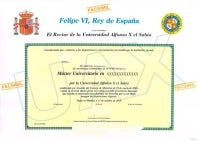
At UAX, you’ll be connected to the legal sector from day one. Thanks to our practical approach, you’ll take part in workshops, seminars, lectures and real-life case studies alongside practising professionals, as well as complementary activities that will enrich your training.
With the UAX Master’s in Access to the Legal Profession and Soliciture, you will undertake your professional placements in law firms, solicitors’ practices or corporate legal departments, where you can apply the knowledge and skills you have acquired in a real-world setting.
The programme benefits from the collaboration of leading firms that introduce students to the professional practice of law, and from an extensive network of partners for placement opportunities.
You can access the Online Master's Degree in Law and Procurement if you have a related university degree.
To start the admission process you must provide the following documentation:
In addition, if you already have previous professional experience related to the competences inherent to this degree, it may be recognised in the form of credits. The recognition of ECTS credits will require a personalised study. Contact our advisors and they will inform you personally.
The flexibility of online learning, with opportunities to connect
Take your exams online wherever you are or, if you prefer, in person at our designated centres in Spain and Latin America, subject to availability and capacity.
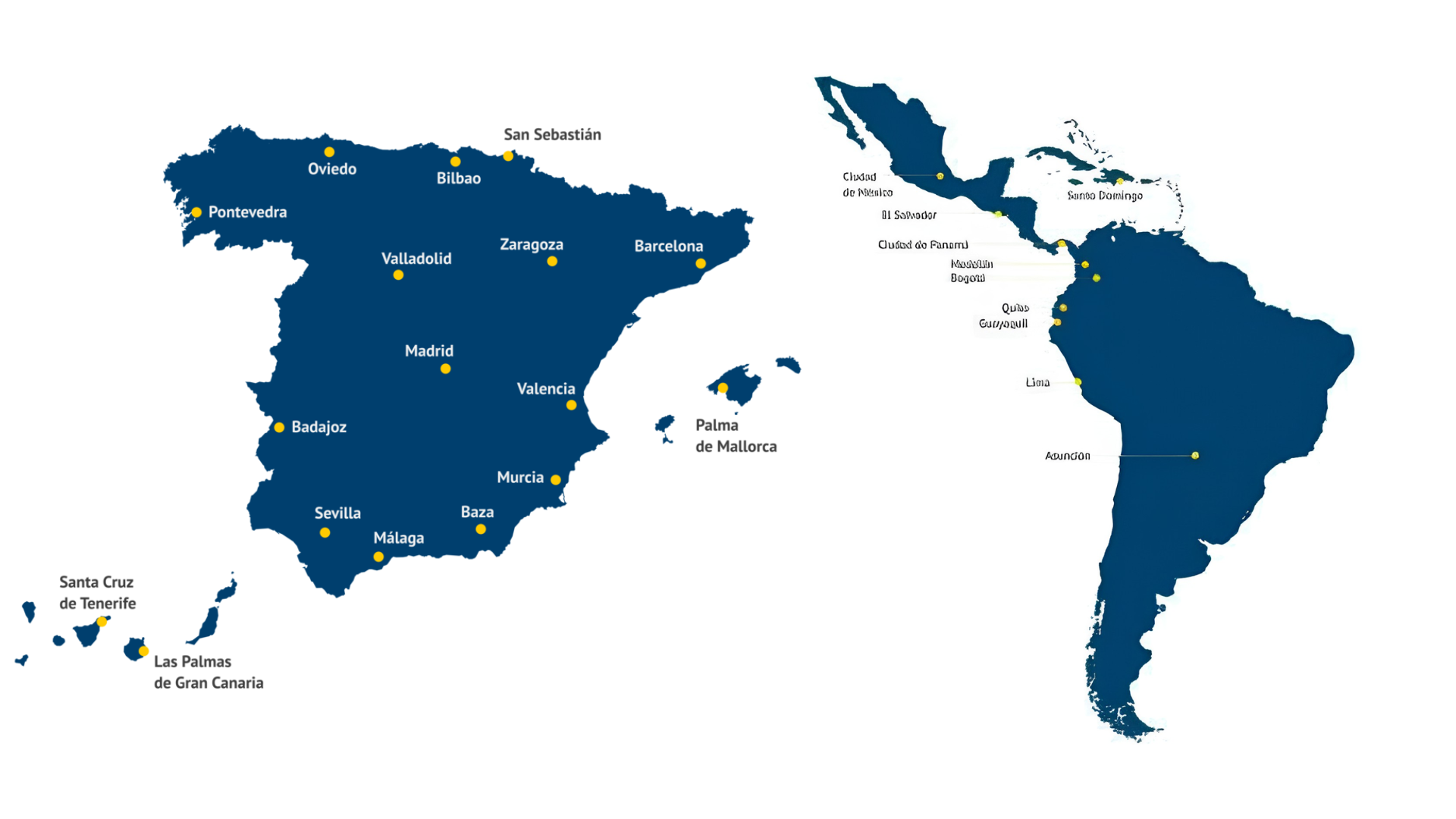
What’s more, as a student at UAX Online, you’ll have access to our Campus Hubs – a network of exclusive physical spaces where you can study, access libraries, work in co-working areas and connect with other students. Because studying online doesn’t mean studying alone.
Campus Hubs available in: Alcobendas, Alcorcón, Valencia San Vicente, Murcia, Barcelona, Málaga, Seville and Arganda.
Access is via your UAX student card, subject to availability and the opening hours of each centre.
At UAX, we believe that the best way to learn law is by practising it. That is why our students undertake real-world work placements at leading law firms, which form an integral part of their academic training and are designed to boost their employability whilst still at university.

Scholarships and financial aid for studying Law at UAX
We know that studying is an investment. That’s why we want to remove financial barriers and make things easier for you. Fill in the form and let our advisers help you discover the scholarships, agreements and personalised financial support that best suit your situation.

Community of Madrid
Financial support for students with a disability of 33 per cent or more who are studying at universities or higher education institutions specialising in the arts in the Community of Madrid.

Ministry of Education, Vocational Training and Sport
Find out about the scholarships and grants offered by the Ministry of Education, Vocational Training and Sport, categorised by type and level of education.

Attracting Pre-doctoral Research Talent
Financial support for outstanding students who wish to carry out innovative research and contribute to the advancement of knowledge in their disciplines.
If you’ve already decided to take the plunge, enrol early and benefit from a direct grant. It’s a way of rewarding your commitment and giving you a head start in planning your future.

Students from Ibero-America
This programme is aimed at Ibero-American citizens or foreign nationals legally resident in countries within the OEI’s sphere of influence. The scholarship covers a 50% discount on the total tuition fees.

2025, 2nd Edition
Grants for students on higher-level vocational training, undergraduate, postgraduate or master’s programmes enrolled at Spanish universities with a Santander agreement. A financial supplement to support you whilst undertaking your work placements.
If you graduated from UAX and are now thinking of studying for a new degree, we want to continue supporting you. That’s why we’re offering you a 10 per cent discount on tuition fees.
If you have an immediate family member (up to the second degree of kinship) enrolled at UAX, you can benefit from a 5 per cent discount on tuition fees. Because studying as a family is even better.
Studying for two degrees at the same time is a challenge, and we want to support you. If you’re already at UAX and enrol on a second degree programme, you’ll be eligible for a grant towards your booking fee and tuition fees.
If you’d like to continue your studies with us and progress from vocational training to a bachelor’s degree, from one bachelor’s degree to another, or from a bachelor’s degree to a postgraduate degree, we’re here to support you with a grant covering up to 25 per cent of your tuition fees.
If you have a strong academic record, we would like to recognise your talent with a scholarship designed for new students. (Excludes the degree in Medicine).
If you’re a high-performance athlete, at UAX we want to help you balance your passion with your studies. We offer specific grants that can cover up to 50% of your tuition fees.
We need to know a little bit about you so that we can provide you with a personalised service.
All fields are required

With our Master's Degree in Law, you will be able to register as a lawyer at any Bar Association in Spain.
Once you are a member, you will be able to practice law in a variety of ways, such as:
Not sure?
We'll help you figure out which programme fits your profile.
The online master's degree in law lasts one and a half years. It is an official qualification with 90 ECTS credits.
With the online master's degree in access to the legal profession, you will be able to become a member of the bar and work as a lawyer or as an employee, in a law firm or in a company in the legal department in any of its branches. Here you can see some of the different specialities in which you could work:
For more information on the different types of lawyers and their functions, you can consult this article on the UAX blog.
These specialisations will allow you to develop a professional career tailored to your interests and personal goals.
In order to access the Master's Degree in Law and obtain the corresponding professional qualification, it is essential to have a Bachelor's Degree in Law.
The Master's Degree in Access to the Legal Profession is essential for practising as a lawyer in Spain and will also allow you to acquire knowledge in private and public law, procedural techniques and conflict resolution. At UAX, you will receive specific training for the Bar Exam and develop key skills such as soft skills and entrepreneurial vision. You will also have the support of tutors and access to a network of prestigious law firms and institutions such as Pérez Llorca, Deloitte and the Madrid Bar Association.
In order to practice law in Spain, you must have a Bachelor's Degree in Law, pass the Master's Degree in Access to the Legal Profession and Procurement, and then pass the entrance exam to the legal profession organised by the Ministry of Justice.
Therefore, you need the Master's Degree in Access to Law and Legal Practice to practice law in Spain.
You can also consult what you need and find out more in depth in this article on the UAX blog on What do you need to study to become a lawyer?
The Master’s degree qualifying you to practise law is a requirement for registration with the Bar and to practise in Spain.
To practise abroad, you must familiarise yourself with the relevant regulations in the country of destination. Generally, you must meet certain minimum requirements, such as holding a law degree and being a member of the Spanish Bar.
This Master’s degree therefore prepares you to reach that starting point and pass the bar exam in Spain.
Other related qualifications
Master's Degree in Occupational Risk Prevention (online)
In collaboration with:

Start:
October
Length:
9 months

Online Master's Degree in Criminology Applied to Security Management and Crime Prevention
In collaboration with:

Start:
October
Length:
9 months

Máster Universitario en Sistemas Integrados de Gestión - SIG (online)
In collaboration with:
Start:
October
Length:
9 months

Online University Master's Degree in Big Data for Business
Start:
October
Length:
9 months

Online Master's Degree in Cybersecurity
Start:
October
Length:
9 months

Online Master’s Degree in Artificial Intelligence
Start:
October
Length:
9 months

Online Master's Degree in Human Resources Management and Administration
In collaboration with:

Start:
October
Length:
9 months

Master's Degree in Administrative Management (online)
In collaboration with:

Start:
October
Length:
9 months

Máster Universitario Online en Marketing Digital
Start:
October
Length:
9 months

Online Master's Degree in Business Management and Administration (MBA)
Start:
October
Length:
9 months

Online Master's Degree in Project Organisation and Management
Start:
October
Length:
9 months

Online Master's Degree in Financial Management and Administration
Start:
October
Length:
9 months
Enquiries, complaints and claims
We respond to the genuine needs of our students and staff, because we believe in the continuous improvement of our results. That is why we always want to hear whatever you have to say.

If you are already part of UAX, please visit the ‘Customer Service: complaints, suggestions and compliments’ section on thevirtual campus , logging in with your username and password.