See all Online Master's Degrees in Health
See all Master's Degrees in Engineering
Most searched curriculums
Official Qualification
9 months / 60 ECTS
Specialise with UAX’s Online Master’s in Educational Institution Management. You will develop skills in educational leadership, team management, strategic planning, academic organisation and the evaluation of educational quality, enabling you to take on leadership and management roles within educational institutions.
In collaboration with:

The Online Master’s Degree in Leadership and Management of Educational Institutions prepares you to take on responsibilities for coordination, organisation and management within educational institutions. You will develop the skills to lead teaching teams, plan the institution’s activities and make decisions aimed at improving its operations and outcomes.
The programme covers the key areas of school leadership and management: pedagogical leadership, people and resource management, strategic planning, academic organisation, institutional communication, the regulatory framework and the evaluation of educational quality.
You will apply your knowledge through real-life case studies, simulations and projects related to school leadership. You will tackle situations involving team management, academic organisation, school life, communication with families, strategic planning and the evaluation of outcomes.
This practical approach will enable you to understand how the pedagogical, organisational, financial and administrative aspects are integrated into the management of a school and how to tackle the common challenges of a leadership role.
You will develop the skills needed to lead teams, manage resources and coordinate the running of schools from a strategic, pedagogical and organisational perspective, linked to the key educational challenges identified by international organisations such as the OECD and UNESCO.
Develop the skills to lead teaching teams, drive educational improvement and build a culture of collaboration within the school.
Learn how to coordinate staff, manage teaching talent and foster communication, motivation and conflict resolution.
It sets objectives, organises resources and draws up action plans in line with the school’s educational programme.
It uses data and indicators to analyse needs, evaluate results and guide continuous improvement.
Find out about education regulations and how they are applied to the organisation, operation and management of schools.
It implements assessment systems and improvement plans to promote academic achievement, a positive school environment and the satisfaction of the school community.
If you are a teacher, a careers adviser or a member of an educational team, you will develop skills in educational leadership, team coordination, strategic planning and school management to broaden your professional responsibilities.
If you come from a different professional background, you will gain an understanding of the organisation, management and day-to-day running of educational institutions, including the key academic, administrative and leadership processes specific to such institutions.

Enhance your teaching practice by understanding learning through the lens of neuroeducation. This micro-credential equips you to analyse students’ cognitive, emotional and behavioural processes, identify potential difficulties at an early stage, and apply evidence-based inclusive teaching strategies in the classroom.

Transform the way you work with generative artificial intelligence. This micro-credential empowers you to apply tools like ChatGPT, Copilot, and Gemini to analyze information, create content, and make decisions in real-world academic contexts, integrating solutions ethically and responsibly within the educational field.

Develop your potential in education through leadership and interpersonal skills. This microcredential provides you with the keys to managing teams, communicating effectively, and solving problems in real-world educational settings, combining personal leadership techniques with practical productivity and collaboration tools.
The Online Master’s Degree in Leadership and Management of Educational Institutions is aimed at education professionals who wish to develop skills in pedagogical leadership, team management, academic organisation and the management of educational institutions. It may also be of interest to professionals working in the education sector who wish to broaden their knowledge of the management and administration of educational institutions.
It is particularly recommended for:
Entry requirements
You will be eligible for this Master’s programme if you hold one of the following qualifications or have one of the following profiles:
Important: whilst the Master’s degree provides specialised training in leadership and the management of educational institutions, it does not replace the professional or administrative requirements that may be necessary to hold certain management posts, particularly in state schools.
El programa aborda las principales áreas de la dirección y gestión de centros educativos: liderazgo pedagógico, organización académica, gestión de personas y recursos, normativa, comunicación y calidad educativa. La formación se completa con prácticas externas y un Trabajo Fin de Máster.
Master's Degree in Educational Centre Leadership and Management
First Year
FIRST FOUR-MONTH PERIOD
| Code | Subjects | Character* | ECTS | ||
|---|---|---|---|---|---|
| SM150300 | Participatory centres and the educational community | OB | 6 | ||
Participatory centres and the educational communityCódigo: SM150300 Imprimir Course 1: First-semester module. Compulsory. 6 credits. Profesores
Objectives This compulsory 6 ECTS module will address a fundamental aspect of modern education: the integration and engagement of the educational community in the running and management of schools. In a context where the demands and expectations of school communities are constantly evolving, this module focuses on the importance of the active participation of all stakeholders involved in the educational process. Participation encompasses not only the involvement of pupils and families, but but also the collaboration of teachers, administrative staff and the wider local community Prerequisites There are no prerequisites. Competencies Skills or competences: - Applies the principles of humanistic leadership within the school to encourage the participation of the entire school community. - Resolves, in an innovative manner, issues relating to harmonious coexistence that arise within the school, prioritising the needs of each individual at all times. Learning outcomes Skills or competences: - Applies the principles of humanistic leadership within the school to encourage the participation of the entire educational community. - Resolves, in an innovative way, issues relating to harmonious coexistence that arise within the school, ensuring that the needs of each individual are met at all times. Description of the content The following topics will be covered: - Democratic and participatory schools. Models of governance and organisation. Analysis of success stories. - The school’s governing and participatory bodies: planning and management. - Family involvement in the school. Relations with parents’ associations. - Pupil participation in the school. - Community involvement in the school. Schools connected to their local community. Analysis of successful programmes. - School life. Student support and conflict resolution Training activities AV1. – Keynote sessions AV2. – Interactive lectures AV3.1. – Critical analysis sessions AV3.2. – Practical case studies and/or project-based sessions AV3.3. – Oral presentations, discussions and/or debates AV4. – Independent study, case studies, problem-solving and literature review (self-directed work) AV5.- Online tutorials AV6.- Completion of knowledge tests Assessment system and criteria For the REGULAR ASSESSMENT PERIOD, you must submit the following: - Participation in the assessed forum: 5% of the final mark. - Feedback activity: 15% of the final mark. - Course project: 20% of the final mark. - The final exam for the module will account for: 60% of the final mark MINIMUM GRADE: In order to have the above weightings averaged, students must achieve a mark of at least 5 out of 10 in the face-to-face final exam. CONTINUOUS ASSESSMENT: - If you fail to submit any assignment, you will be marked as ‘not submitted’ for that assignment, and will lose that percentage, but your mark will be calculated as an average of the remaining submitted assignments and the final exam. - If you do not submit any assignments, you may sit the standard final exam. In this case, the final mark will be weighted at 60 per cent. SUPPLEMENTARY EXAMINATION SESSION To pass the module in the supplementary sitting, you must achieve a mark of 5.0 out of 10.0 or higher in the final module mark. Assessment in the supplementary sitting will take the form of a single in-person examination, which will account for 100 per cent of the student’s mark. The exam will be the same for all students who do not pass the module in the ordinary assessment period. This exam will include, at least, a practical component designed to assess the skills acquired by students whilst undertaking the course. |
|||||
| SM150301 | Education, society and the SDGs: towards a new social contract in education | OB | 6 | ||
Education, society and the SDGs: towards a new social contract in educationCódigo: SM150301 Imprimir Course 1: First-semester module. Compulsory. 6 credits. Profesores
Objectives This compulsory 6 ECTS module examines the relationship between education and society in the current context, linking education to the Sustainable Development Goals (SDGs) and exploring how education can be a key pillar for achieving transformative change at a social, economic and environmental level. Prerequisites No prior requirements are necessary Competencies Knowledge or content: - Identifies the social function of education and the main global trends in education, integrating these into the leadership and management processes of educational institutions. - Distinguishes the principles of Education for Sustainable Development in order to apply them to the management of educational institutions. Competencies: - Develops effective communication, teamwork, analytical thinking, creativity and ethical leadership from a cross-cutting perspective, clearly inspired by democratic principles and values, as well as the Sustainable Development to operate with integrity in the professional sphere. Learning outcomes Knowledge or content: - Identifies the social function of education and the main global trends in education, integrating them into the leadership and management processes of educational institutions. - Distinguishes the principles of Education for Sustainable Development in order to apply them to the management of educational institutions. Skills: - Develops effective communication, teamwork, analytical thinking, creativity and ethical leadership from a cross-cutting perspective, clearly inspired by democratic principles and values, as well as the Sustainable Development to operate with integrity in the professional sphere. Course content The following topics will be covered: - The social value of education in the 21st century: new philosophical and sociological trends. The perspective of leading organisations - The Spanish education system: evolution, structure, stakeholders and current characteristics. - A global overview of the structure of education systems in Europe and worldwide. Study of paradigmatic case studies - Global educational policies and trends. The need for a new social contract in education - Education for Sustainable Development: scope and initiatives for its implementation - Social function, humanism and the SDGs within the identity and strategy of educational institutions Training activities AV1. – Keynote sessions AV2. – Interactive lectures AV3.1.- Critical analysis sessions AV3.2. – Practical case studies and/or project-based sessions AV3.3. – Oral presentations, discussions and/or debates AV4.- Independent study, case studies, problem-solving and literature review (self-directed work) AV5.- Online tutorials AV6.- Completion of knowledge assessments Assessment system and criteria For the REGULAR ASSESSMENT PERIOD, you must submit the following: - Participation in the assessed forum: 5% of the final mark. - Feedback activity: 15% of the final mark. - Course project: 20% of the final mark. - The final exam for the module will account for: 60% of the final mark MINIMUM GRADE: In order to have the above weightings averaged, students must achieve a mark of at least 5 out of 10 in the face-to-face final exam. CONTINUOUS ASSESSMENT: - If you fail to submit any assignment, you will be marked as ‘not submitted’ for that assignment, and will lose that percentage, but your mark will be calculated as an average of the remaining submitted assignments and the final exam. - If you do not submit any assignments, you may sit the standard final exam. In this case, the final mark will be weighted at 60 per cent. SUPPLEMENTARY EXAMINATION SESSION To pass the module in the supplementary sitting, you must achieve a mark of 5.0 or above out of 10.0 in the final module mark. Assessment in the supplementary sitting will take the form of a single in-person examination, which will account for 100 per cent of the student’s mark. The exam will be the same for all students who do not pass the module in the ordinary assessment period. This exam will include, at least, a practical component designed to assess the skills acquired by students during the course. |
|||||
| SM150302 | Educational innovation, ICT and disruptive educational models | OB | 6 | ||
Educational innovation, ICT and disruptive educational modelsCódigo: SM150302 Imprimir Course 1: First-semester module. Compulsory. 6 credits. Profesores
Objectives This compulsory 6 ECTS module will focus on understanding and managing change in education, combining theoretical frameworks with practical examples to facilitate innovation and improvement in educational practices. The integration of educational innovation into an educational institution’s overall strategy is essential for its development and adaptation in a constantly changing environment. A holistic approach not only improves the quality of the education provided, but also strengthens the institution’s ability to adapt and thrive in an increasingly competitive and dynamic educational landscape Prerequisites No prior requirements are necessary Competencies Skills or competences: - Integrates ICT into the management of the educational institution and into teaching and learning processes in an organised and coherent manner. Competencies: - Develops, using critical and disruptive thinking strategies, innovation projects innovation projects to improve the school at strategic, educational and management levels Learning outcomes Skills: - Integrates ICT into the management of the school and into teaching and learning processes in a systematic and coherent manner. Competencies: - Develops, through critical and disruptive thinking strategies, innovation projects innovation projects to improve the school at strategic, educational and management levels Description of the content The following content will be covered: - Educational innovation within the school’s strategy. - Design, planning, implementation and evaluation of educational innovation projects. - Methodological and teaching innovation: models and success stories. - Innovation in management and strategy: models and success stories. - Technological innovation applied to the classroom and management. - Disruptive educational models. Analytical and critical thinking for the development of new educational models Training activities AV1.- Keynote sessions AV2. – Interactive lectures AV3.1. Critical analysis sessions AV3.2. – Practical case studies and/or project-based sessions AV3.3. – Oral presentations, discussions and/or debates AV4. – Independent study, case studies, problem-solving and literature review (self-directed work) AV5.- Online tutorials AV6.- Completion of knowledge tests Assessment system and criteria For the REGULAR ASSESSMENT PERIOD, you must submit the following: - Completion of the Generative AI course in the classroom: 10% of the final mark. - Feedback activity: 10% of the final mark. - The course project: 20% of the final mark. - The final exam for the module will account for: 60% of the final mark MINIMUM GRADE: In order to have the above weightings averaged, students must achieve a mark of at least 5 out of 10 in the face-to-face final exam. CONTINUOUS ASSESSMENT: - If you fail to submit any assignment, you will be marked as ‘not submitted’ for that assignment, and will lose that percentage, but your mark will be calculated as an average of the remaining submitted assignments and the final exam. - If you do not submit any assignments, you may sit the standard final exam. In this case, the final mark will be weighted at 60 per cent. SUPPLEMENTARY EXAMINATION SESSION To pass the module in the supplementary sitting, you must achieve a mark of 5.0 or above out of 10.0 in the final module mark. Assessment in the supplementary sitting will take the form of a single in-person examination, which will account for 100 per cent of the student’s mark. The exam will be the same for all students who do not pass the module in the ordinary assessment period. This exam will include, at least, a practical component designed to assess the skills acquired by students during the course. |
|||||
| SM150303 | Regulations, administration and financial management | OB | 6 | ||
Regulations, administration and financial managementCódigo: SM150303 Imprimir Course 1: First-semester module. Compulsory. 6 credits. Profesores
Objectives This compulsory 6 ECTS module will cover the study and application of the legislative regulations and procedures governing educational institutions, which an educational manager must be familiar with in order to carry out their day-to-day duties efficiently. The course content focuses on the administrative functioning of educational institutions, ranging from their internal organisation to the implementation of legal and educational regulations within these organisations. Prerequisites No prior requirements are necessary Competencies Knowledge or content: - Identifies the applicable regulations for each area of educational institution management Skills or competences: - Draws up a budget for the school that includes a plan for monitoring and compliance, the identification of potential deviations and a plan for corrective measures Competencies: - Determine the material and human resources required for the smooth running of the school and its projects Learning outcomes Knowledge or content: - Identifies the applicable regulations for each area of educational centre management Skills or competences: - Draws up a budget for the school that includes a plan for monitoring and compliance, the identification of potential deviations and a plan for corrective measures Competencies: - Determine the material and human resources required for the school to function properly and for its projects Description of the content The following topics will be covered: - Democratic and participatory schools. Models of governance and organisation. The Spanish legal system. Standard administrative procedure. - Applicable regulations for educational institutions: education laws and regulations, the legal framework governing educational institutions and their governing bodies, management regulations, regulations relating to minors, data protection regulations and occupational health and safety regulations. - Basic concepts of compliance for educational managers. - The administration of educational institutions: document and administrative management. - Financial management of educational institutions. Fundamentals of accounting and management control. Funding and budget preparation. - Material resources in educational establishments: time, space and . Maintenance and improvement of school buildings and facilities Training activities AV1.- Lectures AV2. – Interactive lectures AV3.1. Critical analysis sessions AV3.2. – Practical case study and/or project sessions AV3.3. – Oral presentations, discussions and/or debates AV4.- Independent study, case studies, problem-solving and literature review (self-directed work) AV5.- Online tutorials AV6.- Completion of knowledge assessments Assessment system and criteria For the REGULAR ASSESSMENT PERIOD, you must submit the following: - Participation in the assessed forum: 5% of the final mark. - Feedback activity: 15% of the final mark. - Course project: 20% of the final mark. - The final exam for the module will account for: 60% of the final mark MINIMUM GRADE: In order to have the above weightings averaged, students must achieve a mark of at least 5 out of 10 in the face-to-face final exam. CONTINUOUS ASSESSMENT: - If you fail to submit any assignment, you will be marked as ‘not submitted’ for that assignment, and will lose that percentage, but your mark will be calculated as an average of the remaining submitted assignments and the final exam. - If you do not submit any assignments, you may sit the standard final exam. In this case, the final mark will be weighted at 60 per cent. SUPPLEMENTARY EXAMINATION SESSION To pass the module in the supplementary sitting, you must achieve a mark of 5.0 or above out of 10.0 in the final module mark. Assessment in the supplementary sitting will take the form of a single in-person examination, which will account for 100 per cent of the student’s mark. The exam will be the same for all students who do not pass the module in the ordinary assessment period. This exam will include, at least, a practical component designed to assess the skills acquired by students during the course of the module. |
|||||
| SM150304 | Promotion, communication and institutional relations in educational establishments | OB | 6 | ||
Promotion, communication and institutional relations in educational establishmentsCódigo: SM150304 Imprimir Course 1: First-semester module. Compulsory. 6 credits. Profesores
Objectives This compulsory 6 ECTS module focuses on the study and development of strategies that enable educational institutions to manage their public image, strengthen their internal and external communication, and establish effective institutional relationships. The module examines how schools can project a positive image, promote their values and achievements, and build strategic partnerships with various organisations, such as other educational institutions, educational and public authorities, and the wider community. Prerequisites No prior requirements are necessary Competencies Skills or competences: - Defines, with a creative and holistic approach, a unique identity for an educational institution, integrating educational, strategic and management aspects. Competencies: - Designs a marketing and institutional relations strategy tailored to the educational institution’s identity, enabling it to project its image within its local community. - Carries out a situational analysis of an educational institution, identifying both its strengths and its main areas for improvement Learning outcomes Skills or competences: - Defines, with a creative and holistic approach, a unique identity for an educational institution, integrating educational, strategic and management aspects. Competencies: - Design a marketing and institutional relations strategy tailored to the educational institution’s identity, which helps to project the institution’s image within its local community. - Carries out a situational analysis of an educational institution, identifying both its strengths and its main areas for improvement Course content The following topics will be covered: - Creating a public image for educational institutions. Conveying the institution’s identity, values and educational model. - Self-analysis, competitor analysis and positioning. - Marketing for educational managers. Design, planning and implementation of promotional activities for the school. - Communication in educational institutions: developing and conveying messages. Relations with the media. - Internal institutional relations with educational inspectorates and authorities. - External institutional relations: educational organisations and public authorities. Training activities AV1. – Lecture sessions AV2. – Interactive lectures AV3.1. – Critical analysis sessions AV3.2.- Practical case studies and/or project-based sessions AV3.3. – Oral presentations, discussions and/or debates AV4.- Independent study, case studies, problem-solving and literature review (self-directed work) AV5.- Online tutorials AV6.- Completion of knowledge assessments Assessment system and criteria For the REGULAR ASSESSMENT PERIOD, you must submit the following: - Participation in the assessed forum: 5% of the final mark. - Feedback activity: 15% of the final mark. - Course project: 20% of the final mark. - The final exam for the module will account for: 60% of the final mark MINIMUM GRADE: In order to have the above weightings averaged, students must achieve a mark of at least 5 out of 10 in the face-to-face final exam. CONTINUOUS ASSESSMENT: - If you fail to submit any assignment, you will be marked as ‘not submitted’ for that assignment, and will lose that percentage, but your mark will be calculated as an average of the remaining submitted assignments and the final exam. - If you do not submit any assignments, you may sit the standard final exam. In this case, the final mark will be weighted at 60 per cent. SUPPLEMENTARY EXAMINATION PERIOD To pass the module in the supplementary sitting, you must achieve a mark of 5.0 or higher out of 10.0 in the final module mark. Assessment in the supplementary sitting will take the form of a single in-person examination, which will account for 100 per cent of the student’s mark. The exam will be the same for all students who did not pass the module during the ordinary assessment period. This exam will include, at least, a practical component designed to assess the skills acquired by students during the course. |
|||||
| TOTAL: | 30 | ||||
SECOND FOUR-MONTH PERIOD
| Code | Subjects | Character* | ECTS | ||||
|---|---|---|---|---|---|---|---|
| SM150305 | Strategy and cultural transformation in educational institutions | OB | 6 | ||||
Strategy and cultural transformation in educational institutionsCódigo: SM150305 Imprimir Course 1. Second-term module. Compulsory. 6 credits. Profesores
Objectives This compulsory 6 ECTS module aims to provide future leaders with the tools necessary to lead processes of change and improvement within educational institutions. It focuses on strategic management and on building an organisational culture that fosters innovation, inclusion and educational quality. Prerequisites No prior requirements are necessary Competencies Skills or competences: - Plans a strategy to motivate and engage the educational community in the school’s cultural transformation processes, whilst minimising resistance to change. Competencies: - Designs, implements and evaluates a school’s medium-term strategic plan, integrating its various functional areas into it. Learning outcomes Skills or competences: - Plan a strategy to motivate and engage the educational community in the school’s cultural transformation processes, whilst minimising resistance to change. Competencies: - Designs, implements and evaluates a medium-term strategic plan for an educational institution, integrating its various functional areas into the plan. Description of the content The following topics will be covered: - Strategic planning for educational institutions. Strategic analysis and the identification of needs and priorities. - The strategic plan: definition, monitoring and evaluation of its outcomes. - Operational planning for educational institutions. Planning documents. - Project management within educational institutions. Principles of project management for educational leaders. - Cultural transformation in educational institutions. Strategies, skills and tools for change management. - Involving the educational community in the processes of cultural transformation within schools. Training activities AV1. – Keynote sessions AV2. – Interactive lectures AV3.1. Critical analysis sessions AV3.2.- Practical case study and/or project sessions AV3.3. – Oral presentations, discussions and/or debates AV4. – Independent study, case studies, problem-solving and literature review (self-directed work) AV5.- Online tutorials AV6.- Completion of knowledge assessments Assessment system and criteria For the REGULAR ASSESSMENT PERIOD, you must submit the following: - Participation in the assessed forum: 5% of the final mark. - Feedback activity: 15% of the final mark. - Course project: 20% of the final mark. - The final exam for the module will account for: 60% of the final mark MINIMUM GRADE: In order to have the above weightings averaged, students must achieve a mark of at least 5 out of 10 in the face-to-face final exam. CONTINUOUS ASSESSMENT: - If you fail to submit any assignment, you will be marked as ‘not submitted’ for that assignment, thereby losing that percentage, but the mark will be averaged with the rest of the submitted assignments and the final exam. - If you do not submit any assignments, you may sit the standard final exam. In this case, your final mark will be weighted at 60 per cent. SUPPLEMENTARY EXAMINATION SESSION To pass the module in the supplementary sitting, you must achieve a mark of 5.0 or above out of 10.0 in the final module mark. Assessment in the supplementary sitting will take the form of a single in-person examination, which will account for 100 per cent of the student’s mark. The exam will be the same for all students who did not pass the module in the ordinary sitting. This exam will include, at least, a practical component designed to assess the skills acquired by students during the course. |
|||||||
| SM150306 | Excellence in education | OB | 6 | ||||
Excellence in educationCódigo: SM150306 Imprimir Course 1. Second-term module. Compulsory. 6 credits. Profesores
Objectives This compulsory 6 ECTS module focuses on the study of quality and excellence in educational institutions’ management models. Prerequisites No prior requirements are necessary Competencies Learning outcomes: - Develops a model of educational and managerial excellence that incorporates a process of analysis and continuous improvement based on reliable indicators. Learning outcomes Competencies: - Develops a model of educational and managerial excellence that incorporates a process of analysis and continuous improvement based on reliable indicators. Course content The following content will be covered: - Excellence in educational institutions: educational excellence and managerial excellence. - Models of educational excellence. Case studies of exemplary examples. - Quality management in educational institutions: quality management systems and certifications. ISO and EFQM. - Continuous improvement in educational institutions: analysis, evaluation and the development of improvement plans. Indicators for decision-making: academic indicators, management indicators and stakeholder satisfaction indicators. Collection, analysis and integration into the improvement process. Transparency and accountability. Good corporate governance in . Training activities AV1. – Keynote sessions AV2. – Interactive lectures AV3.1.- Critical analysis sessions AV3.2. – Practical case studies and/or project-based sessions AV3.3. – Oral presentations, discussions and/or debates AV4.- Independent study, case studies, problem-solving and literature review (self-directed work) AV5.- Online tutorials AV6.- Completion of knowledge assessments Assessment system and criteria For the REGULAR ASSESSMENT PERIOD, you must submit the following: - Participation in the assessed forum: 5% of the final mark. - Feedback activity: 15% of the final mark. - Course project: 20% of the final mark. - The final exam for the module will account for: 60% of the final mark MINIMUM GRADE: In order to have the above weightings averaged, students must achieve a mark of at least 5 out of 10 in the face-to-face final exam. CONTINUOUS ASSESSMENT: - If you fail to submit any assignment, you will be marked as ‘not submitted’ for that assignment, and will lose that percentage, but your mark will be calculated as an average of the remaining submitted assignments and the final exam. - If you do not submit any assignments, you may sit the standard final exam. In this case, the final mark will be weighted at 60 per cent. SUPPLEMENTARY EXAMINATION SESSION To pass the module in the supplementary sitting, you must achieve a mark of 5.0 or above out of 10.0 in the final module mark. Assessment in the supplementary sitting will take the form of a single in-person examination, which will account for 100 per cent of the student’s mark. The exam will be the same for all students who do not pass the module during the ordinary assessment period. This exam will include, at least, a practical component designed to assess the skills acquired by students throughout the module. |
|||||||
| SM150307 | Leadership, managerial skills and people management in educational institutions | OB | 6 | ||||
Leadership, managerial skills and people management in educational institutionsCódigo: SM150307 Imprimir Course 1. Second-term module. Compulsory. 6 credits. Profesores
Objectives This compulsory 6 ECTS module will cover leadership, managerial skills and people management in educational institutions Prerequisites No prior requirements are necessary Competencies Skills or competences: - Applies the principles of humanistic leadership in educational institutions to encourage the participation of the entire educational community. Competencies: - Secures the material and human resources necessary for the proper running of the school and its projects. - Designs strategies for the development of a school’s staff, including training, development and motivation initiatives Learning outcomes Skills or competences: - Applies the principles of humanistic leadership within an educational institution to encourage the participation of the entire educational community. Competencies: - Secures the material and human resources necessary for the proper running of the school and its projects. - Designs strategies for the development of a school’s staff, including training, development and motivation initiatives Description of the content The following topics will be covered: - The management team: roles, responsibilities and coordination. - Leadership in educational institutions. The role and characteristics of a leader. Trends and models in educational leadership. Professional ethics. - People management in schools: professional profiles, recruitment, recruitment and remuneration policies. - Training and assessment of staff in educational institutions. - Teamwork and staff motivation. Agile strategies. - Communication skills for educational managers: communication, persuasion and storytelling. Training activities AV1. – Lecture sessions AV2. – Interactive lectures AV3.1. – Critical analysis sessions AV3.2. – Case study and/or project-based sessions AV3.3. – Oral presentations, discussions and/or debates AV4.- Independent study, case studies, problem-solving and literature review (self-directed work) AV5.- Online tutorials AV6.- Completion of knowledge assessments Assessment system and criteria For the REGULAR ASSESSMENT PERIOD, you must submit the following: - Participation in the assessed forum: 5% of the final mark. - Feedback activity: 15% of the final mark. - Course project: 20% of the final mark. - The final exam for the module will account for: 60% of the final mark MINIMUM GRADE: In order to have the above weightings averaged, students must achieve a mark of at least 5 out of 10 in the face-to-face final exam. CONTINUOUS ASSESSMENT: - If you fail to submit any assignment, you will be marked as ‘not submitted’ for that assignment, and will lose that percentage, but your mark will be calculated as an average of the remaining submitted assignments and the final exam. - If you do not submit any assignments, you may sit the standard final exam. In this case, the final mark will be weighted at 60 per cent. SUPPLEMENTARY EXAMINATION SESSION To pass the module in the supplementary sitting, you must achieve a mark of 5.0 or above out of 10.0 in the final module mark. Assessment in the supplementary sitting will take the form of a single in-person examination, which will account for 100 per cent of the student’s mark. The exam will be the same for all students who do not pass the module in the ordinary assessment period. This exam will include, at least, a practical component designed to assess the skills acquired by students during the course. |
|||||||
| SM150308 | External Academic Placements | OB | 6 | ||||
External Academic PlacementsCódigo: SM150308 Imprimir Course 1. Second-term module. Compulsory. 6 credits. Profesores
Objectives This is a compulsory module worth 6 ECTS credits. During the placement, students will attend an educational institution to become part of its management team. During their placement, they will gain an understanding of the institution’s management model, its distinctive features and its planning and organisational tools. Prerequisites No prior requirements are necessary Competencies Competencies: - Is able to contribute innovative ideas for improving the management of an educational institution at the educational, methodological and managerial levels, based on their experience - Develops effective communication, teamwork, analytical thinking, creativity and ethical leadership from a cross-cutting perspective, clearly inspired by democratic principles and values, as well as the Sustainable Development Goals, in order to conduct themselves with integrity in the professional sphere Learning outcomes Competencies: - Is able to contribute innovative ideas for improving the management of an educational institution in terms of education, methodology and administration, drawing on their experience - Develops effective communication, teamwork, analytical thinking, creativity and ethical leadership from a cross-disciplinary perspective, clearly inspired by democratic principles and values, as well as the Sustainable Development Goals, in order to conduct themselves with integrity in the professional sphere Description of the content The placement report will cover the content related to the proposed outline: 1. Definition of the activities carried out at the school 2. Description of the centre and its context 3. The centre’s mission, vision, values and objectives 4. Description and analysis of the organisational structure 5. Analysis of the leadership style and communication at the centre 6. Available resources 7. Identification of weaknesses and areas for improvement in the centre’s leadership and management model 8. Conclusions and personal reflection 9. Bibliography 10. Appendices Training activities AV2. Interactive lectures AV8. – Preparation of the External Academic Placement Report AV5. Online tutoring AV7. External Academic Placements Assessment system and criteria Your final mark will be based on the following assessment system: - A favourable report from the institution’s tutor, stating the of effective supervision of the student, as well as an assessment of the student’s performance in key areas. To this end, Alfonso X el Sabio University provides the document entitled ‘Centre Tutor’s Report for the Assessment of External Placements’. - A placement report, which must be submitted once the placement has been completed by the date specified on the Virtual Campus. Therefore, the final assessment of the work placement module will be based on the following: - The assessment issued by the placement supervisor at the host institution (60 per cent). - The assessment of the placement report (40%). MINIMUM GRADE: For both the assessment provided by the placement supervisor at the host organisation and the assessment of the placement report, a minimum mark of 5 points must be obtained in each section in order to calculate the weighted average. |
|||||||
| SM150309 | Master’s Thesis | OB | 6 | ||||
Master’s ThesisCódigo: SM150309 Imprimir Course 1. Second-term module. Compulsory. 6 credits. Profesores
Objectives This is a compulsory module worth 6 ECTS credits. The Master’s Final Project will consist of drawing up a management plan for an educational institution of the student’s choice. Prerequisites Students must have passed all the modules on the Master’s programme in order to submit their Master’s Thesis. Competencies Learning Outcomes: - Develops a comprehensive management plan for an educational institution tailored to its specific characteristics and needs. - Develops effective communication, teamwork, analytical thinking, creativity and ethical leadership from a cross-cutting perspective, clearly inspired by democratic principles and values, as well as the Sustainable Development Goals, in order to operate with integrity in the professional sphere Learning Outcomes Competencies: - Develops a comprehensive management plan for an educational institution tailored to its specific characteristics and needs. - Develops effective communication, teamwork, analytical thinking, creativity and ethical leadership from a cross-curricular perspective, clearly drawing on democratic principles and values, as well as the Sustainable Development Goals, to conduct oneself with integrity in a professional context Description of the content The management project, which must set out the school’s management strategy for a four-year period, shall include at least the following elements: 1. A situational and strategic analysis of the school. 2. Identification of weaknesses and areas for improvement, strengths, threats and opportunities. 3. Definition of the model school to be achieved. 4. Setting objectives for the management plan. 5. Identification of actions to be carried out, a timetable and the necessary resources. 6. Expected outcomes. 7. Monitoring and evaluation of the project Training activities AV2. – Interactive lectures AV5. Online tutorials AV9. Preparation of the Master’s Thesis AV10.- Public oral defence Assessment system and criteria To submit the Master’s Thesis, students must have passed all modules in the relevant examination session. If students wish to submit during the ordinary examination session, they must have passed all modules in that session. If they wish to submit during the supplementary examination session, they must have passed all modules in that session. Each student’s final mark will be that decided and announced by the Master’s Thesis defence panel during the defence, just before it concludes. In order to proceed to the defence, the student must have received a favourable assessment from the programme director, allowing the student to defend their project and guaranteeing that it meets the minimum quality standards required for the Master’s degree. Therefore, the final assessment of the module will be carried out, taking into account: - Master’s Thesis report – 70% of the final mark. - Defence and presentation of the Master’s Thesis before the assessment panel – 30% of the final mark. Marking will be carried out using a rubric, divided into different sections, each with a different weighting in the final mark. |
|||||||
| TOTAL: | 30 | ||||||
*Character: BT: Basic Training, Ob: Required, Op: Optional
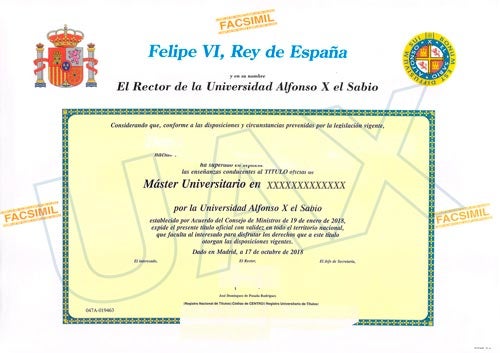
Our degree is official, verified by the Council of Universities and fully valid in Spain, as well as in the European Higher Education Area.
It is recognised by the Education Systems of Latin America, being recognised and approved by the different Ministries of Education in Latin America:
SENESCYT, MEN (MinEducation), SEP, Mescyt, among others, automatically.
The External Academic Placements (6 ECTS | 150 hours) will enable you to join management teams and gain first-hand insight into how an educational institution is organised and managed. During your placement, you will take part in activities relating to strategic planning, academic organisation, team management, institutional communication and educational improvement processes.
You will undertake the placement during the second term at partner educational centres and institutions, including organisations affiliated with ACADE, Fomento de Centros de Enseñanza and the Fundación Educación Católica (FEC).
Furthermore, you will analyse the school’s leadership and management model, identify opportunities for improvement and develop proposals aligned with the knowledge acquired on the master’s programme, linking your academic training to the professional reality of school leadership.
If you have relevant professional experience, you may be able to have your work placement recognised. Please contact our advisers for a personalised assessment of ECTS recognition.
The main reason why at UAX there are students like you is the possibility of making your personal, professional and academic life compatible. Our differential value is a methodology without barriers, focused on you and your desire to learn.
How is our methodology?
In addition, you will have the full availability of our campus in Madrid, to carry out your formalities, solve your doubts and enjoy the facilities it offers you.
If you have professional experience or prior learning relevant to the Master’s programme, you may apply for an individual assessment of credit recognition.
Our admissions team will advise you on the recognition options applicable to your situation and the application procedure.
A network of exam centres and spaces to enhance your university experience
Take your in-person exams at our designated centres in Spain and Latin America, so you can choose the location that best suits your needs. Centres are subject to availability and capacity.
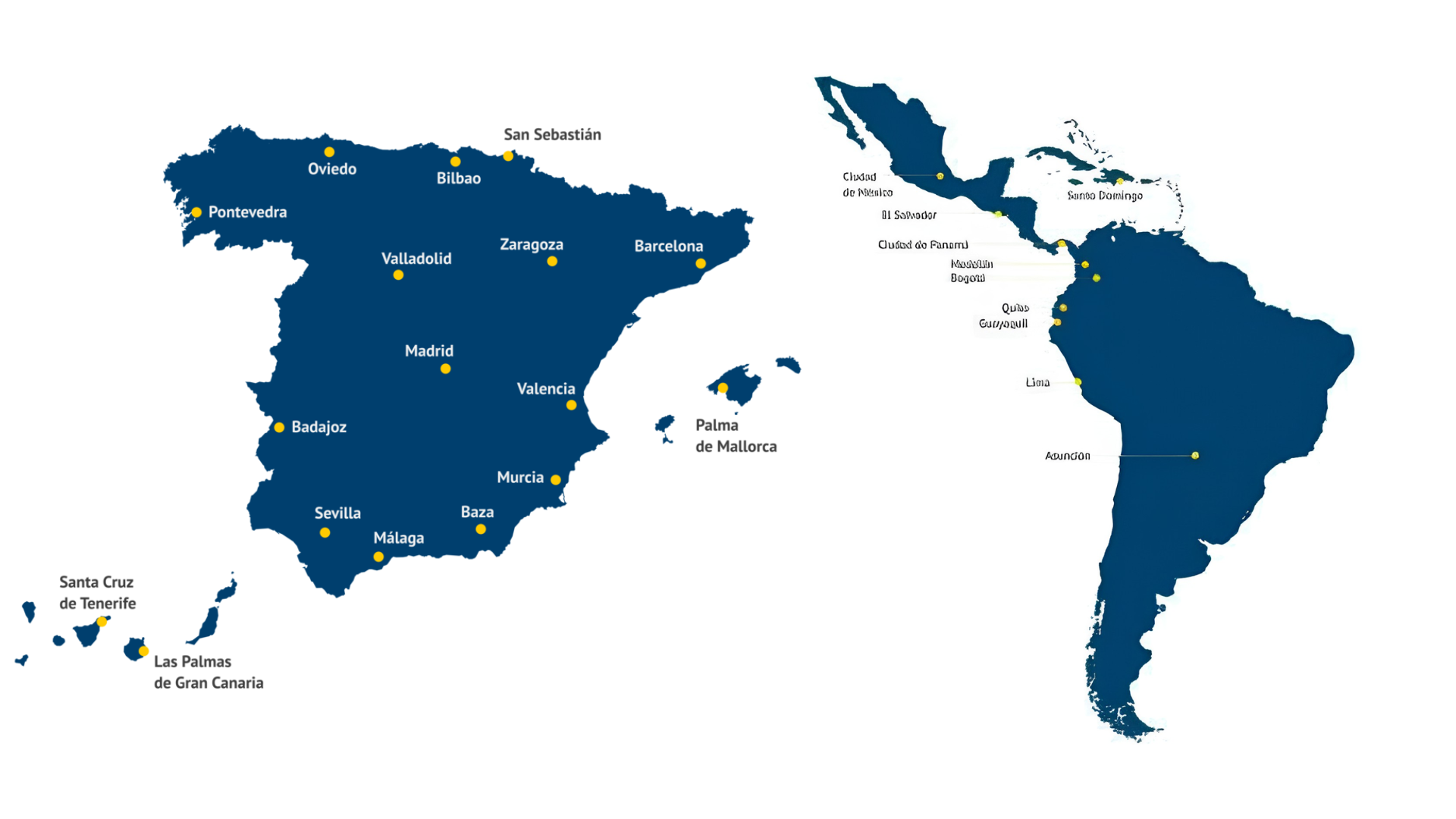
Furthermore, as a student at UAX Online, you’ll have access to our Campus Hubs – a network of exclusive physical spaces where you can study, access libraries, work in co-working areas and connect with other students. Because studying online doesn’t mean studying alone.
Campus Hubs available in: Alcobendas, Alcorcón, Valencia San Vicente, Murcia, Barcelona, Málaga, Seville and Arganda.
Access is granted with your UAX student card, subject to availability and the opening hours of each centre.

Teaching staff
Train alongside a teaching staff comprising headteachers, heads of studies, academic coordinators, researchers and specialists in educational leadership.

PhD candidate in Educational Sciences at the University of Lisbon and a member of the management team at AFIRSE Portugal. A specialist in teacher training, educational leadership and training management, he has international experience in research, university teaching and the development of educational projects in Portugal, Spain, Brazil and Italy.

Headteacher of Cristo Rey School and an educational consultant specialising in leadership and management of senior leadership teams. He has over 15 years’ experience in school leadership and a long track record in training, mentoring and the professional development of educational leaders.

Primary Education Coordinator at Highlands School, Los Fresnos. A specialist in educational leadership, pedagogical innovation and teacher training, she has experience in academic coordination and the development of educational projects. She has been awarded the Ángel Herrera Award for Excellence in Teaching.

A telecommunications engineer and Head of Secondary and Sixth Form Studies at Kolbe International School. Specialising in educational leadership and academic management, he combines coordinating teaching teams with teaching Mathematics, Technology and Computer Science, bringing a practical perspective to school organisation.

He holds a PhD in Education and is the headteacher of Arturo Soria School. He has extensive experience in educational leadership and management, pedagogical innovation and teacher training, combining school leadership with university teaching and the development of educational improvement projects.

PhD in History and Head of the Teaching Staff at the Faculty of Education, UAX. He has over 20 years’ experience in university teaching, academic management and teacher training, as well as an outstanding research record in the fields of education and the social sciences.
We need to know a little bit about you so that we can provide you with a personalised service.
All fields are required
Scholarships and financial support for studying at UAX
We know that studying is an investment. That’s why we want to remove financial barriers and make things easier for you. Fill in the form and let our advisers help you discover the scholarships, agreements and personalised financial support that best suit your situation.

Community of Madrid
Financial support for students with a disability of 33 per cent or more who are studying at universities or higher education institutions specialising in the arts in the Community of Madrid.

Ministry of Education, Vocational Training and Sport
Find out about the scholarships and grants offered by the Ministry of Education, Vocational Training and Sport, categorised by type and level of education.

Attracting Pre-doctoral Research Talent
Financial support for outstanding students who wish to carry out innovative research and contribute to the advancement of knowledge in their disciplines.
If you’ve already decided to take the plunge, enrol early and benefit from a direct grant. It’s a way of rewarding your commitment and giving you a head start in planning your future.

Students from Ibero-America
This programme is aimed at Ibero-American citizens or foreign nationals legally resident in countries within the OEI’s sphere of influence. The scholarship covers a 50% discount on the total tuition fees.

Students from Ecuador
This programme is aimed at citizens with Ecuadorian nationality and/or residence who wish to study an online master’s degree in Spain. The scholarship covers a 50% discount on the total tuition fees.

2025, 2nd Edition
Grants for students on higher-level vocational training, undergraduate, postgraduate or master’s programmes enrolled at Spanish universities with a Santander agreement. A financial supplement to support you whilst undertaking your work placements.
If you graduated from UAX and are now thinking of studying for a new degree, we want to continue supporting you. That’s why we’re offering you a 10 per cent discount on tuition fees.
If you have an immediate family member (up to the second degree of kinship) enrolled at UAX, you can benefit from a 5 per cent discount on tuition fees. Because studying as a family is even better.
Studying for two degrees at the same time is a challenge, and we want to support you. If you’re already at UAX and enrol on a second degree programme, you’ll be eligible for a grant towards your booking fee and tuition fees.
If you’d like to continue your studies with us and progress from vocational training to a bachelor’s degree, from one bachelor’s degree to another, or from a bachelor’s degree to a postgraduate degree, we’re here to support you with a grant covering up to 25 per cent of your tuition fees.
If you have a strong academic record, we would like to recognise your talent with a scholarship designed for new students. (Excludes the degree in Medicine).
If you’re a high-performance athlete, at UAX we want to help you balance your passion with your studies. We offer specific grants that can cover up to 50% of your tuition fees.

El Máster Universitario Online en Liderazgo y Dirección de Centros Educativos te prepara para asumir funciones de coordinación, planificación y gestión en centros educativos y organizaciones vinculadas a la educación. Podrás desarrollar tu carrera profesional en ámbitos como:
El acceso a determinados puestos, especialmente la dirección de centros públicos o la inspección educativa, está sujeto a los requisitos, procedimientos y condiciones establecidos por la normativa vigente.
Yes. The UAX Online Master’s Degree in Leadership and Management of Educational Institutions is an official degree worth 60 ECTS credits, recognised in Spain and within the European Higher Education Area (EHEA).
As it is an officially recognised master’s degree, it provides access to doctoral studies once the requirements set out in current regulations have been met, and may be recognised or accredited by the relevant authorities in different countries in accordance with their applicable legislation.
The Master’s in Educational Institution Management provides comprehensive training in educational leadership, team management, strategic planning, academic organisation, educational regulations and quality assessment.
Throughout the programme, you will gain in-depth knowledge of areas such as the leadership and management of educational institutions, institutional communication, financial and administrative management, organisational transformation, people leadership and continuous improvement. In addition, you will round off your training through external work placements and a Master’s Thesis applied to real-world contexts of educational management.
To enrol on the Online Master’s Degree in Leadership and Management of Educational Institutions, you must hold an official university degree, preferably in an education-related field, such as Early Years Education, Primary Education, Pedagogy, Social Education, Educational Psychology or a Master’s Degree in Teacher Training.
Professionals with proven experience in school management teams and foreign graduates who meet the entry requirements set by the university may also be eligible.
It is important to distinguish between the academic entry requirements for the Master’s programme and the professional requirements for certain management posts, which may vary depending on the applicable regulations and the type of educational institution.
The Online Master’s Degree in Leadership and Management of Educational Institutions provides specialised training in educational leadership, school management, academic organisation and team leadership, preparing students to take on coordination and management responsibilities within educational institutions.
However, obtaining the Master’s degree does not replace the professional or administrative requirements that may be necessary for access to certain management posts. In the case of the management of state schools and other regulated roles, it will be necessary to meet the conditions set out in current legislation and the relevant selection procedures.
The Online Master’s Degree in Leadership and Management of Educational Institutions combines academic training, case studies, simulations and projects applied to real-life school management situations. Throughout the programme, you will explore aspects related to pedagogical leadership, team management, strategic planning, academic organisation and the evaluation of educational quality.
The online format will allow you to balance your studies with your professional commitments, whilst accessing resources, activities and academic support via the virtual campus. Furthermore, the learning experience is complemented by external academic placements and activities focused on decision-making and tackling the challenges commonly encountered in the management of educational institutions.
Yes. The Online Master’s Degree in Leadership and Management of Educational Institutions includes compulsory external academic placements (6 ECTS | 150 hours) which take place during the second term.
During this period, you will join management teams and gain first-hand insight into the leadership and management of an educational institution. You will take part in activities relating to strategic planning, academic organisation, team management, institutional communication and the evaluation of educational improvement processes.
Furthermore, the Master’s programme has agreements with leading educational organisations and networks, enabling you to apply the knowledge you have acquired to real-life situations involving school leadership and management. In certain cases, the work placement may be recognised for academic credit if relevant professional experience is demonstrated and the requirements set by the university are met.
The Online Master’s Degree in Leadership and Management of Educational Institutions prepares you to take on roles involving coordination, planning and management in educational institutions and organisations linked to education. Key professional areas include:
Access to certain posts, particularly those involving the management of state schools or educational inspection, is subject to the requirements, procedures and conditions laid down by current legislation
The role of a school headteacher goes beyond administrative management. Their role involves leading the educational programme, coordinating teaching staff, driving continuous improvement within the school and ensuring that academic and organisational objectives are met.
Their main responsibilities include:
The Master’s in Educational Leadership prepares students to tackle these challenges from the perspective of pedagogical leadership, strategic management and the evaluation of educational quality
Although the two concepts are closely related, they do not mean the same thing.
School leadership focuses on the pedagogical and strategic leadership of the school. It involves setting objectives, driving the educational programme forward, coordinating teams, promoting continuous improvement and making decisions that guide the institution’s development.
The management of educational institutions, on the other hand, refers to the organisation and administration of the resources, processes and activities necessary to achieve those objectives. It includes aspects relating to academic, financial, administrative, technological and human resources management.
The Master’s in School Leadership addresses both dimensions in an integrated manner, preparing students to lead educational organisations and effectively manage the resources and processes that enable them to function.
Yes. As this is an official Master’s degree worth 60 ECTS, it may be recognised as a merit in competitive examinations for teaching posts, transfer competitions and other public selection processes relating to education.
However, the specific assessment and scoring will always depend on the terms and conditions of each call for applications and the regulations applicable within each education authority. For this reason, we recommend that you check the current assessment criteria for the process you wish to apply for.
Other related degrees
We offer a wide range of academic programmes, so you’re sure to find one that suits you.

Online Master’s Degree in Educational Innovation
Start:
October
Length:
9 months

Master's Degree in Educational Technology and Digital Competences for Teachers - ICT (online)
In collaboration with:
Start:
October
Length:
9 months

Master’s Degree in Teacher Training
In collaboration with:

Start:
October
Length:
1 year

Master’s Degree in Educational Psychology (online)
In collaboration with:

Start:
October
Length:
9 months

Master’s Degree in Supporting Diversity and Inclusive Education (Online)
In collaboration with:

Start:
October
Length:
9 months

Master’s Degree in Educational Neuropsychology (Online)
In collaboration with:

Start:
October
Length:
9 months

Online Master's Degree in Emotional Education and Pedagogical Accompaniment
Start:
October
Length:
9 months

Online Master's Degree in Conflict Prevention and Mediation in Educational Settings
Start:

October
Length:
9 months
Enquiries, complaints and claims
We respond to the genuine needs of our students and staff, because we believe in the continuous improvement of our results. That is why we always want to hear whatever you have to say.
If you are already part of UAX, please visit the ‘Customer Service: complaints, suggestions and compliments’ section on thevirtual campus , logging in with your username and password.
You can view the various indicators via the following links:
Employability: View
Satisfaction results: View
Rates and indicators: View
Improvement measures implemented for the degree programme during the academic year: