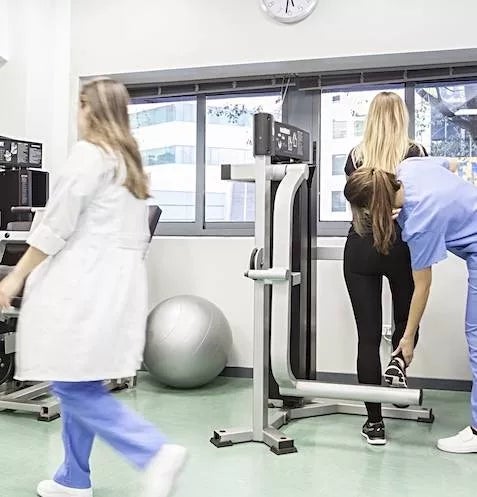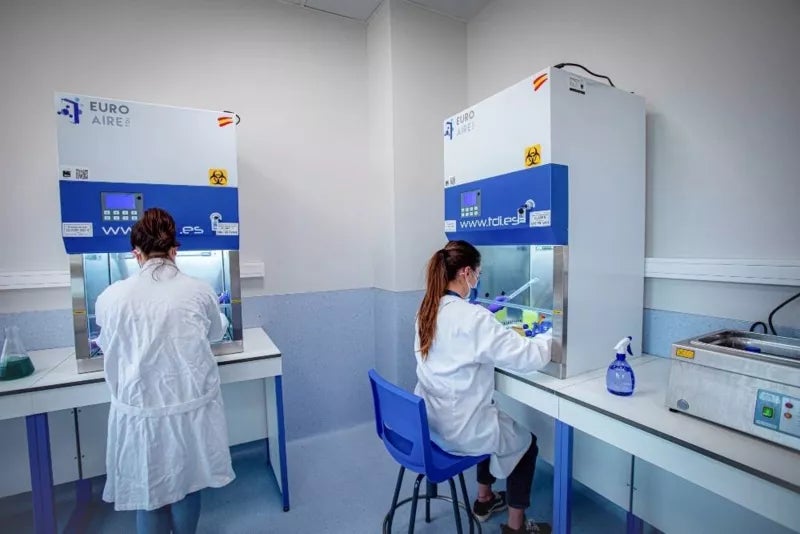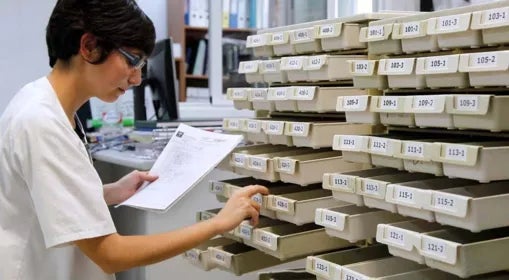


See all Online Master's Degrees in Health


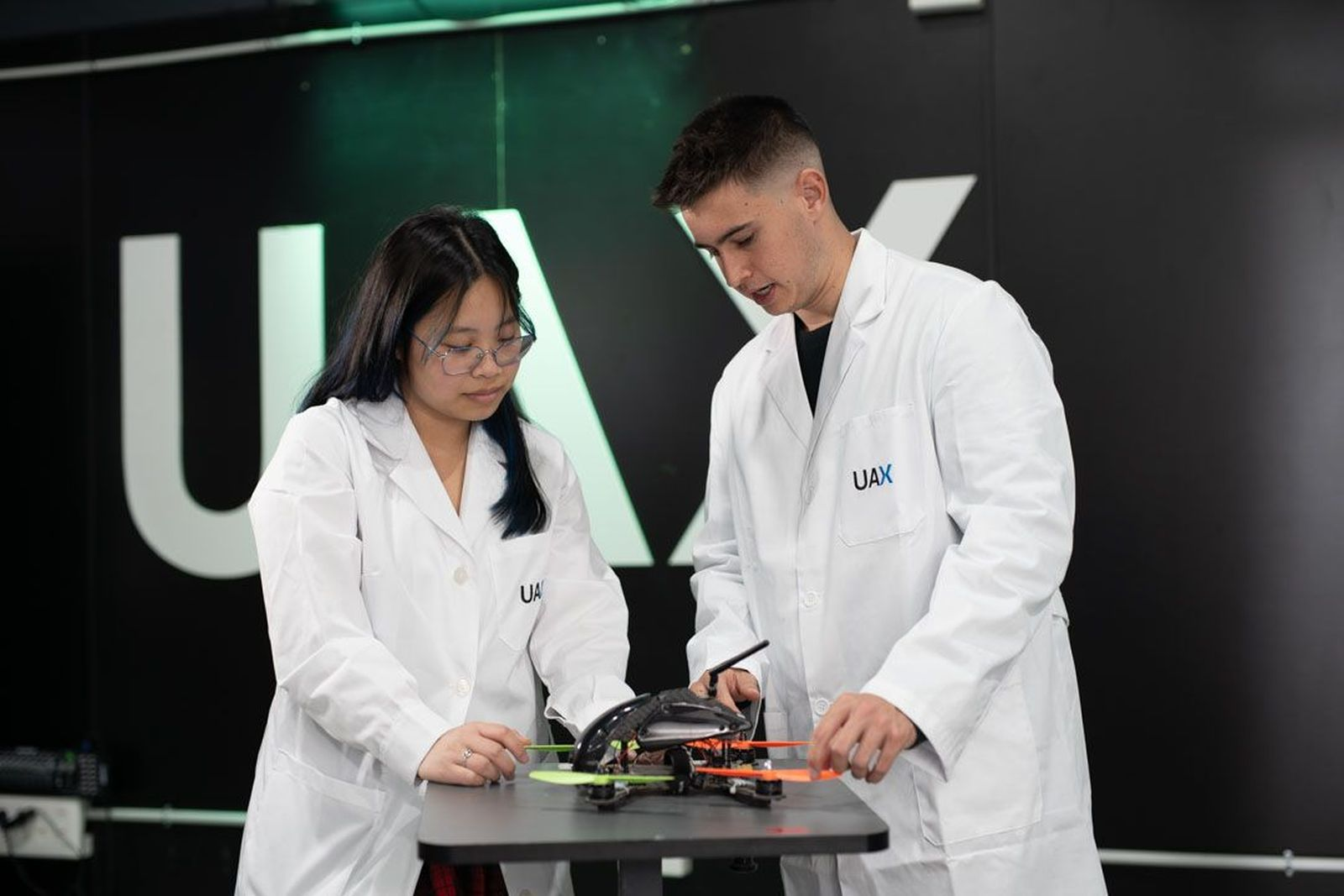



See all Master's Degrees in Engineering
Most searched curriculums

Official qualification
Study the UAX Bachelor's Degree in Pharmacy with a methodology that will allow you to combine your studies, work and personal life. An up-to-date programme connected to the pharmaceutical industry, with which you will obtain a complete competency training and an extra certification as an Expert in Strategic Management and Pharmacy Office Management. Top 3 Best Pharmacy Degrees in Spain (CyD Ranking 2024)
In collaboration with:

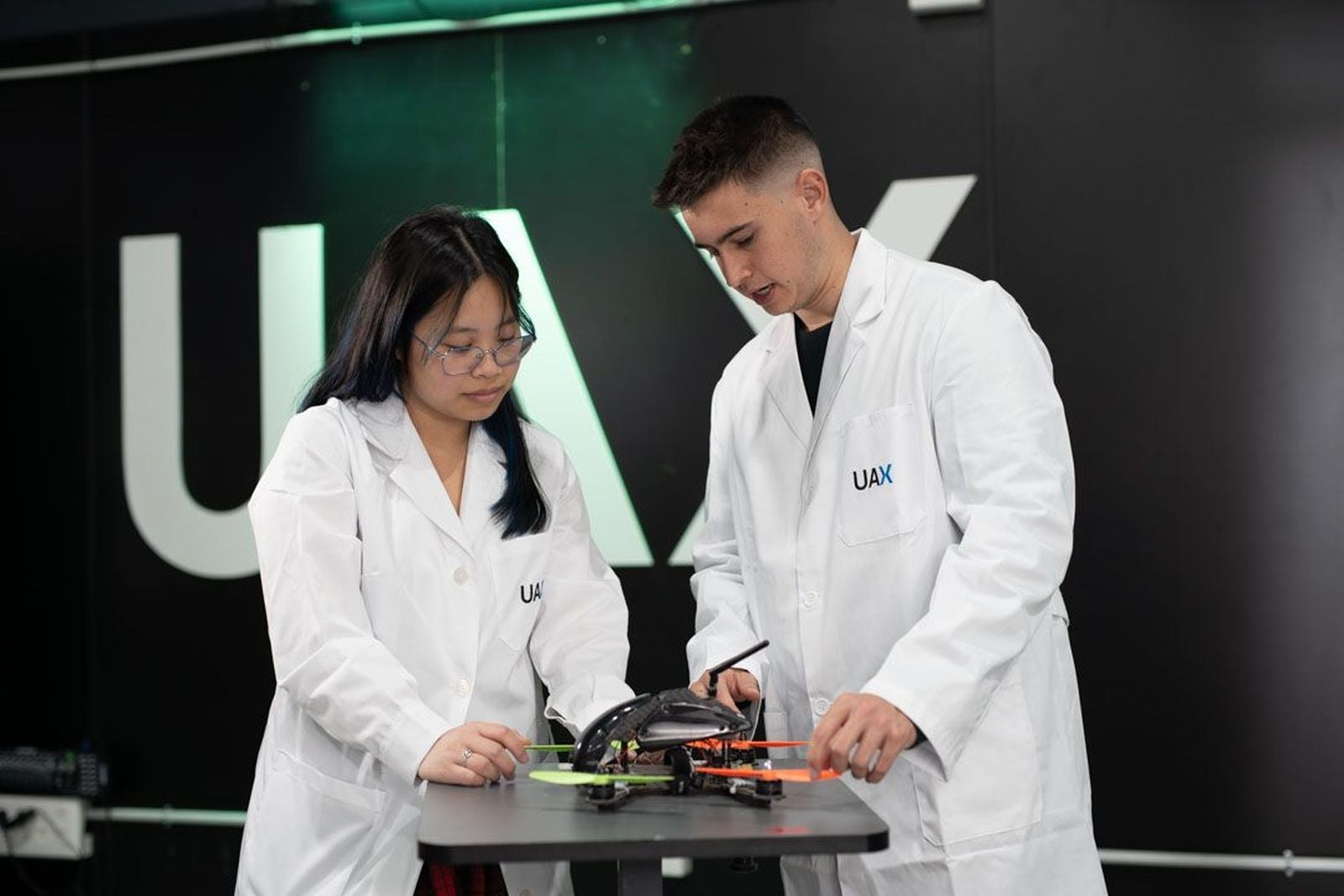
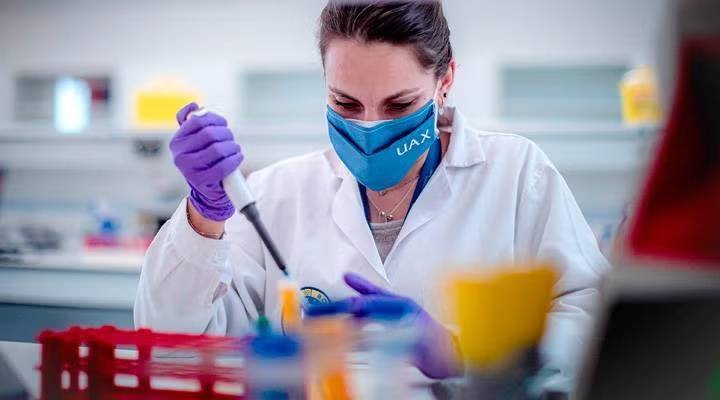
UAX’s Blended Learning Bachelor’s Degree in Pharmacy offers you the opportunity to obtain a double degree through a programme designed to help you balance your academic and personal life, combining online theoretical study with face-to-face practical sessions in state-of-the-art laboratories.
Through an up-to-date and practical academic programme, you will develop not only scientific and technical skills, but also the soft skills most highly valued by the pharmaceutical industry and community pharmacies. You’ll be able to progress at your own pace thanks to a flexible model that allows you to complete modules in four-month terms, reducing the need for on-campus attendance whilst maintaining direct contact with practical work.
*Places on the blended-learning programme for the 2025/2026 academic year are now full. You can join the waiting list or request information about the full-time Bachelor’s degree in Pharmacy ; furthermore, by undertaking this programme , you will receive an additional certificate in Strategic Management of a Pharmacy: Digital Pharmacy.

This micro-credential equips you to use tools such as ChatGPT, Copilot, Gemini and Claude to analyse information, create content and optimise professional tasks, whilst integrating innovative solutions in an ethical and responsible manner within real-world contexts.

Develop your professional potential through leadership and interpersonal skills in healthcare settings. This micro-credential provides you with the keys to managing teams, communicating effectively and solving problems in real-world settings, by applying personal leadership techniques and practical productivity tools in the healthcare sector.
You will learn everything you need to carry out activities aimed at the production and conservation of medicines, collaboration in analytical processes, the development of functions in healthcare, research, teaching, clinical management, prevention and health information and education.
Bachelor’s Degree in Pharmacy
First Year
FIRST FOUR-MONTH PERIOD
| Code | Subjects | Character* | ECTS | ||||||||||||||||||||||||||||||||||||||||||||||||||||||||||||||||||||||||||||||||||||||||||||||||||||||||||||||||||||||||||||||||||||||||||||||||||||||||||||||||||||||||||||||||||||||||||||||||||||||||||||||||||||||||||||||||||||||||||||||||||||||||||||||||||||||||||||||||||||||||||||||||||||||||||||||||||||||||||||||||||||||||||||||||||||||||||||||||||||||||||||||||||||||||||||||||||||||||||||||||||||||||||||||||||||||||||||
|---|---|---|---|---|---|---|---|---|---|---|---|---|---|---|---|---|---|---|---|---|---|---|---|---|---|---|---|---|---|---|---|---|---|---|---|---|---|---|---|---|---|---|---|---|---|---|---|---|---|---|---|---|---|---|---|---|---|---|---|---|---|---|---|---|---|---|---|---|---|---|---|---|---|---|---|---|---|---|---|---|---|---|---|---|---|---|---|---|---|---|---|---|---|---|---|---|---|---|---|---|---|---|---|---|---|---|---|---|---|---|---|---|---|---|---|---|---|---|---|---|---|---|---|---|---|---|---|---|---|---|---|---|---|---|---|---|---|---|---|---|---|---|---|---|---|---|---|---|---|---|---|---|---|---|---|---|---|---|---|---|---|---|---|---|---|---|---|---|---|---|---|---|---|---|---|---|---|---|---|---|---|---|---|---|---|---|---|---|---|---|---|---|---|---|---|---|---|---|---|---|---|---|---|---|---|---|---|---|---|---|---|---|---|---|---|---|---|---|---|---|---|---|---|---|---|---|---|---|---|---|---|---|---|---|---|---|---|---|---|---|---|---|---|---|---|---|---|---|---|---|---|---|---|---|---|---|---|---|---|---|---|---|---|---|---|---|---|---|---|---|---|---|---|---|---|---|---|---|---|---|---|---|---|---|---|---|---|---|---|---|---|---|---|---|---|---|---|---|---|---|---|---|---|---|---|---|---|---|---|---|---|---|---|---|---|---|---|---|---|---|---|---|---|---|---|---|---|---|---|---|---|---|---|---|---|---|---|---|---|---|---|---|---|---|---|---|---|---|---|---|---|---|---|---|---|---|---|---|---|---|---|---|---|---|---|---|---|---|---|---|---|---|---|---|---|---|---|---|---|---|---|---|---|---|---|---|---|---|---|---|---|---|---|---|---|---|---|---|---|---|---|---|---|---|---|---|---|---|---|---|---|---|---|---|---|---|---|---|---|---|---|---|---|---|---|---|---|---|---|---|---|
| S0160101 | Biology | FB | 6 | ||||||||||||||||||||||||||||||||||||||||||||||||||||||||||||||||||||||||||||||||||||||||||||||||||||||||||||||||||||||||||||||||||||||||||||||||||||||||||||||||||||||||||||||||||||||||||||||||||||||||||||||||||||||||||||||||||||||||||||||||||||||||||||||||||||||||||||||||||||||||||||||||||||||||||||||||||||||||||||||||||||||||||||||||||||||||||||||||||||||||||||||||||||||||||||||||||||||||||||||||||||||||||||||||||||||||||||
BiologyCódigo: S0160101 Imprimir Course 1. First-term module. Foundation course. 6 credits. Profesores
Objectives To provide an understanding of the effect of drugs on cellular function. To assess the potential effects of drugs on gene function. To assess the toxic effects of medicines and other substances at the cellular level. To promote the rational use of medicines and healthcare products. To be able to provide information on medicines. To contribute to public health education. To provide the cytogenetic basis for carrying out clinical analyses and issuing the corresponding laboratory diagnostic reports. Prerequisites Students must have a basic knowledge of General Biology and Biochemistry. Have a sufficient command of English to read a review article or access a website written in that language Basic computer skills to use word processors, databases, create PowerPoint presentations and access data on the Internet. Competencies 1. Understand the structures of biomolecules and their transformations within the cell. 2. Understand the structure and properties of cells, the different cell types and cell organelles. 3. Understand the organisation of the eukaryotic genome. 4. Understand the cell cycle, the different types of cell division and cell death. 5. Understand the main plant structures and physiological processes. 6. To acquire, develop and practise the skills required for laboratory work. 7. To assess the risks associated with the use of biological substances and laboratory processes. 8. To apply the scientific method – including the collection, evaluation and classification of data, the drawing of conclusions, and the formulation of hypotheses – to resolve experimental questions. 9. To learn how to use bibliographic sources, both traditional ones and those related to new technologies. Learning outcomes 1. Be able to use appropriate scientific terminology. 2. Be able to describe, analyse and relate the structure and function of the cell. 3. Understand the specific role of the different cell organelles in the functional activity of the cell as a unit of life. 4. Explain the processes of mitosis and meiosis. 5. Explain the organisation of the human genome. 6. Understand the structure of plants and be able to explain the main physiological processes in plants. 7. Understand the fundamentals of the main experimental techniques used to study the cell. 8. Recognise cellular structures using different methods, such as optical and electron microscopy. Course content Cell organisation. Cell types. Chemical composition of the cell. Localisation and functions of the main macromolecules. Biological membranes: structure and basic functions. Types of cell membranes. Structure and chemical composition of the plasma membrane. Transport mechanisms across the plasma membrane. Intercellular connections. Extracellular matrix. Cell adhesion. Cell junctions. Cytoskeleton. Microfilaments. Intermediate filaments. Microtubules. Cell organelles: The nucleus. Packaging of genetic material. General structure of chromosomes. Cell organelles: Ribosomes. Role of ribosomes in protein synthesis. Cell organelles involved in vesicular transport: Endoplasmic reticulum. Golgi apparatus. Cell organelles involved in the breakdown of substances: Lysosomes Cell organelles involved in energy production: Mitochondria. Chloroplasts. Peroxisomes. Cell cycle. Overview and control. Cell division. Mitosis and meiosis. Characteristics of the plant cell. Plant tissues. Water in plants. Photosynthesis and respiration. Mineral nutrition. Plant development. Hormonal control of development. Training activities TRAINING ACTIVITY HOURS ATTENDANCE Lecture 30 100 Laboratory practicals 25 100 Seminars 5 100 E-learning 2 0 Individual and group tutorials 10 100 Independent study 73 0 Exam 5 100 TOTALS 150 50 Assessment system and criteria The module is divided into three parts: lectures, laboratory work and assignments. To pass this module, students must: Have completed all laboratory practicals. Failure to attend two or more days of laboratory practicals will result in a ‘NP’ mark in both the ordinary and supplementary examination sessions and, consequently, a fail for the module. Achieve a mark of at least 4.5 in the subject matter covered in the lecture sessions. Achieve a mark of 5 or above by adding together the percentages set out below: • Assessment of lecture sessions (relating to competences C1–C5). Two eliminatory tests on the material covered in the lecture sessions (topics 1–11): 60% of the final mark for the module (the first test will account for 30% of the mark for the lecture sessions and the second for 70%) • Assignments – 10% of the final mark for the module • Laboratory practicals (related to competences C6–C8) – 30% of the final mark for the module. Late arrival, unauthorised absences or inappropriate behaviour in the laboratory will result in the loss of up to 30% of the final mark for the practicals. Continuous assessment: The following will always be positively reflected in the final mark (related to competences C5 and C9): literature review assignments and oral presentations, problem-solving exercises, and engagement and collaboration during sessions. Tests count towards the final mark if a mark of 5 or above is achieved. A mark of 4 or above in one test may be used to compensate for a mark in the other test. Should a mark below 4 be obtained in either test, or if the mark is not compensated for, the student must sit the examination for the outstanding parts during the ordinary or supplementary examination period. Timetable Click on this link to view the detailed timetable in Excel
Bibliography Core: 1. Alberts et al. Introduction to Cell Biology 5th ed. Panamericana. 2021. ISBN: 9786078546442 2. Cooper GM The Cell Marbán. 2021. ISBN: 9788418068584 3. Lehninger AL, Nelson DL, Cox MM and Cuchillo Foix CM. Lehninger. Principles of Biochemistry 7th ed. Omega. 2018. ISBN: 9788428216678 Supplementary: 4. Calvo, A. Biomedical Cell Biology Elsevier. 2023. ISBN: 9788491139591 5.- Feduchi Canosa E, Romero Magdalena C, Yáñez Conde E, García-Hoz Jiménez C. Biochemistry: Essential Concepts. 3rd ed. Médica Panamericana. 2025. ISBN: 9788491106807 6. Joaquín de Juan Herrero et al. Cell Biology Panamericana. 2022. ISBN: 9788498357714 7. Karp G. Molecular and Cell Biology 8th ed. McGraw-Hill. 2019. ISBN: 9781456269227 8. Lodish et al. Cell and Molecular Biology Panamericana. 2021. ISBN: 9789500606264 Others: 9. Ángel Herráez Molecular Biology and Genetic Engineering 2nd ed. ELSEVIER. 2012. ISBN: 9788480866477 10. Helmut Plattner / Joachim Hentschel Cell Biology 4th ed. Panamericana. 2014. ISBN: 9788498355215 11. Meisenberg, Simmons Principles of Medical Biochemistry 4th ed. Elsevier. 2018. ISBN: 9788491132974 |
|||||||||||||||||||||||||||||||||||||||||||||||||||||||||||||||||||||||||||||||||||||||||||||||||||||||||||||||||||||||||||||||||||||||||||||||||||||||||||||||||||||||||||||||||||||||||||||||||||||||||||||||||||||||||||||||||||||||||||||||||||||||||||||||||||||||||||||||||||||||||||||||||||||||||||||||||||||||||||||||||||||||||||||||||||||||||||||||||||||||||||||||||||||||||||||||||||||||||||||||||||||||||||||||||||||||||||||||
| S0160102 | Physics | OB | 6 | ||||||||||||||||||||||||||||||||||||||||||||||||||||||||||||||||||||||||||||||||||||||||||||||||||||||||||||||||||||||||||||||||||||||||||||||||||||||||||||||||||||||||||||||||||||||||||||||||||||||||||||||||||||||||||||||||||||||||||||||||||||||||||||||||||||||||||||||||||||||||||||||||||||||||||||||||||||||||||||||||||||||||||||||||||||||||||||||||||||||||||||||||||||||||||||||||||||||||||||||||||||||||||||||||||||||||||||
PhysicsCódigo: S0160102 Imprimir Course 1: First-term module. Compulsory. 6 credits. Profesores
Objectives To demonstrate the potential and possibilities of physics as a basis for interpreting and predicting the nature and scope of the processes involved in the evolution of chemical, biological and technological systems. To identify and analyse physical processes that form part of systems of pharmaceutical interest. Prerequisites Knowledge of general physics and mathematics (numerical calculus and statistics). Competences 1. Apply knowledge of physics to the pharmaceutical sciences. 2. Understand the basic principles of the electric field and their applications to the health sciences. 3. Understand the basic principles of waves and their applications to the health sciences. 4. Understand the principles of fluid statics and dynamics and their importance in biological systems. 5. Design experiments based on statistical criteria. 6. To evaluate scientific data. 7. Apply computational and data-processing techniques to physical, chemical and biological data. 8. Understand the scientific method. 9. Understand oral and written communication techniques. Communication of results. Learning outcomes 1. Application of basic knowledge of physics. Measurement. 2. Solving problems relating to electric fields and understanding their relationship with biological systems and measurement systems. 3. Basic applications of waves in the health sciences. 4. Practical applications of fluid statics and dynamics. Rheology. 5. Demonstrating proficiency in problem-solving, information management and decision-making. 6. Demonstrate the ability to work as part of a team. 7. Demonstrate the ability to analyse and synthesise information. 8. Understanding of the scientific method. 9. Work effectively in a laboratory environment. 10. Preparation and delivery of oral presentations. Course description The Physics module in the first year of the Bachelor’s Degree in Pharmacy is a four-month module worth 6 credits. It begins with a review of scalar and vector physical quantities and systems of measurement. This is followed by a study of the main properties of electric and magnetic fields, leading on to the analysis and application of waves, particularly electromagnetic waves, sound waves and light. The module concludes with a description of the behaviour of fluids under ideal and real-world conditions. This content demonstrates the potential and possibilities of physics as a basis for interpreting and predicting the nature and extent of the processes involved in the evolution of chemical, biological and technological systems. Furthermore, in this module, students learn to identify and analyse physical processes in systems of pharmaceutical interest. Teaching activities LEARNING ACTIVITY HOURS ATTENDANCE Lectures 45 100 Laboratory practicals 15 100 Seminars 5 100 E-learning 5 0 Individual and group tutorials 5 100 Independent study 70 0 Exam 5 100 Assessment system and criteria To pass this module, you must: 1. Have completed the laboratory practicals 2. Achieve a mark of five points or higher by adding together the percentages set out below: - Laboratory practicals: 20 per cent of the final mark (no minimum mark) – 15 per cent for the practical book assessment and 5 per cent for laboratory problem-solving. (Competencies C5 to C9, Learning Outcomes LO1, LO6, LO8, LO9 and LO10) - Continuous assessment tests: 60 per cent of the final mark (Competencies C1 to C4, Learning Outcomes LO1, LO2, LO3, LO4, LO5 and LO7). Only students with an attendance rate of 70 per cent or higher will be eligible to sit the continuous assessment tests, with the exception of those with a valid exemption and repeat students with overlapping classes. Two tests will be held during the course; these will count towards the final mark provided a mark of 5 or higher is achieved. One test may be offset by another if a mark of 4 or above is obtained in either of them. The first test will assess the section on electric and magnetic fields (30 per cent) and the second the section on waves, optics and fluids (30 per cent); the assessment will cover theoretical knowledge and problem-solving. If a mark below 4 is obtained in either test, or if the marks from the two tests do not balance each other out, students must sit the ordinary and/or supplementary examination for the section(s) in which they have failed. - Assignments: 20% of the final mark (no minimum mark required) (Competencies C1 to C4, C9; Learning Outcomes LO1 to LO8, LO10). Completion and submission of set problems REGULAR EXAMINATION PERIOD: Students will be examined on the previous components (tests, practicals) which they have not passed (mark below 5 points) in the continuous assessment. The same weightings as in the continuous assessment will apply. SUPPLEMENTARY EXAMINATION SESSION: Students will be examined on the aforementioned components (tests, practicals) which they have not passed (mark below 5 points) in the continuous assessment. These will carry the same weightings as in the continuous assessment. Timetable Click on this link to view the detailed timetable in Excel
Bibliography Basic: 1. Hans C. Ohanian Physics for Engineering and Science. Volumes 1 and 2. 3rd edition. McGraw Hill. 2009. ISBN: 0393974227 2. Mirabent D. J. Physics for Life Sciences McGraw Hill. 2008. ISBN: 9788448168032 3. Tipler, Paul A. Physics for Science and Technology 6th ed. Barcelona: Reverté, 2014. 2014. ISBN: 9788429144307 Supplementary: 4.- Chang, Raymond Physical Chemistry 3rd ed. McGraw-Hill. 2008. ISBN: 9789701066522 5.- Magro, R., Abad, L., et al. Physical Fundamentals of Engineering II Garcia Maroto Publishers. 2008. ISBN: 9788493601867 |
|||||||||||||||||||||||||||||||||||||||||||||||||||||||||||||||||||||||||||||||||||||||||||||||||||||||||||||||||||||||||||||||||||||||||||||||||||||||||||||||||||||||||||||||||||||||||||||||||||||||||||||||||||||||||||||||||||||||||||||||||||||||||||||||||||||||||||||||||||||||||||||||||||||||||||||||||||||||||||||||||||||||||||||||||||||||||||||||||||||||||||||||||||||||||||||||||||||||||||||||||||||||||||||||||||||||||||||||
| S0160104 | Mathematics | FB | 6 | ||||||||||||||||||||||||||||||||||||||||||||||||||||||||||||||||||||||||||||||||||||||||||||||||||||||||||||||||||||||||||||||||||||||||||||||||||||||||||||||||||||||||||||||||||||||||||||||||||||||||||||||||||||||||||||||||||||||||||||||||||||||||||||||||||||||||||||||||||||||||||||||||||||||||||||||||||||||||||||||||||||||||||||||||||||||||||||||||||||||||||||||||||||||||||||||||||||||||||||||||||||||||||||||||||||||||||||
MathematicsCódigo: S0160104 Imprimir Course 1: First-term module. Foundation course. 6 credits. Profesores
Objectives This module is designed to establish and consolidate some of the mathematical foundations required by Pharmacy students. The aim is for students to master the techniques of mathematical calculation and statistics as applied to the pharmaceutical sciences. Theoretical content will be limited to what is necessary to understand and assimilate the most important concepts of the discipline, emphasising the practical nature and applications of the material covered. Prerequisites 1. Basic knowledge of mathematics and statistics taught at secondary school level. 2. Ability to make connections between concepts and draw conclusions Competencies 1. Apply mathematical principles to the pharmaceutical sciences. 2. Use data processing tools in relation to the chemical, physical and biological information obtained. 3. Design experiments in accordance with mathematical criteria. 4. Evaluate scientific data relating to medicines and medical devices. 5. Apply basic statistical calculations to problems specific to the pharmaceutical field. 6. Ability to carry out mathematical operations. 7. Work as part of a small team. 8. Know how to find and use bibliographic sources. Learning outcomes 1. Understand the concepts of limits, derivatives and integrals. 2. To be familiar with and able to apply methods for solving limits and integrating functions, as well as the basic rules of differentiation and integration. 3. Solve problems and carry out calculations. 4. Understand basic statistical methods applied to the pharmaceutical sciences. Course content Topic 0 – Elementary Functions. Topic 1. – Functions of a real variable, limits and continuity. Topic 2. – Derivatives and optimisation. Topic 3. – Indefinite Integrals. Topic 4. – Definite integrals and area calculations. Topic 5. – Introduction to Statistics. Topic 6. – Descriptive statistics for one variable. Topic 7. - Descriptive statistics for two variables. Topic 8. – Probability. Topic 9. - Random variables. Topic 10. - Statistical inference. Teaching activities Lecture Explanation of theoretical principles, using computer-based tools. Competencies: 1–8 Learning outcomes: 1–4 Seminars Presentation and discussion of case studies. Presentations. Competencies: 1–6 Learning outcomes 1–4 E-learning Interactive distance learning via the virtual campus. Competencies: 1–7 Learning outcomes: 1–4 Individual and group tutorials Guidance and clarification of queries. Competencies: 1–6, 8 Learning outcomes: 1–4 Independent work Study. Literature review. Competencies: 1–6, 8 Learning outcomes: 1–4 Exam Oral and written assessments. Competencies: 1–7 Learning outcomes: 1–4 Assessment system and criteria In-class knowledge tests: 60% (30% each) Problem-solving: 20 per cent. Submission of four sets of exercises and problems throughout the term (5 per cent for each activity) Seminars: 20 per cent. Completion of activities and questionnaires linked to the course’s seminars via the Virtual Campus (5 per cent for each activity) There will be two in-person knowledge assessments as part of Continuous Assessment throughout the course. Students who achieve a mark of 5.0 or above in one or both tests will have completed the topics corresponding to that section, having passed it for the current academic year Students whose mark falls between 4.0 and 4.9 will have the opportunity to make up for this in the other continuous assessment test Students who obtain a mark below 4.0 in one test will not be able to average it with the other test, as it is considered non-compensable Timetable Click on this link to view the detailed timetable in Excel
Bibliography Core: 1. Jon Rogawski Calculus 2nd ed. Reverte. 2012. ISBN: 9788429151664 Supplementary: 2.- Gómez Rubio, V and López Cano, E Theory and Problems in Applied Mathematics and Statistics for Pharmacy Paraninfo. 2017. ISBN: 9788428327787 |
|||||||||||||||||||||||||||||||||||||||||||||||||||||||||||||||||||||||||||||||||||||||||||||||||||||||||||||||||||||||||||||||||||||||||||||||||||||||||||||||||||||||||||||||||||||||||||||||||||||||||||||||||||||||||||||||||||||||||||||||||||||||||||||||||||||||||||||||||||||||||||||||||||||||||||||||||||||||||||||||||||||||||||||||||||||||||||||||||||||||||||||||||||||||||||||||||||||||||||||||||||||||||||||||||||||||||||||||
| S0160105 | Chemistry | FB | 10 | ||||||||||||||||||||||||||||||||||||||||||||||||||||||||||||||||||||||||||||||||||||||||||||||||||||||||||||||||||||||||||||||||||||||||||||||||||||||||||||||||||||||||||||||||||||||||||||||||||||||||||||||||||||||||||||||||||||||||||||||||||||||||||||||||||||||||||||||||||||||||||||||||||||||||||||||||||||||||||||||||||||||||||||||||||||||||||||||||||||||||||||||||||||||||||||||||||||||||||||||||||||||||||||||||||||||||||||
ChemistryCódigo: S0160105 Imprimir Course 1: First-term module. Foundation course. 10 credits. Profesores
Objectives Chemistry is a field with a variety of approaches, all based on the same fundamental concepts. In the field of Health Sciences, it plays an important role, given that life itself unfolds through chemical and biochemical reactions. This module introduces students to the world of chemistry, and the objectives to be achieved are as follows: To make students aware of the importance of chemistry in the Health Sciences. To develop students’ critical thinking skills when faced with complex problems in chemistry. To understand the basic principles of chemistry. To understand the adverse effects on health and the environment of the most relevant chemical compounds. To learn the nomenclature and formulae of inorganic chemical compounds. To work as a team and achieve a common goal by putting theoretical concepts into practice. Prerequisites 1. Basic knowledge of mathematical calculations acquired at A-level 2. Knowledge of chemistry acquired at A-level. Competencies 1. To know and understand the characteristics of reactions in solution, the different states of matter and the principles of thermodynamics and their application to the pharmaceutical sciences. 2. To know and understand the characteristic properties of elements and their compounds, as well as their application in the pharmaceutical field. 3. To be familiar with the various atomic models and the drawbacks and limitations of each. 4. To be familiar with the Periodic Table and the relationship between the electronic configurations of the elements and certain properties. 5. To be familiar with the different models of chemical bonding and to relate the chemical properties of compounds to the type of bond formed between ions, atoms or molecules. 6. Understand the acid-base and redox processes that take place in solution in order to predict the stability of inorganic species. 7. Understand the general properties of metallic and non-metallic elements, particularly those of relevance to healthcare. 8. Understand the characteristics and properties of coordination compounds, particularly their functions and applications in biological processes. 9. Be able to use the basic instruments and techniques of a chemistry laboratory Learning outcomes 1. Training in the chemical fundamentals necessary to understand other subjects within the field of Chemistry. 2. Ability to assess the risks associated with the use of chemical substances and laboratory processes. 3. Skills in carrying out standard laboratory procedures, including the use of scientific synthesis and analysis equipment, and appropriate instrumentation. 4. Ability to understand the characteristics of reactions in solution, the different states of matter, and the principles of thermodynamics and their application to the pharmaceutical sciences. 5. Ability to understand the characteristic properties of elements and their compounds, as well as their application in the pharmaceutical field. 6. Handling, analysis and quality control of chemical substances 7. Ability to apply knowledge in practice: problem-solving 8. Teamwork: critical and self-critical thinking Description of the content Topic 1 – The composition of matter. 1.1 Classification of matter: Pure substances and mixtures. Methods of separation. 1.2 Chemical elements. Atomic theory. Atomic number. Mass number. Atomic mass. 1.3 Chemical compounds. Atoms, molecules and ions. 1.4 Moles and molar mass. Empirical and molecular formulae. Topic 2.- Nomenclature in Inorganic and Organic Chemistry. Topic 3.- Atomic structure and the Periodic Table. 3.1 Elements. 3.2 Structure of atoms. Quantum mechanics. Quantum numbers. 3.3 Orbital energy. Electron configuration. Building block principle. Effective nuclear charge. 3.4 Organisation of the elements. Periodic Table. Periodic properties of the elements: atomic and , ionisation potential, electron affinity, electronegativity. Topic 4 – Chemical bonding 4.1 Ionic bonding. Crystal structures of ionic compounds. Crystal defects. Modification of properties. 4.2 Covalent Bond. Lewis structures. Dipole moment. Molecular geometry. Molecular orbital theory. Hybridisation. 4.3 Metallic bonding. Theories of metallic bonding. Properties of metals. Topic 5. Chemical reactions. Stoichiometry. 5.1 Chemical equations. 5.2 Types of chemical reactions: 5.2.1 Acid-base reactions. 5.2.2 Precipitation reactions. 5.2.3 Redox reactions. Balancing redox reactions. 5.3 Stoichiometric calculations based on chemical equations. 5.4 Limiting reactant. Reaction yield. Topic 6. – Liquid and solid states. Changes of state. 6.1 Intermolecular forces. 6.2 Molecular kinetic description of the liquid and solid states. 6.3 Properties of liquids: surface tension, capillarity and viscosity. 6.4 Amorphous and crystalline solids. Types of crystals. 6.5 Liquid–vapour equilibrium: 6.5.1 Vapour pressure. Boiling point. 6.5.2 Liquefaction of gases. Critical point. 6.6 Solid–liquid equilibrium: melting point. 6.7 Solid–vapour equilibrium: sublimation. 6.8 Phase diagrams. Triple point. Topic 7. Solutions. 7.1 Types of solutions. Measures of concentration. 7.2 Stoichiometry of chemical reactions in solution. 7.3 Saturation and solubility. 7.4 Factors affecting solubility: 7.5 Colligative properties of solutions. Ideal solutions. Van’t Hoff factor. Topic 8 – Chemical Kinetics. 8.1 Reaction rate. 8.2 Rate equation and order of reaction. 8.3 Control of reaction rates: 8.3.1 Collision theory. Activated complex theory. 8.3.2 Effect of temperature. Arrhenius equation. 8.4 Reaction mechanism. Topic 9. Chemical equilibrium. 9.1 Reactions at equilibrium. 9.2 Equilibrium constant. Homogeneous equilibrium. Heterogeneous equilibrium. 9.3 Equilibrium calculations. 9.4 Factors affecting chemical equilibrium. Le Chatelier’s principle. 9.5 Free energy and chemical equilibrium. 9.6 Reaction rate and chemical equilibrium. Topic 10. Acid-base equilibria. 10.1 Definitions of acids and bases. 10.2 Ionisation constant. Strength of acids and bases. 10.3 Autoionisation of water. pH scale. 10.4 Calculating the pH of acid and base solutions. Polyprotic acids. 10.5 Calculating the pH of salt solutions. Acidic and basic ions. 10.6 Mixed solutions: the common-ion effect. Buffers. 10.7 Volumetric titrations. Indicators. Topic 11. – Solubility equilibria. 11.1 Solubility product. 11.2 Ionic product and precipitation. Fractional precipitation. 11.3 Effect of the common ion. 11.4 Effect of pH on solubility. 11.5 Dissolution of precipitates through complex formation. Topic 12. – Electrochemistry. 12.1 Electrochemical cells. Types of cells. 12.2 Cell potential. Standard electrode potential. Spontaneity of redox reactions. 12.3 Concentration dependence of cell potential. The Nernst equation. Concentration cells. 12.4 Batteries. Corrosion. 12.5 Electrolytic cells. Faraday’s law. Topic 13. – Metals of the main groups. 13.1 Abundance of metals. Metallurgical processes. 13.2 Periodic trends in metallic properties. 13.3 Metals of the s-block: 13.3.1 Alkali metals. Production. Properties. Reactivity. Compounds 13.3.2 Alkaline earth metals. Production. Properties. Reactivity. Compounds 13.4 Metals of the p-block: aluminium, tin and lead. Topic 14. – Chemistry of transition metals. Coordination compounds. 14.1 Properties of transition metals. Relevant compounds. 14.2 Werner’s Coordination Theory. Current understanding of coordination compounds. 14.3 Introduction to the nomenclature and structure of coordination compounds. 14.4 Equilibria involving complex ions. Applications of coordination compounds. Topic 15. Non-metallic elements 15.1 Hydrogen. Production. Properties. Reactivity. Compounds 15.2 Noble gases. Production. Properties. Reactivity. Compounds 15.3 Halogens. Production. Properties. Reactivity. Compounds 15.4 Oxygen and sulphur. Production. Properties. Reactivity. Compounds 15.5 Nitrogen and phosphorus. Production. Properties. Reactivity. Compounds 15.6 Carbon and silicon. Production. Properties. Reactivity. Compounds 15.7 Boron. Production. Properties. Reactivity. Compounds Learning activities Teaching activities Lecture Explanation of theoretical principles, using computer-based tools. Competencies: 1–8 Learning outcomes: 1, 4, 5, 7 Laboratory practicals Experimental application of the knowledge acquired. Competencies: 6–9 Learning outcomes: 2–4, 6, 8 Seminars Presentation and discussion of case studies. Presentations. Competencies: 1–8 Learning outcomes: 1–7 E-learning Interactive distance learning via the virtual campus. Competencies: 1–8 Learning outcomes: 1–6 Individual and group tutorials Guidance and clarification of queries. Competencies: 1–9 Learning outcomes: 1–8 Independent study Study. Literature review. Competencies: 1–9 Learning outcomes: 1–8 Exam Oral and written assessments Competencies: 1–9 Learning outcomes: 1–8 Assessment system and criteria To pass this module, students must achieve a mark of five points or higher, calculated by adding together the percentages set out below: 1. Material covered in interactive classes: 50% of the final mark. (Relates to competences C1–C8; relates to learning outcomes 1, 4, 5 and 7). Mid-term exam 1: Topics 1 to 6 (25% of final mark) Mid-term exam 2: Topics 7 onwards (25% of the final mark) These will be pass/fail examinations with a mark of 5 or above. The two mid-term examinations may be offset if a mark of 4 or above is obtained. Should a student obtain a mark below 4 in either examination, or if the marks are not offset, they must sit the examination during the ordinary or extraordinary examination period. 2. An examination on Inorganic Formulation and Nomenclature (10% of the final mark). IT IS ESSENTIAL TO PASS THIS WITH A MARK OF 5 OR ABOVE. 3. Laboratory practicals: 20 per cent of the final mark (related to competences C6–C9), (related to learning outcomes 2–4, 6, 8). The minimum mark for practical work to be included in the average with the other continuous assessment marks shall be 4. ATTENDANCE AT PRACTICAL SESSIONS IS COMPULSORY. 4. Student work: 20% of the final mark (Relates to competences C1–C8), (Relates to learning outcomes 1–2, 4–5, 7–8). 15% Class activities (quizzes, seminars, board work) 5% Submission of course assignments. To pass the module ON A YEARLY BASIS, a mark of 5/10 is required. REGULAR EXAM SESSION: STUDENTS WHO DO NOT ACHIEVE 5/10 POINTS FOR THE YEAR MUST TAKE THE EXAM FOR ANY FAILED MID-TERM EXAMS OR PRACTICAL ASSIGNMENTS DURING THE REGULAR EXAM SESSION IN FEBRUARY. EXTRAORDINARY EXAM SESSION: STUDENTS WHO DO NOT PASS THE COURSE IN THE FEBRUARY EXAMINATION SESSION MUST TAKE THE EXAM(S) FOR THE MID-TERM ASSESSMENT(S) OR PRACTICAL SESSIONS THEY FAILED DURING THE EXTRAORDINARY EXAMINATION SESSION IN JULY. Timetable Click on this link to view the detailed timetable in Excel
Bibliography Core: 1. Atkins, P. W. General Chemistry Barcelona: Omega, 1991. 1991. ISBN: 8428208921 2. Chang, Raymond Chemistry 10th ed. Mexico: McGraw-Hill, 2020. 2020. ISBN: 9780073511092 3. López Cancio, José Antonio Chemistry Problems Madrid [etc.]: Prentice-Hall, 2000. 2000. ISBN: 9788420529950 4. Mahan, Bruce M. Chemistry: A University Course Argentina [etc.]: Addison Wesley, 1990. 1990. ISBN: 0201644193 5. Petrucci, Ralph H. General Chemistry 8th ed. Madrid: Pearson Educación, 2003. 2003. ISBN: 8420535338 6. Sienko, M. J. Chemistry Problems Barcelona: Reverté, 1990. 1990. ISBN: 8429174907 |
|||||||||||||||||||||||||||||||||||||||||||||||||||||||||||||||||||||||||||||||||||||||||||||||||||||||||||||||||||||||||||||||||||||||||||||||||||||||||||||||||||||||||||||||||||||||||||||||||||||||||||||||||||||||||||||||||||||||||||||||||||||||||||||||||||||||||||||||||||||||||||||||||||||||||||||||||||||||||||||||||||||||||||||||||||||||||||||||||||||||||||||||||||||||||||||||||||||||||||||||||||||||||||||||||||||||||||||||
| TOTAL: | 28 | ||||||||||||||||||||||||||||||||||||||||||||||||||||||||||||||||||||||||||||||||||||||||||||||||||||||||||||||||||||||||||||||||||||||||||||||||||||||||||||||||||||||||||||||||||||||||||||||||||||||||||||||||||||||||||||||||||||||||||||||||||||||||||||||||||||||||||||||||||||||||||||||||||||||||||||||||||||||||||||||||||||||||||||||||||||||||||||||||||||||||||||||||||||||||||||||||||||||||||||||||||||||||||||||||||||||||||||||
SECOND FOUR-MONTH TERM
| Code | Subjects | Character* | ECTS | ||||||||||||||||||||||||||||||||||||||||||||||||||||||||||||||||||||||||||||||||||||||||||||||||||||||||||||||||||||||||||||||||||||||||||||||||||||||||||||||||||||||||||||||||||||||||||||||||||||||||||||||||||||||||||||||||||||||||||||||||||||||||||||||||||||||||||||||||||||||||||||||||||||||||||||||||||||||||||||
|---|---|---|---|---|---|---|---|---|---|---|---|---|---|---|---|---|---|---|---|---|---|---|---|---|---|---|---|---|---|---|---|---|---|---|---|---|---|---|---|---|---|---|---|---|---|---|---|---|---|---|---|---|---|---|---|---|---|---|---|---|---|---|---|---|---|---|---|---|---|---|---|---|---|---|---|---|---|---|---|---|---|---|---|---|---|---|---|---|---|---|---|---|---|---|---|---|---|---|---|---|---|---|---|---|---|---|---|---|---|---|---|---|---|---|---|---|---|---|---|---|---|---|---|---|---|---|---|---|---|---|---|---|---|---|---|---|---|---|---|---|---|---|---|---|---|---|---|---|---|---|---|---|---|---|---|---|---|---|---|---|---|---|---|---|---|---|---|---|---|---|---|---|---|---|---|---|---|---|---|---|---|---|---|---|---|---|---|---|---|---|---|---|---|---|---|---|---|---|---|---|---|---|---|---|---|---|---|---|---|---|---|---|---|---|---|---|---|---|---|---|---|---|---|---|---|---|---|---|---|---|---|---|---|---|---|---|---|---|---|---|---|---|---|---|---|---|---|---|---|---|---|---|---|---|---|---|---|---|---|---|---|---|---|---|---|---|---|---|---|---|---|---|---|---|---|---|---|---|---|---|---|---|---|---|---|---|---|---|---|---|---|---|---|---|---|---|---|---|---|---|---|---|---|---|---|---|---|---|---|---|---|---|---|---|---|---|---|---|---|
| S0160103 | Introduction to Business Administration | OB | 2 | ||||||||||||||||||||||||||||||||||||||||||||||||||||||||||||||||||||||||||||||||||||||||||||||||||||||||||||||||||||||||||||||||||||||||||||||||||||||||||||||||||||||||||||||||||||||||||||||||||||||||||||||||||||||||||||||||||||||||||||||||||||||||||||||||||||||||||||||||||||||||||||||||||||||||||||||||||||||||||||
Introduction to Business AdministrationCódigo: S0160103 Imprimir Course 1. Second-term module. Compulsory. 2 credits. Profesores
Objectives To provide effective training aimed at equipping students with the generic skills required in the field of business administration and management, enabling them to pursue careers in which they perform management, leadership and advisory roles within companies or other organisations. Prerequisites None Competencies 1. To analyse how organisations relate to their political, legal, social and technological environments. 2. Analyse specific business environments, including the company’s relationship with competitors, customers and suppliers. 3. Understand the company’s actual operations: procurement, production and marketing. 4. Understand the company’s financing and investment system. 5. Understand the company’s management system: organisation, information, control and human resources. 6. Forms of business development: expansion and diversification, internationalisation. Learning outcomes 1. Training on the importance of the pharmaceutical company in society. 2. Ability to identify potential threats or opportunities arising in both general and specific contexts. 3. Ability to identify the strengths and weaknesses of a pharmaceutical company. 4. Ability to understand each of the departments within a national and multinational pharmaceutical company. 5. Ability to analyse the advantages and disadvantages of business growth. Course description TOPIC 1: Introduction and general concepts. TOPIC 2: Economic, legal and systemic concepts of the company. TOPIC 3: The company and the entrepreneur: the overall corporate system. TOPIC 4: The objectives of the business. TOPIC 5: Ways in which a business can develop. TOPIC 6: Management, administration and organisation of the business. TOPIC 7: Functional areas of the business: production. TOPIC 8: Functional areas of a business: the sales department. TOPIC 9: Functional areas of a company: finance Training activities TRAINING ACTIVITY HOURS FACE-TO-FACE SESSIONS Synchronous virtual lecture 3 0 Asynchronous virtual lecture 12 E-learning (SP) 2 0 Independent study 30 0 In-person examination 3 100 Assessment system and criteria Two eliminatory exams throughout the course; topics with a mark of 5 (60% of the final mark) will be excluded Regular assessments during lessons: Assignments and presentations during lessons, handed in to the teacher at the start of the following lesson. Regular attendance checks during lessons. Timetable Click on this link to view the detailed timetable in Excel
Bibliography Essential: 1. Business Administration Handbook Madrid: Civitas, 1998. 1998. ISBN: 8447011194 2.- Díez de Castro, José Business Administration: Workbook, Case Studies, Exercises Madrid: Pirámide, 1996. 1996. ISBN: 8436809238 3. Donnelly, James H. Fundamentals of Business Management and Administration Santafé de Bogotá: McGraw Hill; Irwin, 1994. 1994. ISBN: 9586007499 4. Pérez Gorostegui, Eduardo Business Management Practices Madrid: Pirámide, 1998. 1998. ISBN: 8436812395 |
|||||||||||||||||||||||||||||||||||||||||||||||||||||||||||||||||||||||||||||||||||||||||||||||||||||||||||||||||||||||||||||||||||||||||||||||||||||||||||||||||||||||||||||||||||||||||||||||||||||||||||||||||||||||||||||||||||||||||||||||||||||||||||||||||||||||||||||||||||||||||||||||||||||||||||||||||||||||||||||||
| S0160106 | Chemical Analysis | FB | 6 | ||||||||||||||||||||||||||||||||||||||||||||||||||||||||||||||||||||||||||||||||||||||||||||||||||||||||||||||||||||||||||||||||||||||||||||||||||||||||||||||||||||||||||||||||||||||||||||||||||||||||||||||||||||||||||||||||||||||||||||||||||||||||||||||||||||||||||||||||||||||||||||||||||||||||||||||||||||||||||||
Chemical AnalysisCódigo: S0160106 Imprimir Course 1. Second-term module. Foundation course. 6 credits. Profesores
Objectives To understand the processes of chemical equilibrium in analytical procedures Description of current analytical systems (volumetric, gravimetric and instrumental) Introduction to sampling systems and the preparation of samples for analysis Representativeness and practical determination of analytical results, and their expression Prerequisites Basic knowledge of the nomenclature and chemical structure of atoms, molecules and ions. Basic knowledge of chemical thermodynamics and chemical kinetics Basic knowledge of chemical equilibrium and the calculation of concentrations in chemical reactions. Ability to relate concepts and draw conclusions in order to solve problems. Knowledge of, and ability to carry out, the basic laboratory techniques used in a chemistry laboratory. Competencies 1. To be familiar with and understand the characteristics of reactions in solution and their application to the pharmaceutical sciences. 2. To be familiar with and understand the main qualitative analytical characteristics that enable the analysis and detection of anions, inorganic cations and organic substances. 3. To be familiar with the main classical and instrumental quantitative analytical methods applied to the analysis of food, water and the environment. 4. Carry out standard laboratory procedures, including the use of scientific analytical equipment and appropriate instrumentation. 5. To identify, analyse and control drugs and medicines, as well as other products and raw materials of health-related interest for human or veterinary use. 6. Select the appropriate techniques and procedures for the design, application and evaluation of reagents, methods and analytical techniques 7. Understand the main techniques of structural research, including spectroscopy. 8. Understand the principles and procedures for the analytical determination of compounds: 9. Assess the risks associated with the use of chemical substances and laboratory processes. 10. Be able to apply the scientific method and acquire skills in dealing with legislation, information sources, bibliographies and the drafting of protocols, as well as in locating and using bibliographic sources, in order to remain aware of the ongoing evolution of chemical analysis Learning outcomes 1. Be able to correctly perform concentration calculations for equilibrium systems in aqueous solution. 2. Acquire the knowledge and criteria required for the statistical analysis of large quantities of numerical data derived from experimental work in chemical analysis 3. Be able to quantitatively assess the concentrations of chemical species using classical analytical methods such as volumetric and gravimetric analysis 4. To be familiar with instrumental analytical techniques, including electrochemical, gravimetric, spectroscopic and chromatographic separation techniques 5. To be familiar with standardised analytical methods commonly used in pharmaceutical, chemical or environmental science. 6. Understand the rules and concepts that help to analyse, distinguish and predict the main physico-chemical properties of a drug. 7. Acquire laboratory skills enabling the performance of chemical analysis and the handling of laboratory equipment, including the use of instrumental analytical techniques 8. Develop communication and information skills, both oral and written. Course content PART ONE: INTRODUCTION - Terminology of chemical analysis - Errors in chemical analysis. PART TWO CHEMICAL EQUILIBRIUM IN SOLUTION - Ionic equilibria in solution. PART THREE PREPARATION OF THE SAMPLE FOR ANALYSIS - Sample collection and preparation. - Analytical separation methods. PART FOUR: QUANTITATIVE ANALYSIS - Volumetric methods. Volumetric analysis - Gravimetric analysis. - Potentiometric methods. - Voltammetric techniques Training activities TRAINING ACTIVITY HOURS FACE-TO-FACE SESSIONS Synchronous virtual lecture 24 0 Asynchronous virtual lecture 6 0 Face-to-face laboratory practicals 30 100 Face-to-face seminars 7 100 Online learning (SP) 2 0 Individual and group tutorials (SP) 5 0 Independent study 71 0 In-person exam 5 100 TOTAL 150 28 Assessment system and criteria To pass this module, students must: 1. Have completed the laboratory practicals. 2. Achieve a mark of five points or higher by adding together the percentages set out below: - Laboratory practicals: 20 per cent of the final mark (relating to competences C1 to C9). (Relating to learning outcomes 1, 7 and 8). The practicals will be assessed by means of a final examination comprising one problem for each practical and a multiple-choice test. The minimum mark required to be averaged with the other marks for the module is 3.5 - Course activities: 20 per cent of the final mark. (Relates to competences C1–C3, C5–C8 and C10). (Relates to learning outcomes 1–3, 5–6 and 8) Tests, submission of solved problems and presentation of these solutions. - Continuous assessment (Relates to competences C1–C3 and C5–C8). (Relates to learning outcomes 1 to 6 and 8) Two mid-term exams will be held throughout the course; these will count towards the final mark provided a mark of 5 or above is achieved. One mid-term exam may be offset by another if a mark of 4 or above is achieved. Should a mark below 5 be obtained in either exam and this is not offset, the student must sit the exam in the ordinary or extraordinary examination session. First Mid-term Exam: 30% of the final mark Second Mid-term Exam: 30% of the final mark To pass the module FOR THE ACADEMIC YEAR, a mark of 5/10 is required. STUDENTS WHO DO NOT ACHIEVE 5/10 POINTS FOR THE YEAR MUST TAKE THE MID-TERM EXAM OR EXAMS THEY FAILED DURING THE REGULAR JUNE EXAM SESSION. STUDENTS WHO DO NOT PASS THE COURSE IN THE JUNE EXAM SESSION MUST TAKE THE MID-TERM EXAM OR EXAMS THEY FAILED, OR THE PRACTICAL ASSESSMENTS, DURING THE EXTRAORDINARY EXAM SESSION IN JULY. Timetable Click on this link to view the detailed timetable in Excel
Bibliography Core: 1. D. A. Skoog et al "Analytical Chemistry" Vol. 2 Reverté. 2000. ISBN: 8429175555 2. Harris, Daniel C. Quantitative Chemical Analysis 3rd ed. Barcelona [etc.]: Reverté. 2007. ISBN: 8429172246 3. Harris, Daniel C. Quantitative Chemical Analysis 2nd ed. Barcelona [etc.]: Reverté, 2001. 2001. ISBN: 842917222X 4. J. A. López Cancio Solved Problems in Analytical Chemistry Thomson. 2005. ISBN: 9788497323482 5. Mueller-Harvey, I. Chemical Analysis in the Laboratory: A Basic Guide Zaragoza: Acribia, 2002. 2002. ISBN: 8420010480 6. Silva, Manuel Ionic Equilibria and their Analytical Applications Madrid: Síntesis, 2002. 2002. ISBN: 8497560256 7. Walton, Harold F. Modern Chemical and Instrumental Analysis Barcelona: Reverté, 1983. 1983. ISBN: 8429175199 8. Yáñez-Sedeño Orive, Paloma Solved Problems in Analytical Chemistry Madrid: Síntesis, 2003. 2003. ISBN: 849756071X |
|||||||||||||||||||||||||||||||||||||||||||||||||||||||||||||||||||||||||||||||||||||||||||||||||||||||||||||||||||||||||||||||||||||||||||||||||||||||||||||||||||||||||||||||||||||||||||||||||||||||||||||||||||||||||||||||||||||||||||||||||||||||||||||||||||||||||||||||||||||||||||||||||||||||||||||||||||||||||||||||
| S0160107 | Human Anatomy | OB | 6 | ||||||||||||||||||||||||||||||||||||||||||||||||||||||||||||||||||||||||||||||||||||||||||||||||||||||||||||||||||||||||||||||||||||||||||||||||||||||||||||||||||||||||||||||||||||||||||||||||||||||||||||||||||||||||||||||||||||||||||||||||||||||||||||||||||||||||||||||||||||||||||||||||||||||||||||||||||||||||||||
Human AnatomyCódigo: S0160107 Imprimir Course 1: Second-term module. Compulsory. 6 credits. Profesores
Objectives To provide knowledge enabling students to understand how the various organs, systems and apparatus of the human body function, both individually and as a whole. To impart the knowledge required to understand and use medical terminology. To contribute to public health education. To contribute to basic research, technological development and innovation in medicines. Prerequisites 1. Students must have a basic knowledge of General Biology. 2. Students must have sufficient knowledge of English to read a review article or access a website written in that language. 3. Basic IT skills to use word processors, databases, create PowerPoint presentations and access data on the Internet. Competencies 1. To know and understand the structure of the human body. 2. Understand the factors that influence human growth and development throughout the lifespan. 3. Be able to distinguish between the normal functioning of each organ and system 4. Understand the general principles and theories of biology, physics and chemistry as they apply to human biology. 5. Understand the general theoretical foundations of human morphology and its implications for other subjects within the degree programme. Learning outcomes 1. To distinguish between the various components of the human body, from the most basic (biochemical) level to the most complex (organic) level, and their role in disease. 2. To distinguish between the normal functioning of each organ and system and their possible dysfunctional states. 3. Carry out basic physiological tests such as: ECG, spirometry, audiometry and sphygmomanometry. 4. To incorporate scientific research and evidence-based practice as part of professional culture. 5. Keep the fundamentals of knowledge, skills and attitudes relating to professional competences up to date through a process of continuous (lifelong) professional development; critically analyse methods and protocols in human morphology and ensure that these keep pace with developments in scientific knowledge. Description of the course content 1. INTRODUCTION TO THE HUMAN BODY - Definition of Anatomy and Physiology - Levels of structural organisation - Basic anatomical terminology - Homeostasis 2. TISSUE LEVEL OF ORGANISATION - General concepts and classification of tissues - Epithelial tissue - Connective tissue - Muscular tissue - Nervous tissue 3. THE INTEGRAL SYSTEM - Anatomy of the integumentary system: - Structure of the skin - Adnexal structures of the skin - Types of skin - Functions of the skin 4. SKELETAL SYSTEM - Histology of bone tissue - Bone structure - Functions of the bones - Axial skeleton - Appendicular skeleton - Joints 5. MUSCULAR SYSTEM - Histology of muscle tissue - Muscles of the head - Muscles of the trunk - Muscles of the upper limbs - Muscles of the lower limbs 6. NERVOUS SYSTEM - Overview of the nervous system - Spinal cord and spinal nerves - Brain and cranial nerves - Autonomic nervous system - Sensory, motor and integrative systems 7. ENDOCRINE SYSTEM - Hormonal activity - Mechanisms of hormonal action - Hypothalamus and pituitary gland - Thyroid and parathyroid glands - Adrenal glands - Pancreatic islets - Ovaries and testicles - Other endocrine tissues and organs 8. CARDIOVASCULAR SYSTEM - Structure of the heart - Blood circulation - The heart’s electrical system - Cardiac cycle - Cardiac output and its regulation - Different types of blood vessels - Functions of the different blood vessels - Haemodynamics. Blood pressure - Regulation of blood pressure - Components of blood: blood cells and plasma - Functions of each of the blood components - Haemostasis and blood clotting 9. RESPIRATORY SYSTEM - General overview of the respiratory system - Upper respiratory system - Lower respiratory system - Exchange of oxygen and carbon dioxide - Control of breathing 10. THE DIGESTIVE SYSTEM - General principles of gastrointestinal function: motility, nervous control and blood circulation - Propulsion and mixing of food in the digestive tract - Secretory functions of the digestive tract - Digestion and absorption in the digestive tract - Regulation of digestive function 11. URINARY SYSTEM - Macroscopic structure of the urinary system - The anatomical and functional unit of the kidney: the nephron - Formation of urine - Regulation of urine formation - Assessment of urinary system function 12. REPRODUCTIVE SYSTEMS - Male reproductive system - Female reproductive system - Female reproductive cycle Training activities TRAINING ACTIVITY HOURS ATTENDANCE Synchronous virtual lecture 24 0 Asynchronous virtual lecture 6 0 Face-to-face practical laboratory sessions 15 100 Face-to-face seminars 5 100 Online learning (SP) 2 0 Individual and group tutorials (SP) 5 0 Independent study 88 0 In-person exam 5 100 TOTALS 150 16.67 Assessment system and criteria There are various assessments that students must complete, which will be marked; the weightings for each assessment are as follows: - In-person theoretical knowledge assessment: 60% - In-person practical assessment: 15% - Practical workbook: 10% - Written assignment: 15% To pass the module, students may choose from the following options: - CONTINUOUS ASSESSMENT: this will consist of two tests, which are mutually eliminatory or compensatory: multiple-choice - if a mark of 5 or above is achieved, the tests are eliminatory - if a mark between 4.0 and 4.9 is obtained, the test will count as a make-up test against the other test - if the mark obtained is below 4.0, the material covered in that test must be retaken in the ordinary and/or supplementary examination sessions - REGULAR ASSESSMENT - SUPPLEMENTARY ASSESSMENT Once a mark of 5.0 or higher has been achieved, this will account for 60% of the final mark for the module. The remaining 40% will be derived from the percentages indicated above. Timetable Click on this link to view the detailed timetable in Excel
Bibliography Core: 1. NETTER, FH. Atlas of Human Anatomy Elsevier Masson. 2011. ISBN: 9788445820650 2. Thibodeau, Gary A. Anatomy and Physiology Elsevier Mosbi. 2013. ISBN: 978-84-9022-1 Supplementary: 3.- Junqueira, L. C. Basic Histology: [textbook and atlas] 12th ed. Panamericana. 2015. ISBN: 9786079356675 Other: 4.- Dykes Essentials of Anatomy Elsevier Mosby. 2010. ISBN: 9788480866866 |
|||||||||||||||||||||||||||||||||||||||||||||||||||||||||||||||||||||||||||||||||||||||||||||||||||||||||||||||||||||||||||||||||||||||||||||||||||||||||||||||||||||||||||||||||||||||||||||||||||||||||||||||||||||||||||||||||||||||||||||||||||||||||||||||||||||||||||||||||||||||||||||||||||||||||||||||||||||||||||||||
| S0160110 | Modern Language 1 | FB | 6 | ||||||||||||||||||||||||||||||||||||||||||||||||||||||||||||||||||||||||||||||||||||||||||||||||||||||||||||||||||||||||||||||||||||||||||||||||||||||||||||||||||||||||||||||||||||||||||||||||||||||||||||||||||||||||||||||||||||||||||||||||||||||||||||||||||||||||||||||||||||||||||||||||||||||||||||||||||||||||||||
Modern Language 1Código: S0160110 Imprimir Course 1. Second-term module. Foundation course. 6 credits. Profesores
Objectives The Modern Language 1 module is taught during the second term of the first year and is worth 6 credits. This module aims to equip students with the necessary methods to achieve a B1 level in English, with a particular focus on individual expression (spoken and written), the communicative process (speaking and listening), the correct use of spoken and written language (accuracy, coherence and appropriateness, lexical accuracy, spelling, vocabulary, pronunciation and creativity) and reading texts (reading, comprehension and critical thinking). Prerequisites At the start of the academic year, students will sit an ENGLISH LANGUAGE placement test: 1. Students who achieve level B1 in ENGLISH on the placement test may choose to study the subject ‘Modern Language’ in their first year under the conditions set out in the syllabus for that subject, ‘Modern Language 2’, and, as an optional subject in their final year, take the subject, Modern Language 2 in a language other than English (FRENCH, GERMAN OR ITALIAN) in the final year, in accordance with the conditions set out in the Modern Language syllabus. This choice must be formalised in writing and may not be altered by the student, except in justified circumstances, the assessment of which shall be at the discretion of the Vice-Chancellor 2. Students who achieve level B2 in ENGLISH in the placement test may choose to take modules taught in a language other than English (FRENCH, GERMAN OR ITALIAN); the learning outcomes for these modules will be the same, but in the chosen language. This choice must be confirmed in writing and may not be changed by the student, except in justified cases, the assessment of which shall be at the discretion of the Rector Competencies 1. To achieve a B1 level in the chosen language (Common European Framework of Reference for Languages). 2. The ability to communicate orally in the foreign language, in accordance with the language level studied. 3. Ability to communicate in writing in the foreign language, in accordance with the language level studied. 4. The ability to understand clear, non-specialised spoken language, in accordance with the level of the language studied. 5. Ability to understand texts written in everyday, common language, in accordance with the language level studied. Learning outcomes 1. To understand clear, non-specialised spoken language, in accordance with the language level studied. 2. Understand texts written in a language used in everyday situations, in accordance with the language level studied. 3. Produce coherent written texts, in accordance with the language level being studied, on a range of topics that are familiar to the learner or in which they have a personal interest. 4. Participate orally and spontaneously in conversations on a range of topics, in accordance with the language level being studied. 5. Understand the grammar and use the vocabulary appropriate to the required language level correctly. Description of the content A) Functional content: Learning to give oral presentations Listen to and comment on radio and television programmes dealing with current affairs Prepare for job interviews Asking for or offering help Talking about problem-solving Asking for and giving permission Describe events Describing feelings Describing people Dealing with complaints and claims Asking for and accepting apologies Expressing yourself orally whilst travelling Talking about family, hobbies, travel and current events Describe experiences, dreams and plans Expressing an opinion Giving and following instructions Retelling a story or narrative (from a book or film) Write simple texts related to the student’s interests Write personal letters Write formal letters B) Grammar topics: Present tenses: simple and continuous Different types of interrogative sentences Different types of past tenses (simple and perfect) Articles and quantifiers Different types of future tenses The passive voice Modal verbs Comparative and superlative sentences Relative clauses Conditional clauses Reported speech C) Vocabulary Lexical collocations related to making important decisions Dependent prepositions Lexical collocations relating to travel information Nouns ending in -ion Comparable and non-comparable adjectives Lexical collocations related to goals and purposes Prefixes: dis-, mis-, over-, re-, under- Lexical collocations related to skills and qualities in the workplace Verbs of influence Lexical collocations in a business context Adjectives ending in -ive Vocabulary relating to sport, leisure and free time Phrasal verbs Adjectives used to describe food Vocabulary related to the arts Verbal idioms Reporting verbs Phrases for talking about films Verbs related to the field of psychology Expressions with ‘mind’ Reflexive verbs Training activities TRAINING ACTIVITY HOURS FACE-TO-FACE Synchronous virtual lecture 48 0 Asynchronous virtual lecture 12 0 Individual and group tutorials (SP) 5 0 Independent study 80 0 In-person exam 5 100 TOTALS 150 3.33 Assessment system and criteria The assessment process will be carried out with the aim of achieving the learning outcomes set out in the course description. The assessments carried out will evaluate the four language skills (reading comprehension, listening comprehension, written expression and oral expression). These assessments will consist of: • Writing tests. • Written tests comprising multiple-choice, true or false, and fill-in-the-blank questions and answer questions. • Reading and reading comprehension exercises. • Vocabulary and grammar exercises. • Completing and presenting assignments. • Listening comprehension tests. • Speaking tests. CONTINUOUS ASSESSMENT Pupils will be assessed through continuous assessment, in the following manner: Mid-term test 1 (Total 30 per cent): Reading 10% Writing 10% Listening 10% Mid-term Exam 2 (30%): Writing 10% Reading 10% Listening 10% Oral 30% Classwork (behaviour/attitude in class, attendance and active participation, completion of assignments): 5% Tutor’s assessment 5% Note: If a student passes the oral continuous assessment test with a minimum mark of 5 in class, this mark will be retained for the Ordinary Examination Period. This rule does not apply to the Extraordinary Examination Period. IMPORTANT: In the event that a student has not sat any of the or fails them, the ordinary examination will be weighting of 100 per cent. In this case, students will be assessed as follows manner: Writing 25% Reading 25 per cent Listening 25 per cent Speaking 25% Once all continuous assessment tests have been completed, if the overall average mark in any of the skills (reading, writing, listening and/or speaking) is below 2.5, no average mark will be calculated. In this case, the final mark will be a maximum of 3 and, therefore, the student must sit the corresponding ordinary examination session. FINAL EXAM: REGULAR EXAM SESSION WITHOUT CONTINUOUS ASSESSMENT AND/OR EXTRAORDINARY EXAM SESSION. Students will be assessed as follows: Writing 25% Reading 25% Listening 25% Speaking 25% Once the exam has been completed, if the mark in any of the skills (reading, writing, listening and/or speaking) is below 2.5, it will not be included in the average. In this case, the final mark will be a maximum of 3 and, therefore, the student must sit the corresponding official exam. Timetable Click on this link to view the detailed timetable in Excel
Bibliography Basic: 1. Jeremy Day, Gareth Rees MAC ENGLISH HUB B1 B2 – STUDENTS’ BOOK PACK Macmillan Education. 2019. ISBN: 9781380034588 Supplementary: 2.- Brinks Lockwood, Robyn and Bohlke, David Skillful Listening and Speaking – Level 2 Macmillan Education. 2016. ISBN: 9780230431935 3. Rogers, Louis and Jennifer Wilkin Skillful Reading and Writing – Level 2 Macmillan Education. 2016. ISBN: 9780230431942 |
|||||||||||||||||||||||||||||||||||||||||||||||||||||||||||||||||||||||||||||||||||||||||||||||||||||||||||||||||||||||||||||||||||||||||||||||||||||||||||||||||||||||||||||||||||||||||||||||||||||||||||||||||||||||||||||||||||||||||||||||||||||||||||||||||||||||||||||||||||||||||||||||||||||||||||||||||||||||||||||||
| S0160114 | Botany | FB | 6 | ||||||||||||||||||||||||||||||||||||||||||||||||||||||||||||||||||||||||||||||||||||||||||||||||||||||||||||||||||||||||||||||||||||||||||||||||||||||||||||||||||||||||||||||||||||||||||||||||||||||||||||||||||||||||||||||||||||||||||||||||||||||||||||||||||||||||||||||||||||||||||||||||||||||||||||||||||||||||||||
BotanyCódigo: S0160114 Imprimir Course 1. Second-term module. Foundation course. 6 credits. Profesores
Objectives To introduce students to the world of plants, given their importance as sources of medicinal and therapeutic products. Knowledge acquisition will be assessed through written and oral examinations. Students’ attendance and participation will be taken into account in their marks. Prerequisites There are no prerequisites. Competencies 1. Knowledge of plant morphology and systematics, particularly those of relevance to pharmacy. 2. Knowledge of plants that provide drugs containing active ingredients. 3. Knowledge of plants that may be used to substitute, adulterate or falsify the aforementioned plants. 4. Knowledge of toxic plants. 5. Knowledge of plants as the basis for a wide range of research in pharmacology or the chemistry of natural products. 6. To work with specialist information and have the ability to resolve problems relating to pharmaceutical care concerning the use and consumption of medicinal plants. 7. Knowledge of basic botanical laboratory methods, and the description and identification of specimens. Learning outcomes 1. Explain the morphological characteristics of a plant. 2. Identify plants that contain active ingredients. 3. Identify toxic plants and those likely to be used to adulterate medicinal plants. 4. Identify plants used industrially in pharmacy. 5. Provide advice on the use and consumption of medicinal plants. 6. Be able to apply the main techniques used in a botany laboratory. Course content • Introduction to Botany. Pharmaceutical Botany. • Description, nomenclature, systematics and classification in botany. • Organisation and reproduction of plants. • Fungi and cryptogams. Relevance to pharmacy. • Gymnosperms. Biology and significance in pharmacy. • Angiosperms. Biology and significance in pharmacy. Training activities TRAINING ACTIVITY HOURS ATTENDANCE Lecture 30 100 Laboratory practicals 15 100 Seminars 5 100 E-learning 2 0 Individual and group tutorials 5 100 Independent study 63 0 Exam 5 100 TOTALS 125 48 Assessment system and criteria To pass the module, students must pass the set examinations (theory and practicals) and complete the compulsory laboratory practicals. The final mark for the module will be calculated as follows: - Theory: 70% (35% for each mid-term exam) - Practical work: 30% - Continuous assessment (attendance at lectures and tutorials, completion of assignments, etc.): This will be taken into account to adjust the mark (it may increase by a few tenths) The theory component may be passed through continuous assessment by passing two qualifying mid-term exams (one halfway through the course, the other at the end), provided that the practicals have been passed. All parts of the module (theory mid-term exams and practical exam) are carried over from one examination session to the next within the same academic year. They are passed with a mark of 5 or above, and marks of 4 or above may be taken into account if the average of all marks exceeds 5.0. The practicals mark is carried over for one academic year if the course is failed. Timetable Click on this link to view the detailed timetable in Excel
Reading list Essential: 1. Bonnier, Gaston Keys to the Identification of Vascular Plants Barcelona: Omega, 1999. 1999–2006. ISBN: 9788428207966 2. Díaz González, Tomás E. A Course in Botany Gijón: Trea, 2004. 2004. ISBN: 8497041135 3. Gabriel y Galán Moris, José María Plant Biology Madrid: Bellisco, 2002. 2002. ISBN: 8495279592 Links Tropics – Link to the Missouri Botanical Garden website for searching for correct scientific names, taxonomy, etc. |
|||||||||||||||||||||||||||||||||||||||||||||||||||||||||||||||||||||||||||||||||||||||||||||||||||||||||||||||||||||||||||||||||||||||||||||||||||||||||||||||||||||||||||||||||||||||||||||||||||||||||||||||||||||||||||||||||||||||||||||||||||||||||||||||||||||||||||||||||||||||||||||||||||||||||||||||||||||||||||||||
| S0160115 | Physical Chemistry | FB | 6 | ||||||||||||||||||||||||||||||||||||||||||||||||||||||||||||||||||||||||||||||||||||||||||||||||||||||||||||||||||||||||||||||||||||||||||||||||||||||||||||||||||||||||||||||||||||||||||||||||||||||||||||||||||||||||||||||||||||||||||||||||||||||||||||||||||||||||||||||||||||||||||||||||||||||||||||||||||||||||||||
Physical ChemistryCódigo: S0160115 Imprimir Course 1. Second-term module. Foundation course. 6 credits. Profesores
Objectives To briefly present and develop the concepts of physical chemistry that are essential for understanding chemical phenomena of pharmaceutical interest. To promote an understanding of the fundamental principles, derived largely from physics, as they apply to the study of the structure of matter in its various forms, and to the explanation of phenomena of interest to chemistry and related disciplines. To enable students, by applying these laws, to solve problems of various kinds and interpret experimental data obtained in the laboratory. To help foster in students a positive attitude towards the rational interpretation of natural phenomena. To develop students’ skills in formulating and solving problems of various kinds. To train students in the design and execution of laboratory experiments, and in the handling and interpretation of the experimental data obtained To help raise awareness of the risks associated with the use of chemical substances and laboratory processes, and to train students to carry out experimental work under appropriate safety conditions. Prerequisites Knowledge of general physics and mathematics (numerical calculus and statistics). Competencies 1. To be familiar with the physico-chemical properties of the substances used in the manufacture of medicines. 2. To know and understand the characteristics of reactions in solution, the different states of matter, and the principles of thermodynamics and their application to the pharmaceutical sciences. 3. Understand the kinetics of chemical reactions and their mechanisms. 4. Carry out standard laboratory procedures, including the use of scientific equipment for synthesis and analysis, and the appropriate instrumentation. 5. Assess the risks associated with the use of chemicals and laboratory processes. 6. Apply computational and data-processing techniques in relation to physical, chemical and biological data. 7. Understand the scientific method. 8. Understand oral and written communication techniques. Communication of results. Learning outcomes 1. Recognise the physico-chemical characteristics of the substances used in the manufacture of medicines. 2. Apply the principles of thermodynamics to physical and chemical transformations. 3. Be able to distinguish between and work with different types of solutions: ideal, actual and electrolyte solutions. 4. Be able to apply the basic principles of formal kinetics to chemical and biochemical reactions. Develop simple reaction mechanisms. 5. Demonstrate proficiency in problem-solving, information management and decision-making. 6. Demonstrate the ability to work as part of a team. 7. Demonstrate the ability to analyse and synthesise information. 8. Understand the scientific method. 9. Work safely in a laboratory environment and be aware of the risks associated with it and with chemical substances. 10. Preparation and delivery of oral presentations. Course content 1. Fundamentals of Thermodynamics • Basic concepts • The zeroth law of thermodynamics • First law of thermodynamics • Thermo-chemistry • Second and third laws of thermodynamics • Gibbs’ and Helmholtz’s free energy 2. Thermodynamics of solutions • General properties of solutions • Non-electrolyte solutions • Solubility of solids in liquids • Partition equilibrium • Phase diagram in two-component systems • Solutions of electrolytes 3. Chemical reaction kinetics. Complex reactions. Catalysis 4. Chemical equilibrium. . Acid-base equilibrium . Solubility equilibrium 5. Surface phenomena • Adsorption • Surface tension • Colloidal systems Teaching activities Lecture Explanation of theoretical principles, using computer-based tools. Competencies: 1, 2, 3, 5 Learning outcomes: 1, 2, 3, 8 Laboratory practicals Experimental application of the knowledge acquired. Competencies: 2, 3, 4, 5 Learning outcomes: 2, 3, 4, 8, 9. Seminars Presentation and discussion of case studies. Presentations. Competencies: 6, 7, 8. Learning outcomes: 4, 5, 6, 7, 8, 10. E-learning Interactive distance learning via the virtual campus 0.2 Competencies: 1–3, 6, 7. Learning outcomes: 1–8 Individual and group tutorials Guidance and clarification of queries. Competencies: 1–8 Learning outcomes: 6, 7. Independent study Study. Literature review. Skills: 1–8 Learning outcomes: 1–10 Exam Oral and written tests. Competencies: 1–8. Learning outcomes: 1–10. Assessment system and criteria To pass this module, students must: 1. Have completed all laboratory practicals. 2. Have achieved a minimum mark of four in the examinations 3. Achieve a mark of five or above by adding together the percentages set out below: - In-person knowledge tests: (60%). Two tests will be held throughout the course; these will count towards the final mark provided a mark of 5 or above is achieved. One test may be offset by another if a mark of 4 or above is achieved. The first test will assess topics 1, 2, 3, 4 and 5 (to be confirmed; subject to change depending on how the course progresses) (30 per cent), whilst the second test will assess the remaining topics (30 per cent). Should you obtain a mark below 4 in either of the two tests, or if the results cannot be offset, you will be required to sit the examination for the failed section during the ordinary or supplementary examination session. - Practical skills examination (30 per cent). This will consist of an examination of the laboratory practical booklet (15 per cent) and on-site assessment throughout the practical sessions (15 per cent). (Competencies: 2, 3, 4, 5), (Learning outcomes: 2, 3, 4, 8, 9). It is not necessary to pass this - Course activities: 10% of the mark (Competencies 1–8). (Learning outcomes: 1–10). The problems set and solved in class, the assignments and tests available on the portal (ONLINE), as well as your participation and collaboration in class, will serve as a basis for the assessment of your knowledge of theory, seminars and practical work REGULAR EXAM SESSION, Students will sit exams for any mid-term assessments they have not passed under the continuous assessment scheme. These will carry the same weightings as in the continuous assessment. To pass the module, students must achieve a mark of five points or higher, calculated by adding together the same weightings as in the continuous assessment. No average will be calculated unless a minimum mark of 4 has previously been achieved in both mid-term exams. SUPPLEMENTARY EXAMINATION SESSION, Students will sit exams for the mid-term assessments they have not passed through continuous assessment or in the ordinary examination session. No average will be calculated unless a minimum mark of 4 has previously been achieved in both mid-term assessments EXAMINATION FORMAT - Mid-term exams: These will consist of a multiple-choice section (70%) and a section comprising 2 or 3 problems (30%). A mark of at least 4/10 must be achieved in the multiple-choice section to pass the mid-term exam Practical Examination: The practicals will be assessed through daily evaluation in the laboratory by the lecturer and an examination on the final day of the practicals based on the practicals logbook. Attendance at practicals is compulsory. Students who do not undertake the practicals will not be permitted to sit the theory exam. - Official exams: these will follow the same format as the mid-term exams Timetable Click on this link to view the detailed timetable in Excel
Bibliography Essential reading: 1. Atkins, Peter Elements of Physical Chemistry Oxford: Oxford University Press, 2006. 2006. ISBN: 0199271836 2. Atkins, Peter Physical Chemistry Barcelona: Omega, 1999. 1999. ISBN: 9788428211819 3. Castellan, Gilbert W. Physical Chemistry Wilmington: Addison-Wesley Iberoamericana, 1987. 1987. ISBN: 0201640295 4. Chang, Raymond Physical Chemistry McGraw-Hill. 2008. ISBN: 9789701066522 5. Ira N Levine Problems in Physical Chemistry McGraw-Hill. 2005. ISBN: 8448198336 6. Labowitz, Leonard C. Physical Chemistry: Problems and Solutions / Leonard C. Labowitz, John S. Arents Madrid: AC, 1986. ISBN: 8472880087 7. Levine, Ira N. Physical Chemistry 4th ed. Madrid [etc.]: McGraw-Hill, 1996. 1996. ISBN: 8448106180 8. Levine, Ira N. Physical Chemistry Madrid: McGraw-Hill, 2003. 2003. ISBN: 8448140052 9. P. Sanz Pedrero Physical Chemistry for Pharmacy and Biology Barcelona [etc.]: Ediciones Científicas y Técnica. 1992. ISBN: 8445800868 |
|||||||||||||||||||||||||||||||||||||||||||||||||||||||||||||||||||||||||||||||||||||||||||||||||||||||||||||||||||||||||||||||||||||||||||||||||||||||||||||||||||||||||||||||||||||||||||||||||||||||||||||||||||||||||||||||||||||||||||||||||||||||||||||||||||||||||||||||||||||||||||||||||||||||||||||||||||||||||||||||
| TOTAL: | 32 | ||||||||||||||||||||||||||||||||||||||||||||||||||||||||||||||||||||||||||||||||||||||||||||||||||||||||||||||||||||||||||||||||||||||||||||||||||||||||||||||||||||||||||||||||||||||||||||||||||||||||||||||||||||||||||||||||||||||||||||||||||||||||||||||||||||||||||||||||||||||||||||||||||||||||||||||||||||||||||||||
Second Year
ANNUAL COURSES
| Code | Subjects | Character* | ECTS | ||||||||||||||||||||||||||||||||||||||||||||||||||||||||||||||||||||||||||||||||||||||||||||||||||||||||||||||||||||||||||||||||||||||||||||||||||||||||||||||||||||||||||||||||||||||||||||||||||||||||||||||||||||||||||||||||||||||||||||||||||||||||||||||||||||||||||||||||||||||||||||||||||||||||||||||||||||||||||||||||||||||||||||||||||||||||||||||||||||||||||||||||||||||||||||||||||||||||||||||||||||||||||||||||||||||||||||||||||||||||||||||||||||||||||||||||||||||||||||||||||||||||||||||||||||||||||||||||||||||||||||||||||||||||||||||||||||||||||||||||||||||||||||||||||||||||||||||||||||||||||||||||||||||||||||||||||||||||||
|---|---|---|---|---|---|---|---|---|---|---|---|---|---|---|---|---|---|---|---|---|---|---|---|---|---|---|---|---|---|---|---|---|---|---|---|---|---|---|---|---|---|---|---|---|---|---|---|---|---|---|---|---|---|---|---|---|---|---|---|---|---|---|---|---|---|---|---|---|---|---|---|---|---|---|---|---|---|---|---|---|---|---|---|---|---|---|---|---|---|---|---|---|---|---|---|---|---|---|---|---|---|---|---|---|---|---|---|---|---|---|---|---|---|---|---|---|---|---|---|---|---|---|---|---|---|---|---|---|---|---|---|---|---|---|---|---|---|---|---|---|---|---|---|---|---|---|---|---|---|---|---|---|---|---|---|---|---|---|---|---|---|---|---|---|---|---|---|---|---|---|---|---|---|---|---|---|---|---|---|---|---|---|---|---|---|---|---|---|---|---|---|---|---|---|---|---|---|---|---|---|---|---|---|---|---|---|---|---|---|---|---|---|---|---|---|---|---|---|---|---|---|---|---|---|---|---|---|---|---|---|---|---|---|---|---|---|---|---|---|---|---|---|---|---|---|---|---|---|---|---|---|---|---|---|---|---|---|---|---|---|---|---|---|---|---|---|---|---|---|---|---|---|---|---|---|---|---|---|---|---|---|---|---|---|---|---|---|---|---|---|---|---|---|---|---|---|---|---|---|---|---|---|---|---|---|---|---|---|---|---|---|---|---|---|---|---|---|---|---|---|---|---|---|---|---|---|---|---|---|---|---|---|---|---|---|---|---|---|---|---|---|---|---|---|---|---|---|---|---|---|---|---|---|---|---|---|---|---|---|---|---|---|---|---|---|---|---|---|---|---|---|---|---|---|---|---|---|---|---|---|---|---|---|---|---|---|---|---|---|---|---|---|---|---|---|---|---|---|---|---|---|---|---|---|---|---|---|---|---|---|---|---|---|---|---|---|---|---|---|---|---|---|---|---|---|---|---|---|---|---|---|---|---|---|---|---|---|---|---|---|---|---|---|---|---|---|---|---|---|---|---|---|---|---|---|---|---|---|---|---|---|---|---|---|---|---|---|---|---|---|---|---|---|---|---|---|---|---|---|---|---|---|---|---|---|---|---|---|---|---|---|---|---|---|---|---|---|---|---|---|---|---|---|---|---|---|---|---|---|---|---|---|---|---|---|---|---|---|---|---|---|---|---|---|---|---|---|---|---|---|---|---|---|---|---|---|---|---|---|---|---|---|---|---|---|---|---|---|---|---|---|---|---|---|---|---|---|---|---|---|---|---|---|---|---|---|---|---|---|---|---|---|---|---|---|---|---|---|---|---|---|---|---|---|---|---|---|---|---|---|---|---|---|---|---|---|---|---|---|---|---|---|---|---|---|---|---|---|---|---|---|---|---|---|---|---|---|---|---|---|---|---|---|---|---|---|---|---|---|---|---|---|---|---|---|---|---|
| S0260101 | (A) Biochemistry | FB | 12 | ||||||||||||||||||||||||||||||||||||||||||||||||||||||||||||||||||||||||||||||||||||||||||||||||||||||||||||||||||||||||||||||||||||||||||||||||||||||||||||||||||||||||||||||||||||||||||||||||||||||||||||||||||||||||||||||||||||||||||||||||||||||||||||||||||||||||||||||||||||||||||||||||||||||||||||||||||||||||||||||||||||||||||||||||||||||||||||||||||||||||||||||||||||||||||||||||||||||||||||||||||||||||||||||||||||||||||||||||||||||||||||||||||||||||||||||||||||||||||||||||||||||||||||||||||||||||||||||||||||||||||||||||||||||||||||||||||||||||||||||||||||||||||||||||||||||||||||||||||||||||||||||||||||||||||||||||||||||||||
(A) BiochemistryCódigo: S0260101 Imprimir Year 2. Annual module. Foundation-level course. 12 credits. Profesores
Objectives GENERAL OBJECTIVES. 1. To identify, design, obtain, analyse, control and produce drugs and medicines, as well as other products and raw materials of health-related interest for human or veterinary use. 2. To evaluate the therapeutic and toxic effects of substances with pharmacological activity. 3. To be able to apply the scientific method and acquire skills in dealing with legislation, information sources, literature, the drafting of protocols and other aspects considered necessary for the design and critical evaluation of pre-clinical and clinical trials. 4. To design, prepare, supply and dispense medicines and other products of healthcare relevance. 5. To provide therapeutic advice on pharmacotherapy and diet therapy, as well as on nutritional and dietary matters, in the establishments where they provide services. 6. To promote the rational use of medicines and healthcare products, and to acquire basic knowledge of clinical management, health economics and the efficient use of healthcare resources. 7. Identify, assess and evaluate issues relating to drugs and medicines, and participate in pharmacovigilance activities. 8. Carry out clinical and social pharmacy activities, following the pharmaceutical care cycle. 9. To participate in health promotion and disease prevention activities at individual, family and community levels, adopting a holistic and multi-professional approach to the health-disease process. 10. Design, apply and evaluate clinical analytical reagents, methods and techniques, with a sound understanding of the basic principles of clinical analysis and the characteristics and content of laboratory diagnostic reports. 11. Assess the toxicological effects of substances and design and carry out the corresponding tests and analyses. 12. Carry out hygiene and public health analyses, particularly those relating to food and the environment. 13. Develop communication and information skills, both oral and written, to deal with patients and service users at the centre where they carry out their professional activities. Foster the ability to work and collaborate within multidisciplinary teams and with other healthcare professionals. 14. To be familiar with the ethical and deontological principles set out in the legislative, regulatory and administrative provisions governing professional practice, whilst understanding the ethical implications of healthcare within a changing social context. 15. Recognise one’s own limitations and the need to maintain and update one’s professional competence, placing particular emphasis on self-directed learning of new knowledge based on available scientific evidence. SPECIFIC OBJECTIVES 1. To understand the structures of biomolecules and their transformations within the cell. 2. To acquire a basic understanding of molecular biology. 3. To understand the relationship between the main metabolic pathways and their pharmaceutical applications 4. To understand the structure and properties of cell membranes. 5. To be able to carry out basic laboratory procedures used in biochemistry and molecular biology, including the use of scientific equipment. 6. To assess the biological risks associated with the use of substances and the relevant laboratory processes. 7. Apply the scientific method – involving the collection, evaluation and classification of data, the drawing of conclusions, and the formulation of hypotheses – to resolve experimental questions. 8. Be able to locate and use bibliographic sources in order to keep abreast of developments in biochemistry and molecular biology. 9. Understand the main metabolic pathways involved in the degradation of drugs Prerequisites • Basic knowledge of chemistry and biology. • Understanding of, and ability to carry out, the basic experimental techniques used in chemistry and biology laboratories. Competencies 1. Understand the structures of biomolecules and their transformations within the cell. 2. Acquire a basic understanding of molecular biology. 3. To understand the relationship between the main metabolic pathways and the properties of active ingredients. 4. To understand the structure and properties of cell membranes. 5. To develop skills in identifying therapeutic targets, as well as knowledge of gene therapy. 6. Carry out basic laboratory procedures used in biochemistry and molecular biology, including the use of scientific equipment. 7. Assess the biological risks associated with the use of substances and the relevant laboratory processes. 8. Apply the scientific method – involving the collection, evaluation and classification of data, the drawing of conclusions, and the formulation of hypotheses – to resolve experimental questions. 9. Be able to locate and use bibliographic sources in order to keep abreast of developments in biochemistry and molecular biology. Learning outcomes 1. To understand and explain the main structural characteristics of biomolecules and their relationship to the functions they perform in metabolism. 2. Understand the metabolic pathways involved in the synthesis and breakdown of carbohydrates and the regulatory mechanisms involved, as well as the diseases associated with them. 3. To understand the metabolic pathways involved in the synthesis and breakdown of lipids and the regulatory mechanisms, as well as the diseases associated with them. 4. To understand the metabolic pathways involved in the synthesis and breakdown of the main nitrogen-containing compounds and the regulatory mechanisms involved, as well as the diseases associated with them. 5. Be able to explain the mechanisms of interrelation between the main anabolic and catabolic pathways of metabolism. 6. Be able to integrate metabolic pathways across the body’s different tissues 7. To know and understand the mechanisms by which enzymes act. 8. To understand the properties of cell membranes. 9. To be familiar with and able to carry out the basic experimental techniques used in a biochemistry and molecular biology laboratory. Description of the course content BLOCK 1: STRUCTURAL BIOCHEMISTRY - Topic 1: Molecular foundations of biochemistry - Topic 2: Carbohydrates - Topic 3: Lipids - Topic 4: Nucleic acids - Topic 5: Proteins. BLOCK 2: METABOLIC BIOCHEMISTRY - Topic 6A: Enzyme kinetics - Topic 6B: Thermodynamics - Topic 7: Carbohydrate metabolism - Topic 8: Intermediate metabolism. - Topic 9: Lipid Metabolism - Topic 10: Metabolism of nitrogen-containing compounds In detail: BLOCK 1: STRUCTURAL BIOCHEMISTRY (October 2025 to February 2026, comprising lectures and practical sessions) - Topic 1: Molecular foundations of biochemistry o Session 1.1: Introduction to biochemistry, the atom, bioelements and the periodic table, chemical bonding o Session 1.2: Functional groups and weak interactions o Assignment 1.1: Exercises on the content covered in sessions 1.1 and 1.2 o Session 1.3: Water: properties, characteristics, ionisation and pH o Session 1.4: Acid-base equilibrium o Assignment 1.2: Exercises on the content covered in sessions 1.3 and 1.4 o Session 1.5: Chemical reactions in the cell and biomolecules o Assignment 1.3: Exercises on the content covered in all sessions of Topic 1 - Topic 2: Carbohydrates o Session 2.1: The concept of saccharides and their classification o Session 2.2: Monosaccharides o Session 2.3: Oligosaccharides and disaccharides of biological interest o Assignment 2.1: Exercises on the content covered in sessions 2.1, 2.2 and 2.3 o Session 2.4: Polysaccharides and glucoconjugates o Assignment 2.2: Exercises on the content covered in all sessions of Topic 2 FIRST BIOCHEMISTRY MID-TERM EXAM: November 2025 (Topics 1 and 2) - Topic 3: Lipids o Session 3.1: Definition, biological importance, classification and functions o Session 3.2: Saponifiable lipids o Assignment 3.1: Exercises on the content covered in sessions 3.1 and 3.2 o Session 3.3: Unsaponifiable lipids o Session 3.4: Membrane lipids o Assignment 3.2: Exercises on the content covered in all sessions of Topic 3 - Topic 4: Nucleic acids o Session 4.1: Introduction and nitrogenous bases o Session 4.2: Nucleic acids (DNA) o Assignment 4.1: Exercises on the content covered in sessions 4.1 and 4.2 o Session 4.3: Nucleic acids (RNA) o Session 4.4: Genes and genomes o Assignment 4.3: Exercises on the content covered in all sessions of Topic 4 - Topic 5: Proteins. o Session 5.1: Amino acids (structure, classification and properties) o Session 5.2: Peptide bonds and peptides of interest o Assignment 5.1: Exercises on the content covered in sessions 5.1 and 5.2 o Session 5.3: Proteins (structures, properties, classification, functions, denaturation and purification) o Session 5.4: Proteins (extracellular matrix, oxygen-carrying and plasma proteins) o Assignment 5.2: Exercises on the content covered in all sessions of Topic 5 SECOND BIOCHEMISTRY MID-TERM EXAM: February 2026 (Topics 3, 4 and 5) FIRST TERM LABORATORY PRACTICALS (throughout October) - Laboratory session 1: Practical 1 – Isolation of caseins from milk - Laboratory session 2: Experiment 2 – Quantitative analysis and polyacrylamide gel electrophoresis – SDS - Laboratory session 3: Practical 3 – Identification of carbohydrates - Laboratory session 4: Practical 4 – Effect of enzyme concentration and temperature on amylase activity - Laboratory session 5: Practical examination (covering the practicals carried out in the first term’s laboratory sessions) BLOCK 2: METABOLIC BIOCHEMISTRY (February to May 2026, during lecture and practical sessions) - Topic 6A: Enzyme kinetics o Session 6A.1: Introduction, enzymes (classification, nomenclature and functions) o Session 6A.2: Mechanism of action of enzymes o Assignment 6A.1: Exercises relating to the content covered in sessions 6A.1 and 6A.2 o Session 6A.3: Enzyme kinetics o Session 6A.4: Enzyme inhibition and regulation o Assignment 6A.2: Exercises relating to the content covered in all sessions of Topic 6A - Topic 6B: Thermodynamics o Session 6B.1: Introduction to metabolism, Bioenergetics (state functions and thermodynamic principles) o Session 6B.2: Bioenergetics (spontaneity, transport molecules and stages of metabolism) o Assignment 6B: Exercises relating to the content covered in all sessions of Topic 6B. - Topic 7: Carbohydrate Metabolism o Session 7.1: Introduction, digestion and absorption of carbohydrates o Session 7.2: Glycolysis and gluconeogenesis o Assignment 7.1: Exercises relating to the content covered in sessions 7.1 and 7.2 o Session 7.3: Metabolic pathways of pyruvate o Session 7.4: The pentose phosphate pathway and glycogen metabolism o Assignment 7.2: Exercises relating to the content covered in all sessions of Topic 7 THIRD BIOCHEMISTRY MID-TERM EXAM: April 2026 (Topics 6A, 6B and 7) - Topic 8: Intermediate metabolism. o Session 8.1: Introduction and the Krebs cycle o Session 8.2: Electron transport chain and oxidative phosphorylation o Assignment 8.1: Exercises relating to the content covered in sessions 8.1 and 8.2 o Session 8.3: The NADH+H+ shuttles and the energy yield from glucose o Session 8.4: Integration of metabolism o Assignment 8.2: Exercises relating to the content covered in all sessions of Topic 8 - Topic 9: Lipid metabolism o Session 9.1: Introduction, digestion and absorption of lipids. Plasma lipoproteins o Session 9.2: Lipolysis, beta-oxidation and fatty acid synthesis o Assignment 9.1: Exercises relating to the content covered in sessions 9.1 and 9.2 o Session 9.3: Ketone bodies and the metabolism of acylglycerides, phosphoglycerides and sphingolipids o Session 9.4: Cholesterol (biosynthesis and role as a precursor) o Assignment 9.2: Exercises relating to the content covered in all sessions of Topic 9 - Topic 10: Metabolism of nitrogen-containing compounds o Session 10.1: Degradative metabolism of proteins. Amino acids (degradation, biosynthesis and precursor function) o Session 10.2: Metabolism of nitrogenous bases o Assignment 10: Exercises relating to the content covered in all sessions of Topic 10 FOURTH BIochemistry MID-TERM EXAM: May 2026 (Topics 8, 9 and 10) LABORATORY PRACTICALS, 2nd QUARTER (To be confirmed) - Laboratory session 1: Practical 1 – Isolation of genomic DNA - Laboratory session 2: Experiment 2 – Isolation of glycogen from mammalian liver - Laboratory session 3: Experiment 3 – Acid digestion of a polysaccharide. Determination of glucose - Laboratory session 4: Practical 4 – Enzyme kinetics. Alkaline phosphatase assay - Laboratory session 5: Practical 5 – ABO system + Practical examination (covering the practicals carried out in the second term’s laboratory sessions) REGULAR EXAM SESSION: early June 2026 (Students will sit any mid-term exams they did not pass during the regular mid-term exam period) SUPPLEMENTARY EXAMINATION PERIOD: July 2026 (Students will sit any mid-term exams they did not pass during the regular examination period) Teaching activities Lecture Explanation of theoretical principles, using audiovisual aids. Learning outcomes: 1–5 Learning outcomes: 1–8 Laboratory practicals Experimental application of the knowledge acquired. Competencies: 1–7 Learning outcomes: 1 and 7–9 Seminars Presentation and discussion of case studies. Presentations. Competencies: 1–5 and 8–9. Learning outcomes: 1–8 E-learning Interactive distance learning via the virtual campus. Competencies: 1–9 Learning outcomes: 1–9 Individual and group tutorials Guidance and clarification of queries. Competencies: 1–5 and 8–9 Learning outcomes: 1–8 Independent study Study. Literature review. Competencies: 1–9 Learning outcomes: 1–9 Exam Oral and written assessments. Competencies: 1–9 Learning outcomes: 1–9 Assessment system and criteria GENERAL ASSESSMENT CRITERIA: GENERAL DESCRIPTION OF ASSESSMENT CRITERIA 1. The module is divided into two parts: THEORY and LABORATORY. 2. To pass the module, students must, without exception, pass the theory component (the arithmetic mean of the theory tests must be 5 or above); this may compensate for the laboratory component should the latter not be passed. However, it is strictly compulsory to achieve marks of 3.5 or above in the laboratory component; if students do not undertake the practical sessions or do not sit the laboratory examinations, they will not be able to pass the module. 3. The theory component may be passed through Continuous Assessment tests or via the Official Examination Sessions – REGULAR (May/June) and SUPPLEMENTARY (July). 4. The laboratory component will be taken into account provided that the theory component has been passed, applying the weightings detailed in the assessment criteria of the course syllabus. 5. The final mark corresponds to the weighted average of the following: 70 per cent for theory, 20 per cent for the laboratory component and 10 per cent for exercises (provided that the mark for the theory component is 5 or above). How is the final mark for the module (D) calculated? Where: A. Attendance and practical examination (10 per cent per week of practicals, totalling 20 per cent) B. – 4 theory mid-term exams spread throughout the academic year (70 per cent in total) C. Exercises and assignments (10 per cent of the final mark for the module) Initially, the arithmetic mean for the theory component will be calculated: B = (B1 + B2 + B3 + B4) / 4 If B ≥ 5 Then the course mark (D) = A + B + C, that is: D = (A1 × 0.1) + (A2 × 0.1) + (B1 × 0.1) + (B2 × 0.2) + (B3 × 0.2) + (B4 × 0.2) + (C × 0.1) If B < 5 The mark published will correspond to the part of B in which the student has obtained the lowest mark and will result in the student failing the examination in the relevant sitting (REGULAR or SUPPLEMENTARY). THEORY ASSESSMENT 1. The theory syllabus will be covered in the sessions and tutorials, and students may pass this component through Continuous Assessment Tests (CEC) or during the Official Examination Sessions – ORDINARY (May/June) and EXTRAORDINARY (July). 2. CONTINUOUS ASSESSMENT TESTS (CEC): a. Four assessment tests will be held throughout the academic year (two in each QUARTER/BLOCK). b. If the mark is 5 POINTS or higher, the student will be exempt from the corresponding part of the theory assessed in each test, and this result will be retained until the EXTRAORDINARY examination session. c. The theory mark will be the arithmetic mean of the four CECs, and students who achieve a mark of 5 POINTS or more will have passed the theory section. As this is a year-long module, the four CECs may be retaken at the end of the academic year (i.e. after the extraordinary examination session); however, to do so, students must have been assessed on ALL sections and obtained a minimum of 4.5 POINTS in the examinations. d. Students who fail (or do not sit) these assessments may sit the failed part(s) during the REGULAR examination period (May/June). e. The dates of these assessments will be published on the NOTICEBOARD of the VIRTUAL CLASSROOM at least TWO WEEKS in advance, and there will be no resits. 3. OFFICIAL EXAM SESSIONS: a. Students who have not passed (or have not sat) the EC assessments may retake the outstanding module(s) in the REGULAR examination period (May/June). b. If a student has not passed the failed part(s) in this sitting, they will have another opportunity during the EXTRAORDINARY sitting (July). 4. Any mark published that is below 5 POINTS will correspond to the part in which the student obtained the lowest mark and will result in a fail for the examination in the sitting in question (REGULAR or EXTRAORDINARY). 5. Whether through CEC or via the Official Examination Sessions, the theory mark will correspond to the arithmetic mean of these four parts; in order to calculate the weighted average with the laboratory mark, it is necessary to obtain 5 POINTS or more in the theory section. LABORATORY ASSESSMENT: 1. The laboratory practicals comprise FIVE SESSIONS (3 hours each) PER TERM. Over the course of the five sessions, students will receive a theoretical explanation and practise various laboratory techniques; during the fifth session, queries will be addressed and an examination will be held on the techniques and concepts covered. 2. Attendance at and sitting of the laboratory examinations IS COMPULSORY FOR ALL ENROLLED STUDENTS. 3. Attendance at and completion of the laboratory practicals is COMPULSORY FOR STUDENTS ENROLLED FOR THE FIRST TIME OR WHO HAVE NEVER COMPLETED THE LABORATORY PRACTICALS. 4. An unjustified absence during the practical sessions will result in a deduction of 25 per cent from the laboratory mark. 5. If, during the practical sessions, a student commits a disciplinary offence, they may lose up to 20 per cent of their laboratory mark. If the offence is serious, they may be expelled from the session and it will be recorded as an unauthorised absence. 6. Excused absences allow students to make up the missed practical session with another group where possible and to sit the laboratory examination once the session has been made up. 7. Justified absences must be notified and documented as soon as possible, preferably before the absence occurs, and in any case before the end of the assigned practical sessions; otherwise, the absence will be considered unjustified. 8. The laboratory mark will be the average of the two terms and will account for 20 per cent of the total course mark; this mark may be offset by the theory mark, provided that the arithmetic mean of the latter is 5 or above. 10. FAILURE TO ATTEND TWO OR MORE DAYS OF LABORATORY PRACTICALS WILL RESULT IN A GRADE OF ‘NP’ IN BOTH THE REGULAR AND SUPPLEMENTARY EXAMINATION SESSIONS AND, THEREFORE, FAILURE OF THE COURSE. EXAMINATION FORMAT: 1. The THEORETICAL part of the examinations will consist of: a. Multiple-choice, short-answer, essay-style questions and exercises similar to those covered in class. b. Incorrect short-answer or essay questions will not result in a negative mark. For multiple-choice questions, 33 per cent of the mark will be deducted for each incorrect answer. Only the content specified in the questions will be assessed. c. Only the content specified in the questions will be assessed. d. The duration of each test will be between 30 and 60 minutes, depending on the number and type of questions (+10% extra time, as indicated by the Psychopedagogical Office for students with special needs). 2. LABORATORY examinations will consist of: a. Short-answer questions and exercises relating to the work carried out during laboratory practicals. b. Incorrect answers will not result in marks being deducted c. Only the content covered in the questions will be assessed. d. The duration of each test will be between 15 and 25 minutes, depending on the number and type of questions (plus an extra 10 per cent, as indicated by the Educational Psychology Office for students with special needs). 3. The pass mark for ALL examinations is set at 5 POINTS. Timetable Click on this link to view the detailed timetable in Excel
|
|||||||||||||||||||||||||||||||||||||||||||||||||||||||||||||||||||||||||||||||||||||||||||||||||||||||||||||||||||||||||||||||||||||||||||||||||||||||||||||||||||||||||||||||||||||||||||||||||||||||||||||||||||||||||||||||||||||||||||||||||||||||||||||||||||||||||||||||||||||||||||||||||||||||||||||||||||||||||||||||||||||||||||||||||||||||||||||||||||||||||||||||||||||||||||||||||||||||||||||||||||||||||||||||||||||||||||||||||||||||||||||||||||||||||||||||||||||||||||||||||||||||||||||||||||||||||||||||||||||||||||||||||||||||||||||||||||||||||||||||||||||||||||||||||||||||||||||||||||||||||||||||||||||||||||||||||||||||||||||
| S0260102 | Organic Chemistry | FB | 13 | ||||||||||||||||||||||||||||||||||||||||||||||||||||||||||||||||||||||||||||||||||||||||||||||||||||||||||||||||||||||||||||||||||||||||||||||||||||||||||||||||||||||||||||||||||||||||||||||||||||||||||||||||||||||||||||||||||||||||||||||||||||||||||||||||||||||||||||||||||||||||||||||||||||||||||||||||||||||||||||||||||||||||||||||||||||||||||||||||||||||||||||||||||||||||||||||||||||||||||||||||||||||||||||||||||||||||||||||||||||||||||||||||||||||||||||||||||||||||||||||||||||||||||||||||||||||||||||||||||||||||||||||||||||||||||||||||||||||||||||||||||||||||||||||||||||||||||||||||||||||||||||||||||||||||||||||||||||||||||
Organic ChemistryCódigo: S0260102 Imprimir Year 2. Annual module. Foundation course. 13 credits. Profesores
Aims This course provides an introduction to organic chemistry, teaching the basic rules and concepts that enable us to relate the structure of an organic compound to its reactivity. These fundamentals are: nomenclature, electronic structure, relative stability and reaction mechanisms. Emphasis will be placed on understanding that the chemical reactivity of a compound is determined by its structure, rather than on an encyclopaedic knowledge of chemical reactions. The concept of retrosynthesis will be introduced to design synthetic routes for simple organic compounds. Biological and industrial examples will be used to illustrate the most important organic reactions, highlighting the impact of Organic Chemistry on nature, society and industry. Prerequisites a) Knowledge of: - Structure of matter: atomic structure; chemical bonding; solutions. - Chemical transformations: stoichiometric calculations; chemical equilibrium; acid-base theories. - Experimental techniques in chemistry. b) Ability to relate concepts and apply them to solving real-world problems. c) Proficiency in safely carrying out simple tasks in a chemistry laboratory. Competencies 1. To learn how to represent and name the main types of organic compounds. 2. To know and understand the nature and behaviour of functional groups in organic molecules. 3. To be familiar with some of the main reactions useful for the synthesis of organic compounds. 4. To acquire the ability to formulate the mechanisms of the most representative organic reactions. 5. To understand the importance of stereochemistry on the reactivity and biological activity of organic compounds. 6. To apply the knowledge acquired to undertake further chemical studies with a high degree of autonomy. 7. Carry out standard laboratory procedures, including the use of scientific equipment for synthesis and analysis, with appropriate instrumentation. 8. Assess the risks associated with the use of chemicals and laboratory processes. 9. Be familiar with safety regulations and the main experimental techniques used in an organic chemistry laboratory. 10. Learn how to locate and use bibliographic sources to prepare reports on the isolation, structural determination, characteristics, properties and transformation of organic compounds. Learning outcomes 1. Ability to name organic compounds or represent their structure based on their systematic name. 2. Recognise the three-dimensional structure of organic compounds and its implications. 3. Ability to correlate the structure of organic compounds with their physical properties, reactivity and stability. 4. Ability to design and interpret chemical transformations and the synthesis of organic compounds. 5. Ability to apply the knowledge acquired in laboratory practicals and in solving problems and issues relating to organic compounds. 6. Understand the laboratory processes required for the transformation, separation, isolation and purification of organic compounds, whilst assessing the potential associated risks. 7. Preparation of reports, summaries and presentations on bibliographic or experimental work, applying critical and self-critical thinking. Description of the course content Topic 1: Introduction and general concepts. Topic 2: Structure and chemical bonding in organic molecules. Topic 3: Organic nomenclature. Topic 4: Architecture of organic molecules. Isomerism. Topic 5: Organic reactions. Reactions of acidic and basic organic compounds. Topic 6. Alkanes and cycloalkanes: molecules without functional groups. Topic 7. Properties and reactions of halogenated compounds. Topic 8. – Organometallic compounds Topic 9. – Alcohols, diols and ethers. Topic 10. – Alkenes. Topic 11. – Alkynes. Topic 12. – Delocalised pi systems: polyenes, hydrocarbons and aromatic heterocycles. Topic 13. – The carbonyl group: aldehydes and ketones. Topic 14. Carboxylic acids and their derivatives. Topic 15. Nitrogen-containing compounds. Teaching activities Lecture Explanation of theoretical principles, using IT tools. Competencies: 1–6 Learning outcomes: 1–7 Laboratory practicals Experimental application of the knowledge acquired. Competencies: 7–9 Learning outcomes: 4–7 Seminars Presentation and discussion of case studies. Presentations. Competencies: 1–4, 6, 10 Learning outcomes: 3, 4, 5, 7 E-learning Interactive distance learning via the virtual campus. Competencies: 1–10 Learning outcomes: 1–7 Individual and group tutorials Guidance and clarification of queries. Skills: 1–10 Learning outcomes: 1–7 Independent study Study. Literature review. Competencies: 1–10 Learning outcomes: 1–7 Exam Oral and written assessments. Competencies: 1–5, 8, 9 Learning outcomes: 1–6 Assessment system and criteria To pass this module through continuous assessment or in the ordinary and/or supplementary examination period, a mark of 5 or above must be obtained, as follows: 1. Theory and problems covered in interactive classes. (Relates to competences 1–5) (Learning Outcomes 2–5 and 7). As follows: Mid-term exam 1. Topics 1 to 6 (20% of the final mark) Mid-term exam 2. Topics 7 to 11 (20% of the final mark) Mid-term exam 3: Topics 12 to 15 (20 per cent of the final mark) (The topics for each mid-term exam are indicative and may be subject to minor changes depending on the academic timetable. The topics to be examined in each mid-term exam will be specified in the notice for each exam session, as well as via the usual channels) These will be qualifying exams, with a mark of 5 or above required to pass. A mid-term exam may be compensated for with a mark of 4 or above, provided that the other two have been passed. IMPORTANT: Compensation will only apply to continuous assessment, not to the ordinary and/or supplementary examination sessions. Furthermore, it cannot be compensated for with the mark for the written assignment or practical work. 2. Students must have completed all compulsory laboratory practicals and the corresponding compulsory exam, which will account for 15 per cent of the mark. (Relates to competences 6–8) (Learning Outcomes 4, 5 and 6). To have this percentage applied, students must have achieved a minimum mark of 4 in the final theory/problem-solving mark. Failure to complete a practical session or the corresponding practical examination will result in a mark of ‘NP’ for the module in both the ordinary and extraordinary examination sessions. 3. Having passed an exam on problem-solving involving the formulation of organic compounds: 15 per cent of the mark. (Relates to competence 1) (Learning Outcomes 1). To be eligible for this component, students must have achieved a minimum mark of 4 in the final theory/problems mark. 4. Student work: 10% of the final mark. (Relates to competences 1–8) (Learning Outcomes 4, 5 and 6). Seminars-TRAB and whiteboard exercises will be added to the final mark. To be eligible for this percentage, students must have achieved a minimum mark of 4 in the final theory/problems assessment. REGULAR AND/OR SUPPLEMENTARY EXAM SESSIONS. Students will sit exams for any failed mid-term exams and/or any failed problem-solving assignments. Timetable Click on this link to view the detailed timetable in Excel
|
|||||||||||||||||||||||||||||||||||||||||||||||||||||||||||||||||||||||||||||||||||||||||||||||||||||||||||||||||||||||||||||||||||||||||||||||||||||||||||||||||||||||||||||||||||||||||||||||||||||||||||||||||||||||||||||||||||||||||||||||||||||||||||||||||||||||||||||||||||||||||||||||||||||||||||||||||||||||||||||||||||||||||||||||||||||||||||||||||||||||||||||||||||||||||||||||||||||||||||||||||||||||||||||||||||||||||||||||||||||||||||||||||||||||||||||||||||||||||||||||||||||||||||||||||||||||||||||||||||||||||||||||||||||||||||||||||||||||||||||||||||||||||||||||||||||||||||||||||||||||||||||||||||||||||||||||||||||||||||||
| TOTAL: | 25 | ||||||||||||||||||||||||||||||||||||||||||||||||||||||||||||||||||||||||||||||||||||||||||||||||||||||||||||||||||||||||||||||||||||||||||||||||||||||||||||||||||||||||||||||||||||||||||||||||||||||||||||||||||||||||||||||||||||||||||||||||||||||||||||||||||||||||||||||||||||||||||||||||||||||||||||||||||||||||||||||||||||||||||||||||||||||||||||||||||||||||||||||||||||||||||||||||||||||||||||||||||||||||||||||||||||||||||||||||||||||||||||||||||||||||||||||||||||||||||||||||||||||||||||||||||||||||||||||||||||||||||||||||||||||||||||||||||||||||||||||||||||||||||||||||||||||||||||||||||||||||||||||||||||||||||||||||||||||||||||
FIRST FOUR-MONTH PERIOD
| Code | Subjects | Character* | ECTS | ||||||||||||||||||||||||||||||||||||||||||||||||||||||||||||||||||||||||||||||||||||||||||||||||||||||||||||||||||||||||||||||||||||||||||||||||||||||||||||||||||||||||||||||||||||||||||||||||||||||||||||||||||||||||||||||||||||||||||||||||||||||||||||
|---|---|---|---|---|---|---|---|---|---|---|---|---|---|---|---|---|---|---|---|---|---|---|---|---|---|---|---|---|---|---|---|---|---|---|---|---|---|---|---|---|---|---|---|---|---|---|---|---|---|---|---|---|---|---|---|---|---|---|---|---|---|---|---|---|---|---|---|---|---|---|---|---|---|---|---|---|---|---|---|---|---|---|---|---|---|---|---|---|---|---|---|---|---|---|---|---|---|---|---|---|---|---|---|---|---|---|---|---|---|---|---|---|---|---|---|---|---|---|---|---|---|---|---|---|---|---|---|---|---|---|---|---|---|---|---|---|---|---|---|---|---|---|---|---|---|---|---|---|---|---|---|---|---|---|---|---|---|---|---|---|---|---|---|---|---|---|---|---|---|---|---|---|---|---|---|---|---|---|---|---|---|---|---|---|---|---|---|---|---|---|---|---|---|---|---|---|---|---|---|---|---|---|---|---|---|---|---|---|---|---|---|---|---|---|---|---|---|---|---|---|---|---|---|---|---|---|---|---|---|---|---|---|---|---|---|---|---|---|---|---|---|---|---|---|---|---|---|---|---|---|---|---|---|---|---|
| S0260103 | Human Physiology | FB | 6 | ||||||||||||||||||||||||||||||||||||||||||||||||||||||||||||||||||||||||||||||||||||||||||||||||||||||||||||||||||||||||||||||||||||||||||||||||||||||||||||||||||||||||||||||||||||||||||||||||||||||||||||||||||||||||||||||||||||||||||||||||||||||||||||
Human PhysiologyCódigo: S0260103 Imprimir Year 2, Course 2. First term. Foundation module. 6 credits. Profesores
Objectives To provide knowledge enabling students to understand how the various organs, systems and apparatus of the human body function, both individually and as a whole. To impart the knowledge required to understand and use medical terminology. To contribute to public health education. To contribute to basic research, technological development and innovation in medicines. Prerequisites Students must have a basic knowledge of General Biology. Knowledge of English sufficient to read a review article or access a website written in that language. Basic computer skills to use word processors, databases, create PowerPoint presentations and access data on the Internet. Competencies 1. To know and understand the function of the human body 2. To provide students with the knowledge necessary to understand and describe the structures and functions of living organisms at their various levels of organisation, and the regulatory processes that lead to homeostasis (academic competences, knowledge). 3. To provide students with the knowledge necessary to understand the mechanisms responsible for functional alterations, their causes and consequences;;;;;;;; as well as the understanding and use of medical terminology relevant to the pharmaceutical sciences (academic competences, knowledge). 4. To awaken and enhance students’ knowledge, curiosity, and intellectual and manual skills and abilities with a view to their professional training and development (know-how). 5. Ability to utilise bibliographic sources. Learning outcomes Apply physiological knowledge to understand the mechanisms of 1. Apply physiological knowledge to understand the mechanisms of action of drugs, medical devices and foodstuffs within the body. 2. Apply physiological knowledge to the performance and interpretation of biological analyses. 3. Apply knowledge of physiological methodology in the conduct of pharmacological studies. 4. Gather information, develop theoretical content on specific topics and participate in laboratory experiments. 5. Ability to think critically 6. Produce scientific papers on topics or issues relating to health and disease. 7. Communicate results and conclusions Course content 1. GENERAL CONCEPTS OF PHYSIOLOGY - Introduction to Physiology - General organisation of the human body - Homeostasis: regulation of the internal environment 2. THE RESPIRATORY SYSTEM - Classification of the respiratory system according to its location and function - Pulmonary ventilation - Lung volumes and lung capacities - External (pulmonary) respiration - Internal (cellular) respiration - Exchange of oxygen and carbon dioxide - Regulation of respiration 3. THE CARDIOVASCULAR SYSTEM 3.1.- THE HEART - Structure of the heart - Blood circulation - The heart’s electrical system - Cardiac cycle - Cardiac output and its regulation 3.2..- BLOOD VESSELS. HAEMODYNAMICS - Different types of blood vessels - Functions of the different blood vessels - Haemodynamics. Blood pressure - Regulation of blood pressure 4.- BLOOD - Components of blood: blood cells and plasma - Functions of each of the blood components - Haemostasis and blood clotting 5. THE DIGESTIVE SYSTEM - General principles of gastrointestinal function: motility, nervous control and blood circulation - Propulsion and mixing of food in the digestive tract - Secretory functions of the digestive tract - Digestion and absorption in the digestive tract - Regulation of digestive function 6. EXCRETORY SYSTEM - Macroscopic structure of the urinary system - The anatomical and functional unit of the kidney: the nephron - Formation of urine - Regulation of urine formation - Assessment of urinary system function 7. THE ENDOCRINE SYSTEM 8. – MUSCULOSKELETAL SYSTEM 9. – NERVOUS SYSTEM 9.1.- NERVOUS SYSTEM. ELECTRICAL SIGNALS FROM NEURONS. THE NERVE IMPULSE - Organisation of the nervous system - Resting membrane potentials - Gradient potentials - Action potentials or nerve impulses - Synapses 9.2.- CENTRAL NERVOUS SYSTEM - Spinal cord. Structure and functions - Brain. Structure, parts and functions 9.3.- PERIPHERAL NERVOUS SYSTEM - Structure and functions of the spinal nerves - Structure and functions of the cranial nerves - Organisation of the peripheral nervous system: sensory and motor divisions - Autonomic nervous system Learning activities Lecture Explanation of theoretical principles, using IT tools. Competencies: 1–5 Learning outcomes: 1–7 Laboratory practicals Experimental application of the knowledge acquired. Competencies: 1–5 Learning outcomes: 3, 4 Seminars Presentation and discussion of case studies. Presentations. 0.2 Competencies: 1–5 Learning outcomes: 1–7 E-learning Interactive distance learning via the virtual campus Competencies: 1–5 Learning outcomes: 1–7 Individual and group tutorials Guidance and clarification of queries. Competencies: 1–5 Learning outcomes: 1–7 Independent work Study. Literature review. Competencies: 1–5 Learning outcomes: 1–7 Exam Oral and written assessments 0.2 Competencies: 1–5 Learning outcomes: 1–7 in the competences Lecture Explanation of theoretical principles, using IT tools. Competencies: 1–5 Learning outcomes: 1–7 Laboratory practicals Experimental application of the knowledge acquired. Competencies: 1–5 Learning outcomes: 3, 4 Seminars Presentation and discussion of case studies. Presentations. 0.2 Competencies: 1–5 Learning outcomes: 1–7 E-learning Interactive distance learning via the virtual campus. Competencies: 1–5 Learning outcomes: 1–7 Individual and group tutorials Guidance and clarification of queries. Competencies: 1–5 Learning outcomes: 1–7 Independent work Study. Literature review. Competencies: 1–5 Learning outcomes: 1–7 Exam Oral and written assessments. Competencies: 1–5 Learning outcomes: 1–7 Assessment system and criteria ASSESSMENT CRITERIA FOR THE PHYSIOLOGY COURSE ASSESSMENT CRITERIA FOR THE COURSE: ASSESSMENT WEIGHTINGS FOR THE COURSE: o THEORETICAL EXAMS: 60% o PRACTICAL SESSIONS: 20% o COMPLETION OF THE PRACTICAL WORKBOOK: 10% o ORAL PRESENTATION OF A PROJECT AND SELF-ASSESSMENT TESTS: 10% These percentages are THE SAME FOR ALL STUDENTS. COMPLETING THE PRACTICAL WORK IS ABSOLUTELY COMPULSORY IN ORDER TO PASS THE MODULE. • CONTINUOUS ASSESSMENT: - Theoretical exams: there will be two multiple-choice tests (either computer-based or on paper), each comprising between 25 and 30 questions. Each question will have four possible answers and only one correct option. INCORRECT ANSWERS WILL BE DEDUCTED (for every three incorrect answers, the value of one correct answer or the corresponding percentage will be deducted). o Students who achieve a mark of 5.0 or higher in one of the tests will be exempt from the topics corresponding to that section, for both the ordinary and supplementary examination sessions. o Students whose mark falls between 4.0 and 4.9 will have the opportunity to make up for this with the other continuous assessment test (not with those from other examination sessions). To do so, the arithmetic sum of the marks from the two assessments must be at least 5.0; in this case, they will have successfully covered the material for both assessments. If this sum does not reach the aforementioned average of 5.0, they must sit the ordinary or extraordinary examination session only for the topics from the assessment in which their mark is below 5. o Students who achieve a mark below 4.0 in an exam will not be able to average this with the other assessment, as it is considered non-compensable. Students are reminded that the dates of the assessments CANNOT BE CHANGED FOR PERSONAL REASONS; they may only be altered in the cases set out in the University Statutes, such as hospitalisation or having to attend a court hearing… Naturally, all such cases would require the corresponding official certificate to substantiate them. Minor ailments will not be considered grounds for postponing a test, as these are not compulsory (they are held solely to help students pass the module). IN ORDER FOR THE OTHER COMPONENTS OF THE FINAL COURSE GRADE TO BE TAKEN INTO ACCOUNT, THE THEORETICAL EXAMS MUST BE PASSED INDIVIDUALLY OR COMBINED BETWEEN THE TWO WITH A MARK OF 5 OR HIGHER PRACTICAL SESSIONS: In order for the practicals exam to count towards its corresponding percentage, attendance at ALL PRACTICALS SESSIONS is compulsory. Practical sessions will be assessed not only on attendance, but also on the attention paid during the sessions and collaboration in the classroom. Furthermore, any material or knowledge contributed by the student for the benefit of all those present will be viewed positively. - Completion of the practical sessions and the corresponding practical exam account for 20 per cent of the final mark for the module. A portion of this percentage will be allocated to all the elements mentioned above, such as attendance, participation in class, personal contributions, and, of course, completion of the exam. - Completion of the PRACTICAL WORKBOOK: each day, or at the very latest the following day (THEY WILL NOT BE ACCEPTED AT A LATER DATE), a worksheet must be handed in; each one will be assessed until a final mark is awarded, which will contribute 10 per cent. - Completion and presentation of activities during class hours: during these sessions, which are scheduled at specific times, any student who wishes to do so will work in a group on a task previously agreed with the course tutor, which will then be presented in class with the participation of the other students present. If a student opts for Continuous Assessment and does not complete the compulsory work, they will receive a score of 0 for that section. Students repeating the course will have to present their work again if they wish to be eligible for that 10 per cent. • REGULAR EXAM SESSION: Students who have not passed either of the two assessments under the continuous assessment system, or who have not managed to balance out the marks obtained in both, must sit this sitting. Likewise, those who, despite having passed the lecture-based component, do not achieve a final mark of 5.0 for the module due to low marks in the other assessed components (practical examination, practical reports, presentation of work, attitude in class, attendance, etc.). In the latter case, they must sit the assessment for the lecture-based component in which they obtained the lowest mark. • EXTRAORDINARY EXAMINATION SESSION: The supplementary examination will be governed by the same conditions, requirements and assessment criteria as the ordinary examination, both for students who have followed the continuous assessment system and for those who have sat the ordinary examination. The format of both the ordinary and supplementary examinations will be similar to that of the continuous assessment. IMPORTANT CLARIFICATION It is the sole responsibility of each student to check the published marks and the information regarding the examinations they are required to sit. If a student believes there is an error, whether in the published mark or in the information provided regarding the examinations they are required to sit, they must report this within the specified timeframe. From the publication of the marks until the date of the examination review, there is a specific period set aside for checking, consulting and, where appropriate, lodging appeals regarding any potential errors. During this period, students must check their marks and verify that the published information is correct. Once the review period has ended, the published marks and academic decisions shall be considered final, and no appeals based on discrepancies that have not been reported within the designated period will be accepted. For all purposes, the official marks shall be those published for the module in the corresponding ordinary and supplementary examination sessions. Timetable Click on this link to view the detailed timetable in Excel
|
|||||||||||||||||||||||||||||||||||||||||||||||||||||||||||||||||||||||||||||||||||||||||||||||||||||||||||||||||||||||||||||||||||||||||||||||||||||||||||||||||||||||||||||||||||||||||||||||||||||||||||||||||||||||||||||||||||||||||||||||||||||||||||||||
| S0260104 | Applied Computer Science | OB | 5 | ||||||||||||||||||||||||||||||||||||||||||||||||||||||||||||||||||||||||||||||||||||||||||||||||||||||||||||||||||||||||||||||||||||||||||||||||||||||||||||||||||||||||||||||||||||||||||||||||||||||||||||||||||||||||||||||||||||||||||||||||||||||||||||
Applied Computer ScienceCódigo: S0260104 Imprimir Year 2, Module 2. First term. Compulsory. 5 credits. Profesores
Objectives • To build a foundation of knowledge and skills based on the optimised use of IT resources and tools designed for academic, educational and professional purposes. • To foster information and knowledge management skills. • To provide a useful foundation for management and learning based on independent research using IT tools. • The ability to apply general knowledge of office automation and new information technologies in current practice and in future professional contexts. Prerequisites No prerequisites have been established Competencies The main competences acquired are: - Understanding and applying techniques for editing, layout, sharing and distribution of digital content, as well as the use of this content in a variety of professional settings. - To manage a professional digital information processing environment that covers the most commonly required processing tasks in day-to-day use. - To create presentations that enable the effective communication of ideas and projects. - To create digital content that integrates various types of media. This skill is broken down into the following: - Basic knowledge of computers and information systems - Designing complex documents using word processing software. - Analysing data, calculations and graphs using spreadsheet software. - Creating professional presentations. - Managing and retrieving information from databases, as well as using the latest internet services. Learning outcomes • Students will be able to produce reports with a professional computer-generated layout, integrating content from different media, as well as reports analysing information and data that enable them to present and defend an idea or project. Course content Information systems, data analysis and retrieval, etc. Document management Document layout using software and the creation of templates and styles. Introduction to, handling, organisation and filtering of data Types of charts, options and features of data charts Creation and configuration of a complete presentation Integration and manipulation of digital images. Training activities Lecture Explanation of theoretical principles, using IT tools. Competencies: 1–4 Learning outcomes: 1–2 Practical laboratory sessions Experimental application of the knowledge acquired. Competencies: 1–4 Learning outcomes: 1–2 Seminars Presentation and discussion of case studies. Presentations. Competencies: 1–4 Learning outcomes: 1–2 E-learning Interactive distance learning via the virtual campus. Competencies: 1–4 Learning outcomes: 1–2 Individual and group tutorials Guidance and answering of queries. Competencies: 1–4 Learning outcomes: 1–2 Independent work Study. Literature review Competencies: 1–4 Learning outcomes: 1–2 Exam Oral and written assessments. Competencies: 1–4 Learning outcomes: 1–2 Assessment system and criteria The assessment process will be carried out taking into account the intended learning outcomes. To this end, several of the following assessment activities will be used to determine the extent to which the objectives have been achieved: Assessment of reports on various practical case studies set for students to solve. Assessment of performance during the work placement. Tests conducted throughout the course to assess the skills the student is acquiring. CONTINUOUS ASSESSMENT Various computer-based exercises and practical case studies will be carried out, and the following practical examinations will be held (for which a minimum mark of 4 is required): - Spreadsheets using Excel: 40% (relating to competences C2 and C4 and learning outcome A2) - Word processing using Word: 30% (relating to competences C1 and C4, and learning outcomes A1 and A2) - Artificial Intelligence (AI): 30% Students who achieve the minimum mark of 4 will have the percentages indicated for each part applied to their marks, and this will determine their final mark for the course. Students who ultimately achieve a mark of 5 or above in the continuous assessment will have passed the course and will not be required to sit the final exam in either the ordinary or supplementary examination sessions. REGULAR AND SUPPLEMENTARY EXAM SESSIONS Students who have not passed the course will be required to sit the final exam for the relevant sitting, covering the parts of the module they have not passed (Excel and/or Word), in which they must achieve a minimum mark of 4, so that, upon re-applying the relevant weightings together with the mark for the resit(s), they achieve a final pass mark (a mark of 5 or above) in that examination session. The exam will include one exercise from each of the components (Excel and Word) that make up the module, requiring a minimum mark of 4 in each of these exercises, after which the corresponding percentages for each component will be applied. Timetable Click on this link to view the detailed timetable in Excel
|
|||||||||||||||||||||||||||||||||||||||||||||||||||||||||||||||||||||||||||||||||||||||||||||||||||||||||||||||||||||||||||||||||||||||||||||||||||||||||||||||||||||||||||||||||||||||||||||||||||||||||||||||||||||||||||||||||||||||||||||||||||||||||||||||
| S0260105 | Instrumental Techniques | OB | 6 | ||||||||||||||||||||||||||||||||||||||||||||||||||||||||||||||||||||||||||||||||||||||||||||||||||||||||||||||||||||||||||||||||||||||||||||||||||||||||||||||||||||||||||||||||||||||||||||||||||||||||||||||||||||||||||||||||||||||||||||||||||||||||||||
Instrumental TechniquesCódigo: S0260105 Imprimir Year 2, Course 2. First term. Compulsory. 6 credits. Profesores
Objectives To provide the foundations of modern instrumental analytical techniques, primarily for organic compounds, which include the majority of substances of pharmacological interest. To develop the necessary theoretical understanding of ultraviolet-visible, infrared and mass spectroscopy, nuclear magnetic resonance and chromatographic methods, with a clear focus on structural determination in organic chemistry. To evaluate and interpret the combined spectroscopic data and structure of an unknown compound of moderate complexity. Prerequisites Basic knowledge of the nomenclature, structure and stereochemistry of organic molecules. Basic knowledge of inorganic chemistry, organic chemistry, mathematics, applied physics and physical chemistry. Ability to make connections between concepts and draw conclusions in order to solve the problems presented. Skills and proficiency in the use of IT resources. Competencies Knowledge of and ability to apply the main structural investigation techniques, including spectroscopy. Interpretation of IR, NMR, mass spectrometry and chromatography spectra, etc. Carrying out standard laboratory procedures, including the use of scientific synthesis and analysis equipment, and appropriate instrumentation. Testing of medicinal products in control laboratories. Evaluate scientific data relating to medicines and medical devices. Develop research skills and abilities in observation, data collection, classification, selection, comparison, analysis of general and specialised information, dissemination and decision-making. Select the appropriate techniques and procedures for the design, application and evaluation of reagents, methods and analytical techniques. Adequate knowledge of pharmaceutical technology and the physical, chemical, biological and microbiological control of medicines. Knowledge of the nature and behaviour of functional groups in organic molecules. Understand the principles and procedures for the analytical determination of compounds: analytical techniques applied to the analysis of water, food and the environment. Learning outcomes To acquire a basic understanding of the nature of electromagnetic radiation and its interaction with different material media. To assimilate fundamental concepts such as the transmission, absorption, emission, fluorescence and scattering of electromagnetic radiation, relating them to the characteristics of the material media in which they occur. Relate the phenomena of the interaction of electromagnetic radiation with matter to the energy levels of atoms and molecules and the information that can be deduced from them. To interpret the qualitative and/or quantitative information provided by the spectra of atoms and molecules. Use the spectroscopy instruments available in the laboratory correctly and interpret the results obtained. Acquire a basic understanding of chromatographic methods. Be able to interpret the qualitative and/or quantitative information provided by chromatographic methods. To use the chromatography instruments available in the laboratory correctly and interpret the results obtained. Access and learn to use computer software. Course content UV-Vis spectroscopy. IR spectroscopy. Nuclear Magnetic Resonance Spectroscopy: 1H, 13C, two-dimensional, other nuclei. Mass spectrometry (MS) Other spectroscopic methods. Chromatographic methods. Integrated exercises in structural elucidation. Teaching activities Lecture Explanation of theoretical principles, using computer tools. Competencies: 1, 2, 4–10 Learning outcomes: 1–4, 6, 7 Laboratory practicals Experimental application of the knowledge acquired. Competencies: 1–10 Learning outcomes: 1–9 Seminars Presentation and discussion of case studies. Presentations. Competencies: 1, 2, 4–10. Learning outcomes: 1–4, 6, 7 E-learning Interactive distance learning via the virtual campus. Competencies: 1–10 Learning outcomes: 1–7 Individual and group tutorials Guidance and clarification of queries. Competencies: 1, 2, 5–10. Learning outcomes: 1–4, 6, 7. Independent work Study. Literature review. 2.9 2.6 Competencies: 1, 2, 5–10. Learning outcomes: 1–4, 6, 7. Exam Oral and written assessments 0.2 Competencies: 1, 2, 5–10 Learning outcomes: 1–4, 6, 7 Assessment system and criteria GENERAL ASSESSMENT CRITERIA Assessment for this module is based on continuous assessment and consists of three parts: theory, practical sessions and laboratory work. To pass the module, students must have completed all three parts, achieving an overall mark of 5 or above. Attendance is compulsory, and failure to complete any of the parts may result in a fail. The percentage breakdown is as follows: - Theory (60 per cent). This is divided into two mid-term assessments, the first accounting for 30 per cent and the second for 30 per cent. (Competencies 1, 2, 4–10) (Learning outcomes 1–4, 6 and 7) - Workshop sessions (10%). - Laboratory practicals (30%). These consist of the assessment of in-person work in the laboratory (10%) and an objective test at the end of the practicals (20%). (Competencies 1–10) (Learning outcomes 1–9) DETAILED ASSESSMENT CRITERIA FOR THE THEORY SECTION Attendance at theory classes (sessions) is recommended, whilst attendance at problem-solving and question-and-answer sessions is compulsory (assignments). The assessment of assigned work and contribution to these sessions accounts for 10 per cent of the final mark. Students may pass the theory component through continuous assessment or by sitting the official UAX exams (ordinary and/or supplementary). The theory exam will consist of a section of short-answer questions, which may be multiple-choice, and a second section comprising practical problems and examples. 1. CONTINUOUS ASSESSMENT: Two continuous assessment tests will be held throughout the course, accounting for 60% of the theory component as set out in the general assessment criteria. Contribution to class work will be assessed, accounting for 10% of the final mark. Each assessment is independent and counts towards the final mark if a mark of 5 or above is achieved; marks of 4.5 or above will be averaged with the other components. The first assessment will account for 30 per cent of the mark. Topics to be covered: 1–5 The second test will account for 30 per cent of the mark. Topics to be examined: 6–10 Assessment of individual/group work in workshop sessions (10 per cent). Assessed during workshop sessions and through the submission of completed exercises (handwritten). 2. REGULAR EXAM SESSION: If a student has not passed the theory section in the continuous assessment, they will be eligible for a standard resit, in which they will be examined on the failed theory section(s) of the module and will therefore not be exempt from that section. The same weightings as indicated above will apply. 3. EXTRAORDINARY EXAM SESSION: If a student has not passed the theory component in the continuous assessment or in the ordinary examination, they will be eligible for an extraordinary examination, in which they will be assessed on the failed theory component(s) of the module and which has therefore not been marked as passed. The same weightings as indicated above will apply. DETAILED ASSESSMENT CRITERIA FOR THE PRACTICAL COMPONENT PRACTICAL SESSIONS ARE COMPULSORY FOR ALL STUDENTS ENROLLED ON THE COURSE, AND FAILURE TO ATTEND A PRACTICAL SESSION, FAILING TO SUBMIT THE PRACTICAL REPORT OR FAILING TO TAKE THE PRACTICAL EXAMINATION WILL RESULT IN A GRADE OF ‘NP’ IN BOTH THE REGULAR AND SUPPLEMENTARY EXAMINATION SESSIONS FOR THE COURSE. A written examination will be held in the laboratory upon completion of all practical sessions. The examination will cover the practical work carried out and its theoretical basis. A minimum mark of 4 is required to pass the practicals. Students who, in the ordinary assessment period, have obtained a mark lower than 4 in the laboratory practicals must sit a written exam covering both the theory and practice of these practicals during the supplementary assessment period. The mark obtained in this exam will be the final mark for the practical sessions (the weightings from the ordinary examination period will not apply). Timetable Click on this link to view the detailed timetable in Excel
Bibliography Essential: 1. Skoog, Douglas A. Principles of Instrumental Analysis 5th ed. Madrid [etc.]: McGraw-Hill, 2000. 2000. ISBN: 8448127757 Supplementary: 2.- A. García-Fraile et al. Organic Analysis UNED. 1992. ISBN: 8436228049 3.- Duddeck, H. Structural Elucidation by NMR: Exercises and Problems Barcelona: Springer-Verlag Ibérica, 2000. 2000. ISBN: 8407005053 4. E. Pretsch et al. Structural Determination of Organic Compounds Barcelona [etc.]: Masson, 2005. 2005. ISBN: 8445812157 5. Hesse, Manfred Spectroscopic Methods in Organic Chemistry Madrid: Síntesis, 1997. 1997. ISBN: 847738522X 6. Rouessac, Francis Chemical Analysis: Modern Instrumental Methods and Techniques Madrid: McGraw-Hill, 2003. 2003. ISBN: 9788448137854 7. Skoog, Douglas A. Fundamentals of Analytical Chemistry 2nd ed. Barcelona: Reverté, 1992. 1992. ISBN: 8429175032 |
|||||||||||||||||||||||||||||||||||||||||||||||||||||||||||||||||||||||||||||||||||||||||||||||||||||||||||||||||||||||||||||||||||||||||||||||||||||||||||||||||||||||||||||||||||||||||||||||||||||||||||||||||||||||||||||||||||||||||||||||||||||||||||||||
| TOTAL: | 17 | ||||||||||||||||||||||||||||||||||||||||||||||||||||||||||||||||||||||||||||||||||||||||||||||||||||||||||||||||||||||||||||||||||||||||||||||||||||||||||||||||||||||||||||||||||||||||||||||||||||||||||||||||||||||||||||||||||||||||||||||||||||||||||||||
SECOND FOUR-MONTH TERM
| Code | Subjects | Character* | ECTS | ||||||||||||||||||||||||||||||||||||||||||||||||||||||||||||||||||||||||||||||||||||||||||||||||||||||||||||||||||||||||||||||||||||||||||||||||||||||||||||||||||||||||||||||||||||||||||||||||||||||||||||||||||||||||||||||||||||||||||
|---|---|---|---|---|---|---|---|---|---|---|---|---|---|---|---|---|---|---|---|---|---|---|---|---|---|---|---|---|---|---|---|---|---|---|---|---|---|---|---|---|---|---|---|---|---|---|---|---|---|---|---|---|---|---|---|---|---|---|---|---|---|---|---|---|---|---|---|---|---|---|---|---|---|---|---|---|---|---|---|---|---|---|---|---|---|---|---|---|---|---|---|---|---|---|---|---|---|---|---|---|---|---|---|---|---|---|---|---|---|---|---|---|---|---|---|---|---|---|---|---|---|---|---|---|---|---|---|---|---|---|---|---|---|---|---|---|---|---|---|---|---|---|---|---|---|---|---|---|---|---|---|---|---|---|---|---|---|---|---|---|---|---|---|---|---|---|---|---|---|---|---|---|---|---|---|---|---|---|---|---|---|---|---|---|---|---|---|---|---|---|---|---|---|---|---|---|---|---|---|---|---|---|---|---|---|---|---|---|---|---|---|---|---|---|---|---|---|---|---|---|---|---|---|---|---|---|---|---|---|---|---|---|---|---|---|---|---|
| S0260106 | Communication | OB | 6 | ||||||||||||||||||||||||||||||||||||||||||||||||||||||||||||||||||||||||||||||||||||||||||||||||||||||||||||||||||||||||||||||||||||||||||||||||||||||||||||||||||||||||||||||||||||||||||||||||||||||||||||||||||||||||||||||||||||||||||
CommunicationCódigo: S0260106 Imprimir Year 2 Course. Second term module. Compulsory. 6 credits. Objectives The aim of this module is to improve the quality of care and the work of health sciences professionals by developing their communication skills in Spanish. The aim is for students to learn to communicate professionally, to interact, collaborate and negotiate with patients; to conduct interviews and work effectively in a team; to research and disseminate information; to use information to make decisions; to manage and draft records; and to use sub-technical vocabulary. Prerequisites Minimum C1 level in Spanish. Basic computer skills. Competencies General competences related to the degree programme. To develop communication and information skills, both oral and written, for dealing with patients and service users at the centre where they carry out their professional activity. To promote the ability to work and collaborate within multidisciplinary teams and with other healthcare professionals. Specific Competencies. To understand oral and written communication techniques, acquiring the skills to inform users of pharmaceutical establishments in terms that are intelligible and appropriate to diverse cultural levels and social contexts. Course Competencies. 1. To develop communication and interpersonal skills. 2. Communicate (gathering, analysing and summarising information, negotiating, managing conflicts, conveying information and prescriptions, etc.) with laypeople and with experts from other fields. 3. Understand the fundamentals of human communication. 4. Distinguish between the characteristics of spoken and written expression. Define a topic and organise ideas appropriately. 5. To conduct effective research. 6. Use the main databases in the Health Sciences. 7. To write a text correctly and compose a speech following a logical order, providing accurate information and in accordance with established grammatical and lexical rules. 8. Structure a text into paragraphs. 9. Use precise, appropriate and varied vocabulary that is suitable for the situation. 10. Understand, draft and complete administrative and professional documents. 11. Make correct use of the expressive possibilities of oral communication. Present a case or topic to a specific audience. Handle an interview, a meeting or a situation requiring a certain degree of improvisation. Learning outcomes 1. Improvement in the student’s various communication skills: 2. Expressive skills: Being able to describe a situation or an object within the field. Being able to evaluate a situation or an object. Being able to argue a point. Being able to defend a point of view or a set of facts. Being able to convey an idea concisely. Being able to explain a point on a subject clearly to a listener. Being able to assess a situation in order to make a decision. Being able to be precise. 3. Textual skills: Being able to evaluate texts. Being able to use methods and processes for writing and improving quality (pre-writing, text production, revision and correction). 4. Contextual and pragmatic skills: The ability to produce short speeches tailored to the context in which they will be delivered. Deliver effective presentations and conduct productive meetings. Apply active listening techniques. Distinguish and filter information within a business context. Deliver brief speeches tailored to the context in which they will take place. Communicate professionally, conduct interviews efficiently and work effectively as part of a team. Manage time. 5. Document-based skills: Equipping students with the skills to resolve their information-related problems: Knowing how to locate and understand relevant information. Knowing how to summarise and synthesise spoken and written texts. Be familiar with the main sources of biomedical information. Assess the validity and relevance of academic and scientific information. Make decisions based on this information and manage personal documentation and health records. Know how to use information ethically in a presentation. Know how to cite and cite bibliographies. Know how to complete specialised records and documents. 6. Lexical and terminological resources: Expand general vocabulary. Understand word formation and neologisms in Spanish. Recognise and expand the use of terminology, sub-technical vocabulary and UFE. Description of the content Module I. Professional Communication 1. Fundamentals of human communication. 2. Communication and Health. 3. Oral communication (fundamentals of oral communication; general oral communication techniques; presentation and interview techniques; verbal courtesy and negotiation; group communication). 4. Written communication (writing; textual sequences and models; technical and applied writing; grammatical correctness and terminology; pragmatics). Module II. Documentation 1. Information literacy. The information chain. Sources of information. 2. Search strategies. Effective information retrieval. Indexing and summarising. Use of information and citation styles. 3. Documentation in Health Sciences. 4. Information in healthcare systems. Training activities The training activities to be carried out to enable students to acquire the intended competences will be as follows: Training activities. Methodology. Relationship to the competences - Lectures. Explanation of theoretical principles, using IT tools. Competencies: 1, 4, 5, 6, 7. Learning outcomes: 1–6. -Practical laboratory sessions. Experimental application of the knowledge acquired. Competencies: 7–11. Learning outcomes: 1–6. -Seminars. Presentation and discussion of case studies. Competencies: 2–11. Learning outcomes: 1–6. -E-learning. Interactive distance learning via the virtual campus. Competencies: 6, 7, 11. Learning outcomes: 1–6. -Individual and group tutorials. Guidance and clarification of queries. Competencies: 1–11. Learning outcomes: 1–6. -Independent study. Study. Literature review. Competencies: 1–11. Learning outcomes: 1–6. -Exam. Oral and written assessments. Competencies: 1–11. Assessment system and criteria Assessment system and criteria ASSESSMENT TASKS: The assessment process will consist of verifying and evaluating the student’s acquisition of the learning outcomes. To this end, the following assessment activities will be used to determine the extent to which each of the listed learning outcomes has been mastered: o Coursera (5%): 2Q o Continuous assessment test (10 per cent): a test covering the content covered in the module and on Coursera. 15 questions (multiple-choice and short-answer). In-person knowledge test o Regular examination (85%): Oral (35%): Minimum mark: 5 Written (50%): on the date of the ordinary examination session. Examination comprising a practical case study (interview transcript) and questions (patient identification, interview strategies and stages, identifying errors). In-person knowledge test Students who fail the ordinary examination session must sit all the examinations in the supplementary session. Marks are not carried over. o Supplementary examination (100%) Oral (40%). Minimum mark: 5 Written (60%). Minimum mark: 5 Timetable Click on this link to view the detailed timetable in Excel
|
|||||||||||||||||||||||||||||||||||||||||||||||||||||||||||||||||||||||||||||||||||||||||||||||||||||||||||||||||||||||||||||||||||||||||||||||||||||||||||||||||||||||||||||||||||||||||||||||||||||||||||||||||||||||||||||||||||||||||||||
| S0260107 | Pathophysiology | OB | 6 | ||||||||||||||||||||||||||||||||||||||||||||||||||||||||||||||||||||||||||||||||||||||||||||||||||||||||||||||||||||||||||||||||||||||||||||||||||||||||||||||||||||||||||||||||||||||||||||||||||||||||||||||||||||||||||||||||||||||||||
PathophysiologyCódigo: S0260107 Imprimir Year 2 Course. Second term module. Compulsory. 6 credits. Profesores
Objectives The aim of Pathophysiology is to understand how the body functions in relation to the various ways in which a person may fall ill. Therefore, this module will cover: • The pathophysiological mechanisms affecting the various organs, systems and apparatuses when they are subjected to alterations caused by the different aetiological agents of the disorders. • The most common disorders, their names, pathophysiological basis, and a description of the symptoms and signs associated with each disorder at its various stages of presentation and progression. • The use and meaning of the terms used to describe the various abnormalities, signs and symptoms of the most common diseases. Skills acquired by students on this module: • To know and understand the general mechanisms of disease, functional alterations and the manifestations of the main syndromes. • Description of the learning outcomes. Prerequisites Students must have a basic knowledge of General Biology, Biochemistry, Anatomy and Physiology Knowledge of English sufficient to read a review article or access a website written in that language Basic computer skills to use word processors, databases, create PowerPoint presentations and access data on the Internet. Learning Outcomes 1. To provide students with the necessary theoretical and practical knowledge regarding the pathological functioning of the human body, with the aim of enabling them to understand the body of knowledge underpinning the multidisciplinary training of pharmacists. 2. To understand the pathophysiological processes that affect the systems relevant to pharmacy. 3. To provide students with the knowledge necessary to understand the mechanisms responsible for functional alterations, their causes and consequences;;;;;;;;;;;; as well as the ability to understand and use medical terminology relevant to the pharmaceutical sciences (academic competences, knowledge). 4. To identify the pathophysiological processes involved in key aspects relating to health and the biological processing of drugs and xenobiotics. 5. Identify pathophysiological processes and the functional alterations they entail. 4. To stimulate and enhance students’ knowledge, curiosity, intellectual and manual skills and abilities with a view to their professional training and development (know-how). Learning outcomes 1. Apply pathophysiological knowledge to understand the mechanisms of action of drugs, medical devices and foodstuffs within the body. 2. Apply pathophysiological knowledge to the performance and interpretation of biological analyses. 3. Apply knowledge of physiological methodology in the conduct of pharmacological studies. 4. Gather information, develop theoretical content on specific topics and participate in laboratory experiments. 5. Produce scientific papers on topics or issues relating to health and disease. 6. To instil in students the attitudes and values (personal qualities) expected of a pharmaceutical professional, and to encourage and guide them to integrate these into their personal attitudes and human qualities. Course content description BLOCK 1 – INTRODUCTION Unit 1 – Introduction to pathophysiology. Unit 2 – Cellular damage, cell death and ageing. Unit 3 – Non-specific reactions: inflammation and fever. BLOCK 2.—PATHOPHYSIOLOGY OF THE BLOOD: T.4.—Erythrocyte disorders. T.5.—Leukocyte disorders. T.6.—Haemostatic disorders SECTION 3 – PATHOPHYSIOLOGY OF THE CARDIOVASCULAR SYSTEM: Sections 7, 8 and 9 – Disorders of blood flow. Sections 10, 11 and 12 – Disorders of the heart BLOCK 4.— PATHOPHYSIOLOGY OF THE RESPIRATORY SYSTEM: T13.— Ventilation disorders. T14.— Obstructive disorders. T15.— Respiratory infections SECTION 5.- PATHOPHYSIOLOGY OF THE DIGESTIVE SYSTEM BLOCK 6.- PATHOPHYSIOLOGY OF THE URINARY SYSTEM Training activities Lecture Explanation of theoretical principles, using IT tools. Competencies: 1–4 Learning outcomes: 1–6 Laboratory practicals Experimental application of the knowledge acquired. Competencies: 2–4 Learning outcomes: 4–6 Seminars Presentation and discussion of case studies. Presentations. Competencies: 1–4 Learning outcomes: 1–6 E-learning Interactive distance learning via the virtual campus. Competencies: 1–4 Learning outcomes: 1–6 Individual and group tutorials Guidance and clarification of queries. Competencies: 1–4 Learning outcomes: 1–6 Independent work Study. Literature review. Skills: 1–4 Learning outcomes: 1–6 Exam Oral and written assessments. Competencies: 1–4 Learning outcomes: 1–6 Assessment system and criteria The assessment system will consist of: written tests, the completion and presentation of assignments, and attendance and participation in seminars, tutorials, lectures and practical sessions 1. ASSESSMENT OF ASSIGNMENTS 10% MARK Written assignments will be assessed according to the following criteria: -Explanation of concepts -Sources consulted -Quality and presentation style -Adherence to the required length of the written assignment -Compliance with the specific requirements of the assignment - Participation of group members in the case of a group assignment… etc. The mark obtained in this section will account for 10% of the total mark for those students 2. ASSESSMENT OF THEORETICAL AND PRACTICAL KNOWLEDGE (80% OF THE GRADE): Throughout the term, there will be two eliminatory tests on the subject matter covered. The results of these two tests may be used to compensate for each other, provided that a minimum of 4.0 marks is achieved in each. A minimum combined score of 5.0 must be achieved to pass the module. 3. ASSESSMENT OF PRACTICAL CASES CARRIED OUT IN SEMINARS (10% OF THE GRADE) - Regular examination. Students must sit the regular examination, exclusively for the part(s) of the course in which they have failed, covering both theoretical and practical knowledge (80% of the mark) - June/July resit examination: students who have failed the theoretical and practical components of the course must sit this examination (80% of the mark) Timetable Click on this link to view the detailed timetable in Excel
|
|||||||||||||||||||||||||||||||||||||||||||||||||||||||||||||||||||||||||||||||||||||||||||||||||||||||||||||||||||||||||||||||||||||||||||||||||||||||||||||||||||||||||||||||||||||||||||||||||||||||||||||||||||||||||||||||||||||||||||||
| S0260108 | Immunology | OB | 6 | ||||||||||||||||||||||||||||||||||||||||||||||||||||||||||||||||||||||||||||||||||||||||||||||||||||||||||||||||||||||||||||||||||||||||||||||||||||||||||||||||||||||||||||||||||||||||||||||||||||||||||||||||||||||||||||||||||||||||||
ImmunologyCódigo: S0260108 Imprimir Year 2 Course. Second term module. Compulsory. 6 credits. Profesores
Objectives The overall aim of the module is to integrate information relating to the field of immunology into the Pharmacy degree programme. To this end, the specific objectives are: - To familiarise students with the constituent elements of the immune system and how they interact in the development of an immune response. - To enable students to acquire an understanding of the molecular and cellular basis of the most significant human immunological disorders. - To ensure that students are familiar with the most effective methods of prevention (passive immunisation, vaccines) and treatment (immunomodulation) of diseases. - To ensure that students are familiar with and understand the principles underlying the immunological techniques used for the detection and characterisation of diseases in clinical/immunological laboratories within hospitals, pharmaceutical laboratories or research centres. - Students should be able to handle immunology laboratory equipment skilfully - Students should learn to use the main bibliographic sources Prerequisites 1. Students must have completed the modules in Biology, Biochemistry and Microbiology 2. The ability to make connections between concepts and draw conclusions in order to solve the problems presented. 3. Knowledge of, and ability to carry out, the basic experimental techniques used in a biology laboratory Competencies Attitudinal competences: 1. Ability to analyse and synthesise information. 2. Ability to organise and plan. 3. Ability to apply knowledge in practice. 4. Oral and written communication in one’s native language. 5. Ability to learn. 6. Information management skills. 7. Problem-solving. 8. Working as part of a team, whether single- or multidisciplinary, and demonstrating respect, appreciation and consideration for the work of others. 9. Understanding and applying the scientific method in professional practice, including evidence-based medicine. 10. Demonstrating an interest in learning how to use basic IT tools. 11. The ability to communicate information obtained during the pharmacist’s professional practice fluently, both orally and in writing, to colleagues, authorities and the general public. 12. The ability to seek professional advice and support. 13. The ability to possess a basic knowledge of a second language, particularly in technical aspects relating to the biomedical sciences. 14. Ability to recognise the need to keep one’s knowledge, skills and attitudes relating to professional competences up to date through a process of continuing professional development. Subject-specific competences: 1. Knowledge of the components, cells and organs of the immune system. 2. Understanding the types of immune response and the receptors and mechanisms involved in each. 3. Acquire a sound understanding of the mechanisms of the immune response in diseases. 4. To understand the molecular basis and pathophysiology of the main clinically significant diseases in human immunology. 5. Understand the role of human immunology in basic and clinical research. 6. To carry out standard laboratory procedures, including the use of scientific equipment for analysing clinical diagnostic immunological tests. 7. To understand and apply the main techniques used in basic research into the immune response. 8. Analytical and synthesis skills 9. Research skills in the field of immunology and the broader bio-health sector 10. Know how to locate and use bibliographic sources, in order to remain aware of the ongoing evolution of immunology. Learning outcomes 1. Demonstrate theoretical and practical knowledge of the genes and molecules that make up the immune system 2. Identify the organs and cells involved in the immune response 3. Understand the immune system’s response to clinically significant microorganisms. 4. Apply and analyse specific laboratory techniques 5. Produce scientific papers on topics or issues relating to health and disease 6. Ability to carry out research in the field of immunology 7. Communicate results and conclusions 8. Ability to communicate with non-experts Course content PHYSIOLOGY OF THE IMMUNE RESPONSE Topic 1 INTRODUCTION TO IMMUNOLOGY. Basic concepts in immunology. Components of the immune system. Primary and secondary lymphoid organs. Fundamentals of innate and adaptive immunity. Concepts of antigenicity, immunogenicity and specificity. Cell-to-cell communication: cytokines and adhesion molecules. General characteristics and function. Immune response. Immunopathology. Vaccination. Topic 2 INNATE IMMUNITY: THE COMPLEMENT SYSTEM, INFLAMMATION AND PHAGOCYTOSIS. Mechanisms of complement activation: classical pathway, alternative pathway, lectin pathway. Biosynthesis and catabolism. Functions of the complement system. Regulation of the system. Mechanisms leading to inflammation. Characteristics and function of phagocytic cells. Topic 3 ANTIGEN RECOGNITION I. Antigen-recognising molecules. Immunoglobulins. Synthesis of immunoglobulins, immunoglobulin variability and functions. TCR receptors. Generation of diversity in antibodies and TCR receptors. II. Major histocompatibility complex. Structure and function of MHC antigens. Structural variation of MHC antigens. Inheritance of MHC genes. Cellular distribution of MHC antigens. III. Antigen processing and presentation. Antigen-presenting cells. Antigen uptake and processing. Antigen presentation to T cells Topic 4 LYMPHOCYTE GENERATION AND MATURATION. Origin and development: of B lymphocytes. Phenotype: the B lymphocyte antigen receptor and other markers of differentiation. Function: antigen recognition and antibody production. Differentiation: negative selection of immature B lymphocytes. Origin and development of T lymphocytes. Phenotype: the T lymphocyte antigen receptor and other markers of differentiation. Differentiation: positive and negative selection of immature T lymphocytes. Topic 5 LYMPHOCYTE ACTIVATION AND FUNCTION. I EFFECTOR MECHANISMS OF ADAPTIVE IMMUNITY. Processing of exogenous and endogenous antigens. T-lymphocyte activation. Generation of effector T-lymphocytes. Development of immune memory. II HUMORAL ADAPTIVE IMMUNITY. Activation signals for B cells: Generation of plasma cells and memory cells. Antibody synthesis: generation of diversity in the antibody repertoire. Clonal selection and genetic rearrangement. Superantigens. Development of immune memory. III. ADAPTIVE CELLULAR IMMUNITY. Cellular immunity: Types and development of cytotoxicity: role of T lymphocytes and NK cells. Apoptosis. IV. MUCOSAL IMMUNITY. Function of mucosa-associated lymphoid tissue. Cellular and humoral functions. The concept of tolerance in the mucosa IMMUNOPATHOLOGY: CELLULAR AND MOLECULAR BASES Topic 6 IMMUNITY AGAINST PATHOGENS: BACTERIA, VIRUSES, FUNGI AND PARASITES. Innate immunity against infection. Immunity against extracellular bacteria: the role of complement, phagocytosis and specific humoral immunity. Immunity against intracellular bacteria: the role of macrophages and NK cells. Immunity against viruses: cell-mediated cytotoxicity. Immunology of mycoses: the role of neutrophils and T lymphocytes. Immunology of parasitic infections: response to protozoa and helminths. Production of specific IgE antibodies and eosinophilia. Topic 7 IMMUNE DEFECTS: IMMUNODEFICIENCIES. The concept of immunodeficiency. Classification of immunodeficiencies: primary and secondary. Complement-associated immunodeficiencies. Phagocyte deficiencies. Lymphocyte deficiencies. Secondary immunodeficiencies: types, characteristics and consequences. Prevention and treatment of immunodeficiencies. Topic 8 EXCESSIVE IMMUNITY: HYPERSENSITIVITY AND ALLERGY. Hypersensitivity. Concept and classification. Immediate hypersensitivity (Type I). Concept of anaphylaxis and atopic allergy. Type II hypersensitivity: antibody-dependent cytotoxicity. Type III hypersensitivity: immune complex formation and the Arthus reaction. Type IV hypersensitivity: delayed hypersensitivity. Prevention and treatment of hypersensitivity. Topic 9 IMMUNE SYSTEM DISORDERS: AUTOIMMUNITY AND TRANSPLANTATION. The concept of immune tolerance. Acquisition of self-tolerance. The concept of autoimmunity: general characteristics. Types of autoimmunity. Alloimmunity: responses to alloantigens and transplant rejection. Types of transplants. Prevention and treatment. APPLIED IMMUNOLOGY Topic 10 IMMUNISATION AND DISEASE CONTROL: PASSIVE IMMUNISATION AND VACCINES. Concept and characteristics of passive immunisation. Production of therapeutic antisera. Preparation, storage and administration of antisera. Concept of a vaccine. Nature of vaccines. Bacterial and toxin vaccines. Autovaccines. Adjuvants. Preparation, evaluation and control of vaccines. Viral vaccines. Live attenuated vaccines. Methods of attenuation. Production and control of live vaccines. Potency and safety. Inactivated vaccines. Production and methods of inactivation. New-generation vaccines: synthetic vaccines and DNA vaccines PRACTICAL SESSIONS PROGRAMME Practical classes programme 1) Characterisation of the humoral innate immune response: Determination of complement function (CH50). 2) Study of the humoral adaptive immune response: Techniques for quantifying antibodies using single and double gel precipitation. 3) Analysis of humoral adaptive immunity: Determination of antibodies against various viral and bacterial diseases using the ELISA technique. 4) Analysis of humoral immunity: Characterisation of antibodies using indirect immunofluorescence. Determination of antibody titres in various diseases. 5) Study of cellular adaptive immunity: study of cell proliferation using various mitogens (superantigens, monoclonal antibodies, etc.). Characterisation of the response obtained using colorimetry. Training activities Lecture Explanation of theoretical principles, using computer-based tools. Competencies: 1–5 Learning outcomes: 1–3 Laboratory practicals Experimental application of the knowledge acquired. Competencies: 1, 6–8 Learning outcomes: 2, 4, 6 Seminars Presentation and discussion of case studies. Presentations. Competencies: 8, 10 Learning outcomes: 5, 7, 8 E-learning Interactive distance learning via the virtual campus. Competencies: 1–10 Learning outcomes: 1–8 Individual and group tutorials Guidance and clarification of queries. Competencies: 1–8 Learning outcomes: 1–8 Independent study Study. Literature review. Competencies: 1–8, 10 Learning outcomes: 1–3, 5, 7, 8 Exam Oral and written assessments. Competencies: 1–10 Learning outcomes: 1–8 Assessment system and criteria To pass this module, students must: - Have completed the laboratory practicals. - Achieve a mark higher than 5 in each of the theoretical components of the module. - Achieve a mark of five or above by adding together the percentages set out below: Laboratory mark – 10 per cent of the final mark Seminar mark – 10 per cent of the final mark Theory mark – 80 per cent of the final mark THEORY EXAMS 1. Continuous assessment: There will be two mid-term exams (consisting of 30 multiple-choice questions) throughout the course; these are pass/fail, with a mark of 5 or above required to pass. The mid-term exams will take place during the lecture timetable. Should a mark below 5 be obtained in either of them, students must sit the ordinary and/or supplementary examination for the part not yet passed. Each passed exam will account for 50 per cent of the Theory mark. 2. Ordinary examination session: - This exam covers the mid-term exam or exams not passed through continuous assessment and will be weighted in the same proportions as in the continuous assessment. If students have to sit the exam for both mid-term assessments in this sitting (this exam will then consist of 50 multiple-choice questions, 25 from each part or mid-term assessment of the module), the exam mark will account for 100 per cent of the Theory mark. 3. Supplementary examination session: - Exam covering the mid-term exam(s) not passed as part of the continuous assessment; this will carry the same weighting as in the continuous assessment. COURSE PRACTICAL SESSIONS Practical sessions are compulsory, both in terms of attendance and the examination (which will consist of 7–8 questions, including both multiple-choice and short-answer questions), except for students repeating the course who have already passed them in the previous academic year. Timetable Click on this link to view the detailed timetable in Excel
|
|||||||||||||||||||||||||||||||||||||||||||||||||||||||||||||||||||||||||||||||||||||||||||||||||||||||||||||||||||||||||||||||||||||||||||||||||||||||||||||||||||||||||||||||||||||||||||||||||||||||||||||||||||||||||||||||||||||||||||||
| TOTAL: | 18 | ||||||||||||||||||||||||||||||||||||||||||||||||||||||||||||||||||||||||||||||||||||||||||||||||||||||||||||||||||||||||||||||||||||||||||||||||||||||||||||||||||||||||||||||||||||||||||||||||||||||||||||||||||||||||||||||||||||||||||||
Third Year
ANNUAL SUBJECTS
| Code | Subjects | Character* | ECTS | ||||||||||||||||||||||||||||||||||||||||||||||||||||||||||||||||||||||||||||||||||||||||||||||||||||||||||||||||||||||||||||||||||||||||||||||||||||||||||||||||||||||||||||||||||||||||||||||||||||||||||||||||||||||||||||||||||||||||||||||||||||||||||||||||||||||||||||||||||||||||||||||||||||||||||||||||||||||||||||||||||||||||||||||||||||||||||||||||||||||||||||||||||||||||||||||||||||||||||||||||||||||||||||||||||||||||||||||||||||||||||||||||||||||||||||||||||||||||||||||||||||||||||||||||||||||||||||||||||||||||||||||||||||||||||||||||||||||||||||||||||||||||||||||||||||||||||||||||||||||||||||||||||||||||||||||||
|---|---|---|---|---|---|---|---|---|---|---|---|---|---|---|---|---|---|---|---|---|---|---|---|---|---|---|---|---|---|---|---|---|---|---|---|---|---|---|---|---|---|---|---|---|---|---|---|---|---|---|---|---|---|---|---|---|---|---|---|---|---|---|---|---|---|---|---|---|---|---|---|---|---|---|---|---|---|---|---|---|---|---|---|---|---|---|---|---|---|---|---|---|---|---|---|---|---|---|---|---|---|---|---|---|---|---|---|---|---|---|---|---|---|---|---|---|---|---|---|---|---|---|---|---|---|---|---|---|---|---|---|---|---|---|---|---|---|---|---|---|---|---|---|---|---|---|---|---|---|---|---|---|---|---|---|---|---|---|---|---|---|---|---|---|---|---|---|---|---|---|---|---|---|---|---|---|---|---|---|---|---|---|---|---|---|---|---|---|---|---|---|---|---|---|---|---|---|---|---|---|---|---|---|---|---|---|---|---|---|---|---|---|---|---|---|---|---|---|---|---|---|---|---|---|---|---|---|---|---|---|---|---|---|---|---|---|---|---|---|---|---|---|---|---|---|---|---|---|---|---|---|---|---|---|---|---|---|---|---|---|---|---|---|---|---|---|---|---|---|---|---|---|---|---|---|---|---|---|---|---|---|---|---|---|---|---|---|---|---|---|---|---|---|---|---|---|---|---|---|---|---|---|---|---|---|---|---|---|---|---|---|---|---|---|---|---|---|---|---|---|---|---|---|---|---|---|---|---|---|---|---|---|---|---|---|---|---|---|---|---|---|---|---|---|---|---|---|---|---|---|---|---|---|---|---|---|---|---|---|---|---|---|---|---|---|---|---|---|---|---|---|---|---|---|---|---|---|---|---|---|---|---|---|---|---|---|---|---|---|---|---|---|---|---|---|---|---|---|---|---|---|---|---|---|---|---|---|---|---|---|---|---|---|---|---|---|---|---|---|---|---|---|---|---|---|---|---|---|---|---|---|---|---|---|---|---|---|---|---|---|---|---|---|---|---|---|---|---|---|---|---|---|---|---|---|---|---|---|---|---|---|---|---|---|---|---|---|---|---|---|---|---|---|---|---|---|---|---|---|---|---|---|---|---|---|---|---|---|---|---|---|---|---|---|---|---|---|---|---|---|---|---|---|---|---|---|---|---|---|---|---|---|---|---|---|---|---|---|---|---|---|---|---|---|---|---|---|---|---|---|---|---|---|---|---|---|---|---|---|---|---|---|---|---|---|---|---|---|---|---|---|---|---|---|---|---|---|---|---|---|---|---|---|---|---|---|---|---|---|---|---|---|---|---|---|---|---|---|---|---|---|---|---|---|---|---|---|---|---|---|---|---|---|---|---|---|---|---|---|---|---|---|---|---|---|---|---|---|---|---|---|---|---|---|---|---|---|---|---|---|---|---|---|---|---|---|---|
| S0360101 | (A) Microbiology | OB | 12 | ||||||||||||||||||||||||||||||||||||||||||||||||||||||||||||||||||||||||||||||||||||||||||||||||||||||||||||||||||||||||||||||||||||||||||||||||||||||||||||||||||||||||||||||||||||||||||||||||||||||||||||||||||||||||||||||||||||||||||||||||||||||||||||||||||||||||||||||||||||||||||||||||||||||||||||||||||||||||||||||||||||||||||||||||||||||||||||||||||||||||||||||||||||||||||||||||||||||||||||||||||||||||||||||||||||||||||||||||||||||||||||||||||||||||||||||||||||||||||||||||||||||||||||||||||||||||||||||||||||||||||||||||||||||||||||||||||||||||||||||||||||||||||||||||||||||||||||||||||||||||||||||||||||||||||||||||
(A) MicrobiologyCódigo: S0360101 Imprimir Year 3. Annual module. Compulsory. 12 credits. Profesores
Objectives 1. To be able to apply the scientific method and acquire skills in dealing with legislation, information sources, literature, protocol development and other aspects deemed necessary for the design and critical evaluation of pre-clinical and clinical trials. 2. To participate in health promotion and disease prevention activities at individual, family and community levels, adopting a holistic and multi-professional approach to the health-disease process. 3. To design, apply and evaluate clinical analytical reagents, methods and techniques, whilst understanding the basic principles of clinical analysis and the characteristics and content of laboratory diagnostic reports. 4. Carry out hygiene and public health analyses, particularly those relating to food and the environment. 5. Develop communication and information skills, both oral and written, to deal with patients and service users at the centre where they carry out their professional activities. Foster the ability to work and collaborate within multidisciplinary teams and with other healthcare professionals. 6. Recognise one’s own limitations and the need to maintain and update professional competence, placing particular emphasis on self-directed learning of new knowledge based on available scientific evidence. 7. Assess the biological risks associated with the use of substances and laboratory processes involved. 8. Understand the relationship between the life cycle of infectious agents and the properties of active ingredients. 9. To be familiar with and understand the microbiological control of medicines. 10. Understand the nature and behaviour of infectious agents. Prerequisites A basic knowledge of Biology, Biochemistry, Physiology, Anatomy and Immunology is required. A sufficient level of English is recommended to read a review article or access a website written in that language. Basic computer skills are required to use word processors, databases, create PowerPoint presentations and access data on the Internet. Competencies 1. To be familiar with the different types of microorganisms, their structure and organisation, their physiology and their requirements. 2. Be familiar with the appropriate techniques for culturing and isolating microorganisms, and for working under aseptic and sterile conditions. 3. Assess the biological risks associated with the use of the relevant laboratory substances and processes. 4. To understand microbial genetics, the processes of genetic variability in microorganisms, and the applications of genetic engineering in the production of substances of pharmaceutical interest. 5. To be familiar with the criteria for the classification and identification of microorganisms. In particular, the physiological and biochemical characteristics of microorganisms of public health interest. 6. To understand the nature and behaviour of infectious agents. 7. To be familiar with the main infectious diseases in humans, including an understanding of the mechanisms of microbial pathogenicity and the importance of non-specific and specific defences against infection. 8. To understand the relationship between the life cycle of infectious agents and the properties of active ingredients. To be familiar with the mechanisms of action of these active ingredients and the mechanisms of resistance in microorganisms against them. 9. To understand the criteria to be followed when collecting, transporting and processing a sample in the laboratory, and to be able to interpret the results obtained from such microbiological analyses. 10. To be familiar with and understand the microbiological control of medicines. Learning outcomes 1. To be familiar with microbial diversity, and the appropriate media and conditions for the culture of microorganisms. 2. Be familiar with laboratory techniques used in microbiology, and understand the importance of working under aseptic and sterile conditions. 3. To have knowledge of genetic processes in microorganisms and of the applications of genetic engineering in the production of substances of pharmaceutical interest. 4. To understand the concepts of taxonomy, phylogeny and the identification of microorganisms. 5. To distinguish the main infectious diseases in humans, and be able to identify the causative microorganisms and their main mechanisms of pathogenicity. 6. Understand the mechanisms of action of the different families of antimicrobials, and be aware of the possible mechanisms of resistance that microorganisms may develop against each of these compounds. 7. Be familiar with the criteria for the proper collection, transport and processing of a sample in a microbiology laboratory. 8. Be familiar with techniques for microbiological counting and analysis, and know how to present and interpret the results of such analyses. 9. Be able to apply the knowledge acquired to prevent microbiological contamination during the drug manufacturing process. Course content Module 1 – BASIC CONCEPTS OF MICROBIOLOGY. Topic 1. Introduction to microbiology. The microbial world. Topic 2. Methods for the observation and morphological study of microorganisms. Optical and electron microscopy. Staining techniques. Topic 3. Bacterial structure. Obligate and facultative elements. Topic 4. Microbial nutrition. Sources of carbon and energy. Physicochemical factors affecting growth. Cultivation of microorganisms. Topic 5. Microbial metabolism. Energy acquisition processes. Oxidation and fermentation. Topic 6. Microbial growth. Measurement of microbial growth. Closed and continuous culture. Culture media. Topic 7. Control of microorganisms by physical and chemical agents. Sterilisation and disinfection. Block 2 – MICROBIAL GENETICS Topic 8. Bacterial genetics. General principles. Topic 9. Genetic variability in microorganisms: mutation processes. Topic 10. Genetic variability in microorganisms: gene transfer processes. Transformation, conjugation and transduction. Topic 11. Biotechnology: Recombinant DNA technology. Applications. Block 3 – ANTIMICROBIALS. MECHANISMS OF ACTION AND RESISTANCE. Topic 12. Antimicrobials. Definition and classification. Topic 13. Mechanisms of action. Topic 14. Quantification of antibacterial activity. Minimum inhibitory and bactericidal concentrations. Susceptibility and resistance. Topic 15. Mechanisms of resistance. Block 4. HOST-PARASITE RELATIONSHIP. Topic 16. Host-parasite relationship. Normal flora. Pathogenicity and virulence. Strict and opportunistic pathogens. Topic 17. Determinants of pathogenic action. Penetration, multiplication and invasion of tissues. Factors causing harm to the host: microbial toxins. Models of infection. Topic 18. Transmission of infectious diseases. Routes of transmission. Reservoirs. Topic 19. Immunisation. Vaccines. Block 5 – BACTERIA OF CLINICAL INTEREST Topic 20. Bacterial taxonomy and diversity. Bacterial classification systems. Nomenclature. Topic 21. Genus Staphylococcus. Morphology and physiology. Virulence factors. Pathology. Treatment. Topic 22. The genus Streptococcus. Morphology and physiology. Virulence factors. Pathology. Treatment. Topic 23. Genera Bacillus, Corynebacterium and Listeria. Morphology and physiology. Virulence factors. Pathology. Treatment. Topic 24. Genus Neisseria. Morphology and physiology. Virulence factors. Pathology. Treatment. Topic 25. Family Enterobacteriaceae: Genera Escherichia, Shigella, Salmonella and Yersinia. Morphology and physiology. Virulence factors. Pathology. Treatment. Topic 26. Genera Pseudomonas, Vibrio, Aeromonas, Helicobacter, Bordetella, Gardnerella, Brucella, Legionella, Haemophilus and Campylobacter. Morphology and physiology. Virulence factors. Pathology. Treatment. Topic 27. The genus Clostridium and other strict anaerobes. Morphology and physiology. Virulence factors. Pathology. Treatment. Topic 28. The genus Actinomyces and other facultative anaerobes. Morphology and physiology. Virulence factors. Pathology. Treatment. Topic 29. The genus Nocardia. Morphology and physiology. Virulence factors. Pathology. Treatment. Topic 30. Genus Mycobacterium. Morphology and physiology. Virulence factors. Pathology. Treatment. Topic 31. Family Spirochaetaceae. Genera Treponema, Borrelia and Leptospira. Topic 32. Genera Mycoplasma and Ureaplasma. Morphology and physiology. Virulence factors. Pathology. Treatment. Topic 33. Family Rickettsiales. Morphology and physiology. Virulence factors. Pathology. Treatment. Topic 34. Genus Chlamydia. Morphology and physiology. Virulence factors. Pathology. Treatment. Block 6 – VIRUSES OF CLINICAL INTEREST Topic 35. Viruses. General characteristics of viruses. Morphology. Classification. Lytic and lysogenic cycles. Topic 36. RNA Viruses I: Families Orthomyxoviridae and Paramyxoviridae. Topic 37. RNA Viruses II: Families Picornaviridae, Reoviridae, Coronaviridae, Togaviridae, Rhabdoviridae, Filoviridae, Bunyaviridae and Arenaviridae. Topic 38. RNA Viruses III: Retroviridae family. Human Immunodeficiency Virus (HIV) Topic 39. DNA Viruses I: Herpesviridae family. Topic 40. DNA Viruses II: Families Adenoviridae, Papovaviridae, Parvoviridae and Poxviridae. Topic 41. Hepatitis-causing viruses. Topic 42. Prions. General characteristics. Diseases caused by prions. Block 7 – FUNGI OF CLINICAL INTEREST Topic 43. General characteristics of fungi. Morphology. Classification. Fungal cultures. Topic 44. Mycoses. Main types. Teaching activities Lecture Explanation of theoretical principles, using IT tools. Competencies: 1, 4–8. Learning outcomes: 1, 3–6. Laboratory practicals Experimental application of the knowledge acquired. Competencies: 2, 3, 5, 9. Learning outcomes: 2, 7, 8. Seminars Presentation and discussion of case studies. Presentations. Competencies: 4, 7, 8, 10. Learning outcomes: 3, 5, 6, 9 E-learning Interactive distance learning via the virtual campus. Competencies: 1–10 Learning outcomes: 1–9 Individual and group tutorials Guidance and answering queries. Competencies: 1–10. Learning outcomes: 1–9 Independent study Study. Literature review. Competencies: 1–10 Learning outcomes: 1–9 Exam Oral and written assessments. Competencies: 1–10 Learning outcomes: 1–9 Assessment system and criteria GENERAL ASSESSMENT CRITERIA To pass this module, students must: 1. Have completed all laboratory practicals. Completion of the practicals is an essential requirement for passing the module. Failure to complete them will prevent students from sitting the theoretical examinations, whether as part of continuous assessment or during the ordinary and supplementary examination sessions. 2. Have achieved a minimum mark of 5 in the theoretical component. 3. Achieve a mark of 5 or above by adding together the percentages set out below: • Theoretical component (taught as part of the MG module): 60 per cent of the final mark. (Competencies 1, 4, 5, 6, 7, 8 and 10) (Learning outcomes 1, 2, 3, 4, 5, 6, 8 and 9). • Laboratory practicals: 20 per cent of the final mark: 15 per cent practicals exam + 5 per cent practicals logbook. Two marks will be deducted from the final practicals mark for each day of absence not duly justified, and students will not be able to pass the module if these are not completed. (Competencies 2, 3, 5, 6 and 9) (Learning outcomes 1, 2, 4, 6, 7 and 8) • Assignments: 20% of the final mark: 10% literature review assignments + 10% problem-solving/case studies. (Competencies 1 to 10) (Learning outcomes 1 to 9) ASSESSMENT CRITERIA for passing this module using the CONTINUOUS ASSESSMENT system: - The percentages indicated above in the general criteria will apply, but for the assessment of theory, there will be four exams throughout the course, each of which counts towards the final mark. - These exams will exempt students from further assessment for that section of the course if they achieve a mark of 5 or above, and will count towards the final mark if they achieve a mark of 4.5 or above. - If a student achieves a mark below 4.5 in any of these exams, they may sit the remaining exams; if they pass these, they will have the opportunity to retake the failed sections in the final exam during the ordinary June sitting or the extraordinary July sitting. REGULAR JUNE EXAM SESSION: Students who have obtained a mark of less than 4.5 in any or all of the continuous assessment exams must sit an exam for each of the failed sections in this session. These exams will exempt students from further assessment for marks of 5 or above, and will be compensable for marks of 4.5 or above. The final mark for the module will be determined by applying the general assessment criteria. JULY EXTRAORDINARY EXAMINATION SESSION If a student has not passed the module in the ordinary June sitting, they will have the opportunity to sit an extraordinary sitting in which they will be examined on the parts they failed. These examinations will exempt students from further assessment for marks of 5 or above, and marks of 4.5 or above will count towards the final mark. The final mark for the module will be determined by applying the general assessment criteria. ADDITIONAL INFORMATION: - Any student caught cheating or committing academic fraud during a continuous assessment test will forfeit all passing marks obtained up to that point in the module and must sit the Ordinary Examination covering the entire syllabus. - Furthermore, any student caught cheating or committing academic fraud during the Ordinary Examination Period will lose all passing marks for the module and must sit the Extraordinary Examination Period covering the entire syllabus. This measure shall apply without prejudice to any disciplinary sanctions that may apply in accordance with the University’s current regulations. Timetable Click on this link to view the detailed timetable in Excel
|
|||||||||||||||||||||||||||||||||||||||||||||||||||||||||||||||||||||||||||||||||||||||||||||||||||||||||||||||||||||||||||||||||||||||||||||||||||||||||||||||||||||||||||||||||||||||||||||||||||||||||||||||||||||||||||||||||||||||||||||||||||||||||||||||||||||||||||||||||||||||||||||||||||||||||||||||||||||||||||||||||||||||||||||||||||||||||||||||||||||||||||||||||||||||||||||||||||||||||||||||||||||||||||||||||||||||||||||||||||||||||||||||||||||||||||||||||||||||||||||||||||||||||||||||||||||||||||||||||||||||||||||||||||||||||||||||||||||||||||||||||||||||||||||||||||||||||||||||||||||||||||||||||||||||||||||||||||
| S0360102 | (A) Nutrition and Food Science | OB | 12 | ||||||||||||||||||||||||||||||||||||||||||||||||||||||||||||||||||||||||||||||||||||||||||||||||||||||||||||||||||||||||||||||||||||||||||||||||||||||||||||||||||||||||||||||||||||||||||||||||||||||||||||||||||||||||||||||||||||||||||||||||||||||||||||||||||||||||||||||||||||||||||||||||||||||||||||||||||||||||||||||||||||||||||||||||||||||||||||||||||||||||||||||||||||||||||||||||||||||||||||||||||||||||||||||||||||||||||||||||||||||||||||||||||||||||||||||||||||||||||||||||||||||||||||||||||||||||||||||||||||||||||||||||||||||||||||||||||||||||||||||||||||||||||||||||||||||||||||||||||||||||||||||||||||||||||||||||
(A) Nutrition and Food ScienceCódigo: S0360102 Imprimir Year 3. Annual module. Compulsory. 12 credits. Profesores
Objectives •To explain the importance of an adequate, varied and balanced diet for maintaining optimal health. •To teach students the methodology for conducting a proper nutritional assessment and how to interpret the results in relation to a person’s state of health. •To help students understand how nutrient intake varies according to physiological state and at different stages of life. •Use and interpretation of food composition tables and recommended intake tables •Interpretation and preparation of dietary guidelines •Development of nutrition and dietary education projects •Acquiring knowledge about food in all its aspects: origin, composition, changes, preservation and specific characteristics •To provide theoretical and practical knowledge on general food analysis, as well as the criteria for producing high-quality products. •Knowledge of food safety •Proper application and management of current food legislation •Development of research projects within the scope of the module Prerequisites Students must have completed the modules in Chemistry, Biochemistry, Chemical Analysis, Physiology and Microbiology Competencies 1. Knowledge of the methodology for a correct nutritional assessment and its subsequent interpretation in relation to a person’s state of health 2. Understanding the nutritional requirements of the human body at different stages of life and in different physiological states 3. Knowledge of the concepts and applications of recommended intakes, nutritional targets and dietary guidelines 4. Understanding the functions of nutrients, their dietary sources and dietary recommendations 5. Acquisition of the skills required to provide therapeutic advice on dietary therapy, as well as nutritional and dietary advice to patients, and to identify potential interactions between medication and diet. 6. Knowledge of food in all its aspects: origin, composition, processing, preservation, spoilage and specific characteristics. 7. To develop food hygiene and safety analysis techniques aimed at producing and developing high-quality products. 8. Knowledge of general techniques for analysing food and its specific nutrients and compounds. 9. Knowledge of food legislation in Spain, Europe and worldwide 10. Knowledge of the relationship between diet and health, and the importance of diet in the treatment and prevention of diseases. 11. Knowledge of and practical application of the concept of a balanced diet. 12. Ability to communicate with experts in the field and with the general public. 13. Ability to work as part of a team. 14. Ability to analyse and synthesise information. 15. Ability to discuss and interpret results based on scientific arguments. 16. Ability to think critically and self-critically. 17. Ability to make decisions when resolving practical cases Learning outcomes 1. To calculate a person’s energy and nutrient requirements according to their stage of life, physiological state and level of activity 2. Calculate the energy and nutrient composition of a diet 3. Provide nutritional advice in community and hospital settings 4. Assess nutritional status using anthropometric, biochemical and dietary parameters 5. Design a diet in accordance with the principles of a balanced diet and tailored to an individual’s health status. 6. Advising on the importance of diet in the treatment and prevention of certain diseases 7. Contributing to public health education 8. Applying analytical techniques to determine the composition and quality of food 9. Mechanisms of food preservation and spoilage 10. Application, management and research into current food legislation Description of the content INTRODUCTION: General concepts – Food, Diet, Nutrition, Nutrients, Food Science, Dietetics, Gastronomy, Diet Therapy, The relationship between diet and various aspects of life FOOD COMPONENTS I (Carbohydrates, proteins and lipids: Structure and classification, Nutritional value and factors affecting it, Functions, Issues related to consumption, Recommended intakes FOOD COMPONENTS II (Vitamins, minerals, fibre, electrolytes and water): Structure and classification, Nutritional value and factors affecting it, Functions, Issues related to consumption, Recommended intakes USE AND MANAGEMENT OF FOOD COMPOSITION TABLES. Description and use NUTRITIONAL REQUIREMENTS AND RECOMMENDED INTAKES: Differences between RI and NR. Use and handling of RI tables. Characteristics of RI tables. Other related concepts DETERMINING ENERGY EXPENDITURE: Definition of energy intake and expenditure. Energy balance. Components and determination of energy expenditure (basal metabolic rate, thermogenesis and physical activity) DIETARY QUALITY: Indices for determining dietary quality ASSESSMENT OF NUTRITIONAL STATUS: Assessment of nutritional status. Nutritional anthropometry: Anthropometric parameters; other methods for determining body composition BALANCED DIET: Recommended intakes and nutritional requirements. Nutritional objectives. Balanced diet: General characteristics. Recommendations by food group. Dietary guidelines. Types and general characteristics MEDITERRANEAN DIET: General characteristics. Preventive role in diseases. The Mediterranean diet pyramid. The Ten Commandments of the Mediterranean diet NUTRITION DURING PREGNANCY: Introduction. Physiological changes. Nutritional requirements. Dietary guidelines during pregnancy. Digestive, metabolic and other problems during this stage NUTRITION DURING BREASTFEEDING: Introduction. Physiology of breastfeeding. Nutritional requirements of breastfeeding women. Dietary guidelines NUTRITION IN INFANCY: Introduction. Development and growth during this period. Nutritional requirements. Infant feeding. Formula feeding. Breast milk. Composition. Benefits and contraindications of breastfeeding NUTRITION IN THE PRE-SCHOOL AND SCHOOL AGE: Nutritional characteristics. Growth characteristics. Nutritional requirements. Dietary characteristics. Dietary recommendations NUTRITION IN ADOLESCENCE: Introduction. Physiological and psychological changes. Nutritional requirements. Adolescent diet. Dietary recommendations NUTRITION IN OLD AGE: Introduction. Factors influencing nutritional status. Nutritional requirements. Dietary guidelines DRUG–NUTRIENT INTERACTIONS: General concepts of pharmacology. Classification of interactions. Special circumstances. Physico-chemical interactions. Pharmacokinetic interactions. Pharmacodynamic interactions. Interactions between medicines and alcohol. Other interactions. Prevention of interactions ADDITIVES: Definition and general characteristics. Designation and numbering. Classification and types of additives FOOD LEGISLATION: Legislative framework in Spain. Legislative framework in Europe. Codex Alimentarius. Spanish Food Code. Technical and health regulations. Quality standards FOOD QUALITY CONTROL: Concept and quality criteria. Quality management. Types of quality MEAT AND MEAT PRODUCTS: Definitions. Classification. Structure and composition of muscle tissue. Meat production. Conversion of muscle into meat. Nutritional composition. Meat products: processing technology. Nutritional value. FISH AND FISH PRODUCTS: Introduction and definitions. Classification. Chemical and nutritional composition. Structure. Fish products. Processing technology and preservation. Quality and freshness criteria EGGS AND EGG PRODUCTS: Definition and classification. Traceability and labelling. Structure. Chemical composition. Nutritional value. Functional properties. Egg products: Classification and processing. Quality characteristics MILK: Definition. Classification. Nutritional composition and structure. Types of milk. Heat treatments. Effects of heat treatment DAIRY PRODUCTS: Fermented milks. Cream. Butter. Curd. Cheese. Cottage cheese. Processing technology. Chemical composition and nutritional value CEREALS AND DERIVATIVES: Definition. Types of cereals. Structure. Chemical composition. Milling. Nutritional value of flours. Bread-making. Nutritional value of bread. Pasta. Nutritional value PULSES AND DERIVATIVES: General characteristics. Structure. Chemical composition and nutritional value. Antinutritional factors (ANFs). Pulse derivatives VEGETABLES: Definition. Classification. Chemical and nutritional composition. Vegetable derivatives FRUIT: General characteristics. Classification. Chemical composition. Ripening process. Modifications. Fruit products NUTS: Definition. Chemical composition. Ways of consumption SWEETENERS: Introduction and classification. Types of sweeteners. Processing technology ANIMAL, VEGETABLE AND INDUSTRIAL FATS: Definition and classification. Vegetable oils: processing technology. Classification. Chemical composition and nutritional value. Animal fats: processing technology. Classification. Chemical composition and nutritional value. Processed fats: Types. Chemical composition and nutritional value ALCOHOLIC AND NON-ALCOHOLIC BEVERAGES: Beer: Definition, production and classification. Wine: Definition, production and classification. Spirits: Definition, production and classification. Composition and nutritional value STIMULANT FOODS: Introduction. Types of stimulant foods: Coffee, tea and cocoa. Production process. Chemical composition and nutritional value. Quality criteria NEW FOODS: New foods. Concept and types. Foods and food ingredients. General concepts and production methods. Regulatory aspects. Labelling and traceability. Training activities Lecture Explanation of theoretical principles, using IT tools. Competencies: 1–6, 9, 10 Learning outcomes: 6, 7, 9, 10 Laboratory practicals Experimental application of the knowledge acquired. Competencies: 1, 7, 8, 11, 12 Learning outcomes: 1–8 Seminars Presentation and discussion of case studies. Presentations. Competencies: 5, 10, 12–17 Learning outcomes: 3, 5–7, 10 E-learning Interactive distance learning via the virtual campus Competencies: 1–12 Learning outcomes: 1–10 Individual and group tutorials Guidance and clarification of queries. Competencies: 1–6, 9–11 Learning outcomes: 1–10 Independent study Study. Literature review for the preparation of assignments. Competencies: 1–6, 9–11 Learning outcomes: 1–10 Exam Oral and written assessments Competencies: 1–12 Learning outcomes: 1–10 Assessment system and criteria GENERAL ASSESSMENT CRITERIA To pass this module, students must: 1. Have completed all laboratory practicals. Failure to do so will prevent you from sitting the final exam for the module. 2. Have achieved a mark of 5 or above in all continuous assessment exams for the lecture component. 3. Achieve a mark of five or above by adding together the percentages set out below: • Laboratory practicals: 15 per cent of the final mark • Course activities (seminars): 15 per cent of the final mark • Final exam: 70% of the final mark ASSESSMENT CRITERIA for passing this module under the CONTINUOUS ASSESSMENT system: - The percentages indicated above in the general criteria will apply, but for the assessment of theory, there will be four examinations throughout the course, each worth 17.5 per cent. Relation to the learning outcomes (C2, C3, C4, C5, C6, C9, C10, C11) - These exams will exempt students from further assessment of the material covered from exam 5 onwards. - The seminar component will be assessed through multiple-choice tests, essay questions and a group project. The corresponding percentage will be applied to the final mark and will be calculated as the arithmetic mean of the marks obtained in the seminars over the two terms. Relation to the learning outcomes (C3, C11, C12, C13, C14, C14, C15, C16). Attendance will be rewarded with an extra 15 per cent of the seminar mark, provided that the student attends more than 80 per cent of the classes - The laboratory component will be assessed through multiple-choice tests, problem-solving exercises and essay questions. The corresponding percentage will be applied to the final mark, which will be calculated as the arithmetic mean of the marks obtained in the practical sessions over the two terms. (Relation to learning outcomes: C1, C2, C7, C8, C17) - Examinations for the seminar and practical components will take place during the relevant examination period within the term. They may not be taken during either the June or July examination periods REGULAR JUNE EXAMINATION SESSION: The mid-term exam(s) will not be exempted from continuous assessment and will carry the same weightings as in the continuous assessment. If any continuous assessment exam has been failed, the mark for the June sitting will correspond to the mark of the continuous assessment exam with the highest mark EXTRAORDINARY SESSION in JULY Mid-term exam(s) not covered by continuous assessment will carry the same weightings as in the continuous assessment If any continuous assessment exam has been failed, the mark for the July sitting will correspond to the mark of the continuous assessment exam with the highest mark TYPES OF EXAM - Practical/seminar examinations: assignments, multiple-choice questions, online multiple-choice questions, short-answer questions and exercises. - Theory exams: Multiple-choice questions and/or essay questions Timetable Click on this link to view the detailed timetable in Excel
Bibliography Basic: 1. Gil, Á. — Álvarez-Hernández, J. — Bordejé, L. — Cuerda, C. — Maldonado, J. — Martínez-Olmos, M. — Matía, P. Treatise on Nutrition, Volume 5: Nutrition and Disease Editorial Medica Panamericana S.A. 2024. ISBN: 9788411061650 2.- Gil, Á. — Gil, M. — Martínez de Victoria, E. — Molina, E Treatise on Nutrition, Volume 4: Human Nutrition in a State of Health Editorial Medica Panamericana S.A. 2024. ISBN: 9788411061643 3. Gil, A. – Aguilera, C. – Martínez-Augustín, O. Treatise on Nutrition, Volume 2: Molecular Bases of Nutrition Editorial Médica Panamericana, S.A. 2024. ISBN: 9788411061629 4. Gil, A.; Artacho, R.; Ruiz-López, M. Treatise on Nutrition, Volume 3: Composition and Nutritional Quality of Foods Editorial Médica Panamericana S.A. 2024. ISBN: 9788411061636 5.- Gil, A., Fontana, L., Mesa, M. Treatise on Nutrition. Volume I: Physiological and Biochemical Bases of Nutrition. Editorial Médica Panamericana S.A. 2024. ISBN: 9788411061612 6. Pablo Veiga Herreros Theoretical and Practical Handbook of Nutrition and Diet Bellisco. 2009. ISBN: 9788495277008 |
|||||||||||||||||||||||||||||||||||||||||||||||||||||||||||||||||||||||||||||||||||||||||||||||||||||||||||||||||||||||||||||||||||||||||||||||||||||||||||||||||||||||||||||||||||||||||||||||||||||||||||||||||||||||||||||||||||||||||||||||||||||||||||||||||||||||||||||||||||||||||||||||||||||||||||||||||||||||||||||||||||||||||||||||||||||||||||||||||||||||||||||||||||||||||||||||||||||||||||||||||||||||||||||||||||||||||||||||||||||||||||||||||||||||||||||||||||||||||||||||||||||||||||||||||||||||||||||||||||||||||||||||||||||||||||||||||||||||||||||||||||||||||||||||||||||||||||||||||||||||||||||||||||||||||||||||||||
| S0360103 | (A) Pharmaceutical Chemistry | OB | 12 | ||||||||||||||||||||||||||||||||||||||||||||||||||||||||||||||||||||||||||||||||||||||||||||||||||||||||||||||||||||||||||||||||||||||||||||||||||||||||||||||||||||||||||||||||||||||||||||||||||||||||||||||||||||||||||||||||||||||||||||||||||||||||||||||||||||||||||||||||||||||||||||||||||||||||||||||||||||||||||||||||||||||||||||||||||||||||||||||||||||||||||||||||||||||||||||||||||||||||||||||||||||||||||||||||||||||||||||||||||||||||||||||||||||||||||||||||||||||||||||||||||||||||||||||||||||||||||||||||||||||||||||||||||||||||||||||||||||||||||||||||||||||||||||||||||||||||||||||||||||||||||||||||||||||||||||||||
(A) Pharmaceutical ChemistryCódigo: S0360103 Imprimir Year 3. Annual module. Compulsory. 12 credits. Profesores
Aims This course provides an introduction to Pharmaceutical Chemistry, namely the design, synthesis and analysis of drugs. In the lectures and problem-solving sessions, the emphasis will be, first and foremost, on the study and understanding of the physico-chemical properties of drugs and how these affect the various pharmacokinetic stages of their action. Secondly, the structural characteristics of the biological targets of drugs will be studied, along with how the molecular recognition that leads to drug-target binding (pharmacodynamics) takes place. Techniques for the design and optimisation of drugs will also be covered, based on the correlation between structure, physicochemical properties and biological activity (SAR and QSAR). Finally, the most important drug families will be analysed, applying everything learnt. At the same time, the synthesis of simple drugs will be studied, and some syntheses will be carried out experimentally during the laboratory practicals. Course description PART 1: THEORY. BASIC CONCEPTS IN DRUG DESIGN. Topic 0. – Revision of basic chemical knowledge. Topic 1: Pharmaceutical chemistry: drug discovery and development. Topic 2: Drugs: nomenclature and classification. Topic 3.- Pharmacokinetics. Relationship with the physicochemical properties of the drug. Topic 4. Pharmacodynamics: Drug-biological target interaction. Pharmacophore group. Relationships between chemical structure and pharmacological activity: SAR (Structure-Activity Relationship). Chiral recognition. Topic 5. – Relationships between chemical structure and pharmacological activity: SAR/QSAR. Molecular modification techniques for drug design and optimisation. Topic 6. Enzymes and enzymatic reactions. Topic 7.- Pharmacokinetics: Drug metabolism. Factors affecting metabolism. Hard drugs. Prodrugs. Topic 8.- Biological targets. Biomolecules: lipids, carbohydrates, proteins and nucleic acids. Topic 9.- Action of drugs on enzymes. Enzyme inhibition. Topic 10. Action of drugs on receptors. Drugs acting on membrane receptors. Drugs acting on intracellular receptors. Topic 11: Action of drugs on nucleic acids. PART 2: DRUG SYNTHESIS PRACTICALS. Synthesis of carbocyclic and heterocyclic drugs, both aromatic and non-aromatic. Practical 1. Synthesis of p-aminobenzoic acid. Synthesis of local anaesthetics. Practical 2. Hantzsch synthesis: 1,4-dihydropyridines (DHPs). Practical 3. Synthesis of an antiepileptic: phenytoin. Practical 4. Synthesis of allantoin. Assessment system and criteria To pass this module, students must: 1. Have completed ALL the laboratory practicals. 2. Achieve a mark of five points or higher by adding together the percentages set out below. In order to apply these percentages, it is essential to have achieved a mark higher than 4 in the mid-term and final examinations: a) Laboratory practicals: 15% + 5% of the final mark. Relates to competences 1 and 8–11. Learning outcomes: 1, 7 and 8. Practical sessions will be assessed by means of a final examination at the end of each term. This will consist of multiple-choice questions on the work carried out in the laboratory and the final questions for each practical session (15 per cent) and the submission of worksheets and results (5 per cent). ATTENDANCE AT ALL LABORATORY SESSIONS AND THEIR CORRESPONDING EXAMS IS COMPULSORY. Students who do not attend the laboratory sessions will not be permitted to sit the theory exams. b) Mark for in-class knowledge and problem-solving tests: 60% + 10% of the final mark. Relation to competences 1–8. Learning outcomes: 1–6. There will be four assessments: Assessment 1 (21 per cent), Assessment 2 (18 per cent), Assessment 3 (21 per cent) and Assessment 4 (10 per cent). The mark will be calculated by applying the corresponding percentages to the four eliminatory mid-term exams. To achieve a minimum mark of 4 in each one. c) Coursework: 10 per cent. Relation to learning outcomes 1, 3–7 and 12. Learning outcomes: 1–7: • A project on a medicinal product, assigned by the lecturer, in which concepts covered in class will be applied and supplemented by literature research. • Involvement and collaboration in the creation of a Padlet on the discovery of new drugs and news items related to the module. REGULAR EXAM SESSION: STUDENTS WHO DO NOT ACHIEVE A COURSE GRADE OF 5/10 MUST TAKE A RETAKE EXAM FOR THE FAILED MID-TERM EXAM(S) (mark below 5). If the mark obtained is higher than 4, the new mark is incorporated into the percentage-based calculation of the theory mark. If it is lower, the published mark will be that of the exam. EXTRAORDINARY EXAMINATION PERIOD: THE STUDENT TAKES THE FAILED MID-TERM EXAM OR EXAMS AGAIN AS PART OF THE CONTINUOUS ASSESSMENT FOR THE COURSE. The new mark obtained is incorporated into the percentage-based calculation of the theory mark in the same way as in the ordinary examination period, provided it is higher than 4. Timetable Click on this link to view the detailed timetable in Excel
Bibliography Essential: 1.- Exercises in Pharmaceutical Chemistry : McGraw-Hill Interamericana. 1997. ISBN: 844860184X 2. Introduction to Pharmaceutical Chemistry 2nd ed.: McGraw-Hill. 2004. ISBN: 8448603613 3. Patrick, Graham L. An Introduction to Medicinal Chemistry 4th ed.: Oxford University Press. 2009. ISBN: 9780199234479 Supplementary: 4. Delgado Cirilo, Antonio An Introduction to Medicinal Chemistry 2nd ed.: Diaz de Santos. 2004. ISBN: 8479786019 5. Williams, David A. Foye’s Principles of Medicinal Chemistry 7th ed.: Lippincott Williams & Wilkins. 2013. ISBN: 9781609133450 Others: 6. Delgado Cirilo, Antonio Introduction to Drug Synthesis : Síntesis. 2002. ISBN: 8497560299 7. Lemke, Thomas L. Review of Organic Functional Groups: 5th ed.: Lippincott Williams & Wilkins. 2012. ISBN: 9781608310166 8. Silverman, Richard The Organic Chemistry of Drug Design and Drug Action : Academic Press. 2004. ISBN: 0126437327 |
|||||||||||||||||||||||||||||||||||||||||||||||||||||||||||||||||||||||||||||||||||||||||||||||||||||||||||||||||||||||||||||||||||||||||||||||||||||||||||||||||||||||||||||||||||||||||||||||||||||||||||||||||||||||||||||||||||||||||||||||||||||||||||||||||||||||||||||||||||||||||||||||||||||||||||||||||||||||||||||||||||||||||||||||||||||||||||||||||||||||||||||||||||||||||||||||||||||||||||||||||||||||||||||||||||||||||||||||||||||||||||||||||||||||||||||||||||||||||||||||||||||||||||||||||||||||||||||||||||||||||||||||||||||||||||||||||||||||||||||||||||||||||||||||||||||||||||||||||||||||||||||||||||||||||||||||||||
| TOTAL: | 36 | ||||||||||||||||||||||||||||||||||||||||||||||||||||||||||||||||||||||||||||||||||||||||||||||||||||||||||||||||||||||||||||||||||||||||||||||||||||||||||||||||||||||||||||||||||||||||||||||||||||||||||||||||||||||||||||||||||||||||||||||||||||||||||||||||||||||||||||||||||||||||||||||||||||||||||||||||||||||||||||||||||||||||||||||||||||||||||||||||||||||||||||||||||||||||||||||||||||||||||||||||||||||||||||||||||||||||||||||||||||||||||||||||||||||||||||||||||||||||||||||||||||||||||||||||||||||||||||||||||||||||||||||||||||||||||||||||||||||||||||||||||||||||||||||||||||||||||||||||||||||||||||||||||||||||||||||||||
FIRST FOUR-MONTH TERM
| Code | Subjects | Character* | ECTS | ||||||||||||||||||||||||||||||||||||||||||||||||||||||||||||||||||||||||||||||||||||||||||||||||||||||||||||||||||||||||||||||||||||||||||||||||||||||||||||||||||||||||||||||||||||||||||||||||||||||||||||||||||||||||||||||||||||||||||||||||||||||||||||||
|---|---|---|---|---|---|---|---|---|---|---|---|---|---|---|---|---|---|---|---|---|---|---|---|---|---|---|---|---|---|---|---|---|---|---|---|---|---|---|---|---|---|---|---|---|---|---|---|---|---|---|---|---|---|---|---|---|---|---|---|---|---|---|---|---|---|---|---|---|---|---|---|---|---|---|---|---|---|---|---|---|---|---|---|---|---|---|---|---|---|---|---|---|---|---|---|---|---|---|---|---|---|---|---|---|---|---|---|---|---|---|---|---|---|---|---|---|---|---|---|---|---|---|---|---|---|---|---|---|---|---|---|---|---|---|---|---|---|---|---|---|---|---|---|---|---|---|---|---|---|---|---|---|---|---|---|---|---|---|---|---|---|---|---|---|---|---|---|---|---|---|---|---|---|---|---|---|---|---|---|---|---|---|---|---|---|---|---|---|---|---|---|---|---|---|---|---|---|---|---|---|---|---|---|---|---|---|---|---|---|---|---|---|---|---|---|---|---|---|---|---|---|---|---|---|---|---|---|---|---|---|---|---|---|---|---|---|---|---|---|---|---|---|---|---|---|---|---|---|---|---|---|---|---|---|---|---|---|
| S0360104 | Clinical Biochemistry and Haematology | OB | 6 | ||||||||||||||||||||||||||||||||||||||||||||||||||||||||||||||||||||||||||||||||||||||||||||||||||||||||||||||||||||||||||||||||||||||||||||||||||||||||||||||||||||||||||||||||||||||||||||||||||||||||||||||||||||||||||||||||||||||||||||||||||||||||||||||
Clinical Biochemistry and HaematologyCódigo: S0360104 Imprimir Course 3. First-term module. Compulsory. 6 credits. Profesores
Objectives GENERAL OBJECTIVES 1. To identify, design, obtain, analyse, control and produce drugs and medicines, as well as other products and raw materials of health-related interest for human or veterinary use. 2. To evaluate the therapeutic and toxic effects of substances with pharmacological activity. 3. To be able to apply the scientific method and acquire skills in dealing with legislation, information sources, the literature, the drafting of protocols and other aspects considered necessary for the design and critical evaluation of pre-clinical and clinical trials. 4. To design, prepare, supply and dispense medicines and other products of healthcare relevance. 5. Provide therapeutic advice on pharmacotherapy and diet therapy, as well as on nutritional and dietary matters, in the establishments where they provide services. 6. Promote the rational use of medicines and healthcare products, and acquire basic knowledge of clinical management, health economics and the efficient use of healthcare resources. 7. Identify, assess and evaluate issues relating to medicines and pharmaceutical products, as well as participate in pharmacovigilance activities. 8. Carry out clinical and social pharmacy activities, following the pharmaceutical care cycle. 9. To participate in health promotion and disease prevention activities at individual, family and community levels, adopting a holistic and multi-professional approach to the health-disease process. 10. Design, apply and evaluate clinical analytical reagents, methods and techniques, with a sound understanding of the basic principles of clinical analysis and the characteristics and content of laboratory diagnostic reports. 11. Assess the toxicological effects of substances and design and carry out the corresponding tests and analyses. 12. Carry out hygiene and public health analyses, particularly those relating to food and the environment. 13. Develop communication and information skills, both oral and written, to deal with patients and service users at the centre where they carry out their professional activities. Foster the ability to work and collaborate within multidisciplinary teams and with other healthcare professionals. 14. To be familiar with the ethical and deontological principles in accordance with the legislative, regulatory and administrative provisions governing professional practice, whilst understanding the ethical implications of healthcare within a changing social context. 15. Recognise one’s own limitations and the need to maintain and update professional competence, placing particular emphasis on self-directed learning of new knowledge based on available scientific evidence. SPECIFIC OBJECTIVES. 1. To be familiar with and understand the basic principles of clinical analysis and the characteristics and content of laboratory diagnostic reports. 2. To be familiar with analytical techniques relating to laboratory diagnostics, toxicology, food and the environment 3. To carry out hygiene and health (biochemical) analyses relating to general health and, in particular, to food and the environment. 4. To understand the main metabolic pathways involved in metabolic disorders. 5. To be familiar with and understand the structure and function of the human body, as well as the general mechanisms of disease and molecular, structural and functional abnormalities. 6. Assess the biological risks associated with the use of substances and laboratory processes involved. 7. Apply the scientific method – including the collection, evaluation and classification of data, the drawing of conclusions, and the formulation of hypotheses – to resolve experimental questions. 8. Be able to locate and use bibliographic sources in order to keep abreast of developments in biochemistry and molecular biology Prerequisites: • Basic knowledge of Physiology, Pathophysiology, Biochemistry and Molecular Biology. • Understanding of, and ability to carry out, the basic experimental techniques used in biochemistry laboratories. Competencies: 1. To be familiar with and understand the basic principles of clinical analysis and the characteristics and content of laboratory diagnostic reports. 2. To be familiar with analytical techniques relating to laboratory diagnostics, toxicology, food and the environment. 3. Carry out hygiene and health (biochemical) analyses relating to general health and, in particular, to food and the environment. 4. Theoretical and practical knowledge of the haematological and biochemical parameters commonly used in clinical laboratories. 5. To understand the main syndromes associated with defects in lipid metabolic pathways and to identify the biochemical parameters that enable their diagnosis, prevention and monitoring of their progression. 6. To be familiar with the main syndromes associated with defects in carbohydrate metabolic pathways and to identify the biochemical parameters that enable their diagnosis, prevention and monitoring of their progression. 7. To be familiar with the main syndromes associated with defects in nitrogen-containing compound metabolic pathways and to identify the biochemical parameters that enable their diagnosis, prevention and monitoring of their progression. 8. To be familiar with the main parameters indicating renal and hepatic function, as well as cardiovascular, muscular and skeletal disorders. 9. Understand the main abnormalities in the white blood cell count and their significance in clinical diagnosis, as well as anaemia and disturbances in homeostasis. 10. Handle laboratory products and equipment safely and accurately. Learning outcomes: 1. Know which sample is appropriate for each type of analysis to be carried out. 2. Know the appropriate system for the collection, transport and storage of biological samples. 3. To be familiar with the main biochemical parameters that indicate abnormalities in lipid metabolic pathways. 4. Know the main biochemical parameters that indicate alterations in the metabolic pathways of lipids and carbohydrates. 5. To identify the main biochemical parameters that indicate abnormalities in the metabolic pathways of lipids and nitrogenous compounds. 6. Be able to determine the altered biochemical parameters involved in liver, kidney, cardiovascular, muscular and bone diseases. 7. Be able to carry out and interpret a complete blood count and other blood parameters. 8. Be able to carry out haemostasis tests and interpret the results. 9. Be able to interpret blood gas and electrolyte test results 10. Be able to design a diagnostic strategy, selecting the most appropriate laboratory tests for the diagnosis, monitoring and prognosis of common diseases. Training activities: Sessions: Explanation of theoretical principles, using computer-based tools. Competencies: 1–9; Learning outcomes: 1–10 Practical laboratory sessions: Experimental application of the knowledge acquired. Competencies: 1–10; Learning outcomes: 1–10 Assignments: Presentation and discussion of case studies. Presentations. Competencies: 5–9; Learning outcomes: 3–6 E-learning: Interactive distance learning via the virtual campus. Competencies: 1–10; Learning outcomes: 1–10 Individual and group tutorials: Guidance and clarification of queries. Competencies: 1–10; Learning outcomes: 1–10 Independent study: Study. Literature review. Competencies: 1–10; Learning outcomes: 1–10 Examination: Oral and written assessments. Competencies: 1–10; Learning outcomes: 1–10 Course content I. Introduction to clinical biochemistry and haematology. II. Acid-base and hydroelectrolytic disturbances III. Disorders of carbohydrate metabolism • Glycogenosis • Diabetes mellitus • Intolerances IV. Disorders of lipid metabolism • Dyslipidaemias V. – Disorders of nitrogen-containing compound metabolism • Nucleic acids • Proteins and amino acids. VI. – Renal and hepatic function VII. – Other biochemical parameters of diagnostic interest. VIII. Haematology • Anaemia • Haemostasis • Abnormalities in the white blood cell count Assessment system and criteria GENERAL ASSESSMENT CRITERIA: To pass this module, students must: 1. Have completed all practical sessions. 2. Have taken the practical examination. 3. Have taken the course’s theory examination. 4. Achieve an overall mark of five points or higher, bearing in mind that the following components will be assessed: - Laboratory practicals (15%) - Assignments (literature reviews, presentations, etc.) and/or course activities (15%) - Final exam (theory) (70%). DETAILED ASSESSMENT CRITERIA: Students may pass the module through one of two systems: on a continuous assessment basis or by sitting the official examination sessions. ASSESSMENT THROUGHOUT THE YEAR: In the theory section, learning outcomes relating to competences C1-2 and C4-9 will be assessed. Throughout the academic year, students will sit a total of two independent, credit-bearing tests. The mark for each test must be at least 5 in order to be included in the average with the other marks. The final theory mark will correspond to the weighted average of these tests once they have been passed. The student’s mark will be calculated taking into account: 70% Weighted average of the tests (a mark of at least 5 is required in each one) 15% Continuous assessment/activities/assignments throughout the course. 15% Practical work mark. If a student achieves a mark of 5 or above, they will have passed the module and will not need to sit any further examinations; the resulting mark will be their final mark. ASSESSMENT OF PRACTICAL SESSIONS: PRACTICAL SESSIONS ARE COMPULSORY FOR ALL ENROLLED STUDENTS AND FAILURE TO ATTEND (OR BEING ABSENT WITHOUT VALID REASON) WILL RESULT IN A GRADE OF ‘NP’ IN BOTH THE REGULAR AND SUPPLEMENTARY EXAMINATION SESSIONS Each individual absence from practical sessions may result in the loss of 2 marks from the mark obtained in the practicals examination. A written exam on the practical sessions carried out in the laboratory will be held at the end of the module, accounting for 15 per cent of the final mark. This exam will assess the learning outcomes related to competences C3-4 and C9-10. ASSESSMENT OF COURSE ACTIVITIES/ASSIGNMENTS: The following activities will be assessed: • Problems and exercises set and solved • Literature review assignments and oral presentations The course activities will assess the learning outcomes related to competences C4–8. ASSESSMENT IN OFFICIAL EXAM SESSIONS. - Students who pass the course will receive the mark obtained as detailed in the section on course-based assessment. - Students who do not pass the module during the academic year: They must sit the ordinary examination session REGULAR EXAM SESSION If a student has not passed the module during the academic year, they will be eligible to sit the ordinary examination session, during which they will be examined on the part or parts of the module’s assessments that they failed. The final mark will be the sum of 15 per cent of the mark for compulsory practical work, 15 per cent of the coursework and 70 per cent of the mark for the ordinary examination. The exam mark must be at least 5 in order to be included in the overall calculation with the other marks. EXTRAORDINARY EXAMINATION SESSION. If a student has not passed the module in the ordinary examination session, they will be given an extraordinary examination session, in which they will be examined on the part or parts of the module’s assessments in which they failed. The final mark will be the sum of 15 per cent of the mark for compulsory practical work, 15 per cent of the assignments and 70 per cent of the mark for the supplementary examination. The exam mark must be at least 5 in order to be included in the overall average with the other marks. IMPORTANT: ANY SERIOUS CONCEPTUAL ERROR OR ANY OTHER RELEVANT FACTOR THAT THE LECTURER DEEMS APPROPRIATE MAY RESULT IN THE EXAMINATION BEING FAILED, REGARDLESS OF THE NUMERICAL MARK OBTAINED. |
|||||||||||||||||||||||||||||||||||||||||||||||||||||||||||||||||||||||||||||||||||||||||||||||||||||||||||||||||||||||||||||||||||||||||||||||||||||||||||||||||||||||||||||||||||||||||||||||||||||||||||||||||||||||||||||||||||||||||||||||||||||||||||||||||
| S0360105 | Pharmacognosy and Phytotherapy | OB | 6 | ||||||||||||||||||||||||||||||||||||||||||||||||||||||||||||||||||||||||||||||||||||||||||||||||||||||||||||||||||||||||||||||||||||||||||||||||||||||||||||||||||||||||||||||||||||||||||||||||||||||||||||||||||||||||||||||||||||||||||||||||||||||||||||||
Pharmacognosy and PhytotherapyCódigo: S0360105 Imprimir Course 3. First-term module. Compulsory. 6 credits. Profesores
Objectives 1. General objectives · To learn about the history, distribution, cultivation, collection, selection, preparation, trade, identification, evaluation, preservation and use of natural drugs and compounds derived from them that affect the health of humans or other animals. · To provide a scientific and systematic description of the natural materials used in pharmacy, covering all types of natural compounds of pharmaceutical importance. To present up-to-date information distilled into concepts that can be deduced rather than merely memorised. · To encourage students to exercise critical judgement regarding the clinical evidence for medicinal plants in chronic conditions and acute symptoms. 2. Specific objectives By the end of the course, students will be able to: - Understand the basic chemical structures of the different types of primary and secondary metabolites of importance in pharmacy. - Relate the chemical structures of natural products relevant to pharmacy to their biosynthetic origin, some of their physicochemical properties and some of their biological properties. Establish and apply appropriate procedures for the correct quality control and standardisation of plant-based raw materials. - List and describe the factors influencing the quality and quantity of active constituents in plants: conditions and factors affecting cultivation, harvesting and preservation. Develop practical techniques for the quality control of plant raw materials. - Prepare extracts using different extraction methods appropriate to the type of starting material and the type of products to be extracted, and apply purification techniques for natural products to enrich extracts with a specific type of metabolite or to isolate compounds. - To be familiar with and understand the analytical methodologies that enable the characterisation of extracts and natural products. - Use basic bibliographic resources in the field of phytotherapy. Utilise databases containing monographs on national medicinal plants (CGCOF, Infito, SEFIT, RFE, etc.) and international ones (EMEA, Commission E, WHO, ESCOP, etc.). Prerequisites Knowledge of botany, organic chemistry, physiology and pathophysiology Competencies 1. Understand the definition and objectives of pharmacognosy and its importance within the context of pharmaceutical sciences. 2. Understand medicinal plants: botanical diversity, physiology, use and management. 3. Develop skills relating to the use of the beneficial effects of medicinal plants and understand the health risks associated with their misuse. 4. Define and distinguish between concepts used in pharmacognosy: medicinal plant, drug, active ingredient, officinal plant, etc. 5. To understand the factors influencing the active ingredient content of plant-derived drugs. Selection, cultivation, harvesting and improvement of plant-derived drugs. 6. Understand preservation and storage procedures, as well as quality control methods. 7. Understand the main chemical constituents of plant origin, their classification and properties. 8. Acquire knowledge of the monographs on the main plant-derived drugs of interest in Pharmacy. 9. To train students to take their first steps in research in pharmacognosy 10. To train students to be able to search for, select and analyse information in pharmacognosy with a critical mindset. Use of databases on medicinal plants. Learning outcomes 1. Define the meaning and objectives of pharmacognosy. 2. Correctly apply defined concepts, such as: medicinal plant, drug, etc. 3. List and describe the factors that influence the quality and quantity of active constituents in plants: conditions and factors affecting cultivation, harvesting and preservation. 4. Establish and apply appropriate procedures for the correct quality control and standardisation of plant-based raw materials (plants, extracts, oils, etc.). 5. Identify, evaluate and classify the main groups of chemical compounds present in plants that are responsible for their beneficial or toxic properties. 6. Make appropriate use of the main plants used in the manufacture of medicines, cosmetics, nutritional supplements, etc. 7. Develop practical techniques for the quality control of plant-based raw materials. 8. Use databases containing monographs on national medicinal plants (CGCOF, Infito, SEFIT, RFE, etc.) and international ones (EMEA, Commission E, WHO, ESCOP, etc.). Description of the course content A) THEORETICAL CONTENT PART I. Phytotherapy: Topic 1: Medicinal plants with therapeutic utility in the treatment of hypercholesterolaemia. Topic 2: Medicinal plants with therapeutic benefits in the treatment of hypertension. Topic 3: Medicinal plants with therapeutic benefits in the treatment of insomnia. Topic 4: Medicinal plants with therapeutic benefits in the treatment of depression, anxiety and stress. Topic 5: Medicinal plants with therapeutic benefits in the treatment and prevention of acute respiratory conditions. Topic 6: Medicinal plants with therapeutic benefits in the treatment of prostate conditions. Topic 7: Medicinal plants with therapeutic benefits in the treatment of diabetes. Topic 8: Medicinal plants with therapeutic benefits in the treatment of constipation and diarrhoea. Topic 9: Medicinal plants with therapeutic benefits in the treatment of inflammatory conditions. Topic 10: Phytotherapy throughout the different stages of a woman’s life. PART II. Pharmacognosy: TOPIC 1. Pharmacognosy: content and purpose. Historical development. Legal and scientific concepts of: drug, pharmaceutical, phytopharmaceutical, medicinal product, plant species of medicinal use and active ingredient. Phytopharmacy and its relationship with other pharmaceutical sciences: botany, pharmacology, galenics, ethnobotany, etc. The current status of medicinal plants in the healthcare market. Products of animal and mineral origin used in phytopharmacy. Topic 2. Basic legislative aspects in Spain concerning medicinal plants and products containing them. Botanical pharmacopoeias. Other therapies or purported therapies using plant species and their derivatives: homeopathy, aromatherapy, Bach flower remedies, flower essences. Healthcare fraud involving medicinal plants (‘miracle products’ and those labelled as ‘natural’). TOPIC 3. The extraction of medicinal plants and their active ingredients. Selection, cultivation, harvesting and improvement of medicinal plant species. Methods for extracting plant-based drugs: extraction, drying, stabilisation. Storage. The extraction of active plant constituents: extraction and purification methods. TOPIC 4. Galenic aspects of medicines based on plants or active ingredients of plant origin. Basic concepts of galenic formulation of plant species and their derivatives. Quality assurance in the handling and manufacture of medicines derived from medicinal plants. Good Manufacturing Practice (GMP) as applied to the industrial manufacture of plant-based medicines. TOPIC 5. Control of plant-based medicines. Identity tests: botanical (morphological and histological characteristics). Physico-chemical tests. Biological tests. Quality tests: foreign matter, moisture, ash, extracts, purity. Quantitative tests for active ingredients. Pharmacological and toxicological activity tests. PART III. Active ingredients of plant origin: TOPIC 6. Monosaccharides, oligo TOPIC 7. Phenolic derivatives: simple and complex. General characteristics. Distribution in nature. Pharmacological effects. Extraction. Characterisation. Assay. Main derivatives of pharmaceutical use. TOPIC 8. Flavonoids. General characteristics. Distribution in nature. Pharmacological effects. Extraction. Characterisation. Assay. Main derivatives used in pharmaceuticals. TOPIC 9. Anthocyanins and anthocyanosides. General characteristics. Distribution in nature. Pharmacological effects. Extraction. Characterisation. Assay. Main derivatives used in pharmaceuticals. TOPIC 10. Quinone and anthraquinone derivatives. Anthracene glycosides. General characteristics. Distribution in nature. Pharmacological effects. Extraction. Characterisation. Assay. Main derivatives used in pharmaceuticals. TOPIC 11. Tannins. General characteristics. Distribution in nature. Pharmacological effects. Extraction. Characterisation. Assay. Main derivatives used in pharmaceuticals. TOPIC 12. Plant-derived lipids. General characteristics. Distribution in nature. Pharmacological effects. Extraction. Characterisation. Assay. Main derivatives used in pharmaceuticals. TOPIC 13. Terpenoids: mono- and sesquiterpenes. Essential oils. General characteristics. Distribution in nature. Pharmacological effects. Extraction. Characterisation. Assay. Main derivatives used in pharmaceuticals. TOPIC 14. Other monoterpenes and sesquiterpenes. Iridoids, secoiridoids, sesquiterpene lactones. General characteristics. Distribution in nature. Pharmacological effects. Extraction. Characterisation. Assay. Main derivatives used in pharmaceuticals. TOPIC 15. Triterpenes and plant steroid derivatives. Saponins. General characteristics. Distribution in nature. Pharmacological effects. Extraction. Characterisation. Assay. Main derivatives used in pharmaceuticals. TOPIC 16. Cardiotonic glycosides. General characteristics. Distribution in nature. Pharmacological effects. Extraction. Characterisation. Assay. Main derivatives of pharmaceutical use: digitalis and related compounds. TOPIC 17. Alkaloids. General characteristics. Distribution in nature. Pharmacological effects. Extraction. Characterisation. Assay. Main derivatives of pharmaceutical use. TOPIC 18. Oritine and lysine alkaloids. Tropane alkaloids: chemistry, classification, distribution in nature and importance. Pyrrolizidine and piperidine alkaloids TOPIC 19. Alkaloids derived from phenylalanine and tyrosine: phenylethylamines. Isoquinoline alkaloids: classification and pharmacognostic importance of each group. TOPIC 20. Alkaloids derived from tryptophan: indole alkaloids. Classification and pharmacognostic importance. Quinoline alkaloids: classification and pharmacognostic importance. TOPIC 21. Alkaloids of diverse origin: histidine derivatives, imidazolic alkaloids. Derivatives of terpenoid metabolism, diterpenoid and steroid alkaloids. Xanthine bases. B) PRACTICAL CONTENT The practical sessions are divided into two main blocks: macro- and microscopic identification of plant drugs, and quantitative and qualitative analysis of active constituents of plant origin Training activities Lecture Explanation of theoretical principles, using IT tools. 1,2 Competencies: 1–8 Learning outcomes: 1–6 and 8 Laboratory practicals Experimental application of the knowledge acquired. 1 Competencies: 5–7 and 9 Learning outcomes: 2–5 and 7 Seminars Presentation and discussion of case studies. Presentations. 0.4 Competencies: 8–10 Learning outcomes: 6–8 E-learning Interactive distance learning via the virtual campus 0.1 Competencies: 1–10 Learning outcomes: 1–8 Individual and group tutorials Guidance and clarification of queries. 0.2 Competencies: 1–10 Learning outcomes: 1–8 Independent work Study. Literature review. 2.9 Competencies: 1–10 Learning outcomes: 1–8 Exam Oral and written assessments 0.2 Competencies: 1–10 Learning outcomes: 1–8 Assessment system and criteria To pass this module, students must: 1. Have completed all laboratory practicals. 2. Have completed all practical seminars and assigned tasks. 3. Have achieved a mark higher than 5 in the practical examination and in the seminars 4. Have achieved a mark higher than 5 in each of the mid-term examinations. 5. Achieve an overall mark of five or above, bearing in mind that the following components will be assessed: - 2 compulsory assessment tests (with one resit available for each); 30 per cent for each test. - Seminars and assignments: 15 (literature review and oral presentation) – 15 per cent - Laboratory practicals (practical examination): 25% Timetable Click on this link to view the detailed timetable in Excel
|
|||||||||||||||||||||||||||||||||||||||||||||||||||||||||||||||||||||||||||||||||||||||||||||||||||||||||||||||||||||||||||||||||||||||||||||||||||||||||||||||||||||||||||||||||||||||||||||||||||||||||||||||||||||||||||||||||||||||||||||||||||||||||||||||||
| TOTAL: | 12 | ||||||||||||||||||||||||||||||||||||||||||||||||||||||||||||||||||||||||||||||||||||||||||||||||||||||||||||||||||||||||||||||||||||||||||||||||||||||||||||||||||||||||||||||||||||||||||||||||||||||||||||||||||||||||||||||||||||||||||||||||||||||||||||||||
SECOND FOUR-MONTH PERIOD
| Code | Subjects | Character* | ECTS | ||||||||||||||||||||||||||||||||||||||||||||||||||||||||||||||||||||||||||||||||||||||||||||||||||||||||||||||||||||||||||||||
|---|---|---|---|---|---|---|---|---|---|---|---|---|---|---|---|---|---|---|---|---|---|---|---|---|---|---|---|---|---|---|---|---|---|---|---|---|---|---|---|---|---|---|---|---|---|---|---|---|---|---|---|---|---|---|---|---|---|---|---|---|---|---|---|---|---|---|---|---|---|---|---|---|---|---|---|---|---|---|---|---|---|---|---|---|---|---|---|---|---|---|---|---|---|---|---|---|---|---|---|---|---|---|---|---|---|---|---|---|---|---|---|---|---|---|---|---|---|---|---|---|---|---|---|---|---|---|---|---|---|
| S0360106 | Pharmaceutical Marketing | OB | 3 | ||||||||||||||||||||||||||||||||||||||||||||||||||||||||||||||||||||||||||||||||||||||||||||||||||||||||||||||||||||||||||||||
Pharmaceutical MarketingCódigo: S0360106 Imprimir Year 3 Course. Second term. Compulsory. 3 credits. Profesores
Objectives This module will equip you to analyse situations, devise strategies and make decisions in marketing, and provide you with the knowledge to gain a deeper understanding of the role of pharmaceutical marketing management Prerequisites 1. Basic knowledge of business administration (course taken in the first year) Learning Outcomes 1. To develop proficiency in the use and management of marketing tools within the pharmaceutical industry. 2. To consider both the legal aspects of the sector and all elements of marketing, covering a wide range of pharmaceutical products and taking into account the factors necessary for conducting effective market research. 3. The course will also examine the various communication channels used to promote these products and the challenges associated with them. Finally, it will cover sales policy – a key factor in a company’s survival – as well as distribution and the point of sale within the pharmaceutical sector 4. To review the areas and steps that must be taken into account when launching new products in the pharmaceutical industry. 5. To improve interdepartmental relations, integration and performance by ensuring that staff in other departments understand the needs and requirements of the Marketing department, thereby achieving Total Quality. 6. To learn about new technologies applied to marketing (e-business, e-clinical, e-research) 7. To exchange experiences and discuss concerns by analysing real-life case studies with lecturers Learning outcomes 1. Be able to identify marketing objectives in the pharmaceutical industry 2. Understand merchandising strategies in the pharmacy. 3. Be able to draw up a marketing plan for ethical products or EFP. 4. Understand the basic elements involved in preparing press kits, communications materials and information packs for advertising agencies. 5. Understand the use of new technologies in marketing and sales. Course content Module 1: The comprehensive marketing plan • Concept • Stages • Development Module 2: Introduction to External Customer Experience • What is External Customer Experience (CX)? • Definition and key concepts • The importance of CX for pharmacy marketing • Types of Customer / Patient • Practical examples of successful experiences (Sephora, Starbucks, IKEA) Module 3: Analysing and Measuring the Customer Experience • Methods for analysing and measuring the customer experience • Satisfaction surveys and NPS • Data analysis tools for pharmacies • Activity: Design a short customer experience survey focused on pharmacies • Objective: To design an effective survey to measure customer satisfaction and experience in pharmacies, identifying key areas for improvement Module 4: Attraction/Need • Pharmacy branding: Defining the pharmacy brand • Brand Communication Strategy (Online / Offline) Module 5: Decision • The Point of Sale as a Communication Tool • Planning point-of-sale campaigns • Merchandising strategies that enhance the customer experience Module 6: Category Management • Concept • From category management to management by therapeutic need Module 7: Sales Management • Key factors for a satisfactory experience: Communication at the counter Module 8: Online Sales • Online communication plan • Websites • Social media • Blended marketing Module 9: Post-purchase • Creating valuable content • Designing an effective loyalty scheme • Post-purchase online/offline communication: tools and strategies Assignments • Case study method: Applying concepts through practical pharmacy case studies Logistics and Trade Marketing • Distribution models • Packaging, labelling and logos • Establishment and optimisation of logistics centres Finance • Profit and loss account: margin, profit and profitability Introduction to Pharmaceutical Marketing • Context and position within the corporate structure • Organisation chart Market Research • Information gathering by market and therapeutic class (IMS and CRM) • Sales distribution and districts • Mandatory pharmacoeconomic studies in marketing • Pharmaceutical and healthcare expenditure and IRS • Efficacy and safety of medicines with new therapeutic benefits • Cost-effectiveness compared with competitors Outsourcing Pharmaceutical marketing tools • Applications and new technologies: web portals, intranet • Marketing techniques • Direct marketing • Services marketing and quality • Promotional marketing • Co-marketing and co-promotion: Legal differences between the two Marketing Plan • Objectives and strategies • Action Plans • Product types: Prescription, OTC • Product life cycle: Relaunch strategies, legal aspects • The 4 ‘Ps’ Negotiation and sales techniques • Pharmacies • Relationship with the Marketing department • Sales strategy: Targets and forecasts, interpreting IMS data • Sales Management: Selection of sales staff, training, motivation, remuneration, appraisal • Legislation governing medical visits by autonomous community • Negotiation New Trends in Pharmaceutical Marketing Training Activities 1. Masterclass Explanation of theoretical principles, using IT tools. 1.1 Competencies: 1–7 Learning outcomes: 1–5 2. E-learning Interactive distance learning via the virtual campus 0.7 Competencies: 1–6 Learning outcomes: 1–5 3.- Independent study Study. Literature review. 1.1 Competencies: 1–7 Learning outcomes: 1–5 4. Exam Oral and written assessments 0.1 Competencies: 1–6 Learning outcomes: 1–5 Assessment system and criteria To pass this module, you must complete the UAX Skill School course. Assessment for students - completion of a final assignment in the form of a Marketing Plan (90% of the mark) - UAX Skill School: 10 per cent of the mark |
|||||||||||||||||||||||||||||||||||||||||||||||||||||||||||||||||||||||||||||||||||||||||||||||||||||||||||||||||||||||||||||||||
| S0360107 | Research Methodology | OB | 3 | ||||||||||||||||||||||||||||||||||||||||||||||||||||||||||||||||||||||||||||||||||||||||||||||||||||||||||||||||||||||||||||||
Research MethodologyCódigo: S0360107 Imprimir Year 3 Course. Second term. Compulsory. 3 credits. Profesores
Objectives To equip students with the ability to access the most important scientific databases and scientific journal articles, whilst developing their critical thinking skills so that they can evaluate and analyse their content. To prepare students for their final-year dissertation, which will be undertaken in the fifth year of their degree programme. To introduce students who wish to pursue Master’s and PhD studies in the future to research. Prerequisites No prerequisites have been defined for this module Learning Outcomes 1. To be able to obtain scientific and technical information relating to pharmaceutical sciences from both primary and secondary sources. 2. Understand general aspects of scientific methodology and know how to apply them: the components of a scientific paper, scientific notation and how to cite references. 3. Be able to use information and communication technologies (ICT) on a regular basis. 4. Be able to use online teaching platforms and take the first steps in planning and managing active self-learning processes. 5. Understand the historical evolution of Pharmacy and, specifically, the most significant scientific advances that have shaped its progression and development. Learning outcomes 1. Understand the process of generating scientific and technical information and the different types of information sources relevant to the pharmaceutical profession. 2. Be able to search for, obtain, summarise and process bibliographic and technical information. 3. Understand the components of a scientific paper and cite scientific references in the standardised manner. 4. To use metric terminology correctly, applying the rules accepted by metrology (use of numerical figures, quantities of measurement, their units and uncertainties). 5. Be able to use information and communication technologies: email, the internet, office software (word processing, spreadsheets, presentation software) and the representation of chemical structures. Description of the content Science, the scientific method and scientific research. Scientific research in Health Sciences. Scientific communication and language. Sources of documentation and information resources in Pharmaceutical Sciences. Types of information: articles, oral presentations, posters, etc. Publication. Publication systems. Evaluation of articles. Analysis of communication and its impact. Bibliographic references. Citation and standardisation. The scientific system in Europe and Spain. Sources of funding. The scientific project. Training activities Lecture Explanation of theoretical principles, using IT tools. Competencies: 1–5 Learning outcomes: 1–6 Laboratory practicals Experimental application of the knowledge acquired. Competencies: 1–5 Learning outcomes: 1–6 Seminars Presentation and discussion of case studies. Presentations. Competencies: 1–5 Learning outcomes: 1–6 E-learning Interactive distance learning via the virtual campus. Competencies: 1–5 Learning outcomes: 1–6 Individual and group tutorials Guidance and clarification of queries. Competencies: 1–5 Learning outcomes: 1–6 Independent study Study. Literature review. Competencies: 1–5 Learning outcomes: 1–6 Exam Oral and written assessments. Competencies: 1–5 Learning outcomes: 1–6 Assessment system and criteria Without prejudice to any other requirements that may be set out in the relevant course syllabus, as a general rule, failure to attend more than 70 per cent of the course’s teaching activities—which require the student’s physical or virtual presence—will result in the loss of the right to continuous assessment during the standard examination period. In this case, the examination to be held during the official period set by the University will be the sole assessment criterion, with the weighting specified in the course syllabus. ---- GENERAL ASSESSMENT CRITERIA To pass this module, students must: 1. Have achieved a minimum mark of 5 in the theoretical component. 2. Have achieved a minimum mark in the course assignment. 2. Achieve a mark of five or above by adding together the percentages set out below: • Assignments: 40% of the final mark • Theoretical component: 60 per cent of the final mark (exam 40 per cent and completion and submission of assignments 20 per cent) ASSESSMENT CRITERIA for passing this module under the CONTINUOUS ASSESSMENT system: - The percentages indicated above in the general criteria will apply. For the assessment of the theory, exams will be held throughout the course to determine whether students have passed. Marks below 5 will be disregarded. Similarly, students must complete the proposed courses, activities and exercises, which must be submitted in order to pass the module. Each student must complete a compulsory assignment for the module. Failure to do so will result in the student being awarded a mark of ‘NP’. The aforementioned assessments will evaluate the learning outcomes related to competences C1–5 REGULAR EXAMINATION PERIOD: Students who have obtained a mark of less than 5 in any or all of the examinations or continuous assessment components must sit an examination for each of the failed parts during this sitting. The final mark for the module will be determined by applying the general assessment criteria. SUPPLEMENTARY EXAMINATION PERIOD: If a student has not passed the module in the ordinary examination period, they will be given a supplementary examination period in which they will be examined on the parts they have failed. The final mark for the module will be determined by applying the general assessment criteria. TYPES OF EXAM - Theoretical exams: multiple-choice and/or short-answer questions Timetable Click on this link to view the detailed timetable in Excel
|
|||||||||||||||||||||||||||||||||||||||||||||||||||||||||||||||||||||||||||||||||||||||||||||||||||||||||||||||||||||||||||||||||
| S0360108 | Parasitology | OB | 6 | ||||||||||||||||||||||||||||||||||||||||||||||||||||||||||||||||||||||||||||||||||||||||||||||||||||||||||||||||||||||||||||||
ParasitologyCódigo: S0360108 Imprimir Year 3 Course. Second semester module. Compulsory. 6 credits. Profesores
Objectives For students to become familiar with the main parasites of human interest and the diseases they cause. - Students should be familiar with the life cycles of the main parasites. - Students should be able to recognise the main human parasites by their morphology. - Students should be able to distinguish the characteristic structures of each taxonomic group - Students should understand the mechanisms of transmission for each parasitic disease, as well as methods of prevention, prophylaxis and treatment. - Students should be able to handle the equipment in the Parasitology laboratory skilfully. - Students should learn to use the main bibliographic sources. Course content THEORY Module 1. – INTRODUCTION TO PARASITOLOGY Topic 1. Definition of parasitism. Types of parasites and hosts. Taxonomy in Parasitology Topic 2. Life cycles. Routes of infection. Concepts of epidemiology and pathogenesis. Block 2. – PROTISTAE Topic 3. General characteristics of protists. Classification. Topic 4. Parasitic and amphizoic amoebae (genus Entamoeba and free-living amoebae) Topic 5. Intestinal and urogenital flagellates (genera Giardia and Trichomonas) Topic 6. Haematobunthic flagellates (genera Leishmania and Trypanosoma). Topic 7. Intestinal apicomplexans (genera Cryptosporidium, Cystoisospora, Cyclospora), tissue-dwelling apicomplexans (genera Toxoplasma and Sarcocystis) and dipteran-borne apicomplexans (genus Plasmodium). Topic 8. Ciliates (genus Balantidium), microsporidia and genera of uncertain taxonomic classification Block 3. – HELMINTHS. PLATYHELMINTHS. TREMATODES Topic 9. Flatworms. Trematodes. Blood flukes (genus Schistosoma) and food-borne flukes (genera Fasciola, Clonorchis, Opisthorchis, Paragonimus and Fasciolopsis). Block 4. – HELMINTHS. FLATWORMS. TAPEWORMS Topic 10. Flatworms. Tapeworms. Pseudophyllidia (genus Dibotriocephalus) and Cyclophyllidia (genera Taenia and Echinococcus). Block 5. – HELMINTHS. NEMATODES Topic 11. Nematodes. Trichurids (genera Trichuris and Trichinella). Topic 12. Nematodes. Ancylostomatidae (genera Ancylostoma and Necator) and Rhabditidae (genus Strongyloides) Topic 13. Nematodes. Ascarids (genera Ascaris, Toxocara and Anisakidae) Topic 14. Nematodes. Oxyurids (genus Enterobius). Topic 15. Nematodes. Filariae (genera Onchocerca, Wuchereria, Brugia and Loa) and the genus Dracunculus. ASSIGNMENTS Block 6. ARTHROPODS Topic 16. General characteristics of arthropods. Arachnids (Acariformes and Parasitiformes) Topic 17. Arthropods. Insects. Siphonaptera and Anoplura Topic 18. Arthropods. Insects. Hemiptera and Diptera CONTENTS OF PRACTICAL CLASSES: Practical 1. Identification and classification of parasitic and vector arthropods. Practical Session 2. Identification and description of adults, eggs and larvae of flatworms. Practical 3. Identification and description of nematode larvae, eggs and adults. Practical Session 4. Identification and description of intestinal, haematological and genital protists. Practical 5. Parasitological diagnosis. Exam. Assessment system and criteria To pass the module, students must meet the following requirements: • To have completed the laboratory practicals. • Achieve a mark of 4.5 or higher in both the theory and practical components. • Achieve a final mark of 5 or above, once the weightings for each assessed activity have been applied. ________________________________________ COURSE ASSESSMENT SYSTEM 1. Theory (60% of the final mark) Associated learning outcomes: C1–C6 • Two continuous assessment tests will be held throughout the term (30 per cent each). • These assessments will count towards the final mark if a mark of 5 or above is achieved. Marks of 4.5 or above may be used to make up for lower marks. The assessments will consist of short-answer questions, multiple-choice questions and/or essay questions. Serious spelling mistakes and errors regarding key concepts may result in a mark deduction for each question. 2. Laboratory practicals (25% of the final mark) Associated learning outcomes: C7–C10 Practical sessions will be assessed through a practical examination and graded activities. Attendance at practical sessions is compulsory. Each unjustified absence will result in a deduction of 2 marks from the final practical mark. Students repeating the course may retain their practical mark if they passed it in the previous academic year. 3. Assignments (15% of the final mark) Associated learning outcomes: C8, C11–C12 Assignments will be assessed by marking the content and presentations on Arthropods (10% of the final mark) and by a test of knowledge on the content covered in the presentations (5% of the final mark) ________________________________________ The final mark will also take into account the student’s attitude, attendance and active participation during sessions. ________________________________________ PASSED THROUGH CONTINUOUS ASSESSMENT Students will pass the module through continuous assessment and will therefore not need to sit either the regular or supplementary examinations, provided that: • They complete and pass the laboratory practicals. • They pass the compulsory assessments held during the term. • They meet the grading requirements set out above. . ________________________________________ REGULAR AND/OR SUPPLEMENTARY EXAM SESSIONS • Students must sit an examination only on the part of the theory and/or practical work which they have failed or which they did not sit during the term. • The final mark for the module will be calculated by applying the corresponding percentages to each assessed activity, provided that all parts subject to a minimum mark have been passed with a mark of 4.5 or above. If a mark below 4.5 is obtained in either the theory or practical component, no weighted average will be calculated and the marks for the remaining activities will not be taken into account. • Assignments will not be assessed during the ordinary or supplementary examination periods. The marks obtained for these activities during the academic year will be retained for the calculation of the final mark. • If a student fails the module in either the ordinary or supplementary examination sessions, the mark recorded on the academic transcript will correspond to that of the failed examination. • Completion of the laboratory practicals is an essential requirement for sitting the ordinary and/or extraordinary examination sessions. Therefore, students who have not completed the practicals will not be permitted to sit these sessions. Bibliography Essential: 1.- Ash, LR Atlas of Human Parasitology 5th ed. Panamericana. 2010. ISBN: 9789500601283 2. Bogitsh, B et al. Human Parasitology Elsevier. 2018. ISBN: 9780128137123 3. Chiodini, PL Atlas of Medical Helminthology and Protozoology 4th ed. Churchill Livingstone. 2001. ISBN: 0443062684 4. Gállego Berenguer, J Manual of Parasitology University of Barcelona. 2007. ISBN: 8447531414 Supplementary: 5.- Becerril Flores, M Medical Parasitology: From Molecules to Disease 3rd ed. McGraw-Hill Interamericana. 2011. ISBN: 9786071505125 6. Markell, EK Medical Parasitology 8th ed. Saunders. 1999. ISBN: 0721676340 7. Mehlhorn, H Fundamentals of Parasitology. Parasites of humans and domestic animals Acribia. 1993. ISBN: 8420007382 8. Peters, W and Pasvol, G Atlas of Tropical Medicine and Parasitology 6th ed. Elsevier. 2008. ISBN: 9788480862837 Links Alphabetical Index of Parasitic Diseases from the CDC – Information on parasites from the Centre for Disease Control and Prevention University of Kansas – Website of the Department of Parasitology at the University of Kansas, where you can view images of parasites |
|||||||||||||||||||||||||||||||||||||||||||||||||||||||||||||||||||||||||||||||||||||||||||||||||||||||||||||||||||||||||||||||||
| TOTAL: | 12 | ||||||||||||||||||||||||||||||||||||||||||||||||||||||||||||||||||||||||||||||||||||||||||||||||||||||||||||||||||||||||||||||||
Year 4
ANNUAL SUBJECTS
| Code | Subjects | Character* | ECTS | ||||||||||||||||||||||||||||||||||||||||||||||||||||||||||||||||||||||||||||||||||||||||||||||||||||||||||||||||||||||||||||||||||||||||||||||||||||||||||||||||||||||||||||||||||||||||||||||||||||||||||||||||||||||||||||||||||||||||||||||||||||||||||||||||||||||||||||||||||||||||||||||||||||||||||||||||||||||||||||||||||||||||||||||||||||||||||||||||||||||||||||||||||||||||||||||||||||||||||||||||||||||||||||||||||||||||||||||||||||||||||||||||||||||||||||||||||||||||||||||||||||||||||||||||||||||||||||||||||||||||||||||||||||||||||||||||||||||||||||||||||||||||||||||||||||||||||||||||||||||||||||||||||||||||||||||||||||||||||||||||||||||||||||||||||||||||||||||||||||||||||||||||||||||||||||||||||||||||||||||||||||||||||||
|---|---|---|---|---|---|---|---|---|---|---|---|---|---|---|---|---|---|---|---|---|---|---|---|---|---|---|---|---|---|---|---|---|---|---|---|---|---|---|---|---|---|---|---|---|---|---|---|---|---|---|---|---|---|---|---|---|---|---|---|---|---|---|---|---|---|---|---|---|---|---|---|---|---|---|---|---|---|---|---|---|---|---|---|---|---|---|---|---|---|---|---|---|---|---|---|---|---|---|---|---|---|---|---|---|---|---|---|---|---|---|---|---|---|---|---|---|---|---|---|---|---|---|---|---|---|---|---|---|---|---|---|---|---|---|---|---|---|---|---|---|---|---|---|---|---|---|---|---|---|---|---|---|---|---|---|---|---|---|---|---|---|---|---|---|---|---|---|---|---|---|---|---|---|---|---|---|---|---|---|---|---|---|---|---|---|---|---|---|---|---|---|---|---|---|---|---|---|---|---|---|---|---|---|---|---|---|---|---|---|---|---|---|---|---|---|---|---|---|---|---|---|---|---|---|---|---|---|---|---|---|---|---|---|---|---|---|---|---|---|---|---|---|---|---|---|---|---|---|---|---|---|---|---|---|---|---|---|---|---|---|---|---|---|---|---|---|---|---|---|---|---|---|---|---|---|---|---|---|---|---|---|---|---|---|---|---|---|---|---|---|---|---|---|---|---|---|---|---|---|---|---|---|---|---|---|---|---|---|---|---|---|---|---|---|---|---|---|---|---|---|---|---|---|---|---|---|---|---|---|---|---|---|---|---|---|---|---|---|---|---|---|---|---|---|---|---|---|---|---|---|---|---|---|---|---|---|---|---|---|---|---|---|---|---|---|---|---|---|---|---|---|---|---|---|---|---|---|---|---|---|---|---|---|---|---|---|---|---|---|---|---|---|---|---|---|---|---|---|---|---|---|---|---|---|---|---|---|---|---|---|---|---|---|---|---|---|---|---|---|---|---|---|---|---|---|---|---|---|---|---|---|---|---|---|---|---|---|---|---|---|---|---|---|---|---|---|---|---|---|---|---|---|---|---|---|---|---|---|---|---|---|---|---|---|---|---|---|---|---|---|---|---|---|---|---|---|---|---|---|---|---|---|---|---|---|---|---|---|---|---|---|---|---|---|---|---|---|---|---|---|---|---|---|---|---|---|---|---|---|---|---|---|---|---|---|---|---|---|---|---|---|---|---|---|---|---|---|---|---|---|---|---|---|---|---|---|---|---|---|---|---|---|---|---|---|---|---|---|---|---|---|---|---|---|---|---|---|---|---|---|---|---|---|---|---|---|---|---|---|---|---|---|---|---|---|---|---|---|---|---|---|---|---|---|---|---|---|---|---|---|---|---|---|---|---|---|---|---|---|---|---|---|---|---|---|---|---|---|---|---|---|---|---|---|---|---|---|---|---|---|---|---|---|---|---|---|---|---|---|---|---|---|---|---|---|---|---|---|---|---|---|---|---|---|---|---|---|---|---|---|---|---|---|---|---|---|---|---|---|---|---|---|---|---|---|---|---|---|---|---|---|---|---|---|---|---|---|---|---|---|---|---|---|---|---|---|---|---|---|---|---|---|---|---|---|---|---|---|---|---|---|---|---|---|---|---|---|---|---|---|---|---|---|---|---|---|---|---|---|---|---|---|---|---|---|---|---|---|---|---|---|---|---|---|---|
| S0460101 | (A) Biopharmacy and Pharmacokinetics | OB | 10 | ||||||||||||||||||||||||||||||||||||||||||||||||||||||||||||||||||||||||||||||||||||||||||||||||||||||||||||||||||||||||||||||||||||||||||||||||||||||||||||||||||||||||||||||||||||||||||||||||||||||||||||||||||||||||||||||||||||||||||||||||||||||||||||||||||||||||||||||||||||||||||||||||||||||||||||||||||||||||||||||||||||||||||||||||||||||||||||||||||||||||||||||||||||||||||||||||||||||||||||||||||||||||||||||||||||||||||||||||||||||||||||||||||||||||||||||||||||||||||||||||||||||||||||||||||||||||||||||||||||||||||||||||||||||||||||||||||||||||||||||||||||||||||||||||||||||||||||||||||||||||||||||||||||||||||||||||||||||||||||||||||||||||||||||||||||||||||||||||||||||||||||||||||||||||||||||||||||||||||||||||||||||||||||
(A) Biopharmacy and PharmacokineticsCódigo: S0460101 Imprimir Year 4. Annual module. Compulsory. 10 credits. Profesores
Objectives The aim of this module is that, upon completion of the course, students will be able to: 1. Understand the processes that determine how medicines enter the body and the factors that affect their bioavailability. 2. To study the temporal evolution of drug levels in the body, based on a clear mathematical framework, following administration in a pharmaceutical form and via a specific route of administration, including drug release, absorption, distribution and elimination from the body. 3. Interpret the results of plasma concentration and urinary excretion curves. 4. To design guidelines for individualised dosing. Prerequisites Knowledge is required in: 1. Mathematics, including integral and differential calculus, as well as basic descriptive statistics 2. Chemical kinetics 3. Physiology and pathophysiology, enabling students to understand the processes the drug undergoes in the body: membrane structure, blood flow to organs and tissues, physiology of the gastrointestinal tract, etc. 4. Instrumental techniques required to quantify drugs in different biological fluids Competencies 1. Apply knowledge of physics and mathematics to the pharmaceutical sciences. 2. To evaluate scientific data relating to medicines and medical devices. 3. Use statistical analysis applied to the pharmaceutical sciences. 4. Understand the properties of cell membranes and the distribution of drugs. 5. Understand the main metabolic pathways involved in drug degradation. 6. Understand the processes of drug release, absorption, distribution, metabolism and excretion, and the factors that influence absorption and disposition depending on the route of administration. 7. To plan and adjust drug dosages based on their pharmacokinetic parameters. 8. Understand the physicochemical and biopharmaceutical properties of active ingredients and excipients, as well as the possible interactions between them. 9. Determination of bioavailability, assessment of bioequivalence and the factors influencing them. Learning outcomes 1. Compare and contrast the effect of different routes of drug administration on the onset, intensity and duration of the pharmacological effect, selecting ‘a priori’ the most appropriate routes to ensure optimal utilisation of the active ingredients to be administered. 2. Understand the temporal evolution of drug levels in the body, based on a clear mathematical foundation, following administration in a pharmaceutical form and via a specific route of administration, including its release, absorption, distribution and elimination from the body. 3. To design dosing regimens for patient populations with different pathophysiological characteristics that ensure safe and effective plasma concentrations of the drug. 4. Apply the criteria used by the FDA and AGEMED to assess the bioequivalence of medicinal products. 5. Problem-solving. Course content Topic 1. Introduction to Biopharmacy and Pharmacokinetics. LADME processes. Process kinetics. Pharmacokinetic models. Topic 2. Drug release. Drug screening and preformulation. Biopharmaceutical classification of drugs. Rapid-release and modified-release dosage forms. Topic 3. Drug absorption. Entry of drugs into the systemic circulation. Mechanisms of drug absorption. Topic 4. Routes of drug administration. Parenteral, enteric and other routes of administration. Topic 5. Drug distribution. Volume of distribution. Binding to plasma proteins. Pathophysiological factors affecting distribution. Topic 6. Drug elimination. Drug metabolism. Renal and biliary excretion processes. Clearance. Estimation of clearance. Topic 7. Single-compartment model following IV ‘bolus’ administration. Calculation of pharmacokinetic parameters (kel, t1/2, Vd, AUC, Clp) from plasma concentration-time curves. Analysis of urinary data. Topic 8. Single-compartment model following intravenous infusion. Calculation of pharmacokinetic parameters from plasma concentration-time curves. Analysis of urinary excretion data. Topic 9. Multiple-dose kinetics following intravenous administration. Dosage regimens following single administration and via infusion. Applications in clinical pharmacokinetics. Topic 10. Pharmacokinetics of extravascular administration. Calculation of ka and bioavailability. Factors affecting oral absorption. Topic 11. Bioequivalence studies. The concepts of bioavailability and bioequivalence. Design of bioequivalence studies. Topic 12. Multiple-dose kinetics following extravascular administration. Applications in clinical pharmacokinetics. Topic 13. Two-compartment model following IV ‘bolus’ administration and intravenous infusion. Calculation of pharmacokinetic parameters from plasma concentration-time curves. Multiple doses. Topic 14. Two-compartment model following extravascular administration. Calculation of pharmacokinetic parameters from plasma concentration-time curves. Multiple doses. Training activities Lecture Explanation of theoretical principles, using computer-based tools. Competencies: 1–9 Learning outcomes: 1–5 Laboratory practicals Experimental application of the knowledge acquired. Competencies: 1–3 Learning outcomes: 2,5 Seminars Presentation and discussion of case studies. Competencies: Learning outcomes: 1–3, 7, 9 Individual and group tutorials Guidance and clarification of queries. Competencies: 1–9 Learning outcomes: 1–5 E-learning Interactive distance learning via the virtual campus. Competencies: 1–9 Learning outcomes: 1–5 Independent study Study. Literature review and problem-solving. Skills: 1–9 Learning outcomes: 1–5 Exam Oral and written examinations. Competencies: 1–9 Learning outcomes: 1–5 Assessment system and criteria A written examination will be set to assess the assimilation of theoretical knowledge; the mark for this will account for 80% of the overall mark. The examination will consist of a multiple-choice section and three problem-solving sections similar to those covered during the course; each of these sections contributes to the overall mark as follows: - Exam 1: 20% - Exam 2: 25% - Exam 3: 25% - Exam 4: 10% The knowledge acquired during the Practical Sessions, which are carried out individually and remotely via the Virtual Classroom, will account for 20 per cent of the final mark. Completion of these practical sessions is compulsory (a necessary condition for passing the module). Timetable Click on this link to view the detailed timetable in Excel
|
|||||||||||||||||||||||||||||||||||||||||||||||||||||||||||||||||||||||||||||||||||||||||||||||||||||||||||||||||||||||||||||||||||||||||||||||||||||||||||||||||||||||||||||||||||||||||||||||||||||||||||||||||||||||||||||||||||||||||||||||||||||||||||||||||||||||||||||||||||||||||||||||||||||||||||||||||||||||||||||||||||||||||||||||||||||||||||||||||||||||||||||||||||||||||||||||||||||||||||||||||||||||||||||||||||||||||||||||||||||||||||||||||||||||||||||||||||||||||||||||||||||||||||||||||||||||||||||||||||||||||||||||||||||||||||||||||||||||||||||||||||||||||||||||||||||||||||||||||||||||||||||||||||||||||||||||||||||||||||||||||||||||||||||||||||||||||||||||||||||||||||||||||||||||||||||||||||||||||||||||||||||||||||||||
| S0460102 | (A) Pharmacology and Pharmacotherapy | OB | 15 | ||||||||||||||||||||||||||||||||||||||||||||||||||||||||||||||||||||||||||||||||||||||||||||||||||||||||||||||||||||||||||||||||||||||||||||||||||||||||||||||||||||||||||||||||||||||||||||||||||||||||||||||||||||||||||||||||||||||||||||||||||||||||||||||||||||||||||||||||||||||||||||||||||||||||||||||||||||||||||||||||||||||||||||||||||||||||||||||||||||||||||||||||||||||||||||||||||||||||||||||||||||||||||||||||||||||||||||||||||||||||||||||||||||||||||||||||||||||||||||||||||||||||||||||||||||||||||||||||||||||||||||||||||||||||||||||||||||||||||||||||||||||||||||||||||||||||||||||||||||||||||||||||||||||||||||||||||||||||||||||||||||||||||||||||||||||||||||||||||||||||||||||||||||||||||||||||||||||||||||||||||||||||||||
(A) Pharmacology and PharmacotherapyCódigo: S0460102 Imprimir Year 4. Annual module. Compulsory. 15 credits. Profesores
Objectives To provide students with a sound grounding in pharmacology, enabling them to carry out their professional duties with confidence through the rational, safe and effective use of medicines. 2. To impart to students the academic knowledge necessary to ensure safety and a thorough understanding of the most important pharmacological groups and their indications in the treatment of the various conditions that may affect humans Prerequisites 1. Basic knowledge of Physiology, Pathophysiology and Biochemistry. 2. Basic concepts of organic chemistry, pharmaceutical chemistry and physical chemistry, which are essential for understanding how drugs interact with biological structures. 3. Basic knowledge of biopharmacy and pharmacokinetics, enabling an understanding of the bioavailability of each drug. Competencies 1. To be able to use basic pharmacology terminology (the concept of a drug, mechanism of action, pharmacological action and effects of drugs) 2. To know and understand the different mechanisms by which drugs exert their pharmacological actions and effects. To learn about the pharmacological actions they produce, their therapeutic effects and adverse reactions, their indications and contraindications, dosage and precautions for use, and the most relevant drug interactions. 3. Understand how drugs interact with one another or with other substances, and recognise the clinical benefits and risks of drug interactions. 4. To be familiar with the main adverse reactions arising from the use of medicines, the clinical manifestations of these adverse reactions, and the main measures for their prevention and treatment. 5. To know how to provide information on therapeutic interventions involving medicines and their beneficial and adverse consequences. 6. To monitor therapeutic effects, adverse effects and drug interactions appropriately 7. Acquire the knowledge necessary for the rational use of medicines. 8. Properly record incidents relating to the use of medicines 9. To educate on the appropriate use of medicines. 10. Develop an awareness of the importance of the correct handling of any substance used for therapeutic or diagnostic purposes. 11. Understand the current challenges facing pharmacology in the discovery of new drugs in the face of rapid technological advances. 12. Develop the habit of consulting the literature regarding newly introduced therapeutic drugs, new adverse reactions, new indications, etc. 13. Understand the significance of genetic factors in the variability of response to drugs 14. To be familiar with genetic polymorphisms and changes in the therapeutic activity of medicines related to alterations in pharmacodynamics or pharmacokinetics 15. Understand the metabolic implications of genetic variations in enzymes that metabolise various medicines and how to utilise this knowledge to improve pharmacological therapy 16. To learn about genomic technologies applied to the discovery and development of new medicines. 17. To analyse the bioethical implications of pharmacogenetic studies 18. To be familiar with and understand therapeutic strategies based on gene therapy and gene transfer 19. To be familiar with the genes that encode enzymes or transporters influencing the pharmacokinetics of drugs, those that encode the molecular target of drug action or the pathway through which the drug acts, and the genes involved in the disease of interest to be treated or in its intermediate phenotype. 20. Carry out public health analyses relating to health in general and to food and the environment in particular 21. Acquire the skills to provide therapeutic advice in pharmacotherapy Learning outcomes 1. Use and express oneself correctly in terms of the specific terminology of pharmacology. 2. Apply instrumental techniques to assess agonist or antagonist pharmacological actions. Quantify pharmacological action by distinguishing between agonist and antagonist drugs and calculate the parameters that assess the potency and efficacy of the drugs. 3. Apply active ingredients appropriately to the pharmacological treatment of different pathological conditions. 4. Identify and detect potential drug interactions associated with different pharmacological treatments. 5. Identify, assess and classify different types of adverse reactions associated with pharmacological treatments. 6. To be familiar with and use Spanish and international pharmacological databases and sources of information on medicines in order to gain knowledge of authorised active ingredients and their marketed pharmaceutical forms, as well as all their characteristics of therapeutic interest. 7. To learn how to use and interpret drug product information sheets and the information provided by the Spanish (AGEMED), European (EMEA) and American (FDA) medicines regulatory agencies. 8. Conduct literature reviews that demonstrate critical thinking and the ability to synthesise results of relevance to pharmacology. 9. Apply the general principles of pharmacogenetics and pharmacogenomics to identify specific adverse reactions and drug interactions, and their implications for patient care. 10. Identify the factors contributing to variability in drug response 11. Select medicines based on the greatest benefit to the patient, whilst minimising the risks of adverse reactions Course content 1. INTRODUCTION TO PHARMACOLOGY 2. PHARMACOKINETICS 3. PHARMACODYNAMICS 4. PHARMACOLOGY OF CELLULAR MEDIATORS 5. NSAIDs 6. PHARMACOTHERAPY FOR RHEUMATOID ARTHRITIS 7. INTRODUCTION TO THE PERIPHERAL NERVOUS SYSTEM 8. CHOLINERGIC TRANSMISSION. CHOLINERGIC AND ANTICHOLINERGIC DRUGS 9. ADRENERGIC TRANSMISSION. ADRENERGIC AND ANTIADRENERGIC DRUGS 10. NEUROMUSCULAR BLOCKERS 11. LOCAL ANAESTHETICS 12. INTRODUCTION TO THE PHARMACOLOGY OF THE CENTRAL NERVOUS SYSTEM 13. CENTRAL ANALGESICS. OPIATES 14. GENERAL ANAESTHETICS 15. ANXIOLYTICS, SEDATIVES AND HYPNOTICS 16. NEUROLEPTIC ANTIPSYCHOTICS 17. ANTI-EPILEPTICS AND ANTICONVULSANTS 18. ANTI-PARKINSON’S DRUGS 19. ANTIDEPRESSANTS AND ANTIMANIC AGENTS 20. PHARMACOLOGY OF MULTIPLE SCLEROSIS AND ALS 21. PHARMACOLOGY OF ALZHEIMER’S DISEASE 22 BASIC CONCEPTS OF ANTIMICROBIAL THERAPY 23 ANTIBIOTICS 24. ANTIFUNGALS 25. ANTIVIRALS 26. ANTINEOPLASTIC AGENTS AND IMMUNOSUPPRESSANTS 27. PHARMACOLOGY OF HAEMOSTASIS 28. DIURETICS 29. PHARMACOLOGY OF HEART FAILURE 30. ANTIARRHYTHMIC DRUGS 31. ANTIHYPERTENSIVES 32. ANTIANGINAL AGENTS 33. PHARMACOLOGY OF THE RESPIRATORY SYSTEM 34. PHARMACOLOGY OF THE DIGESTIVE SYSTEM 35. DRUGS FOR THE ENDOCRINE AND METABOLIC SYSTEMS I: CORTICOSTEROIDS, ANTITHYROID AGENTS, ANTIDIABETICS, 36. DRUGS FOR THE ENDOCRINE AND METABOLIC SYSTEM II: HYPOLIPIDEMIC AGENTS, ANTI-GOTTOUS AGENTS AND ANTI-ANAEMIC AGENTS Training activities Lecture: Explanation of theoretical principles, using IT tools. Seminars: Presentation and discussion of case studies. Presentations. Individual and group tutorials: Guidance and clarification of queries. Independent study: Study. Interpretation and resolution of practical case studies. Exam: Oral and written assessments. Lecture (theoretical) Presentation of pharmacological concepts, content and processes 4 Competencies: 1–21 Learning outcomes: 1–11 Practical laboratory sessions Experimental application of the knowledge acquired. 1,2 2,2 Competencies: 3,5,6,19, Learning outcomes: 2, 6, 7 and 10 Seminars Presentation and discussion of case studies. Presentations. 0.8 Competencies: 7, 8, 9, 12, 21 Learning outcomes: 6–8 and 11 E-learning Interactive distance learning via the virtual campus 0.3 Competencies: 1–21 Learning outcomes: 1–11 Individual and group tutorials Guidance and clarification of queries. 0.4 Competencies: 1–21 Learning outcomes: 1–11 Independent work In groups of 5 students who will present and debate publicly 8 7 Competencies: 1–21 Learning outcomes: 1–11 Exam Written tests 0.3 Competencies: 1–21 Learning outcomes: 1–11 Assessment system and criteria GENERAL ASSESSMENT CRITERIA To pass this module, students must: 1. Have completed all laboratory practicals. Failure to do so will prevent you from sitting the final exam for the module. 2. Have achieved a minimum mark of 5 in the theory component. 3. Achieve a mark of five or above by adding together the percentages set out below: - Lecture-based exam: 60% - Practical examination: 15% - Practical logbook: 5% - Written assignments and other activities: Seminars: 10% U-Labs (compulsory): 10% ASSESSMENT CRITERIA for passing this module under the CONTINUOUS ASSESSMENT system: - The percentages indicated above in the general criteria will apply, but for the assessment of the theoretical component, there will be four final exams throughout the course. - These exams will exempt students from further assessment of the material if they achieve a mark of 5 or above, and marks of 4 or above will count towards the final mark. - If a student achieves a mark lower than 4 in any of these exams, they may sit the others; if they pass them, they will have the opportunity to retake those sections in the final exam during the ordinary June sitting or the extraordinary July sitting. REGULAR JUNE EXAM SESSION: Students who have obtained a mark lower than 4 in any or all of the continuous assessment exams must sit an exam for each of the failed sections during this session. These exams will exempt students from further assessment for marks of 5 or above, and will allow for compensation for marks of 4 or above. The final mark for the module will be determined by applying the general assessment criteria. JULY EXTRAORDINARY EXAMINATION SESSION If a student has not passed the module in the ordinary June sitting, they will have the opportunity to sit an extraordinary sitting in which they will be examined on the parts they failed. These examinations will exempt students from further assessment for marks of 5 or above, and will count towards the final mark for marks of 4 or above. The final mark for the module will be determined by applying the general assessment criteria. TYPES OF EXAM - Practical exams: multiple-choice and short-answer questions. - Theoretical exams: multiple-choice RULES FOR STUDENTS REPEATING THE COURSE 1. ATTENDANCE AT PRACTICAL CLASSES: It is essential to have completed the practical training. Students repeating the course who have already undertaken this training in previous years are not required to repeat it. However, they may undertake it again if they wish. 2. PRACTICAL EXAM: If a student wishes to improve on the mark obtained in the practical examination from the previous academic year, they must sit that examination again. Otherwise, the mark obtained in the previous academic year will stand. 3. SEMINARS AND ASSIGNMENTS: In order to calculate the continuous assessment mark correctly, students must complete the seminars and assignments corresponding to the current academic year. Marks obtained for assignments and seminars in previous years will not be carried forward. Timetable Click on this link to view the detailed timetable in Excel
|
|||||||||||||||||||||||||||||||||||||||||||||||||||||||||||||||||||||||||||||||||||||||||||||||||||||||||||||||||||||||||||||||||||||||||||||||||||||||||||||||||||||||||||||||||||||||||||||||||||||||||||||||||||||||||||||||||||||||||||||||||||||||||||||||||||||||||||||||||||||||||||||||||||||||||||||||||||||||||||||||||||||||||||||||||||||||||||||||||||||||||||||||||||||||||||||||||||||||||||||||||||||||||||||||||||||||||||||||||||||||||||||||||||||||||||||||||||||||||||||||||||||||||||||||||||||||||||||||||||||||||||||||||||||||||||||||||||||||||||||||||||||||||||||||||||||||||||||||||||||||||||||||||||||||||||||||||||||||||||||||||||||||||||||||||||||||||||||||||||||||||||||||||||||||||||||||||||||||||||||||||||||||||||||||
| S0460103 | (A) Pharmaceutical Technology | OB | 14 | ||||||||||||||||||||||||||||||||||||||||||||||||||||||||||||||||||||||||||||||||||||||||||||||||||||||||||||||||||||||||||||||||||||||||||||||||||||||||||||||||||||||||||||||||||||||||||||||||||||||||||||||||||||||||||||||||||||||||||||||||||||||||||||||||||||||||||||||||||||||||||||||||||||||||||||||||||||||||||||||||||||||||||||||||||||||||||||||||||||||||||||||||||||||||||||||||||||||||||||||||||||||||||||||||||||||||||||||||||||||||||||||||||||||||||||||||||||||||||||||||||||||||||||||||||||||||||||||||||||||||||||||||||||||||||||||||||||||||||||||||||||||||||||||||||||||||||||||||||||||||||||||||||||||||||||||||||||||||||||||||||||||||||||||||||||||||||||||||||||||||||||||||||||||||||||||||||||||||||||||||||||||||||||
(A) Pharmaceutical TechnologyCódigo: S0460103 Imprimir Year 4. Annual module. Compulsory. 14 credits. Profesores
Objectives To teach students the various techniques used in the design, formulation, manufacture, packaging and evaluation of pharmaceutical dosage forms. As well as introducing them to the knowledge required to identify the pharmaceutical form—for one or more active ingredients—best suited to the treatment of a specific disease, whilst always adhering to the quality criteria demanded by Good Manufacturing Practice (GMP) for medicinal products and the provisions of the Royal Spanish Pharmacopoeia. Prerequisites 1. Physics, Mathematics, Chemistry and Physical Chemistry, enabling students to understand the basic processes governing the preparation, production and/or manufacture of medicines. 2. Pharmacology, to be able to interpret the site of action of drugs and select the appropriate pharmaceutical form and route of administration for a specific active ingredient. 3. Biopharmacy and pharmacokinetics, enabling students to design the appropriate pharmaceutical form for a given route of administration. 4. Instrumental techniques and chemical analysis, enabling students to carry out the necessary checks following the preparation and/or manufacture of a medicinal product. 5. Physiology and pathophysiology, enabling students to understand the processes through which a medicine acts within the body: membrane structure, blood flow to organs and tissues, physiology of the gastrointestinal tract, etc., so that they can design the most appropriate pharmaceutical form for a specific medicine. Competencies 1. To understand the physicochemical and biopharmaceutical properties of active ingredients and excipients, as well as the possible interactions between them. 2. Understand the stability of active ingredients and pharmaceutical forms, as well as the methods used to study them. 3. Understand the basic operations and technological processes involved in the manufacture and control of medicines. 4. Understand the chemical, physical and physicochemical properties of drugs in preformulation studies and the possibilities for optimising these properties. 5. Determination of bioavailability, assessment of bioequivalence and the factors influencing them. 6. Understand the processes of drug release, absorption, distribution, metabolism and excretion, and the factors influencing absorption and disposition depending on the route of administration. 7. Understand the various excipients and their function in each dosage form 8. To design, optimise and manufacture pharmaceutical dosage forms whilst ensuring their quality, including the formulation and quality control of medicines, and the development of magistral formulations and officinal preparations. 9. To train and equip students to design and correctly prepare non-conventional pharmaceutical forms and to introduce them to the development of new formulations, including those of biotechnological origin. 10. Understand and apply the controls to be carried out during the manufacturing process of these formulations and on the finished medicinal product, in accordance with the Royal Spanish Pharmacopoeia. 11. To apply quality control to medical devices, dermopharmaceuticals, cosmetics and packaging materials. 12. To plan and adjust the dosage of medicines based on their pharmacokinetic parameters. 13. To design and implement guidelines for the preparation and/or manufacture of medicines. 14. Understand the standards of good manufacturing and preparation practice (GMP) at industrial, hospital and community pharmacy levels. 15. Understand the relevant standard operating procedures (SOPs) for carrying out the various activities required at industrial, hospital and community pharmacy levels. (Manufacture or preparation, operation of equipment, cleaning, maintenance, etc.) 16. Understand the importance of the different types of calibration and learn how to calibrate small laboratory equipment (balances, pH metres, automatic pipettes, etc.) 17. Understand quality control systems and the most commonly used international standards (ICH, FDA). 18. Learn to work in accordance with Good Laboratory Practice (GLP) standards and to carry out study protocols. 19. Act in accordance with ethical and professional principles and in line with the legislative, regulatory and administrative provisions governing professional practice. 20. Acquire the skills to work independently: information retrieval and the ability to evaluate information. 21. Acquire the skills to work as part of a team. 22. Be able to apply knowledge in practice. Learning outcomes 1. Demonstrate discipline and responsibility both independently and as part of a team. 2. Be able to participate effectively in teamwork. 3. Demonstrate a sense of ethics in the workplace. 4. Be able to recognise and correct mistakes. 5. Respect the opinions and decisions of others. 6. Design pre-formulation studies to be carried out in accordance with the chemical, physical and physico-chemical characteristics of the medicines. 7. Select the appropriate pharmaceutical form and route(s) of administration based on the pathophysiological process to be treated and the characteristics of the medicinal product. 8. Select the excipients appropriate to the chosen pharmaceutical form. 9. Design and carry out the processes for the preparation and/or manufacture of conventional pharmaceutical forms. 10. Apply the technological procedures relating to the design and correct preparation of innovative pharmaceutical forms. 11. Carry out quality controls during the preparation and/or manufacture of medicines and on the finished formulation. 12. Conduct literature reviews that demonstrate critical thinking and the ability to synthesise results. 13. Draw up the relevant standard operating procedures (SOPs) for carrying out the various activities to be performed at industrial, hospital or community pharmacy level (manufacture or preparation, operation of equipment, cleaning, maintenance, etc.). 14. Work in accordance with Good Laboratory Practice (GLP) standards. 15. Draw up a study protocol. 16. Calibrate small laboratory equipment (balances, pH metres, automatic pipettes, etc.). 17. Be able to select and implement the most appropriate technological strategies for each type of pharmaceutical formulation. Description of the course content A) THEORY WEEKS 1 to 5 Course presentation and introduction: Topic 1: Introduction to pharmaceutical technology. Concepts and objectives. Definitions: active ingredient, excipients, dosage forms. Basic operations. Formulation Topic 2 Pre-formulation: Properties of the solid state. Purity. Crystallinity. Polymorphism. Hydrates and solvates. Stability. Compatibility with excipients. Suitability for the preparation and/or manufacture of medicines. Analytical techniques for evaluation and control. Section: Basic pharmaceutical operations: Topic 3 Particle size reduction. Pulverisation. Importance of particle size for the preparation of solid, semi-solid and liquid medicines. Importance as a determinant of biopharmaceutical properties. Pulverisation systems in community pharmacies, hospital pharmacies and the pharmaceutical industry. Topic 4: Separation and classification of particles by size. Particle size analysis. Selection of the appropriate particle size fraction for the dosage form. Equivalent diameters. Techniques. Sieving. Sedimentation. Microscopy. Laser particle counters, other techniques. Mixing of solids: drugs and excipients. Types of mixtures. Mixing mechanisms. Process analysis. Techniques. Controls Topic 5 Mixing of solids. Particle agglomeration. Topic 6 Rheology of raw materials for pharmaceutical use. Rheology of powdered solids. Flow and deformation properties. Evaluation methods. Technological procedures for modifying rheological properties WEEKS 6, 7 AND 8 Topic 7 Drying and atomisation. Drying. Importance of the equilibrium moisture content of drugs and excipients in the development of pharmaceutical dosage forms. Drying as a process prior to the manufacture of pharmaceutical dosage forms. Equipment. Atomisation. Fluidised bed. Other systems Topic 8 Filtration. Filtration as a process prior to the manufacture of pharmaceutical dosage forms. Filtration systems. Controls. Topic 9. Sterilisation. Methods: heat, filtration, radiation, chemical agents. Sterilisation of pharmaceutical dosage forms. Controls. Topic 10: Freeze-drying. Theoretical basis. Stages of the process: freezing, primary and secondary drying. Process conditions and controls. Excipients. Equipment. Pressure and temperature control systems. Special conditions for biological medicines. Packaging and controls of the finished product. WEEK 9 FIRST MID-TERM EXAM WEEK 9 10 Part: Pharmaceutical Dispersed Systems: Topic 11: General properties of homogeneous dispersion systems. Importance of the parameters affecting solubility and dissolution rate in pharmaceutical formulation. Drug solubilisation techniques depending on the dosage form to be developed. Controls Dissolution. General principles. Solubility and dissolution rate. Influencing factors. WEEK 11 12 13 14 There are no classes during the December bank holiday week Topic 12. General properties of heterogeneous dispersed systems. Preparation of pharmaceutical suspensions. Preparation of pharmaceutical emulsions, microemulsions and multiple emulsions. Specific properties. Quality controls. Classification. Factors influencing the stability of dispersed systems. Colloidal systems. Rheology. General principles. Newtonian fluids. Behaviour of non-Newtonian fluids. Thixotropy. 1. Suspensions. General characteristics. Preparation, stability and formulation of suspensions. Pharmaceutical control of suspensions. 2. Emulsions. General characteristics. Emulsifiers: definition. Hydrophilic-lipophilic balance (HLB). Selection of emulsifiers. 3. Classification of the main emulsifiers. Anionic, cationic, non-ionic and amphoteric emulsifiers. Other substances used in the stabilisation of emulsions. 4. Formulation of emulsions. General methods of preparation. Pharmaceutical control of emulsions. Week of 18 December: questions ahead of the second mid-term exam in January SECOND TERM PART: PHARMACEUTICAL DOSAGE FORMS: WEEK 1 2 3 4 • Solid oral dosage forms. Topic: Solid forms for oral administration: powders. Compounding. Industrial production. Packaging and preparation. Testing and quality control. Topic: Solid forms for oral administration: granules. Granulation techniques. Coatings. Compounding and industrial formulation. Packaging and conditioning. Testing and quality control. Topic. – Solid oral dosage forms: Tablets. Theoretical principles: Physics of compression. Formulation components. Preparation. Industrial production. Packaging and conditioning. Testing and quality control. Topic. – Solid oral dosage forms: Special tablets. Classification. Coatings. Formulation components. Industrial production. Packaging and finishing. Testing and quality control. Topic. – Solid oral dosage forms: Capsules. Raw materials. Composition and formulation. Compounding. Industrial production. Packaging and conditioning. Testing and quality control. • Liquid oral dosage forms. Solutions, emulsions and suspensions. Syrups. Other liquid oral formulations. Components of these formulations. Compounded formulations. Industrial production. Packaging and conditioning. Testing and quality control. • Otic and nasal dosage forms. Liquid and semi-solid formulations. Requirements, excipients, general methods of preparation and finished product controls. WEEKS 5, 6, 7 5–8 CONTROLLED-RELEASE FORMULATIONS Innovative controlled-release therapeutic systems. Objectives, theoretical basis and manufacturing technology of formulations grouped according to route of administration. Topic: Controlled-release systems I. Mucoadhesive systems. Theoretical basis. Advantages and limitations. Patches, tablets and gels. Excipients and manufacturing methods. Oral and nasal mucoadhesive systems. Applications. Quality controls. Topic: Controlled-release systems II. Oral routes of administration. Orally dispersible systems. Matrix systems. Reservoir systems. Osmotic systems. Other systems. Excipients and preparation procedures. Topic. – Controlled-release systems III. Parenteral routes of administration. Classification. Liquid systems and implants. Components. Applications. Topic. – Controlled-release systems IV. Transdermal delivery systems (TDS). Classification. Objectives. Advantages and limitations. Controls and applications WEEKS 8 AND 9 VECTORISATION Topic 11. – Micro- and nanoparticles for pharmaceutical use. Definition and classification. Micro/nanocapsules: advantages and limitations. Components: excipients and adjuvants. Preparation techniques. Matrix micro/nanoparticles: preparation methods. Specific controls. Topic 12.- Processes for producing liposomes and other related structures. Liposomes: definition and classification. Advantages and limitations. Components: excipients and adjuvants. Preparation methods. Applications. Controls. Other vesicles analogous to liposomes. WEEKS 10, 11, 12, 13 and 14 Parenteral routes of administration. Classification. Technological requirements. Pyrogen removal methods. Isotonisation methods. Formulation of parenteral preparations. Stages of the manufacturing process. Tests and controls Ophthalmic routes of administration. Eye drops, ointments and other ophthalmic formulations: Requirements, excipients, general methods of preparation and finished product controls. Topical dosage forms. Rectal and vaginal routes of administration. Suppositories, enemas and other rectal forms. Vaginal forms. Requirements, excipients, general methods of preparation and finished product controls Percutaneous dosage forms. Semi-solid formulations: ointments, creams, gels and foams. Liquid and solid formulations. Requirements, excipients, general methods of preparation and finished product controls Heterogeneous dispersed systems: aerosols. Pulmonary routes of administration. Pressurised systems. Advantages and limitations. Theoretical basis. Formulation components. Containers. Filling methods. Controls. Non-pressurised systems: nebulisers and dry powder inhalers. Advantages and limitations. Types, operation and formulation. New formulations. Applications. Controls. B) PRACTICAL SESSIONS The main aim of the practical sessions is to enable students to apply their theoretical knowledge to the preparation and control of medicines. Practical sessions will be held on the preparation of: 1st QUARTER: 1. Granules. 2. Tablets. 3. Capsules. 2nd TERM 1. Syrups. 2. Suppositories. 3. Emulsions and ointments. Training activities Lecture: Explanation of theoretical principles, using IT tools. Seminars: Presentation and discussion of case studies. Presentations. Individual and group tutorials: Guidance and clarification of queries. Independent study: Study. Analysis and resolution of case studies. Examination: Oral and written tests. Lecture Explanation of theoretical principles, using IT tools. Learning outcomes: 1–22 Learning outcomes: 1, 5, 6–9, 12, 13, 15 Laboratory practicals Experimental application of the knowledge acquired. Competencies: 1–5, 10–11, 13–22 Learning outcomes: 2–5, 8–11, 13–17 Seminars Presentation and discussion of case studies. Lectures. Competencies: 1–22 Learning outcomes: 1–17 E-learning Interactive distance learning via the virtual campus Competencies: 1–22 Learning outcomes: 1–17 Individual and group tutorials Guidance and clarification of queries. Competencies: 1–22 Learning outcomes: 6–10, 15, 17 Independent study Study. Literature review. Competencies: 1–22 Learning outcomes: 1–17 Exam Oral and written assessments Competencies: 1–22 Learning outcomes: 1–17 Assessment system and criteria Without prejudice to any other requirements that may be set out in the relevant course syllabus, as a general rule, failure to attend more than 70 per cent of the course’s teaching activities—which require the student’s physical or virtual presence—will result in the loss of the right to continuous assessment during the standard assessment period. In this case, the examination to be held during the official period set by the University will be the sole assessment criterion, with the weighting specified in the course syllabus. ---- GENERAL ASSESSMENT CRITERIA To pass this module, students must: 1. Have completed all laboratory practicals. Failure to complete these will prevent you from sitting the final exam for the module. 2. Have achieved a minimum mark of 5 in the theoretical component. 3. Achieve a mark of five or above by adding together the percentages set out below: • Laboratory practicals: 20 per cent of the final mark • Coursework: 20 per cent of the final mark •Final exam: 60% of the final mark ASSESSMENT CRITERIA for passing this module under the CONTINUOUS ASSESSMENT system: - The percentages indicated above in the general criteria will apply, but for the assessment of the theory, there will be four qualifying exams throughout the course. - These exams will exempt students from further assessment of the material if they achieve a mark of 5 or above, and marks of 4 or above will count towards the final mark. - If a student achieves a mark lower than 4 in any of these exams, they may sit the others; if they pass them, they will have the opportunity to retake those sections in the final exam during the ordinary June sitting or the extraordinary July sitting. REGULAR JUNE EXAM SESSION: Students who have obtained a mark lower than 4 in some or all of the continuous assessment exams must sit those mid-term exams during this session. These exams may be used to offset each other provided they are marked 4 or above, but the average of the four mid-term exams must be 5 (requirement 2: having obtained a minimum mark of 5 in the theoretical component). The final mark for the module will be determined by applying the general assessment criteria. JULY EXTRAORDINARY EXAMINATION SESSION If a student has not passed the module in the ordinary June sitting, they will have the opportunity to sit an extraordinary sitting in which they will be examined on the parts they failed. These exams may be used to compensate for one another, provided the mark is 4 or above, but the average of the four mid-term exams must be 5 (requirement 2: having obtained a minimum mark of 5 in the theory section). The final mark for the module will be determined by applying the general assessment criteria. Timetable Click on this link to view the detailed timetable in Excel
|
|||||||||||||||||||||||||||||||||||||||||||||||||||||||||||||||||||||||||||||||||||||||||||||||||||||||||||||||||||||||||||||||||||||||||||||||||||||||||||||||||||||||||||||||||||||||||||||||||||||||||||||||||||||||||||||||||||||||||||||||||||||||||||||||||||||||||||||||||||||||||||||||||||||||||||||||||||||||||||||||||||||||||||||||||||||||||||||||||||||||||||||||||||||||||||||||||||||||||||||||||||||||||||||||||||||||||||||||||||||||||||||||||||||||||||||||||||||||||||||||||||||||||||||||||||||||||||||||||||||||||||||||||||||||||||||||||||||||||||||||||||||||||||||||||||||||||||||||||||||||||||||||||||||||||||||||||||||||||||||||||||||||||||||||||||||||||||||||||||||||||||||||||||||||||||||||||||||||||||||||||||||||||||||||
| TOTAL: | 39 | ||||||||||||||||||||||||||||||||||||||||||||||||||||||||||||||||||||||||||||||||||||||||||||||||||||||||||||||||||||||||||||||||||||||||||||||||||||||||||||||||||||||||||||||||||||||||||||||||||||||||||||||||||||||||||||||||||||||||||||||||||||||||||||||||||||||||||||||||||||||||||||||||||||||||||||||||||||||||||||||||||||||||||||||||||||||||||||||||||||||||||||||||||||||||||||||||||||||||||||||||||||||||||||||||||||||||||||||||||||||||||||||||||||||||||||||||||||||||||||||||||||||||||||||||||||||||||||||||||||||||||||||||||||||||||||||||||||||||||||||||||||||||||||||||||||||||||||||||||||||||||||||||||||||||||||||||||||||||||||||||||||||||||||||||||||||||||||||||||||||||||||||||||||||||||||||||||||||||||||||||||||||||||||||
FIRST FOUR-MONTH TERM
| Code | Subjects | Character* | ECTS | ||||||||||||||||||||||||||||||||||||||||||||||||||||||||||||||||||||||||||||||||||||||||||||||||||||||||||||||||||||||||||||||||||||||||||||||||||||||||||||||||||||||||||||||||||||||||||||||||||||||||||||||||||||||||||||||||||||||||||||||||||||||||||||||||||
|---|---|---|---|---|---|---|---|---|---|---|---|---|---|---|---|---|---|---|---|---|---|---|---|---|---|---|---|---|---|---|---|---|---|---|---|---|---|---|---|---|---|---|---|---|---|---|---|---|---|---|---|---|---|---|---|---|---|---|---|---|---|---|---|---|---|---|---|---|---|---|---|---|---|---|---|---|---|---|---|---|---|---|---|---|---|---|---|---|---|---|---|---|---|---|---|---|---|---|---|---|---|---|---|---|---|---|---|---|---|---|---|---|---|---|---|---|---|---|---|---|---|---|---|---|---|---|---|---|---|---|---|---|---|---|---|---|---|---|---|---|---|---|---|---|---|---|---|---|---|---|---|---|---|---|---|---|---|---|---|---|---|---|---|---|---|---|---|---|---|---|---|---|---|---|---|---|---|---|---|---|---|---|---|---|---|---|---|---|---|---|---|---|---|---|---|---|---|---|---|---|---|---|---|---|---|---|---|---|---|---|---|---|---|---|---|---|---|---|---|---|---|---|---|---|---|---|---|---|---|---|---|---|---|---|---|---|---|---|---|---|---|---|---|---|---|---|---|---|---|---|---|---|---|---|---|---|---|---|---|---|---|
| S0460104 | Clinical Microbiology and Parasitology | OB | 6 | ||||||||||||||||||||||||||||||||||||||||||||||||||||||||||||||||||||||||||||||||||||||||||||||||||||||||||||||||||||||||||||||||||||||||||||||||||||||||||||||||||||||||||||||||||||||||||||||||||||||||||||||||||||||||||||||||||||||||||||||||||||||||||||||||||
Clinical Microbiology and ParasitologyCódigo: S0460104 Imprimir Course 4. Subject. First term. Compulsory. 6 credits. Profesores
Objectives To ensure that students learn the main characteristics of infectious and parasitic diseases: their aetiology, diagnosis and treatment. Students will be trained in the entire process of pathogen identification, beginning with the criteria to be followed when collecting and transporting samples to the laboratory, and continuing with identification procedures using classical microbiological, parasitological, serological and molecular methods. Finally, the foundations of antimicrobial and antiparasitic therapy will be laid so that students are able to interpret the results and analyse the most effective agent for each condition. Prerequisites • To have completed the modules in Physiology, Pathophysiology, Microbiology, Parasitology and Immunology. • Be familiar with and able to carry out the basic experimental techniques used in microbiology, parasitology and immunology laboratories. • Have a sufficient command of English to read a review article or access a website written in that language • Basic IT skills to use word processors, databases, create PowerPoint presentations and access data on the Internet. Competencies 1. To be familiar with and understand the basic principles of clinical analysis and the characteristics and content of laboratory diagnostic reports. 2. Carry out hygiene and health analyses (microbiological and parasitological) relating to general health and, in particular, to food and the environment. 3. Establish the criteria to be followed in the collection, transport, counting and processing of a sample in a clinical laboratory for the diagnosis of infectious and parasitic diseases. 4. Identify the main infectious diseases and understand the microbiological, serological and molecular methods used in laboratory diagnosis. 5. Be able to interpret and prepare reports on the results of microbiological analyses of hygiene and health samples. 6. Understand the methods used to select the antimicrobial agents of choice for the treatment of infections. 7. Identify the main parasitic diseases and understand the parasitological, serological and molecular methods used for laboratory diagnosis. 8. Apply the scientific method—including the collection, evaluation and classification of data, the drawing of conclusions, and the formulation of hypotheses—to resolve experimental questions. 9. Understand the basic quality and safety standards in microbiology and parasitology laboratories. Learning outcomes 1. Know which sample is appropriate for each type of analysis to be carried out. 2. Know the appropriate system for the collection, transport and storage of biological samples. 3. Be able to isolate and identify the microorganisms involved in various infectious diseases. 4. Be able to carry out an antibiotic susceptibility test and advise on the antibiotic of choice for treatment. 5. Understand the main parasitological techniques used to isolate and identify the parasites involved in various parasitic diseases. 6. Be able to use databases within the field of Health Sciences. Course description CLINICAL MICROBIOLOGY TOPIC 1. Laboratory diagnosis of bacterial, viral and fungal infections. TOPIC 2. Infections of the upper respiratory tract and pararespiratory structures. TOPIC 3. Infections of the lower respiratory tract. TOPIC 4. Pulmonary tuberculosis. TOPIC 5. Urinary tract infections TOPIC 6. Sexually transmitted infections and infections of the genital tract. TOPIC 7. Infections of the gastrointestinal tract. TOPIC 8. Infections of the central nervous system. TOPIC 9. Systemic infections. TOPIC 10. Infections of the skin and subcutaneous tissue. Viral rashes. TOPIC 11: Pyogenic, necrotising and osteoarticular infections. TOPIC 12: Eye infections and otitis externa. TOPIC 13. Infectious hepatitis. TOPIC 14. Vertically transmitted infections. Serology in pregnancy. CLINICAL PARASITOLOGY TOPIC 1. Diseases caused by parasites and their clinical manifestations TOPIC 2. Laboratory diagnosis of parasitic diseases TOPIC 3. Intestinal parasitic infections. Diagnostic techniques for stool samples TOPIC 4. Haemoparasitic diseases. Histoparasitic diseases. Diagnostic techniques in blood and other tissues. TOPIC 5. Immunological diagnosis in parasitology. Molecular techniques Training activities SESSIONS: Explanation of theoretical principles, using computer-based tools. Competencies: 1–8. Learning outcomes: 1–7. LABORATORY PRACTICALS: Experimental application of the knowledge acquired. Competencies: 2, 5, 6, 8, 9. Learning outcomes: 1–6. ASSIGNMENTS: Presentation and discussion of case studies. Assignments. Competencies: 4–8. Learning outcomes: 3–7 ONLINE LEARNING: Interactive distance learning via the virtual campus Competencies: 1–9. Learning outcomes: 1–7. Individual and group tutorials: Guidance and clarification of queries. Competencies: 1–9. Learning outcomes: 1–7 Independent study: Study. Literature review. Competencies: 1–9. Learning outcomes: 1–7. Exam: Written tests. Competencies: 1–9. Learning outcomes: 1–7 Assessment system and criteria To pass this module, students must: 1. Have completed the laboratory practicals. Failure to complete these will result in a fail for the module. 2. Have achieved a minimum mark of 5 in the theory examinations. 3. Achieve a mark of five or above by adding together the percentages set out below: - Theoretical content examination: 60% of the final mark (Acquisition of knowledge: written examination). 30% first theoretical examination and 30% second theoretical examination. Relation to competences C1–C8. - Laboratory practicals: 25% of the final mark (5% application of knowledge: ‘on-site’ assessment by the lecturer and 20% written examination). Completion of a laboratory notebook is essential and compulsory for sitting the examination and being assessed. Relation to competences C2, C5, C6, C8 and C9. - Course activities: 15% of the final mark (literature review assignments, solving practical case studies, class participation, attendance, engagement and collaboration in tutorials and assignments). Relates to competences C4–C8. NOTE: In order for the percentages corresponding to Laboratory Practical Work and Course Activities to be included in the final mark, students must have passed the theoretical examinations with a mark of 5 (or higher). Otherwise, these percentages will not be included in the final mark for the module. ASSESSMENT CRITERIA for passing this module under the CONTINUOUS ASSESSMENT system: - The percentages indicated above in the general criteria will apply, but for the assessment of theory, two make-up exams will be held during the academic year (first semester). - These exams will exempt students from further assessment for marks of 5 or above, and marks of 4.5 or above will be eligible for compensation. - If a student achieves a mark lower than 4.5 in any of these exams, they may sit a resit for the failed section; if they do not pass, they will have the opportunity to retake that failed section in the final exam during the ordinary June sitting or the extraordinary July sitting. REGULAR EXAM SESSION IN JUNE: Students who have obtained a mark of less than 4.5 in any of the continuous assessment exams must sit an exam for each of the parts they have failed in this sitting. These exams will exempt students from further assessment for marks of 5 or above, and marks of 4.5 or above will count towards the final mark. The final mark for the module will be determined by applying the general assessment criteria. JULY SUPPLEMENTARY EXAMINATION SESSION If a student has not passed the module in the ordinary June sitting, they will be offered an extraordinary sitting in which they will be examined on the parts they have failed. These examinations will exempt students from further assessment for marks of 5 or above, and marks of 4.5 or above will be taken into account. The final mark for the module will be determined by applying the general assessment criteria. ADDITIONAL INFORMATION: - Any student caught cheating or committing academic fraud during a continuous assessment test will forfeit all passing marks obtained up to that point in the module and must sit the Ordinary Examination covering the entire syllabus. - Furthermore, any student caught cheating or committing academic fraud during the Ordinary Examination Period will lose all passing marks achieved in the module and must sit the Extraordinary Examination Period covering the entire syllabus. This measure shall apply without prejudice to any disciplinary sanctions that may apply in accordance with the University’s current regulations. Timetable Click on this link to view the detailed timetable in Excel
|
|||||||||||||||||||||||||||||||||||||||||||||||||||||||||||||||||||||||||||||||||||||||||||||||||||||||||||||||||||||||||||||||||||||||||||||||||||||||||||||||||||||||||||||||||||||||||||||||||||||||||||||||||||||||||||||||||||||||||||||||||||||||||||||||||||||
| S0460105 | Toxicology | OB | 4 | ||||||||||||||||||||||||||||||||||||||||||||||||||||||||||||||||||||||||||||||||||||||||||||||||||||||||||||||||||||||||||||||||||||||||||||||||||||||||||||||||||||||||||||||||||||||||||||||||||||||||||||||||||||||||||||||||||||||||||||||||||||||||||||||||||
ToxicologyCódigo: S0460105 Imprimir Course 4. First-term module. Compulsory. 4 credits. Profesores
Objectives 1. To provide students with the basic concepts of toxicology. 2. To develop skills in searching for, selecting, organising and analysing information on toxicology. 3. To understand the mechanisms of uptake, metabolism and excretion of chemical pollutants, as well as to study: a. The mechanisms at the molecular and cellular levels involved in toxic processes b. The methods used to assess toxicity. 4. To introduce students to the most relevant toxicological issues of today. 5. To foster a culture of toxicology that enables the understanding and analysis of the risk-benefit balance in the use of medicines and chemical substances in general. 6. To improve and consolidate students’ understanding of the scientific method as applied to solving toxicological problems. 7. To round off their education with a view to community work, the development of own knowledge and skills, self-directed learning and the development of critical thinking skills regarding scientific publications in the field of toxicology. Course content TOPIC 1 – FUNDAMENTAL CONCEPTS OF TOXICOLOGY - Toxicology as a science. Historical perspective - Basic toxicological concepts - Toxicology on the Internet TOPIC 2 – TOXICOKINETICS - Phases of the toxicological process. - ADME processes. - Uptake of toxins into the body (via the lungs, skin and mouth) - Distribution of substances in the body: volume of distribution and protein binding - Elimination of substances from the body: metabolism and excretion TOPIC 3.- TOXICODYNAMICS - Mechanisms of toxicity. Genotoxicity: mutagenesis and carcinogenesis. Oxidative stress - Factors that modify toxicity - Dose-response relationship TOPIC 4. – TOXICITY STUDIES - Introduction to test methods - Assessment of risks to human health posed by chemical substances - Regulations on toxicological testing - Key in vivo toxicity assessment tests. Studies on genotoxicity - Alternative experimental methods TOPIC 5.- BASIC ASPECTS OF CLINICAL TOXICOLOGY - Classification of poisonings - Toxicological information. Identification of toxic substances. - Treatment of poisoning TOPIC 6. – TOXICITY OF XENOBIOTICS - Medicines: analgesics and anti-inflammatories, antineoplastic agents, antidepressants, anxiolytics, antibiotics, anaesthetics, etc. - Psychoactive substances: cannabis, cocaine, heroin, other opiates, synthetic drugs, hypnotics and sedatives (tranquillisers and sleeping pills), volatile substances - Other drugs of abuse: alcohol and tobacco - Biological contaminants (toxins), persistent, migrating from materials in contact with food. - Marine biotoxins, mushrooms, polycyclic aromatic hydrocarbons, aflatoxins Assessment system and criteria The assessment system will be as follows: - In-person exam using the student’s own computer covering topics 1 to 5, and problem-solving seminars: 50% of the mark. - Compulsory presentation of a project on Topic 6 (25 per cent of the mark: 20 per cent for the project itself and 5 per cent for the presentation) - Examination of a selection of the projects presented by fellow students (15 per cent of the mark). Practical examination: 10 per cent of the mark. Attendance at practical sessions is compulsory to pass the module (100 per cent attendance). The additional assessment criteria are as follows: - Students must achieve a mark of 5 or above in each section to pass the module. - Students will have the opportunity to be exempted from each section of the course through continuous assessment. IMPORTANT - To be exempted from a particular part, the mark for each of the above points must be 5 or above. Timetable Click on this link to view the detailed timetable in Excel
|
|||||||||||||||||||||||||||||||||||||||||||||||||||||||||||||||||||||||||||||||||||||||||||||||||||||||||||||||||||||||||||||||||||||||||||||||||||||||||||||||||||||||||||||||||||||||||||||||||||||||||||||||||||||||||||||||||||||||||||||||||||||||||||||||||||||
| TOTAL: | 10 | ||||||||||||||||||||||||||||||||||||||||||||||||||||||||||||||||||||||||||||||||||||||||||||||||||||||||||||||||||||||||||||||||||||||||||||||||||||||||||||||||||||||||||||||||||||||||||||||||||||||||||||||||||||||||||||||||||||||||||||||||||||||||||||||||||||
SECOND FOUR-MONTH TERM
| Code | Subjects | Character* | ECTS | ||||||||||||||||||||||||||||||||||||||||||||||||||||||||||||||||||||||||||||||||||||||||||||||||||||||||||||||||||||||||||||||||||||||||||||||||||||||||||||||||||||||||||||||||||||||||||
|---|---|---|---|---|---|---|---|---|---|---|---|---|---|---|---|---|---|---|---|---|---|---|---|---|---|---|---|---|---|---|---|---|---|---|---|---|---|---|---|---|---|---|---|---|---|---|---|---|---|---|---|---|---|---|---|---|---|---|---|---|---|---|---|---|---|---|---|---|---|---|---|---|---|---|---|---|---|---|---|---|---|---|---|---|---|---|---|---|---|---|---|---|---|---|---|---|---|---|---|---|---|---|---|---|---|---|---|---|---|---|---|---|---|---|---|---|---|---|---|---|---|---|---|---|---|---|---|---|---|---|---|---|---|---|---|---|---|---|---|---|---|---|---|---|---|---|---|---|---|---|---|---|---|---|---|---|---|---|---|---|---|---|---|---|---|---|---|---|---|---|---|---|---|---|---|---|---|---|---|---|---|---|---|---|---|---|---|---|---|
| S0460106 | Legislation and Professional Ethics | OB | 4 | ||||||||||||||||||||||||||||||||||||||||||||||||||||||||||||||||||||||||||||||||||||||||||||||||||||||||||||||||||||||||||||||||||||||||||||||||||||||||||||||||||||||||||||||||||||||||||
Legislation and Professional EthicsCódigo: S0460106 Imprimir Course 4. Second-term module. Compulsory. 4 credits. Profesores
Objectives -The objectives of this module are primarily to familiarise students with the body of legal provisions of varying legal force that govern the pharmaceutical sector, the proper provision of pharmaceutical services to users, in accordance with the professional code of ethics, and with current regulations governing both the manufacture and the dispensing of medicines and related products. - Furthermore, the course aims to provide training on the responsibilities and types of liability that a pharmaceutical professional may incur as a result of improper professional practice, and the legal treatment of the various types of medicines and products. Prerequisites No prerequisites have been set for enrolment on this course Learning Outcomes 1. Knowledge of the regulations governing medicines, authorisation procedures, marketing conditions and pharmacovigilance activities to be carried out once the medicine is on the market. 2. Knowledge of the regulations governing products subject to special registration, such as medical devices, cosmetics, biocides, etc. 3. Knowledge of the legislation affecting pharmaceutical manufacturers and distributors. 4. Knowledge of pharmaceutical organisation, the regulation of medical prescriptions, dispensing, the valuation of magistral formulae and officinal preparations, and the billing of prescriptions to the National Health Service 5. Health promotion and disease prevention, emphasising the significant public health implications of adhering to the dispensing conditions established for each medicinal product, and requiring – first and foremost for public health reasons – the presentation of a medical prescription before dispensing any medicinal product that requires one. 6. Knowledge of the ethical principles and professional standards that pharmacists must uphold, and the types of liability they may incur in the course of their professional practice Learning outcomes 1. Prepare a marketing authorisation dossier for a medicinal product 2. Supply, monitor, store appropriately and dispense medicines and other healthcare products in community pharmacies, hospitals and the pharmaceutical industry. 3. Complete the prescription register (in community pharmacies) and the narcotics ledger in community pharmacies, hospital pharmacy departments, distribution warehouses and pharmaceutical laboratories. 4. Prepare package leaflets, labels, standardised manufacturing protocols and carry out the valuation of extemporaneous preparations and pharmacy formulations 5. Complete a yellow card to report adverse drug reactions. 6. Act in accordance with ethical and professional principles and in line with the legislative, regulatory and administrative provisions governing the practice of the profession. Description of the content BLOCK I: THE LAW: Student activity: Consult the recommended reading list and the Spanish Constitution of 1978 Topic 1: General issues in law: Law as a social reality. The functions of law. The purposes of law. The social, democratic state governed by the rule of law. The legislative, executive and judicial branches of government. Sources of the legal system: Law, custom and general principles of law. Limits on the exercise of rights: Good faith, abuse of rights and fraud of law. The Spanish Constitution: Fundamental rights. Topic 2: The Legal System: Rules. BLOCK II: PHARMACEUTICAL LAW: Student activity: Consult the recommended bibliography, the Spanish Constitution of 1978 and Law 29/2006 of 26 July on guarantees and the rational use of medicines and healthcare products Topic 3: The Right to Health. Topic 4: Key Pharmaceutical Legislation: Fundamental pharmaceutical legislation: international, European and Spanish. Topic 5: Pharmaceutical Regulation: Student activity: Consult the recommended bibliography and the Pharmaceutical Regulation Act of the Autonomous Community where the student initially intends to practise professionally. Administrative obligations of the pharmacy. Roles of pharmacists in pharmacies. The dispensing of medicines. The ‘virtual pharmacy’. The operation of the community pharmacy: The evolution of the community pharmacist’s roles. Conceptual framework of the community pharmacist’s roles. Roles of the community pharmacist: Procurement of medicines and healthcare products. Safekeeping and proper storage. Dispensing. Preparation and dispensing of magistral formulae and officinal preparations. Head pharmacist, manager, locum, assistant and technical support staff. Topic 6: Professional Bodies Definition. The Official College of Pharmacists (COF). Unauthorised practice of the profession: Concept. Types. Sanctions SECTION III: ETHICS Student activity: Consult the recommended bibliography and the Code of Ethics for Pharmacists. Topic 7: Ethics: The individual. Human actions and human conduct. Ethics and morality. Moral good and human values. The factors of morality. Theories of morality. Conscience. Bioethics: Principles: a specific study of the principle of justice in the community pharmacy setting; Ethics committees. Pharmaceutical conscientious objection Topic 8: Professional Ethics: Professional codes and oaths. The concept of deontology. The Spanish Code of Ethics for Pharmacists: Definition. Scope of application. General principles. Professional training. Duties and responsibilities of the pharmacist. Topic 9: Specific deontological situations for the pharmacist. SECTION IV: THE PHARMACIST–PATIENT CLINICAL RELATIONSHIP: Student activity: Consult the recommended bibliography and the Patient Autonomy Act 41/2002. Topic 10: Therapeutic information on medicines: Fundamental aspects of clinical or healthcare information. Responsibility to inform. Information and the pharmaceutical industry: the patient information leaflet and the summary of product characteristics. Informed consent: Definition. Healthcare information. Therapeutic privilege. The right not to be informed. Incapacity, legal representation, minors. Emancipation. Topic 11: Privacy and Data Protection. Confidentiality of information: The pharmacist’s duty of confidentiality regarding patients’ personal data. Pharmacotherapeutic records and hospital medical records. Protection of personal health data. Topic 12: Pharmacotherapeutic monitoring of patients: The pharmacotherapeutic history SECTION V: LIABILITY: Topic 13: General issues. Topic 14: Liability: concept and types. Criminal liability: the case of pyrimethamine. Civil liability: the case of thyroxine. Financial liability. Disciplinary liability. Administrative liability: dispensing of medicines for hospital use. Ethical liability. Topic 15: Methods of conflict resolution. Training activities Lecture: Explanation of theoretical principles, using IT tools. Seminars: Presentation and discussion of case studies. Presentations. Individual and group tutorials: Guidance and clarification of queries. Independent study: Study. Analysis and resolution of case studies. Exam: Oral and written assessments. Lecture Explanation of theoretical principles, using IT tools. 1 Competencies: 1–6. Learning outcomes 1–3, 6. Seminars Presentation and discussion of case studies. Presentations. 0.1 0.3 Competencies: 1–6. Learning outcomes: 1–6 E-learning Interactive distance learning via the virtual campus 0.1 Competencies: 1–6 Learning outcomes: 1–6 Individual and group tutorials Guidance and clarification of queries. 0.2 Competencies: 1–6. Learning outcomes: 1–6 Independent work Study. Literature review. 1.5 1.3 Competencies: 1–6 Learning outcomes: 1–6 Exam Oral and written tests 0.1 Competencies: 1–6 Learning outcomes: 1–6 Assessment system and criteria Without prejudice to any other requirements that may be set out in the relevant course syllabus, as a general rule, failure to attend more than 70 per cent of the course’s teaching activities—which require the student’s physical or virtual presence—will result in the loss of the right to continuous assessment during the standard examination period. In this case, the examination to be held during the official period set by the University will be the sole assessment criterion, with the weighting specified in the course syllabus. ---- To pass the module through continuous assessment: a) It is compulsory to sit two assessable and qualifying examinations during the semester. Each examination will be a multiple-choice test with four options, only one of which will be correct. Each exam accounts for 30 per cent of the final mark for the module. Each is passed by achieving a mark of 5/10. Total weighting in the final mark: 60 per cent. If a mark of 5/10 is not achieved in each part, students must sit the ordinary examination session on the official date set by the University and retake the part(s) that were not passed. Assignments on topics related to the course content will account for 20 per cent of the final mark for the module. 20 per cent will be based on the lecturer’s assessment, which will take into account attendance, behaviour, interest and attitude. IMPORTANT: If you have failed or have not sat any of the continuous assessment exams with a mark of 5/10 or higher in each, you will be required to sit the exam during the regular examination period on the official date set by the University and retake the part(s) you failed. EXTRAORDINARY EXAMINATION SESSION: This will consist of an exam covering the knowledge acquired during the course, in the form of a multiple-choice test, the result of which will account for 60 per cent of the final mark for the module. A mark of 5/10 or higher is required to pass. Timetable Click on this link to view the detailed timetable in Excel
|
|||||||||||||||||||||||||||||||||||||||||||||||||||||||||||||||||||||||||||||||||||||||||||||||||||||||||||||||||||||||||||||||||||||||||||||||||||||||||||||||||||||||||||||||||||||||||||||
| S0460107 | Organisation and Management of the Pharmaceutical Industry | OB | 2 | ||||||||||||||||||||||||||||||||||||||||||||||||||||||||||||||||||||||||||||||||||||||||||||||||||||||||||||||||||||||||||||||||||||||||||||||||||||||||||||||||||||||||||||||||||||||||||
Organisation and Management of the Pharmaceutical IndustryCódigo: S0460107 Imprimir Course 4. Second-term module. Compulsory. 2 credits. Profesores
Objectives For students to gain an understanding of the situation of the pharmaceutical industry within the national and international socio-economic context, and of the legislation governing the manufacture and marketing of pharmaceutical products. To understand all the functional areas of a pharmaceutical company. To understand the management of each of the functional areas of a pharmaceutical company and to visit a medicines manufacturing plant. Prerequisites 1. Basic knowledge of business administration (a module taken in the first year) and pharmaceutical marketing (a third-year module) Competencies 1. To understand the position of the pharmaceutical industry within the national and international socio-economic context. 2. To understand the legislation governing the manufacture and marketing of pharmaceutical products. 3. Understand all the functional areas of a pharmaceutical company. 4. Understand the management of each of the functional areas of a pharmaceutical company. 5. To visit a pharmaceutical manufacturing plant. Learning outcomes 1. Training on the importance of the pharmaceutical industry in society 2. Ability to understand the legislative framework governing the manufacture of medicines. 3. Ability to understand the organisational structure and each of the departments within a national and multinational pharmaceutical company. 4. Understanding the structure and facilities of a pharmaceutical manufacturing plant Course content description Thematic Block 1 – The Pharmaceutical Company and its Environment · General characteristics of the pharmaceutical industry · The pharmaceutical market · The business environment: distribution channels · Legislation Thematic Block 2: Specific Departments. Characteristics and Functions · Records, finance, HR, marketing, medical, sales, · Manufacturing: GMP standards Training activities Lecture: Explanation of theoretical principles, using IT tools. Individual and group tutorials: Guidance and clarification of queries. Independent study: Study, analysis and resolution of practical case studies. Exam: Oral and written tests. Lecture Explanation of theoretical principles, using IT tools. 0.7 Competencies: 1–5 Learning outcomes: 1–4 (includes a visit to the production plant) E-learning Interactive distance learning via the virtual campus 0.2 Competencies: 1–4 Learning outcomes: 1–4 Independent study Study. Literature review. 1 Competencies: 1–4 Learning outcomes: 1–4 Exam Oral and written tests 0.1 Competencies: 1–5 Learning outcomes: 1–4 Assessment system and criteria • Class attendance. Participation. 20% • Coursera (successful completion): 10% • Final assessment: 70%. Multiple-choice exam. Timetable Click on this link to view the detailed timetable in Excel
|
|||||||||||||||||||||||||||||||||||||||||||||||||||||||||||||||||||||||||||||||||||||||||||||||||||||||||||||||||||||||||||||||||||||||||||||||||||||||||||||||||||||||||||||||||||||||||||||
| S0460108 | Public Health | OB | 5 | ||||||||||||||||||||||||||||||||||||||||||||||||||||||||||||||||||||||||||||||||||||||||||||||||||||||||||||||||||||||||||||||||||||||||||||||||||||||||||||||||||||||||||||||||||||||||||
Public HealthCódigo: S0460108 Imprimir Course 4. Second-term module. Compulsory. 5 credits. Profesores
Objectives 1. To understand the basic principles of public health 2. To analyse the determinants of health 3. To analyse the main causes of morbidity and mortality in the population 4. To acquire a basic understanding of the principles of epidemiology 5. To apply the various tools used in epidemiological analysis. 6. To understand the basic principles of health promotion and health education. 7. To understand the main preventive measures targeting the leading causes of morbidity and mortality. 8. To analyse the various intervention programmes and health policies at local and international levels. Prerequisites 1. Basic knowledge of elementary mathematics, statistics, pathophysiology, microbiology and pharmacology. 2. Computer skills and the ability to conduct literature searches. 3. Be able to read an article or access a website in English. 4. Ability to consult the bibliography to gain a deeper understanding of the course content. Competencies 1. To understand the basic elements of health and its determinants, public health and health education. 2. Acquire knowledge of the epidemiological method and general prevention measures. 3. To participate in health promotion and disease prevention activities at individual, family and community levels;;;;;;;;;;;;;;;;;;;;;;;; adopting a holistic and multi-professional approach to the health–disease process. 4. To understand the relationship between the environment and health. 5. To understand the epidemiology and prevention of the main communicable and non-communicable diseases. 6. To promote the rational use of medicines and healthcare products, as well as to acquire basic knowledge of clinical management, health economics and the efficient use of healthcare resources. 7. To be able to apply the scientific method and acquire skills in managing bibliographic information sources in order to maintain professional competence and promote evidence-based practice in the health sciences. 8. To develop communication and information skills, both oral and written, and to foster the ability to work and collaborate within multidisciplinary teams. Learning outcomes 1. Be able to calculate and evaluate the demographic indicators of a population. 2. Be able to conduct and interpret an analytical study to identify the risk and protective factors associated with diseases. 3. Be able to participate in the conduct and analysis of studies on medicines, their use and effects on the population. 4. Be able to analyse health problems from a community perspective, as resulting from biological, social and cultural processes. 5. To know how to participate in health education programmes and in primary, secondary and tertiary prevention programmes for the main health problems. 6. To be familiar with and able to use the various data sources within Health Information Systems. 7. Be able to critically evaluate scientific literature. 8. Be able to participate in the surveillance of health problems. 9. To evaluate the efficacy, effectiveness and efficiency of the preventive measures used. 10. Know how to plan a public health intervention programme to address a health problem. Course content description LECTURES 1. Conceptualisation and functions of public health 2. Determinants of health and disease 3. Natural history of disease and levels of prevention 4. Main causes of morbidity and mortality in the population 5. Demography and public health 6. Epidemiology. Conceptual aspects. Applications of epidemiology. 7. Types of epidemiological studies 8. Causal inference in epidemiology 9. Errors in epidemiology 10. Epidemiological surveillance 11 Health promotion and health education in different population groups 12. Health policies and programmes at local and international level SEMINARS 1. Epidemiological measures. General measures 2. Epidemiological measures. Frequency measures 3. Epidemiological measures. Measures of association. Ratio measures 4. Epidemiological measures. Measures of association. Measures of difference. 5. Epidemiological measures. Measures of potential impact Training activities Training activities;;;;;;;;;;;;;;;;;;;;;;;; Methodology;;;;;;;;;;;;;;;;;;;;;;;; Link to the learning outcomes 1. Lecture; Explanation of theoretical principles, using IT tools Competencies: 1–3, 5–; Learning outcomes: 1–5, 8–9 2.- Practical sessions; Experimental application of the knowledge acquired Competencies: 2, 7, 8; Learning outcomes: 6–7, 10 3.- Seminars; Presentation and discussion of case studies. Presentations; Competencies: 4, 7, 8; Learning outcomes: 4–10 4.- E-learning; Interactive distance learning via the virtual campus; Competencies: 1; Learning outcomes: 1–10 5. Individual and group tutorials; Guidance and clarification of queries; Competencies: 1–10; Learning outcomes: 1–10 6. Independent study; Study; Literature review; Competencies: 1–9; Learning outcomes: 1–10 7.- Examination; Oral and written tests; Competencies: 1–8; Learning outcomes: 1–10 Assessment system and criteria Without prejudice to any other requirements that may be specified in the relevant course syllabus, as a general rule, failure to attend more than 70 per cent of the course’s teaching activities—which require the student’s physical or virtual presence—will result in the loss of the right to continuous assessment during the standard examination period. In this case, the examination to be held during the official period set by the University will be the sole assessment criterion, with the weighting specified in the course syllabus. ---- ASSESSMENT CRITERIA Regular Examination Period Assessment of the module will take place as set out below, but it is important to note that CONTINUOUS ASSESSMENT will apply for this sitting. Continuous assessment will consist of the following components: • Active participation in seminar discussions, accounting for 10 per cent of the final mark for the module. • Submission of the exercises set in seminars, accounting for 20% of the final mark for the module. • Assessment of the student’s participation in the various activities carried out, accounting for 5 per cent of the final mark. • Mark obtained in the written examination. This will account for 65% of the final mark for the module. It is worth noting here that, as a student, you will have the option of sitting mid-term exams or taking a single examination on the date of the regular examination session. Written examination: You may complete this part of the course assessment either through: i) mid-term exams or ii) a single exam during the regular June examination period. Mid-term exams. These will correspond to each of the two modules of the course, as detailed above. To pass these exams, you must achieve a mark of at least 6 out of 10. The mid-term exams will consist of a theoretical section comprising multiple-choice questions and another section containing open-ended questions or problems. The weighting of each part in the final mark for each mid-term exam will be as follows: • Multiple-choice questions: 60 per cent of the mark • Essay-type questions: 40 per cent of the mark. Note: Multiple-choice questions do not result in marks being deducted Final exam. To pass this exam, a mark of at least 6 out of 10 must be obtained. Mid-term exams will consist of a theoretical section comprising multiple-choice questions and another section containing open-ended questions/problems. The weighting of each section in the final mark will be as follows: • Multiple-choice questions: 45% of the mark • Essay-type questions: 55% of the mark. Note: There is no penalty for incorrect multiple-choice answers.
It is important to note that passing the written assessment (whether through mid-term exams or the final exam) is an essential requirement for the continuous assessment mark to be included in the overall mark. Extraordinary Examination Session Assessment for the module will take place as follows: A final exam will be held, comprising a multiple-choice section and an essay section, and this will account for 100 per cent of the final mark for the module. The weighting of each section in the final mark for each part will be as follows: • Multiple-choice questions: 40 per cent of the mark • Essay-type questions: 60% of the mark. In this exam, students will be assessed on all the content covered during the semester. As with previous exams, a mark of 6 or above will be required to pass. Timetable Click on this link to view the detailed timetable in Excel
|
|||||||||||||||||||||||||||||||||||||||||||||||||||||||||||||||||||||||||||||||||||||||||||||||||||||||||||||||||||||||||||||||||||||||||||||||||||||||||||||||||||||||||||||||||||||||||||||
| TOTAL: | 11 | ||||||||||||||||||||||||||||||||||||||||||||||||||||||||||||||||||||||||||||||||||||||||||||||||||||||||||||||||||||||||||||||||||||||||||||||||||||||||||||||||||||||||||||||||||||||||||||
Year 5
FIRST FOUR-MONTH TERM
| Code | Subjects | Character* | ECTS | ||||||||||||
|---|---|---|---|---|---|---|---|---|---|---|---|---|---|---|---|
| S0560101 | Pharmaceutical Care | OB | 3 | ||||||||||||
Pharmaceutical CareCódigo: S0560101 Imprimir Course 5. First-term module. Compulsory. 3 credits. Profesores
|
|||||||||||||||
| S0560102 | Clinical Pharmacy | OB | 3 | ||||||||||||
Clinical PharmacyCódigo: S0560102 Imprimir Course 5. First-term module. Compulsory. 3 credits. Profesores
|
|||||||||||||||
| S0560103 | Management and Planning | OB | 3 | ||||||||||||
Management and PlanningCódigo: S0560103 Imprimir Course 5. First-term module. Compulsory. 3 credits. Profesores
|
|||||||||||||||
| S0560104 | Monitoring and Management of Clinical Trials | OB | 3 | ||||||||||||
Monitoring and Management of Clinical TrialsCódigo: S0560104 Imprimir Course 5. First-semester module. Compulsory. 3 credits. Profesores
|
|||||||||||||||
| S0560105 | Specialised Pharmaceutical Technology | OB | 6 | ||||||||||||
Specialised Pharmaceutical TechnologyCódigo: S0560105 Imprimir Course 5. First-term module. Compulsory. 6 credits. Profesores
|
|||||||||||||||
| TOTAL: | 18 | ||||||||||||||
SECOND FOUR-MONTH PERIOD
| Code | Subjects | Character* | ECTS | ||
|---|---|---|---|---|---|
| S0560106 | Supervised Work Placements | OB | 24 | ||
Supervised Work PlacementsCódigo: S0560106 Imprimir Course 5. First-semester module. Compulsory. 24 credits. Profesores
|
|||||
| S0560107 | Final Year Project | OB | 6 | ||
Final Year ProjectCódigo: S0560107 Imprimir Course 5. Second term module. Compulsory. 6 credits. Profesores
Objectives • The final-year project must be geared towards assessing the general competences associated with the degree programme. • It shall consist of the presentation and defence, before a university examination board, of a final-year project, which involves integrating the course content covered and the competences acquired. • In carrying out this project, students must acquire skills relating to the search for, analysis and organisation of documentation, and the effective communication of their work. Prerequisites 1. Students who are enrolled for the credits corresponding to the final-year project and are in the final stage of their undergraduate studies shall be entitled to be awarded a final-year project and to be assigned the relevant supervisor. Submission of the Final-Year Project requires students to have passed all the modules comprising the curriculum. Competencies 1) To independently acquire new knowledge and techniques suitable for the design, development or implementation of professional programmes and projects. 2) To devise and carry out work and/or research programmes and projects using the principles and methodologies typical of research programmes. 3) To conceive, plan, develop and implement programmes of academic and professional quality, applying critical and constructive analysis, in order to achieve results of excellence worthy of publication in academic and even research forums. 4) To conceive, design and develop original ideas for implementing a range of methodologies that represent a scientific or technological contribution within the knowledge society. 5) To be familiar with the techniques and systems for documenting and bibliographic sources specific to the subject under investigation. 6) To be familiar with the different languages in which sources are typically expressed, depending on their type and content. Learning outcomes 1. The ability to develop, present and defend a piece of work related to the professional profile. 2. Acquire the necessary knowledge regarding the use and application of the various bibliographic and documentary source systems. 3. Demonstrate an understanding of the principles of quantitative and qualitative research. 4. Demonstrate the ability to conceive, design, implement and adopt a research method to assess the variables under study. 5. To carry out a critical analysis of the results obtained, such that this analysis enables the production of a report of a standard high enough to serve as a starting point for the preparation of a biomedical paper or publication. 6. Demonstrate that they have engaged with members of the academic and research community to exchange views on the chosen research topic or topics. 7. Efficiently consult information sources and access specialised databases Description of the course content 1) Techniques for writing scientific papers. 2) Techniques for preparing technical presentations, presenting documentation, etc. 3) Formulation of the problem and hypotheses. 4) Critical methodology and textual hermeneutics. 5) Use of direct and indirect sources. Use of supplementary sources. 6) Methods of citing bibliographical sources. 7) The value and usefulness of documentary sources in the research process. Teaching activities Seminars;;;;; Guidance on the assignment and completion of the coursework Competencies: 1–6 Learning outcomes 1–7 E-learning;;;;; Interactive distance learning via the virtual campus Competencies: 1–6 Learning outcomes: 1–7 Individual and group tutorials;;;;; Guidance and clarification of queries regarding coursework. Competencies: 1–6 Learning outcomes 1–7 Independent work;;;;; Preparation and completion of the assignment. Competencies: 1–6 Learning outcomes 1–7 Exam;;;;; Submission of the written assignment and its electronic version. Presentation and public defence before the relevant examination board. Competencies: 1–6 Learning outcomes 1–7 Assessment system and criteria The Final Year Project (FYP) or Master’s Thesis (MT) must be an unpublished document, for which the student bears full responsibility as the sole author. The use of artificial intelligence (AI)-based tools in its preparation is restricted to support functions such as grammatical correction, the generation of outlines or the search for general information. Any use of AI must be properly cited, specifying the tool used, its specific function and when it was applied. The use of AI to draft substantial content, carry out critical analysis or interpret results compromises the originality and authorship of the thesis. All use of AI must comply with the principles of academic integrity, transparency and accountability. Where such tools have been used during the preparation of the work, the student must declare this in the final document, specifying the tool used, its specific function and when it was applied, in accordance with the citation guidelines established by the University. The inclusion of third-party content without proper citation, or any misuse of AI tools that compromises academic authorship, may result in a fail mark and the application of the measures set out in the assessment regulations. The University will verify the originality and authorship of the work through institutional monitoring tools, academic review by the supervisor and the assessment carried out during the supervision and defence process. Where there are reasonable doubts regarding authorship or the appropriate use of artificial intelligence, the University may require the student to provide methodological clarifications or additional evidence of the preparation process (drafts, notes, previous versions, code, workbooks) to verify authorship. Checks for plagiarism and/or the use of AI will be carried out using the tool provided on the virtual campus and will be assessed by the supervisor to verify the integrity of the work submitted. The Final Year Project (FYP) will be assessed by a panel of four lecturers: the FYP tutor themselves and a three-member examination board during the presentation. The quantitative mark will be calculated based on the following percentages: 1. Scientific quality (40%). (Assessment of the TFG by the supervisor) 2. Clarity of presentation, both written and oral (25% presentation and 5% other activities) 3. Ability to engage in debate and defend arguments (30 per cent) (Presentation) Addendum Bibliography Core: 1. Cipolle, Robert J. The Practice of Pharmaceutical Care: Madrid [etc.]: McGraw-Hill Interamericana, 1998 ISBN: 8448602676 2.- Juen Esteva de Sagrara The Social Role of Pharmacy: Elsevier ISBN: 8480862165 3. Lozano Estevan, María del Carmen; Córdoba Díaz, Damián; Córdoba Díaz, Manuel Handbook of Pharmaceutical Technology: ELSEVIER ISBN: 9788480866002 4. Lozano Estevan, MC PHARMACEUTICAL TECHNOLOGY PRACTICAL HANDBOOK II: BELLISCO ISBN: 8496486690 5. Sánchez-Caro, Javier Pharmaceutical Care and Professional Responsibility: Granada: Comares, 2004 ISBN: 8484448916 Supplementary: 6. MINISTRY OF HEALTH Royal Spanish Pharmacopoeia: Madrid: Ministry of Health and Consumer Affairs, Centre for ISBN: 8434009420 Other: 7.- AULTON Pharmacy: the science of pharmaceutical formulation design: 2nd ed.: Madrid [etc.]: Elsevier, 2004 ISBN: 8481747289 8.- BANKER Modern Pharmaceutics: 4th ed.: New York; Basel (Switzerland): Marcel Dekker, 2002 ISBN: 0824706749 9. Belon, Jean-Paul Advice from the chemist’s: Barcelona [etc.]: Masson, 2002 ISBN: 8445810901 10. COF VIZCAYA Compounding of Medicines: Bizkaia: Official College of Pharmacists of Bizkaia ISBN: 8492185260 11. Spain. Ministry of Health and Consumer Affairs National Formulary: Madrid: Ministry of Health and Consumer Affairs: Bulletin ISBN: 8434014718 12. Herrera Carranza, Joaquín Manual of Clinical Pharmacy and Pharmaceutical Care: Madrid [etc.]: Elsevier, 2003 ISBN: 8481746584 13.- Hir, Alain Le Galenic Pharmacy: Barcelona [etc.]: Masson, 1995 ISBN: 8445802941 14.- Llopis Clavijo, Mª José Basic Formulary of Compounded Medicines: Valencia: El Cid, 2001 ISBN: 8460729664 15.- MARTINDALE Martindale: A Comprehensive Guide to Pharmacotherapy: Barcelona: Pharma, 2003 ISBN: 8495993007 16. Plasencia Cano, Manuela Manual of Supervised Practical Training in a Pharmacy: Madrid: Editorial Complutense, 2002 ISBN: 847491678X 17. Thompson, Judith E. Contemporary Pharmacy Practice: Madrid: McGraw-Hill, 2006 ISBN: 970105136X 18. VILA JATO, JL Pharmaceutical Technology: Madrid: Síntesis, 2001 ISBN: 8477385394 |
|||||
| TOTAL: | 30 | ||||
OPTIONAL SUBJECTS
| Code | Subjects | Character* | ECTS |
|---|---|---|---|
| N/A | Elective | OP | 12 |
| TOTAL: | 12 | ||
List of Elective Modules
FIRST FOUR-MONTH PERIOD
| Code | Subjects | Character* | ECTS | ||||||
|---|---|---|---|---|---|---|---|---|---|
| S0560135 | Cosmeceuticals | OP | 6 | ||||||
CosmeceuticalsCódigo: S0560135 Imprimir Course 5. Subject: First term. Elective. 6 credits. Profesores
|
|||||||||
| S0560137 | Hospital Pharmacy | OP | 6 | ||||||
| S0560138 | Pharmacoeconomics | OP | 6 | ||||||
| S0560139 | IT Management for the Pharmacy | OP | 6 | ||||||
IT Management for the PharmacyCódigo: S0560139 Imprimir Course 5. First-term module. Elective. 6 credits. Profesores
|
|||||||||
| S0560140 | Modern Language 2 | OP | 6 | ||||||
Modern Language 2Código: S0560140 Imprimir Course 5. First-semester module. Elective. 6 credits. Profesores
|
|||||||||
| S0560143 | Radiopharmacy | OP | 6 | ||||||
RadiopharmacyCódigo: S0560143 Imprimir Course 5. First-term module. Elective. 6 credits. Objectives To familiarise students with: 1. The phenomenon of radioactivity, its detection, measurement, biological effects and protective measures. 2. Procedures for obtaining radionuclides essential for the synthesis of radiopharmaceuticals. 3. Methodology and standards for the production, preparation, quality control and dispensing of radiopharmaceuticals. 4. Diagnostic and therapeutic applications of radiopharmaceuticals. Prerequisites None required Competencies 1. Understand the nature of ionising radiation and its interaction with matter, its risks and how to prevent them. 2. Detect and quantify ionising radiation using the appropriate instrumentation. 3. Select the appropriate type of radiation, energy and radioisotope for each type of application (research and clinical). 4. Understand the standards for the correct preparation of radiopharmaceuticals, as well as quality control of radiopharmaceuticals, dosimetry and waste management. 5. Understand and apply the basic standards of radiation protection in radioactive facilities. Learning outcomes 1. Selection of methods for producing radioisotopes of interest in Radiopharmacy and Nuclear Medicine. 2. Identify issues relating to the use of radiopharmaceuticals (dosimetric aspects, special precautions, etc.) 3. Application of methods based on objective criteria for the selection of radiopharmaceuticals 4. Problem-solving Course content Topic 1. Structure of matter. The atomic nucleus. Nuclides and their classification. Nuclear binding energy. Units of mass and energy. Nuclear reactions. Topic 2. Radioactivity. Radioactive decay. Units of radioactivity. Particles (alpha, beta) and radiation (gamma, X-rays) emitted by radionuclides. Topic 3. Interaction of radiation with matter. Interaction of photons: the photoelectric effect and the Compton effect. Interaction of charged particles: types of collisions and stopping power. Topic 4. Detection of ionising radiation. Properties of detectors and parameters to be optimised. Gas ionisation detectors. Scintillation detectors. Semiconductor detectors. Topic 5. Radiological quantities and units. Fundamental physical quantities. Protection quantities. Operational quantities for external radiation. Dosimetric quantities. Topic 6. Biological effects of ionising radiation. Classification of effects: deterministic and stochastic. Dose limits. Non-conventional effects. Topic 7. Fundamentals of radiation protection. General criteria for radiation protection. Shielding. Dosimetry of external and internal radiation. Legislation and regulations on radioactive installations and radiation protection. Topic 8. Production of radionuclides. Nuclear reactor. Cyclotron. Radionuclide generators. Topic 9. Extemporaneous preparation of radiopharmaceuticals and their dispensing. Radiopharmaceutical procedure guidelines. 99Mo/99mTc generator. 68Ge/68Ga generator. Topic 10. Technetium-labelled radiopharmaceuticals. Chemistry of technetium. Diagnostic applications Topic 11. Non-technetium-labelled radiopharmaceuticals. Iodine-labelled radiopharmaceuticals. Other radiopharmaceuticals Topic 12. Peptide radiopharmaceuticals. Methods for labelling peptides, proteins and antibodies. Diagnostic and therapeutic applications. Topic 13. Autologous radiopharmaceuticals. Labelled blood cells (red blood cells and white blood cells). Platelets. Topic 14. Positron-emitting radiopharmaceuticals (PET). 18FDG. Other 18F-based radiopharmaceuticals. 68Ga radiopharmaceuticals. Other PET radiopharmaceuticals Topic 15. Radiopharmacy units. Standards and regulations. Quality control of radiopharmaceuticals. Training activities Lecture: Explanation of theoretical principles, using IT tools. Seminars: Presentation and discussion of case studies. Presentations. Individual and group tutorials: Guidance and clarification of queries. Independent study: Study. Interpretation and resolution of practical case studies. Examination: Oral and written tests. Assessment system and criteria - Activities to be completed in the course’s virtual classroom: 60% of the final mark. These activities, which are compulsory for passing the module, will consist of: (1) watching videos with accompanying questions and forms (30 per cent of the final mark) and (2) practical exercises (problems, 30 per cent of the final mark). All relevant information can be found in the course’s virtual classroom. - Two assessments on the course portal: 40 per cent of the final mark. |
|||||||||
| TOTAL: | 36 | ||||||||
*Character: BT: Basic Training, Ob: Required, Op: Optional
The main reason why at UAX there are students like you is the possibility of making your personal, professional and academic life compatible. Our differential value is a methodology without barriers, focused on you and your desire to learn.
How is our methodology?
In addition, you will have the full availability of our campus in Madrid, to carry out your formalities, solve your doubts and enjoy the facilities it offers.
Highly qualified teaching staff Expertise and proximity (pharmacists, doctors, chemists, biologists and experts) who develop R&D&I projects. More than 80 professors, with 80% PhDs and 30% working professionals.
You can consult the complete teaching staff at the following link link .
This degree is verified by the Council of Universities and is fully valid in Spain, as well as in the European Higher Education Area.

You will be able to do your 6-month (660 hours) supervised academic internship in the final year, choosing the pharmacy in the part of Spain you prefer. We have agreements with more than 300 pharmacies where you will be able to do your curricular internship.
You will be able to do your extracurricular internships in more than 500 leading companies in the sector, located throughout Spain.
During your Pharmacy degree internship, you will carry out the activities specific to your profession:
Pharmacy office
Hospital pharmacy
Students will be able to carry out extracurricular internships in numerous pharmaceutical companies and research centres such as CIEMAT.
In addition, at the Faculty of Pharmacy of UAX we are in permanent contact with leading companies in the sector to adapt the academic curriculum of each of our degrees to the needs of the market.
The Blended Degree in Pharmacy is an official degree, so you can access it through any of the following options:
If you already have another qualification, you can study the Blended Degree in Pharmacy with the possibility of validating ECTS credits. Request your free personalised study in accordance with the recognitions agreed with the Community of Madrid.
Request here your free personalised study
Discover why the Degree in Pharmacy at UAX is a national benchmark.
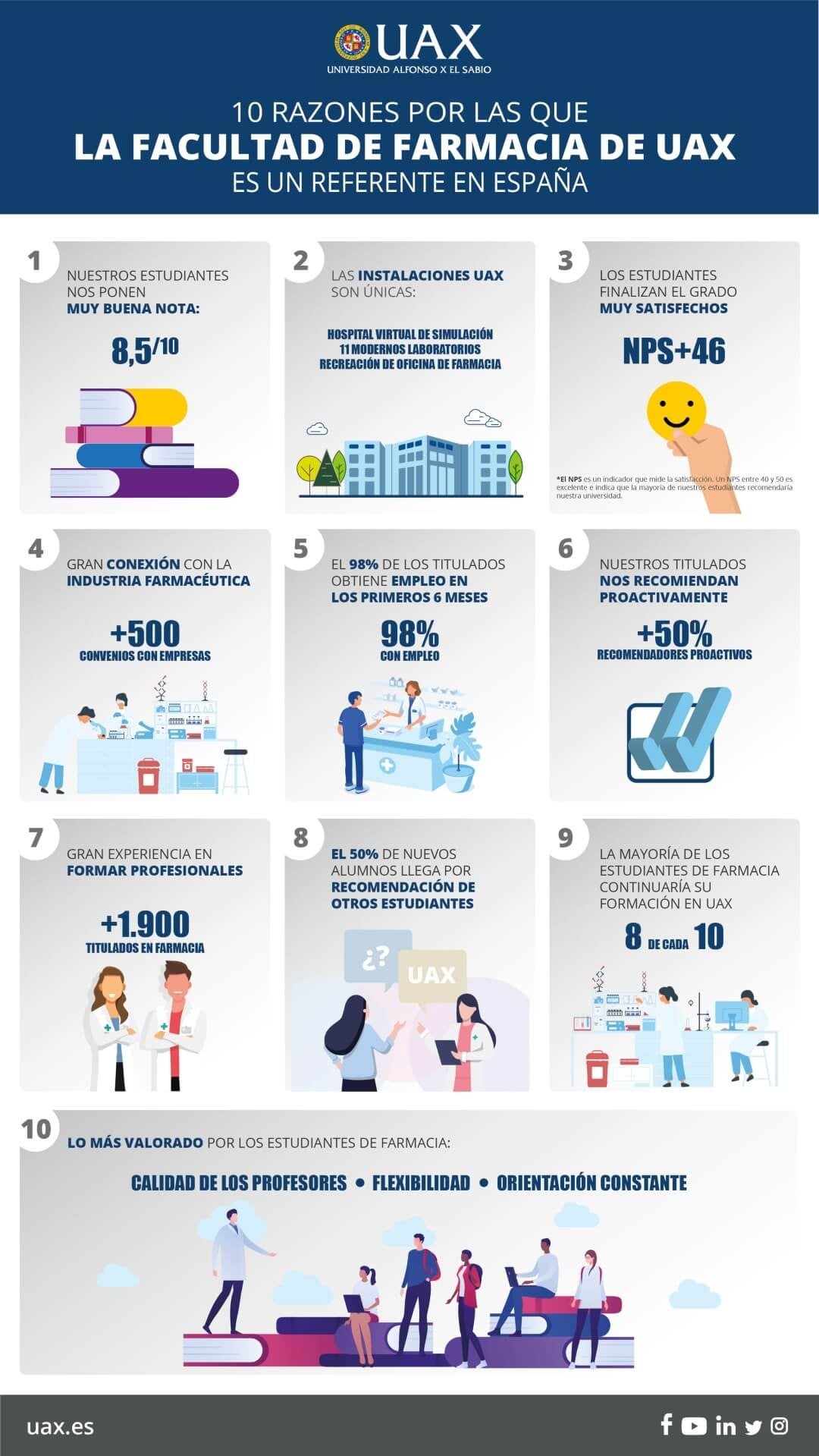
A network of exam centres and spaces to enhance your university experience
Take your in-person exams at our designated centres in Spain and Latin America, so you can choose the location that best suits your needs. Centres are subject to availability and capacity.

Furthermore, as a student at UAX Online, you’ll have access to our Campus Hubs – a network of exclusive physical spaces where you can study, access libraries, work in co-working areas and connect with other students. Because studying online doesn’t mean studying alone.
Campus Hubs available in: Alcobendas, Alcorcón, Valencia San Vicente, Murcia, Barcelona, Málaga, Seville and Arganda.
Access is granted with your UAX student card, subject to availability and the opening hours of each centre.
Teaching staff on the Bachelor’s Degree in Pharmacy
Degree in Pharmacy, PhD in Pharmacy from the Complutense University of Madrid, Specialist in Radiopharmacy. Head of the Radiopharmacy Unit at the Ramón y Cajal University Hospital in Madrid. Since 2020 as Tutor of Residents in Radiopharmacy and member of the National Commission of the Speciality of Radiopharmacy. More than 25 years of experience as a pharmacist specialising in radiopharmacy in different hospitals.

Degree in Pharmacy from the Universidad Complutense (2015) and PhD in Biochemistry, Molecular Biology, Biomedicine and Biotechnology (2024) from the Universidad Autónoma de Madrid. Lecturer in Pharmacology and Pharmacotherapy; Mathematics and Statistics. She did her doctoral thesis in the Molecular Immunobiology laboratory of the Gregorio Marañón Hospital on the application of immunomodulatory therapies, a field in which she is currently collaborating as a post-doctoral researcher within the Biomedical Research Unit of the UAX (UIB-UAX).

Graduate in Pharmacy from the UCM and PhD in Pharmacology and Physiology from the UAM. Postdoctoral researcher at the Centro Nacional de Investigaciones Oncologicas. She has made several stays abroad in Switzerland (UZH) and Holland (ErasmusMC). Her research has always had a translational character between basic and clinical science. She specialises in research on molecular processes such as inflammation, fibrosis, metastasis, stem cells and ageing in chronic diseases (renal) and cancer.

Doctor of Medicine from the UAM with the Extraordinary Doctorate Award. Specialist in Clinical Pharmacology. Postdoctoral clinical stay in the BST programme in Internal Medicine at the Mater Misericordiae University Hospital in Dublin. Assistant doctor in the Emergency Department and researcher in the Emergency, Pharmacology and Clinical Toxicology Research Unit at the Hospital Universitario Puerta de Hierro Majadahonda. Author of numerous publications and scientific communications in the areas of pharmacology, clinical toxicology and emergency medicine. He collaborates as a clinical expert for the AEMPS.
En UAX sabemos que estudiar es una inversión, por eso, te damos facilidades para que accedas a nuestras titulaciones. Conoce algunas de nuestras becas y ayudas:
We need to know a little bit about you so that we can provide you with a personalised service.
All fields are required







Study wherever you like without missing out on a university experience that is accessible, practical and geared towards your professional development.

Live lessons that are always available

Flexibility to study at your own pace

Practical learning based on real-life cases

Personalised academic support

Teachers who are currently working and have links to the sector

Training aimed at improving employability
Future Pharmacy graduates will be able to develop their career in the main companies in healthcare pharmacy industry in:
Having acquired the ability to understand the many aspects regarding pharmacology, you’ll be able to do tasks aimed at the production, analysis and conservation of medicines and/or food products (pharmaceutical industry).
In addition, given the special training nature of the UAX, its graduates can perform tasks such as: medical visits, pharmaceutical marketing, technical management of a pharmaceutical company and pharmaceutical specialty records, among many others.
Not sure what you would like to do?
We help you discover which programme fits your profile.

Performs practical simulations on a full-scale reproduction Find out more
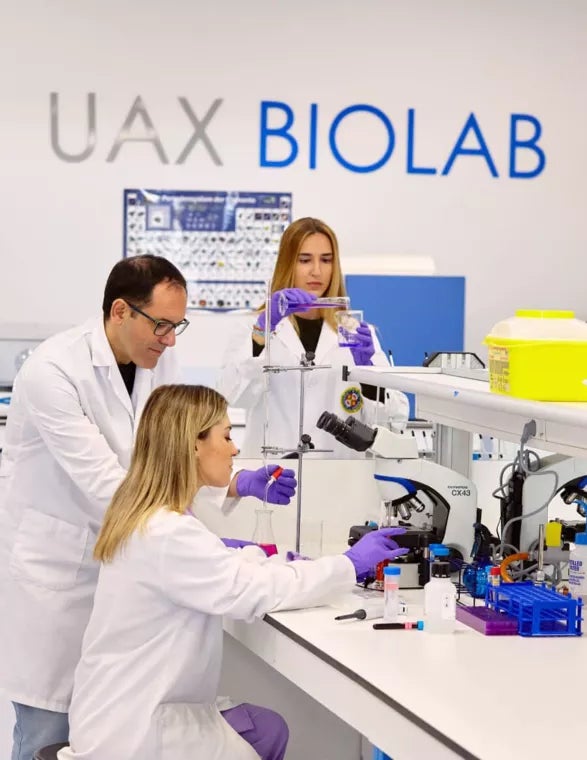
Learn with our new professional laboratory equipped with the latest technology. Find out more
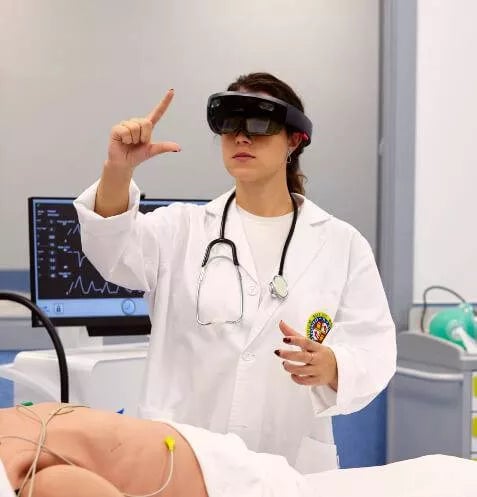
A unique centre in Spain to complete your training in the most innovative, well-rounded way. Find out more

First healthcare facility created by UAX to provide you with the most comprehensive training focused on real-world practice. Find out more
Other related qualifications
We offer a wide range of academic programmes, so you’re sure to find one that suits you.
Bachelor’s Degree in Pharmacy + Expert in Pharmacy Strategic Direction and Management
Start:
September
Length:
5 years

Online Degree in Psychology
Start:
October
Length:
4 years

Bachelor’s Degree in Human Nutrition and Dietetics (Blended Learning)
In collaboration with:


Start:
October
Length:
4 years
Bachelor’s Degree in Biotechnology
Start:
September
Length:
4 years

Online Master's Degree in Bioinformatics
Start:
October
Length:
9 months

Online Advanced Diploma in Dietetics
In collaboration with:


Start:
September
Length:
2 years
The Degree Monitoring and Improvement Committee is made up of the master's degree management, a representative of the teaching staff, a student representative, a representative of the Vice-Rector's Office for Studies and Quality, a PAS representative, a graduate representative, an employer representative, a GFA and SGFA student representative, the VREC quality manager, the faculty quality coordinator and the dean. In addition, guest members may be invited to deal with specific issues that need to be monitored.
You can consult the different indicators in the following links:
Main action plans for the degree:
We respond to the genuine needs of our students and staff, because we believe in the continuous improvement of our results. That is why we are always keen to hear anything you wish to tell us.
Link to the complaints and suggestions inbox.
If you’re already part of UAX, go to the ‘Customer Service: complaints, suggestions and compliments’ section on thevirtual campus and log in with your username and password.
You might also like
Would you like to study the degree programme with the highest success rate? Find out more about the Bachelor’s Degree in Pharmacy (Face-to-face)