See all Online Master's Degrees in Health
See all Master's Degrees in Engineering
Most searched curriculums
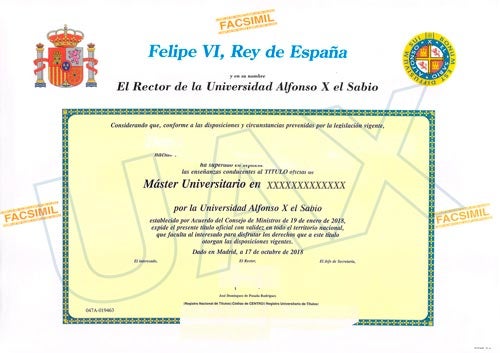
Official qualification
Awaken the educational leader in you with our Online Master's in Educational Management. Immerse yourself in the latest trends and acquire the essential skills to access management roles in public and private schools. Get ready to face today's challenges and lead change. Improve your scale for the Teacher or Secondary School Civil Service Examinations. Limited places.
In collaboration with:

The UAX Online Master’s Degree in Leadership and Management of Educational Institutions offers you comprehensive training in the key areas of educational management, with an innovative and practical approach. Developed in line with the OECD’s international standards and based on the UNESCO report ‘Reimagining Our Futures’, this programme prepares you to lead teams, develop educational projects, manage resources and make strategic decisions that will enhance the quality of education at your school. With the most up-to-date official master’s degree on the market, you’ll be at the forefront of leading the transformation of the education system.
You will apply your knowledge through practical methods such as real-world case studies, simulators and projects aligned with the Sustainable Development Goals. Our pedagogical approach is based on experiential and interdisciplinary learning, promoting a ‘Maker’ culture in environments of co-creation and collaboration. We adopt agile learning to bring you closer to the professional environment, providing you with the tools needed to tackle today’s educational challenges: digitalisation, sustainability and the transformation of teaching models.
You will develop managerial, pedagogical and strategic skills to lead educational institutions of excellence.
Develops skills to lead teaching teams, motivate people and create a positive working environment.
Implements innovative strategies to improve teaching and promote lifelong learning
Plans and manages resources in economic, technological, administrative and communication areas.
Make strategic decisions based on school data and analysis.
Learn about the legal framework regulating education in Spain and its practical application.
It implements evaluation systems to improve the quality of education and meet the needs of students.
If you are a teacher or work in the field of education, this master's degree will keep you abreast of the latest trends in methodological innovation, as well as providing you with the essential strategies and processes to make the leap from the classroom to management.
If you come from another professional sector, you will have the opportunity to explore the specific fields of school management, which will allow you to embark on a new career or change your career path.

Enhance your teaching practice by understanding learning through the lens of neuroeducation. This micro-credential equips you to analyse students’ cognitive, emotional and behavioural processes, identify potential difficulties at an early stage, and apply evidence-based inclusive teaching strategies in the classroom.

Transform the way you work with generative artificial intelligence. This micro-credential empowers you to apply tools like ChatGPT, Copilot, and Gemini to analyze information, create content, and make decisions in real-world academic contexts, integrating solutions ethically and responsibly within the educational field.

Develop your potential in education through leadership and interpersonal skills. This microcredential provides you with the keys to managing teams, communicating effectively, and solving problems in real-world educational settings, combining personal leadership techniques with practical productivity and collaboration tools.
Este programa está diseñado para atender las necesidades de diversos perfiles profesionales del ámbito educativo y de otros sectores que buscan fortalecer sus habilidades de liderazgo en el entorno escolar. Está dirigido a:
Puedes acceder a este curso si tienes una titulación universitaria relacionada con esta área académica o cuentas con una carrera profesional en la materia como:
Master's Degree in Educational Centre Leadership and Management
First Year
FIRST FOUR-MONTH PERIOD
| Code | Subjects | Character* | ECTS | ||
|---|---|---|---|---|---|
| SM150300 | Participatory centres and the educational community | OB | 6 | ||
Participatory centres and the educational communityCódigo: SM150300 Imprimir Course 1: First-semester module. Compulsory. 6 credits. Profesores
Objectives This compulsory 6 ECTS module will address a fundamental aspect of modern education: the integration and engagement of the educational community in the running and management of schools. In a context where the demands and expectations of school communities are constantly evolving, this module focuses on the importance of the active participation of all stakeholders involved in the educational process. Participation encompasses not only the involvement of pupils and families, but but also the collaboration of teachers, administrative staff and the wider local community Prerequisites There are no prerequisites. Competencies Skills or competences: - Applies the principles of humanistic leadership within the school to encourage the participation of the entire school community. - Resolves, in an innovative manner, issues relating to harmonious coexistence that arise within the school, prioritising the needs of each individual at all times. Learning outcomes Skills or competences: - Applies the principles of humanistic leadership within the school to encourage the participation of the entire educational community. - Resolves, in an innovative way, issues relating to harmonious coexistence that arise within the school, ensuring that the needs of each individual are met at all times. Description of the content The following topics will be covered: - Democratic and participatory schools. Models of governance and organisation. Analysis of success stories. - The school’s governing and participatory bodies: planning and management. - Family involvement in the school. Relations with parents’ associations. - Pupil participation in the school. - Community involvement in the school. Schools connected to their local community. Analysis of successful programmes. - School life. Student support and conflict resolution Training activities AV1. – Keynote sessions AV2. – Interactive lectures AV3.1. – Critical analysis sessions AV3.2. – Practical case studies and/or project-based sessions AV3.3. – Oral presentations, discussions and/or debates AV4. – Independent study, case studies, problem-solving and literature review (self-directed work) AV5.- Online tutorials AV6.- Completion of knowledge tests Assessment system and criteria For the REGULAR ASSESSMENT PERIOD, you must submit the following: - Participation in the assessed forum: 5% of the final mark. - Feedback activity: 15% of the final mark. - Course project: 20% of the final mark. - The final exam for the module will account for: 60% of the final mark MINIMUM GRADE: In order to have the above weightings averaged, students must achieve a mark of at least 5 out of 10 in the face-to-face final exam. CONTINUOUS ASSESSMENT: - If you fail to submit any assignment, you will be marked as ‘not submitted’ for that assignment, and will lose that percentage, but your mark will be calculated as an average of the remaining submitted assignments and the final exam. - If you do not submit any assignments, you may sit the standard final exam. In this case, the final mark will be weighted at 60 per cent. SUPPLEMENTARY EXAMINATION SESSION To pass the module in the supplementary sitting, you must achieve a mark of 5.0 out of 10.0 or higher in the final module mark. Assessment in the supplementary sitting will take the form of a single in-person examination, which will account for 100 per cent of the student’s mark. The exam will be the same for all students who do not pass the module in the ordinary assessment period. This exam will include, at least, a practical component designed to assess the skills acquired by students whilst undertaking the course. |
|||||
| SM150301 | Education, society and the SDGs: towards a new social contract in education | OB | 6 | ||
Education, society and the SDGs: towards a new social contract in educationCódigo: SM150301 Imprimir Course 1: First-semester module. Compulsory. 6 credits. Profesores
Objectives This compulsory 6 ECTS module examines the relationship between education and society in the current context, linking education to the Sustainable Development Goals (SDGs) and exploring how education can be a key pillar for achieving transformative change at a social, economic and environmental level. Prerequisites No prior requirements are necessary Competencies Knowledge or content: - Identifies the social function of education and the main global trends in education, integrating these into the leadership and management processes of educational institutions. - Distinguishes the principles of Education for Sustainable Development in order to apply them to the management of educational institutions. Competencies: - Develops effective communication, teamwork, analytical thinking, creativity and ethical leadership from a cross-cutting perspective, clearly inspired by democratic principles and values, as well as the Sustainable Development to operate with integrity in the professional sphere. Learning outcomes Knowledge or content: - Identifies the social function of education and the main global trends in education, integrating them into the leadership and management processes of educational institutions. - Distinguishes the principles of Education for Sustainable Development in order to apply them to the management of educational institutions. Skills: - Develops effective communication, teamwork, analytical thinking, creativity and ethical leadership from a cross-cutting perspective, clearly inspired by democratic principles and values, as well as the Sustainable Development to operate with integrity in the professional sphere. Course content The following topics will be covered: - The social value of education in the 21st century: new philosophical and sociological trends. The perspective of leading organisations - The Spanish education system: evolution, structure, stakeholders and current characteristics. - A global overview of the structure of education systems in Europe and worldwide. Study of paradigmatic case studies - Global educational policies and trends. The need for a new social contract in education - Education for Sustainable Development: scope and initiatives for its implementation - Social function, humanism and the SDGs within the identity and strategy of educational institutions Training activities AV1. – Keynote sessions AV2. – Interactive lectures AV3.1.- Critical analysis sessions AV3.2. – Practical case studies and/or project-based sessions AV3.3. – Oral presentations, discussions and/or debates AV4.- Independent study, case studies, problem-solving and literature review (self-directed work) AV5.- Online tutorials AV6.- Completion of knowledge assessments Assessment system and criteria For the REGULAR ASSESSMENT PERIOD, you must submit the following: - Participation in the assessed forum: 5% of the final mark. - Feedback activity: 15% of the final mark. - Course project: 20% of the final mark. - The final exam for the module will account for: 60% of the final mark MINIMUM GRADE: In order to have the above weightings averaged, students must achieve a mark of at least 5 out of 10 in the face-to-face final exam. CONTINUOUS ASSESSMENT: - If you fail to submit any assignment, you will be marked as ‘not submitted’ for that assignment, and will lose that percentage, but your mark will be calculated as an average of the remaining submitted assignments and the final exam. - If you do not submit any assignments, you may sit the standard final exam. In this case, the final mark will be weighted at 60 per cent. SUPPLEMENTARY EXAMINATION SESSION To pass the module in the supplementary sitting, you must achieve a mark of 5.0 or above out of 10.0 in the final module mark. Assessment in the supplementary sitting will take the form of a single in-person examination, which will account for 100 per cent of the student’s mark. The exam will be the same for all students who do not pass the module in the ordinary assessment period. This exam will include, at least, a practical component designed to assess the skills acquired by students during the course. |
|||||
| SM150302 | Educational innovation, ICT and disruptive educational models | OB | 6 | ||
Educational innovation, ICT and disruptive educational modelsCódigo: SM150302 Imprimir Course 1: First-semester module. Compulsory. 6 credits. Profesores
Objectives This compulsory 6 ECTS module will focus on understanding and managing change in education, combining theoretical frameworks with practical examples to facilitate innovation and improvement in educational practices. The integration of educational innovation into an educational institution’s overall strategy is essential for its development and adaptation in a constantly changing environment. A holistic approach not only improves the quality of the education provided, but also strengthens the institution’s ability to adapt and thrive in an increasingly competitive and dynamic educational landscape Prerequisites No prior requirements are necessary Competencies Skills or competences: - Integrates ICT into the management of the educational institution and into teaching and learning processes in an organised and coherent manner. Competencies: - Develops, using critical and disruptive thinking strategies, innovation projects innovation projects to improve the school at strategic, educational and management levels Learning outcomes Skills: - Integrates ICT into the management of the school and into teaching and learning processes in a systematic and coherent manner. Competencies: - Develops, through critical and disruptive thinking strategies, innovation projects innovation projects to improve the school at strategic, educational and management levels Description of the content The following content will be covered: - Educational innovation within the school’s strategy. - Design, planning, implementation and evaluation of educational innovation projects. - Methodological and teaching innovation: models and success stories. - Innovation in management and strategy: models and success stories. - Technological innovation applied to the classroom and management. - Disruptive educational models. Analytical and critical thinking for the development of new educational models Training activities AV1.- Keynote sessions AV2. – Interactive lectures AV3.1. Critical analysis sessions AV3.2. – Practical case studies and/or project-based sessions AV3.3. – Oral presentations, discussions and/or debates AV4. – Independent study, case studies, problem-solving and literature review (self-directed work) AV5.- Online tutorials AV6.- Completion of knowledge tests Assessment system and criteria For the REGULAR ASSESSMENT PERIOD, you must submit the following: - Completion of the Generative AI course in the classroom: 10% of the final mark. - Feedback activity: 10% of the final mark. - The course project: 20% of the final mark. - The final exam for the module will account for: 60% of the final mark MINIMUM GRADE: In order to have the above weightings averaged, students must achieve a mark of at least 5 out of 10 in the face-to-face final exam. CONTINUOUS ASSESSMENT: - If you fail to submit any assignment, you will be marked as ‘not submitted’ for that assignment, and will lose that percentage, but your mark will be calculated as an average of the remaining submitted assignments and the final exam. - If you do not submit any assignments, you may sit the standard final exam. In this case, the final mark will be weighted at 60 per cent. SUPPLEMENTARY EXAMINATION SESSION To pass the module in the supplementary sitting, you must achieve a mark of 5.0 or above out of 10.0 in the final module mark. Assessment in the supplementary sitting will take the form of a single in-person examination, which will account for 100 per cent of the student’s mark. The exam will be the same for all students who do not pass the module in the ordinary assessment period. This exam will include, at least, a practical component designed to assess the skills acquired by students during the course. |
|||||
| SM150303 | Regulations, administration and financial management | OB | 6 | ||
Regulations, administration and financial managementCódigo: SM150303 Imprimir Course 1: First-semester module. Compulsory. 6 credits. Profesores
Objectives This compulsory 6 ECTS module will cover the study and application of the legislative regulations and procedures governing educational institutions, which an educational manager must be familiar with in order to carry out their day-to-day duties efficiently. The course content focuses on the administrative functioning of educational institutions, ranging from their internal organisation to the implementation of legal and educational regulations within these organisations. Prerequisites No prior requirements are necessary Competencies Knowledge or content: - Identifies the applicable regulations for each area of educational institution management Skills or competences: - Draws up a budget for the school that includes a plan for monitoring and compliance, the identification of potential deviations and a plan for corrective measures Competencies: - Determine the material and human resources required for the smooth running of the school and its projects Learning outcomes Knowledge or content: - Identifies the applicable regulations for each area of educational centre management Skills or competences: - Draws up a budget for the school that includes a plan for monitoring and compliance, the identification of potential deviations and a plan for corrective measures Competencies: - Determine the material and human resources required for the school to function properly and for its projects Description of the content The following topics will be covered: - Democratic and participatory schools. Models of governance and organisation. The Spanish legal system. Standard administrative procedure. - Applicable regulations for educational institutions: education laws and regulations, the legal framework governing educational institutions and their governing bodies, management regulations, regulations relating to minors, data protection regulations and occupational health and safety regulations. - Basic concepts of compliance for educational managers. - The administration of educational institutions: document and administrative management. - Financial management of educational institutions. Fundamentals of accounting and management control. Funding and budget preparation. - Material resources in educational establishments: time, space and . Maintenance and improvement of school buildings and facilities Training activities AV1.- Lectures AV2. – Interactive lectures AV3.1. Critical analysis sessions AV3.2. – Practical case study and/or project sessions AV3.3. – Oral presentations, discussions and/or debates AV4.- Independent study, case studies, problem-solving and literature review (self-directed work) AV5.- Online tutorials AV6.- Completion of knowledge assessments Assessment system and criteria For the REGULAR ASSESSMENT PERIOD, you must submit the following: - Participation in the assessed forum: 5% of the final mark. - Feedback activity: 15% of the final mark. - Course project: 20% of the final mark. - The final exam for the module will account for: 60% of the final mark MINIMUM GRADE: In order to have the above weightings averaged, students must achieve a mark of at least 5 out of 10 in the face-to-face final exam. CONTINUOUS ASSESSMENT: - If you fail to submit any assignment, you will be marked as ‘not submitted’ for that assignment, and will lose that percentage, but your mark will be calculated as an average of the remaining submitted assignments and the final exam. - If you do not submit any assignments, you may sit the standard final exam. In this case, the final mark will be weighted at 60 per cent. SUPPLEMENTARY EXAMINATION SESSION To pass the module in the supplementary sitting, you must achieve a mark of 5.0 or above out of 10.0 in the final module mark. Assessment in the supplementary sitting will take the form of a single in-person examination, which will account for 100 per cent of the student’s mark. The exam will be the same for all students who do not pass the module in the ordinary assessment period. This exam will include, at least, a practical component designed to assess the skills acquired by students during the course of the module. |
|||||
| SM150304 | Promotion, communication and institutional relations in educational establishments | OB | 6 | ||
Promotion, communication and institutional relations in educational establishmentsCódigo: SM150304 Imprimir Course 1: First-semester module. Compulsory. 6 credits. Profesores
Objectives This compulsory 6 ECTS module focuses on the study and development of strategies that enable educational institutions to manage their public image, strengthen their internal and external communication, and establish effective institutional relationships. The module examines how schools can project a positive image, promote their values and achievements, and build strategic partnerships with various organisations, such as other educational institutions, educational and public authorities, and the wider community. Prerequisites No prior requirements are necessary Competencies Skills or competences: - Defines, with a creative and holistic approach, a unique identity for an educational institution, integrating educational, strategic and management aspects. Competencies: - Designs a marketing and institutional relations strategy tailored to the educational institution’s identity, enabling it to project its image within its local community. - Carries out a situational analysis of an educational institution, identifying both its strengths and its main areas for improvement Learning outcomes Skills or competences: - Defines, with a creative and holistic approach, a unique identity for an educational institution, integrating educational, strategic and management aspects. Competencies: - Design a marketing and institutional relations strategy tailored to the educational institution’s identity, which helps to project the institution’s image within its local community. - Carries out a situational analysis of an educational institution, identifying both its strengths and its main areas for improvement Course content The following topics will be covered: - Creating a public image for educational institutions. Conveying the institution’s identity, values and educational model. - Self-analysis, competitor analysis and positioning. - Marketing for educational managers. Design, planning and implementation of promotional activities for the school. - Communication in educational institutions: developing and conveying messages. Relations with the media. - Internal institutional relations with educational inspectorates and authorities. - External institutional relations: educational organisations and public authorities. Training activities AV1. – Lecture sessions AV2. – Interactive lectures AV3.1. – Critical analysis sessions AV3.2.- Practical case studies and/or project-based sessions AV3.3. – Oral presentations, discussions and/or debates AV4.- Independent study, case studies, problem-solving and literature review (self-directed work) AV5.- Online tutorials AV6.- Completion of knowledge assessments Assessment system and criteria For the REGULAR ASSESSMENT PERIOD, you must submit the following: - Participation in the assessed forum: 5% of the final mark. - Feedback activity: 15% of the final mark. - Course project: 20% of the final mark. - The final exam for the module will account for: 60% of the final mark MINIMUM GRADE: In order to have the above weightings averaged, students must achieve a mark of at least 5 out of 10 in the face-to-face final exam. CONTINUOUS ASSESSMENT: - If you fail to submit any assignment, you will be marked as ‘not submitted’ for that assignment, and will lose that percentage, but your mark will be calculated as an average of the remaining submitted assignments and the final exam. - If you do not submit any assignments, you may sit the standard final exam. In this case, the final mark will be weighted at 60 per cent. SUPPLEMENTARY EXAMINATION PERIOD To pass the module in the supplementary sitting, you must achieve a mark of 5.0 or higher out of 10.0 in the final module mark. Assessment in the supplementary sitting will take the form of a single in-person examination, which will account for 100 per cent of the student’s mark. The exam will be the same for all students who did not pass the module during the ordinary assessment period. This exam will include, at least, a practical component designed to assess the skills acquired by students during the course. |
|||||
| TOTAL: | 30 | ||||
SECOND FOUR-MONTH PERIOD
| Code | Subjects | Character* | ECTS | ||||
|---|---|---|---|---|---|---|---|
| SM150305 | Strategy and cultural transformation in educational institutions | OB | 6 | ||||
Strategy and cultural transformation in educational institutionsCódigo: SM150305 Imprimir Course 1. Second-term module. Compulsory. 6 credits. Profesores
Objectives This compulsory 6 ECTS module aims to provide future leaders with the tools necessary to lead processes of change and improvement within educational institutions. It focuses on strategic management and on building an organisational culture that fosters innovation, inclusion and educational quality. Prerequisites No prior requirements are necessary Competencies Skills or competences: - Plans a strategy to motivate and engage the educational community in the school’s cultural transformation processes, whilst minimising resistance to change. Competencies: - Designs, implements and evaluates a school’s medium-term strategic plan, integrating its various functional areas into it. Learning outcomes Skills or competences: - Plan a strategy to motivate and engage the educational community in the school’s cultural transformation processes, whilst minimising resistance to change. Competencies: - Designs, implements and evaluates a medium-term strategic plan for an educational institution, integrating its various functional areas into the plan. Description of the content The following topics will be covered: - Strategic planning for educational institutions. Strategic analysis and the identification of needs and priorities. - The strategic plan: definition, monitoring and evaluation of its outcomes. - Operational planning for educational institutions. Planning documents. - Project management within educational institutions. Principles of project management for educational leaders. - Cultural transformation in educational institutions. Strategies, skills and tools for change management. - Involving the educational community in the processes of cultural transformation within schools. Training activities AV1. – Keynote sessions AV2. – Interactive lectures AV3.1. Critical analysis sessions AV3.2.- Practical case study and/or project sessions AV3.3. – Oral presentations, discussions and/or debates AV4. – Independent study, case studies, problem-solving and literature review (self-directed work) AV5.- Online tutorials AV6.- Completion of knowledge assessments Assessment system and criteria For the REGULAR ASSESSMENT PERIOD, you must submit the following: - Participation in the assessed forum: 5% of the final mark. - Feedback activity: 15% of the final mark. - Course project: 20% of the final mark. - The final exam for the module will account for: 60% of the final mark MINIMUM GRADE: In order to have the above weightings averaged, students must achieve a mark of at least 5 out of 10 in the face-to-face final exam. CONTINUOUS ASSESSMENT: - If you fail to submit any assignment, you will be marked as ‘not submitted’ for that assignment, thereby losing that percentage, but the mark will be averaged with the rest of the submitted assignments and the final exam. - If you do not submit any assignments, you may sit the standard final exam. In this case, your final mark will be weighted at 60 per cent. SUPPLEMENTARY EXAMINATION SESSION To pass the module in the supplementary sitting, you must achieve a mark of 5.0 or above out of 10.0 in the final module mark. Assessment in the supplementary sitting will take the form of a single in-person examination, which will account for 100 per cent of the student’s mark. The exam will be the same for all students who did not pass the module in the ordinary sitting. This exam will include, at least, a practical component designed to assess the skills acquired by students during the course. |
|||||||
| SM150306 | Excellence in education | OB | 6 | ||||
Excellence in educationCódigo: SM150306 Imprimir Course 1. Second-term module. Compulsory. 6 credits. Profesores
Objectives This compulsory 6 ECTS module focuses on the study of quality and excellence in educational institutions’ management models. Prerequisites No prior requirements are necessary Competencies Learning outcomes: - Develops a model of educational and managerial excellence that incorporates a process of analysis and continuous improvement based on reliable indicators. Learning outcomes Competencies: - Develops a model of educational and managerial excellence that incorporates a process of analysis and continuous improvement based on reliable indicators. Course content The following content will be covered: - Excellence in educational institutions: educational excellence and managerial excellence. - Models of educational excellence. Case studies of exemplary examples. - Quality management in educational institutions: quality management systems and certifications. ISO and EFQM. - Continuous improvement in educational institutions: analysis, evaluation and the development of improvement plans. Indicators for decision-making: academic indicators, management indicators and stakeholder satisfaction indicators. Collection, analysis and integration into the improvement process. Transparency and accountability. Good corporate governance in . Training activities AV1. – Keynote sessions AV2. – Interactive lectures AV3.1.- Critical analysis sessions AV3.2. – Practical case studies and/or project-based sessions AV3.3. – Oral presentations, discussions and/or debates AV4.- Independent study, case studies, problem-solving and literature review (self-directed work) AV5.- Online tutorials AV6.- Completion of knowledge assessments Assessment system and criteria For the REGULAR ASSESSMENT PERIOD, you must submit the following: - Participation in the assessed forum: 5% of the final mark. - Feedback activity: 15% of the final mark. - Course project: 20% of the final mark. - The final exam for the module will account for: 60% of the final mark MINIMUM GRADE: In order to have the above weightings averaged, students must achieve a mark of at least 5 out of 10 in the face-to-face final exam. CONTINUOUS ASSESSMENT: - If you fail to submit any assignment, you will be marked as ‘not submitted’ for that assignment, and will lose that percentage, but your mark will be calculated as an average of the remaining submitted assignments and the final exam. - If you do not submit any assignments, you may sit the standard final exam. In this case, the final mark will be weighted at 60 per cent. SUPPLEMENTARY EXAMINATION SESSION To pass the module in the supplementary sitting, you must achieve a mark of 5.0 or above out of 10.0 in the final module mark. Assessment in the supplementary sitting will take the form of a single in-person examination, which will account for 100 per cent of the student’s mark. The exam will be the same for all students who do not pass the module during the ordinary assessment period. This exam will include, at least, a practical component designed to assess the skills acquired by students throughout the module. |
|||||||
| SM150307 | Leadership, managerial skills and people management in educational institutions | OB | 6 | ||||
Leadership, managerial skills and people management in educational institutionsCódigo: SM150307 Imprimir Course 1. Second-term module. Compulsory. 6 credits. Profesores
Objectives This compulsory 6 ECTS module will cover leadership, managerial skills and people management in educational institutions Prerequisites No prior requirements are necessary Competencies Skills or competences: - Applies the principles of humanistic leadership in educational institutions to encourage the participation of the entire educational community. Competencies: - Secures the material and human resources necessary for the proper running of the school and its projects. - Designs strategies for the development of a school’s staff, including training, development and motivation initiatives Learning outcomes Skills or competences: - Applies the principles of humanistic leadership within an educational institution to encourage the participation of the entire educational community. Competencies: - Secures the material and human resources necessary for the proper running of the school and its projects. - Designs strategies for the development of a school’s staff, including training, development and motivation initiatives Description of the content The following topics will be covered: - The management team: roles, responsibilities and coordination. - Leadership in educational institutions. The role and characteristics of a leader. Trends and models in educational leadership. Professional ethics. - People management in schools: professional profiles, recruitment, recruitment and remuneration policies. - Training and assessment of staff in educational institutions. - Teamwork and staff motivation. Agile strategies. - Communication skills for educational managers: communication, persuasion and storytelling. Training activities AV1. – Lecture sessions AV2. – Interactive lectures AV3.1. – Critical analysis sessions AV3.2. – Case study and/or project-based sessions AV3.3. – Oral presentations, discussions and/or debates AV4.- Independent study, case studies, problem-solving and literature review (self-directed work) AV5.- Online tutorials AV6.- Completion of knowledge assessments Assessment system and criteria For the REGULAR ASSESSMENT PERIOD, you must submit the following: - Participation in the assessed forum: 5% of the final mark. - Feedback activity: 15% of the final mark. - Course project: 20% of the final mark. - The final exam for the module will account for: 60% of the final mark MINIMUM GRADE: In order to have the above weightings averaged, students must achieve a mark of at least 5 out of 10 in the face-to-face final exam. CONTINUOUS ASSESSMENT: - If you fail to submit any assignment, you will be marked as ‘not submitted’ for that assignment, and will lose that percentage, but your mark will be calculated as an average of the remaining submitted assignments and the final exam. - If you do not submit any assignments, you may sit the standard final exam. In this case, the final mark will be weighted at 60 per cent. SUPPLEMENTARY EXAMINATION SESSION To pass the module in the supplementary sitting, you must achieve a mark of 5.0 or above out of 10.0 in the final module mark. Assessment in the supplementary sitting will take the form of a single in-person examination, which will account for 100 per cent of the student’s mark. The exam will be the same for all students who do not pass the module in the ordinary assessment period. This exam will include, at least, a practical component designed to assess the skills acquired by students during the course. |
|||||||
| SM150308 | External Academic Placements | OB | 6 | ||||
External Academic PlacementsCódigo: SM150308 Imprimir Course 1. Second-term module. Compulsory. 6 credits. Profesores
Objectives This is a compulsory module worth 6 ECTS credits. During the placement, students will attend an educational institution to become part of its management team. During their placement, they will gain an understanding of the institution’s management model, its distinctive features and its planning and organisational tools. Prerequisites No prior requirements are necessary Competencies Competencies: - Is able to contribute innovative ideas for improving the management of an educational institution at the educational, methodological and managerial levels, based on their experience - Develops effective communication, teamwork, analytical thinking, creativity and ethical leadership from a cross-cutting perspective, clearly inspired by democratic principles and values, as well as the Sustainable Development Goals, in order to conduct themselves with integrity in the professional sphere Learning outcomes Competencies: - Is able to contribute innovative ideas for improving the management of an educational institution in terms of education, methodology and administration, drawing on their experience - Develops effective communication, teamwork, analytical thinking, creativity and ethical leadership from a cross-disciplinary perspective, clearly inspired by democratic principles and values, as well as the Sustainable Development Goals, in order to conduct themselves with integrity in the professional sphere Description of the content The placement report will cover the content related to the proposed outline: 1. Definition of the activities carried out at the school 2. Description of the centre and its context 3. The centre’s mission, vision, values and objectives 4. Description and analysis of the organisational structure 5. Analysis of the leadership style and communication at the centre 6. Available resources 7. Identification of weaknesses and areas for improvement in the centre’s leadership and management model 8. Conclusions and personal reflection 9. Bibliography 10. Appendices Training activities AV2. Interactive lectures AV8. – Preparation of the External Academic Placement Report AV5. Online tutoring AV7. External Academic Placements Assessment system and criteria Your final mark will be based on the following assessment system: - A favourable report from the institution’s tutor, stating the of effective supervision of the student, as well as an assessment of the student’s performance in key areas. To this end, Alfonso X el Sabio University provides the document entitled ‘Centre Tutor’s Report for the Assessment of External Placements’. - A placement report, which must be submitted once the placement has been completed by the date specified on the Virtual Campus. Therefore, the final assessment of the work placement module will be based on the following: - The assessment issued by the placement supervisor at the host institution (60 per cent). - The assessment of the placement report (40%). MINIMUM GRADE: For both the assessment provided by the placement supervisor at the host organisation and the assessment of the placement report, a minimum mark of 5 points must be obtained in each section in order to calculate the weighted average. |
|||||||
| SM150309 | Master’s Thesis | OB | 6 | ||||
Master’s ThesisCódigo: SM150309 Imprimir Course 1. Second-term module. Compulsory. 6 credits. Profesores
Objectives This is a compulsory module worth 6 ECTS credits. The Master’s Final Project will consist of drawing up a management plan for an educational institution of the student’s choice. Prerequisites Students must have passed all the modules on the Master’s programme in order to submit their Master’s Thesis. Competencies Learning Outcomes: - Develops a comprehensive management plan for an educational institution tailored to its specific characteristics and needs. - Develops effective communication, teamwork, analytical thinking, creativity and ethical leadership from a cross-cutting perspective, clearly inspired by democratic principles and values, as well as the Sustainable Development Goals, in order to operate with integrity in the professional sphere Learning Outcomes Competencies: - Develops a comprehensive management plan for an educational institution tailored to its specific characteristics and needs. - Develops effective communication, teamwork, analytical thinking, creativity and ethical leadership from a cross-curricular perspective, clearly drawing on democratic principles and values, as well as the Sustainable Development Goals, to conduct oneself with integrity in a professional context Description of the content The management project, which must set out the school’s management strategy for a four-year period, shall include at least the following elements: 1. A situational and strategic analysis of the school. 2. Identification of weaknesses and areas for improvement, strengths, threats and opportunities. 3. Definition of the model school to be achieved. 4. Setting objectives for the management plan. 5. Identification of actions to be carried out, a timetable and the necessary resources. 6. Expected outcomes. 7. Monitoring and evaluation of the project Training activities AV2. – Interactive lectures AV5. Online tutorials AV9. Preparation of the Master’s Thesis AV10.- Public oral defence Assessment system and criteria To submit the Master’s Thesis, students must have passed all modules in the relevant examination session. If students wish to submit during the ordinary examination session, they must have passed all modules in that session. If they wish to submit during the supplementary examination session, they must have passed all modules in that session. Each student’s final mark will be that decided and announced by the Master’s Thesis defence panel during the defence, just before it concludes. In order to proceed to the defence, the student must have received a favourable assessment from the programme director, allowing the student to defend their project and guaranteeing that it meets the minimum quality standards required for the Master’s degree. Therefore, the final assessment of the module will be carried out, taking into account: - Master’s Thesis report – 70% of the final mark. - Defence and presentation of the Master’s Thesis before the assessment panel – 30% of the final mark. Marking will be carried out using a rubric, divided into different sections, each with a different weighting in the final mark. |
|||||||
| TOTAL: | 30 | ||||||
*Character: BT: Basic Training, Ob: Required, Op: Optional
Our degree is official, verified by the Council of Universities and fully valid in Spain, as well as in the European Higher Education Area.
It is recognised by the Education Systems of Latin America, being recognised and approved by the different Ministries of Education in Latin America:
SENESCYT, MEN (MinEducation), SEP, Mescyt, among others, automatically.
During the External Academic Internship of the Online Master's Degree in Leadership and Management of Educational Centres at UAX, you will go to an educational centre in order to join its team and carry out tasks related to leadership and management. During your stay you will learn about the management model of the centre, its distinctive characteristics and its planning and organisational tools.
We have agreements with the main associations of private educational centres:
If you have related professional experience, you will be able to validate the internship. Contact our advisors for a personalised study of ECTS recognition.
The main reason why at UAX there are students like you is the possibility of making your personal, professional and academic life compatible. Our differential value is a methodology without barriers, focused on you and your desire to learn.
How is our methodology?
In addition, you will have the full availability of our campus in Madrid, to carry out your formalities, solve your doubts and enjoy the facilities it offers you.
You can access the Online Master's Degree in Leadership and Management of Educational Centres if you have a related university degree. To start the admission process you must provide the following documentation:
In addition, if you already have previous professional experience related to the competences inherent to this degree, it may be recognised in the form of credits. The recognition of ECTS credits will require a personalised study. Contact our advisors and they will inform you personally.
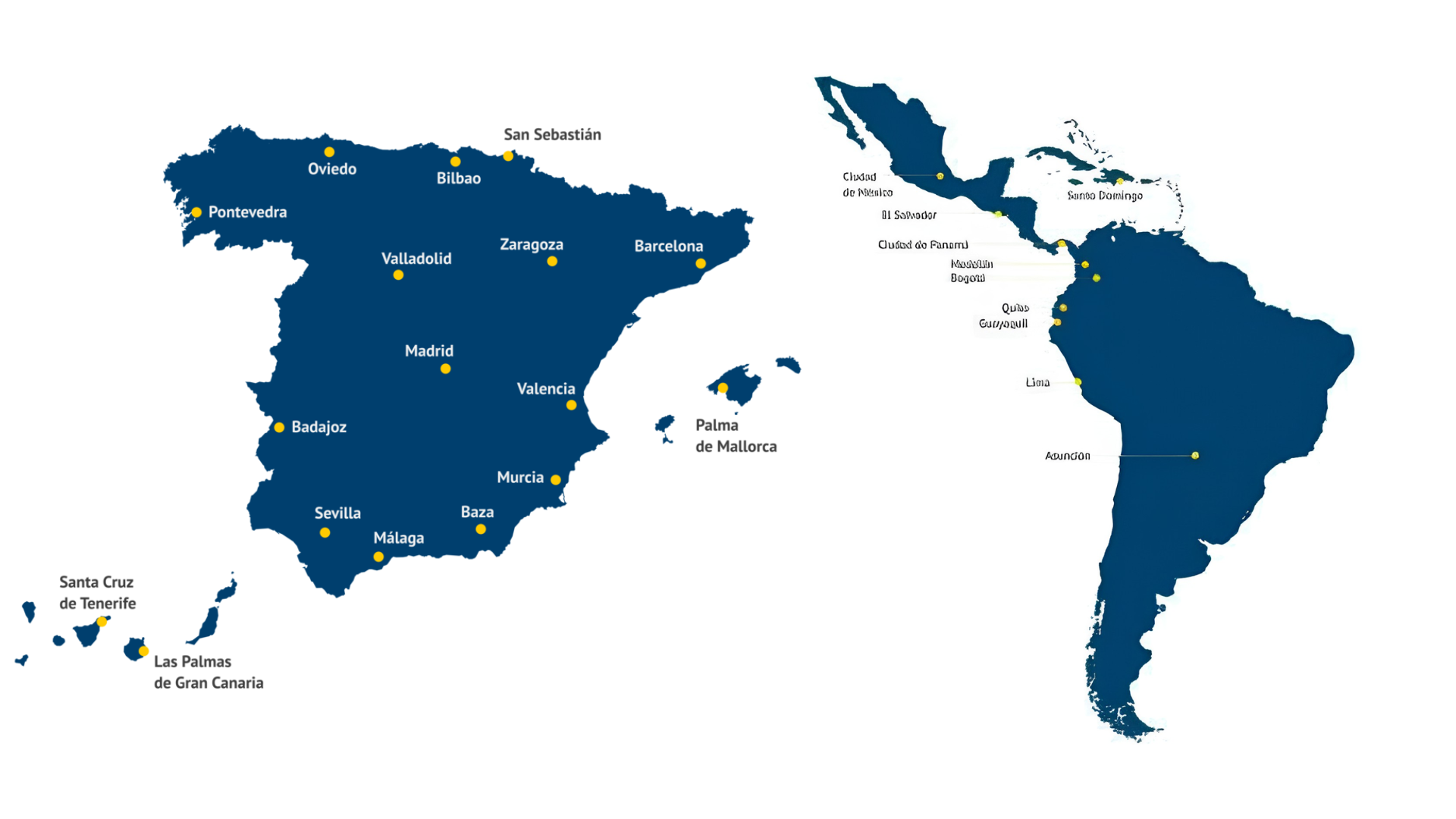
A network of exam centres and spaces to enhance your university experience
Take your in-person exams at our designated centres in Spain and Latin America, so you can choose the location that best suits your needs. Centres are subject to availability and capacity.
Furthermore, as a student at UAX Online, you’ll have access to our Campus Hubs – a network of exclusive physical spaces where you can study, access libraries, work in co-working areas and connect with other students. Because studying online doesn’t mean studying alone.
Campus Hubs available in: Alcobendas, Alcorcón, Valencia San Vicente, Murcia, Barcelona, Málaga, Seville and Arganda.
Access is granted with your UAX student card, subject to availability and the opening hours of each centre.

Teaching Staff
Train alongside the best professionals.

D. in Educational Sciences from the University of Lisbon, with master's and bachelor's degrees in the same field. He has carried out research stays at universities in São Paulo, Seville and Padua. He has international experience in teacher training, professional training, educational intervention and training management.

Telecommunications Engineer. Master's Degree in Teaching. More than 20 years managing and leading work teams. Passionate about teaching, currently Mathematics teacher and Head of Studies at Kolbe International School.

University teacher and coordinator of Primary Education at Highlands School Los Fresnos. ICF-certified specialist in innovation, educational leadership and coaching. Lecturer in the Primary Education Degree and in master's degrees in leadership and psychopedagogy. With experience in teacher training and educational management, she promotes innovative methodologies to transform teaching and learning.

Graduate in Hispanic Philology and PhD student in Education. Master's degree in Educational Innovation and Master's degree in Educational Accompaniment. Expert in educational management for more than 15 years in school management and ICF-certified educational coach.

Doctor in Education. Master's Degree in Educational Centre Management and Master's Degree in Speech Therapy, Degree in Pedagogy and Diploma in Teaching. Teacher for more than fifteen years in Higher Vocational Training, Primary and Infant Education Degrees and in the Master's Degree in Teacher Training. He has been the Director of a University Innovation Institute. Currently, he combines his teaching with the management of the Highlands School Los Fresnos.

Master's degree in Ancient Science and Techniques. DEA in History. BA in History. CAP. With 20 years of teaching and research experience in the field of Social Sciences and Humanities, especially in the fields of heritage enhancement, dissemination and education. He has thirty publications, as well as more than twenty papers in international congresses. He has participated in more than 20 research projects. He is currently a university lecturer at undergraduate and postgraduate level.
We need to know a little bit about you so that we can provide you with a personalised service.
All fields are required
Scholarships and financial support for studying at UAX
We know that studying is an investment. That’s why we want to remove financial barriers and make things easier for you. Fill in the form and let our advisers help you discover the scholarships, agreements and personalised financial support that best suit your situation.

Ministry of Education, Vocational Training and Sport
Find out about the scholarships and grants offered by the Ministry of Education, Vocational Training and Sport, categorised by type and level of education.

Attracting Pre-doctoral Research Talent
Financial support for outstanding students who wish to carry out innovative research and contribute to the advancement of knowledge in their disciplines.
If you’ve already decided to take the plunge, enrol early and benefit from a direct grant. It’s a way of rewarding your commitment and helping you plan for your future with a head start.
*Please speak to your adviser at UAX Mare Nostrum

Students from Ibero-America
This programme is aimed at Ibero-American citizens or foreign nationals legally resident in countries within the OEI’s sphere of influence. The scholarship covers a 50 per cent discount on the total tuition fees.

Students from Ecuador
This programme is aimed at citizens with Ecuadorian nationality and/or residence who wish to undertake an online master’s degree in Spain. The scholarship covers a 50 per cent discount on the total tuition fees.

2025, 2nd Edition
Grants for students on higher-level vocational training, undergraduate, postgraduate or master’s programmes enrolled at Spanish universities with a Santander agreement. A financial supplement to support you whilst undertaking your work placements.
If you graduated from UAX and are now thinking of studying for a new degree, we want to continue supporting you. That’s why we’re offering you a 10% discount on tuition fees.
If you have an immediate family member (up to second degree of kinship) enrolled at UAX, you can benefit from a 5 per cent discount on tuition fees. Because studying as a family is even better.
Studying for two degrees at the same time is a challenge, and we want to support you. If you’re already at UAX and enrol on a second degree programme, you’ll receive a grant towards your booking fee and tuition fees.
If you’d like to continue your studies with us and progress from vocational training to a bachelor’s degree, from one bachelor’s degree to another, or from a bachelor’s degree to a postgraduate degree, we’re here to support you with a grant covering up to 25 per cent of your tuition fees.
If you have a strong academic record, we would like to recognise your talent with a scholarship designed for new students. (Excludes the degree in Medicine).
*Terms and conditions to be published
If you’re a high-performance athlete, at UAX we want to help you balance your passion with your studies. We offer specific grants that can cover up to 50 per cent of your tuition fees.
*Please speak to your advisor at UAX Mare Nostrum

El perfil de los egresados de este es el de profesionales de la educación con habilidades, capacidades y competencias para la gestión de centros educativos tanto públicos como privados. Así, los egresados podrán ejercer, siempre y cuando cuenten con los requisitos que la norma establezca, posiciones de responsabilidad docente o de gestión en dichos centros, tales como:
You can access this course if you have a university degree related to this academic area or have a professional career in the field such as:
Si, contamos con convenios con las principales asociaciones de centros educativos privados:
The profile of the graduates of this Online Master's Degree in Leadership and Management of Educational Centres is that of education professionals with skills, abilities and competences for the management of both public and private educational centres. Thus, graduates will be able to exercise, as long as they meet the requirements established by law, positions of teaching or management responsibility in these centres, such as:
The school head plays a key role in the organisation and management of all school activities. From supervising the work of the teachers to taking care of the accounts and technical staff, his or her work is crucial to the smooth running of the institution.
In addition to these responsibilities, the principal also presides over important meetings such as those of the school staff and the school council, as well as academic events. He/she has the authority to contract services, approve expenditure, propose and dismiss members of the management team, and promote training and educational innovation.
In short, the school head is the highest authority in a school, with competences in various areas ranging from educational to administrative. Their ability to plan and manage the institution efficiently is essential to ensure the well-being of teachers, pupils, families and other staff involved in its operation.
School management refers to the process of leadership and management of a school by a school head. The school head is responsible for directing and coordinating all academic, administrative and community activities within the school, with the aim of ensuring an environment conducive to learning and the all-round development of students.
School leadership involves decision making, strategic planning, supervision of teaching staff and educational administration communication with the educational community and the implementation of educational policies.
Other related qualifications
We offer a wide range of courses, so you’re sure to find a programme that suits you.

Master's Degree in Educational Technology and Digital Competences for Teachers - ICT (online)
In collaboration with:

Start:
October
Length:
9 months

Master’s Degree in Teacher Training for Compulsory Secondary Education and Sixth Form
In collaboration with:

Start:
October
Length:
1 year

Master's Degree in Psychopedagogy (online)
In collaboration with:

Start:
October
Length:
9 months

Master’s Degree in Teaching Spanish as a Foreign Language (Online)
In collaboration with:

Start:
October
Length:
9 months

Master’s Degree in Instrumental Pedagogy (Online)
Start:
October
Length:
9 months

Master’s Degree in Supporting Diversity and Inclusive Education (Online)
In collaboration with:

Start:
October
Length:
9 months

Master’s Degree in Educational Neuropsychology (Online)
In collaboration with:

Start:
October
Length:
9 months

Online Master's Degree in Didactics in Mathematics
Start:
October
Length:
9 months

Online Master's Degree in Educational Innovation
Start:
October
Length:
9 months

Online Master's Degree in Conflict Prevention and Mediation in Educational Settings
Start:
October
Length:
9 months

Online Master's Degree in Emotional Education and Pedagogical Accompaniment
Start:
October
Length:
9 months

Online Master's Degree in Research Methodologies in Education
Start:

October
Length:
9 months
Enquiries, complaints and claims
We respond to the genuine needs of our students and staff, because we believe in the continuous improvement of our results. That is why we always want to hear whatever you have to say.
If you are already part of UAX, please visit the ‘Customer Service: complaints, suggestions and compliments’ section on thevirtual campus , logging in with your username and password.
You can view the various indicators via the following links:
Employability: View
Satisfaction results: View
Rates and indicators: View
Improvement measures implemented for the degree programme during the academic year: