See all Online Master's Degrees in Health
See all Master's Degrees in Engineering
Most searched curriculums
Official qualification
Madrid
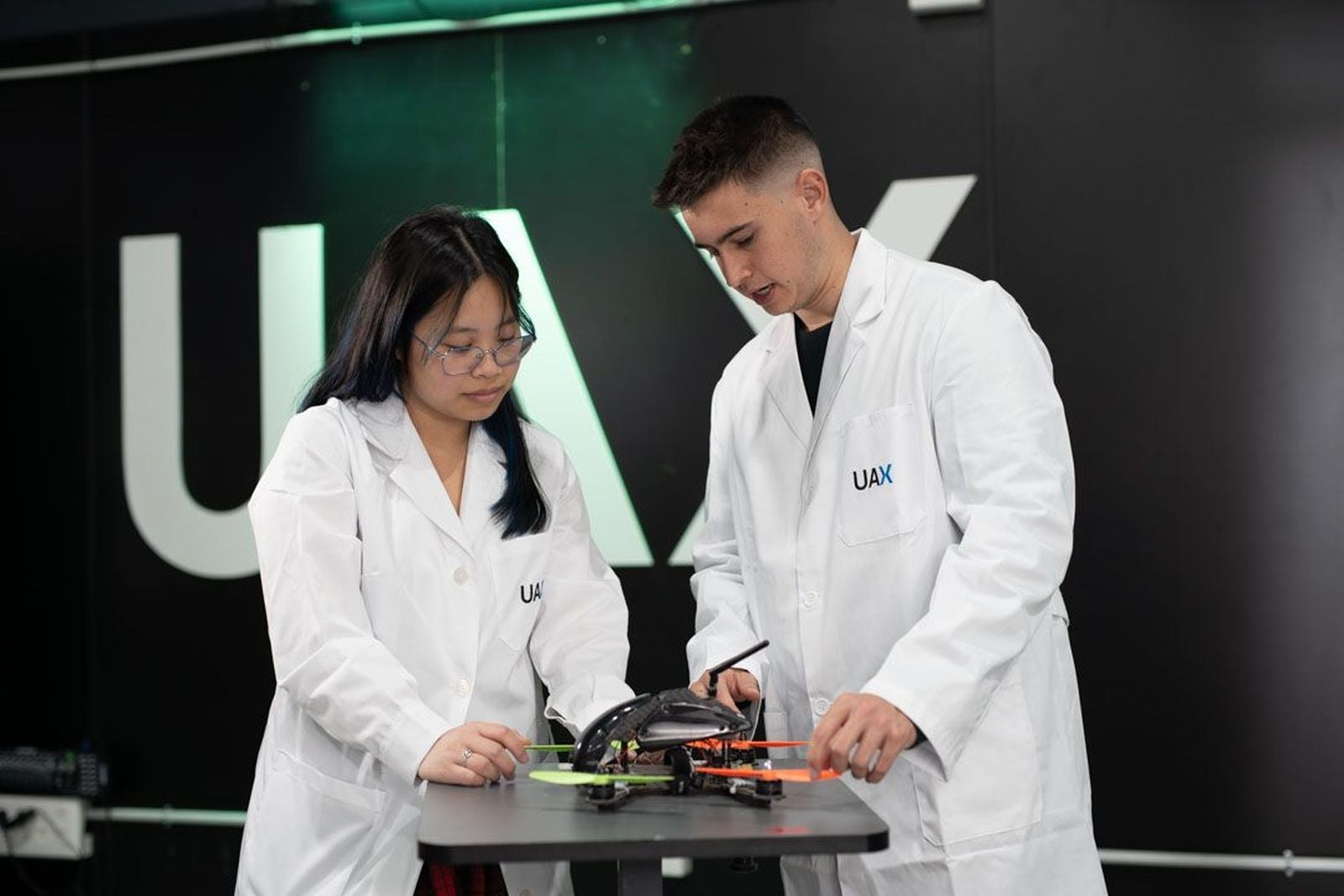
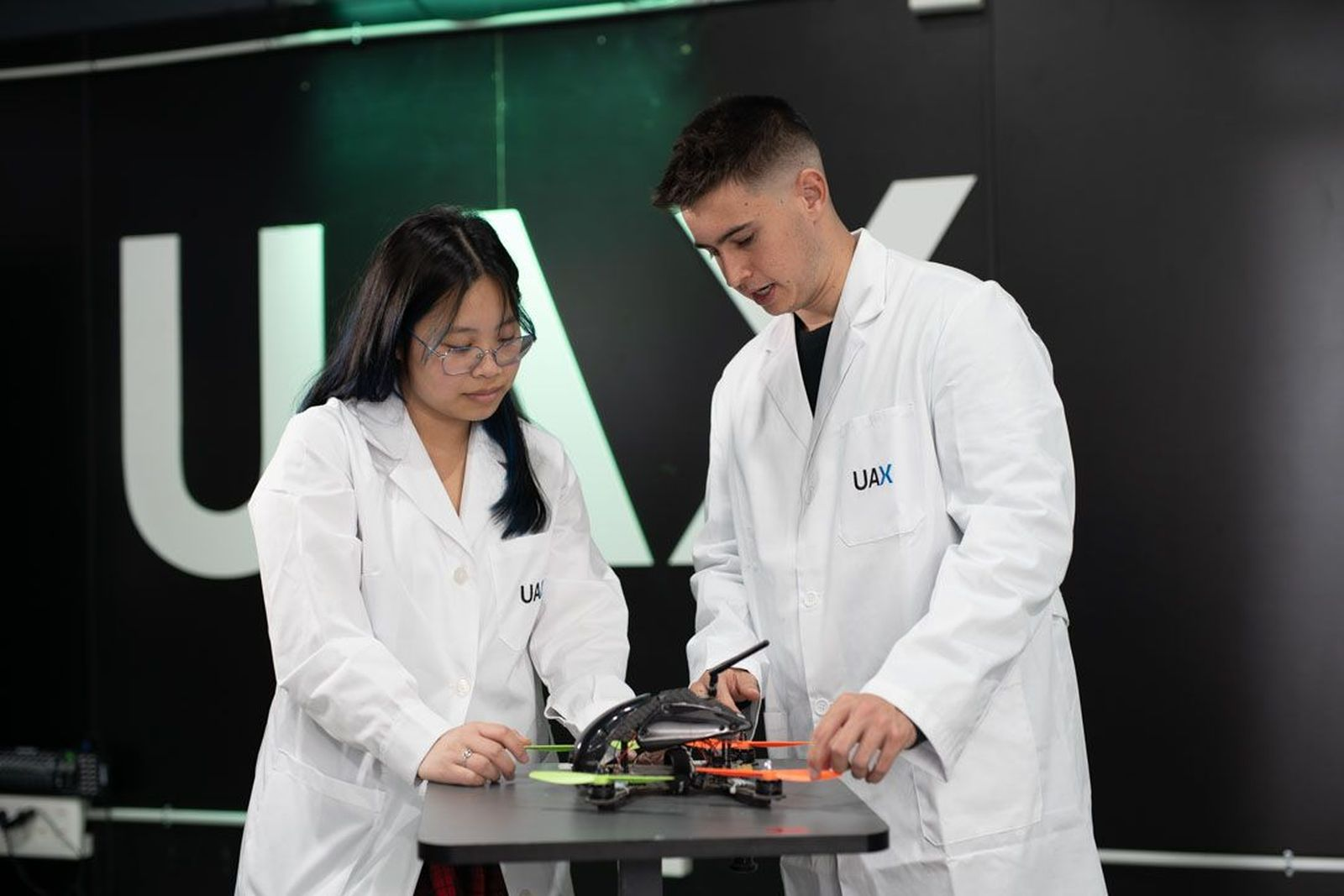
Commitment to innovation, environmental sustainability and digital transformation with the UAX Makers model: Projects with companies, digital certifications and training in soft skills.
In collaboration with:

|

|

|
Because it equips you to design, manage and deliver infrastructure and civil engineering projects, combining a solid technical grounding with a practical, innovative approach that is closely aligned with the sector’s real-world needs.
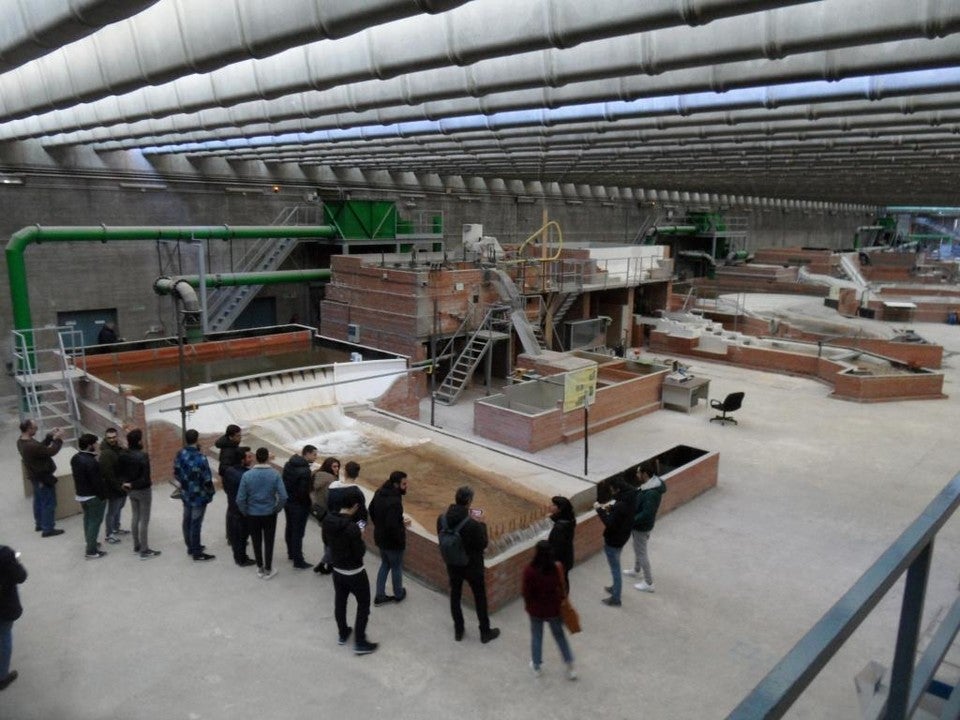
25,000 M² from actual installations
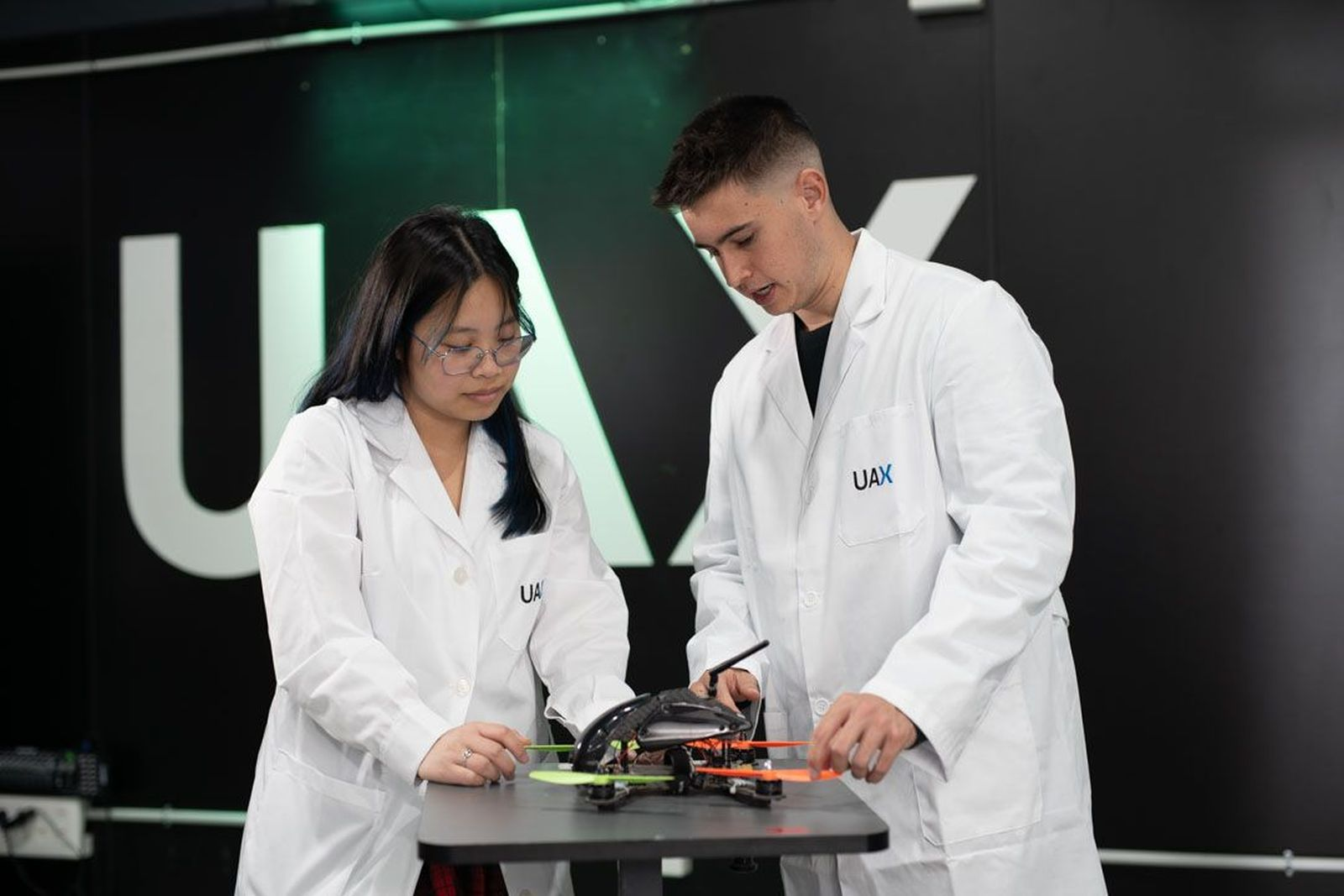
A wind tunnel, a turbojet test rig, an Airbus A320 flight simulator, AeroLab and a FABLAB equipped with 3D printing, laser cutting and robotic arms.
99 % EMPLOYABILITY
99 per cent of our students are in employment upon graduation
+ 100 REAL PROJECTS
Take part in the development and actual launch of a microsatellite alongside the aerospace company B2Space, as part of the UAX FABLAB Makers programme.
1000 AGREEMENTS
Airbus Defence & Space, Iberia, Hispasat, Indra, Thales Alenia Space, INECO, Sacyr, Accenture, Capgemini, GMV, Swiftair, Air Europa and ELA Aviación, amongst others
90 % ACTIVE TEACHERS
This offers the student a training that is closer to professional reality.
The UAX Bachelor’s Degree in Civil Engineering prepares you to lead the future of the sector through an innovative, practical programme of study that is aligned with the demands of the job market. Designed in collaboration with leading companies, this programme equips you to tackle the greatest challenges in engineering.
It includes officially recognised Autodesk certifications with international accreditation issued by MSI Digital Builders
What will you learn on the Bachelor’s Degree in Civil Engineering?

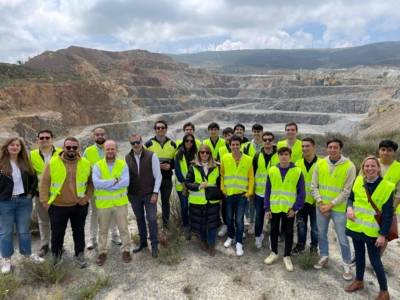
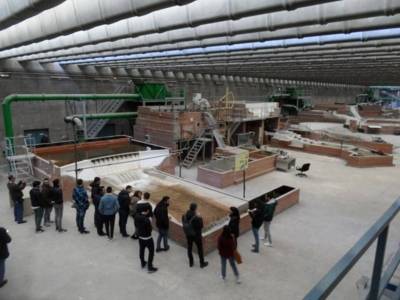
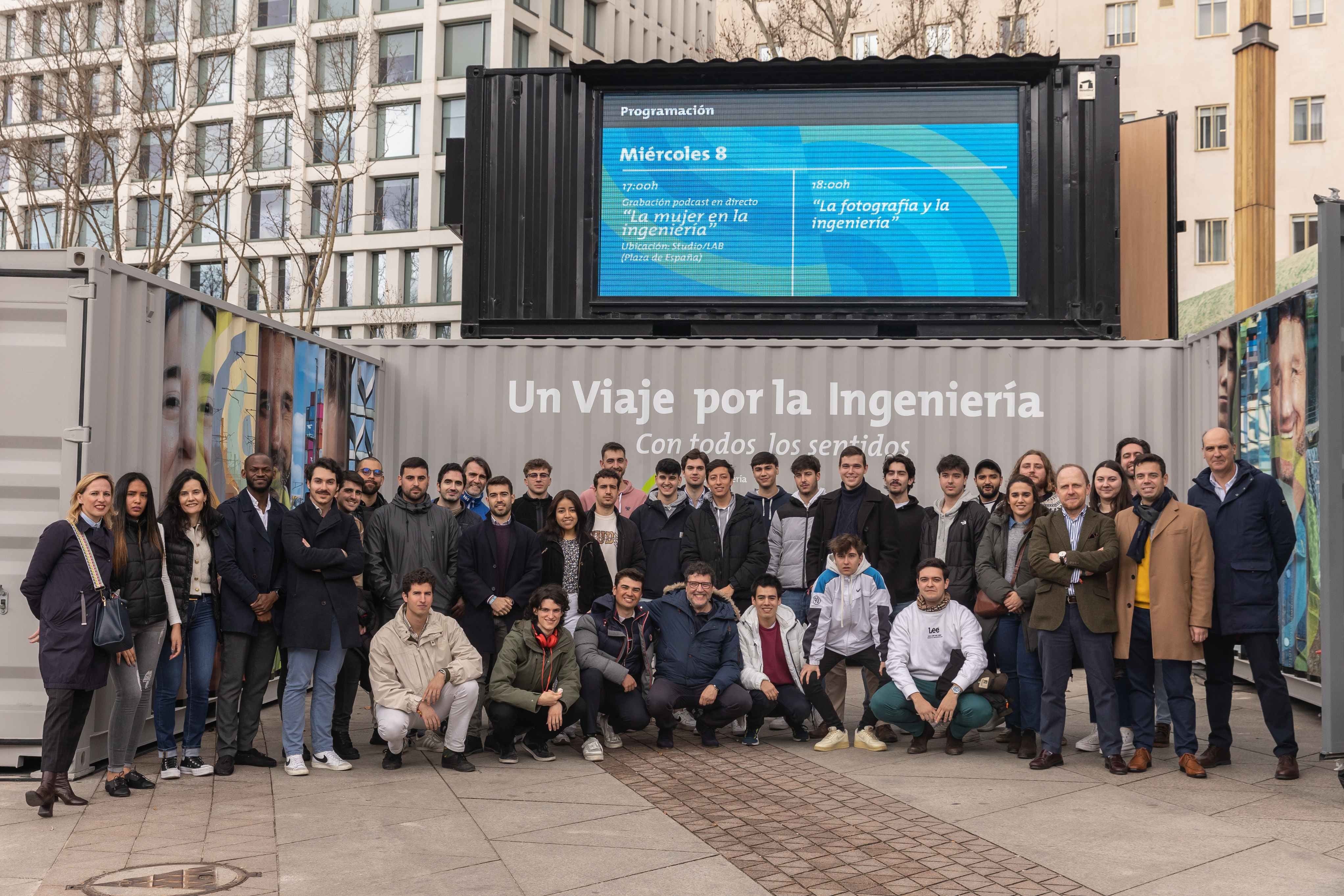
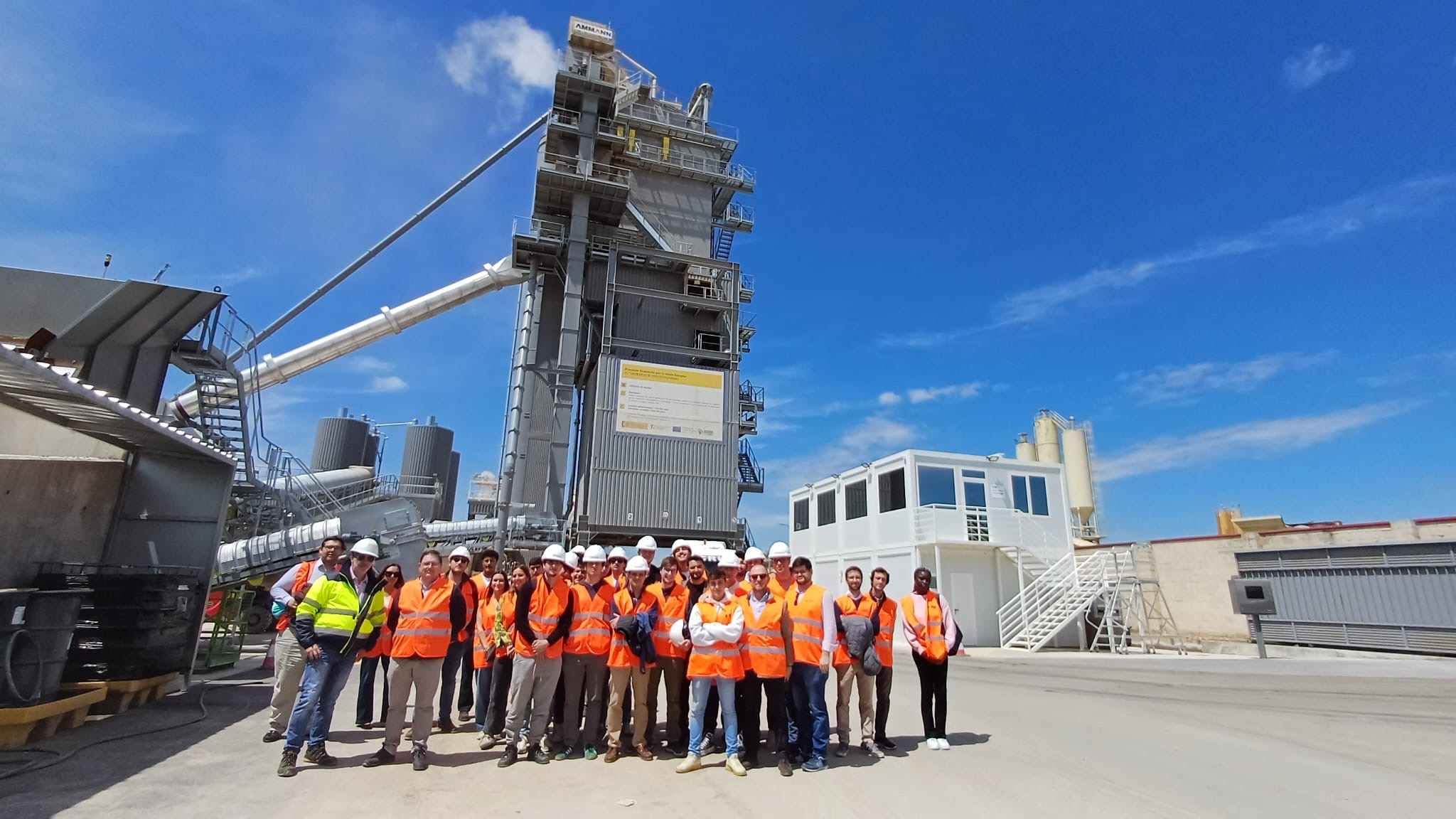
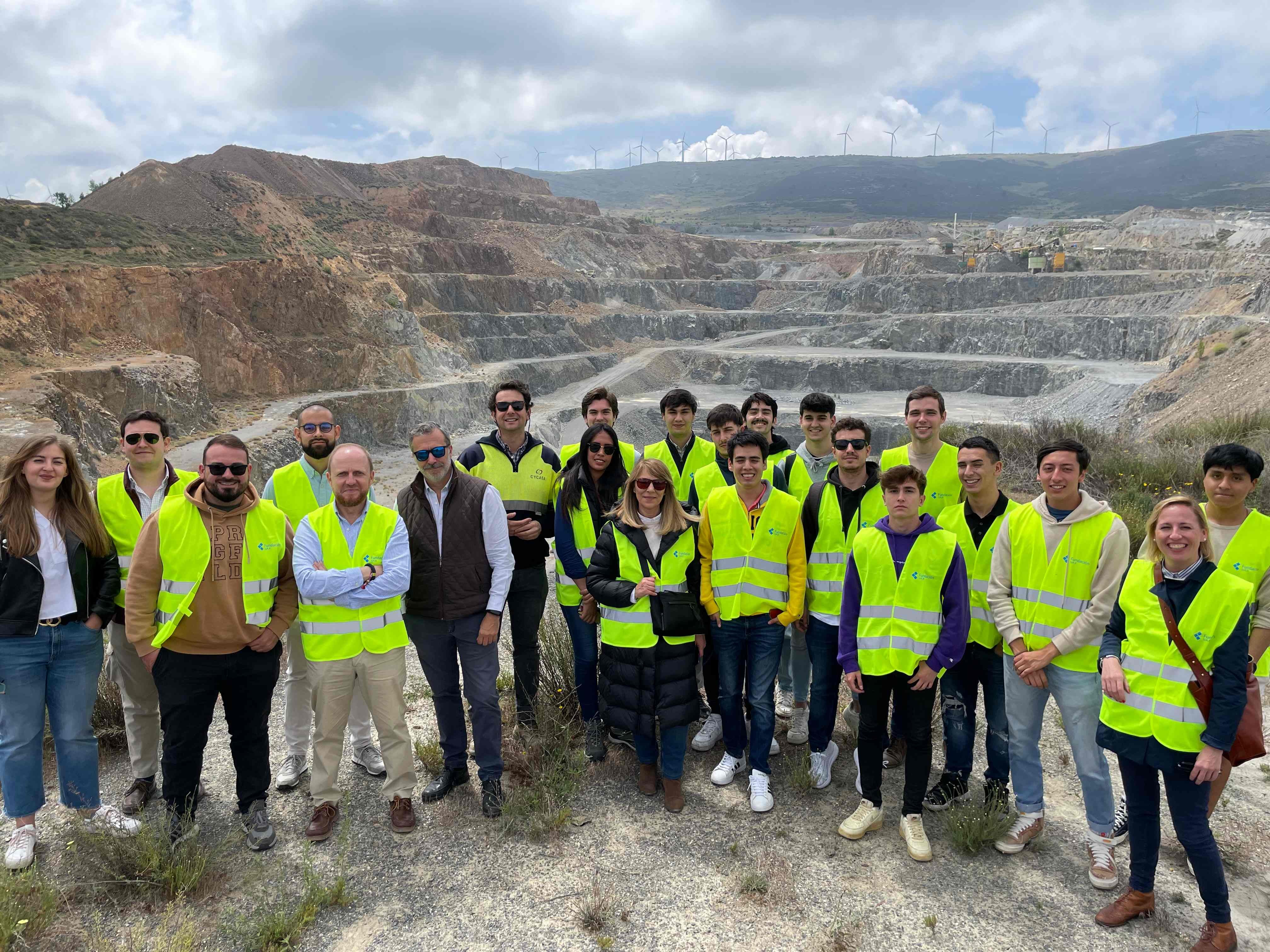
Work on real-world projects with companies. The UAX Makers model is based on collaborative work between students who come together to tackle a real-world project. To this end, we bring together students from different degree programmes, fostering a diversity of approaches and teamwork as key to achieving the best possible solution.

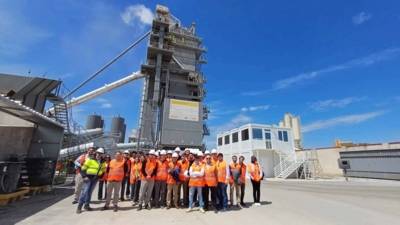
Development of recycled asphalt with ashes from the volcano of La Palma, in collaboration with the company Padecasa, to develop more sustainable infrastructures.
Award-winning project! Civil Engineering students investigated the feasibility of implementing ZBEs throughout Spain, improving the existing ones in Madrid and Barcelona.
Study of the environmental impacts of the different materials and work units used in civil engineering infrastructures, with a life cycle analysis perspective.
Study of Piperack design optimisation structures (with STAAD) and of metallic structure utilisation ratios.
Students of the Bachelor's Degree in Civil Engineering collaborate with the company Trabit in their TFG, developing innovative projects that address real challenges in the sector.
Degree in Civil Engineering in Civil Construction
First Year
ANNUAL SUBJECTS
| Code | Subjects | Character* | ECTS | ||||||||||||||||||||||||||||||||||||||||||||||||||||||||||||||||||||||||||||||||||||||||||||||||||||||||||||||||||||||||||||||||||||||||||||||||||||||||||||||||||||||||||||||||||||||||||||||||||||||||||||||||||||||||||||||||||||||||||||||||||||||||
|---|---|---|---|---|---|---|---|---|---|---|---|---|---|---|---|---|---|---|---|---|---|---|---|---|---|---|---|---|---|---|---|---|---|---|---|---|---|---|---|---|---|---|---|---|---|---|---|---|---|---|---|---|---|---|---|---|---|---|---|---|---|---|---|---|---|---|---|---|---|---|---|---|---|---|---|---|---|---|---|---|---|---|---|---|---|---|---|---|---|---|---|---|---|---|---|---|---|---|---|---|---|---|---|---|---|---|---|---|---|---|---|---|---|---|---|---|---|---|---|---|---|---|---|---|---|---|---|---|---|---|---|---|---|---|---|---|---|---|---|---|---|---|---|---|---|---|---|---|---|---|---|---|---|---|---|---|---|---|---|---|---|---|---|---|---|---|---|---|---|---|---|---|---|---|---|---|---|---|---|---|---|---|---|---|---|---|---|---|---|---|---|---|---|---|---|---|---|---|---|---|---|---|---|---|---|---|---|---|---|---|---|---|---|---|---|---|---|---|---|---|---|---|---|---|---|---|---|---|---|---|---|---|---|---|---|---|---|---|---|---|---|---|---|---|---|---|---|---|---|---|---|
| 0140701 | Physics | FB | 12 | ||||||||||||||||||||||||||||||||||||||||||||||||||||||||||||||||||||||||||||||||||||||||||||||||||||||||||||||||||||||||||||||||||||||||||||||||||||||||||||||||||||||||||||||||||||||||||||||||||||||||||||||||||||||||||||||||||||||||||||||||||||||||
PhysicsCódigo: 0140701 Imprimir Year 1: Annual module. Foundation course. 12 credits. Profesores
Objectives Physics forms the basis for a large number of the technical subjects that will be covered throughout the civil engineering degree programme. In this module, and throughout the academic year, we will establish the fundamental principles of physics, illustrating them with a variety of examples of their applications, with the aim of establishing a logical sequence between the laws of physics and their applications. The aim is therefore to develop students’ ability to analyse any physics problem related to civil engineering in a logical and straightforward manner, applying the basic principles they have learnt to solve such problems. Prerequisites No prerequisites have been set. Learning Outcomes This module forms part of the core curriculum, comprising subject-specific modules within the field of Engineering and other core subjects specific to the degree programme. Among the key learning outcomes associated with the subjects in this module, through the physics module, students will acquire: - CB4 Understanding and mastery of the basic concepts relating to the general laws of mechanics, thermodynamics, fields and waves, and electromagnetism, and their application to solving engineering problems. Furthermore, this module specifically contributes to the following competences defined for the degree programme as a whole, although there are other competences to which it may also contribute: - CG1 Scientific and technical training for practising as a Technical Engineer in Public Works, and knowledge of the functions of consultancy, analysis, design, calculation, project management, construction, maintenance, upkeep and operation. Learning outcomes The elements that can be used to assess these competences in terms of learning outcomes include, amongst others, the following: - Understanding of the laws of physics and electromagnetism. - Understanding of the random nature of various phenomena. Description of the course content Modules into which the course is divided. 1. Vector quantities. 2. Kinematics and dynamics of the particle. 3. Particle statics. Equilibrium of forces. 4. Work and energy. 5. Equilibrium of a rigid body. Geometry of masses. Centres of gravity. Statics. 6. Dynamics of rigid bodies. Moments of inertia. 7. Deformable solids. Elasticity. 8. Deformable solids. Introduction to the strength of materials. 9. Fluid mechanics. 10. Principles of thermodynamics. Heat transfer. 11. Wave motion. 12. Electrostatic fields. 13. Magnetic fields. Learning activities The learning activities designed to enable students to acquire the intended competences during this module and to achieve the expected outcomes of the work undertaken, as well as the associated competences, are as follows: - Classroom presentations on concepts related to the topics covered in each subject and problem-solving exercises designed to help students understand how to tackle these concepts, as well as other face-to-face group sessions such as discussion classes, group work, etc. - Laboratory activities of increasing difficulty, enabling students to gradually develop the ability to solve problems independently. - Carrying out work in small groups outside the classroom. - Independent study, report writing, practical work, etc., carried out by individual students or groups of students. - Assessment tests. Assessment system and criteria To pass this module through continuous assessment, students must: 1. Have completed the laboratory practicals. 2. Submit solutions to the problems set for students throughout the course. Submissions must be made via the university’s online platform by the specified deadline, which cannot be extended. At least one of the problems in each assessment will be similar to those submitted. Similar, not identical. 3. Have sat the continuous assessment exams. 4. Achieve a mark of five points or higher by adding together the percentages set out below: Laboratory practicals (Practical workbooks + Test): 20% of the final mark Exams: 80% Divided into two terms. In each term, students will be required to sit two assessment tests, the content of which will be specified in due course prior to the tests. Their weighting in the final mark is as set out above. 5. If this mark is not five out of ten or higher, the student must sit a final exam, which will be predominantly practical and cover the content of the entire course. This exam will account for 100% of the mark. Students will have two opportunities to sit this exam: one during the regular examination period and another during the supplementary examination period, if necessary. The module may be passed either through continuous assessment or through a final examination (in the event that the student has not passed via continuous assessment). CONTINUOUS ASSESSMENT: The final mark for continuous assessment will be based on the marks obtained in the tests, questionnaires, seminars and laboratory practicals carried out during the course. The weightings are set out in the Timetable. Without prejudice to any other requirements that may be specified in the relevant course syllabus, as a general rule, failure to attend more than 60 per cent of the course’s teaching activities—which require the student’s physical or virtual presence—will result in the loss of the right to continuous assessment during the ordinary assessment period. In this case, the examination to be held during the official period set by the University will be the sole assessment criterion, with the corresponding weighting as specified in the course syllabus. REGULAR EXAMINATION PERIOD During the ordinary examination period, the entire syllabus of the module will be assessed, with the final mark being that obtained in the examination (accounting for 100% of the mark). The examination will cover all the course content. If students have passed either the first or second term through continuous assessment, they will be exempt from that part of the examination in the ordinary examination session. SUPPLEMENTARY EXAMINATION PERIOD: In the supplementary assessment, the entire syllabus of the module will be assessed, with the final mark being that obtained in the examination (accounting for 100% of the mark). The examination will cover all the course content Bibliography Essential: 1. Beer, Ferdinand P. Vector Mechanics for Engineers: Mexico: McGraw-Hill, 2013. 2013. ISBN: 9781456213244 2.- Magro, R., Abad, L., et al. Physical Fundamentals of Engineering I 1st ed.. Garcia Maroto publishers. 2007. ISBN: 9788493527150 3. Magro, R., Abad, L., et al. Physical Fundamentals of Engineering II 1st ed. Garcia Maroto Publishers. 2008. ISBN: 9788493601867 Supplementary: 4.- Paul Allen Tipler, Gene Mosca Physics for Science and Technology, Vol. 1: Mechanics, Oscillations and Waves, Thermodynamics Reverté Publishers. 2010. |
|||||||||||||||||||||||||||||||||||||||||||||||||||||||||||||||||||||||||||||||||||||||||||||||||||||||||||||||||||||||||||||||||||||||||||||||||||||||||||||||||||||||||||||||||||||||||||||||||||||||||||||||||||||||||||||||||||||||||||||||||||||||||||
| 0140702 | Computer Science | FB | 6 | ||||||||||||||||||||||||||||||||||||||||||||||||||||||||||||||||||||||||||||||||||||||||||||||||||||||||||||||||||||||||||||||||||||||||||||||||||||||||||||||||||||||||||||||||||||||||||||||||||||||||||||||||||||||||||||||||||||||||||||||||||||||||
Computer ScienceCódigo: 0140702 Imprimir Year 1. Annual module. Foundation course. 6 credits. Profesores
Objectives To build a foundation of knowledge and skills based on optimisation and user-centred IT tools geared towards academic, educational and professional use. To develop information and knowledge management skills. To provide a useful foundation for management and learning based on independent research using IT tools. The ability to apply general knowledge of office automation and new information technologies in current practice and in future professional contexts. Prerequisites No prerequisites have been established. Competencies Of the key competences related to the subjects in this module, through the Computer Science module, students will acquire: -CB3 Basic knowledge of the use and programming of computers, operating systems, databases and software applications relevant to engineering. Furthermore, this module specifically contributes to the following competences defined for the degree programme as a whole, although there are other competences to which it may also contribute: - CG1 Scientific and technical training for the practice of the profession of Technical Engineer in Civil Engineering, and knowledge of the functions of consultancy, analysis, design, calculation, project management, construction, maintenance, conservation and operation. Students also acquire the minimum guaranteed competences at MECES level: CBMG1. ‘That students have demonstrated that they possess and understand knowledge in an area of study building on the foundations of general secondary education, and which is typically at a level that, whilst drawing on advanced textbooks, also includes certain aspects involving knowledge from the cutting edge of their field of study’ CBMG2. Students are able to apply their knowledge to their work or vocation in a professional manner and possess the competences typically demonstrated through the development and defence of arguments and the resolution of problems within their field of study. CBMG3. Students should have the ability to gather and interpret relevant data (usually within their field of study) in order to form judgements that include reflection on relevant social, scientific or ethical issues. CBMG4. Students should be able to communicate information, ideas, problems and solutions to both specialist and non-specialist audiences. CBMG5. Students should have developed the learning skills necessary to undertake further study with a high degree of autonomy. Learning outcomes The elements that may be used to assess competences in terms of learning outcomes include, amongst others, the following: - Proficiency in office software. - Understanding of the random nature of various phenomena. Course content Information systems, data analysis and retrieval, etc. Document management. Document layout using software and the creation of templates and styles. Integration and manipulation of graphic elements using digital images. Data entry, handling, organisation and filtering. Types of charts, options and characteristics of data charts. Learning and using a programming language, covering basic concepts. Training activities The learning activities designed to enable students to acquire the intended competences during this module and to achieve the expected outcomes of the work undertaken will be: 1) Classroom presentations on concepts related to the subjects comprising each module and problem-solving exercises to enable students to understand how to tackle these concepts, as well as other face-to-face group sessions such as discussion classes, group work, etc. 2) Laboratory activities of increasing difficulty, enabling students to gradually develop the ability to solve problems independently. 3) Carrying out work in small groups outside the classroom. 4) Independent study, report writing, practical work, etc., carried out by individual students or groups of students. 5) Assessment tests. Assessment system and criteria Without prejudice to any other requirements that may be specified in the relevant course syllabus, as a general rule, failure to attend more than 60 per cent of the course’s teaching activities—which require the student’s physical or virtual presence—will result in the loss of the right to continuous assessment during the standard examination period. In this case, the examination to be held during the official period set by the University shall be the sole assessment criterion, with the weighting specified in the course syllabus. ---- Classroom-based presentation of concepts relating to the modules comprising each subject and problem-solving exercises enabling students to learn how to tackle them, as well as other face-to-face group sessions such as discussion classes, group work, etc. Laboratory activities of increasing difficulty, enabling students to gradually acquire the ability to solve problems independently Carrying out work in small groups outside the classroom. Independent study, report writing, practical work, etc., carried out by individual students or groups of students. Assessment methods: - Continuous assessment: For the continuous assessment of Computer Science, various exercises and practical case studies using a computer will be carried out; a class attendance rate of over 70 per cent will be required; and the following practical examinations will be held (for which a minimum mark of 4 is required): Applied IT, Word and Excel: 50% (20%+25%). Programming concepts: 50% (20% + 25%). Uax Skill School: 10% Students who meet the attendance and minimum mark requirements will have the percentages indicated for each component applied to their marks, and their final course mark will be calculated accordingly. Students who ultimately achieve a mark of 5 or above in the continuous assessment will have passed the course and will not be required to sit the final exam in the ordinary examination session. - Ordinary Examination Session: Students who have not passed the course will be required to sit the final exam in the ordinary examination session, for which there are two options: Students who have met the continuous assessment requirements but have not passed the course may sit an exam in June for only one of the course components (Basic Computing or Programming), so that, by re-calculating the relevant percentages together with the mark for the resat part, they may achieve a final pass (a mark of 5 or above) in the ordinary examination session. Students who do not fall into the above category will have to sit the exam covering the entire syllabus of the module during the ordinary examination period. - Extraordinary Examination Session: In the supplementary examination session, students must sit an exam covering the entire syllabus of the module. Timetable Click on this link to view the detailed timetable in Excel
Bibliography Essential: 1. Jimenez Marín, A. and Pérez Montes, F.M. Learn to Program with Java, 2nd Edition Paraninfo. 2016. ISBN: 8428338574 2. Peña Pérez, Rosario Office 2016: Ediciones Altaria, 2015. ISBN: 9788494404979 3. VALENTIN, HANDZ OFFICE 2016 PRACTICAL COURSE Ra-Ma. 2016. ISBN: 9788499646343 Supplementary: 4.- Charte Ojeda, Francisco Word 2016 / Anaya Multimedia. 2016. ISBN: 9788441538160 5.- CLAUDIA VALDES-MIRANDA EXCEL 2016 (ESSENTIAL HANDBOOK) Anaya Multimedia. 2016. ISBN: 9788441538023 6. JOHN PIERCE MOS 2016 STUDY GUIDE FOR MICROSOFT WORD EXPERT Microsoft Press. 2016. ISBN: 9788441539266 7. JULIO F. CUARTERO SANCHEZ WORD 2016: STEP-BY-STEP PRACTICAL COURSE Altaria. 2015. ISBN: 9788494477607 8. Lambert, Joan. MOS 2016 Study Guide for Microsoft Excel: Microsoft Press. 2016. ISBN: 9780735699434 9. Paz González, Francisco PowerPoint 2016 Anaya Multimedia. 2016. ISBN: 9788441538054 10. Sánchez Allende, Jesús, et al. Java 2 Programming 1st ed. McGraw-Hill. Madrid. 2005. ISBN: 8448145917 11. VALENTIN, HANDZ EXCEL 2016 STEP BY STEP, 2nd UPDATED EDITION Ra-Ma. 2016. ISBN: 9788499646619 Links Apache NetBeans – Integrated Development Environment Oracle Java JDK – Download the Java Development Kit (JDK) – Please note: download the JDK, not the JRE |
|||||||||||||||||||||||||||||||||||||||||||||||||||||||||||||||||||||||||||||||||||||||||||||||||||||||||||||||||||||||||||||||||||||||||||||||||||||||||||||||||||||||||||||||||||||||||||||||||||||||||||||||||||||||||||||||||||||||||||||||||||||||||||
| TOTAL: | 18 | ||||||||||||||||||||||||||||||||||||||||||||||||||||||||||||||||||||||||||||||||||||||||||||||||||||||||||||||||||||||||||||||||||||||||||||||||||||||||||||||||||||||||||||||||||||||||||||||||||||||||||||||||||||||||||||||||||||||||||||||||||||||||||
FIRST FOUR-MONTH PERIOD
| Code | Subjects | Character* | ECTS | ||||||||||||||||||||||||||||||||||||||||||||||||||||||||||||||||||||||||||||||||||||||||||||||||||||||||||||||||||||||||||||||||||||||||||||||||||||||||||||||||||||||||||||||||||||||||||||||||||||||||||||||||||||||||||||||||||||||||||||||||||||||||
|---|---|---|---|---|---|---|---|---|---|---|---|---|---|---|---|---|---|---|---|---|---|---|---|---|---|---|---|---|---|---|---|---|---|---|---|---|---|---|---|---|---|---|---|---|---|---|---|---|---|---|---|---|---|---|---|---|---|---|---|---|---|---|---|---|---|---|---|---|---|---|---|---|---|---|---|---|---|---|---|---|---|---|---|---|---|---|---|---|---|---|---|---|---|---|---|---|---|---|---|---|---|---|---|---|---|---|---|---|---|---|---|---|---|---|---|---|---|---|---|---|---|---|---|---|---|---|---|---|---|---|---|---|---|---|---|---|---|---|---|---|---|---|---|---|---|---|---|---|---|---|---|---|---|---|---|---|---|---|---|---|---|---|---|---|---|---|---|---|---|---|---|---|---|---|---|---|---|---|---|---|---|---|---|---|---|---|---|---|---|---|---|---|---|---|---|---|---|---|---|---|---|---|---|---|---|---|---|---|---|---|---|---|---|---|---|---|---|---|---|---|---|---|---|---|---|---|---|---|---|---|---|---|---|---|---|---|---|---|---|---|---|---|---|---|---|---|---|---|---|---|---|
| 0140703 | Calculation | FB | 6 | ||||||||||||||||||||||||||||||||||||||||||||||||||||||||||||||||||||||||||||||||||||||||||||||||||||||||||||||||||||||||||||||||||||||||||||||||||||||||||||||||||||||||||||||||||||||||||||||||||||||||||||||||||||||||||||||||||||||||||||||||||||||||
CalculationCódigo: 0140703 Imprimir Course 1: First-term module. Foundation course. 6 credits. Profesores
Objectives The aim of this module is to provide the necessary mathematical foundations to enable graduates with a degree in Civil Engineering (Civil Works) to interpret, select, evaluate and develop new concepts, theories, applications and technological developments relating to civil engineering. Prerequisites No prerequisites have been set Learning Outcomes Among the key competences related to the subjects in this module, through the course ‘Calculus’, students will acquire: - CB1. The ability to solve mathematical problems that may arise in engineering. The ability to apply knowledge of: linear algebra; geometry; differential geometry; differential and integral calculus; differential and partial differential equations; numerical methods; numerical algorithms; statistics and optimisation. Furthermore, this module specifically contributes to the following competences defined for the degree programme as a whole, although there are other competences to which it may also contribute: - CG1 Scientific and technical training for practising as a Technical Engineer in Public Works and knowledge of the functions of consultancy, analysis, design, calculation, project management, construction, maintenance, conservation and operation. Students also acquire the minimum guaranteed competences at MECES level: - CBMG1. ‘That students have demonstrated that they possess and understand knowledge in an area of study building on the foundations of general secondary education, and which is typically at a level that, whilst drawing on advanced textbooks, also includes certain aspects involving knowledge from the cutting edge of their field of study’ - CBMG2. Students are able to apply their knowledge to their work or profession in a professional manner and possess the competences typically demonstrated through the development and defence of arguments and the resolution of problems within their field of study. - CBMG3. Students should be able to gather and interpret relevant data (usually within their field of study) in order to form judgements that include reflection on relevant social, scientific or ethical issues. - CBMG4. Students should be able to communicate information, ideas, problems and solutions to both specialist and non-specialist audiences. - CBMG5. Students should have developed the learning skills necessary to undertake further study with a high degree of autonomy. Learning outcomes The elements that may be used to assess competences in terms of learning outcomes include, amongst others, the following: - Ability to apply mathematical knowledge to the resolution of real-world problems. - Understanding of the random nature of various phenomena. Course content Infinitesimal calculus. Introduction. Real functions of a real variable, continuity and differentiation. Real functions of several real variables, continuity and differentiation. Integration of real functions. Applications of integral calculus. Sequences and series Learning activities The learning activities designed to enable students to acquire the intended competences during this module and to achieve the expected learning outcomes will be: 1) Classroom presentations on the concepts related to the subjects comprising each module and problem-solving exercises to enable students to understand how to tackle these concepts, as well as other face-to-face group sessions such as discussion classes, group work, etc. 2) Laboratory activities of increasing difficulty, enabling students to gradually develop the ability to solve problems independently. 3) Carrying out work in small groups outside the classroom. 4) Independent study, report writing, practical work, etc., carried out by individual students or groups of students. 5) Assessment tests. Assessment system and criteria Without prejudice to any other requirements that may be specified in the relevant course syllabus, as a general rule, failure to attend more than 60 per cent of the course’s teaching activities requiring the student’s physical or virtual presence will result in the loss of the right to continuous assessment during the standard examination period. In this case, the examination to be held during the official period set by the University shall be the sole assessment criterion, with the weighting specified in the course syllabus. ---- CONTINUOUS ASSESSMENT Continuous assessment for this module will consist of the following: • Two mid-term exams will be held during each term, each accounting for 40 per cent of the course’s total mark. • Practical assignments will be submitted throughout the term, accounting for a total of 20 per cent of the course mark. • To pass via continuous assessment, the sum of the mid-term exam marks plus the mark for the practical assignments, after applying the relevant weightings, must be at least 5. • Mid-term exams will be re-marked from a minimum mark of 3.5 and will be exempted from further assessment from a mark of 5 or above. REGULAR EXAMINATION PERIOD Students who have not passed via continuous assessment must sit the final exam in the Ordinary Examination Session. The following options are available: • Students will be examined on the full syllabus of the module and must achieve a minimum mark of 5 to pass. • Assignment marks will also be taken into account; in this case, the exam will account for 80 per cent of the course’s total mark. This is optional. The sum of the various components, where applicable, must be at least 5 to pass. SUPPLEMENTARY EXAMINATION SESSION Students will be examined on the full syllabus of the module and must achieve a minimum mark of 5 to pass. Timetable Click on this link to view the detailed timetable in Excel
Reading list Essential: 1. Guervos Sánchez, Esther Fundamentals of Mathematics: Theoretical Concepts and Problems Bellisco. 2005. ISBN: 8496486141 2. Guervós Sánchez, Esther Introduction to Calculus García-Maroto Editores. 2008. ISBN: 9788493629984 Supplementary: 3.- Pedro de Mingo Calculus Madrid: Bellisco. 2006. ISBN: 8448117700 4. Pedro de Mingo Exercises in Integral Calculus Bellisco. 2005. ISBN: 9788496486782 Links www.aprendematemáticas.com - Problems at all levels |
|||||||||||||||||||||||||||||||||||||||||||||||||||||||||||||||||||||||||||||||||||||||||||||||||||||||||||||||||||||||||||||||||||||||||||||||||||||||||||||||||||||||||||||||||||||||||||||||||||||||||||||||||||||||||||||||||||||||||||||||||||||||||||
| 0140704 | Graphic Expression | FB | 6 | ||||||||||||||||||||||||||||||||||||||||||||||||||||||||||||||||||||||||||||||||||||||||||||||||||||||||||||||||||||||||||||||||||||||||||||||||||||||||||||||||||||||||||||||||||||||||||||||||||||||||||||||||||||||||||||||||||||||||||||||||||||||||
Graphic ExpressionCódigo: 0140704 Imprimir Course 1: First-term module. Foundation course. 6 credits. Profesores
Objectives The most significant features of the Technical Drawing course are its educational nature and the body of knowledge it provides, which is designed to develop a mental framework that, together with Mathematics and Physics, enables students to tackle the technological subjects of the degree programme with a solid foundation. Furthermore, it provides students with the basic knowledge required to define any geometric element or interpret any representation of it, in accordance with existing standards and using the drafting tools employed in industry. Prerequisites No prerequisites have been established. Competencies Among the key competences related to the subjects in this module, through the course ‘Graphic Expression’, students acquire: - CB2. Spatial awareness and knowledge of graphic representation techniques, both through traditional methods of metric and descriptive geometry, and through computer-aided design applications. Furthermore, this module specifically contributes to the following competences defined for the degree programme as a whole, although there are other competences to which it may also contribute: - CG1 Scientific and technical training for practising as a Technical Engineer in Public Works, and knowledge of the functions of consultancy, analysis, design, calculation, project management, construction, maintenance, conservation and operation. Students also acquire the minimum guaranteed competences at MECES level: - CBMG1. That students have demonstrated that they possess and understand knowledge in a field of study building on the foundations of general secondary education, typically at a level which, whilst drawing on advanced textbooks, also includes certain aspects requiring knowledge from the cutting edge of their field of study. - CBMG2. Students are able to apply their knowledge to their work or profession in a professional manner and possess the competences typically demonstrated through the development and defence of arguments and the resolution of problems within their field of study. - CBMG3. Students should be able to gather and interpret relevant data (usually within their field of study) in order to form judgements that include reflection on relevant social, scientific or ethical issues. - CBMG4. Students should be able to communicate information, ideas, problems and solutions to both specialist and non-specialist audiences. - CBMG5. Students should have developed the learning skills necessary to undertake further study with a high degree of autonomy. Learning outcomes The elements that may be used to assess competences in terms of learning outcomes include, amongst others, the following: - Ability to produce graphical representations, using both traditional and computer-based methods. - Understanding of the random nature of various phenomena. Course description *PLANAR METRIC GEOMETRY. - Scales *METRIC GEOMETRY. - Fundamental constructions, metric relations, polyhedra. *DESCRIPTIVE GEOMETRY: DIEDRIC SYSTEM. - Representation of the fundamental elements (point, line, plane). - Relationships of membership and incidence (intersections). - Relationships of parallelism and perpendicularity. - Metric methods (azimuths, distances and angles). - Polyhedra, prisms and pyramids. *SPATIAL GEOMETRY: AXONOMETRIC PROJECTION. - Isometric, dimetric, trimetric and cavalier projection. *CONICAL PERSPECTIVE. - Bases, viewpoints. *AUTOCAD. - Introduction to the programme. - Work environment and executing commands in AutoCAD. - Coordinate systems. - Object references. - Drawing commands. - Modify commands. - Layers. - Printing drawings. - Dimensioning. - Blocks. Training activities The training activities to be carried out to ensure that students acquire the intended competences during this module and are able to achieve the expected outcomes of the work undertaken will be: 1) Classroom presentations on the concepts related to the topics covered in each subject and problem-solving exercises to help students understand how to tackle these concepts, as well as other face-to-face group sessions such as discussion classes, group work, etc. 2) Laboratory activities of increasing difficulty, enabling students to gradually develop the ability to solve problems independently. 3) Carrying out work in small groups outside the classroom. 4) Independent study, report writing, practical work, etc., carried out by individual students or groups of students. 5) Assessment tests. Assessment system and criteria Without prejudice to any other requirements that may be specified in the relevant course syllabus, as a general rule, failure to attend more than 60 per cent of the course’s teaching activities—which require the student’s physical or virtual presence—will result in the loss of the right to continuous assessment during the standard examination period. In this case, the examination to be held during the official period set by the University shall be the sole assessment criterion, with the weighting specified in the course syllabus. ---- CONTINUOUS ASSESSMENT For the continuous assessment of the module, various exercises and practical case studies will be set; a class attendance rate of over 60 per cent will be required; and the following continuous assessment tests will be held in accordance with the module’s thematic blocks, with the following weightings (for which a minimum mark of 4 is required): - Mid-term 1: Plane and Spatial Metric Geometry (20%) + AutoCAD (Part 1) (15%) = 35% - Mid-term exam 2: Solid Geometry: Dihedral System, Axonometry and Conic Perspective (20%) + AutoCAD (Part 2) (15%) = 35% - Practical work: Geometry (20%) + AutoCAD (10%) = 30% TOTAL = 100% Students who meet the requirements for attendance, exercises, practical assessments and the minimum mark will have the percentages indicated for each part applied to their marks, and their final course mark will be calculated accordingly. Students who ultimately achieve a mark of 5 or above in the continuous assessment will have passed the course and will not be required to sit the final exam in the ordinary examination session. REGULAR EXAM SESSION Students who have not passed the course will be required to sit the final exam in the ordinary examination session, covering the entire syllabus of the module. Their mark will be calculated based on the weightings for each component: 60% Geometry + 40% AutoCAD. The final exam mark will account for 70 per cent, to which will be added 30 per cent of the mark obtained in the Geometry and AutoCAD practicals, totalling 100 per cent. Students may sit this examination session twice. EXTRAORDINARY EXAMINATION SESSION: In the extraordinary sitting, students will be examined on the entire module. The mark for the extraordinary examination will be calculated according to the weightings specified for each part of the exam. Students may sit this exam twice. Addendum Please note once again: - In order to be eligible for continuous assessment, students must have attended 60 per cent of face-to-face classes. Otherwise, students may only be assessed through the official examination sessions in January and July. - Please note that the module must be PASSED within the four official examination sessions. There will be no further opportunities to pass the module. Timetable Click on this link to view the detailed timetable in Excel
Reading list Essential: 1. Álvaro Rendón Gómez GEOMETRY STEP BY STEP. Volume I: Elements of Metric Geometry and their applications in Art, Engineering and Construction. TEBAR 2000. 2000. ISBN: 8495447088 2. LUIS M MÉNDEZ VALENTÍN, JESÚS MARÍA ALONSO TRIGUEROS. Representation Systems for Engineers Ibergarceta Publicaciones S.L.. 2018. ISBN: 9788417289331 3. Rodríguez de Abajo, F. Javier Descriptive Geometry, Vol. 1: Dihedral System 22nd ed. San Sebastián: Editorial Donostiarra, 1992. 1992. ISBN: 8470630288 Supplementary: 4.- DANIEL LOPEZ BRAGADO DESCRIPTIVE GEOMETRY. THEORETICAL FOUNDATIONS UNIVERSITY OF VALLADOLID. PUBLICATIONS AND RESEARCH SECRETARIAT. 2020. ISBN: 9788413200996 0. |
|||||||||||||||||||||||||||||||||||||||||||||||||||||||||||||||||||||||||||||||||||||||||||||||||||||||||||||||||||||||||||||||||||||||||||||||||||||||||||||||||||||||||||||||||||||||||||||||||||||||||||||||||||||||||||||||||||||||||||||||||||||||||||
| 0140705 | Modern language | OB | 3 | ||||||||||||||||||||||||||||||||||||||||||||||||||||||||||||||||||||||||||||||||||||||||||||||||||||||||||||||||||||||||||||||||||||||||||||||||||||||||||||||||||||||||||||||||||||||||||||||||||||||||||||||||||||||||||||||||||||||||||||||||||||||||
Modern languageCódigo: 0140705 Imprimir Course 1: First-semester module. Compulsory. 3 credits. Profesores
Objectives To provide an introduction to English specific to engineering and architecture, starting at level B1 and aiming for level B2. To familiarise students with and expand their English vocabulary, particularly technical vocabulary related to their degree programme. To familiarise students with potential situations and texts relevant to their field, with a view to developing their comprehension and expression skills (both oral and written). Prerequisites No prior requirements have been set. Competences The main competences related to the subjects covered in this module, designed to promote mobility, which students will acquire are: - Introduction to and consolidation of the basic knowledge required to communicate in and understand the English language. -Development of reading and listening comprehension, as well as oral and written expression. Learning outcomes The criteria used to assess these skills in terms of learning outcomes will include, amongst others, the following: - The ability to understand and communicate fluently in English, both orally and in writing. - Ability to correctly interpret articles and documentation in another language commonly used in technical and research contexts. Course description The content of this module is designed to enable students to acquire the skills in reading comprehension, listening comprehension, oral production and written production that will allow them to function effectively in a professional context in another language. The course will cover a combination of basic English, including the study and refinement of language use in various everyday contexts, and technical English, involving the study of vocabulary and concepts specific to different fields of specialisation. These contents are detailed in the syllabus. Learning activities The training activities designed to enable students to acquire the intended competences during this module and to achieve the expected learning outcomes will be as follows: 1) Classroom presentations on concepts related to the topics comprising each subject and problem-solving exercises designed to help students understand how to tackle these concepts, as well as other face-to-face group sessions such as discussion classes, group discussions, etc. 2) Laboratory activities of increasing difficulty, enabling students to gradually develop the ability to solve problems independently. 3) Carrying out work in small groups outside the classroom. 4) Independent study, report writing, practical work, etc., carried out by individual students or groups of students. 5) Assessment tests. Assessment system and criteria Without prejudice to any other requirements that may be specified in the relevant course syllabus, as a general rule, failure to attend more than 60 per cent of the course’s teaching activities—which require the student’s physical or virtual presence—will result in the loss of the right to continuous assessment during the standard examination period. In this case, the examination to be held during the official period set by the University will be the sole assessment criterion, with the weighting specified in the course syllabus. ---- The assessment systems used to verify and evaluate students’ acquisition of learning outcomes can be divided into two types: - E1: Written tests throughout the semester, to assess the technical competences associated with the module acquired through the student’s individual study. - E2: Problem-solving, completing assignments, drafting reports, and presenting and defending case studies or projects (either individually or in small groups). CONTINUOUS ASSESSMENT Two written examinations and one oral examination, both at the end of the academic term. The continuous assessment scheme is supplemented by each student’s classwork and the lecturer’s assessment. a. A first mid-term exam: 30% b. A second mid-term exam: 35% f. A project (written report and presentation on a topic of the student’s choice related to engineering) at the end of the academic term: 25% The topic of the oral presentation will be agreed in advance with the lecturer. h. Lecturer’s assessment based on behaviour and attitude in class, attendance and active participation: 10% Each of the mid-term exams will consist of exercises in: Listening Comprehension Vocabulary Reading Comprehension Grammar or Linguistic Structures The dates of these tests will be announced in advance by the teacher. They will take place in the usual classroom, unless the teacher specifies otherwise at the time. IMPORTANT 1) It is compulsory to sit ALL the assessment tests scheduled during the Continuous Assessment period. It follows that any student who fails to sit any of the mid-term tests, WILL LOSE THE RIGHT TO CONTINUOUS ASSESSMENT AND WILL HAVE TO SIT THE REGULAR EXAMINATION COVERING 100% OF THE COURSE, subject to the assessment criteria set out for that examination session. 2) If a minimum mark of 5 has been obtained in the oral presentation assessment as part of the continuous assessment, this mark will be retained for the ordinary and/or supplementary examination sessions. 3) The mark for the written examination will not be carried over in either case. 4) The final mark will be calculated according to the percentages mentioned above. The continuous assessment may be failed if the result of the calculation, when combined with the other assessments, is below 5. In this case, the student would have to sit the course examination in the January ordinary examination period, with the mark counting for 75 per cent (if they have a mark of at least 5 in the oral component of the continuous assessment and decide to carry it over to June) or for 100 per cent of the course mark. 5) If the mark for any of the skills (Listening, Vocabulary, Reading, Grammar) is below 2.5 at the end of the academic year, it cannot be included in the average. In this case, the final mark will be a maximum of 3. It follows that, if any skill is left unmarked – either because the student did not complete it (in the case of the written exam) or because they did not sit the exam (in the case of the written and/or oral exam) – no average will be calculated from the other skills, and the final mark will be a maximum of 3. 6) Students with a final average mark of 5 or above in the continuous assessment will pass the module through the continuous assessment system. 2. REGULAR EXAMINATION PERIOD WITHOUT CONTINUOUS ASSESSMENT AND SUPPLEMENTARY EXAMINATION PERIOD 2.1 Examinations: Students who are to be assessed on 100 per cent of the course content must sit the ordinary examination in January or the extraordinary examination in June and/or July. The assessment criteria in this case shall be as follows: Written exam: 75% Project and oral presentation: 25% The written examination will cover the same skills as those outlined above for students on the continuous assessment scheme. The oral examination will consist of an individual presentation, as specified by the lecturer in due course, on engineering or architecture topics covered throughout the course. Details regarding the format of the presentation will be provided during the academic year. If the mark for any of the skills (Listening, Vocabulary, Reading, Grammar) is below 2.5, it will not be included in the average. In this case, the final mark will be a maximum of 3. It follows that, if a skill is not marked – either because the student did not complete it (in the case of the written exam) or because they did not sit the exam (in the case of the written and/or oral exam) – no average will be calculated from the other skills, and the final mark will be a maximum of 3. If a minimum mark of 5 has been obtained in the oral examination, this mark will be retained for the supplementary examination session should this be necessary, provided the student so requests. It is the student’s responsibility to find out about classrooms, dates and times. Type of examination 2.1.1 Written exam The written exam will consist of questions on listening comprehension, vocabulary, reading comprehension and grammar. The mark for the written exam will not be carried over to the resit session under any circumstances. 2.1.2 Oral exam This may be taken individually or in pairs, as indicated at the time. It will consist of an oral presentation or a dialogue on a given topic related to engineering. Each student will prepare their dialogue or presentation in advance, following the guidelines provided in class or via the course portal. On the day of the written exam, information regarding the dates, times and classrooms for the oral exams will be provided at the latest. Students will be asked to book a slot at the date and time that suits them best from among those set by the Faculty of Applied Languages. The oral exams may be recorded. Bibliography Core reading: 1. Jenny Dooley, Adrian Hanson Career Paths: Civil Engineering Express Publishing. 2017. ISBN: 978-1-4715-69 Others: 2. Virginia Evans and Jenny Dooley It’s Grammar Time 4 Express Publishing. 2016. ISBN: 9781471538100 |
|||||||||||||||||||||||||||||||||||||||||||||||||||||||||||||||||||||||||||||||||||||||||||||||||||||||||||||||||||||||||||||||||||||||||||||||||||||||||||||||||||||||||||||||||||||||||||||||||||||||||||||||||||||||||||||||||||||||||||||||||||||||||||
| 0140706 | Chemistry | FB | 6 | ||||||||||||||||||||||||||||||||||||||||||||||||||||||||||||||||||||||||||||||||||||||||||||||||||||||||||||||||||||||||||||||||||||||||||||||||||||||||||||||||||||||||||||||||||||||||||||||||||||||||||||||||||||||||||||||||||||||||||||||||||||||||
ChemistryCódigo: 0140706 Imprimir Course 1: First-term module. Foundation course. 6 credits. Profesores
Objectives For students to acquire knowledge relating to: - Understanding the importance of construction materials. - Identifying and explaining the key physical and mechanical properties of materials. - Understanding the potential defects or problems associated with each type of material. - Factors influencing the behaviour (degradation) of materials in use. - Basic guidelines for predicting the service life of components. Prerequisites No prerequisites have been set. Learning Outcomes Of the key competences related to the subject matter of this module, through the Chemistry module, students will acquire: - Theoretical and practical knowledge of the chemical, physical, mechanical and technological properties, providing an introduction to the most commonly used materials in construction. Furthermore, this module specifically contributes to the following competences defined for the degree programme as a whole, although there are other competences to which it may also contribute: - CG1 Scientific and technical training for the practice of the profession of Technical Engineer in Public Works and knowledge of the functions of consultancy, analysis, design, calculation, project management, construction, maintenance, conservation and operation. Students also acquire the minimum guaranteed competences at MECES level: CBMG1. That students have demonstrated that they possess and understand knowledge in a field of study building on the foundations of general secondary education, typically at a level which, whilst drawing on advanced textbooks, also includes certain aspects requiring knowledge from the cutting edge of their field of study. CBMG2. Students are able to apply their knowledge to their work or profession in a professional manner and possess the competences typically demonstrated through the development and defence of arguments and the resolution of problems within their field of study. CBMG3. Students should be able to gather and interpret relevant data (usually within their field of study) in order to form judgements that include reflection on relevant social, scientific or ethical issues. CBMG4. Students should be able to communicate information, ideas, problems and solutions to both specialist and non-specialist audiences. CBMG5. Students should have developed the learning skills necessary to undertake further study with a high degree of autonomy. Learning outcomes The elements that may be used to assess competences in terms of learning outcomes include, amongst others, the following: - Understanding of the properties and changes that occur in materials, based on their chemical fundamentals. - Ability to analyse the influence of the manufacturing process on the structure and properties of materials, as well as the mechanical behaviour of materials through testing, and the causes of material failure depending on service conditions. - Understanding of the random nature of various phenomena. Description of the course content THEORETICAL PART Topic 1. Introduction to Construction Materials. Topic 2. Properties of materials. Topic 3. Metallic materials. Introduction, applications and defects. Topic 4. Stone materials. Introduction, applications and defects. Topic 5. Ceramic and Glass Materials. Introduction, applications and defects. Topic 6. Polymeric materials. Introduction, applications and defects. Topic 7. Composite materials. Introduction, applications and defects. PRACTICAL SECTION Practical 1. Physical Properties. Practical 2. Mechanical Properties. Practical 3. Metallography. Learning Activities The teaching activities designed to enable students to acquire the intended competences during this module and to achieve the expected outcomes of the work undertaken will be: 1) Classroom presentations on concepts related to the subjects comprising each module and problem-solving exercises to enable students to understand how to tackle these concepts, as well as other face-to-face group sessions such as discussion classes, group work, etc. 2) Laboratory activities of increasing difficulty, enabling students to gradually develop the ability to solve problems independently. 3) Carrying out work in small groups outside the classroom. 4) Independent study, report writing, practical work, etc., carried out by individual students or groups of students. 5) Assessment tests. Assessment system and criteria Without prejudice to any other requirements that may be specified in the relevant course syllabus, as a general rule, failure to attend more than 60 per cent of the course’s teaching activities—which require the student’s physical or virtual presence—will result in the loss of the right to continuous assessment during the standard examination period. In this case, the examination to be held during the official period set by the University shall be the sole assessment criterion, with the weighting specified in the course syllabus. ---- The module consists of two mid-term exams, weighted as follows: 1st Mid-term 40% (mid-November) 2nd Mid-term 40% (early January) In addition, there are laboratory practicals, which account for 20 per cent. The laboratory practicals ARE COMPULSORY and A REPORT MUST BE SUBMITTED BEFORE THE EXAM DATE. The minimum mark required in the mid-term exams to be included in the overall course mark is 4. To pass the module ON A YEARLY BASIS, a mark of 5/10 is required. STUDENTS WHO DO NOT ACHIEVE 5/10 POINTS FOR THE COURSE MUST TAKE THE MISSED MID-TERM EXAM OR EXAMS DURING THE REGULAR FEBRUARY EXAM SESSION. Students who do not pass the module in the February examination session must SIT THE ENTIRE MODULE IN THE EXTRAORDINARY JULY EXAMINATION SESSION (THE EXAM WILL ACCOUNT FOR 100% OF THE MARKS). Under no circumstances will any parts of the course be exempted. The July supplementary examination may include questions covering the entire syllabus, including laboratory practicals and course seminars. Bibliography Essential: 1. Askeland, Donald R. Materials Science and Engineering Madrid [etc.]: Paraninfo, 2001. 2001. ISBN: 8497320166 2.- J.F. Shackelford Introduction to Materials Science for Engineers Pearson. 2010. ISBN: 9788483226599 3. Mangonon, Pat L. Materials Science: Selection and Design Mexico [etc.]: Pearson, 2001. 2001. ISBN: 9702600278 4. Michael F. Ashby / David R.H. Jones Materials for Engineering 1 Reverté. 2008. ISBN: 9788429172553 5. Shackelford, James F. Introduction to Materials Science for Engineers 4th ed. Madrid: Prentice Hall, 1998. 1998. ISBN: 8483220474 6. William F. Smith / Javad Hashemi Fundamentals of Materials Science and Engineering McGraw-Hill. 2006. ISBN: 9789701056387 Supplementary: 7. Smith, William F. Fundamentals of Materials Science and Engineering 3rd ed. Madrid: McGraw-Hill, 1998. 1999. ISBN: 8448114299 |
|||||||||||||||||||||||||||||||||||||||||||||||||||||||||||||||||||||||||||||||||||||||||||||||||||||||||||||||||||||||||||||||||||||||||||||||||||||||||||||||||||||||||||||||||||||||||||||||||||||||||||||||||||||||||||||||||||||||||||||||||||||||||||
| TOTAL: | 21 | ||||||||||||||||||||||||||||||||||||||||||||||||||||||||||||||||||||||||||||||||||||||||||||||||||||||||||||||||||||||||||||||||||||||||||||||||||||||||||||||||||||||||||||||||||||||||||||||||||||||||||||||||||||||||||||||||||||||||||||||||||||||||||
SECOND FOUR-MONTH PERIOD
| Code | Subjects | Character* | ECTS | ||||||||||||||||||||||||||||||||||||||||||||||||||||||||||||||||||||||||||||||||||||||||||||||||||||||||||||||||||||||||||||||||||||||||||||||||||||||||||||||||||||||||||||||||||||||||||||||||||||||||||||||||||||||||||||||||||||||||||||||||||||||
|---|---|---|---|---|---|---|---|---|---|---|---|---|---|---|---|---|---|---|---|---|---|---|---|---|---|---|---|---|---|---|---|---|---|---|---|---|---|---|---|---|---|---|---|---|---|---|---|---|---|---|---|---|---|---|---|---|---|---|---|---|---|---|---|---|---|---|---|---|---|---|---|---|---|---|---|---|---|---|---|---|---|---|---|---|---|---|---|---|---|---|---|---|---|---|---|---|---|---|---|---|---|---|---|---|---|---|---|---|---|---|---|---|---|---|---|---|---|---|---|---|---|---|---|---|---|---|---|---|---|---|---|---|---|---|---|---|---|---|---|---|---|---|---|---|---|---|---|---|---|---|---|---|---|---|---|---|---|---|---|---|---|---|---|---|---|---|---|---|---|---|---|---|---|---|---|---|---|---|---|---|---|---|---|---|---|---|---|---|---|---|---|---|---|---|---|---|---|---|---|---|---|---|---|---|---|---|---|---|---|---|---|---|---|---|---|---|---|---|---|---|---|---|---|---|---|---|---|---|---|---|---|---|---|---|---|---|---|---|---|---|---|---|---|---|---|---|---|---|---|
| 0140707 | Algebra | FB | 6 | ||||||||||||||||||||||||||||||||||||||||||||||||||||||||||||||||||||||||||||||||||||||||||||||||||||||||||||||||||||||||||||||||||||||||||||||||||||||||||||||||||||||||||||||||||||||||||||||||||||||||||||||||||||||||||||||||||||||||||||||||||||||
AlgebraCódigo: 0140707 Imprimir Course 1. Second-term module. Foundation course. 6 credits. Profesores
Objectives This module aims to provide some of the mathematical foundations necessary for developing new concepts, theories, applications and technological developments relating to Civil Engineering. Prerequisites None specified Competencies Of the main learning outcomes related to the subjects in this module, through the Algebra course, students will acquire: - CB1. The ability to solve mathematical problems that may arise in engineering. Ability to apply knowledge of: linear algebra; geometry; differential geometry; differential and integral calculus; differential and partial differential equations; numerical methods; numerical algorithms; statistics and optimisation. Furthermore, this module specifically contributes to the following competences defined for the degree programme as a whole, although there are other competences to which it may also contribute: - CG1 Scientific and technical training for practising as a Technical Engineer in Public Works and knowledge of the functions of consultancy, analysis, design, calculation, project management, construction, maintenance, conservation and operation. Students also acquire the minimum guaranteed competences at MECES level: - CBMG1. ‘That students have demonstrated that they possess and understand knowledge in an area of study building on the foundations of general secondary education, and which is typically at a level that, whilst drawing on advanced textbooks, also includes certain aspects involving knowledge from the cutting edge of their field of study’ - CBMG2. Students are able to apply their knowledge to their work or profession in a professional manner and possess the competences typically demonstrated through the development and defence of arguments and the resolution of problems within their field of study. - CBMG3. Students should be able to gather and interpret relevant data (usually within their field of study) in order to form judgements that include reflection on relevant social, scientific or ethical issues. - CBMG4. Students should be able to communicate information, ideas, problems and solutions to both specialist and non-specialist audiences. - CBMG5. Students should have developed the learning skills necessary to undertake further study with a high degree of autonomy. Learning outcomes The elements that may be used to assess competences in terms of learning outcomes include, amongst others, the following: - Ability to apply mathematical knowledge to the resolution of real-world problems. - Understanding of the random nature of various phenomena. Course content Matrices, vector spaces, linear transformations, algebraic structures. Geometry: differential geometry. 1. MATRICES 2. SYSTEMS OF EQUATIONS. 3. VECTOR SPACES. 4. LINEAR MAPPINGS. 5. DIAGONALISATION. 6. EUCLIDEAN VECTOR SPACES. 7. SPATIAL GEOMETRY. Learning activities The learning activities designed to enable students to acquire the intended competences during this module and to achieve the expected outcomes of the work undertaken will be: 1) Classroom presentations on the concepts related to the topics covered in each subject and problem-solving exercises to help students understand how to tackle these concepts, as well as other face-to-face group sessions such as discussion classes, group work, etc. 2) Laboratory activities of increasing difficulty, enabling students to gradually develop the ability to solve problems independently. 3) Carrying out work in small groups outside the classroom. 4) Independent study, report writing, practical work, etc., carried out by individual students or groups of students. 5) Assessment tests. Assessment system and criteria Without prejudice to any other requirements that may be specified in the relevant course syllabus, as a general rule, failure to attend more than 60 per cent of the course’s teaching activities—which require the student’s physical or virtual presence—will result in the loss of the right to continuous assessment during the standard examination period. In this case, the examination to be held during the official period set by the University shall be the sole assessment criterion, with the weighting specified in the course syllabus. ---- The assessment process will consist of verifying and evaluating the student’s acquisition of the learning outcomes. To this end, the following assessment activities will be used to determine the extent to which each of the listed learning outcomes has been mastered, and these will consist of: - Tests and exercises similar to those completed in class to monitor progress in the course. -Written examinations covering the content covered in the classroom-based learning activities. The results obtained by students in the modules will be graded according to the following numerical scale from 0 to 10, expressed to one decimal place, to which the corresponding qualitative grade may be added: a. 0–4.9: Fail (SS). b. 5.0–6.9: Pass (AP). c. 7.0–8.9: Good (NT). d. 9.0–10: Distinction (SB). The distinction ‘Honours’ shall be awarded to students who have obtained a mark of 9.0 or higher. The number of students awarded this distinction may not exceed five per cent of those enrolled on the course in the relevant academic year, unless the number of enrolled students is fewer than 20, in which case only one ‘First Class Honours’ may be awarded. CONTINUOUS ASSESSMENT: Continuous assessment is structured as follows: Written assessments (70% of the mark). A mid-term exam will be held halfway through the term (30% of the mark) and another at the end of the term (40% of the mark). Students must achieve a mark of 4 or above in both mid-term exams. Tests (30% of the mark). At the end of each chapter, there will be a short test involving a problem similar to those solved in class. There will be 6 tests (5% of the mark each). REGULAR JUNE EXAM SESSION: If you do not pass through continuous assessment, a final exam covering the entire course content will be held during the ordinary exam period (June). Marks from the quizzes will be retained. The final mark will therefore be: Final exam (70%) + Quizzes (30%). JULY SUPPLEMENTARY EXAMINATION SESSION: If you do not pass the module in the ordinary examination session, the extraordinary examination session will consist solely of a final exam covering all the course content (100% of the mark). Timetable Click on this link to view the detailed timetable in Excel
Bibliography Core: 1. Problems in Linear Algebra Madrid: Bellisco, 1998. 1998. ISBN: 84-93.002-2-1 2.- Arvesú, Jorge Solved Problems in Linear Algebra Thomson. 2006. ISBN: 8497322843 Supplementary: 3.- Burgos Román, Juan de Linear Algebra McGraw-Hill, 1993. 1993. ISBN: 84-481-0134-0 4. Lipschutz, Seymour Linear Algebra McGraw-Hill, 1993. ISBN: 84-481-0134-0 Others: 5. A. de la Villa Algebra Problems CLAGSA. 2147483647. ISBN: 8460503909 Links www.aprendematemáticas.com - Problems at all levels |
|||||||||||||||||||||||||||||||||||||||||||||||||||||||||||||||||||||||||||||||||||||||||||||||||||||||||||||||||||||||||||||||||||||||||||||||||||||||||||||||||||||||||||||||||||||||||||||||||||||||||||||||||||||||||||||||||||||||||||||||||||||||||
| 0140708 | Companies | FB | 6 | ||||||||||||||||||||||||||||||||||||||||||||||||||||||||||||||||||||||||||||||||||||||||||||||||||||||||||||||||||||||||||||||||||||||||||||||||||||||||||||||||||||||||||||||||||||||||||||||||||||||||||||||||||||||||||||||||||||||||||||||||||||||
CompaniesCódigo: 0140708 Imprimir Course 1. Second-term module. Foundation course. 6 credits. Profesores
Objectives The aim of the Business Studies module is for students to acquire the necessary knowledge of economic concepts and business organisation and management in order to successfully pursue their future careers. Prerequisites No prior requirements. Competencies Among the key competences related to the topics covered in this module, through the Business Studies module, students will acquire: CB6. Adequate knowledge of the concept of a business, and the institutional and legal framework governing businesses. Business organisation and management. Furthermore, this module specifically contributes to the following competences defined for the degree programme as a whole, although there are other competences to which it may also contribute: CG3. Knowledge, understanding and the ability to apply the necessary legislation whilst practising as a Technical Engineer in Public Works. CG9. Knowledge of, and ability to apply, business management techniques and employment legislation. CG10. Knowledge of the history of civil engineering and the ability to analyse and evaluate public works in particular and construction in general. In addition, students acquire the minimum guaranteed competences at MECES level: CBMG1. Students must have demonstrated that they possess and understand knowledge in a field of study building on the foundations of general secondary education; this is typically at a level which, whilst drawing on advanced textbooks, also includes certain aspects requiring knowledge from the cutting edge of their field of study. CBMG2. Students are able to apply their knowledge to their work or profession in a professional manner and possess the competences typically demonstrated through the development and defence of arguments and the resolution of problems within their field of study. CBMG3. Students should be able to gather and interpret relevant data (usually within their field of study) in order to form judgements that include reflection on relevant social, scientific or ethical issues. CBMG4. Students should be able to communicate information, ideas, problems and solutions to both specialist and non-specialist audiences. CBMG5. Students should have developed the learning skills necessary to undertake further study with a high degree of autonomy. Learning outcomes The following elements may be used to assess competences in terms of learning outcomes: - Understanding of business and economic issues. - Knowledge of business legislation. - Understanding of the random nature of various phenomena. Course content General economics; The market: supply and demand. Elasticity. Production and costs. Competition in the construction sector. Monopoly. Oligopolies, Business economics: the firm – characteristics, governance and types. Functions, characteristics and organisation. Trade unions and business. Sources of finance: leasing, hire purchase and factoring. Investment methods. Amortisation methods. Profitability and leverage. Principles of accounting: analysis of balance sheets and ratios. Institutional and legal framework of the firm. Concepts of business organisation and management. Training activities The teaching activities designed to enable students to acquire the intended competences during this module and to achieve the expected learning outcomes will be as follows: 1) Classroom presentations on concepts related to the topics covered in each subject and problem-solving exercises to enable students to understand how to tackle these issues, as well as other face-to-face group sessions such as discussion classes, group work, etc. 2) Laboratory activities of increasing difficulty, enabling students to gradually develop the ability to solve problems independently. 3) Carrying out work in small groups outside the classroom. 4) Independent study, report writing, practical work, etc., carried out by individual students or groups of students. 5) Assessment tests. Assessment system and criteria Without prejudice to any other requirements that may be specified in the relevant course syllabus, as a general rule, failure to attend more than 60 per cent of the course’s teaching activities—which require the student’s physical or virtual presence—will result in the loss of the right to continuous assessment during the standard examination period. In this case, the examination to be held during the official period set by the University shall be the sole assessment criterion, with the weighting specified in the course syllabus. ---- The module may be passed through continuous assessment, taking into account the following points: • A compulsory assignment will be set (15%). Students who do not complete this assignment will not be able to pass the course through modular assessments. • Practical work carried out in class: 10% • First mid-term exam. 30% • Second mid-term exam. 45% • A minimum mark of 3 must be achieved in each section of each mid-term exam. In the June and July examination sessions, 100 per cent of the mark will be based on the final examination. Bibliography Essential: 1. Eduardo Bueno Campo Business Organisation: Structure, Processes and Models. PIRAMIDE. 2007. ISBN: 978843682094 2. Manuel Jesús González González INTRODUCTION TO ECONOMICS PEARSON EDUCACION, S.A. 2009. ISBN: 9788483225035 3. Richard Startz, Rüdiger Dornbusch, Stanley Fischer Principles of Economics McGraw-Hill. 2020. ISBN: 9781456279745 4. Sebastián Truyols Mateu, Ángel Sampedro Rodríguez ORGANISATION OF CIVIL ENGINEERING COMPANIES Delta. 2013. ISBN: 9788415581819 |
|||||||||||||||||||||||||||||||||||||||||||||||||||||||||||||||||||||||||||||||||||||||||||||||||||||||||||||||||||||||||||||||||||||||||||||||||||||||||||||||||||||||||||||||||||||||||||||||||||||||||||||||||||||||||||||||||||||||||||||||||||||||||
| 0140709 | Geology | FB | 6 | ||||||||||||||||||||||||||||||||||||||||||||||||||||||||||||||||||||||||||||||||||||||||||||||||||||||||||||||||||||||||||||||||||||||||||||||||||||||||||||||||||||||||||||||||||||||||||||||||||||||||||||||||||||||||||||||||||||||||||||||||||||||
GeologyCódigo: 0140709 Imprimir Course 1. Second-term module. Foundation course. 6 credits. Profesores
Objectives The aim of the Geology module is for students to develop a basic understanding of geology and the morphology of the terrain, as well as to apply geological concepts to solve problems related to civil engineering. Lecturer/coordinator: Jaime Cid Falceto. Email: jcid@uax.es Prerequisites No prerequisites have been set. Learning Outcomes Of the key learning outcomes related to the subjects in this module, through this course students will acquire: CB5 Basic knowledge of geology and terrain morphology and their application to engineering-related problems. Climatology. Furthermore, this module specifically contributes to the following competences defined for the degree programme as a whole, although there are other competences to which it may also contribute: CG2. Understanding of the multiple technical and legal constraints involved in the construction of a public works project, and the ability to employ proven methods and accredited technologies, with the aim of achieving maximum efficiency in construction whilst respecting the environment and safeguarding the health and safety of workers and users of the public works project. In addition, students acquire the minimum guaranteed competences at MECES level: CBMG1. Students must have demonstrated that they possess and understand knowledge in a field of study building on the foundations of general secondary education; this is typically at a level which, whilst drawing on advanced textbooks, also includes certain aspects requiring knowledge from the cutting edge of their field of study. CBMG2. Students are able to apply their knowledge to their work or profession in a professional manner and possess the competences typically demonstrated through the development and defence of arguments and the resolution of problems within their field of study. CBMG3. Students should be able to gather and interpret relevant data (usually within their field of study) in order to form judgements that include reflection on relevant social, scientific or ethical issues. CBMG4. Students should be able to communicate information, ideas, problems and solutions to both specialist and non-specialist audiences. CBMG5. Students should have developed the learning skills necessary to undertake further study with a high degree of autonomy. Learning outcomes The elements that can be used to assess competences in terms of learning outcomes are as follows: - Ability to solve problems related to geology in civil engineering works. - Understanding of the random nature of various phenomena. Course Content Geological materials. Structural geology. Applied geomorphology. Geology applied to civil engineering. Applied hydrogeology. Climatology. Training activities The teaching activities designed to enable students to acquire the intended competences during this module and to achieve the expected learning outcomes of the work undertaken will be: 1) Classroom presentations on the concepts related to the topics covered in each subject and problem-solving exercises to enable students to understand how to tackle these issues, as well as other face-to-face group sessions such as discussion classes, group work, etc. 2) Laboratory activities of increasing difficulty, enabling students to gradually develop the ability to solve problems independently. 3) Carrying out work in small groups outside the classroom. 4) Independent study, report writing, practical work, etc., carried out by individual students or groups of students. 5) Assessment tests. Assessment system and criteria Without prejudice to any other requirements that may be specified in the relevant course syllabus, as a general rule, failure to attend more than 60 per cent of the course’s teaching activities—which require the student’s physical or virtual presence—will result in the loss of the right to continuous assessment during the standard examination period. In this case, the examination to be held during the official period set by the University shall be the sole assessment criterion, with the weighting specified in the course syllabus. ---- CONTINUOUS ASSESSMENT The mark is composed of 10% from class marks and 90% from examinations (30% practical examinations and 60% theory examinations): - Classwork on an interesting topic: 10%. - Theory exam: 60%. (Theory exam 1 (30%) + Theory exam 2 (30%)) - Practical exams: 30% (Practical exam 1 (15%) + Practical exam 2 (15%)) To pass the module, students must attend and submit all laboratory practicals, achieve a minimum of 4 marks in each exam, and obtain a total of at least 5 marks for the module once the marks have been weighted. If a student is unable to attend the laboratory practicals, they must submit a completed equivalent practical, accompanied by a report detailing how it was carried out, the procedure followed and the relevant theoretical information. REGULAR EXAM SESSION The ordinary examination session consists of a theory exam and a practical exam; marks obtained through continuous assessment are retained. Students must have completed the coursework and achieved a minimum of 4 marks out of 10 to be assessed. SUPPLEMENTARY EXAMINATION SESSION The examination for the supplementary sitting comprises a theory exam and a practical exam; marks obtained in continuous assessment and/or in the June sitting are retained. Bibliography Essential: 1. Bastida, F. Geology: A Modern View of the Earth Sciences Trea Ciencias. 2005. ISBN: 8497042026 2. EDWARD J. TARBUCK, FREDERICK K. LUTGNES EARTH SCIENCES (VOL. II) PEARSON. 2010. ISBN: 9788483226667 3. EDWARD J. TARBUCK, FREDERICK K. LUTGNES EARTH SCIENCES VOL. I PEARSON. 2015. ISBN: 9788490352816 4. Publications from conferences, congresses and symposia. Hydrogeology and Water Resources Publisher: Association of Spanish Geologists. 2006. ISBN: 9788440018588 Others: 5. García Rodríguez, Manuel and Gras Lope, Jesús Practical Exercises in Geology and Hydrogeology FIEC Publications. 2011. ISBN: 9788496866249 6. Monroe, J. et al. Geology: Dynamics and Evolution of the Earth Paraninfo. 2008. ISBN: 9788497324595 |
|||||||||||||||||||||||||||||||||||||||||||||||||||||||||||||||||||||||||||||||||||||||||||||||||||||||||||||||||||||||||||||||||||||||||||||||||||||||||||||||||||||||||||||||||||||||||||||||||||||||||||||||||||||||||||||||||||||||||||||||||||||||||
| 0140710 | Building materials | OB | 3 | ||||||||||||||||||||||||||||||||||||||||||||||||||||||||||||||||||||||||||||||||||||||||||||||||||||||||||||||||||||||||||||||||||||||||||||||||||||||||||||||||||||||||||||||||||||||||||||||||||||||||||||||||||||||||||||||||||||||||||||||||||||||
Building materialsCódigo: 0140710 Imprimir Course 1. Second-term module. Compulsory. 3 credits. Profesores
Objectives The aim of the Construction Materials module is to provide students with an understanding, from both a theoretical and practical perspective, of the physical, chemical, mechanical and technological properties of the materials most commonly used in the field of civil engineering. Prerequisites No prerequisites have been set Learning Outcomes Of the key competences related to the subjects in this module (Common to the Civil Engineering Branch), through this course, students will acquire: CCRC2 Theoretical and practical knowledge of the chemical, physical, mechanical and technological properties of the materials most commonly used in construction. Furthermore, this module specifically contributes to the following competences defined for the degree programme as a whole, although there are other competences to which it may also contribute: CG1. Scientific and technical training for practising as a Technical Engineer in Public Works, and knowledge of the functions of consultancy, analysis, design, calculation, project management, construction, maintenance, conservation and operation. CG2. Understanding of the multiple technical and legal constraints involved in the construction of a public works project, and the ability to employ proven methods and accredited technologies, with the aim of achieving maximum efficiency in construction whilst respecting the environment and safeguarding the health and safety of workers and users of the public works project. CG10. Knowledge of the history of civil engineering and the ability to analyse and evaluate public works in particular and construction in general. In addition, the minimum guaranteed competences at MECES level are acquired: CBMG1. Students must have demonstrated that they possess and understand knowledge in a field of study building on the foundations of general secondary education; this is typically at a level which, whilst drawing on advanced textbooks, also includes certain aspects requiring knowledge from the cutting edge of their field of study. CBMG2. Students are able to apply their knowledge to their work or profession in a professional manner and possess the competences typically demonstrated through the development and defence of arguments and the resolution of problems within their field of study. CBMG3. Students should be able to gather and interpret relevant data (usually within their field of study) in order to form judgements that include reflection on relevant social, scientific or ethical issues. CBMG4. Students should be able to communicate information, ideas, problems and solutions to both specialist and non-specialist audiences. CBMG5. Students should have developed the learning skills necessary to undertake further study with a high degree of autonomy. Learning outcomes The elements that can be used to assess competences in terms of learning outcomes are as follows: - Understanding of the physical and chemical properties of materials used in the field of construction. - Ability to understand the characteristics and uses of the main construction materials, their behaviour and the resolution of any problems that may arise. Course Content The course content comprises: - Properties of materials. - Rocks. - Plasters. - Limes. - Cements. - Concrete. - Bituminous materials. - Ceramics and glass. - Plastics, timber and composite materials. - Metals. - Pathology and case studies. Training activities The teaching activities designed to enable students to acquire the intended competences during this module and to achieve the expected learning outcomes will be as follows: 1) Classroom presentations on concepts related to the subjects comprising each module and problem-solving exercises to enable students to understand how to tackle these issues, as well as other face-to-face group sessions such as discussion classes, group work, etc. 2) Laboratory activities of increasing difficulty, enabling students to gradually develop the ability to solve problems independently. 3) Carrying out work in small groups outside the classroom. 4) Independent study, report writing, practical work, etc., carried out by individual students or groups of students. 5) Assessment tests. Assessment system and criteria Without prejudice to any other requirements that may be specified in the relevant course syllabus, as a general rule, failure to attend more than 60 per cent of the course’s teaching activities—which require the student’s physical or virtual presence—will result in the loss of the right to continuous assessment during the standard examination period. In this case, the examination to be held during the official period set by the University shall be the sole assessment criterion, with the weighting specified in the course syllabus. ---- The module may be passed by sitting mid-term exams in accordance with the following guidelines;; • Completion and defence of an assignment. Completion of the assignment is compulsory and accounts for 20%. • First mid-term exam. 40% • Second mid-term exam. 40% • A minimum mark of 3 must be achieved in each mid-term exam in order to pass the course. In the June and July examination sessions, 100 per cent of the mark will be based on the final examination. Reading list Core: 1. INTRODUCTION TO CEMENTS JOSE MARIA FERNANDEZ RODRIGUEZ UNIVERSITY OF CORDOBA. 2010. ISBN: 9788478017317 2. Arredondo and Verdu, F. An Overview of Construction Materials Madrid: Higher Technical School of Civil Engineering, D. L. 1990. 1990. ISBN: 8474931355 3. MANUEL FERNANDEZ CANOVAS CONCRETE, 5th NATIONAL COLLECTION OF CIVIL ENGINEERS. 2007. ISBN: 8438003648 4. SANTIAGO CRESPO ESCOBAR CONSTRUCTION MATERIALS FOR BUILDINGS AND CIVIL ENGINEERING UNIVERSITY CLUB. 2010. ISBN: 9788484548874 5. Various Authors Technical data sheet for RC-16: INSTRUCTIONS FOR THE ACCEPTANCE OF CEMENTS MINISTRY OF PUBLIC WORKS. 2016. ISBN: 9788449810077 |
|||||||||||||||||||||||||||||||||||||||||||||||||||||||||||||||||||||||||||||||||||||||||||||||||||||||||||||||||||||||||||||||||||||||||||||||||||||||||||||||||||||||||||||||||||||||||||||||||||||||||||||||||||||||||||||||||||||||||||||||||||||||||
| TOTAL: | 21 | ||||||||||||||||||||||||||||||||||||||||||||||||||||||||||||||||||||||||||||||||||||||||||||||||||||||||||||||||||||||||||||||||||||||||||||||||||||||||||||||||||||||||||||||||||||||||||||||||||||||||||||||||||||||||||||||||||||||||||||||||||||||||
Second Year
FIRST FOUR-MONTH PERIOD
| Code | Subjects | Character* | ECTS | ||||||||||||||||||||||||||||||||||||||||||||||||||||||||||||||||||||||||||||||||||||||||||||||||||||||||||||||||||||||||||||||||||||||||||||||||||||||||||||||||||||||||||||||||||||||||||||||||||||||||||||||||||||||||||||||||||||||||||||||||||||||||
|---|---|---|---|---|---|---|---|---|---|---|---|---|---|---|---|---|---|---|---|---|---|---|---|---|---|---|---|---|---|---|---|---|---|---|---|---|---|---|---|---|---|---|---|---|---|---|---|---|---|---|---|---|---|---|---|---|---|---|---|---|---|---|---|---|---|---|---|---|---|---|---|---|---|---|---|---|---|---|---|---|---|---|---|---|---|---|---|---|---|---|---|---|---|---|---|---|---|---|---|---|---|---|---|---|---|---|---|---|---|---|---|---|---|---|---|---|---|---|---|---|---|---|---|---|---|---|---|---|---|---|---|---|---|---|---|---|---|---|---|---|---|---|---|---|---|---|---|---|---|---|---|---|---|---|---|---|---|---|---|---|---|---|---|---|---|---|---|---|---|---|---|---|---|---|---|---|---|---|---|---|---|---|---|---|---|---|---|---|---|---|---|---|---|---|---|---|---|---|---|---|---|---|---|---|---|---|---|---|---|---|---|---|---|---|---|---|---|---|---|---|---|---|---|---|---|---|---|---|---|---|---|---|---|---|---|---|---|---|---|---|---|---|---|---|---|---|---|---|---|---|---|
| 0240701 | Mathematical analysis | OB | 3 | ||||||||||||||||||||||||||||||||||||||||||||||||||||||||||||||||||||||||||||||||||||||||||||||||||||||||||||||||||||||||||||||||||||||||||||||||||||||||||||||||||||||||||||||||||||||||||||||||||||||||||||||||||||||||||||||||||||||||||||||||||||||||
Mathematical analysisCódigo: 0240701 Imprimir Year 2 Course. First semester module. Compulsory. 3 credits. Profesores
Objectives To understand and be able to solve advanced calculus problems: differential equations and partial differential equations; numerical methods and computer simulation. Advanced calculus forms the basis for the rest of the modules in the degree programme, as well as for problem-solving in other areas such as Mechanics, Structures, etc. Prerequisites No prerequisites have been set. Competencies Of the key learning outcomes related to the subjects in this module (Intensification Module), through the course in Mathematical Analysis, students will acquire: - CB1. The ability to solve mathematical problems that may arise in engineering. The ability to apply knowledge of: differential and integral calculus, differential and partial differential equations, numerical methods, and numerical algorithms. Furthermore, this module specifically contributes to the following competences defined for the degree programme as a whole, although there are other competences to which it may also contribute: - CG1 Scientific and technical training for practising as a Technical Engineer in Civil Engineering, and knowledge of the functions of consultancy, analysis, design, calculation, project management, construction, maintenance, conservation and operation. Furthermore, students acquire the minimum guaranteed competences at MECES level: - CBMG1. ‘That students have demonstrated that they possess and understand knowledge in an area of study building on the foundations of general secondary education, and which is typically at a level that, whilst drawing on advanced textbooks, also includes certain aspects involving knowledge from the cutting edge of their field of study’ - CBMG2. Students are able to apply their knowledge to their work or vocation in a professional manner and possess the competences typically demonstrated through the development and defence of arguments and the resolution of problems within their field of study. - CBMG3. Students should be able to gather and interpret relevant data (usually within their field of study) in order to form judgements that include reflection on relevant social, scientific or ethical issues. - CBMG4. Students should be able to communicate information, ideas, problems and solutions to both specialist and non-specialist audiences. - CBMG5. Students should have developed the learning skills necessary to undertake further study with a high degree of autonomy. Learning outcomes The elements that may be used to assess competences in terms of learning outcomes include, amongst others, the following: - Ability to apply mathematical knowledge to the resolution of real-world problems. - Ability to solve differential and partial differential equations, and numerical calculation problems. Course content - Ordinary differential equations. - Systems of differential equations. - Boundary value problems. - Partial differential equations. - Numerical methods: interpolation. - Numerical methods: solving equations. Learning activities The teaching activities designed to enable students to acquire the intended competences during this module and to achieve the expected learning outcomes will be as follows: 1) Classroom presentations on the concepts related to the topics covered in each subject and problem-solving exercises designed to help students understand how to tackle these problems, as well as other face-to-face group sessions such as discussion classes, group work, etc. 2) Laboratory activities of increasing difficulty, enabling students to gradually develop the ability to solve problems independently. 3) Carrying out work in small groups outside the classroom. 4) Independent study, report writing, practical work, etc., carried out by individual students or groups of students. 5) Assessment tests. Assessment system and criteria Without prejudice to any other requirements that may be specified in the relevant course syllabus, as a general rule, failure to attend more than 60 per cent of the course’s teaching activities—which require the student’s physical or virtual presence—will result in the loss of the right to continuous assessment during the standard examination period. In this case, the examination to be held during the official period set by the University shall be the sole assessment criterion, with the weighting specified in the course syllabus. ---- There will be three mid-term exams: one in the second or third week of October (weighting 40 per cent) and another in the third or fourth week of November (weighting 40 per cent), with the final one coinciding with the official course examination (weighting 10 per cent, numerical component). In addition, throughout the four-month term, a series of assignments will be set to be completed both inside and outside the classroom, either individually or in groups (10% of the final mark, provided that the mark for the mid-term exams or the final exam is above 4 out of 10). FEBRUARY REGULAR EXAM SESSION: This exam will consist of three parts, corresponding to each of the mid-term exams, and these will be marked separately. Students may choose to sit the entire exam or only those parts for which they have not achieved a pass mark (provided this mark is 3 or above). If students choose to sit the full course examination, the mark recorded on their academic transcript will be the mark obtained in that examination (with no minimum mark required for each individual part). Under no circumstances will any material be exempted for the supplementary examination session. EXTRAORDINARY EXAMINATION SESSION: A single examination covering the entire syllabus will be held. The mark for this examination will be the one recorded in the academic records Bibliography Core: 1. Demidóvich, B. P. Fundamental Numerical Calculus Madrid: Paraninfo, 1988. 1988. ISBN: 842830887X 2. Haberman, Richard Partial Differential Equations: with Fourier Series and Madrid: Pearson Educación, 2003. 2003. ISBN: 8420535346 3. Zill and Cullen Differential Equations, 6th Edition Thomson. 2006. ISBN: 9706864881 4. Zill, Dennis G. Differential Equations with Modelling Applications Mexico City [etc.]: International Thomson, 2007. 2007. ISBN: 9706864873 |
|||||||||||||||||||||||||||||||||||||||||||||||||||||||||||||||||||||||||||||||||||||||||||||||||||||||||||||||||||||||||||||||||||||||||||||||||||||||||||||||||||||||||||||||||||||||||||||||||||||||||||||||||||||||||||||||||||||||||||||||||||||||||||
| 0240702 | Advanced technical drawing | OB | 6 | ||||||||||||||||||||||||||||||||||||||||||||||||||||||||||||||||||||||||||||||||||||||||||||||||||||||||||||||||||||||||||||||||||||||||||||||||||||||||||||||||||||||||||||||||||||||||||||||||||||||||||||||||||||||||||||||||||||||||||||||||||||||||
Advanced technical drawingCódigo: 0240702 Imprimir Year 2 Course. First semester module. Compulsory. 6 credits. Profesores
Objectives The Advanced Technical Drawing course is a compulsory, science-based, training-oriented module within the Intensive Module, which introduces students to solving problems arising from the two-dimensional representation of objects in space. Throughout the course, students are taught the methods and techniques required to work within the system of dimensioned drawings. Mastery of these techniques is essential for successfully undertaking courses in higher years where site work and projects play a decisive role. Prerequisites No prerequisites have been set. Learning Outcomes Of the key competences related to the subjects covered in this module (Intensification Module), through the course in Mathematical Analysis, students will acquire: - CB2 Spatial awareness and knowledge of graphic representation techniques, both through traditional methods of metric geometry and descriptive geometry, and through computer-aided design applications. Furthermore, this module specifically contributes to the following competences defined for the degree programme as a whole, although there are other competences to which it may also contribute: - CG1 Scientific and technical training for practising as a Technical Engineer in Public Works, and knowledge of the functions of consultancy, analysis, design, calculation, project management, construction, maintenance, conservation and operation. - CG6 Ability to carry out studies on spatial planning and environmental aspects related to infrastructure within the relevant field. In addition, students acquire the minimum guaranteed competences at MECES level: - CBMG1. ‘That students have demonstrated that they possess and understand knowledge in a field of study building on the foundations of general secondary education, and which is typically at a level that, whilst drawing on advanced textbooks, also includes certain aspects requiring knowledge from the cutting edge of their field of study’ - CBMG2. Students are able to apply their knowledge to their work or vocation in a professional manner and possess the competences typically demonstrated through the formulation and defence of arguments and the resolution of problems within their field of study. - CBMG3. Students should be able to gather and interpret relevant data (usually within their field of study) in order to form judgements that include reflection on relevant social, scientific or ethical issues. - CBMG4. Students should be able to communicate information, ideas, problems and solutions to both specialist and non-specialist audiences. - CBMG5. Students should have developed the learning skills necessary to undertake further study with a high degree of autonomy. Learning outcomes The elements that may be used to assess competences in terms of learning outcomes include, amongst others, the following: - Spatial awareness and knowledge of graphic representation techniques, using both traditional methods and computer-aided design applications. Course Content Axonometry and the System of Dimensioned Drawings: - Operations. - Representation of solids. - Design of building roofs. - Representation of terrain. - Cuttings and embankments. - Linear infrastructure: Roads, railway works, aqueducts, etc. Training activities The training activities designed to enable students to acquire the intended competences during this module and to achieve the expected outcomes of the work carried out will be: 1) Classroom presentations on concepts related to the topics covered in each subject and problem-solving exercises to help students understand how to tackle these issues, as well as other face-to-face group sessions such as discussion classes, group work, etc. 2) Laboratory activities of increasing difficulty, enabling students to gradually develop the ability to solve problems independently. 3) Carrying out work in small groups outside the classroom. 4) Independent study, report writing, practical work, etc., carried out by individual students or groups of students. 5) Assessment tests. Assessment system and criteria Without prejudice to any other requirements that may be specified in the relevant course syllabus, as a general rule, failure to attend more than 60 per cent of the course’s teaching activities—which require the student’s physical or virtual presence—will result in the loss of the right to continuous assessment during the standard examination period. In this case, the examination to be held during the official period set by the University shall be the sole assessment criterion, with the weighting specified in the course syllabus. ---- The module is organised into four topics (or parts): • T1: Fundamentals of the System of Dimensioned Drawings and the Representation of Solids (15%) • T2: Roof Design (25%) • T3: Platforms (30%) • T4: Linear Structures (30%) Work will be carried out using computer-aided design tools, and the submission of practical assignments and marked exercises (tests) will be via the Virtual Campus, in the relevant sections. 1. REGULAR EXAMINATION PERIOD The ordinary assessment period can be passed in two ways: through continuous assessment and the final exam. If the module is passed via continuous assessment, it is not necessary to sit the final exam for the ordinary assessment period. 1.1. CONTINUOUS ASSESSMENT To be eligible for a pass via continuous assessment, students must meet the following requirements: • Attendance of 60 per cent or more • Achieve a minimum mark of 3.5 points in each component Students who meet the attendance and minimum mark requirements will have the percentages specified for each component applied to their marks, and their final mark for continuous assessment will be calculated accordingly. Students who achieve a mark of 5 or above in continuous assessment will have passed via continuous assessment and will not be required to sit the final exam in the ordinary examination session. 1.2. FINAL EXAMINATION IN THE REGULAR EXAMINATION SESSION Students who have not passed the module through continuous assessment may choose to pass the module by sitting the final exam in the ordinary examination period; there are two possible scenarios: 1.2.1. EXAMINATION OF A SINGLE PART ONLY Students who meet the continuous assessment requirements and have a mark of 5 or above in three of the four parts may choose to retake the failed part so that the continuous assessment criteria can be reapplied. To do so, in the failed part, which is included in the final exam for the ordinary examination session, they must achieve a minimum mark of 3.5 so that the corresponding percentages can be reapplied alongside the mark for the retaken part, thereby qualifying to pass (a mark of 5 or above) in the ordinary examination session. 1.2.2. EXAM COVERING THE ENTIRE SYLLABUS Students who do not fall under the above category will have to be examined on the entire syllabus for the module in the ordinary examination session. Their mark will be calculated based on the marks allocated to each exercise, and no weighted averages will be calculated using marks previously obtained in this module. 2. SUPPLEMENTARY EXAMINATION SESSION In the supplementary examination session in June–July, students must be examined on the entire course content via a single examination. The mark for the supplementary examination session will be calculated based on the sum of the marks allocated to each part of the examination, and no weighted averages will be applied to marks previously obtained in the course. Bibliography Essential: 1. Domínguez de Posada, José Technical Drawing Workbooks [n.p.]: Biblioteca Técnica Universitaria, [n.d.]. 0. ISBN: 8460099733 2. Domínguez de Posada, José Workbooks on Applied Geometry: Dihedral System [No place]: University Technical Library, 2002. 2002. ISBN: 8460098087 3. Izquierdo Asensi, Fernando Exercises in Descriptive Geometry, 4: Conic System Madrid: Paraninfo, 1997. 1997. ISBN: 8492210923 4. Izquierdo Asensi, Fernando Exercises in Descriptive Geometry, Volume II: Dimensioning and Axonometric 13th ed. Madrid: Paraninfo, 1994. 1994. ISBN: 8423708004 5. Izquierdo Asensi, Fernando Advanced and Applied Descriptive Geometry Madrid: Carrasco Libros, 2002. 2002. ISBN: 9788492210947 6. Rodríguez De Abajo, F. J. Descriptive Geometry, Vol. 2: Systems of Bounded Planes San Sebastián: Editorial Donostiarra, 1993. 1993. ISBN: 8470631829 |
|||||||||||||||||||||||||||||||||||||||||||||||||||||||||||||||||||||||||||||||||||||||||||||||||||||||||||||||||||||||||||||||||||||||||||||||||||||||||||||||||||||||||||||||||||||||||||||||||||||||||||||||||||||||||||||||||||||||||||||||||||||||||||
| 0240703 | Hydraulics and hydrology | OB | 6 | ||||||||||||||||||||||||||||||||||||||||||||||||||||||||||||||||||||||||||||||||||||||||||||||||||||||||||||||||||||||||||||||||||||||||||||||||||||||||||||||||||||||||||||||||||||||||||||||||||||||||||||||||||||||||||||||||||||||||||||||||||||||||
Hydraulics and hydrologyCódigo: 0240703 Imprimir Year 2 Course. First semester module. Compulsory. 6 credits. Profesores
Objectives This module is included in the curriculum for students on the Bachelor’s Degree in Civil Engineering in the second year. It is the first module in the degree programme to deal specifically with the study of water, and it lays the foundations for modules in later years. The module consists of three parts: hydraulics, surface hydrology and groundwater hydrology (hydrogeology). Prerequisites No prerequisites have been set. Learning Outcomes Among the key learning outcomes related to the subjects in this module, through the course on Hydraulics and Hydrology, students will acquire: - CCRC7. Knowledge of the concepts and technical aspects related to piped systems, both pressurised and free-flow. - CCRC8. Knowledge of the basic concepts of surface and groundwater hydrology. Furthermore, this module specifically contributes to the following competences defined for the degree programme as a whole, although there are other competences to which it may also contribute: - CG5 Ability to maintain and conserve water and energy resources within their field. - CG8 Ability to carry out studies and design surface water or groundwater abstraction schemes within their field of expertise. Students also acquire the minimum guaranteed competences at MECES level: CBMG1. ‘That students have demonstrated that they possess and understand knowledge in an area of study building on the foundations of general secondary education, and which is typically at a level that, whilst drawing on advanced textbooks, also includes some aspects involving knowledge from the cutting edge of their field of study’ CBMG2. That students are able to apply their knowledge to their work or vocation in a professional manner and possess the competences typically demonstrated through the formulation and defence of arguments and the resolution of problems within their field of study. CBMG3. Students should have the ability to gather and interpret relevant data (usually within their field of study) in order to form judgements that include reflection on relevant social, scientific or ethical issues. CBMG4. Students should be able to communicate information, ideas, problems and solutions to both specialist and non-specialist audiences. CBMG5. Students should have developed the learning skills necessary to undertake further study with a high degree of autonomy. Learning outcomes The elements that may be used to assess competences in terms of learning outcomes include, amongst others, the following: - Understanding of pipeline systems and hydrology. Course content The course content is as follows: - Piping systems. - Canals. - Surface hydrology. The teaching programme and content are detailed in the timetable. Training activities The training activities designed to enable students to acquire the intended competences during this module and to achieve the expected outcomes of the work undertaken will be: 1) Classroom presentations on concepts related to the subjects comprising each module and problem-solving exercises to enable students to understand how to tackle these concepts, as well as other face-to-face group sessions such as discussion classes, group work, etc. 2) Laboratory activities of increasing difficulty, enabling students to gradually develop the ability to solve problems independently. 3) Carrying out work in small groups outside the classroom. 4) Independent study, report writing, practical work, etc., carried out by individual students or groups of students. 5) Assessment tests. Assessment system and criteria Without prejudice to any other requirements that may be specified in the relevant course syllabus, as a general rule, failure to attend more than 60 per cent of the course’s teaching activities—which require the student’s physical or virtual presence—will result in the loss of the right to continuous assessment during the standard examination period. In this case, the examination to be held during the official period set by the University shall be the sole assessment criterion, with the weighting specified in the course syllabus. ---- An examination on the topic of conduits will be held during the month of November. This examination accounts for 35% of the mark. At the end of the term, exams on channels and laboratory work will be held, with respective weightings of 35 per cent and 10 per cent. Hydrology assignments, which will have been submitted in advance, will be presented. Weighting: 20 per cent. Attendance at the laboratory is compulsory. If you achieve a mark of 5 out of 10 or higher, you will pass the course through continuous assessment. In the February and July examination sessions, the entire course will be examined, except for the laboratory module. The hydrology section covers theory. Students who achieve a mark of 5 out of 10 or higher will pass the course. Bibliography Essential: 1. Alfredo Granados Problems in Hydraulic Engineering 3rd ed. Madrid: School of Civil Engineering. 1999. ISBN: 8438000908 2. Antonio Barrero Ripoll Problems in Fluid Mechanics McGraw-Hill. 2005. ISBN: 8448198891 3. Barrero Ripoll, Antonio Fundamentals and Applications of Fluid Mechanics Madrid: McGraw-Hill, 2005. 2005. ISBN: 8448198905 4. Chanson, Hubert Hydraulics of Open-Channel Flow Bogotá: McGraw-Hill Interamericana, 2002. 2002. ISBN: 9584102567 5. Dominguez, Juan Ramón Problems in Hydraulics / Juan Ramón Dominguez de Miguel, Francisco V. Laguna Peñuelas Madrid: Higher Technical School of Civil Engineering, 2001 Physical description: var. pp.; 29 cm ISBN: 84-7493-302-1 Subjects: Hydraulics Problems and exercises Fluid mechanics Authors: Laguna Peñuelas, Francisco V. baratz REBIUN. ISBN: 8474933021 6. Douglas, J. F. Solved Problems in Fluid Mechanics: Volume I Madrid: Bellisco, 1991. 1991. ISBN: 8485198506 7. Douglas, J. F. Solved Problems in Fluid Mechanics: Volume II Madrid: Bellisco, 1991. 1991. ISBN: 8485198514 8. Escriba Bonafe, Domingo Hydraulics for Engineers Madrid: Bellisco, 1988. 1988. ISBN: 8485198212 9. Giles, Ranald V. Fluid Mechanics and Hydraulics Madrid [etc.]: McGraw-Hill, 1999. 1999. ISBN: 8448118987 10. Martínez Marín, Eduardo Hydrology Exercises / Eduardo Martínez Marín Madrid: Polytechnic University of Madrid, Higher Technical School of Civil Engineering. 1998. ISBN: 8474932661 11. Mendiluce Rosich, Enrique Water Hammer in Pressure Systems 2nd ed. Madrid: Bellisco, 1987. 1987. ISBN: 8485198182 12. Mott, Robert L. Applied Fluid Mechanics / Robert L. Mott; translated by Carlos Roberto Cordero Pedraza and A. Homero Flores Samaniego; technical review by Miguel Chacón Paz Mexico [i.e. Naucalpán de Juárez (Mexico)] [etc.]: Prentice-Hall Hispanoamericana, cop. 1996 Physical description: XVII, 580 p. : figs., ill. ; 26 cm ISBN: 968-880-542-4 Subjects: Fluids, Dynamics of Fluid Mechanics Authors: Cordero Pedraza, Carlos Roberto Flores Samaniego, Homero Chacón Paz, Miguel baratz REBIUN. ISBN: 9688805424 13. Novak, P. Hydraulic Structures 5th ed. Bogotá: McGraw-Hill, 2001. 2001. ISBN: 9584101897 14. Osuna, Antonio Hydraulics: Technical Hydraulics and Fluid Mechanics 6th ed. Madrid: Publications Service, College of Engineers ISBN: 8474930006 15. Puertas Agudo, Jerónimo Hydraulics Madrid: College of Civil Engineers. ISBN: 8438002064 16. Pulido Carrillo, José Luis Problems in Basic Hydraulics [Ávila]: José Luis Pulido Carrillo, 2000. 2000. ISBN: 8493043702 17. Sanz Pérez, Eugenio Applied Groundwater Hydraulics [n.p.]: Association of Civil Engineers. ISBN: 843800265X 18. Sanz Pérez, Eugenio Groundwater in Soria Soria: Published by the Provincial Council ISBN: 8495099098 19. White, Frank M. Fluid Mechanics 5th ed. Madrid: McGraw-Hill, 2004. 2004. ISBN: 8448140761 |
|||||||||||||||||||||||||||||||||||||||||||||||||||||||||||||||||||||||||||||||||||||||||||||||||||||||||||||||||||||||||||||||||||||||||||||||||||||||||||||||||||||||||||||||||||||||||||||||||||||||||||||||||||||||||||||||||||||||||||||||||||||||||||
| 0240704 | Mechanics | OB | 3 | ||||||||||||||||||||||||||||||||||||||||||||||||||||||||||||||||||||||||||||||||||||||||||||||||||||||||||||||||||||||||||||||||||||||||||||||||||||||||||||||||||||||||||||||||||||||||||||||||||||||||||||||||||||||||||||||||||||||||||||||||||||||||
MechanicsCódigo: 0240704 Imprimir Year 2 Course. First semester module. Compulsory. 3 credits. Profesores
Objectives The aim of the Mechanics module is to familiarise students with the concepts relating to the general laws of mechanics, complementing the first-year Physics module. Prerequisites No prerequisites have been set. Competencies Of the key competences related to the subjects in this module (Intensification Module), through the Mathematical Analysis course, students will acquire: - CB4 Understanding and mastery of the basic concepts relating to the general laws of mechanics, thermodynamics, fields and waves, and electromagnetism, and their application to solving engineering problems. Furthermore, this module specifically contributes to the following competences defined for the degree programme as a whole, although there are other competences to which it may also contribute: - CG1 Scientific and technical training for the practice of the profession of Technical Engineer in Public Works, and knowledge of the functions of consultancy, analysis, design, calculation, project management, construction, maintenance, upkeep and operation. Students also acquire the minimum guaranteed competences at MECES level: - CBMG1. ‘That students have demonstrated that they possess and understand knowledge in an area of study building on the foundations of general secondary education, and which is typically at a level that, whilst drawing on advanced textbooks, also includes certain aspects involving knowledge from the cutting edge of their field of study’ - CBMG2. Students are able to apply their knowledge to their work or profession in a professional manner and possess the competences typically demonstrated through the development and defence of arguments and the resolution of problems within their field of study. - CBMG3. Students should be able to gather and interpret relevant data (usually within their field of study) in order to form judgements that include reflection on relevant social, scientific or ethical issues. - CBMG4. Students should be able to communicate information, ideas, problems and solutions to both specialist and non-specialist audiences. - CBMG5. Students should have developed the learning skills necessary to undertake further study with a high degree of autonomy. Learning outcomes The elements that may be used to assess competences in terms of learning outcomes include, amongst others, the following: - Ability to apply knowledge of construction materials in structural systems. Understanding of the relationship between the structure of materials and the mechanical properties derived from it. Course Content The content of the mechanics module is divided into the following sections: - KINEMATICS OF PARTICLES AND SOLIDS - DYNAMICS OF PARTICLES AND SOLIDS - OSCILLATORY MOTION - STATICS. STRINGS AND CATENARIES - LAGRANGE. DIFFERENTIAL EQUATIONS OF MOTION The content of these modules is detailed in the timetable. Learning activities The learning activities designed to enable students to acquire the intended competences during this module and to achieve the expected outcomes of the work undertaken will be: 1) Classroom presentations on the concepts related to the topics covered in each subject and problem-solving exercises to help students understand how to tackle them, as well as other face-to-face group sessions such as discussion classes, group work, etc. 2) Laboratory activities of increasing difficulty, enabling students to gradually develop the ability to solve problems independently. 3) Carrying out work in small groups outside the classroom. 4) Independent study, report writing, practical work, etc., carried out by individual students or groups of students. 5) Assessment tests. Assessment system and criteria Without prejudice to any other requirements that may be specified in the relevant course syllabus, as a general rule, failure to attend more than 60 per cent of the course’s teaching activities—which require the student’s physical or virtual presence—will result in the loss of the right to continuous assessment during the standard examination period. In this case, the examination to be held during the official period set by the University will be the sole assessment criterion, with the weighting specified in the course syllabus. ---- Solving practical problems both in the classroom and to be completed at home. A series of written examinations will be set to cover the range of learning activities carried out in the classroom. CONTINUOUS ASSESSMENT: TESTS 90% OTHER ASSESSMENTS 10% Students who do not pass the continuous assessment must sit the official examination sessions. REGULAR EXAM SESSION: OPEN EXAM 100% SUPPLEMENTARY EXAMINATION: ONE-OFF EXAM 100% Timetable Click on this link to view the detailed timetable in Excel
Bibliography Basic: 1. Magro, Abad, Serrano, Velasco Physical Fundamentals of Engineering I García-Maroto. 2007. ISBN: 978-84-935271 2. MANUEL VAZQUEZ, ELOISA LOPEZ MECHANICS FOR ENGINEERS INDEX. 1971. ISBN: 9788470870903 3. Rafael Magro, Marta Serrano, Laura Abad RATIONAL MECHANICS: 90 Useful Problems García - Maroto Publishers. 2006. ISBN: 84-934785-6-3 |
|||||||||||||||||||||||||||||||||||||||||||||||||||||||||||||||||||||||||||||||||||||||||||||||||||||||||||||||||||||||||||||||||||||||||||||||||||||||||||||||||||||||||||||||||||||||||||||||||||||||||||||||||||||||||||||||||||||||||||||||||||||||||||
| 0240705 | Strength of Materials | OB | 6 | ||||||||||||||||||||||||||||||||||||||||||||||||||||||||||||||||||||||||||||||||||||||||||||||||||||||||||||||||||||||||||||||||||||||||||||||||||||||||||||||||||||||||||||||||||||||||||||||||||||||||||||||||||||||||||||||||||||||||||||||||||||||||
Strength of MaterialsCódigo: 0240705 Imprimir Year 2 Course. First semester module. Compulsory. 6 credits. Profesores
Objectives The aim of this module is to enable students to understand and apply basic knowledge of the strength of materials. It is fundamental to the degree programme and lays the foundations for a proper understanding of other modules studied in subsequent years. Particular emphasis will be placed on classical methods for calculating internal forces and deflections in simple structures (bars, beams and frames), composed of ideal materials (elastic and linear), as well as concepts relating to cross-section sizing, the approach to flexibility calculations, etc. Prerequisites No prerequisites have been set. Learning Outcomes Among the key competences related to the subjects in this module, through the course ‘Strength of Materials’, students will acquire: - CCRC2 Theoretical and practical knowledge of the chemical, physical, mechanical and technological properties of the materials most commonly used in construction. - CCRC3 The ability to apply knowledge of construction materials to structural systems. Knowledge of the relationship between the structure of materials and the mechanical properties derived from it. The main competences related to the subjects in this module, which promotes mobility, that students acquire are: - CG1 Scientific and technical training for practising as a Technical Engineer in Public Works, and knowledge of the functions of consultancy, analysis, design, calculation, project management, construction, maintenance, conservation and operation. In addition, the minimum guaranteed competences at MECES level are acquired: CBMG1. ‘That students have demonstrated that they possess and understand knowledge in a field of study building on the foundations of general secondary education, and which is typically at a level that, whilst drawing on advanced textbooks, also includes certain aspects requiring knowledge from the cutting edge of their field of study’ CBMG2. Students are able to apply their knowledge to their work or vocation in a professional manner and possess the competences typically demonstrated through the development and defence of arguments and the resolution of problems within their field of study. CBMG3. Students should be able to gather and interpret relevant data (usually within their field of study) in order to form judgements that include reflection on relevant social, scientific or ethical issues. CBMG4. Students should be able to communicate information, ideas, problems and solutions to both specialist and non-specialist audiences. CBMG5. Students should have developed the learning skills necessary to undertake further study with a high degree of autonomy. Learning outcomes The elements that may be used to assess competences in terms of learning outcomes include, amongst others, the following: - Understanding the behaviour of materials and their strength, and the ability to solve the problems that arise. Course content 1. Mechanical properties of materials. 2. Fundamental hypotheses of strength of materials. 2.1.- Theory of static equilibrium. 2.2.- Theory of elastic equilibrium. 3. Stresses and strains. Section analysis. 4. Determination of internal forces. Equilibrium of an elastic solid. 4.1.- Prismatic bars. 4.2. Axial stress. Tension and compression. 4.3. – Bending moment. Bending. 4.4.- Shear stress. 4.5. Torsional stress. 5. – Effect of temperature. 6. – Symmetries. 7. – Cables and elastic supports. Special connections. Hinge joints. 8. – Study of movements. Mohr’s and Bresse’s theorems. 9. Isostatic structures. 9.1.- Beams. 9.2.- Frames. 9.3.- Structures with non-linear guidelines. 10. Hyperstatic structures. 10.1. Beams. 10.2. – Frames. 10.3.- Structures with non-linear behaviour. Learning activities The teaching activities designed to enable students to acquire the intended competences during this module and to achieve the expected outcomes of the work undertaken will be: 1) Classroom presentations on the concepts related to the topics covered in each subject and problem-solving exercises designed to help students understand how to tackle these concepts, as well as other face-to-face group sessions such as discussion classes, group work, etc. 2) Laboratory activities of increasing difficulty, enabling students to gradually develop the ability to solve problems independently. 3) Carrying out work in small groups outside the classroom. 4) Independent study, report writing, practical work, etc., carried out by individual students or groups of students. 5) Assessment tests. Assessment system and criteria Without prejudice to any other requirements that may be specified in the relevant course syllabus, as a general rule, failure to attend more than 60 per cent of the course’s teaching activities—which require the student’s physical or virtual presence—will result in the loss of the right to continuous assessment during the standard examination period. In this case, the examination to be held during the official period set by the University shall be the sole assessment criterion, with the weighting specified in the course syllabus. ---- CONTINUOUS ASSESSMENT The following activities will be carried out for the purpose of the student’s continuous assessment: Assessment 1. Sections. Weighting: 15% Test 2. Simple isostatic and hyperstatic structures. Weight: 25%. Test 3. Hyperstatic Structures. Weight: 45% Laboratory. Weighting: 15% Continuous assessment mark: (0.15 × Test 1 mark) + (0.25 × Test 2 mark) + (0.45 × Test 3 mark) + (0.15 × laboratory mark) To pass via continuous assessment, students must achieve a mark, calculated using the formula above, of 5.00 or higher. REGULAR EXAM SESSION Students who have not passed the continuous assessment must sit the ordinary examination. The exam will consist of several questions relating to the material covered in the lectures and seminars. To pass this sitting, students must achieve a mark of 5.00 or higher. Otherwise, they must sit the supplementary sitting. SPECIAL EXAMINATION SESSION The structure of the supplementary examination will be the same as that of the ordinary examination. To pass this examination, students must achieve a mark of 5.00 or higher. Timetable Click on this link to view the detailed timetable in Excel
Bibliography Basic: 1. Gere, J. / Timoshenko, S. Mechanics of Materials Iberoamericana. 1986. ISBN: 9687270160 2. Gordon, J. E. Structures, or Why Things Don’t Fall Over Madrid: Celeste, 1999. 1999. ISBN: 8482111906 3. Martínez-Osorio Chana, Juan Manuel Strength of Materials García Maroto Editores. 2008. ISBN: 9788493629915 4. Ortiz Berrocal, Luis Strength of Materials Madrid [etc.]: McGraw-Hill, 2007. 2007. ISBN: 9788448156336 Supplementary: 5.- Heyman, Jacques Structural Analysis Juan de Herrera Institute. 2004. ISBN: 8497281128 6. Heyman, Jacques The Science of Structures Juan de Herrera Institute. 2001. ISBN: 8495365987 7. Heyman, Jacques Basic Theory of Structures Juan de Herrera Institute. 2011. ISBN: 978-84-9728-3 8. Heyman, Jacques Beams and Frames Juan De Herrera Institute. 2002. ISBN: 84-9728-054-7 Others: 9. Levy / Salvadori Why Buildings Collapse Turner. 2015. ISBN: 9788415832188 10. Petroski, Henry Engineering is Human : Cinter. 2007. ISBN: 9788493227029 11. Salvadori, Mario Why Buildings Stand Up Norton. 1990. ISBN: 0393306763 12. Timoshenko, Stephen History of Strength of Materials Dover. 1983. ISBN: 9780486611877 |
|||||||||||||||||||||||||||||||||||||||||||||||||||||||||||||||||||||||||||||||||||||||||||||||||||||||||||||||||||||||||||||||||||||||||||||||||||||||||||||||||||||||||||||||||||||||||||||||||||||||||||||||||||||||||||||||||||||||||||||||||||||||||||
| 0240706 | Topography | OB | 6 | ||||||||||||||||||||||||||||||||||||||||||||||||||||||||||||||||||||||||||||||||||||||||||||||||||||||||||||||||||||||||||||||||||||||||||||||||||||||||||||||||||||||||||||||||||||||||||||||||||||||||||||||||||||||||||||||||||||||||||||||||||||||||
TopographyCódigo: 0240706 Imprimir Year 2 Course. First semester module. Compulsory. 6 credits. Profesores
Objectives The main objective of the module is to provide students with the knowledge required to map the terrain on which they will carry out their studies or projects with sufficient accuracy. Furthermore, as students will be regular users of cartography and aerial photography in carrying out their various tasks, the course aims to ensure that they know how to make the most of the information contained in cartographic products and aerial photographs. Finally, the course covers the use of the latest surveying technology: the Global Positioning System (GPS). Prerequisites No prerequisites have been established. Competencies Of the key competences related to the subjects covered in this module, through the Topography module, students will acquire: - CCRC1 Knowledge of the surveying techniques essential for taking measurements, drawing up plans, establishing alignments, transferring defined geometries to the ground, or monitoring the movement of structures or earthworks. Furthermore, this module specifically contributes to the following competences defined for the degree programme as a whole, although there are other competences to which it may also contribute: - CG4 The ability to design, inspect and supervise works within their field. - CG6 Ability to carry out spatial planning studies and assess environmental aspects related to infrastructure within their field. Furthermore, the minimum guaranteed competences at MECES level are acquired: CBMG1. ‘That students have demonstrated that they possess and understand knowledge in an area of study building on the foundations of general secondary education, and which is typically at a level that, whilst drawing on advanced textbooks, also includes some aspects involving knowledge from the cutting edge of their field of study’ CBMG2. Students are able to apply their knowledge to their work or vocation in a professional manner and possess the competences typically demonstrated through the development and defence of arguments and the resolution of problems within their field of study. CBMG3. Students should have the ability to gather and interpret relevant data (usually within their field of study) in order to form judgements that include reflection on relevant social, scientific or ethical issues. CBMG4. Students should be able to communicate information, ideas, problems and solutions to both specialist and non-specialist audiences. CBMG5. Students should have developed the learning skills necessary to undertake further study with a high degree of autonomy. Learning outcomes The elements that may be used to assess competences in terms of learning outcomes include, amongst others, the following: - Ability to carry out site surveys and topographical surveys Course content The course content for the Topography module is as follows: - Geodesy: Shape of the Earth. Geodetic systems. Geodetic networks. - Cartography and photogrammetry: Representation systems. Cartographic projections. Cartographic production in Spain. - Instrumentation: Surveying instruments. Instrumental errors. - Surveying methods: Calculation of areas and coordinates. Levelling. Intersections. Polygon surveys. Setting-out. Volume calculations. - Satellite positioning systems: Global Navigation Satellite Systems (GNSS). Differential positioning systems. Navigation systems. Learning activities The teaching activities designed to enable students to acquire the intended competences during this module and to achieve the expected learning outcomes will be as follows: 1) Classroom presentations on concepts related to the topics covered in each subject and problem-solving exercises to enable students to understand how to tackle these topics, as well as other face-to-face group sessions such as discussion classes, group work, etc. 2) Laboratory activities of increasing difficulty, enabling students to gradually develop the ability to solve problems independently. 3) Carrying out work in small groups outside the classroom. 4) Independent study, report writing, practical work, etc., carried out by individual students or groups of students. 5) Assessment tests. Assessment system and criteria Without prejudice to any other requirements that may be specified in the relevant course syllabus, as a general rule, failure to attend more than 60 per cent of the course’s teaching activities—which require the student’s physical or virtual presence—will result in the loss of the right to continuous assessment during the standard examination period. In this case, the examination to be held during the official period set by the University shall be the sole assessment criterion, with the weighting specified in the course syllabus. ---- REGULAR EXAMINATION PERIOD: REGULAR EXAMINATION PERIOD: *Test 1 (October): 10% *Test 2 (December): 35% *Test 3 (February): 35% You must achieve a minimum mark of 2.5 in each of the tests in order to have your marks averaged and pass via continuous assessment *Practical sessions with surveying equipment: - Laboratory work and subsequent classroom work: 20% * Laboratory practicals are compulsory for continuous assessment EXTRA SESSION: - Final exam 100% *If students have not passed the practical sessions with surveying equipment during the course, they must sit an exam which they must pass in order to be eligible for the final exam. Bibliography Core: 1.- Amparo Verdú Vázquez Practical Surveying Bellisco. 2006. ISBN: 8496486354 2. Isabel Otero, Alejandra Ezquerra, Emilio Ortega, Belén Marín and Rosario Contreras Agricultural Surveying Foresta & Security. 2014. ISBN: 9788492977703 3. Rosario Contreras Alonso Surveying Manual Bellisco. 2009. ISBN: 9788496486362 |
|||||||||||||||||||||||||||||||||||||||||||||||||||||||||||||||||||||||||||||||||||||||||||||||||||||||||||||||||||||||||||||||||||||||||||||||||||||||||||||||||||||||||||||||||||||||||||||||||||||||||||||||||||||||||||||||||||||||||||||||||||||||||||
| TOTAL: | 30 | ||||||||||||||||||||||||||||||||||||||||||||||||||||||||||||||||||||||||||||||||||||||||||||||||||||||||||||||||||||||||||||||||||||||||||||||||||||||||||||||||||||||||||||||||||||||||||||||||||||||||||||||||||||||||||||||||||||||||||||||||||||||||||
SECOND FOUR-MONTH PERIOD
| Code | Subjects | Character* | ECTS | ||||||||||||||||||||||||||||||||||||||||||||||||||||||||||||||||||||||||||||||||||||||||||||||||||||||||||||||||||||||||||||||||||||||||||||||||||||||||||||||||||||||||||||||||||||||||||||||||||||||||||||||||||||||||||||||||||||||||||||||||||||||
|---|---|---|---|---|---|---|---|---|---|---|---|---|---|---|---|---|---|---|---|---|---|---|---|---|---|---|---|---|---|---|---|---|---|---|---|---|---|---|---|---|---|---|---|---|---|---|---|---|---|---|---|---|---|---|---|---|---|---|---|---|---|---|---|---|---|---|---|---|---|---|---|---|---|---|---|---|---|---|---|---|---|---|---|---|---|---|---|---|---|---|---|---|---|---|---|---|---|---|---|---|---|---|---|---|---|---|---|---|---|---|---|---|---|---|---|---|---|---|---|---|---|---|---|---|---|---|---|---|---|---|---|---|---|---|---|---|---|---|---|---|---|---|---|---|---|---|---|---|---|---|---|---|---|---|---|---|---|---|---|---|---|---|---|---|---|---|---|---|---|---|---|---|---|---|---|---|---|---|---|---|---|---|---|---|---|---|---|---|---|---|---|---|---|---|---|---|---|---|---|---|---|---|---|---|---|---|---|---|---|---|---|---|---|---|---|---|---|---|---|---|---|---|---|---|---|---|---|---|---|---|---|---|---|---|---|---|---|---|---|---|---|---|---|---|---|---|---|---|---|
| 0240707 | Structural Analysis | OB | 6 | ||||||||||||||||||||||||||||||||||||||||||||||||||||||||||||||||||||||||||||||||||||||||||||||||||||||||||||||||||||||||||||||||||||||||||||||||||||||||||||||||||||||||||||||||||||||||||||||||||||||||||||||||||||||||||||||||||||||||||||||||||||||
Structural AnalysisCódigo: 0240707 Imprimir Year 2 Course. Second term module. Compulsory. 6 credits. Profesores
Objectives The aim of the Structural Analysis module is to deepen students’ understanding of the concepts relating to the analysis and comprehension of the characteristics of structures that influence their mechanical behaviour, as well as to apply these concepts to carry out structural design in accordance with the various existing standards, using analytical and numerical calculation methods. Prerequisites No prerequisites have been set. Learning Outcomes Of the key competences related to the subjects in this module (Common to the Civil Engineering Stream), through this course, students will acquire: CCRC2. Theoretical and practical knowledge of the chemical, physical, mechanical and technological properties of the materials most commonly used in construction. CCRC3. Ability to apply knowledge of construction materials to structural systems. Understanding of the relationship between the structure of materials and the mechanical properties derived from it. Furthermore, this module specifically contributes to the following competences defined for the degree programme as a whole, although there are other competences to which it may also contribute: CG1. Scientific and technical training for practising as a Technical Engineer in Public Works, and knowledge of the functions of consultancy, analysis, design, calculation, project management, construction, maintenance, conservation and operation. Students also acquire the minimum guaranteed competences at MECES level: CBMG1. That students have demonstrated that they possess and understand knowledge in a field of study building on the foundations of general secondary education, typically at a level which, whilst drawing on advanced textbooks, also includes certain aspects requiring knowledge from the cutting edge of their field of study. CBMG2. Students are able to apply their knowledge to their work or profession in a professional manner and possess the competences typically demonstrated through the development and defence of arguments and the resolution of problems within their field of study. CBMG3. Students should be able to gather and interpret relevant data (usually within their field of study) in order to form judgements that include reflection on relevant social, scientific or ethical issues. CBMG4. Students should be able to communicate information, ideas, problems and solutions to both specialist and non-specialist audiences. CBMG5. Students should have developed the learning skills necessary to undertake further study with a high degree of autonomy. Learning outcomes The elements that can be used to assess competences in terms of learning outcomes are as follows: - Ability to apply knowledge of construction materials in structural systems. - Knowledge of the relationship between the structure of materials and the mechanical properties derived from it. Course Content The course content is organised into the following modules: - Symmetries, antisymmetries and tie rods. - Node method. - Member method. - Introduction to Matrix Calculus. - Plate analysis. - Computer modelling. The timetable sets out this content in greater detail. Learning activities The teaching activities designed to enable students to acquire the intended competences during this module and to achieve the expected learning outcomes will be as follows: 1) Classroom presentations on the concepts related to the topics covered in each subject and problem-solving exercises to enable students to understand how to tackle these concepts, as well as other face-to-face group sessions such as discussion classes, group work, etc. 2) Laboratory activities of increasing difficulty, enabling students to gradually develop the ability to solve problems independently. 3) Carrying out work in small groups outside the classroom. 4) Independent study, report writing, practical work, etc., carried out by individual students or groups of students. 5) Assessment tests. Assessment system and criteria Without prejudice to any other requirements that may be specified in the relevant course syllabus, as a general rule, failure to attend more than 60 per cent of the course’s teaching activities—which require the student’s physical or virtual presence—will result in the loss of the right to continuous assessment during the standard examination period. In this case, the examination to be held during the official period set by the University shall be the sole assessment criterion, with the weighting specified in the course syllabus. ---- CONTINUOUS ASSESSMENT The following activities will be carried out, in accordance with the timetable, for the purposes of the student’s continuous assessment: • Completion of the 14 laboratory sessions and submission of the set problem. Weighting: 14 × 1% = 14% • Test 1 (in March). Weighting: 30% • Test 2 (in April). Weighting: 28% • Test 3 (in May). Weighting: 28% Continuous assessment mark = (14% x Laboratory) + (30% x Test 1) + (28% x Test 2) + (28% x Test 3) MAY REGULAR EXAM SESSION The mark for the May ordinary assessment period will be one of the following: • Continuous assessment mark = (14% x Laboratory) + (30% x Test 1) + (28% x Test 2) + (28% x Test 3) • Ordinary examination mark = (86% x Exam mark) + (14% x Laboratory exam mark). To pass the REGULAR EXAMINATION SESSION, an average will be calculated from the exam covering the syllabus covered in class plus the laboratory exam mark; in neither case may this average be less than 3 POINTS. Once Test 3 has been completed, a list will be published of students who have passed via continuous assessment and those who must sit the ordinary examination. The ordinary examination will consist of a series of exercises relating to the material covered during the term, both in lectures and in the laboratory. To pass in this sitting, students must achieve a mark of 5 or above. Otherwise, they must sit the exam in the July supplementary sitting. JULY EXTRAORDINARY EXAM SESSION The exam will consist of: - Problem-solving questions relating to the content of the lectures, seminars and laboratory sessions. Extraordinary sitting mark = (86% × Exam mark) + (14% × Laboratory exam mark). To pass the EXTRAORDINARY EXAMINATION SESSION, an average will be calculated from the exam covering the syllabus covered in class and the laboratory exam mark; neither of these may be less than 3 POINTS. Bibliography Core: 1. Carlos Jurado Cabañes See the 2 images Structural Analysis – Volume I: Articulated and truss structures, arches, cables. Matrix analysis, dynamic analysis, plastic analysis Jurado Cabañes, Carlos; 2nd edition. 2013. ISBN: 9788461672004 2.- Carlos Jurado Cabañes Structural Analysis – Volume II: Articulated and truss structures, arches, cables. Matrix analysis, dynamic analysis, plastic analysis 2nd edition. 2013. ISBN: 9788461672011 3. José Alberto Corchero Rubio Structural Analysis 3rd ed. Colegio I.Caminos. 1993. ISBN: 847493110X 4. José Ramón Dapena Traseira STRUCTURAL ANALYSIS: THEORY AND EXERCISES PUBLISHED BY ANTONIO MADRID VICENTE. 2016. ISBN: 9788494516610 5. Manuel Vázquez MATRIX CALCULUS OF STRUCTURES AUTHOR-PUBLISHER. 1992. ISBN: 978846008046 |
|||||||||||||||||||||||||||||||||||||||||||||||||||||||||||||||||||||||||||||||||||||||||||||||||||||||||||||||||||||||||||||||||||||||||||||||||||||||||||||||||||||||||||||||||||||||||||||||||||||||||||||||||||||||||||||||||||||||||||||||||||||||||
| 0240708 | Electrical Engineering | OB | 6 | ||||||||||||||||||||||||||||||||||||||||||||||||||||||||||||||||||||||||||||||||||||||||||||||||||||||||||||||||||||||||||||||||||||||||||||||||||||||||||||||||||||||||||||||||||||||||||||||||||||||||||||||||||||||||||||||||||||||||||||||||||||||
Electrical EngineeringCódigo: 0240708 Imprimir Year 2 Course. Second term module. Compulsory. 6 credits. Profesores
Objectives This module provides an initial introduction to the core content of Circuit Theory. The aim is to provide students with a broad and in-depth understanding of electrical engineering in general, including the operation and regulations governing electrical systems. Prerequisites No prerequisites have been set. Learning Outcomes Of the key competences related to the subjects in this module (Common to the Civil Engineering Stream), through this module students will acquire: CCRC10 Fundamental knowledge of the electrical power system: power generation, transmission network, distribution, as well as types of lines and conductors. Knowledge of regulations governing low and high voltage. Furthermore, this module specifically contributes to the following competences defined for the degree programme as a whole, although there are other competences to which it may also contribute: CG1. Scientific and technical training for the practice of the profession of Technical Engineer in Public Works, and knowledge of the functions of consultancy, analysis, design, calculation, project management, construction, maintenance, upkeep and operation. Furthermore, the minimum guaranteed competences at MECES level are acquired: CBMG1. That students have demonstrated that they possess and understand knowledge in a field of study building on the foundations of general secondary education, typically at a level which, whilst drawing on advanced textbooks, also includes certain aspects requiring knowledge from the cutting edge of their field of study. CBMG2. Students are able to apply their knowledge to their work or profession in a professional manner and possess the competences typically demonstrated through the development and defence of arguments and the resolution of problems within their field of study. CBMG3. Students should be able to gather and interpret relevant data (usually within their field of study) in order to form judgements that include reflection on relevant social, scientific or ethical issues. CBMG4. Students should be able to communicate information, ideas, problems and solutions to both specialist and non-specialist audiences. CBMG5. Students should have developed the learning skills necessary to undertake further study with a high degree of autonomy. Learning outcomes The elements that can be used to assess competences in terms of learning outcomes are as follows: - Understanding of the operation and regulations governing electrical systems. Course content The course content is organised as follows: - Introduction to the theory of electrical circuits. - Sinusoidal steady-state circuits. - Polyphase systems. - Electrical machines. The timetable sets out the topics relating to the above areas. Learning activities The teaching activities designed to enable students to acquire the intended competences during this module and to achieve the expected learning outcomes will be as follows: 1) Classroom presentations on the concepts related to the subjects comprising each module, and problem-solving exercises to enable students to understand how to tackle these concepts, as well as other face-to-face group sessions such as discussion classes, group work, etc. 2) Laboratory activities of increasing difficulty, enabling students to gradually develop the ability to solve problems independently. 3) Carrying out work in small groups outside the classroom. 4) Independent study, report writing, practical work, etc., carried out by individual students or groups of students. 5) Assessment tests. Assessment system and criteria Without prejudice to any other requirements that may be specified in the relevant course syllabus, as a general rule, failure to attend more than 60 per cent of the course’s teaching activities—which require the student’s physical or virtual presence—will result in the loss of the right to continuous assessment during the standard examination period. In this case, the examination to be held during the official period set by the University shall be the sole assessment criterion, with the weighting specified in the course syllabus. ---- The assessment process will be carried out taking into account the various learning outcomes. To this end, a range of assessment activities will be used to gauge the extent to which each of the listed learning outcomes has been achieved. - Assessments that follow the learning process and capture the competences the student is acquiring. - Written examinations covering the range of learning activities carried out in the classroom. The weightings assigned to each of the assessment tests scheduled throughout the academic year are set out in the timetable. Regular Assessment Period: Students who, in accordance with the weightings indicated in the timetable, have passed the module must sit the parts they have failed. Extraordinary Examination Period In the supplementary examination session, students must sit an examination covering the entire syllabus of the module. Bibliography Core: 1. Carlson, A. Bruce Circuit Theory: Australia: Thomson, 2002. 2002. ISBN: 84973206622 2. Castro Fernández, Rosa María de Solved Problems in Electrical Engineering Madrid: Bellisco, 2005. 2005. ISBN: 9788496486164 3. Fitzgerald, A. E. Electrical Machines Mexico City: McGraw-Hill Interamericana, 2004. 2004. 4. Fraile Mora, Jesús Solved Problems from the Electrical Engineering Course / Jesús Fraile Mora Madrid: Higher Technical School of Civil Engineering, [1980?]. 5. Nilsson, James W. Electrical Circuits Wilmington: Addison-Wesley Iberoamericana, 1995. 1995. |
|||||||||||||||||||||||||||||||||||||||||||||||||||||||||||||||||||||||||||||||||||||||||||||||||||||||||||||||||||||||||||||||||||||||||||||||||||||||||||||||||||||||||||||||||||||||||||||||||||||||||||||||||||||||||||||||||||||||||||||||||||||||||
| 0240709 | Statistics | FB | 6 | ||||||||||||||||||||||||||||||||||||||||||||||||||||||||||||||||||||||||||||||||||||||||||||||||||||||||||||||||||||||||||||||||||||||||||||||||||||||||||||||||||||||||||||||||||||||||||||||||||||||||||||||||||||||||||||||||||||||||||||||||||||||
StatisticsCódigo: 0240709 Imprimir Year 2, Course 2. Second term. Foundation module. 6 credits. Profesores
Objectives Firstly, students will learn to model the uncertainty associated with random phenomena using probability models. They will then learn to use sampling, estimation and hypothesis testing techniques to estimate and test hypotheses regarding the parameters of one or more populations. Prerequisites No prerequisites have been specified. Competencies Of the main competences related to the subjects covered in this module, through the Statistics course, students will acquire: - CB1. The ability to solve mathematical problems that may arise in engineering. Ability to apply knowledge of: linear algebra; geometry; differential geometry; differential and integral calculus; differential and partial differential equations; numerical methods; numerical algorithms; statistics and optimisation. Furthermore, this module specifically contributes to the following competences defined for the degree programme as a whole, although there are other competences to which it may also contribute: - CG1 Scientific and technical training for practising as a Technical Engineer in Public Works and knowledge of the functions of consultancy, analysis, design, calculation, project management, construction, maintenance, conservation and operation. Students also acquire the minimum guaranteed competences at MECES level: - CBMG1. ‘That students have demonstrated that they possess and understand knowledge in an area of study building on the foundations of general secondary education, and which is typically at a level that, whilst drawing on advanced textbooks, also includes certain aspects involving knowledge from the cutting edge of their field of study’ - CBMG2. Students are able to apply their knowledge to their work or profession in a professional manner and possess the competences typically demonstrated through the development and defence of arguments and the resolution of problems within their field of study. - CBMG3. Students should be able to gather and interpret relevant data (usually within their field of study) in order to form judgements that include reflection on relevant social, scientific or ethical issues. - CBMG4. Students should be able to communicate information, ideas, problems and solutions to both specialist and non-specialist audiences. - CBMG5. Students should have developed the learning skills necessary to undertake further study with a high degree of autonomy. Learning outcomes The elements that can be used to assess competences in terms of learning outcomes are as follows: - Ability to apply mathematical knowledge to the resolution of real-world problems - Understanding of the random nature of various phenomena Course content The course content comprises: - Probability. - Random variables. - Sampling theory. - Statistical inference. Learning activities The teaching activities designed to enable students to acquire the intended competences during this module and to achieve the expected outcomes of the work undertaken will be: 1) Classroom presentations on the concepts related to the topics covered in each subject and problem-solving exercises to enable students to understand how to tackle these concepts, as well as other face-to-face group sessions such as discussion classes, group work, etc. 2) Laboratory activities of increasing difficulty, enabling students to gradually develop the ability to solve problems independently. 3) Carrying out work in small groups outside the classroom. 4) Independent study, report writing, practical work, etc., carried out by individual students or groups of students. 5) Assessment tests. Assessment system and criteria Without prejudice to any other requirements that may be specified in the relevant course syllabus, as a general rule, failure to attend more than 60 per cent of the course’s teaching activities—which require the student’s physical or virtual presence—will result in the loss of the right to continuous assessment during the standard examination period. In this case, the examination to be held during the official period set by the University shall be the sole assessment criterion, with the weighting specified in the course syllabus. ---- REGULAR EXAMINATION PERIOD Two written theoretical and practical assessments will be held during the term. In order to pass the module for the academic year (without sitting the official exam in the ordinary examination period), students must meet three requirements: 1. Achieve a mark of 5 or above in both tests. 2. Complete the required coursework. 3. Attend classes regularly (attendance of over 70 per cent). If the student meets the three requirements set out above, the final mark for the module will be calculated as follows: 1. The results of the theoretical–practical written tests, each carrying weighting of 40% each. 2. The coursework completed, each carrying a weighting of 20%. If the student fails to meet at least one of the three requirements, they will sit an examination covering the entire syllabus on the official date set for the final examination in the ordinary examination session. In this case, the final mark will be calculated as follows: 1. The final written examination, accounting for 60 per cent. 2. The results of the theoretical and practical written tests, a weighting of 20 per cent. 3. Coursework, accounting for 20 per cent. The final exam mark will take precedence as the final mark if it is higher than the mark resulting from the above calculation. EXTRA SESSION Only the final exam mark will be taken into account. Bibliography Essential: 1. Sergio Zubelzu Mínguez STATISTICS García Maroto Editores. 2014. ISBN: 9788415793502 2. José Olarrea Busto, Marta Cordero Gracia STATISTICS FOR ENGINEERS GARCÍA-MAROTO EDITORES, S.L.. 0. ISBN: 9788492976928 3. Peña, D Statistics: Models and Methods 1 Alianza. 1995. ISBN: 8420681091 |
|||||||||||||||||||||||||||||||||||||||||||||||||||||||||||||||||||||||||||||||||||||||||||||||||||||||||||||||||||||||||||||||||||||||||||||||||||||||||||||||||||||||||||||||||||||||||||||||||||||||||||||||||||||||||||||||||||||||||||||||||||||||||
| 0240710 | Environmental Impact Assessments | OB | 3 | ||||||||||||||||||||||||||||||||||||||||||||||||||||||||||||||||||||||||||||||||||||||||||||||||||||||||||||||||||||||||||||||||||||||||||||||||||||||||||||||||||||||||||||||||||||||||||||||||||||||||||||||||||||||||||||||||||||||||||||||||||||||
Environmental Impact AssessmentsCódigo: 0240710 Imprimir Year 2 Course. Second term module. Compulsory. 3 credits. Profesores
Objectives This module aims to equip students with the practical knowledge required to carry out an environmental impact assessment of a civil engineering project. This knowledge requires a basic understanding of environmental issues, which students will acquire throughout the course, as it will cover the most relevant environmental issues as well as the basic principles of ecology necessary for understanding certain topics. Given the stage of the degree programme at which this module is taught, its approach is highly practical and therefore directly applicable to real-world situations. Prerequisites No prerequisites have been set Learning Outcomes Of the key competences related to the subjects in this module (Common to the Civil Engineering Stream), through this module, students will acquire: CCRC11. The ability to apply methodologies for environmental impact studies and assessments. Furthermore, this module specifically contributes to the following competences defined for the degree programme as a whole, although there are other competences to which it may also contribute: CG1. Scientific and technical training for practising as a Technical Engineer in Civil Engineering, and knowledge of the functions of consultancy, analysis, design, calculation, project management, construction, maintenance, conservation and operation. CG2. Understanding of the multiple technical and legal constraints involved in the construction of a public works project, and the ability to employ proven methods and accredited technologies, with the aim of achieving maximum efficiency in construction whilst respecting the environment and safeguarding the health and safety of workers and users of the public works project. CG6. Ability to carry out studies on spatial planning and environmental aspects related to infrastructure, within their field of expertise. In addition, the minimum competences guaranteed at MECES level are acquired: CBMG1. Students must have demonstrated that they possess and understand knowledge in a field of study building on the foundations of general secondary education; this is typically at a level which, whilst drawing on advanced textbooks, also includes certain aspects involving knowledge from the cutting edge of their field of study. CBMG2. Students are able to apply their knowledge to their work or vocation in a professional manner and possess the competences typically demonstrated through the formulation and defence of arguments and the resolution of problems within their field of study. CBMG3. Students should be able to gather and interpret relevant data (usually within their field of study) in order to form judgements that include reflection on relevant social, scientific or ethical issues. CBMG4. Students should be able to communicate information, ideas, problems and solutions to both specialist and non-specialist audiences. CBMG5. Students should have developed the learning skills necessary to undertake further study with a high degree of autonomy. Learning outcomes The elements that can be used to assess competences in terms of learning outcomes are as follows: - Ability to carry out environmental impact assessments. Course description The course content comprises: - General concepts. - Legal framework of the EIA. - Contents of the EIA. - Environmental inventory. - Project activities. - Identification and assessment of impacts. - Assessment of alternatives. - Mitigation measures. - Environmental monitoring programme. Training activities The training activities to be carried out to ensure that students acquire the intended competences during this module and are able to achieve the expected outcomes of the work undertaken will be: 1) Classroom presentations on concepts related to the subjects comprising each module and problem-solving exercises to enable students to understand how to tackle these issues, as well as other face-to-face group sessions such as discussion classes, group work, etc. 2) Laboratory activities of increasing difficulty, enabling students to gradually develop the ability to solve problems independently. 3) Carrying out work in small groups outside the classroom. 4) Independent study, report writing, practical work, etc., carried out by individual students or groups of students. 5) Assessment tests. Assessment system and criteria Without prejudice to any other requirements that may be specified in the relevant course syllabus, as a general rule, failure to attend more than 60 per cent of the course’s teaching activities—which require the student’s physical or virtual presence—will result in the loss of the right to continuous assessment during the standard examination period. In this case, the examination to be held during the official period set by the University shall be the sole assessment criterion, with the weighting specified in the course syllabus. ---- Exam 20% Coursework accounts for 80% of the mark: Preliminary report 10% Inventory 30% Methodology, monitoring plan and corrective measures 40% You must achieve a grade of 4 in each section to be included in the average; otherwise, it will be carried over to the final exam. Bibliography Core: 1. Magro Andrade, Rafael Morales Pérez, Javier Environmental Impact Assessment II 2003 ed. BTU. 2003. ISBN: 8460098702 2. Magro Andrade, Rafael Morales Pérez, Javier Environmental Impact Assessment I 2003 ed. BTU. 2003. ISBN: 8460098478 Supplementary: 3.- CIEMAT Energy Technologies and Environmental Impact 2001 ed. Madrid [etc.]: McGraw-Hill, 2001. 2001. ISBN: 8448133315 4. Pardo Buendía, Mercedes Environmental and Social Impact Assessment for the 21st Century 2002 ed. Madrid: Editorial Fundamentos, 2002. 2002. ISBN: 8424509447 |
|||||||||||||||||||||||||||||||||||||||||||||||||||||||||||||||||||||||||||||||||||||||||||||||||||||||||||||||||||||||||||||||||||||||||||||||||||||||||||||||||||||||||||||||||||||||||||||||||||||||||||||||||||||||||||||||||||||||||||||||||||||||||
| 0240711 | Technical language | OB | 3 | ||||||||||||||||||||||||||||||||||||||||||||||||||||||||||||||||||||||||||||||||||||||||||||||||||||||||||||||||||||||||||||||||||||||||||||||||||||||||||||||||||||||||||||||||||||||||||||||||||||||||||||||||||||||||||||||||||||||||||||||||||||||
Technical languageCódigo: 0240711 Imprimir Year 2 Course. Second term module. Compulsory. 3 credits. Profesores
Objectives To acquire the necessary skills in existing methods from a B1 level in English, focusing on individual expression (spoken and written), the communicative process (speaking and listening), the correct use of spoken and written language (accuracy, coherence and appropriateness, lexical accuracy, spelling, vocabulary, pronunciation and creativity), as well as reading texts (reading, comprehension and critical thinking). Prerequisites No prerequisites have been set. Competences The main competences related to the subjects covered in this module, which promotes mobility, that students will acquire are: - Introduction to and refinement of the basic knowledge required to communicate in and understand the English language. -Development of reading and listening comprehension, as well as oral and written expression. Learning outcomes The criteria used to assess these skills in terms of learning outcomes will include, amongst others, the following: - The ability to understand and communicate fluently in English, both orally and in writing. - Ability to correctly interpret articles and documentation in another language commonly used in technical and research contexts. Course description The content of this module is designed to provide students with the knowledge required to interpret technical and scientific texts in the fields of research and professional practice. Learning activities The teaching activities designed to enable students to acquire the intended competences during this module and to achieve the expected outcomes of the work undertaken will be: 1) Classroom presentations on concepts related to the subjects comprising each module and problem-solving exercises to enable students to understand how to tackle these concepts, as well as other face-to-face group sessions such as discussion classes, group work, etc. 2) Laboratory activities of increasing difficulty, enabling students to gradually develop the ability to solve problems independently. 3) Carrying out work in small groups outside the classroom. 4) Independent study, report writing, practical work, etc., carried out by individual students or groups of students. 5) Assessment tests. Assessment system and criteria Without prejudice to any other requirements that may be specified in the relevant course syllabus, as a general rule, failure to attend more than 60 per cent of the course’s teaching activities—which require the student’s physical or virtual presence—will result in the loss of the right to continuous assessment during the standard examination period. In this case, the examination to be held during the official period set by the University shall be the sole assessment criterion, with the weighting specified in the course syllabus. ---- 1. CONTINUOUS ASSESSMENT 3 written assessments (mid-term and end-of-term) and one oral assessment at the end of the academic term. The continuous assessment scheme is supplemented by each student’s classwork and the lecturer’s assessment. 1 Continuous Assessment Scheme throughout the academic year: a. First written test: 15% b. A second written test: 20% c. A third written test: 35% d. An oral assessment (a presentation on a topic of the student’s choice related to engineering) at the end of the academic term: 25% The topic of the oral presentation will be agreed in advance with the lecturer. e. Lecturer’s assessment (based on academic performance): 5% Each of the three written tests will consist of exercises in: Listening Vocabulary Reading comprehension Grammar/Linguistic Structures Writing The topic of the oral presentation will be agreed in advance with the teacher. The dates of these assessments will be announced in advance by the teacher. They will take place in the usual classroom, unless the teacher specifies otherwise at the time. IMPORTANT 1) It is essential to sit ALL the assessment tests scheduled during the Continuous Assessment period. It follows that any student who fails to sit any of the mid-term tests, WILL LOSE THEIR RIGHT TO CONTINUOUS ASSESSMENT AND WILL BE REQUIRED TO SIT THE REGULAR EXAMINATION COVERING 100% OF THE COURSE, subject to the assessment criteria set out for that examination session. 2) If a minimum mark of 5 has been obtained in the oral presentation assessment as part of the continuous assessment, this mark may be carried forward to the ordinary and/or supplementary examination sessions. 3) The mark for the written examination will not be carried over in either case. 4) The final mark will be calculated according to the percentages mentioned above. Continuous assessment may be failed if the result of the calculation, taking into account the other assessments, is below 5. In this case, the student would have to sit the course examination in the June Ordinary Examination Period, with the oral component of the continuous assessment accounting for 75 per cent (if they have a mark of at least 5 in the oral component of the continuous assessment and chooses to carry it over to June) or for 100 per cent of the module if they do not carry over the oral mark. 5) If the average mark for any of the skills (Listening, Vocabulary, Reading, Grammar, Writing) is below 2.5 at the end of the academic year, no average can be calculated. In this case, the final mark will be a maximum of 3. It follows from this that, if any skill remains unmarked – either because the student did not complete it (in the case of the written exam), or because they did not sit the exam (in the case of the written exam and/or the oral exam) – no average will be calculated from the other skills, and the final mark will be a maximum of 3. 6) Students with a final average mark of 5 or above in the continuous assessment will pass the module through the continuous assessment system. 2. REGULAR EXAMINATION PERIOD (WITHOUT CONTINUOUS ASSESSMENT) AND SUPPLEMENTARY EXAMINATION PERIOD 2.1 Examinations: Students who are to be assessed on 100 per cent of the course content must sit the final examination in June and/or July. The assessment criteria in this case shall be as follows: Written exam: 75% Oral examination: 25% The written exam will cover the same skills as those outlined above for students on the continuous assessment scheme. The oral examination will consist of an oral presentation on engineering topics covered throughout the course. Details regarding the format of the presentation will be provided during the academic year. If the mark for any of the skills (Listening, Vocabulary, Reading, Grammar, Writing) is below 2.5, it cannot be included in the average. In this case, the final mark will be a maximum of 3. It follows that, if any skill is not marked – either because the student did not complete it (in the case of the written exam) or because they did not sit the exam (in the case of the written exam and/or the oral exam) – no average will be calculated from the other skills, and the final mark will be a maximum of 3. If a minimum mark of 5 has been obtained in the oral examination, this mark will be retained for the supplementary examination session should this be necessary, provided the student so requests. It is the student’s responsibility to find out about classrooms, dates and times. Type of examination 2.1.1 Written exam The written exam will include questions on listening comprehension, vocabulary, writing, reading comprehension and grammar. The mark for the written exam will not be carried over to the resit session under any circumstances. 2.1.2 Oral exam This will consist of an oral presentation on an engineering-related topic covered during the academic year. Each student will prepare their presentation in advance, following the guidelines provided in class or via the course portal. On the day of the written exam, at the latest, information will be provided regarding the dates, times and classrooms for the oral exams. Students will be asked to book a slot at the date and time that suits them best from among those set by the Faculty of Applied Languages. The oral exams may be recorded. Timetable Click on this link to view the detailed timetable in Excel
Bibliography Core: 1. David Bonamy Technical English 3. Coursebook (2nd Edition) 2nd ed. Pearson Longman. 2008. ISBN: 9781292424484 Supplementary: 2. Christopher Jacques Technical English Level 3. Workbook (with Answer Key and Audio CD Pack) Pearson Longman. 2011. ISBN: 9781408267981 3. Simon Collin Dictionary of Science and Technology Bloomsbury. 2003. ISBN: 0747566208 |
|||||||||||||||||||||||||||||||||||||||||||||||||||||||||||||||||||||||||||||||||||||||||||||||||||||||||||||||||||||||||||||||||||||||||||||||||||||||||||||||||||||||||||||||||||||||||||||||||||||||||||||||||||||||||||||||||||||||||||||||||||||||||
| 0240712 | Organisation of construction companies | OB | 3 | ||||||||||||||||||||||||||||||||||||||||||||||||||||||||||||||||||||||||||||||||||||||||||||||||||||||||||||||||||||||||||||||||||||||||||||||||||||||||||||||||||||||||||||||||||||||||||||||||||||||||||||||||||||||||||||||||||||||||||||||||||||||
Organisation of construction companiesCódigo: 0240712 Imprimir Year 2 Course. Second term module. Compulsory. 3 credits. Profesores
Objectives The ‘Organisation of Construction Companies’ module enables students to acquire the skills set out in the module, under the guidance of lecturers specialising in various fields, thereby consolidating concepts relating to the organisation and management of companies. All of this is specifically tailored to companies operating in the construction sector: property developers, consultancy firms, engineering firms, construction companies and concession operators. Prerequisites None have been specified, although the course builds on the concepts covered in the ‘Business’ module from the first year. Competencies Of the key competences related to the subjects covered in this module (Intensification Module), through this course, students will acquire: CB6. Adequate knowledge of the concept of a business, and its institutional and legal framework. Organisation and management of businesses. Furthermore, this module specifically contributes to the following competences defined for the degree programme as a whole, although there are other competences to which it may also contribute: CG9. Knowledge of, and ability to apply, business management techniques and labour legislation. CG10. Knowledge of the history of civil engineering and the ability to analyse and evaluate public works in particular and the construction sector in general. Furthermore, the minimum guaranteed competences at MECES level are acquired: CBMG1. Students must have demonstrated that they possess and understand knowledge in a field of study building on the foundations of general secondary education; this is typically at a level which, whilst drawing on advanced textbooks, also includes certain aspects requiring knowledge from the cutting edge of their field of study. CBMG2. Students are able to apply their knowledge to their work or profession in a professional manner and possess the competences typically demonstrated through the development and defence of arguments and the resolution of problems within their field of study. CBMG3. Students should be able to gather and interpret relevant data (usually within their field of study) in order to form judgements that include reflection on relevant social, scientific or ethical issues. CBMG4. Students should be able to communicate information, ideas, problems and solutions to both specialist and non-specialist audiences. CBMG5. Students should have developed the learning skills necessary to undertake further study with a high degree of autonomy. Learning outcomes The elements that can be used to assess competences in terms of learning outcomes are as follows: - Basic theoretical and practical knowledge of both public and private companies in the civil engineering and building sectors, their accounting practices, and their investment and financing options. Course Content The course content is as follows: - Business strategy: ‘The concept of a company’; ‘companies in the construction sector’; ‘internationalisation’; ‘diversification’; ‘sustainable business’. - The company: investment and financing. Accounting theory. Basic legislation. - Basic legislation governing the construction and public works sector. - The Construction Company: Departments or Divisions; Commercial and Marketing Activities. - Management skills. Training Activities The training activities designed to enable students to acquire the intended competences during this module and to achieve the expected outcomes of the work undertaken will be: 1) Classroom presentations on concepts related to the topics covered in each subject and problem-solving exercises to help students understand how to tackle these issues, as well as other face-to-face group sessions such as discussion classes, group work, etc. 2) Laboratory activities of increasing difficulty, enabling students to gradually develop the ability to solve problems independently. 3) Carrying out work in small groups outside the classroom. 4) Independent study, report writing, practical work, etc., carried out by individual students or groups of students. 5) Assessment tests. Assessment system and criteria Without prejudice to any other requirements that may be specified in the relevant course syllabus, as a general rule, failure to attend more than 60 per cent of the course’s teaching activities—which require the student’s physical or virtual presence—will result in the loss of the right to continuous assessment during the standard examination period. In this case, the examination to be held during the official period set by the University shall be the sole assessment criterion, with the weighting specified in the course syllabus. ---- To pass the module for the academic year, students must attend at least 80 per cent of the classes. If they are unable to attend, they must submit the practical assignments announced during the academic year by email to the module coordinator. Throughout the course, continuous assessment will take place, based on the completion and defence of the case studies set during classes, in accordance with the above criteria. The end-of-course project will consist of the completion and defence of a case study, the instructions for which are available on the Virtual Campus. The final mark in June will be based on: - Case study assignments: 20% - End-of-course project: 40% - Final exam in Economics and Finance: 40% Students who have not passed the module must sit the final exam in July and must either sit the exam or improve their coursework mark if they have not achieved a mark of 4 or above in each of these components, with the following weightings applying: - End-of-course assignment: 50% - Final exam in Economics and Finance: 50% Bibliography Supplementary: 1. Javier Rovira Consumering ESIC. 2010. ISBN: 9788473565981 2. S. Truyols Business Management for Civil Engineers FIEC. 2006. ISBN: 8493515620 3. S. Truyols Business Organisation for Civil Engineers FIEC. 2005. ISBN: 8493442925 |
|||||||||||||||||||||||||||||||||||||||||||||||||||||||||||||||||||||||||||||||||||||||||||||||||||||||||||||||||||||||||||||||||||||||||||||||||||||||||||||||||||||||||||||||||||||||||||||||||||||||||||||||||||||||||||||||||||||||||||||||||||||||||
| 0240713 | Health and safety | OB | 3 | ||||||||||||||||||||||||||||||||||||||||||||||||||||||||||||||||||||||||||||||||||||||||||||||||||||||||||||||||||||||||||||||||||||||||||||||||||||||||||||||||||||||||||||||||||||||||||||||||||||||||||||||||||||||||||||||||||||||||||||||||||||||
Health and safetyCódigo: 0240713 Imprimir Year 2 Course. Second term module. Compulsory. 3 credits. Profesores
Objectives The objectives of the Health and Safety module are for students to understand the fundamental concepts of occupational risk prevention and the relationships between them; to familiarise themselves with the main public and private bodies involved in occupational health and safety within a company; to understand the structure of the basic regulatory framework governing occupational risk prevention; the preventive techniques for controlling and managing risk factors, as well as other technical provisions applicable across all fields of engineering. Prerequisites No prerequisites have been set. Learning Outcomes Of the key competences related to the subjects covered in this module (Common to the Civil Engineering Branch), through this course, students will acquire: CCRC9. Ability to analyse health and safety issues on construction sites. Furthermore, this module specifically contributes to the following competences defined for the degree programme as a whole, although there are other competences to which it may also contribute: CG2. Understanding of the various technical and legal constraints involved in the construction of a public works project, and the ability to employ proven methods and accredited technologies, with the aim of achieving maximum efficiency in construction whilst respecting the environment and safeguarding the health and safety of workers and users of the public works project. CG9. Knowledge of, and ability to apply, business management techniques and employment legislation. In addition, the minimum guaranteed competences at MECES level are acquired: CBMG1. That students have demonstrated that they possess and understand knowledge in a field of study building on the foundations of general secondary education, typically at a level which, whilst drawing on advanced textbooks, also includes certain aspects requiring knowledge from the cutting edge of their field of study. CBMG2. Students are able to apply their knowledge to their work or profession in a professional manner and possess the skills typically demonstrated through the development and defence of arguments and the resolution of problems within their field of study. CBMG3. Students should be able to gather and interpret relevant data (usually within their field of study) in order to form judgements that include reflection on relevant social, scientific or ethical issues. CBMG4. Students should be able to communicate information, ideas, problems and solutions to both specialist and non-specialist audiences. CBMG5. Students should have developed the learning skills necessary to undertake further study with a high degree of autonomy. Learning outcomes The following elements may be used to assess competences in terms of learning outcomes: - Ability to analyse health and safety issues on civil engineering and construction sites. Course content The course content is organised as follows: T1 Basic concepts of health and safety. T2 Regulatory framework for health and safety (laws on roads, railways, ports and town planning; the Law on Contracts with Public Administrations; labour legislation). Week 3: Risk analysis, assessment and control. T4 General risks and basic assessment. Week 5: Preventive measures against accidents. T6 Preventive measures against health, ergonomic and psychosocial risks. T7 Prevention planning. T8 Specific risks in civil engineering works. T9 Implementation on site. T10 Emergency measures. T11 Work teams. T12 Management, coordination and organisation. Training activities The training activities designed to enable students to acquire the intended competences during this module and to achieve the expected outcomes of the work carried out will be: 1) Classroom presentations on concepts related to the subjects comprising each module and problem-solving exercises to enable students to understand how to tackle these concepts, as well as other face-to-face group sessions such as discussion classes, group work, etc. 2) Laboratory activities of increasing difficulty, enabling students to gradually develop the ability to solve problems independently. 3) Carrying out work in small groups outside the classroom. 4) Independent study, report writing, practical work, etc., carried out by individual students or groups of students. 5) Assessment tests. Assessment system and criteria Without prejudice to any other requirements that may be specified in the relevant course syllabus, as a general rule, failure to attend more than 60 per cent of the course’s teaching activities—which require the student’s physical or virtual presence—will result in the loss of the right to continuous assessment during the standard examination period. In this case, the examination to be held during the official period set by the University shall be the sole assessment criterion, with the weighting specified in the course syllabus. ---- Assessment will be based on the weightings set out in the timetable. The ‘ordinary assessment’ will cover the entire course. If the minimum mark of 5 is not achieved in the ordinary assessment, students may sit the ‘supplementary assessment’. Timetable Click on this link to view the detailed timetable in Excel
Bibliography Core: 1. Various authors. Health and Safety Coordinator on Construction Sites (O.C.) Construction Labour Foundation. 2010. ISBN: 9788496945913 2. Various authors. Health and Safety Manual for Construction Sites. Basic-level roles. Construction Labour Foundation. 2012. ISBN: 9788415205388 Supplementary: 3.- Regional Institute for Health and Safety at Work Practical Manual on Health and Safety in Construction. Updated edition Community of Madrid. 2007. ISBN: M-46406-2007 4.- PEDRO MATEO FLORIA PRACTICAL CASES IN OHS FC. 2010. ISBN: 9788492735433 |
|||||||||||||||||||||||||||||||||||||||||||||||||||||||||||||||||||||||||||||||||||||||||||||||||||||||||||||||||||||||||||||||||||||||||||||||||||||||||||||||||||||||||||||||||||||||||||||||||||||||||||||||||||||||||||||||||||||||||||||||||||||||||
| TOTAL: | 30 | ||||||||||||||||||||||||||||||||||||||||||||||||||||||||||||||||||||||||||||||||||||||||||||||||||||||||||||||||||||||||||||||||||||||||||||||||||||||||||||||||||||||||||||||||||||||||||||||||||||||||||||||||||||||||||||||||||||||||||||||||||||||||
Third Year
ANNUAL SUBJECTS
| Code | Subjects | Character* | ECTS | ||||||||||||||||||||||||||||||||||||||||||||||||||||||||||||||||||||||||||||||||||||||||||||||||||||||||||||||||||||||||||||||||||||||||||||||||||||||||||||||||||||||||||||||||||||||||||||||||||||||||||||||||||||||||||||||||||||||||||||||||||||||||||||||||||||||||||||||||||||||||||||||||||||||||||||||||||||||||||||||||||||||||||||||||||||||||||||||||||||||||||||||||||||||||||||||||||||||||||||||||||||||||||||||||||||||||||||||||||||||||||||||||||||||||||||||||||||||||||||||||||||||||||||
|---|---|---|---|---|---|---|---|---|---|---|---|---|---|---|---|---|---|---|---|---|---|---|---|---|---|---|---|---|---|---|---|---|---|---|---|---|---|---|---|---|---|---|---|---|---|---|---|---|---|---|---|---|---|---|---|---|---|---|---|---|---|---|---|---|---|---|---|---|---|---|---|---|---|---|---|---|---|---|---|---|---|---|---|---|---|---|---|---|---|---|---|---|---|---|---|---|---|---|---|---|---|---|---|---|---|---|---|---|---|---|---|---|---|---|---|---|---|---|---|---|---|---|---|---|---|---|---|---|---|---|---|---|---|---|---|---|---|---|---|---|---|---|---|---|---|---|---|---|---|---|---|---|---|---|---|---|---|---|---|---|---|---|---|---|---|---|---|---|---|---|---|---|---|---|---|---|---|---|---|---|---|---|---|---|---|---|---|---|---|---|---|---|---|---|---|---|---|---|---|---|---|---|---|---|---|---|---|---|---|---|---|---|---|---|---|---|---|---|---|---|---|---|---|---|---|---|---|---|---|---|---|---|---|---|---|---|---|---|---|---|---|---|---|---|---|---|---|---|---|---|---|---|---|---|---|---|---|---|---|---|---|---|---|---|---|---|---|---|---|---|---|---|---|---|---|---|---|---|---|---|---|---|---|---|---|---|---|---|---|---|---|---|---|---|---|---|---|---|---|---|---|---|---|---|---|---|---|---|---|---|---|---|---|---|---|---|---|---|---|---|---|---|---|---|---|---|---|---|---|---|---|---|---|---|---|---|---|---|---|---|---|---|---|---|---|---|---|---|---|---|---|---|---|---|---|---|---|---|---|---|---|---|---|---|---|---|---|---|---|---|---|---|---|---|---|---|---|---|---|---|---|---|---|---|---|---|---|---|---|---|---|---|---|---|---|---|---|---|---|---|---|---|---|---|---|---|---|---|---|---|---|---|---|---|---|---|---|---|---|---|---|---|---|---|---|---|---|---|---|---|---|---|---|---|---|---|---|---|---|---|---|---|---|---|---|---|---|---|---|---|---|---|---|---|---|---|---|---|---|---|---|---|---|---|---|---|---|---|---|---|---|---|---|---|---|---|---|---|---|---|---|---|---|---|---|---|---|---|---|---|---|---|---|---|---|
| 0340701 | Road construction and maintenance | OB | 9 | ||||||||||||||||||||||||||||||||||||||||||||||||||||||||||||||||||||||||||||||||||||||||||||||||||||||||||||||||||||||||||||||||||||||||||||||||||||||||||||||||||||||||||||||||||||||||||||||||||||||||||||||||||||||||||||||||||||||||||||||||||||||||||||||||||||||||||||||||||||||||||||||||||||||||||||||||||||||||||||||||||||||||||||||||||||||||||||||||||||||||||||||||||||||||||||||||||||||||||||||||||||||||||||||||||||||||||||||||||||||||||||||||||||||||||||||||||||||||||||||||||||||||||||
Road construction and maintenanceCódigo: 0340701 Imprimir Year 3. Annual module. Compulsory. 9 credits. Profesores
Objectives This module aims to equip students with the knowledge required to design, construct and maintain roads, whilst identifying their constituent elements. Prerequisites No prerequisites have been set Competencies Of the main competences related to the subjects covered in this module (Specific Technology Module), through the physics module, students will acquire: CECC4. The ability to construct and maintain roads, as well as to carry out the dimensioning, design and specification of the components of basic road infrastructure. Furthermore, this module specifically contributes to the following competences defined for the degree programme as a whole, although there are other competences to which it may also contribute: CG1. Scientific and technical training for practising as a Technical Engineer in Civil Engineering, and knowledge of the functions of consultancy, analysis, design, calculation, planning, construction, maintenance, upkeep and operation. CG3. Knowledge, understanding and the ability to apply the necessary legislation whilst practising as a Technical Engineer in Civil Engineering. CG4. The ability to design, inspect and supervise works within their field. CG6. The ability to carry out studies on spatial planning and environmental aspects relating to infrastructure within their field. CG7. Ability to maintain, preserve and operate infrastructure within their field. CG8. Ability to carry out studies and design surface water or groundwater abstraction schemes within their field of expertise. CG9. Knowledge of, and ability to apply, business management techniques and employment legislation. CG10. Knowledge of the history of civil engineering and the ability to analyse and evaluate public works in particular and construction in general. In addition, the minimum guaranteed competences at MECES level are acquired: CBMG1. ‘Students must have demonstrated that they possess and understand knowledge in a field of study building on the foundations of general secondary education, typically at a level which, whilst drawing on advanced textbooks, also includes certain aspects requiring knowledge from the cutting edge of their field of study’ CBMG2. Students are able to apply their knowledge to their work or profession in a professional manner and possess the competences typically demonstrated through the development and defence of arguments and the resolution of problems within their field of study. CBMG3. Students should have the ability to gather and interpret relevant data (usually within their field of study) in order to form judgements that include reflection on relevant social, scientific or ethical issues. CBMG4. Students should be able to communicate information, ideas, problems and solutions to both specialist and non-specialist audiences. CBMG5. Students should have developed the learning skills necessary to undertake further study with a high degree of autonomy. Learning outcomes The elements that may be used to assess competences in terms of learning outcomes include, amongst others, the following: - Preparation of documentation relating to the design, planning, construction and maintenance of roads. Course content The module will be structured as follows: I. ROAD ALIGNMENT: Geometric design. Guidelines and regulations. Basic parameters: speed and visibility. Plan alignment. Elevation alignment. Coordination between plan and elevation. Cross-section. Junctions: intersections, roundabouts and interchanges. Alignment designs. Plans. Surveys. Levelling of subgrades. Land acquisition and setting-out. Alignment recommendations and criteria. Adaptation to the terrain. Traffic safety and comfort. Integration into the surroundings. II. TRAFFIC ENGINEERING AND ROAD SAFETY: Calculation of traffic volumes and capacities. Traffic studies. Levels of service. Modelling and simulation. Road safety. Road safety audits. National and international perspectives. III. INFRASTRUCTURE (SUBGRADES AND DRAINAGE): Geotechnical problems and studies in road construction. Embankments and cuttings. Soils: characteristics, classification, compaction, strength. Soil testing. Construction of subgrades. Embankments and rock-filled embankments. Compaction control. Spanish specifications. Dimensioning and construction of subgrades. Soil stabilisation. Types of treatment. Lime stabilisation. Cement treatments. Implementation of stabilisation works. Quality control. Examples of completed projects. Design, construction and maintenance of surface and subsoil drainage elements and systems. IV. ROAD SURFACES AND PAVEMENTS: Introduction and design factors. Introduction to the road network. Legislation and regulations. Cross-section. Functions and characteristics of road surfaces. Types of road surfaces. Basic design parameters. Design traffic. Materials and work units for road pavements. Binders and agglomerants. Aggregates and granular layers. Cement-treated materials. Bituminous mixtures. Surface treatments. Concrete pavements. Pavement design. Subgrade dimensioning. Pavement dimensioning. General approach and regulations. Training activities The teaching activities to be carried out to ensure that students acquire the intended competences during this module and are able to achieve the expected outcomes of the work undertaken will be: 1) Classroom presentations on concepts related to the topics covered in each subject and problem-solving exercises to enable students to understand how to tackle these issues, as well as other face-to-face group sessions such as discussion classes, group work, etc. 2) Laboratory activities of increasing difficulty, enabling students to gradually develop the ability to solve problems independently. 3) Carrying out work in small groups outside the classroom. 4) Independent study, report writing, practical work, etc., carried out by individual students or groups of students. 5) Assessment tests. Assessment system and criteria Assessment tests may take the form of multiple-choice questions, short-answer questions, essay questions, problem-solving exercises, case studies, laboratory tests or workshops, or the design of prototypes, products or models, to be completed in writing or orally. Where applicable, the coordinator will provide details of the assessment format to be used prior to the assessments taking place. Continuous assessment: During the course, a mid-term exam on drafting will be held in January/February and, during the second term, before the end of the academic year, mid-term exams on the remaining parts of the module will be held, depending on how the classes progress. Where the mark obtained in each part is 4.0 or above, that part will be exempted from the Ordinary and Supplementary Final Exams. In addition, throughout the course, students’ participation in the various course activities will be assessed under the heading ‘Course Practical Work’. This will include site visits and technical seminars, external collaborations, laboratory practicals, etc. June Mark: The Final June Mark will be calculated from the marks obtained by the student in each of the mid-term exams, provided the mark was 4 or above, and in the June Final Exam, weighted according to the specific weighting of each component: Final Mark = 0.20 × Road Alignment + 0.20 × Traffic and Road Safety + 0.20 × Infrastructure + 0.20 × Pavements + 0.20 × Practical Work July Mark: In the resit examination, students must sit the sections in which they did not achieve a mark of 4.0 points or higher in the mid-term examinations and the June final. The Final Mark will be calculated in the same way as for the June Final, retaining the mark obtained for the ‘Practical Work’ component, provided it is 4.0 points or higher. This component cannot be retaken under any circumstances. To pass the module in either of the two examination sessions, students must have achieved a minimum mark of 4.0 in each and every section, and the final mark, in either session, must be 5.0 or above. Timetable Click on this link to view the detailed timetable in Excel
Bibliography Supplementary: 1. Ministry of Public Works Standard 3.1-IC Road Alignment Ministry. 2000. 2. Ministry of Public Works Standard 6.1-IC Pavements Ministry. 2002. 3. – Ministry of Public Works PG-3 Ministry. 2011. |
|||||||||||||||||||||||||||||||||||||||||||||||||||||||||||||||||||||||||||||||||||||||||||||||||||||||||||||||||||||||||||||||||||||||||||||||||||||||||||||||||||||||||||||||||||||||||||||||||||||||||||||||||||||||||||||||||||||||||||||||||||||||||||||||||||||||||||||||||||||||||||||||||||||||||||||||||||||||||||||||||||||||||||||||||||||||||||||||||||||||||||||||||||||||||||||||||||||||||||||||||||||||||||||||||||||||||||||||||||||||||||||||||||||||||||||||||||||||||||||||||||||||||||||||
| 0340702 | Geotechnical Engineering | OB | 6 | ||||||||||||||||||||||||||||||||||||||||||||||||||||||||||||||||||||||||||||||||||||||||||||||||||||||||||||||||||||||||||||||||||||||||||||||||||||||||||||||||||||||||||||||||||||||||||||||||||||||||||||||||||||||||||||||||||||||||||||||||||||||||||||||||||||||||||||||||||||||||||||||||||||||||||||||||||||||||||||||||||||||||||||||||||||||||||||||||||||||||||||||||||||||||||||||||||||||||||||||||||||||||||||||||||||||||||||||||||||||||||||||||||||||||||||||||||||||||||||||||||||||||||||
Geotechnical EngineeringCódigo: 0340702 Imprimir Year 3. Annual module. Compulsory. 6 credits. Profesores
Objectives This module will cover the basic principles of soil mechanics and their application to civil engineering works. Basic knowledge of the design of foundations and retaining structures. Knowledge required to undertake a geotechnical investigation. Students must be familiar with Spanish regulations and be able to apply them with confidence. Prerequisites No prerequisites have been set. Competencies Of the main competences related to the subjects in this module (Common Module for the Civil Engineering Branch), through the physics module, students will acquire: - CCRC5. Knowledge of geotechnics and soil and rock mechanics, as well as their application in the development of studies, projects, construction works and operations where earthworks, foundations and retaining structures are required. Furthermore, this module specifically contributes to the following competences defined for the degree programme as a whole, although there are other competences to which it may also contribute: Degree programme competences: - CG1. Scientific and technical training for practising as a Technical Engineer in Public Works, and knowledge of the functions of consultancy, analysis, design, calculation, project management, construction, maintenance, conservation and operation. - CG4. Ability to design, inspect and supervise works within their field. - CG8. Ability to carry out studies and design surface water or groundwater abstraction schemes within their field. - CG10. Knowledge of the history of civil engineering and the ability to analyse and evaluate public works in particular and construction in general. Minimum guaranteed competences (MECES level): CBMG1. Students must have demonstrated that they possess and understand knowledge in a field of study building on the foundations of general secondary education; this is typically at a level which, whilst drawing on advanced textbooks, also includes certain aspects requiring knowledge from the cutting edge of their field of study. CBMG2. Students are able to apply their knowledge to their work or profession in a professional manner and possess the competences typically demonstrated through the formulation and defence of arguments and the resolution of problems within their field of study. CBMG3. Students should be able to gather and interpret relevant data (usually within their field of study) in order to form judgements that include reflection on relevant social, scientific or ethical issues. CBMG4. Students should be able to communicate information, ideas, problems and solutions to both specialist and non-specialist audiences. CBMG5. Students should have developed the learning skills necessary to undertake further study with a high degree of autonomy. Learning outcomes The elements that may be used to assess competences in terms of learning outcomes include, amongst others, the following: - Ability to carry out soil assessments and construct foundations. Course Content The course content is organised into the following topics: Topic 1: Introduction to soil mechanics. The origin of soil. The rock cycle. Weathering profile Topic 2: Soil properties. Identification parameters. Particle size distribution. Plasticity. Topic 3: Natural stresses in the ground. Terzaghi’s principle. Topic 4: Soil strength. Strength parameters. Tests for determining strength: Triaxial and direct shear. Topic 5: Soil deformability: Tests to determine this: edometer. Learning activities The teaching activities designed to enable students to acquire the intended competences during this module and to achieve the expected learning outcomes will be as follows: 1) Classroom presentations on the concepts related to the topics comprising each subject and problem-solving exercises to enable students to understand how to tackle these concepts, as well as other face-to-face group sessions such as discussion classes, group work, etc. 2) Laboratory activities of increasing difficulty, enabling students to gradually develop the ability to solve problems independently. 3) Carrying out work in small groups outside the classroom. 4) Independent study, report writing, practical work, etc., carried out by individual students or groups of students. 5) Assessment tests. Assessment system and criteria Without prejudice to any other requirements that may be specified in the relevant course syllabus, as a general rule, failure to attend more than 60 per cent of the course’s teaching activities—which require the student’s physical or virtual presence—will result in the loss of the right to continuous assessment during the standard examination period. In this case, the examination to be held during the official period set by the University shall be the sole assessment criterion, with the weighting specified in the course syllabus. ---- 1. In the first mid-term assessment, the mid-term exam will account for 60 per cent of the final mark; the remaining 30 per cent is distributed as follows, through continuous assessment: - 20% from an exam to be held in November, which does not exempt students from further coursework. - 20% from assignments to be completed in class or at home. 2. For the second mid-term, the mid-term exam mark will account for 80 per cent, and the remaining 20 per cent will be allocated as follows, through continuous assessment: - 20%: assignments to be completed in class or at home. The minimum mark required to sit the second mid-term exam is 3. Mid-term exam results passed with a mark of 5 will be carried over to the ordinary resit period but not to the extraordinary resit period. In the extraordinary resit period, students must be assessed on the entire course; mid-term exam results will not be carried over. The mark required to pass the course is a 5. To pass the course, it is compulsory to hand in all laboratory practicals; if these are not handed in, the course cannot be passed. Bibliography Core: 1. Jiménez Salas, José A. Geotechnics and Foundations II: Soil and Rock Mechanics / J. A. Jiménez Salas, J. L. de Justo Alpañes, Alcibìades A. Serrano González Madrid: Rueda, D.L., 1981. ISBN: 8472070212 2.- JOSEP SURIOL CASTELLVI GEOTECHNICS. SITE INVESTIGATION UPC PUBLISHING. 1998. ISBN: 9788483010242 3. Ministry of Public Works Guide to Foundations in Road Works Ministry of Public Works. 2011. ISBN: 9788449808623 4. Various authors EUROCODE 7: GEOTECHNICAL DESIGN. PART 3: DESIGN BASED ON FIELD TESTS BELLISCO TECHNICAL PUBLISHERS. 2002. ISBN: 2910008950550 |
|||||||||||||||||||||||||||||||||||||||||||||||||||||||||||||||||||||||||||||||||||||||||||||||||||||||||||||||||||||||||||||||||||||||||||||||||||||||||||||||||||||||||||||||||||||||||||||||||||||||||||||||||||||||||||||||||||||||||||||||||||||||||||||||||||||||||||||||||||||||||||||||||||||||||||||||||||||||||||||||||||||||||||||||||||||||||||||||||||||||||||||||||||||||||||||||||||||||||||||||||||||||||||||||||||||||||||||||||||||||||||||||||||||||||||||||||||||||||||||||||||||||||||||||
| TOTAL: | 15 | ||||||||||||||||||||||||||||||||||||||||||||||||||||||||||||||||||||||||||||||||||||||||||||||||||||||||||||||||||||||||||||||||||||||||||||||||||||||||||||||||||||||||||||||||||||||||||||||||||||||||||||||||||||||||||||||||||||||||||||||||||||||||||||||||||||||||||||||||||||||||||||||||||||||||||||||||||||||||||||||||||||||||||||||||||||||||||||||||||||||||||||||||||||||||||||||||||||||||||||||||||||||||||||||||||||||||||||||||||||||||||||||||||||||||||||||||||||||||||||||||||||||||||||||
FIRST FOUR-MONTH PERIOD
| Code | Subjects | Character* | ECTS | ||||||||||||||||||||||||||||||||||||||||||||||||||||||||||||||||||||||||||||||||||||||||||||||||||||||||||||||||||||||||||||||||||||||||||||||||||||||||||||||||||||||||||||||||||||||||||||||||||||||||||||||||||||||||||||||||||||||||||||||||||||||||||||||||||||||||||||||||||||||||||||||||||||||||||||||||||||||||
|---|---|---|---|---|---|---|---|---|---|---|---|---|---|---|---|---|---|---|---|---|---|---|---|---|---|---|---|---|---|---|---|---|---|---|---|---|---|---|---|---|---|---|---|---|---|---|---|---|---|---|---|---|---|---|---|---|---|---|---|---|---|---|---|---|---|---|---|---|---|---|---|---|---|---|---|---|---|---|---|---|---|---|---|---|---|---|---|---|---|---|---|---|---|---|---|---|---|---|---|---|---|---|---|---|---|---|---|---|---|---|---|---|---|---|---|---|---|---|---|---|---|---|---|---|---|---|---|---|---|---|---|---|---|---|---|---|---|---|---|---|---|---|---|---|---|---|---|---|---|---|---|---|---|---|---|---|---|---|---|---|---|---|---|---|---|---|---|---|---|---|---|---|---|---|---|---|---|---|---|---|---|---|---|---|---|---|---|---|---|---|---|---|---|---|---|---|---|---|---|---|---|---|---|---|---|---|---|---|---|---|---|---|---|---|---|---|---|---|---|---|---|---|---|---|---|---|---|---|---|---|---|---|---|---|---|---|---|---|---|---|---|---|---|---|---|---|---|---|---|---|---|---|---|---|---|---|---|---|---|---|---|---|---|---|---|---|---|---|---|---|---|---|---|---|---|---|---|---|---|---|---|---|---|---|---|---|---|---|---|---|---|---|---|---|---|---|---|---|---|---|---|---|---|---|---|---|---|---|---|---|---|---|---|---|---|
| 0340703 | Organisation and Management of Projects and Construction Works I | OB | 6 | ||||||||||||||||||||||||||||||||||||||||||||||||||||||||||||||||||||||||||||||||||||||||||||||||||||||||||||||||||||||||||||||||||||||||||||||||||||||||||||||||||||||||||||||||||||||||||||||||||||||||||||||||||||||||||||||||||||||||||||||||||||||||||||||||||||||||||||||||||||||||||||||||||||||||||||||||||||||||
Organisation and Management of Projects and Construction Works ICódigo: 0340703 Imprimir Course 3. First-semester module. Compulsory. 6 credits. Profesores
Objectives The ‘Organisation and Management of Projects and Construction Works’ module, taught in the 3rd and 4th years, aims to equip students with sufficient knowledge to enable them to undertake the execution of a construction project, its tendering and financing, as well as to familiarise them with the machinery, construction processes and planning methods used in its execution, whilst also carrying out the works or managing them in accordance with the necessary safety and quality standards, just as they will encounter in the real world of work and throughout their professional careers. The various lecturers teaching the module are professionals in each of the areas covered, which offers students a unique opportunity to engage with the realities of the working world, whether from the perspective of administration, consultancy and technical assistance, or contracting—in an office or on-site, and we therefore hope that students will make the most of this opportunity and experience to ensure their comprehensive training in all aspects of the profession. Prerequisites No prerequisites have been set. Competencies Of the key competences related to the subjects in this module (Common to the Civil Engineering Stream), through this module, students will acquire: CCRC12. Knowledge of construction processes, construction machinery and techniques for organising, measuring and valuing building works. Furthermore, this module specifically contributes to the following competences defined for the degree programme as a whole, although there are other competences to which it may also contribute: CG2. Understanding of the various technical and legal constraints involved in the construction of a public works project, and the ability to employ proven methods and accredited technologies, with the aim of achieving the greatest efficiency in construction whilst respecting the environment and safeguarding the health and safety of workers and users of the public works project. CG3. Knowledge, understanding and the ability to apply the necessary legislation whilst practising as a Technical Engineer in Public Works. CG9. Knowledge of, and ability to apply, business management techniques and employment legislation. CG10. Knowledge of the history of civil engineering and the ability to analyse and evaluate public works in particular and construction in general. In addition, the minimum guaranteed competences at MECES level are acquired: CBMG1. Students must have demonstrated that they possess and understand knowledge in a field of study building on the foundations of general secondary education; this is typically at a level which, whilst drawing on advanced textbooks, also includes certain aspects requiring knowledge from the cutting edge of their field of study. CBMG2. Students are able to apply their knowledge to their work or profession in a professional manner and possess the competences typically demonstrated through the development and defence of arguments and the resolution of problems within their field of study. CBMG3. Students should be able to gather and interpret relevant data (usually within their field of study) in order to form judgements that include reflection on relevant social, scientific or ethical issues. CBMG4. Students should be able to communicate information, ideas, problems and solutions to both specialist and non-specialist audiences. CBMG5. Students should have developed the learning skills necessary to undertake further study with a high degree of autonomy. Learning outcomes The elements that can be used to assess competences in terms of learning outcomes are as follows: - Understanding of construction procedures, as well as the ability to assess and organise a building project. Course description This module, Organisation and Management of Projects and Construction Works I, is complemented by the fourth-year module Organisation and Management of Projects and Construction Works II. The content covered by both modules is distributed as follows: PROJECTS: P.I. Legislation and contracting. Building legislation. P.II. Infrastructure financing systems P.III. Budgets and price justifications. Presto. P.IV. Project documentation. P.V. Types of projects. CONSTRUCTION WORKS: O.I. Programme and planning of works. O.II. Machinery. Earthworks and aggregates. O.III. Construction processes. O.IV. Procedures for foundations and underground works (tunnels). O.V. Health and Safety Procedures in Civil Engineering Works. O.VI. Quality control and management procedures. In ‘Organisation and Management of Projects and Works I’ in Year 3, the following modules will be taught: Projects I and II, Works I, II, III, IV, V and VI. In ‘Organisation and Management of Projects and Construction Works II’ in the 4th year, the following modules will be taught: Projects III, IV and V. Training activities The learning activities designed to enable students to acquire the intended competences during this module and to achieve the expected outcomes of the work undertaken will be: 1) Classroom presentations on concepts related to the subjects comprising each module and problem-solving exercises to enable students to understand how to tackle these concepts, as well as other face-to-face group sessions such as discussion classes, group work, etc. 2) Laboratory activities of increasing difficulty, enabling students to gradually develop the ability to solve problems independently. 3) Carrying out work in small groups outside the classroom. 4) Independent study, report writing, practical work, etc., carried out by individual students or groups of students. 5) Assessment tests. Assessment system and criteria Without prejudice to any other requirements that may be specified in the relevant course syllabus, as a general rule, failure to attend more than 60 per cent of the course’s teaching activities—which require the student’s physical or virtual presence—will result in the loss of the right to continuous assessment during the standard examination period. In this case, the examination to be held during the official period set by the University shall be the sole assessment criterion, with the weighting specified in the course syllabus. ---- The topics to be covered by the module (I and II) can be grouped into two main parts: PROJECTS (Legislation, project drafting, budgets) CONSTRUCTION WORKS (Planning, machinery, construction procedures) The topics corresponding to these main sections will be divided between both modules (I and II): - In OGYPO I in Year 3, the modules Projects I and II and Works I, II, III, IV, V and VI will be taught. - In OGYPO II in Year 4, the modules Projects III, IV and V will be taught. In addition, in OGYPO I in Year 3, students will have the option to undertake one or two optional course assignments (worth up to 10 marks in total, i.e. 10 per cent of the total course mark), which must be submitted before the January or July exam, as will be explained to students in class and via notices on the Portal. The module can be passed through the CONTINUOUS ASSESSMENT PROCESS detailed below. To pass the module, a mark of 5/10 must be achieved. There will be a mid-term exam in November, which will allow students to be exempt from the corresponding material for the ordinary final exam in January or the resit in July, provided they have obtained a mark of 5/10 or higher. The regular final exam in January will cover the material from the entire four-month term as a single unit; therefore, students who passed the November mid-term exam will not need to sit the exercises relating to that part of the syllabus again, whilst those who failed it will have the opportunity to attempt to pass the full course in January. The minimum mark required in each section of both the ordinary and supplementary examinations must be at least 2/10. Students who do not pass the course in the ordinary January examination session with a mark of 5/10 or higher must sit the outstanding and unwaived mid-term exams for the module in the extraordinary July examination session. The July supplementary examination will cover the entire syllabus, including laboratory practicals and course seminars. Marks for coursework will be carried over to the July supplementary examination, and coursework may be resubmitted during that session if it has not been submitted previously. Bibliography Supplementary: 1.- E. Domínguez OGYPO – Works I author. 2011. 2. E. Domínguez OGYPO – Projects IV – OOSS Author. 2011. 3. J. F. Puelles OGYPO – Projects IV and V Author. 2009. ISBN: 9788461398416 4. J. F. Puelles and D. Alonso OGYPO – Projects V and VI Authors. 2009. ISBN: 9788461398423 5. J. Velasco OGYPO – Works III Author. 2012. 6. J. Velasco OGYPO – Projects I and II Author. 2011. |
|||||||||||||||||||||||||||||||||||||||||||||||||||||||||||||||||||||||||||||||||||||||||||||||||||||||||||||||||||||||||||||||||||||||||||||||||||||||||||||||||||||||||||||||||||||||||||||||||||||||||||||||||||||||||||||||||||||||||||||||||||||||||||||||||||||||||||||||||||||||||||||||||||||||||||||||||||||||||||
| 0340704 | Water supply and sanitation systems | OB | 6 | ||||||||||||||||||||||||||||||||||||||||||||||||||||||||||||||||||||||||||||||||||||||||||||||||||||||||||||||||||||||||||||||||||||||||||||||||||||||||||||||||||||||||||||||||||||||||||||||||||||||||||||||||||||||||||||||||||||||||||||||||||||||||||||||||||||||||||||||||||||||||||||||||||||||||||||||||||||||||
Water supply and sanitation systemsCódigo: 0340704 Imprimir Course 3. First-semester module. Compulsory. 6 credits. Profesores
Objectives The course on Water Supply and Sanitation Systems aims to provide students with specific knowledge of hydraulic engineering and water supply and sanitation systems, enabling them to carry out the design, planning and management of the various structural and technological components relating to works and facilities for the production and distribution of drinking water and the collection and disposal of wastewater. Prerequisites No prerequisites have been set. Competencies Of the main competences related to the subjects covered in this module (Specific Technology Module), through this course, students will acquire: CECC8. Knowledge and understanding of water supply and sanitation systems, as well as their design, construction and maintenance. Furthermore, this module specifically contributes to the following competences defined for the degree programme as a whole, although there are other competences to which it may also contribute: CG4. The ability to design, inspect and supervise works within their field. CG5. The ability to maintain and conserve water and energy resources within their field. CG7. Ability to maintain, conserve and operate infrastructure within their field. CG8. Ability to carry out studies and design surface or groundwater abstraction schemes within their field. CG10. Knowledge of the history of civil engineering and the ability to analyse and evaluate public works in particular and construction in general. In addition, the following minimum guaranteed competences at MECES level are acquired: CBMG1. Students have demonstrated that they possess and understand knowledge in a field of study building on the foundations of general secondary education; this is typically at a level which, whilst drawing on advanced textbooks, also includes certain aspects requiring knowledge from the cutting edge of their field of study. CBMG2. Students are able to apply their knowledge to their work or profession in a professional manner and possess the competences typically demonstrated through the development and defence of arguments and the resolution of problems within their field of study. CBMG3. Students should be able to gather and interpret relevant data (usually within their field of study) in order to form judgements that include reflection on relevant social, scientific or ethical issues. CBMG4. Students should be able to communicate information, ideas, problems and solutions to both specialist and non-specialist audiences. CBMG5. Students should have developed the learning skills necessary to undertake further study with a high degree of autonomy. Learning outcomes The elements that may be used to assess competences in terms of learning outcomes are as follows: - To know and understand a water supply system, a sanitation system, hydraulic works and installations, industrial water production, energy systems, hydroelectric power generation, and the planning and management of surface and groundwater resources, the various components of these systems, as well as their design parameters and the technological aspects relating to their construction, construction machinery and project planning techniques. Description of the course content The content of this module is divided into two sections: - WATER SUPPLY AND TREATMENT: Methods for abstracting raw water at source, its conveyance via large pipelines to drinking water treatment works (DWTWs), its subsequent storage in reservoirs and, finally, its distribution through piped networks to users. Seawater desalination. - SANITATION AND SEWERAGE: Collection of wastewater from urban areas, its conveyance through sewerage networks and collectors to wastewater treatment works (WWTWs). Further details can be found in the timetable. Training activities The training activities to be carried out to ensure that students acquire the intended competences during this module and are able to achieve the expected outcomes of the work undertaken will be: 1) Classroom presentations on concepts related to the topics covered in each subject and problem-solving exercises to help students understand how to tackle these topics, as well as other face-to-face group sessions such as discussion classes, group work, etc. 2) Laboratory activities of increasing difficulty, enabling students to gradually develop the ability to solve problems independently. 3) Carrying out work in small groups outside the classroom. 4) Independent study, report writing, practical work, etc., carried out by individual students or groups of students. 5) Assessment tests.
Assessment system and criteria Without prejudice to any other requirements that may be specified in the relevant course syllabus, as a general rule, failure to attend more than 60 per cent of the course’s teaching activities—which require the student’s physical or virtual presence—will result in the loss of the right to continuous assessment during the standard examination period. In this case, the examination to be held during the official period set by the University shall be the sole assessment criterion, with the weighting specified in the course syllabus. ---- The module consists of two parts: Water Supply and Sanitation. To pass the module, students must achieve a mark of 5/10, with no individual mark for either of the two parts falling below 3/10. There is a mid-term exam at the end of November for one of the two parts of the module (WATER SUPPLY), which exempts students from the final exam if they achieve a mark higher than 5.0. In the ordinary January examination session, there is a final examination in which students will be assessed on the other part of the module (SANITATION) and also on the WATER SUPPLY part for those students who did not qualify for exemption in the first mid-term exam (mark above 5.0). Each part carries the same weighting towards the final mark. In the July supplementary examination session, there will be an exam covering the entire course, accounting for 100 per cent of the total mark. Each part carries the same weighting. A compulsory assignment on Water Supply and Sanitation will be set, and its mark will be averaged with the other two marks (WATER SUPPLY and SANITATION). FINAL GRADE: 0.33 × ASSIGNMENT GRADE + 0.33 × WATER SUPPLY GRADE + 0.33 × SANITATION GRADE
Timetable Click on this link to view the detailed timetable in Excel
Bibliography Core: 1. Aurelio Hernández WATER SUPPLY AND DISTRIBUTION GARCETA PUBLISHING GROUP. 2016. ISBN: 9788416228331 2. Aurelio Hernández SANITATION AND SEWERAGE, DISCHARGES CANALS AND PORTS ASSOCIATION OF CIVIL ENGINEERS. 2007. ISBN: 9788438003572 3.- Various Authors TECHNICAL GUIDE ON RESERVOIRS FOR DRINKING WATER SUPPLY Centre for Studies and Experimentation. 2010. ISBN: 9788477905134 Supplementary: 4.- ANTONIO LAMELA WATER IN SPAIN LID. 2013. ISBN: 9788483568644 |
|||||||||||||||||||||||||||||||||||||||||||||||||||||||||||||||||||||||||||||||||||||||||||||||||||||||||||||||||||||||||||||||||||||||||||||||||||||||||||||||||||||||||||||||||||||||||||||||||||||||||||||||||||||||||||||||||||||||||||||||||||||||||||||||||||||||||||||||||||||||||||||||||||||||||||||||||||||||||||
| 0340705 | Structural Engineering I | OB | 3 | ||||||||||||||||||||||||||||||||||||||||||||||||||||||||||||||||||||||||||||||||||||||||||||||||||||||||||||||||||||||||||||||||||||||||||||||||||||||||||||||||||||||||||||||||||||||||||||||||||||||||||||||||||||||||||||||||||||||||||||||||||||||||||||||||||||||||||||||||||||||||||||||||||||||||||||||||||||||||
Structural Engineering ICódigo: 0340705 Imprimir Course 3. First-term module. Compulsory. 3 credits. Profesores
Objectives The aim of the Structural Engineering I module is to deepen students’ knowledge of structural analysis by establishing the basic concepts and methodologies of analytical and numerical calculation for structural design, which they will study in subsequent modules. Prerequisites No prerequisites have been set. Learning Outcomes Of the key competences related to the subjects in this module (Common to the Civil Engineering Branch), through this course, students will acquire: CCRC2. Theoretical and practical knowledge of the chemical, physical, mechanical and technological properties of the materials most commonly used in construction. CCRC3. Ability to apply knowledge of construction materials to structural systems. Understanding of the relationship between the structure of materials and the mechanical properties derived from it. Furthermore, this module specifically contributes to the following competences defined for the degree programme as a whole, although there are other competences to which it may also contribute: CG1. Scientific and technical training for practising as a Technical Engineer in Public Works, and knowledge of the functions of consultancy, analysis, design, calculation, project management, construction, maintenance, conservation and operation. CG4. Ability to design, inspect and supervise works within their field. In addition, students acquire the minimum guaranteed competences at MECES level: CBMG1. That students have demonstrated that they possess and understand knowledge in an area of study building on the foundations of general secondary education, and typically at a level which, whilst drawing on advanced textbooks, also includes certain aspects involving knowledge from the cutting edge of their field of study. CBMG2. Students are able to apply their knowledge to their work or vocation in a professional manner and possess the competences typically demonstrated through the development and defence of arguments and the resolution of problems within their field of study. CBMG3. Students should be able to gather and interpret relevant data (usually within their field of study) in order to form judgements that include reflection on relevant social, scientific or ethical issues. CBMG4. Students should be able to communicate information, ideas, problems and solutions to both specialist and non-specialist audiences. CBMG5. Students should have developed the learning skills necessary to undertake further study with a high degree of autonomy. Learning outcomes The elements that can be used to assess competences in terms of learning outcomes are as follows: - Ability to apply knowledge of construction materials in structural systems. - Knowledge of the relationship between the structure of materials and the mechanical properties derived from it. Course Content The course content is organised into the following modules: - Cross’s method. - Matrix Calculus. - Plasticity. Learning Activities The learning activities designed to enable students to acquire the intended competences during this module and to achieve the expected outcomes of the work undertaken will be: 1) Classroom presentations on concepts related to the topics covered in each subject and problem-solving exercises designed to help students understand how to tackle these concepts, as well as other face-to-face group sessions such as discussion classes, group work, etc. 2) Laboratory activities of increasing difficulty, enabling students to gradually develop the ability to solve problems independently. 3) Carrying out work in small groups outside the classroom. 4) Independent study, report writing, practical work, etc., carried out by individual students or groups of students. 5) Assessment tests. Assessment system and criteria Without prejudice to any other requirements that may be specified in the relevant course syllabus, as a general rule, failure to attend more than 60 per cent of the course’s teaching activities—which require the student’s physical or virtual presence—will result in the loss of the right to continuous assessment during the standard examination period. In this case, the examination to be held during the official period set by the University shall be the sole assessment criterion, with the weighting specified in the course syllabus. ---- CONTINUOUS ASSESSMENT The following activities will be carried out, in accordance with the timetable, for the purpose of the student’s continuous assessment: - The topics of MATRIX, CROSS and PLASTICITY will be covered, with problem-solving in class and an examination on each section, each carrying the corresponding weighting. - A number of exercises will be set for groups to solve, submit and present; these will account for a total of 5% of the mark • Completion of the assigned project. Weighting: 5% • Test 1: MATRICIAL (in October). Weighting: 35% • Test 2: CROSS (in November). Weighting: 35% • Test 3: PLASTICITY (in December). 25% Continuous assessment mark = (5% ASSIGNMENT) + (35% x Test 1) + (35% x Test 2) + (25% x Test 3) CONTINUOUS ASSESSMENT • Continuous assessment mark = (10% ASSIGNMENT) + (35% x Test 1) + (35% x Test 2) + (20% x Test 3) REGULAR EXAM Exam covering the entire syllabus (100%) in an open-book format. SESSION 2 Exam covering the entire course content (100%), open-book format. Bibliography Essential: 1. C. PRENZLOW STRUCTURAL CALCULUS USING THE CROSS METHOD GUSTAVO GILI. 1977. ISBN: 9788425200854 2. JOSE MANUEL CASTELEIRO VILLALBA PLASTICITY GARCETA PUBLISHING GROUP. 2019. ISBN: 9788416228874 3. Samartín Quiroga, Avelino Strength of Materials Madrid: College of Civil Engineering, 19. ISBN: 8438001025 4. Timoshenko, S. Elements of Strength of Materials Barcelona: Montaner y Simón, 1975. 1975. ISBN: 8427404387 5. ZIENKIEWICZ, O.C. The Finite Element Method McGraw Hill. 1995. ISBN: 8448101782 Supplementary: 6.- BIGGS, J.M. Introduction to Structural Dynamics McGraw-Hill. 1964. ISBN: 978-00700525 7.- CHAJES, A. Principles of Structural Stability Theory Prentice Hall. 2004. ISBN: 0137099641 8.- EHE08 Guidance on Structural Concrete Ministry of Public Works. 2008. ISBN: 978-844980899 9.- SAMARTIN QUIROGA, A. and GONZALES DE CANGAS, J.R. Matrix Calculation of Structures Association of Civil Engineers. 2001. ISBN: 978-849648612 10. WEMPNER, G. MECHANICS OF SOLIDS WITH APPLICATIONS TO THIN BODIES Sithoff. 1981. ISBN: 978-902860880 |
|||||||||||||||||||||||||||||||||||||||||||||||||||||||||||||||||||||||||||||||||||||||||||||||||||||||||||||||||||||||||||||||||||||||||||||||||||||||||||||||||||||||||||||||||||||||||||||||||||||||||||||||||||||||||||||||||||||||||||||||||||||||||||||||||||||||||||||||||||||||||||||||||||||||||||||||||||||||||||
| TOTAL: | 15 | ||||||||||||||||||||||||||||||||||||||||||||||||||||||||||||||||||||||||||||||||||||||||||||||||||||||||||||||||||||||||||||||||||||||||||||||||||||||||||||||||||||||||||||||||||||||||||||||||||||||||||||||||||||||||||||||||||||||||||||||||||||||||||||||||||||||||||||||||||||||||||||||||||||||||||||||||||||||||||
SECOND FOUR-MONTH PERIOD
| Code | Subjects | Character* | ECTS | ||||||
|---|---|---|---|---|---|---|---|---|---|
| 0340706 | Marine construction | OB | 6 | ||||||
Marine constructionCódigo: 0340706 Imprimir Course 3. Second-term module. Compulsory. 6 credits. Profesores
Objectives The aim of the module is to provide students with an understanding of port engineering: the design, construction, planning and management of ports and various maritime works, as well as coastal engineering, providing them with a comprehensive foundation—both theoretical and conceptual as well as practical—that will enable them to specialise subsequently in any of the specific areas within this field. Prerequisites No prerequisites have been set Learning Outcomes Of the main competences related to the subjects covered in this module (Specific Technology Module), through this course, students will acquire: CECC3. Ability to construct and maintain maritime works. Furthermore, this module specifically contributes to the following competences defined for the degree programme as a whole, although there are other competences to which it may also contribute: CG2. Understanding of the various technical and legal constraints involved in the construction of a public works project, and the ability to employ proven methods and accredited technologies, with the aim of achieving maximum efficiency in construction whilst respecting the environment and safeguarding the health and safety of workers and users of the public works project. CG3. Knowledge, understanding and the ability to apply the necessary legislation whilst practising as a Technical Engineer in Public Works. CG4. The ability to design, inspect and supervise works within their field. CG5. Ability to maintain and conserve water and energy resources within their field of expertise. CG7. Ability to maintain, conserve and operate infrastructure within their field of expertise. CG10. Knowledge of the history of civil engineering and the ability to analyse and evaluate public works in particular and construction in general. In addition, the minimum guaranteed competences at MECES level are acquired: CBMG1. Students must have demonstrated that they possess and understand knowledge in a field of study building on the foundations of general secondary education; this is typically at a level which, whilst drawing on advanced textbooks, also includes certain aspects involving knowledge from the cutting edge of their field of study. CBMG2. Students are able to apply their knowledge to their work or profession in a professional manner and possess the competences typically demonstrated through the development and defence of arguments and the resolution of problems within their field of study. CBMG3. Students should be able to gather and interpret relevant data (usually within their field of study) in order to form judgements that include reflection on relevant social, scientific or ethical issues. CBMG4. Students should be able to communicate information, ideas, problems and solutions to both specialist and non-specialist audiences. CBMG5. Students should have developed the learning skills necessary to undertake further study with a high degree of autonomy. Learning outcomes The elements that can be used to assess competences in terms of learning outcomes are as follows: - Knowledge of ports and various maritime structures, their constituent elements and different types. Planning and managing port facilities. Course Content The course content is divided into: - Wind and wave generation. - Wave propagation. - Coastal geomorphology and hydrodynamics. - Sediment transport. - Coastal protection. - Maritime configuration of the port. - Sloping breakwaters. - Vertical breakwaters. - Berthing facilities. Training activities The training activities designed to enable students to acquire the intended competences during this module and to achieve the expected outcomes of the work undertaken will be: 1) Classroom-based presentation of concepts relating to the topics covered in each subject and problem-solving exercises to enable students to understand how to tackle these issues, as well as other face-to-face group sessions such as discussion classes, group work, etc. 2) Laboratory activities of increasing difficulty, enabling students to gradually develop the ability to solve problems independently. 3) Carrying out work in small groups outside the classroom. 4) Independent study, report writing, practical work, etc., carried out by individual students or groups of students. 5) Assessment tests. Assessment system and criteria Without prejudice to any other requirements that may be specified in the relevant course syllabus, as a general rule, failure to attend more than 60 per cent of the course’s teaching activities—which require the student’s physical or virtual presence—will result in the loss of the right to continuous assessment during the standard examination period. In this case, the examination to be held during the official period set by the University shall be the sole assessment criterion, with the weighting specified in the course syllabus. ---- CONTINUOUS ASSESSMENT The following activities will be carried out, in accordance with the timetable, for the purpose of the student’s continuous assessment: - Theoretical and practical assessment of Module 1 (Winds. Wave Propagation and Characterisation), accounting for 25% of the course mark. - Theoretical and practical assessment of Module 2 (Coastal Geomorphology and Hydrodynamics), accounting for 25 per cent of the course mark. - Theoretical and practical assessment of Module 3 (Vertical and Sloped Seawalls), accounting for 25% of the course mark. - Theoretical and practical assessment for Module 4 (Berthing Structures), accounting for 25% of the course mark. To pass via continuous assessment, students must achieve a mark of 5 or above, and the minimum mark a student must achieve in each module is 3 out of 10. Otherwise, the student must sit the ordinary examination session for those modules in which they have scored less than 5 out of 10. REGULAR EXAM SESSION IN JUNE The mark for the JUNE ordinary examination period will be: - Theoretical and practical assessment for Module 1 (Winds. Wave Propagation and Characterisation), accounting for 25% of the course mark. - Theoretical and practical assessment of Module 2 (Coastal Geomorphology and Hydrodynamics), accounting for 25 per cent of the module mark. - Theoretical and practical assessment of Module 3 (Vertical and Sloped Dikes), accounting for 25 per cent of the course mark. - Theoretical and practical assessment for Module 4 (Berthing Structures), accounting for 25% of the course mark. To pass this examination session, students must achieve a mark of 5 or above, and the minimum mark required in each of the module’s assessment components is 3 out of 10. Otherwise, students must sit the examination during the supplementary session in July. For this ordinary examination session, the marks for those modules in which a score of more than 5 was achieved in the continuous assessment will be retained. JULY EXTRAORDINARY EXAM SESSION The mark for the JULY ordinary examination period will be: - Theoretical and practical assessment for Module 1 (Winds. Wave Propagation and Characterisation), accounting for 25 per cent of the course mark. - Theoretical and practical assessment for Module 2 (Coastal Geomorphology and Hydrodynamics), accounting for 25 per cent of the course mark. - Theoretical and practical assessment of Module 3 (Vertical and Sloped Dikes), accounting for 25% of the course mark. - Theoretical and practical assessment for Module 4 (Berthing Structures), accounting for 25% of the course mark. For this supplementary examination session, the marks for those modules in which a score of more than 5 points was achieved – either through continuous assessment or in the main examination session – will be retained. To pass the extraordinary examination session, students must achieve a mark of 5 or above, and the minimum mark a student must obtain in each of the modules is 3 out of 10. Bibliography Supplementary: 1. José Manuel de la Peña Olivas Technical Guide to Coastal Studies CICCP. 2007. ISBN: 9788438003428 2. State Ports Guide to Good Practice in the Execution of Maritime Works Ministry of Public Works. 2008. ISBN: 978-84-88975- 3.- State Ports Recommendations for Maritime Works Ministry of Public Works. 2005. ISBN: 9788488975300 4.- Vicente Negro Valdecantos, María Dolores Esteban Pérez, José Santos López Gutiérrez Solved Problems in Advanced Maritime Engineering Ibergarceta Publicaciones S.L. 2019. ISBN: 8417289437 |
|||||||||
| 0340707 | Railway construction and operation | OB | 6 | ||||||
Railway construction and operationCódigo: 0340707 Imprimir Course 3. Second-term module. Compulsory. 6 credits. Profesores
Objectives The aim of the module is for students to gain an understanding of the concepts relating to the design, planning, construction and maintenance of railway lines, the relevant technical regulations and specific documentation, as well as the characteristics of rolling stock. Prerequisites No prerequisites have been set Learning Outcomes Of the key competences related to the subjects covered in this module (Specific Technology Module), through this course, students will acquire: CECC5. The ability to construct and maintain railway lines, with the knowledge to apply specific technical regulations and to distinguish the characteristics of rolling stock. Furthermore, this module specifically contributes to the following competences defined for the degree programme as a whole, although there are other competences to which it may also contribute: CG3. Knowledge, understanding and the ability to apply the necessary legislation whilst practising as a Technical Engineer in Civil Engineering. CG4. Ability to design, inspect and supervise works within their field. CG5. Ability to maintain and conserve water and energy resources within their field. CG6. Ability to carry out studies on spatial planning and environmental aspects relating to infrastructure, within their field. CG7. Ability to maintain, conserve and operate infrastructure within their field of expertise. CG10. Knowledge of the history of civil engineering and the ability to analyse and evaluate public works in particular and construction in general. In addition, the minimum guaranteed competences at MECES level are acquired: CBMG1. Students have demonstrated that they possess and understand knowledge in a field of study building on the foundations of general secondary education; this is typically at a level which, whilst drawing on advanced textbooks, also includes certain aspects involving knowledge from the cutting edge of their field of study. CBMG2. Students are able to apply their knowledge to their work or profession in a professional manner and possess the competences typically demonstrated through the development and defence of arguments and the resolution of problems within their field of study. CBMG3. Students should be able to gather and interpret relevant data (usually within their field of study) in order to form judgements that include reflection on relevant social, scientific or ethical issues. CBMG4. Students should be able to communicate information, ideas, problems and solutions to both specialist and non-specialist audiences. CBMG5. Students should have developed the learning skills necessary to undertake further study with a high degree of autonomy. Learning outcomes The elements that may be used to assess competences in terms of learning outcomes are as follows: - Preparation of documentation relating to the design, planning, construction and maintenance of railway lines. Course Content The course content is divided into: - Rail transport. - Dynamics, mechanics and geometry of the track. - Superstructure materials. - Machinery - Construction procedures. - Electrification. - Installations. - Communications and track quality. Further details can be found in the timetable. Training activities The training activities designed to enable students to acquire the intended competences during this module and to achieve the expected outcomes of the work undertaken will be: 1) Classroom presentations on concepts related to the topics covered in each subject and problem-solving exercises designed to help students understand how to tackle these issues, as well as other face-to-face group sessions such as discussion classes, group discussions, etc. 2) Laboratory activities of increasing difficulty, enabling students to gradually develop the ability to solve problems independently. 3) Carrying out work in small groups outside the classroom. 4) Independent study, report writing, practical work, etc., carried out by individual students or groups of students. 5) Assessment tests. Assessment system and criteria Without prejudice to any other requirements that may be specified in the relevant course syllabus, as a general rule, failure to attend more than 60 per cent of the course’s teaching activities—which require the student’s physical or virtual presence—will result in the loss of the right to continuous assessment during the standard examination period. In this case, the examination to be held during the official period set by the University shall be the sole assessment criterion, with the weighting specified in the course syllabus. ---- - Theory exam (short-answer questions): 20% - Problem-solving exam: 20% - Presentation of work: 10% - Multiple-choice theory exam + problem-solving questions: 50% Bibliography Core: 1. García Álvarez, Alberto Railway Handbook. The Spanish railway system Garceta, publishing group. 2021. ISBN: 9788417289799 2. López Pita, Andrés Railway Infrastructure Barcelona: UPC, 2006. 2006. ISBN: 8483018535 3. Villaronte Fernández-Villa, Juan Antonio Railway Engineering and Technology: Track Technology 3rd ed.: Delta. 2011. ISBN: 9788492954681 4. Villaronte Fernández-Villa, Juan Antonio Railway Technology and Engineering: Construction Procedures and Installations 3rd ed.: Delta Publications. 2011. ISBN: 9788492954674 Supplementary: 5.- Calvo Poyo, Francisco J. Design and Characteristics of Railway Track University Publishing Group. 2005. ISBN: 84-8491-601-0 6. Francisco Havier González Fernández Railway Systems: Planning, Engineering and Operations UNED. 2019. ISBN: 9788436275407 7. González Fernández, Francisco Javier Railway signalling and safety Garceta, publishing group. 2016. ISBN: 978-841622840 8. López Pita, Andrés Track-vehicle interaction in the railway system Garceta Publishing Group. 2017. ISBN: 9788416228966 9. López Pita, Andrés High-speed railway lines Garceta Publishing Group. 2014. ISBN: 978-84-1545-2 10. Lurueña González, Daniel Railway Infrastructure Maintenance Techniques CreateSpace Independent Publishing Platform. 2016. ISBN: 978-154055932 11. Miñano Rodríguez, Javier High-Speed Railway Signalling Bellisco. 2017. ISBN: 9788492970995 Others: 12.- Arques Patón, José Luis Engineering and Maintenance Management in the Railway Sector Ediciones Díaz de Santos, S.A. 2009. ISBN: 978-847978916 13.- López Pita, Andrés Tilting, canting and infrastructure construction Madrid: Ministry of Public Works: Association of Engineers. 1998. ISBN: 843800136X |
|||||||||
| 0340708 | Building | OB | 6 | ||||||
BuildingCódigo: 0340708 Imprimir Course 3. Second-term module. Compulsory. 6 credits. Profesores
Objectives The course aims to provide students with an understanding of the technical and regulatory aspects relating to building works, from the design, construction and maintenance of such works, through to the specific characteristics relating to the structure of buildings, their finishes, installations and associated machinery. Prerequisites No prerequisites have been set. Learning Outcomes Of the key competences related to the subjects covered in this module (Specific Technology Module), through this course students will acquire: CECC2. Knowledge of the design, calculation, construction and maintenance of building works in terms of structure, finishes, installations and associated equipment. Furthermore, this module specifically contributes to the following competences defined for the degree programme as a whole, although there are other competences to which it may also contribute: CG2. An understanding of the various technical and legal constraints involved in the construction of a public works project, and the ability to employ proven methods and accredited technologies, with the aim of achieving maximum efficiency in construction whilst respecting the environment and safeguarding the health and safety of workers and users of the public works project. CG3. Knowledge, understanding and the ability to apply the necessary legislation whilst practising as a Technical Engineer in Public Works. CG4. The ability to design, inspect and supervise works within their field. CG7. Ability to maintain, preserve and operate infrastructure within their field. In addition, the minimum guaranteed competences at MECES level are acquired: CBMG1. That students have demonstrated that they possess and understand knowledge in a field of study building on the foundations of general secondary education, and typically at a level which, whilst drawing on advanced textbooks, also includes certain aspects involving knowledge from the cutting edge of their field of study. CBMG2. Students are able to apply their knowledge to their work or vocation in a professional manner and possess the competences typically demonstrated through the formulation and defence of arguments and the resolution of problems within their field of study. CBMG3. Students should be able to gather and interpret relevant data (usually within their field of study) in order to form judgements that include reflection on relevant social, scientific or ethical issues. CBMG4. Students should be able to communicate information, ideas, problems and solutions to both specialist and non-specialist audiences. CBMG5. Students should have developed the learning skills necessary to undertake further study with a high degree of autonomy. Learning outcomes The elements that may be used to assess competences in terms of learning outcomes are as follows: - Preparation of documentation relating to the project, structural elements, calculations, the construction process and the maintenance of buildings. Course content The course content comprises: - Building typology. - Regulations and guidelines. - Technical Building Code. - Technical recommendations. - Calculation principles. - Construction. - Sustainable building. - Defects. These are detailed in the timetable. Training activities The training activities designed to enable students to acquire the intended competences during this module and to achieve the expected outcomes of the work undertaken will be: 1) Classroom presentations on concepts related to the subjects comprising each module and problem-solving exercises to enable students to understand how to tackle these issues, as well as other face-to-face group sessions such as discussion classes, group discussions, etc. 2) Laboratory activities of increasing difficulty, enabling students to gradually develop the ability to solve problems independently. 3) Carrying out work in small groups outside the classroom. 4) Independent study, report writing, practical work, etc., carried out by individual students or groups of students. 5) Assessment tests. Assessment system and criteria Without prejudice to any other requirements that may be specified in the relevant course syllabus, as a general rule, failure to attend more than 60 per cent of the course’s teaching activities—which require the student’s physical or virtual presence—will result in the loss of the right to continuous assessment during the standard examination period. In this case, the examination to be held during the official period set by the University shall be the sole assessment criterion, with the weighting specified in the course syllabus. ---- As indicated in the timetable regarding mark weightings and in accordance with the learning outcomes to be achieved. A mark of at least 4 is required in each part to calculate the weighted average. Regular Examination Period: students must sit the examination for the part in which they have failed. Supplementary Examination Period: students must sit the entire course. Bibliography Core: 1. Spain. Ministry of Housing Technical Building Code Madrid: Ministry of Housing: Official Gazette. 2006. ISBN: 8434016311 |
|||||||||
| TOTAL: | 18 | ||||||||
ELECTIVE COURSES
| Code | Subjects | Character* | ECTS |
|---|---|---|---|
| N/A | Elective | OP | 12 |
| TOTAL: | 12 | ||
Year 4
ANNUAL SUBJECTS
| Code | Subjects | Character* | ECTS | ||||||||||||||||||||||||||||||||||||||||||||||||||||||||||||||||||||||||||||||||||||||||||||||||||||||||||||||||||||||||||||||||||||||||||||||||||||||||||||||||||||||||||||||||||||||||||||||||||||||||||||||||||||||||||||||||||||||||||||||||||||||||||||||||||||||||||||||||||||||||||||||||||||||||||||||||||||||||
|---|---|---|---|---|---|---|---|---|---|---|---|---|---|---|---|---|---|---|---|---|---|---|---|---|---|---|---|---|---|---|---|---|---|---|---|---|---|---|---|---|---|---|---|---|---|---|---|---|---|---|---|---|---|---|---|---|---|---|---|---|---|---|---|---|---|---|---|---|---|---|---|---|---|---|---|---|---|---|---|---|---|---|---|---|---|---|---|---|---|---|---|---|---|---|---|---|---|---|---|---|---|---|---|---|---|---|---|---|---|---|---|---|---|---|---|---|---|---|---|---|---|---|---|---|---|---|---|---|---|---|---|---|---|---|---|---|---|---|---|---|---|---|---|---|---|---|---|---|---|---|---|---|---|---|---|---|---|---|---|---|---|---|---|---|---|---|---|---|---|---|---|---|---|---|---|---|---|---|---|---|---|---|---|---|---|---|---|---|---|---|---|---|---|---|---|---|---|---|---|---|---|---|---|---|---|---|---|---|---|---|---|---|---|---|---|---|---|---|---|---|---|---|---|---|---|---|---|---|---|---|---|---|---|---|---|---|---|---|---|---|---|---|---|---|---|---|---|---|---|---|---|---|---|---|---|---|---|---|---|---|---|---|---|---|---|---|---|---|---|---|---|---|---|---|---|---|---|---|---|---|---|---|---|---|---|---|---|---|---|---|---|---|---|---|---|---|---|---|---|---|---|---|---|---|---|---|---|---|---|---|---|---|---|---|---|
| 0440701 | Foundations and earth retention works | OB | 6 | ||||||||||||||||||||||||||||||||||||||||||||||||||||||||||||||||||||||||||||||||||||||||||||||||||||||||||||||||||||||||||||||||||||||||||||||||||||||||||||||||||||||||||||||||||||||||||||||||||||||||||||||||||||||||||||||||||||||||||||||||||||||||||||||||||||||||||||||||||||||||||||||||||||||||||||||||||||||||
Foundations and earth retention worksCódigo: 0440701 Imprimir Year 4. Annual module. Compulsory. 6 credits. Profesores
Objectives This module aims to enable students to acquire specific knowledge relating to the design, construction and maintenance of geotechnical structures such as shallow and deep foundations, retaining walls, diaphragm walls and ground treatment methods Prerequisites No prerequisites have been set. Competencies Of the key competences related to the subjects covered in this module (Specific Technology Module), through this course, students will acquire: - CECC7 Ability to construct geotechnical structures. Furthermore, this module specifically contributes to the following competences defined for the degree programme as a whole, although there are other competences to which it may also contribute: CG3 Knowledge, understanding and the ability to apply the necessary legislation whilst practising as a Technical Engineer in Public Works. CG4 The ability to design, inspect and supervise works within their field. CG7 Ability to maintain, preserve and operate infrastructure within their field. CG10 Knowledge of the history of civil engineering and the ability to analyse and evaluate public works in particular and construction in general. In addition, the minimum guaranteed competences at MECES level are acquired: CBMG1. ‘Students have demonstrated that they possess and understand knowledge in a field of study building on the foundations of general secondary education, typically at a level which, whilst drawing on advanced textbooks, also includes certain aspects requiring knowledge from the cutting edge of their field of study’ CBMG2. Students are able to apply their knowledge to their work or profession in a professional manner and possess the competences typically demonstrated through the development and defence of arguments and the resolution of problems within their field of study. CBMG3. Students should have the ability to gather and interpret relevant data (usually within their field of study) in order to form judgements that include reflection on relevant social, scientific or ethical issues. CBMG4. Students should be able to communicate information, ideas, problems and solutions to both specialist and non-specialist audiences. CBMG5. Students should have developed the learning skills necessary to undertake further study with a high degree of autonomy. Learning outcomes The elements that may be used to assess competences in terms of learning outcomes include, amongst others, the following: - Preparation of documentation relating to the design, planning, construction and maintenance of geotechnical works. Course Content The course content comprises: - TOPIC 1: Site investigations and ‘in situ’ tests - TOPIC 2: Shallow foundations - TOPIC 3: Deep foundations - TOPIC 4: Retaining walls and screens - TOPIC 5: Slopes Training activities The teaching activities designed to enable students to acquire the intended competences during this module and to achieve the expected outcomes of the work undertaken will be: 1) Classroom presentations on concepts related to the topics covered in each subject, and problem-solving exercises to help students understand how to tackle these issues, as well as other face-to-face group sessions such as discussion classes, group work, etc. 2) Laboratory activities of increasing difficulty, enabling students to gradually develop the ability to solve problems independently. 3) Carrying out work in small groups outside the classroom. 4) Independent study, report writing, practical work, etc., carried out by individual students or groups of students. 5) Assessment tests. Assessment system and criteria Without prejudice to any other requirements that may be specified in the relevant course syllabus, as a general rule, failure to attend more than 60 per cent of the course’s teaching activities—which require the student’s physical or virtual presence—will result in the loss of the right to continuous assessment during the standard examination period. In this case, the examination to be held during the official period set by the University will be the sole assessment criterion, with the weighting specified in the course syllabus. ---- The module is passed with a minimum average mark of 5, calculated as the average of the final marks for the first and second terms; a minimum final mark of 3 in each term is required in order for the average to be calculated. CONTINUOUS ASSESSMENT To pass the course via continuous assessment, the following points will be taken into account: - Completion and submission of ONE practical assignment in the first term and ONE practical assignment in the second term. Each practical assignment is weighted at 20 per cent. Submission of the practical assignments is compulsory to pass the course - Completion of TWO tests throughout each term, each accounting for 80 per cent of the mark. A mark higher than 3 must be achieved in each test to be eligible for marking scheme adjustment. REGULAR EXAM SESSION - Students must sit the official end-of-term examination on the date set by the university; this will account for 805 per cent of the final term mark. The remaining 20 per cent will be based on the practical assignments. - Students are exempt from the REGULAR exam for any tests they have passed (having achieved a mark of more than 5 in the test). SUPPLEMENTARY EXAMINATION SESSION - An extraordinary final examination for the module will be held on the official date published by the University (June–July) for students whose average mark for the module—calculated as the average of the marks from the first and second four-month terms—is below 5. - If the final mark for either of the two semesters is 5 or above, the corresponding module is exempted from the extraordinary examination. The format of the assessment tests may include multiple-choice questions, short-answer questions, essay questions, problem-solving, case studies, laboratory tests or workshops, or the design of prototypes, products or models, to be completed in writing or orally. Where applicable, the coordinator will provide details of the type of assessment to be undertaken prior to the examinations taking place. Timetable Click on this link to view the detailed timetable in Excel
Reading list Essential: 1. Skull M View this image Retaining walls and basement walls Dextra Editorial. 2001. ISBN: 8488764103 2. CARLOS OTEO MAZO DEEP FOUNDATIONS SUBJECTED TO HORIZONTAL DYNAMIC LOADS TECNICOS ASOCIADOS SA. 1982. ISBN: 9788471462305 3.- Ministry of Public Works Guide to Foundations in Road Works Ministry of Public Works. 2011. ISBN: 9788449808623 4. MINISTRY OF PUBLIC WORKS Guide to the Design and Construction of Ground Anchors in Road Works MINISTRY OF PUBLIC WORKS. 2001. ISBN: 9788449805233 5. MINISTRY OF PUBLIC WORKS Guide to the design and construction of micropiles MINISTRY OF PUBLIC WORKS. 2006. ISBN: 9788449807619 6. MINISTRY OF PUBLIC WORKS Guide to the design and construction of breakwater walls in road works MINISTRY OF PUBLIC WORKS. 2006. ISBN: 9788449807756 7. MINISTRY OF PUBLIC WORKS TYPES OF ROAD WALLS MINISTRY OF PUBLIC WORKS. 2001. ISBN: 9788449803338 |
|||||||||||||||||||||||||||||||||||||||||||||||||||||||||||||||||||||||||||||||||||||||||||||||||||||||||||||||||||||||||||||||||||||||||||||||||||||||||||||||||||||||||||||||||||||||||||||||||||||||||||||||||||||||||||||||||||||||||||||||||||||||||||||||||||||||||||||||||||||||||||||||||||||||||||||||||||||||||||
| 0440702 | Civil engineering planning techniques | OB | 6 | ||||||||||||||||||||||||||||||||||||||||||||||||||||||||||||||||||||||||||||||||||||||||||||||||||||||||||||||||||||||||||||||||||||||||||||||||||||||||||||||||||||||||||||||||||||||||||||||||||||||||||||||||||||||||||||||||||||||||||||||||||||||||||||||||||||||||||||||||||||||||||||||||||||||||||||||||||||||||
Civil engineering planning techniquesCódigo: 0440702 Imprimir Year 4. Annual module. Compulsory. 6 credits. Profesores
Objectives The aim of the module is to equip students with sufficient knowledge to enable them to undertake the execution of a construction project, its tendering and financing, as well as to familiarise them with the machinery, construction processes and planning methods used in its execution, whilst also carrying out the works or managing them in accordance with the appropriate safety and quality standards, similar to those they will encounter in their profession as a Technical Engineer in Public Works. Prerequisites No prerequisites have been set. Competencies Of the key competences related to the subjects covered in this module (Specific Technology Module), through this course, students will acquire: CECC6. Ability to apply construction procedures, construction machinery and site planning techniques. Furthermore, this module specifically contributes to the following competences defined for the degree programme as a whole, although there are other competences to which it may also contribute: CG2. Understanding of the various technical and legal constraints involved in the construction of a public works project, and the ability to employ proven methods and accredited technologies, with the aim of achieving maximum efficiency in construction whilst respecting the environment and safeguarding the health and safety of workers and users of the public works project. CG3. Knowledge, understanding and the ability to apply the necessary legislation whilst practising as a Technical Engineer in Public Works. CG7. Ability to maintain, preserve and operate infrastructure within their field of expertise. CG8. The ability to carry out studies and design surface water or groundwater abstraction schemes within their field of expertise. CG9. Knowledge of, and ability to apply, business management techniques and employment legislation. CG10. Knowledge of the history of civil engineering and the ability to analyse and evaluate public works in particular and construction in general. In addition, the minimum guaranteed competences at MECES level are acquired: CBMG1. Students must have demonstrated that they possess and understand knowledge in a field of study building on the foundations of general secondary education; this is typically at a level which, whilst drawing on advanced textbooks, also includes certain aspects requiring knowledge from the cutting edge of their field of study. CBMG2. Students are able to apply their knowledge to their work or profession in a professional manner and possess the competences typically demonstrated through the development and defence of arguments and the resolution of problems within their field of study. CBMG3. Students should be able to gather and interpret relevant data (usually within their field of study) in order to form judgements that include reflection on relevant social, scientific or ethical issues. CBMG4. Students should be able to communicate information, ideas, problems and solutions to both specialist and non-specialist audiences. CBMG5. Students should have developed the learning skills necessary to undertake further study with a high degree of autonomy. Programme competences: Learning outcomes The elements that can be used to assess the competences in terms of learning outcomes are as follows: - Knowledge and understanding of construction procedures, the use of construction machinery and site planning techniques Course content The course content comprises: - Definition and purpose of the construction project. Parties involved in the project. Site management. Project management. Contractors, subcontractors and suppliers. Outsourcing. - The quality system and quality control in construction. Tendering and contracting. - Preparation of tender bids: Technical specifications. Equipment sizing and performance. Site plan. Civil engineering project management tools: MS PROJECT, PRIMAVERA P6, PRESTO, ARQUÍMEDES. - Procurement and supply chain management in construction. Project finance. - Risk analysis. - Infrastructure financing models. Management of international construction projects. Preliminary studies for building works. - Environmental monitoring during construction. Permits, connections and licences. - Construction scheduling and planning. Commencement of works. Costs and deadlines. Management of the execution and organisation of the works by the contractor. Training activities The training activities designed to enable students to acquire the intended competences during this module and to achieve the expected outcomes of the work undertaken will be: 1) Classroom presentations on concepts related to the topics covered in each subject and problem-solving exercises to enable students to understand how to tackle these issues, as well as other face-to-face group sessions such as discussion classes, group work, etc. 2) Laboratory activities of increasing difficulty, enabling students to gradually develop the ability to solve problems independently. 3) Carrying out work in small groups outside the classroom. 4) Independent study, report writing, practical work, etc., carried out by individual students or groups of students. 5) Assessment tests. Assessment system and criteria Without prejudice to any other requirements that may be specified in the relevant course syllabus, as a general rule, failure to attend more than 60 per cent of the course’s teaching activities—which require the student’s physical or virtual presence—will result in the loss of the right to continuous assessment during the standard examination period. In this case, the examination to be held during the official period set by the University shall be the sole assessment criterion, with the weighting specified in the course syllabus. ---- Throughout the academic year, the following ASSESSMENTS will take place, with each term covering the topics taught as indicated in the timetable: 1st term (Weighting 40% – 40 marks) – January exam. 2nd term (Weighting 50% – 50 marks) – May exam. Optional course assignment (Weighting 10% – 10 marks to be added to the 1st term). To be submitted before the January exam. To pass the module, students must achieve a mark of 5/10, with no individual term mark falling below 3/10. The June exam will cover both terms independently, so that students who passed the first term in January do not need to sit it again, and those who failed it may attempt to pass the full course in June; the same applies to the second term in May. If a student fails the course, any term for which they achieved a mark of 5/10 or higher will be exempted for the July resit. The July resit session may include, for each part of the exam, questions covering the entire syllabus, including laboratory practicals and course seminars. The mark for the coursework will be carried over to the July resit session. Timetable Click on this link to view the detailed timetable in Excel
Further Reading Supplementary: 1. Antonio Garrido Hernández The Project Manager’s Handbook Leynfor Siglo XXI. 2002. ISBN: 84-95560-03-0 2. E. Domínguez OGYPO – Works I author. 2011. 3. E. Domínguez OGYPO – Works IV – Underground Works Author. 2012. 4. J. F. Puelles OGYPO – Projects IV and V Author. 2009. ISBN: 9788461398416 5. J. F. Puelles and D. Alonso OGYPO – Projects V and VI Authors. 2009. ISBN: 9788461398423 6. J. Velasco OGYPO – Works III Author. 2012. 7. J. Velasco OGYPO – Projects I and II Author. 2012. |
|||||||||||||||||||||||||||||||||||||||||||||||||||||||||||||||||||||||||||||||||||||||||||||||||||||||||||||||||||||||||||||||||||||||||||||||||||||||||||||||||||||||||||||||||||||||||||||||||||||||||||||||||||||||||||||||||||||||||||||||||||||||||||||||||||||||||||||||||||||||||||||||||||||||||||||||||||||||||||
| 0440703 | Structural Engineering II | OB | 6 | ||||||||||||||||||||||||||||||||||||||||||||||||||||||||||||||||||||||||||||||||||||||||||||||||||||||||||||||||||||||||||||||||||||||||||||||||||||||||||||||||||||||||||||||||||||||||||||||||||||||||||||||||||||||||||||||||||||||||||||||||||||||||||||||||||||||||||||||||||||||||||||||||||||||||||||||||||||||||
Structural Engineering IICódigo: 0440703 Imprimir Year 4. Annual module. Compulsory. 6 credits. Profesores
Objectives The aim of the Structural Engineering II modules is for students to acquire knowledge of the behaviour of structures by analysing and understanding their characteristics, as well as their load-bearing behaviour, in order to design them in accordance with existing regulations and calculation methods. Prerequisites No prerequisites have been set, but it is recommended that students have knowledge of Strength of Materials, as well as matrix calculus, two-dimensional integration and differential equations. Competencies Of the key competences related to the subjects in this module (Common to the Civil Engineering Branch), through this course, students will acquire: CCRC2. Theoretical and practical knowledge of the chemical, physical, mechanical and technological properties of the materials most commonly used in construction. CCRC3. Ability to apply knowledge of construction materials to structural systems. Understanding of the relationship between the structure of materials and the mechanical properties derived from it. Furthermore, this module specifically contributes to the following competences defined for the degree programme as a whole, although there are other competences to which it may also contribute: CG1. Scientific and technical training for practising as a Technical Engineer in Public Works, and knowledge of the functions of consultancy, analysis, design, calculation, project management, construction, maintenance, conservation and operation. CG4. Ability to design, inspect and supervise works within their field. In addition, students acquire the minimum guaranteed competences at MECES level: CBMG1. That students have demonstrated that they possess and understand knowledge in an area of study building on the foundations of general secondary education, and typically at a level which, whilst drawing on advanced textbooks, also includes certain aspects involving knowledge from the cutting edge of their field of study. CBMG2. Students are able to apply their knowledge to their work or vocation in a professional manner and possess the competences typically demonstrated through the development and defence of arguments and the resolution of problems within their field of study. CBMG3. Students should be able to gather and interpret relevant data (usually within their field of study) in order to form judgements that include reflection on relevant social, scientific or ethical issues. CBMG4. Students should be able to communicate information, ideas, problems and solutions to both specialist and non-specialist audiences. CBMG5. Students should have developed the learning skills necessary to undertake further study with a high degree of autonomy. Learning outcomes The elements that can be used to assess competences in terms of learning outcomes are as follows: - Understanding of the characteristics of structures and the ability to determine their dimensions. Course description The course content is divided into two modules: Steel Structures: - Members under bending. Bending in current regulations. Bending in the elastic range. Thin-walled sections. Centre of shear forces. Warping. - Bending under elastoplastic conditions. Ultimate and service limit states. - Denting. - Buckling in simple and composite sections. - Torsion. Welded joints. Bolted joints. Reinforced and prestressed concrete structures: - Simple bending. - Buckling. - Shear. - Anchoring. - Torsion. - Foundation elements. - Serviceability limit states. Training activities The teaching activities designed to enable students to acquire the intended competences during this module and to achieve the expected outcomes of the work undertaken will be: 1) Classroom presentations on concepts related to the topics covered in each subject and problem-solving exercises to enable students to understand how to tackle these issues, as well as other face-to-face group sessions such as discussion classes, group work, etc. 2) Laboratory activities of increasing difficulty, enabling students to gradually develop the ability to solve problems independently. 3) Carrying out work in small groups outside the classroom. 4) Independent study, report writing, practical work, etc., carried out by individual students or groups of students. 5) Assessment tests. Assessment system and criteria Without prejudice to any other requirements that may be specified in the relevant course syllabus, as a general rule, failure to attend more than 60 per cent of the course’s teaching activities—which require the student’s physical or virtual presence—will result in the loss of the right to continuous assessment during the standard examination period. In this case, the examination to be held during the official period set by the University shall be the sole assessment criterion, with the weighting specified in the course syllabus. ---- I. CONCRETE STRUCTURES -There are two mid-term exams, and each mid-term exam accounts for 50 per cent of the total mark for the Concrete Structures section; the mark for this section will thus be calculated accordingly, provided that at least 2 marks are obtained in each. --The mid-term examinations for the Concrete Structures section will be marked out of 10 marks and will consist of one problem. Students may use books and calculators during the examination; however, notes, photocopies, bound documents, etc. are not permitted. -The pass mark for this section is 5 marks. However, this may be compensated for by the Steel Structures section, provided a minimum mark of 4 marks is achieved there. If students are unable to pass or make up for this section in this way during the academic year, they will have the opportunity to sit the July resit examination, which may be either the full examination or just this section, provided the other section has been passed. II. METAL STRUCTURES -There are two mid-term exams, and each mid-term exam accounts for 50 per cent of the total mark for the Metal Structures section; the mark for this section will therefore be calculated accordingly, provided that at least 2 marks are obtained in each. -The mid-term examinations for the Steel Structures section will be marked out of 10 marks and will consist of a series of exercises; students will be permitted to use reference materials, which will be specified well in advance. -The pass mark for this section is 5 marks. However, students may make up for this in the Concrete Structures section, provided they achieve a minimum of 4 marks there. If students are unable to pass or make up for this part in this way during the academic year, they will have the opportunity to sit the July resit examination, which may be either the full examination or just this part, provided the other part has been passed. Bibliography Core: 1.- JESÚS LUIS BENITO OLMEDA, JUSTO CARRETERO PÉREZ BASIC PRINCIPLES OF STEEL STRUCTURES VISION LIBROS. 2012. ISBN: 9788490115312 2.- George Winter; Arthur H. Nilson, Sebastià Ruscalleda i Gallart (trans.) Design of Concrete Structures Reverté Publishers. 2007. ISBN: 9788429120769 3. PASCUAL URBAN BROTONS CONSTRUCTION OF STEEL STRUCTURES CLUB UNIVERSITARIO. 2009. ISBN: 9788484549178 4. Pascual Urban Brotons REINFORCED CONCRETE. Adapted to the EHE-08, EFHE, NCSE-02 and CTE guidelines Bellisco, Ediciones. 2015. ISBN: ISBN/EAN: 9788 5.- Samartín Quiroga, Avelino Strength of Materials Madrid: College of Civil Engineers, 19. ISBN: 8438001025 6. Timoshenko, S. Elements of Strength of Materials Barcelona: Montaner y Simón, 1975. 1975. ISBN: 8427404387 7. Various authors CONSTRUCTION TECHNOLOGY. CEMENT-BASED PREFABRICATED PRODUCTS AND STRUCTURES Construction Labour Foundation. 2014. ISBN: 9788415977032 Supplementary: 8.- Araujo Armero, Ramón Building with Steel. Architecture in Spain 1993–2007 APTA Publications. 2009. ISBN: 978-84-692-30 |
|||||||||||||||||||||||||||||||||||||||||||||||||||||||||||||||||||||||||||||||||||||||||||||||||||||||||||||||||||||||||||||||||||||||||||||||||||||||||||||||||||||||||||||||||||||||||||||||||||||||||||||||||||||||||||||||||||||||||||||||||||||||||||||||||||||||||||||||||||||||||||||||||||||||||||||||||||||||||||
| TOTAL: | 18 | ||||||||||||||||||||||||||||||||||||||||||||||||||||||||||||||||||||||||||||||||||||||||||||||||||||||||||||||||||||||||||||||||||||||||||||||||||||||||||||||||||||||||||||||||||||||||||||||||||||||||||||||||||||||||||||||||||||||||||||||||||||||||||||||||||||||||||||||||||||||||||||||||||||||||||||||||||||||||||
FIRST FOUR-MONTH PERIOD
| Code | Subjects | Character* | ECTS | ||||||||||||||||||||||||||||||||||||||||||||||||||||||||||||||||||||||||||||||||||||||||||||||||||||||||||||||||||||||||||||||||||||||||||||||||||||||||||||||||||||||||||||||||||||||||||||||||||||||||||||||||||||||||||||||||||||||||||||||||||||||||||||||||||||||||||||||||||||||||||||||||||||||||||||||||||||||||
|---|---|---|---|---|---|---|---|---|---|---|---|---|---|---|---|---|---|---|---|---|---|---|---|---|---|---|---|---|---|---|---|---|---|---|---|---|---|---|---|---|---|---|---|---|---|---|---|---|---|---|---|---|---|---|---|---|---|---|---|---|---|---|---|---|---|---|---|---|---|---|---|---|---|---|---|---|---|---|---|---|---|---|---|---|---|---|---|---|---|---|---|---|---|---|---|---|---|---|---|---|---|---|---|---|---|---|---|---|---|---|---|---|---|---|---|---|---|---|---|---|---|---|---|---|---|---|---|---|---|---|---|---|---|---|---|---|---|---|---|---|---|---|---|---|---|---|---|---|---|---|---|---|---|---|---|---|---|---|---|---|---|---|---|---|---|---|---|---|---|---|---|---|---|---|---|---|---|---|---|---|---|---|---|---|---|---|---|---|---|---|---|---|---|---|---|---|---|---|---|---|---|---|---|---|---|---|---|---|---|---|---|---|---|---|---|---|---|---|---|---|---|---|---|---|---|---|---|---|---|---|---|---|---|---|---|---|---|---|---|---|---|---|---|---|---|---|---|---|---|---|---|---|---|---|---|---|---|---|---|---|---|---|---|---|---|---|---|---|---|---|---|---|---|---|---|---|---|---|---|---|---|---|---|---|---|---|---|---|---|---|---|---|---|---|---|---|---|---|---|---|---|---|---|---|---|---|---|---|---|---|---|---|---|---|---|
| 0440704 | Organisation and Management of Projects and Construction Works II | OB | 3 | ||||||||||||||||||||||||||||||||||||||||||||||||||||||||||||||||||||||||||||||||||||||||||||||||||||||||||||||||||||||||||||||||||||||||||||||||||||||||||||||||||||||||||||||||||||||||||||||||||||||||||||||||||||||||||||||||||||||||||||||||||||||||||||||||||||||||||||||||||||||||||||||||||||||||||||||||||||||||
Organisation and Management of Projects and Construction Works IICódigo: 0440704 Imprimir Course 4. First-semester module. Compulsory. 3 credits. Profesores
Objectives The ‘Organisation and Management of Projects and Construction Works’ module, taught in the 3rd and 4th years, aims to equip students with sufficient knowledge to enable them to undertake the execution of a construction project, its tendering and financing, as well as to familiarise them with the machinery, construction processes and planning methods used in its execution, whilst also carrying out the works or managing them in accordance with the necessary safety and quality standards, just as they will encounter in the real world of work and throughout their professional careers. The various lecturers teaching the module are professionals in each of the areas covered, which offers students a unique opportunity to engage with the realities of the working world, whether from the perspective of administration, consultancy and technical assistance, or contracting—in an office or on-site, and we therefore hope that students will make the most of this opportunity and experience to ensure their comprehensive training in all aspects of the profession. Prerequisites No prerequisites have been set. Competencies Of the key competences related to the subjects in this module (Common to the Civil Engineering Stream), through this module, students will acquire: CCRC12. Knowledge of construction processes, construction machinery and techniques for organising, measuring and valuing building works. Furthermore, this module specifically contributes to the following competences defined for the degree programme as a whole, although there are other competences to which it may also contribute: CG2. Understanding of the various technical and legal constraints involved in the construction of a public works project, and the ability to employ proven methods and accredited technologies, with the aim of achieving the greatest efficiency in construction whilst respecting the environment and safeguarding the health and safety of workers and users of the public works project. CG3. Knowledge, understanding and the ability to apply the necessary legislation whilst practising as a Technical Engineer in Public Works. CG9. Knowledge of, and ability to apply, business management techniques and employment legislation. CG10. Knowledge of the history of civil engineering and the ability to analyse and evaluate public works in particular and construction in general. In addition, the minimum guaranteed competences at MECES level are acquired: CBMG1. Students must have demonstrated that they possess and understand knowledge in a field of study building on the foundations of general secondary education; this is typically at a level which, whilst drawing on advanced textbooks, also includes certain aspects requiring knowledge from the cutting edge of their field of study. CBMG2. Students are able to apply their knowledge to their work or profession in a professional manner and possess the competences typically demonstrated through the development and defence of arguments and the resolution of problems within their field of study. CBMG3. Students should be able to gather and interpret relevant data (usually within their field of study) in order to form judgements that include reflection on relevant social, scientific or ethical issues. CBMG4. Students should be able to communicate information, ideas, problems and solutions to both specialist and non-specialist audiences. CBMG5. Students should have developed the learning skills necessary to undertake further study with a high degree of autonomy. Learning outcomes The elements that can be used to assess competences in terms of learning outcomes are as follows: - Understanding of construction procedures, as well as the ability to assess and organise a building project. Course description This module, Organisation and Management of Projects and Construction Works II, complements the third-year module Organisation and Management of Projects and Construction Works I. The content of this module is as follows: P.I. Infrastructure financing systems P.II. Planning and Preliminary Studies for Infrastructure P.III. Construction Projects. Drafting. Types of projects. Learning Activities The learning activities designed to enable students to acquire the intended competences during this module and to achieve the expected outcomes of the work undertaken will be: 1) Classroom presentations on concepts related to the topics covered in each subject and problem-solving exercises to help students understand how to tackle these issues, as well as other face-to-face group sessions such as discussion classes, group work, etc. 2) Laboratory activities of increasing difficulty, enabling students to gradually develop the ability to solve problems independently. 3) Carrying out work in small groups outside the classroom. 4) Independent study, report writing, practical work, etc., carried out by individual students or groups of students. 5) Assessment tests. Assessment system and criteria The module may be passed through either the continuous assessment process or the final assessment, as detailed below. To pass the module, students must achieve 5 out of 10 marks. For students opting for the continuous assessment system, the rules are as follows: - Topics 1 and 2 will be assessed via a written exam in October. Any students who achieve a mark of 4 out of 10 or higher will be deemed to have passed these topics in that mid-term exam. Those who have not passed the mid-term exam or who wish to improve their mark may sit a further exam in January; the mark obtained in January will replace the one obtained in October. Topics 1 and 2 will account for 20 per cent of the total mark for the module. - Topic 3 will be assessed through the submission of a construction project in accordance with the instructions provided in class, followed by a presentation. The project will be carried out in groups of 3 or 4 students. There will be an interim submission of the project in November and a final submission in December. The work will be presented to the lecturer for 15 minutes, followed by a question-and-answer session. This presentation may take place in December or January, depending on the dates provided by the lecturer in class. Topic 3 will account for 80 per cent of the total mark for the module. For those students who opt for the final assessment system, the rules will be as follows: - Topics 1 and 2 will be assessed via a written examination in January. Topics 1 and 2 will account for 20 per cent of the total mark for the module. - Topic 3 will be assessed through the submission of a construction project in accordance with the instructions provided in class, followed by a presentation. The project will be carried out in groups of 3 or 4 students. There will be a single submission deadline for the project in January. The work will be presented to the lecturer for 15 minutes, followed by a question-and-answer session with the lecturer. This presentation may take place in January, on dates to be announced by the lecturer in class. Topic 3 will account for 80 per cent of the course mark. Students who do not pass the course in the ordinary January assessment with a mark of 5 out of 10 or higher must sit an examination on the outstanding parts of the course in the supplementary July assessment. The July supplementary examination will cover the entire syllabus, including laboratory practicals and course seminars. Marks for coursework will be carried over to the July supplementary examination, and coursework may be resubmitted during that session if it has not been submitted previously. The format of the assessment tests may include multiple-choice questions, short-answer questions, essay questions, problem-solving exercises, case studies, laboratory tests or workshops, or the design of prototypes, products or models, to be completed in writing or orally. Where applicable, the course coordinator will provide details of the assessment format prior to the assessments taking place. Timetable Click on this link to view the detailed timetable in Excel
Reading list Supplementary: 1. E. Domínguez OGYPO – Works I author. 2011. 2. E. Domínguez OGYPO – Projects IV – Underground works Author. 2012. 3. J. F. Puelles OGYPO – Projects IV and V Author. 2009. ISBN: 9788461398416 4. J. F. Puelles and D. Alonso OGYPO – Projects V and VI Authors. 2009. ISBN: 9788461398423 5. J. Velasco OGYPO – Works III Author. 2012. 6. J. Velasco OGYPO – Projects I and II Author. 2012. |
|||||||||||||||||||||||||||||||||||||||||||||||||||||||||||||||||||||||||||||||||||||||||||||||||||||||||||||||||||||||||||||||||||||||||||||||||||||||||||||||||||||||||||||||||||||||||||||||||||||||||||||||||||||||||||||||||||||||||||||||||||||||||||||||||||||||||||||||||||||||||||||||||||||||||||||||||||||||||||
| 0440705 | Building defects | OB | 6 | ||||||||||||||||||||||||||||||||||||||||||||||||||||||||||||||||||||||||||||||||||||||||||||||||||||||||||||||||||||||||||||||||||||||||||||||||||||||||||||||||||||||||||||||||||||||||||||||||||||||||||||||||||||||||||||||||||||||||||||||||||||||||||||||||||||||||||||||||||||||||||||||||||||||||||||||||||||||||
Building defectsCódigo: 0440705 Imprimir Course 4. First-semester module. Compulsory. 6 credits. Profesores
Objectives The aim of the course in Construction Pathology is to provide students with the necessary knowledge regarding construction defects found in civil engineering works and the appropriate methods for resolving them, which is key to the conservation and maintenance of such works. Prerequisites - No prerequisites have been set. Learning Outcomes Of the main learning outcomes related to the subjects covered in this module (Specific Technology Module), through this course, students will acquire: CCECC2. – Knowledge of the design, calculation, construction and maintenance of building works in terms of structure, finishes, installations and associated equipment. CECC3. Ability to construct and maintain maritime works. CECC4.- The ability to construct and maintain roads, as well as to determine the dimensions, design and components of basic road infrastructure. CECC7. The ability to construct geotechnical works. Furthermore, this module specifically contributes to the following competences defined for the degree as a whole, although there are other competences to which it may also contribute: CG1. Scientific and technical training for practising as a Technical Engineer in Public Works, and knowledge of the functions of consultancy, analysis, design, calculation, planning, construction, maintenance, upkeep and operation. CG2. Understanding of the various technical and legal constraints involved in the construction of a public works project, and the ability to employ proven methods and accredited technologies, with the aim of achieving maximum efficiency in construction whilst respecting the environment and safeguarding the health and safety of workers and users of the public works project. CG3. Knowledge, understanding and ability to apply the necessary legislation whilst practising as a Technical Engineer in Public Works. CG5. Ability to maintain and conserve water and energy resources within their field of expertise. CG7. Ability to maintain, conserve and operate infrastructure within their field. CG10. Knowledge of the history of civil engineering and the ability to analyse and evaluate public works in particular and construction in general. In addition, the minimum guaranteed competences at MECES level are acquired: CBMG1. Students must have demonstrated that they possess and understand knowledge in a field of study building on the foundations of general secondary education; this is typically at a level which, whilst drawing on advanced textbooks, also includes certain aspects requiring knowledge from the cutting edge of their field of study. CBMG2. Students are able to apply their knowledge to their work or profession in a professional manner and possess the competences typically demonstrated through the development and defence of arguments and the resolution of problems within their field of study. CBMG3. Students should be able to gather and interpret relevant data (usually within their field of study) in order to form judgements that include reflection on relevant social, scientific or ethical issues. CBMG4. Students should be able to communicate information, ideas, problems and solutions to both specialist and non-specialist audiences. CBMG5. Students should have developed the learning skills necessary to undertake further study with a high degree of autonomy. Learning outcomes The elements that may be used to assess competences in terms of learning outcomes are as follows: - Preparation of documentation relating to the project, structural elements, calculations, the construction process and the maintenance of buildings. - Preparation of documentation relating to the design, planning, construction process and maintenance of roads. - Preparation of documentation relating to the design, planning, construction process and maintenance of railway lines. - Preparation of documentation relating to the design, planning, construction process and maintenance of geotechnical works. Description of the course content The course content is organised into the following topics: TOPIC 1. INTRODUCTION. TOPIC 2. MATERIALS PROBLEMS. TOPIC 3. GROUND MOVEMENTS. TOPIC 4. STRUCTURAL FAULTS IN BUILDINGS. TOPIC 5. DEFECTS IN LINEAR STRUCTURES. TOPIC 6. DEFECTS IN MARITIME STRUCTURES. Training activities The teaching activities designed to enable students to acquire the intended competences during this module and to achieve the expected learning outcomes of the work undertaken will be: 1) Classroom presentations on concepts related to the subjects comprising each module and problem-solving exercises to enable students to understand how to tackle these issues, as well as other face-to-face group sessions such as discussion classes, group work, etc. 2) Laboratory activities of increasing difficulty, enabling students to gradually develop the ability to solve problems independently. 3) Carrying out work in small groups outside the classroom. 4) Independent study, report writing, practical work, etc., carried out by individual students or groups of students. 5) Assessment tests. Assessment system and criteria Without prejudice to any other requirements that may be specified in the relevant course syllabus, as a general rule, failure to attend more than 60 per cent of the course’s teaching activities—which require the student’s physical or virtual presence—will result in the loss of the right to continuous assessment during the standard examination period. In this case, the examination to be held during the official period set by the University shall be the sole assessment criterion, with the weighting specified in the course syllabus. ---- The assessment criteria to be applied are as follows: To pass the module through continuous assessment: - (A) Course assessment = 40% - (B) Final assessment = 40% - (C) Writing and presentation of a report on the pathology of a real-world building = 20% To pass the module via continuous assessment, students must achieve a minimum mark of 4 out of 10 in (A), (B) and (C), and the average mark for these three components must be 5 or above, in accordance with the weightings indicated above; they must also have an attendance rate of over 60 per cent. Students who do not pass the module through the mid-term assessments must sit the exam in the ordinary and/or supplementary examination sessions, subject to the following conditions: - (D) Final exam = 80 per cent - (C) Writing and defence of a pathology report on a real-world building = 20 per cent In any case, the minimum mark for (D) and (C) to be included in the average must be 4 out of 5. To pass the module in the ordinary and/or supplementary examination sessions, one of the following conditions must be met: - An average of (A), (B) and (C) equal to or greater than 5. - An average of (D) and (C) of 5 or above. Timetable Click on this link to view the detailed timetable in Excel
Reading List Core: 1. Dr J. Calavera Ruiz. P View this image Pathology of Reinforced and Prestressed Concrete Structures (2 vols) INTEMAC. 1996. ISBN: 8488764022 2. J.A. Jiménez Salas Geotechnics and Foundations Rueda. 1980. ISBN: 9788472070172 3. Manuel Muñoz Hidalgo Handbook of Building Pathology AUTHOR/PUBLISHER. 2012. ISBN: 9788461562169 |
|||||||||||||||||||||||||||||||||||||||||||||||||||||||||||||||||||||||||||||||||||||||||||||||||||||||||||||||||||||||||||||||||||||||||||||||||||||||||||||||||||||||||||||||||||||||||||||||||||||||||||||||||||||||||||||||||||||||||||||||||||||||||||||||||||||||||||||||||||||||||||||||||||||||||||||||||||||||||||
| TOTAL: | 9 | ||||||||||||||||||||||||||||||||||||||||||||||||||||||||||||||||||||||||||||||||||||||||||||||||||||||||||||||||||||||||||||||||||||||||||||||||||||||||||||||||||||||||||||||||||||||||||||||||||||||||||||||||||||||||||||||||||||||||||||||||||||||||||||||||||||||||||||||||||||||||||||||||||||||||||||||||||||||||||
SECOND FOUR-MONTH PERIOD
| Code | Subjects | Character* | ECTS | ||||||
|---|---|---|---|---|---|---|---|---|---|
| 0440706 | Prefabricated components | OB | 3 | ||||||
Prefabricated componentsCódigo: 0440706 Imprimir Course 4. Second-term module. Compulsory. 3 credits. Profesores
Objectives The aim of the module is to provide students with a general understanding of the materials and systems used in the various prefabrication methods. To understand the different joining and anchoring systems and the basic concepts of component dimensioning. Prerequisites No prerequisites have been set. Learning Outcomes Of the key competences related to the subjects covered in this module (Specific Technology Module), through this course, students will acquire: CECC1.— Knowledge of the types and calculation principles of prefabricated elements and their application in manufacturing processes. CECC2.- Knowledge of the design, calculation, construction and maintenance of building works in terms of structure, finishes, installations and associated equipment. Furthermore, this module specifically contributes to the following competences defined for the degree programme as a whole, although there are other competences to which it may also contribute: CG2. Understanding of the various technical and legal constraints involved in the construction of a public works project, and the ability to employ proven methods and accredited technologies, with the aim of achieving maximum efficiency in construction whilst respecting the environment and safeguarding the health and safety of workers and users of the public works project. CG3. Knowledge, understanding and the ability to apply the necessary legislation whilst practising as a Technical Engineer in Public Works. CG4. The ability to design, inspect and supervise works within their field. CG10. Knowledge of the history of civil engineering and the ability to analyse and evaluate public works in particular and construction in general. In addition, the minimum guaranteed competences at MECES level are acquired: CBMG1. That students have demonstrated that they possess and understand knowledge in an area of study building on the foundations of general secondary education, and typically at a level which, whilst drawing on advanced textbooks, also includes some aspects involving knowledge from the cutting edge of their field of study. CBMG2. Students are able to apply their knowledge to their work or profession in a professional manner and possess the competences typically demonstrated through the development and defence of arguments and the resolution of problems within their field of study. CBMG3. Students should be able to gather and interpret relevant data (usually within their field of study) in order to form judgements that include reflection on relevant social, scientific or ethical issues. CBMG4. Students should be able to communicate information, ideas, problems and solutions to both specialist and non-specialist audiences. CBMG5. Students should have developed the learning skills necessary to undertake further study with a high degree of autonomy. Learning outcomes In addition, students acquire the minimum guaranteed competences at MECES level: - To be able to calculate structures, taking into account different assumptions and simplifications, as well as having knowledge of the calculation methods used to solve different types of structures. - Preparation of documentation relating to the project, structural elements, structural analysis, the construction process and the maintenance of buildings. Course Content The course content is divided into the following modules: Module I – Industrial and residential construction: Industry and prefabrication. Prefabrication in construction. Module II – Civil Engineering – Urban Development: Piping: Pipes, manholes. Paving: Tiles, cobblestones, kerbs, drainage channels, others. Module III – Civil Engineering – Structures: Structures for linear works: Underpasses and overpasses, frames, walls, retaining elements (barriers and parapets), others. Structures for other applications: Downpipes, niches and tombs, transition to building construction. Structures for tunnels: Prefabricated tunnel segments. Structures for viaducts: Prefabricated viaduct segments. Module IV – Prestressed concrete: Theoretical foundations. Problems. Training activities The training activities designed to enable students to acquire the intended competences during this module and to achieve the expected outcomes of the work undertaken will be: 1) Classroom presentations on concepts related to the topics covered in each subject and problem-solving exercises to enable students to understand how to tackle these concepts, as well as other face-to-face group sessions such as discussion classes, group work, etc. 2) Laboratory activities of increasing difficulty, enabling students to gradually develop the ability to solve problems independently. 3) Carrying out work in small groups outside the classroom. 4) Independent study, report writing, practical work, etc., carried out by individual students or groups of students. 5) Assessment tests. Assessment system and criteria Without prejudice to any other requirements that may be specified in the relevant course syllabus, as a general rule, failure to attend more than 60 per cent of the course’s teaching activities—which require the student’s physical or virtual presence—will result in the loss of the right to continuous assessment during the standard examination period. In this case, the examination to be held during the official period set by the University shall be the sole assessment criterion, with the weighting specified in the course syllabus. ---- Throughout the academic year, assessments will be carried out for the modules listed above, with each module being assessed on the specified topics covered. To pass the module, students must achieve 5/10 marks in accordance with the weightings indicated above for each module and for each assignment, with no mark for any module being lower than 3/10. The regular June examination will cover the four modules independently, so that students who have already passed any module will not be required to sit that module again. If a student fails the course, any module in which they have achieved a mark of 5/10 or higher will be exempted for the July resit. The July supplementary examination may include, for each module, questions covering the entire syllabus, including field trips and course seminars. Marks for coursework will be carried over to the July examination. Bibliography Core: 1. Scientific and Technical Association for Structural Concrete, Recommendations for the design, construction and assembly of precast elements Association of Civil Engineers. 2004. ISBN: 8438002730 2. Various authors CONSTRUCTION TECHNOLOGY. CEMENT-BASED PREFABRICATED ELEMENTS AND STRUCTURES Construction Labour Foundation. 2014. ISBN: 9788415977032 Others: 3.- ROBERT VON HALASZ, GUNTER TANTOW CONSTRUCTION WITH LARGE PREFABRICATED ELEMENTS, THE URMO PUBLISHING LTD. 1982. ISBN: 9788431401207 |
|||||||||
| 0440707 | Final-Year Project | OB | 12 | ||||||
Final-Year ProjectCódigo: 0440707 Imprimir Course 4. Second-term module. Compulsory. 12 credits. Profesores
Objectives The Final Year Project module for the Bachelor’s Degree in Civil Engineering (Civil Works) is designed to assess whether students have acquired the general and specific competences required for the degree, through the preparation of a professional civil engineering project that brings together the competences acquired during their studies. Prerequisites In order to submit the project and defend it before the examination board, students must have passed all the credits corresponding to the modules required to obtain the degree. Competencies The main competences related to the subjects in this module that the student will have acquired upon completion are as follows: •An original assignment to be carried out individually and presented and defended before a university examination board, consisting of a professional civil engineering project in which the skills acquired during the course are synthesised and integrated. •Acquisition of the general skills and competences described in the degree objectives, together with specific professionally-oriented skills. To independently acquire new knowledge and techniques suitable for the design and development of mechanical systems. To design and carry out mechanical projects using the principles and methodologies specific to engineering. To propose, analyse, validate, interpret, install and maintain mechanical systems in real-world situations. Learning outcomes The elements that may be used to assess competences in terms of learning outcomes will include, amongst others, the following: •Completion of an original individual assignment, consisting of a professional civil engineering project, presented and defended before a university examination board. Course description •Final-year project: 12 ECTS – Status: Compulsory Learning activities The learning activities will be designed to enable students to undertake professional civil engineering work. Therefore, these activities, together with their associated competences, are specified below: •Personalised supervision of the project to provide students with the information needed to complete it in line with the objectives set at the outset. •Independent work, research, writing, etc. •Presentation to the Examination Board. Assessment system and criteria The level of learning achieved by students will be expressed as numerical marks. The results obtained by the student in each subject of the curriculum will be graded according to the following numerical scale from 0 to 10, expressed to one decimal place, to which the corresponding qualitative grade may be added: 0 – 4.9 FAIL (SS) 5.0 – 6.9 PASS (AP) 7.0 – 8.9 GOOD (NT) 9.0 – 10 DISTINCTION (SB) |
|||||||||
| TOTAL: | 15 | ||||||||
ELECTIVE COURSES
| Code | Subjects | Character* | ECTS |
|---|---|---|---|
| N/A | Elective | OP | 18 |
| TOTAL: | 18 | ||
List of Elective Modules
ANNUAL SUBJECTS
| Code | Subjects | Character* | ECTS | ||
|---|---|---|---|---|---|
| 0440734 | Work Placements (External Placements) | OP | 6 | ||
Work Placements (External Placements)Código: 0440734 Imprimir Year 4. Annual module. Elective. 6 credits. Profesores
Objectives This module aims to provide students with work experience relevant to their profession, which will help them to integrate more successfully into the business world. These work placements are designed to verify that students have acquired the general skills and competences described in the objectives of this degree programme, alongside specific skills, preferably of a professional nature. The work placements will take place in companies, public or private organisations, or research centres, always under the supervision of an external supervisor (from the organisation where the placement is carried out) and an internal tutor, who will always be a lecturer associated with the degree programme. Prerequisites No prerequisites have been specified. Competencies 1) Acquisition of basic knowledge of business relations and regulations on environmental and occupational risk prevention. 2) The ability to analyse and summarise the work carried out, as well as the ability to communicate through the presentation of written professional reports and oral presentations of the same. 3) Skills relating to information management. 4) The ability to offer constructive criticism and analysis whilst demonstrating environmental awareness. 5) Motivation to work and pursue high-quality professional development. 6) The ability to learn independently and to self-assess. 7) Ethical and personal commitment and engagement. Learning outcomes The outcome of the student’s work will consist of the submission of a written report on the work carried out at the external placement. This report will set out in detail the work undertaken during the time spent on the placement. Description of the content The content of the external placement to be undertaken by the student will be based on work experience at an organisation that is already linked to the University through an agreement which expressly sets out the external placement activities to be carried out at that organisation. The chosen topic will be finalised before the student’s placement begins and may relate to various professional aspects. Training activities 1) Personalised supervision of the external work placement to ensure effective guidance for the student by both the company supervisor and the academic tutor, so that the objectives set at the start of the placement are met. 2) Personal work and professional development at the workplace. 3) Assessment tests. Assessment system and criteria The assessment of the Work Placement will be carried out through the submission and defence of the work placement report. |
|||||
| TOTAL: | 6 | ||||
FIRST FOUR-MONTH PERIOD
| Code | Subjects | Character* | ECTS | ||||||||||||||||||||||||||||||||||||||||||||||||||||||||||||||||||||||||||||||||||||||||||||||||||||||||||||||||||||||||||||||||||||||||||||||||||||||||||||||||||||||||||||||||||||||||||||||||||||||||||||||||||||||||||||||||||||||||||||||||||||||||||||||||||||||||||||||||||||||||||||||||||||||||||||||||||||||||||||||||||||||||||||||||||||||||||||||||||||||||||||||||||||||
|---|---|---|---|---|---|---|---|---|---|---|---|---|---|---|---|---|---|---|---|---|---|---|---|---|---|---|---|---|---|---|---|---|---|---|---|---|---|---|---|---|---|---|---|---|---|---|---|---|---|---|---|---|---|---|---|---|---|---|---|---|---|---|---|---|---|---|---|---|---|---|---|---|---|---|---|---|---|---|---|---|---|---|---|---|---|---|---|---|---|---|---|---|---|---|---|---|---|---|---|---|---|---|---|---|---|---|---|---|---|---|---|---|---|---|---|---|---|---|---|---|---|---|---|---|---|---|---|---|---|---|---|---|---|---|---|---|---|---|---|---|---|---|---|---|---|---|---|---|---|---|---|---|---|---|---|---|---|---|---|---|---|---|---|---|---|---|---|---|---|---|---|---|---|---|---|---|---|---|---|---|---|---|---|---|---|---|---|---|---|---|---|---|---|---|---|---|---|---|---|---|---|---|---|---|---|---|---|---|---|---|---|---|---|---|---|---|---|---|---|---|---|---|---|---|---|---|---|---|---|---|---|---|---|---|---|---|---|---|---|---|---|---|---|---|---|---|---|---|---|---|---|---|---|---|---|---|---|---|---|---|---|---|---|---|---|---|---|---|---|---|---|---|---|---|---|---|---|---|---|---|---|---|---|---|---|---|---|---|---|---|---|---|---|---|---|---|---|---|---|---|---|---|---|---|---|---|---|---|---|---|---|---|---|---|---|---|---|---|---|---|---|---|---|---|---|---|---|---|---|---|---|---|---|---|---|---|---|---|---|---|---|---|---|---|---|---|---|---|---|---|---|---|---|---|---|---|---|---|---|---|---|---|---|---|---|---|---|---|---|---|---|---|---|---|---|---|---|
| 0340731 | Tunnel excavation | OP | 6 | ||||||||||||||||||||||||||||||||||||||||||||||||||||||||||||||||||||||||||||||||||||||||||||||||||||||||||||||||||||||||||||||||||||||||||||||||||||||||||||||||||||||||||||||||||||||||||||||||||||||||||||||||||||||||||||||||||||||||||||||||||||||||||||||||||||||||||||||||||||||||||||||||||||||||||||||||||||||||||||||||||||||||||||||||||||||||||||||||||||||||||||||||||||||
Tunnel excavationCódigo: 0340731 Imprimir Course 3. First-semester module. Elective. 6 credits. Profesores
Objectives The aim of the Tunnel Excavation module is to equip students with the knowledge and skills required to develop their expertise in the design, construction and operation of tunnels, as well as all matters relating to the environmental impacts and the health and safety requirements of this type of work, which necessitate specific studies of the methods used to carry out such projects. Prerequisites No prerequisites have been set. Competencies Of the key competences related to the subjects covered in this module (Intensification Module), through this course, students will acquire: CB5.- Basic knowledge of geology and terrain morphology and their application to engineering problems. Climatology. CECC1.- Knowledge of the types and calculation principles of prefabricated elements and their application in manufacturing processes. CECC7.- Ability to carry out geotechnical works. CCRC5.— Knowledge of geotechnics and the mechanics of soils and rocks, as well as their application in the development of studies, projects, construction works and operations where earthworks, foundations and retaining structures are required. CCRC9.—Ability to analyse health and safety issues on construction sites. CCRC12.— Knowledge of construction procedures, construction machinery and techniques for the organisation, measurement and valuation of construction works. Furthermore, this module specifically contributes to the following competences defined for the degree programme as a whole, although there are other competences to which it may also contribute: CG2. Understanding of the multiple technical and legal constraints involved in the construction of a public works project, and the ability to employ proven methods and accredited technologies, with the aim of achieving maximum efficiency in construction whilst respecting the environment and safeguarding the health and safety of workers and users of the public works project. CG3. Knowledge, understanding and the ability to apply the necessary legislation whilst practising as a Technical Engineer in Public Works. CG7. Ability to maintain, preserve and operate infrastructure within their field. CG10. Knowledge of the history of civil engineering and the ability to analyse and evaluate public works in particular and construction in general. In addition, the minimum guaranteed competences at MECES level are acquired: CBMG1. Students have demonstrated that they possess and understand knowledge in a field of study building on the foundations of general secondary education; this is typically at a level which, whilst drawing on advanced textbooks, also includes certain aspects requiring knowledge from the cutting edge of their field of study. CBMG2. Students are able to apply their knowledge to their work or profession in a professional manner and possess the competences typically demonstrated through the development and defence of arguments and the resolution of problems within their field of study. CBMG3. Students should be able to gather and interpret relevant data (usually within their field of study) in order to form judgements that include reflection on relevant social, scientific or ethical issues. CBMG4. Students should be able to communicate information, ideas, problems and solutions to both specialist and non-specialist audiences. CBMG5. Students should have developed the learning skills necessary to undertake further study with a high degree of autonomy. Learning outcomes The elements that can be used to assess competences in terms of learning outcomes are as follows: - Ability to understand the different types of tunnel boring, as well as the machinery and methods employed. Course Content The course content is divided into the following modules: BLOCK I: THE GROUND AS A RESISTING ELEMENT OF THE TUNNEL: Ground investigations, geotechnical characteristics of the soils in Madrid, behaviour of the ground during tunnel excavation. BLOCK II: TUNNEL EXCAVATION METHODS: Traditional methods, station excavation methods, mechanised excavation methods. SECTION III: SPECIFIC GROUND TREATMENTS: Ground treatments, monitoring. SECTION IV: ORGANISATION OF TUNNEL CONSTRUCTION AND CASE STUDIES: Risk analysis and preventive measures in tunnels, auxiliary and permanent tunnel installations, analysis and description of case studies, impacts of excavation on the ground and the surrounding environment. Training activities The training activities designed to enable students to acquire the intended competences during this module and to achieve the expected outcomes of the work undertaken will be: 1) Classroom presentations on concepts related to the topics covered in each subject and problem-solving exercises to enable students to understand how to tackle these issues, as well as other face-to-face group sessions such as discussion classes, group work, etc. 2) Laboratory activities of increasing difficulty, enabling students to gradually develop the ability to solve problems independently. 3) Carrying out work in small groups outside the classroom. 4) Independent study, report writing, practical work, etc., carried out by individual students or groups of students. 5) Assessment tests. Assessment system and criteria To pass the module, students must achieve a final mark of at least 5 out of 10, calculated as follows: CONTINUOUS ASSESSMENT: • MID-TERM EXAMS: Two mid-term exams will be held, each accounting for 35 per cent of the course mark. To be exempted from further assessment, students must pass these exams. A mark of 3.5 or above is required to pass these exams. • PRACTICAL WORK: Assignments for the module will account for 30 per cent of the mark, distributed as follows: The compulsory assignment, which will account for 20 per cent of the course mark. The mark for this assignment will be retained for both the ordinary and supplementary examination sessions. Class assignments will account for 10% of the mark. To pass the module, students must achieve an average of at least 5 out of 10 in the final mark (Mark for 1st Partial Exam + Mark for 2nd Partial Exam + Assignment Mark). If a student fails the module during the academic year, they must sit the ordinary or supplementary exam. The assignment mark will be retained for both exam sessions. REGULAR AND SUPPLEMENTARY EXAMINATION SESSIONS In the supplementary sitting, students who do not complete the course assignment will be required to sit a final exam, which will account for 100 per cent of their mark. For those students who do complete the course assignment, the final exam will account for 70 per cent of their mark. The overall mark, in this case, will be the sum of the mark obtained in the exam and the mark for the course assignment. The format of the assessment tests may include multiple-choice questions, short-answer questions, essay questions, problem-solving tasks, case studies, laboratory tests or workshops, or the design of prototypes, products or models, to be completed in writing or orally. Where applicable, the course coordinator will provide details of the assessment format to be used prior to the assessments taking place. Timetable Click on this link to view the detailed timetable in Excel
Bibliography Core: 1. Carlos López Jimeno et al. MANUAL ON TUNNELS AND UNDERGROUND WORKS – 2 Volumes Tunnel Engineering. 2011. ISBN: 9788496140371 2.- J.C. Hernández del Pozo; J. Tébar Molinero; P. Jiménez Guijarro; J.C. Hernández Garvayo. Instrumentation and Monitoring of Tunnels and Underground Works University of Granada. 2012. ISBN: 978846889740X Supplementary: 3.- Ezequiel Domínguez Tunnel Excavation Notes. 2012. 4.- Javier Gallo Laya; Heriberto Perez Acebo; David Garcia Bragado EXCAVATION, SUPPORT AND CORRECTIVE TECHNIQUES FOR TUNNELS, UNDERGROUND WORKS AND MINING OPERATIONS Bellisco Ediciones. 2016. ISBN: ISBN/EAN: 978 |
|||||||||||||||||||||||||||||||||||||||||||||||||||||||||||||||||||||||||||||||||||||||||||||||||||||||||||||||||||||||||||||||||||||||||||||||||||||||||||||||||||||||||||||||||||||||||||||||||||||||||||||||||||||||||||||||||||||||||||||||||||||||||||||||||||||||||||||||||||||||||||||||||||||||||||||||||||||||||||||||||||||||||||||||||||||||||||||||||||||||||||||||||||||||||
| 0440731 | Advanced Structural Analysis | OP | 6 | ||||||||||||||||||||||||||||||||||||||||||||||||||||||||||||||||||||||||||||||||||||||||||||||||||||||||||||||||||||||||||||||||||||||||||||||||||||||||||||||||||||||||||||||||||||||||||||||||||||||||||||||||||||||||||||||||||||||||||||||||||||||||||||||||||||||||||||||||||||||||||||||||||||||||||||||||||||||||||||||||||||||||||||||||||||||||||||||||||||||||||||||||||||||
Advanced Structural AnalysisCódigo: 0440731 Imprimir Course 4. First semester module. Elective. 6 credits. Profesores
Objectives The aim of the module is for students to acquire the knowledge required to develop structural models that represent the functional behaviour of structures, whilst also integrating all the knowledge gained in previously studied modules within the field of structural engineering, such as: strength of materials, structures, standards and calculation methods, soil mechanics, etc. Students must understand the structure-model relationship and work with structures such as trusses and slabs. They must also understand the need for mathematical and physical knowledge in non-linear calculations, seismicity, etc. Creating models from project drawings stimulates students, whilst using software highlights the need for knowledge to develop sound judgement; the software is a tool, whilst the engineer provides the judgement and makes the decisions. Prerequisites No prerequisites have been established. Competencies Of the main competences related to the subjects in this module (Intensification Module), through this course, students will acquire: CB3.- Basic knowledge of the use and programming of computers, operating systems, databases and software applications in engineering. CCRC2.- Theoretical and practical knowledge of the chemical, physical, mechanical and technological properties of the materials most commonly used in construction. CCRC3.- The ability to apply knowledge of construction materials to structural systems. Knowledge of the relationship between the structure of materials and the mechanical properties derived from it. CCRC4.— Ability to analyse and understand how the characteristics of structures influence their behaviour. Ability to apply knowledge of the load-bearing behaviour of structures to design them in accordance with existing standards, using analytical and numerical calculation methods. CCRC6.— Knowledge of the fundamentals of the behaviour of reinforced concrete and steel structures, and the ability to conceive, design, construct and maintain these types of structures. Furthermore, this module specifically contributes to the following competences defined for the degree programme as a whole, although there are other competences to which it may also contribute: CG1. Scientific and technical training for practising as a Technical Engineer in Civil Engineering, and knowledge of the functions of consultancy, analysis, design, calculation, project management, construction, maintenance, upkeep and operation. CG2. Understanding of the multiple technical and legal constraints involved in the construction of a public works project, and the ability to employ proven methods and accredited technologies, with the aim of achieving the greatest efficiency in construction whilst respecting the environment and safeguarding the health and safety of workers and users of the public works project. CG4. Ability to design, inspect and supervise works within their field of expertise. In addition, the minimum guaranteed competences at MECES level are acquired: CBMG1. Students must have demonstrated that they possess and understand knowledge in a field of study building on the foundations of general secondary education; this is typically at a level which, whilst drawing on advanced textbooks, also includes certain aspects requiring knowledge from the cutting edge of their field of study. CBMG2. Students are able to apply their knowledge to their work or vocation in a professional manner and possess the competences typically demonstrated through the development and defence of arguments and the resolution of problems within their field of study. CBMG3. Students should be able to gather and interpret relevant data (usually within their field of study) in order to form judgements that include reflection on relevant social, scientific or ethical issues. CBMG4. Students should be able to communicate information, ideas, problems and solutions to both specialist and non-specialist audiences. CBMG5. Students should have developed the learning skills necessary to undertake further study with a high degree of autonomy. Learning outcomes The elements that may be used to assess competences in terms of learning outcomes are as follows: - Ability to apply knowledge of construction materials in structural systems. Knowledge of the relationship between the structure of materials and the mechanical properties derived from it. - Ability to carry out advanced calculations for structures in general and bridges in particular, based on their analysis using computer software. Course Content The course content is organised as follows: - Concepts of structural modelling: beam models, truss models, orthotropic slab models, plate models. - Introduction to and use of computer software: programmes based on matrix calculations, as well as programmes based on the Finite Element Method. - The calculations are linked to design standards; their use is explained and preliminary introductions are provided. These are detailed in the timetable. Learning activities The training activities to be carried out to ensure that students acquire the intended competences during this module and are able to achieve the expected outcomes of the work undertaken will be: 1) Classroom presentations on concepts related to the topics covered in each subject and problem-solving exercises to enable students to understand how to tackle these problems, as well as other face-to-face group sessions such as discussion classes, group work, etc. 2) Laboratory activities of increasing difficulty, enabling students to gradually develop the ability to solve problems independently. 3) Carrying out work in small groups outside the classroom. 4) Independent study, report writing, practical work, etc., carried out by individual students or groups of students. 5) Assessment tests. Assessment system and criteria Without prejudice to any other requirements that may be specified in the relevant course syllabus, as a general rule, failure to attend more than 60 per cent of the course’s teaching activities—which require the student’s physical or virtual presence—will result in the loss of the right to continuous assessment during the standard examination period. In this case, the examination to be held during the official period set by the University shall be the sole assessment criterion, with the weighting specified in the course syllabus. ---- Continuous assessment requires students to attend at least 95 per cent of classes. The marking criteria for continuous assessment shall be as follows: - 0.50 points out of 10 if attendance of at least 95 per cent is achieved. - 1.0 mark out of 10.0 marks for the submission of a correct and complete Practical 1 (modelling and calculation of the passive reinforcement of a reinforced bridge deck, with and without deflection). - 1.0 mark out of 10.0 marks for the submission of a correct and complete Practical Assignment 2 (modelling and calculation of the active reinforcement for a post-tensioned bridge deck). - 1.0 mark for the submission of the final practical assignment. - 6.5 marks for a multiple-choice test to be taken in class during lesson time in the last week of November or the first week of December. If the assignments are submitted but the test is not passed, the mark for the assignments may be retained and the theoretical component may be taken in the ordinary examination session and/or the supplementary session. If the assignments as a whole are not passed, the continuous assessment loses its meaning and the multiple-choice test fails to assess what has been learnt through them; therefore, the theoretical test and the practical assessment, marked out of 10, would be taken during the ordinary examination period and/or the supplementary examination period. Bibliography Core: 1. Arenas de Pablo, J.J. Analysis of orthotropic slab panels. Higher Technical School of Civil Engineering. 1981. ISBN: 9788460022428 2. Arenas de Pablo, J.J. Calculation of second-order supports Barcelona, Ed. T Asociados, 1980. ISBN: 9788471462084 3. Arenas de Pablo, J.J.; Aparicio Bengoechea, A. C.; Bridge piers for straight-span bridges Higher Technical School of Civil Engineering. 1981. ISBN: 807098455 4.- BUCHHOLDT, Hans Structural Dynamics for Engineers London: ICE Publishing. 2011. ISBN: 9780727741769 5. Publications Centre. Ministry of Public Works. Seismic-Resistant Construction Standard: Bridges (NCSP-07) Publications Centre. Ministry of Public Works. 2008. ISBN: 9788449808203 6. Javier Manterola Armisién BRIDGES. Notes on their Design, Calculation and Construction COLLEGE OF CIVIL ENGINEERS. 2006. ISBN: 9788438003237 7. Peter MARTI Theory of Structures: Fundamentals, Framed Structures, Plates and Shells Ernst W., Sohn Verlag, 0. 2013. ISBN: 9783433029916 8. Various Authors NEW STRUCTURAL CODE. 2nd Expanded Edition Ministry of Transport, Mobility and Urban Agenda. 2021. ISBN: 9788449810657 9. ZIENKIEWICZ, O.C. The Finite Element Method McGraw Hill. 1995. ISBN: 8448101782 Supplementary: 10.- BIGGS, J.M. Introduction to Structural Dynamics McGraw-Hill. 1964. ISBN: 978-00700525 11.- CHAJES, A. Principles of Structural Stability Theory Prentice Hall. 2004. ISBN: 0137099641 12.- EHE08 Guidance on Structural Concrete Ministry of Public Works. 2008. ISBN: 978-844980899 13.- SAMARTIN QUIROGA, A. and GONZALES DE CANGAS, J.R. Matrix Calculation of Structures Association of Civil Engineers. 2001. ISBN: 978-849648612 14.- WEMPNER, G. MECHANICS OF SOLIDS WITH APPLICATIONS TO THIN BODIES Sithoff. 1981. ISBN: 978-902860880 |
|||||||||||||||||||||||||||||||||||||||||||||||||||||||||||||||||||||||||||||||||||||||||||||||||||||||||||||||||||||||||||||||||||||||||||||||||||||||||||||||||||||||||||||||||||||||||||||||||||||||||||||||||||||||||||||||||||||||||||||||||||||||||||||||||||||||||||||||||||||||||||||||||||||||||||||||||||||||||||||||||||||||||||||||||||||||||||||||||||||||||||||||||||||||||
| 0440732 | Advanced design of linear structures | OP | 6 | ||||||||||||||||||||||||||||||||||||||||||||||||||||||||||||||||||||||||||||||||||||||||||||||||||||||||||||||||||||||||||||||||||||||||||||||||||||||||||||||||||||||||||||||||||||||||||||||||||||||||||||||||||||||||||||||||||||||||||||||||||||||||||||||||||||||||||||||||||||||||||||||||||||||||||||||||||||||||||||||||||||||||||||||||||||||||||||||||||||||||||||||||||||||
Advanced design of linear structuresCódigo: 0440732 Imprimir Course 4. First semester module. Elective. 6 credits. Profesores
Objectives The aim of this module is to equip students with the necessary tools for the design of linear structures, particularly roads and railways, as well as other areas of civil engineering, using the latest technologies. Building on the knowledge acquired in other modules, this module will address, in a predominantly practical manner, a series of fundamental aspects relating to the design of new road pavements, drainage systems, the rehabilitation of existing roads, road safety analysis, and maintenance and operation works. Prerequisites No prior requirements have been identified. Learning Outcomes Of the main competences related to the subjects covered in this module (Intensification Module), through this course, students will acquire: CB2. Spatial awareness and knowledge of graphic representation techniques, both through traditional methods of metric geometry and descriptive geometry, and through computer-aided design applications. CCRC1. Knowledge of the essential surveying techniques required to take measurements, draw up plans, establish alignments, transfer defined geometries to the ground, or monitor the movement of structures or earthworks. CECC4. The ability to construct and maintain roads, as well as to determine dimensions, design and specify the components of basic road infrastructure. Furthermore, this module specifically contributes to the following competences defined for the degree programme as a whole, although there are other competences to which it may also contribute: CG2. Understanding of the multiple technical and legal constraints involved in the construction of a public works project, and the ability to employ proven methods and accredited technologies, with the aim of achieving maximum efficiency in construction whilst respecting the environment and safeguarding the health and safety of workers and users of the public works project. CG4. Ability to design, inspect and supervise construction works within their field. CG6. Ability to carry out studies on spatial planning and environmental aspects relating to infrastructure, within their field of expertise. CG7. Ability to maintain, preserve and operate infrastructure within their field. CG10. Knowledge of the history of civil engineering and the ability to analyse and evaluate public works in particular and construction in general. In addition, the minimum guaranteed competences at MECES level are acquired: CBMG1. Students have demonstrated that they possess and understand knowledge in a field of study building on the foundations of general secondary education; this is typically at a level which, whilst drawing on advanced textbooks, also includes certain aspects involving knowledge from the cutting edge of their field of study. CBMG2. Students are able to apply their knowledge to their work or profession in a professional manner and possess the competences typically demonstrated through the development and defence of arguments and the resolution of problems within their field of study. CBMG3. Students should be able to gather and interpret relevant data (usually within their field of study) in order to form judgements that include reflection on relevant social, scientific or ethical issues. CBMG4. Students should be able to communicate information, ideas, problems and solutions to both specialist and non-specialist audiences. CBMG5. Students should have developed the learning skills necessary to undertake further study with a high degree of autonomy. Learning outcomes The elements that can be used to assess competences in terms of learning outcomes are as follows: - Knowledge of digital technologies for the design of linear infrastructure, particularly roads and railway lines, which constitute the basic transport infrastructure. Course Content The course content is organised as follows: Topic 1: Environmental aspects in civil engineering. Topic 2: Modelling and design of drainage systems in infrastructure. Topic 3: Monitoring, design and rehabilitation of road pavements. Topic 4: Road maintenance. Topic 5: Road safety management. Training activities The training activities to be carried out to ensure that students acquire the intended competences during this module and are able to achieve the expected outcomes of the work undertaken will be: 1) Classroom presentations on concepts related to the subjects comprising each module and problem-solving exercises to enable students to understand how to tackle these issues, as well as other face-to-face group sessions such as discussion classes, group discussions, etc. 2) Laboratory activities of increasing difficulty, enabling students to gradually develop the ability to solve problems independently. 3) Carrying out work in small groups outside the classroom. 4) Independent study, report writing, practical work, etc., carried out by individual students or groups of students. 5) Assessment tests. Assessment system and criteria Assessment tests may take the form of multiple-choice questions, short-answer questions, essay questions, problem-solving exercises, case studies, laboratory tests or workshops, or the design of prototypes, products or models, to be completed in writing or orally. Where applicable, the coordinator will provide details of the assessment format to be used prior to the assessments taking place. Continuous assessment: During the course, students must submit a series of practical assignments, one for each of the course’s components. A mark of 4.0 or higher must be obtained in each component for it to be taken into account in both the ordinary and supplementary examination sessions. Furthermore, this minimum mark is valid for both sittings, allowing students to carry over that section to either sitting. January mark: The final mark for January will be calculated from the marks obtained by the student in the corresponding practical assignments, provided that all of them are 4.0 points or higher, bearing in mind that the mark for each section, being out of five, accounts for 20 per cent of the final mark. To pass the module, the final mark must be five (5.0) points or higher. July mark: In the resit examination, students must submit, before the examination date, the practical assignments for those parts where their marks were not equal to or higher than 4.0 marks. The final mark will be calculated in a similar way to the main examination period and, likewise, to pass the module, students must achieve a mark of 5.0 or above. Timetable Click on this link to view the detailed timetable in Excel
Bibliography Primary: 1. Antonio Manuel Reyes Rodríguez REVIT MEP and REVIT Structure Navisworks (Essential Manuals) ANAYA MULTIMEDIA. 2018. ISBN: 8441540586 2. Antonio Manuel Reyes Rodríguez BIM. Design and Construction Management ANAYA MULTIMEDIA. 2016. ISBN: 8441538174 3. Various authors Practical Guide to the Geometric Design of Linear Structures University of Granada Press. 2009. ISBN: 9788433854414 |
|||||||||||||||||||||||||||||||||||||||||||||||||||||||||||||||||||||||||||||||||||||||||||||||||||||||||||||||||||||||||||||||||||||||||||||||||||||||||||||||||||||||||||||||||||||||||||||||||||||||||||||||||||||||||||||||||||||||||||||||||||||||||||||||||||||||||||||||||||||||||||||||||||||||||||||||||||||||||||||||||||||||||||||||||||||||||||||||||||||||||||||||||||||||||
| TOTAL: | 18 | ||||||||||||||||||||||||||||||||||||||||||||||||||||||||||||||||||||||||||||||||||||||||||||||||||||||||||||||||||||||||||||||||||||||||||||||||||||||||||||||||||||||||||||||||||||||||||||||||||||||||||||||||||||||||||||||||||||||||||||||||||||||||||||||||||||||||||||||||||||||||||||||||||||||||||||||||||||||||||||||||||||||||||||||||||||||||||||||||||||||||||||||||||||||||
SECOND FOUR-MONTH PERIOD
| Code | Subjects | Character* | ECTS | ||||
|---|---|---|---|---|---|---|---|
| 0340732 | Special Foundations | OP | 6 | ||||
Special FoundationsCódigo: 0340732 Imprimir Course 3. Second-term module. Elective. 6 credits. Profesores
Objectives This module aims to equip students with the knowledge to understand, design and calculate special foundation structures and their construction methods. Prerequisites No prerequisites have been set. Learning Outcomes Of the key competences related to the subjects covered in this module (Intensification Module), through this course students will acquire: CECC6. – Ability to apply construction procedures, construction machinery and site planning techniques. CECC7.— Ability to carry out geotechnical works. CCRC5.- Knowledge of geotechnics and soil and rock mechanics, as well as their application in the development of studies, projects, construction works and operations where earthworks, foundations and retaining structures are required. Furthermore, this module specifically contributes to the following competences defined for the degree programme as a whole, although there are other competences to which it may also contribute: CG2. Understanding of the various technical and legal constraints involved in the construction of a public works project, and the ability to employ proven methods and accredited technologies, with the aim of achieving maximum efficiency in construction whilst respecting the environment and safeguarding the health and safety of workers and users of the public works project. CG3. Knowledge, understanding and the ability to apply the necessary legislation whilst practising as a Technical Engineer in Public Works. CG7. Ability to maintain, preserve and operate infrastructure within their field of expertise. CG10. Knowledge of the history of civil engineering and the ability to analyse and evaluate public works in particular and construction in general. In addition, the minimum guaranteed competences at MECES level are acquired: CBMG1. Students have demonstrated that they possess and understand knowledge in a field of study building on the foundations of general secondary education; this is typically at a level which, whilst drawing on advanced textbooks, also includes certain aspects requiring knowledge from the cutting edge of their field of study. CBMG2. Students are able to apply their knowledge to their work or profession in a professional manner and possess the competences typically demonstrated through the development and defence of arguments and the resolution of problems within their field of study. CBMG3. Students should be able to gather and interpret relevant data (usually within their field of study) in order to form judgements that include reflection on relevant social, scientific or ethical issues. CBMG4. Students should be able to communicate information, ideas, problems and solutions to both specialist and non-specialist audiences. CBMG5. Students should have developed the learning skills necessary to undertake further study with a high degree of autonomy. Learning outcomes The elements that can be used to assess competences in terms of learning outcomes are as follows: - Ability to understand the functioning of various special foundations, such as micropiles and other elements Course Content The course content is organised into the following modules: Module I – Elastic solids: Theory of elastic solids. Calculations involving elastic solids. Problems involving elastic solids Module II – Shallow foundations: Theory of shallow foundations. Shallow foundations formulae. Problems involving shallow foundations. Module III – Deep foundations: Construction procedures for deep foundations (piles and micropiles). Theory, calculation and design of deep foundations (piles and micropiles). Formulation of deep foundations. Problems relating to deep foundations. Module IV – Retaining walls and earth-retaining structures: Theory and calculation of wall dimensions. Construction procedures for retaining walls. Construction procedures for reinforced soil / reinforced earth. Worksheet on retaining walls. Problems on retaining walls. Training activities The training activities designed to enable students to acquire the intended competences during this module and to achieve the expected outcomes of the work undertaken will be: 1) Classroom presentations on the concepts related to the topics covered in each subject and problem-solving exercises to enable students to understand how to tackle these concepts, as well as other face-to-face group sessions such as discussion classes, group work, etc. 2) Laboratory activities of increasing difficulty, enabling students to gradually develop the ability to solve problems independently. 3) Carrying out work in small groups outside the classroom. 4) Independent study, report writing, practical work, etc., carried out by individual students or groups of students. 5) Assessment tests. Assessment system and criteria Without prejudice to any other requirements that may be specified in the relevant course syllabus, as a general rule, failure to attend more than 60 per cent of the course’s teaching activities—which require the student’s physical or virtual presence—will result in the loss of the right to continuous assessment during the standard examination period. In this case, the examination to be held during the official period set by the University shall be the sole assessment criterion, with the weighting specified in the course syllabus. ---- CONTINUOUS ASSESSMENT: To pass the module, students must achieve a final mark of at least 5 out of 10, calculated as follows: MID-TERM EXAMS: One mid-term exam will be held halfway through the term and another at the end of the term, each accounting for 40 per cent of the overall course mark; a mark of 5 points or higher in these exams will allow students to be exempted from further assessment for that part of the course. Students who achieve a mark of 4 points or higher in this sitting may use this to offset any shortfall and average it with the marks from the main examination sitting. COURSE ASSIGNMENT: This will account for the remaining 20 per cent of the course mark. REGULAR AND SESSIONAL ASSESSMENT: To pass the module, students must achieve an average mark of 5 out of 10 in the final assessment. Should a student fail to pass during the academic year, they must sit the ordinary or extraordinary examination, whilst retaining the mark from the mid-term exam previously passed with a mark of 5 or above. REGULAR EXAM SESSION: All students must sit the exam in the regular session to pass the module in that session; the minimum mark required to be included in the average is 4 marks. REGULAR SESSION GRADE = 0.4 × 1st mid-term exam + 0.4 × 2nd mid-term exam + 0.2 × assignment. SUPPLEMENTARY EXAMINATION SESSION: Any mid-term exam that has been passed with a mark of 5 or above is retained. The remainder of the mark will be based on the exam in this session, in the same way as for the ordinary session. Bibliography Essential: 1. Calavera M View this image Retaining walls and basement walls 3rd ed. Dextra Editorial. 2001. ISBN: 8488764103 2. – Ayala Carcedo, F.J. Slope Engineering Manual IGME. 2006. ISBN: 8478406263 3. CARLOS OTEO MAZO DEEP FOUNDATIONS SUBJECTED TO HORIZONTAL DYNAMIC LOADS TECNICOS ASOCIADOS SA. 1982. ISBN: 9788471462305 4. J. A. Jiménez Salas and J. L. de Justo Alpañes Geotechnics and Foundations I Rueda Publishers. 1975. ISBN: 8472070085 5. Jiménez Salas, José A. Geotechnics and Foundations II: Soil and Rock Mechanics / J. A. Jiménez Salas, J. L. de Justo Alpañes, Alcibìades A. Serrano González Madrid: Rueda, D.L.. 1981. ISBN: 8472070212 6. M. J. Tomlinson Foundation Design and Construction Prentice, 1986. ISBN: 0273084550 7. Ministry of Public Works Guide to foundations in road works 3rd ed. Ministry of Public Works. 2011. ISBN: 9788449808623 8. MINISTRY OF PUBLIC WORKS Guide to the Design and Installation of Ground Anchors in Road Works MINISTRY OF PUBLIC WORKS. 2001. ISBN: 9788449805233 9. MINISTRY OF PUBLIC WORKS Guidance on the design and construction of micropiles MINISTRY OF PUBLIC WORKS. 2006. ISBN: 9788449807619 10. MINISTRY OF PUBLIC WORKS Guide to the design and construction of breakwater walls in road works MINISTRY OF PUBLIC WORKS. 2006. ISBN: 9788449807756 11. MINISTRY OF PUBLIC WORKS TYPES OF ROAD WALLS MINISTRY OF PUBLIC WORKS. 2001. ISBN: 9788449803338 |
|||||||
| 0440733 | Bridges | OP | 6 | ||||
BridgesCódigo: 0440733 Imprimir Course 4. Second-term module. Elective. 6 credits. Profesores
Objectives The course has two objectives: OBJECTIVE 1: to provide students with a technical and generalist understanding of bridges, covering all aspects: materials, types, construction processes, maintenance, structural design, sustainability, defects, etc. OBJECTIVE 2: the course programme is designed to provide students who are already nearly ready to enter professional life with specialised technical knowledge. This technical training involves equipping them with the relevant vocabulary, analytical skills, assessment criteria and the ability to evaluate variables… the aim being to enable them to continue specialising in bridge design and construction. Prerequisites No prerequisites have been established. Competencies Of the key competences related to the subjects in this module (Intensification Module), through this course the student acquires: CCRC3. The ability to apply knowledge of construction materials to structural systems. Knowledge of the relationship between the structure of materials and the mechanical properties derived from it. CCRC4. The ability to analyse and understand how the characteristics of structures influence their behaviour. The ability to apply knowledge of the load-bearing behaviour of structures to design them in accordance with existing regulations, using analytical and numerical calculation methods. CCRC6. Knowledge of the fundamentals of the behaviour of reinforced concrete and steel structures, and the ability to conceive, design, construct and maintain these types of structures. Furthermore, this module specifically contributes to the following competences defined for the degree programme as a whole, although there are other competences to which it may also contribute: CG1. Scientific and technical training for practising as a Technical Engineer in Civil Engineering, and knowledge of the functions of consultancy, analysis, design, calculation, project management, construction, maintenance, upkeep and operation. CG4. The ability to design, inspect and supervise works within their field. CG7. Ability to maintain, preserve and operate infrastructure within their field. CG10. Knowledge of the history of civil engineering and the ability to analyse and evaluate public works in particular and construction in general. In addition, the minimum guaranteed competences at MECES level are acquired: CBMG1. Students must have demonstrated that they possess and understand knowledge in a field of study building on the foundations of general secondary education; this is typically at a level which, whilst drawing on advanced textbooks, also includes certain aspects requiring knowledge from the cutting edge of their field of study. CBMG2. Students are able to apply their knowledge to their work or profession in a professional manner and possess the competences typically demonstrated through the development and defence of arguments and the resolution of problems within their field of study. CBMG3. Students should be able to gather and interpret relevant data (usually within their field of study) in order to form judgements that include reflection on relevant social, scientific or ethical issues. CBMG4. Students should be able to communicate information, ideas, problems and solutions to both specialist and non-specialist audiences. CBMG5. Students should have developed the learning skills necessary to undertake further study with a high degree of autonomy. Learning outcomes The elements that can be used to assess competences in terms of learning outcomes are as follows: - Ability to understand the different types of bridges and footbridges. Course description The course content is as follows: Topic 1: HISTORY OF BRIDGES. Stone bridges. Timber bridges. Iron and steel bridges. Concrete bridges. Bridges made from new materials. Topic 2: GENERAL PRINCIPLES OF BRIDGE DESIGN. Structural materials. Structural types. Straight-span bridges. Arch bridges. Cable-stayed bridges. Suspension bridges. Topic 3: LOADS ON ROAD BRIDGES. Introduction. Loads. Combination of loads. Load testing. Topic 4: LOADS ON RAILWAY BRIDGES. Introduction. Loads and load combinations. Dynamic effects. Static and dynamic load testing. Topic 5: CONCRETE BEAM DECKS. Morphology. Structural behaviour. Design of beam decks. Topic 6: CONCRETE SLAB BRIDGES. Morphology. Structural response. Specific issues. Topic 7: CONCRETE BOX SECTION. Morphology. Strength response. Structural behaviour of the box girder (introduction to modelling the deck as a truss). Eccentricity coefficients (introduction to the orthotropic slab method). Topic 8: STEEL AND COMPOSITE DECKS. Steel decks. Composite decks. Topic 9: SPECIAL FEATURES OF STRAIGHT-SPAN BRIDGES. Oblique deck. Curved deck. Decks on point supports. Beam bridges. Girder bridges. Topic 10: RAILWAY BRIDGES. General overview. Specific issues. Morphology. Topic 11: ANALYSIS OF PROCEDURES AND CONSTRAINTS IN STRAIGHT-SPAN BRIDGES. Prefabricated concrete girder bridges. ‘In situ’ deck construction. Cantilever construction. Push-launch construction. Construction in successive phases. Topic 12: PIERS, BEARINGS AND FOUNDATIONS. General overview. Bearings. Pier morphology. Foundations. Pier design. Topic 13: BRIDGE ABUTMENTS. Morphology. Calculation and dimensioning. Spatial behaviour of the abutment. Topic 14: FUNCTIONAL ELEMENTS IN BRIDGES. Topic 15: BRIDGES FOR LARGE SPANS. ARCH. CABLE-STAYED. SUSPENSION. Topic 16: MAINTENANCE AND COMMON PROBLEMS. Topic 17: SUSTAINABILITY IN BRIDGES. Topic 18: NEW CHALLENGES IN BRIDGE CONSTRUCTION. Topic 19: SEISMIC RESISTANCE REGULATIONS. SEISMIC DAMPERS. Training activities The training activities designed to enable students to acquire the intended competences during this module and to achieve the expected learning outcomes will be as follows: 1) Classroom presentations on concepts related to the subjects comprising each module and problem-solving exercises to enable students to understand how to tackle these concepts, as well as other face-to-face group sessions such as discussion classes, group work, etc. 2) Laboratory activities of increasing difficulty, enabling students to gradually develop the ability to solve problems independently. 3) Carrying out work in small groups outside the classroom. 4) Independent study, report writing, practical work, etc., carried out by individual students or groups of students. 5) Assessment tests. Assessment system and criteria Without prejudice to any other requirements that may be specified in the relevant course syllabus, as a general rule, failure to attend more than 60 per cent of the course’s teaching activities—which require the student’s physical or virtual presence—will result in the loss of the right to continuous assessment during the standard examination period. In this case, the examination to be held during the official period set by the University shall be the sole assessment criterion, with the weighting specified in the course syllabus. ---- • CONTINUOUS ASSESSMENT SYSTEM Continuous assessment, which will take place throughout this term, will have a maximum mark of 3.50 out of 10. This mark will be calculated as follows: - 6 course assignments (0.25+0.25+0.50+0.50+1.0+1.0=3.50), 2 of which are presented in class. - a test held in class at the end of April (worth 6.25 marks; it is essential to have submitted and passed all 6 assignments and to have attended at least 90% of classes) - and class attendance (0.25 points for attendance of over 95 per cent). • FINAL EXAMS (official exam sessions in June and July) The final examinations will be worth 10 marks and will consist of one or more practical exercises and theoretical questions. For certain exercises, students will only be permitted to use official documentation during the examination; notes, photocopies, bound documents, etc. will not be permitted. In the ordinary examination session, the mark for continuous assessment will be added to the final exam mark with the same weighting as in continuous assessment, i.e. assignments (3.5 marks/10 marks)/assessment (6.25 marks out of 10)/(0.25 marks for attendance); or, if no assignments have been completed or they have been failed, the continuous assessment system will automatically be waived and the final exam will account for 10.0 marks out of 10.0. In the supplementary examination period, the same weighting criteria apply as in the ordinary examination period. Bibliography Core: 1. ARENAS, J.J.; APARICIO, A.C. Support Structures for Bridges and Structures Higher Technical School of Civil Engineering. Department of Bridges. 1980. ISBN: 8460022439 2.- CALGARO, J.A. BRIDGE DESIGN AND CONSTRUCTION PRESSES DE L’ÉCOLE NATIONALE DES PONTS ET CHAUSSÉES. 2000. ISBN: 9782859783273 3.- Publications Centre. Ministry of Public Works. Seismic-Resistant Construction Standard: Bridges (NCSP-07) Publications Centre. Ministry of Public Works. 2008. ISBN: 9788449808203 4.- CHEN, W.F.; DUAN, L. BRIDGE ENGINEERING HANDBOOK CCR PRESS. 2014. ISBN: 9781439852088 5. Directorate-General for Roads. Publications Centre. Ministry of Public Works. Newly Constructed Bridge Structures: General Concepts. Publications Centre, Ministry of Public Works. 2000. ISBN: 9788449804748 6. Directorate-General for Roads; Guide to carrying out major inspections of culverts on the State Road Network Publications Centre, Ministry of Public Works. 2012. ISBN: 9788449809927 7.- GENERAL DIRECTORATE OF RAILWAYS; PUBLICATIONS CENTRE, MINISTRY OF PUBLIC WORKS I.A.P.F. GUIDELINES ON MEASURES TO BE TAKEN ON RAILWAY BRIDGES PUBLICATIONS CENTRE OF THE MINISTRY OF PUBLIC WORKS. 2008. ISBN: 9788449808234 8.- GRATTESAT, G. DESIGN OF TÉCNICOS ASOCIADOS S.A.. 1981. ISBN: 9788471462268 9. HECTOR M. SOMENSON STUDY AND DESIGN OF REINFORCED CONCRETE BRIDGES DÍAZ DE SANTOS. 2015. ISBN: 9788490520130 10. Javier Manterola Armisién BRIDGES. Notes on their Design, Calculation and Construction COLLEGE OF CIVIL ENGINEERS. 2006. ISBN: 9788438003237 11. Juan José Arenas ROADS IN THE AIR (2 VOLUMES) College of Civil Engineers. 2003. ISBN: 9788438002247 12. Leonardo Fernández Troyano LAND ABOVE THE WATER COLLEGE OF CIVIL ENGINEERS. 2004. ISBN: 9788438002711 13. MENN, C., SPRINGER-VERLAG PRESTESSED CONCRETE BRIDGES, BIRKHÄUSER. 2011. ISBN: 9783034899208 14.- MINISTRY OF PUBLIC WORKS I.A.P. 11 GUIDELINES ON THE MEASURES TO BE TAKEN INTO ACCOUNT IN THE DESIGN OF ROAD BRIDGES MINISTRY OF PUBLIC WORKS. 2012. ISBN: 9788449809156 15.- MONLEÓN, S. BRIDGES COURSE VOLUME I SPUPV VALENCIA. 2018. ISBN: 9788483637593 16. MONLEÓN, S. BRIDGES COURSE VOLUME II SPUPV VALENCIA. 2018. ISBN: 9788483637609 17. Ministry of Public Works. Guide to the Design of Integral Bridges on Roads. Publications Centre, Ministry of Public Works. 2000. ISBN: 8449804817 18. STEIMAN, D. BRIDGES AND THEIR CONSTRUCTION I.C.C.Y.P. Institute. 2001. ISBN: 8438001882 19. Tim Locke and Anne Locke BRIDGES OF THE WORLD: AN ILLUSTRATED ATLAS Susaeta Team. 2011. ISBN: 9788467712711 Supplementary: 20. GRATTESAT, G. BRIDGE DESIGN: A GENERAL TREATISE EDITORES TÉCNICOS ASOCIADOS, BARCELONA. 1981. ISBN: 8471462268 21.- LEONHARDT, F. BRIDGES: AESTHETICS AND DESIGN LAUSANNE: PRESSES POLYTECHNIQUES ROMANDES. 1986. ISBN: 2880740993 22. XANTHAKOS, P., JOHN WILEY BRIDGE SUBSTRUCTURE AND FOUNDATION DESIGN PRINCETON HALL. 1995. ISBN: 9780133006179 |
|||||||
| TOTAL: | 12 | ||||||
*Character: BT: Basic Training, Ob: Required, Op: Optional
You will be trained through the UAX Makers educational model, developed based on the needs of more than 50 leading companies from different sectors and which incorporates:
In this face-to-face degree, you will be trained through ¨ Agile¨ methodologies that aim to bring you closer to the reality of workplaces through experimentation and learning based on civil engineering projects, all in small groups of less than 15 students.
We put at your disposal more than 25,000m2 of laboratories and specialised facilities:
RoadLab Sacyr-UAX: Space specialised in the study and design of road surfaces and pavements applied to road infrastructures at an international level.
Fab-Lab: Digital manufacturing laboratory oriented towards prototyping and technical visualisation of civil works projects.
Materials and Geotechnics Laboratory: Laboratory oriented towards the design, control and evaluation of construction materials, with a focus on innovation and sustainability.
Furthermore, by studying the Degree in Civil Engineering in Civil Construction, you will be able to add to your training the value of a truly international experience, through Erasmus scholarships and international exchange programmes with prestigious universities around the world.
At UAX you will feel connected to the industry from the very first moment: Master classes, seminars and workshops will be part of your day-to-day life at the university.
You will be able to do internships in leading companies and complete your training as an engineer with visits to organisations and attendance at conferences that will keep you in direct contact with the big names in the sector.
Currently, UAX has more than 8,800 collaboration agreements with companies of the stature of:

We have Career Services, which provides you with the necessary infrastructure so that you can carry out internships in companies and institutions in your sector.
At UAX you will train as a Civil Engineer with a faculty of excellence, made up of researchers and experts who combine teaching with professional activity in important companies such as ATC, ADIF or UNESCO.
These are some of the professors of the Bachelor's Degree in Civil Engineering in Madrid:
| Esther Pérez Arellano | Director of the Construction Area of the School of Engineering, Architecture and Design (EIAD). Head of Studies of the Degree in Civil Engineering. | PhD in Civil Engineering from the UAX, with extensive experience in teaching, research and university management. Specialist in environmental engineering, with participation in various research projects in collaboration with the Alfonso X el Sabio University Foundation. |
| Ángel Sampedro Rodríguez | Director of the Area of Engineering and Architecture at the UAX, of the PADECASA-UAX Chair, of the AUTOPISTAS-UAX Chair and of the ROADLAB SACYR-UAX laboratory. | PhD in Construction Engineering, Civil Engineer by the UPM, and MBA by the UAX. PhD Professor of Road Engineering, with extensive experience in university teaching and professional training. He has more than 20 years of international experience in consultancy, design, construction, maintenance and operation of transport and environmental infrastructures (Prointec, Collosa, Conservación de Viales, Grupo Alatec, Ancade). |
| Anselmo Soto Pérez | PhD in Civil Engineering, coordinator of subjects in the area of Soil Mechanics. | Director and legal representative of GEOCISA, a leading company in geotechnics and foundations. He has received several awards for his career, including the Gold Medal for Professional Merit in Industrial Relations and Labour Sciences, for his outstanding contribution to the sector. |
| José Antonio Sáinz Pérez | PhD in Civil Engineering, coordinator of the area of projects and works. | He has participated as a technical-researcher in various joint research agreements between the Agustín de Betancourt Foundation and the Centre for Ports and Coastal Studies of CEDEX.
|
| Jorge Suárez Macías | PhD in Engineering, Civil and Mining Engineer, professor in the area of roads and railways. | Senior Infrastructure and TTI Advisor at the International Union of Railways (UIC), with previous experience in technology centres and universities. Accredited as a Professor Hired Doctor and with a six-year research period recognised by ANECA (Spanish National Agency for Quality Assurance and Accreditation). Author of more than 20 scientific publications and participant in R&D&I projects on sustainability and railway materials. |
Find out what it’s like to study for a degree in Civil Engineering and Civil Works at UAX; be inspired by the creativity and ingenuity of our maker projects, and discover what life is like on our campus, which is brimming with activities and events to suit all tastes.
Companies are an integral part of your day-to-day life on campus. You’ll take part in innovation projects, have your skills certified, and be offered work placements from your first year onwards. Companies such as Avanade, CIMPA and Sener are already developing talent and working on projects alongside our students.

Discover our facilities
Request visit

An innovative digital fabrication workshop aimed at expanding the learning of architecture, engineering and design students. Find out more

A space for innovation and advanced prototyping, designed to enhance applied learning amongst engineering students by fostering the development of real-world aeronautical solutions through experimentation, technology and collaborative work in multidisciplinary environments. Find out more
In this degree you will find the best professional opportunities throughout Europe:
In addition, you will have access to the regulated profession of Technical Engineer in Public Works.
Professionals’ Council
Rector of UAX Mare Nostrum. Director of the School of Engineering, Architecture and Design. PhD in Civil Engineering. Degree in Environmental Sciences and Official Master's Degree in Environmental Engineering for professionals related to civil engineering and Industry. Consultant specialising in Civil Engineering and Environmental Engineering.

Doctorate in Civil Engineering with extensive experience in international hydraulic, underground and high-speed railway projects. He has held senior management positions in technical services and has been a municipal councillor. He combines his professional career with university teaching and the supervision of doctoral theses.

PhD in Civil Engineering from the Alfonso X el Sabio University. Her main area of specialisation is related to Environmental Engineering. She has participated in different lines of research, as an associate researcher in collaboration with the Alfonso X el Sabio Foundation.

PhD in Civil Engineering, Master in Business Administration. Director of the Engineering and Architecture Area of the UAX, and consultant in transport infrastructures and sustainability. More than 20 years of experience in leading companies in studies, projects, construction and conservation of roads and railways, together with teaching, research and university-company collaborations.

Senior Infrastructure and TTI Advisor at the International Union of Railways (UIC), with previous experience in technology centres and universities. Accredited as Associate Professor and with a six-year research period recognised by ANECA (Spanish National Agency for Quality Assurance and Accreditation). Author of more than 20 scientific publications and participant in R&D&I projects on sustainability and railway materials.
We have met with more than 50 leading companies to understand their needs and develop a Civil Engineering programme that ensures the employability and success of all our students at this crucial stage.
Real projects with companies. You will work on innovation projects such as research into asphalt mixtures in collaboration with Sacyr.
Google and Datahack certifications. You will receive official certifications in User Experience, Google Ads and Coding For the Industry.
UAX Skill School. You will be trained in analytical thinking, disruptive thinking, leadership, ethics and storytelling.
Scholarships and Financial Support for Studying at UAX
We know that studying is an investment. That’s why we want to remove financial barriers and make things easier for you. Fill in the form and let our advisers help you discover the scholarships, agreements and personalised financial support that best suit your situation.

Community of Madrid
Financial support for students with a disability of 33 per cent or more who are studying at universities or higher education institutions specialising in the arts in the Community of Madrid.

Ministry of Education, Vocational Training and Sport
Find out about the scholarships and grants offered by the Ministry of Education, Vocational Training and Sport, categorised by type and level of education.

Attracting Pre-doctoral Research Talent
Financial support for outstanding students who wish to carry out innovative research and contribute to the advancement of knowledge in their disciplines.
If you’ve already decided to take the plunge, enrol early and benefit from a direct grant. It’s a way of rewarding your commitment and giving you a head start in planning your future.

Students from Ibero-America
This programme is aimed at Ibero-American citizens or foreign nationals legally resident in countries within the OEI’s sphere of influence. The scholarship covers a 50% discount on the total tuition fees.

Students from Ecuador
This programme is aimed at citizens with Ecuadorian nationality and/or residence who wish to study an online master’s degree in Spain. The scholarship covers a 50% discount on the total tuition fees.

2025, 2nd Edition
Grants for students on higher-level vocational training, undergraduate, postgraduate or master’s programmes enrolled at Spanish universities with a Santander agreement. A financial supplement to support you whilst undertaking your work placements.
If you graduated from UAX and are now thinking of studying for a new degree, we want to continue supporting you. That’s why we’re offering you a 10 per cent discount on tuition fees.
If you have an immediate family member (up to the second degree of kinship) enrolled at UAX, you can benefit from a 5 per cent discount on tuition fees. Because studying as a family is even better.
Studying for two degrees at the same time is a challenge, and we want to support you. If you’re already at UAX and enrol on a second degree programme, you’ll be eligible for a grant towards your booking fee and tuition fees.
If you’d like to continue your studies with us and progress from vocational training to a bachelor’s degree, from one bachelor’s degree to another, or from a bachelor’s degree to a postgraduate degree, we’re here to support you with a grant covering up to 25 per cent of your tuition fees.
If you have a strong academic record, we would like to recognise your talent with a scholarship designed for new students. (Excludes the degree in Medicine).
If you’re a high-performance athlete, at UAX we want to help you balance your passion with your studies. We offer specific grants that can cover up to 50% of your tuition fees.
Recognised for helping to shape your career
The rankings place UAX amongst the best universities in Spain for graduate employability, innovation and an educational model that is closely linked to the world of work.

Forbes ranks UAX as the private university with the most graduates working in its area (nearly 90%), thanks to a unique educational model firmly linked to the labour market through more than 8,800 agreements with companies.

The prestigious ranking of the BBVA Foundation and the IVIE recognises us as the university with the best job placement in Spain 2023, consolidating our model focused on the real employability of our graduates.

The Coordenadas Institute of Governance and Applied Economics places UAX as the private university of reference in Madrid, highlighting our practical training model aligned with the reality of the market.

UAX obtains the highest rating of 5 stars and the overall "Excellent" badge for Employability, Teaching, Academic Development, Facilities, Online Teaching and Good Governance in the prestigious international QS Stars rating.
UAX is recognised as the second most innovative university in Spain, the only private university among the top three in the ranking. This recognition highlights our transversal commitment to AI and training in sustainability.

Según la Lista Forbes 2025, UAX se sitúa en el TOP 2 Universidades españolas referentes en la adopción de IA Generativa en la formación de sus estudiantes, desarrollando herramientas y modelos de aprendizaje innovadores alineados con la evolución tecnológica.

The Bachelor's Degree in Civil Engineering in Civil Construction trains professionals specialised in the design, planning, execution and maintenance of infrastructures and civil works. It is an engineering degree oriented towards the development of projects related to roads, bridges, structures, hydraulic works, urban development and construction of essential infrastructures for society. The objective is to train engineers capable of managing construction projects with technical, economic and sustainability criteria.
There are many career opportunities in the construction and infrastructure sector. Civil engineers can work in construction companies, engineering consultancies, public works, urban planning, transport infrastructures, energy, project management or structural maintenance. There are also opportunities in public administrations, international construction companies and companies specialising in large civil engineering projects.
Although both disciplines are related to construction, they have different approaches. Architecture is more oriented towards the design of buildings and spaces from a functional and aesthetic perspective. Civil Engineering, on the other hand, focuses on the calculation, development and technical execution of infrastructures and constructions from a structural and operational point of view. The civil engineer works especially in guaranteeing the safety, viability and technical operation of the works.
Yes, the need for infrastructure, urban regeneration, sustainability and modernisation of cities keeps civil engineers in constant demand. In addition, sectors such as sustainable mobility, smart infrastructures, renewable energies and urban adaptation to climate change are generating new professional opportunities. It is an engineering with a strong practical application and strategic importance for economic and social development.
It is a demanding career because it requires technical reasoning, analytical skills and an understanding of complex construction processes. It also requires perseverance and the ability to work on technical and planning projects. However, those with an interest in infrastructure, construction and urban development tend to find it particularly motivating. The practical dimension of the degree is one of its most valued aspects.
You can work in construction companies, engineering consultancies, technical studies, infrastructure companies, public administrations or maintenance and construction management companies. There are also opportunities in international construction, transport, urban development and energy projects. This profile is in great demand in large infrastructure and urban development projects.
Salaries depend on the sector, experience and the size of the projects you are involved in. In Spain, a junior profile usually starts between €24,000 and €33,000 gross per year. In large construction companies, international projects or technical management positions, salaries can increase considerably. Profiles specialising in construction management or large infrastructures tend to have a particularly favourable career progression.
Yes, construction and infrastructure development are global activities, so civil engineers have job opportunities in many countries. International engineering and construction companies are constantly looking for profiles specialised in infrastructure, project management and urban development. In addition, many large international projects require civil engineers with the ability to work in multidisciplinary and global environments.
You tend to be particularly well suited to people interested in construction, infrastructure, urban planning and large-scale technical projects. It is also important to have analytical skills, practical vision and a taste for solving technical problems. It is a suitable career for those who want to be involved in projects with a real impact on cities, transport and territorial development.
Yes, especially if you are looking for engineering with practical application, social impact and good career opportunities. Infrastructures are fundamental to the functioning of any society, and the need for modernisation and sustainability will continue to generate demand for civil engineers. It is also a career with international possibilities, job stability and access to projects of great technical and economic relevance.
We need to know a little bit about you so that we can provide you with a personalised service.
All fields are required
Other related qualifications

Bachelor’s Degree in Biomedicine
Includes a professional certificate in:

Start:
September
Length:
4 years
Bachelor's Degree in Industrial Design and Product Development Engineering + Mechanical Engineering
In collaboration with:

Start:
September
Length:
5 years

Degree in Mechanical Engineering
In collaboration with:

Start:
September
Length:
4 years
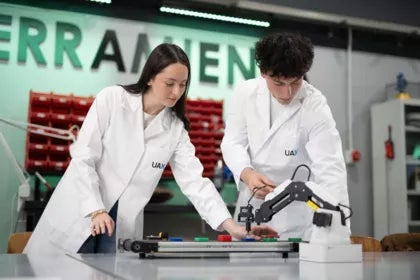
Degree in Industrial Electronics and Automation Engineering
In collaboration with:

Start:
September
Length:
4 years
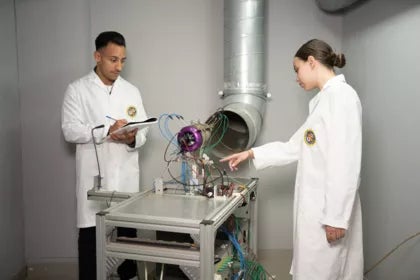
Bachelor’s Degree in Industrial Systems Engineering
Includes a professional certificate

Start:
September
Length:
4 years
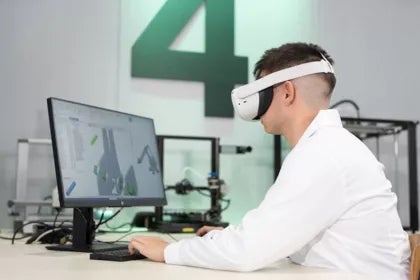
Bachelor's Degree in Industrial Design Engineering and Product Development
In collaboration with:

Start:
September
Length:
4 years

Bachelor’s Degree in the Fundamentals of Architecture + Qualifying Master’s Degree
In collaboration with:

Start:
September
Length:
5 and a half years
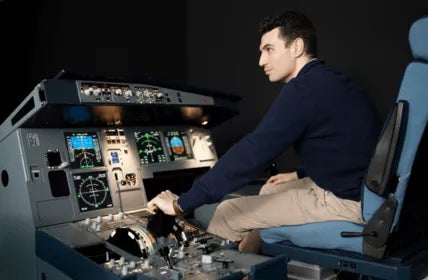
Degree in Aerospace Engineering
In collaboration with:

Start:

September
Length:

4 years
The Degree Monitoring and Improvement Committee is made up of: