See all Online Master's Degrees in Health
See all Master's Degrees in Engineering
Most searched curriculums
Official qualification
Madrid
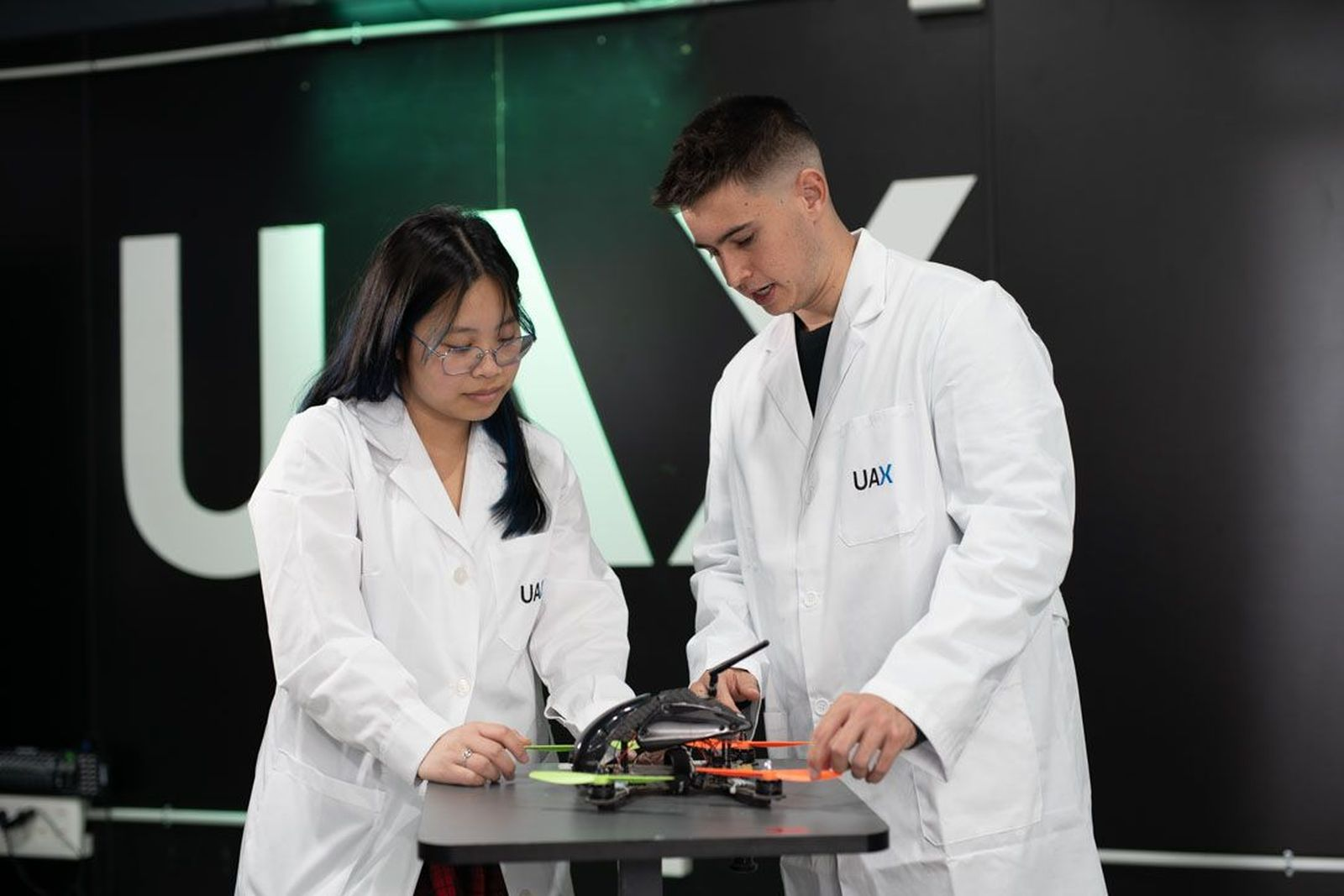
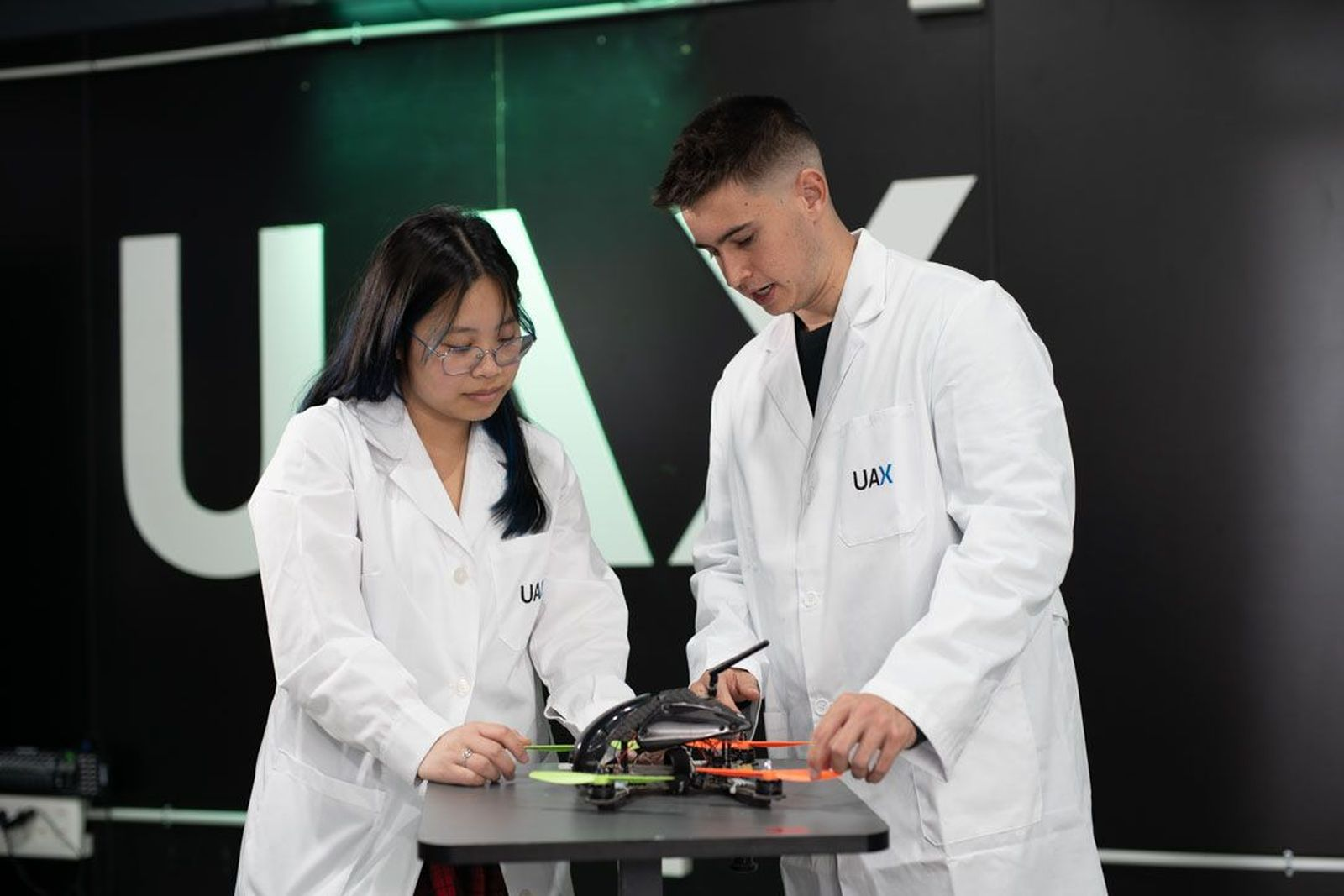
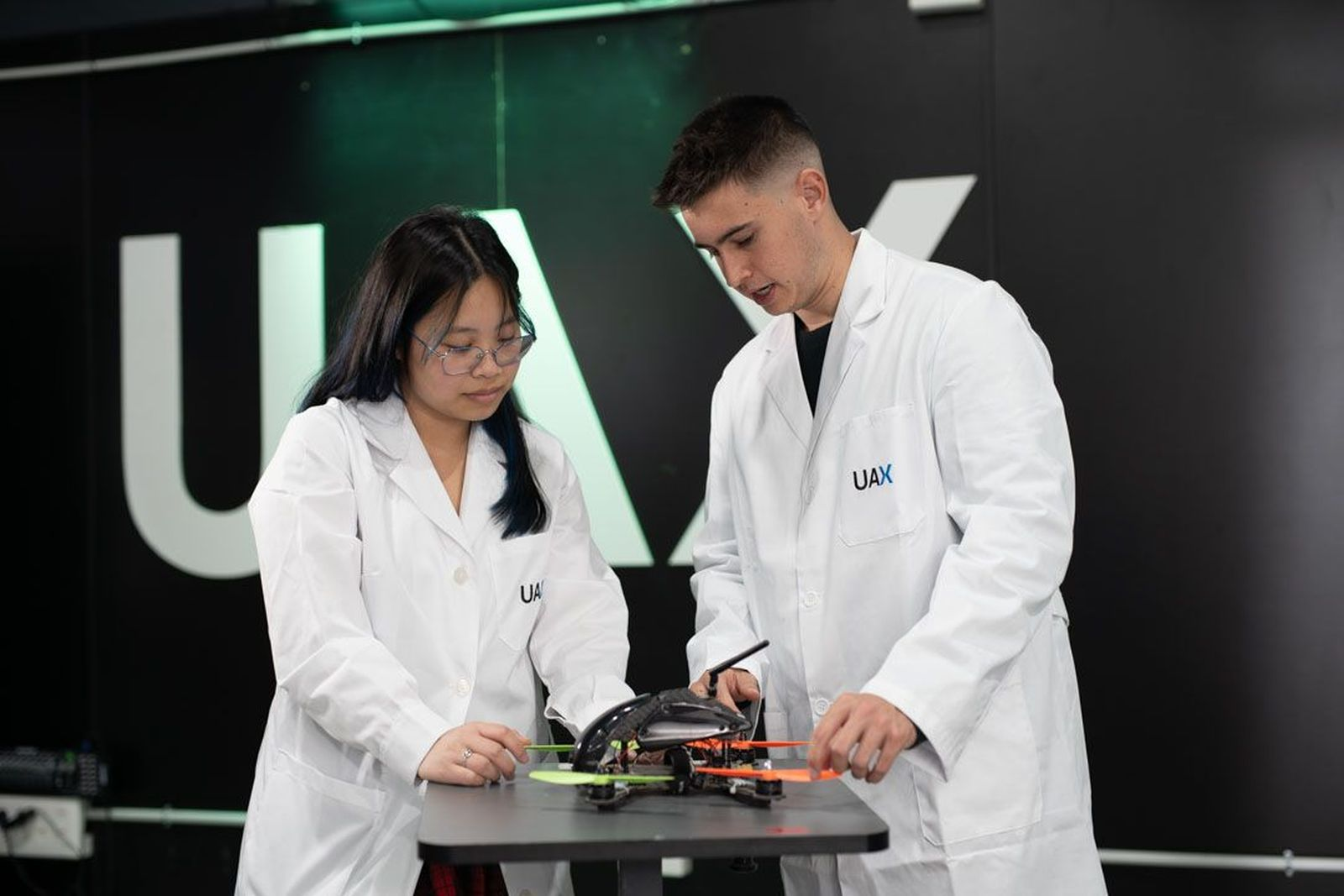
A whole world of professional possibilities at your fingertips. Get ready to manage and develop creative and automation projects that will be the basis of new industries.
In collaboration with:

Because it equips you to design and develop electronic systems for industrial and aeronautical applications, combining advanced technology, innovation and practical application in highly demanding environments.
25,000 M² from actual installations
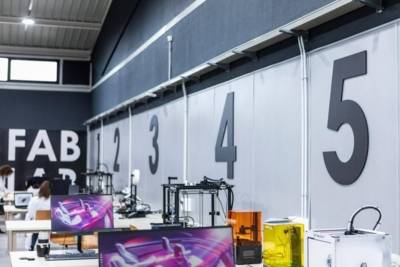
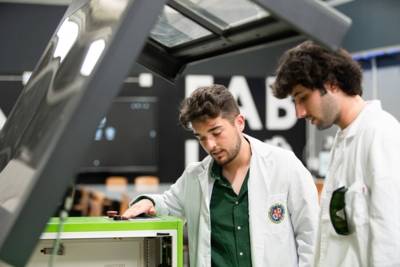
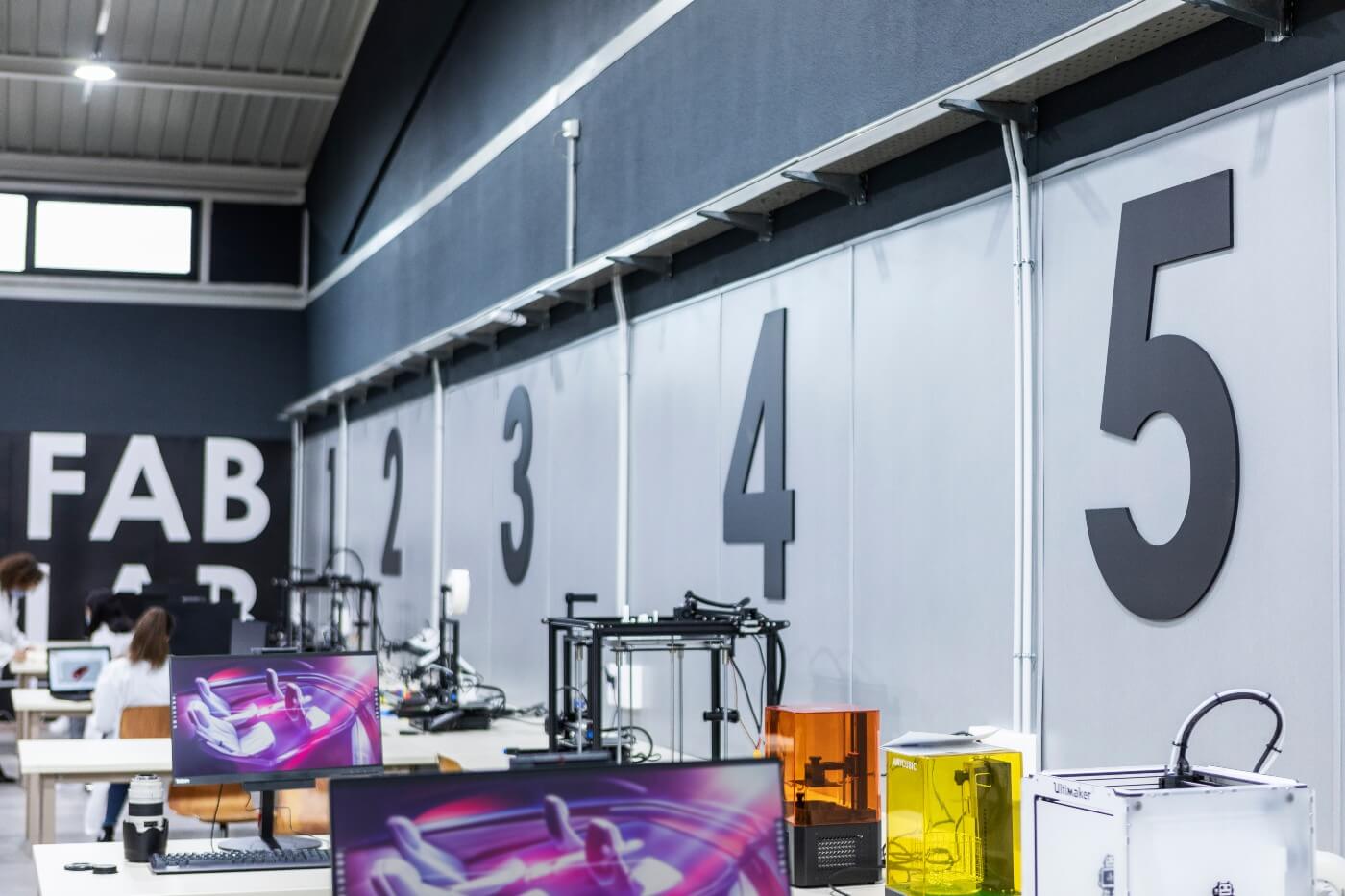
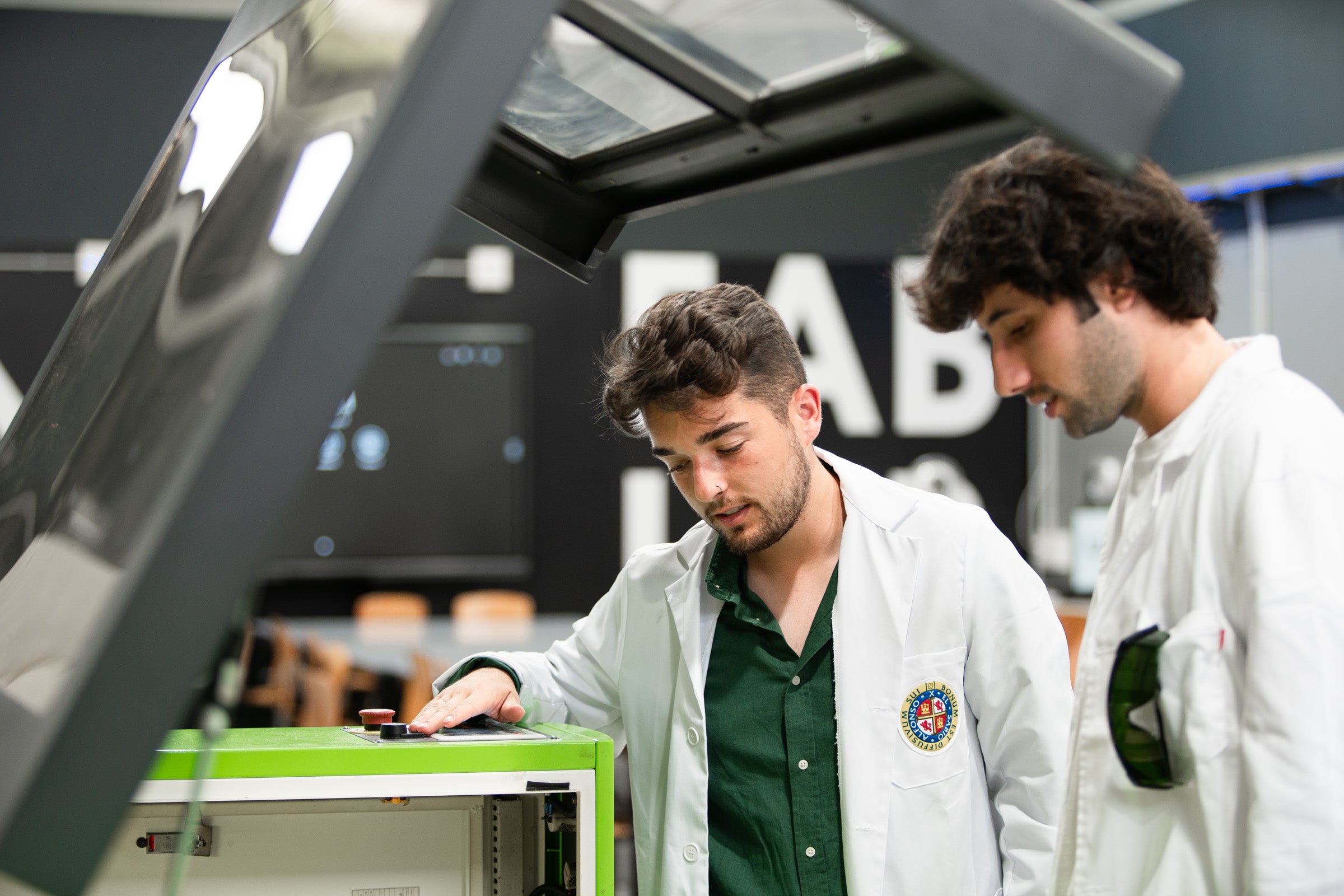
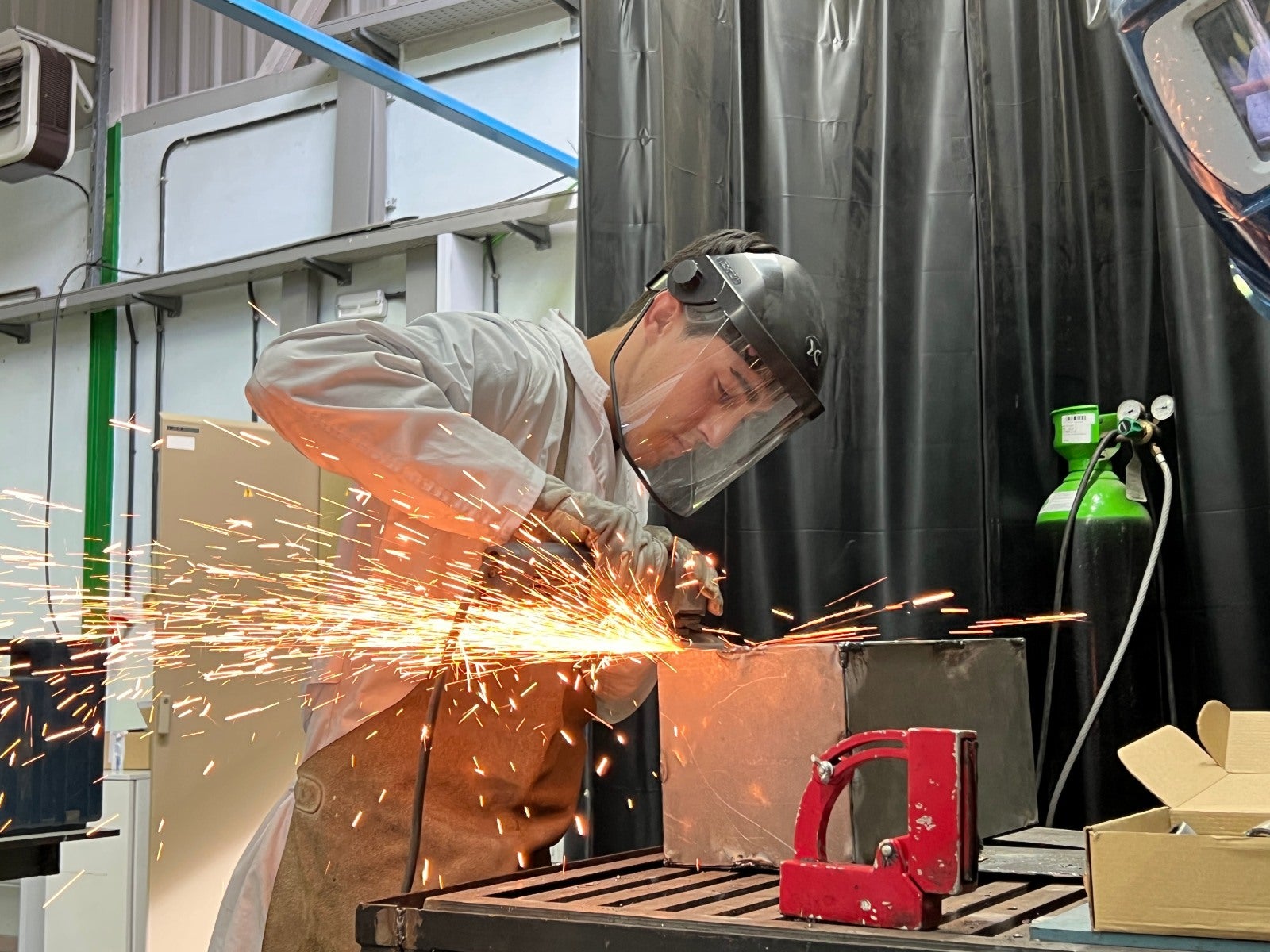
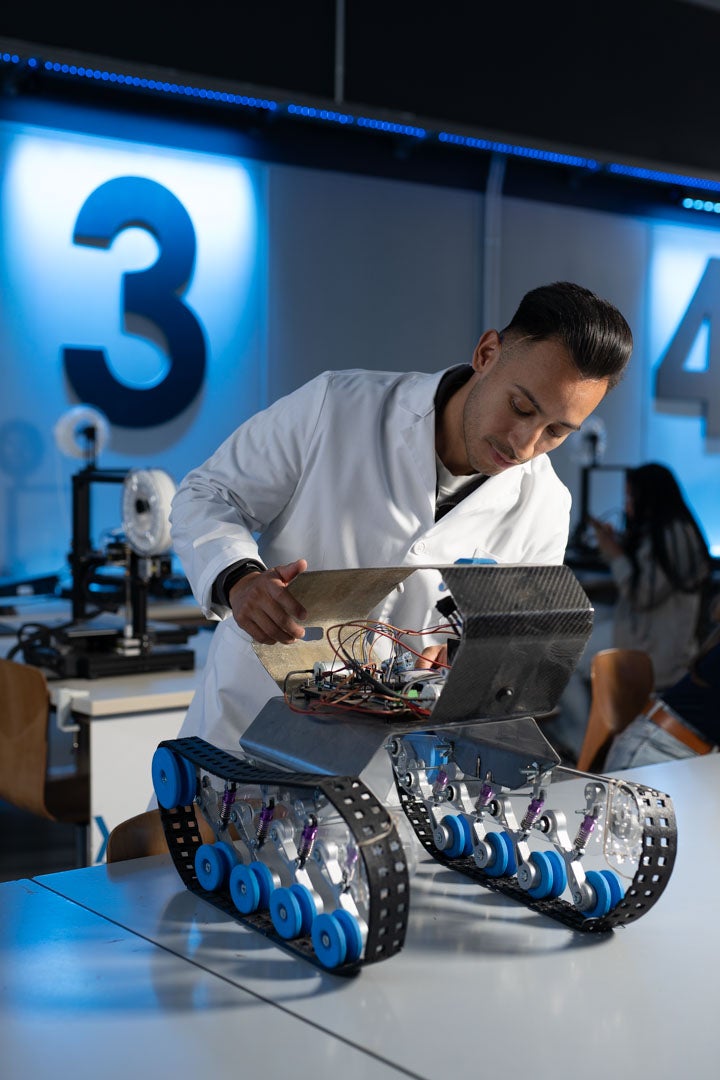
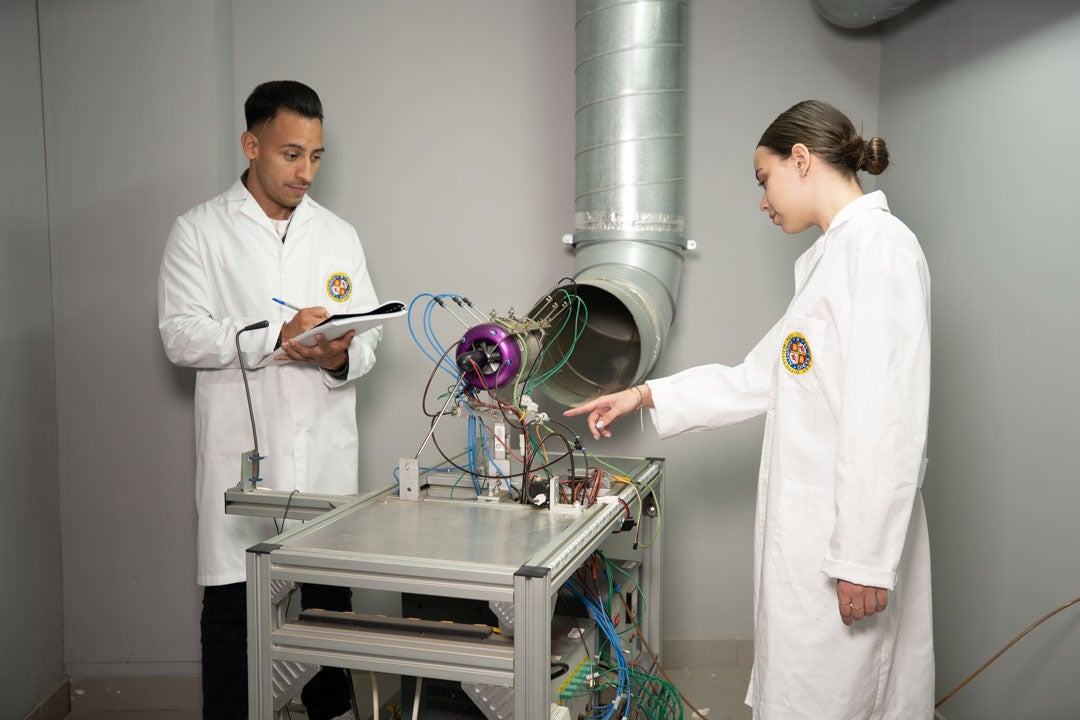
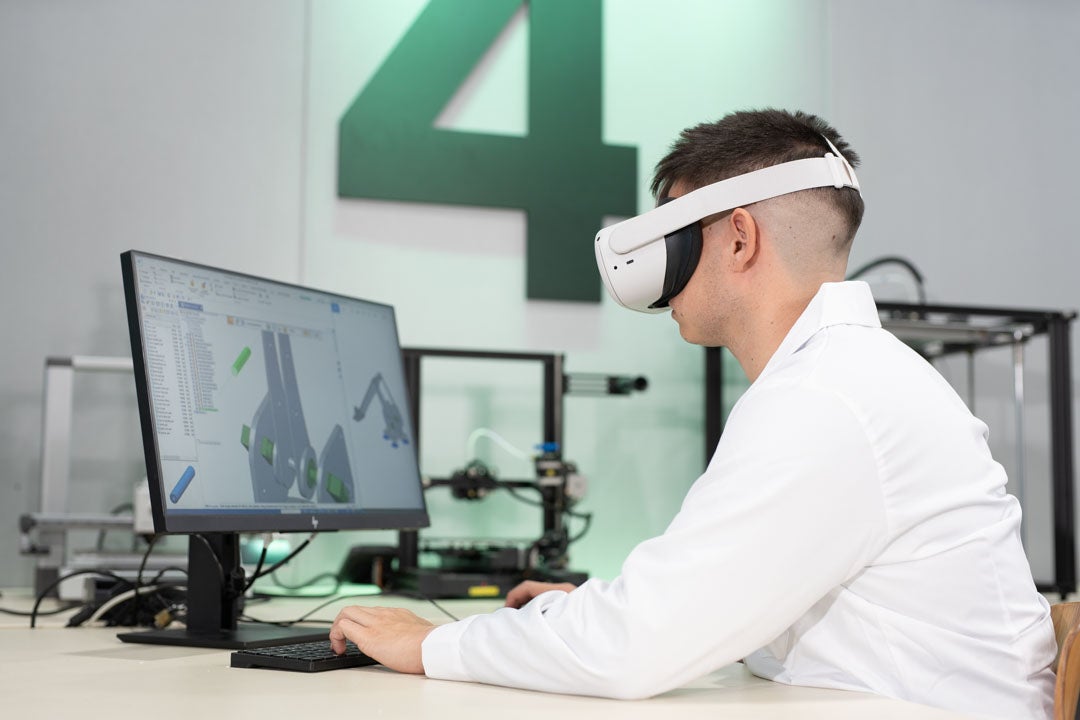
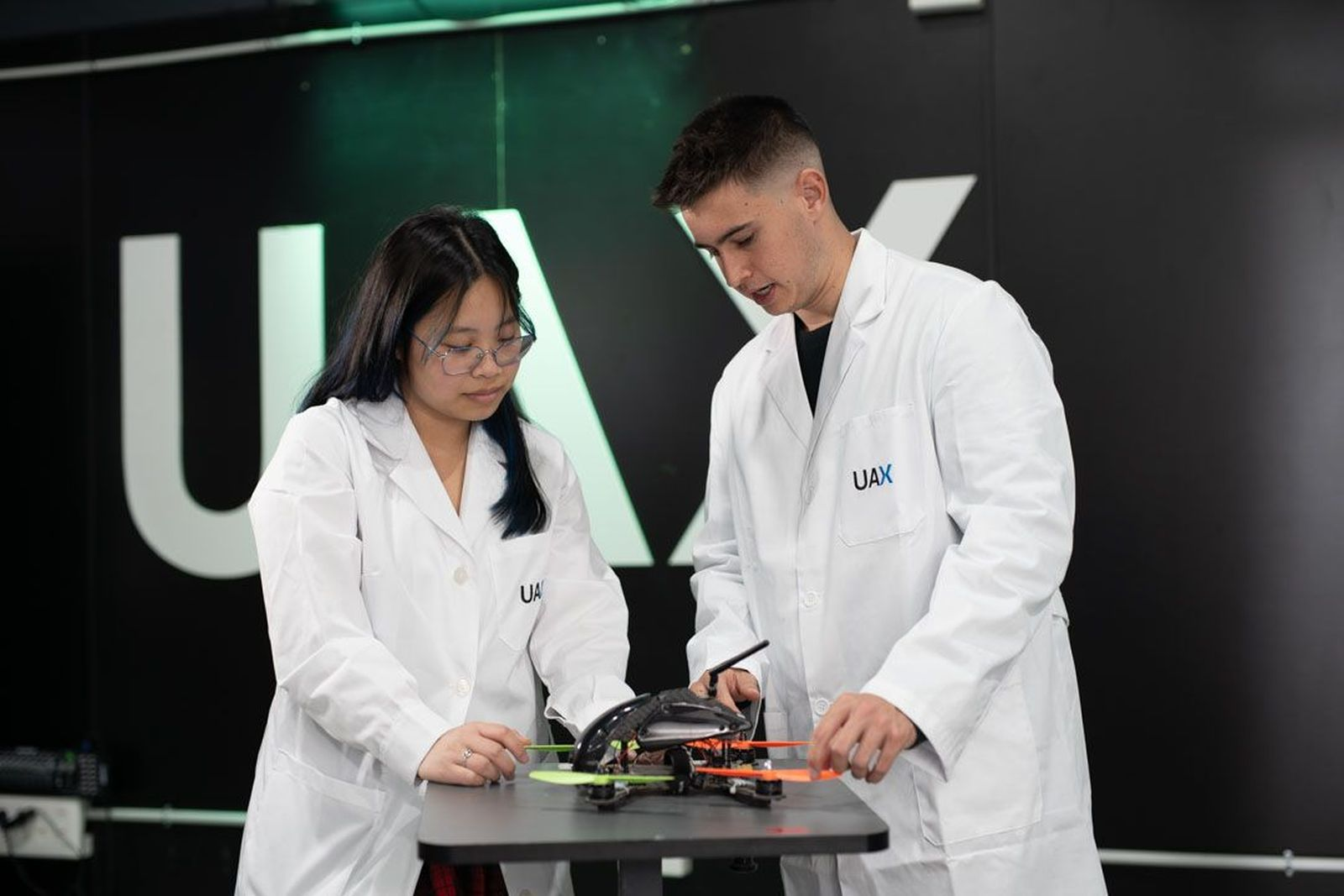
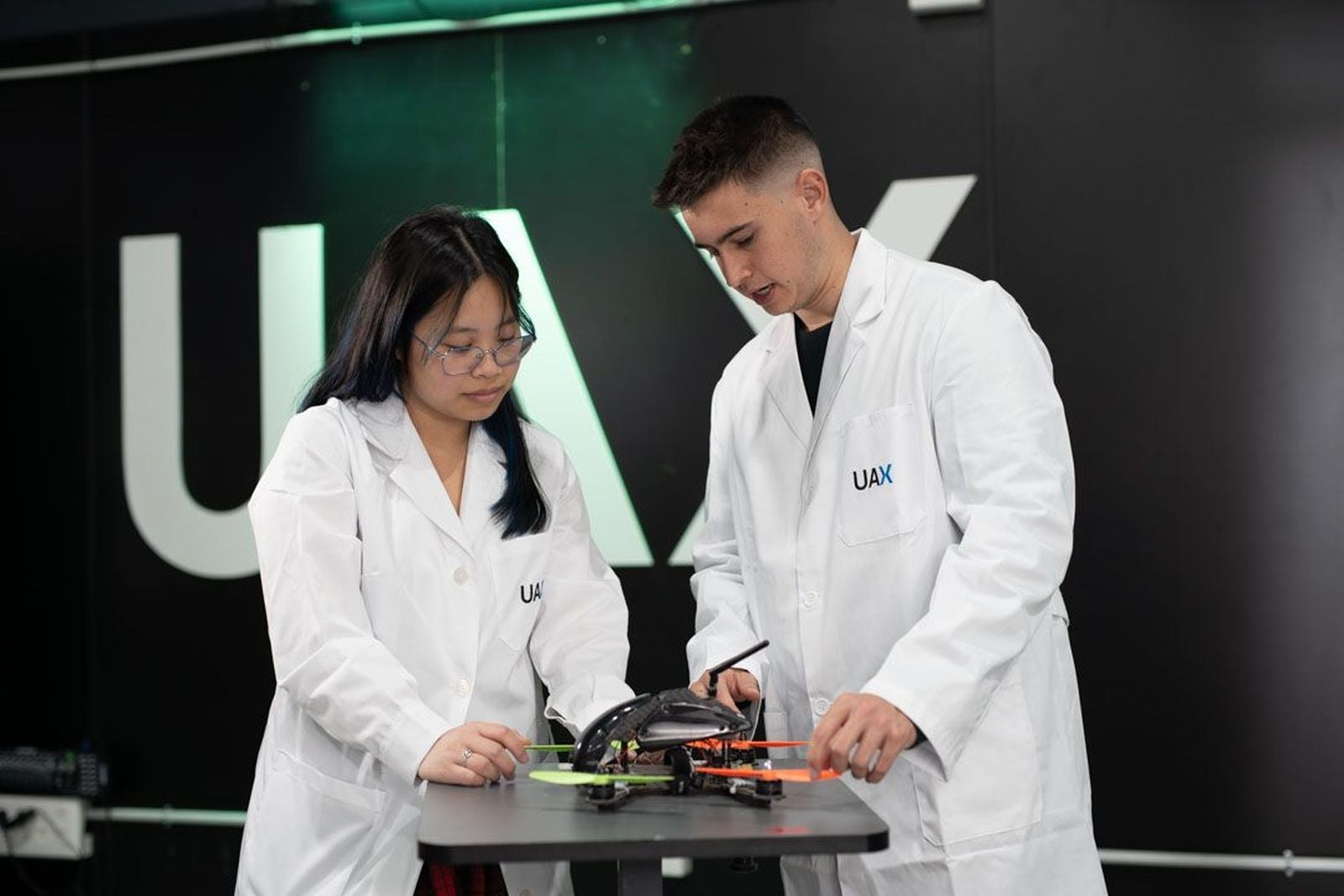
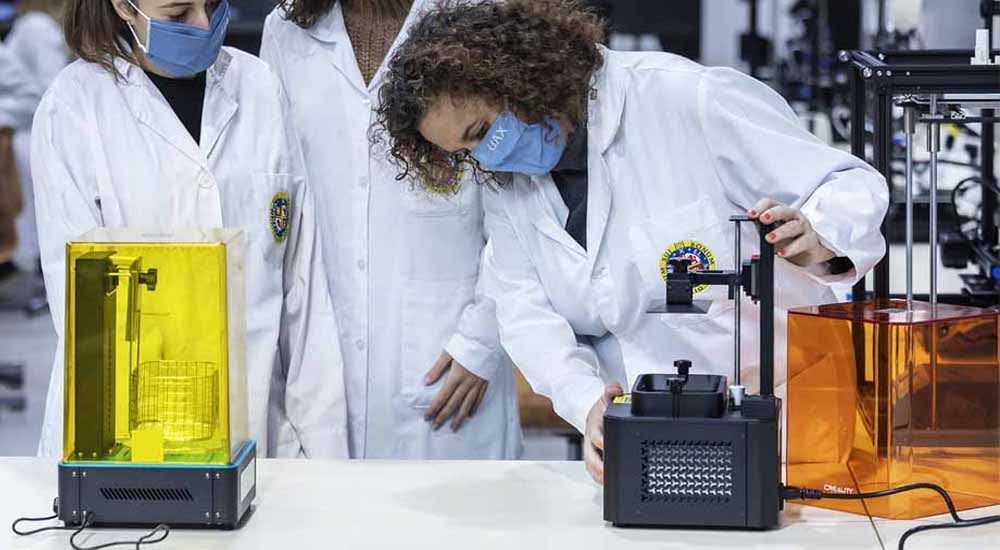
A wind tunnel, a turbojet test rig, an Airbus A320 flight simulator, AeroLab and a FABLAB equipped with 3D printing, laser cutting and robotic arms.
99 % EMPLOYABILITY
99 per cent of our students are in employment upon graduation
90 % ACTIVE TEACHERS
This offers the student a training that is closer to professional reality.
1000 AGREEMENTS
Airbus Defence & Space, Iberia, Hispasat, Indra, Thales Alenia Space, INECO, Sacyr, Accenture, Capgemini, GMV, Swiftair, Air Europa and ELA Aviación, amongst others
+ 100 REAL PROJECTS
Take part in the development and actual launch of a microsatellite alongside the aerospace company B2Space, as part of the UAX FABLAB Makers programme.
The Bachelor’s Degree in Industrial Electronics and Automation Engineering covers the most ICT-focused branch of all industrial engineering disciplines and qualifies you to practise as an Industrial Technical Engineer.
What will you learn?

Explorer Stage
Discover the type of engineer you want to become by studying core subjects during the first few years and exploring the different specialisations available in your third year, choosing between mechanical, industrial or aerospace engineering.
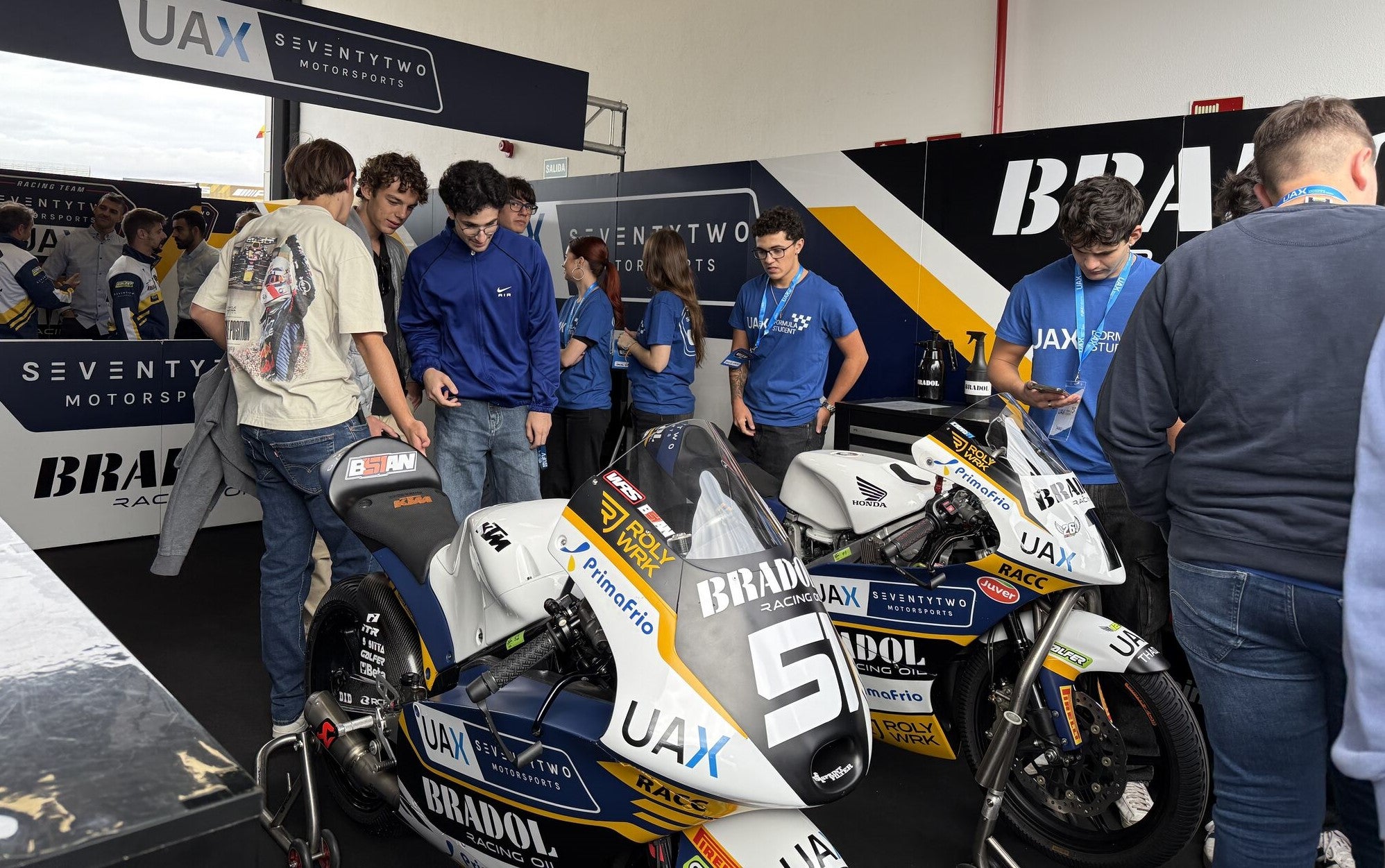
Experience top-flight engineering from the pit lane
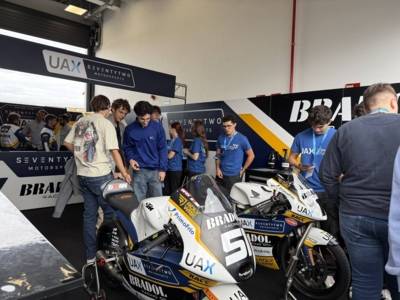
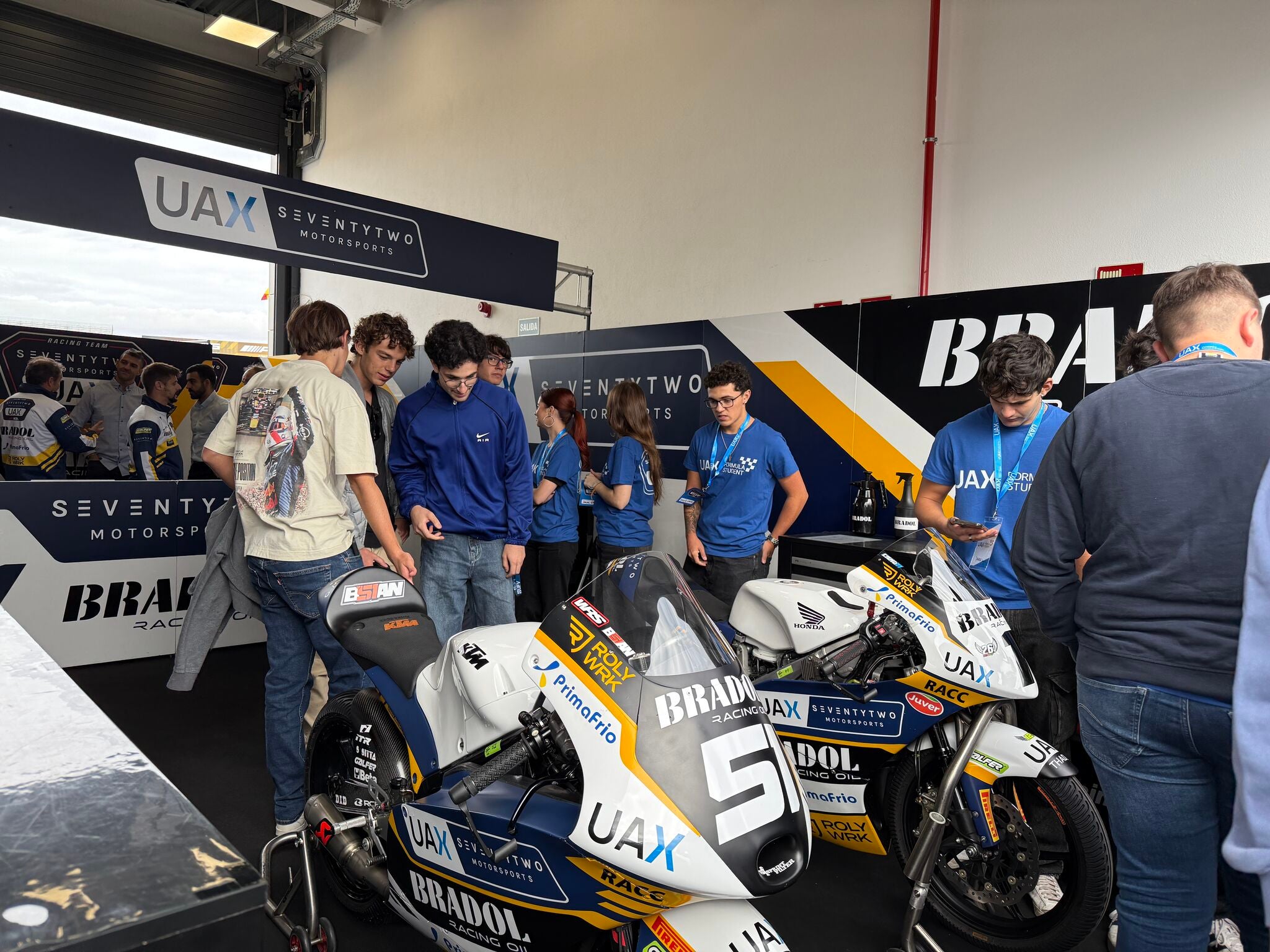
UAX is partnering with SeventyTwo Artbox Racing Team, a leading JuniorGP team renowned for its innovation and talent development. Thanks to this partnership, students take part in real-world engine engineering tasks within a professional pit.
Be part of the UAX SeventyTwo Artbox team in JuniorGP races like Montmeló or Valencia. Participate in real data, simulation and technical support tasks while you discover how a professional motorbike racing team works.
Participates in the development of aerodynamic parts for racing motorbikes: CAD design, simulation, prototyping and wind tunnel validation. An interdisciplinary experience where engineering comes to life.
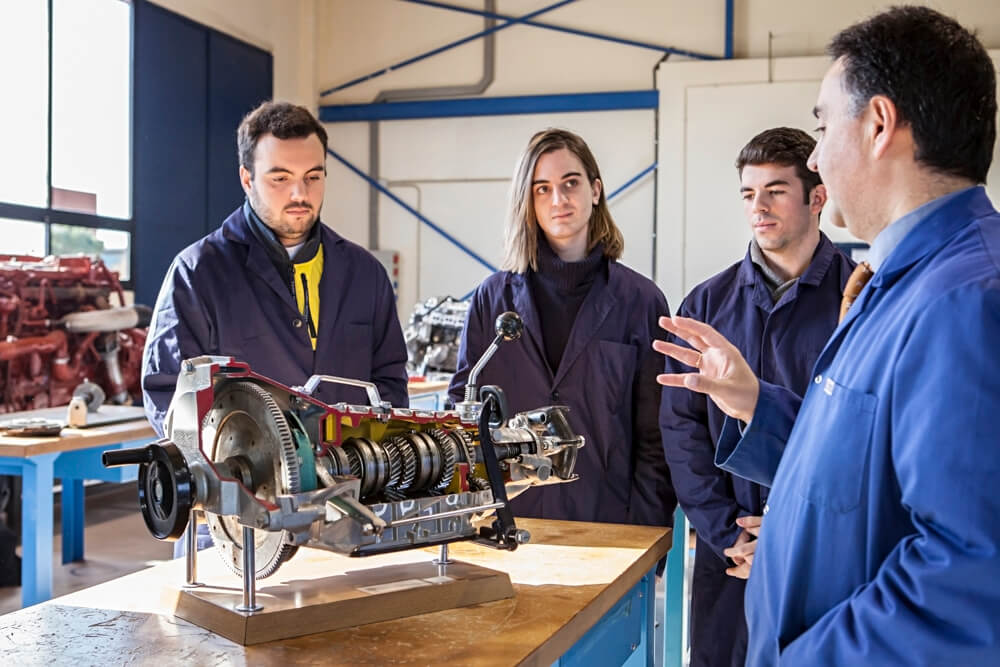
Be part of a team working on engineering projects linked to the design, analysis, validation and optimisation of technical solutions inspired by the automotive and racing industry. You will learn to conceptualise, justify and implement ideas that respond to real challenges in the sector.
*Guías Docentes en el desplegable de Calidad.
Degree in Industrial Electronics and Automation Engineering
First Year
ANNUAL SUBJECTS
| Code | Subjects | Character* | ECTS | ||
|---|---|---|---|---|---|
| 0141712 | Physics | FB | 9 | ||
PhysicsCódigo: 0141712 Imprimir Year 1. Annual module. Foundation course. 9 credits. Profesores
Objectives To become familiar with, understand and master the following basic concepts of physics: scalar and vector fields; particle kinematics and dynamics; rigid body kinematics and dynamics; statics; fluid statics. Fluid dynamics. Principles of thermodynamics. Heat transfer. Waves. Electromagnetism. Prerequisites No prerequisites have been set. Competencies Basic and general competences CG3 Knowledge of basic and technological subjects, enabling students to learn new methods and theories, and equipping them with the versatility to adapt to new situations. CG4 The ability to solve problems through initiative, decision-making, creativity and critical thinking, and to communicate and convey knowledge, skills and competences in the field of Industrial Engineering. CG5 Knowledge required to carry out measurements, calculations, assessments, valuations, expert reports, studies, reports, work plans and other similar tasks. CG6 Ability to handle specifications, regulations and mandatory standards. Specific competences CE2 Understanding and mastery of the basic concepts relating to the general laws of mechanics, thermodynamics, fields and waves, and electromagnetism, and their application to solving engineering problems. Learning outcomes LR1 Modelling, analysing and calculating the static equilibrium of solids. LR2 To analyse, describe and calculate the plane motion of particles and solids. LR3 Understand and apply the fundamentals of fluid statics and dynamics. LO4 Identify, analyse and calculate oscillatory and wave phenomena. LA5 Understand and apply the fundamentals of thermodynamics. RA6 Understand the basic principles and laws governing heat transfer. RA7 Understand the general laws governing the behaviour of electric and magnetic fields and apply them to problem-solving. RA8 Understand, use and handle physical quantities appropriately and rigorously. RA9 Is able to carry out experimental tests in the physics laboratory, as well as to analyse, evaluate and interpret the results obtained. RA10 Be able to work as part of a team, apply critical thinking, make decisions and communicate knowledge and conclusions in the field of industrial engineering. Course content Scalar and vector fields, Kinematics and dynamics of particles, Kinematics and dynamics of rigid bodies. Relative motion. Statics. Fluid statics. Fluid dynamics. Principles of thermodynamics. Heat transfer. Waves. Electromagnetism. Teaching activities A1 Classroom-based presentation of concepts related to the topics comprising each subject and problem-solving exercises enabling students to understand how to tackle them, as well as other face-to-face group sessions such as discussion classes, group work, etc. A2 Laboratory activities of increasing difficulty, enabling students to gradually develop the ability to solve problems independently. A3 Carrying out projects in small groups. A4 Independent study, report writing, practical work, etc., carried out by individual students or groups of students. A5 Assessment tests. A9 Tutorials. Assessment system and criteria Without prejudice to any other requirements that may be specified in the relevant course syllabus, as a general rule, failure to attend more than 60 per cent of the course’s teaching activities—which require the student’s physical or virtual presence—will result in the loss of the right to continuous assessment during the standard examination period. In this case, the examination to be held during the official period set by the University will be the sole assessment criterion, with the weighting specified in the course syllabus. ---- The assessment systems used to verify and evaluate students’ acquisition of learning outcomes can be categorised into three types: E1: Written tests throughout the semester, to assess the technical competences associated with the module acquired through the student’s independent study. E2: Reports on laboratory practical work to verify the acquisition of the skills developed. E3: Problem-solving, completing assignments, drafting reports, and presenting and defending case studies or projects (either individually or in small groups). Competencies involving proficiency in the use of tools, debugging and programme testing will be assessed on the basis of the submission and defence of case studies carried out in small groups, as well as the students’ performance in the classroom whilst undertaking the practical sessions Submission of practical assignments and reports on their completion. For skills involving knowledge of the course content, a series of written examinations will be set to cover the range of learning activities carried out in the classroom. The course mark, broken down by term, is therefore as follows: First term: Submission of laboratory practical reports: 6% of the total (C5, C6, C9, C10, RA9), Seminar research assignments: 6% of the total (C4, C6, C8, C9, C10, RA10) and Written examinations (block 1 and block 2) (16% per examination) and multiple-choice tests (block 1 and block 2) (3 per cent per quiz) (C1, C2, C3, C4, C7, C9, C10, RA1 to RA8). Second term: Submission of laboratory practical reports: 6% of the total (C5, C6, C9, C10, RA9), Multidisciplinary research project: 12% of the total (C4, C6, C8, C9, C10, RA10) and Written examinations (block 3 and block 4) (16% per examination) (C1, C2, C3, C4, C7, C9, C10, RA1 to RA8). Any student who, based on these percentages, has achieved a mark of 5 or higher by the end of the academic year will have passed the module through continuous assessment. In both the ordinary and supplementary examination sessions, the course examination will consist of just two parts, one for each of the two semesters. Students may sit only the part(s) they have yet to complete (Blocks 1 and 2 or Blocks 3 and 4), and each exam will account for 32 per cent of the final mark, with the remaining course marks being taken into account using the same weightings as in the continuous assessment. Bibliography Essential: 1. Bauer, Wolfgang Physics for Engineering and Science: Mexico: McGraw Hill, 2011. 2011. ISBN: 9781456218294 2. Magro, R., Abad, L., et al. Physical Fundamentals of Engineering I 1st ed.. Garcia Maroto publishers. 2007. ISBN: 9788493527150 3. Magro, R., Abad, L., et al. Physical Fundamentals of Engineering II 1st ed. Garcia Maroto Publishers. 2008. ISBN: 9788493601867 4. Tipler, Paul A. Physics for Science and Technology Barcelona: Reverté, 2014. 2014. ISBN: 9788429144307 Supplementary: 5.- Abad Toribio, Laura Solved Problems in General Physics Madrid: Bellisco, Ediciones Técnicas y Científicas. 2001. ISBN: 8495279398 6. Abad, Velasco, Chocarro, Zeaiter Technical Physics Formulary Bellisco. 2007. ISBN: 8496486567 7. Burbano de Ercilla, Santiago Problems in General Physics 26th ed. Zaragoza: Mira, 1994. 1994. ISBN: 848868861X |
|||||
| 0141713 | Mathematical Foundations of Engineering | FB | 9 | ||
Mathematical Foundations of EngineeringCódigo: 0141713 Imprimir Year 1. Annual module. Foundation course. 9 credits. Profesores
Objectives The primary objective is to train graduates in Mechanical Engineering who are qualified to practise as Industrial Technical Engineers (Mechanical), a profession regulated in Spain by Law 12/1986 of 1 April and related legislation, subject to the amendments set out in Act 33/1992. Graduates in Mechanical Engineering from Alfonso X El Sabio University will have a distinctly professional profile, specialising in Mechanical Engineering whilst, at the same time, a multidisciplinary background in other related technical disciplines, enabling them to adapt easily to ongoing technological advances and to the various professional and cultural contexts in which they will carry out their professional activities. Competencies Basic and general competences CG2 Ability to manage the activities forming the subject matter of the engineering projects described in the previous section. CG3 Knowledge of basic and technological subjects, enabling them to learn new methods and theories, and equipping them with the versatility to adapt to new situations. CG4 Ability to solve problems through initiative, decision-making, creativity and critical thinking, and to communicate and convey knowledge, skills and competences in the field of Industrial Engineering. CG5 Knowledge required to carry out measurements, calculations, assessments, valuations, expert reports, studies, reports, work plans and other similar tasks. Specific competences CE1 The ability to solve mathematical problems that may arise in engineering. Ability to apply knowledge of: linear algebra, geometry, differential geometry, differential and integral calculus, differential and partial differential equations, numerical methods, numerical algorithms, statistics and optimisation. Learning outcomes LA1 Manipulate and work with real functions of a real variable to find limits, derivatives and antiderivatives LR2 Understand and apply the properties and techniques of differential and integral calculus, in one and several variables, to solve problems similar to those encountered in the field of engineering LA7 Develop proficiency in calculating and manipulating mathematical expressions RA8 Identify a mathematical problem, apply the necessary techniques to solve it and evaluate the results obtained RA9 Model problems similar to those encountered in engineering using mathematical tools and proceed to solve them RA10 Understand and use mathematical language rigorously. RA11 Be able to reason abstractly, using logical and algorithmic thinking RA12 Be able to work as part of a team, apply critical thinking, make decisions and communicate knowledge and conclusions in the field of industrial engineering Course content FIRST TERM Unit 1: Introduction (5 weeks) 1.1 Real and complex numbers. 1.2 Circular and hyperbolic trigonometry. 1.3 Conic sections. 1.4 Quadric curves. 1.5 Cartesian, polar, elliptical, parabolic and hyperbolic coordinate systems. 1.6 Parametrisation of curves and surfaces in different coordinate systems. Unit 2: Real functions of a real variable (5 weeks) 2.1 Definition and general properties. 2.2 Limits and continuity. 2.3 Derivative. Lateral derivatives. Rules of differentiation. 2.4 Critical points: relative extrema. Absolute extrema. Optimisation. 2.5 Inflection points. 2.6 Taylor’s polynomial in one variable. Lagrange’s remainder and upper bound on absolute error. Unit 3: Real functions of several real variables (5 weeks) 3.1 Definition and general properties. 3.2 Limits and continuity. 3.3 Directional derivative. Partial derivatives and gradient vector. 3.4 Critical points: relative extrema. Absolute extrema. Conditional extrema: optimisation and Lagrange multipliers. Saddle points. 3.5 Taylor’s polynomial in several variables. SECOND QUARTER Unit 4: Differential Operators (2 weeks) 4.1 Scalar and vector fields. 4.2 Divergence. 4.3 Curl. 4.4 Laplacian. Unit 5: Integration with respect to a real variable (6 weeks) 5.1 Calculation of antiderivatives: immediate, integration by parts, change of variable, rational, trigonometric and irrational. 5.2 Riemann integral and the fundamental theorem of calculus. 5.3 Line integrals: the curl of a vector field. Unit 6: Multiple integration (5 weeks) 6.1 Double and triple integrals and Fubini’s theorem. 6.2 Surface integration: the flux of a vector field. Unit 7: Stokes’ theorem (2 weeks) 7.1 The rotational theorem. 7.2 The divergence theorem. Unit 8: Sequences and series (2 weeks) 8.1 Definitions and general properties. 8.2 Convergence criteria. The teaching periods for the units are indicative. Learning activities A1 In-class presentation of concepts relating to the subjects comprising each module and problem-solving exercises to enable students to understand how to tackle them, as well as other face-to-face group sessions such as discussion classes, group work, etc. A3 Carrying out work in small groups. A4 Independent study, report writing, practical work, etc., carried out by the student or a group of students. A5 Assessment tests. A9 Tutorials. Assessment system and criteria Without prejudice to any other requirements that may be specified in the relevant course syllabus, as a general rule, failure to attend more than 60 per cent of the course’s teaching activities—which require the student’s physical or virtual presence—will result in the loss of the right to continuous assessment during the standard examination period. In this case, the examination to be held during the official period set by the University will be the sole assessment criterion, with the weighting specified in the course syllabus. ---- The assessment process will consist of verifying and evaluating the student’s acquisition of the required competences. ASSESSMENT SYSTEMS The assessment methods for this module are: - E1 Written tests to assess the technical skills associated with the subject matter acquired through the student’s independent study. - E3 Problem-solving, completing assignments, drafting reports, and presenting and defending case studies or projects (either individually or in small groups). Both systems contribute to a greater or lesser extent to the assessment of the core competences corresponding to the bachelor’s degree (MECES 2), as well as to the general competences and the degree-specific competence assigned to this module. The E3 system contributes in particular to the assessment of the general competences CG2, CG4 and CG5. ASSESSMENT CRITERIA The assessment systems described above are set out in the following assessment criteria: - There are two official examination sessions: the ordinary and the supplementary. Ordinary examination session. Students may pass the module through continuous assessment. In this case, the final mark is the weighted average of a set of assessments detailed below: -- four sets of exercises (two per term), each accounting for 7.5% of the final mark for continuous assessment, to be completed individually or in small groups during term time (for further information, please refer to the timetable). -- four examinations (two per term) to be taken individually, each accounting for 17.5% of the final mark for continuous assessment. Of these, three will be held during term time (for further information, please refer to the timetable), whilst the fourth (the second exam of the first term) will take place during the February exam period. *** The module is considered passed via continuous assessment if the final mark is 5.0 or above. If a student does not pass the course through continuous assessment, they may do so in the ordinary examination session, which takes place during the June examination period (for further information, please consult the virtual campus). This consists of a single examination with two distinct parts: the first and second terms. If a student, having failed the continuous assessment, has nevertheless passed one of the two terms, they may sit an exam only for the term in which they failed or, if they wish, for the entire module. Each term accounts for 50 per cent of the final mark in the ordinary examination session. *** The module is considered passed in the ordinary examination session if the final mark is 5.0 or higher. Extraordinary examination period. If a student fails the module during the ordinary examination period, they may retake it during the supplementary examination period. The supplementary examination session takes place during the July examination period (for further information, please consult the virtual campus). It consists of a single examination. In this sitting, students will be examined on all the course content, unless they have passed one term during the ordinary sitting, in which case they may, if they wish, be examined solely on the term they failed. The final mark for the supplementary examination period will be the arithmetic mean of the marks obtained in each of the two terms (weighted at 50% each). *** The module is considered passed in the supplementary examination period if the final mark is 5.0 or higher. GRADES Article 5 of Royal Decree 1125/2003 of 5 September establishes the grading system applicable to modules within degree programmes falling within the scope of the European Higher Education Area. This system is as follows: The award of the corresponding credits is conditional upon passing the associated examinations or assessment tests. The level of learning achieved by students will be expressed as numerical marks on a scale of 0 to 10, to one decimal place, to which the corresponding qualitative mark may be added: - 0–4.9: Fail (SS). - 5.0–6.9: Pass (AP). - 7.0–8.9: Good (NT). - 9.0–10: Distinction (SB). The distinction ‘Honours’ shall be awarded to students who have obtained a mark of 9.0 or higher. The number of students awarded this distinction may not exceed five per cent of those enrolled on the course in the relevant academic year, unless the number of enrolled students is fewer than 20, in which case only one ‘First Class Honours’ may be awarded. Bibliography Essential: 1. Pedro de Mingo Calculus Madrid: Bellisco. 2006. ISBN: 8496486370 2. Pedro de Mingo Exercises in Integral Calculus Bellisco. 2005. ISBN: 9788496486782 Supplementary: 3.- Guervos Sánchez, Esther Fundamentals of Mathematics: Theoretical Concepts and Problems Bellisco. 2005. ISBN: 8496486141 4.- Jon Rogawski Calculus Reverte. 2012. ISBN: 9788429151664 5. Larson, Ron Calculus : McGraw-Hill. 2010. ISBN: 9781439030332 6. Larson, Ron Calculus : McGraw-Hill. 2006. ISBN: 9701052757 7. Rogawski, Jon Calculus : Reverté Publishers, 2012. ISBN: 9788429151749 Links Mathematics / Differential Calculus in One Variable – Khan Academy website dedicated to differential calculus in one variable. Contains a variety of teaching resources (notes, videos, etc.). Mathematics / Integral Calculus in One Variable – Khan Academy website dedicated to integral calculus in one variable. It contains a variety of teaching resources (notes, videos, etc.). Complex numbers – A Khan Academy site dedicated to complex numbers. It contains a variety of teaching resources (notes, videos, etc.). Complex numbers with GeoGebra – Content on complex numbers and simulations using GeoGebra, the popular free interactive maths software for use in schools and universities. |
|||||
| 0141714 | Computer Science | FB | 6 | ||
Computer ScienceCódigo: 0141714 Imprimir Year 1. Annual module. Foundation course. 6 credits. Profesores
Objectives The overall aim of the module is to introduce the basic concepts of operating systems, databases and software commonly used in engineering. Furthermore, the module will focus on developing students’ ability to design, implement and maintain computer programmes by applying software engineering techniques. Prerequisites No prerequisites have been set Competencies Basic and general competences CG3 Knowledge of basic and technological subjects, enabling students to learn new methods and theories, and equipping them with the versatility to adapt to new situations. CG4 The ability to solve problems through initiative, decision-making, creativity and critical thinking, and to communicate and convey knowledge, skills and competences in the field of Industrial Engineering. CG5 Knowledge required to carry out measurements, calculations, assessments, valuations, expert reports, studies, reports, work plans and other similar tasks. CG6 Ability to handle specifications, regulations and mandatory standards. Specific competences CE3 Basic knowledge of the use and programming of computers, operating systems, databases and software applications relevant to engineering. The ability to design, implement and maintain IT projects that apply current programming engineering techniques. Learning outcomes RA1 Understand the fundamentals of operating systems, databases and software programmes applicable to engineering. LR2 Develop computer programmes, structured into functions and making use of variables, logical operators, arrays, pointers, etc. LO3 Be able to design and develop computer programmes applied to the resolution of engineering problems. LA4 Be able to work as part of a team, apply critical thinking, make decisions and communicate knowledge and conclusions in the field of industrial engineering. Course description Introduction to programming. Structure of a programme - Identifiers. Variables. Data types, literals. Operations and expressions - Reading data from the keyboard. Utility classes. - Classes and objects. Attributes, methods, method calls. Aliases. - Classes and objects. Constructors. Returning values. Exercises. - Control statements - Exceptions - Arrays - Files - Final practicals. Learning activities A2 Laboratory activities of increasing difficulty, enabling students to gradually develop the ability to solve problems independently. A3 Work carried out in small groups. A4 Independent study, report writing, practical work, etc., carried out by individual students or groups of students. A5 Assessment tests. A9 Tutorials. Assessment system and criteria Without prejudice to any other requirements that may be specified in the relevant course syllabus, as a general rule, failure to attend more than 60 per cent of the course’s teaching activities—which require the student’s physical or virtual presence—will result in the loss of the right to continuous assessment during the standard examination period. In this case, the examination to be held during the official period set by the University will be the sole assessment criterion, with the weighting specified in the course syllabus. ---- Bibliography Essential: 1.- Java 2: Introduction and Reference 2nd ed. Madrid [etc.]: McGraw-Hill Interamericana de España, 2005. ISBN: 8448198166 2. Sánchez Programming in Java Madrid [etc.]: McGraw-Hill, 2009. 2009. ISBN: 9788448161071 3. Sánchez Allende, Jesús, et al. Programming in Java 2 1st ed. McGraw-Hill. Madrid. 2005. ISBN: 8448145917 |
|||||
| TOTAL: | 24 | ||||
FIRST FOUR-MONTH PERIOD
| Code | Subjects | Character* | ECTS | ||||||||||||||||||||||||||||||||||||||||||||||||||||||||||||||||||||||||||||||||||||||||||||||||||||||||||||||||||||||||||||||||||||||||||||||||||||||||||||||||||||||||||||||||||||||||||||||||||||||||||||||||||||||||||||||||||||||||||||||||||||||
|---|---|---|---|---|---|---|---|---|---|---|---|---|---|---|---|---|---|---|---|---|---|---|---|---|---|---|---|---|---|---|---|---|---|---|---|---|---|---|---|---|---|---|---|---|---|---|---|---|---|---|---|---|---|---|---|---|---|---|---|---|---|---|---|---|---|---|---|---|---|---|---|---|---|---|---|---|---|---|---|---|---|---|---|---|---|---|---|---|---|---|---|---|---|---|---|---|---|---|---|---|---|---|---|---|---|---|---|---|---|---|---|---|---|---|---|---|---|---|---|---|---|---|---|---|---|---|---|---|---|---|---|---|---|---|---|---|---|---|---|---|---|---|---|---|---|---|---|---|---|---|---|---|---|---|---|---|---|---|---|---|---|---|---|---|---|---|---|---|---|---|---|---|---|---|---|---|---|---|---|---|---|---|---|---|---|---|---|---|---|---|---|---|---|---|---|---|---|---|---|---|---|---|---|---|---|---|---|---|---|---|---|---|---|---|---|---|---|---|---|---|---|---|---|---|---|---|---|---|---|---|---|---|---|---|---|---|---|---|---|---|---|---|---|---|---|---|---|---|---|
| 0141715 | Technical Drawing | FB | 6 | ||||||||||||||||||||||||||||||||||||||||||||||||||||||||||||||||||||||||||||||||||||||||||||||||||||||||||||||||||||||||||||||||||||||||||||||||||||||||||||||||||||||||||||||||||||||||||||||||||||||||||||||||||||||||||||||||||||||||||||||||||||||
Technical DrawingCódigo: 0141715 Imprimir Course 1: First-term module. Foundation course. 6 credits. Profesores
Objectives The study of Metric Technical Drawing is characterised most its educational nature, as well as a body of knowledge designed to develop a mental framework which, together with Mathematics and Physics, enables students to tackle the study of the degree programme’s technology-related subjects with a solid foundation. Furthermore, it provides students with the to define any geometric element or interpret any representation of it, in accordance with existing regulations and using the drafting tools used in industry. Through this module, students will be able to: - Build a knowledge base founded on spatial concepts and constructions . - Improve their reasoning skills. - Improve their spatial visualisation skills. - Facilitate the calculation of areas and volumes of all types of shapes. - Introduce the principles of projective geometry in preparation for the subsequent study of conic sections and surfaces. Competencies Basic and general competences CG3 Knowledge of basic and technological subjects, enabling students to learn new methods and theories, and equipping them with the versatility to adapt to new situations. CG4 The ability to solve problems with initiative, decision-making, creativity and critical thinking, and to communicate and convey knowledge, skills and competences in the field of Industrial Engineering. CG5 Knowledge required to carry out measurements, calculations, assessments, valuations, expert reports, studies, reports, work plans and other similar tasks. CG6 Ability to handle specifications, regulations and mandatory standards. Specific competences CE5 Spatial awareness and knowledge of graphic representation techniques, both through traditional methods of metric and descriptive geometry, and through computer-aided design applications. Learning outcomes LA1 To know, understand and use systems of representation, as well as the conventions and standards commonly used in industrial design. LA2 Is able to read, interpret and correctly execute industrial drawings, as well as to express ideas and designs graphically in a standardised, clear and precise manner. LA3 Be able to use computer-aided design software to produce drawings. LA4 To represent different types of parts and dimension them in accordance with technical drawing standards. RA5 Is able to work as part of a team, apply critical thinking, make decisions and communicate knowledge and conclusions in the field of industrial engineering. Course content 1. Introduction to Graphic Representation in Engineering and technical drawings. - Geometric constructions on a drawing. - Introduction to representation systems. - Elements of Descriptive Geometry. BLOCK A: DIEDRIC SYSTEM AND DIMENSIONED DRAWING SYSTEM. 2. DIEDRIC SYSTEM: - Point. - Line. - Plane. - Intersections. - Projections. - Parallelism and perpendicularity. - Distance. - Polyhedra. - Prisms. 3. DIMENSIONED PLANE SYSTEM. BLOCK B: STANDARDISATION AND VISUALISATION (Conventional representation of isolated parts with ideal geometry) 4. STANDARDISATION. - Standardised formats. - Scales. - Standardised views. - Projection methods. - Sections. - Dimensioning. 5. AXONOMETRIC PROJECTION. 6. HORSE-SHOE PERSPECTIVE. 7. CONICAL PERSPECTIVE. BLOCK C: COMPUTER-AIDED DRAWING. 8. COMPUTER-AIDED DRAWING: AutoCAD software. Training activities A1 Classroom-based presentation of concepts relating to the topics covered in each subject and problem-solving exercises designed to help students understand how to tackle these topics, as well as other face-to-face group sessions such as discussion classes, group work, etc. A2 Laboratory activities of increasing difficulty, enabling students to gradually develop the ability to solve problems independently. A3 Carrying out work in small groups. A4 Independent study, report writing, practical work, etc., carried out by individual students or groups of students. A5 Assessment tests. A9 Tutorials. Assessment system and criteria Without prejudice to any other requirements that may be specified in the relevant course syllabus, as a general rule, failure to attend more than 60 per cent of the course’s teaching activities—which require the student’s physical or virtual presence—will result in the loss of the right to continuous assessment during the standard examination period. In this case, the examination to be held during the official period set by the University will be the sole assessment criterion, with the weighting specified in the course syllabus. ---- Students will be assessed on the basis of: Completion of practical work, the preparation of reports on the work carried out, the dedication and interest shown whilst carrying out the work, as well as written tests relating to the experimental work. Solving set problems, submission and presentation of group projects. Preparation of case studies. Written examinations covering the content covered in the classroom-based learning activities. The results obtained by the student in the modules will be graded according to the following numerical scale from 0 to 10, expressed to one decimal place, to which the corresponding qualitative grade may be added: a. 0–4.9: Fail (SS). b. 5.0–6.9: Pass (AP). c. 7.0–8.9: Good (NT). d. 9.0–10: Distinction (SB). The distinction of ‘Honours’ shall be awarded to students who have obtained a mark of 9.0 or higher. The number of students awarded this distinction may not exceed five per cent of those enrolled on the course in the relevant academic year, unless the number of enrolled students is fewer than 20, in which case only one ‘First Class Honours’ may be awarded. CONTINUOUS ASSESSMENT: To calculate the student’s mark during continuous assessment, each block will be weighted as follows: 40% BLOCK A: DIEDRIC SYSTEM: 15% FIRST DIHEDRAL MID-TERM EXAM. 20% SECOND DIEDRIC MID-TERM EXAM. 5% SUBMISSION OF EXERCISES. 40% SECTION B: NORMALISATION AND VISUALISATION. 15% FIRST NORMALISATION MID-TERM EXAM. 20% SECOND MID-TERM EXAM ON STANDARDISATION. 5% SUBMISSION OF EXERCISES. 20% BLOCK C: COMPUTER-AIDED DRAWING. 15% AUTOCAD ASSESSMENT. 5% SUBMISSION OF ASSIGNMENTS. In order to have marks from the different modules averaged and to pass via continuous assessment, students must achieve at least a 3.5 in each module. If the mark obtained through this procedure is 5 or above, the student will have passed the module through continuous assessment. REGULAR EXAM SESSION: During the ordinary examination period, students have the following options: A. They may retain the marks for the modules in which they have achieved a mark of 5 or above through continuous assessment and sit an examination in the subject(s) of the modules in which they have achieved a mark below 5. In order to calculate an average across the different modules and pass in the ordinary examination period, students must achieve at least a 3.5 in each module. B. Sit the examination for the entire subject; in this case, no minimum mark is required in any of the blocks to pass the subject. To calculate the mark for the ordinary examination session, each block will be weighted as follows: 40% BLOCK A: DIEDRIC SYSTEM. 40% SECTION B: STANDARDISATION AND VISUALISATION. 20% SECTION C: COMPUTER-AIDED REPRESENTATION. EXTRAORDINARY EXAMINATION SESSION: In the ordinary examination session, students have the following options: A. They may retain the marks for those Blocks in which they have achieved a mark of 5 or above in continuous assessment and sit the examination for the subject(s) in the Blocks in which they have achieved a mark below 5. In order to average the marks across the different blocks and pass in the ordinary examination session, students must obtain at least a 3.5 in each of the blocks. B. Sit the examination for the entire subject; in this case, no minimum mark is required in any of the blocks to pass the subject. To calculate the mark for the supplementary examination, each block will be weighted as follows: 40% BLOCK A: DIEDRIC SYSTEM. 40% SECTION B: STANDARDISATION AND VISUALISATION. 20% BLOCK C: COMPUTER-AIDED DRAWING. |
|||||||||||||||||||||||||||||||||||||||||||||||||||||||||||||||||||||||||||||||||||||||||||||||||||||||||||||||||||||||||||||||||||||||||||||||||||||||||||||||||||||||||||||||||||||||||||||||||||||||||||||||||||||||||||||||||||||||||||||||||||||||||
| 0141716 | Fundamentals of Chemistry in Engineering | FB | 6 | ||||||||||||||||||||||||||||||||||||||||||||||||||||||||||||||||||||||||||||||||||||||||||||||||||||||||||||||||||||||||||||||||||||||||||||||||||||||||||||||||||||||||||||||||||||||||||||||||||||||||||||||||||||||||||||||||||||||||||||||||||||||
Fundamentals of Chemistry in EngineeringCódigo: 0141716 Imprimir Course 1: First-term module. Foundation course. 6 credits. Profesores
Objectives This module has two objectives: • Firstly, by undertaking a degree in engineering, students have chosen a career in which they will interact with the natural world, utilising its resources and transforming them. Understanding the basic laws of chemistry will enable them to grasp the key processes that allow us to extract these resources, convert them into materials or energy sources useful to humankind, and recognise the environmental implications that such activity may entail. Knowledge and understanding are the first steps towards applying these concepts and deriving satisfaction from professional practice. • Furthermore, many of the modules on the degree programme will build upon the skills already acquired through this course. The time spent studying chemistry should be seen as an investment that makes it easier to learn other subjects, particularly those related to materials and the environment. Prerequisites No prerequisites have been set Competencies Basic and general competences CG3 Knowledge of basic and technological subjects, enabling students to learn new methods and theories, and equipping them with the versatility to adapt to new situations. CG4 The ability to solve problems through initiative, decision-making, creativity and critical thinking, and to communicate and convey knowledge, skills and competences in the field of Industrial Engineering. CG5 Knowledge required to carry out measurements, calculations, assessments, valuations, expert reports, studies, reports, work plans and other similar tasks. CG6 Ability to handle specifications, regulations and mandatory standards. Specific competences CE4 Ability to understand and apply the principles of basic general, organic and inorganic chemistry and their applications in engineering. Learning outcomes RA1 To understand and apply nomenclature in organic and inorganic chemistry. LA2 Identify, understand and describe the basic chemical reactions that occur in the field of industrial engineering. LO3 Understand the properties of the different states of matter and relate them to the properties of materials. LO4 Be able to carry out experimental tests in the chemistry laboratory, as well as analyse, evaluate and interpret the results obtained. RA5 Be able to work as part of a team, apply critical thinking, make decisions and communicate knowledge and conclusions in the field of industrial engineering. Course content The course content will be delivered according to the following topics: TOPIC 1: Composition of matter. TOPIC 2: Chemical bonding. TOPIC 3: Nomenclature in organic and inorganic chemistry. TOPIC 4: States of matter. TOPIC 5: Chemical reactions. TOPIC 6: Thermochemistry. TOPIC 7: Aqueous solutions: water, solubility and colligative properties. TOPIC 8: Chemical equilibrium. TOPIC 9: Acid-base equilibria. TOPIC 10: Redox equilibria. TOPIC 11: Precipitation equilibria. TOPIC 12: Industrial chemistry. There will be 5 laboratory sessions: P1: Study of different types of chemical reactions. P2: Simple distillation. Density and acid-base indicators. P3: Preparation of aqueous solutions, pH measurement and neutralisation. P4: Observation of a chemical equilibrium. P5: Redox titration. Teaching activities A1 Classroom presentation of concepts related to the topics comprising each subject and problem-solving exercises to enable students to understand how to tackle them, as well as other face-to-face group sessions such as discussion classes, group work, etc. A2 Laboratory activities of increasing difficulty, enabling students to gradually develop the ability to solve problems independently. A3 Carrying out work in small groups. A4 Independent study, report writing, practical work, etc., carried out by individual students or groups of students. A5 Assessment tests. A9 Tutorials. Assessment system and criteria Without prejudice to any other requirements that may be specified in the relevant course syllabus, as a general rule, failure to attend more than 60 per cent of the course’s teaching activities—which require the student’s physical or virtual presence—will result in the loss of the right to continuous assessment during the standard examination period. In this case, the examination to be held during the official period set by the University will be the sole assessment criterion, with the weighting specified in the course syllabus. ---- The assessment systems used to verify and evaluate students’ acquisition of competences can be categorised into three types: - E1: Written tests throughout the semester, to assess the technical competences associated with the module acquired through the student’s individual study. - E2: Reports on laboratory practicals to verify the acquisition of the skills developed. - E3: Problem-solving, completing assignments, drafting reports, and presenting and defending case studies or projects (either individually or in small groups). There are two official examination sessions: the ordinary and the supplementary. Ordinary examination period Students must achieve a mark of 5 points or higher. They may pass the module through continuous assessment. In this case, the final mark is the weighted average of the set of assessment activities detailed below: • Mid-term Exam 1. This accounts for 35% of the final mark. A mark of 4 points or higher is required to be included in the average. • Mid-term Exam 2. This accounts for 35% of the final mark. A mark of 4 points or higher is required to be included in the average. • Class activities. These account for 15% of the final mark. They include exercises, problems, presentations and individual and group assignments. • Laboratory practicals. These account for 15% of the final mark. This percentage is broken down into 10% of the mark, corresponding to an exam (a mark of 3.5 points is required to be included in the average), and 5% from an individual report. It is essential to have completed all practical sessions in order to be eligible to sit the exam. If a student does not achieve a mark of 5 points through continuous assessment, they will have the opportunity to demonstrate that they have met the learning objectives during the designated exam week, as notified for this purpose, as follows: • The student will sit an exam covering those sections in which they have not achieved a pass (mid-term exam 1, mid-term exam 2, and/or practical exam). • To calculate the final mark, the mark obtained in the course activities and the mark for the laboratory report will be retained. Extraordinary examination session If a student fails to pass the module during the ordinary examination period, they may do so during the supplementary examination period. The criteria will be as follows: • Students will sit an exam covering the sections they have not passed (full theory exam (which includes the content of mid-term exams 1 and 2), and/or practical exam). • To calculate the final mark, the marks obtained for coursework and the laboratory report will be retained. Timetable Click on this link to view the detailed timetable in Excel
Bibliography Essential: 1. Atkins, P. W. General Chemistry Barcelona: Omega, 1991. 1991. ISBN: 8428208921 2. Chang, Raymond Essential Principles of General Chemistry Madrid: McGraw-Hill, 2020. ISBN: 9788448146269 3. Chang, Raymond Chemistry / Mexico: McGraw-Hill, 2013. 2013. ISBN: 9786071509284 4. Petrucci, Ralph H. General Chemistry 8th ed.. Madrid: Pearson Educación, 2003. 2003. ISBN: 8420535338 Supplementary: 5.- Bermejo Martínez, Francisco Problems in General Chemistry and their Theoretical Foundations Madrid: Dossat, 1994. 1994. ISBN: 8423704459 6. Smith, R. Nelson Solving Problems in General Chemistry Barcelona [etc.]: Reverté, 1991. 1991. ISBN: 8429175296 7. Sorum, C. H. How to Solve Problems in General Chemistry Madrid: Paraninfo, 1998. 1998. ISBN: 8428312729 8. Various authors 1,000 Solved Problems in General Chemistry and its Fundamentals Madrid: Paraninfo, 1996. 1996. ISBN: 8428322376 9. Willis, Christopher J. Solving Problems in General Chemistry Madrid: Reverte, 1993. 1993. ISBN: 8429175261 |
|||||||||||||||||||||||||||||||||||||||||||||||||||||||||||||||||||||||||||||||||||||||||||||||||||||||||||||||||||||||||||||||||||||||||||||||||||||||||||||||||||||||||||||||||||||||||||||||||||||||||||||||||||||||||||||||||||||||||||||||||||||||||
| 0141717 | Technical English for Electronic Engineers | OB | 6 | ||||||||||||||||||||||||||||||||||||||||||||||||||||||||||||||||||||||||||||||||||||||||||||||||||||||||||||||||||||||||||||||||||||||||||||||||||||||||||||||||||||||||||||||||||||||||||||||||||||||||||||||||||||||||||||||||||||||||||||||||||||||
Technical English for Electronic EngineersCódigo: 0141717 Imprimir Course 1: First-semester module. Compulsory. 6 credits. Profesores
Objectives To provide an introduction to engineering-specific English, particularly within the field of engineering, at a starting level of B1 and a target level of B2. To familiarise students with and expand their English vocabulary, particularly technical vocabulary related to their degree programme. To familiarise students with potential situations and texts related to engineering, with the aim of developing their comprehension and expression skills (both oral and written). Prerequisites There are no prerequisites. Competencies Basic and general competences CG4 Ability to solve problems through initiative, decision-making, creativity and critical thinking, and to communicate and convey knowledge, skills and competences in the field of Industrial Engineering. CG7 Ability to analyse and assess the social and environmental impact of technical solutions. CG9 Ability to work in a multilingual and multidisciplinary environment. Transversal competences CT01 Ability to analyse the verbal strategies employed in communicative exchanges. CT02 Analysis of conflicts and their resolution, through the use of negotiation processes and strategies involving verbal courtesy and argumentation. CT03 Sufficient knowledge of the English language to communicate and understand. Development of reading and listening comprehension, as well as oral and written expression. Learning outcomes LR1 Is able to understand professional papers, reports and conclusions in the field of engineering, in English. LR2 Is able to draft professional papers, reports and conclusions in the field of engineering in English. RA3 Is able to communicate, in English, professional papers, reports and conclusions in the fields of engineering and business. Course content Unit 1 - Systems 1.1 Rescue p.4 ‘Interviewing’ Incident report;;;;;; Cohesion;;;;;; Safety equipment and telecoms 1.2 Transmission p.6 Describing a system;;;;;; Specification chart;;;;;; Relative pronouns;;;;;; Telecoms satellites 1.3 Operation p.8 Instructions;;;;;; Operating manual;;;;;; Present simple imperative;;;;;; Instructional verbs in marine mechanics Unit 2 – Processes 2.1 Future tenses p.10 Degrees of certainty;;;;;; Prediction report for making predictions;;;;;; Applications of plastics 2.2 Solid shapes p.12 Describing a process;;;;;; Process description;;;;;; Present simple passive;;;;;; Process verbs 2.3 Hollow shapes p.14 Describing a process Lecture / Talk Phrases to refer to a visual;;;;;; Process verbs;;;;;; related nouns and gerunds Review Unit A p.16 Unit 3 – Events 3.1 Conditions p.20 Unreal conditions;;;;;; Presentation, technical news feature;;;;;; Present perfect v past simple;;;;;; First and second conditional;;;;;; Aerospace mechanics 3.2 Sequence (1) p.22 Sequence of events;;;;;; How it works;;;;;; Time clauses;;;;;; Spacecraft LAS system 3.3 Sequence (2) p.24 Sequence of events;;;;;; ‘How it works’ Sequence markers Noun suffixes in semi-technical vocabulary Unit 4 – Careers 4.1 Engineer p.26 Planning a CV and covering letter;;;;;; Present continuous for present and future (using ‘going to’);;;;;; Terms used in a CV 4.2 Inventor p.28 Comparing technical journals; comparative conjunctions;;;;;; Semi-technical vocabulary: biomedical 4.3 Interview p.30 Job-seeking;;;;;; Job interview;;;;;; Present perfect v past simple: for, since, ago;;;;;; Employment Review Unit B p.32 Unit 5 – Safety 5.1 Warnings p.36 Brainstorming;;;;;; Telephone call and meeting;;;;;; Discussion markers;;;;;; Control and warning systems 5.2 Instructions p.38 Giving instructions;;;;;; Manual training session;;;;;; Active and passive modals;;;;;; Automotive maintenance 5.3 Rules p.40 Following rules;;;;;; Rule book unless present participle;;;;;; Air traffic navigation Unit 6 – Planning 6.1 Schedules p.42 Agreeing and disagreeing;;;;;; Planning meeting;;;;;; Future modals;;;;;; Deadlines, energy, environment 6.2 Causes p.44 Cause and effect;;;;;; Process description: due to, owing to, because of, as a result of;;;;;; Nouns expressing actions; causal suffixes; fuel processing 6.3 Systems p.46 Describing a system;;;;;; Lecture / Talk;;;;;; Section markers in a talk;;;;;; Energy and power production Review Unit C p.48 Unit / Section Function / Skill Genre / Text type Grammar / Discourse Lexis / Technology Unit 7 – Reports 7.1 Statements p.52 Reporting statements;;;;;; Incident investigation;;;;;; Reported speech;;;;;; Reporting verbs – security 7.2 Incidents p.54 Reporting incidents;;;;;; Product review;;;;;; Past continuous;;;;;; Electrical 7.3 Progress p.56 Reporting progress and note-taking;;;;;; Lecture / Talk;;;;;; Discourse markers;;;;;; Electrical, electronics Unit 8 - Projects 8.1 Spar p.58 Discussing past events;;;;;; Specifications;;;;;; Present perfect and past simple passive;;;;;; Installation, transport, oil extraction 8.2 Platform p.60 Method and purpose;;;;;; Statistics;;;;;; Cohesion through (by means of) (in order) to;;;;;; Construction of active/passive adjectives 8.3 Drilling p.62 Stages in a task;;;;;; Technical news feature;;;;;; Phrases to check understanding;;;;;; General words with technical meanings – drilling for oil Review Unit D p.64 Unit 9 – Design 9.1 Inventions p.68 Comparing Test report;;;;;; design competition entry;;;;;; Modifying comparatives;;;;;; Automotive electrical 9.2 Buildings p.70 Comparing;;;;;; Fact sheets;;;;;; Modifying superlatives;;;;;; Architectural shapes 9.3 Sites p.72 Describing appearance;;;;;; Lecture / Talk;;;;;; Site plan;;;;;; Complex noun phrases;;;;;; Technical drawing Unit 10 – Disasters 10.1 Speculation p.74 Speculating about causes;;;;;; Technical experts’ phone-in;;;;;; Modals + perfect infinitive: must / may / can’t have;;;;;; Structural engineering damage 10.2 Investigation p.76 Speculating about the past;;;;;; Investigation interview;;;;;; Third conditional: should/shouldn’t have;;;;;; Civil engineering 10.3 Reports p.78 Report writing;;;;;; Investigation report;;;;;; Grammar associated with report sections;;;;;; Report headings Review Unit E p.80 Unit 11 – Materials 11.1 Equipment p.84 Specifying materials;;;;;; Written proposal;;;;;; Verb forms for expressing Properties;;;;;; Material properties 11.2 Properties (1) p.86 Describing properties;;;;;; Specifications: materials and properties;;;;;; Related verb, noun and adjectival phrases Property nouns and related adjectives: withstand, resist 11.3 Properties (2) p.88 Ability: discussing, suggesting;;;;;; Meeting minutes;;;;;; Suggestion phrases: able to / capable of -ing / -proof / -resistant Unit 12 – Opportunities 12.1 Threats p.90 Predicting;;;;;; Graph extrapolations;;;;;; SWOT analysis;;;;;; Future perfect;;;;;; Environment 12.2 Innovation p.92 Comparing and contrasting;;;;;; Technical description;;;;;; Ways of expressing similarity and difference;;;;;; Strong adjectives aerodynamics marine automotive 12.3 Priorities p.94 Decision-making;;;;;; Meeting and debate;;;;;; Superlatives;;;;;; Electricity, automotive and energy sources Review of Unit F p.96 Language summary p.100 Reference section p.107 Extra material p.109 Quick reference p.116 Audio script Learning activities A1 Classroom presentation of concepts relating to the topics comprising each subject and problem-solving exercises that enable students to learn how to tackle them, as well as other face-to-face group sessions such as discussion classes, group work, etc. A2 Laboratory activities of increasing difficulty that enable students to gradually develop the ability to solve problems independently. A3 Carrying out work in small groups. A4 Independent study, report writing, practical work, etc., carried out by individual students or groups of students. A5 Assessment tests. A9 Tutorials. Assessment system and criteria Without prejudice to any other requirements that may be specified in the relevant course syllabus, as a general rule, failure to attend more than 60 per cent of the course’s teaching activities—which require the student’s physical or virtual presence—will result in the loss of the right to continuous assessment during the standard examination period. In this case, the examination to be held during the official period set by the University shall be the sole assessment criterion, with the weighting specified in the course syllabus. ---- The assessment systems used to verify and evaluate students’ acquisition of competences can be categorised into three types: E1: Written tests throughout the semester, to assess the technical competences associated with the module acquired through the student’s independent study. E2: Reports on laboratory practicals to verify the acquisition of the skills developed. E3: Problem-solving, completing assignments, drafting reports, and presenting and defending case studies or projects (either individually or in small groups). 1. CONTINUOUS ASSESSMENT 4 written tests (2 per term) after every two units. A final written test after the last four units and, in addition, an oral examination, both at the end of the academic term. The continuous assessment scheme is supplemented by each student’s classwork and the lecturer’s assessment. 1 written test throughout the academic year. a. First written test: 10% b. A second written test: 10% c. A third written test: 10% d. A fourth written test: 15% (Includes a review of already covered) e. A fifth written test (taken in class at the end of the ): 25% f. An oral test (a presentation on a topic of the student’s choice related to engineering) at the end of the academic term: 20% The topic of the oral presentation will be agreed in advance with the lecturer. g. Behaviour and attitude in class, attendance and active participation, completion of assignments, initiative, engagement and interest: 5% h. Lecturer’s assessment: 5% Each of the five written assessments will consist of exercises in: Listening Comprehension Vocabulary Reading Comprehension Grammar or Linguistic Structures The topic of the oral presentation, which may be undertaken individually and/or in pairs, will be agreed in advance with the teacher. The dates of these assessments will be announced in advance by the teacher. They will take place in the usual classroom, unless the teacher specifies otherwise at the time. IMPORTANT 1) It is essential to sit ALL the assessment tests scheduled during the Continuous Assessment period. It follows that any student who fails to sit any of the mid-term tests, WILL LOSE THE RIGHT TO CONTINUOUS ASSESSMENT AND WILL BE REQUIRED TO SIT THE REGULAR EXAMINATION COVERING 100% OF THE COURSE, subject to the assessment criteria set out for that examination session. 2) If a minimum mark of 5 has been obtained in the oral presentation assessment as part of the continuous assessment, this mark will be retained for the ordinary and/or supplementary examination sessions. 3) The mark for the written examination will not be carried over in either case. 4) The final mark will be calculated according to the percentages mentioned above. The continuous assessment may be failed if the result of the calculation, when combined with the other assessments, is below 5. In this case, the student would have to sit the course examination in the June ordinary examination period, with the mark counting for 75 per cent (if they have a mark of at least 5 in the oral component of the continuous assessment and decide to carry it over to June) or for 100 per cent of the course mark. 5) If the mark for any of the skills (Listening, Vocabulary, Reading, Grammar) is below 2.5 at the end of the academic year, it cannot be included in the average. In this case, the final mark will be a maximum of 3. It follows that, if any skill is left unmarked – either because the student did not complete it (in the case of the written exam) or because they did not sit the exam (in the case of the written and/or oral exam) – no average will be calculated from the other skills, and the final mark will be a maximum of 3. 6) Students with a final average mark of 5 or above in the continuous assessment will pass the module through the continuous assessment system. 2. REGULAR EXAMINATION PERIOD WITHOUT CONTINUOUS ASSESSMENT AND SUPPLEMENTARY EXAMINATION PERIOD 2.1 Examinations: Students who are to be assessed on 100 per cent of the course content must sit the final examination in June and/or July. The assessment criteria in this case shall be as follows: Written exam: 75% Oral examination: 25% The written exam will cover the same skills as those outlined above for students on the continuous assessment scheme. The oral examination will consist of an individual or pair presentation, as specified by the lecturer at the time, on engineering topics covered throughout the course. Details regarding the format of the presentation will be provided during the academic year. If the mark for any of the skills (Listening, Vocabulary, Reading, Grammar) is below 2.5, it cannot be included in the average. In this case, the final mark will be a maximum of 3. It follows that if any skill is left unmarked – either because the student did not complete it (in the case of the written exam) or because they did not sit the exam (in the case of the written and/or oral exam) – no average will be calculated from the other skills, and the final mark will be a maximum of 3. If a minimum mark of 5 has been obtained in the oral examination, this mark will be retained for the supplementary examination session should this be necessary, provided the student so requests. It is the student’s responsibility to find out about classrooms, dates and times. Type of examination 2.1.1 Written exam The written exam will consist of questions on listening comprehension, vocabulary, reading comprehension and grammar. The mark for the written exam will not be carried over to the resit session under any circumstances. 2.1.2 Oral exam This may be conducted individually or in pairs, as indicated at the time. It will consist of a dialogue on a given topic related to engineering. Each student will prepare their dialogue in advance, following the guidelines provided in class or via the course portal. On the day of the written exam, information regarding the dates, times and classrooms for the oral exams will be provided at the latest. Students will be asked to book a slot at the date and time that suits them best from among those set by the Faculty of Applied Languages. The oral exams may be recorded. Bibliography Essential reading: 1. David Bonamy Technical English 3. Coursebook (2nd Edition) 2nd ed. Pearson Longman. 2008. ISBN: 9781292424484 2. Tony Atkins, Marcel Escudier A Dictionary of Mechanical Engineers. Published by Oxford University Press. 2013. ISBN: 9780199587438 |
|||||||||||||||||||||||||||||||||||||||||||||||||||||||||||||||||||||||||||||||||||||||||||||||||||||||||||||||||||||||||||||||||||||||||||||||||||||||||||||||||||||||||||||||||||||||||||||||||||||||||||||||||||||||||||||||||||||||||||||||||||||||||
| TOTAL: | 18 | ||||||||||||||||||||||||||||||||||||||||||||||||||||||||||||||||||||||||||||||||||||||||||||||||||||||||||||||||||||||||||||||||||||||||||||||||||||||||||||||||||||||||||||||||||||||||||||||||||||||||||||||||||||||||||||||||||||||||||||||||||||||||
SECOND FOUR-MONTH PERIOD
| Code | Subjects | Character* | ECTS | ||
|---|---|---|---|---|---|
| 0141718 | Economics and Business | FB | 6 | ||
Economics and BusinessCódigo: 0141718 Imprimir Course 1. Second-term module. Foundation course. 6 credits. Profesores
Objectives The aim of this module is to provide a comprehensive and holistic view of the business from an economic perspective, covering organisational and financial aspects within a complex and dynamic environment. Prerequisites No prerequisites have been set. Competencies Basic and general competences CG4 Ability to solve problems with initiative, decision-making, creativity and critical thinking, and to communicate and convey knowledge, skills and competences in the field of Industrial Engineering. CG5 Knowledge required to carry out measurements, calculations, assessments, valuations, expert reports, studies, reports, work plans and other similar tasks. CG6 Ability to handle specifications, regulations and mandatory standards. CG8 The ability to organise and plan within a business context, as well as in other institutions and organisations. Specific competences CE6 Adequate knowledge of the concept of a business, and its institutional and legal framework. Business organisation and management. Learning outcomes LA1 To recognise and distinguish between different types of business based on their main characteristics (sector, legal form, size, etc.), as well as the various forms of business organisation, and to identify how they interact with their environment. LA2 Assess the economic and financial viability of a project or investment and its impact on the social environment. LR3 Carry out economic and financial analyses of businesses based on accounting data and calculate the costs of a product or service. LR4 Be able to work in a team, apply critical thinking, make decisions and communicate knowledge and conclusions in the field of industrial engineering. RA5 Is able to recognise the multidisciplinary nature of industrial engineering, as well as its social, economic and environmental implications. Course content Concept and types of organisations. Economic functions of organisations. The life cycle of organisations. The general environment of the organisation. The specific environment of the organisation. The interrelationship between the organisation and other economic agents. The simple organisational structure. The functional organisational structure. The matrix organisational structure. The divisional organisational structure. Other organisational structures. The continuous production system. The intermittent production system. The modular production system. The project-based production system. The quality control system. The quality assurance system. The total quality system. The nature and objectives of business research. The development of production processes and products. The relationship between innovation and business competitiveness. The innovation system in the European Union. Teaching activities 1) Classroom presentations on concepts related to the topics covered in each module and problem-solving exercises designed to help students understand how to tackle these concepts, as well as other face-to-face group sessions such as discussion classes, group work, etc. 2) Carrying out work in small groups. 3) Independent study, report writing, practical work, etc., carried out by individual students or groups of students. 4) Assessment tests. Assessment system and criteria Without prejudice to any other requirements that may be specified in the relevant course syllabus, as a general rule, failure to attend more than 60 per cent of the course’s teaching activities—which require the student’s physical or virtual presence—will result in the loss of the right to continuous assessment during the standard examination period. In this case, the examination to be held during the official period set by the University will be the sole assessment criterion, with the weighting specified in the course syllabus. ---- The assessment systems used to verify and evaluate students’ acquisition of learning outcomes can be categorised into two types: Type A: Written assessments throughout the semester, to assess the technical competences associated with the module acquired through the student’s individual study. Type C: Problem-solving, completing assignments, drafting reports, and presenting and defending case studies or projects (either individually or in small groups). 1st exam + assignments on topics 1 to 4: 40% of the final mark (80% of this mark is derived from an exam and the remainder from the assigned topics) 2nd Exam + assignments on topics 4 to 7: 40% of the final mark (80% of this mark is derived from an exam and the remainder from the set topics) 3rd: Small-group assignments and PRESENTATIONS – ROLE PLAY (20%). EXAM: Students who fail the course, whether in the main or resit examination period, will be examined on the entire syllabus. The examination will consist of three parts: multiple-choice, theory and practical. The practical case studies will be based on the assignments completed during the course. OTHER CONSIDERATIONS: When giving presentations or undertaking role-play activities, students must dress formally, as they would in a real professional setting. Students who do not meet this requirement will not be assessed on that activity. In the case of a particularly creative and innovative presentation, the need for specific attire may be discussed individually with the lecturer. Absence from university outreach activities (seminars, lectures, workshops, etc.) must be duly justified to the lecturer with an official certificate; justification via the academic tutor will not be accepted. Students who fail the ordinary examination session must sit the supplementary examination. The September mark will be the mark obtained in the examination. In order for continuous assessment to be taken into account, a minimum mark of 3.5 must be achieved in the final exam. Bibliography Essential: 1. Bonell Colmenero, Ramón Manual of Business, Markets and Finance Difusión Jurídica. 2010. ISBN: 9788492656714 2. Bueno Campos, E Basic Course in Business Economics Pirámide. 2004. ISBN: 9788436819113 3. Pérez Gorostegui Fundamentals of Business Economics Ramón Areces. 2014. ISBN: 9788499611648 |
|||||
| 0141719 | Electrical Engineering and Electrical Machinery | OB | 6 | ||
Electrical Engineering and Electrical MachineryCódigo: 0141719 Imprimir Course 1. Second-term module. Compulsory. 6 credits. Profesores
Objectives This module provides an initial introduction to the core content of Circuit Theory. The aim is to provide students with a broad and in-depth understanding of electrical engineering in general. Prerequisites A thorough understanding of the electricity module covered in the Physics course. Be familiar with and able to use complex number calculus with ease. Competencies Basic and general competences CG1 Ability to draft, sign off on and carry out projects in the field of mechanical technology within industrial engineering, aimed at, in accordance with the knowledge acquired as set out in section 5 of this order, the construction, refurbishment, repair, maintenance, demolition, manufacture, installation, assembly or operation of: structures, mechanical equipment, energy systems, electrical and electronic systems, industrial facilities and plants, and manufacturing and automation processes. CG2 The ability to manage the activities covered by the engineering projects described in the previous section. CG3 Knowledge of basic and technological subjects, enabling them to learn new methods and theories, and providing them with the versatility to adapt to new situations. CG4 Ability to solve problems with initiative, decision-making, creativity and critical thinking, and to communicate and convey knowledge, skills and competences in the field of Industrial Engineering. CG5 Knowledge required to carry out measurements, calculations, assessments, valuations, expert reports, studies, reports, work plans and other similar tasks. CG6 Ability to handle specifications, regulations and mandatory standards. CG7 The ability to analyse and assess the social and environmental impact of technical solutions. CG8 Ability to organise and plan within the context of a company, and other institutions and organisations. CG9 Ability to work in a multilingual and multidisciplinary environment. CG10 Knowledge, understanding and ability to apply the relevant legislation in the practice of the profession of Industrial Technical Engineer. CG11 Ability to apply quality principles and methods. Specific competences CE12 Knowledge and application of the principles of circuit theory and electrical machinery. Learning outcomes RA1 To design and analyse single-phase and three-phase electrical circuits, both direct current and alternating current, ensuring their safe and reliable operation. LA2 Understand the principles governing the operation of electrical machines. LA3 Apply the principles of electromagnetism to electrical machines LA4 Is able to design, simulate and construct electrical circuits in the laboratory, obtain results and draw conclusions from them. LA5 Be able to work as part of a team, apply critical thinking, make decisions and communicate knowledge and conclusions in the field of industrial engineering. Course content Topic 1. – Introduction to the theory of electrical circuits. Topic 2. – Sinusoidal alternating current circuits. Topic 3. – Dipoles. Topic 4. – Three-phase systems Topic 5. – Introduction to Electrical Machines Learning activities A1 Classroom-based presentation of concepts relating to the topics covered in each subject and problem-solving exercises designed to help students understand how to tackle these concepts, as well as other face-to-face group sessions such as discussion classes, group work, etc. A2 Laboratory activities of increasing difficulty, enabling students to gradually develop the ability to solve problems independently. A3 Carrying out projects in small groups. A4 Independent study, report writing, practical work, etc., carried out by individual students or groups of students. A5 Assessment tests. A9 Tutorials. Assessment system and criteria Without prejudice to any other requirements that may be specified in the relevant course syllabus, as a general rule, failure to attend more than 60 per cent of the course’s teaching activities—which require the student’s physical or virtual presence—will result in the loss of the right to continuous assessment during the standard examination period. In this case, the examination to be held during the official period set by the University will be the sole assessment criterion, with the weighting specified in the course syllabus. ---- The assessment systems used to verify and evaluate students’ acquisition of learning outcomes can be categorised into three types: Type A: Written tests throughout the semester, to assess the technical competences associated with the module acquired through the student’s independent study. Type B: Reports on laboratory practicals to verify the acquisition of the skills developed. Type C: Problem-solving, completing assignments, drafting reports, and presenting and defending case studies or projects (either individually or in small groups). 2 Exams: Direct Current 25% Alternating Current and Three-Phase Current 50% 5 Practical Sessions: 3% each.........................15% 2 Assignments: Knowledge and principles of electromagnetism applied to electrical machines.................................10% To pass the module, students must have passed the practical sessions and completed the required assignments (through continuous assessment, ordinary and supplementary examination sessions) In the ordinary and supplementary examination sessions, the mark will be calculated as follows: - 75% (exam) + 25% (lab marks and assignments) Bibliography Core: 1. Carlson, A. Bruce Circuit Theory: Engineering, Concepts and Analysis of C Australia: Thomson, 2002. 2002. ISBN: 0634370977 2. Dorf, Richard C. Introduction to Electric Circuits 2nd ed. New York: John Wiley. 1993. ISBN: 0471574511 3. Fitzgerald, A. E. Electrical Machines 6th ed. Mexico City: McGraw-Hill Interamericana, 2004. 2004. ISBN: 970104052X 4. Fraile Mora, J. Jesús Electromagnetism and Electrical Circuits 3rd ed. Madrid: College of Civil Engineers. 1995. ISBN: 8474931312 5. Fraile Mora, J. Jesús Electrical Machines 3rd ed. Madrid: Association of Civil Engineers. ISBN: 8474931436 6. Fraile Mora, J. Jesús Electrical Machines 5th ed. Madrid: McGraw-Hill Interamericana de España, 200. 2004. ISBN: 8448139135 7. Gómez Expósito, Antonio Solved Problems in Circuit Theory 2nd ed. Madrid: Paraninfo, 1994. 1994. ISBN: 8428317860 8. Ortega Gómez, Guillermo Solved Problems in Electrical Machinery Madrid: Thomson, 2002. 2002. ISBN: 8497320700 9. Ras Oliva, Enrique Circuit Theory: Fundamentals 4th ed. Barcelona: Marcombo, 1987. 1987. ISBN: 8426706738 10. Sanz Feito, Javier Electrical Machines Madrid: Prentice Hall, 2002. 2002. ISBN: 8420533912 11. Simón Rodríguez, María Antonia Circuit Analysis: Solved Problems Madrid: Editorial Vision Net. 2005. ISBN: 8498212200 12.- Valentín M. Parra Prieto... [et al.] Circuit Theory (Industrial Engineering) Teaching Module 7th ed. Madrid: National University of Distance Education. ISBN: 8436219503 |
|||||
| 0141720 | Fundamentals of Materials Science | OB | 3 | ||
Fundamentals of Materials ScienceCódigo: 0141720 Imprimir Course 1. Second-term module. Compulsory. 3 credits. Profesores
Objectives For students to acquire the knowledge and skills described below. Prerequisites No prior requirements have been set. Competences Basic and general competences CG1 The ability to draft, sign off on and carry out projects in the field of mechanical technology within industrial engineering, aimed at, in accordance with the knowledge acquired as set out in section 5 of this Order, the construction, refurbishment, repair, maintenance, demolition, manufacture, installation, assembly or operation of: structures, mechanical equipment, energy systems, electrical and electronic systems, industrial facilities and plants, and manufacturing and automation processes. CG2 The ability to manage the activities covered by the engineering projects described in the previous section. CG3 Knowledge of basic and technological subjects, enabling them to learn new methods and theories, and providing them with the versatility to adapt to new situations. CG4 The ability to solve problems through initiative, decision-making, creativity and critical thinking, and to communicate and convey knowledge, skills and competences in the field of Industrial Engineering. CG5 Knowledge required to carry out measurements, calculations, assessments, valuations, expert reports, studies, reports, work plans and other similar tasks. CG6 The ability to handle specifications, regulations and mandatory standards. CG7 The ability to analyse and assess the social and environmental impact of technical solutions. CG8 Ability to organise and plan within the context of a company, and other institutions and organisations. CG9 Ability to work in a multilingual and multidisciplinary environment. CG10 Knowledge, understanding and ability to apply the relevant legislation in the practice of the profession of Industrial Technical Engineer. CG11 Ability to apply quality principles and methods. Specific competences CE11 Knowledge of the fundamentals of materials science, technology and chemistry. Understanding the relationship between microstructure, synthesis or processing, and the properties of materials. Learning outcomes LA1 Understand the classification of materials and their properties based on their chemical fundamentals. LR2 Understand the relationship between microstructure, synthesis or processing, and the properties of materials. LO5 Is able to carry out laboratory tests to characterise the behaviour of materials LO6 Be able to work in a team, apply critical thinking, make decisions and communicate knowledge and conclusions in the field of industrial engineering. Course content Classification of materials and their properties. Crystalline structure of materials and their defects. Solid solutions. Diffusion. Phase transformations (equilibrium diagrams). Mechanical properties of materials. Ductile and brittle fracture. Fatigue. Corrosion of materials. Teaching activities A1 Classroom presentation of concepts related to the topics comprising each subject and problem-solving exercises enabling students to learn how to tackle them, as well as other face-to-face group sessions such as discussion classes, group work, etc. A2 Laboratory activities of increasing difficulty, enabling students to gradually develop the ability to solve problems independently. A3 Carrying out work in small groups. A4 Independent study, report writing, practical work, etc., carried out by individual students or groups of students. A5 Assessment tests. A9 Tutorials. Assessment system and criteria Without prejudice to any other requirements that may be specified in the relevant course syllabus, as a general rule, failure to attend more than 60 per cent of the course’s teaching activities—which require the student’s physical or virtual presence—will result in the loss of the right to continuous assessment during the standard examination period. In this case, the examination to be held during the official period set by the University will be the sole assessment criterion, with the weighting specified in the course syllabus. ---- The assessment systems used to verify and evaluate students’ acquisition of competences can be categorised into three types: E1: Written tests throughout the semester, to assess the technical competences associated with the module acquired through the student’s independent study. E2: Reports on laboratory practical work to verify the acquisition of the skills developed. E3: Problem-solving, completing assignments, drafting reports, and presenting and defending case studies or projects (either individually or in small groups). Students may pass through continuous assessment, based on the following percentages: First mid-term exam 30% Second mid-term exam 30% Practical work 25% Assignments 15% To pass via continuous assessment, students must achieve a minimum mark of 4 in the mid-term exams or laboratory practicals and make up the difference with the other marks, taking into account the corresponding percentages, until they achieve a mark of 5. Attendance at practical sessions is compulsory in order to pass via continuous assessment. If a student fails the practicals whilst having passed the rest of the module, they will only need to pass the practicals exam in the main examination period. STUDENTS WHO DO NOT ACHIEVE 5/10 POINTS BY THE END OF THE TERM MUST TAKE THE MISSED MID-TERM EXAM OR EXAMS DURING THE REGULAR JUNE EXAM SESSION. Students who do not pass the module in the Ordinary Examination Session in June must sit the FINAL EXAMINATION IN THE EXTRAORDINARY EXAMINATION SESSION IN JULY, AND THE EXAMINATION MARK WILL ACCOUNT FOR 100 PER CENT OF THEIR FINAL MARK. Under no circumstances will any part of the mark be waived. Bibliography Essential: 1. Askeland, Donald R. Materials Science and Engineering Madrid [etc.]: Paraninfo, 2001. 2001. ISBN: 8497320166 2. Mangonon, Pat L. Materials Science: Selection and Design Mexico [etc.]: Pearson, 2001. 2001. ISBN: 9702600278 3. Michael F. Ashby / David R.H. Jones Materials for Engineering 1 Reverté. 2008. ISBN: 9788429172553 Supplementary: 4.- F. Gutiérrez Study Guide to Materials Science: Fundamentals and Problems / F. Gutiérrez... [et al.] Santander: Publications Service, E.T.S.I. Caminos..., D.L.. 1995. ISBN: 8489627002 5.- J.F. Shackelford Introduction to Materials Science for Engineers Pearson. 2010. ISBN: 9788483226599 6. Otero Huerta, Enrique Corrosion and Degradation of Materials Madrid: Síntesis, 1997. 1999. ISBN: 8477385181 7. Pero-Sanz Elorz, José Antonio Materials Science and Engineering: Structures, Processing Madrid: CIE Inversiones Editoriales-Dossat, 2000, 2006. ISBN: 8496437442 8. Smith, William F. Materials Science and Engineering Madrid: McGraw-Hill Interamericana de España, 2004. 2012. ISBN: 8448129563 9. William F. Smith / Javad Hashemi Fundamentals of Materials Science and Engineering McGraw-Hill. 2006. ISBN: 9789701056387 Others: 10. Salvador Moya, Mª Dolores Materials Science Practical Work for the Bachelor’s Degree in Engineering Valencia: Polytechnic University of Valencia, 20. 2011. ISBN: 9788483636350 |
|||||
| 0141721 | IT Skills for Engineers/ICT Skills for Engineers | OB | 3 | ||
IT Skills for Engineers/ICT Skills for EngineersCódigo: 0141721 Imprimir Course 1. Second-term module. Compulsory. 3 credits. Profesores
Objectives The main objective of this module is for students to learn how to use office software applications from a professional perspective, learning not only the functions of the applications but also how to present and work with data and documents in a professional manner. Prerequisites No prerequisites have been set Competencies Basic and general competences CG4 Ability to solve problems with initiative, decision-making, creativity and critical thinking, and to communicate and convey knowledge, skills and competences in the field of Industrial Engineering. CG5 Knowledge required to carry out measurements, calculations, assessments, valuations, expert reports, studies, reports, work plans and other similar tasks. CG7 Ability to analyse and assess the social and environmental impact of technical solutions. CG8 Ability to organise and plan within a business context, and in other institutions and organisations. CG9 Ability to work in a multilingual and multidisciplinary environment. Cross-cutting competences CT04 Knowledge and mastery of the basic concepts of user computing, making efficient use of the most common office software applications. CT05 Ability to make effective use of spreadsheet software to carry out calculations and data analysis in the field of engineering. Learning outcomes RA1 To produce professional-standard texts and presentations using the appropriate office software tools. RA2 Understand and apply advanced spreadsheet functions and techniques, including the creation of macros, to carry out calculations and data analysis in the field of engineering. Course content The classes will provide a practical introduction to the use of these tools, together with tips on visualisation and keyboard shortcuts, which will enable students to make more professional use of office software and facilitate their transition into the world of work. Training activities A2 Laboratory activities of increasing difficulty that enable students to gradually develop the ability to solve problems independently. A3 Carrying out work in small groups. A4 Independent study, report writing, practical work, etc., carried out by individual students or groups of students. A5 Assessment tests. A9 Tutorials. Assessment system and criteria Without prejudice to any other requirements that may be specified in the relevant course syllabus, as a general rule, failure to attend more than 60 per cent of the course’s teaching activities—which require the student’s physical or virtual presence—will result in the loss of the right to continuous assessment during the standard examination period. In this case, the examination to be held during the official period set by the University will be the sole assessment criterion, with the weighting specified in the course syllabus. ---- ASSESSMENT SYSTEMS E2: Reports on the progress of laboratory practicals to assess the acquisition of the skills developed. E3: Problem-solving, completion of assignments, preparation of reports, and the presentation and defence of case studies or projects (either individually or in small groups). ASSESSMENT CRITERIA Three exams will be held at the end of each module: PowerPoint (20%), Word (10%) and Excel (20%). Each of these will consist of the submission of a practical exercise. At the end of each class, a practical exercise completed during the session and covering the day’s content will be handed in; these exercises will account for the remaining 50 per cent of the assessment. Bibliography Core: 1. Claudia Valdés Miranda Essential Guide to Microsoft Office Excel 2010 Anaya. 2010. ISBN: 9788441527935 2. Various authors Microsoft Office 2016 ENI. 2016. ISBN: 9782409003370 3. Francisco Charte Ojeda Essential Guide to Microsoft Office Word 2010 Anaya. 2010. ISBN: 9788441527805 4. José María Delgado Microsoft Office 2016 Anaya Multimedia. 2016. ISBN: 9788441538047 5. Rosario Peña Office 2016, Complete Step-by-Step Guide Altaria. 2016. ISBN: 9788494477621 6. VALENTIN, HANDZ OFFICE 2016 PRACTICAL COURSE Ra-Ma. 2016. ISBN: 9788499646343 Supplementary: 7.- Rosario Peña Excel 2016: A Practical Step-by-Step Guide Altaria. 2016. ISBN: 9788494404986 |
|||||
| TOTAL: | 18 | ||||
Second Year
ANNUAL SUBJECTS
| Code | Subjects | Character* | ECTS | ||
|---|---|---|---|---|---|
| 0241713 | Manufacturing Engineering | OB | 6 | ||
Manufacturing EngineeringCódigo: 0241713 Imprimir Year 2. Annual module. Compulsory. 6 credits. Profesores
Objectives To understand the characteristics of the main manufacturing processes, ranging from continuous processes in large-scale industry to specific processes for small production runs. The course will cover processes involving the following materials: metals, polymers and ceramics. Prerequisites No prerequisites have been set Competencies Basic and general competences CG3 Knowledge of basic and technological subjects, enabling students to learn new methods and theories, and equipping them with the versatility to adapt to new situations. CG4 The ability to solve problems through initiative, decision-making, creativity and critical thinking, and to communicate and convey knowledge, skills and competences in the field of Industrial Engineering. CG5 Knowledge required to carry out measurements, calculations, assessments, valuations, expert reports, studies, reports, work plans and other similar tasks. CG6 Ability to handle specifications, regulations and mandatory standards. CG9 Ability to work in a multilingual and multidisciplinary environment. Specific competences CE37 Applied knowledge of manufacturing systems and processes for transforming metals and polymers. CE38 Ability to select and apply the appropriate manufacturing processes to produce a component, as well as the necessary machinery and equipment. Learning outcomes LEARNING OUTCOMES LR1 Understand and apply manufacturing systems and processes for processing metals and polymers. RA2 To select machinery, jigs, tools and operating parameters for the various manufacturing processes. RA3 Understand, select, calculate and apply the joining processes commonly used in the field of electronic and automation engineering. LA4 To carry out experiments in the manufacturing laboratory, analyse and evaluate the results, and draw conclusions. RA5 Be able to work as part of a team, apply critical thinking, make decisions and communicate knowledge and conclusions in the field of industrial engineering. Course content Casting processes. Forming processes. Non-conventional machining processes. Powder processing. Polymer processing. Joining processes. Teaching activities A1 Classroom-based presentation of concepts related to the topics comprising each subject and problem-solving exercises enabling students to understand how to tackle them, as well as other face-to-face group sessions such as discussion classes, group work, etc. A2 Laboratory activities of increasing difficulty, enabling students to gradually develop the ability to solve problems independently. A4 Independent study, report writing, practical work, etc., carried out by individual students or groups of students. A5 Assessment tests. A9 Tutorials. Assessment system and criteria Without prejudice to any other requirements that may be specified in the relevant course syllabus, as a general rule, failure to attend more than 60 per cent of the course’s teaching activities—which require the student’s physical or virtual presence—will result in the loss of the right to continuous assessment during the standard examination period. In this case, the examination to be held during the official period set by the University will be the sole assessment criterion, with the weighting specified in the course syllabus. ---- The assessment systems used to verify and evaluate students’ acquisition of competences can be categorised into three types: E1: Written tests throughout the semester, to assess the technical competences associated with the module acquired through the student’s independent study. E2: Reports on laboratory practicals to verify the acquisition of the skills developed. E3: Problem-solving, completing assignments, drafting reports, and presenting and defending case studies or projects (either individually or in small groups). Continuous assessment mark per academic year: Assessment 1: 10% of the final mark Test 2: 30% of the final mark Test 3: 10% of the final mark Assessment 4: 20% of the final mark Practical work: 20% of the final mark Exercise collection: 10% There is no minimum mark for any of the components. No components will be recognised for the resit sitting. Students who do not pass the module in the main sitting must sit an exam covering the entire module during the resit sitting, and the mark obtained in this exam will constitute 100 per cent of the final mark for the module Bibliography Core: 1. Rodríguez, Julián Industrial Processes for Metallic Materials, 2nd Edition Vision Net. 2005. ISBN: 8498213185 2. Rodríguez, Julián Industrial Processes for Non-metallic Materials, 2nd Edition Vision Net. 2005. ISBN: 8498213193 Supplementary: 3.- Espinosa Escudero, Mª del Mar Introduction to Manufacturing Processes Madrid: National University of Distance Education. 2000. ISBN: 8436241398 4.- Groover, Mikell P. Fundamentals of Modern Manufacturing: Materials, Processes and Mexico: McGraw-Hill Interamericana, 2007. 2007. ISBN: 9780471744856 5. Kalpakjian, Serope Manufacturing, Engineering and Technology Mexico: Pearson Educación de México, 2002. 2002. ISBN: 9702601371 |
|||||
| TOTAL: | 6 | ||||
FIRST FOUR-MONTH PERIOD
| Code | Subjects | Character* | ECTS | ||||||||||||||||||||||||||||||||||||||||||||||||||||||||||||||||||||||||||||||||||||||||||||||||||||||||||||||||||||||||||||||||||||||||||||||||||||||||||||||||||||||||||||||||||||||||||||||||||||||||||||||||||||||||||||||||||||||||||||||||||||||||||||||||||
|---|---|---|---|---|---|---|---|---|---|---|---|---|---|---|---|---|---|---|---|---|---|---|---|---|---|---|---|---|---|---|---|---|---|---|---|---|---|---|---|---|---|---|---|---|---|---|---|---|---|---|---|---|---|---|---|---|---|---|---|---|---|---|---|---|---|---|---|---|---|---|---|---|---|---|---|---|---|---|---|---|---|---|---|---|---|---|---|---|---|---|---|---|---|---|---|---|---|---|---|---|---|---|---|---|---|---|---|---|---|---|---|---|---|---|---|---|---|---|---|---|---|---|---|---|---|---|---|---|---|---|---|---|---|---|---|---|---|---|---|---|---|---|---|---|---|---|---|---|---|---|---|---|---|---|---|---|---|---|---|---|---|---|---|---|---|---|---|---|---|---|---|---|---|---|---|---|---|---|---|---|---|---|---|---|---|---|---|---|---|---|---|---|---|---|---|---|---|---|---|---|---|---|---|---|---|---|---|---|---|---|---|---|---|---|---|---|---|---|---|---|---|---|---|---|---|---|---|---|---|---|---|---|---|---|---|---|---|---|---|---|---|---|---|---|---|---|---|---|---|---|---|---|---|---|---|---|---|---|---|---|---|
| 0241714 | Further Mathematics | FB | 6 | ||||||||||||||||||||||||||||||||||||||||||||||||||||||||||||||||||||||||||||||||||||||||||||||||||||||||||||||||||||||||||||||||||||||||||||||||||||||||||||||||||||||||||||||||||||||||||||||||||||||||||||||||||||||||||||||||||||||||||||||||||||||||||||||||||
Further MathematicsCódigo: 0241714 Imprimir Year 2, Course 2. First term. Foundation module. 6 credits. Profesores
Objectives The aim of this course is to build on students’ knowledge of Mathematical Analysis. Prerequisites No prerequisites have been set. Competencies Basic and general competences CG2 Ability to manage the activities involved in the engineering projects described in the previous section. CG3 Knowledge of basic and technological subjects, enabling students to learn new methods and theories, and equipping them with the versatility to adapt to new situations. CG4 Ability to solve problems with initiative, decision-making, creativity and critical thinking, and to communicate and convey knowledge, skills and competences in the field of Industrial Engineering. CG5 Knowledge required to carry out measurements, calculations, assessments, valuations, expert reports, studies, reports, work plans and other similar tasks. Specific competences CE1 The ability to solve mathematical problems that may arise in engineering. Ability to apply knowledge of: linear algebra, geometry, differential geometry, differential and integral calculus, differential and partial differential equations, numerical methods, numerical algorithms, statistics and optimisation. Learning outcomes RA3 Understand and apply the fundamentals of linear algebra to the manipulation of matrices and the solution of systems of equations RA4 Understand and apply techniques for solving differential equations in the context of problems encountered in engineering LA5 Understand and apply the standard numerical methods used to solve problems encountered in engineering RA6 Solve optimisation and simulation problems similar to those encountered in engineering by selecting and applying the appropriate methods RA7 Develop proficiency in calculating and manipulating mathematical expressions RA8 Identify a mathematical problem, apply the necessary techniques to solve it and evaluate the results obtained RA9 Model problems similar to those encountered in engineering using mathematical tools and proceed to solve them RA10 Understand and use mathematical language rigorously. RA11 Is able to reason abstractly, using logical and algorithmic thinking RA12 Be able to work as part of a team, apply critical thinking, make decisions and communicate knowledge and conclusions in the field of industrial engineering Course content Matrices, Vector spaces, Linear applications, Algebraic structures, ODE, Ordinary differential equations, Partial differential equations, Euclidean affine geometry and differential geometry, Numerical analysis, Optimisation and simulation methods. Teaching activities A1 Classroom presentation of concepts related to the topics comprising each subject and problem-solving exercises to enable students to understand how to tackle them, as well as other face-to-face group sessions such as discussion classes, group work, etc. A3 Carrying out work in small groups. A4 Independent study, report writing, practical work, etc., carried out by individual students or groups of students. A5 Assessment tests. A9 Tutorials. Assessment system and criteria Without prejudice to any other requirements that may be specified in the relevant course syllabus, as a general rule, failure to attend more than 60 per cent of the course’s teaching activities—which require the student’s physical or virtual presence—will result in the loss of the right to continuous assessment during the standard examination period. In this case, the examination to be held during the official period set by the University will be the sole assessment criterion, with the weighting specified in the course syllabus. ---- The assessment systems used to verify and evaluate students’ acquisition of learning outcomes can be divided into two types: - E1: Written tests throughout the semester, to assess the technical competences associated with the module acquired through the student’s individual study. - E3: Problem-solving, completing assignments, drafting reports, and presenting and defending case studies or projects (either individually or in small groups). The assessment process will consist of verifying and evaluating the students’ acquisition of the required competences. To this end: Block 1 the following written exercises 1, worth 10% 2, worth 10% 3, worth 30% Block 2 The following written exercises will be set: 4, worth 10% 5, worth 10% 6, worth 30% January final exam: if a mark of 5 is not achieved, the student will sit an exam on the failed block July resit exam: overall mark 100% Reading list Core: 1. Burden, Richard L. Numerical Analysis Mexico City: Thomson, 2002. 2002. ISBN: 9706861343 2. Orozco-Guijarro Partial Differential Equations Bellisco. 2011. ISBN: 9788495277169 3. Simmons, George F. Differential Equations: Theory, Technique and Practice Mexico; Madrid: McGraw Hill, 2007. 2007. ISBN: 9701061438 4. Wunsch, A. David Complex Variables with Applications, 2nd ed. Pearson Education. 1999. ISBN: 9684444028 Supplementary: 5.- Churchill, Ruel V. Complex Variables and Applications Madrid [etc.]: McGraw-Hill, 1995. 1995. ISBN: 8476157304 6. Haberman, Richard Partial Differential Equations: with Fourier Series and Madrid: Pearson Educación, 2003. 2003. ISBN: 8420535346 7. Zill, Dennis G. Differential Equations with Applications to Modelling Mexico City [etc.]: International Thomson, 2007. 2007. ISBN: 9706864873 |
|||||||||||||||||||||||||||||||||||||||||||||||||||||||||||||||||||||||||||||||||||||||||||||||||||||||||||||||||||||||||||||||||||||||||||||||||||||||||||||||||||||||||||||||||||||||||||||||||||||||||||||||||||||||||||||||||||||||||||||||||||||||||||||||||||||
| 0241715 | Communications for Success/Communication for Success | OB | 3 | ||||||||||||||||||||||||||||||||||||||||||||||||||||||||||||||||||||||||||||||||||||||||||||||||||||||||||||||||||||||||||||||||||||||||||||||||||||||||||||||||||||||||||||||||||||||||||||||||||||||||||||||||||||||||||||||||||||||||||||||||||||||||||||||||||
Communications for Success/Communication for SuccessCódigo: 0241715 Imprimir Year 2 Course. First term. Compulsory. 3 credits. Profesores
Objectives The module ‘Communication for Success’ is taught during the first-year term and is worth 3 credits. This course aims to equip students with the necessary tools to communicate successfully in spoken English within professional and academic contexts. To this end, it will explore in depth the correct use of spoken language (accuracy, coherence and appropriateness, lexical accuracy, vocabulary, and pronunciation, prosody), non-verbal language (gestures, posture, eye contact, etc.), as well as other aspects related to cultural differences and sociolinguistics. Prerequisites No prerequisites have been set Competencies Basic and general competences CG4 Ability to solve problems through initiative, decision-making and creativity, to think critically, and to communicate and convey knowledge, skills and competences in the field of Industrial Engineering. CG7 Ability to analyse and assess the social and environmental impact of technical solutions. CG9 Ability to work in a multilingual and multidisciplinary environment. Cross-cutting competences CT01 Ability to analyse the verbal strategies used in communicative exchanges. CT02 Analysis of conflicts and their resolution, through the use of negotiation processes and strategies involving verbal courtesy and argumentation. CT03 Sufficient knowledge of the English language to communicate and understand. Development of reading and listening comprehension, as well as oral and written expression. Learning outcomes LR1 Is able to understand professional papers, reports and conclusions in the field of engineering, in English. LA2 Is able to draft professional papers, reports and conclusions in the field of engineering in English. LA3 Is able to communicate, in English, professional papers, reports and conclusions in the fields of engineering and business. RA4 Is able to present, defend and discuss, in public and in English, papers, reports, data and conclusions in a professional manner in the fields of engineering and business. RA5 Manage conflicts within work teams by applying negotiation strategies. RA6 Conduct negotiations in professional settings using strategies of verbal courtesy and reasoning. Course description The course will cover a combination of English language content, focusing on the study and refinement of language use in a communicative context, and technical-academic English, with a focus on vocabulary and concepts specific to various fields of specialisation. Unit 1 – Business Unit 2 – Behavioural Science Unit 3 – Developmental Psychology Unit 4 – Science – How do the laws of science affect our lives? Unit 5 – Nutritional Science – How has science changed the food we eat? Unit 6 – Education – Is one path to success better than another? Unit 7 – Anthropology – How can accidental discoveries affect our lives? Unit 8 – Engineering – What are the consequences of progress? Learning activities A1 In-class presentation of concepts relating to the topics covered in each subject and problem-solving exercises designed to help students understand how to tackle these topics, as well as other face-to-face group sessions such as discussion classes, group work, etc. A2 Laboratory activities of increasing difficulty, enabling students to gradually develop the ability to solve problems independently. A3 Carrying out projects in small groups. A4 Independent study, report writing, practical work, etc., carried out by individual students or groups of students. A5 Assessment tests. A9 Tutorials. Assessment system and criteria Without prejudice to any other requirements that may be specified in the relevant course syllabus, as a general rule, failure to attend more than 60 per cent of the course’s teaching activities—which require the student’s physical or virtual presence—will result in the loss of the right to continuous assessment during the standard examination period. In this case, the examination to be held during the official period set by the University will be the sole assessment criterion, with the weighting specified in the course syllabus. ---- The assessment systems used to verify and evaluate students’ acquisition of learning outcomes can be categorised into two types: E1: Written tests throughout the semester, to assess the technical competences associated with the module acquired through the student’s individual study. E3: Problem-solving, completing assignments, drafting reports, and presenting and defending case studies or projects (either individually or in small groups). The assessment process will be carried out with the aim of achieving the learning outcomes set out in the course description. The assessments carried out will primarily evaluate two language skills (listening comprehension and oral expression). To assess these skills, the following tests will be carried out: Vocabulary exercises (applied to oral presentation). Preparation and delivery of presentations on topics relating to the workplace and academia. Listening comprehension tests. Speaking tests. CONTINUOUS ASSESSMENT Students will be assessed through continuous assessment, as follows: Mid-term test 1 (listening and vocabulary tests) (Total 25%): Final exam (listening and vocabulary tests) (25%): Oral presentations (20% each) (If a student passes the oral test with a minimum mark of 5 in class, this mark will be carried over to the main examination session) Classwork (behaviour/attitude in class, attendance and active participation, completion of assignments): 10% IMPORTANT: Should a student have not sat any of the mid-term tests or fail them, the ordinary examination will account for 100% of the mark. In this case, students will be assessed as follows: Listening comprehension and vocabulary test 50% Oral presentation: 50% Once all continuous assessment tests have been completed, if the overall average mark in any of these tests is below 2.5, no average will be calculated. In this case, the final mark will be a maximum of 3 and, therefore, the student must sit the corresponding ordinary examination session. FINAL EXAM: REGULAR EXAM SESSION WITHOUT CONTINUOUS ASSESSMENT AND/OR SUPPLEMENTARY EXAM SESSION. Students will be assessed as follows: Listening comprehension and vocabulary test 50% Oral presentation 50% Bibliography Core: 1. Adrián Wallwork English for Presentations at International Conferences (2nd edition) Springer. 2016. ISBN: 9783319263304 2. Jean Yates Practice Makes Perfect: English Conversation (premium third edition) McGraw-Hill. 2020. ISBN: 9781260462166 3. Robert Freire and Tamara Jones Skills for Success 4 Oxford. 2020. ISBN: 9780194905169 4. Tuhovsky, Ian and Wendell Communication Skills Training. Published by Wadsworth. 2015. ISBN: 9781515031918 |
|||||||||||||||||||||||||||||||||||||||||||||||||||||||||||||||||||||||||||||||||||||||||||||||||||||||||||||||||||||||||||||||||||||||||||||||||||||||||||||||||||||||||||||||||||||||||||||||||||||||||||||||||||||||||||||||||||||||||||||||||||||||||||||||||||||
| 0241716 | Electrical Engineering and Electrical Machines II | OB | 6 | ||||||||||||||||||||||||||||||||||||||||||||||||||||||||||||||||||||||||||||||||||||||||||||||||||||||||||||||||||||||||||||||||||||||||||||||||||||||||||||||||||||||||||||||||||||||||||||||||||||||||||||||||||||||||||||||||||||||||||||||||||||||||||||||||||
Electrical Engineering and Electrical Machines IICódigo: 0241716 Imprimir Year 2 Course. First semester module. Compulsory. 6 credits. Profesores
Objectives By the end of the module, which is a continuation of Electrical Engineering and Electrical Machines II, students should know how to apply the subject matter Prerequisites A thorough understanding of the electricity content covered in the Physics module. ;;;;;;;;;;Be familiar with and able to use complex number calculus with ease, and have a good grasp of first- and second-order differential equations Competencies Basic and general competences CG3 Knowledge of basic and technological subjects, enabling students to learn new methods and theories, and equipping them with the versatility to adapt to new situations.  ;;;;;;;; CG4 The ability to solve problems with initiative, decision-making, creativity and critical thinking, and to communicate and convey knowledge, skills and competences in the field of Industrial Engineering.  ;;;;;;;;;;;;;;;;;;;; CG5 Knowledge required to carry out measurements, calculations, assessments, valuations, expert reports, studies, reports, work plans and other similar tasks CG6 Ability to handle specifications, regulations and mandatory standards.  ;;;;;;;;;;;;;;;;;;;; CG9 Ability to work in a multilingual and multidisciplinary environment. Specific competences CE39 Applied knowledge of asynchronous electric machines and transformers.  ;;;;;;;;;;;;;;;;;;;; CE40 Ability to model and solve electrical circuits with non-linear components in both the time and frequency domains. Learning outcomes RA1 Understand and apply the fundamentals of asynchronous machines and analyse their dynamic behaviour. RA2 Be able to analyse and solve circuits with non-linear components in both the time and frequency domains. LA3 Understand and apply the fundamentals of single-phase and three-phase transformers and their applications, analysing their behaviour. LR4 Construct start-up, braking and control circuits for synchronous machines in the laboratory, take measurements and analyse the results. RA5 Is able to work as part of a team, apply critical thinking, make decisions and communicate knowledge and conclusions in the field of industrial engineering. Course content Topic 1: Unbalanced Systems Topic 2: Coupled coils Topic 3: First-order transients Topic 4: Second-order transients Topic 5: Electromagnetism of Machines Topic 6: General Principles of Electrical Machines Topic 7: Transformer 1 Topic 8: Transformers 2 Topic 9: Induction Motors Practical sessions: Exercises will be carried out for each of the topics Learning Activities A1 Classroom presentation of concepts relating to the topics comprising each subject and problem-solving exercises designed to enable students to understand how to tackle these concepts, as well as other face-to-face group sessions such as discussion classes, group work, etc. A2 Laboratory activities of increasing difficulty, enabling students to gradually develop the ability to solve problems independently. A3 Carrying out work in small groups. A4 Independent study, report writing, practical work, etc., carried out by individual students or groups of students. A5 Assessment tests. A9 Tutorials. Assessment system and criteria Without prejudice to any other requirements that may be specified in the relevant course syllabus, as a general rule, failure to attend more than 60 per cent of the course’s teaching activities—which require the student’s physical or virtual presence—will result in the loss of the right to continuous assessment during the standard examination period. In this case, the examination to be held during the official period set by the University will be the sole assessment criterion, with the weighting specified in the course syllabus. ---- The module consists of two clearly distinct parts: theory and laboratory work. For a student to pass the module, they must have achieved a minimum mark of 5 in each of the two parts. The theory component will account for 60% of the mark, based on two exams, each worth 30% of the final theory mark; the first mid-term exam is a cut-off exam, meaning that students must achieve a pass mark (5/10) to proceed to the next stage. Should the student fail this exam, they will sit a comprehensive exam on the date of the second mid-term exam. The laboratory component will account for 30% of the final mark for the module, with this mark being assessed equally across each of the practical sessions in the course. Students must pass the final practical session in order to pass the laboratory module. The remaining 10 per cent of the mark will be the continuous assessment mark and will be based on the marks obtained in class activities, problem-solving, presentation of case studies, attendance, etc. Therefore: - THEORY: 60% - LABORATORY: 30% - CONTINUOUS ASSESSMENT: 10%. Bibliography Essential: 1. Carlson, A. Bruce Circuit Theory: Engineering, Concepts and Analysis of C Australia: Thomson, 2002. 2002. ISBN: 0634370977 2. Dorf, Richard C. Introduction to Electric Circuits 2nd ed. New York: John Wiley. 1993. ISBN: 0471574511 3. Fitzgerald, A. E. Electrical Machines 6th ed. Mexico City: McGraw-Hill Interamericana, 2004. 2004. ISBN: 970104052X 4. Fraile Mora, J. Jesús Electromagnetism and Electrical Circuits 3rd ed. Madrid: College of Civil Engineers. 1995. ISBN: 8474931312 5. Fraile Mora, J. Jesús Electrical Machines 3rd ed. Madrid: Association of Civil Engineers. ISBN: 8474931436 6. Fraile Mora, J. Jesús Electrical Machines 5th ed. Madrid: McGraw-Hill Interamericana de España, 200. 2004. ISBN: 8448139135 7. Gómez Expósito, Antonio Solved Problems in Circuit Theory 2nd ed. Madrid: Paraninfo, 1994. 1994. ISBN: 8428317860 8. Ortega Gómez, Guillermo Solved Problems in Electrical Machinery Madrid: Thomson, 2002. 2002. ISBN: 8497320700 9. Ras Oliva, Enrique Circuit Theory: Fundamentals 4th ed. Barcelona: Marcombo, 1987. 1987. ISBN: 8426706738 10. Sanz Feito, Javier Electrical Machines Madrid: Prentice Hall, 2002. 2002. ISBN: 8420533912 11. Simón Rodríguez, María Antonia Circuit Analysis: Solved Problems Madrid: Editorial Vision Net. 2005. ISBN: 8498212200 12.- Valentín M. Parra Prieto... [et al.] Circuit Theory (Industrial Engineering) Teaching Module 7th ed. Madrid: National University of Distance Education. ISBN: 8436219503 |
|||||||||||||||||||||||||||||||||||||||||||||||||||||||||||||||||||||||||||||||||||||||||||||||||||||||||||||||||||||||||||||||||||||||||||||||||||||||||||||||||||||||||||||||||||||||||||||||||||||||||||||||||||||||||||||||||||||||||||||||||||||||||||||||||||||
| 0241717 | Statistics | FB | 6 | ||||||||||||||||||||||||||||||||||||||||||||||||||||||||||||||||||||||||||||||||||||||||||||||||||||||||||||||||||||||||||||||||||||||||||||||||||||||||||||||||||||||||||||||||||||||||||||||||||||||||||||||||||||||||||||||||||||||||||||||||||||||||||||||||||
StatisticsCódigo: 0241717 Imprimir Year 2, Course 2. First term. Foundation module. 6 credits. Profesores
Objectives Firstly, students will learn to model the uncertainty associated with random phenomena using probability models. They will then learn to use sampling, estimation and hypothesis testing techniques to estimate and test hypotheses regarding the parameters of one or more populations. Students will then be taught how to carry out regression and correlation analyses, as well as analysis of variance. Finally, students will be introduced to multivariate analysis. Prerequisites No prerequisites have been set. Competencies In addition to contributing to the acquisition of basic and general competences (BC), this module, once completed by the student, contributes to the student’s acquisition of the competences detailed below. Basic and general competences CG4 The ability to solve problems through initiative, decision-making and creativity, to engage in critical thinking, and to communicate and convey knowledge, skills and competences in the field of Industrial Engineering. CG5 Knowledge required to carry out measurements, calculations, assessments, valuations, expert reports, studies, reports, work plans and other similar tasks. CG6 Ability to handle specifications, regulations and mandatory standards. Specific competences CE1 Ability to solve mathematical problems that may arise in engineering. Ability to apply knowledge of: linear algebra, geometry, differential geometry, differential and integral calculus, differential and partial differential equations, numerical methods, numerical algorithms, statistics and optimisation. Learning outcomes LEARNING OUTCOMES LA1 Understand and apply the fundamentals of descriptive statistics to describe data sets similar to those arising from problems in the industrial sector. LA2 Understand and apply the principles of probability to solve problems similar to those encountered in engineering. LA3 Be able to work in a team, apply critical thinking, make decisions and communicate knowledge and conclusions in the field of industrial engineering. LA4 Apply basic knowledge of regression and correlation, sampling, hypothesis testing, analysis of variance and multivariate analysis to problems related to industrial engineering. RA5 Be able to use statistical software to design and solve statistical problems in real-world contexts related to industrial engineering. Course content Probability theory. One-dimensional random variables. Parametric estimation. Regression and correlation. Sampling. Analysis of variance. Confidence intervals. Hypothesis testing. Introduction to multivariate analysis. Teaching activities A1 Classroom presentation of concepts related to the topics comprising each subject and problem-solving exercises that enable students to understand how to tackle them, as well as other face-to-face group sessions such as discussion classes, group work, etc. A2 Laboratory activities of increasing difficulty, enabling students to gradually develop the ability to solve problems independently. A3 Carrying out work in small groups. A4 Independent study, report writing, practical work, etc., carried out by individual students or groups of students. A5 Assessment tests. A9 Tutorials. Assessment system and criteria Without prejudice to any other requirements that may be specified in the relevant course syllabus, as a general rule, failure to attend more than 60 per cent of the course’s teaching activities—which require the student’s physical or virtual presence—will result in the loss of the right to continuous assessment during the standard examination period. In this case, the examination to be held during the official period set by the University will be the sole assessment criterion, with the weighting specified in the course syllabus. ---- The assessment systems used to verify and evaluate students’ acquisition of learning outcomes can be categorised into three types: - E1: Written tests throughout the semester, to assess the technical competences associated with the module acquired through the student’s independent study. - E2: Reports on laboratory practical work to verify the acquisition of the skills developed. - E3: Problem-solving, completing assignments, drafting reports, and presenting and defending case studies or projects (either individually or in small groups). REGULAR EXAM SESSION Two theoretical and practical written assessments will be held during the term. To pass the module for the academic year (without sitting the official examination in the ordinary examination period), students must meet three requirements: 1. Achieve a mark of 5 or above in both assessments. 2. Complete the required coursework. 3. Attend classes regularly (attendance of over 70 per cent). If the student meets the three requirements set out above, the final mark for the module will be calculated as follows: 1. The results of the theoretical–practical written tests, each weighting of 40% each. 2. The courses completed, each accounting for 20 per cent. If the student fails to meet at least one of the three requirements, they will sit an examination covering the entire syllabus on the official date set for the final examination in the ordinary examination session. In this case, the final mark will be calculated as follows: 1. The final written examination, accounting for 60 per cent. 2. The results of the theoretical and practical written tests, a weighting of 20 per cent. 3. Coursework, accounting for 20 per cent. The final exam mark will take precedence as the final mark if it is higher than the mark resulting from the above calculation. EXTRA SESSION Only the final exam mark will be taken into account. Bibliography Essential: 1. Peña Sánchez de Rivera, Daniel Statistics: Models and Methods 2 Madrid: Alianza, 1994–1997. 1995. ISBN: 8420681105 2. Peña, D Statistics: Models and Methods 1 Alianza. 1995. ISBN: 8420681091 |
|||||||||||||||||||||||||||||||||||||||||||||||||||||||||||||||||||||||||||||||||||||||||||||||||||||||||||||||||||||||||||||||||||||||||||||||||||||||||||||||||||||||||||||||||||||||||||||||||||||||||||||||||||||||||||||||||||||||||||||||||||||||||||||||||||||
| 0241718 | Mechanics | FB | 6 | ||||||||||||||||||||||||||||||||||||||||||||||||||||||||||||||||||||||||||||||||||||||||||||||||||||||||||||||||||||||||||||||||||||||||||||||||||||||||||||||||||||||||||||||||||||||||||||||||||||||||||||||||||||||||||||||||||||||||||||||||||||||||||||||||||
MechanicsCódigo: 0241718 Imprimir Year 2, Course 2. First term. Foundation module. 6 credits. Profesores
Objectives To become familiar with, understand and master the following basic concepts of Mechanics: particle mechanics (kinematics and dynamics), classical and analytical statics, the kinematics and dynamics of rigid bodies, and the theory of flexible strings. Competencies In addition to contributing to the acquisition of basic and general competences (BC), this module, once completed by the student, contributes to the student’s acquisition of the competences detailed below. Basic and General Competencies CG1 The ability to draft, sign off on and carry out projects in the field of mechanical technology within industrial engineering, aimed at, in accordance with the knowledge acquired as set out in section 5 of this order, the construction, refurbishment, repair, maintenance, demolition, manufacture, installation, assembly or operation of: structures, mechanical equipment, energy installations, electrical and electronic installations, industrial facilities and plants, and manufacturing and automation processes. CG2 The ability to manage the activities covered by the engineering projects described in the previous section. CG3 Knowledge of basic and technological subjects, enabling them to learn new methods and theories, and providing them with the versatility to adapt to new situations. CG4 Ability to solve problems with initiative, decision-making, creativity and critical thinking, and to communicate and convey knowledge, skills and competences in the field of Industrial Engineering. CG5 Knowledge required to carry out measurements, calculations, assessments, valuations, expert reports, studies, reports, work plans and other similar tasks. CG6 Ability to handle specifications, regulations and mandatory standards. CG7 The ability to analyse and assess the social and environmental impact of technical solutions. CG8 Ability to organise and plan within the context of a company, and other institutions and organisations. CG9 Ability to work in a multilingual and multidisciplinary environment. CG10 Knowledge, understanding and ability to apply the relevant legislation in the practice of the profession of Industrial Technical Engineer. CG11 Ability to apply quality principles and methods. Specific competences CE15 Knowledge of the principles of the theory of machines and mechanisms. CE16 Knowledge and application of the principles of strength of materials. Learning outcomes LEARNING OUTCOMES LA1 Understand the principles of the theory of machines and mechanisms. RA2 Understand and apply the principles of strength of materials. LA3 Is able to apply the principles of strength of materials and the theory of machines and mechanisms to formulate and solve engineering problems. LA4 Be able to work in a team, apply critical thinking, make decisions and communicate knowledge and conclusions in the field of industrial engineering. LO5 Be able to carry out laboratory experiments, obtain results and draw conclusions from them. Course content 1. Kinematics and Dynamics of a Particle 2. Oscillations 3. Kinematics and Dynamics of Rigid Bodies 4. Lagrangian Mechanics 5. Statics 6. String Theory Teaching activities A1 Classroom-based presentation of concepts relating to the topics covered in each subject and problem-solving exercises designed to help students understand how to tackle these topics, as well as other face-to-face group sessions such as discussion classes, group work, etc. A2 Laboratory activities of increasing difficulty, enabling students to gradually develop the ability to solve problems independently. A3 Carrying out work in small groups. A4 Independent study, report writing, practical work, etc., carried out by individual students or groups of students. A5 Assessment tests. A9 Tutorials. Assessment system and criteria Assessment tests may include multiple-choice questions, short-answer questions, essay questions, problem-solving tasks, case studies, laboratory tests or workshops, or the design of prototypes, products or models, to be completed in writing or orally. Where applicable, the course coordinator will provide details of the assessment format to be used prior to the assessments taking place. ---- The assessment systems used to verify and evaluate students’ acquisition of competences can be categorised into three types: - E1: Written assessments throughout the semester, to assess the technical competences associated with the module acquired through the student’s independent study. - E2: Reports on laboratory practicals to verify the acquisition of the skills developed. - E3: Problem-solving, completing assignments, drafting reports, and presenting and defending case studies or projects (either individually or in small groups). CONTINUOUS ASSESSMENT: - Mid-term exams: Two written tests (37% each). A mark of 4 or above must be obtained in both mid-term exams to be eligible for continuous assessment. - Problem-solving (6%) - Laboratory practical reports (20%). Students must pass the laboratory module to be eligible for continuous assessment. REGULAR EXAM SESSION: - Exam covering all course content (80%) - Mark obtained in the laboratory practicals (20%) SESSION FOR STUDENTS WHO MISSED THE REGULAR EXAM: - Exam covering all course content (100%) Timetable Click on this link to view the detailed timetable in Excel
|
|||||||||||||||||||||||||||||||||||||||||||||||||||||||||||||||||||||||||||||||||||||||||||||||||||||||||||||||||||||||||||||||||||||||||||||||||||||||||||||||||||||||||||||||||||||||||||||||||||||||||||||||||||||||||||||||||||||||||||||||||||||||||||||||||||||
| TOTAL: | 27 | ||||||||||||||||||||||||||||||||||||||||||||||||||||||||||||||||||||||||||||||||||||||||||||||||||||||||||||||||||||||||||||||||||||||||||||||||||||||||||||||||||||||||||||||||||||||||||||||||||||||||||||||||||||||||||||||||||||||||||||||||||||||||||||||||||||
SECOND FOUR-MONTH PERIOD
| Code | Subjects | Character* | ECTS | ||||||||||||||||||||||||||||||||||||||||||||||||||||||||||||||||||||||||||||||||||||||||||||||||||||||||||||||||||||||||||||||
|---|---|---|---|---|---|---|---|---|---|---|---|---|---|---|---|---|---|---|---|---|---|---|---|---|---|---|---|---|---|---|---|---|---|---|---|---|---|---|---|---|---|---|---|---|---|---|---|---|---|---|---|---|---|---|---|---|---|---|---|---|---|---|---|---|---|---|---|---|---|---|---|---|---|---|---|---|---|---|---|---|---|---|---|---|---|---|---|---|---|---|---|---|---|---|---|---|---|---|---|---|---|---|---|---|---|---|---|---|---|---|---|---|---|---|---|---|---|---|---|---|---|---|---|---|---|---|---|---|---|
| 0241719 | Extension of Electrical Engineering | OB | 3 | ||||||||||||||||||||||||||||||||||||||||||||||||||||||||||||||||||||||||||||||||||||||||||||||||||||||||||||||||||||||||||||||
Extension of Electrical EngineeringCódigo: 0241719 Imprimir Year 2 Course. Second term module. Compulsory. 3 credits. Profesores
Objectives This module describes high- and medium-voltage power lines, integrating them into the wider context of the electricity system. It explains and addresses, using appropriate problem-solving techniques, the normal operation of the power lines and all possible contingencies that may affect the system, as well as how to resolve them. Prerequisites No prerequisites have been set Competencies Basic and general competences CG1 Ability to draft, sign off on and carry out projects in the field of mechanical technology within industrial engineering, aimed at, in accordance with the knowledge acquired as set out in section 5 of this order, the construction, refurbishment, repair, maintenance, demolition, manufacture, installation, assembly or operation of: structures, mechanical equipment, energy systems, electrical and electronic systems, industrial facilities and plants, and manufacturing and automation processes.  ;;;;;;;;;; CG2 Capacity to manage the activities covered by the engineering projects described in the previous section.  ;;;;;;;;;; CG3 Knowledge of basic and technological subjects, enabling them to learn new methods and theories, and providing them with the versatility to adapt to new situations.  ;;;;;;;;;; CG4 The ability to solve problems with initiative, decision-making, creativity and critical thinking, and to communicate and convey knowledge, skills and competences in the field of Industrial Engineering. CG5 Knowledge required to carry out measurements, calculations, assessments, valuations, expert reports, studies, reports, work plans and other similar tasks.  ;;;;;;;;;; CG6 Ability to handle specifications, regulations and mandatory standards CG9 Ability to work in a multilingual and multidisciplinary environment.  ;;;;;;;;;; CG10 Knowledge, understanding and ability to apply the relevant legislation in the practice of the profession of Industrial Technical Engineer.  ;;;;;;;;;; CG11 Ability to apply the principles and methods of quality management. Specific competences CE20 Applied knowledge of electrical engineering. Learning outcomes RA1 Understanding and applying the fundamentals of descriptive statistics to describe data sets similar to those arising from problems in the industrial sector. RA2 Understand and apply the principles of probability to solve problems similar to those encountered in engineering. LR3 Be able to work as part of a team, apply critical thinking, make decisions and communicate knowledge and conclusions in the field of industrial engineering. Course content I. Three-phase systems I.1.- Introduction I.2.- Balanced three-phase systems a.- Types of connection b.- Conversion and composition of the three-phase bridge c.- Single-phase equivalent of the three-phase star system d.- Single-phase equivalent of the three-phase delta system e.- Complex power in a balanced three-phase system I.3.- Unbalanced three-phase systems a.- Millman’s theorem b.- Star-star distribution c.- Star-delta distribution d.- Delta-star connection e.- Delta-delta connection I.4.- Power measurement a.- Balanced star system with accessible neutral b.- Unbalanced star system with accessible neutral c.- Balanced delta system with accessible phases d.- Balanced star system with inaccessible phases e.- Unbalanced star-connected system with inaccessible neutral f.- Two-wattmeter method for balanced systems g.- Measurement of reactive power I.5.- Symmetrical components a.- Introduction to symmetrical components b.- Power in symmetrical components c.- Systems of symmetrical components. Sequence networks I.6.- Unit values I.7.- Change of basis I.8.- Power transformers a.- Ideal transformer b.- Real transformer c.- Selection of transformer windings d.- Three-phase transformer e.- Sequential transformer networks f.- Autotransformer II. Transmission lines II.1.- Introduction II.2.- Line model II.3.- Line transient response II.4.- Reflection network II.5.- Steady-state behaviour of a line II.6.- Equivalent circuit of a line II.7.- Coefficients of a high-voltage line II.8.- Power transmission over a line III.- Fault analysis III.1.- Asymmetrical faults a.- Single-phase earth fault b.- Single-phase fault with fault impedance c.- Two-phase fault d.- Two-phase earth fault III.2.- Symmetrical: Three-phase short circuits III.3.- Equivalent circuit given by the busbar impedance matrix IV.- Switchgear for electrical systems IV.1.- Introduction IV.2.- The electric arc IV.3.- General principles IV.4.- Arc formation IV.5.- Effects of the electric arc IV.6.- Extinguishing the electric arc IV.7.- Comparison of extinguishing methods V.- Selection of conductors V.1.- Introduction V.2.- Components of electrical conductors V.3.- Electrical characteristics of conductors V.4.- Insulation V.5.- Protection V.6.- Proper use of cables V.7.- Current regulations: Cable designation VI.- Electrical protection systems VI.1.- Fuse-type short-circuit protection VI.2.- Surge arresters VI.3.- Relay protection systems VI.4.- Protection relays VI.5.- Protection of electrical equipment Training activities A1 Classroom-based presentation of concepts relating to the topics covered in each subject and problem-solving exercises to enable students to understand how to tackle them, as well as other face-to-face group sessions such as discussion classes, group discussions, etc. A4 Independent study, report writing, practical work, etc., carried out by individual students or groups of students. A5 Assessment tests. A9 Tutorials. Assessment system and criteria "The format of the assessment tests may include multiple-choice questions, short-answer questions, essay questions, problem-solving tasks, case studies, laboratory tests or workshops, or the design of prototypes, products or models, to be completed in writing or orally. Where applicable, the course coordinator will provide details of the assessment format to be used prior to the assessments taking place.” ---- The assessment process will be carried out taking into account the various competences. To this end, a range of assessment activities will be used to gauge the extent to which each of the listed competences has been acquired. - Assessments that follow the learning process and capture the competences the student is acquiring. - Written examinations covering the range of learning activities carried out in the classroom. The weightings assigned to each of the assessment tests scheduled throughout the academic year are set out in the timetable. Continuous assessment For the continuous assessment of the module, various assessed exercises will be set; a class attendance rate of over 60 per cent will be required; and written examinations will be held (for which a minimum mark of 3 is required). For students who meet the attendance and minimum mark requirements, the percentages indicated for each component will be applied to calculate the final mark for the course. Students who ultimately achieve a mark of 5 or above in the continuous assessment will have passed the course and will not be required to sit the final exam in the ordinary examination session. Ordinary Examination Students who have not passed the course will be required to sit the final exam in the ordinary examination session, for which there are three options: - Students who, having met the continuous assessment requirements (class attendance, completion of exercises and examinations, and minimum mark), have not passed the course with a mark of five or above, may sit the June examination for only one part of the module, provided they have already passed the other part, so that, by reapplying the relevant weightings together with the mark for the resat part, they achieve a final pass in the ordinary examination session. - Students who have met the requirements for class attendance, completion of exercises and examinations, but who have not achieved the minimum mark in one of these written examinations, may sit an examination in June for that part of the module only, provided that they have passed the other part, so that, by reapplying the relevant weightings together with the mark for the resat part, they achieve a final pass in the ordinary examination session. - Students who do not fall into any of the above categories will have to sit the exam covering the entire syllabus of the module in the ordinary examination session. - Supplementary Examination In the supplementary examination session, students must sit an examination covering the entire syllabus of the module. Timetable Click on this link to view the detailed timetable in Excel
Reading list Core: 1.- Power Lines and Electrical Installations / Jesús Fraile Mora... [et al.] Madrid: Polytechnic University of Madrid, Department of Civil, Hydraulic and Energy Engineering. 2003. ISBN: 8474933129 2.- Baldomero González Sánchez, José Carlos Toledano Gasca Polyphase Systems Paraninfo. 1994. ISBN: 9788428320979 3. Gómez Expósito, Antonio Electrical Power Systems Prentice Hall, 2002 baratz REBIUN. 2002. ISBN: 8420535583 4. Grainger Analysis of Power Systems McGraw-Hill. 1996. ISBN: 9701009088 5. Jesús Fraile Mora Electrical Circuits Pearson Education. 2008. ISBN: 9788483227954 6. Jesús Fraile Mora Solved Problems from the Course in Electrical Engineering, Electromagnetism and Electrical Circuits Publications Service. College of Civil Engineers. 2005. ISBN: 8474931797 7.- Rosa de Castro, Carlos César, Lourdes Peña Solved Problems in Electrical Engineering Bellisco. 2005. ISBN: 9788496486164 Supplementary: 8. Pedro José Martínez Lacañina Electrical Calculations for High-Voltage Lines: Practical Cases University of Seville Publications Secretariat. 2016. ISBN: 9788447217885 9. Ramón M. Mujal Rosas Calculation of Power Lines Polytechnic University of Catalonia. 2013. ISBN: 9788476539866 |
|||||||||||||||||||||||||||||||||||||||||||||||||||||||||||||||||||||||||||||||||||||||||||||||||||||||||||||||||||||||||||||||||
| 0241720 | Big Data & Analytics Fundamentals/Fundamentals of Data Analysis | OB | 6 | ||||||||||||||||||||||||||||||||||||||||||||||||||||||||||||||||||||||||||||||||||||||||||||||||||||||||||||||||||||||||||||||
Big Data & Analytics Fundamentals/Fundamentals of Data AnalysisCódigo: 0241720 Imprimir Year 2 Course. Second term module. Compulsory. 6 credits. Profesores
Objectives The main aim of the module is to equip students with the basic theoretical and practical knowledge required for big data analysis. Furthermore, it aims to introduce students to the applications of data analysis within the field of mechanical engineering. Prerequisites Basic knowledge of calculus and statistics Competencies Basic and general competences CG4 Ability to solve problems with initiative, decision-making, creativity and critical thinking, and to communicate and convey knowledge, skills and competences in the field of Industrial Engineering. CG5 Knowledge required to carry out measurements, calculations, assessments, valuations, expert reports, studies, reports, work plans and other similar tasks. CG7 Ability to analyse and assess the social and environmental impact of technical solutions. CG8 The ability to organise and plan within a business context, as well as in other institutions and organisations. CG9 Ability to work in a multilingual and multidisciplinary environment. Specific competences CE7 Ability to apply the fundamental principles of big data processing in the field of mechanical engineering. Learning outcomes LR1 Understanding the basic principles of optimisation and using optimisation languages at a basic level. LR2 Be able to apply the basic principles of optimisation to the field of mechanical engineering. LO3 Be able to apply simple regression and ANOVA to process data and draw conclusions. LA4 Be able to apply the fundamentals of queuing models to problem-solving in the field of mechanical engineering. Course content Simple regression and ANOVA. Introduction to optimisation and the use of optimisation languages. Queueing models. Mathematical optimisation models in industry. Teaching activities A1 Classroom presentation of concepts related to the modules comprising each subject and problem-solving exercises that enable students to understand how to tackle them, as well as other face-to-face group sessions such as discussion classes, group work, etc. A2 Laboratory activities of increasing difficulty, enabling students to gradually develop the ability to solve problems independently. A3 Carrying out work in small groups. A4 Independent study, report writing, practical work, etc., carried out by individual students or groups of students. A5 Assessment tests. A9 Tutorials. Assessment system and criteria Without prejudice to any other requirements that may be specified in the relevant course syllabus, as a general rule, failure to attend more than 60 per cent of the course’s teaching activities—which require the student’s physical or virtual presence—will result in the loss of the right to continuous assessment during the standard examination period. In this case, the examination to be held during the official period set by the University will be the sole assessment criterion, with the weighting specified in the course syllabus. ---- Two mid-term exams will be held during the semester, each accounting for 30 per cent of the final mark for the course. In addition, the submission of exercises and/or marks for class participation (obtained during SM sessions) will account for a further 20 per cent of the final mark. Finally, the assessment of the laboratory practicals, together with the final report on these, will make up the remaining 20 per cent of the final course mark. In order to pass the course, students must achieve a weighted mark of five out of ten or higher and must have attended and submitted each and every one of the assessable activities mentioned in the previous paragraph; otherwise, their course mark will be NP (not presented). If a student fails to pass the course, they must sit the ordinary examination, which will cover the entire syllabus (including practicals), and the mark obtained in this examination will be the final mark for the course in the ordinary examination session. If the student fails to pass the module during the term and also fails the ordinary examination, they must sit the supplementary examination, which will cover the entire syllabus (including practical work), and the mark obtained in this examination will be the final mark for the module in the supplementary examination. The assessment methods used to verify and evaluate students’ acquisition of the required competences can be categorised into three types: E1: Written tests throughout the semester, to assess the technical competences associated with the module acquired through the student’s independent study. E2: Reports on the progress of laboratory practicals to verify the acquisition of the skills developed. E3: Problem-solving, completing assignments, drafting reports, and presenting and defending case studies or projects (either individually or in small groups). Bibliography Core: 1.- Luiz Velho, Paulo Carvalho, Jonas Gomes, Luiz de Figueiredo Mathematical Optimisation in Computer Graphics and Vision, 1st Edition ----. 2008. ISBN: 9780127159515 2. Mark Meerschaert ANOVA: Analysis of Variance First. 1994. ISBN: 0875813739 3. Mark Meerschaert Mathematical Modelling -----. 2000. ISBN: 9780123869128 |
|||||||||||||||||||||||||||||||||||||||||||||||||||||||||||||||||||||||||||||||||||||||||||||||||||||||||||||||||||||||||||||||||
| 0241721 | Materials Science and Engineering | OB | 3 | ||||||||||||||||||||||||||||||||||||||||||||||||||||||||||||||||||||||||||||||||||||||||||||||||||||||||||||||||||||||||||||||
Materials Science and EngineeringCódigo: 0241721 Imprimir Year 2 Course. Second term module. Compulsory. 3 credits. Profesores
Objectives The aim of this module is to enable students to acquire the theoretical and practical knowledge relating to the study and evaluation of the composition, microstructure and properties of materials. The course will cover the study and identification of the microstructure of materials, as well as the properties, applications and in-service behaviour of metallic, polymer, ceramic and composite materials. Prerequisites No prerequisites have been set. Competencies Basic and general learning outcomes CG1 The ability to draft, sign off on and carry out projects in the field of mechanical technology within industrial engineering, aimed at, in accordance with the knowledge acquired as set out in section 5 of this Order, the construction, refurbishment, repair, maintenance, demolition, manufacture, installation, assembly or operation of: structures, mechanical equipment, energy systems, electrical and electronic systems, industrial facilities and plants, and manufacturing and automation processes. CG2 The ability to manage the activities covered by the engineering projects described in the previous section. CG3 Knowledge of basic and technological subjects, enabling them to learn new methods and theories, and providing them with the versatility to adapt to new situations. CG4 Ability to solve problems with initiative, decision-making, creativity and critical thinking, and to communicate and convey knowledge, skills and competences in the field of Industrial Engineering. CG5 Knowledge required to carry out measurements, calculations, assessments, valuations, expert reports, studies, reports, work plans and other similar tasks. CG6 Ability to handle specifications, regulations and mandatory standards. CG7 The ability to analyse and assess the social and environmental impact of technical solutions. CG8 Ability to organise and plan within the context of a company, and other institutions and organisations. CG9 Ability to work in a multilingual and multidisciplinary environment. CG10 Knowledge, understanding and ability to apply the relevant legislation in the practice of the profession of Industrial Technical Engineer. CG11 Ability to apply quality principles and methods. Specific competences CE11 Knowledge of the fundamentals of science, technology and materials chemistry. Understanding the relationship between microstructure, synthesis or processing, and the properties of materials. Learning outcomes RA3 Knowledge of the thermal and thermomechanical treatments of materials and their effects. LR4 Understand the criteria for selecting materials, their in-service behaviour and the causes of failure LO5 Is able to carry out laboratory tests to characterise the behaviour of materials LA6 Be able to work in a team, apply critical thinking, make decisions and communicate knowledge and conclusions in the field of industrial engineering. Course content - Module I: Ferrous Alloys & Steels. - Module II: Non-ferrous alloys. - Module III: Corrosion. - Module IV: Other materials – Ceramics, Polymers and ceramic materials. Teaching Activities A1 Classroom-based presentation of concepts relating to the topics covered in each subject and problem-solving exercises designed to enable students to understand how to tackle these topics, as well as other face-to-face group sessions such as discussion classes, group work, etc. A2 Laboratory activities of increasing difficulty, enabling students to gradually develop the ability to solve problems independently. A3 Carrying out work in small groups. A4 Independent study, report writing, practical work, etc., carried out by individual students or groups of students. A5 Assessment tests. A9 Tutorials. Assessment system and criteria Without prejudice to any other requirements that may be specified in the relevant course syllabus, as a general rule, failure to attend more than 60 per cent of the course’s teaching activities—which require the student’s physical or virtual presence—will result in the loss of the right to continuous assessment during the standard examination period. In this case, the examination to be held during the official period set by the University will be the sole assessment criterion, with the weighting specified in the course syllabus. ---- The assessment systems used to verify and evaluate students’ acquisition of competences can be categorised into three types: - E1: Written tests throughout the semester, to assess the technical competences associated with the module acquired through the student’s independent study. - E2: Reports on laboratory practicals to verify the acquisition of the skills developed. - E3: Problem-solving, completing assignments, drafting reports, and presenting and defending case studies or projects (either individually or in small groups). Students may pass through continuous assessment, for which it is compulsory to undertake the practical sessions, with marks awarded based on the following criteria: - Theoretical component: 85 per cent. - First mid-term exam: 50% - Second mid-term exam: 50% The module will be passed on the basis of the mid-term exams if the weighted average is above 5 (provided that the mark for each mid-term exam is higher than 4). If the mark for one mid-term exam is below 4 and the overall average is less than 5, marks from the other two mid-term exams may be excluded if the mark is 5 or above. Each mid-term exam accounts for 42.5 per cent out of 10 (50 per cent of the 85 per cent theory component) - Laboratory sessions: 15 per cent. The student’s final mark will be the weighted average of the continuous assessment and the mark for the practical laboratory course. To pass via continuous assessment, students must achieve a minimum mark of 4 in any of the assessed components. In the final exam during the standard examination period, students are assessed on the entire course (questions and exercises from the theoretical syllabus, seminar assignments and laboratory practicals); only if the practicals have been passed will the practicals mark be retained, and it will not be necessary to sit the exam for this part during the standard examination period. LABORATORY PRACTICALS These are compulsory. A total of 5 laboratory practicals will be held on the dates indicated. The practical session syllabus will be made available via the course portal (virtual campus) well in advance and must be studied prior to the practical session. Assessment of the practical sessions requires attendance and the successful completion of an exam and an oral presentation in the form of a poster. The overall mark for the laboratory practical course will be calculated as the arithmetic mean of the three marks obtained (demonstration of knowledge of the practical session outline, objectives, methodology and theoretical knowledge) through a specific test, assessment of the poster presented, and attitude and behaviour during the practical sessions. The assessment will consist of three marks (laboratory logbook + written exam + oral poster presentation). The minimum laboratory mark required to pass the module is 4/10, although students are reminded that attendance at and completion of all practical sessions is compulsory in order to pass the module. The assessment methods used to verify and evaluate students’ acquisition of the required competences can be categorised into three types: - E1: Written tests throughout the semester to assess the technical skills associated with the module acquired through the student’s independent study. - E2: Reports on the progress of laboratory practicals to verify the acquisition of the skills developed. - E3: Problem-solving, completing assignments, drafting reports, and presenting and defending case studies or projects (either individually or in small groups). Students may pass the course through continuous assessment; to do so, they must undertake the practical sessions, which are marked according to the following criteria: - Theoretical component: 85%. This is divided into 4 mid-term assessments, each accounting for 25% of the 85% theoretical component. - First mid-term exam: 25% - Second mid-term exam: 25% - Third mid-term exam: 25 per cent - Fourth mid-term exam: 25% Students will pass the module based on their mid-term exam results if their weighted average is above 5 (provided that the mark for each mid-term exam is greater than 4). If the mark for one mid-term exam is below 4 and the overall average is less than 5, marks from the other two mid-term exams may be excluded if the mark is 5 or above. - Laboratory work: 15%. The student’s final mark will be the weighted average of the continuous assessment and the mark for the practical laboratory course. To pass via continuous assessment, students must achieve a minimum mark of 4 in any of the assessed components. In the final exam of the standard examination period, students are assessed on the entire course (questions and exercises from the theoretical syllabus, seminar assignments and laboratory practicals); only if the practicals have been passed will the practicals mark be retained, and it will not be necessary to sit the exam for this part during the standard examination period. LABORATORY PRACTICALS These are compulsory. A total of 5 laboratory practicals will be held on the dates indicated. The practical session guidelines will be made available via the course portal (virtual campus) well in advance and must be studied prior to undertaking the practical session. Assessment of the practical sessions requires students to complete them and to pass an examination and an oral presentation via the submission of a poster. The overall mark for the laboratory practical course will be calculated as the arithmetic mean of the marks obtained in each practical session, based on the submission of a practical report containing the information required in the relevant syllabus. The minimum laboratory mark required to pass the module is 4/10, although please note that attendance at and completion of all practical sessions are compulsory in order to pass the module. Note: To take part in the practical sessions, you must bring a lab coat, safety goggles and a non-spiral-bound lab notebook. REGULAR EXAMINATION (100%) Students who fail the continuous assessment will have to pass the module by sitting a final examination covering the content of the entire module: lectures, seminars and practical sessions. If they have passed the practical assessment, their practical mark will be retained and they will not have to sit this part of the final examination. SUPPLEMENTARY EXAM (100%) During the ordinary examination period, an exam will be held covering the content of the entire module: lectures, seminars and practical sessions. In this examination period, no part of the module is carried over. |
|||||||||||||||||||||||||||||||||||||||||||||||||||||||||||||||||||||||||||||||||||||||||||||||||||||||||||||||||||||||||||||||||
| 0241722 | Industrial Electronics | OB | 6 | ||||||||||||||||||||||||||||||||||||||||||||||||||||||||||||||||||||||||||||||||||||||||||||||||||||||||||||||||||||||||||||||
Industrial ElectronicsCódigo: 0241722 Imprimir Year 2 Course. Second term module. Compulsory. 6 credits. Profesores
Objectives This module provides an initial introduction to the core topics of Electronics. The aim is to provide students with a broad and in-depth understanding of electronics in general. Prerequisites Knowledge of circuit theory Competencies In addition to the Guaranteed Minimum Basic Competencies, the module will contribute to the development of the following General Competencies: CG1: The ability to draft, approve and carry out projects in the mechanical technology field of industrial engineering, which are aimed at, in accordance with the knowledge acquired as set out in section 5 of this order, the construction, refurbishment, repair, maintenance, demolition, manufacture, installation, assembly or operation of: structures, mechanical equipment, energy systems, electrical and electronic systems, industrial facilities and plants, and manufacturing and automation processes. CG2: The ability to manage the activities covered by the engineering projects described in the previous section. CG3: Knowledge of basic and technological subjects, enabling them to learn new methods and theories, and providing them with the versatility to adapt to new situations. CG4: The ability to solve problems with initiative, decision-making, creativity and critical thinking, and to communicate and convey knowledge, skills and competences in the field of Industrial Engineering. CG5: Knowledge required to carry out measurements, calculations, assessments, valuations, expert reports, studies, reports, work plans and other similar tasks. CG6: The ability to handle specifications, regulations and mandatory standards. CG7: Ability to analyse and assess the social and environmental impact of technical solutions. CG8: Organisational and planning skills within the context of a company, and other institutions and organisations. CG9: Ability to work in a multilingual and multidisciplinary environment CG10: Knowledge, understanding and ability to apply the relevant legislation in the practice of the profession of Industrial Technical Engineer. CG11: Ability to apply quality principles and methods. More specifically, the module aims to ensure that students acquire the following competence common to the Industrial Branch: CE13: Knowledge of the fundamentals of electronics. Learning outcomes LA1 Understand the fundamentals of analogue and digital electronics. RA2 To understand the main components used in the design of analogue electronic circuits. LA3 Understand the basic components required to design a digital electronic system. LA4 Understand the principles governing the operation of memory and microprocessors. LR5 Be able to design, simulate and build electronic circuits in the laboratory, obtain results and draw conclusions from them. RA10 Be able to work as part of a team, apply critical thinking, make decisions and communicate knowledge and conclusions in the field of industrial engineering. Course content - Introduction to Semiconductors: Intrinsic and extrinsic semiconductors, diodes, bipolar transistors. - Semiconductor diode. - Bipolar transistor. Biasing and analysis at intermediate frequencies - Boolean algebra - Combinational systems - Introduction to memory and microprocessors Teaching activities A1 Classroom presentation of concepts relating to the topics covered in each subject and problem-solving exercises to enable students to understand how to tackle them, as well as other face-to-face group sessions such as discussion classes, group work, etc. A2 Laboratory activities of increasing difficulty, enabling students to gradually develop the ability to solve problems independently. A3 Carrying out work in small groups. A4 Independent study, report writing, practical work, etc., carried out by individual students or groups of students. A5 Assessment tests. A9 Tutorials. Assessment system and criteria Without prejudice to any other requirements that may be specified in the relevant course syllabus, as a general rule, failure to attend more than 60 per cent of the course’s teaching activities—which require the student’s physical or virtual presence—will result in the loss of the right to continuous assessment during the standard examination period. In this case, the examination to be held during the official period set by the University will be the sole assessment criterion, with the weighting specified in the course syllabus. ---- Assessment criteria: Block 1 1st Mid-term Exam: 25% 2nd Mid-term Exam: 25% Practical assessment reports: (2.5% × 4) = 10% Block 2 3rd Mid-term Exam: 25% Practical assignment: 10% Memory and microprocessor assignment: 5% To pass the module, students must achieve a mark of 5 or above in each of the modules. On the date of the regular exam, students may choose whether to sit only the 3rd mid-term exam or the full exam. For the resit exam in July: Students will be assessed on the material covered in the three mid-term exams taken during the course (75%), whilst the marks for practical work and assignments will contribute 25% of the final mark. The assessment methods used to verify and evaluate students’ acquisition of competences can be categorised into three types: E1: Written tests throughout the semester, to assess the technical competences associated with the module acquired through the student’s independent study. E2: Reports on the progress of laboratory practicals to verify the acquisition of the skills developed. E3: Problem-solving, completing assignments, drafting reports, and presenting and defending case studies or projects (either individually or in small groups). Bibliography Essential: 1.- Angulo Usategui, José Mª Modern Digital Electronics: Circuit Capture and Simulation Madrid: Paraninfo, 1996. 1996. ISBN: 8428320381 2. Cuesta García, Luis Miguel Digital Electronics: Boolean Algebra, Combinational Circuits Madrid [etc.]: McGraw-Hill, 1996. 1996. ISBN: 8476158432 3. Espí López, José Fundamentals of Analogue Electronics Valencia: University of Valencia, 2006. 2006. ISBN: 9788437065601 4. García Zubía, Javier Solved Problems in Digital Electronics Australia [etc.]: Thomson, 2003. 2003. ISBN: 8497321952 5. Pleite Guerra, Jorge Analogue Electronics for Engineers Madrid: McGraw-Hill, 2009. 2009. ISBN: 9788448168858 Supplementary: 6. Horn, Delton T. Basic Electronics Mexico: Interamericana, 1984. 1984. ISBN: 9682509300 |
|||||||||||||||||||||||||||||||||||||||||||||||||||||||||||||||||||||||||||||||||||||||||||||||||||||||||||||||||||||||||||||||||
| 0241723 | Organisation of Production | OB | 3 | ||||||||||||||||||||||||||||||||||||||||||||||||||||||||||||||||||||||||||||||||||||||||||||||||||||||||||||||||||||||||||||||
Organisation of ProductionCódigo: 0241723 Imprimir Year 2 Course. Second term module. Compulsory. 3 credits. Objectives One of the main areas of work for industrial engineers is logistics. Today, it is one of the three key areas for the competitiveness of Spanish companies. Students must understand the components of an MPCS (manufacturing planning and control system), where an MPCS fits within the logistics chain, and, in greater detail, production planning and control systems such as MRP, MRP II and JIT. Finally, to complete the supply chain cycle, students must be able to evaluate performance using key performance indicators (KPIs). Prerequisites Basic knowledge of mathematics. Logical reasoning. Skills Basic and general competences CG1 Ability to draft, sign off on and carry out projects in the field of mechanical technology within industrial engineering, aimed at, in accordance with the knowledge acquired as set out in section 5 of this order, the construction, refurbishment, repair, maintenance, demolition, manufacture, installation, assembly or operation of: structures, mechanical equipment, energy systems, electrical and electronic systems, industrial facilities and plants, and manufacturing and automation processes. CG2 The ability to manage the activities covered by the engineering projects described in the previous section. CG3 Knowledge of basic and technological subjects, enabling them to learn new methods and theories, and providing them with the versatility to adapt to new situations. CG4 The ability to solve problems through initiative, decision-making, creativity and critical thinking, and to communicate and convey knowledge, skills and competences in the field of Industrial Engineering. CG5 Knowledge required to carry out measurements, calculations, assessments, valuations, expert reports, studies, reports, work plans and other similar tasks. CG6 The ability to handle specifications, regulations and mandatory standards. CG7 The ability to analyse and assess the social and environmental impact of technical solutions. CG8 Ability to organise and plan within the context of a company, and other institutions and organisations. CG9 Ability to work in a multilingual and multidisciplinary environment. CG10 Knowledge, understanding and ability to apply the relevant legislation in the practice of the profession of Industrial Technical Engineer. CG11 Ability to apply quality principles and methods. Specific competences CE17 Basic knowledge of production and manufacturing systems. CE19 Applied knowledge of business organisation. Learning outcomes RA1 Understanding the techniques for production planning, scheduling and control. LR2 Apply business organisation strategies, techniques and tools in accordance with the organisation’s structures and resources. LA3 Be able to work in a team, apply critical thinking, make decisions and communicate knowledge and conclusions in the field of industrial engineering. LO4 Be able to recognise the multidisciplinary nature of industrial engineering, as well as its social, economic and environmental implications. Course description 1. Introduction to the module, students and lecturer 2. Introduction to logistics 3. Production planning: Stock management 4. Production planning: MRP, MRPII, CRP 5. Production planning: JIT 6. KPIs Training activities A1 Classroom-based presentation of concepts relating to the topics covered in each subject and problem-solving exercises designed to enable students to understand how to tackle these topics, as well as other face-to-face group sessions such as discussion classes, group work, etc. A2 Laboratory activities of increasing difficulty, enabling students to gradually develop the ability to solve problems independently. A3 Carrying out projects in small groups. A4 Independent study, report writing, practical work, etc., carried out by individual students or groups of students. A5 Assessment tests. A9 Tutorials. Assessment system and criteria Without prejudice to any other requirements that may be set out in the relevant course syllabus, as a general rule, failure to attend more than 60 per cent of the course’s teaching activities—which require the student’s physical or virtual presence—will result in the loss of the right to continuous assessment during the standard examination period. In this case, the examination to be held during the official period set by the University will be the sole assessment criterion, with the weighting specified in the course syllabus. ---- The assessment systems used to verify and evaluate students’ acquisition of competences can be categorised into three types: E1: Written tests throughout the semester, to assess the technical competences associated with the module acquired through the student’s independent study. E2: Reports on laboratory practical work to verify the acquisition of the skills developed. E3: Problem-solving, completing assignments, drafting reports, and presenting and defending case studies or projects (either individually or in small groups). There will be four mid-term exams, each accounting for 20 per cent of the final mark. In addition, presentations given to the class during the final week and assignments submitted in Excel will account for the remaining 20 per cent. This is the continuous assessment mark; if it is 5 or above, the module is passed with a mark of 5. To improve the mark, students must sit the standard examination, which will be averaged with the continuous assessment mark; if the average is below 5, the final mark will be 5. On the other hand, if the average of the continuous assessment and the ordinary examination is below 5 but the mark for the ordinary examination is above 5, the final mark is 5. If a student does not pass the module in the ordinary examination session, they may sit the final exam in the supplementary examination session, in which the mark obtained will account for 50 per cent of the final mark and the remaining 50 per cent will be the continuous assessment mark. Furthermore, if the average of the continuous assessment and the supplementary examination is less than 5 but the mark for the supplementary examination is greater than 5, the final mark will be 5. Bibliography Core: 1. Heizer, J., Render, B. and Munson, C. Principles of Operations Management: Sustainability and Supply Chain Management (14th edition) Pearson. 2019. ISBN: 9781292444833 2. Slack, N. and Brandon-Jones, A. Operations Management (10th edition) Pearson. 2020. ISBN: 9781292408248 3. Stevenson, W. J. Operations Management (14th edition) McGraw-Hill. 2020. ISBN: 9781260238891 Supplementary: 4.- Goldratt, E. M. and Cox, J. The Goal: A Process of Ongoing Improvement (3rd edition) North River Press. 2022. ISBN: 9780566086656 5. Jacobs, F. R. and Chase, R. B. Manufacturing Planning and Control for Supply Chain Management (2nd edition) McGraw-Hill. 2018. ISBN: 9781260108385 6. Liker, J. K. The Toyota Way: 14 Management Principles from the World’s Greatest Manufacturer (2nd edition) McGraw-Hill. 2022. ISBN: 9781260468519 7. Womack, J. P. and Jones, D. T. Lean Thinking: How to Use Lean Thinking to Eliminate Waste and Create Value in Business Gestión 2000. 2012. ISBN: 9788498750218 Others: 8.- Carrasco, A. and Jiménez, D. Manual on the Organisation of Working Methods Diego Marín. 2007. ISBN: 9788484255994 9. Chopra, S. and Meindl, P. Supply Chain Management: Strategy, Planning and Operation (6th edition) Pearson. 2014. ISBN: 9780133800203 10. Hillier, Frederick S. Introduction to Operations Research (8th edition) McGraw-Hill. 2016. ISBN: 9789701056219 11. Taha, Hamdy A. Operations Research (7th edition) Prentice Hall. 2004. ISBN: 9789702604983 |
|||||||||||||||||||||||||||||||||||||||||||||||||||||||||||||||||||||||||||||||||||||||||||||||||||||||||||||||||||||||||||||||||
| 0241724 | Thermodynamics and Heat Transfer | OB | 6 | ||||||||||||||||||||||||||||||||||||||||||||||||||||||||||||||||||||||||||||||||||||||||||||||||||||||||||||||||||||||||||||||
Thermodynamics and Heat TransferCódigo: 0241724 Imprimir Year 2 Course. Second term module. Compulsory. 6 credits. Profesores
Objectives Students will be provided with a basic understanding of the variables, processes and principles governing thermodynamic processes. Furthermore, the various mechanisms of heat transfer will be analysed and, from a practical perspective, problems commonly encountered in engineering will be studied. Prerequisites Basic knowledge of physics and mathematics. Competencies Basic and general competences CG1 The ability to draft, sign off on and carry out projects in the field of mechanical technology within industrial engineering, aimed at, in accordance with the knowledge acquired as set out in section 5 of this order, the construction, refurbishment, repair, maintenance, demolition, manufacture, installation, assembly or operation of: structures, mechanical equipment, energy systems, electrical and electronic systems, industrial facilities and plants, and manufacturing and automation processes. CG2 The ability to manage the activities covered by the engineering projects described in the previous section. CG3 Knowledge of basic and technological subjects, enabling them to learn new methods and theories, and providing them with the versatility to adapt to new situations. CG4 The ability to solve problems through initiative, decision-making, creativity and critical thinking, and to communicate and convey knowledge, skills and competences in the field of Industrial Engineering. CG5 Knowledge required to carry out measurements, calculations, assessments, valuations, expert reports, studies, reports, work plans and other similar tasks. CG6 The ability to handle specifications, regulations and mandatory standards. CG7 The ability to analyse and assess the social and environmental impact of technical solutions. CG8 Ability to organise and plan within the context of a company, and other institutions and organisations. CG9 Ability to work in a multilingual and multidisciplinary environment. CG10 Knowledge, understanding and ability to apply the relevant legislation in the practice of the profession of Industrial Technical Engineer. CG11 Ability to apply quality principles and methods. Specific competences CE9 Knowledge of applied thermodynamics and heat transfer. Basic principles and their application to solving engineering problems. Learning outcomes RA1 Understanding the states of matter of pure substances and using models to calculate their thermodynamic properties. LR2 Analyse the mass, energy and entropy balances of thermodynamic processes and cycles in open and closed systems LO3 Understand the modes of heat transfer and the key concepts and aspects of heat exchangers LO4 Identify, formulate and solve heat transfer problems using established methods. LA5 Be able to pose and solve problems with initiative and creativity, applying critical thinking. Course content 1. THERMODYNAMICS: - Topic 1. Introduction and basic concepts. - Topic 2. Energy transfer via heat, work and mass. - Topic 3. The First Law of Thermodynamics. - Topic 4. Properties of pure substances. Tables of properties. - Topic 5. The Second Law of Thermodynamics. Entropy - Topic 6. Open systems 2. HEAT TRANSFER: - Topic 7. Introduction - Topic 8. Material properties in heat transfer - Topic 9. Heat transfer by conduction. Conduction through multiple layers. - Topic 10. Total heat transfer coefficient - Topic 11. Fins and their use. - Topic 12. Graphical methods: Heisler diagrams. - Topic 13. Convection processes. - Topic 14. Heat transfer by radiation - Topic 15. Heat exchangers. Learning activities A1 Classroom presentation of concepts relating to the topics comprising each subject and problem-solving exercises to enable students to understand how to tackle them, as well as other face-to-face group sessions such as discussion classes, group work, etc. A3 Carrying out work in small groups. A4 Independent study, report writing, practical work, etc., carried out by individual students or groups of students. A5 Assessment tests. A9 Tutorials. Assessment system and criteria Without prejudice to any other requirements that may be set out in the relevant course syllabus, as a general rule, failure to attend more than 60 per cent of the course’s teaching activities—which require the student’s physical or virtual presence—will result in the loss of the right to continuous assessment during the standard examination period. In this case, the examination to be held during the official period set by the University will be the sole assessment criterion, with the weighting specified in the course syllabus. ---- The assessment systems used to verify and evaluate students’ acquisition of competences can be divided into two types: - E1: Written tests throughout the semester, to assess the technical competences associated with the module acquired through the student’s individual study. - E3: Problem-solving, completing assignments, drafting reports, and presenting and defending case studies or projects (either individually or in small groups). During the semester, there will be four tests: two covering the Thermodynamics section (T1 and T2) and two covering the Heat Transfer section (TC1 and TC2). The average mark from these tests will be the final mark for each section: - Thermodynamics mark = (T1 + T2)/2 - Heat Transfer mark = (TC1 + TC2)/2 Students must achieve a mark of 3.5 or higher in all exams (T1, T2, TC1, TC2) in order for their marks to be averaged: To pass the module via continuous assessment (Final Continuous Assessment Mark, EVC), the average mark for both parts must be 5 or above, and no mark in either part may be below 3.5. - Final CCA mark = (Thermodynamics mark + Heat Transfer mark)/2 - Thermodynamics mark ≥ 3.5 - Heat Transfer mark ≥ 3.5 REGULAR EXAM SESSION (June) and SUPPLEMENTARY EXAM SESSION (July): If a student passes only one part of the module, the mark for that part obtained through continuous assessment will be retained, meaning the student will sit an exam only for the part they have failed, and must achieve a minimum mark of 3.5 in order to have this averaged with the mark for the part they have already passed. Students sitting the entire module will take two examinations, one for each part, and must achieve a minimum mark of 3.5 in each part and an average mark of 5 or above to pass the module. Clarifications: - Students who have passed one part but wish to sit the full exam will forfeit the mark they have already obtained. - If a part is passed in the Ordinary Examination Session, this result will be carried over to the Extraordinary Examination Session. |
|||||||||||||||||||||||||||||||||||||||||||||||||||||||||||||||||||||||||||||||||||||||||||||||||||||||||||||||||||||||||||||||||
| TOTAL: | 27 | ||||||||||||||||||||||||||||||||||||||||||||||||||||||||||||||||||||||||||||||||||||||||||||||||||||||||||||||||||||||||||||||||
Third Year
ANNUAL SUBJECTS
| Code | Subjects | Character* | ECTS | ||
|---|---|---|---|---|---|
| 0341713 | Machine Theory | OB | 6 | ||
Machine TheoryCódigo: 0341713 Imprimir Year 3. Annual module. Compulsory. 6 credits. Profesores
Objectives 1. To identify the most common machine components in industrial plant, and to understand their characteristics and applications. 2. Select or size machine components for industrial equipment. 3. Computer-based kinematic and dynamic simulation of mechanisms. Prerequisites No prerequisites have been set. Competencies Basic and general competences CG1 Ability to draft, approve and carry out projects in the field of mechanical technology within industrial engineering, aimed at, in accordance with the knowledge acquired as set out in section 5 of this Order, the construction, refurbishment, repair, maintenance, demolition, manufacture, installation, assembly or operation of: structures, mechanical equipment, energy systems, electrical and electronic systems, industrial facilities and plants, and manufacturing and automation processes. CG2 The ability to manage the activities covered by the engineering projects described in the previous section. CG3 Knowledge of basic and technological subjects, enabling them to learn new methods and theories, and providing them with the versatility to adapt to new situations. CG4 The ability to solve problems through initiative, decision-making, creativity and critical thinking, and to communicate and convey knowledge, skills and competences in the field of Industrial Engineering. CG5 Knowledge required to carry out measurements, calculations, assessments, valuations, expert reports, studies, reports, work plans and other similar tasks. CG6 The ability to handle specifications, regulations and mandatory standards. CG7 The ability to analyse and assess the social and environmental impact of technical solutions. CG8 Ability to organise and plan within the context of a company, and other institutions and organisations. CG9 Ability to work in a multilingual and multidisciplinary environment. CG10 Knowledge, understanding and ability to apply the relevant legislation in the practice of the profession of Industrial Technical Engineer. CG11 Ability to apply quality principles and methods. Specific competences CE15 Knowledge of the principles of the theory of machines and mechanisms. Learning outcomes RA1 Carry out kinematic and kinetic analysis of mechanical assemblies, machines and mechanisms using classical and analytical mechanics. LA1 Apply the fundamental laws of classical and analytical mechanics to design cam systems, brakes, clutches and gearboxes. LA3 Carry out computer simulations of mechanisms and study their kinematic variables. LA4 Use laboratory equipment to carry out the basic design of machine elements, obtaining results and drawing conclusions from them. RA9 Is able to work as part of a team, apply critical thinking, make decisions and communicate knowledge and conclusions in the field of mechanical engineering. Course content Kinematic and dynamic analysis of planar and spatial mechanisms. Theory of cams, brakes, clutches and gears. Synthesis: procedures for the generation of mechanisms. Computer simulation of mechanisms. The breakdown by topic is as follows: - Topic 1: Kinematic study of articulated mechanisms. - Description of simple articulated mechanisms: articulated quadrilateral, crank-connecting rod and slide. - Graphical methods for the analysis of simple articulated mechanisms: - Determination of trajectories. - Velocity analysis. - Analysis of accelerations. - Topic 2: Cam and Eccentric Mechanisms. - Types of cams, depending on the motion of the cam and the follower. - Cam motion: displacement diagram. - Upstroke and return strokes. - Topic 3: Temporary couplings: Clutches and Brakes. - Drum clutches and brakes. - Axially-connected clutches and brakes. - Belt clutches and brakes. - Topic 4: Gears. - Spur gears. - Helical cylindrical gears. - Transmission of forces in gears. - Gear trains. - Laboratory practicals: - Laboratory practicals on articulated mechanisms, cams, timing couplings and gears will be carried out in the workshop. - A practical session on the kinematic simulation of mechanisms will be held in the Computer Laboratory. Teaching activities A1 Classroom-based presentation of concepts related to the topics covered in each subject and problem-solving exercises designed to help students understand how to tackle these topics, as well as other face-to-face group sessions such as discussion classes, group work, etc. A2 Laboratory activities of increasing difficulty, enabling students to gradually develop the ability to solve problems independently. A3 Carrying out work in small groups. A4 Independent study, report writing, practical work, etc., carried out by individual students or groups of students. A5 Assessment tests. A9 Tutorials. Assessment system and criteria Without prejudice to any other requirements that may be specified in the relevant course syllabus, as a general rule, failure to attend more than 60 per cent of the course’s teaching activities—which require the student’s physical or virtual presence—will result in the loss of the right to continuous assessment during the standard examination period. In this case, the examination to be held during the official period set by the University will be the sole assessment criterion, with the weighting specified in the course syllabus. ---- The assessment systems used to verify and evaluate students’ acquisition of learning outcomes can be categorised into three types: - E1: Written tests throughout the semester, to assess the technical competences associated with the module acquired through the student’s independent study. - E2: Reports on laboratory practical work to verify the acquisition of the skills developed. - E3: Problem-solving, completing assignments, drafting reports, and presenting and defending case studies or projects (either individually or in small groups). Assessment criteria: 1) Continuous Assessment: - Test 1 (Topics 1 and 2): 30 per cent. - Test 2 (Topic 3): 25 per cent. - Test 3 (Topic 4): 25 per cent. - Laboratory practicals: 20% 2) Regular Assessment: Students who do not pass the module through continuous assessment will sit a final examination for the module, which will account for 80 per cent of the final mark. The remaining 20 per cent corresponds to the laboratory mark obtained through continuous assessment. 3) Resit: Students who do not pass the module in the Ordinary Assessment Period will sit a final examination for the module, which will account for 80 per cent of the final mark. The remaining 20 per cent corresponds to the laboratory mark obtained through continuous assessment. |
|||||
| TOTAL: | 6 | ||||
FIRST FOUR-MONTH PERIOD
| Code | Subjects | Character* | ECTS | ||
|---|---|---|---|---|---|
| 0341714 | Digital Electronics | OB | 6 | ||
Digital ElectronicsCódigo: 0341714 Imprimir Course 3. First-semester module. Compulsory. 6 credits. Profesores
Objectives This module aims to enable students to understand the fundamentals of modern digital electronics. The module focuses on the study of digital systems theory and the principles underpinning the operation and construction of computers. Course content Topic 1: Analysis of Combinational Systems. Topic 2: Functional Modules using Combinational Logic Topic 3: Analysis of Sequential Systems. Topic 4: Programmable Logic Assessment system and criteria Continuous Assessment: 1st Mid-term Exam: 35% Second Mid-Term Exam: 35% Laboratory practicals: 20% Assignments, tasks and projects: 10% |
|||||
| 0341715 | Entrepreneurship and Business Management | OB | 3 | ||
Entrepreneurship and Business ManagementCódigo: 0341715 Imprimir Course 3. First-term module. Compulsory. 3 credits. Profesores
Objectives The aim of this module is to foster an entrepreneurial spirit amongst students. Being an entrepreneur means spotting new opportunities and taking the plunge to turn them into businesses. To this end, students will learn to analyse the current market situation, identifying new business opportunities and assessing the potential of a new idea – whether it is marketable or not – and its potential market. Building on this, students will learn how to draw up a business plan, how to market any product or service, how to finance and manage a small business, and how to analyse its future prospects. Prerequisites No prerequisites have been set Competencies Basic and general competences CG4 Ability to solve problems with initiative, decision-making, creativity and critical thinking, and to communicate and convey knowledge, skills and competences in the field of Industrial Engineering. CG5 Knowledge required to carry out measurements, calculations, assessments, valuations, expert reports, studies, reports, work plans and other similar tasks. CG7 Ability to analyse and assess the social and environmental impact of technical solutions. CG8 The ability to organise and plan within a business context, as well as in other institutions and organisations. CG9 Ability to work in a multilingual and multidisciplinary environment. Transversal competences CT06 Ability to manage teams, deal with conflicts within organisations and lead multidisciplinary teams by organising the work within them. CT07 Entrepreneurial initiative and knowledge of the fundamentals of business start-ups. Learning outcomes RA3 Understanding the fundamentals of team management and being able to deal with conflict situations within organisations. LR4 Understand the fundamentals of entrepreneurship and business start-ups. RA5 Be able to organise one’s own tasks and those of a work team, applying leadership techniques in multidisciplinary settings. Course content Topic 1. Entrepreneurship 1. Entrepreneurial spirit and entrepreneurial attitudes 2. Teamwork and leadership 3. Planning the entrepreneurial process 4. Business idea 4.1. Identifying business opportunities 4.2. Obtaining up-to-date information 5. Negotiation Topic 2. Business management 1. Strategic management 1.1. The concept of business development. 1.2. Definition of a business 1.3. New business models 1.4. Business vision: Decision-making 2. Marketing management 2.1. Market research 2.2. Sales Forecasting 2.3. Marketing strategy 3. Operational management 4. People management 5. Legal management 5.1. Types of businesses 6. Financial management 6.1. Investment analysis 6.2. Buying a business or a franchise. Training activities A1 Classroom presentation of concepts relating to the topics covered in each subject and problem-solving exercises to enable students to understand how to tackle them, as well as other face-to-face group sessions such as discussion classes, group work, etc. A3 Carrying out work in small groups. A4 Independent study, report writing, practical work, etc., carried out by individual students or groups of students. A5 Assessment tests. A9 Tutorials. Assessment system and criteria Without prejudice to any other requirements that may be specified in the relevant course syllabus, as a general rule, failure to attend more than 60 per cent of the course’s teaching activities—which require the student’s physical or virtual presence—will result in the loss of the right to continuous assessment during the standard examination period. In this case, the examination to be held during the official period set by the University will be the sole assessment criterion, with the weighting specified in the course syllabus. ---- The assessment systems used to verify and evaluate students’ acquisition of competences can be categorised into two types: - E1: Written tests throughout the semester, to assess the technical competences associated with the module acquired through the student’s independent study. - E3: Problem-solving, completing assignments, drafting reports, and presenting and defending case studies or projects (either individually or in small groups). Assessment criteria: The mark for continuous assessment consists of 80 per cent based on work that students must submit throughout the term, and 20 per cent based on a multiple-choice exam to be held on the last day of classes, covering the entire course. There will be three presentations on a project related to the subject: The first presentation, at the end of the first topic, where the student will present their business idea; the second presentation, upon completion of the first part of the second topic, where the student will expand on their presentation to include strategic business management and marketing; and a final presentation where financial management will be applied to the initial business idea. The first two presentations will each account for 30 per cent of the final mark, and the last one for 20 per cent. To pass the module, students must achieve a mark of 5 or above in both the project presentations and the multiple-choice exam. During both the ordinary and supplementary examination periods, students will be required to cover the entire syllabus and must present their project in a single session, covering the full content of the module. They will sit the multiple-choice exam on the same day. Originality in the work presented is essential for the successful completion of the module; plagiarism will result in an automatic fail. |
|||||
| 0341716 | Fundamentals of Strength of Materials | OB | 6 | ||
Fundamentals of Strength of MaterialsCódigo: 0341716 Imprimir Course 3. First-semester module. Compulsory. 6 credits. Profesores
Objectives The aim of this module is to study the behaviour of deformable solids and to establish the criteria that enable us to determine the most suitable material, shape and dimensions for these solids when they are used as components of a machine or structure, so that they can withstand external forces. Prerequisites No prerequisites have been set. Competencies Basic and general learning outcomes CG1 Ability to draft, approve and develop projects in the field of mechanical technology within industrial engineering, aimed at, in accordance with the knowledge acquired as set out in section 5 of this Order, the construction, refurbishment, repair, maintenance, demolition, manufacture, installation, assembly or operation of: structures, mechanical equipment, energy systems, electrical and electronic systems, industrial facilities and plants, and manufacturing and automation processes. CG2 The ability to manage the activities covered by the engineering projects described in the previous section. CG3 Knowledge of basic and technological subjects, enabling them to learn new methods and theories, and providing them with the versatility to adapt to new situations. CG4 The ability to solve problems through initiative, decision-making, creativity and critical thinking, and to communicate and convey knowledge, skills and competences in the field of Industrial Engineering. CG5 Knowledge required to carry out measurements, calculations, assessments, valuations, expert reports, studies, reports, work plans and other similar tasks. CG6 The ability to handle specifications, regulations and mandatory standards. CG7 The ability to analyse and assess the social and environmental impact of technical solutions. CG8 Ability to organise and plan within the context of a company, and other institutions and organisations. CG9 Ability to work in a multilingual and multidisciplinary environment. CG10 Knowledge, understanding and ability to apply the legislation required for practising as an Industrial Technical Engineer. CG11 Ability to apply quality principles and methods. Specific competences CE16 Knowledge and application of the principles of strength of materials. Learning outcomes RA5 Understanding the concepts of stress and strain and the relationship between them. RA6 Identify and evaluate the stress states to which different structural elements are subjected. LA7 Calculate and design simple structural members subjected to static loads according to strength criteria, determining their state of deformation. LA8 Is able to apply experimental methods to analyse stresses and strains in simple structural members: extensometry and photoelasticity. RA9 Be able to work as part of a team, apply critical thinking, make decisions and communicate knowledge and conclusions in the field of mechanical engineering. Course content General study of the behaviour of rigid solids: Concepts of stress and strain. Plane elasticity. Analysis of structural elements subjected to stresses: axial, shear, bending and torsional. Deformations of beams. Failure theories and equivalent stresses. Experimental methods for analysing stresses and strains: photoelasticity. Analysis of the elastic behaviour of materials 1. Equations of elastic equilibrium and the concept of stress. 1.1. Elastic behaviour of solids. 1.2. The concept of stress. Normal and shear stress. 1.3. Relationship between forces and stresses. Physical significance. 2. Stress state in elastic solids. 2.1. Matrix representation of the elastic problem. Stress tensor. 2.2. Equations of internal equilibrium. 2.3. Stresses and principal directions. 2.4. Stress ellipsoid. 2.5. Octahedral stresses. 2.6. Mohr’s circle 3. Analysis of deformations in a continuous medium. 3.1. Concepts of displacement and deformation. Longitudinal and transverse deformation. 3.2. Matrix representation of the elastic problem in terms of strains. Strain tensor. 3.3. Strains and principal directions. 3.4. Rotation matrix and strain matrix. 3.5. Spherical matrix and deviator matrix. 4. Relationships between stresses and strains. 4.1. Generalised Hooke’s law. 4.2. Lamé’s equations. 4.3. Compatibility between stresses and strains. 5. General formulation of the elastic problem. 6. Two-dimensional elasticity. 6.1. Plane stress. 6.2. Plane strain. 6.3. Graphical methods for calculating stresses and strains. Mohr’s circle. 6.4. Singular lines. Mechanics of materials 7. Fundamental assumptions regarding the strength of materials. 7.1. Theorem of static equilibrium. 7.2. Theorem of elastic equilibrium. 8. Determination of internal forces. Equilibrium of an elastic solid. 8.1. Prismatic beams. 8.2. Axial stress. Tension and compression. 8.3. Shear stress. 8.4. Bending moment. Bending 8.5. Torsional stress. 9. Stresses and strains. Section analysis. 9.1. Normal stresses. Navier–Bernoulli’s hypothesis. 9.2. Shear stresses. Colignon’s theorem. 10. Deformations and movements. Teaching activities A1 Classroom presentation of concepts related to the topics comprising each subject and problem-solving exercises enabling students to learn how to tackle them, as well as other face-to-face group sessions such as discussion classes, group work, etc. A2 Laboratory activities of increasing difficulty, enabling students to gradually acquire the ability to solve problems independently. A3 Carrying out work in small groups. A4 Independent study, report writing, practical work, etc., carried out by individual students or groups of students. A5 Assessment tests. A9 Tutorials. Assessment system and criteria Without prejudice to any other requirements that may be specified in the relevant course syllabus, as a general rule, failure to attend more than 60 per cent of the course’s teaching activities—which require the student’s physical or virtual presence—will result in the loss of the right to continuous assessment during the standard examination period. In this case, the examination to be held during the official period set by the University will be the sole assessment criterion, with the weighting specified in the course syllabus. ---- Type A: Written assessments throughout the semester, to assess the technical skills associated with the subject matter acquired through the student’s independent study. Type B: Reports on laboratory practicals to verify the acquisition of the skills developed. Type C: Problem-solving, completing assignments, drafting reports, and presenting and defending case studies or projects (either individually or in small groups). Assessment Criteria: The syllabus covered in each assessment will be based on the material explained up to that point. The dates of these assessments are specified in the relevant timetable. 1) Continuous Assessment: - Test 1: 40 per cent. - Test 2: 45 per cent. - Laboratory practical tests: 15 per cent. Therefore, to pass the module through continuous assessment, students must obtain 5 marks or more according to the formula: (C1 × 0.40) + (C2 × 0.45) + (Lb × 0.15). Furthermore, they must achieve a minimum mark of 3 out of a possible 10 in each component. As an essential requirement, students must have submitted their laboratory practical workbook, duly completed, and must have attended all the practical sessions. The laboratory mark will be awarded following a test worth 10 marks, to be held on the agreed date once all practical sessions have been completed. If a student does not sit the continuous assessment and has passed one of the sections (elasticity or strength), this mark will be retained for subsequent examination sessions, but never carried over from one academic year to the next. 2) Ordinary Examination Session: Students who do not pass the module through continuous assessment will sit a final examination for the module, which will account for 100% of the final mark. (0.5 × Elasticity) + (0.5 × Plasticity), provided the minimum marks are met. 3) Supplementary Examination Period: Students who do not pass the module in the Ordinary Examination Period will sit a final examination for the module, which will account for 100 per cent of the final mark. (0.5 × Elasticity) + (0.5 × Plasticity), provided the minimum marks are met. |
|||||
| 0341717 | Fluid Mechanics | OB | 6 | ||
Fluid MechanicsCódigo: 0341717 Imprimir Course 3. First-semester module. Compulsory. 6 credits. Profesores
Objectives As an introductory course in Fluid Mechanics, it has three objectives: the first is to apply the principles of mechanics and thermodynamics to fluid systems, deriving the equations governing their motion and introducing the concepts and tools necessary for their physical understanding; the second objective is to study, from a practical perspective, problems that typically arise in engineering; and the third is to reinforce the most relevant concepts from an applied perspective through experimental work in the laboratory. Prerequisites No prerequisites have been set Competencies Basic and general competences CG1 The ability to draft, sign off and carry out projects in the field of mechanical technology within industrial engineering, aimed at, in accordance with the knowledge acquired as set out in section 5 of this Order, the construction, refurbishment, repair, maintenance, demolition, manufacture, installation, assembly or operation of: structures, mechanical equipment, energy systems, electrical and electronic systems, industrial facilities and plants, and manufacturing and automation processes. CG2 The ability to manage the activities covered by the engineering projects described in the previous section. CG3 Knowledge of basic and technological subjects, enabling them to learn new methods and theories, and providing them with the versatility to adapt to new situations. CG4 The ability to solve problems through initiative, decision-making, creativity and critical thinking, and to communicate and convey knowledge, skills and competences in the field of Industrial Engineering. CG5 Knowledge required to carry out measurements, calculations, assessments, valuations, expert reports, studies, reports, work plans and other similar tasks. CG6 The ability to handle specifications, regulations and mandatory standards. CG7 The ability to analyse and assess the social and environmental impact of technical solutions. CG8 Ability to organise and plan within the context of a company, and other institutions and organisations. CG9 Ability to work in a multilingual and multidisciplinary environment. CG10 Knowledge, understanding and ability to apply the relevant legislation in the practice of the profession of Industrial Technical Engineer. CG11 Ability to apply quality principles and methods. Specific competences CE10 Knowledge of the basic principles of fluid mechanics and their application to problem-solving in the field of engineering. Calculation of pipes, channels and fluid systems. Learning outcomes RA1 Understanding the basic principles governing the motion of fluids LA1 Understand the basic principles governing the motion of fluids LA3 Be able to apply dimensional analysis and physical similarity in the study of models. LA4 Be able to calculate pipelines, channels and fluid systems. LA5 Use pressure, flow rate and velocity measuring instruments in the laboratory to calculate fluid systems, obtain results and draw conclusions RA6 Be able to work as part of a team, apply critical thinking, make decisions and communicate knowledge and conclusions in the field of industrial engineering. Course content 1. Introduction to fluid mechanics 2. Fluid kinematics 3. Fluid mechanics equations in integral form 4. Dimensional analysis 5. Equations of fluid mechanics in differential form 6. Fluid statics Teaching activities A1 Classroom presentation of concepts relating to the topics covered in each subject and problem-solving exercises to enable students to understand how to tackle them, as well as other face-to-face group sessions such as discussion classes, group work, etc. A2 Laboratory activities of increasing difficulty, enabling students to gradually develop the ability to solve problems independently. A3 Carrying out work in small groups. A4 Independent study, report writing, practical work, etc., carried out by individual students or groups of students. A5 Assessment tests. A9 Tutorials. Assessment system and criteria Without prejudice to any other requirements that may be specified in the relevant course syllabus, as a general rule, failure to attend more than 60 per cent of the course’s teaching activities—which require the student’s physical or virtual presence—will result in the loss of the right to continuous assessment during the standard examination period. In this case, the examination to be held during the official period set by the University will be the sole assessment criterion, with the weighting specified in the course syllabus. ---- The assessment systems used to verify and evaluate students’ acquisition of competences can be categorised into three types: - E1: Written tests throughout the semester, to assess the technical competences associated with the module acquired through the student’s individual study. - E2: Reports on laboratory practicals to verify the acquisition of the skills developed. - E3: Problem-solving, completing assignments, drafting reports, and presenting and defending case studies or projects (either individually or in small groups). Assessment criteria: The module comprises 3 hours of classes per week (lectures and seminars for problem-solving) and 15 hours of laboratory work in 3-hour sessions, comprising a total of 5 compulsory practical sessions. Two mid-term exams will be held during the term. The Laboratory Practical mark accounts for 20% (5 PL + Test), whilst the average mark from the two mid-term exams, the final exam or the resit exam will account for 80%. Students may pass the module through continuous assessment provided they have completed all 5 laboratory practicals and their mark [80% (average of 2 mid-term exams) + 20% (5 laboratory practicals + test)] is greater than 5 percentage points. Students who do not pass the module through continuous assessment must sit a comprehensive exam covering the entire module during the ordinary or supplementary examination period; this will account for 100% of the final mark for the module. |
|||||
| 0341718 | Automatic Control | OB | 6 | ||
Automatic ControlCódigo: 0341718 Imprimir Course 3. First-semester module. Compulsory. 6 credits. Profesores
Objectives The aim of this module is to focus on the study, analysis and design of continuous control systems. Systems theory is based on the idea that the reality around us consists not of isolated entities but of interrelated sets or systems, and that the study of these systems can be approached in a unified manner, whether they are mechanical, electrical or chemical systems. Prerequisites No prerequisites have been set. Competencies Basic and general competences CG1 The ability to draft, sign off on and carry out projects in the field of mechanical technology within industrial engineering, aimed at, in accordance with the knowledge acquired as set out in section 5 of this Order, the construction, refurbishment, repair, maintenance, demolition, manufacture, installation, assembly or operation of: structures, mechanical equipment, energy systems, electrical and electronic systems, industrial facilities and plants, and manufacturing and automation processes. CG2 The ability to manage the activities covered by the engineering projects described in the previous section. CG3 Knowledge of basic and technological subjects, enabling them to learn new methods and theories, and providing them with the versatility to adapt to new situations. CG4 The ability to solve problems through initiative, decision-making, creativity and critical thinking, and to communicate and convey knowledge, skills and competences in the field of Industrial Engineering. CG5 Knowledge required to carry out measurements, calculations, assessments, valuations, expert reports, studies, reports, work plans and other similar tasks. CG6 The ability to handle specifications, regulations and mandatory standards. CG7 The ability to analyse and assess the social and environmental impact of technical solutions. CG8 Ability to organise and plan within the context of a company, and other institutions and organisations. CG9 Ability to work in a multilingual and multidisciplinary environment. CG10 Knowledge, understanding and ability to apply the relevant legislation in the practice of the profession of Industrial Technical Engineer. CG11 Ability to apply quality principles and methods. Specific competences CE14 Knowledge of the fundamentals of automation and control methods. Learning outcomes RA6 Understanding the fundamentals underpinning Control Systems and Automation. RA7 Apply the principles of automation and control to model and analyse dynamic systems. LA8 Analyse the transient and steady-state responses of systems and processes. LA9 Is able to design and simulate the dynamic behaviour of systems and processes in the laboratory. RA10 Be able to work as part of a team, apply critical thinking, make decisions and communicate knowledge and conclusions in the field of industrial engineering. Course content Principles of automatic control. Modelling and analysis of dynamic systems. Dynamic behaviour of systems. 1. Introduction to control systems and automation. 2. Control systems. Laplace transform. 2.1. Laplace transform of typical signals 2.2. Theorems and properties of the Laplace transform. 2.3. Inverse Laplace transform. 3. Automation and control. Mathematical modelling of dynamic systems 3.1. Introduction 3.2. Transfer function 3.3. Block diagram 3.4. Flow diagram 4. Automation and control. Dynamic systems in state space. 4.1. Modelling in State Space 4.2. Transfer Functions of Certain Physical Elements and Systems. 5. Analysis of the Transient Response of Systems and Processes 5.1. First-order systems, impulse response, unit step response, unit ramp response. 5.2. Second-order systems, types of damping, impulse response, unit step response, specifications, unit ramp response. 5.3. Routh–Hurwitz criterion. Stability of systems and processes 6. Analysis of the steady-state response of systems and processes 6.1. Steady-state error 6.2. Error constants 6.3. Errors in systems with non-unit feedback 7. Root locus. 7.1. Plotting the roots of the characteristic equation 7.2. Basic equations of the locus of roots. 7.3. General rules for constructing the locus of roots 7.4. Adding poles and zeros to a second-order system 8. Analysis of the frequency response of systems and processes 8.1. Calculation of system gain and phase 8.2. Bode plot 8.3. Frequency-domain specifications Learning activities A1 Classroom presentation of concepts relating to the topics covered in each subject and problem-solving exercises to enable students to understand how to tackle them, as well as other face-to-face group sessions such as discussion classes, group work, etc. A2 Laboratory activities of increasing difficulty, enabling students to gradually develop the ability to solve problems independently. A3 Carrying out work in small groups. A4 Independent study, report writing, practical work, etc., carried out by individual students or groups of students. A5 Assessment tests. A9 Tutorials. Assessment system and criteria Without prejudice to any other requirements that may be set out in the relevant course syllabus, as a general rule, failure to attend more than 60 per cent of the course’s teaching activities—which require the student’s physical or virtual presence—will result in the loss of the right to continuous assessment during the standard examination period. In this case, the examination to be held during the official period set by the University will be the sole assessment criterion, with the weighting specified in the course syllabus. ---- The assessment systems used to verify and evaluate students’ acquisition of competences can be categorised into three types: - E1: Written tests throughout the semester, to assess the technical competences associated with the module acquired through the student’s independent study. - E2: Reports on laboratory practical work to verify the acquisition of the skills developed. - E3: Problem-solving, completing assignments, drafting reports, and presenting and defending case studies or projects (either individually or in small groups). Assessment criteria: - 1st Mid-term exam: 25% - 2nd Partial Exam: 50% - Assignment 1: Automation and control of machines, processes and systems: 5% - Management of computerised systems: 10% - Practical work: 5% - Practical exam: 5% For the regular June exam and the resit in July: Students’ marks for the subject will be based on the two mid-term exams, which will account for 75 per cent of the final mark. The remaining 25 per cent will be based on the work placement, the assigned assignment and the assessment of computerised process management. |
|||||
| TOTAL: | 27 | ||||
SECOND FOUR-MONTH PERIOD
| Code | Subjects | Character* | ECTS | ||||
|---|---|---|---|---|---|---|---|
| 0341719 | Digital Transformation & Innovation | OB | 3 | ||||
Digital Transformation & InnovationCódigo: 0341719 Imprimir Course 3. Second-term module. Compulsory. 3 credits. Profesores
Objectives This module aims to familiarise students with the principles of digital transformation, the role that innovation plays in it, and the impact its implementation can have on the development of a business. Prerequisites No prerequisites have been set. Competencies Basic and general competences CG1 The ability to draft, sign off on and carry out projects in the field of mechanical technology within industrial engineering, which are aimed at, in accordance with the knowledge acquired as set out in section 5 of this order, the construction, refurbishment, repair, maintenance, demolition, manufacture, installation, assembly or operation of: structures, mechanical equipment, energy systems, electrical and electronic systems, industrial facilities and plants, and manufacturing and automation processes. CG4 Ability to solve problems through initiative, decision-making, creativity and critical thinking, and to communicate and convey knowledge, skills and competences in the field of Industrial Engineering. CG7 Ability to analyse and assess the social and environmental impact of technical solutions. CG8 Ability to organise and plan within the context of a company, and other institutions and organisations. CG9 Ability to work in a multilingual and multidisciplinary environment. Specific competences CE8 Ability to assess and identify the opportunities offered by continuous innovation in the field of mechanical engineering and to recognise the need for such innovation. CE30 Knowledge of the processes and strategies involved in the digitalisation of industry, including its causes, consequences, advantages and disadvantages. Learning outcomes LR1 Understanding the innovation management strategies currently applied in the field of mechanical engineering and recognising the need for them. LR2 To understand the advantages, disadvantages and consequences of industrial digitalisation processes, as well as the strategies to be adopted to ensure their successful implementation. Course content The need for continuous innovation in industry. Innovation management strategies. Digitalisation processes in industry: motivation, advantages and consequences. Strategies for implementing digitalisation in industry. Success stories. 1.1. What is Digital Transformation? 1.2. The Importance of a Digital Transformation Strategy 1.3. What Drives Digital Transformation? 1.4. The Stages of Digital Transformation 1.4.1. Awareness phase: Presence and engagement 1.4.2. Planning phase: Formalising the change 1.4.3. Training phase: a change in strategy 1.4.4. Implementation phase: Innovation and adaptation 1.5. Barriers to Digital Transformation 2. Topic 2. Innovation and Digital Transformation 2.1. The Difference in a Digital World: Innovation vs Transformation 2.2. Disruptive Innovation 2.3. Design Thinking in Digital Transformation 2.4. Empathy 2.5. The Ideation Process 2.6. Prototype or Proof of Concept 2.7. How to Promote Innovation and Transformation in Business Training Activities A1 Classroom presentation of concepts related to the topics covered in each subject and problem-solving exercises that enable students to learn how to tackle these issues, as well as other face-to-face group sessions such as discussion classes, group discussions, etc. A3 Carrying out work in small groups. A4 Independent study, report writing, practical work, etc., carried out by individual students or groups of students. A5 Assessment tests. A9 Tutorials. Assessment system and criteria Without prejudice to any other requirements that may be specified in the relevant course syllabus, as a general rule, failure to attend more than 60 per cent of the course’s teaching activities—which require the student’s physical or virtual presence—will result in the loss of the right to continuous assessment during the standard examination period. In this case, the examination to be held during the official period set by the University will be the sole assessment criterion, with the weighting specified in the course syllabus. ---- The assessment systems used to verify and evaluate students’ acquisition of competences can be divided into two types: - E1: Written tests throughout the semester, to assess the technical competences associated with the module acquired through the student’s individual study. - E3: Problem-solving, completing assignments, drafting reports, and presenting and defending case studies or projects (either individually or in small groups). Assessment criteria: CONTINUOUS ASSESSMENT will consist of two mid-term exams: the first, held around the middle of the term, covering the content of Topic 1; and the second, held in the final week of the term, covering the content of Topic 2. The average mark for both exams must be 5 or above to pass the module. For the REGULAR and SUPPLEMENTARY assessments, mid-term exam results are not carried over, and students are assessed on the entire course. |
|||||||
| 0341720 | Analogue Electronics | OB | 6 | ||||
Analogue ElectronicsCódigo: 0341720 Imprimir Course 3. Second-term module. Compulsory. 6 credits. Profesores
Objectives The aim of the module is to learn about and understand analogue electronic circuits, integrated circuits and the applications of operational amplifiers. Prerequisites No prerequisites have been set. Learning Outcomes Basic and general learning outcomes CG1 The ability to draft, sign off on and carry out projects in the field of mechanical technology within industrial engineering, aimed at, in accordance with the knowledge acquired as set out in section 5 of this Order, the construction, refurbishment, repair, maintenance, demolition, manufacture, installation, assembly or operation of: structures, mechanical equipment, energy systems, electrical and electronic systems, industrial facilities and plants, and manufacturing and automation processes. CG2 The ability to manage the activities covered by the engineering projects described in the previous section. CG3 Knowledge of basic and technological subjects, enabling them to learn new methods and theories, and providing them with the versatility to adapt to new situations. CG4 The ability to solve problems through initiative, decision-making, creativity and critical thinking, and to communicate and convey knowledge, skills and competences in the field of Industrial Engineering. CG5 Knowledge required to carry out measurements, calculations, assessments, valuations, expert reports, studies, reports, work plans and other similar tasks. CG6 The ability to handle specifications, regulations and mandatory standards. CG9 Ability to work in a multilingual and multidisciplinary environment. CG10 Knowledge, understanding and ability to apply the legislation required for practising as a Technical Industrial Engineer. CG11 Ability to apply quality principles and methods. Specific competences CE21 Knowledge of the fundamentals and applications of analogue electronics. Learning outcomes RA1 To understand and apply the fundamentals of descriptive statistics to describe data sets similar to those arising from problems in the industrial sector. LA2 Understand and apply the principles of probability to solve problems similar to those encountered in engineering. LA3 Be able to work as part of a team, apply critical thinking, make decisions and communicate knowledge and conclusions in the field of industrial engineering. LA4 Apply basic knowledge of regression and correlation, sampling, hypothesis testing, analysis of variance and multivariate analysis to problems related to industrial engineering. RA5 Be able to use statistical software to design and solve statistical problems in real-world contexts related to industrial engineering. Course content Electronic devices, amplifiers, electronic switches; basic analysis techniques (feedback, stability, noise) for evaluating circuit performance. Fundamentals of analogue systems and their applications in the operational amplification of digital systems. Topic 1: Electronic devices and switches: BJT transistors and FET transistors. Topic 2: Biasing and frequency analysis of circuits. Analysis of circuits at intermediate frequencies. Calculation of upper cut-off frequency and lower cut-off frequency Topic 3: Introduction to integrated circuits. Operational amplifier. Topic 4: Ideal operational amplifier. Topic 5: Biasing and applications of the operational amplifier: Filters and oscillators Teaching activities A1 Classroom presentation of concepts related to the topics comprising each subject and problem-solving exercises enabling students to understand how to tackle them, as well as other face-to-face group sessions such as discussion classes, group work, etc. A2 Laboratory activities of increasing difficulty, enabling students to gradually develop the ability to solve problems independently. A3 Carrying out work in small groups. A4 Independent study, report writing, practical work, etc., carried out by individual students or groups of students. A5 Assessment tests. A9 Tutorials. Assessment system and criteria Without prejudice to any other requirements that may be specified in the relevant course syllabus, as a general rule, failure to attend more than 60 per cent of the course’s teaching activities—which require the student’s physical or virtual presence—will result in the loss of the right to continuous assessment during the standard examination period. In this case, the examination to be held during the official period set by the University will be the sole assessment criterion, with the weighting specified in the course syllabus. ---- The assessment systems used to verify and evaluate students’ acquisition of competences can be categorised into three types: - E1: Written tests throughout the semester, to assess the technical competences associated with the module acquired through the student’s individual study. - E2: Reports on laboratory practicals to verify the acquisition of the skills developed. - E3: Problem-solving, completing assignments, drafting reports, and presenting and defending case studies or projects (either individually or in small groups). Continuous assessment: 1st mid-term exam (week 7): 40% 2nd mid-term exam (week 15): 40% Assignment: 5% Practical work: 15% Regular examination (June): The entire course Supplementary exam (July): The entire course |
|||||||
| 0341721 | Industrial Computing | OB | 6 | ||||
Industrial ComputingCódigo: 0341721 Imprimir Course 3. Second-term module. Compulsory. 6 credits. Profesores
Objectives Basic principles of automated production systems: types, technologies, layout within the plant, etc. Fundamentals of the design and implementation of control for a sequential system. How an industrial PLC works. Fundamentals of its application to process engineering To incorporate industrial engineering technologies and tools into their professional activities. Communication and knowledge transfer to others. Teamwork. Problem-solving. Prerequisites It is advisable for students to have a knowledge of Physics, Mathematics and Electrical Engineering. Competencies Basic and general competences CG1 The ability to draft, sign off on and carry out projects in the field of mechanical technology within industrial engineering, aimed at, in accordance with the knowledge acquired as set out in section 5 of this order, the construction, refurbishment, repair, maintenance, demolition, manufacture, installation, assembly or operation of: structures, mechanical equipment, energy systems, electrical and electronic systems, industrial facilities and plants, and manufacturing and automation processes. CG2 The ability to manage the activities covered by the engineering projects described in the previous section. CG3 Knowledge of basic and technological subjects, enabling them to learn new methods and theories, and providing them with the versatility to adapt to new situations. CG4 The ability to solve problems through initiative, decision-making, creativity and critical thinking, and to communicate and convey knowledge, skills and competences in the field of Industrial Engineering. CG5 Knowledge required to carry out measurements, calculations, assessments, valuations, expert reports, studies, reports, work plans and other similar tasks. CG6 The ability to handle specifications, regulations and mandatory standards. CG9 Ability to work in a multilingual and multidisciplinary environment. CG10 Knowledge, understanding and ability to apply the legislation required for practising as a Technical Industrial Engineer. CG11 Ability to apply quality principles and methods. Specific competences CE29 Applied knowledge of industrial computing and communications. Learning outcomes RA1 Understanding the fundamentals of the design and programming of industrial computer systems and communications networks. RA2 Understand the fundamentals of programmable logic controllers and their applications. LR3 Implement automation solutions using PLCs. LA4 Develop control software for PLCs and microcontrollers. Course content Automation of Discrete-Event Systems. Architectures and control technologies for discrete-event systems. Pre-actuators and actuators. Programmable logic controllers: Hardware architecture. Programming. Sensors and actuators. Interfaces and fieldbuses. Automation (combinational, sequential and concurrent). Process monitoring systems, data networks. Course details: Topic 1: Introduction to control. 1.1. General concepts of control (continuous and discrete variables, feedback, etc.). History. Examples 1.2. Definition of sequential control systems (SED). Technologies: hardwired and programmed logic. Classification. 1.3. Sensors and actuators. Types, classification. Pneumatic valves, single- and double-acting cylinders Topic 2: Modelling 2.1. State diagrams, contact diagrams, logic functions, ladder diagrams, Petri nets, Grafcet. Examples. 2.2. Modelling sequential systems using state machines (Mealy and Moore). Examples. 2.3. Grafcet: Levels, structures (divergence and convergence), macro-steps, macro-actions. 2.4. Case studies. Examples. Topic 3: Introduction to PLCs 3.1. Hardware architecture of a PLC 3.2. Programming architecture 3.3. Execution cycle Topic 4: Introduction to programming 4.1. Programming languages and tools for the SIEMENS family of PLCs. Types. 4.2. Combinational logic operations, bistable states, edges. Examples (application to the STEP7 environment) 4.3. Implementation of the Grafcet model in the PLC: Assignment and interlock coils. Advantages and disadvantages. Examples. Topic 5: Timers and Counters 5.1. Standardised timers and counters. Types. STEP 7 implementation. Programming architecture. Applications: generation of periodic signals. Examples. Practical exercises: 1. Introduction to the SIMATIC S5-95U environment. Programming of flip-flops, timers, counters, KOP and FUP. 2. Controlling a pneumatic cylinder 1: The main aim of this practical is to introduce students to programmed automatic control. 3. Programming with Fluidsim. Training activities A1 Classroom presentation of concepts related to the topics covered in each subject and problem-solving exercises designed to help students understand how to tackle these topics, as well as other face-to-face group sessions such as discussion classes, group work, etc. A2 Laboratory activities of increasing difficulty, enabling students to gradually acquire the ability to solve problems independently. A3 Carrying out projects in small groups. A4 Independent study, report writing, practical work, etc., carried out by individual students or groups of students. A5 Assessment tests. A9 Tutorials. Assessment system and criteria Without prejudice to any other requirements that may be set out in the relevant course syllabus, as a general rule, failure to attend more than 60 per cent of the course’s teaching activities—which require the student’s physical or virtual presence—will result in the loss of the right to continuous assessment during the standard examination period. In this case, the examination to be held during the official period set by the University will be the sole assessment criterion, with the weighting specified in the course syllabus. ---- The assessment systems used to verify and evaluate students’ acquisition of learning outcomes can be categorised into three types: - E1: Written assessments throughout the semester, to assess the technical competences associated with the module and acquired through the student’s independent study. - E2: Reports on laboratory practicals to verify the acquisition of the skills developed. - E3: Problem-solving, completing assignments, drafting reports, and presenting and defending case studies or projects (either individually or in small groups). The module will be assessed as follows: - THEORY 70% - LABORATORY 30% A mark of 5/10 must be achieved in each of the two components for that part to be considered passed. The theory component will be assessed out of 100% through three mid-term exams: - First mid-term exam: 30%. - Second mid-term exam: 40% - Third mid-term exam: 30% The practicals will be assessed out of 100 per cent through practical reports to be submitted individually. There will be one practical session for each topic (2 to 5). Practical sessions are an essential requirement for passing the module. Attendance and completion are compulsory. If a student fails the continuous assessment, they will sit the ordinary exam and, if they fail that, the resit exam. They will sit the exam only for the component they have failed (theory or laboratory), whilst retaining their pass mark. |
|||||||
| 0341722 | Microprocessors | OB | 3 | ||||
MicroprocessorsCódigo: 0341722 Imprimir Course 3. Second-term module. Compulsory. 3 credits. Profesores
Objectives To introduce students to the fundamental concepts of a system based on the programming of electronic devices. This system centres on the microprocessor, a central processing unit. Prerequisites Knowledge of the fundamentals of binary logic (Boolean algebra) as well as combinational and sequential systems. It is advisable for students to have knowledge of Physics, Mathematics and Electrical Engineering. Competencies Basic and general competences CG1 The ability to draft, sign off on and carry out projects in the field of mechanical technology within industrial engineering, aimed at, in accordance with the knowledge acquired as set out in section 5 of this order, the construction, refurbishment, repair, maintenance, demolition, manufacture, installation, assembly or operation of: structures, mechanical equipment, energy systems, electrical and electronic systems, industrial facilities and plants, and manufacturing and automation processes. CG2 The ability to manage the activities covered by the engineering projects described in the previous section. CG3 Knowledge of basic and technological subjects, enabling them to learn new methods and theories, and providing them with the versatility to adapt to new situations. CG4 The ability to solve problems through initiative, decision-making, creativity and critical thinking, and to communicate and convey knowledge, skills and competences in the field of Industrial Engineering. CG5 Knowledge required to carry out measurements, calculations, assessments, valuations, expert reports, studies, reports, work plans and other similar tasks. CG6 The ability to handle specifications, regulations and mandatory standards. CG9 Ability to work in a multilingual and multidisciplinary environment. CG10 Knowledge, understanding and ability to apply the legislation required for practising as a Technical Industrial Engineer. CG11 Ability to apply quality principles and methods. Specific competences CE22 Knowledge of the fundamentals and applications of digital electronics and microprocessors. Learning outcomes RA1 Is able to work as part of a team, apply critical thinking, make decisions and communicate knowledge and conclusions in the field of industrial engineering. RA10 Understand the fundamentals and structure of microprocessors and their applications. LA11 Select the appropriate microprocessor/microcontroller for a specific application and draw up the electronic circuit diagram for its implementation. LA12 Design, structure and develop microprocessor programmes for specific applications. Course content Microprocessors, microcontrollers, internal structure and applications, programming techniques. The course content is detailed below: Chapter 1: Binary logic. Combinational and sequential circuits. Logical structures. Block diagrams. Data, address and control buses. Memory map. Structure of a microcontroller. Chapter 2: Microcontrollers Intel i8051 family: characteristics. Microcontroller programming. Direct and indirect addressing. Pointers. Basic and advanced instructions. Machine language coding. Chapter 3: Internal Functions: Timers and counters. Interrupts. Types and configuration (masking). Interrupt vectors. Applications. Chapter 4: Arduino and Raspberry Pi Description of the platforms. Operating modes. Programming on Arduino. Chapter 5: Interrupts, Timers and Counters in Arduino. Programming interrupts. Managing timers and counters. Learning activities A1 Classroom presentation of concepts related to the topics covered in each subject and problem-solving exercises that enable students to learn how to tackle them, as well as other face-to-face group sessions such as discussion classes, group work, etc. A2 Laboratory activities of increasing difficulty, enabling students to gradually develop the ability to solve problems independently. A3 Carrying out work in small groups. A4 Independent study, report writing, practical work, etc., carried out by individual students or groups of students. A5 Assessment tests. A9 Tutorials. Assessment system and criteria Without prejudice to any other requirements that may be specified in the relevant course syllabus, as a general rule, failure to attend more than 60 per cent of the course’s teaching activities—which require the student’s physical or virtual presence—will result in the loss of the right to continuous assessment during the standard examination period. In this case, the examination to be held during the official period set by the University will be the sole assessment criterion, with the weighting specified in the course syllabus. ---- The assessment systems used to verify and evaluate students’ acquisition of competences can be categorised into three types: - E1: Written tests throughout the semester, to assess the technical competences associated with the module acquired through the student’s individual study. - E2: Reports on laboratory practicals to verify the acquisition of the skills developed. - E3: Problem-solving, completing assignments, drafting reports, and presenting and defending case studies or projects (either individually or in small groups). ASSESSMENT CRITERIA: Continuous assessment: - Two tests: 50% - Practical sessions and reports on these: 40% - Case study presentation: 10% Regular and resit examination sessions: - Course examination: 70% - Laboratory practicals and reports: 30% |
|||||||
| 0341723 | Automatic Control II | OB | 6 | ||||
Automatic Control IICódigo: 0341723 Imprimir Course 3. Second-term module. Compulsory. 6 credits. Profesores
Objectives The aim of this module is to focus on the study, analysis and design of digital control systems. The syllabus serves as a further complement to the Automatic Control I module taught in the first semester. The syllabus revises and expands on the concepts covered in the previous course, but from the perspective of sampled-data systems, which are all those in which a digital computer acts as the central control element. Course content Advanced simulation tools. Modelling and analysis of discrete-time systems. Modelling and analysis of systems using state variables. Modelling of non-linear systems. Stability. System identification Assessment system and criteria Without prejudice to any other requirements that may be specified in the relevant course syllabus, as a general rule, failure to attend more than 60 per cent of the course’s teaching activities—which require the student’s physical or virtual presence—will result in the loss of the right to continuous assessment during the standard examination period. In this case, the examination to be held during the official period set by the University will be the sole assessment criterion, with the weighting specified in the course syllabus. ---- The assessment systems used to verify and evaluate students’ acquisition of competences can be categorised into three types: - E1: Written tests throughout the semester, to assess the technical competences associated with the module acquired through the student’s independent study. - E2: Reports on laboratory practicals to verify the acquisition of the skills developed. - E3: Problem-solving, completing assignments, drafting reports, and presenting and defending case studies or projects (either individually or in small groups). Continuous assessment For the continuous assessment of the module, various assessed exercises will be set; a class attendance rate of over 60 per cent will be required; and written examinations will be held (in which a minimum mark of 3 is required). For students who meet the attendance and minimum mark requirements, the percentages specified for each component will be applied to calculate the final mark for the course. Students who ultimately achieve a mark of 5 or above in the continuous assessment will have passed the course and will not be required to sit the final exam in the ordinary examination session. Ordinary Examination Students who have not passed the course will have to sit the final exam in the ordinary examination session, for which there are three options: Students who, having met the continuous assessment requirements (class attendance, completion of exercises and examinations, and a minimum mark), have not passed the course with a mark of five or above, may sit an examination in June for only one of the course components, provided that the remaining parts have been passed, so that, upon re-applying the relevant weightings together with the mark for the resat part, they achieve a final pass in the ordinary examination session. Students who have met the requirements for class attendance, completion of exercises and examinations, but who have not achieved the minimum mark in one of these written examinations, may sit an examination in June for that part of the module only, provided that they have passed the remaining parts, so that, by reapplying the relevant weightings together with the mark for the resat part, they achieve a final pass in the ordinary examination session. Students who do not fall into any of the above categories will have to sit the exam covering the entire syllabus of the module during the ordinary examination period. Extraordinary Examination In the supplementary examination session, students must sit an examination covering the entire syllabus of the module. Bibliography Essential: 1. Al-Hadithi, Basil M. Analysis and Design of Discrete Control Systems Vision Net Publishers. 2006. ISBN: 8498214890 2. Al-Hadithi, Basil M. Discrete Control Systems: A Practical Approach Vision Net Publishers. 2007. ISBN: 9788498218725 Supplementary: 3.- Ogata, Katsuhiko Discrete-Time Control Systems 2nd ed. Prentice Hall. 1996. ISBN: 9688805394 Others: 4.- Aracil Santonja, R. Discrete Control Systems: (External Representation) Madrid: Polytechnic University of Madrid, School of Engineering. 1993. ISBN: 8474840147 5.- Dorf, Richard C. Modern Control Systems Prentice Hall. 2001. ISBN: 0130314110 6. Dorsey, John Continuous and Discrete Control Systems / John Dorsey; translated by Rodolfo Navarro Salas; technical review by Javier Cabrera Vázquez, Jesús Ulises Liceaga Castro, Rina M. Navarro Viadana Mexico [etc.]: McGraw-Hill/Interamericana, 2004. ISBN: 9701046749 7. Kuo, Benjamin C Discrete-Data Control Systems Englewood Cliffs, N.J.: Prentice-Hall, 1970. ISBN: 0132160021 |
|||||||
| 0341724 | Industrial Robotics | OB | 3 | ||||
Industrial RoboticsCódigo: 0341724 Imprimir Course 3. Second-term module. Compulsory. 3 credits. Profesores
Objectives To acquire knowledge of the different areas that make up a robot in general terms: a device capable of performing tasks by using sensors and actuators to interact with its environment, as well as the programming that endows these elements with a certain degree of ‘intelligence’ Prerequisites A sound understanding of binary systems, both combinational and sequential. It is advisable for students to have knowledge of Physics, Mathematics and Electrical Engineering. Competencies Basic and general competences CG1 The ability to draft, sign off on and carry out projects in the field of mechanical technology within industrial engineering, aimed at, in accordance with the knowledge acquired as set out in section 5 of this order, the construction, refurbishment, repair, maintenance, demolition, manufacture, installation, assembly or operation of: structures, mechanical equipment, energy systems, electrical and electronic systems, industrial facilities and plants, and manufacturing and automation processes. CG2 The ability to manage the activities covered by the engineering projects described in the previous section. CG3 Knowledge of basic and technological subjects, enabling them to learn new methods and theories, and providing them with the versatility to adapt to new situations. CG4 The ability to solve problems through initiative, decision-making, creativity and critical thinking, and to communicate and convey knowledge, skills and competences in the field of Industrial Engineering. CG5 Knowledge required to carry out measurements, calculations, assessments, valuations, expert reports, studies, reports, work plans and other similar tasks. CG6 The ability to handle specifications, regulations and mandatory standards. CG9 Ability to work in a multilingual and multidisciplinary environment. CG10 Knowledge, understanding and ability to apply the legislation required for practising as a Technical Industrial Engineer. CG11 Ability to apply quality principles and methods. Specific competences CE28 Knowledge of the principles and applications of robotic systems. Learning outcomes RA1 Is able to work as part of a team, apply critical thinking, make decisions and communicate knowledge and conclusions in the field of industrial engineering. LA5 Understands the characteristics and applications of robotic systems. LA6 Derive the kinematic and dynamic models of a robot. LA7 Integrate robotics and automation into production systems. Course description - Introduction to robotics. - History, classification of robots... - Robot morphology. - Sensors and actuators. - Applications of robotics. - Kinematics. Learning activities A1 Classroom-based introduction to the concepts related to the topics covered in each subject and problem-solving exercises designed to help students understand how to tackle these concepts, as well as other face-to-face group sessions such as discussion classes, group work, etc. A2 Laboratory activities of increasing difficulty, enabling students to gradually develop the ability to solve problems independently. A3 Carrying out projects in small groups. A4 Independent study, report writing, practical work, etc., carried out by individual students or groups of students. A5 Assessment tests. A9 Tutorials. Assessment system and criteria Without prejudice to any other requirements that may be specified in the relevant course syllabus, as a general rule, failure to attend more than 60 per cent of the course’s teaching activities—which require the student’s physical or virtual presence—will result in the loss of the right to continuous assessment during the standard examination period. In this case, the examination to be held during the official period set by the University will be the sole assessment criterion, with the weighting specified in the course syllabus. ---- The assessment systems used to verify and evaluate students’ acquisition of competences can be categorised into three types: - E1: Written tests throughout the semester, to assess the technical competences associated with the module acquired through the student’s individual study. - E2: Reports on laboratory practicals to verify the acquisition of the skills developed. - E3: Problem-solving, completing assignments, drafting reports, and presenting and defending case studies or projects (either individually or in small groups). Regular assessment period - Test 1 (mid-term) 25% - Test 2 (end of the four-month term) 25% - Presentations 10% - Assignments 10% - Practical work 30% - The module will be passed with a mark of 5/10. - There is no minimum mark required for each component. - Passing individual components does not exempt students from other parts of the course. In the resit examination, students must be examined on the entire course, namely: theory and practicals. |
|||||||
| TOTAL: | 27 | ||||||
Year 4
FIRST FOUR-MONTH PERIOD
| Code | Subjects | Character* | ECTS | ||||||||||||||||||||||||||||||||||||||||||||||||||||||||||||||||||||||||||||||||||||||||||||||||||||||||||||||||||||||||||||||||||||||||||||||||||||||||||||||||||||||||||||||||||||||||||||||||||||||||||||||||||||||||||||||||||||||||||||||||||||||||||
|---|---|---|---|---|---|---|---|---|---|---|---|---|---|---|---|---|---|---|---|---|---|---|---|---|---|---|---|---|---|---|---|---|---|---|---|---|---|---|---|---|---|---|---|---|---|---|---|---|---|---|---|---|---|---|---|---|---|---|---|---|---|---|---|---|---|---|---|---|---|---|---|---|---|---|---|---|---|---|---|---|---|---|---|---|---|---|---|---|---|---|---|---|---|---|---|---|---|---|---|---|---|---|---|---|---|---|---|---|---|---|---|---|---|---|---|---|---|---|---|---|---|---|---|---|---|---|---|---|---|---|---|---|---|---|---|---|---|---|---|---|---|---|---|---|---|---|---|---|---|---|---|---|---|---|---|---|---|---|---|---|---|---|---|---|---|---|---|---|---|---|---|---|---|---|---|---|---|---|---|---|---|---|---|---|---|---|---|---|---|---|---|---|---|---|---|---|---|---|---|---|---|---|---|---|---|---|---|---|---|---|---|---|---|---|---|---|---|---|---|---|---|---|---|---|---|---|---|---|---|---|---|---|---|---|---|---|---|---|---|---|---|---|---|---|---|---|---|---|---|---|---|---|---|
| 0441710 | Advanced Technologies Applications in Electronics | OB | 3 | ||||||||||||||||||||||||||||||||||||||||||||||||||||||||||||||||||||||||||||||||||||||||||||||||||||||||||||||||||||||||||||||||||||||||||||||||||||||||||||||||||||||||||||||||||||||||||||||||||||||||||||||||||||||||||||||||||||||||||||||||||||||||||
Advanced Technologies Applications in ElectronicsCódigo: 0441710 Imprimir Course 4. First-semester module. Compulsory. 3 credits. Profesores
Objectives The aim of this module is to introduce students to the latest technologies applied in the industrial sector Prerequisites No prerequisites have been set Competencies Basic and general competences CG1 The ability to draft, sign off on and carry out projects in the field of mechanical technology within industrial engineering, aimed at, in accordance with the knowledge acquired as set out in section 5 of this order, the construction, refurbishment, repair, maintenance, demolition, manufacture, installation, assembly or operation of: structures, mechanical equipment, energy systems, electrical and electronic systems, industrial facilities and plants, and manufacturing and automation processes. CG4 Ability to solve problems through initiative, decision-making, creativity and critical thinking, and to communicate and convey knowledge, skills and competences in the field of Industrial Engineering. CG7 Ability to analyse and assess the social and environmental impact of technical solutions. CG8 Ability to organise and plan within the context of a company, and other institutions and organisations. CG9 Ability to work in a multilingual and multidisciplinary environment. Specific competences CE31 Knowledge of the latest technologies applied in the field of mechanical engineering and their impact on the design and management of industrial products and processes. Learning outcomes RA3 Understanding of the latest technologies available in the field of industrial and automation electronics engineering, as well as their applications in the design and management of industrial products and processes. LR4 Be able to assess the impact of state-of-the-art technologies in the field of industrial and automation electronics engineering. Course description Cutting-edge technologies applied in the field of engineering. Their impact and implementation in the design and management of industrial products and processes. Syllabus: ▪ Topic 1. Current state of the art ▪ Topic 2: Latest technologies applied to manufacturing ▪ Topic 3: Latest technologies applied to industry ▪ Topic 4: Latest technologies applied to design ▪ Topic 5: Latest technologies applied to product and process management. Training activities A1 Classroom presentation of the concepts relating to the subjects that make up each subject, and problem-solving exercises to enable students understand how to tackle them, as well as other face-to-face group sessions such as discussion sessions, group feedback sessions, etc. A3 Carrying out work in small groups. A4 Independent study, report writing, practical work, etc., as work carried out independently by a student or a group of students. A5 Assessment tests. A9 Tutorials Assessment system and criteria Without prejudice to any other requirements that may be set out in the relevant course syllabus, as a general rule, failure to attend more than 60 per cent of the course’s teaching activities—which require the student’s physical or virtual presence—will result in the loss of the right to continuous assessment during the standard examination period. In this case, the examination to be held during the official period set by the University shall be the sole assessment criterion, with the weighting specified in the course syllabus. ---- The assessment systems used to verify and evaluate students’ acquisition of competences can be divided into two types: - E1: Written tests throughout the semester, to assess the technical competences associated with the module acquired through the student’s independent study. - E3: Problem-solving, completing assignments, drafting reports, and presenting and defending case studies or projects (either individually or in small groups). Assessment criteria: Continuous assessment will consist of two exams: − Exam 1 (Topics 1, 2 and 3): 50% − Exam 2 (Topics 4 and 5): 50% To pass the module, students must achieve an average mark of 5 or above, with a minimum mark of 3 in each exam. If a student fails the module through continuous assessment, they will sit the REGULAR EXAMINATION SESSION, which will consist of an exam covering the entire syllabus, and the mark obtained will be the final mark for the module. Marks from the mid-term exams are not carried over to the regular or supplementary examination sessions. If a student fails the course in the ordinary examination session, they must sit the EXTRAORDINARY EXAMINATION SESSION, which will consist of an exam covering the entire syllabus; the mark obtained will be the final mark for the course. |
|||||||||||||||||||||||||||||||||||||||||||||||||||||||||||||||||||||||||||||||||||||||||||||||||||||||||||||||||||||||||||||||||||||||||||||||||||||||||||||||||||||||||||||||||||||||||||||||||||||||||||||||||||||||||||||||||||||||||||||||||||||||||||||
| 0441711 | Mechanical Design | OB | 3 | ||||||||||||||||||||||||||||||||||||||||||||||||||||||||||||||||||||||||||||||||||||||||||||||||||||||||||||||||||||||||||||||||||||||||||||||||||||||||||||||||||||||||||||||||||||||||||||||||||||||||||||||||||||||||||||||||||||||||||||||||||||||||||
Mechanical DesignCódigo: 0441711 Imprimir Course 4. First-semester module. Compulsory. 3 credits. Profesores
Objectives The Machine Design module is taught in the first term and is worth 6 credits. The course will cover the sizing of machine components based on design specifications, including static and dynamic considerations (fatigue). It will conclude with the study and selection of auxiliary machine systems: shaft supports and lubrication Prerequisites Knowledge of the following subjects: Mathematics, Physics and Technical Drawing. Competencies Basic and general competences CG1 Ability to draft, approve and develop projects in the field of mechanical technology within industrial engineering, aimed at, in accordance with the knowledge acquired as set out in section 5 of this order, the construction, refurbishment, repair, maintenance, demolition, manufacture, installation, assembly or operation of: structures, mechanical equipment, energy systems, electrical and electronic systems, industrial facilities and plants, and manufacturing and automation processes. CG2 The ability to manage the activities covered by the engineering projects described in the previous section. CG3 Knowledge of basic and technological subjects, enabling them to learn new methods and theories, and providing them with the versatility to adapt to new situations. CG4 The ability to solve problems through initiative, decision-making, creativity and critical thinking, and to communicate and convey knowledge, skills and competences in the field of Industrial Engineering. CG5 Knowledge required to carry out measurements, calculations, assessments, valuations, expert reports, studies, reports, work plans and other similar tasks. CG6 The ability to handle specifications, regulations and mandatory standards. CG9 Ability to work in a multilingual and multidisciplinary environment. CG10 Knowledge, understanding and ability to apply the legislation required for practising as a Technical Industrial Engineer. CG11 Ability to apply quality principles and methods. Specific competences CE41 Ability to dimension mechanical components based on machine requirements and select the appropriate material for each application and part. Learning outcomes RA1 To understand the criteria for machine design and apply them to the sizing of machine components. LR2 Understand and apply the fundamentals of tribology and lubrication in machinery. RA3 Be able to work as part of a team, apply critical thinking, make decisions and communicate knowledge and conclusions in the field of industrial engineering Course content - Topic 1. Introduction to mechanical design and material characterisation - Topic 2. Load analysis - Topic 3. Stress distribution. Criteria for the design of machines and components - Topic 4. Dimensioning of machine components under different types of loads - Topic 5. Different types of supports and lubrication Teaching activities A1 Classroom presentation of concepts relating to the topics comprising each subject and problem-solving exercises to enable students to understand how to tackle them, as well as other face-to-face group sessions such as discussion classes, group work, etc. A3 Carrying out work in small groups. A4 Independent study, report writing, practical work, etc., carried out by individual students or groups of students. A5 Assessment tests. A9 Tutorials Assessment system and criteria Without prejudice to any other requirements that may be specified in the relevant course syllabus, as a general rule, failure to attend more than 60 per cent of the course’s teaching activities—which require the student’s physical or virtual presence—will result in the loss of the right to continuous assessment during the standard examination period. In this case, the examination to be held during the official period set by the University will be the sole assessment criterion, with the weighting specified in the course syllabus. ---- The assessment systems used to verify and evaluate students’ acquisition of competences can be categorised into three types: - E1: Written tests throughout the semester, to assess the technical competences associated with the module acquired through the student’s independent study. - E2: Reports on laboratory practicals to verify the acquisition of the skills developed. - E3: Problem-solving, completing assignments, drafting reports, and presenting and defending case studies or projects (either individually or in small groups). ASSESSMENT CRITERIA: Continuous assessment mark for the course: - Test 1 or classroom presentation (40% of the final mark) - Test 2 or classroom presentation (60% of the final mark) - There is no minimum mark for either component Supplementary examination - No component marks are carried over to the resit (100% exam mark) |
|||||||||||||||||||||||||||||||||||||||||||||||||||||||||||||||||||||||||||||||||||||||||||||||||||||||||||||||||||||||||||||||||||||||||||||||||||||||||||||||||||||||||||||||||||||||||||||||||||||||||||||||||||||||||||||||||||||||||||||||||||||||||||||
| 0441712 | Power Electronics | OB | 6 | ||||||||||||||||||||||||||||||||||||||||||||||||||||||||||||||||||||||||||||||||||||||||||||||||||||||||||||||||||||||||||||||||||||||||||||||||||||||||||||||||||||||||||||||||||||||||||||||||||||||||||||||||||||||||||||||||||||||||||||||||||||||||||
Power ElectronicsCódigo: 0441712 Imprimir Course 4. First-semester module. Compulsory. 6 credits. Profesores
Aims The aim of this module is to describe the operation and use of specific circuits designed to take energy from the source that produces it and convert it appropriately so that it can be used by the load. These circuits are generically referred to as CONVERTERS. We will cover: 1. A description of the main switching devices (solid-state switches) used in the implementation of converters. 2. Types of converters: DC regulators, rectifiers, inverters, AC regulators. 3. Applications: battery charging, motor speed control, power supplies, uninterruptible power supply systems, solar farms, medicine, urban and inter-urban transport, the automotive industry, etc. Prerequisites Extensive knowledge of mathematics, physics, electrical engineering and electronics. Skills Basic and general competences CG1 Ability to draft, sign off on and carry out projects in the field of mechanical technology within industrial engineering, aimed at, in accordance with the knowledge acquired as set out in section 5 of this order, the construction, refurbishment, repair, maintenance, demolition, manufacture, installation, assembly or operation of: structures, mechanical equipment, energy systems, electrical and electronic systems, industrial facilities and plants, and manufacturing and automation processes. CG2 The ability to manage the activities covered by the engineering projects described in the previous section. CG3 Knowledge of basic and technological subjects, enabling them to learn new methods and theories, and providing them with the versatility to adapt to new situations. CG4 The ability to solve problems through initiative, decision-making, creativity and critical thinking, and to communicate and convey knowledge, skills and competences in the field of Industrial Engineering. CG5 Knowledge required to carry out measurements, calculations, assessments, valuations, expert reports, studies, reports, work plans and other similar tasks. CG6 The ability to handle specifications, regulations and mandatory standards. CG9 Ability to work in a multilingual and multidisciplinary environment. CG10 Knowledge, understanding and ability to apply the legislation required for practising as a Technical Industrial Engineer. CG11 Ability to apply quality principles and methods. Specific competences CE23 Applied knowledge of power electronics Learning outcomes RA13 Understanding and applying the fundamentals of electronic power conversion. RA14 To understand and be able to apply switching, conversion and control elements. LR15 To understand, analyse and calculate the operation of converters. LA16 Understand the industrial applications of power electronics Course content Principles of electronic power conversion, basic configurations, and switching, conversion and control elements. 1. Semiconductors. 1.1. Introduction. 1.2. Classification of converters. 1.3. Semiconductors. 1.4. Selecting the appropriate semiconductor. 2. Basic concepts. 3. DC/DC converters without galvanic isolation. 3.1. Introduction. 3.2. Control of DC/DC converters. 3.3. Buck converter. 3.4. Boost converter. 3.5. Buck-Boost converter. 3.6. Cùk converter. 3.7. Full-bridge converters. 4. DC/DC converters with galvanic isolation. 4.1. Introduction. 4.2. Review of electromagnetism. 4.3. Flyback converter. 4.4. Forward converter. 4.5. Application in DC motors. 5. Rectifiers. 5.1. Introduction. 5.2. Basic concepts. 5.3. The free-wheeling diode. 5.4. Half-wave rectifier with a capacitor filter. 5.5. Controlled half-wave rectifier. 5.6. Effect of the generator’s inductance. 5.7. Single-phase full-wave rectifier. 5.8. Controlled single-phase full-wave rectifier. 5.9. Uncontrolled three-phase rectifier. 5.10. Controlled three-phase rectifier. 5.11. Effect of line inductance on the single-phase full-bridge rectifier. 5.12. Effect of line inductance on the three-phase rectifier. 6. Inverters. 6.1. Introduction. 6.2. Basic concepts of switching in inverters. 6.2.1. Single-phase PWM inverter. 6.2.2. Single-phase square-wave inverter. 6.3. Three-phase inverters. 6.3.1. Three-phase square-wave inverters. 6.3.2. Three-phase PWM inverters. 6.4. Application of inverters to the control of induction motors. Training activities A1 Classroom presentation of concepts relating to the topics covered in each subject and problem-solving exercises designed to enable students to understand how to tackle these topics, as well as other face-to-face group sessions such as discussion classes, group work, etc. A2 Laboratory activities of increasing difficulty, enabling students to gradually acquire the ability to solve problems independently. A3 Carrying out work in small groups. A4 Independent study, report writing, practical work, etc., carried out by individual students or groups of students. A5 Assessment tests. A9 Tutorials. Assessment system and criteria "The format of the assessment tests, designed to verify and evaluate the student’s acquisition of the required competences, may include multiple-choice questions, short-answer questions, essay questions, problem-solving tasks, case studies, laboratory tests or workshops, or the design of prototypes, products or models, to be completed in written or oral form. Where applicable, the coordinator will provide details of the type of assessment to be carried out prior to the assessments taking place.” --- The assessment systems used to verify and evaluate students’ acquisition of competences can be categorised into three types: E1 Written tests throughout the semester, to assess the technical competences associated with the subject matter acquired through the student’s independent study. E2 Reports on laboratory practicals to verify the acquisition of the skills developed. E3 Problem-solving, completing assignments, drafting reports, and presenting and defending case studies or projects (either individually or in small groups). --- Continuous assessment The specific assessment activities and their relative weightings in the end-of-year mark will be as follows: - Test 1 30% - Test 2 50% - Assessed assignments 10% - Laboratory work 10% There are no minimum marks required in any of these components to pass the course. However, it is strictly necessary to have completed and/or submitted each and every one of the activities mentioned (tests/laboratory practicals/assignments/projects) in order to pass the course. If this requirement is not met, the student must sit the final exam for the module. Regular Examination Students who have not passed the course will be required to sit the final exam in the ordinary examination session, covering the full syllabus of the course. Supplementary Examination During the supplementary examination period, students must be examined on the entire syllabus of the module. Timetable Click on this link to view the detailed timetable in Excel
|
|||||||||||||||||||||||||||||||||||||||||||||||||||||||||||||||||||||||||||||||||||||||||||||||||||||||||||||||||||||||||||||||||||||||||||||||||||||||||||||||||||||||||||||||||||||||||||||||||||||||||||||||||||||||||||||||||||||||||||||||||||||||||||||
| 0441713 | Environmental Engineering | OB | 3 | ||||||||||||||||||||||||||||||||||||||||||||||||||||||||||||||||||||||||||||||||||||||||||||||||||||||||||||||||||||||||||||||||||||||||||||||||||||||||||||||||||||||||||||||||||||||||||||||||||||||||||||||||||||||||||||||||||||||||||||||||||||||||||
Environmental EngineeringCódigo: 0441713 Imprimir Course 4. First-semester module. Compulsory. 3 credits. Profesores
Objectives This module highlights the environmental issues arising from the industrial sector. It presents the technologies available for minimising the impact caused by human activity in general and by industry in particular. The overall objective of the proposed programme is for students to gain an understanding of the management methods currently used for the treatment and disposal of waste. Students will be equipped with the ability to: − Analyse environmental problems through the application of state-of-the-art technologies specifically applied to the industrial sector. − Identify and classify all types of waste generated by human activity. − Assess the environmental impacts across all industrial sectors using an integrated approach. − Analyse, characterise, manage, minimise and treat both industrial waste water and hazardous waste. − Understand the legislation applicable to each type of waste, particularly hazardous waste. − Presentation of a report detailing, for a given industrial sector and its geographical location: the facility’s compliance with the legal framework; a description of treatment processes for hazardous waste management; available technologies; and a description of internal management measures to minimise hazardous waste and improve its management. Prerequisites No prerequisites have been established. Competencies Basic and general competences CG1 Ability to draft, sign off on and carry out projects in the field of mechanical technology within industrial engineering, aimed at, in accordance with the knowledge acquired as set out in section 5 of this Order, the construction, refurbishment, repair, maintenance, demolition, manufacture, installation, assembly or operation of: structures, mechanical equipment, energy systems, electrical and electronic systems, industrial facilities and plants, and manufacturing and automation processes. CG2 The ability to manage the activities covered by the engineering projects described in the previous section. CG3 Knowledge of basic and technological subjects, enabling them to learn new methods and theories, and providing them with the versatility to adapt to new situations. CG4 The ability to solve problems through initiative, decision-making, creativity and critical thinking, and to communicate and convey knowledge, skills and competences in the field of Industrial Engineering. CG5 Knowledge required to carry out measurements, calculations, assessments, valuations, expert reports, studies, reports, work plans and other similar tasks. CG6 The ability to handle specifications, regulations and mandatory standards. CG7 The ability to analyse and assess the social and environmental impact of technical solutions. CG8 Ability to organise and plan within the context of a company, and other institutions and organisations. CG9 Ability to work in a multilingual and multidisciplinary environment. CG10 Knowledge, understanding and ability to apply the relevant legislation in the practice of the profession of Industrial Technical Engineer. CG11 Ability to apply quality principles and methods. Specific competences CE18 Basic knowledge and application of environmental technologies and sustainability Learning outcomes RA6 Understanding the architecture of internal combustion engines and their thermodynamic cycles RA7 Understanding engine test methods and their application in the laboratory to carry out experimental analyses to evaluate state variables and characteristic curves. LO8 Be able to work as part of a team, apply critical thinking, make decisions and communicate knowledge and conclusions in the field of industrial engineering. Course content BLOCK A: WATER POLLUTION − Topic 1: Introduction − Topic 2: Wastewater − Topic 3: Wastewater Treatment − Topic 4: Pre-treatment − Topic 5: Primary Treatment − Topic 6: Secondary Treatment BLOCK B: WASTE − Topic 1: Environmental Management in Business − Topic 2: Waste: classifications, legal framework and management. − Topic 3: Municipal Solid Waste (MSW) and its management. − Topic 4: Toxic and Hazardous Waste. Waste minimisation Training activities A1 Classroom presentation of concepts related to the topics comprising each subject and problem-solving exercises to enable students to understand how to tackle them, as well as other face-to-face group sessions such as discussion classes, group work, etc. A3 Carrying out work in small groups. A4 Independent study, report writing, practical work, etc., carried out by individual students or groups of students. A5 Assessment tests. A9 Tutorials. Assessment system and criteria Without prejudice to any other requirements that may be specified in the relevant course syllabus, as a general rule, failure to attend more than 60 per cent of the course’s teaching activities—which require the student’s physical or virtual presence—will result in the loss of the right to continuous assessment during the standard examination period. In this case, the examination to be held during the official period set by the University will be the sole assessment criterion, with the weighting specified in the course syllabus. ---- The assessment systems used to verify and evaluate students’ acquisition of competences can be divided into two types: - E1: Written tests throughout the semester, to assess the technical competences associated with the module acquired through the student’s independent study. - E3: Problem-solving, completing assignments, drafting reports, and presenting and defending case studies or projects (either individually or in small groups). Assessment criteria: BLOCK A. WATER POLLUTION − PP1a (mid-term exam 1): 45% of the final mark for this block − PP2a (mid-term exam 2): 45% of the final mark for the block − SMa (Block A seminars): 10% of the mark Students may be exempted from the content of each of the mid-term exams (PP1a and PP2a), provided they achieve a minimum mark of 4 marks in each. If a student’s mark for one of the mid-term assessments is below 4 marks, they must sit that assessment as part of the ordinary examination session. BLOCK B. WASTE − PP1b (mid-term exam 1): 45% of the final mark for the module − PP2b (partial exam 2): 45% of the final mark for the block − SMb (Block B seminars): 10% of the mark Students may be exempted from the content of each of the partial assessments (PP1b and PP2b), provided they achieve a minimum mark of 4 points in each. If a student’s mark in one of the mid-term assessments is below 4 marks, they must sit an examination on that material during the ordinary examination session. REGULAR EXAMINATION SESSION: students who have scored less than 4 marks in PP1a, PP1b, PP2a or PP2b must sit the examination covering the content of that partial examination during this session, whilst retaining the marks obtained in the seminars for each of the blocks. To pass in this examination session, students must have obtained a minimum mark of 3 points in each PP they sit. EXTRAORDINARY EXAMINATION SESSION: In this session, none of the previously passed or compensated parts will be carried over; consequently, only the seminar marks will be retained (in the same proportion as in the ordinary session). If no seminars have been attended, the exam mark will account for 100 per cent of the course mark. |
|||||||||||||||||||||||||||||||||||||||||||||||||||||||||||||||||||||||||||||||||||||||||||||||||||||||||||||||||||||||||||||||||||||||||||||||||||||||||||||||||||||||||||||||||||||||||||||||||||||||||||||||||||||||||||||||||||||||||||||||||||||||||||||
| 0441714 | Technical Department: Industrial Electronics and Automation Projects | OB | 6 | ||||||||||||||||||||||||||||||||||||||||||||||||||||||||||||||||||||||||||||||||||||||||||||||||||||||||||||||||||||||||||||||||||||||||||||||||||||||||||||||||||||||||||||||||||||||||||||||||||||||||||||||||||||||||||||||||||||||||||||||||||||||||||
Technical Department: Industrial Electronics and Automation ProjectsCódigo: 0441714 Imprimir Course 4. First-semester module. Compulsory. 6 credits. Profesores
Objectives The aim of this module is for students to grasp the concepts, structure and methodology involved in the development, organisation and management of an engineering project, as a means of integrating and applying the various areas of knowledge they acquire throughout their degree programme, whilst complying with relevant standards and regulations. Furthermore, this module will provide students with a brief introduction to project management software Prerequisites No prerequisites have been set Competencies Basic and general competences CG1 The ability to draft, sign off on and carry out projects in the field of mechanical technology within industrial engineering, aimed at, in accordance with the knowledge acquired as set out in section 5 of this Order, the construction, refurbishment, repair, maintenance, demolition, manufacture, installation, assembly or operation of: structures, mechanical equipment, energy systems, electrical and electronic systems, industrial facilities and plants, and manufacturing and automation processes. CG2 The ability to manage the activities covered by the engineering projects described in the previous section. CG3 Knowledge of basic and technological subjects, enabling them to learn new methods and theories, and providing them with the versatility to adapt to new situations. CG4 The ability to solve problems through initiative, decision-making, creativity and critical thinking, and to communicate and convey knowledge, skills and competences in the field of Industrial Engineering. CG5 Knowledge required to carry out measurements, calculations, assessments, valuations, expert reports, studies, reports, work plans and other similar tasks. CG6 The ability to handle specifications, regulations and mandatory standards. CG7 The ability to analyse and assess the social and environmental impact of technical solutions. CG8 Ability to organise and plan within the context of a company, and other institutions and organisations. CG9 Ability to work in a multilingual and multidisciplinary environment. CG10 Knowledge, understanding and ability to apply the relevant legislation in the practice of the profession of Industrial Technical Engineer. CG11 Ability to apply quality principles and methods. Specific competences CE19 Knowledge and skills to organise and manage projects. Understanding the organisational structure and functions of a project office Learning outcomes RA1 Is able to manage time, costs, specifications, human resources and materials to achieve a project’s objectives LR2 Understanding the organisational structure and functions of a Technical Department LR3 Understands the procedures and regulations governing the processing and approval of industrial equipment LR4 Is able to independently and comprehensively develop an industrial project, taking into account current standards, legislation and regulations. RA5 Is able to recognise the multidisciplinary nature of industrial engineering, as well as its social, economic and environmental implications. RA6 Is able to work as part of a team, apply critical thinking, make decisions and communicate knowledge and conclusions in the field of industrial engineering. Course content Project management. Project documentation. Type approval and patents. Regulations. The detailed syllabus is set out below: Topic 1 – The Project Management Office (PMO). Topic 2. General Project Theory. 1. Types of Industrial Projects. 2. Engineers’ powers and responsibilities 3. The ‘Preliminary Project’ Document 4. The ‘Project’ Document. 5. Documents required for project approval Topic 3: Procedures and regulations for the processing and approval of industrial equipment Topic 4: Project Planning and Scheduling 1. Project Timeline 2. Gantt chart 3. Graph-based methods 4. CPM-PERT Scheduling Method and Dependencies Topic 5: Project Feasibility Study 1. Justification for Preliminary Studies, Scope and Types. Market Study. Technical Feasibility Study. 2. Economic Feasibility Study 3. Financial profitability ratios Topic 6 – Introduction to Microsoft Project Training Activities A1 Classroom presentation of concepts related to the topics comprising each subject and problem-solving exercises enabling students to understand how to tackle them, as well as other face-to-face group sessions such as discussion classes, group work, etc. A2 Laboratory activities of increasing difficulty, enabling students to gradually develop the ability to solve problems independently. A3 Carrying out projects in small groups. A4 Independent study, report writing, practical work, etc., carried out by individual students or groups of students. A5 Assessment tests. A9 Tutorials. Assessment system and criteria Without prejudice to any other requirements that may be specified in the relevant course syllabus, as a general rule, failure to attend more than 60 per cent of the course’s teaching activities—which require the student’s physical or virtual presence—will result in the loss of the right to continuous assessment during the standard examination period. In this case, the examination to be held during the official period set by the University will be the sole assessment criterion, with the weighting specified in the course syllabus. ---- The assessment systems used to verify and evaluate students’ acquisition of learning outcomes can be categorised into three types: - E1: Written tests throughout the semester, to assess the technical competences associated with the module acquired through the student’s individual study. - E2: Reports on laboratory practicals to verify the acquisition of the skills developed. - E3: Problem-solving, completing assignments, drafting reports, and presenting and defending case studies or projects (either individually or in small groups). Continuous assessment: • ASSIGNMENTS: - Presentation 1: Partial development in the form of a preliminary project. Weighting: 10% - Assignment 2: Project development. Weighting: 20% - MS Project assignment. Weighting: 10% • MS Project practicals. Weighting: 7.5% • MID-TERM EXAMS: - Mid-term exam (MG). Weighting: 15% - Mid-term exam (SM). Weighting: 30% • SM assignments: Weighting 7.5% To pass the module, students must achieve 5 out of 10 marks. There are no minimum marks, but students who do not achieve 5 marks must sit the entire module in the supplementary examination session. Under no circumstances will parts of the module be carried over from one examination session to another. REGULAR JANUARY SESSION OR EXTRAORDINARY JULY SESSION: STUDENTS WHO DO NOT PASS THE COURSE THROUGH CONTINUOUS ASSESSMENT WILL BE REQUIRED TO TAKE A FINAL EXAMINATION, WHICH WILL ACCOUNT FOR 70% OF THE GRADE. THE REMAINING 30% WILL BE BASED ON THE AVERAGE MARK OF THE ASSIGNMENTS COMPLETED |
|||||||||||||||||||||||||||||||||||||||||||||||||||||||||||||||||||||||||||||||||||||||||||||||||||||||||||||||||||||||||||||||||||||||||||||||||||||||||||||||||||||||||||||||||||||||||||||||||||||||||||||||||||||||||||||||||||||||||||||||||||||||||||||
| 0441715 | Control Techniques | OB | 3 | ||||||||||||||||||||||||||||||||||||||||||||||||||||||||||||||||||||||||||||||||||||||||||||||||||||||||||||||||||||||||||||||||||||||||||||||||||||||||||||||||||||||||||||||||||||||||||||||||||||||||||||||||||||||||||||||||||||||||||||||||||||||||||
Control TechniquesCódigo: 0441715 Imprimir Course 4. First-semester module. Compulsory. 3 credits. Profesores
Objectives To build on the knowledge of control systems that students have acquired in the Automatic Control course. The aim is to focus on the design of both empirical and analytical controllers. It also aims to explain the methods for designing frequency-domain controllers Prerequisites Knowledge of physics, mathematics and electrical engineering. Competencies Basic and general competences CG1 Ability to draft, sign off on and carry out projects in the field of mechanical technology within industrial engineering, which are aimed at, in accordance with the knowledge acquired as set out in section 5 of this order, the construction, refurbishment, repair, maintenance, demolition, manufacture, installation, assembly or operation of: structures, mechanical equipment, energy systems, electrical and electronic systems, industrial facilities and plants, and manufacturing and automation processes. CG2 The ability to manage the activities covered by the engineering projects described in the previous section. CG3 Knowledge of basic and technological subjects, enabling them to learn new methods and theories, and providing them with the versatility to adapt to new situations. CG4 The ability to solve problems through initiative, decision-making, creativity and critical thinking, and to communicate and convey knowledge, skills and competences in the field of Industrial Engineering. CG5 Knowledge required to carry out measurements, calculations, assessments, valuations, expert reports, studies, reports, work plans and other similar tasks. CG6 The ability to handle specifications, regulations and mandatory standards. CG9 Ability to work in a multilingual and multidisciplinary environment. CG10 Knowledge, understanding and ability to apply the legislation required for practising as a Technical Industrial Engineer. CG11 Ability to apply quality principles and methods. Specific competences CE27 Knowledge of automatic regulation and control techniques and their application to industrial automation. Learning outcomes RA1 To understand, model and analyse the behaviour of computer-controlled systems. RA2 Design and implement control systems Course content Computer control: Control diagrams. Extension of design techniques for continuous-time control systems. Direct synthesis. Implementation of computer control systems. State feedback control: Calculation of the feedback matrix. Servo-type systems with non-zero input. Observers. Optimal control: Hamiltonian formulation. Maximum principle. Optimal linear controller. Control of non-linear systems: Elimination of limit cycles. Feedback linearisation. Sliding mode control. Teaching activities A1 Classroom presentation of concepts related to the topics comprising each subject and problem-solving exercises enabling students to understand how to tackle them, as well as other face-to-face group sessions such as discussion classes, group work, etc. A2 Laboratory activities of increasing difficulty, enabling students to gradually develop the ability to solve problems independently. A3 Carrying out work in small groups. A4 Independent study, report writing, practical work, etc., carried out by individual students or groups of students. A5 Assessment tests. A9 Tutorials Assessment system and criteria Without prejudice to any other requirements that may be specified in the relevant course syllabus, as a general rule, failure to attend more than 60 per cent of the course’s teaching activities—which require the student’s physical or virtual presence—will result in the loss of the right to continuous assessment during the standard examination period. In this case, the examination to be held during the official period set by the University will be the sole assessment criterion, with the weighting specified in the course syllabus. ---- The assessment systems used to verify and evaluate students’ acquisition of competences can be categorised into three types: - E1: Written tests throughout the semester, to assess the technical competences associated with the module acquired through the student’s independent study. - E2: Reports on laboratory practicals to verify the acquisition of the skills developed. - E3: Problem-solving, completing assignments, drafting reports, and presenting and defending case studies or projects (either individually or in small groups). Continuous assessment The following will take place: - Two mid-term exams, each accounting for 40% (80% in total). - Laboratory practicals (20%) Completion of the laboratory practicals is compulsory in order to pass the module. Regular/supplementary examination Students who do not pass the course during the regular assessment period must sit an exam covering the entire syllabus; the mark for this exam will account for 100% of the final mark for the course. |
|||||||||||||||||||||||||||||||||||||||||||||||||||||||||||||||||||||||||||||||||||||||||||||||||||||||||||||||||||||||||||||||||||||||||||||||||||||||||||||||||||||||||||||||||||||||||||||||||||||||||||||||||||||||||||||||||||||||||||||||||||||||||||||
| TOTAL: | 24 | ||||||||||||||||||||||||||||||||||||||||||||||||||||||||||||||||||||||||||||||||||||||||||||||||||||||||||||||||||||||||||||||||||||||||||||||||||||||||||||||||||||||||||||||||||||||||||||||||||||||||||||||||||||||||||||||||||||||||||||||||||||||||||||
SECOND FOUR-MONTH PERIOD
| Code | Subjects | Character* | ECTS | ||||
|---|---|---|---|---|---|---|---|
| 0441716 | Industrial Automation | OB | 3 | ||||
Industrial AutomationCódigo: 0441716 Imprimir Course 4. Second-term module. Compulsory. 3 credits. Profesores
Objectives By the end of the module, students should understand what industrial automation is and how to apply it. Prerequisites No prior requirements have been set. Competencies Basic and general competences CG1 The ability to draft, sign off on and carry out projects in the field of mechanical technology within industrial engineering, aimed at, in accordance with the knowledge acquired as set out in section 5 of this Order, the construction, refurbishment, repair, maintenance, demolition, manufacture, installation, assembly or operation of: structures, mechanical equipment, energy systems, electrical and electronic systems, industrial facilities and plants, and manufacturing and automation processes. CG2 The ability to manage the activities covered by the engineering projects described in the previous section. CG3 Knowledge of basic and technological subjects, enabling them to learn new methods and theories, and providing them with the versatility to adapt to new situations. CG4 The ability to solve problems through initiative, decision-making, creativity and critical thinking, and to communicate and convey knowledge, skills and competences in the field of Industrial Engineering. CG5 Knowledge required to carry out measurements, calculations, assessments, valuations, expert reports, studies, reports, work plans and other similar tasks. CG6 The ability to handle specifications, regulations and mandatory standards. CG9 Ability to work in a multilingual and multidisciplinary environment. CG10 Knowledge, understanding and ability to apply the legislation required for practising as a Technical Industrial Engineer. CG11 Ability to apply quality principles and methods. Specific competences CE30 Ability to design industrial control and automation systems Learning outcomes RA1 Understanding the fundamentals of the design and programming of industrial computer systems and communications networks. LR7 Integrate robotics and automation into production systems. LR8 Understand and apply the principles of automation to the design of industrial process control systems Course content Automation strategies. Automation projects. Apply robotics and automation to various practical scenarios and design strategies to improve production lines and production systems, plant safety, and the control of industrial processes and communication networks. Topic 1: Introduction to industrial automation. Basic concepts Topic 2: Industrial Pneumatics. Exercises Topic 3: Industrial electro-pneumatics (sensors, push-buttons, actuators). Exercises Topic 4: Microcontrollers and Programmable Logic Controllers (PLCs) (AWL, Ladder). Exercises Topic 5: Cabling systems: fieldbuses, industrial buses. The Internet in industrial automation systems. Exercises Practical sessions: Exercises will be carried out for each of the topics. Final practical session: There will be an individual practical session at the end of Topic 5 Teaching activities A1 Classroom presentation of concepts related to the subjects comprising each module and problem-solving exercises enabling students to learn how to tackle these concepts, as well as other face-to-face group sessions such as discussion classes, group work, etc. A2 Laboratory activities of increasing difficulty, enabling students to gradually acquire the ability to solve problems independently. A3 Carrying out work in small groups. A4 Independent study, report writing, practical work, etc., carried out by individual students or groups of students. A5 Assessment tests. A9 Tutorials. Assessment system and criteria Without prejudice to any other requirements that may be specified in the relevant course syllabus, as a general rule, failure to attend more than 60 per cent of the course’s teaching activities—which require the student’s physical or virtual presence—will result in the loss of the right to continuous assessment during the standard examination period. In this case, the examination to be held during the official period set by the University will be the sole assessment criterion, with the weighting specified in the course syllabus. ---- The assessment systems used to verify and evaluate students’ acquisition of competences can be categorised into three types: - E1: Written tests throughout the semester, to assess the technical competences associated with the module acquired through the student’s independent study. - E2: Reports on laboratory practicals to verify the acquisition of the skills developed. - E3: Problem-solving, completion of assignments, preparation of reports, and the presentation and defence of case studies or projects (either individually or in small groups). - Technical competence in problem-solving and case analysis will be assessed through the presentation and defence of case studies. This will be evaluated against a specific competence profile, taking into account the documentation submitted, the work carried out, and the skills and aptitudes demonstrated by the student and the working group. - Reports on the progress of laboratory practicals will be assessed to verify the acquisition of the skills covered. - Training activities involving the demonstration of technical skills and individual study will be assessed through written or computer-based tests throughout the semester - Assessment of various practical case studies set for resolution by applying the knowledge acquired in the different modules. - Submission of practical assignments and the reports on their progress, as well as the student’s performance in the laboratory whilst carrying out the practicals. Written examinations covering the full range of learning activities carried out in the classroom. Examinations will be eliminatory if a mark of 5 is obtained. The opportunity to make up for a failed exam (up to a mark of 4) in the next exam. To pass the module, students must pass the final practical. |
|||||||
| 0441717 | Electronic Instrumentation | OB | 3 | ||||
Electronic InstrumentationCódigo: 0441717 Imprimir Course 4. Second-term module. Compulsory. 3 credits. Profesores
Objectives The main objective of this module is to characterise sensors and measuring instruments, as well as to optimise the design of measuring systems. Prerequisites Knowledge of physics, mathematics and electrical engineering Competencies Basic and general competences CG1 Ability to draft, sign off on and carry out projects in the field of mechanical technology within industrial engineering, aimed at, in accordance with the knowledge acquired as set out in section 5 of this order, the construction, refurbishment, repair, maintenance, demolition, manufacture, installation, assembly or operation of: structures, mechanical equipment, energy systems, electrical and electronic systems, industrial facilities and plants, and manufacturing and automation processes. CG2 The ability to manage the activities covered by the engineering projects described in the previous section. CG3 Knowledge of basic and technological subjects, enabling them to learn new methods and theories, and providing them with the versatility to adapt to new situations. CG4 The ability to solve problems through initiative, decision-making, creativity and critical thinking, and to communicate and convey knowledge, skills and competences in the field of Industrial Engineering. CG5 Knowledge required to carry out measurements, calculations, assessments, valuations, expert reports, studies, reports, work plans and other similar tasks. CG6 The ability to handle specifications, regulations and mandatory standards. CG9 Ability to work in a multilingual and multidisciplinary environment. CG10 Knowledge, understanding and ability to apply the legislation required for practising as a Technical Industrial Engineer. CG11 Ability to apply quality principles and methods. Specific competences CE24 Applied knowledge of electronic instrumentation. Learning outcomes RA1 Is able to manage time, costs, specifications, human resources and materials to achieve a project’s objectives RA19 Solve problems relating to electronic instrumentation and the measurement of electrical variables. RA20 Identify and apply the equipment and components used in electronic instrumentation Course content Sensors, actuators, measuring equipment and systems, noise, measuring bridges… The detailed syllabus is set out below: Topic 1. Introduction to instrumentation systems Topic 2. General-purpose circuits with operational amplifiers 2.1 Revision 2.2 Generalised inverting configuration 2.3 Generalised non-inverting configuration 2.4 Generalised inverting-non-inverting configuration 2.5. Application to the design of transfer functions 2.6. PI and PID control circuits Topic 3. Active RC Filters. 3.1. Introduction. 3.2. Types of filters and template 3.3. Normalised transfer function and frequency scaling. 3.4. Design using the Sallen-Key structure Topic 4. Differential and Instrumentation Amplifiers. 4.1. Introduction. 4.2. Differential amplifier with a single operational amplifier. 4.3. Differential amplifier with a single operational amplifier and variable gain. 4.4. Instrumentation amplifier with three operational amplifiers Topic 5. Actual Behaviour of Electronic Components. 5.1. Frequency response 5.2. Behaviour as noise generators Topic 6. Transducers. 6.1. The Concept of Transducers and Sensors. 6.2. Classification of Sensors 6.3. Characterisation of sensors. 6.4. Potentiometric transducers 6.5. Resistive transducers 6.6. Inductive transducers 6.7. Capacitive transducers 6.8. Piezoelectric transducers 6.9. Thermocouples 6.10. Hall-effect sensors Learning activities A1 Classroom-based presentation of concepts relating to the topics covered in each subject and problem-solving exercises designed to enable students to understand how to tackle these topics, as well as other face-to-face group sessions such as discussion classes, group work, etc. A2 Laboratory activities of increasing difficulty, enabling students to gradually develop the ability to solve problems independently. A3 Carrying out projects in small groups. A4 Independent study, report writing, practical work, etc., carried out by individual students or groups of students. A5 Assessment tests. A9 Tutorials Assessment system and criteria Without prejudice to any other requirements that may be specified in the relevant course syllabus, as a general rule, failure to attend more than 60 per cent of the course’s teaching activities—which require the student’s physical or virtual presence—will result in the loss of the right to continuous assessment during the standard examination period. In this case, the examination to be held during the official period set by the University will be the sole assessment criterion, with the weighting specified in the course syllabus. ---- The assessment systems used to verify and evaluate students’ acquisition of competences can be categorised into three types: - E1: Written tests throughout the semester, to assess the technical competences associated with the module acquired through the student’s independent study. - E2: Reports on laboratory practicals to verify the acquisition of the skills developed. - E3: Problem-solving, completing assignments, drafting reports, and presenting and defending case studies or projects (either individually or in small groups). The assessment process will take into account the various skills. To this end, a range of assessment activities will be used to determine the extent to which each of the listed skills has been mastered. The weightings assigned to each of the assessment tasks scheduled throughout the course are set out in the timetable. Continuous assessment: For the continuous assessment of the module, written examinations will be held (in which a minimum mark of 3 is required). For students who meet the minimum mark requirements, the percentages indicated for each component will be applied to calculate the final course mark. Students who ultimately achieve a mark of 5 or above in the continuous assessment will have passed the course and will not be required to sit the final exam in the ordinary examination session. For the continuous assessment of the module, various assessed exercises will be set; a class attendance rate of over 60 per cent will be required; and written examinations will be held (for which a minimum mark of 3 is required). For students who meet the attendance and minimum mark requirements, the percentages indicated for each component will be applied to determine the final mark for the course. Students who ultimately achieve a mark of 5 or above in the continuous assessment will have passed the course and will not be required to sit the final exam in the ordinary examination session. Ordinary Examination Students who have not passed the course will be required to sit the final exam in the ordinary examination session, for which there are three options: - Students who have met the continuous assessment requirements (class attendance, completion of exercises and examinations, and a minimum mark) but have not passed the course with a mark of five or above may sit the June examination for only one part of the module, provided they have already passed the other part, so that, when the relevant weightings are reapplied together with the mark for the resat part, they achieve a final pass in the ordinary examination session. - Students who have met the requirements for class attendance, completion of exercises and examinations, but who have not achieved the minimum mark in one of these written examinations, may sit an examination in June for that part of the module only, provided that they have passed the other part, so that, by reapplying the relevant weightings together with the mark for the resat part, they achieve a final pass in the ordinary examination session. - Students who do not fall into any of the above categories will have to sit the exam covering the entire syllabus of the module during the ordinary examination period. Extraordinary Examination In the supplementary examination session, students must sit an examination covering the entire syllabus of the module. |
|||||||
| 0441718 | Project Management in IC 4.0 | OB | 3 | ||||
Project Management in IC 4.0Código: 0441718 Imprimir Course 4. Second-term module. Compulsory. 3 credits. Profesores
Objectives In 2014, the Spanish Government launched the Connected Industry 4.0 (IC4.0) initiative, adding the concept of ‘connectivity’ to ‘industry’ – a key element in the digital transformation of industry and related services. IC4.0 defines a new concept that combines flexible production with the latest information and communications technologies. There are numerous technologies underpinning this concept: automation and robotisation of industrial processes, advanced distributed communications, artificial intelligence and cognitive machines, big data and data analytics, the Internet of Things, additive manufacturing, etc. This module aims to familiarise students with these concepts and equip them with a basic understanding of Product Lifecycle Management (PLM) and Lean Thinking in IC 4.0 environments. It also covers Agile methodologies and their applications in the field of industrial engineering. Prerequisites No prerequisites have been set. Competencies Basic and general competences CG1 The ability to draft, approve and carry out projects in the field of mechanical technology within industrial engineering, aimed at, in accordance with the knowledge acquired as set out in section 5 of this Order, the construction, refurbishment, repair, maintenance, demolition, manufacture, installation, assembly or operation of: structures, mechanical equipment, energy systems, electrical and electronic systems, industrial facilities and plants, and manufacturing and automation processes. CG2 Ability to manage the activities covered by the engineering projects described in the previous section. CG6 Ability to handle specifications, regulations and mandatory standards. CG7 Ability to analyse and assess the social and environmental impact of technical solutions. CG8 Ability to organise and plan within the context of a company, and other institutions and organisations. CG9 Ability to work in a multilingual and multidisciplinary environment. CG10 Knowledge, understanding and ability to apply the legislation required for practising as an Industrial Technical Engineer. Specific competences CE32 Knowledge of data protection and IT security and their implications in the field of industrial engineering. CE33 Basic knowledge of PLM and Lean Thinking in connected industrial environments. CE34 Basic knowledge of Agile methodologies and their applications in the field of industrial engineering Learning outcomes LR1 Understanding the fundamentals of data protection and IT security and their implications in connected industrial environments. LR2 Understand the principles of PLM and Lean Thinking in connected environments, as well as those of MVP development. LA3 Understand the fundamentals of Agile methodologies and their scope of application in industry. Course description Introduction to the framework of Connected Industry and the Internet of Things: data protection legislation, the fundamentals of IT security and blockchain technology. Principles of PLM and Lean Thinking in connected environments. The concept and development of MVP. Introduction to Agile methodologies. 1.1. Definitions of IC4.0 1.2. Key objectives of IC4.0 1.3. Main structures of IC4.0 1.4. Organisational models of IC4.0 1.5. Key applications and examples of IC4.0 2. Data processing 2.1. Legal aspects 2.2. IT security 3.1. Lean thinking 3.2. Product Lifecycle Management (PLM) 3.3. Agile methodology Training activities A1 Classroom presentation of concepts relating to the topics covered in each subject and problem-solving exercises designed to enable students to understand how to tackle these topics, as well as other face-to-face group sessions such as discussion classes, group discussions, etc. A3 Carrying out work in small groups. A4 Independent study, report writing, practical work, etc., carried out by individual students or groups of students. A5 Assessment tests. A9 Tutorials Assessment system and criteria Without prejudice to any other requirements that may be specified in the relevant course syllabus, as a general rule, failure to attend more than 60 per cent of the course’s teaching activities—which require the student’s physical or virtual presence—will result in the loss of the right to continuous assessment during the standard examination period. In this case, the examination to be held during the official period set by the University will be the sole assessment criterion, with the weighting specified in the course syllabus. ---- The assessment systems used to verify and evaluate students’ acquisition of competences can be divided into two types: - E1: Written tests throughout the semester, to assess the technical competences associated with the module acquired through the student’s individual study. - E3: Problem-solving, completing assignments, drafting reports, and presenting and defending case studies or projects (either individually or in small groups). Assessment criteria: Continuous assessment will consist of two examinations: − Exam 1: 50% − Exam 2: 50% Students who do not pass the continuous assessment will sit an examination covering the entire module during the REGULAR and/or SUPPLEMENTARY examination sessions. |
|||||||
| 0441719 | Final-Year Project | OB | 12 | ||||
Final-Year ProjectCódigo: 0441719 Imprimir Course 4. Second-term module. Compulsory. 12 credits. Profesores
Objectives To undertake a Final-Year Project/Dissertation, as a comprehensive or synthesising exercise, under the academic supervision of a Supervisor or Tutor Prerequisites To undertake the final-year project, the student must have passed or be enrolled in all other modules of the degree programme Competencies Basic and general competences CG1 Ability to draft, sign off on and carry out projects in the field of mechanical technology within industrial engineering, aimed at, in accordance with the knowledge acquired as set out in section 5 of this order, the construction, refurbishment, repair, maintenance, demolition, manufacture, installation, assembly or operation of: structures, mechanical equipment, energy systems, electrical and electronic systems, industrial facilities and plants, and manufacturing and automation processes. CG2 The ability to manage the activities covered by the engineering projects described in the previous section. CG3 Knowledge of basic and technological subjects, enabling them to learn new methods and theories, and providing them with the versatility to adapt to new situations. CG4 The ability to solve problems through initiative, decision-making, creativity and critical thinking, and to communicate and convey knowledge, skills and competences in the field of Industrial Engineering. CG5 Knowledge required to carry out measurements, calculations, assessments, valuations, expert reports, studies, reports, work plans and other similar tasks. CG6 The ability to handle specifications, regulations and mandatory standards. CG7 The ability to analyse and assess the social and environmental impact of technical solutions. CG8 Ability to organise and plan within the context of a company, and other institutions and organisations. CG9 Ability to work in a multilingual and multidisciplinary environment. CG10 Knowledge, understanding and ability to apply the relevant legislation in the practice of the profession of Industrial Technical Engineer. CG11 Ability to apply quality principles and methods. Specific competences CE31 An original assignment to be carried out individually and presented and defended before a university panel, consisting of a professional project in the field of specific Industrial Engineering technologies, in which the competences acquired during the course are synthesised and integrated Learning outcomes RA1 Submission of a final-year project report consisting of a detailed account of all the work carried out during the time devoted to the project, including, amongst other sections, the background to the problem, the selection of alternative solutions, a detailed presentation of the solution implemented, conclusions and a bibliography Description of the course content This module is designed to assess the student’s acquisition of the general and specific competences of the degree programme through the design and development of a mechanical project of sufficient complexity, in an environment as close as possible to real-world conditions. Learning activities A6 Personalised supervision of the project to provide the student with the information required to complete it in accordance with the objectives set at the outset. A7 Independent work, research, writing, etc. A8 Presentation to the Examination Board Assessment system and criteria The assessment systems used to verify and evaluate students’ acquisition of competences may include: - E4 Presentation to a panel of lecturers. Assessment criteria: Assessment of the project’s stages by the project supervisor (2 Progress Reports). Presentation and assessment of the completed project before a panel of lecturers with expertise in the discipline in which it was carried out, in accordance with an assessment rubric. Assessment: − Overall assessment of the work: 20% − State of the art and theoretical framework: 10% − Methodology used: 10% − Development of the work: 20% − Formal aspects: 15% − Final Year Project defence: 15% − Impact of the final year project: 10% |
|||||||
| 0441720 | Electronics Technology | OB | 3 | ||||
Electronics TechnologyCódigo: 0441720 Imprimir Course 4. Second-term module. Compulsory. 3 credits. Profesores
Objectives To introduce students to hardware description languages and provide them with a basic understanding of the processes involved in the design, prototyping and manufacture of printed circuit boards Course content Hardware description languages, printed circuit board physics, materials, manufacturing, multilayer processes, soldering, electromagnetic compatibility, power disturbances. Assessment system and criteria Without prejudice to any other requirements that may be set out in the relevant course syllabus, as a general rule, failure to attend more than 60 per cent of the course’s teaching activities—which require the student’s physical or virtual presence—will result in the loss of the right to continuous assessment during the standard examination period. In this case, the examination to be held during the official period set by the University will be the sole assessment criterion, with the weighting specified in the course syllabus. ---- The assessment systems used to verify and evaluate students’ acquisition of learning outcomes can be categorised into three types: - E1: Written tests throughout the semester, to assess the technical competences associated with the module acquired through the student’s independent study. - E3: Problem-solving, completing assignments, drafting reports, and presenting and defending case studies or projects (either individually or in small groups). Continuous assessment: Two mid-term exams will be held, weighted as follows: - First mid-term exam 40% (Counts towards the final mark if the grade is >3) - Second mid-term exam: 60% (Counts towards the final mark if the grade is >3) Regular/Supplementary Exam: During the ordinary/supplementary examination period, students who have passed the module through continuous assessment must sit an examination covering the entire syllabus of the module. Bibliography Core: 1. Alejandro Alonso Puig Analogue and Digital Electronics bookmundo. 2024. ISBN: 978-94-037-62 https://publishes.bookmundo.com/site/?r=userwebsite/index&id=alejandroalonsopuig/bookdetails/390567 |
|||||||
| TOTAL: | 24 | ||||||
ELECTIVE COURSES
| Code | Subjects | Character* | ECTS |
|---|---|---|---|
| N/A | Elective | OP | 12 |
| TOTAL: | 12 | ||
List of Elective Modules
FIRST FOUR-MONTH PERIOD
| Code | Subjects | Character* | ECTS | ||
|---|---|---|---|---|---|
| 0441737 | Applications of Automation in Buildings | OP | 3 | ||
Applications of Automation in BuildingsCódigo: 0441737 Imprimir Course 4. First semester module. Elective. 3 credits. Profesores
Objectives To provide students with an overview of the home automation systems used in building installations, including their design and programming Prerequisites No prior requirements have been set. Competencies Basic and general competences CG3 Knowledge of basic and technological subjects, enabling students to learn new methods and theories, and equipping them with the versatility to adapt to new situations. CG4 The ability to solve problems with initiative, decision-making, creativity and critical thinking, and to communicate and convey knowledge, skills and competences in the field of Industrial Engineering. CG5 Knowledge required to carry out measurements, calculations, assessments, valuations, expert reports, studies, reports, work plans and other similar tasks. CG6 The ability to handle specifications, regulations and mandatory standards. CG9 Ability to work in a multilingual and multidisciplinary environment. CG10 Knowledge, understanding and ability to apply the relevant legislation in the practice of the profession of Industrial Technical Engineer. Competencies for optional modules To deepen knowledge in a specific area of the degree programme. To broaden students’ perspectives and develop a critical understanding of the relationship with other subjects not previously studied. To review information and communicate it effectively to both specialist and non-specialist audiences. Gain practical experience in using the techniques and tools specific to the subject area of the course undertaken. Learning Outcomes LA1 Is able to work in a team, apply critical thinking, make decisions and communicate knowledge and conclusions in the field of industrial engineering. LA4 Understand and apply the fundamentals, techniques and technologies involved in the design of smart buildings. LA5 Design, build and programme home automation solutions for building automation, based on current standards. Course Content Smart Buildings. Technologies in Smart Systems. Open communication protocols. Standards in Smart Building Automation. Design Factors for a Lighting System in an Office Building. Concepts of Home Automation. X10 Technology. The HAL 2000 System. Pre-installation of home automation systems Learning Activities A1 Classroom presentation of concepts related to the topics comprising each subject and problem-solving exercises to enable students to understand how to tackle them, as well as other face-to-face group sessions such as discussion classes, group work, etc. A3 Carrying out assignments in small groups. A4 Independent study, report writing, practical work, etc., carried out by individual students or groups of students. A5 Assessment tests. A9 Tutorials Assessment system and criteria Without prejudice to any other requirements that may be specified in the relevant course syllabus, as a general rule, failure to attend more than 60 per cent of the course’s teaching activities—which require the student’s physical or virtual presence—will result in the loss of the right to continuous assessment during the standard examination period. In this case, the examination to be held during the official period set by the University will be the sole assessment criterion, with the weighting specified in the course syllabus. ---- The assessment systems used to verify and evaluate students’ acquisition of competences can be categorised into three types: - E1: Written tests throughout the semester, to assess the technical competences associated with the module acquired through the student’s independent study. - E3: Problem-solving, completing assignments, drafting reports, and presenting and defending case studies or projects (individually or in small groups). Continuous assessment: Two mid-term exams will be held, weighted as follows: - First mid-term exam: 40% - Second mid-term exam: 60% Regular/Supplementary Exam: In the ordinary/supplementary examination session, students who have passed the module through continuous assessment must sit an examination covering the entire syllabus of the module. |
|||||
| 0441738 | Industrial Electronics II | OP | 3 | ||
Industrial Electronics IICódigo: 0441738 Imprimir Course 4. First semester module. Elective. 3 credits. Profesores
Objectives To introduce students to the use and design of electronic equipment to optimise the control of electrical lines and drives. Prerequisites No prerequisites have been set Competencies Basic and general competences CG3 Knowledge of basic and technological subjects, enabling students to learn new methods and theories, and equipping them with the versatility to adapt to new situations. CG4 The ability to solve problems through initiative, decision-making, creativity and critical thinking, and to communicate and convey knowledge, skills and competences in the field of Industrial Engineering. CG5 Knowledge required to carry out measurements, calculations, assessments, valuations, expert reports, studies, reports, work plans and other similar tasks. CG6 The ability to handle specifications, regulations and mandatory standards. CG9 Ability to work in a multilingual and multidisciplinary environment. CG10 Knowledge, understanding and ability to apply the relevant legislation in the practice of the profession of Industrial Technical Engineer. Competencies for optional modules To deepen knowledge in a specific area of the degree programme. To broaden students’ perspectives and develop a critical understanding of the relationship with other subjects not previously studied. To review information and communicate it effectively to both specialist and non-specialist audiences. Gain practical experience in using the techniques and tools specific to the subject area of the course undertaken. Learning Outcomes LA1 Is able to work in a team, apply critical thinking, make decisions and communicate knowledge and conclusions in the field of industrial engineering. LA6 Design and apply electronic systems to the improvement and control of electric drives. LA7 Design and apply electronic systems to improve and control power lines and service quality Course content Analysis of multi-motor systems. Industrial applications of electric drives. Improving the quality of the electricity grid. Industrial applications of electronics. Topic 1: Analysis of multi-motor systems Topic 2: Industrial electric drives 2.1 Introduction 2.2 Components 2.3 Types of electric drives 2.4 Reduction of the mechanism and the transmission system to the motor shaft. 2.5 Mechanical characteristics of electrical machines and mechanisms. 2.6 Operating modes of electrical machines. Analysis of mechanical and electrical power flows. Topic 3: Improving the quality of the electricity supply Topic 4: Industrial applications of electronics 4.1 Electronic instrumentation 4.2 Industrial communications 4.3 Power converters 4.4 Electronic systems Learning activities A1 Classroom presentation of the concepts relating to the subjects that make up each subject, and problem-solving exercises that enable students understand how to tackle them, as well as other face-to-face group sessions such as discussion sessions, group discussions, etc. A3 Carrying out work in small groups. A4 Independent study, preparing reports, carrying out practical work, etc., as work carried out independently by a student or a group of students. A5 Assessment tests. A9 Tutorials Assessment system and criteria Without prejudice to any other requirements that may be set out in the relevant course syllabus, as a general rule, failure to attend more than 60 per cent of the course’s teaching activities—which require the student’s physical or virtual presence—will result in the loss of the right to continuous assessment during the standard examination period. In this case, the examination to be held during the official period set by the University will be the sole assessment criterion, with the weighting specified in the course syllabus. ---- The assessment systems used to verify and evaluate students’ acquisition of competences can be categorised into three types: - E1: Written tests throughout the semester, to assess the technical competences associated with the module acquired through the student’s individual study. - E3: Problem-solving, completing assignments, drafting reports, and presenting and defending case studies or projects (either individually or in small groups). Continuous assessment: There will be two mid-term exams: - Mid-term exam 1: 50% - Mid-term exam 2: 50% To pass the module, students must achieve a mark of 5 or above, with a minimum mark of 3 in each exam. Regular/supplementary examination session Students who do not pass the module through continuous assessment must sit a comprehensive exam covering the entire module, and the mark obtained will be their final mark for the module. |
|||||
| 0441739 | Artificial Intelligence | OP | 3 | ||
Artificial IntelligenceCódigo: 0441739 Imprimir Course 4. First semester module. Elective. 3 credits. Profesores
Objectives The aim of the module is to familiarise students with, understand and be able to evaluate the most important techniques used by Artificial Intelligence for problem-solving. It also aims to familiarise students with the main developments in the field of Artificial Intelligence so that they can recognise how this area is evolving. Prerequisites No prerequisites have been set. Competencies Basic and general competences CG3 Knowledge of basic and technological subjects, enabling students to learn new methods and theories, and equipping them with the versatility to adapt to new situations. CG4 The ability to solve problems with initiative, decision-making, creativity and critical thinking, and to communicate and convey knowledge, skills and competences in the field of Industrial Engineering. CG5 Knowledge required to carry out measurements, calculations, assessments, valuations, expert reports, studies, reports, work plans and other similar tasks. CG6 The ability to handle specifications, regulations and mandatory standards. CG9 Ability to work in a multilingual and multidisciplinary environment. CG10 Knowledge, understanding and ability to apply the relevant legislation in the practice of the profession of Industrial Technical Engineer. Competencies for optional modules To deepen knowledge in a specific area of the degree programme. To broaden students’ perspectives and develop a critical understanding of the relationship with other subjects not previously studied. To review information and communicate it effectively to both specialist and non-specialist audiences. Gain practical experience in using the techniques and tools specific to the subject area studied Learning Outcomes LA1 Is able to work in a team, apply critical thinking, make decisions and communicate knowledge and conclusions in the field of industrial engineering. LA8 Understand and apply the fundamentals and basic techniques of artificial intelligence to problem-solving in the field of engineering. LA9 Apply machine learning methods to engineering problems using neural networks and symbolic methods Course content Introduction to Artificial Intelligence. The Intelligent Agent. Search and problem-solving. Principles and strategies for problem-solving. Fundamentals of Logic Programming. Knowledge representation. Introduction to Knowledge-Based Systems. Knowledge-based problem-solving methods. Machine learning. Introduction to learning: symbolic methods and artificial neural networks. Teaching Activities A1 Classroom presentation of concepts related to the topics covered in each subject and problem-solving exercises that enable students to understand how to tackle them, as well as other face-to-face group sessions such as discussion classes, group discussions, etc. A3 Carrying out work in small groups. A4 Independent study, report writing, practical work, etc., carried out by individual students or groups of students. A5 Assessment tests. A9 Tutorials Assessment system and criteria Without prejudice to any other requirements that may be specified in the relevant course syllabus, as a general rule, failure to attend more than 60 per cent of the course’s teaching activities—which require the student’s physical or virtual presence—will result in the loss of the right to continuous assessment during the standard examination period. In this case, the examination to be held during the official period set by the University will be the sole assessment criterion, with the weighting specified in the course syllabus. ---- The assessment systems used to verify and evaluate students’ acquisition of competences can be categorised into three types: - E1: Written tests throughout the semester, to assess the technical competences associated with the module acquired through the student’s individual study. - E3: Problem-solving, completing assignments, drafting reports, and presenting and defending case studies or projects (either individually or in small groups). Assessment in the ordinary/supplementary examination period: Assessment in the ordinary and supplementary examination sessions: - Submission of class assignments (30%) - Written examinations (70%). Two mid-term examinations (35% + 35%) |
|||||
| 0441740 | Optoelectronics | OP | 3 | ||
OptoelectronicsCódigo: 0441740 Imprimir Course 4. First semester module. Elective. 3 credits. Objectives By the end of this course, students will be able to understand the basic concepts of optoelectronics, the key issues relating to the transmission of light, and identify the main optoelectronic devices and applications Prerequisites No prerequisites have been set Competencies Basic and general competences CG3 Knowledge of basic and technological subjects, enabling students to learn new methods and theories, and equipping them with the versatility to adapt to new situations. CG4 The ability to solve problems with initiative, decision-making, creativity and critical thinking, and to communicate and convey knowledge, skills and competences in the field of Industrial Engineering. CG5 Knowledge required to carry out measurements, calculations, assessments, valuations, expert reports, studies, reports, work plans and other similar tasks. CG6 The ability to handle specifications, regulations and standards that must . CG9 The ability to work in a multilingual and multidisciplinary environment. CG10 Knowledge, understanding and ability to apply the legislation required for practising as a Technical Industrial Engineer. Competencies for optional modules To deepen knowledge of a specific area of the degree programme. To broaden students’ perspectives and develop a critical understanding of the relationship with other subjects not previously studied. To review information and communicate it effectively to both specialist and non-specialist audiences. Gain practical experience in using the techniques and tools specific to the subject area of the course undertaken. Learning Outcomes LA1 Is able to work in a team, apply critical thinking, make decisions and communicate knowledge and conclusions in the field of industrial engineering. LA2 Understand the fundamentals of how emitter and photodetector devices operate and how they are integrated into electronic systems. LA3 Select and integrate suitable optoelectronic devices into electronic systems to address problems in the field of engineering. Course Content The interface between optical and electronic systems. Electromagnetic radiation. Basic optoelectronic devices. Emitting devices: LEDs. Laser diodes. Liquid crystal displays (LCDs). Photodetectors: Photoresistors. Photodiodes. Phototransistors. Optocouplers. The detailed syllabus is set out below: Topic 1: Introduction to Optoelectronics: History and Fundamentals Topic 2: Light and its properties 2.1 The nature of light 2.2 Interaction of light with matter 2.3 Light as a carrier of information 2.4 Modulation 2.5 Light transmission: Light sources and detectors Topic 3: The optical spectrum. 3.1 Introduction 3.2 Optical spectrum 3.3 Refraction, reflection, attenuation and scattering Topic 4: Physical Mechanisms 4.1 Light Absorption 4.2 Photoconductivity and the Photoelectric Effect Topic 5: Optoelectronic Devices and Sensors 5.1 Introduction 5.2 Conventional Light Sources 5.2 Light-emitting diodes: LEDs 5.3 Photodetectors: 5.3.1 Photodiodes, 5.3.2 Phototransistors 5.3.3 Photomultipliers 5.4 Optocouplers 5.5 Laser diodes 5.5.1 Types of laser 5.5.2 Laser characteristics Topic 6: Optical communication systems 6.1 Dielectric waveguides 6.2 Optical fibre 6.2.1 Characteristics of an optical fibre. 6.2.2 Couplings between optical fibres. 6.2.3 Optical fibre systems. 6.3 Free-space optical communications. 6.4 Laser links. 6.5 Remote controls Learning activities A1 Classroom-based presentation of concepts relating to the topics covered in each subject and problem-solving exercises designed to enable students to understand how to tackle these topics, as well as other face-to-face group sessions such as discussion classes, group work, etc. A2 Laboratory activities of increasing difficulty, enabling students to gradually develop the ability to solve problems independently. A3 Carrying out work in small groups. A4 Independent study, report writing, practical work, etc., carried out by individual students or groups of students. A5 Assessment tests. A9 Tutorials. Assessment system and criteria Without prejudice to any other requirements that may be specified in the relevant course syllabus, as a general rule, failure to attend more than 60 per cent of the course’s teaching activities—which require the student’s physical or virtual presence—will result in the loss of the right to continuous assessment during the standard examination period. In this case, the examination to be held during the official period set by the University will be the sole assessment criterion, with the weighting specified in the course syllabus. ---- The assessment systems used to verify and evaluate students’ acquisition of competences can be categorised into three types: - E1: Written tests throughout the semester, to assess the technical competences associated with the module acquired through the student’s individual study. - E2: Reports on laboratory practicals to verify the acquisition of the skills developed. - E3: Problem-solving, completing assignments, drafting reports, and presenting and defending case studies or projects (either individually or in small groups). Continuous assessment: There will be two mid-term exams: - Mid-term exam 1: 35% - Mid-term exam 2: 45% Laboratory practicals account for 20% of the final mark and are compulsory. There is no minimum mark. Regular examination session The mark for any part in which the student achieves a mark of 5 or above will be retained; the student must retake the part(s) in which they failed. Supplementary examination session: Pass marks for individual sections are not carried over, and students must sit the examination for the entire module. |
|||||
| TOTAL: | 12 | ||||
SECOND FOUR-MONTH PERIOD
| Code | Subjects | Character* | ECTS | ||
|---|---|---|---|---|---|
| 0441741 | Work Placements (External Placements) | OP | 6 | ||
Work Placements (External Placements)Código: 0441741 Imprimir Course 4. Second-term module. Elective. 6 credits. Profesores
Objectives The aim of the external work placements is for students enrolled on this degree programme to familiarise themselves with the working environment in any industrial sector and to acquire professional skills such as teamwork, a sense of responsibility, the ability to synthesise and analyse information, and communication skills, amongst others. External work placements will take place in companies, public or private organisations, or research centres, always under the supervision of an external supervisor (from the organisation where the placement is carried out) and an internal tutor, who will always be a lecturer associated with the degree programme. These work placements must verify that students have acquired the general skills and competences described in the programme’s learning outcomes, alongside specific, — preferably of a professional nature. These competences include the following: − The ability to analyse and synthesise the work carried out, as well as the ability to communicate through the presentation of written professional reports and oral presentations of the same. − The ability to integrate into a multidisciplinary team of professionals. − The ability to offer constructive criticism and analysis, drawing on the knowledge and competences acquired during the course. − Motivation to pursue high-quality work and professional development. − The ability to learn independently and to self-assess. − Ethical and personal commitment and engagement. Prerequisites To have successfully completed 50 per cent of the credits in the curriculum. Competencies Basic and general competences CG4 Ability to solve problems with initiative, decision-making, creativity and critical thinking, and to communicate and convey knowledge, skills and competences in the field of Industrial Engineering. CG5 Knowledge required to carry out measurements, calculations, assessments, valuations, expert reports, studies, reports, work plans and other similar tasks. CG6 Ability to handle specifications, regulations and mandatory standards. CG7 The ability to analyse and assess the social and environmental impact of technical solutions. CG8 Ability to organise and plan within the context of a company, and other institutions and organisations. CG9 Ability to work in a multilingual and multidisciplinary environment. CG10 Knowledge, understanding and ability to apply the legislation required for practising as an Industrial Technical Engineer. Competencies for optional modules To deepen knowledge of a specific area of the degree programme. To broaden students’ perspectives and develop a critical understanding of the relationship with other subjects not previously studied. To review information and communicate it effectively to both specialist and non-specialist audiences. Gain practical experience in using the techniques and tools specific to the subject area studied Learning Outcomes LA1 Is able to collaborate within a professional team, take on responsibilities, contribute to the organisation of work and respond proactively to day-to-day challenges. LA2 Is able to apply the knowledge acquired in unfamiliar contexts to develop proposals and solutions to engineering problems, using critical thinking and creativity whilst complying with the regulations and requirements of the company/client. LA3 Is able to interact in engineering environments, both orally and in writing, and to present arguments and justify their proposals and solutions to technical issues Description of the content The content of the external work placement to be undertaken by the student will be based on work experience at a centre that is already linked to the University through an agreement which expressly includes external work placement activities at that centre. The chosen topic will be finalised before the student’s placement begins and may relate to various professional aspects within the scope of the subjects comprising this bachelor’s degree programme. Training activities A4 Independent study, report writing, practical work, etc., carried out by an individual student or a group of students. A9 Tutorials Assessment system and criteria The assessment systems used to verify and evaluate the student’s acquisition of competences can be categorised into three types: − E5: Assessment by the tutor assigned to the student within the company and by the academic tutor of the student’s technical ability, learning ability, work management skills, oral and written communication skills, sense of responsibility, adaptability, creativity and initiative, personal commitment, motivation, receptiveness to criticism, punctuality, relationships with colleagues and the ability to work in a team, as demonstrated by the student during their work placement. − E6: Preparation of an internship report, assessed by the coordinator of the internship module, which reflects the activities carried out by the student during their internship and includes assessments and reflections on their own learning |
|||||
| 0441742 | Applied Robotics | OP | 6 | ||
Applied RoboticsCódigo: 0441742 Imprimir Course 4. Second-term module. Elective. 6 credits. Profesores
Objectives This module aims to introduce students to general aspects of robotics, such as its evolution over time, its applications in various fields, and the study of its key components. Prerequisites No prerequisites have been set Competencies Basic and general competences CG3 Knowledge of basic and technological subjects, enabling students to learn new methods and theories, and equipping them with the versatility to adapt to new situations. CG4 The ability to solve problems with initiative, decision-making, creativity and critical thinking, and to communicate and convey knowledge, skills and competences in the field of Industrial Engineering. CG5 Knowledge required to carry out measurements, calculations, assessments, valuations, expert reports, studies, reports, work plans and other similar tasks. CG6 The ability to handle specifications, regulations and mandatory standards. CG9 Ability to work in a multilingual and multidisciplinary environment. CG10 Knowledge, understanding and ability to apply the relevant legislation in the practice of the profession of Industrial Technical Engineer. Competencies for optional modules To deepen knowledge in a specific area of the degree programme. To broaden students’ perspectives and develop a critical understanding of the relationship with other subjects not previously studied. To review information and communicate it effectively to both specialist and non-specialist audiences. Gain practical experience in using the techniques and tools specific to the subject area of the course undertaken. Learning Outcomes LA1 Is able to work in a team, apply critical thinking, make decisions and communicate knowledge and conclusions in the field of industrial engineering. RA10 Use Matlab for the wireframe representation of robots. LA11 Identify, select and apply the appropriate servo drives to meet specific requirements within a robotic system. LA12 Design and plan the trajectories of a manipulator. RA13 Understand and apply robot simulation and control techniques. Course content Graphical representation in MATLAB using wires. Robot dynamics. Selection of servo drives. Trajectory planning for a manipulator. Robot simulation and control Learning activities A1 Classroom presentation of concepts related to the modules comprising each subject and problem-solving exercises enabling students to understand how to tackle them, as well as other face-to-face group sessions such as discussion classes, group work, etc. A3 Carrying out assignments in small groups. A4 Independent study, report writing, practical work, etc., carried out by individual students or groups of students. A5 Assessment tests. A9 Tutorials Assessment system and criteria Without prejudice to any other requirements that may be specified in the relevant course syllabus, as a general rule, failure to attend more than 60 per cent of the course’s teaching activities—which require the student’s physical or virtual presence—will result in the loss of the right to continuous assessment during the standard examination period. In this case, the examination to be held during the official period set by the University will be the sole assessment criterion, with the weighting specified in the course syllabus. ---- The assessment systems used to verify and evaluate students’ acquisition of competences can be categorised into three types: - E1: Written tests throughout the semester, to assess the technical competences associated with the module acquired through the student’s independent study. - E2: Reports on laboratory practicals to verify the acquisition of the skills developed. - E3: Problem-solving, completing assignments, drafting reports, and presenting and defending case studies or projects (either individually or in small groups). Assessment in the ordinary/supplementary examination period: Assessment in the ordinary and supplementary examination periods: - Assignments/practical work (15%) - Written examinations (85%). Two mid-term examinations (30% + 55%) |
|||||
| TOTAL: | 12 | ||||
*Character: BT: Basic Training, Ob: Required, Op: Optional
On the Bachelor's Degree in Industrial Electronics and Automation Engineering you will be trained to turn ideas into tangible projects, using technology with purpose and becoming a creative, autonomous, collaborative and passionate professional.
Some of our current projects:
You will be trained through the UAX Makers educational model, developed based on the needs of more than 50 leading companies from different sectors and which incorporates:
At UAX you will have the opportunity to discover for yourself the type of engineer you want to be and you will not choose your specialisation electives until the third year.
During the first years, you will study common subjects and discover the differences between each type of engineer. In the third year, you will choose to specialise in the career that best suits your skills and tastes.
Become the engineer you've always dreamed of!
At UAX you will feel connected to the industry from the very first moment: Master classes, seminars and workshops will be part of your day-to-day life at the university.
You will be able to carry out external internships in leading companies and complete your training with visits to organisations and attendance at conferences that will keep you in direct contact with the big names in the sector.
Currently, UAX has collaboration agreements with companies of the stature of:

We have Career Services, which provides you with the necessary infrastructure so that you can carry out internships in large companies and institutions.
DOWNLOAD THE LIST OF PROFESSORS HERE
Find out what it’s like to study for a degree in Industrial and Automation Electronics Engineering at UAX; be inspired by the creativity and ingenuity of our maker projects, and discover what life is like on our campus, which is brimming with activities and events to suit all tastes.
UAX MAKERS
Work on real-world projects with companies. The UAX Makers model is based on collaborative work between students who come together to tackle a real-world project. To this end, we bring together students from different degree programmes, fostering a diversity of approaches and teamwork as key to achieving the best possible solution.

You will simulate and program robotic arms to validate automation processes before their real application with the professional industrial robotics simulator RoboDK.
more information

It designs and manufactures aerodynamic winglets for 3-wheel motorbikes, following the actual MotoGP process of simulation, development and wind tunnel testing.

Research and design of bodywork with sustainable materials for Renault

Development of a virtual twin of the Villanueva de la cañada campus.

Creation of an autonomous electric vehicle for data collection from the virtual twin
Discover our facilities
Request visit
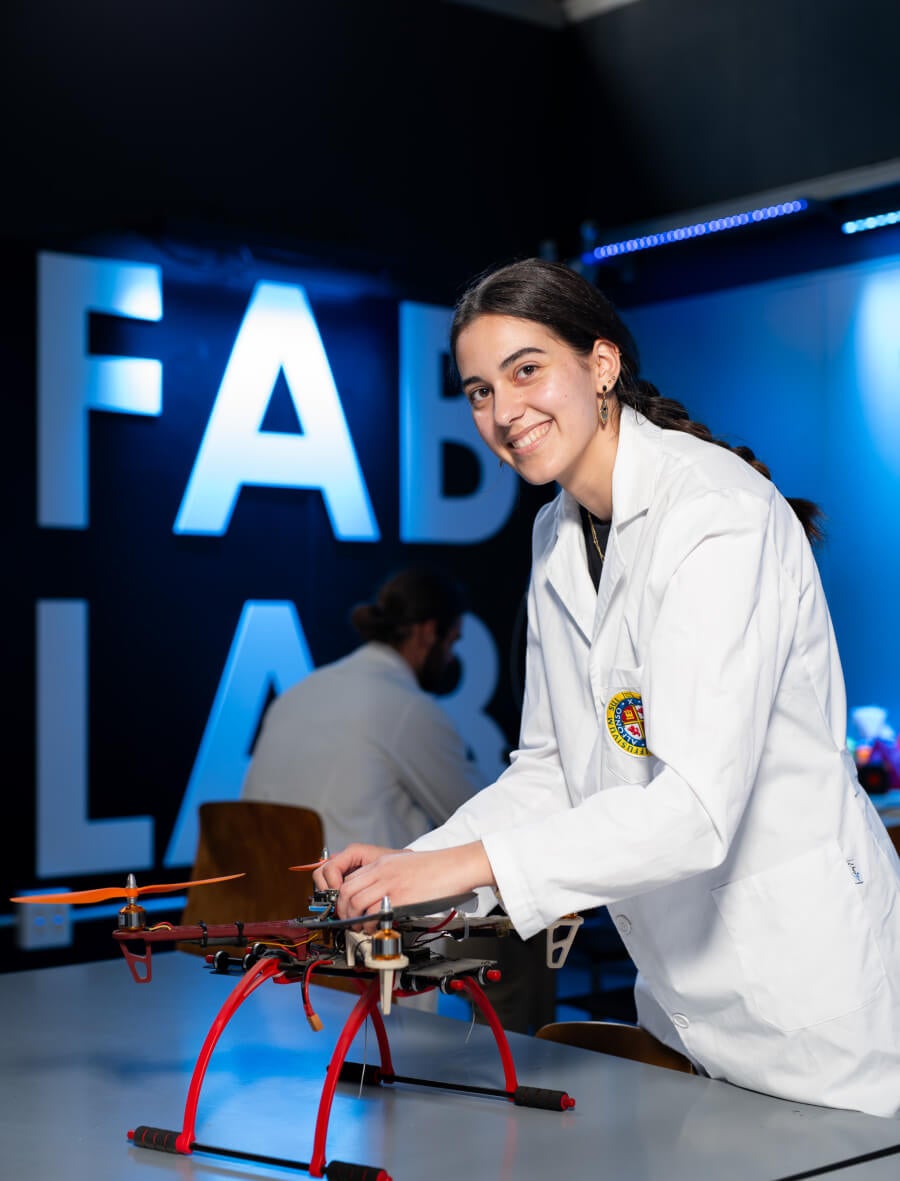
An innovative digital fabrication workshop aimed at expanding the learning of architecture, engineering and design students. Find out more
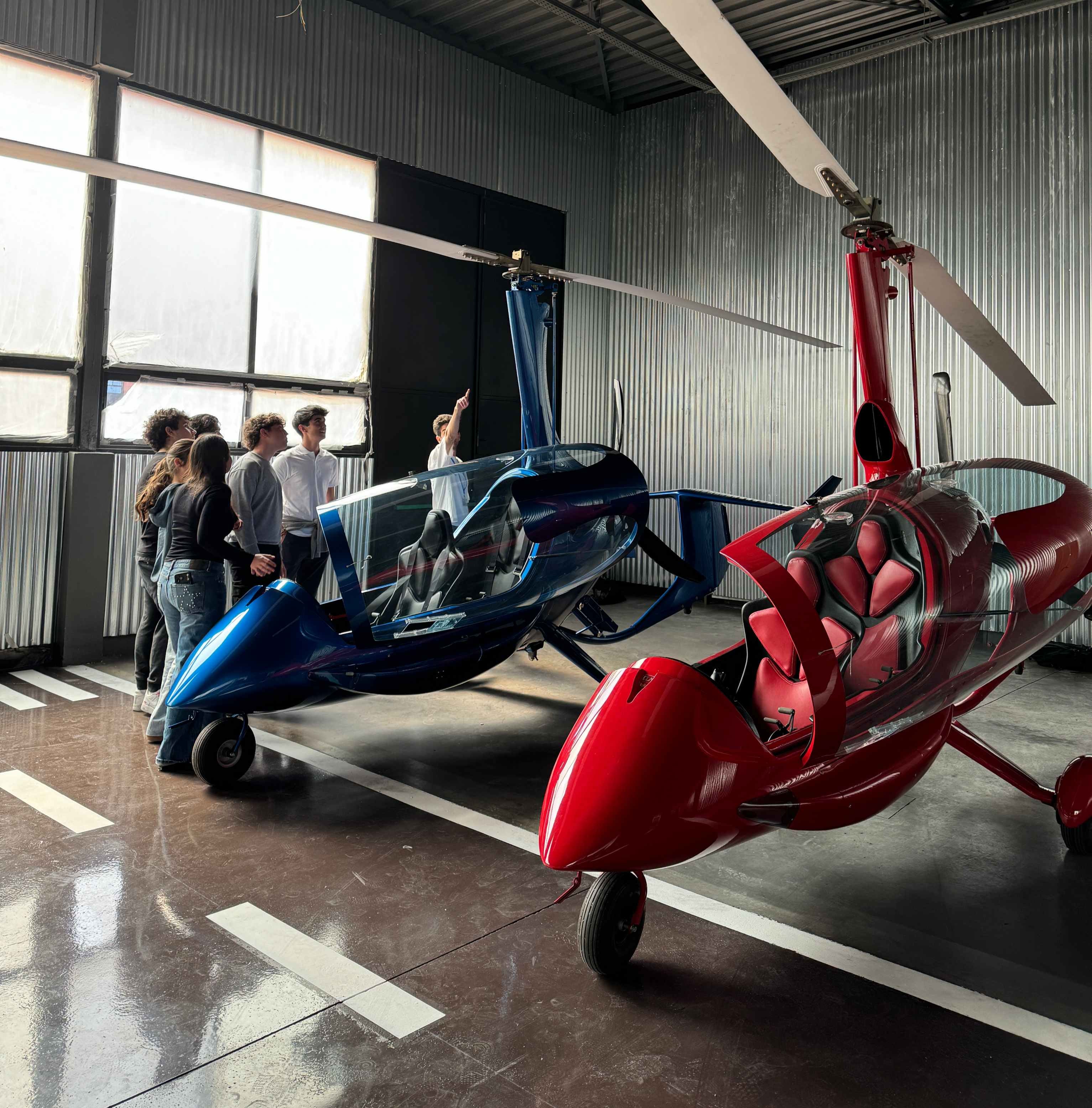
A space for innovation and advanced prototyping, designed to enhance applied learning amongst engineering students by fostering the development of real-world aeronautical solutions through experimentation, technology and collaborative work in multidisciplinary environments. Find out more
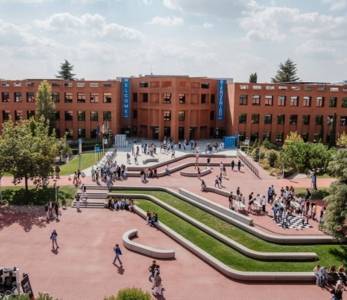
We need to know a little bit about you so that we can provide you with a personalised service.
All fields are required
In addition, you will have access to the regulated profession of Industrial Technical Engineer.
Not sure? We'll help you find the programme that best suits your profile.
Professionals’ Council
D. from the Polytechnic University of Madrid, with more than 15 years of experience at UAX, where he combines teaching, research and academic management in the field of engineering.
PhD in Industrial Engineering from the ETSII-UPM in Thermodynamics in the field of energy. FPI grant in R&D project at INSIA, and stay at the INRETS research centre (France). Lecturer in Master's and Degree courses in Thermal Engineering related to energy and combustion engines. Lecturer in the Master's Degree in Renewable Energies in Thermodynamics and Heat Transmission and Emerging Renewable Energies and Storage.
PhD in Chemical Engineering from the Complutense University of Madrid. University lecturer at UCM and UAX in Chemical Engineering and Industrial Engineering. Process Engineer with experience in petrochemical, fertilizer and power generation projects, in the phases of Design, Commissioning, Start-up and Warranty Testing, with more than 2 years of international experience in Saudi Arabia and 1 year in the UK.
Graduate in Computer Science. With this degree he has worked as a computer engineer in companies from different sectors such as IBM, Quark Robotics, ASTI or Honeywell Group. He has published 2 books (one on drones and the other on programming in Phyton) and an article in Springer.
We have met with more than 50 leading companies to understand their needs and develop an Electronics Engineering programme that ensures the employability and success of all our students at a crucial stage.
Real projects with companies. You will work on innovation projects such as the development of a virtual twin with the company Avanade by Microsoft.
Google and Datahack certifications. You will receive official certifications in User Experience, Google Ads and Coding For the Industry.
UAX Skill School. You will be trained in analytical thinking, disruptive thinking, leadership, ethics and storytelling.
Scholarships and Financial Support for Studying at UAX
We know that studying is an investment. That’s why we want to remove financial barriers and make things easier for you. Fill in the form and let our advisers help you discover the scholarships, agreements and personalised financial support that best suit your situation.

Community of Madrid
Financial support for students with a disability of 33 per cent or more who are studying at universities or higher education institutions specialising in the arts in the Community of Madrid.

Ministry of Education, Vocational Training and Sport
Find out about the scholarships and grants offered by the Ministry of Education, Vocational Training and Sport, categorised by type and level of education.

Attracting Pre-doctoral Research Talent
Financial support for outstanding students who wish to carry out innovative research and contribute to the advancement of knowledge in their disciplines.
If you’ve already decided to take the plunge, enrol early and benefit from a direct grant. It’s a way of rewarding your commitment and giving you a head start in planning your future.

Students from Ibero-America
This programme is aimed at Ibero-American citizens or foreign nationals legally resident in countries within the OEI’s sphere of influence. The scholarship covers a 50% discount on the total tuition fees.

Students from Ecuador
This programme is aimed at citizens with Ecuadorian nationality and/or residence who wish to study an online master’s degree in Spain. The scholarship covers a 50% discount on the total tuition fees.

2025, 2nd Edition
Grants for students on higher-level vocational training, undergraduate, postgraduate or master’s programmes enrolled at Spanish universities with a Santander agreement. A financial supplement to support you whilst undertaking your work placements.
If you graduated from UAX and are now thinking of studying for a new degree, we want to continue supporting you. That’s why we’re offering you a 10 per cent discount on tuition fees.
If you have an immediate family member (up to the second degree of kinship) enrolled at UAX, you can benefit from a 5 per cent discount on tuition fees. Because studying as a family is even better.
Studying for two degrees at the same time is a challenge, and we want to support you. If you’re already at UAX and enrol on a second degree programme, you’ll be eligible for a grant towards your booking fee and tuition fees.
If you’d like to continue your studies with us and progress from vocational training to a bachelor’s degree, from one bachelor’s degree to another, or from a bachelor’s degree to a postgraduate degree, we’re here to support you with a grant covering up to 25 per cent of your tuition fees.
If you have a strong academic record, we would like to recognise your talent with a scholarship designed for new students. (Excludes the degree in Medicine).
If you’re a high-performance athlete, at UAX we want to help you balance your passion with your studies. We offer specific grants that can cover up to 50% of your tuition fees.
Recognised for helping to shape your career
The rankings place UAX amongst the best universities in Spain for graduate employability, innovation and an educational model that is closely linked to the world of work.

Forbes ranks UAX as the private university with the most graduates working in its area (nearly 90%), thanks to a unique educational model firmly linked to the labour market through more than 8,800 agreements with companies.

The prestigious ranking of the BBVA Foundation and the IVIE recognises us as the university with the best job placement in Spain 2023, consolidating our model focused on the real employability of our graduates.

The Coordenadas Institute of Governance and Applied Economics places UAX as the private university of reference in Madrid, highlighting our practical training model aligned with the reality of the market.

UAX obtains the highest rating of 5 stars and the overall "Excellent" badge for Employability, Teaching, Academic Development, Facilities, Online Teaching and Good Governance in the prestigious international QS Stars rating.

UAX is recognised as the second most innovative university in Spain, the only private university among the top three in the ranking. This recognition highlights our transversal commitment to AI and training in sustainability.

According to the Forbes 2025 List, UAX is positioned in the TOP 2 Spanish Universities in the adoption of Generative AI in the training of its students, developing innovative learning tools and models aligned with technological evolution.

The Degree in Industrial Electronics and Automation Engineering trains professionals specialised in the design, control and automation of industrial processes and technological systems. It is an engineering degree aimed at optimising how factories, machines and automated systems used by modern industry work. The main objective is to improve efficiency, productivity and technological integration in increasingly digitalised industrial environments.
Professional opportunities are very broad and in high demand in the labour market. An Industrial Electronics and Automation Engineer can work in industrial automation, robotics, industrial maintenance, automatic systems design, process control, energy, automotive, food industry or advanced manufacturing. There is also a strong demand in companies dedicated to industrial digitalisation and Industry 4.0, where profiles capable of integrating technology and industrial production are sought after.
Yes, it is one of the engineering fields with the greatest future projection due to the advance of automation and the digital transformation of industry. Smart factories, robotic systems and process automation are growing in practically all production sectors. This means that companies need engineers capable of implementing, supervising and improving advanced automatic and electronic systems. The transition towards a more efficient and connected industry ensures a sustained demand for these profiles over the coming years.
La principal diferencia es la especialización en automatización, control industrial y sistemas electrónicos aplicados a procesos industriales. Mientras otras ingenierías industriales pueden enfocarse más en diseño mecánico, energía o gestión de procesos, Ingeniería Electrónica Industrial y Automática está especialmente orientada a la integración de tecnología inteligente en la industria. Es una carrera muy vinculada a la robótica, los sistemas automáticos y la digitalización de fábricas y procesos productivos.
It is a demanding career because it combines technical knowledge, logical reasoning and analytical skills. It requires perseverance and a good adaptation to technical thinking and complex problem solving. However, students interested in technology, automation and the operation of industrial systems tend to find it particularly motivating. The difficulty is often more in understanding how different technological systems interact than in memorising theoretical content.
You can work in industrial, technological, energy, automotive and automation companies, as well as engineering consultancies and technological innovation centres. Many companies are looking for this profile to modernise production lines, implement robotised systems or improve industrial efficiency through automation. There are also opportunities in advanced maintenance, technological development and industrial digitalisation projects.
Salaries depend on the sector and experience, but it is one of the engineering careers with good employability and competitive conditions. In Spain, a junior profile usually starts between €24,000 and €34,000 gross per year. In advanced industrial sectors, automation or technological multinationals, salaries can grow rapidly with experience. Profiles specialising in robotics, industrial control or Industry 4.0 tend to have a particularly favourable salary progression.
Yes, industrial automation and the digitalisation of processes are global needs, which is why this profile is in high demand internationally. Countries with strong technological and industrial industries such as Germany, the United States, Switzerland or the Netherlands are looking for engineers specialised in industrial automation and control. In addition, many multinationals work with international teams and especially value profiles capable of combining electronics, automation and industrial vision.
It tends to be a good fit for students interested in technology, robotics, automation and the operation of industrial systems. Analytical skills, logical thinking and curiosity about how machines and automated processes work are also important. It is a good choice for those who want to work in technological environments directly applied to industry and industrial innovation.
Yes, especially if you are looking for engineering with high employability, practical application and a strong connection to the industry of the future. Automation and industrial digitalisation will continue to grow in the coming years, and companies need profiles capable of leading this technological transformation. In addition, it is a career with good job opportunities, the possibility of international development and multiple areas of technological specialisation.
Other related qualifications
Bachelor’s Degree in Biomedicine
Includes a professional certificate in:

Start:
September
Length:
4 years

Degree in Aerospace Engineering
In collaboration with:

Start:
September
Length:
4 years
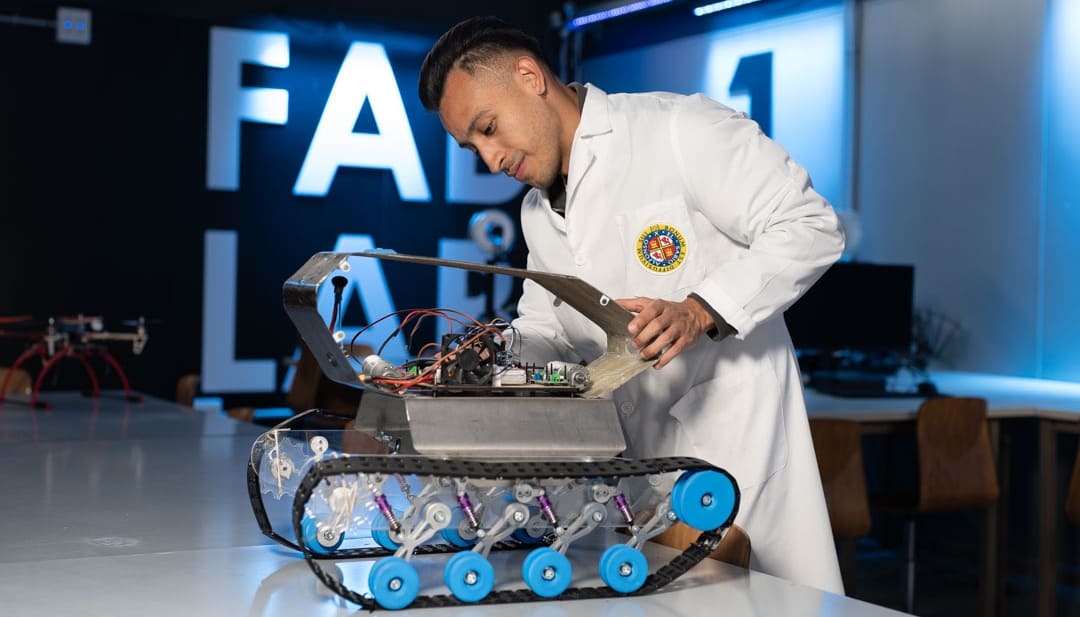
Degree in Mechanical Engineering
In collaboration with:

Start:
September
Length:
4 years
Bachelor’s Degree in the Fundamentals of Architecture + Qualifying Master’s Degree
In collaboration with:
Start:
September
Length:
Five and a half years
Bachelor’s Degree in Industrial Systems Engineering
Includes a professional certificate
Start:
September
Length:
4 years
Bachelor's Degree in Industrial Design and Product Development Engineering + Mechanical Engineering
In collaboration with:

Start:
September
Length:
5 years
Bachelor's Degree in Industrial Design Engineering and Product Development
In collaboration with:
Start:
September
Length:
4 years

The Degree Monitoring and Improvement Committee is made up of the degree programme management, two representatives of the degree teaching staff, two representatives of basic and specific subjects, two student representatives and one representative of the Vice-Rector's Office for Studies and Quality. In addition, guest members may be invited to deal with specific issues that need to be monitored.

We respond to the genuine needs of our students and staff, because we believe in the continuous improvement of our results. That is why we are always keen to hear anything you wish to tell us.

Link to the complaints and suggestions inbox.
If you’re already part of UAX, go to the ‘Customer Service: complaints, suggestions and compliments’ section on thevirtual campus and log in with your username and password.