

















Table of Contents
What is the official definition of aesthetic medicine?
What exactly does an aesthetic doctor do?
What is the first consultation with an aesthetic doctor like?
What treatments does aesthetic medicine include?
What is anti-ageing medicine and how does it relate to aesthetic medicine?
Why is this sector growing so rapidly in Spain?
Who is qualified to practise aesthetic medicine?
Is aesthetic medicine safe? What you need to know before undergoing any treatment
How can you train in aesthetic and anti-ageing medicine as a doctor?
Conclusion: aesthetic medicine, a specialism with a present and a future
What is the official definition of aesthetic medicine?
According to the Spanish Society of Aesthetic Medicine (SEME), aesthetic medicine is defined as “the medical and surgical practice that applies the techniques necessary for the restoration, maintenance and promotion of aesthetics, health and wellbeing”. This definition, set out in its White Paper, makes one fundamental point clear: it is not just about improving appearance. The aim is broader and encompasses the patient’s quality of life from a physical, mental and social perspective.
It is important not to confuse it with other similar concepts:
- Plastic surgery: this involves surgical intervention, whereas aesthetic medicine is carried out without the need for a major operating theatre or general anaesthesia.
- Conventional aesthetic medicine: does not require procedures to be carried out solely by registered doctors. In the case of aesthetic medicine, this is essential as the procedures involve the use of medicines, injectables and advanced medical equipment.
This distinction is key, both to understanding the discipline and to realising why specialised medical training is essential.
How does aesthetic medicine differ from dermatology?
It is one of the most frequently asked questions, and it makes perfect sense to ask it. Both disciplines deal with the skin and share certain procedures, but their approaches, objectives and routes into the profession are different.
Dermatology is an official medical speciality recognised by the National Health Service, which is entered into after passing the MIR examination and completing a four-year hospital residency. Its main focus is the diagnosis and treatment of diseases of the skin, hair and mucous membranes: ranging from acne or psoriasis to melanoma. Dermatologists work in both prevention and the treatment of disease.
Aesthetic medicine, on the other hand, is not a MIR speciality, but rather a medical discipline involving continuing professional development, which is open to doctors from various basic medical specialities. Its focus is not on treating dermatological conditions, but on improving the patient’s appearance, well-being and the ageing process through minimally invasive procedures.
Where do they overlap? In certain specific treatments, such as the use of botulinum toxin, chemical peels or certain laser treatments. In fact, many dermatologists incorporate aesthetic medicine into their clinical practice. However, the foundations of each discipline, the training required and their main areas of practice are different.
If you have a skin condition, a dermatologist is the specialist for you. If you are looking to improve your appearance, treat the signs of ageing or look after your aesthetic wellbeing, an aesthetic doctor is the one who can help you.
What exactly does an aesthetic doctor do?
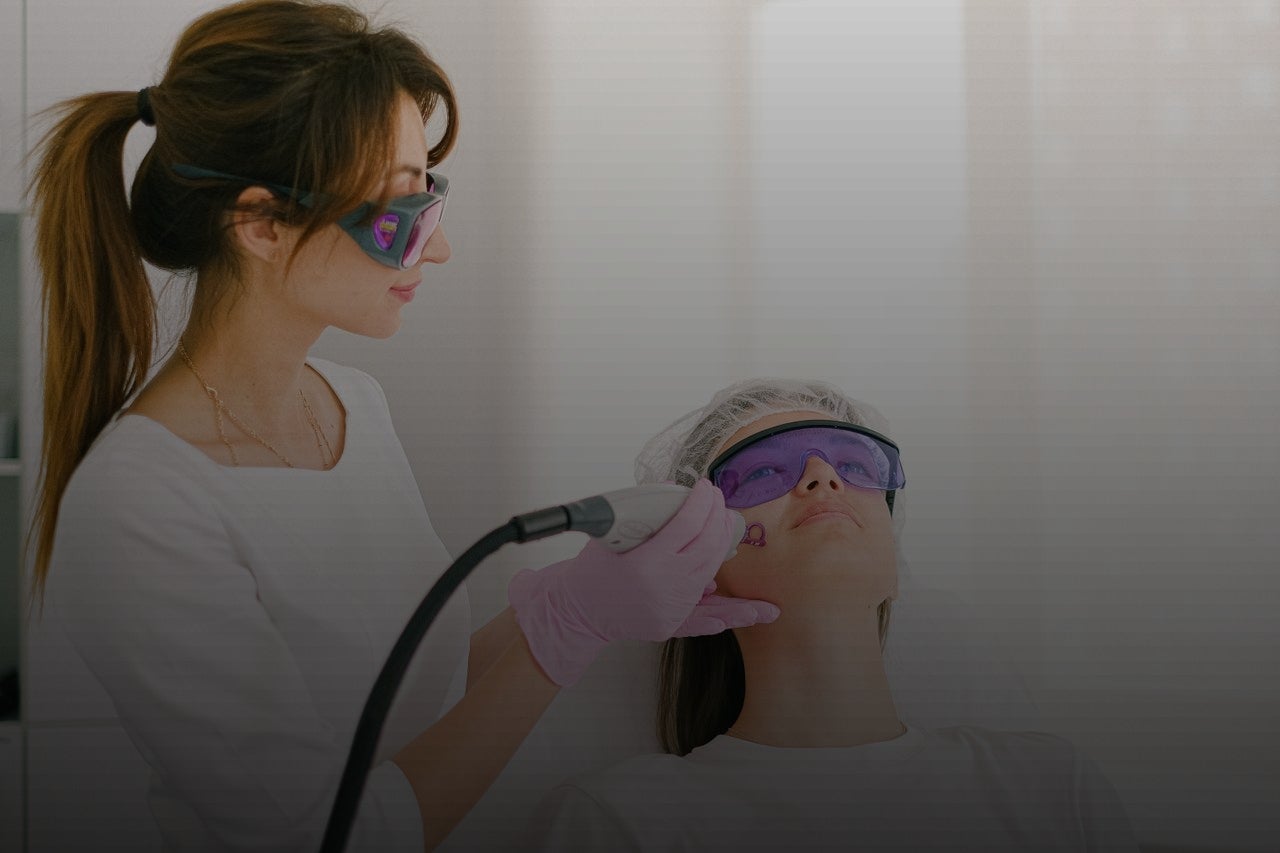
An aesthetic doctor carries out a comprehensive assessment of the patient: they analyse their state of health, medical history and aesthetic goals before recommending any treatment. Their work ranges from consultation and diagnosis to carrying out procedures and subsequent follow-up.
Among the most common areas of specialism you’ll find:
- Facial aesthetic medicine: treatment of wrinkles, loss of volume, dark spots, sagging and skin texture.
- Body aesthetic medicine: body contouring, reduction of localised fat, and treatment of cellulite or sagging skin.
- Anti-ageing and longevity: a preventative approach to ageing through regenerative treatments, nutrition and metabolic optimisation.
- Medical devices: use of technologies such as lasers, radiofrequency or high-intensity focused ultrasound (HIFU).
The key to practising this specialism effectively lies in combining medical judgement with technical knowledge of the available treatments.
What is the first consultation with an aesthetic doctor like?
If you’ve never been to an aesthetic medicine consultation before, it’s normal not to know what to expect. And it is precisely this lack of knowledge that leads many people to put off something that could benefit them. We’ll explain it to you step by step.
The first visit does not begin with a treatment. It begins with a conversation and a comprehensive assessment of the patient. A good aesthetic doctor will take the time to:
- Reviewing your medical history: allergies, regular medication, previous illnesses, past surgeries and any relevant aspects of your general health.
- Listening to your goals: what concerns you, what you want to improve and what your expectations are. There is no standard list; every patient is different.
- Carrying out a detailed facial or body analysis: bone structure, skin quality, volume distribution, degree of sagging, blemishes or wrinkles. This analysis forms the basis of the aesthetic diagnosis.
- Proposing a personalised plan: based on all of the above, the doctor will design a treatment plan tailored to your actual needs, rather than a generic approach.
- Provide you with transparent information: a responsible cosmetic doctor will explain the suggested procedures, their expected results, possible side effects and the estimated cost before you make any decision.
The initial consultation is, above all, a space built on trust. If at any point you feel you are being pressured into making a quick decision or are not given time to ask questions, this is a warning sign. The doctor–patient relationship in this field must be built on information and sound judgement, not on a sense of urgency.
What treatments does aesthetic medicine include?
Aesthetic medicine treatments are very varied. Here are the most popular ones in Spain at present:
| Treatment | Area of application | Type |
| Botulinum toxin | Expression lines | Injectable |
| Hyaluronic acid | Volume, hydration, furrows | Injectable (filler) |
| Collagen biostimulators | Sagging, regeneration | Injectable |
| Platelet-Rich Plasma (PRP) | Tissue regeneration, alopecia | Biological |
| Polynucleotides and exosomes | Skin quality, collagen | Regenerative |
| Radiofrequency and HIFU | Facial and body sagging | Medical devices |
| Cryolipolysis | Localised fat | Aesthetic devices |
| Chemical peels | Skin texture, blemishes, wrinkles | Chemical |
One of the most significant changes in the sector is that patients are no longer seeking radical transformations. The dominant trend in 2025 and 2026 is towards natural and harmonious results that enhance without distorting. The concept of ‘it shouldn’t be noticeable’ has become the standard of quality in medical-aesthetic clinics.
What is anti-ageing medicine and how does it relate to aesthetics?
Anti-ageing medicine, also known as longevity medicine, is a medical approach that goes beyond treating the external signs of ageing. Its aim is to act on the biological mechanisms of ageing to prevent, slow down and counteract its effects at both an aesthetic and systemic level.
It is closely linked to aesthetic medicine: the two disciplines complement each other and are increasingly integrated. A comprehensive anti-ageing approach may include:
- Injectable and regenerative treatments for the skin and tissues.
- Nutritional assessment and monitoring of body composition.
- Lifestyle analysis: sleep, stress, physical activity.
- Regenerative medicine: PRP, exosomes, biostimulation therapies.
- Hormonal and metabolic optimisation under medical supervision.
According to recent data from the SEME (April 2026), over 70 per cent of the Spanish population believe that the real aim of aesthetic treatments is the overall improvement of health and healthy ageing, not just appearance. This shift in perception reflects a significant level of maturity within the sector and explains why the holistic and integrated approach is gaining such prominence in clinics.
Why is this sector growing so rapidly in Spain?
The figures speak for themselves. The aesthetic medicine sector in Spain has exceeded 10,400 million euros in turnover, with an annual growth rate of 7.3 per cent – double the European average. Furthermore, according to the SEME’s perception survey, 46 per cent of Spaniards have already undergone some form of aesthetic medicine treatment, and a further 30 per cent are considering it.
Several factors explain this boom:
- Greater social acceptance: talking about aesthetic treatments is no longer taboo. It has become part of the conversation about health and wellbeing.
- A broader patient profile: male patients now account for almost 31 per cent of the total, and young people aged between 16 and 25 are the fastest-growing segment due to a focus on preventative care.
- Constant technological innovation: the emergence of new regenerative treatments such as exosomes and state-of-the-art biostimulators is keeping demand on the rise.
- Easier access: the range of clinics on offer has expanded and diversified throughout the country.
This sustained growth makes aesthetic medicine a very solid career path for doctors wishing to specialise in a rapidly expanding field.
Who is qualified to practise aesthetic medicine?
This is one of the most important points and, at the same time, one of the most misunderstood. In Spain, only registered doctors are legally authorised to carry out procedures specific to aesthetic medicine: injectables, advanced medical devices, medical peels and regenerative treatments.
This is no trivial matter: unauthorised practice in this sector is a real problem that the health authorities and the SEME itself have been combating for years. The line separating a safe treatment from one that poses a risk to the patient depends, to a large extent, on the training and medical judgement of the practitioner.
Therefore, if you are already a doctor and are considering incorporating aesthetic medicine and anti-ageing treatments into your clinical practice, the first step is to undertake specialised, up-to-date training that provides you with both the theoretical foundations and the necessary practical experience.
Is aesthetic medicine safe? What you need to know before undergoing any treatment
Aesthetic medicine is safe when practised by a registered doctor with specific training in the procedures they carry out. The problem does not lie with the treatments themselves, but with who performs them and under what conditions.
Not all centres offering aesthetic treatments have qualified medical staff. Injectables administered by professionals without medical qualifications, equipment operated without clinical judgement, or products used outside their approved indications are situations that continue to occur and can lead to serious complications: tissue necrosis, infections, scarring or irreversible results.
How can you protect yourself as a patient? Here are the key points:
- Always check that the person treating you is a registered doctor: you can check this in the register of the Official Medical Association in your autonomous community.
- Ask about specific training in aesthetic medicine: holding a medical qualification is the starting point, but it does not in itself guarantee proficiency in aesthetic procedures.
- Be wary of excessively low prices: in medicine, cheap can end up costing a great deal. Treatments using high-quality products and carried out by qualified professionals have a minimum cost that cannot be reduced indefinitely without compromising standards.
- Insist on a preliminary consultation and informed consent: any reputable clinic will carry this out before any procedure. If they do not, it is not the right place.
- Go to recognised centres: look for clinics affiliated with scientific societies such as the SEME, whose members are subject to ethical standards and ongoing professional development.
Safety in aesthetic medicine is not an optional extra. It is the minimum standard that every patient deserves and that every reputable professional must guarantee.
How can you train in aesthetic and anti-ageing medicine as a doctor?
If you hold a degree in Medicine and wish to make the move into this field, the most comprehensive option is to undertake a specialised master’s degree that combines theoretical training with real-world clinical practice with patients.
The UAX Master’s in Continuing Professional Development in Aesthetic and Anti-Ageing Medicine is specifically designed for doctors who wish to develop this specialism in a rigorous manner and with a practical clinical focus from day one. Some of its key features:
- Duration and format: 9 months, 60 ECTS credits, delivered via blended learning. The theoretical component is studied online on an asynchronous basis so that you can balance it with your professional commitments, whilst the face-to-face practical sessions are concentrated into 6 intensive weekends.
- Real-world clinical practice: over 31 hours of in-person practical sessions in small groups, with real patients at UAX’s university clinics (available in Madrid, Oviedo and Málaga) and rotations at external centres.
- International teaching staff: the programme features world-class experts such as Dr Sebastián Cotofana, one of the world’s leading anatomists in aesthetic medicine, and Dr Christopher Rowland Payne, co-founder of the European Society of Cosmetic and Aesthetic Dermatology.
- Integrated content: the curriculum covers facial and body aesthetic medicine, technology and equipment, nutrition and obesity , regenerative medicine and longevity, safety, and clinic management and marketing.
- Microcredentials included: additional training in generative AI applied to the healthcare sector, as well as in leadership and professional skills.
There are a variety of career paths available upon completion of the master’s degree: you can practise as an aesthetic doctor in clinics or private practices, join specialist healthcare teams, run or manage your own clinic, or launch your own venture in the sector. If you’d like to find out about the earning potential of each of these career paths, see our article on the aesthetic doctor’s salary you’ll find real figures broken down by experience, city and working model.
Conclusion: aesthetic medicine, a specialism with a present and a future
Aesthetic medicine is no longer a marginal option within the healthcare system; it has become a discipline with a solid scientific foundation, growing demand in society and a real impact on patients’ quality of life. Its integration with anti-ageing medicine further reinforces its clinical relevance.
If you are a doctor and are considering specialising in this field, you have before you a rapidly expanding sector, with increasingly well-informed and demanding patients, and a real need for well-trained professionals. Taking that step with the right preparation makes the difference between practising with judgement and confidence, or doing so without the necessary tools.
Training, in this case, is not a mere formality. It is the foundation of everything.
Sources :
- Spanish Society of Aesthetic Medicine (SEME). White Paper on Aesthetic Medicine.
- SEME / Sigma Dos. Study on the perception of aesthetic medicine in Spain, April 2026.
- SEME / Stanpa. Turnover figures for the professional beauty and aesthetics sector in Spain.
- Ministry of Health. Royal Decree 1416/1994 on the advertising of medicinal products for human use.
- National Institute of Statistics (INE). Employment and recruitment figures for the healthcare sector.