
















How the blended learning format works
In this model, some of the content and activities take place via a virtual campus, whilst others require the physical presence of students and lecturers. The balance depends on the objectives, the degree programme and the type of skills to be acquired.
Blended learning is not simply a matter of adding digital documents to a face-to-face class. Nor does it automatically involve splitting the programme into two halves. For there to be a genuine blend, online and face-to-face activities must be interrelated and form part of a single learning process.
How does blended learning work?
Learning takes place across different settings and at different times. For example:
- The student consults online materials.
- They complete a quiz to test their understanding.
- They go to campus to take part in a practical session.
- They work with their classmates on a case study.
- They submit their work via the platform.
- They receive feedback from the lecturer.
- Review the resources before the assessment.
In this sequence, the face-to-face activity does not necessarily repeat the online content. The digital materials prepare the student, and the session on campus is used to apply, experiment, discuss or receive feedback.
The order may also be different. A face-to-face session may introduce a problem that is then developed online through independent work and collaboration.
Characteristics of blended learning
Although each programme is organised differently, blended learning generally shares several characteristics.
It combines two learning environments
Students work in both digital and physical spaces. Neither operates in isolation.
It integrates synchronous and asynchronous activities
It may include face-to-face classes, live online sessions, recordings, forums, activities, tutorials and independent study.
It follows a common curriculum
Online and face-to-face content form part of the same modules and learning objectives.
It offers a degree of flexibility
Part of the course can be completed within set timeframes, without the need to travel to campus every day.
It retains face-to-face activities
Work placements, workshops or assessments may require attendance on specific dates and at specific locations.
It utilises educational technology
The virtual campus enables the organisation of materials, communications, activities, submissions and monitoring.
Encourages practical application
Face-to-face sessions can be reserved for activities that require facilities, equipment, direct interaction or supervision.
Is b-learning the same as blended learning?
B-learning, hybrid learning and blended learning are commonly used to describe models that combine face-to-face and online learning.
However, the terms may have slightly different nuances depending on the institution or context:
- B-learning emphasises the pedagogical combination.
- Blended learning usually describes the formal delivery method.
- Hybrid learning can be used as a general term for different combinations.
- ‘Blended learning’ is the English term for combined learning.
When comparing degree programmes, it is not advisable to base your decision solely on the label. You should check how much face-to-face teaching is involved, how often it takes place, what activities it covers, and whether attendance is compulsory.
Which activities take place online?
The online component may include:
- Access to learning materials.
- Live classes.
- Recorded sessions.
- Reading materials.
- Quizzes.
- Forums.
- Online tutorials.
- Individual activities.
- Collaborative projects.
- Project submissions.
- Progress monitoring.
- Practical work preparation.
- Assessments.
These activities are normally organised via a virtual learning environment. Students need to check the timetable regularly and meet deadlines, although some of the work can be carried out flexibly.
Which activities take place in person?
Face-to-face sessions may be dedicated to:
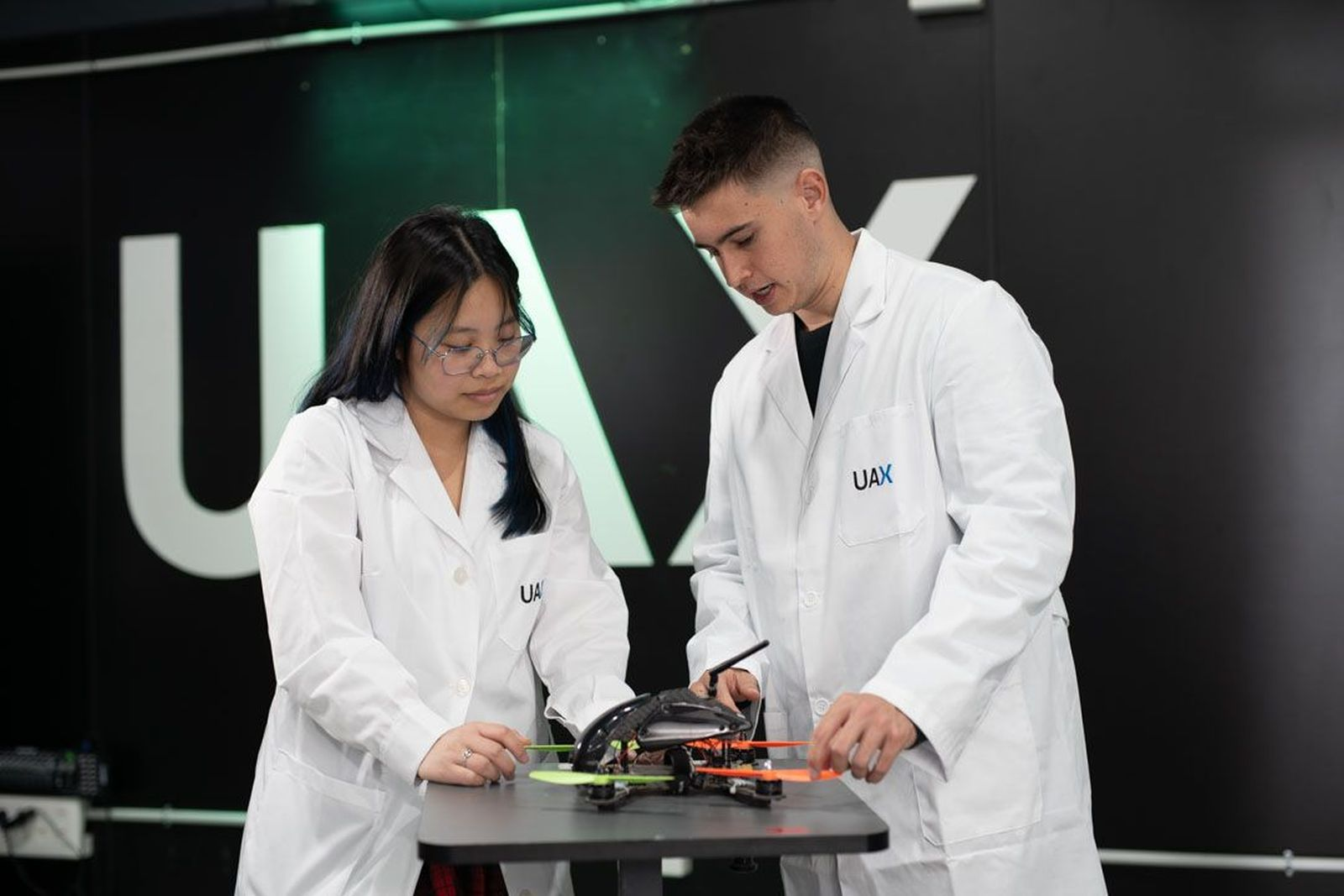
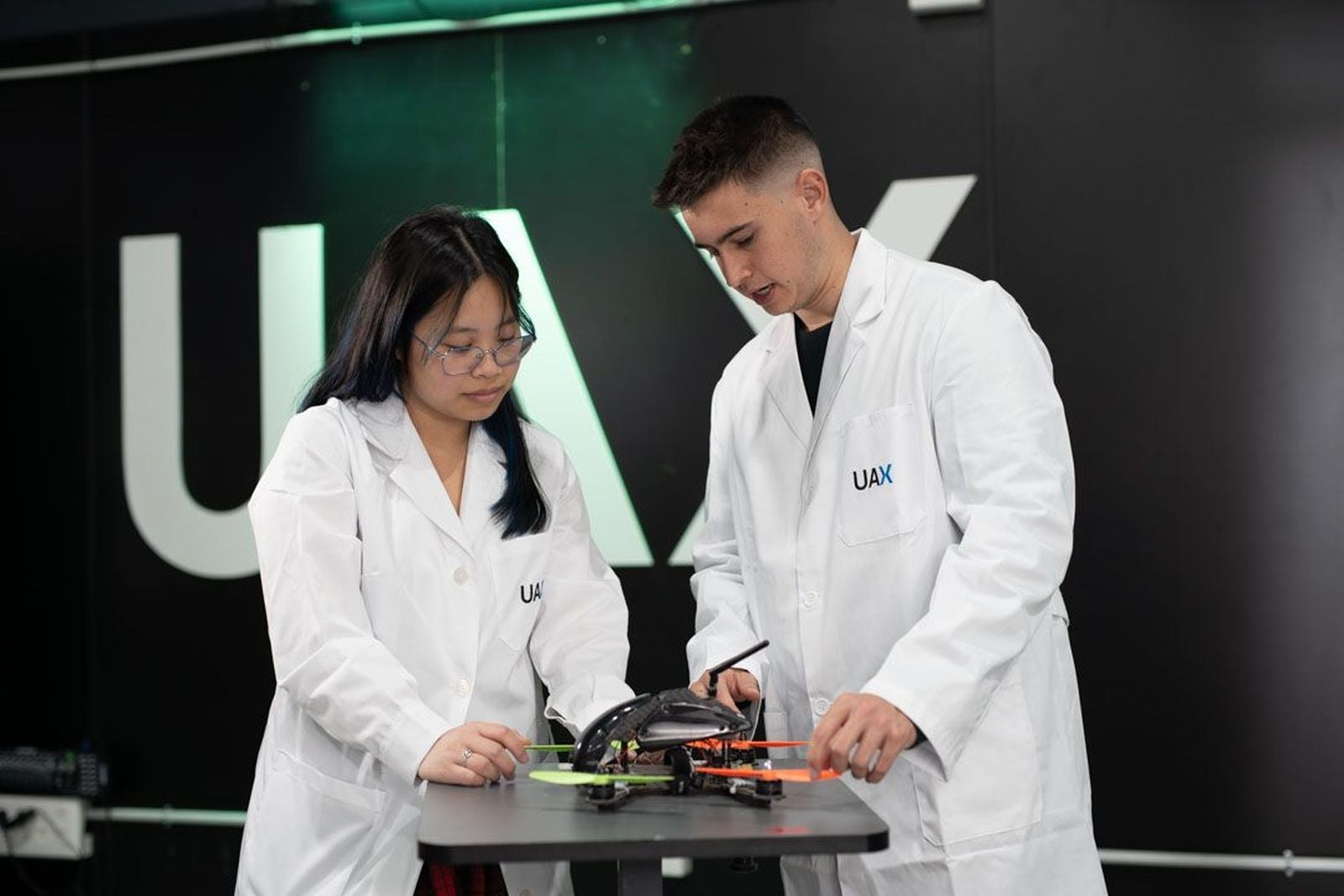
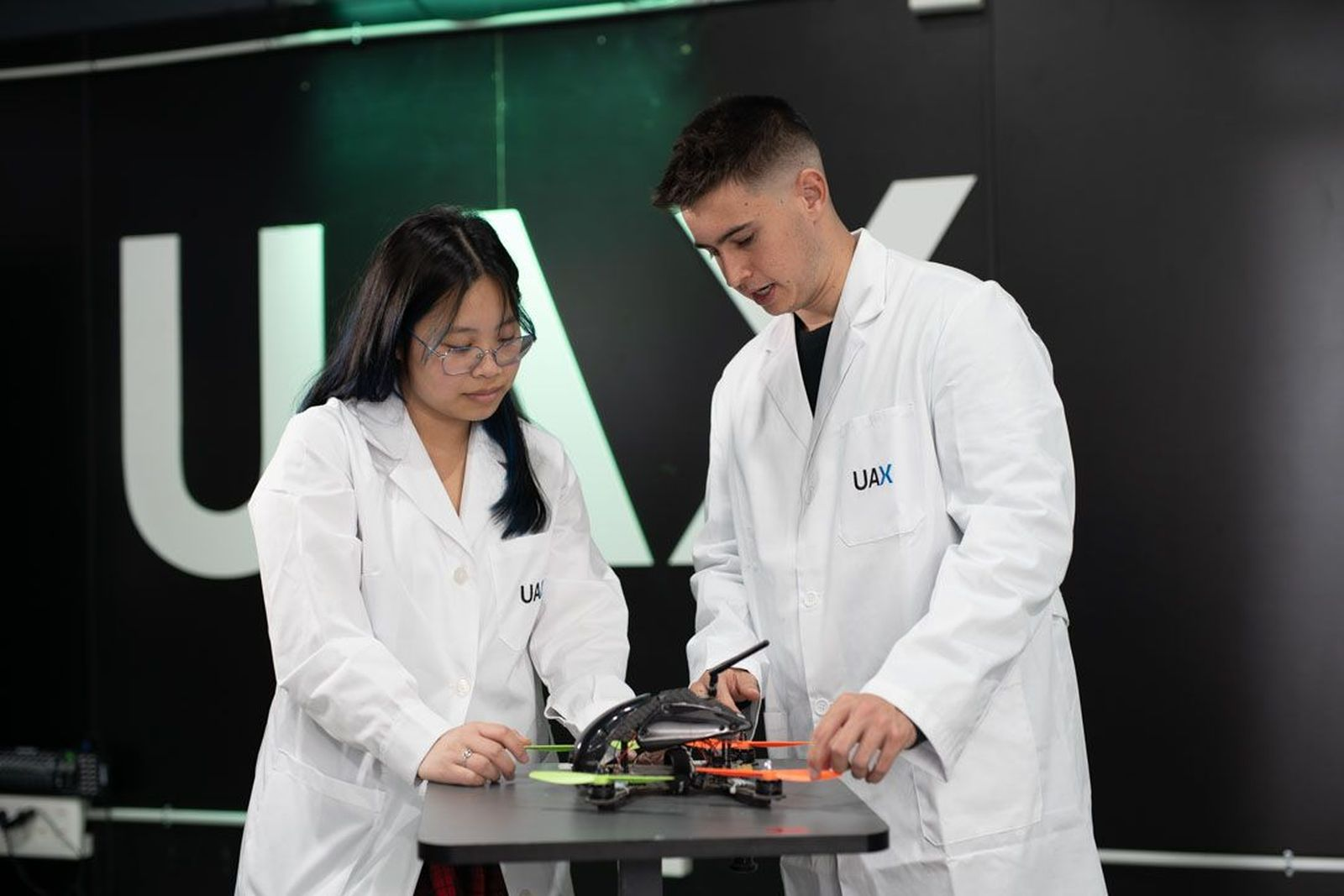
- Laboratory practicals.
- Simulations.
- Workshops.
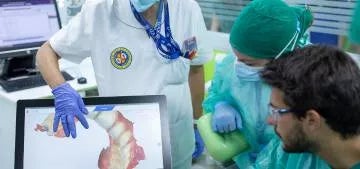
- Clinical activities.
- Use of specialised equipment.
- Presentations.
- Discussions.
- Teamwork.
- Seminars.
- Assessments.
- Tutorials.
- Case studies.
- Skills training.
Face-to-face learning adds greater value when it enables activities that are difficult to replicate fully in a digital environment.
In health-related degree programmes, for example, it may be necessary in order to use facilities, carry out procedures and practise under supervision.
Differences between blended learning and e-learning
Blended learning and e-learning both use technology, digital content and platforms, but they organise face-to-face learning in different ways.
Aspect | Blended learning | E-learning |
|---|---|---|
| Format | Combines online and face-to-face learning | It is delivered primarily via digital platforms |
| Travel | Requires attendance on specific dates | Does not usually require regular attendance on campus |
| Flexibility | Partial | Generally greater |
| Work placements | May be carried out in person | May be online, off-site or require occasional attendance in person |
| Virtual campus | Organises the online component | Centralises most of the experience |
| Face-to-face interaction | A planned part of the programme | Not the usual focus |
| Profile | Seeks flexibility and face-to-face contact | Prioritises the option to study from different locations |
An online degree may include work placements or an in-person exam without automatically becoming blended learning. The delivery method should be checked in the programme’s official information.
To gain a broader understanding of the digital model, you can find out what e-learning is and how it works.
Differences between blended learning and synchronous learning
These concepts address different questions. Blended learning classifies the programme according to the learning environments used: online and face-to-face. Synchronous learning indicates whether participants are learning at the same time.
Within a blended learning programme, there may be:
- Synchronous face-to-face classes.
- Synchronous video conferences.
- Asynchronous forums.
- Asynchronous videos.
- Projects involving individual and group work.
Therefore, ‘synchronous’ does not mean ‘face-to-face’. A live online class is synchronous even if the participants are in different locations.
Advantages of blended learning
Blended learning can offer various benefits when the two components are properly integrated.
Flexibility without eliminating face-to-face contact
Students can complete part of their training from home and travel only for specific activities.
This can help with work-life balance, although students must be available to attend the scheduled sessions.
Making the most of facilities
Laboratories, clinics, workshops and simulators can be used to develop practical skills.
Direct interaction
Face-to-face sessions allow students to work directly with tutors and fellow students.
Preparation
Digital materials can be consulted before the face-to-face session, allowing time on campus to be spent applying what has been learnt.
Opportunity to revise
Online resources remain available for the specified period and can be accessed again.
Variety of activities
The programme can combine texts, videos, simulations, practical exercises, discussions and projects.
Development of independence
Students must plan their online work and maintain their pace between face-to-face sessions.
Progress monitoring
The platform can record submissions, activities and results, facilitating academic support.
Limitations and challenges of blended learning
Combining different learning modes also presents certain challenges.
Less flexibility than a fully online course
Face-to-face sessions take place on specific dates. Students must take into account travel, timetables and potential costs.
Greater organisational complexity
It is necessary to coordinate timetables, physical spaces, digital activities and independent study.
Reliance on technology
The online component requires equipment, an internet connection and digital skills.
Risk of a disconnect between the two parts
If face-to-face and digital activities are not linked, the student may perceive them as two separate courses.
Workload that is not readily apparent
A reduction in face-to-face lessons does not mean an equivalent reduction in effort. Much of the workload is shifted to independent study.
Differences in participation
Some students may be actively involved on campus but participate little online, or vice versa. The methodology must support both environments.
Blended learning models
Blended learning can be organised in various ways.
Flipped classroom
Students watch videos, read texts or study other materials in advance. Class time is used to solve problems, discuss topics or carry out practical exercises.
The lesson shifts its focus from simply presenting content to applying it.
Rotation model
Students alternate between activities or learning spaces according to a set schedule.
They may rotate between:
- Teacher-led explanation.
- Online work.
- Practical activity.
- Group work.
- Tutorial.
This model is common when different resources are used within the same school day.
Flexible model
Most of the learning takes place online, but there are face-to-face sessions for support, practical work or tutoring.
The balance between the different learning environments may vary depending on the student’s needs or the subject.
Enriched virtual model
The programme is delivered mainly online and incorporates specific face-to-face meetings throughout the academic year.
These sessions may be used for workshops, seminars, practical sessions, assessments or team-building activities.
Project-based model
The course content is covered online, whilst face-to-face sessions are dedicated to designing, developing or presenting projects.
This approach combines autonomy, collaboration and practical application.
Which blended learning model is best?
There is no one-size-fits-all model. The choice depends on:
- The learning objectives.
- The skills to be developed.
- The educational level.
- The facilities required.
- The students’ experience.
- Availability of teaching staff.
- The location of the participants.
- Technological resources.
- The assessment system.
The main question should not be what percentage will be delivered online, but rather which environment is most suitable for each activity.
Examples of blended learning
Blended university degree programme
Students consult materials and attend classes online, but go to campus to carry out laboratory practicals and certain assessments.
Postgraduate master’s degree for professionals
Theoretical content is delivered online, whilst face-to-face sessions are organised to solve case studies, practise skills and interact with the group.
Healthcare training
Theoretical training takes place via the virtual campus, whilst clinical activities are carried out at specialist facilities.
Business training
Participants complete digital modules and attend workshops to work on real-life organisational scenarios.
Language course
Students use online resources for vocabulary and grammar and take part in face-to-face or live virtual sessions to practise conversation.
What is required to study via blended learning
As well as meeting the academic requirements, students need:
- A compatible computer.
- A stable internet connection.
- Access to the virtual campus.
- A webcam and microphone.
- Basic digital skills.
- Availability for face-to-face sessions.
- Ability to travel.
- Time for independent study.
- Organisational skills.
- A place to study.
- Familiarity with the timetable.
Before you enrol, you should check whether the dates for face-to-face sessions are known in advance and how much flexibility there is to fit them in with your other commitments.
How to know if a blended-learning degree is right for you
It may be a suitable option if:
- You need flexibility, but value contact with the campus.
- You are able to travel on the scheduled dates.
- The course involves practical activities.
- You’re comfortable using digital tools.
- You can organise your own independent study.
- You prefer to meet with lecturers and fellow students.
- You have a stable internet connection.
- You are aware of the actual workload for each module.
It may be less suitable if you are unable to attend compulsory sessions or if travelling to them poses a significant difficulty.
What to ask before enrolling
The term ‘blended learning’ alone does not tell you how the course will be organised. Ask:
- How many face-to-face sessions are there?
- How often do they take place?
- On which campus do they take place?
- How long do they last?
- Is attendance compulsory?
- How far in advance is the timetable published?
- Which activities are held in person.
- How online classes are delivered.
- Whether the online sessions are recorded.
- How exams are conducted.
- Where the work placements take place.
- What technical resources you need.
This information enables you to assess how well the programme fits in with your work, home life and personal commitments.
How to organise yourself on a blended learning course
Integrate all your timetables
Make a note of both online activities and face-to-face sessions. Don’t keep two separate schedules.
Prepare for the sessions
Review the materials and complete the preparatory activities. This will allow you to devote the session to clarifying any doubts and applying what you’ve learnt.
Allow time for travel
Include travel time and the time needed to prepare materials or equipment in your planning.
Keep up the pace online
Don’t cram all the content in before you arrive on campus. Digital activities are part of the learning process and may be necessary to get the most out of the practical sessions.
Check your submissions
Check that your work has been correctly submitted via the platform.
Make use of the tutorials
If you encounter any difficulties between sessions, make use of the available support channels and don’t wait until the next face-to-face meeting.
B-learning and blended learning at UAX
UAX’s blended learning programmes combine online learning with face-to-face sessions throughout the academic year.
The online component takes place via a virtual campus where students can access lectures, materials, activities and resources. Face-to-face sessions may take the form of practical sessions, workshops, seminars, assessments or academic meetings.
The schedule and conditions vary depending on each programme. Before enrolling, it is important to check the calendar, the location, the compulsory activities and how the practical placements are organised.
This model allows for flexibility without sacrificing the face-to-face experiences necessary to develop certain skills.
Summary
Alfonso X el Sabio University. Blended-learning degree programmes:
https://www.uax.com/semipresencial
Alfonso X el Sabio University. Academic programmes and delivery modes:
https://www.uax.com/oferta-academica
Alfonso X el Sabio University. Online University:
https://www.uax.com/online
European Commission. Definition and characteristics of blended learning:
https://education.ec.europa.eu/sites/default/files/document-library-docs/deap-swd-sept2020_en.pdf
European Commission. Blended learning in education and training:
https://education.ec.europa.eu/node/1757
UNESCO. Hybrid learning models:
https://unesdoc.unesco.org/ark:/48223/pf0000377807
UNESCO. Policies to promote hybrid education:
https://unesdoc.unesco.org/ark:/48223/pf0000386999_eng