














Respiratory physiotherapy is a specialism within physiotherapy dedicated to the prevention, treatment and stabilisation of respiratory dysfunctions or disorders. Some of the objectives of this specialisation in physiotherapy are: mucociliary clearance, improving pulmonary ventilation, gas exchange and the function of the respiratory muscles.
Although it has yet to be systematically integrated into public healthcare centres in Spain, respiratory physiotherapy began to be practised over a hundred years ago in England, specifically in 1915 following the First World War, to treat patients affected by mustard gas. Respiratory physiotherapy is the specialism with the strongest scientific evidence and can be applied to patients of all ages presenting with conditions such as COPD, asthma, bronchiolitis, cystic fibrosis, neuromuscular disorders, cerebral palsy, spinal deformities, post-operative care, ARDS (Acute Respiratory Distress Syndrome) and Long Covid. The most commonly used techniques are postural drainage, EDIC, guided coughing and forced exhalation.
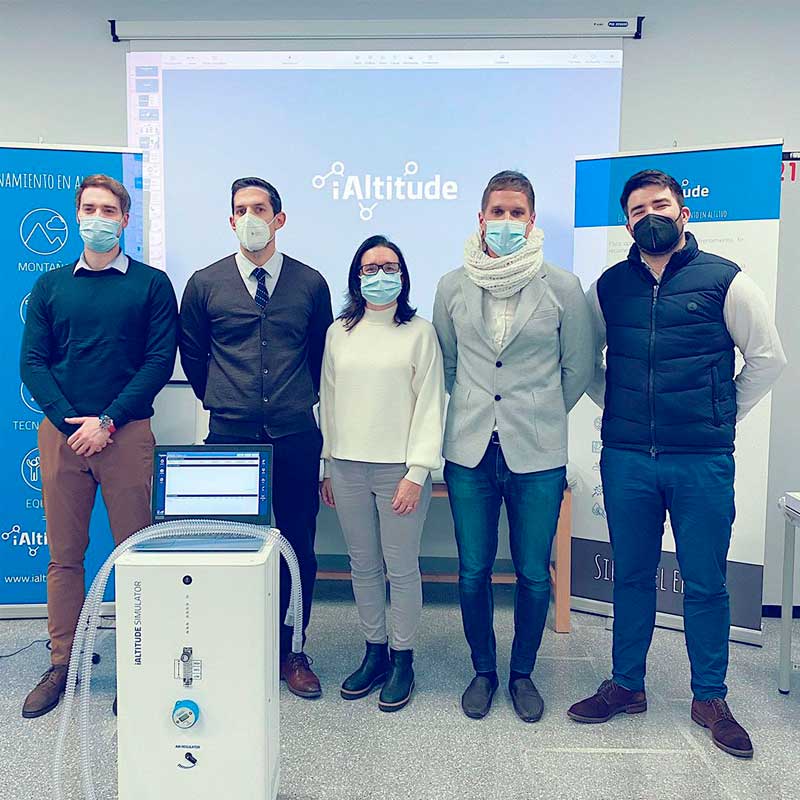
Furthermore, in the current context, with a growing number of patients with chronic conditions, respiratory physiotherapy is emerging as a fundamental specialism (within the framework of specialisms proposed by the World Physiotherapy Federation) for improving not only patients’ quality of life but also their survival. For this reason, significant progress is being made in the field of research and development of new treatments such as HHO ( Hypoxia-Hyperoxia) therapy, which simulates altitude training and is based on the physiology of hypoxia-induced HIF-1 activation ( 2019 Nobel Prize in Medicine). Alfonso X el Sabio University is involved in the development, research and dissemination of this treatment, thanks to the recent collaboration agreement reached with the company iAltitude (further information available via this link ).
Specialist Course in Respiratory Physiotherapy
Aware of the challenges facing physiotherapy and physiotherapists, our University has launched a completely innovative and unprecedented educational project in specialist training for students on the Bachelor’s Degree in Physiotherapy , including the Specialist Course in Respiratory Physiotherapy led by Dr Alberto Manuel Diliz Vieira, comprising 20 hours spread over four seminars. You can view the postgraduate courses in physiotherapy.
Treatments for respiratory patients in the ICU:
In the first of the seminars, students are introduced to treatments for respiratory patients in the Intensive Care Unit ( ICU). Through this training, students learn about the essential role of the respiratory physiotherapist in this setting. There is an ever-increasing demand for physiotherapists in ICUs, as evidenced by numerous studies, such as the one carried out at the Gregorio Marañón Hospital (one of Spain’s leading hospitals), which concluded that “physiotherapy treatment is associated with fewer respiratory infections, a shorter time to extubation, lower mortality and a shorter length of stay in the ICU, resulting in significant savings for the health service ”.
Other studies have mainly described respiratory physiotherapy and mobilisation treatments; some have also covered electrostimulation and cognitive therapy. In addition to its effectiveness, the use of physiotherapy treatments in the ICU is safe and does not cause any significant adverse effects. It is therefore necessary to continue researching and training professionals qualified to work in this field.
Learning physiotherapy treatment for paediatric patients:
In the second seminar, students have the opportunity to learn about physiotherapy treatment for paediatric patients. The paediatric respiratory physiotherapist applies and teaches the child and their family the techniques and exercises necessary to clear the airways, manage breathlessness and increase exercise tolerance.
Understanding HHO therapy:
The third seminar provides students with an introduction to HHO therapy through theoretical study of the physiological basis for the activation of the HIF-1 protein and general conditions of hypoxia, as well as practical training in simulated altitude training for patients with chronic conditions and athletes.
General management of respiratory patients:
Finally, in the fourth seminar, the teaching focuses on the management of respiratory patients in general. Students learn the most appropriate techniques for patients with COPD, asthma, immobilised patients and those with long-term effects of COVID-19 (long COVID ).
In summary, we can state that the rise in the incidence of respiratory conditions amongst both adults and children means that the Respiratory Physiotherapist is an indispensable figure within the healthcare system, implementing increasingly effective prevention and treatment plans to manage the aforementioned respiratory conditions, thereby reducing morbidity, mortality and healthcare costs.