















Table of Contents
What qualifications do you need to practise aesthetic medicine in Spain?
What do you need to study to become an aesthetic doctor?
Is it compulsory to complete the MIR to become an aesthetic doctor?
How many years does it take to become an aesthetic doctor?
What specialist training does an aesthetic doctor need?
Can someone who is not a doctor study aesthetic medicine?
What are the day-to-day duties of an aesthetic doctor?
What skills does an aesthetic doctor need to practise effectively?
What qualifications do you need to practise aesthetic medicine in Spain?
The legal framework in Spain is very clear: the practice of aesthetic medicine is regulated, and only certain qualified professionals may carry it out legally. Law 44/2003 on the Regulation of Healthcare Professions and Royal Decree 1277/2003 stipulate that treatments specific to this discipline (injectables, advanced medical devices, medical peels, thread lifts) are the exclusive preserve of registered doctors.
In addition to a university degree, to practise legally you must meet these additional requirements:
- Registration with the Official Medical Association of the province in which you intend to practise. This is the essential first step for any clinical activity in Spain.
- Specific professional indemnity insurance for the practice of aesthetic medicine. This protects both the practitioner and the patient in the event of any incidents.
- U.48 healthcare licence if you work in a clinic or open your own. This is authorisation from the Ministry of Health certifying that the centre is authorised to offer aesthetic medicine services under medical supervision.
- Registration for tax and social security purposes: under the Special Scheme for Self-Employed Workers (RETA) if you are self-employed, or under an employment contract if you work for a third-party clinic.
Meeting these requirements ensures that you practise legally and in accordance with the minimum safety standards your patients deserve.
What do you need to study to become an aesthetic doctor?
The starting point is non-negotiable: a Bachelor’s degree in Medicine . There is no legal shortcut in Spain to practising aesthetic medicine without having completed this six-year university degree. If you have studied outside Spain, your qualification must be recognised by the Ministry of Education before you can practise.
During your degree, you will acquire the fundamental knowledge that will later underpin your aesthetic practice: human anatomy, physiology, pharmacology, dermatology and clinical diagnosis. The degree does not directly prepare you for aesthetic medicine, but it provides you with the scientific and clinical foundation without which you would be unable to apply its techniques safely or judiciously.
Once you have graduated and are registered with the professional body, the next step is to specialise through a postgraduate master’s degree in aesthetic medicine. If you would like to find out in detail what subjects and content this type of course covers, we explore this in depth in our article on what is studied on the master’s degree in aesthetic medicine.
Is it compulsory to complete the MIR to become an aesthetic doctor?
No. And this is one of the aspects that most distinguishes aesthetic medicine from other branches of medicine in Spain.
The MIR is the examination and selection process that grants access to the official medical specialities recognised by the Spanish healthcare system: cardiology, dermatology, plastic surgery, general practice, etc. These are specialities that require candidates to pass the exam and complete between four and five years of hospital residency.
Aesthetic medicine is not listed amongst the MIR specialities. This means that you do not need to compete in that selection process or undergo years of hospital residency to specialise in this field. Specialisation is achieved through specific university-based master’s degrees and postgraduate programmes, which you can undertake directly after graduating in Medicine.
How many years does it take to become an aesthetic doctor?
The full training pathway to practise as an aesthetic doctor in Spain is as follows:
| Stage | Estimated duration |
| Degree in Medicine | 6 years |
| Master’s Degree in Aesthetic and Anti-Ageing Medicine | between 9 months and 2 years |
| Estimated total | Between 7 and 8 years |
Compared with specialisms that require a MIR and a residency (such as dermatology or plastic surgery, which involve between 10 and 11 years of training), aesthetic medicine allows you to reach a level where you can practise independently in a significantly shorter timeframe. The key factor is not the duration, but the quality of the specialist training you choose: the more rigorous and practical it is, the quicker you will develop the technical skills and judgement needed to work with real patients.
What specialist training does an aesthetic doctor need?
After completing your degree, the most solid and recognised route to training in aesthetic medicine is a university-accredited Master’s in Continuing Professional Development. This type of postgraduate programme guarantees structured, up-to-date learning with supervised clinical practice – which is exactly what you need to practise confidently from day one.
A good programme should combine up-to-date theoretical training with real-world clinical practice: face-to-face sessions with patients, small groups and professional supervision. Theory without practice is not enough in a discipline where manual dexterity and clinical judgement are developed precisely through the application of techniques. If you’d like to compare the training options available in Spain, you can consult our guide to the best master’s degrees in aesthetics.
If you’re wondering how much you can earn once you’ve completed your training, take a look at our article on the salaries of aesthetic doctors you’ll find a comprehensive analysis with real figures broken down by experience, city and working model.
The UAX Master’s in Continuing Professional Development in Aesthetic and Anti-Ageing Medicine is designed for doctors who wish to specialise with genuine clinical rigour. With 60 ECTS credits in a blended-learning format, it combines asynchronous online theory with over 31 hours of in-person practical training with real patients in small groups.
Can someone who is not a doctor study aesthetic medicine?
No. Law 44/2003 on the Regulation of Healthcare Professions and Royal Decree 1277/2003 reserve the practice of aesthetic medicine (injectables, advanced medical devices, regenerative treatments) exclusively for registered doctors. This includes the administration of Botox or botulinum toxin, which can only be carried out legally by a doctor, as it is a prescription-only medicine.
There is no course, diploma or private certification that can replace a degree in Medicine or legally authorise someone to carry out these procedures. If you come across organisations that promise otherwise, this should be a warning sign.
There are technical roles within the field of aesthetics who may work in related settings, but their scope of practice is entirely different and they are not authorised to carry out treatments specific to aesthetic medicine.
If you already hold a degree in Medicine and wish to specialise, the path is clear: rigorous postgraduate training with real clinical practice will give you the tools to practise judiciously and safely.
What are the day-to-day duties of an aesthetic doctor?
Before specialising, it is important to have a clear understanding of what your work will involve. Beyond the general concept of the discipline, the key is to know how an aesthetic doctor’s work is organised in practice, as this is what you will experience in your day-to-day life as a professional.
A typical working day involves several responsibilities:
- Aesthetic assessment and diagnostic consultations. Before any procedure, the doctor carries out a comprehensive assessment: medical history, facial or body analysis, the patient’s objectives and a personalised treatment plan. This phase is just as important as the treatment itself.
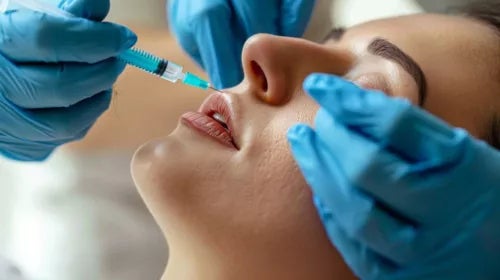
- Administration of treatments. This is the core of clinical practice: injectables, advanced medical equipment and regenerative protocols. Each procedure requires technical skill, precision and in-depth anatomical knowledge.
- Patient follow-up. The relationship does not end once treatment is complete. The doctor carries out follow-up appointments, assesses results, adjusts treatment protocols and manages any potential issues, which is key to building patient loyalty and ensuring clinical safety.
- Planning of anti-ageing protocols. The most specialised doctors design comprehensive protocols that combine different techniques over time, particularly in the field of anti-ageing.
- Clinical management. Whether running their own practice or holding a coordinating role, doctors also manage diaries, supplies, suppliers and staff.
If you’d like to find out more about exactly what aesthetic medicine is as a discipline, we explain it in detail in our article on what aesthetic medicine is.
What skills does an aesthetic doctor need to practise effectively?
Being a good aesthetic doctor does not depend solely on technical training. There are cross-cutting skills which, when properly developed from the outset, make a real difference to clinical outcomes and to building a solid practice.
- Precision and manual dexterity. Injectable treatments require a highly refined technique. Precision in administration and the ability to adapt to each patient’s anatomy are skills developed through supervised practice.
- Active listening and empathy. Aesthetic medicine patients arrive with emotional as well as aesthetic expectations. Knowing how to listen, identify what they are really seeking and manage their expectations honestly is essential for achieving good results and building patient loyalty.
- Clinical judgement and aesthetic sense. It is not a matter of simply giving the patient what they ask for, but of suggesting what they actually need from a medical perspective. Developing a clinical eye that combines scientific rigour with aesthetic sensitivity is one of the most highly valued skills in the sector.
- Constant professional development. The sector is evolving rapidly. Doctors who keep up to date are the ones who can offer what the market demands, and this directly translates into their professional standing.
What are the early years like for an aesthetic doctor?
The start of a career in aesthetic medicine is usually more modest than many expect. The first few months after completing a master’s degree are spent building up one’s skills, judgement and patient base.
The most common route is to start as a salaried doctor in a clinic, applying what you have learnt within the framework and with the patients of an established centre. At this stage, earnings usually range from €1,200 to €2,500 net per month, but the experience gained has a value that isn’t reflected on your payslip.
As your technique improves and your reputation grows, your options expand: negotiating better terms, making the leap to a self-employed model based on a percentage of revenue, or considering opening your own practice. This process usually takes between two and four years. If you’d like to find out in detail how an aesthetic doctor’s salary evolves depending on experience, city and working model, we analyse this in our article on the salary of a cosmetic doctor.
What accelerates this growth curve the most is the combination of solid initial training, a commitment to continuous learning and the ability to build trust with patients from day one.
Conclusion
Becoming an aesthetic doctor in Spain requires a degree in medicine, registration with the medical association and specialised postgraduate training. It does not require a MIR (medical internship) or a residency, but it does require rigorous training with real clinical practice that equips you with the necessary tools to practise judiciously and confidently.
The role of this profession combines clinical diagnosis with aesthetic sensitivity, technical skill with communication, and day-to-day practice with constant professional development. It is a demanding, dynamic speciality with very strong potential for professional development within private healthcare.
If you already hold a degree in Medicine and wish to study aesthetic medicine, the next step is to choose your specialised training carefully. A solid foundation, with real clinical practice from day one, will make all the difference to the speed and strength with which you build your career.
Sources: