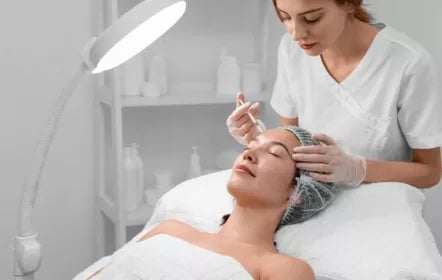
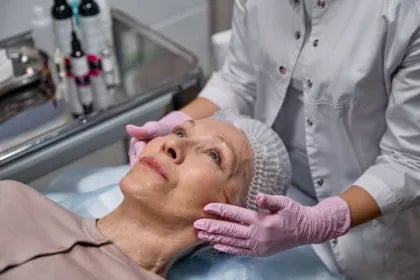
What is the average salary for a cosmetic doctor in Spain?
Before looking at the figures, it is worth clarifying that a cosmetic doctor’s salary does not work in the same way as that of a GP or a hospital junior doctor. In this sector, the remuneration model varies greatly and depends largely on factors such as the type of contract, patient volume and the professional’s ability to attract and retain their own client base.
These are the indicative salary ranges based on the most recent industry data:
| Profile | Estimated gross annual salary |
| Junior cosmetic doctor (0–2 years’ experience) | €26,000 – €38,000 |
| Aesthetic doctor with intermediate experience (3–6 years) | €38,000 – €61,750 |
| Senior aesthetic doctor / with own client base | €60,000 – €100,000 |
| Self-employed aesthetic doctor with own practice | €100,000 – €130,000+ |
The overall sector average stands at around €45,000 gross per annum for salaried roles with average experience. This means that a salaried aesthetic doctor with little experience can earn between €2,000 and €2,800 net per month, whilst, with experience and working on a self-employed basis, earnings range from €4,500 to €7,000 per month in clinics with a high volume of patients.
To put these figures into context, the average salary for a doctor in Spain stands at €54,200 gross per annum, according to Randstad Research’s 2025 Salary Trends Report.
Specialisms such as dermatology or plastic surgery exceed €70,000 in the public sector, with even greater potential in the private sector. However, both require passing the MIR exam and completing several years of hospital residency.
Aesthetic aesthetic medicine , as it does not follow the MIR route, allows practitioners to achieve very competitive income levels in a significantly shorter timeframe, provided they have sound specialist training and know how to build up their clinical practice.
What factors determine an aesthetic doctor’s salary?
An aesthetic doctor’s salary does not depend on a single factor, but rather on a combination of various elements which, if managed well, can make a significant difference to monthly earnings. Some are linked to the professional’s career path; others to strategic decisions that can be made right from the start of their career. These are the most relevant.
Experience and clinical reputation
As in any medical profession, the early years are the lowest-paid. A doctor who has just completed their training in aesthetic medicine can expect a more modest income whilst developing their technique, clinical judgement and, above all, their patient base. In the first few months, it is common to earn between €1,200 and €2,500 net per month, depending on the clinic’s patient volume and the agreed financial terms. Over time, as results are achieved, one’s reputation becomes the most valuable asset, and this translates directly into income.
The type of treatments you perform
Not all procedures generate the same income. Doctors who master more complex and value-added techniques earn significantly more:
- High value: injectables(hyaluronic acid, biostimulators, botulinum toxin), thread lifts, regenerative medicine treatments, advanced anti-ageing protocols.
- Medium value: advanced medical devices(laser, HIFU, high-power radiofrequency).
- Lowest value: non-medical aesthetic treatments or basic supervised device-based procedures.
A doctor who works primarily with injectables and regenerative protocols can earn between two and three times as much as one who merely supervises treatments using basic equipment.
The employment model
This is arguably the most decisive factor in the medium and long term. There are three main models:
- Salaried clinic doctor: receives a fixed monthly salary, generally between €2,000 and €4,000 net. This offers stability, but the ceiling on earnings is more limited. This is the most common model at the start of a doctor’s career, whilst they are still developing their technical skills and building up their patient base.
- Self-employed dentist on a percentage basis: the most common model in the sector for experienced practitioners. The doctor receives a percentage of each treatment carried out, after deduction of material costs. The most common arrangement starts at a 50–50 split, although professionals with their own patient base can negotiate up to 60–70 per cent. With a well-organised schedule, this model offers much higher earning potential than the salaried role.
- Doctor with their own practice: they bear the costs and risks of the business, but also reap the full profits. This is the route with the greatest earning potential and, at the same time, the one requiring the highest initial investment and business management skills.
The most common transition is to start as a salaried doctor to gain experience and build a reputation, and then make the leap to self-employment once the patient base and technical skills are sufficiently established. It is not necessary to be self-employed from the outset to grow financially, but it is the model with the highest earning potential in the medium and long term.
How does specialising in anti-ageing medicine affect your salary?
Anti-ageing medicine is, alongside advanced facial aesthetics, the fastest-growing and most profitable segment of the sector. And this has a direct impact on a professional’s remuneration.
A doctor who incorporates a comprehensive anti-ageing approach into their practice—combining regenerative treatments, nutritional assessment, metabolic optimisation and longevity—significantly expands the value they offer to patients. This translates into three specific financial advantages:
- Higher average treatment costs: comprehensive anti-ageing protocols involve longer-term treatments, more sessions and a greater financial investment from the patient.
- Greater patient loyalty: patients following a preventative and anti-ageing programme return on a regular basis, generating stable revenue over time.
- Competitive differentiation: in an increasingly saturated market of clinics, doctors offering a comprehensive, scientifically backed approach position themselves in a higher-value segment.
Anti-ageing specialists working in leading clinics or running their own practices in major cities can earn over €100,000 a year with a well-optimised schedule, particularly if they combine facial and body treatments with longevity protocols and medical nutrition. In short, specialisation not only improves clinical outcomes: it also directly boosts revenue.
In which Spanish cities do aesthetic doctors earn the most?
Geographical location has a significant impact on salary. Cities with the highest concentration of high-end clinics, patients with greater purchasing power and higher demand for advanced treatments offer the best financial conditions:
| City | Estimated average salary range |
| Madrid | €50,000 – €75,000 |
| Barcelona | €55,000 – €80,000 |
| Marbella / Costa del Sol | €60,000 – €90,000 |
| Valencia / Bilbao | €38,000 – €55,000 |
| Other medium-sized towns | €30,000 – €45,000 |
Madrid and Barcelona are home to the majority of leading clinics and the clientele most willing to invest in advanced cosmetic medicine.
Marbella and the Costa del Sol stand out in particular due to the presence of an international clientele with high purchasing power, which allows for fees above the national average. In these areas, fluency in English or other European languages also becomes a direct competitive advantage in terms of salary.
What specific skills increase an aesthetic doctor’s salary?
Technical mastery of procedures is essential, but it is not the only factor determining how much an aesthetic doctor earns. There is a set of transferable skills which, when well developed, can make a real difference to monthly earnings. These are the most highly valued in the sector:
- Clinical communication and patient management. The ability to build trust, explain treatments clearly and manage patients’ expectations is one of the most valuable assets in aesthetic medicine. A doctor who successfully builds patient loyalty generates recurring income and reduces their reliance on constantly attracting new clients.
- Advanced knowledge of facial anatomy. Doctors with a thorough understanding of facial anatomy as it applies to injectable treatments not only achieve better clinical results but can also gain access to courses, masterclasses and training collaborations, which represent an additional source of income and enhance their reputation within the sector.
- Appointment scheduling and clinical productivity. Knowing how to organise consultation time efficiently, combining procedures of varying duration and value, has a direct impact on monthly turnover. A doctor who optimises their schedule can see more patients without increasing their working hours.
- Digital presence and personal brand. In 2025 and 2026, online visibility is a real driver of salary. Aesthetic doctors who build a strong presence on social media attract their own patients, enabling them to negotiate more favourable commission rates with clinics or set up their own practice with an already established client base.
- Languages, particularly English. In tourist areas such as the Costa del Sol, the Balearic Islands or the Mediterranean coast, fluency in English significantly broadens the pool of potential patients and provides access to an international clientele with greater spending power.
- Continuing professional development and keeping up to date with technical advances. The sector is evolving rapidly. Doctors who keep abreast of the latest treatments, technologies and protocols are the ones who can offer what the market demands, and this directly improves their market value.
What can a cosmetic doctor do to increase their salary?
Whether you’re already practising as an aesthetic doctor or just starting out, these are the factors that will have the greatest impact on your earnings in the medium term:
- Expand your range of advanced techniques. The greater your mastery of high-value procedures such as complex injectables, thread lifts, regenerative medicine and anti-ageing protocols, the higher your hourly rate will be.
- Build a strong personal brand. Doctors who cultivate their digital presence are able to attract their own patients, which enables them to negotiate more favourable terms with clinics or make the leap to private practice.
- Specialise in anti-ageing medicine. Adding an anti-ageing focus to your clinical practice allows you to offer longer-term protocols requiring a greater investment from the patient, thereby increasing the average spend per patient and fostering long-term loyalty.
- Consider opening your own practice. This is the route with the greatest income potential, although it is also the most demanding. It requires investment in equipment, training in management and marketing, and a sufficiently solid existing patient base.
- Undertake continuous professional development. A good option is to enrol on a Master’s degree in aesthetic and anti-ageing medicine that combines up-to-date theoretical training with real-world clinical practice with patients. The UAX Master’s in Aesthetic and Anti-Ageing Medicine can help you with this!
Does aesthetic medicine have a financial future in Spain?
Industry data points to a clear answer: yes, and with plenty of room for growth. Aesthetic medicine is currently one of the best-paid medical specialities in the private sector in Spain for established practitioners, and projections for the coming years reinforce this trend.
The sector’s turnover has exceeded 4,000 million euros annually, with year-on-year growth approaching 12.8 per cent in 2025, according to data from the SEME. Projections estimate an annual growth rate of 7 per cent until 2029, making this discipline one of the most solid career choices within the private medical sector.
Several structural factors explain this sustained growth:
- Growing social acceptance.The proportion of Spaniards who have undergone some form of cosmetic treatment has exceeded 46 per cent and continues to rise. Cosmeticmedicine is no longer seen as exclusive or taboo, but has become an increasingly widespread health and wellbeing choice across all age groups and genders.
- A younger patient profile. Preventive aesthetics, known as ‘prejuvenation’, is driving demand amongst young patients aged between 16 and 30, who are seeking consultations before the first signs of ageing appear. This new profile fosters a longer-term and more ongoing relationship with the aesthetic practitioner, increasing the value of each patient over time.
- Constant technological innovation. The arrival of new regenerative treatments is continually expanding the range of available procedures and, with it, the practitioner’s sources of income.
- Growing demand for qualified professionals. The sector’s boom has created a real need for specialist doctors. Demand for professionals trained in aesthetic medicine and advanced technologies has grown significantly in 2026. This translates into better working conditions and greater bargaining power for well-trained doctors.
A particularly telling indicator is the holding of EXPOMEDES at IFEMA (Madrid) in 2026 – the first professional trade fair for technology and innovation in aesthetic medicine in Spain, organised by Fenin. Initiatives of this kind reflect the sector’s turnover and the seriousness with which it is establishing itself as an industry.
In short, aesthetic medicine is not a passing fad. It is a sector with solid economic foundations, growing demand and a genuine need for well-trained professionals.
Conclusion
There is no fixed upper limit on the salary of an aesthetic doctor in Spain. It is a profession where specialised training, mastery of advanced techniques and the ability to build one’s own practice can make a very significant financial difference compared with other medical roles.
To practise aesthetic medicine in Spain, it is essential to hold a degree in Medicine. From there, the most comprehensive route is to undertake a specialised Master’s degree in aesthetic and anti-ageing medicine, which provides up-to-date theoretical training and real clinical practice with patients. This training is the first step towards entering the sector with discernment, confidence and the necessary tools to build a solid career.
Specialisation in anti-ageing further strengthens this equation: a professional who integrates this approach into their practice broadens their value proposition, builds greater patient loyalty and gains access to a rapidly growing market segment.
Sources:
- Indeed Spain. Salaries for aesthetic doctors in Spain (2025–2026).
- Glassdoor Spain. Aesthetic doctor salary (February 2026).
- Randstad Research. Salary Trends Report 2025.
- Spanish Society of Aesthetic Medicine (SEME). Study on perceptions of aesthetic medicine in Spain, April 2026.
- SEME / Stanpa. Turnover figures for the professional beauty and aesthetic sector in Spain.
- Ministry of Health. Register of registered healthcare professionals.