

See all Online Master's Degrees in Health





See all Master's Degrees in Engineering
Most searched curriculums

Study Health Sciences in one of the qualifications that was most sought after by employers in 2017-2018. Help change the future, contributing to scientific breakthroughs that improve human health, and prevent and tackle disease. Last places.
Because it prepares you to apply engineering to healthcare, developing innovative technologies and solutions that improve diagnosis, treatment and people’s quality of life.
25,000 M² from actual installations
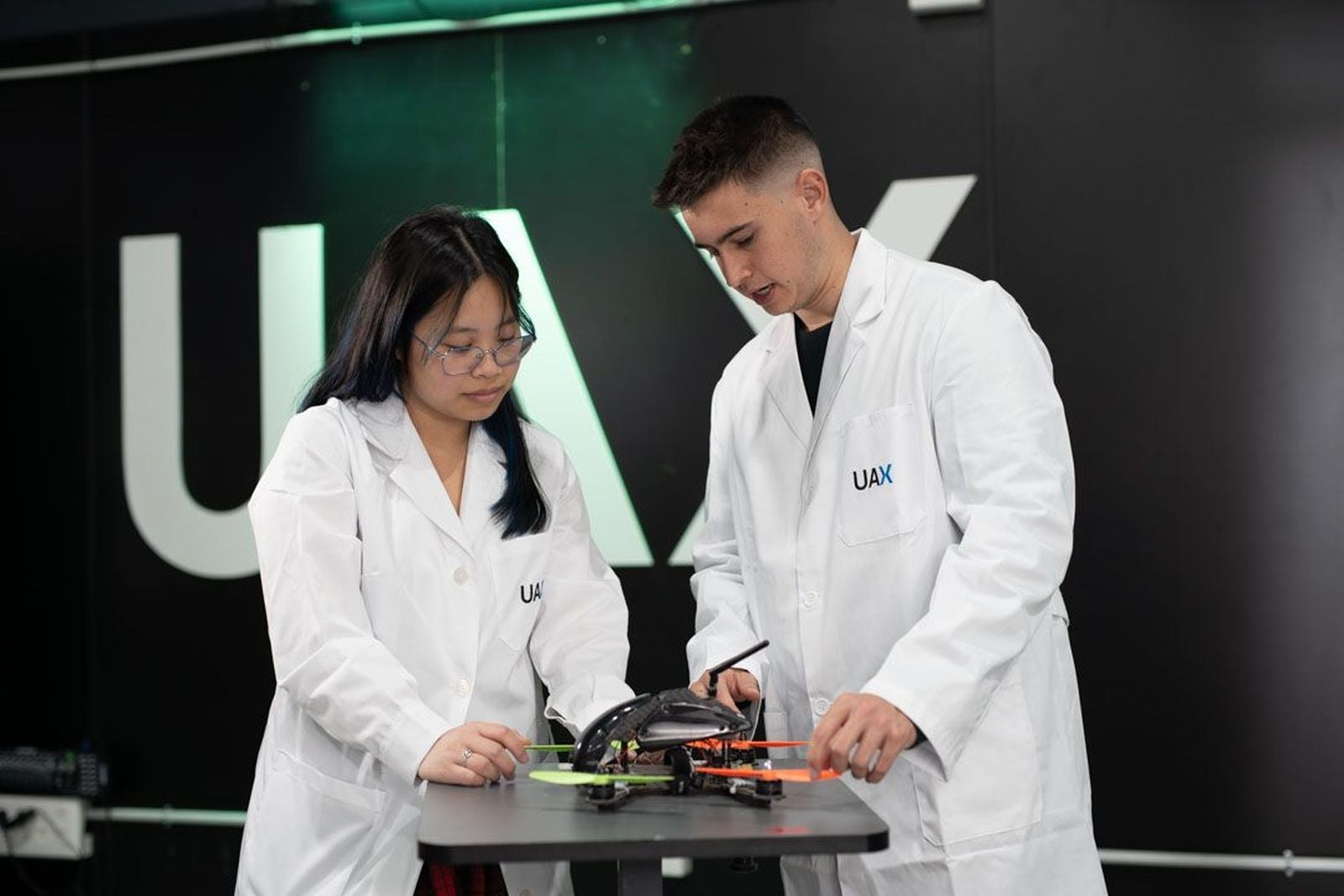
A wind tunnel, a turbojet test rig, an Airbus A320 flight simulator, AeroLab and a FABLAB equipped with 3D printing, laser cutting and robotic arms.
99 % EMPLOYABILITY
99 per cent of our students are in employment upon graduation
1000 AGREEMENTS
Airbus Defence & Space, Iberia, Hispasat, Indra, Thales Alenia Space, INECO, Sacyr, Accenture, Capgemini, GMV, Swiftair, Air Europa and ELA Aviación, amongst others
+ 100 REAL PROJECTS
Take part in the development and actual launch of a microsatellite alongside the aerospace company B2Space, as part of the UAX FABLAB Makers programme.
90 % CURRENTLY WORKING TEACHERS
This provides students with an education that is more closely aligned with the realities of the workplace.
By studying the Bachelor’s Degree in Biomedical Engineering at UAX in Madrid, you will become an engineer recognised both at home and abroad, capable of applying engineering principles and developing technological advances for the field of medicine.
You will design and develop technology that helps improve people’s quality of life, such as robotic surgery, telemedicine, 3D-printed prosthetics and nanosensors, amongst others.
A degree with a global outlook: over 30 per cent of the modules are taught in English, enhancing your international profile and your employability within companies in the healthcare and technology sectors.

UAX MAKERS
Carry out real-world projects with companies. The UAX Makers model is based on collaborative work between students who come together to tackle a real-world project. To this end, we bring together students from different degree programmes, fostering a diversity of approaches and teamwork as key to achieving the best possible solution.

You will simulate and program robotic arms to validate automation processes before their real application with the professional industrial robotics simulator RoboDK.
more information
It designs and manufactures aerodynamic winglets for 3-wheel motorbikes, following the actual MotoGP process of simulation, development and testing in a wind tunnel.

Research and design of bodywork with sustainable materials for Renault

Development of a virtual twin of the Villanueva de la cañada campus.

Creation of an autonomous electric vehicle for data collection from the virtual twin
You will become familiar with medical terminology, and learn how to study, diagnose and treat diseases. We will provide you with the opportunity to connect this knowledge to training in Modern Sciences, working alongside other health professionals to come up with preventive measures to tackle diseases.
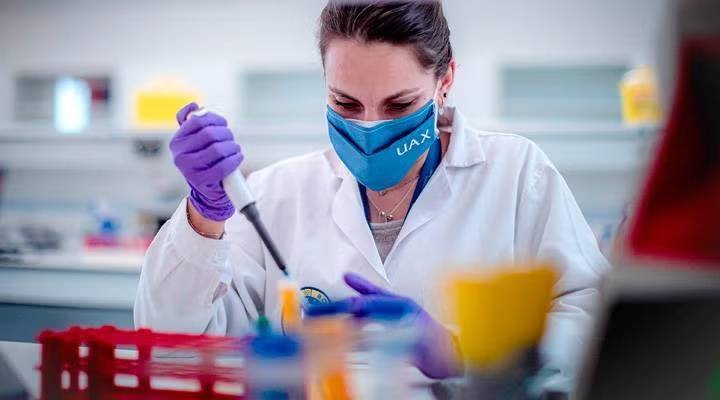
To help you achieve these goals, we have developed an innovative curriculum, incorporating the latest materials and the most in-demand skills, to guarantee your professional success in Biomedicine. In addition, you will benefit from practical placements from the first year of study.
Bachelor’s Degree in Biomedicine
First Year
ANNUAL COURSES
| Code | Subjects | Character* | ECTS | ||||||||||||||||||||||||||||||||||||||||||||||||||||||||||||||||||||||||||||||||||||||||||||||||||||||||||||||||||||||||||||||||||||||||||||||||||||||||||||||||||||||||||||||||||||||||||||||||||||||||||||||||||||||||||||||||||||||||||||||||||||||||||||||||||||||||||||||||||||||||||||||||||||||||||||||||||||||||||||||||||||||||||||||||||
|---|---|---|---|---|---|---|---|---|---|---|---|---|---|---|---|---|---|---|---|---|---|---|---|---|---|---|---|---|---|---|---|---|---|---|---|---|---|---|---|---|---|---|---|---|---|---|---|---|---|---|---|---|---|---|---|---|---|---|---|---|---|---|---|---|---|---|---|---|---|---|---|---|---|---|---|---|---|---|---|---|---|---|---|---|---|---|---|---|---|---|---|---|---|---|---|---|---|---|---|---|---|---|---|---|---|---|---|---|---|---|---|---|---|---|---|---|---|---|---|---|---|---|---|---|---|---|---|---|---|---|---|---|---|---|---|---|---|---|---|---|---|---|---|---|---|---|---|---|---|---|---|---|---|---|---|---|---|---|---|---|---|---|---|---|---|---|---|---|---|---|---|---|---|---|---|---|---|---|---|---|---|---|---|---|---|---|---|---|---|---|---|---|---|---|---|---|---|---|---|---|---|---|---|---|---|---|---|---|---|---|---|---|---|---|---|---|---|---|---|---|---|---|---|---|---|---|---|---|---|---|---|---|---|---|---|---|---|---|---|---|---|---|---|---|---|---|---|---|---|---|---|---|---|---|---|---|---|---|---|---|---|---|---|---|---|---|---|---|---|---|---|---|---|---|---|---|---|---|---|---|---|---|---|---|---|---|---|---|---|---|---|---|---|---|---|---|---|---|---|---|---|---|---|---|---|---|---|---|---|---|---|---|---|---|---|---|---|---|---|---|---|---|---|---|---|---|---|---|---|---|---|---|---|---|---|---|---|---|---|---|---|
| 0131300 | Human anatomy | FB | 8 | ||||||||||||||||||||||||||||||||||||||||||||||||||||||||||||||||||||||||||||||||||||||||||||||||||||||||||||||||||||||||||||||||||||||||||||||||||||||||||||||||||||||||||||||||||||||||||||||||||||||||||||||||||||||||||||||||||||||||||||||||||||||||||||||||||||||||||||||||||||||||||||||||||||||||||||||||||||||||||||||||||||||||||||||||||
Human anatomyCódigo: 0131300 Imprimir Year 1. Annual module. Foundation course. 8 credits. Profesores
Objectives 1. To understand general human morphology, as well as the factors that influence human development throughout the lifespan. 2. To accurately distinguish and understand anatomical terms. To develop a spatial understanding of the human body in order to precisely describe the location and orientation of any structure, as well as its relationship to others. 3. To identify the main anatomical elements of the human body: the morphology and various structures of the musculoskeletal system, the lymphatic ganglia and the thymus, the cardiovascular system, the skin and its appendages, the respiratory system and the endocrine system. 4. Identify each of the structures that make up the digestive, urinary, genital and nervous systems and their relationships with other organs, systems and apparatuses. Prerequisites There are no prerequisites Competencies BASIC AND GENERAL CB1. Students must have demonstrated that they possess and understand knowledge in an area of study building on the foundations of general secondary education; this is typically at a level which, whilst drawing on advanced textbooks, also includes some aspects requiring knowledge from the cutting edge of their field of study. CB3. Students should be able to gather and interpret relevant data (usually within their field of study) in order to form judgements that include reflection on relevant social, scientific or ethical issues. CG1. To develop the ability to analyse and synthesise, and to organise and plan. CG2. To develop oral and written communication skills in their native language and in a foreign language CG3. To develop information management skills. CG8. To develop strategies for independent learning. CG9. Be able to adapt to new situations. SPECIFIC CE1. Understand and recognise the normal structure and function of the human body at the biomolecular, cellular, tissue, organ and systems levels, throughout the different stages of life. CE2. Relate function across the different levels of organisation of the human body. Learning outcomes Accurately distinguish between anatomical terms. Apply a spatial understanding of the human body. Identify the main anatomical elements of the human body: the morphology and various structures of the musculoskeletal system, the lymph node groups and the thymus, the circulatory system, the skin and its appendages, the respiratory system and the endocrine system. Identify each of the structures that make up the digestive, urinary, genital and nervous systems and their relationships with other organs, systems and apparatuses. Compile anatomical and organographic diagrams Description of the content 1. Morphology and function of muscle groups: trunk, head, neck and limbs. 2. Components of bones, organisation and general structure 3. Types of joints. Morphology, structure and function of the different types of joints 4. Vascularisation and innervation of the musculoskeletal system. Neuromuscular axes. 5. Morphology of the spine, pelvic girdle and shoulder girdle. Limbs. Skull and face. 6. Structure of the heart. Structure of the arterial, venous and lymphatic circulatory systems. 7. Morphology and structure of the skin and its appendages at different stages of life. 8. General organisation of the different components of the respiratory system. Morphology and macroscopic structure of the upper airways and the lung. Vocal apparatus. Pleura. 9. Vascularisation and innervation of the lung and the airways. 10. Morphology and structure of the oral cavity and its components, the various segments of the digestive tract, the peritoneum, and the accessory glands of the digestive system. 11. Vascularisation and innervation of the digestive tract. 12. Morphology and structure of the biliary tract; biliary excretion. 13. Morphology and macroscopic structure of the various components of the kidney and the urinary tract. 14. Renal vascularisation and innervation. 15. Morphology and macroscopic structure of the testis, the spermatic ducts, seminal vesicles and prostate; the male external genitalia; the female external and internal genitalia; the pelvic peritoneum; and the ovary. 16. Ageing of the reproductive system. Menopause. 17. Morphology and macroscopic structure of the breast. 18. General organisation, structure and function of the endocrine glands and systems. Hormones: pituitary gland, hypothalamic-pituitary axis, adrenal glands, thyroid and parathyroid glands. 19. Vascularisation of the CNS. Blood-brain barrier. Meninges. Spaces and CSF. 20. Morphology and macroscopic structure of the autonomic nervous system, the limbic system, the medulla oblongata, the pons, the midbrain, the cerebellum, the diencephalon and the telencephalon. 21. Morphology and macroscopic structure of the peripheral nerves, the spinal cord and the spinal nerve roots. 22. The motor and sensory pathways. 23. Morphology and macroscopic structure of the eyeball and optic pathways. 24. Morphology and macroscopic structure of the ear and auditory pathways. Teaching activities Lectures: -Theoretical presentation of the course content by a lecturer, actively engaging students in the learning process. Group tutorials / Supervised assignments: -A topic for the assignment is set by the lecturer, with guidelines to help students find the necessary information and complete the assignment. Seminars: -Workshops in groups of 3–4 students who investigate challenges set by the lecturer or texts relating to the course, summarise them and present their findings. -Challenge-based learning: Solving a challenge, project or case study selected by the lecturer, with the support of notes, books and IT tools, working in groups. Laboratory practicals / Simulation workshops -Simulation: Learning technical skills through simulation using anatomical models. (Simulation environments) -Simulation workshops using computer tools (Simulation environments) -Laboratory practicals: Learning laboratory techniques, applying techniques to problem-solving, developing protocols and interpreting results Assessment system and criteria Without prejudice to any other requirements that may be specified in the relevant course syllabus, as a general rule, failure to attend more than 70 per cent of the course’s teaching activities—which require the student’s physical or virtual presence—will result in the loss of the right to continuous assessment during the standard examination period. In this case, the examination to be held during the official period set by the University will be the sole assessment criterion, with the weighting specified in the course syllabus. ---- SE1, SE2 and SE3 Written assessments: multiple-choice tests, essay-type questions, problem-solving exercises. Assessment by the lecturer of basic laboratory skills tests, based on the student’s attention, participation and attendance. Assessment of practical sessions through written tests and assessment of the laboratory notebook. 80% SE4 Oral and/or written assessment of student work set by the lecturer. 20% The content taught in each term is divided as follows: • 1st term: 2 theoretical-practical modules (T1 and T2) • 2nd term: 2 theoretical-practical modules (T3 and T4) • Attendance at workshops is compulsory, given the nature of the degree programme. Failure to attend will result in a ‘Not Pass’ (NP) mark in the 1st or 2nd term a) Q1: The mark for the first term is calculated by adding together the following percentages: • 80%: Theoretical and practical content: Assessment of the content covered in lectures, seminars and practical sessions. The mark (N) for this section will be calculated as the average of the marks from the assessments carried out throughout the term (T1) and the T2 exam, which will take place at the end of the term during the ordinary February examination session: N = (T1 + T2) / 2. Students who have not passed the T1 assessment may sit a resit for that block during the ordinary examination session. It is an essential requirement for passing the term to have passed each of the parts, T1 and T2. • 20%: Continuous Assessment (CA): Based on group assignments to be presented in class and various activities set via the virtual campus. The final mark for the term is calculated as the sum of the two sections above. It is an essential requirement for passing the term to have passed both the theoretical and practical examinations. If any block has not been passed, the term will be considered a fail, and the published mark will be the mark for the failed block. Each passed block (score of 5 or above) will be retained until and including the supplementary examination session. b) Q2 The mark for the second term will be calculated in exactly the same way as explained in Q1, bearing in mind that blocks T3 and T4 must be passed separately in order to calculate the average mark for that term. c) Ordinary examination session Students who pass both terms will have a final mark equal to the average of the two. Final mark = (Q1 + Q2) / 2. In the ordinary June examination session, the Q1 mark for those students who had not previously passed it will be calculated in the same way as explained in section a, such that the student will sit an examination on the modules not passed during the academic year and their mark for the Continuous Assessment completed during that term will be retained, in order to calculate their average mark. Each term must be passed separately to pass the ordinary June examination session; otherwise, the final mark will be the lower of the two term marks. d) Supplementary examination session Students will sit examinations for the theoretical and practical module(s) not passed during the academic year. The Continuous Assessment mark will be retained up to and including the extraordinary examination session. The final mark will again be calculated as the average of the marks for both four-month periods, which will be calculated separately in the same way as described previously in sections a and b. Students must pass each term separately to pass the resit; otherwise, the final mark will be the lower of the two term marks. Students who have passed one of the two terms in the ordinary June examination session will retain the mark for that term and will only be required to sit the examination for the module in which they failed. * As a general rule, examinations will consist of multiple-choice questions with a single correct answer. A penalty of 0.33 marks will be applied for each question answered incorrectly. A score of 5 marks or above is required to pass the exam. The type of exam will be specified prior to the exam session. * Attendance at classes is compulsory. * None of the modules passed during the previous academic year will be carried over to the next academic year, nor will the mark for continuous assessment Timetable Click on this link to view the detailed timetable in Excel
Bibliography Basic: 1. Patton, Kevin T. Anatomy and Physiology. / Elsevier, 2013. ISBN: 9788490221082 Supplementary: 2.- Drake, Richard L. Gray’s Anatomy for Students. / 3rd ed. Elsevier, 2015. ISBN: 9788490228425 3. Netter, F. Atlas of Human Anatomy 7th ed. Elsevier. 2019. ISBN: 9788491134688 Others: 4.- Gilroy, Anne M. Prometheus: Editorial Médica Panamericana. 2019. ISBN: 9788498357080 5.- Patton K, Thibodeau G Structure and Function of the Human Body 15th ed. Elsevier. 2016. ISBN: 9788491130819 6. Pró, Eduardo Adrián Clinical Anatomy : Editorial Médica Panamericana. 2011. ISBN: 9789500601238 7. Puelles López, L. Neuroanatomy : Editorial Médica Panamericana. 2008. ISBN: 9788479034535 8. Rohen, Johannes W. Atlas of Human Anatomy: Elsevier. 2016. ISBN: 9788490229491 9. Rouviere H, Delmas A Descriptive, Topographical and Functional Human Anatomy Masson. 2005. ISBN: 9788445815342 10. Tortora GJ, Derrickson B Principles of Anatomy and Physiology 13th ed. Médica Panamericana. 2018. ISBN: 9786077743781 |
|||||||||||||||||||||||||||||||||||||||||||||||||||||||||||||||||||||||||||||||||||||||||||||||||||||||||||||||||||||||||||||||||||||||||||||||||||||||||||||||||||||||||||||||||||||||||||||||||||||||||||||||||||||||||||||||||||||||||||||||||||||||||||||||||||||||||||||||||||||||||||||||||||||||||||||||||||||||||||||||||||||||||||||||||||||
| 0131301 | Biology | FB | 10 | ||||||||||||||||||||||||||||||||||||||||||||||||||||||||||||||||||||||||||||||||||||||||||||||||||||||||||||||||||||||||||||||||||||||||||||||||||||||||||||||||||||||||||||||||||||||||||||||||||||||||||||||||||||||||||||||||||||||||||||||||||||||||||||||||||||||||||||||||||||||||||||||||||||||||||||||||||||||||||||||||||||||||||||||||||
BiologyCódigo: 0131301 Imprimir Year 1. Annual module. Foundational studies. 10 credits. Profesores
Objectives 1. Students will be able to recognise the functional organisation of living organisms at the cellular and tissue levels by understanding the complexity of signal transduction pathways. 2. Students will be able to identify the systems that link the cell to its environment, intracellular transport, endocytosis and the basic processes of cellular behaviour through study and by working in collaborative literature groups 3. Students will be able to apply microscopic and molecular biology methods to the study of cells by undertaking 12 hours of laboratory practical work spread over 4 days at 3 hours per day. Competencies BASIC AND GENERAL: CB1. Students demonstrate that they possess and understand knowledge in an area of study that builds on the foundations of general secondary education and is usually at a level which, whilst supported by advanced textbooks, also includes some aspects involving knowledge from the cutting edge of their field of study. CB3. Students are able to gather and interpret relevant data (usually within their area of study) to make judgements that include reflection on relevant social, scientific or ethical issues. CG1. Develop the capacity for analysis and synthesis, and for organisation and planning. CG2. Develop oral and written communication skills in their native and foreign languages. CG3. Develop information management skills. CG4. Develop skills in interpersonal relationships and teamwork, both interdisciplinary and international. CG5. Acquire problem-solving and decision-making skills. CG6. Acquire the ability to think critically. CG13. Embrace sustainability through an awareness of environmental issues SPECIFIC: CE1. Understand and recognise the normal structure and function of the human body at the biomolecular, cellular, tissue, organ and systemic levels, across the different stages of life. CE2. Relate the functions of the human body at different levels of organisation. CE19. Understand ageing at the cellular level and its consequences for the functioning of the human body. Learning outcomes To recognise the functional organisation of living organisms at the cellular and tissue levels To identify the systems that link the cell to its environment, intracellular transport, endocytosis and the basic processes of cellular behaviour To apply microscopic and molecular biology methods to the study of cells Course content 1. The cell, the basic unit of life 2. The plasma membrane. Microtransport and macrotransport (endocytosis and exocytosis). 3. Interaction of the plasma membrane with the environment 4. The nucleus: nuclear transport 5. The nucleus: chromatin organisation, nuclear bodies, DNA replication and RNA transcription 6. Synthesis and modification of proteins 7. The endomembrane system: endoplasmic reticulum, Golgi apparatus and lysosomes 8. The cytoskeleton 9. Mitochondria and peroxisomes. Bioenergetics and oxidative metabolism 10. Cell signalling 11. The cell cycle 12. Cell death: apoptosis, senescence, necrosis and necroptosis 13. Cancer 14. Stem cells and regenerative medicine Training activities Masterclasses: - Theoretical presentation of the subject content by a lecturer, engaging students in the learning process Supplementary classes: -Presentation of students’ work, followed by a theoretical presentation by the lecturer on supplementary content to support the learning of specific topics. Group tutorials / Supervised work Seminars: -Workshops in groups of 3–4 students who investigate challenges set by the teacher or texts related to the subject, summarise them and present their findings. -Information search: Primary sources, reviews, databases and websites on the subject -Challenge-based learning: Working in a group to resolve a challenge, project or case study selected by the teacher, with the support of notes, books and computer tools -Presentation: Oral presentation of projects, work or challenges, supported by digital or physical resources -Guided debate: A discussion between two groups of students who prepare and present different findings from an investigation. The discussion should be spontaneous. The aim is to promote students’ oral expression and comprehension and to develop their critical thinking skills. Laboratory sessions/Simulation workshops: -Learning laboratory techniques, applying techniques to problem-solving, developing protocols, and interpreting results. Assessment system and criteria Attendance at less than 70 per cent of formative activities will result in the loss of the right to continuous assessment in the ordinary assessment period, irrespective of other requirements defined for the module. In this case, the examination held during the official period set by the University will be the sole assessment criterion, with the weighting corresponding to it as per the course syllabus. Due to the nature of the degree programme, laboratory practicals are compulsory. Failure to attend will result in a ‘Not Presented’ mark in the regular examination session, and the module will be assessed in the supplementary session. Students repeating the course who passed the laboratory practicals in the previous year are not required to undertake the practicals, but they must sit the practical examination. ---- SE1. Written assessments: test, descriptive exercises, practical exercises. 70% SE2 and SE3. The teacher’s assessment of basic laboratory techniques based on the student’s attention, participation and attendance. Assessment of the laboratory practicals through written tests and evaluation of the laboratory notebook. 15% SE4. Assessment of workshops set by the teacher, either orally and/or in writing. 15% The assessment for each term includes evaluating both the knowledge and skills acquired. The content for each term is divided as follows: 1. First Term: Theoretical knowledge (lectures) and practical skills (workshops and laboratory work). 2. Second Term: Theoretical knowledge (lectures) and practical skills (workshops and laboratory work). Both aspects (knowledge and skills) are assessed through written examinations and practical assessments during each term. The final mark for each term is a combination of these assessments. First Quarter: 1. The theoretical knowledge covered in the first term will be assessed through two written examinations: Term 1 Test 1 (CO11Q) and Term 1 Test 2 (CO21Q), with the latter taking place during the official February examination session. The average mark from both exams will account for 70 per cent of the final mark for the quarter. A minimum mark of 5 is required in CO11Q to avoid having to retake the entire syllabus in CO21Q. If the mark is below 5, the student must retake the entire theoretical syllabus in CO21Q to pass the quarter. In such cases, CO21Q will serve as a final exam, accounting for 70 per cent of the quarter’s final mark. 2. The assessment of the skills acquired during the first quarter relates to the evaluation of the student’s performance in laboratory sessions (15 per cent) and workshop sessions (15 per cent). The right to submit a workshop assignment requires in-person attendance, unless the student has been granted an exemption or has a valid justification. Skills account for 30 per cent of the final mark for the first semester. To add this 30 per cent to the 70 per cent from theoretical knowledge, it is essential to have passed the theoretical part (with a minimum mark of 5 in both exams). The final mark for the first quarter will be the sum of 70 per cent for knowledge and 30 per cent for skills, forming the ‘PARCial’ February mark (PARCFEB). Second Quarter: 1. Theoretical knowledge in the second quarter will be assessed in the same way as in Q1. There will be two written exams: Test 1 of the second quarter (CO12Q) and Test 2 of the second quarter (CO22Q), which will coincide with the official June exam session. The assessment of skills in the second quarter relates to the student’s performance in laboratory sessions (15 per cent) and workshop sessions (15 per cent). This practical work will be assessed through tests and a presentation. The final mark for the second semester will be calculated in the same way as for Q1 and will be published in the PARCJUN column after the official June exam session. Final marks will be calculated in a similar way to Q1, and the overall course mark will be the average of the results from both passed quarters. Extraordinary Examination Session: Students who have failed any quarter may retake it during the supplementary examination session, where each quarter will be assessed independently. The final mark for the course will be the average of the marks obtained in the passed quarters, assessed independently. This course cannot be passed if any quarter is failed. Timetable Click on this link to view the detailed timetable in Excel
Bibliography Core reading: 1. Geoffrey M. Cooper The Cell: A Molecular Approach (International 8th edition) Oxford University Press. 2019. ISBN: 9781605358635 Supplementary: 2. Bruce Alberts Molecular Biology of the Cell 6th ed. Garland Publishing. 2019. ISBN: 9780815344322 Other: 3. Stephen R. Bolsover, Andrea Townsend-Nicholson, Greg FitzHarris, Elizabeth A. Shephard, Jeremy S. Hyams, Sandip Patel Cell Biology: A Short Course, 4th Edition Wiley-Blackwell. 2022. ISBN: 9781119757764 |
|||||||||||||||||||||||||||||||||||||||||||||||||||||||||||||||||||||||||||||||||||||||||||||||||||||||||||||||||||||||||||||||||||||||||||||||||||||||||||||||||||||||||||||||||||||||||||||||||||||||||||||||||||||||||||||||||||||||||||||||||||||||||||||||||||||||||||||||||||||||||||||||||||||||||||||||||||||||||||||||||||||||||||||||||||||
| TOTAL: | 18 | ||||||||||||||||||||||||||||||||||||||||||||||||||||||||||||||||||||||||||||||||||||||||||||||||||||||||||||||||||||||||||||||||||||||||||||||||||||||||||||||||||||||||||||||||||||||||||||||||||||||||||||||||||||||||||||||||||||||||||||||||||||||||||||||||||||||||||||||||||||||||||||||||||||||||||||||||||||||||||||||||||||||||||||||||||||
FIRST FOUR-MONTH PERIOD
| Code | Subjects | Character* | ECTS | ||||||||||||||||||||||||||||||||||||||||||||||||||||||||||||||||||||||||||||||||||||||||||||||||||||||||||||||||||||||||||||||||||||||||||||||||||||||||||||||||||||||||||||||||||||||||||||||||||||||||||||||||||||||||||||||||||||||||||||||||||||||||||||||||||||||||||
|---|---|---|---|---|---|---|---|---|---|---|---|---|---|---|---|---|---|---|---|---|---|---|---|---|---|---|---|---|---|---|---|---|---|---|---|---|---|---|---|---|---|---|---|---|---|---|---|---|---|---|---|---|---|---|---|---|---|---|---|---|---|---|---|---|---|---|---|---|---|---|---|---|---|---|---|---|---|---|---|---|---|---|---|---|---|---|---|---|---|---|---|---|---|---|---|---|---|---|---|---|---|---|---|---|---|---|---|---|---|---|---|---|---|---|---|---|---|---|---|---|---|---|---|---|---|---|---|---|---|---|---|---|---|---|---|---|---|---|---|---|---|---|---|---|---|---|---|---|---|---|---|---|---|---|---|---|---|---|---|---|---|---|---|---|---|---|---|---|---|---|---|---|---|---|---|---|---|---|---|---|---|---|---|---|---|---|---|---|---|---|---|---|---|---|---|---|---|---|---|---|---|---|---|---|---|---|---|---|---|---|---|---|---|---|---|---|---|---|---|---|---|---|---|---|---|---|---|---|---|---|---|---|---|---|---|---|---|---|---|---|---|---|---|---|---|---|---|---|---|---|---|---|---|---|---|---|---|---|---|---|---|---|---|---|---|---|---|---|---|
| 0131302 | Biophysics | OB | 3 | ||||||||||||||||||||||||||||||||||||||||||||||||||||||||||||||||||||||||||||||||||||||||||||||||||||||||||||||||||||||||||||||||||||||||||||||||||||||||||||||||||||||||||||||||||||||||||||||||||||||||||||||||||||||||||||||||||||||||||||||||||||||||||||||||||||||||||
BiophysicsCódigo: 0131302 Imprimir Course 1: First-term module. Compulsory. 3 credits. Profesores
Objectives - To acquire a understanding of the fundamental concepts of physics as applied to biological systems - To develop the ability to formulate problems relating to the physics of biological systems in quantitative terms - Solving quantitative problems relating to the physics of biological systems - To use the units of the International System correctly - Developing teamwork skills through the production of videos - Acquiring advanced skills in the use of a scientific calculator Course description The Biophysics module focuses on the study of the physical fundamentals and their application to biological processes. Assessment system and criteria The module may be passed through continuous assessment or by means of a final assessment. Continuous assessment: To be eligible for continuous assessment, students must attend at least 70% of classes. Continuous assessment will consist of a mid-term exam (to be held on Tuesday 3 November) covering the first section of the syllabus, which will account for 42.5 per cent of the mark (a minimum mark of 4 is required to be included in the average). The second section of the syllabus (accounting for 42.5 per cent of the mark) will be covered in the January assessment period. 5 per cent will be based on the student’s attention, participation and attendance whilst working on exercises in class. The remaining 10 per cent will correspond to the mark obtained for the group production of a video on a physics experiment. To pass the module through continuous assessment, a average mark of 5 or above is required. Final assessment: The module may be passed by sitting a comprehensive assessment covering the entire syllabus; a mark of 5 or above is required to pass the module in this way. Timetable Click on this link to view the detailed timetable in Excel
Bibliography Basic: 1. Mirabent D. J. Physics for the Life Sciences McGraw Hill, 2008. 2008. ISBN: 9788448168032 Supplementary: 2. Aurengo, André Biophysics Madrid: McGraw-Hill-Interamericana, 2008. 2008. ISBN: 9788448163921 3. Bauer, Wolfgang Physics for Engineering and Science: McGraw-Hill, 2011. ISBN: 9786071511911 4. López Román, A. Carrillo Espartero, A. Fundamentals of Biophysics Applied to the Human Body 1st ed. BDS Librería Editorial. 2016. ISBN: 9788495277589 |
|||||||||||||||||||||||||||||||||||||||||||||||||||||||||||||||||||||||||||||||||||||||||||||||||||||||||||||||||||||||||||||||||||||||||||||||||||||||||||||||||||||||||||||||||||||||||||||||||||||||||||||||||||||||||||||||||||||||||||||||||||||||||||||||||||||||||||||
| 0131303 | Biochemistry: Molecular structure and function | FB | 6 | ||||||||||||||||||||||||||||||||||||||||||||||||||||||||||||||||||||||||||||||||||||||||||||||||||||||||||||||||||||||||||||||||||||||||||||||||||||||||||||||||||||||||||||||||||||||||||||||||||||||||||||||||||||||||||||||||||||||||||||||||||||||||||||||||||||||||||
Biochemistry: Molecular structure and functionCódigo: 0131303 Imprimir Course 1: First-term module. Foundational training. 6 credits. Profesores
Objectives Students will identify the main structural characteristics of biomolecules and deduce the functions they perform in the body, in metabolism and in the transmission of information. They will identify the key molecules involved in biochemical processes: carbohydrates, lipids, proteins and nucleic acids. They will apply the basic experimental techniques used in a biochemistry and molecular biology laboratory Prerequisites There are no prerequisites, but a basic knowledge of organic chemistry will be helpful. Learning Outcomes CB1. Students should have demonstrated that they possess and understand knowledge in a field of study building on the foundations of general secondary education; this is typically at a level which, whilst drawing on advanced textbooks, also includes some aspects involving knowledge from the cutting edge of their field of study. CB3. Students have the ability to gather and interpret relevant data (normally within their field of study) in order to form judgements that include reflection on relevant social, scientific or ethical issues. CB4. Students should be able to communicate information, ideas, problems and solutions to both specialist and non-specialist audiences. CB5. Students should have developed the learning skills necessary to undertake further studies with a high degree of autonomy. CG1. To develop the ability to analyse and synthesise, and to organise and plan. CG3. To develop information management skills. CG5. Acquire problem-solving and decision-making skills. CG6. To acquire the capacity for critical reasoning. CG8. To develop strategies for independent learning. CG9. Be able to adapt to new situations. CG12. Develop a commitment to quality. CG13. Commit to sustainability through an awareness of environmental issues. SPECIFIC CE1. Understand and recognise the normal structure and function of the human body at the biomolecular, cellular, tissue, organ and systems levels, throughout the different stages of life. CE2. Relate function across the different levels of organisation of the human body. CE5. Describe disease at the biomolecular, cellular, metabolic, tissue, organ and systems levels, and the relationships between them. CE10. Understand the structure and function of biomolecules for their application as therapeutic targets, and as an aid to treatment and diagnosis Learning outcomes Identify the main structural characteristics of biomolecules and deduce the functions they perform in the body, in metabolism and in the transmission of information. Apply the basic experimental techniques used in a biochemistry and molecular biology laboratory. Course content 1. Water and the biochemical behaviour of biomolecules. 2. Molecular structure, isomerism of different biomolecules and their interaction with water and other molecules: sugars, lipids, DNA and RNA, amino acids and proteins. 3. Function and localisation of biomolecules within the cell and in the extracellular matrix. 4. Bioenergetics. Introduction to metabolism. 5. Structure and function of enzymes. Mechanisms of action. Enzymatic kinetics. Teaching activities Lectures: -Theoretical presentation of the course content by a lecturer, encouraging students to participate in the learning process. Supplementary lectures: -Presentation of students’ work, and a theoretical presentation by the lecturer on supplementary course content to aid the learning of specific topics. Group tutorials / Supervised assignments: Seminars: -Workshops in groups of 3–4 students who research challenges set by the lecturer or texts relating to the course, summarise them and present their findings. -Information search: Original sources, reviews, databases, and subject-related websites -Challenge-based learning: Solving a challenge, project or case study selected by the lecturer, with the support of notes, books and IT tools, working in groups. -Problem-solving: Solving exercises set by the lecturer with the support of notes, books and IT tools, working in groups. (Case study method) -Presentation: Oral presentation by students, supported by electronic or physical aids, of projects, assignments and challenges. -Guided debate: A discussion between two groups of students who prepare different findings from a piece of research and present them, with the discussion unfolding spontaneously. The aim is to promote students’ oral expression and comprehension and to develop their critical thinking skills. (Inquiry-based learning) Laboratory practicals: -Learning laboratory techniques, applying techniques to problem-solving, developing protocols and interpreting results. Assessment system and criteria Attendance at 70 per cent of teaching activities is a mandatory requirement to retain the right to continuous assessment during the regular examination period. If this percentage is not met, the student will lose the right to continuous assessment, and the examination to be held during the official period set by the University will be the sole assessment criterion, with the corresponding weighting as specified in the course syllabus. Furthermore, due to the nature of the degree programme, completion of the work placement is compulsory. If the work placement is not completed, a ‘Did not attend’ mark will appear in the ordinary examination session, and the student will be required to sit an examination covering the entire module in the supplementary session. Students repeating the module who passed the work placement in the previous academic year are not required to undertake the work placement again, but they must sit the examination. SE1 Written assessments: multiple-choice tests, essay-type questions, problem-solving exercises. 75%. - Continuous assessment exam (November): - if the mark is 7 or above, the module is passed (37.5%) - if the mark is below 7, the module is NOT exempted but counts for 10%. - Ordinary examination session (January): - For those who have been exempted from the first mid-term exam, the January exam counts for 37.5% - For those who have not been exempted from the mid-term exam, the exam counts for 65 per cent SE2 and SE3 Assessment by the lecturer of basic laboratory skills tests, based on the student’s attention, participation and attendance. Assessment of practicals via written tests and evaluation of the practical notebook. 10 per cent. Attendance at practicals is compulsory. Submission of the worksheets for each practical is compulsory; these must be presented during the exam. Students repeating the course who passed the practicals in previous years must sit the practicals exam with their worksheets. Otherwise, they will receive a ‘NP’ in the ordinary examination session. SE4 Oral and/or written assessment of student work set by the lecturer (15%): practical exercises and class participation (7.5%) + presentation of work (7.5%) Timetable Click on this link to view the detailed timetable in Excel
Bibliography Basic: 1. Baynes, John W. Medical Biochemistry / Elsevier. 2019. ISBN: 9788491134060 2. Lehninger, Albert L. Principles of Biochemistry : Omega. 2009. ISBN: 9788428214865 3. Lieberman, Michael. Biochemistry, Molecular Biology and Genetics / Wolters Kluwer, 2014. ISBN: 9788416004621 4. Stryer Biochemistry Reverté. 2013. ISBN: 9788429176025 |
|||||||||||||||||||||||||||||||||||||||||||||||||||||||||||||||||||||||||||||||||||||||||||||||||||||||||||||||||||||||||||||||||||||||||||||||||||||||||||||||||||||||||||||||||||||||||||||||||||||||||||||||||||||||||||||||||||||||||||||||||||||||||||||||||||||||||||||
| 0131304 | History and Ethics of Biomedicine | OB | 6 | ||||||||||||||||||||||||||||||||||||||||||||||||||||||||||||||||||||||||||||||||||||||||||||||||||||||||||||||||||||||||||||||||||||||||||||||||||||||||||||||||||||||||||||||||||||||||||||||||||||||||||||||||||||||||||||||||||||||||||||||||||||||||||||||||||||||||||
History and Ethics of BiomedicineCódigo: 0131304 Imprimir Course 1: Subject. First term. Compulsory. 6 credits. Profesores
Objectives To learn about the history of biomedical sciences in order to understand the present. To understand the ethical foundations and principles necessary to ensure quality and excellence in the field of biomedical research and to protect the integrity and dignity of research participants. To integrate history and ethics within a common framework. Competencies BASIC AND GENERAL CB1. Students should have demonstrated that they possess and understand knowledge in an area of study building on the foundations of general secondary education; this is typically at a level which, whilst drawing on advanced textbooks, also includes some aspects requiring knowledge from the cutting edge of their field of study. CB2. Students should be able to apply their knowledge to their work or profession in a professional manner and possess the competences typically demonstrated through the formulation and defence of arguments and the resolution of problems within their field of study. CB3. Students should be able to gather and interpret relevant data (usually within their field of study) in order to form judgements that include reflection on relevant social, scientific or ethical issues. CB4. Students should be able to communicate information, ideas, problems and solutions to both specialist and non-specialist audiences. CB5. Students should have developed the learning skills necessary to undertake further study with a high degree of autonomy. CG1. To develop the ability to analyse and synthesise, and to organise and plan. CG2. To develop oral and written communication skills in their native language and in a foreign language CG3. To develop information management skills. CG4. To develop skills in interpersonal relations and teamwork, as well as interdisciplinary and international collaboration. CG5. To acquire problem-solving and decision-making skills. CG6. Acquire the ability to think critically. CG7. Generate creative proposals and develop leadership, initiative and an entrepreneurial spirit. CG8. Develop strategies for independent learning. CG9. Be able to adapt to new situations. CG10. Develop a commitment to ethical behaviour. CG11. Recognise diversity and multiculturalism, and learn about other cultures and customs. CG12. Develop a commitment to quality. CG13. Embrace sustainability through an awareness of environmental issues. SPECIFIC CE4. Understand the importance and limitations of scientific thinking in the study, prevention and management of diseases. Learning outcomes Recognise the historical evolution of the culture of disease Contextualise and classify the functioning of medicine across different historical periods Explain the current approach from the perspective of the historical evolution of medicine to the present day Understand the ethical foundations and principles necessary to ensure quality and excellence in the field of biomedical research, as well as to protect and preserve the integrity of participants in clinical trials and the data obtained from such trials. Apply the current regulations governing biomedical processes and products. Interpret the limits of medical diagnosis by applying ethical principles to the clinician–patient relationship and clinical advice To apply current regulations governing animal experimentation, preventing its misuse Understand chimeras and hybrids and apply ethical guidelines Understand the ethical principles and their limits in reproductive biomedicine Course content description 1. The biological and cultural evolution of disease 2. The emergence of scientific medicine and biology in ancient Greece, Hellenistic medicine and biology, and in ancient Rome 3. Historical development of scientific medicine and biology at different periods in history: the Middle Ages in the East and West; Arabic medicine and biology; monastic and scholastic medicine; the Renaissance; the 17th and 18th centuries; the 19th and 20th centuries 4. Scientific medicine today: preventive medicine and public health; pharmacotherapy; precision medicine. Medical biology and biomedicine. 5. Legal aspects of biomedical research and its relationship with bioethics. 6. Law 14/2007 on Biomedical Research 7. Ethics in human experimentation: clinical trials, human samples. Duty of data confidentiality. Royal Decree 279/2016 on the accreditation of biomedical or health research institutes 8. Ethical aspects of genetic counselling and research 9. Current regulations and legislation governing biomedical processes and products. 10. Bioethical considerations in animal experimentation 11. Biobanks 12. Bioethics and reproduction Teaching activities Lectures: Theoretical presentation of the course content by a lecturer, engaging students in the learning process Group tutorials / Supervised assignments: -Assignment topic set by the lecturer with guidelines to help students find information and complete the assignment. Seminars: -Workshops in groups of 3–4 students who investigate challenges set by the lecturer or texts relating to the course, summarise them and present their findings. -Information search: Original sources, reviews, databases, subject-related websites -Presentation: Oral presentation by the student, supported by electronic or physical aids, of projects, assignments or challenges -Guided debate: Discussion between two groups of students who have prepared different findings from a research project. They present their findings, with the discussion developing spontaneously. The aim is to promote students’ oral expression and comprehension and to develop their critical thinking skills Assessment system and criteria Without prejudice to any other requirements that may be set out in the relevant course syllabus, as a general rule, failure to attend more than 70 per cent of the course’s teaching activities—which require the student’s physical or virtual presence—will result in the loss of the right to continuous assessment during the standard assessment period. In this case, the examination to be held during the official examination period set by the University will be the sole assessment criterion, with the weighting specified in the course syllabus. SE1 Written assessments: multiple-choice tests, essay-type questions, problem-solving exercises. 75% SE4 Assessment of student work set by the lecturer. 25% CONTINUOUS ASSESSMENT* MULTIPLE-CHOICE TEST covering the first half of the syllabus. A fail mark is 6 or below. If this mark is not achieved, the student will retake the exam on the day of the Ordinary Examination Period in January. ASSIGNMENTS SET BY THE LECTURER. 20% of the final mark. EXTRACURRICULAR ASSIGNMENTS AND TASKS: 5% *Continuous assessment will only be taken into account if the student has attended at least 70 per cent of the classes. JANUARY REGULAR EXAM SESSION There will be two options: - Students who have passed the first part: they will sit a multiple-choice exam covering the material corresponding to the second half of the syllabus. The average of both parts will be calculated provided the mark is above 6, and this will count as 75 per cent of the final mark. If this second part is failed, the student will sit the supplementary examination covering the entire syllabus and the mark for the coursework will not be carried forward. - Students who have not achieved a mark of 6 in the first part: they will sit a multiple-choice exam covering the entire course content, which will count as 75 per cent of the final mark. If they fail this exam, the student will sit the supplementary exam covering the entire syllabus, and the mark for the coursework will not be carried over. EXTRAORDINARY EXAM SESSION 100% multiple-choice exam covering the entire syllabus. Timetable Click on this link to view the detailed timetable in Excel
Bibliography Essential: 1. M. A. Sanchéz González History of Medicine and Medical Humanities Elsevier. 2012. ISBN: 9788445821152 2. Manuel Sánchez González Bioethics in Health Sciences Elsevier. 2012. ISBN: 9788445821169 Supplementary: 3.- JOUVE DE LA BARREDA, Nicolás The Message of Life: A Geneticist’s Creed Encuentro. 2020. ISBN: 978-84-1339-0 |
|||||||||||||||||||||||||||||||||||||||||||||||||||||||||||||||||||||||||||||||||||||||||||||||||||||||||||||||||||||||||||||||||||||||||||||||||||||||||||||||||||||||||||||||||||||||||||||||||||||||||||||||||||||||||||||||||||||||||||||||||||||||||||||||||||||||||||||
| 0131305 | Immunology | FB | 6 | ||||||||||||||||||||||||||||||||||||||||||||||||||||||||||||||||||||||||||||||||||||||||||||||||||||||||||||||||||||||||||||||||||||||||||||||||||||||||||||||||||||||||||||||||||||||||||||||||||||||||||||||||||||||||||||||||||||||||||||||||||||||||||||||||||||||||||
ImmunologyCódigo: 0131305 Imprimir Course 1: First-semester module. Foundation course. 6 credits. Profesores
Objectives The student will recognise the different components of the immune system The student will combine and integrate the main components of the immune system to understand the different immune responses: innate and adaptive The student will identify those components of the immune system that have biomedical applications in diagnosis and immunotherapy Prerequisites Knowledge of general biology is recommended Competencies BASIC AND GENERAL: CB1. Students demonstrate that they possess and understand knowledge in an area of study that builds on the foundations of general secondary education and is usually at a level which, whilst supported by advanced textbooks, also includes some aspects involving knowledge from the cutting edge of their field of study. CB2. Students are able to apply their knowledge to their work or profession in a professional manner and possess the skills typically demonstrated through the development and defence of arguments and the resolution of problems within their field of study. CB3. Students are able to gather and interpret relevant data (usually within their field of study) to make judgements that include reflection on relevant social, scientific or ethical issues. CB4. Students are able to convey information, ideas, problems and solutions to both specialist and non-specialist audiences. CB5. Students have developed the learning skills necessary to undertake further studies with a high degree of autonomy. CG1. Develop the capacity for analysis and synthesis, and for organisation and planning. CG2. Develop oral and written communication skills in native and foreign languages. CG3. Develop information management skills. CG4. Develop skills in interpersonal relationships and teamwork, both interdisciplinary and international. CG5. Acquire problem-solving and decision-making skills. CG6. Acquire the ability to think critically. CG7. Generate creative proposals and develop leadership, initiative and an entrepreneurial mindset. CG8. Develop strategies for independent learning. CG9. Know how to adapt to new situations. CG10. Develop a commitment to ethical behaviour. CG11. Recognise diversity and multiculturalism and learn about other cultures and traditions. CG12. Understand the importance of quality. CG13. Embrace sustainability through an awareness of environmental issues SPECIFIC: CE1. Understand and recognise the normal structure and function of the human body at the biomolecular, cellular, tissue, organ and systemic levels, throughout the different stages of life. CE2. Relate the functions of the human body at different levels of organisation. CE6. Understand and recognise the agents and risk factors that determine health status and the development of disease. CE7. Recognise and classify the microbiome and pathogenic microorganisms, and understand their role in the aetiology and treatment of diseases. CE9. Understand and relate the different components of the immune system and their role in pathology. CE9. Understand and relate the different components of the immune system and their role in pathology. CE10. Understand the structure and function of biomolecules for use as therapeutic targets and as an aid to diagnosis and treatment. Learning outcomes To recognise the organographic, cellular and molecular elements of the immune system To integrate the main components of the immune system and the different immune responses: innate and adaptive To identify those components of the immune system with biomedical applications in diagnosis and immunotherapy Course content 1. Objectives, organs, tissues, and cellular and molecular components of the innate immune system. PAMP. Mechanisms of innate immunity. Inflammation and anti-inflammatory drugs. 2. Origin and maturation of cells of the innate and adaptive immune systems. Haematopoiesis and stem cells 3. Objectives, secondary organs, tissues, and cellular and molecular components of the adaptive immune system. Lymphocytes, antibodies and vaccines 4. Antigen processing and presentation to T cells. Dendritic cells and therapy. HLA molecules, polymorphisms and their role in transplantation. 5. Antigen receptors: BCR and TCR. Specificity and diversity. BCR and TCR genes and genetic rearrangement. B-cell and T-cell maturation. Acquisition of tolerance 6. Activation of T lymphocytes. Co-stimulatory molecules and biomedical applications. T cell differentiation. Helper and cytotoxic T cell effector responses. 7. Activation of B cells. Collaboration between T and B cells. Generation of memory and its biomedical applications. Effector response: antibodies. Diagnosis, treatment and immunotherapy 8. Immune response during reinfection. Memory response. Vaccines 9. Lymphocyte tolerance. Regulatory T cells and the regulatory response. Mucosal immune response. 10. Immune response to the four types of pathogens: extracellular phagocytable (I), non-phagocytable (IV), intracellular intraphagosomal (II), and intracellular cytoplasmic (III) pathogens Training activities Masterclasses: - Theoretical presentation of the subject content by a lecturer, engaging students in the learning process. Supplementary classes: -Presentation of student work, followed by a theoretical presentation by the lecturer on supplementary subject content to enhance the learning of specific topics. Group tutorials / Supervised work Seminars: -Workshops in groups of 3–4 students who investigate challenges set by the teacher or texts related to the subject, summarise them and present their findings. -Information search: Primary sources, reviews, databases and websites on the subject -Challenge-based learning: Tackling a challenge, project or case study selected by the teacher, with the support of notes, books and computer tools, in a group - Problem-solving: Solving exercises set by the teacher, using notes, books and computer tools, in a group. -Presentation: Oral presentation of projects, work or challenges, supported by electronic or physical resources -Guided debate: A discussion between two groups of pupils who prepare and present different findings from an investigation. The discussion should be spontaneous. The aim is to promote pupils’ oral expression and comprehension and to develop their critical thinking skills. Laboratory practicals/Simulation workshops: -Learning laboratory techniques, applying techniques to problem-solving, developing protocols, and interpreting results. Assessment system and criteria Failure to attend more than 70 per cent of the formative activities requiring physical presence will result in the loss of the right to continuous assessment in the standard assessment period, with 0 marks awarded for continuous assessment. ---- SE1. Written assessments: tests, descriptive assessments, exercises. 75% SE2 and SE3. The teacher’s assessment of basic laboratory techniques based on the student’s attention, participation and attendance. Assessment of laboratory practicals through written tests and evaluation of the laboratory notebook. 10% SE4. Assessment of a topic set by the teacher, either orally and/or in writing. 15% The final mark published in the official January results is the sum of: 1) 40 per cent of continuous assessment 2) 60% from the final exam, which must be passed (a mark of 5 out of 10): 1) Continuous assessment comprises*: a) 15 per cent theory: mid-term exam c) 15% from workshops: 10% from U-lab, 5% from participation and 9 completed challenges in the remaining workshops e) 10% from laboratory practicals. Attendance at laboratory practicals is compulsory to pass the module.** The laboratory exam will be based on the notes taken during the practicals. *ATTENDANCE of at least 70 per cent: is compulsory in order for the continuous assessment to be taken into account. **Due to the nature of the degree, attendance at laboratory sessions is compulsory. Failure to attend results in a ‘NP’ (did not attend) mark in the regular examination period; consequently, the entire module must be assessed in the resit examination Students repeating the course who have passed the laboratory sessions are required to sit the practical exam using the notes from the sessions; however, whilst attendance at laboratory sessions is recommended, it is not compulsory 2) Final exam: 60 per cent. A minimum mark of 5 must be obtained to have the continuous assessment mark included in the final mark. Failure to attend any of these assessments results in a mark of 0; only if the absence is justified must the student apply to the coordinator for an alternative exam before the assessment date. The theory exam comprises two parts: a multiple-choice test with four options (70 per cent) and two essay questions (30 per cent). The resit exam consists of a single theory exam (100 per cent). If a valid reason prevents a student from attending this exam, they should write to medicinaexamen@uax.es before the exam date to request an alternative date. Timetable Click on this link to view the detailed timetable in Excel
Bibliography Essential: 1. Olazabal I, Arias JA Basic Immunology for Medicine 1st ed. Elsevier. 2018. ISBN: 9788491133315 Supplementary: 2.- Abul Abbas, Andrew Lichtman, Shiv Pillai Basic Immunology Elsevier Saunders. 2019. ISBN: 9780323549431 3.- Fainboim L Introduction to Human Immunology Panamericana. 2011. ISBN: 9789500602709 Links British Society for Immunology – This section contains key BSI reports (‘Bite-Size Immunology’) which examine immunology and the challenges facing the discipline in depth. Nobel Prize in Medicine – You can check which immunologists have won Nobel Prizes over the years |
|||||||||||||||||||||||||||||||||||||||||||||||||||||||||||||||||||||||||||||||||||||||||||||||||||||||||||||||||||||||||||||||||||||||||||||||||||||||||||||||||||||||||||||||||||||||||||||||||||||||||||||||||||||||||||||||||||||||||||||||||||||||||||||||||||||||||||||
| TOTAL: | 21 | ||||||||||||||||||||||||||||||||||||||||||||||||||||||||||||||||||||||||||||||||||||||||||||||||||||||||||||||||||||||||||||||||||||||||||||||||||||||||||||||||||||||||||||||||||||||||||||||||||||||||||||||||||||||||||||||||||||||||||||||||||||||||||||||||||||||||||||
SECOND FOUR-MONTH TERM
| Code | Subjects | Character* | ECTS | ||||||||||||||||||||||||||||||||||||||||||||||||||||||||||||||||||||||||||||||||||||||||||||||||||||||||||||||||||||||||||||||||||||||||||||||||||||||||||||||||||||||||||||||||||||||||||||||||||||||||||||||||||||||||||||||||||||||||||||||||||||||||||||||||||||||||||||||||||||||||||||||||||||||||||||||||||||||||||||||||||||||||||||||||||||||||||||||||||||||||||||||||||||||||||||||||||||||
|---|---|---|---|---|---|---|---|---|---|---|---|---|---|---|---|---|---|---|---|---|---|---|---|---|---|---|---|---|---|---|---|---|---|---|---|---|---|---|---|---|---|---|---|---|---|---|---|---|---|---|---|---|---|---|---|---|---|---|---|---|---|---|---|---|---|---|---|---|---|---|---|---|---|---|---|---|---|---|---|---|---|---|---|---|---|---|---|---|---|---|---|---|---|---|---|---|---|---|---|---|---|---|---|---|---|---|---|---|---|---|---|---|---|---|---|---|---|---|---|---|---|---|---|---|---|---|---|---|---|---|---|---|---|---|---|---|---|---|---|---|---|---|---|---|---|---|---|---|---|---|---|---|---|---|---|---|---|---|---|---|---|---|---|---|---|---|---|---|---|---|---|---|---|---|---|---|---|---|---|---|---|---|---|---|---|---|---|---|---|---|---|---|---|---|---|---|---|---|---|---|---|---|---|---|---|---|---|---|---|---|---|---|---|---|---|---|---|---|---|---|---|---|---|---|---|---|---|---|---|---|---|---|---|---|---|---|---|---|---|---|---|---|---|---|---|---|---|---|---|---|---|---|---|---|---|---|---|---|---|---|---|---|---|---|---|---|---|---|---|---|---|---|---|---|---|---|---|---|---|---|---|---|---|---|---|---|---|---|---|---|---|---|---|---|---|---|---|---|---|---|---|---|---|---|---|---|---|---|---|---|---|---|---|---|---|---|---|---|---|---|---|---|---|---|---|---|---|---|---|---|---|---|---|---|---|---|---|---|---|---|---|---|---|---|---|---|---|---|---|---|---|---|---|---|---|---|---|---|---|---|---|---|---|---|---|---|---|---|---|---|---|---|---|---|---|---|---|---|---|---|---|---|---|---|---|---|---|---|---|---|---|---|---|
| 0131306 | Metabolic biochemistry | FB | 6 | ||||||||||||||||||||||||||||||||||||||||||||||||||||||||||||||||||||||||||||||||||||||||||||||||||||||||||||||||||||||||||||||||||||||||||||||||||||||||||||||||||||||||||||||||||||||||||||||||||||||||||||||||||||||||||||||||||||||||||||||||||||||||||||||||||||||||||||||||||||||||||||||||||||||||||||||||||||||||||||||||||||||||||||||||||||||||||||||||||||||||||||||||||||||||||||||||||||||
Metabolic biochemistryCódigo: 0131306 Imprimir Course 1. Second-term module. Foundation course. 6 credits. Profesores
Objectives To learn about metabolic pathways and their regulation. Understanding and applying metabolic pathways to physiology and pathology. Prerequisites Knowledge of biochemistry (structure and function) is recommended Competencies BASIC AND GENERAL CB1. Students should have demonstrated that they possess and understand knowledge in an area of study building on the foundations of general secondary education; this is typically at a level which, whilst drawing on advanced textbooks, also includes some aspects requiring knowledge from the cutting edge of their field of study. CB3. Students should be able to gather and interpret relevant data (normally within their field of study) in order to make judgements that include reflection on relevant social, scientific or ethical issues. CB4. Students should be able to communicate information, ideas, problems and solutions to both specialist and non-specialist audiences. CB5. Students should have developed the learning skills necessary to undertake further studies with a high degree of autonomy. CG1. To develop the ability to analyse and synthesise, and to organise and plan. CG3. To develop information management skills. CG5. Acquire problem-solving and decision-making skills. CG6. To acquire the capacity for critical reasoning. CG8. To develop strategies for independent learning. CG9. Be able to adapt to new situations. CG12. Develop a commitment to quality. CG13. Commit to sustainability through an awareness of environmental issues. SPECIFIC CE1. Understand and recognise the normal structure and function of the human body at the biomolecular, cellular, tissue, organ and systems levels, throughout the different stages of life. CE2. Relate function across the different levels of organisation of the human body. CE5. Describe disease at the biomolecular, cellular, metabolic, tissue, organ and systems levels, and the relationships between them. CE10. Understand the structure and function of biomolecules for their application as therapeutic targets, and as an aid to treatment and diagnosis. Learning outcomes Identify the main structural characteristics of biomolecules and deduce the functions they perform in the body, in metabolism and in the transmission of information. Compare the metabolic pathways involved in the synthesis and breakdown of carbohydrates, lipids and the main nitrogen-containing compounds; apply the regulatory mechanisms involved; and describe the diseases associated with them. Explain the mechanisms of interaction between the main anabolic and catabolic pathways of metabolism. Carry out the basic experimental techniques used in a biochemistry and molecular biology laboratory Description of the course content 1. Metabolic pathways involved in synthesis and degradation. Regulatory mechanisms involved, and associated diseases. • Carbohydrates • Lipids • Of the main nitrogen-containing compounds 2. Interrelationships between the main anabolic and catabolic pathways of metabolism. 3. Metabolic pathways in the body’s different tissues and their enzymatic regulation. Teaching activities Lectures: Theoretical presentation of the course content by a lecturer, encouraging students to participate in the learning process Supplementary activities to lectures: -Presentation of students’ work, and a theoretical presentation by the lecturer on supplementary course content to facilitate the learning of specific topics. Group tutorials / Supervised assignments Seminars: -Workshops in groups of 3–4 students who research challenges set by the lecturer or texts relating to the course, summarise them and present their findings. -Information search: Original sources, reviews, databases, and subject-related websites -Challenge-based learning: Solving a challenge, project or case study selected by the lecturer, with the support of lecture notes, books and IT tools, working in groups -Problem-solving: Solving exercises set by the teacher, with the support of notes, books and IT tools, in groups -Presentation: Oral presentation by students, supported by electronic or physical aids, of projects, assignments or challenges -Guided debate: A discussion between two groups of students who have prepared different research findings; the two groups present their findings, and the discussion unfolds spontaneously. The aim is to promote students’ oral expression and comprehension and to develop their critical thinking skills. Laboratory practicals / Simulation workshops: -Laboratory practicals: Learning laboratory techniques, applying techniques to problem-solving, developing protocols and interpreting results. Assessment system and criteria Without prejudice to any other requirements that may be specified in the relevant course syllabus, as a general rule, failure to attend more than 70 per cent of the course’s teaching activities—which require the student’s physical or virtual presence—will result in the loss of the right to continuous assessment during the standard examination period. In this case, the examination to be held during the official period set by the University will be the sole assessment criterion, carrying the weighting specified in the course syllabus. ---- SE1 Written assessments: multiple-choice tests, essay-style questions, problem-solving exercises. 75% SE2 and SE3 Assessment by the lecturer of basic laboratory skills tests, based on the student’s attention, participation and attendance. Assessment of practical sessions through written tests and assessment of the laboratory notebook. 15% SE4 Oral and/or written assessment of student work set by the lecturer. 15% Regular examination session (May/June): - Continuous assessment: 15% Practical sessions: Compulsory attendance and participation + Workbook + Exam 15% Participation in class assignments, oral and/or written presentation of assignments. Active participation in classes (sessions and assignments), up to 5 marks. Topic tests, up to 5 marks. Submission of set exercises, up to 5 marks. Exercise on a scientific article, up to 5 marks. (Maximum total of 15 marks) 37.5% Eliminatory test on the content of the lectures and assignments (≥6) - Course examinations, 70 per cent. Mid-term exam, 35%, with a mark of ≥6 in that exam. Final exam: 35 per cent, provided a mark of ≥6 is achieved in the mid-term exam (second part only). 70%, provided a mark of <6 is achieved in the mid-term exam (the entire syllabus). Test on the content of the lectures and assignments. 37.5% if the first part has been exempted, or 75% otherwise. Extraordinary examination session (July): Final exam covering the entire module (100%) (excluding continuous assessment marks) Timetable Click on this link to view the detailed timetable in Excel
Bibliography Core: 1. Feduchi Canosa, Elena Biochemistry: 4th ed. Editorial Médica Panamericana, 2025. ISBN: 9788411064255 2. Feduchi Canosa, Elena Biochemistry: 4th ed. Médica Panamericana, 2025. ISBN: 9788411064262 3. Navdeep Chandel Navigating Metabolism Cold Spring Harbor Laboratory Press. 2015. ISBN: 9781621821298 4. Nelson, David L. Lehninger, Principles of Biochemistry / 7th ed. Omega, 2019. ISBN: 9788428216678 Links Biomodel – Interactive biochemistry learning tools, created or compiled by Prof. Ángel Herráez of the University of Alcalá |
|||||||||||||||||||||||||||||||||||||||||||||||||||||||||||||||||||||||||||||||||||||||||||||||||||||||||||||||||||||||||||||||||||||||||||||||||||||||||||||||||||||||||||||||||||||||||||||||||||||||||||||||||||||||||||||||||||||||||||||||||||||||||||||||||||||||||||||||||||||||||||||||||||||||||||||||||||||||||||||||||||||||||||||||||||||||||||||||||||||||||||||||||||||||||||||||||||||||||
| 0131307 | Fundamentals of Microbiology | FB | 6 | ||||||||||||||||||||||||||||||||||||||||||||||||||||||||||||||||||||||||||||||||||||||||||||||||||||||||||||||||||||||||||||||||||||||||||||||||||||||||||||||||||||||||||||||||||||||||||||||||||||||||||||||||||||||||||||||||||||||||||||||||||||||||||||||||||||||||||||||||||||||||||||||||||||||||||||||||||||||||||||||||||||||||||||||||||||||||||||||||||||||||||||||||||||||||||||||||||||||
Fundamentals of MicrobiologyCódigo: 0131307 Imprimir Course 1. Subject. Second term. Foundation course. 6 credits. Profesores
Objectives Fundamentals of Microbiology introduces students to the microbial world, providing them with knowledge of the different types of microorganisms, their main characteristics and the various techniques used to study them. Students will: - Will be able to classify pathogenic, commensal and biomedically useful microorganisms - Classify commensal microorganisms and understand their role in the prevention and treatment of certain diseases - Describe the applications of transgenic microorganisms - Will apply diagnostic techniques, interpret the results of microbiological and parasitological studies, and identify microorganisms - Will identify and evaluate pathogenic microorganisms using diagnostic techniques. - Distinguish between and describe preventive and therapeutic strategies. - Recognise the diagnostic value of serological tests for specific infections. Prerequisites Prior knowledge of Biology and Structural Biochemistry Competencies BASIC AND GENERAL CB1. Students must have demonstrated that they possess and understand knowledge in a field of study building on the foundations of general secondary education; this is typically at a level which, whilst drawing on advanced textbooks, also includes some aspects requiring knowledge from the cutting edge of their field of study. CB3. Students should be able to gather and interpret relevant data (normally within their field of study) in order to make judgements that include reflection on relevant social, scientific or ethical issues. CB4. Students should be able to communicate information, ideas, problems and solutions to both specialist and non-specialist audiences. CB5. Students should have developed the learning skills necessary to undertake further studies with a high degree of autonomy. CG1. To develop the ability to analyse and synthesise, and to organise and plan. CG2. To develop oral and written communication skills in their native language and in a foreign language CG3. To develop information management skills. CG4. To develop skills in interpersonal relations and teamwork, as well as in interdisciplinary and international collaboration. CG5. To acquire problem-solving and decision-making skills. CG6. Acquire the ability to think critically. CG7. Generate creative proposals and develop leadership skills, initiative and an entrepreneurial spirit. CG8. Develop strategies for independent learning. CG9. Be able to adapt to new situations. CG10. Develop a commitment to ethical behaviour. CG13. Embrace sustainability through an awareness of environmental issues. SPECIFIC CE4. Understand the importance and limitations of scientific thinking in the study, prevention and management of diseases. CE6. Understand and recognise the causative agents and risk factors that determine health status and the development of disease. CE7. Recognise and classify the microbiome and pathogenic microorganisms, and understand their respective roles in the treatment and aetiology of diseases. CE10. Understand the structure and function of biomolecules for their application as therapeutic targets, and as an aid to treatment and diagnosis CE12. Understand the significance of clinical laboratory results. CE13. Be familiar with, critically evaluate and know how to use clinical and biomedical information sources to obtain, organise, interpret and communicate scientific and health-related information. CE16. Be able to use information technologies: bioinformatics, databases and methods for analysing experimental data CE17. Be familiar with the various methods of disease prevention and improving quality of life. Learning outcomes Classify pathogenic, commensal and biomedically useful microorganisms. Classify commensal microorganisms and understand their usefulness in the prevention and treatment of certain diseases Describe the applications of transgenic microorganisms. Apply diagnostic techniques, interpret the results of microbiological and parasitological studies, and identify microorganisms. Identify and assess pathogenic microorganisms using diagnostic techniques. Distinguish between and describe preventive and therapeutic strategies. Recognise the diagnostic value of serological tests for specific infections Course content 1. Introduction to microbiology. Basic concepts and historical overview 2. The prokaryotic cell. Main functions and structures of prokaryotic organisms. 3. The prokaryotic cell – Envelopes and motility. Continuation of the previous topic to examine facultative structures. 4. The eukaryotic cell. Structures and functions of nucleated single-celled organisms. 5. Bacterial genetics. An overview of the bacterial genetic machinery. 6. Bacterial nutrition and metabolism. 7. Bacterial growth and its regulation. 8. Viruses and prions. General biology of viruses and prion diseases 9. Fungi. An overview of the physiology and biology of fungi. 10. Parasites. 11. Microorganism–host relationships. 12. Transgenic microorganisms. Teaching activities Lectures: Theoretical presentation of the course content by a lecturer, encouraging student participation in the learning process Complementary lectures: Presentation of students’ work, followed by a theoretical presentation by the lecturer on supplementary course content to aid the learning of specific topics. Group tutorials / Supervised assignments Seminars: -Workshops in groups of 3–4 students who research challenges set by the lecturer or texts relating to the course, summarise them and present their findings. -Information search: Original sources, reviews, databases, and subject-related websites -Challenge-based learning: Solving a challenge, project or case study selected by the lecturer, with the support of lecture notes, books and IT tools, in a group setting -Problem-solving: Solving exercises set by the lecturer, with the support of notes, books and IT tools, in groups -Oral presentation by students, supported by digital or physical aids, of projects, assignments or challenges -Guided debate: A discussion between two groups of students who prepare different findings from a piece of research and present them, with the discussion unfolding spontaneously. The aim is to promote students’ oral expression and comprehension and to develop their critical thinking skills. Laboratory practicals / Simulation workshops: -Laboratory practicals: Learning laboratory techniques, applying techniques to problem-solving, developing protocols and interpreting results. Assessment system and criteria Assessment of the module will be carried out through continuous assessment, based on theoretical tests, laboratory practicals, assignments and attendance. -Written theoretical tests (70 per cent): -Mid-term exam (pass mark ≥5) and -Final exam. Students who fail the mid-term exam must sit a single final exam covering the entire syllabus. A mark of at least 5 is required in the theoretical component to pass the course. Where the course is assessed through mid-term exams, the final mark for the theoretical component will be the arithmetic mean of the two mid-term exams, provided that both are passed with a minimum mark of 5. -Laboratory practicals (10%). COMPULSORY: Assessment based on attendance, participation and written tests. It is not necessary to achieve a mark of 5 for this percentage to be applied. Failure to attend the practical sessions will result in a ‘Not Attended’ mark in the ordinary assessment period. Students repeating the course who have passed the practical sessions in previous years do not need to repeat them, but must sit the exam. -Assignments (20%) – Compulsory: Assessment through oral and/or written tests, in accordance with the criteria established by the teaching staff. - Attendance: A minimum attendance of 70% at teaching activities is compulsory. Exceeding 20% absences will result in the loss of the right to continuous assessment in the ordinary examination session. Supplementary examination session: A single examination covering all theoretical content. A mark of 5 must be obtained in order to apply, if successful, the weighting to the marks for practical work and assignments. Timetable Click on this link to view the detailed timetable in Excel
Bibliography Core: 1. Daniel H. Buckley, David A. Bender, David A. Stahl, John M. Martinko and Michael T. Madigan BROCK. BIOLOGY OF MICROORGANISMS, 14th ed. Pearson. 2015. ISBN: 9788490352793 2. Madigan Brock. Biology of Microorganisms. Pearson. 2009. ISBN: 9788478290970 3. Patrick R. Murray, PhD, Ken S. Rosenthal, PhD, George S. Kobayashi, PhD, Michael A. Pfaller, MD MEDICAL MICROBIOLOGY Mosby. 2017. ISBN: 9788491132745 |
|||||||||||||||||||||||||||||||||||||||||||||||||||||||||||||||||||||||||||||||||||||||||||||||||||||||||||||||||||||||||||||||||||||||||||||||||||||||||||||||||||||||||||||||||||||||||||||||||||||||||||||||||||||||||||||||||||||||||||||||||||||||||||||||||||||||||||||||||||||||||||||||||||||||||||||||||||||||||||||||||||||||||||||||||||||||||||||||||||||||||||||||||||||||||||||||||||||||||
| 0131308 | Genetics and developmental biology | FB | 9 | ||||||||||||||||||||||||||||||||||||||||||||||||||||||||||||||||||||||||||||||||||||||||||||||||||||||||||||||||||||||||||||||||||||||||||||||||||||||||||||||||||||||||||||||||||||||||||||||||||||||||||||||||||||||||||||||||||||||||||||||||||||||||||||||||||||||||||||||||||||||||||||||||||||||||||||||||||||||||||||||||||||||||||||||||||||||||||||||||||||||||||||||||||||||||||||||||||||||
Genetics and developmental biologyCódigo: 0131308 Imprimir Course 1: Second-term module. Foundation course. 9 credits. Profesores
Objectives The student will compare the stages of human ontogeny. They will describe human organogenesis. They will review the genetic controls of growth, cell differentiation and morphogenesis. They will recognise the different structures and functions of genetic material. They will apply methodologies to extract, amplify and analyse genetic material. They will interpret the processes of replication, transcription and translation at a molecular level, with the aid of the genetic code. Distinguish between the genetic mechanisms of mutations, damage and repair. Distinguish between the genetic mechanisms underlying genetic variability. You will discover the uses of transgenic organisms. Prerequisites Basic knowledge of biology at A-level. Competencies BASIC AND GENERAL COMPETENCES CB1. Students should have demonstrated that they possess and understand knowledge in a field of study building on the foundations of general secondary education; this is typically at a level which, whilst drawing on advanced textbooks, also includes some aspects requiring knowledge from the cutting edge of their field of study. CB3. Students should be able to gather and interpret relevant data (normally within their field of study) in order to form judgements that include reflection on relevant social, scientific or ethical issues. CB4. Students should be able to communicate information, ideas, problems and solutions to both specialist and non-specialist audiences. CB5. Students should have developed the learning skills necessary to undertake further studies with a high degree of autonomy. CG1. To develop the ability to analyse and synthesise, and to organise and plan. CG2. To develop oral and written communication skills in their native language and in a foreign language CG3. To develop information management skills. CG6. To acquire the ability to think critically. CG8. To develop strategies for independent learning. CG9. Be able to adapt to new situations. CG10. Develop a sense of ethical commitment. CG11. Recognise diversity and multiculturalism, and learn about other cultures and customs. CG12. Develop a commitment to quality. CG13. Embrace sustainability through an awareness of environmental issues. SPECIFIC COMPETENCIES CE1. To understand and recognise the normal structure and function of the human body at the biomolecular, cellular, tissue, organ and systems levels, throughout the different stages of life. CE2. Relate function across the different levels of organisation of the human body. CE5. Describe disease at the biomolecular, cellular, metabolic, tissue, organ and systems levels, and the relationships between them. Learning Outcome 6. To understand and recognise the causative agents and risk factors that determine health status and the development of disease. CE8. Understand and explain the structure of genes and their role in health and disease CE19. Understand ageing at the cellular level and its consequences for the functioning of the human body. Learning outcomes Compare the stages of human ontogeny. Describe human organogenesis. Review the genetic controls of growth, cell differentiation and morphogenesis. Recognise the different structures and functions of genetic material. Apply methodologies to extract, amplify and analyse genetic material. Interpret the processes of replication, transcription and translation at a molecular level, with the aid of the genetic code Distinguish between the genetic mechanisms of mutations, damage and repair. Distinguish between the genetic mechanisms underlying genetic variability Discover the uses of transgenic organisms Description of the content 1. From fertilisation to implantation, first week. Formation of the bilaminar disc, second week. Formation of the trilaminar disc and the start of organogenesis, third to eighth weeks. 2. Foetal period. From the eighth week to birth 3. Development of the musculoskeletal system. 4. Development of the special senses (sight and hearing) 5. Genetic material: DNA and RNA. Structure and types. Extraction of nuclear and mitochondrial DNA. 6. Genetic mechanisms: replication and transcription. Gene amplification: PCR. 7. Genetic code. Translation, expression, gene regulation. Molecular cloning: vectors and restriction enzyme digestion. 8. Cell cycle. Cell types. 9. Genetic damage and repair mechanisms. 10. Cellular ageing 11. Genetic Variability: Mutation, Polymorphisms, Recombination and Epigenetics. Analysis of Polymorphisms. 12. Genetic mapping and DNA sequencing. 13. Genetic programmes of development. 14. Transgenic organisms. Biomedical applications. Teaching activities Lectures and supplementary lectures: Theoretical presentation of the course content by a lecturer, engaging students in the learning process Seminars: *Workshops in groups of 3–4 students who investigate challenges set by the lecturer or texts relating to the course, summarise them and present their findings. *Challenge-based learning: Solving a challenge, project or case study selected by the lecturer, with the support of notes, books and IT tools, in groups *Problem-solving: Solving exercises set by the lecturer, with the support of notes, books and IT tools, in groups *Presentation: An oral presentation by a student, supported by digital or physical aids, on projects, assignments or challenges *Guided debate: A discussion between two groups of students who have prepared different approaches to a research topic; the two groups present their findings, and the discussion unfolds spontaneously. The aim is to promote students’ oral expression and comprehension and to develop their critical thinking skills. Laboratory practicals: Learning laboratory techniques, applying techniques to problem-solving, developing protocols and interpreting results. Assessment system and criteria Without prejudice to any other requirements that may be specified in the relevant course syllabus, as a general rule, failure to attend more than 70 per cent of the course’s teaching activities—which require the student’s physical or virtual presence—will result in the loss of the right to continuous assessment during the standard examination period. In this case, the examination to be held during the official period set by the University will be the sole assessment criterion, with the weighting specified in the course syllabus. ---- SE1 Written assessments: multiple-choice tests, essay-type questions, problem-solving exercises. 85% SE2 and SE3 Assessment by the lecturer of basic laboratory skills tests, based on the student’s attention, participation and attendance. Assessment of practical sessions through written tests and assessment of the laboratory notebook. 10% SE4 Oral and/or written assessment of student work set by the lecturer. 5% There will be a regular examination session in June and a supplementary session in July. In the June examination session, the mark will be assessed according to the following criteria: 1. Practical work mark, which will account for 10% of the overall mark. (Due to the nature of the degree programme, completion of the practical work is compulsory. Failure to complete it will result in a ‘Did not attend’ mark in the ordinary examination period, and students will be required to sit the full examination for the module in the supplementary examination period. Students repeating the year who passed the practicals in the previous academic year are not required to undertake the practicals, but they must sit the exam.) A multiple-choice exam will be held. Attendance at the five days of laboratory practicals will be compulsory. The mark will also reflect the interest shown and the skills acquired. 2. Continuous Assessment mark, accounting for 15 per cent of the final mark. This includes the CQ2 test, the mark for which will account for 10% and will be a pass/fail assessment, and the submission of the Genetics assignment (5%), the details of which will be specified each year. In order for the continuous assessment to be taken into account, a minimum of 70% class attendance is required. 3. Developmental Biology content exam, which will account for 25 per cent of the mark. This will be assessed via a multiple-choice exam comprising 40 questions. 4. Genetics content exam, which will account for 50 per cent of the mark. This will be assessed via a multiple-choice exam comprising 50 questions. In the June examination session, it is essential to pass both theoretical content examinations in order to pass the module. If one of the two examinations is passed, the mark will be retained and it will only be necessary to retake the examination on the failed content. In the July examination session, a single multiple-choice exam covering the entire course will be held. Students who have passed one of the exams may sit the exam on the failed content to pass the course. Timetable Click on this link to view the detailed timetable in Excel
Bibliography Essential: 1. James D. Watson The Double Helix: A Personal Account of the Discovery of the Structure of DNA Alianza. 2011. ISBN: 9788420674322 2. Dorion Sagan Capturing Genomes Kairos. 2003. ISBN: 9788472455511 3. Enzo Gallori Illustrated Atlas of Genetics Suaseta. 2010. ISBN: 9788467716986 4. Griffiths, Anthony J.F. Modern Genetics Madrid [etc.]: McGraw-Hill Interamericana, 2000. 2000. ISBN: 844860279X 5. Klug, WS Concepts of Genetics 8th ed. Pearson. 2006. ISBN: 8420550140 6. Miguel Pita The Dictatorial DNA: What Genetics Decides for You Ariel. 2017. ISBN: 9788434425705 7. PIERCE Genetics: A Conceptual Approach Panamericana. 2015. ISBN: 8498353920 8. Richard Rudd The Genetic Keys Gaia Ediciones. 2015. ISBN: 9788484455752 |
|||||||||||||||||||||||||||||||||||||||||||||||||||||||||||||||||||||||||||||||||||||||||||||||||||||||||||||||||||||||||||||||||||||||||||||||||||||||||||||||||||||||||||||||||||||||||||||||||||||||||||||||||||||||||||||||||||||||||||||||||||||||||||||||||||||||||||||||||||||||||||||||||||||||||||||||||||||||||||||||||||||||||||||||||||||||||||||||||||||||||||||||||||||||||||||||||||||||||
| TOTAL: | 21 | ||||||||||||||||||||||||||||||||||||||||||||||||||||||||||||||||||||||||||||||||||||||||||||||||||||||||||||||||||||||||||||||||||||||||||||||||||||||||||||||||||||||||||||||||||||||||||||||||||||||||||||||||||||||||||||||||||||||||||||||||||||||||||||||||||||||||||||||||||||||||||||||||||||||||||||||||||||||||||||||||||||||||||||||||||||||||||||||||||||||||||||||||||||||||||||||||||||||||
Second Year
ANNUAL SUBJECTS
| Code | Subjects | Character* | ECTS | ||||||||||||||||||||||||||||||||||||||||||||||||||||||||||||||||||||||||||||||||||||||||||||||||||||||||||||||||||||||||||||||||||||||||||||||||||||||||||||||||||||||||||||||||||||||||||||||||||||||||||||||||||||||||||||||||||||||||||||||||||||||||||||||||||||||||||||||||||||||||||||||||||||||||||||||||||||||||||||||||||||||||||||||||||||||||||||||||||||||||||||||||||||||||||||||||||||||||||||||||||||||||||||||||||||||||||||||||||||||||||||||||||||||||||
|---|---|---|---|---|---|---|---|---|---|---|---|---|---|---|---|---|---|---|---|---|---|---|---|---|---|---|---|---|---|---|---|---|---|---|---|---|---|---|---|---|---|---|---|---|---|---|---|---|---|---|---|---|---|---|---|---|---|---|---|---|---|---|---|---|---|---|---|---|---|---|---|---|---|---|---|---|---|---|---|---|---|---|---|---|---|---|---|---|---|---|---|---|---|---|---|---|---|---|---|---|---|---|---|---|---|---|---|---|---|---|---|---|---|---|---|---|---|---|---|---|---|---|---|---|---|---|---|---|---|---|---|---|---|---|---|---|---|---|---|---|---|---|---|---|---|---|---|---|---|---|---|---|---|---|---|---|---|---|---|---|---|---|---|---|---|---|---|---|---|---|---|---|---|---|---|---|---|---|---|---|---|---|---|---|---|---|---|---|---|---|---|---|---|---|---|---|---|---|---|---|---|---|---|---|---|---|---|---|---|---|---|---|---|---|---|---|---|---|---|---|---|---|---|---|---|---|---|---|---|---|---|---|---|---|---|---|---|---|---|---|---|---|---|---|---|---|---|---|---|---|---|---|---|---|---|---|---|---|---|---|---|---|---|---|---|---|---|---|---|---|---|---|---|---|---|---|---|---|---|---|---|---|---|---|---|---|---|---|---|---|---|---|---|---|---|---|---|---|---|---|---|---|---|---|---|---|---|---|---|---|---|---|---|---|---|---|---|---|---|---|---|---|---|---|---|---|---|---|---|---|---|---|---|---|---|---|---|---|---|---|---|---|---|---|---|---|---|---|---|---|---|---|---|---|---|---|---|---|---|---|---|---|---|---|---|---|---|---|---|---|---|---|---|---|---|---|---|---|---|---|---|---|---|---|---|---|---|---|---|---|---|---|---|---|---|---|---|---|---|---|---|---|---|---|---|---|---|---|---|---|---|---|---|---|---|---|---|---|---|---|---|---|---|---|---|---|---|---|---|---|---|---|---|---|---|---|---|---|---|---|---|---|---|---|---|---|---|---|---|---|---|---|---|---|---|---|---|---|---|---|---|
| 0231300 | Human physiology | FB | 11 | ||||||||||||||||||||||||||||||||||||||||||||||||||||||||||||||||||||||||||||||||||||||||||||||||||||||||||||||||||||||||||||||||||||||||||||||||||||||||||||||||||||||||||||||||||||||||||||||||||||||||||||||||||||||||||||||||||||||||||||||||||||||||||||||||||||||||||||||||||||||||||||||||||||||||||||||||||||||||||||||||||||||||||||||||||||||||||||||||||||||||||||||||||||||||||||||||||||||||||||||||||||||||||||||||||||||||||||||||||||||||||||||||||||||||||
Human physiologyCódigo: 0231300 Imprimir Year 2. Annual module. Foundation-level course. 11 credits. Profesores
Objectives The student will define the basic physiological principles and describe their regulation, adaptation and control. They will describe the basic physiological processes They will relate the morphology and function of the human body They will contrast the molecular and cellular bases of physiology. They will apply practical tools to carry out bioassays and functional tests. Competencies BASIC AND GENERAL CB1. Students should have demonstrated that they possess and understand knowledge in an area of study building on the foundations of general secondary education, typically at a level which, whilst drawing on advanced textbooks, also includes some aspects requiring knowledge from the cutting edge of their field of study. CB3. Students have the ability to gather and interpret relevant data (normally within their field of study) in order to make judgements that include reflection on relevant social, scientific or ethical issues. CB4. Students should be able to communicate information, ideas, problems and solutions to both specialist and non-specialist audiences. CB5. Students should have developed the learning skills necessary to undertake further study with a high degree of autonomy. CG1. To develop the ability to analyse and synthesise, and to organise and plan. CG2. To develop oral and written communication skills in their native language and in a foreign language CG3. To develop information management skills. CG4. To develop skills in interpersonal relations and teamwork, as well as interdisciplinary and international collaboration CG5. To acquire problem-solving and decision-making skills. CG6. Acquire the ability to think critically. CG8. Develop strategies for independent learning. CG9. Be able to adapt to new situations. CG10. Develop a commitment to ethical conduct. CG12. Develop a commitment to quality. SPECIFIC CE1. Understand and recognise the normal structure and function of the human body at the biomolecular, cellular, tissue, organ and systems levels, throughout the different stages of life. CE2. Relate function across the different levels of organisation of the human body. CE10. Understand the structure and function of biomolecules for their application as therapeutic targets, and as an aid to treatment and diagnosis CE19. Understand ageing at the cellular level and its consequences for the functioning of the human body. Learning outcomes Define the basic physiological principles and describe their regulation, adaptation and control. Describe basic physiological processes Relate the morphology and function of the human body Compare the molecular and cellular bases of physiology. Apply practical tools to carry out bioassays and functional tests Course content 1. Internal environment, body fluids and homeostasis. 2. Cell physiology, the cell membrane and mechanisms of homeostatic regulation of the internal environment 3. Physiology of the cardiovascular system. 4. Renal physiology and body fluids 5. Physiology of the respiratory system. 6. Physiology of the digestive system. 7. Physiology of the urinary system 8. Physiology of the reproductive system. 9. Energy metabolism and thermoregulation. Nutrition. 10. Endocrine system 11. Mechanisms regulating the functions of the various organ systems. Hierarchy 12. Integration of the functions of the various systems and organ systems. Compensatory mechanisms. 13. Mechanisms by which the functions of the various systems and apparatuses adapt to the most common functional or environmental changes. Teaching activities Lectures: Theoretical presentation of the course content by a lecturer, encouraging students to participate in the learning process Group tutorials / Supervised assignments Seminars: - Group workshops involving 3–4 students who research challenges set by the lecturer or texts relating to the course, summarise them and present their findings. -Information retrieval: Original sources, reviews, databases, and subject-related websites -Challenge-based learning: Solving a challenge, project or case study selected by the lecturer, with the support of notes, books and IT tools, working in groups -Problem-solving: Solving exercises set by the teacher, with the support of notes, books and IT tools, in groups -Oral presentation by students, supported by electronic or physical aids, of projects, assignments or challenges -Guided debate: A discussion between two groups of students who prepare and present different findings from a piece of research, with the discussion unfolding spontaneously. The aim is to promote students’ oral expression and comprehension and to develop their critical thinking skills. Laboratory practicals / Simulation workshops: -Simulation: Learning technical skills through simulation using anatomical models. -Simulation workshops using computer-based tools -Laboratory practicals: Learning laboratory techniques, applying techniques to problem-solving, developing protocols and interpreting results. Assessment system and criteria ASSESSMENT CRITERIA SE1 Written assessments: multiple-choice tests, essay-type questions, and problem-solving exercises. 70% SE2 and SE4 Assessment by the lecturer of basic laboratory skills tests, based on the student’s attention, participation and attendance. Oral and/or written assessment of student work set by the lecturer. 10% SE3 Assessment of practical sessions through written tests and assessment of the laboratory notebook. 20% METHOD OF ASSESSMENT FOR THEORY – SEMINARS: In the first term, there will be two mid-term exams: .- First mid-term exam: A pass/fail exam which can be resat. Minimum mark (on a scale of 1 to 10) of 5. This will take place approximately in October (according to the academic calendar). Weighting: 15%. .- Second mid-term exam: A pass/fail exam which can be resat. Minimum mark (on a scale of 1 to 10) of 5. This will take place approximately in January (according to the academic calendar). This accounts for 15 per cent of the mark. In the second term, there will be two mid-term exams: .- Third mid-term exam: A pass/fail exam which can be retaken. Minimum mark (out of 10) of 5. It will take place approximately in October (according to the academic calendar). It accounts for 20 per cent of the final mark. .- Fourth mid-term exam: A pass/fail exam which can be retaken. Minimum mark (out of 10) of 5. This will take place approximately in January (according to the academic calendar). It accounts for 20 per cent of the final mark. METHOD OF ASSESSING PRACTICAL SESSIONS: Clinical practicals will take place in the first term (10 per cent of the final mark for the module). Attendance at laboratory practicals is compulsory in order to pass the module. The final mark for these practicals will be based on an examination (90 per cent of the mark) and the submission of the laboratory notebook (10 per cent of the mark). In the second term, laboratory practicals will be held (10% of the final course mark). Attendance at laboratory practicals is compulsory in order to pass the course. The final mark for these practical sessions will be based on an exam (90% of the mark) and the submission of the laboratory notebook (10% of the mark) ASSESSMENT METHOD BASED ON PARTICIPATION, ASSIGNMENTS, EXERCISES, ETC.: A percentage will be applied to the final course mark for class participation, the completion of assignments, etc., accounting for 10 per cent of the final mark. This assessment will be taken into account throughout the course. In this case, lecturers will assess the student’s engagement during the MG and TRAB sessions, the student’s behaviour during the sessions, the completion of exercises, and the oral and/or written assessment of student assignments set by the lecturer, etc. COMMENTS (ASSESSMENT METHOD): • Class attendance is compulsory and will be monitored via the attendance monitoring system established by UAX. • As a general rule, a minimum attendance of 70 per cent of theoretical and/or practical sessions will be required. For certain sessions or activities, a 100 per cent attendance requirement may be set, where this is indicated in advance. • To pass the module, students must pass both the Theory and Practical components. • Theory mid-term exams may be resat during the ordinary examination period in January–May and/or the supplementary examination period in June. During the ordinary examination period, four assessment tests will be held, corresponding to the four mid-term examinations. Marks may be averaged between the two mid-term examinations in each term, such that mid-term examinations 1 and 2 may be averaged together, and mid-term examinations 3 and 4 may be averaged together. To do this, the mark for each mid-term exam must be 4.0 points or higher, and the average of the two corresponding mid-term exams must be 5.0 points or higher. For example, a mark of 4.0 points in one mid-term exam may be offset by a mark of 6.0 points in the other mid-term exam, resulting in an average of 5.0 points. • The examinations will consist of a multiple-choice test, with questions offering four answer options and a single correct answer. All questions will carry the same weighting. Incorrect answers will result in a deduction of 33.3 per cent of the value of a correct answer. • Assessment of the module may take place over a maximum of six official examination sessions, which will follow one after the other, except in cases where the student cancels a session. In duly justified cases and for reasons supported by documentary evidence, the Vice-Chancellor may grant an additional ‘grace’ sitting, after consulting the Dean/Director of the centre to which the student making the request belongs. Furthermore, a sitting may be cancelled at the request of the student concerned, provided that the conditions laid down by the University are met. • Repeated non-attendance at classes, after the student has been warned, may lead to the initiation of disciplinary proceedings and the imposition of a penalty corresponding to a very serious offence, in accordance with the provisions of the University’s Code of Conduct and Disciplinary Regulations. • In order for non-attendance not to be taken into account in continuous assessment, the student must apply for and be granted an exemption from attendance. ASSESSMENT FOR THE EXTRAORDINARY EXAMINATION PERIOD • Students who have failed the ordinary assessment or have not sat it may sit the extraordinary assessment. Sitting this assessment constitutes the use of one official assessment opportunity, with the corresponding administrative consequences. • In the supplementary examination session, the theory assessment will consist of two examinations, one for each term, covering the content of the mid-term examinations held during the academic year. • To pass the module in the extraordinary examination session, students must achieve a final mark of 5.0 points or higher, once the criteria and weightings set out in the module syllabus have been applied. The mark for each term must be 5.0 points or higher. Grades from the two terms may be averaged where the mark obtained in one term is 4.5 points or higher, provided that the average of the marks from both terms is 5.0 points or higher. For example, a mark of 4.5 points in one term may be offset by a mark of 5.5 points in the other, resulting in an average of 5.0 points. • The final mark for the module will be calculated by applying the criteria and weightings set out in the module syllabus, taking into account, where applicable, any marks obtained during the academic year that may be carried forward to this examination session. Under no circumstances may the application of these weightings result in a final mark lower than that obtained in the resit examinations where this is 5.0 marks or higher. • Students must retake the practical sessions for both semesters if they have failed them or have not attended them. • In the theory examinations for the supplementary examination period, the test will consist of a multiple-choice paper with four answer options and a single correct answer. Incorrect answers will result in a deduction of 33.3 per cent from the value of a correct answer. • In the practical assessments for the supplementary examination period, students who have failed their practicals must sit a multiple-choice test with four answer options and a single correct answer, to which essay questions on the procedures carried out during the practicals will be added. Timetable Click on this link to view the detailed timetable in Excel
Bibliography Core: 1. Costanzo L. S. Physiology 6th ed.: Elsevier. 2018. ISBN: 9788491132738 2. Fox, Stuart Ira Human Physiology 10th ed.: McGraw-Hill. 2008. ISBN: 9788448161736 3. Guyton, Arthur C. Guyton & Hall. Textbook of Medical Physiology 14th ed.: Elsevier, 2021. ISBN: 9788491130253 4. Silverthorn, Dee Ungalub Human Physiology 8th ed. Panamericana. 2019. ISBN: 9786078546237 |
|||||||||||||||||||||||||||||||||||||||||||||||||||||||||||||||||||||||||||||||||||||||||||||||||||||||||||||||||||||||||||||||||||||||||||||||||||||||||||||||||||||||||||||||||||||||||||||||||||||||||||||||||||||||||||||||||||||||||||||||||||||||||||||||||||||||||||||||||||||||||||||||||||||||||||||||||||||||||||||||||||||||||||||||||||||||||||||||||||||||||||||||||||||||||||||||||||||||||||||||||||||||||||||||||||||||||||||||||||||||||||||||||||||||||||||
| TOTAL: | 11 | ||||||||||||||||||||||||||||||||||||||||||||||||||||||||||||||||||||||||||||||||||||||||||||||||||||||||||||||||||||||||||||||||||||||||||||||||||||||||||||||||||||||||||||||||||||||||||||||||||||||||||||||||||||||||||||||||||||||||||||||||||||||||||||||||||||||||||||||||||||||||||||||||||||||||||||||||||||||||||||||||||||||||||||||||||||||||||||||||||||||||||||||||||||||||||||||||||||||||||||||||||||||||||||||||||||||||||||||||||||||||||||||||||||||||||||
FIRST FOUR-MONTH TERM
| Code | Subjects | Character* | ECTS | ||||||||||||||||||||||||||||||||||||||||||||||||||||||||||||||||||||||||||||||||||||||||||||||||||||||||||||||||||||||||||||||||||||||||||||||||||||||||||||||||||||||||||||||||||||||||||||||||||||||||||||||||||||||||||||||||||||||||||||||||||||||||||
|---|---|---|---|---|---|---|---|---|---|---|---|---|---|---|---|---|---|---|---|---|---|---|---|---|---|---|---|---|---|---|---|---|---|---|---|---|---|---|---|---|---|---|---|---|---|---|---|---|---|---|---|---|---|---|---|---|---|---|---|---|---|---|---|---|---|---|---|---|---|---|---|---|---|---|---|---|---|---|---|---|---|---|---|---|---|---|---|---|---|---|---|---|---|---|---|---|---|---|---|---|---|---|---|---|---|---|---|---|---|---|---|---|---|---|---|---|---|---|---|---|---|---|---|---|---|---|---|---|---|---|---|---|---|---|---|---|---|---|---|---|---|---|---|---|---|---|---|---|---|---|---|---|---|---|---|---|---|---|---|---|---|---|---|---|---|---|---|---|---|---|---|---|---|---|---|---|---|---|---|---|---|---|---|---|---|---|---|---|---|---|---|---|---|---|---|---|---|---|---|---|---|---|---|---|---|---|---|---|---|---|---|---|---|---|---|---|---|---|---|---|---|---|---|---|---|---|---|---|---|---|---|---|---|---|---|---|---|---|---|---|---|---|---|---|---|---|---|---|---|---|---|---|---|
| 0231301 | Biostatistics | OB | 6 | ||||||||||||||||||||||||||||||||||||||||||||||||||||||||||||||||||||||||||||||||||||||||||||||||||||||||||||||||||||||||||||||||||||||||||||||||||||||||||||||||||||||||||||||||||||||||||||||||||||||||||||||||||||||||||||||||||||||||||||||||||||||||||
BiostatisticsCódigo: 0231301 Imprimir Year 2, Course 2. First term. Compulsory. 6 credits. Profesores
Objectives To familiarise students with the fundamental basic concepts of statistics as applied to the biomedical sciences, so that they are able to design and analyse statistical studies and interpret the results, as well as understand and interpret statistical data in the biomedical literature. Prerequisites There are no prerequisites Competencies BASIC AND GENERAL CB1. Students should have demonstrated that they possess and understand knowledge in an area of study building on the foundations of general secondary education; this is typically at a level which, whilst drawing on advanced textbooks, also includes some aspects requiring knowledge from the cutting edge of their field of study. CB2. Students should be able to apply their knowledge to their work or profession in a professional manner and possess the skills typically demonstrated through the formulation and defence of arguments and problem-solving within their field of study. CB3. Students should be able to gather and interpret relevant data (usually within their field of study) in order to form judgements that include reflection on relevant social, scientific or ethical issues. CB4. Students should be able to communicate information, ideas, problems and solutions to both specialist and non-specialist audiences. CB5. Students should have developed the learning skills necessary to undertake further study with a high degree of autonomy. CG1. To develop the ability to analyse and synthesise, and to organise and plan. CG2. To develop oral and written communication skills in their native language and in a foreign language CG3. To develop information management skills. CG4. To develop skills in interpersonal relations and teamwork, as well as interdisciplinary and international collaboration. CG5. To acquire problem-solving and decision-making skills. CG6. Acquire the ability to think critically. CG7. Generate creative proposals and develop leadership, initiative and an entrepreneurial spirit. CG8. Develop strategies for independent learning. CG9. Be able to adapt to new situations. CG10. Develop a commitment to ethical behaviour. CG11. Recognise diversity and multiculturalism, and learn about other cultures and customs. CG12. Develop a commitment to quality. SPECIFIC CE4. Understanding the importance and limitations of scientific thinking in the study, prevention and management of diseases. CE13. To be familiar with, critically evaluate and know how to use clinical and biomedical information sources to obtain, organise, interpret and communicate scientific and health-related information. CE14. Be able to formulate hypotheses and collect and critically evaluate information for problem-solving, following the scientific method. CE16. Be able to use information technologies: bioinformatics, databases and methods for analysing experimental data Learning outcomes Understand and apply basic statistical methods in biology and medicine, and analyse their results Be able to interpret the results of the analysis in broad terms using computer techniques Course content 1. Methods in biostatistics and epidemiology 2. Descriptive statistics 3. Probability 4. Probability distributions 5. Estimation and hypothesis testing 6. Statistical inference on one, two or more samples 7. Relationship between qualitative and quantitative variables Training activities Lectures: -Theoretical presentation of the course content by a lecturer, encouraging students to participate in the learning process Group tutorials / Supervised assignments: Seminars and laboratory practicals / Simulation workshops -Presentation of students’ work, followed by a theoretical presentation by the lecturer on supplementary course content to facilitate the learning of specific topics. -Workshops in groups of 3–4 students who investigate challenges set by the lecturer or texts related to the course, summarise them and present their findings. -Information search: Original sources, reviews, databases, subject-related websites -Challenge-based learning: Solving a challenge, project or case study selected by the lecturer, with the support of lecture notes, books and IT tools, in groups -Problem-solving: Solving exercises set by the teacher, with the support of notes, books and IT tools, in small groups -Presentation: Oral presentation by students, supported by electronic or physical aids, of projects, assignments or challenges -Guided debate: A discussion between two groups of students who have prepared different approaches to a research topic; the two groups present their findings, with the discussion unfolding spontaneously. The aim is to promote students’ oral expression and comprehension and to develop their critical thinking skills. Assessment system and criteria Students will be informed at the start of the course of the system and criteria used for assessing the module. To pass this module, students must attend the lectures and the designated work sessions: completing practical exercises, carrying out assignments and presenting readings of scientific texts. ASSESSMENT CRITERIA SE1 Written assessments: multiple-choice tests, essay-style questions, and problem-solving exercises. 60% SE2 and SE3 Teacher’s assessment of basic laboratory skills tests based on the student’s attention, participation and attendance. Assessment of practical sessions through written tests and assessment of the laboratory notebook. 25% SE4 Oral and/or written assessment of student work set by the lecturer. 15% Comments (ASSESSMENT METHOD) ASSESSMENT METHOD FOR THEORY (Sessions): .- First mid-term exam: A qualifying exam which may be resat. Minimum mark (out of 10) of 5. This will take place approximately in October (according to the academic calendar). Weighting: 30%. .- Second mid-term exam: An exam that must be passed to proceed to the final exam, with the option to retake it. Minimum mark (on a scale of 1 to 10) of 5. It will take place approximately in January (according to the academic calendar). It accounts for 30% of the mark. ASSESSMENT METHOD FOR ASSIGNMENTS (Assignments): .- Practical exercises: These are required to pass the course but cannot be retaken. Practical exercises in biostatistics (problem-solving). Each block will be assessed by means of a multiple-choice test. Minimum mark (out of 10) of 5. These will take place throughout the term. Weighting: 15 per cent. .- Critical reading of scientific texts: Exempt and NOT subject to re-assessment. Minimum mark (out of 10) of 5. Two sections will be assessed: 1. Submission of a written assignment based on the reading. This will take place throughout the four-month term. It accounts for 7.5 per cent of the mark. 2. An oral presentation of the written assignment based on the reading. This will take place at the end of the term. It accounts for 7.5 per cent of the mark. UAX SKILL SCHOOL ASSESSMENT METHOD: .- Practical exercises on the IBM platform: Exempt and NOT subject to re-assessment. Practical exercises in biostatistics (problem-solving). Minimum mark (on a scale of 1 to 10) of 5. This will take place throughout the term. Weighting: 10 per cent. ATTENDANCE AND CONTINUOUS ASSESSMENT • Class attendance is compulsory and will be monitored via the attendance monitoring system established by UAX. • In general, a minimum attendance of 70 per cent of theoretical and/or practical sessions will be required. For certain sessions or activities, a 100 per cent attendance requirement may be set, where this is indicated in advance. • Failure to attend, resulting in non-compliance with the established attendance requirement, will result in the loss of the right to continuous assessment. In this case, the examination taken during the official period set by the University will be the sole criterion for assessment, with the corresponding percentage weighting as set out in the course syllabus. • Absences must be duly justified. Students must notify the lecturer of their absence as far in advance as possible, so that, where feasible, the possibility of catching up on the session in another group can be assessed. • In order for absences not to be taken into account for the purposes of continuous assessment, students must apply for and be granted an exemption from attendance in accordance with the procedure laid down by the University. • Repeated absence from classes, after the student has been warned, may lead to the initiation of disciplinary proceedings and the imposition of the penalty corresponding to a very serious offence, in accordance with the provisions of the University’s Code of Conduct and Disciplinary Regulations. ASSESSMENT BY MID-TERM EXAMS (REGULAR COURSE) • Assessment of the module will be based on two mid-term examinations, which may include theoretical content and practical exercises. • To pass the course, the final mark, calculated as the average of the two mid-term exams, must be 5.0 out of 10 or higher. • The marks from the two mid-term exams may be averaged provided that the mark obtained in each is 4.0 or above. Therefore, where the mark for one of the mid-term exams is between 4.0 and 4.9 out of 10, it may be offset against the mark obtained in the other mid-term exam, provided that the average of the two is 5.0 or above. For example, a mark of 4.0 points in one mid-term exam may be offset by a mark of 6.0 points in the other, resulting in an average of 5.0 points. • Mid-term assessment tests may be retaken in the ordinary January sitting and/or the extraordinary June sitting, in accordance with the timetable and procedure established by the University. CHARACTERISTICS OF THE ASSESSMENT TESTS • Exams will consist of a multiple-choice test, with questions offering four answer options and a single correct answer. • All questions will carry the same weighting. • Incorrect answers will result in a deduction of 33.3 per cent of the mark awarded for a correct answer. GRADING FOR THE EXTRAORDINARY EXAMINATION SESSION • Students who have not passed the ordinary assessment or who did not sit it may sit the supplementary assessment. • Sitting this sitting counts as using one of your official attempts, with the corresponding administrative consequences. • In the supplementary examination, students must be examined on the full syllabus covered during the course. • To pass the module in the supplementary examination, students must achieve a mark of 5.0 points or higher in the supplementary examination. • The mark obtained in the supplementary examination will constitute the minimum mark required to pass the module. Where a student has marks obtained during the academic year for continuous assessment activities that may be carried forward to this sitting, these will be taken into account by applying the weightings set out in the module syllabus. Under no circumstances may the application of these weightings result in a final mark lower than that obtained in the resit examination when the latter is 5.0 points or higher. OFFICIAL EXAMINATION SESSIONS Assessment of the module may take place over a maximum of six official examination sessions, which will follow one after the other, except in cases where the student cancels a session. In duly justified cases and for reasons supported by documentary evidence, the Vice-Chancellor may grant an additional ‘grace’ sitting, after consulting the Dean/Director of the faculty to which the student making the request belongs. Furthermore, a sitting may be cancelled, upon request by the student concerned, provided that the conditions laid down by the University are met. Timetable Click on this link to view the detailed timetable in Excel
Bibliography Basic: 1. Joaquín Moncho Vasallo Applied Statistics for the Health Sciences ELSEVIER. 2014. ISBN: 978-84-9113-7 2. Macchi, R. Introduction to Statistics in Health Sciences Medica Panamericana. 2019. ISBN: 9789500696357 3. Martínez-González, MA; Sánchez-Villegas, A; Toledo Atucha, E; Faulin Fajardo, J. Biostatistics Made Easy ELSEVIER. 2020. ISBN: 978-84-9113-4 Supplementary: 4. Josep M.ª Argimon Pallás and Josep Jiménez Villa Methods of Clinical and Epidemiological Research ELSEVIER. 2019. ISBN: 978-84-9113-0 5. Moscarelli, M. Biostatistics with ‘R’. A Guide for Medical Doctors SPRINGER. 2023. ISBN: 9783031330728 6. Riegelman, R. — Nelson, B. How to Study a Study and Test a Test: A Critical Analysis of Evidence-Based Clinical Research WOLTERS KLUWER. 2021. ISBN: 9788418563188 |
|||||||||||||||||||||||||||||||||||||||||||||||||||||||||||||||||||||||||||||||||||||||||||||||||||||||||||||||||||||||||||||||||||||||||||||||||||||||||||||||||||||||||||||||||||||||||||||||||||||||||||||||||||||||||||||||||||||||||||||||||||||||||||||
| 0231302 | Clinical biochemistry and biomedicine | OB | 6 | ||||||||||||||||||||||||||||||||||||||||||||||||||||||||||||||||||||||||||||||||||||||||||||||||||||||||||||||||||||||||||||||||||||||||||||||||||||||||||||||||||||||||||||||||||||||||||||||||||||||||||||||||||||||||||||||||||||||||||||||||||||||||||
Clinical biochemistry and biomedicineCódigo: 0231302 Imprimir Year 2, Course 2. First term. Compulsory. 6 credits. Profesores
Objectives Clinical Biochemistry is an applied science that studies the biochemical and molecular basis of a wide range of diseases and, through a variety of laboratory tests, assists in their diagnosis, prognosis, screening and monitoring. The aim of the module is for students to gain an understanding of the analytical process, the methodology and the main biochemical tests used in clinical practice. Students will be able to understand and interpret the biochemical tests used in the study of the most prevalent diseases, working in an integrated manner with and for other healthcare professionals. Prerequisites Knowledge of structural and metabolic biochemistry is recommended Competencies BASIC AND GENERAL CB1. Students should have demonstrated that they possess and understand knowledge in a field of study building on the foundations of general secondary education; this is typically at a level which, whilst drawing on advanced textbooks, also includes some aspects requiring knowledge from the cutting edge of their field of study. CB2. Students should be able to apply their knowledge to their work or profession in a professional manner and possess the skills typically demonstrated through the formulation and defence of arguments and the resolution of problems within their field of study. CB3. Students should be able to gather and interpret relevant data (usually within their field of study) in order to form judgements that include reflection on relevant social, scientific or ethical issues. CB4. Students should be able to communicate information, ideas, problems and solutions to both specialist and non-specialist audiences. CB5. Students should have developed the learning skills necessary to undertake further study with a high degree of autonomy. CG1. To develop the ability to analyse and synthesise, and to organise and plan. CG2. To develop oral and written communication skills in their native language and in a foreign language CG3. To develop information management skills. CG4. To develop skills in interpersonal relations and teamwork, including interdisciplinary and international collaboration Interdisciplinary and international CG5. Acquire problem-solving and decision-making skills. CG6. Acquire the ability to think critically. CG8. Develop strategies for independent learning. CG9. Be able to adapt to new situations. CG10. Develop a commitment to ethical standards. CG12. Develop a commitment to quality. CG13. Embrace sustainability through an awareness of environmental issues. SPECIFIC CE1. To understand and recognise the normal structure and function of the human body at the biomolecular, cellular, tissue, organ and systems levels, throughout the different stages of life. CE2. Relate function across the different levels of organisation of the human body. CE4. Understand the importance and limitations of scientific thinking in the study, prevention and management of diseases. CE6. Understand and recognise the causative agents and risk factors that determine health status and the development of disease. CE8. Understand and explain the structure of genes and their role in health and disease CE9. Understand and relate the different components of the immune system and their role in pathology CE10. Understand the structure and function of biomolecules for their application as therapeutic targets, and as aids to treatment and diagnosis CE12. Understand the significance of clinical laboratory results. CE13. Be familiar with, critically evaluate and know how to use clinical and biomedical information sources to obtain, organise, interpret and communicate scientific and health-related information. CE15. Be able to plan and carry out laboratory analysis experiments in the field of biomedicine. Learning outcomes Understand biochemical, immunological and molecular biological markers and apply them to clinical diagnosis. Handle and process biological samples and interpret the results to aid diagnosis. Description of the content Terminology, concepts and standard principles of a clinical laboratory. Main automated and manual analytical procedures. Interpretation for the screening, diagnosis, prognosis and monitoring of the most common pathological abnormalities. 1. Clinical Biochemistry Samples. Variability in the measurement of biochemical parameters. Quality control. Interpretation of results and the significance of biochemical parameters 2. Application of measurement and separation techniques in Clinical Biochemistry: Spectroscopic techniques. Electrochemical techniques. 3. Analytical techniques in Clinical Biochemistry. 4. Metabolic biomarkers, metabolomics. 5. Disorders of carbohydrate metabolism. 6. Disorders of lipid metabolism. 7. Plasma proteins and circulating tissue markers. Tumour markers. 8. Haemoglobin and iron. 9. Assessment of liver function, kidney function and urine. Urinalysis. 10. Regulation of pH in the internal environment. Ionogram. 11. Assessment of endocrine function: Thyroid function. Steroid hormones. 12. Clinical biochemistry of pregnancy. Training activities Lectures: -Theoretical presentation of the course content by a lecturer, encouraging students to participate in the learning process Supplementary lectures: -Presentation of students’ work, followed by a theoretical presentation by the lecturer on supplementary course content to aid the learning of specific topics. Group tutorials / Supervised assignments Seminars: -Workshops in groups of 3–4 students who research challenges set by the lecturer or texts relating to the course, summarise them and present their findings. -Challenge-based learning: Solving a challenge, project or case study selected by the lecturer, with the support of notes, books and IT tools, working in groups -Problem-solving: Solving exercises set by the lecturer with the support of notes, books and IT tools, working in groups -Presentation: An oral presentation by a student, supported by digital or physical aids, on projects, assignments or challenges -Guided debate: A discussion between two groups of students who have prepared different approaches to a research topic, comparing their results; the discussion unfolds spontaneously. The aim is to promote students’ oral expression and comprehension and to develop their critical thinking skills. Laboratory practicals / Simulation workshops: -Learning laboratory techniques, applying techniques to problem-solving, developing protocols and interpreting results. -Visit: A group of students visits a research or diagnostic laboratory to familiarise themselves with the facilities. Assessment system and criteria ASSESSMENT OF THE COURSE Without prejudice to any other requirements that may be specified in the relevant course syllabus, as a general rule, failure to attend more than 70 per cent of the course’s teaching activities—which require the student’s physical or virtual presence—will result in the loss of the right to continuous assessment during the standard examination period. In this case, the examination to be held during the official period set by the University will be the sole assessment criterion, with the weighting specified in the course syllabus. • SE1: Written assessments: multiple-choice tests, essay-type questions, problem-solving exercises. 70% • SE2 and SE3: Assessment by the lecturer of basic laboratory skills tests, based on the student’s attention, participation and attendance. Assessment of practical work through written tests and assessment of the laboratory notebook. 10% • SE4: Oral and/or written assessment of student work set by the lecturer. 20% The student’s academic performance and the final mark for the module will be calculated on a weighted basis according to the following percentages: Regular examination session (January) Continuous assessment (30%+30%) 10% PRACTICAL WORK: Multiple-choice exam. a) Due to the nature of the degree programme, completion of the practical placement is compulsory. If the placement is not completed, a ‘Did not attend’ mark will be recorded in the ordinary examination period, and the student will be required to sit the full module examination in the supplementary examination period. b) Students repeating the year who passed the practicals in the previous academic year are not required to undertake the practicals again, but must sit the corresponding practicals examination. 15% FINAL ASSIGNMENTS AND CLINICAL CASES: a) ASSIGNMENT SESSIONS (7.5%): Throughout the academic year, various assignments and activities will be carried out during class time. To obtain the mark for this section, students must attend the session in which each activity takes place and participate in its completion. These activities will be linked to the work carried out during the lesson itself; therefore, they may not be completed or submitted outside the scheduled time. Students who do not attend the relevant session will not be able to obtain marks for that activity, except in the case of students with an officially granted academic exemption. Students with an exemption will undertake alternative activities of equivalent nature and difficulty, proposed by the lecturer, which will enable them to obtain the marks for this section. b) FINAL CLINICAL CASES (7.5%): Students will present a proposed clinical case, which may be one worked on in class or a new one. Assessment will take into account the resolution of the case, scientific rigour, the ability to answer questions about the case, the ability to relate it to the content of the lectures, and participation during the presentation sessions. 5% ATTENDANCE AND PARTICIPATION IN CLASS: Attendance at at least 70 per cent of classes is compulsory. In the case of students with an exemption from attendance: The weighting for the ‘Final assignments and clinical cases’ category will be increased to 20 per cent. The percentage corresponding to attendance and participation (5 per cent) will be incorporated into this same category through additional activities (assignments or clinical cases completed either in class or at home). 30% MID-TERM EXAM (October): A cut-off mid-term exam with a pass mark of 6: This will cover all the material taught up to the October mid-term exam. If a student fails to achieve a mark of 6, the material will be assessed in the FINAL EXAM. Students who do not achieve a mark of 6 in the mid-term exam must sit the final exam covering the entire course. In such cases, the mid-term exam mark will not count towards the final mark. However, the lecturer may take it into account as an indicator of the student’s work and progress during the course in cases where the final mark is very close to the pass mark or to another grade boundary. Course examinations (30% (first mid-term), 40% (second mid-term) or 70% of the entire syllabus) First mid-term exam: 30%, provided the mark is ≥6 in the mid-term exam. Second mid-term exam: 40%, with a mark of ≥5 in the mid-term exam. Final exam: 70% 30 per cent, with a mark of ≥6 in the mid-term exam (second part only) 40 per cent, with a mark of ≥5 70 per cent, with a mark *Condition for applying continuous assessment In order for the continuous assessment percentages to be added together, a mark of at least 5 must be obtained in the final exam. Supplementary examination The assessment will consist of a single exam covering both theoretical and practical content. The final mark will correspond to 100 per cent of the mark obtained in that exam. Addendum To have the continuous assessment percentage applied, attendance at classes must have been at least 70 per cent. Timetable Click on this link to view the detailed timetable in Excel
Bibliography Basic: 1. Baynes, John W. Medical Biochemistry / Elsevier. 2019. ISBN: 9788491134060 2. González Hernández, Álvaro. Principles of Clinical Biochemistry and Molecular Pathology / : Elsevier Principles of Clinical Biochemistry and Molecular Pathology/. 2019. ISBN: 9788491133896 3. Marshall, William J. Clinical Chemistry : Mosby. 2004. ISBN: 0723433283 4. Murphy, Michael Clinical Biochemistry Elsevier. 2019. ISBN: 9788491136286 5. Prieto Valtueña, Jesús M. The Clinic and the Laboratory: Elsevier, 2015. ISBN: 9788445825853 |
|||||||||||||||||||||||||||||||||||||||||||||||||||||||||||||||||||||||||||||||||||||||||||||||||||||||||||||||||||||||||||||||||||||||||||||||||||||||||||||||||||||||||||||||||||||||||||||||||||||||||||||||||||||||||||||||||||||||||||||||||||||||||||||
| 0231303 | General histology | OB | 3 | ||||||||||||||||||||||||||||||||||||||||||||||||||||||||||||||||||||||||||||||||||||||||||||||||||||||||||||||||||||||||||||||||||||||||||||||||||||||||||||||||||||||||||||||||||||||||||||||||||||||||||||||||||||||||||||||||||||||||||||||||||||||||||
General histologyCódigo: 0231303 Imprimir Year 2 Course. First term module. Compulsory. 3 credits. Profesores
Objectives The main objective of this module is to provide knowledge of, and the ability to identify, the structure and ultrastructure of the cells and tissues of the human body, relating them to their functions and applications in the context of biomedicine. The course and its expected learning outcomes address the following aims and objectives: - To understand and distinguish the histological structure of the different tissues of the human body and relate this to their function. - To use the terminology and basic scientific language related to histology. - To understand and use the methods and instruments required for the microscopic observation and diagnosis of tissues. - To interpret the results of basic and advanced histological techniques. -To integrate and apply the concepts learnt about normal structure in order to understand and interpret human physiology and pathology. Prerequisites There are no prerequisites, but a knowledge of biology is recommended Competencies BASIC AND GENERAL CB1. Students should have demonstrated that they possess and understand knowledge in a field of study building on the foundations of general secondary education; this is typically at a level which, whilst drawing on advanced textbooks, also includes some aspects requiring knowledge from the cutting edge of their field of study. CB2. Students should be able to apply their knowledge to their work or profession in a professional manner and possess the skills typically demonstrated through the formulation and defence of arguments and the resolution of problems within their field of study. CB3. Students should be able to gather and interpret relevant data (usually within their field of study) in order to form judgements that include reflection on relevant social, scientific or ethical issues. CB4. Students should be able to communicate information, ideas, problems and solutions to both specialist and non-specialist audiences. CB5. Students should have developed the learning skills necessary to undertake further study with a high degree of autonomy CG1. To develop the capacity for analysis and synthesis, as well as for organisation and planning. CG2. To develop oral and written communication skills in their native language and in a foreign language. CG3. To develop information management skills. CG4. To develop skills in interpersonal relations and teamwork, as well as in interdisciplinary and international collaboration CG8. To develop strategies for independent learning. CG9. Be able to adapt to new situations. CG12. Develop a commitment to quality. CG13. Embrace sustainability through an awareness of environmental issues. SPECIFIC CE1. Understand and recognise the normal structure and function of the human body at the biomolecular, cellular, tissue, organ and systems levels, throughout the different stages of life. CE2. Relate function across the different levels of organisation of the human body. Learning outcomes Explain the structural organisation of the main tissues in the human body, and distinguish their levels of organisation in the formation of organs and systems. Identify, through microscopic observation, the different cell types and their basic components. Handle cell and tissue samples appropriately, and interpret experimental results. Description of the content 1. Definition of cellular tissue. Types of tissues and their classification. 2. Description of the different steps in histological processing for optical and electron microscopy. 3. Use of the appropriate technique to visualise a specific tissue or cellular structure. 4. Diagnosis based on images, sections stained using topographic, histochemical and immunocytochemical staining techniques, immunofluorescence, and transmission and scanning electron micrographs. 5. Histology of the cardiovascular system 6. Histology of the respiratory system 7. Histology of the excretory system 8. Histology of the male and female genital systems 9. Histology of the digestive system 10. Histology of the endocrine glands 11. Histology of the nervous system Teaching activities Lectures: - Theoretical presentation of the course content by a lecturer, encouraging students to participate in the learning process Group tutorials / Supervised assignments Seminars: -Workshops in groups of 3–4 students who research challenges set by the lecturer or texts relating to the course, summarise them and present their findings. The following teaching methodologies will be used: -Information retrieval: Original sources, reviews, databases, and subject-related websites -Challenge-based learning: Solving a challenge, project or case study selected by the lecturer, with the support of notes, books and IT tools, working in groups - Problem-solving: Solving exercises set by the teacher, with the support of notes, books and IT tools, in groups -Oral presentation by students of projects, assignments or challenges, supported by electronic or physical aids -Guided debate: A discussion between two groups of students who prepare different findings from a piece of research and present them, with the discussion unfolding spontaneously. The aim is to promote students’ oral expression and comprehension and to develop their critical thinking skills. Laboratory practicals / Simulation workshops -Simulation workshops using computer-based tools. -Laboratory practicals: Learning laboratory techniques, applying techniques to problem-solving, developing protocols, and interpreting results. Simulation workshops using computer-based tools. Assessment system and criteria Without prejudice to any other requirements that may be specified in the relevant course syllabus, as a general rule, failure to attend more than 70 per cent of the course’s teaching activities—which require the student’s physical or virtual presence—will result in the loss of the right to continuous assessment in the ordinary assessment period. In this case, the examination to be held during the official period set by the University will be the sole assessment criterion, with the weighting specified in the course syllabus. Due to the nature of the degree programme, completion of the work placement is compulsory. If this is not completed, a ‘Did not attend’ mark will be recorded in the ordinary examination session, and the student will be required to sit an examination covering the entire module in the supplementary examination session. Students repeating the year who passed the work placement in the previous academic year are not required to undertake the work placement again, but they must sit the practical examination. ---- SE1 Written assessments: multiple-choice tests, essay-style questions, problem-solving exercises. 45% SE2 Tutor’s assessment of basic laboratory techniques, based on the student’s attention, participation and attendance. 10% SE3 Assessment of practical work through written tests and evaluation of the practical notebook. 20% SE4 Oral and/or written assessment of student work set by the lecturer. 25% The assessment of the module will take into account both the knowledge and the skills acquired on an ongoing basis throughout the term. The various assessable activities are detailed below, with their weighting towards the final mark expressed as a percentage. - Theoretical knowledge 45 per cent: Two theoretical assessments, T1 and T2 (oral or written, comprising essay questions, short answers, matching exercises or multiple-choice questions), will be held, with T1 accounting for 20% and T2 for 25% of the final mark. Students must pass these assessments individually. T1 will take place halfway through the four-month term; if passed, it is a pass/fail assessment; if not, it can be resat independently during both the ordinary and extraordinary examination sessions. Exam T2 will take place during the ordinary examination period; if passed, it is a qualifying exam; if not, it can be retaken separately during the supplementary examination period. - Practical skills acquired 55% These will be assessed on the basis of the following assessments carried out during the practical placement: P1 5 per cent: Average mark for the theoretical and practical activities carried out in each seminar. P2 10%: Average of the marks for the theoretical and practical questionnaires completed in each laboratory session. P3 5%: Direct observation of attitude, dexterity, knowledge, interaction with the group and completion of the practical workbook. P4 15% Assigned activities. Throughout the term, various guided activities will be set, relating to collaborative learning methods, the use of reference materials and interactive microscopic atlases, and the application of histology in biomedicine. The activities will carry different weightings in the mark depending on their complexity. Successful completion may contribute a maximum of 15 per cent to the final mark. P5 20%: Final practical examination. Problem-based case studies, description and diagnosis through the examination of images and/or histological specimens. This will take place once all practical sessions have been completed. If taken as part of the main assessment, it is a pass/fail exam; otherwise, it may be taken independently in the resit session. Continuous assessment: Students will undertake various activities throughout the term (T1, P1, P2, P3 and P4) which contribute to the final mark as specified above. In addition, students will be provided with self-assessment and peer-assessment questionnaires which, although not counted towards the mark, will enable them to monitor their learning progress. Regular examination period: In this sitting, students will have the option to sit the final practical examination (P5), the T2 theory test, and the T1 theory test should they not have passed it during continuous assessment. The final mark will take into account the weighting of the various assessed activities mentioned above. Extraordinary examination session: In this sitting, students will have the option to sit the final practical examination (P5) and the theoretical tests T1 and/or T2 that they have not previously passed. The final mark will take into account the weighting of the various assessable activities as previously outlined. Points to bear in mind regarding assessment: In accordance with the UAX academic assessment regulations, a minimum attendance rate of 70 per cent is required for the various teaching activities. Failure to attend will result in the loss of the right to continuous assessment. Attendance at practical sessions is compulsory for all students (including those repeating the module). Failure to attend will result in students being unable to sit the P1, P2 and P3 tests, and therefore the mark for these activities will be 0. To pass the module, it is essential to pass the T1, T2 and P5 assessments individually. Qualitative learning activities will be assessed using rubrics and checklists, which will be made available prior to the activity taking place. To count towards the final mark, these activities must be passed. Timetable Click on this link to view the detailed timetable in Excel
Bibliography Essential: 1. Kierszenbaum, Abraham L. Histology and Cell Biology: Elsevier, 2015. ISBN: 9788490229590 2. Ross, Michael H. Histology: Text and Atlas: Wolters Kluwer, 2016. ISBN: 9788416004966 |
|||||||||||||||||||||||||||||||||||||||||||||||||||||||||||||||||||||||||||||||||||||||||||||||||||||||||||||||||||||||||||||||||||||||||||||||||||||||||||||||||||||||||||||||||||||||||||||||||||||||||||||||||||||||||||||||||||||||||||||||||||||||||||||
| 0231304 | Methods and Techniques in Biomedicine I | OB | 4 | ||||||||||||||||||||||||||||||||||||||||||||||||||||||||||||||||||||||||||||||||||||||||||||||||||||||||||||||||||||||||||||||||||||||||||||||||||||||||||||||||||||||||||||||||||||||||||||||||||||||||||||||||||||||||||||||||||||||||||||||||||||||||||
Methods and Techniques in Biomedicine ICódigo: 0231304 Imprimir Year 2 Course. First semester module. Compulsory. 4 credits. Profesores
Objectives • Students will understand the basic techniques that will enable them to function effectively in a professional environment such as a biomedical laboratory. • Students will understand basic methods currently used and derived from scientific publications in biomedicine. • Students will combine theoretical knowledge with a scientific approach to analyse and develop basic experimental protocols applicable to biomedical studies. Competencies BASIC AND GENERAL: CB1. Students demonstrate that they possess and understand knowledge in an area of study which builds on the foundation of general secondary education and is usually at a level which, whilst supported by advanced textbooks, also includes some aspects involving knowledge from the cutting edge of their field of study. CB2. Students are able to apply their knowledge to their work or profession in a professional manner and possess the skills typically demonstrated through the development and defence of arguments and the resolution of problems within their field of study. CB3. Students are able to gather and interpret relevant data (usually within their field of study) to make judgements that incorporate reflection on relevant social, scientific or ethical issues. CB4. Students are able to convey information, ideas, problems and solutions to both specialist and non-specialist audiences. CB5. Students have developed the learning skills necessary to undertake further studies with a high degree of autonomy. CG1. Develop the capacity for analysis and synthesis, and for organisation and planning. CG2. Develop oral and written communication skills in native and foreign languages. CG3. Develop information management skills. CG4. Develop skills in interpersonal relationships and teamwork, both interdisciplinary and international. CG5. Acquire problem-solving and decision-making skills. CG6. Acquire the ability to think critically. CG7. Generate creative proposals and develop leadership, initiative and an entrepreneurial mindset. CG8. Develop strategies for independent learning. CG9. Know how to adapt to new situations. CG10. Develop a commitment to ethical behaviour. CG11. Recognise diversity and multiculturalism and learn about other cultures and traditions. CG12. Learn what drives a commitment to quality. CG13. Embrace sustainability through an awareness of environmental issues SPECIFIC: CE4. Understand the importance and limitations of scientific thinking in the study, prevention and management of disease. CE5. Describe disease at the biomolecular, cellular, metabolic, tissue, organ and systemic levels, and the relationships between them. CE6. Understand and recognise the agents and risk factors that determine health status and the development of disease. CE12. Understand clinical laboratory results. CE13. Learn about, critically assess and be able to use sources of clinical and biomedical information to obtain, organise, interpret and communicate scientific and health information. CE14. Be able to formulate hypotheses, collect and critically assess information for problem-solving, following the scientific method. CE15. Know how to plan and carry out laboratory analysis experiments in the field of biomedicine. CE16. Know how to use information technologies: bioinformatics, databases and methods for analysing experimental data. CE17. Understand the various ways of preventing disease and improving quality of life. Learning outcomes To be able to apply cell culture techniques for the isolation of primary cell cultures and stem cells. To understand the methodology for manipulating protein expression To understand the necessary techniques for the detection of proteins and their modifications in cell culture and in tissues To understand the uses and applications of different transgenic organisms Course content 1. ‘Ex vivo’: cell culture. Primary cultures. Stem cells 2. Cellular fractionation 3. Cellular transfection for the overexpression of tagged proteins. Inhibition of expression by RNA interference 4. Visualisation by Western blot and immunofluorescence 5. Differential post-translational modifications. Immunoprecipitation Training activities Masterclasses: - Theoretical presentation of the subject content by a lecturer, engaging students in the learning process Group tutorials / Supervised work Seminars: -Workshops in groups of 3–4 students who investigate challenges set by the teacher or texts relating to the subject, summarise them and present their findings. -Information search: Primary sources, reviews, databases and web pages on the subject -Challenge-based learning: Solving a challenge, project or case study selected by the teacher, with the support of notes, books and computer tools, in a group - Problem-solving: Solving exercises set by the teacher, using notes, books and computer tools in a group. -Presentation: Oral presentation of projects, work or challenges, supported by electronic or physical tools Laboratory practicals/Simulation workshops: - Learning laboratory techniques, applying techniques to problem-solving, developing protocols, and interpreting results. Assessment system and criteria Failure to attend more than 70 per cent of the formative activities requiring physical presence will result in the loss of the right to continuous assessment in the ordinary assessment period, irrespective of other requirements defined for the module. In this case, the examination held during the official period set by the University will be the sole assessment criterion, with the weighting corresponding to it as per the course syllabus. ---- SE1 and SE4. Written assessments: tests, descriptive assessments, exercises. Assessment of a topic proposed by the lecturer orally and/or in writing. 80% SE2 and SE3. The lecturer’s assessment of basic laboratory techniques based on the student’s attention, participation and attendance. Assessment of laboratory practicals through written tests and evaluation of the laboratory notebook. 20% Throughout the course, there will be continuous assessment tests, the marks for which will be weighted to determine the final mark. The continuous assessment consists of the following percentages: A) Theory & Practical/Workshop exam (80% of the final mark from continuous assessment): if the student achieves a mark of at least 7 (out of 10), then the THEORY content assessed will not form part of the final exam. The content taught during practical sessions/workshops will be assessed using descriptive, calculation-based or problem-solving questions (e.g. by analysing typical laboratory situations, or by applying the necessary calculations to develop specific methods or techniques, etc.). To achieve the maximum mark, students may be asked to justify their answers. B) Laboratory practicals exam (20 per cent of the final mark from continuous assessment). The content taught during the practical sessions will be assessed, and attendance at the laboratory is COMPULSORY. Unjustified absences will result in penalties in the continuous assessment marks. Due to the nature of the degree programme, completion of the practical sessions is COMPULSORY. If these are not completed, the student will receive a ‘Not Attended’ mark in the ordinary examination and will be required to sit the full course examination during the resit (Extraordinary) session. Except in justified circumstances, theoretical content from laboratory practicals will not form part of the Ordinary Examination. B.1) Attendance at practical sessions for students repeating the course: To improve flexibility and work-life balance, students repeating the course will not be required to attend practical classes again. However, these students will still be required to sit the practical exam on the date and at the time scheduled for the current academic year in which they are enrolled. The examination protocol recommended by the University authorities will be followed; otherwise, the final marked mark will be calculated using the following formula: Mark obtained – (E/K – 1), where E denotes incorrect answers and K denotes the number of options. In general, for multiple-choice tests with four options, incorrect answers will incur a 33 per cent penalty. All continuous assessment exams must be passed with a mark of 5 (out of 10). OFFICIAL EXAMS (Ordinary Session). The final mark for the Ordinary Session is calculated as the average of: A) The mark from continuous assessment, and B) The mark from the final exam. The final exams consist of two parts: multiple-choice questions (up to 90 per cent of the final mark) and up to two essay-type or problem-solving questions (up to 10 per cent of the final mark). If the student achieved a 7 (out of 10) in the theory exam as part of continuous assessment, the THEORY content previously assessed will not form part of the final exam. The examination protocol recommended by the University authorities will be followed; otherwise, the final marked mark will be calculated using the following formula: Mark obtained – (E/K-1), where E denotes incorrect answers and K denotes the number of options. The course will be considered passed if a mark of at least 5 out of 10 is obtained, after applying the averages and weightings set out in these criteria. If a student fails (or does not sit the final exam during the ordinary examination periods), they will have to be assessed on the entire course syllabus in the supplementary exam, with the mark obtained in that exam being the sole basis for assessment. OFFICIAL EXAMS (Extraordinary Session). For Extraordinary official Exams (Extraordinary sessions), a theory exam covering the entire course syllabus will be held. It will consist of two parts: - Part 1: up to 30 multiple-choice questions (with only one correct answer): up to 90 per cent of the final mark. The final mark for the aforementioned exam will be adjusted for random selection bias using the following formula: Final adjusted mark = Mark obtained – (E/K-1), where E denotes incorrect answers and K denotes the number of options. - Part 2: up to 2 descriptive questions or problems: up to 10 per cent of the final mark. You will be asked to justify your answers. The examination protocol recommended by the University authorities will be followed. Timetable Click on this link to view the detailed timetable in Excel
Bibliography Core: 1. Jalali, Saldanha, Jalali M Basic Science Methods for Clinical Researchers. Academic Press Elsevier. 2017. ISBN: 978-0-12-8030 2. Wilson & Walker Principles and Techniques of Biochemistry and Molecular Biology. Cambridge University Press. 2018. ISBN: 978-1-107-162 Supplementary: 3.- Boyer, R. Biochemistry Laboratory: Modern Theory and Techniques (2nd Edition) Prentice Hall. 2011. ISBN: 978-0-13-6043 4. Hernández Sampieri, Roberto. Research Methodology/ McGraw-Hill, 2018. ISBN: 9781456260965 |
|||||||||||||||||||||||||||||||||||||||||||||||||||||||||||||||||||||||||||||||||||||||||||||||||||||||||||||||||||||||||||||||||||||||||||||||||||||||||||||||||||||||||||||||||||||||||||||||||||||||||||||||||||||||||||||||||||||||||||||||||||||||||||||
| 0231305 | Medical Microbiology | FB | 6 | ||||||||||||||||||||||||||||||||||||||||||||||||||||||||||||||||||||||||||||||||||||||||||||||||||||||||||||||||||||||||||||||||||||||||||||||||||||||||||||||||||||||||||||||||||||||||||||||||||||||||||||||||||||||||||||||||||||||||||||||||||||||||||
Medical MicrobiologyCódigo: 0231305 Imprimir Year 2, Course 2. First term. Foundation module. 6 credits. Profesores
Objectives Students will apply diagnostic techniques, interpret the results of microbiological and parasitological tests, and identify microorganisms. They will identify and assess pathogenic microorganisms using diagnostic techniques. They will distinguish between and describe preventive and therapeutic strategies. They will recognise the diagnostic value of serological tests for specific infections. Prerequisites It is recommended that students have studied ‘Fundamentals of Microbiology’ Competencies BASIC AND GENERAL CB1. Students should have demonstrated that they possess and understand knowledge in a field of study building on the foundations of general secondary education; this is typically at a level which, whilst drawing on advanced textbooks, also includes some aspects requiring knowledge from the cutting edge of their field of study. CB3. Students should be able to gather and interpret relevant data (normally within their field of study) in order to form judgements that include reflection on relevant social, scientific or ethical issues. CB4. Students should be able to communicate information, ideas, problems and solutions to both specialist and non-specialist audiences. CB5. Students should have developed the learning skills necessary to undertake further studies with a high degree of autonomy. CG1. To develop the ability to analyse and synthesise, and to organise and plan. CG2. To develop oral and written communication skills in their native language and in a foreign language CG3. To develop information management skills. CG4. To develop skills in interpersonal relations and teamwork, including interdisciplinary and international collaboration. CG5. To acquire problem-solving and decision-making skills. CG6. Acquire the ability to think critically. CG7. Generate creative proposals and develop leadership, initiative and an entrepreneurial spirit. CG8. Develop strategies for independent learning. CG9. Be able to adapt to new situations. CG10. Develop a commitment to ethical behaviour. CG13. Embrace sustainability through an awareness of environmental issues. SPECIFIC CE4. Understand the importance and limitations of scientific thinking in the study, prevention and management of diseases. CE6. Understand and recognise the causative agents and risk factors that determine health status and the development of disease. CE7. Recognise and classify the microbiome and pathogenic microorganisms, and understand their role in the treatment and aetiology of diseases, respectively. CE10. Understand the structure and function of biomolecules for their application as therapeutic targets and as aids to treatment and diagnosis CE12. Understand the significance of clinical laboratory results. CE13. Be familiar with, critically evaluate and know how to use clinical and biomedical information sources to obtain, organise, interpret and communicate scientific and health-related information. CE15. Be able to plan and carry out laboratory analysis experiments in the field of biomedicine. CE16. Be able to use information technologies: bioinformatics, databases and methods for analysing experimental data CE17. Be familiar with the various ways of preventing disease and improving quality of life. Learning outcomes Classify pathogenic, commensal and beneficial microorganisms in biomedicine. Classify commensal microorganisms and understand their utility in the prevention and treatment of certain diseases Describe the applications of transgenic microorganisms. Apply diagnostic techniques, interpret the results of microbiological and parasitological studies, and identify microorganisms. Identify and assess pathogenic microorganisms using diagnostic techniques. Distinguish between and describe preventive and therapeutic strategies. Recognise the diagnostic value of serological tests for specific infections. Description of the content 1. Pathogenic action of: bacteria, viruses, fungi and parasites that cause disease in humans. 2. Mechanisms of action of antimicrobial drugs. Susceptibility and testing methods. Mechanisms of bacterial resistance to antimicrobials. 3. Antivirals, antifungals and antiparasitics 4. Normal human microbial flora. Its role in the prevention and treatment of specific diseases. 5. The role of arthropods as vectors of infectious diseases. 6. Microbiological or parasitological diagnosis of diseases caused by bacteria, viruses, fungi and human pathogenic parasites. 7. Prevention of infectious and parasitic diseases. Vaccines and vaccination techniques. 8. Epidemiology of infections and parasitic diseases caused by bacteria, viruses, fungi and human pathogenic parasites. 9. The microbial spectrum in the aetiology of the most significant infectious syndromes. Teaching activities Lectures: -Theoretical presentation of the course content by a lecturer, actively involving students in the learning process -Supplementary lectures: Presentation of students’ work, followed by a theoretical presentation by the lecturer on supplementary course content to facilitate the learning of specific topics. Group tutorials / Supervised assignments Seminars: Workshops in groups of 3–4 students who research challenges set by the lecturer or texts related to the course, summarise them and present their findings. -Information search: Original sources, reviews, databases, and subject-related websites -Challenge-based learning: Solving a challenge, project or case study selected by the lecturer, with the support of lecture notes, books and IT tools, working in groups -Problem-solving: Solving exercises set by the lecturer with the support of notes, books and IT tools, working in groups -Oral presentation by students, supported by electronic or physical aids, of projects, assignments or challenges -Guided debate: A discussion between two groups of students who prepare different findings from a piece of research and present them, with the discussion developing spontaneously. The aim is to promote students’ oral expression and comprehension and to develop their critical thinking skills. Laboratory practicals / Simulation workshops: -Laboratory practicals: Learning laboratory techniques, applying techniques to problem-solving, developing protocols and interpreting results. Assessment system and criteria Without prejudice to any other requirements that may be specified in the relevant course syllabus, as a general rule, failure to attend more than 70 per cent of the course’s teaching activities—which require the student’s physical or virtual presence—will result in the loss of the right to continuous assessment during the standard examination period. In this case, the examination to be held during the official period set by the University will be the sole assessment criterion, with the weighting assigned to it in accordance with the course syllabus. ---- SE1 Written assessments: multiple-choice tests, essay-type questions, problem-solving exercises. 70% SE2 and SE3 Assessment by the lecturer of basic laboratory skills tests, based on the student’s attention, participation and attendance. Assessment of practical sessions through written tests and assessment of the laboratory notebook. 15% SE4 Oral and/or written assessment of student assignments set by the lecturer. 15% The assessment system will consist of: written tests on theoretical knowledge, completion of assignments, laboratory practicals and regular attendance at lectures and seminars. 1. Assessment of the content of lectures: this will account for 70% of the final mark. • A theoretical exam during the term; this is a pass/fail exam if a mark of 5 or above is achieved. • Final exam. Regular examination period: (January–February). Two parts; students must sit the parts they have not yet passed. A mark of 4 must be achieved in each of the sections sat in order for them to be included in the average; otherwise, the final mark for the module will be the lowest of the marks achieved in the sections sat. Supplementary sitting: (June–July). A single theoretical component covering all topics. No previously passed components are carried forward. A mark of 5 is required to have the mark averaged with the other continuous assessment marks. 2. Laboratory practicals: (Compulsory) These will account for 15 per cent of the final mark. A mark of 5 is not required for this percentage to be applied. Due to the nature of the degree programme, completion of the practical sessions is compulsory. If they are not completed, a ‘Did not attend’ mark will be recorded for the ordinary examination period, and students will be required to sit the full examination for the course during the extraordinary examination period. Students repeating the year who passed the practical sessions in the previous academic year are not required to undertake the practical sessions, but they must sit the examination. 3. Completion of assignments (Compulsory) will account for 15% of the final mark. • Completion of the assignments and the work placement is compulsory in order to pass the module in the ordinary examination session. 4. Attendance: A minimum attendance of 70 per cent is required for continuous assessment to be counted. TO PASS THE COURSE: Ordinary examination period. Requirements: A theory mark of 5 or above, practical sessions, completed coursework and a minimum attendance of 70 per cent: Theory 70% + practical work 15% + assignment 15% Supplementary examination period. The exam mark will count for 100 per cent, or the following formula will be applied only if it results in a higher mark: Theory 70% + practicals 15% + coursework 15% If the practical sessions have not been completed, questions relating to them will be included in the final exam. Timetable Click on this link to view the detailed timetable in Excel
Bibliography Core: 1. Murray, Patrick R. Medical Microbiology. / Elsevier, 2014. ISBN: 9788490224113 2. Prescott, Lansing M. Microbiology McGraw-Hill Interamericana de España. 2004. ISBN: 1-4562-0056-9 Supplementary: 3.- Ausina Ruiz, Vicente SEIMC Treatise on Infectious Diseases and Clinical Microbiology Mdica Panamericana. 2005. ISBN: 8479039213 4.- Mims, Cedric Medical Microbiology London etc.: Mosby. 2000. ISBN: 8481743968 5. Mims, Cedric Medical Microbiology London, etc.: Mosby. 1995. ISBN: 8480861126 6. Spicer, John W. Clinical Microbiology and Infectious Diseases: Text and Colour Atlas 2nd ed. Elsevier. 2009. ISBN: 9788480864251 |
|||||||||||||||||||||||||||||||||||||||||||||||||||||||||||||||||||||||||||||||||||||||||||||||||||||||||||||||||||||||||||||||||||||||||||||||||||||||||||||||||||||||||||||||||||||||||||||||||||||||||||||||||||||||||||||||||||||||||||||||||||||||||||||
| TOTAL: | 25 | ||||||||||||||||||||||||||||||||||||||||||||||||||||||||||||||||||||||||||||||||||||||||||||||||||||||||||||||||||||||||||||||||||||||||||||||||||||||||||||||||||||||||||||||||||||||||||||||||||||||||||||||||||||||||||||||||||||||||||||||||||||||||||||
SECOND FOUR-MONTH TERM
| Code | Subjects | Character* | ECTS | ||||||||||||||||||||||||||||||||||||||||||||||||||||||||||||||||||||||||||||||||||||||||||||||||||||||||||||||||||||||||||||||||||||||||||||||||||||||||||||||||||||||||||||||||||||||||||||||||||||||||||||||||||||||||||||||||||||||||||||||||||||||
|---|---|---|---|---|---|---|---|---|---|---|---|---|---|---|---|---|---|---|---|---|---|---|---|---|---|---|---|---|---|---|---|---|---|---|---|---|---|---|---|---|---|---|---|---|---|---|---|---|---|---|---|---|---|---|---|---|---|---|---|---|---|---|---|---|---|---|---|---|---|---|---|---|---|---|---|---|---|---|---|---|---|---|---|---|---|---|---|---|---|---|---|---|---|---|---|---|---|---|---|---|---|---|---|---|---|---|---|---|---|---|---|---|---|---|---|---|---|---|---|---|---|---|---|---|---|---|---|---|---|---|---|---|---|---|---|---|---|---|---|---|---|---|---|---|---|---|---|---|---|---|---|---|---|---|---|---|---|---|---|---|---|---|---|---|---|---|---|---|---|---|---|---|---|---|---|---|---|---|---|---|---|---|---|---|---|---|---|---|---|---|---|---|---|---|---|---|---|---|---|---|---|---|---|---|---|---|---|---|---|---|---|---|---|---|---|---|---|---|---|---|---|---|---|---|---|---|---|---|---|---|---|---|---|---|---|---|---|---|---|---|---|---|---|---|---|---|---|---|---|
| 0231306 | Medical genetics | OB | 6 | ||||||||||||||||||||||||||||||||||||||||||||||||||||||||||||||||||||||||||||||||||||||||||||||||||||||||||||||||||||||||||||||||||||||||||||||||||||||||||||||||||||||||||||||||||||||||||||||||||||||||||||||||||||||||||||||||||||||||||||||||||||||
Medical geneticsCódigo: 0231306 Imprimir Year 2 Course. Second term module. Compulsory. 6 credits. Profesores
Objectives The student will distinguish between the concepts of heritability and variability. They will be able to relate the different types of heritability: identify chromosomes, define genes and mitochondrial genes, and describe polygenism. They will understand and distinguish between the different causes of variability: population genetics, epigenetics They will relate genetic problems to the different patterns of inheritance and their modifying factors. They will be able to use and organise family trees and genetic maps. Prerequisites Knowledge of biology and molecular genetics Competencies BASIC AND GENERAL CB1. Students should have demonstrated that they possess and understand knowledge in an area of study building on the foundations of general secondary education; this is typically at a level which, whilst drawing on advanced textbooks, also includes some aspects requiring knowledge from the cutting edge of their field of study. CB2. Students should be able to apply their knowledge to their work or profession in a professional manner and possess the skills typically demonstrated through the formulation and defence of arguments and the resolution of problems within their field of study. CB3. Students should be able to gather and interpret relevant data (usually within their field of study) in order to form judgements that include reflection on relevant social, scientific or ethical issues. CB4. Students should be able to communicate information, ideas, problems and solutions to both specialist and non-specialist audiences. CB5. Students should have developed the learning skills necessary to undertake further study with a high degree of autonomy. CG1. To develop the ability to analyse and synthesise, and to organise and plan. CG2. To develop oral and written communication skills in their native language and in a foreign language CG3. To develop information management skills. CG4. To develop skills in interpersonal relations and teamwork, as well as in interdisciplinary and international collaboration. CG5. To acquire problem-solving and decision-making skills. CG6. Acquire the ability to think critically. CG8. Develop strategies for independent learning. CG9. Be able to adapt to new situations. CG10. Develop a commitment to ethical behaviour. CG13. Embrace sustainability through an awareness of environmental issues. SPECIFIC CE1. Understand and recognise the normal structure and function of the human body at the biomolecular, cellular, tissue, organ and systems levels, throughout the different stages of life. CE2. Relate function across the different levels of organisation of the human body. CE4. Understand the importance and limitations of scientific thinking in the study, prevention and management of diseases. CE6. Understand and recognise the causative agents and risk factors that determine health status and the development of disease. CE8. Understand and explain the structure of genes and their role in health and disease CE10. Understand the structure and function of biomolecules for their application as therapeutic targets, and as aids to treatment and diagnosis CE12. Understand the significance of clinical laboratory results. CE15. Be able to plan and carry out laboratory analysis experiments in the field of biomedicine. CE16. Be able to use information technologies: bioinformatics, databases and methods for analysing experimental data for their future application to diagnosis and therapeutic strategies. Learning outcomes Distinguish between the concepts of heritability and variability. Associate the different types of heritability: identify chromosomes, define genes and mitochondrial genes, and describe polygenism. Understand and distinguish between the different causes of variability: population genetics, epigenetics Relate genetic problems to the different patterns of transmission and their modifying factors. Manage or organise family trees and genetic maps. Course content 1. History of Medical Genetics: Heritability and variability 2. Structure of the human chromosome. Genetic endowment of the species. 3. Germline and somatic line. Meiosis and mitosis. Isolation and cloning of stem cells. 4. Types of Genetic Disorders: Types of Heritability 5. Chromosomal disorders. Chromosomal abnormalities. Karyotypes, FISH diagnosis and genetic sex determination. 6. Monogenic disorders. Mendelian inheritance. Family trees. Genetic linkage and recombination. 7. High-prevalence polygenic disorders. Multifactorial inheritance. 8. Mitochondrial disorders. Maternal inheritance. In vitro fertilisation. 9. Genetic variability and population genetics 10. Epigenetics and post-generational transmission. 11. Reproductive genetics. Genetic counselling Training activities SESSIONS: Lectures: Theoretical presentation of the course content by a lecturer, encouraging student participation in the learning process. ASSIGNMENTS: -Complementary sessions to lectures: Presentation of students’ work, followed by a theoretical presentation by the lecturer on supplementary course content to aid the learning of specific topics. -Group tutorials / Supervised assignments -Seminars: Workshops in groups of 3–4 students who investigate challenges set by the lecturer or texts relating to the course, summarise them and present their findings. (Inquiry-based learning). -Information retrieval: Original sources, reviews, databases, subject-related websites. -Challenge-based learning: Solving a challenge, project or case study selected by the lecturer, with the support of notes, books and IT tools, working in groups. -Presentation: Oral presentation by the student, supported by electronic or physical aids, of projects, assignments or challenges. -Guided debate: A discussion between two groups of pupils who have prepared different approaches to a research topic; they compare their findings and present them, with the discussion developing spontaneously. The aim is to promote students’ oral expression and comprehension and to develop their critical thinking skills. (Inquiry-based learning). -Visit: A group of students visiting a research or diagnostic laboratory to familiarise themselves with the facilities. LABORATORY PRACTICALS: Laboratory practicals: Learning laboratory techniques, applying techniques to problem-solving, developing protocols, and interpreting results. (Workshop-based teaching and instrumental skills). Assessment system and criteria Without prejudice to any other requirements that may be specified in the relevant course syllabus, as a general rule, failure to attend more than 70 per cent of the course’s teaching activities—which require the student’s physical or virtual presence—will result in the loss of the right to continuous assessment during the standard examination period. In this case, the examination to be held during the official period set by the University will be the sole assessment criterion, with the weighting specified in the course syllabus. ---- SE1 Written assessments: multiple-choice tests, essay-type questions, problem-solving exercises. 80% SE2 and SE3 Assessment by the lecturer of basic laboratory skills tests, based on the student’s attention, participation and attendance. Assessment of practical sessions through written tests and assessment of the laboratory notebook. 10% SE4 Oral and/or written assessment of student work set by the lecturer. 10% There will be a regular examination session in June and a supplementary session in July. The module will be assessed by means of a multiple-choice exam comprising 50 questions on the material covered in class. REGULAR EXAM IN JUNE This mark will be determined according to the following percentages: a. Continuous assessment, accounting for 30 per cent of the total mark*. a.1 Mid-term multiple-choice test (10 per cent). a.2 Submission of two assignments: Karyotype (5 per cent) and Family tree (5 per cent). a.3 Practical work (10%)**. b. Final exam covering the entire course content (70%) *To have your continuous assessment marked, you MUST have attended at least 70% of classes. Therefore, attendance of less than 70% will result in a mark of 0 for continuous assessment **PRACTICAL SESSIONS Attendance at the five days of laboratory practicals is compulsory given the nature of the degree programme. Failure to attend will result in a ‘NP’ (No Pass) in the standard assessment period. Exception: Students repeating the course who passed the practical sessions last year are exempt from attendance, although they are advised to attend; however, they must sit the practical examination. JULY SUPPLEMENTARY EXAM SESSION If a student has not passed the module in the ordinary June sitting, they will have an extraordinary sitting in July, in which they will be examined on the entire syllabus of the module. The mark obtained in this examination will be the sole element of assessment. Timetable Click on this link to view the detailed timetable in Excel
Bibliography Essential: 1. A. E. H. Emery Elements of Medical Genetics 13th ed. ELSEVIER (13th ed.). 2018. ISBN: 9788480863834 2. J. S. Thompson Medical Genetics ELSEVIER (7th ed.). 2018. ISBN: 9788445818701 3. Jorde, Carey, Bamshad Medical Genetics Elsevier. 2020. ISBN: 9780323053730 |
|||||||||||||||||||||||||||||||||||||||||||||||||||||||||||||||||||||||||||||||||||||||||||||||||||||||||||||||||||||||||||||||||||||||||||||||||||||||||||||||||||||||||||||||||||||||||||||||||||||||||||||||||||||||||||||||||||||||||||||||||||||||||
| 0231307 | Special histology | OB | 6 | ||||||||||||||||||||||||||||||||||||||||||||||||||||||||||||||||||||||||||||||||||||||||||||||||||||||||||||||||||||||||||||||||||||||||||||||||||||||||||||||||||||||||||||||||||||||||||||||||||||||||||||||||||||||||||||||||||||||||||||||||||||||
Special histologyCódigo: 0231307 Imprimir Year 2 Course. Second term. Compulsory. 6 credits. Profesores
Objectives To acquire knowledge of and be able to identify the structural and ultrastructural features of the cells, tissues and organs of the human body, relating these to their functions and applications in the context of biomedicine. To recognise and distinguish the histological structure of different organs, understand their organisation within the various organ systems of the body, and relate this to their macroscopic morphology and function. To use the terminology and basic scientific language related to histology To understand and use the methods and instruments required for microscopic observation. To interpret the results of basic and advanced histological techniques. Integrate and apply the concepts learnt about normal structure in order to understand and interpret human physiology and pathology. Prerequisites Knowledge of general histology is recommended Competencies General Competencies: CG1 Develop the ability to analyse and synthesise, and to organise and plan. CG2 To develop oral and written communication skills in one’s native language and in a foreign language CG3 Develop information management skills. CG4 Develop skills in interpersonal relations, teamwork, and interdisciplinary and international collaboration CG8 Develop strategies for independent learning. CG9 Be able to adapt to new situations. CG12 Develop a commitment to quality. CG13 Embrace sustainability through an awareness of environmental issues. Core competences: CB1 Students must have demonstrated that they possess and understand knowledge in a field of study building on the foundations of general secondary education; this knowledge is typically at a level which, whilst drawing on advanced textbooks, also includes certain aspects requiring knowledge from the cutting edge of their field of study CB2 Students should be able to apply their knowledge to their work or profession in a professional manner and possess the skills typically demonstrated through the formulation and defence of arguments and the resolution of problems within their field of study CB3 Students should be able to gather and interpret relevant data (usually within their field of study) in order to make judgements that include reflection on relevant social, scientific or ethical issues CB4 Students should be able to communicate information, ideas, problems and solutions to both specialist and non-specialist audiences CB5 Students should have developed the learning skills necessary to undertake further study with a high degree of autonomy Specific Competences: CE1 To understand and recognise the normal structure and function of the human body at the biomolecular, cellular, tissue, organ and systems levels, throughout the different stages of life. CE2 To relate the functions across the different levels of organisation of the human body. Learning Outcomes Explain the structural organisation of the main tissues in the human body, and distinguish their levels of organisation in the formation of organs and systems. Identify, through microscopic observation, the different cell types and their basic components. Handle cell and tissue samples appropriately, and interpret experimental results. Course content 1. Diagnosis based on images, sections stained using topographic, histochemical and immunocytochemical staining techniques, immunofluorescence, and transmission and scanning electron micrographs. 2. Histology of the cardiovascular system 3. Histology of the respiratory system 4. Histology of the excretory system 5. Histology of the male and female genital systems 6. Histology of the digestive system 7. Histology of the endocrine glands 8. Histology of the nervous system Training activities SESSIONS: - Lectures: Theoretical presentation of the course content by a lecturer, encouraging students to participate in the learning process ASSIGNMENTS: -Group tutorials / Supervised assignments -Seminars: Workshops in groups of 3–4 students who research challenges set by the lecturer or texts relating to the course, summarise them and present their findings. -Information search: Original sources, reviews, databases, and websites relating to the subject -Challenge-based learning: Solving a challenge, project or case study selected by the lecturer, with the support of notes, books and IT tools, in groups -Problem-solving: Solving exercises set by the lecturer, with the support of notes, books and IT tools, in groups -Presentation: Oral presentation by students, supported by electronic or physical aids, of projects, assignments or challenges -Guided debate: A discussion between two groups of students who have prepared different research findings. The two groups present their findings, and the discussion unfolds spontaneously. The aim is to promote students’ oral expression and comprehension and to develop their critical thinking skills. PRACTICAL SESSIONS -Laboratory practicals: Learning laboratory techniques, applying techniques to problem-solving, developing protocols and interpreting results. -Simulation workshops using computer-based tools. Assessment system and criteria Without prejudice to any other requirements that may be specified in the relevant course syllabus, as a general rule, failure to attend more than 70 per cent of the course’s teaching activities—which require the student’s physical or virtual presence—will result in the loss of the right to continuous assessment during the standard examination period. In this case, the examination to be held during the official period set by the University shall be the sole assessment criterion, carrying the weighting specified in the course syllabus. ---- SE1 Written assessments: multiple-choice tests, essay-type questions, problem-solving exercises, 50 per cent: T1 20 per cent, T2 25 per cent and P1 5 per cent SE2 Tutor’s assessment of basic laboratory skills tests based on the student’s attention, participation and attendance, 10 per cent: P2 5 per cent and P3 5 per cent SE3 Assessment of practical sessions through written tests and assessment of the laboratory notebook, 25 per cent: P4 5 per cent and P6 20 per cent SE4 Oral and/or written assessment of student work set by the lecturer, 15 per cent: P5 15 per cent The assessment of the module will take into account both the knowledge and the skills acquired on an ongoing basis throughout the term. The various assessable activities are detailed below, with their weighting towards the final mark expressed as a percentage. - Theoretical knowledge 45 per cent: Two theoretical assessments, T1 and T2 (either oral or written, comprising essay-style questions, short answers, matching exercises or multiple-choice questions), will be held, accounting for 20 per cent and 25 per cent of the final mark respectively. Students must pass these assessments independently. T1 will take place halfway through the four-month term; if passed, it is a pass-or-fail assessment; if not, it can be retaken separately during both the ordinary and supplementary examination periods. The T2 will take place during the ordinary examination period; if passed, it is a qualifying exam; if not, it can be retaken separately during the extraordinary examination period. - Practical skills acquired 55%* These will be assessed on the basis of the following assessments carried out during the practical sessions; *Attendance at laboratory practicals is compulsory given the nature of the degree programme. Failure to attend will result in a ‘NP’ (Fail) in the ordinary examination period. P1 5%: Average mark for theoretical and practical activities carried out in each seminar. P2 5%: Average of the marks for the theoretical and practical assessments carried out in each laboratory session. P3 5%: Direct observation of attitude, dexterity, knowledge, interaction with the group and completion of the practical workbook. P4 5% Practical examination (continuous assessment). Solving case studies, description and diagnosis through the examination of images and/or histological specimens. P5 15%: Throughout the term, various guided activities will be set, relating to collaborative learning methods, the use of reference materials and interactive microscopic atlases, and the application of histology in biomedicine. Successful completion of these activities may contribute up to 15% of the final mark. These activities form part of the UAX Skill School programme, and upon successful completion of the Coursera course ‘Build a Lean Workflow with Kanban Frameworks in Miro’, students will receive an external certification in agile methodologies and diversity in the workplace. P6 20%: Final practical examination. Problem-based case studies, description and diagnosis through the examination of images and/or histological specimens. This will take place upon completion of all practical sessions. If taken as part of the main assessment, it is a pass/fail component; otherwise, it may be taken independently in the resit session. Continuous assessment: Students will undertake various activities throughout the term (T1, P1, P2, P3, P4 and P5) which contribute to the final mark as specified above. In addition, students will be provided with self-assessment and peer-assessment questionnaires which, although not counted towards the mark, will enable them to monitor their learning progress. Regular examination period: In this sitting, students will have the option to sit the final practical examination (P6), the T2 theory test, and the T1 theory test (if they have not passed it during continuous assessment). The final mark will take into account the weighting of the various assessed activities mentioned above. Extraordinary examination session: In this sitting, students will have the option to sit the final practical examination (P6) and the theoretical examinations T1 and/or T2 that they have not previously passed. The final mark will take into account the weighting of the various assessed activities as previously outlined. Points to bear in mind regarding assessment: In accordance with the UAX academic assessment regulations, a minimum attendance rate of 70 per cent is required for the various teaching activities. Failure to attend will result in the loss of the right to continuous assessment Attendance at practical sessions is compulsory for all students. Failure to attend will result in students being unable to sit the P1, P2 and P3 tests; consequently, the mark for these activities will be 0. To pass the module, it is essential to pass tests T1, T2, P3 and P6 individually. Qualitative learning activities will be assessed using rubrics and checklists, which will be made available prior to the activity taking place. To count towards the final mark, these activities must be passed. Timetable Click on this link to view the detailed timetable in Excel
Bibliography Core: 1. Kierszenbaum, Abraham L. Histology and Cell Biology: Elsevier, 2015. ISBN: 9788490229590 2. Ross, Michael H. Histology: Text and Atlas: Wolters Kluwer, 2016. ISBN: 9788416004966 |
|||||||||||||||||||||||||||||||||||||||||||||||||||||||||||||||||||||||||||||||||||||||||||||||||||||||||||||||||||||||||||||||||||||||||||||||||||||||||||||||||||||||||||||||||||||||||||||||||||||||||||||||||||||||||||||||||||||||||||||||||||||||||
| 0231308 | Immunopathology | FB | 6 | ||||||||||||||||||||||||||||||||||||||||||||||||||||||||||||||||||||||||||||||||||||||||||||||||||||||||||||||||||||||||||||||||||||||||||||||||||||||||||||||||||||||||||||||||||||||||||||||||||||||||||||||||||||||||||||||||||||||||||||||||||||||
ImmunopathologyCódigo: 0231308 Imprimir Year 2, Course 2. Second term. Foundation module. 6 credits. Profesores
Objectives The student will integrate the components of the innate and adaptive immune systems in the various responses to pathogens Will recognise and classify the mechanisms of evasion, on the one hand, and describe the immune strategies against the pathogen, on the other Will list and describe the pathological consequences of the various pathogens Will integrate the components of the innate and adaptive immune responses against cancer Will recognise the malfunctioning of the immune system due to excess or deficiency Will summarise and distinguish between classical and novel immunotherapeutic treatments. Describe the mechanisms of vaccines Prerequisites Prior knowledge of basic immunology Competencies BASIC AND GENERAL: CB1. Students demonstrate that they possess and understand knowledge in an area of study that builds on the foundations of general secondary education and is usually at a level which, whilst supported by advanced textbooks, also includes some aspects involving knowledge from the cutting edge of their field of study. CB2. Students are able to apply their knowledge to their work or profession in a professional manner and possess the skills typically demonstrated through the development and defence of arguments and the resolution of problems within their field of study. CB3. Students are able to gather and interpret relevant data (usually within their field of study) to make judgements that include reflection on relevant social, scientific or ethical issues. CB4. Students are able to convey information, ideas, problems and solutions to both specialist and non-specialist audiences. CB5. Students have developed the learning skills necessary to undertake further studies with a high degree of autonomy. CG1. Develop the capacity for analysis and synthesis, and for organisation and planning. CG2. Develop oral and written communication skills in both their native and foreign languages. CG3. Develop information management skills. CG4. Develop skills in interpersonal relationships and teamwork, both interdisciplinary and international. CG5. Acquire problem-solving and decision-making skills. CG6. Acquire the ability to think critically. CG7. Generate creative proposals and develop leadership, initiative and an entrepreneurial mindset. CG8. Develop strategies for independent learning. CG9. Know how to adapt to new situations. CG10. Develop a commitment to ethical behaviour. CG11. Recognise diversity and multiculturalism and learn about other cultures and traditions. CG12. Understand the importance of quality. CG13. Embrace sustainability through an awareness of environmental issues SPECIFIC: CE4. Understand the importance and limitations of scientific thinking in the study, prevention and management of disease. CE5. Describe disease at the biomolecular, cellular, metabolic, tissue, organ and systemic levels, and the relationships between them. CE6. Understand and recognise the agents and risk factors that determine health status and the development of disease. CE7. Recognise and classify the microbiome and pathogenic microorganisms, and understand their role in the aetiology and treatment of diseases. CE9. Understand and describe the different components of the immune system and their role in pathology. CE9. Understand and relate the different components of the immune system and their role in pathology. CE10. Understand the structure and function of biomolecules for use as therapeutic targets, and as an aid to diagnosis and treatment. Learning outcomes To integrate the components of the innate and adaptive immune systems with regard to the various responses to pathogens To recognise and classify the mechanisms by which pathogens evade the immune system, as well as to describe the immune strategies against the pathogen To list and describe the pathological consequences resulting from invasion by different pathogens To integrate the components of the innate and adaptive immune responses against cancer To identify malfunctions of the immune system resulting from an excessive or deficient immune response To summarise and distinguish between conventional and novel immunotherapeutic treatments. Describe the mechanisms of vaccines Description of the content 1. Immune response to the four types of pathogens: extracellular (phagocytable and non-phagocytable), intracellular (intra-phagosomal) and intracellular (cytoplasmic) pathogens. Evasion mechanisms and pathological consequences. Diagnosis and treatment 2. Transplant rejection. Histocompatibility. Immunotherapy 3. Immune response to cancer. Immunotherapy 4. Autoimmunity and autoimmune diseases 5. Type I hypersensitivity and allergic disease 6. Type II, III and IV hypersensitivity 7. Congenital and acquired immunodeficiencies. Diagnosis and treatment 8. Immunogenic and tolerogenic vaccines 9. Antibody production: polyclonal and monoclonal antibodies Training activities Masterclasses: - Theoretical presentation of the subject content by a lecturer, engaging the students in the learning process. Supplementary classes: -Exhibition of students’ work, with the teacher giving a theoretical presentation on supplementary content to support the learning of specific topics. Group tutorials / Supervised work Seminars: -Workshops in groups of 3–4 students who investigate challenges set by the teacher or texts related to the subject, summarise them and present their findings. -Information search: Primary sources, reviews, databases and web pages on the subject -Challenge-based learning: Working in a group to tackle a challenge, project or case study selected by the teacher, using notes, books and digital tools -Presentation: Oral presentation of projects, work or challenges, supported by electronic or physical tools Laboratory practicals/simulation workshops: -Learning laboratory techniques, applying techniques to problem-solving, developing protocols, and interpreting results. -Visit: A group of students visiting a research or diagnostic laboratory to learn about the facilities Assessment system and criteria Failure to attend more than 70 per cent of the formative activities requiring physical presence will result in the loss of the right to continuous assessment in the ordinary assessment period, irrespective of other requirements defined for the module. In this case, the exam held during the official period set by the University will be the sole assessment criterion, with the weighting corresponding to it as per the course syllabus. ---- SE1. Written assessments: tests, descriptive assessments, exercises. 65% (15% First Assessment (if a mark of 5 or above is achieved, the topics covered will be excluded from the final exam) + 50% Final exam) SE2 and SE3. The lecturer’s assessment of basic laboratory techniques based on the student’s attention, participation and attendance. Assessment of laboratory practicals through written tests and evaluation of the laboratory notebook. 15% Practical exam SE4. Evaluation of NIH notes relating to topics proposed by the teacher orally and/or in writing. 15%, comprising: - Understanding, interpretation and presentation (student group). 7.5% - Completing a quiz: 7.5% Attendance: a minimum of 70% is required for continuous assessment. Attendance at laboratory sessions is compulsory. Failure to attend will result in a ‘NP’ (Fail) in the standard assessment Timetable Click on this link to view the detailed timetable in Excel
Bibliography Basic: 1. Robert R. Rich, MD, Thomas A. Fleisher, MD, FAAAAI, FACAAI, William T. Shearer, MD, PhD, Harry Schroeder, Anthony J. Frew, MD, FRCP and Cornelia M. Weyand, MD, PhD Clinical Immunology 5th ed. Elsevier. 2019. ISBN: 9788491135920 Supplementary: 2. Abul Abbas, Andrew H. Lichtman, Shiv Pillai Basic Immunology: Functions and Disorders of the Immune System, 6th ed.: SAE Elsevier. 2019. ISBN: 9788131259573 3.- David Male, Stokes Peebles, Victoria Male Immunology Elsevier. 2020. ISBN: 9780702078446 4. Matthew Helbert Immunology for Medical Students Elsevier. 2016. ISBN: 9780702068003 5. Olazabal I, Arias JA Basic Immunology for Medicine 1st ed. Elsevier. 2018. ISBN: 9788491133315 |
|||||||||||||||||||||||||||||||||||||||||||||||||||||||||||||||||||||||||||||||||||||||||||||||||||||||||||||||||||||||||||||||||||||||||||||||||||||||||||||||||||||||||||||||||||||||||||||||||||||||||||||||||||||||||||||||||||||||||||||||||||||||||
| 0231309 | Neurobiology | OB | 6 | ||||||||||||||||||||||||||||||||||||||||||||||||||||||||||||||||||||||||||||||||||||||||||||||||||||||||||||||||||||||||||||||||||||||||||||||||||||||||||||||||||||||||||||||||||||||||||||||||||||||||||||||||||||||||||||||||||||||||||||||||||||||
NeurobiologyCódigo: 0231309 Imprimir Year 2 Course. Second term module. Compulsory. 6 credits. Profesores
Objectives Students will define the basic physiological principles and describe their regulation, adaptation and control. They will describe the basic physiological processes. They will relate the morphology and function of the human body. They will compare the molecular and cellular bases of physiology. Students will apply practical tools to carry out bioassays and functional tests. Prerequisites Knowledge of human anatomy, biology and physiology is recommended Competencies General Competencies CG1 Develop the ability to analyse and synthesise information, and to organise and plan. CG2 To develop oral and written communication skills in one’s native language and in a foreign language GC3 Develop information management skills. CG4 Develop skills in interpersonal relations, teamwork, and interdisciplinary and international collaboration CG5 Acquire problem-solving and decision-making skills. CG6 Acquire the ability to think critically. CG8 Develop strategies for independent learning. CG9 Be able to adapt to new situations. CG10 Develop a commitment to ethical standards. CG12 Develop a commitment to quality. Core Competences CB1 Students should have demonstrated that they possess and understand knowledge in a field of study building on the foundations of general secondary education; this is typically at a level which, whilst drawing on advanced textbooks, also includes some aspects requiring knowledge from the cutting edge of their field of study CB3 Students have the ability to gather and interpret relevant data (normally within their field of study) in order to make judgements that include reflection on relevant social, scientific or ethical issues CB4 Students should be able to communicate information, ideas, problems and solutions to both specialist and non-specialist audiences CB5 Students should have developed the learning skills necessary to undertake further study with a high degree of autonomy Specific Competences CE1 To understand and recognise the normal structure and function of the human body at the biomolecular, cellular, tissue, organ and systems levels, across the different stages of life. CE2 Relate the functions across the different levels of organisation of the human body. CE10 Understand the structure and function of biomolecules for their application as therapeutic targets, and to aid in treatment and diagnosis Learning Outcomes Define the basic physiological principles and describe their regulation, adaptation and control. Describe basic physiological processes Relate the morphology and function of the human body Compare the molecular and cellular bases of physiology. Apply practical tools to carry out bioassays and functional tests. Course content 1. Development of the nervous system. 2. Physiology of the nervous system: general principles. Excitable cells. 3. Intraneuronal and interneuronal communication. 4. Neurotransmitters and receptors. 5. Neuroplasticity 6. Sensory neurophysiology 7. Motor and integrative neurophysiology. 8. Higher functions of the nervous system. 9. Regulation of autonomic and endocrine functions. 10. Sleep-wake cycle. Other biological rhythms. Teaching activities SESSIONS: Lectures: Theoretical presentation of the course content by a lecturer, encouraging students to participate in the learning process ASSIGNMENTS: Seminars: Workshops in groups of 3–4 students who research challenges set by the lecturer or texts relating to the course, summarise them and present their findings. Group tutorials / Supervised assignments Information search: Primary sources, reviews, databases, subject-related websites Challenge-based learning: Solving a challenge, project or case study selected by the lecturer, with the support of lecture notes, books and IT tools, working in groups Problem-solving: Solving exercises set by the teacher with the support of notes, books and IT tools, working in groups Presentation: Oral presentation by the student, supported by electronic or physical aids, of projects, assignments or challenges Guided debate: A discussion between two groups of students who have prepared different findings from a piece of research; the two groups present their findings, with the discussion developing spontaneously. The aim is to promote students’ oral expression and comprehension and to develop their critical thinking skills. PRACTICAL SESSIONS: Laboratory practicals: Learning laboratory techniques, applying techniques to problem-solving, developing protocols and interpreting results. Simulation: Learning technical skills through simulation using anatomical models. Simulation workshops using computer-based tools. Assessment system and criteria Without prejudice to any other requirements that may be specified in the relevant course syllabus, as a general rule, failure to attend more than 70 per cent of the course’s teaching activities—which require the student’s physical or virtual presence—will result in the loss of the right to continuous assessment during the ordinary examination period. In this case, the examination to be held during the official period set by the University will be the sole assessment criterion, with the weighting specified in the course syllabus. ---- SE1 Written assessments: multiple-choice tests, essay-type questions, problem-solving exercises. 70% SE2 and SE3 Assessment by the lecturer of basic laboratory skills tests, based on the student’s attention, participation and attendance. Assessment of practical sessions through written tests and assessment of the laboratory notebook. 10% SE4 Oral and/or written assessment of student work set by the lecturer. 20% A) General considerations. - The official channel of communication is the institutional email address of the lecturer or Co-ordinator. For the current academic year, the contact address will be: acarimar@uax.es. - Students are advised to use their institutional email address. - In this module, assessments will be conducted via supervised online electronic questionnaires. The course is not responsible for incidents not directly related to UAX’s IT systems; therefore, any issues arising at the time of the assessment will not be considered grounds for a resit, re-mark, deferred start, extension of examination time, etc. - All marks, whether for continuous assessment or exam sessions, will be made public on each student’s profile via the Campus tools; therefore, no personalised breakdown of marks will be sent out. Mark reviews will take place on the dates indicated in the official examination notices. - Should any further clarification or specific instructions be required, these will be included in the Examination Schedules published in due course. - Requests for justifications, or for the repetition or re-marking of examinations and/or marks, will not be considered if they: * Do not relate to problems known and/or detected by UAX’s IT systems. * Are not submitted in accordance with UAX regulations. * Are not submitted via the official channel and accompanied by the documentation required by institutional regulations. * Are not adequately substantiated, clearly stating the direct reasons for the disagreement and the grounds on which the procedure is being requested. * With regard to students’ justification for absence from examinations, practical classes or other special classes, in this module ‘work’ shall be understood as a contractual relationship legally established by means of a contract in accordance with the regulations in force issued by the relevant authorities, excluding any training activities, work placements, etc., which do not give rise to such employment contracts. B) Attendance at practical sessions. Attendance at practical sessions is COMPULSORY. Students who are absent from a practical session without valid reason may sit the examination, but their mark will be penalised by the loss of 20 per cent of the practical examination mark. An unjustified absence from two or more sessions or failure to sit the exam (provided that the work placement has been completed) will result in a grade of NP (did not sit the exam) and the corresponding 10 per cent of the final mark for the module in the ordinary examination period will be lost. In the event of a complete failure to undertake the practical sessions, without justification, the student will not be permitted to sit the exam in the ordinary examination period and must proceed directly to the supplementary examination period. If complete non-attendance at the practical sessions is adequately justified, and this is assessed as such by the Co-ordination Team, then the content of the practical component will be included in the final exam during the Ordinary Examination Period. B.1) Attendance at practical sessions for students repeating the module: with a view to improving work-life balance and flexibility, students repeating the module for the first time will not be required to attend the practical sessions again. These students, however, will be required to sit the practical examination on the date and at the time corresponding to the current academic year in which they are enrolled. C) Continuous assessment. Continuous assessment includes: a) A mid-term exam (covering theoretical content only): 70 per cent (in this exam, up to 2 marks out of 10 may be derived from essay-type questions). Students who achieve a mark of 7 or above (out of 10) in this exam will not be required to sit the exam on the same syllabus again in the Ordinary Examination Session. b) Laboratory practicals: 10 per cent. c) Assignments: Students will submit an assignment in the form of a scientific abstract/poster (based on group work) and present it to the rest of the class. The presentation and content of the abstract, as well as the presentation of the work, will be assessed according to the marking scheme to be published in due course. 10 per cent. d) Skills corresponding to the UAX Skill School (accredited with the relevant certificate): 10 per cent. D) Official examinations. Ordinary examination session. The final mark for the official examinations in the Regular Examination Period is calculated as the average of: a) The mark obtained in the final examination and b) The mark for continuous assessment. a) Final theory examination. Final theory examinations consist of multiple-choice questions. In the absence of further instructions from the relevant UAX authorities, the theory examination mark will be adjusted in accordance with random selection bias, using the following formula: Adjusted final mark = Mark obtained – (E/K–1), where E denotes the number of incorrect answers and K the number of options. b) The mark for continuous assessment is broken down as indicated in the relevant section. The module will be deemed passed with a mark of 5 out of 10. E) Official examinations. Extraordinary examination session. In the official examinations during the Extraordinary Examination Period, a single examination covering the entire course syllabus will be set. It will be divided into: - Part 1: up to 30 multiple-choice questions with a single correct answer, accounting for 90 per cent of the final mark. In the absence of further instructions from the relevant authorities at UAX, the mark for this part of the exam will be calculated using a random selection bias, according to the following formula: A) Adjusted final mark = Mark obtained – (E/K-1), where E denotes the number of incorrect answers and K the number of options. - Part 2: short-answer questions, either descriptive or problem-solving, requiring justification of the answer: 10 per cent of the final mark. The module will be considered passed with a mark of 5 out of 10. Timetable Click on this link to view the detailed timetable in Excel
Bibliography Essential: 1. Felten and O’Banion. Netter. Atlas of Neuroscience (3rd edition) Elsevier. 2016. ISBN: 9788445826652 2. Haines and Mihailoff. Principles of Neuroscience: Basic and Clinical Applications (5th edition) 5th ed. Elsevier. 2019. ISBN: 9788491133421 |
|||||||||||||||||||||||||||||||||||||||||||||||||||||||||||||||||||||||||||||||||||||||||||||||||||||||||||||||||||||||||||||||||||||||||||||||||||||||||||||||||||||||||||||||||||||||||||||||||||||||||||||||||||||||||||||||||||||||||||||||||||||||||
| TOTAL: | 24 | ||||||||||||||||||||||||||||||||||||||||||||||||||||||||||||||||||||||||||||||||||||||||||||||||||||||||||||||||||||||||||||||||||||||||||||||||||||||||||||||||||||||||||||||||||||||||||||||||||||||||||||||||||||||||||||||||||||||||||||||||||||||||
Third Year
FIRST FOUR-MONTH TERM
| Code | Subjects | Character* | ECTS | ||||||||||||||||||||||||||||||||||||||||||||||||||||||||||||||||||||||||||||||||||||||||||||||||||||||||||||||||||||||||||||||||||||||||||||||||||||||||||||||||||||||||||||||||||||||||||||||||||||||||||||||||||||||||||||||||||||||||||||||||||||||||||||||||
|---|---|---|---|---|---|---|---|---|---|---|---|---|---|---|---|---|---|---|---|---|---|---|---|---|---|---|---|---|---|---|---|---|---|---|---|---|---|---|---|---|---|---|---|---|---|---|---|---|---|---|---|---|---|---|---|---|---|---|---|---|---|---|---|---|---|---|---|---|---|---|---|---|---|---|---|---|---|---|---|---|---|---|---|---|---|---|---|---|---|---|---|---|---|---|---|---|---|---|---|---|---|---|---|---|---|---|---|---|---|---|---|---|---|---|---|---|---|---|---|---|---|---|---|---|---|---|---|---|---|---|---|---|---|---|---|---|---|---|---|---|---|---|---|---|---|---|---|---|---|---|---|---|---|---|---|---|---|---|---|---|---|---|---|---|---|---|---|---|---|---|---|---|---|---|---|---|---|---|---|---|---|---|---|---|---|---|---|---|---|---|---|---|---|---|---|---|---|---|---|---|---|---|---|---|---|---|---|---|---|---|---|---|---|---|---|---|---|---|---|---|---|---|---|---|---|---|---|---|---|---|---|---|---|---|---|---|---|---|---|---|---|---|---|---|---|---|---|---|---|---|---|---|---|---|---|---|---|---|---|
| 0331300 | General Pathological Anatomy | OB | 3 | ||||||||||||||||||||||||||||||||||||||||||||||||||||||||||||||||||||||||||||||||||||||||||||||||||||||||||||||||||||||||||||||||||||||||||||||||||||||||||||||||||||||||||||||||||||||||||||||||||||||||||||||||||||||||||||||||||||||||||||||||||||||||||||||||
General Pathological AnatomyCódigo: 0331300 Imprimir Course 3. First-term module. Compulsory. 3 credits. Profesores
Objectives The main objective is for students to understand pathology through morphology, learning to link the clinical manifestations of diseases (symptoms and signs) with the morphological changes that occur in tissues. This includes identifying and recognising the alterations caused by reversible and irreversible damage, as well as the corresponding adaptations and tissue lesions, regardless of the organ affected. In this context, students will become familiar with and understand the various diagnostic procedures and techniques used in pathological anatomy (PA). This ranges from specimen management and tissue processing (biopsies, cytology and post-mortem examinations) to routine diagnostic tests in pathological anatomy, as well as more advanced techniques such as immunohistochemistry, in situ molecular techniques (FISH and CISH, in situ PCR) and real-time PCR. The aim is for them to recognise and describe the macroscopic and microscopic lesions associated with pathologies, including distinguishing between benign and malignant lesions using both routine and innovative techniques. By the end of the course, students will be able to understand the role of pathological anatomy not only as a diagnostic tool, but also as a fundamental pillar of scientific research and quality control in clinical care. The course also aims to make them aware of the discipline’s limitations. By the end of the course, you will be able to: 1. Understand the basic principles of disease and the mechanisms of cellular damage, as well as the body’s adaptive responses. 2. Recognise the morphological changes characteristic of the main diseases. 3. Define the characteristics of human tissues in different situations involving cellular injury, adaptation and cell death. 4. Relate pathological findings to the clinical manifestations, aetiology and pathogenesis of diseases. 5. Develop an integrated view of disease, linking pathology with other biomedical disciplines such as physiology, immunology and genetics. 6. Acquire precise technical terminology to describe pathological processes. 7. To understand the indications and basic principles of the various tests used in anatomopathological diagnosis. Prerequisites Knowledge of general and specialised histology is recommended Competencies BASIC AND GENERAL CB1. Students should have demonstrated that they possess and understand knowledge in a field of study building on the foundations of general secondary education; this is typically at a level which, whilst drawing on advanced textbooks, also includes certain aspects requiring knowledge from the cutting edge of their field of study. CB2. Students should be able to apply their knowledge to their work or vocation in a professional manner and possess the skills typically demonstrated through the formulation and defence of arguments and the resolution of problems within their field of study. CB3. Students should be able to gather and interpret relevant data (usually within their field of study) to form judgements that include reflection on relevant social, scientific or ethical issues. CB4. Students should be able to communicate information, ideas, problems and solutions to both specialist and non-specialist audiences. CB5. Students should have developed the learning skills necessary to undertake further study with a high degree of autonomy. CG1. To develop the ability to analyse and synthesise, and to organise and plan. CG2. To develop oral and written communication skills in their native language and in a foreign language CG3. To develop information management skills. CG5. To acquire problem-solving and decision-making skills. CG6. To acquire the ability to think critically. CG8. Develop strategies for independent learning. CG9. Be able to adapt to new situations. CG10. Develop a commitment to ethical standards. CG12. Develop a commitment to quality. CG13. Embrace sustainability through an awareness of environmental issues. SPECIFIC CE4. Understand the importance and limitations of scientific thinking in the study, prevention and management of diseases. CE5. Describe disease at the biomolecular, cellular, metabolic, tissue, organ and systems levels, and the relationships between them. CE6. Understand and recognise the causative agents and risk factors that determine health status and the development of disease. CE9. Understand and relate the different components of the immune system and their role in pathology CE12. Understand the significance of clinical laboratory results. Learning outcomes Be familiar with the indications for histopathological tests Be able to relate the results of histopathological tests to pathogenesis and aetiology through morphological changes in organs and tissues. Be able to define the characteristics of tissues in different situations of injury, adaptation and cell death Identify macroscopic and microscopic alterations in damaged tissues across the various organ systems Course description The course will cover the following content, which will be addressed through theoretical perspectives, the study of clinical cases, microscopic observation, the handling and preparation of samples, and the application of routine and specialised pathological diagnostic techniques: Topic 1: Introduction and history of pathological anatomy. Topic 2: Sample management, types of studies and diagnostic tests in pathological anatomy. Topic 3: Cellular responses to stress or damage. Topic 4: Inflammation and wound healing. Topic 5: Neoplastic pathology. Topic 6: Haemodynamic disorders. Topic 7: Infectious pathology. Topic 8: Disorders of the immune system. Topic 9: Diseases of the haematopoietic system. Topic 10: Lymphoid Pathology. Teaching activities Lectures: Theoretical presentation of the course content by a lecturer, encouraging students to participate in the learning process Group tutorials/Supervised assignments: -Assignment topic set by the lecturer with guidelines to help students find information and complete the assignment. Seminars: -Workshops in groups of 3–4 students who investigate challenges set by the lecturer or texts relating to the course, summarise them and present their findings. - Oral presentations by students, supported by digital or physical aids, on projects, assignments and challenges Laboratory practicals / Simulation workshops: -Visit: A group of students visits a research or diagnostic laboratory to familiarise themselves with the facilities -Laboratory practicals: Learning laboratory techniques, applying techniques to problem-solving, developing protocols and interpreting results. Assessment system and criteria Without prejudice to any other requirements that may be specified in the relevant course syllabus, as a general rule, failure to attend more than 70 per cent of the course’s teaching activities—which require the student’s physical or virtual presence—will result in the loss of the right to continuous assessment during the standard examination period. In this case, the examination to be held during the official examination period set by the University shall be the sole assessment criterion, with the corresponding weighting as specified in the course syllabus. Due to the experimental nature of the GBME, attendance at the practical sessions is strictly compulsory. Failure to complete them will result in a ‘Did not attend’ mark in the ordinary examination period, and the student will be required to sit the entire course examination in the supplementary examination period. For students repeating the course who passed the practical sessions in the previous academic year, it is not compulsory to undertake the practical sessions, but they must sit the examination. ---- SE1 and SE4 Written assessments: multiple-choice tests, essay-style questions, problem-solving exercises. Oral and/or written assessment of student work set by the lecturer. 50%. SE2 and SE3 Assessment by the lecturer of tests on basic laboratory techniques, based on the student’s attention, participation and attendance. Assessment of practical work through written tests and assessment of the laboratory notebook. 50% (10% self-assessment + 15% coursework + 25% laboratory work [10% pre-laboratory exam, 5% participation, 10% final laboratory exam]). Knowledge and skills acquired will be assessed through the following tests: - A multiple-choice test will be set. The result obtained will account for 50 per cent of the final mark. Passing the test requires a mark of 6 or above. - The final exam will consist of multiple-choice questions, with marks deducted for incorrect answers, and will account for 50% of the mark. - An examination covering the material taught during the laboratory practicals will be set, accounting for 10% of the mark as part of the LB assessment. - As part of the continuous assessment, students will complete self-assessments (10 per cent). - Attendance must be at least 70 per cent for continuous assessment to be applied. Addendum In addition to the microscopic examination of histological specimens, the use of the Leica eSlider will be encouraged once it becomes operational, as well as online virtual atlases, to reinforce the development of procedural skills in the identification and recognition of tissue lesions, regardless of the organ or pathology. Furthermore, the functioning, workflow and management of specimens within the pathological anatomy departments of hospitals in the National Health System will be illustrated through training activities involving videos and a guided tour of the Severo Ochoa University Hospital in the Autonomous Community of Madrid. Timetable Click on this link to view the detailed timetable in Excel
Bibliography Basic: 1. Klatt EC, Robbins and Cotran. Atlas of Pathological Anatomy and Pathology. 4th ed. Elsevier. 2022. ISBN: 9788413820422 2. Kumar, Abbas, Aster, Deyrup Essential Pathology Elsevier. 2021. ISBN: 9788491138051 Supplementary: 3.- Robbins and Cotran Structural and Functional Pathology Elsevier. 12th ed. ISBN: 9788491131274 4. Wheater Pathological Anatomy: Textbook, Atlas and Review of Histopathology, 6th ed. Elsevier. 2020. ISBN: 978-849113746 |
|||||||||||||||||||||||||||||||||||||||||||||||||||||||||||||||||||||||||||||||||||||||||||||||||||||||||||||||||||||||||||||||||||||||||||||||||||||||||||||||||||||||||||||||||||||||||||||||||||||||||||||||||||||||||||||||||||||||||||||||||||||||||||||||||||
| 0331301 | Molecular Basis of Pathology I | OB | 6 | ||||||||||||||||||||||||||||||||||||||||||||||||||||||||||||||||||||||||||||||||||||||||||||||||||||||||||||||||||||||||||||||||||||||||||||||||||||||||||||||||||||||||||||||||||||||||||||||||||||||||||||||||||||||||||||||||||||||||||||||||||||||||||||||||
Molecular Basis of Pathology ICódigo: 0331301 Imprimir Course 3. First-term module. Compulsory. 6 credits. Profesores
Objectives Students will learn about the molecular basis of damage and inflammation, as well as the molecular changes – whether genetic or not – found in various diseases. They will interpret the molecular changes involved in the development of cancer. They will describe the molecular changes associated with diseases affecting different systems. Prerequisites Prior knowledge of Biochemistry, Genetics and Immunology is recommended Competencies BASIC AND GENERAL CB1. Students should have demonstrated that they possess and understand knowledge in a field of study building on the foundations of general secondary education; this is typically at a level which, whilst drawing on advanced textbooks, also includes some aspects requiring knowledge from the cutting edge of their field of study. CB2. Students should be able to apply their knowledge to their work or profession in a professional manner and possess the skills typically demonstrated through the formulation and defence of arguments and the resolution of problems within their field of study. CB3. Students should be able to gather and interpret relevant data (usually within their field of study) in order to make judgements that include reflection on relevant social, scientific or ethical issues. CB4. Students should be able to communicate information, ideas, problems and solutions to both specialist and non-specialist audiences. CB5. Students should have developed the learning skills necessary to undertake further study with a high degree of autonomy. CG1. To develop the ability to analyse and synthesise, and to organise and plan. CG2. To develop oral and written communication skills in their native language and in a foreign language CG3. To develop information management skills. CG4. To develop skills in interpersonal relations and teamwork, as well as in interdisciplinary and international collaboration. CG5. To acquire problem-solving and decision-making skills. CG6. Acquire the ability to think critically. CG7. Generate creative proposals and develop leadership, initiative and an entrepreneurial spirit. CG8. Develop strategies for independent learning. CG9. Learn to adapt to new situations. CG10. Develop a commitment to ethical behaviour. SPECIFIC CE5. Describe disease at the biomolecular, cellular, metabolic, tissue, organ and systems levels, and the relationships between them. CE6. Understand and recognise the causative agents and risk factors that determine health status and the development of disease. CE8. Understand and explain the structure of genes and their role in health and disease CE9. Understand and relate the different components of the immune system and their role in pathology CE10. Understand the structure and function of biomolecules for their application as therapeutic targets, and as aids to treatment and diagnosis CE17. Be familiar with the different ways of preventing disease and improving quality of life. Learning outcomes Apply the molecular basis of damage and inflammation, as well as the molecular changes—whether genetic or not—found in various diseases. Interpret the molecular changes involved in the development of cancer. Describe the molecular changes associated with diseases affecting different systems. Course content 1. Introduction to molecular pathology. • Cellular response to damage. Inflammation. • Genetic and epigenetic alterations. • Molecular basis of cancer. 2. Molecular basis of human disease: • Molecular basis of cardiovascular disease • Molecular basis of respiratory system pathology • Molecular basis of digestive system pathology • Molecular basis of endocrine system pathology Teaching activities Lectures: - Theoretical presentation of the course content by a lecturer, encouraging student participation in the learning process Supplementary lectures: -Presentation of students’ work, followed by a theoretical presentation by the lecturer on supplementary course content to facilitate the learning of specific topics. Group tutorials / Supervised work Seminars: -Workshops in groups of 3–4 students who research challenges set by the lecturer or texts relating to the course, summarise them and present their findings. -Information search: Original sources, reviews, databases, and subject-related websites -Challenge-based learning: Solving a challenge, project or case study selected by the lecturer, with the support of notes, books and IT tools, working in groups -Presentation: Oral presentation by students, supported by digital or physical aids, of projects, assignments or challenges -Guided debate: A discussion between two groups of pupils who prepare different findings from a piece of research and present them, with the discussion unfolding spontaneously. The aim is to promote pupils’ oral expression and comprehension and to develop their critical thinking Laboratory practicals: -Learning laboratory techniques, applying techniques to problem-solving, developing protocols, and interpreting results Assessment system and criteria Without prejudice to any other requirements that may be specified in the relevant course syllabus, as a general rule, failure to attend more than 70 per cent of the course’s teaching activities—which require the student’s physical or virtual presence—will result in the loss of the right to continuous assessment in the standard examination session. In this case, the examination to be held during the official examination period set by the University will be the sole assessment criterion, with the weighting specified in the course syllabus. ---- SE1 Written assessments: multiple-choice tests, essay-type questions, problem-solving exercises. 60% SE2 and SE3 Assessment by the lecturer of basic laboratory skills tests, based on the student’s attention, participation and attendance. Assessment of practical sessions through written tests and assessment of the laboratory notebook. 16% SE4 Oral and/or written assessment of student work set by the lecturer. 24% REGULAR EXAMINATION PERIOD (continuous assessment): 1) Multiple-choice theory exam. 4 options with a penalty of 0.33%. There will be one eliminatory mid-term exam covering half the syllabus + the ordinary final exam (January) --> 60% 2) Laboratory work; attendance, participation and laboratory notebook -->14% 3) SM PROJECTS (Groups of 2–3 students) a) Completion/presentation of a thematic project --> 12% b) Preparation and presentation of part of the lecture content on a general medicine topic --> 3.5% c) Journal Club – Comprehension and critical presentation of scientific articles related to the course (x2) --> 3.5% x 2 = 7% d) Graphical report and peer review. --> 3.5% * To pass the module, it is essential to achieve a mark of 4 in the theoretical component. **Students who have passed the cut-off mid-term exam will only sit the standard final exam covering the remaining part of the syllabus. Students who have failed the cut-off mid-term exam will sit the standard final exam covering the entire syllabus. *** Due to the nature of the degree programme, the placement is compulsory. If the work placement is not completed (two or more unexcused absences), a ‘Did not sit’ mark will appear in the ordinary assessment, and students will be required to sit the full examination in the supplementary assessment. Students repeating the year who passed the work placement in the previous academic year are not required to undertake the work placement, but must sit the examination. **** A 70 per cent attendance rate is required to be eligible for continuous assessment. Students with a lower attendance rate will not be eligible for continuous assessment EXTRAORDINARY EXAMINATION SESSION (JULY) Multiple-choice theory exam covering the entire syllabus. Four options, with a penalty of 0.33 per cent. Addendum Classes are taught in Spanish, but most of the reading material used, as well as articles for the TRAB activities, are in English; a good command of this language is therefore required. Timetable Click on this link to view the detailed timetable in Excel
Bibliography Primary: 1. Coleman, William B; Tsongalis, Gregory Molecular Pathology: The Molecular Basis of Human Disease Elsevier. 2017. ISBN: 9780128027615 2. John W. Baynes, Marek H Dominiczak Medical Biochemistry Elsevier. 2019. ISBN: 978-0-7020-72 Supplementary: 3.- NELSON, DAVID L. / COX, MICHAEL M LEHNINGER. PRINCIPLES OF BIOCHEMISTRY 7th ed. OMEGA EDICIONES, S.A. 2017. ISBN: 9788428216678 4.- X. Fuentes Arderiu, M. J. Castiñeiras, J. M. Queraltó Clinical Biochemistry and Molecular Pathology (Vol. II) Reverte. 1998. ISBN: 978-84-291-18 |
|||||||||||||||||||||||||||||||||||||||||||||||||||||||||||||||||||||||||||||||||||||||||||||||||||||||||||||||||||||||||||||||||||||||||||||||||||||||||||||||||||||||||||||||||||||||||||||||||||||||||||||||||||||||||||||||||||||||||||||||||||||||||||||||||||
| 0331303 | Pathophysiology I | OB | 6 | ||||||||||||||||||||||||||||||||||||||||||||||||||||||||||||||||||||||||||||||||||||||||||||||||||||||||||||||||||||||||||||||||||||||||||||||||||||||||||||||||||||||||||||||||||||||||||||||||||||||||||||||||||||||||||||||||||||||||||||||||||||||||||||||||
Pathophysiology ICódigo: 0331303 Imprimir Course 3. First-term module. Compulsory. 6 credits. Profesores
Objectives Students will understand the basic concepts of the pathophysiology of various diseases, primarily in relation to their clinical presentation. They will identify the main causes of disease and the non-specific responses of the human body. They will briefly describe the main syndromes associated with the various organ systems They will identify the functional abnormalities in the various organs and systems that determine the state of illness Prerequisites A knowledge of physiology is recommended Competencies BASIC AND GENERAL CB1. Students must have demonstrated that they possess and understand knowledge in a field of study building on the foundations of general secondary education; this is typically at a level which, whilst drawing on advanced textbooks, also includes certain aspects requiring knowledge from the cutting edge of their field of study. CB2. Students should be able to apply their knowledge to their work or profession in a professional manner and possess the skills typically demonstrated through the formulation and defence of arguments and problem-solving within their field of study. CB3. Students should be able to gather and interpret relevant data (usually within their field of study) in order to make judgements that include reflection on relevant social, scientific or ethical issues. CB4. Students should be able to communicate information, ideas, problems and solutions to both specialist and non-specialist audiences. CB5. Students should have developed the learning skills necessary to undertake further studies with a high degree of autonomy. CG1. To develop the ability to analyse and synthesise, and to organise and plan. CG2. To develop oral and written communication skills in their native language and in a foreign language CG3. To develop information management skills. CG4. To develop skills in interpersonal relations and teamwork, including interdisciplinary and international collaboration CG5. To acquire problem-solving and decision-making skills. CG6. Acquire the ability to think critically. CG7. Generate creative proposals and develop leadership, initiative and an entrepreneurial spirit. CG8. Develop strategies for independent learning. CG9. Be able to adapt to new situations. CG10. To develop a commitment to ethical behaviour. CG12. Learn to be motivated by quality. CG13. Embrace sustainability through an awareness of environmental issues. SPECIFIC CE4. Understanding the importance and limitations of scientific thinking in the study, prevention and management of diseases. CE5. Describe disease at the biomolecular, cellular, metabolic, tissue, organ and systems levels, and the relationships between them. CE6. Understand and recognise the causative agents and risk factors that determine health status and the development of disease. CE12. Understand the significance of clinical laboratory results. CE13. Be familiar with, critically evaluate and know how to use clinical and biomedical information sources to obtain, organise, interpret and communicate scientific and health-related information. CE17. Be familiar with the different ways of preventing disease and improving quality of life. Learning outcomes Understand the basic concepts of pathophysiology Define the main causes of disease and the non-specific reactions of the human body. Briefly describe the main syndromes related to the different organ systems Identify the functional abnormalities of the various organs and systems that determine the state of illness Description of the content 1. Fundamentals of Pathophysiology 2. General Principles of Etiopathogenesis 3. Pathophysiology of the Respiratory System 4. Pathophysiology of the cardiovascular system 5. Pathophysiology of the Digestive System Teaching Activities Lectures: -Theoretical presentation of the course content by a lecturer, encouraging student participation in the learning process -Supplementary lectures: Presentation of students’ work, followed by a theoretical presentation by the lecturer on supplementary course content to aid the learning of specific topics. Group tutorials / Supervised assignments: -A project topic set by the lecturer, with guidelines to help students find information and carry out the project. Seminars: -Workshops in groups of 3–4 students who investigate challenges set by the lecturer or texts relating to the course, summarise them and present their findings. -Information search: Original sources, reviews, databases, subject-related websites -Challenge-based learning: Solving a challenge, project or case study selected by the lecturer, with the support of notes, books and IT tools, worked on in groups -Oral presentations by students on projects, assignments or challenges, supported by electronic or physical tools Laboratory practicals / Simulation workshops: -Simulation: Learning technical skills through simulation using anatomical models. Assessment system and criteria Without prejudice to any other requirements that may be specified in the relevant course syllabus, as a general rule, failure to attend more than 70 per cent of the course’s teaching activities requiring the student’s physical or virtual presence will result in the loss of the right to continuous assessment during the standard examination period. In this case, the examination to be held during the official period set by the University will be the sole assessment criterion, with the weighting specified in the course syllabus. ---- SE1 Written assessments: multiple-choice tests, essay-style questions, problem-solving exercises. 80% SE2, SE3 and SE4 Assessment by the lecturer of basic laboratory skills tests, based on the student’s attention, participation and attendance. Assessment of practical work through written tests and assessment of the laboratory notebook. Oral and/or written assessment of student assignments set by the lecturer. 20% The mark is broken down as follows: 80% from theory examinations*: one qualifying examination in October (40%) and another in January (40%). If the student does not pass the qualifying examination, they will be examined on that part of the subject in January 20% continuous assessment. A minimum attendance rate of 70% is compulsory for this component to be taken into account. Continuous assessment consists of: - Compulsory assignments (topics to be agreed with the lecturer). - Participation and adherence to assignment deadlines. - Participation in workshops. * The exams are multiple-choice with four options, only one of which is correct. Incorrect answers will result in a deduction of 0.33 marks. The mark for the exams will be the arithmetic mean of both exams. A minimum mark of 7 is required to pass the October exemption exam. If a student fails the exemption exam, they will sit the ordinary January exam covering the full syllabus. If a student fails the January exam, they will sit the supplementary June exam covering the full syllabus. In the ordinary January sitting and the extraordinary June sitting, the minimum pass mark will be 5. Timetable Click on this link to view the detailed timetable in Excel
Bibliography Basic: 1. Jaime Ruiz-Tovar Polo, Isabel Olazabal Olarreaga Pathophysiology for Biomedical Sciences Panamericana Medical Publishers. 2025. ISBN: 9788491109082 2. Juan Pastrana Delgado, Gonzalo García de Casasola Sánchez. Basic Pathophysiology and General Pathology for Health Sciences. Elsevier. 2013. ISBN: 9788480869461 Supplementary: 3.- Norris, Tommie L. PORTH. Pathophysiology. Health Disorders. Basic Concepts WOLTERS KLUWER. 2019. ISBN: 978-841760209 |
|||||||||||||||||||||||||||||||||||||||||||||||||||||||||||||||||||||||||||||||||||||||||||||||||||||||||||||||||||||||||||||||||||||||||||||||||||||||||||||||||||||||||||||||||||||||||||||||||||||||||||||||||||||||||||||||||||||||||||||||||||||||||||||||||||
| 0331305 | Methods and Techniques in Biomedicine II | OB | 6 | ||||||||||||||||||||||||||||||||||||||||||||||||||||||||||||||||||||||||||||||||||||||||||||||||||||||||||||||||||||||||||||||||||||||||||||||||||||||||||||||||||||||||||||||||||||||||||||||||||||||||||||||||||||||||||||||||||||||||||||||||||||||||||||||||
Methods and Techniques in Biomedicine IICódigo: 0331305 Imprimir Course 3. First-term module. Compulsory. 6 credits. Profesores
Objectives The student will be able to apply cell culture techniques to obtain primary cell cultures and stem cells The student will be familiar with the methodology for the transformation of bacteria and yeast, DNA isolation and plasmid expression. Students will be familiar with the methods for manipulating protein expression Students will be familiar with the techniques required for the detection of proteins and their modifications in cell culture and in tissues Students will understand the uses and applications of various transgenic organisms Competencies BASIC AND GENERAL: CB1. Students demonstrate that they possess and understand knowledge in an area of study which builds upon the foundations of general secondary education and is usually at a level which, whilst supported by advanced textbooks, also includes some aspects involving knowledge from the cutting edge of their field of study. CB2. Students are able to apply their knowledge to their work or profession in a professional manner and possess the skills typically demonstrated through the development and defence of arguments and the resolution of problems within their field of study. CB3. Students are able to gather and interpret relevant data (usually within their field of study) to make judgements that include reflection on relevant social, scientific or ethical issues. CB4. Students are able to convey information, ideas, problems and solutions to both specialist and non-specialist audiences. CB5. Students have developed the learning skills necessary to undertake further studies with a high degree of autonomy. CG1. Develop the capacity for analysis and synthesis, and for organisation and planning. CG2. Develop oral and written communication skills in native and foreign languages. CG3. Develop information management skills. CG4. Develop skills in interpersonal relationships and teamwork, both interdisciplinary and international. CG5. Acquire problem-solving and decision-making skills. CG6. Acquire the ability to think critically. CG7. Generate creative proposals and develop leadership, initiative and an entrepreneurial mindset. CG8. Develop strategies for independent learning. CG9. Know how to adapt to new situations. CG10. Develop a commitment to ethical behaviour. CG11. Recognise diversity and multiculturalism and gain an understanding of other cultures and traditions. CG12. Develop a commitment to quality. CG13. Embrace sustainability through an awareness of environmental issues SPECIFIC: CE4. Understand the importance and limitations of scientific thinking in the study, prevention and management of disease. CE5. Describe disease at the biomolecular, cellular, metabolic, tissue, organ and systemic levels, and the relationships between them. CE6. Understand and recognise the agents and risk factors that determine health status and the development of disease. CE12. Understand clinical laboratory results. CE13. Learn about, critically assess and be able to use sources of clinical and biomedical information to obtain, organise, interpret and communicate scientific and health information. CE14. Be able to formulate hypotheses, collect and critically assess information for problem-solving, following the scientific method. CE15. Know how to plan and carry out laboratory analysis experiments in the field of biomedicine. CE16. Be able to use information technologies: bioinformatics, databases and methods for analysing experimental data. CE17. Understand the various ways of preventing disease and improving quality of life. Learning outcomes To be able to carry out cell culture techniques for the isolation of primary cell cultures and stem cells. To understand the methodology for manipulating protein expression To be familiar with the necessary techniques for the detection of proteins and their modifications in cell culture and in tissues To understand the uses and applications of different transgenic organisms Course description This content is covered in both modules: Methods and Techniques in Biomedicine I and II 1. Bacterial transformation. Analysis of transgenes 2. Yeast transformation. Yeast two-hybrid 3. Transgenic mice 4. Tissue analysis. ‘In situ’ hybridisation 5. Extraction of tissue proteins 6. Visualisation by immunofluorescence and confocal microscopy Training activities Masterclasses: - Theoretical presentation of the subject content by a tutor, involving the students in the learning process Group tutorials / Supervised work Seminars: -Workshops in groups of 3–4 students who investigate challenges set by the teacher or texts related to the subject, summarise them and present their findings -Information search: Original sources, reviews, databases and web pages on the subject -Challenge-based learning: Working in a group to tackle a challenge, project or case study selected by the teacher, using notes, books and computer tools -Problem-solving: Solving exercises set by the teacher, using notes, books and computer tools, as a group. -Presentation: Oral presentation of projects, work or challenges, supported by electronic or physical tools Laboratory practicals/Simulation workshops: -Learning laboratory techniques, applying techniques to problem-solving, developing protocols and interpreting results. Assessment system and criteria Throughout the course, there will be continuous assessment tests, the marks for which will be weighted to determine the final mark. The continuous assessment is made up of the following percentages: SE1. Written assessments (Theory): tests, descriptive assessments, exercises (1st assessment 35%, final assessment 35%). 70% A first assessment will be held covering Units 1–3 and related content discussed in class (35%). If passed (>5), this content will not feature in the final examination. The final exam, covering Units 4–6 and related content, will account for the remaining 35 per cent of the final mark. Therefore, the final exam will include additional questions (or an extra independent quiz) for those who have not passed the first part of the content (Units 1–3). It will be MANDATORY to pass the written theory assessments (with a mark of 5/10 or above) for the remaining continuous assessment components to be included in the final mark. SE2 and SE3. The teacher’s assessment of basic laboratory techniques based on the student’s attention, participation and assistance. Assessment of laboratory practicals through written tests and evaluation of the laboratory notebook. 15% SE4. Assessment of an oral and/or written presentation of a relevant article or research publication, as well as the completion of homework and tasks related to the workshops. A maximum of 10 per cent will be awarded for the presentations, and a further 5 per cent (maximum) for assigned homework and tasks. 15 per cent NOTE regarding the Laboratory: Due to the nature of the degree programme, completion of the laboratory module is compulsory. If not completed, the student will receive a ‘Not Presented’ mark during the regular examination period and must therefore sit an assessment covering the entire course content during the supplementary examination period. Students repeating the course who passed the laboratory component in the previous academic year are not required to attend laboratory sessions again, but they must sit the laboratory exam on the date and at the time scheduled for the current academic year in which they are enrolled. Failure to attend more than 70 per cent of the formative activities requiring physical presence will result in the loss of the right to continuous assessment during the ordinary examination period, irrespective of any other requirements specified for the module. In this case, the examination held during the official examination period set by the University will be the sole assessment criterion, with the weighting corresponding to it as set out in the course syllabus. Students will attend lectures where theoretical topics are taught and workshops where the concepts learnt in the lectures are applied, and will take part in individual and group activities. A minimum attendance rate of 70 per cent is required for the continuous assessment to be counted. On the other hand, during the supplementary assessment period, the final mark will be the mark obtained in the examination. Therefore, the final mark (ordinary assessment period) will consist of: -Final exam: 35%* -Continuous assessment (65 per cent): Mid-term exam: 35%* Workshop (TRAB): 15% Laboratory: 15% NOTE: * If the mid-term exam is not passed, the entire content of the theory section will be assessed in the final exam, accounting for 70 per cent of the final mark. Timetable Click on this link to view the detailed timetable in Excel
Bibliography Core: 1. KEITH WILSON AND JOHN WALKER Principles and Techniques of Biochemistry and Molecular Biology CAMBRIDGE UNIVERSITY PRESS Cambridge, New York, Melbourne, Madrid, Cape Town, Singapore. 2010. ISBN: 978-0-521-516 2. Lizabeth A. Allison Fundamental Molecular Biology Blackwell Publishing. 2007. ISBN: 978-1-4051-03 3. Michael R. Green and Joseph Sambrook Molecular Cloning: A Laboratory Manual Cold Spring Harbor Laboratory Press, Cold Spring Harbor, New York. 2012. ISBN: 978-1-936113- |
|||||||||||||||||||||||||||||||||||||||||||||||||||||||||||||||||||||||||||||||||||||||||||||||||||||||||||||||||||||||||||||||||||||||||||||||||||||||||||||||||||||||||||||||||||||||||||||||||||||||||||||||||||||||||||||||||||||||||||||||||||||||||||||||||||
| 0331311 | General pharmacology | OB | 4 | ||||||||||||||||||||||||||||||||||||||||||||||||||||||||||||||||||||||||||||||||||||||||||||||||||||||||||||||||||||||||||||||||||||||||||||||||||||||||||||||||||||||||||||||||||||||||||||||||||||||||||||||||||||||||||||||||||||||||||||||||||||||||||||||||
General pharmacologyCódigo: 0331311 Imprimir Course 3. First-term module. Compulsory. 4 credits. Profesores
Objectives Students will understand the mechanisms of action of medicines for human use. They will learn about the pharmacokinetic and pharmacodynamic characteristics of the main groups of drugs. They will acquire the knowledge required for the appropriate and rational use of medicines in a clinical setting. They will learn about adverse reactions and drug interactions, and how to prevent them. Competencies BASIC AND GENERAL CB1. Students should have demonstrated that they possess and understand knowledge in an area of study building on the foundations of general secondary education; this is typically at a level which, whilst drawing on advanced textbooks, also includes some aspects requiring knowledge from the cutting edge of their field of study. CB2. Students should be able to apply their knowledge to their work or vocation in a professional manner and possess the skills typically demonstrated through the formulation and defence of arguments and the resolution of problems within their field of study. CB3. Students should be able to gather and interpret relevant data (usually within their field of study) to form judgements that include reflection on relevant social, scientific or ethical issues. CB4. Students should be able to communicate information, ideas, problems and solutions to both specialist and non-specialist audiences. CB5. Students should have developed the learning skills necessary to undertake further study with a high degree of autonomy. CG1. To develop the ability to analyse and synthesise, and to organise and plan. CG2. To develop oral and written communication skills in their native language and in a foreign language CG3. To develop information management skills. CG5. To acquire problem-solving and decision-making skills. CG6. To acquire the ability to think critically. CG8. Develop strategies for independent learning. CG9. Be able to adapt to new situations. CG10. Develop a commitment to ethical standards. CG12. Develop a commitment to quality. CG13. Embrace sustainability through awareness of environmental issues. SPECIFIC CE4. Understanding the importance and limitations of scientific thinking in the study, prevention and management of diseases. CE10. Understand the structure and function of biomolecules for their application as therapeutic targets, and to aid treatment and diagnosis Learning outcomes Understand the basic concepts of pharmacology Describe the mechanisms of absorption, distribution, metabolism and elimination of the main groups of drugs Describe the biochemical and physiological effects of the main drugs, as well as their mechanisms of action Identify drug interactions and adverse reactions Define the properties and mechanisms of action of the main pharmacological groups Apply the main experimental models for the study and development of new drugs Course content 1. Introduction to pharmacology 2. Basic principles of pharmacodynamics 3. Pharmacokinetics 4. Drug interactions. Adverse reactions 5. Advanced molecular pharmacology 6. Pharmacology of Inflammation and Pain 7. Basic principles of experimental pharmacology. Preclinical evaluation of drugs. Clinical trial methodology 8. Pharmacology of the Respiratory System 9. Pharmacology of the cardiovascular system 10. Pharmacology of the Digestive System Teaching activities Lectures: -Theoretical presentation of the course content by a lecturer, encouraging students to participate in the learning process Complements to lectures: -Presentation of students’ work, and a theoretical presentation by the lecturer on supplementary course content to aid the learning of specific topics. Group tutorials / Supervised assignments: Seminars: -Workshops in groups of 3–4 students who investigate challenges set by the lecturer or texts relating to the course, summarise them and present their findings. -Challenge-based learning: Solving a challenge, project or case study selected by the lecturer, with the support of lecture notes, books and IT tools, in groups -Problem-solving: Solving exercises set by the lecturer with the support of notes, books and IT tools, working in groups Laboratory practicals / Simulation workshops -Simulation: Learning technical skills through simulation using anatomical models. -Laboratory practicals: Learning laboratory techniques, applying techniques to problem-solving, developing protocols and interpreting results. Assessment system and criteria Without prejudice to any other requirements that may be specified in the relevant course syllabus, as a general rule, failure to attend more than 70 per cent of the course’s teaching activities—which require the student’s physical or virtual presence—will result in the loss of the right to continuous assessment in the standard examination session. In this case, the examination to be held during the official examination period set by the University will be the sole assessment criterion, carrying the weighting specified in the course syllabus. ---- SE1 Written assessments: multiple-choice tests, essay-style questions, problem-solving exercises. 90% SE2 Tutor’s assessment of basic laboratory skills tests, based on the student’s attention, participation and attendance. 0% SE3 Assessment of practical work through written tests and evaluation of the practical work notebook. 0% SE4 Oral and/or written assessment of student work set by the lecturer. 10% GENERAL ASSESSMENT CRITERIA: GENERAL DESCRIPTION OF ASSESSMENT CRITERIA 1. To pass the module, students must, without exception, pass the theory component (the arithmetic mean of the tests must be 5 or above). They have the option to improve their mark through continuous assessment exercises. 3. The theory component may be passed through Continuous Assessment Tests (CEC) or via the Official Examination Sessions – REGULAR (May/June) and SUPPLEMENTARY (July). 4. The final mark corresponds to the weighted average of these: 90 per cent for theory and 10 per cent for exercises. How is the final mark for the module calculated? Where: A. The ordinary session exam (50 per cent) B. One Continuous Assessment Test (CEC) (40 per cent) D. Class tests and assignments: each test counts towards the mark if the mark is >=6. The course mark will be calculated as follows: On the one hand, the weighted average for the theory component (C) = A + B: That is: C = (A × 0.5) + (B × 0.4) If the course mark C is equal to or greater than 4.5, sections D and E will be taken into account. If the mark is less than 4.5, section D will not be counted. Therefore: - If C ≥ 4.5 --> Final Mark = C + D + E = ((A × 0.5) + (B × 0.4)) + (D × 0.1) - If C < 4.5 --> Final Mark = C THEORY ASSESSMENT: 1. The theory syllabus will be covered in the sessions and assignments. Students may pass this component through continuous assessment (CEC) or the official examination sessions. 2. CONTINUOUS ASSESSMENT TESTS (CEC): a. Two CECs, which exempt students from further assessment, will be held during the semester, and a third during the ordinary examination period. b. If the mark is 5 POINTS or higher, the student will be exempt from the corresponding part of the theory and the mark will be carried over to the EXTRAORDINARY examination session. c. Students who fail (or do not sit) a CEC may be assessed on the failed part(s) during the EXTRAORDINARY examination session (July). e. The dates for the CECs will be published on the NOTICE BOARD of the VIRTUAL CLASSROOM at least TWO WEEKS in advance, and there will be no second sitting. 3. OFFICIAL EXAM SESSIONS: a. Students who have failed (or have not sat) the EC assessments may retake the outstanding section(s) in the EXTRAORDINARY examination session (July), and the mark published will correspond to the part in which the student obtained the lowest mark; this will result in a fail for the module at the end of the academic year (unless the mark is improved in the extraordinary sitting). STUDENTS WITH AN OFFICIAL ACADEMIC EXEMPTION: Students with an OFFICIAL ACADEMIC EXEMPTION must undertake the compulsory laboratory practicals but are exempt from all other teaching activities. Furthermore, if they wish to sit the CECs, they must do so on the dates set for that purpose, in the same way as all other students. FINAL ASSESSMENT OF THE MODULE Official examination sessions: ordinary and supplementary The final mark for the module in the ordinary examination period will be the weighted average of the marks for the CECs and EC exercises/assignments (as set out in the assessment criteria). Students who do not pass the course in June may sit a resit for the part of the course they have not passed during the supplementary examination period. In this case, the final mark for the module will be the arithmetic mean of the marks for the CEC sections and the resat sections, excluding the EC exercises or assignments (as set out in the assessment criteria). Timetable Click on this link to view the detailed timetable in Excel
Bibliography Essential: 1. Jesús Flórez Human Pharmacology Elsevier Masson. 2014. ISBN: 978-84-458-23 Supplementary: 2. Karen Whalen, Richard Finkel, Michelle Clark. Lippincott Illustrated Reviews: Pharmacology Wolters Kluwer. 2021. ISBN: 978-197515240 3.- Pedro Lorenzo Fernández, Alfonso Moreno González, Juan Carlos Leza Cerro, Ignacio Lizasoain Hernández, María Ángeles Moro Sánchez, Antonio Portolés Pérez Velázquez. Handbook of Basic and Clinical Pharmacology Médica Panamericana. 2012. ISBN: 9788498354379 Others: 4. Bertram G. Katzung. Basic & Clinical Pharmacology McGraw-Hill Education. 2021. ISBN: 978-126045231 5. David E. Golan, Armen H. Tashjian Jr., Ehrin J. Armstrong. Principles of Pharmacology: The Pathophysiological Basis of Drug Therapy Wolters Kluwer. 2017. ISBN: 978-145119100 6. H. P. Rang, J. M. Ritter, R. Flower. Pharmacology Churchill Livingstone. 2015. ISBN: 978-070205362 7. K. D. Tripathi. Essentials of Medical Pharmacology Jaypee Brothers Medical Publishers. 2018. ISBN: 978-935270499 8. K. D. Tripathi. Essentials of Medical Pharmacology Jaypee Brothers Medical Publishers. 2018. ISBN: 978-935270499 |
|||||||||||||||||||||||||||||||||||||||||||||||||||||||||||||||||||||||||||||||||||||||||||||||||||||||||||||||||||||||||||||||||||||||||||||||||||||||||||||||||||||||||||||||||||||||||||||||||||||||||||||||||||||||||||||||||||||||||||||||||||||||||||||||||||
| 0331312 | Applied mathematics | OB | 5 | ||||||||||||||||||||||||||||||||||||||||||||||||||||||||||||||||||||||||||||||||||||||||||||||||||||||||||||||||||||||||||||||||||||||||||||||||||||||||||||||||||||||||||||||||||||||||||||||||||||||||||||||||||||||||||||||||||||||||||||||||||||||||||||||||
Applied mathematicsCódigo: 0331312 Imprimir Course 3. First-term module. Compulsory. 5 credits. Profesores
Objectives The aim of the Applied Mathematics in Biomedicine module is to provide students with the tools for mathematical modelling of various biological systems, ranging from mathematical models in epidemiology to population dynamics. Competencies BASIC AND GENERAL CB1. Students should have demonstrated that they possess and understand knowledge in an area of study building on the foundations of general secondary education; this is typically at a level which, whilst drawing on advanced textbooks, also includes some aspects requiring knowledge from the cutting edge of their field of study. CB2. Students should be able to apply their knowledge to their work or profession in a professional manner and possess the competences typically demonstrated through the formulation and defence of arguments and the resolution of problems within their field of study. CB3. Students should be able to gather and interpret relevant data (usually within their field of study) in order to form judgements that include reflection on relevant social, scientific or ethical issues. CB4. Students should be able to communicate information, ideas, problems and solutions to both specialist and non-specialist audiences. CB5. Students should have developed the learning skills necessary to undertake further study with a high degree of autonomy. CG1. To develop the ability to analyse and synthesise, and to organise and plan. CG2. To develop oral and written communication skills in their native language and in a foreign language CG3. To develop information management skills. CG4. To develop skills in interpersonal relations and teamwork, as well as interdisciplinary and international collaboration. CG5. To acquire problem-solving and decision-making skills. CG6. Acquire the ability to think critically. CG7. Generate creative proposals and develop leadership, initiative and an entrepreneurial spirit. CG8. Develop strategies for independent learning. CG9. Be able to adapt to new situations. CG10. Develop a commitment to ethical behaviour. CG11. Recognise diversity and multiculturalism, and learn about other cultures and customs. CG12. Develop a commitment to quality. SPECIFIC CE4. Understanding the importance and limitations of scientific thinking in the study, prevention and management of diseases. CE13. To be familiar with, critically evaluate and know how to use clinical and biomedical information sources to obtain, organise, interpret and communicate scientific and health-related information. CE14. Be able to formulate hypotheses, and collect and critically evaluate information for problem-solving, following the scientific method. CE16. Be able to use information technologies: bioinformatics, databases and methods of experimental data analysis Learning outcomes Model and analyse phenomena in the life sciences using computational tools Understand the main bioinformatics tools and the general workflow for using them Course content 1. Mathematical methods in biomedicine 2. Discrete mathematics 3. Integration 4. Numerical methods 5. Differential equations Teaching activities Lectures: - Theoretical presentation of the course content by a lecturer, encouraging students to participate in the learning process Group tutorials / Supervised assignments Seminars and laboratory practicals / Simulation workshops -Presentation of students’ work, followed by a theoretical presentation by the lecturer on supplementary course content to facilitate the learning of specific topics. -Workshops in groups of 3–4 students who investigate challenges set by the lecturer or texts relating to the course, summarise them and present their findings. -Information retrieval: Original sources, reviews, databases, and subject-related websites -Challenge-based learning: Solving a challenge, project or case study selected by the lecturer, with the support of lecture notes, books and IT tools, working in groups -Problem-solving: Solving exercises set by the teacher, with the support of notes, books and IT tools, in groups -Oral presentation by the student, supported by electronic or physical aids, of projects, assignments or challenges. -Guided debate: A discussion between two groups of pupils who prepare and present different findings from a piece of research, with the discussion unfolding spontaneously. The aim is to promote pupils’ oral expression and comprehension and to develop their critical thinking skills. (Inquiry-based learning) -Visit: A group of pupils visiting a research or diagnostic laboratory to familiarise themselves with the facilities. Assessment system and criteria Without prejudice to any other requirements that may be set out in the relevant course syllabus, as a general rule, failure to attend more than 70 per cent of the course’s teaching activities—which require the student’s physical or virtual presence—will result in the loss of the right to continuous assessment during the standard examination period. In this case, the examination to be held during the official period set by the University will be the sole assessment criterion, with the weighting specified in the course syllabus. ---- SE1 Written assessments: multiple-choice tests, essay-type questions, problem-solving exercises. 80% SE2 and SE3 Assessment by the lecturer of basic laboratory skills tests, based on the student’s attention, participation and attendance. Assessment of practical sessions through written tests and assessment of the laboratory notebook. 10%. SE4 Oral and/or written assessment of student work set by the lecturer (UAX SKill School). 10% Assessment criteria: The module may be passed through continuous assessment or a final assessment. • Continuous assessment: To be eligible for continuous assessment, students must have attended at least 70% of classes. Continuous assessment will consist of a mid-term exam (to be held on Wednesday 28 October) covering the first section of the syllabus, which will account for 37.5% of the mark (a minimum mark of 4 is required to be included in the average). The second section of the syllabus (accounting for 37.5 per cent of the mark) will be covered in the January assessment period. - 10 per cent will correspond to the mark obtained in the UAX Skill School. - 5 per cent will be based on the student’s attention, participation and attendance whilst completing exercises in the classroom. -The remaining 10 per cent will be based on the modification of a Matlab programme (based on a template) to model the epidemiological spread of a pathogen. To pass the module through continuous assessment, students must achieve an average of 5 or above across the mid-term exams and the UAX Skill School component. If a student does not pass the module through continuous assessment, they must sit the final assessment. • Final assessment: The module may be passed by sitting a comprehensive assessment covering the entire syllabus; a mark of 5 or above is required to pass the module under this assessment method. Addendum No further comments Timetable Click on this link to view the detailed timetable in Excel
Bibliography Core: 1. Mike Aitken, Bill Broadhust, Steve Hladky Mathematics for Biological Scientists Garland Science, Taylor & Francis Group. 2010. ISBN: 9780815341369 Supplementary: 2. J. David Logan, William R. Wolesensky Mathematical Methods in Biology Wiley. 2009. ISBN: 9780470525876 Links MATLAB – MATLAB is a programming and numerical computation platform used by millions of engineers and scientists to analyse data, develop algorithms and create models. |
|||||||||||||||||||||||||||||||||||||||||||||||||||||||||||||||||||||||||||||||||||||||||||||||||||||||||||||||||||||||||||||||||||||||||||||||||||||||||||||||||||||||||||||||||||||||||||||||||||||||||||||||||||||||||||||||||||||||||||||||||||||||||||||||||||
| TOTAL: | 30 | ||||||||||||||||||||||||||||||||||||||||||||||||||||||||||||||||||||||||||||||||||||||||||||||||||||||||||||||||||||||||||||||||||||||||||||||||||||||||||||||||||||||||||||||||||||||||||||||||||||||||||||||||||||||||||||||||||||||||||||||||||||||||||||||||||
SECOND FOUR-MONTH TERM
| Code | Subjects | Character* | ECTS | ||||||||||||||||||||||||||||||||||||||||||||||||||||||||||||||||||||||||||||||||||||||||||||||||||||||||||||||||||||||||||||||||||||||||||||||||||||||||||||||||||||||||||||||||||||||||||||||||||||||||||||||||||||||||||||||||||||||||||||||||||||||||||
|---|---|---|---|---|---|---|---|---|---|---|---|---|---|---|---|---|---|---|---|---|---|---|---|---|---|---|---|---|---|---|---|---|---|---|---|---|---|---|---|---|---|---|---|---|---|---|---|---|---|---|---|---|---|---|---|---|---|---|---|---|---|---|---|---|---|---|---|---|---|---|---|---|---|---|---|---|---|---|---|---|---|---|---|---|---|---|---|---|---|---|---|---|---|---|---|---|---|---|---|---|---|---|---|---|---|---|---|---|---|---|---|---|---|---|---|---|---|---|---|---|---|---|---|---|---|---|---|---|---|---|---|---|---|---|---|---|---|---|---|---|---|---|---|---|---|---|---|---|---|---|---|---|---|---|---|---|---|---|---|---|---|---|---|---|---|---|---|---|---|---|---|---|---|---|---|---|---|---|---|---|---|---|---|---|---|---|---|---|---|---|---|---|---|---|---|---|---|---|---|---|---|---|---|---|---|---|---|---|---|---|---|---|---|---|---|---|---|---|---|---|---|---|---|---|---|---|---|---|---|---|---|---|---|---|---|---|---|---|---|---|---|---|---|---|---|---|---|---|---|---|---|---|---|
| 0331306 | Special Pathological Anatomy | OB | 6 | ||||||||||||||||||||||||||||||||||||||||||||||||||||||||||||||||||||||||||||||||||||||||||||||||||||||||||||||||||||||||||||||||||||||||||||||||||||||||||||||||||||||||||||||||||||||||||||||||||||||||||||||||||||||||||||||||||||||||||||||||||||||||||
Special Pathological AnatomyCódigo: 0331306 Imprimir Year 3, Second Semester Course. Compulsory. 6 credits. Profesores
Objectives To be able to relate the results of histopathological tests to pathogenesis and aetiology through the morphological changes in organs and tissues. To identify macroscopic and microscopic changes in affected tissues across different organ systems Prerequisites A general knowledge of histology is recommended Competencies BASIC AND GENERAL CB1. Students should have demonstrated that they possess and understand knowledge in a field of study building on the foundation of general secondary education; this is typically at a level which, whilst drawing on advanced textbooks, also includes some aspects requiring knowledge from the cutting edge of their field of study. CB2. Students should be able to apply their knowledge to their work or profession in a professional manner and possess the skills typically demonstrated through the formulation and defence of arguments and the resolution of problems within their field of study. CB3. Students should be able to gather and interpret relevant data (usually within their field of study) in order to form judgements that include reflection on relevant social, scientific or ethical issues. CB4. Students should be able to communicate information, ideas, problems and solutions to both specialist and non-specialist audiences. CB5. Students should have developed the learning skills necessary to undertake further study with a high degree of autonomy. CG1. To develop the ability to analyse and synthesise, and to organise and plan. CG2. To develop oral and written communication skills in their native language and in a foreign language. CG3. To develop information management skills. CG5. To acquire problem-solving and decision-making skills. CG6. To acquire the ability to think critically. CG8. Develop strategies for independent learning. CG9. Be able to adapt to new situations. CG10. Develop a commitment to ethical behaviour. CG12. Develop a commitment to quality. CG13. Embrace sustainability through an awareness of environmental issues. SPECIFIC CE4. Understand the importance and limitations of scientific thinking in the study, prevention and management of diseases. CE5. Describe disease at the biomolecular, cellular, metabolic, tissue, organ and systems levels, and the relationships between them. CE6. Understand and recognise the causative agents and risk factors that determine health status and the development of disease. CE9. Understand and relate the different components of the immune system and their role in pathology CE12. Understand the significance of clinical laboratory results. Learning outcomes Be familiar with the indications for histopathological tests Be able to relate the results of histopathological tests to pathogenesis and aetiology through morphological changes in organs and tissues. Be able to define the characteristics of tissues in different situations of injury, adaptation and cell death Identify macroscopic and microscopic alterations in damaged tissues across different organ systems Course content 1. Pathological Anatomy of the Respiratory System 2. Pathological Anatomy of the Digestive System 3. Pathological Anatomy of the Endocrine System 4. Pathological Anatomy of the Urinary System 5. Pathological Anatomy of the Reproductive System 6. Pathological Anatomy of the Nervous System 7. Pathological Anatomy of the Integumentary System 8. Pathological Anatomy of the Musculoskeletal System Training activities Lectures: - Theoretical presentation of the course content by a lecturer, encouraging students to participate in the learning process Group tutorials / Supervised assignments: -Assignment topic set by the lecturer, with guidelines to help students find the necessary information and complete the assignment. Seminars: -Workshops in groups of 3–4 students who research challenges set by the lecturer or texts related to the course, summarise them and present their findings. -Oral presentations by students, supported by digital or physical tools, on projects, assignments and challenges Laboratory practicals / Simulation workshops: -Laboratory practicals: Learning laboratory techniques, applying techniques to problem-solving, developing protocols and interpreting results. -Visit: A group of students visiting a research or diagnostic laboratory to familiarise themselves with the facilities. Assessment system and criteria Without prejudice to any other requirements that may be specified in the relevant course syllabus, as a general rule, failure to attend more than 70 per cent of the course’s teaching activities—which require the student’s physical or virtual presence—will result in the loss of the right to continuous assessment during the standard examination period. In this case, the examination to be held during the official period set by the University will be the sole assessment criterion, with the corresponding weighting as specified in the course syllabus. ---- SE1 Written assessments: multiple-choice tests, essay-type questions, problem-solving exercises. 80% SE2 and SE3 Assessment by the lecturer of basic laboratory skills tests, based on the student’s attention, participation and attendance. Assessment of practical sessions through written tests and/or assessment of the laboratory notebook. 10% SE4 Oral and/or written assessment of student work set by the lecturer. 10% Knowledge and skills acquired will be assessed through the following tests: - A test comprising 30 questions will be set, the format of which will be specified in advance. The result obtained will account for 20 per cent of the final mark. Course materials may be released if a mark of at least 6 is achieved. -The final exam will consist of 60 multiple-choice questions with a penalty for incorrect answers and will account for 60 per cent of the mark. - An examination covering the material taught during the laboratory practicals will be set; this will account for 10 per cent of the mark, and a minimum mark of 4 must be achieved for the assessment criteria to apply. -A related assignment on a topic proposed by the lecturer, based on the syllabus covered, will be set and assessed. This assignment/presentation will account for 10 per cent of the final mark, and submission is compulsory for the assessment criteria to apply. Students who do not give the presentation must provide a valid reason. Attendance of at least 70 per cent of classes is essential for continuous assessment to be taken into account. Timetable Click on this link to view the detailed timetable in Excel
Bibliography Basic: 1. Klatt EC, Robbins and Cotran. Atlas of Pathological Anatomy. 4th ed. Elsevier. 2022. ISBN: 9788413820422 2. Kumar, Vinay. Robbins’ Human Pathology 10th ed. Elsevier, 2018. ISBN: 9788491131946 Supplementary: 3.- Wheater Pathological Anatomy: Textbook, Atlas and Review of Histopathology, 6th ed. Elsevier. 2020. ISBN: 9788491137467 |
|||||||||||||||||||||||||||||||||||||||||||||||||||||||||||||||||||||||||||||||||||||||||||||||||||||||||||||||||||||||||||||||||||||||||||||||||||||||||||||||||||||||||||||||||||||||||||||||||||||||||||||||||||||||||||||||||||||||||||||||||||||||||||||
| 0331307 | Molecular Basis of Pathology II | OB | 6 | ||||||||||||||||||||||||||||||||||||||||||||||||||||||||||||||||||||||||||||||||||||||||||||||||||||||||||||||||||||||||||||||||||||||||||||||||||||||||||||||||||||||||||||||||||||||||||||||||||||||||||||||||||||||||||||||||||||||||||||||||||||||||||
Molecular Basis of Pathology IICódigo: 0331307 Imprimir Year 3, Second Term. Compulsory. 6 credits. Profesores
Objectives Students will learn about the molecular basis of damage and inflammation, as well as the molecular changes – whether genetic or not – found in various diseases. They will interpret the molecular changes involved in the development of cancer. They will describe the molecular changes associated with the most common metabolic disorders. They will describe the molecular changes associated with diseases of the various body systems. Prerequisites A basic understanding of genetics, immunology and biochemistry is recommended Competencies BASIC AND GENERAL CB1. Students should have demonstrated that they possess and understand knowledge in a field of study building on the foundations of general secondary education; this is typically at a level which, whilst drawing on advanced textbooks, also includes some aspects requiring knowledge from the cutting edge of their field of study. CB2. Students should be able to apply their knowledge to their work or profession in a professional manner and possess the skills typically demonstrated through the formulation and defence of arguments and the resolution of problems within their field of study. CB3. Students should be able to gather and interpret relevant data (usually within their field of study) in order to form judgements that include reflection on relevant social, scientific or ethical issues. CB4. Students should be able to communicate information, ideas, problems and solutions to both specialist and non-specialist audiences. CB5. Students should have developed the learning skills necessary to undertake further study with a high degree of autonomy. CG1. To develop the ability to analyse and synthesise, and to organise and plan. CG2. To develop oral and written communication skills in their native language and in a foreign language CG3. To develop information management skills. CG4. To develop skills in interpersonal relations and teamwork, as well as interdisciplinary and international collaboration. CG5. To acquire problem-solving and decision-making skills. CG6. Acquire the ability to think critically. CG7. Generate creative proposals and develop leadership, initiative and an entrepreneurial spirit. CG8. Develop strategies for independent learning. CG9. Be able to adapt to new situations. CG10. Develop a commitment to ethical behaviour. SPECIFIC CE5. Describe disease at the biomolecular, cellular, metabolic, tissue, organ and systems levels, and the relationships between them. CE6. Understand and recognise the causative agents and risk factors that determine health status and the development of disease. CE8. Understand and explain the structure of genes and their role in health and disease CE9. Understand and relate the different components of the immune system and their role in pathology CE10. Understand the structure and function of biomolecules for their application as therapeutic targets, and as aids to treatment and diagnosis CE17. Be familiar with the different ways of preventing disease and improving quality of life. Learning outcomes Apply the molecular basis of damage and inflammation, as well as the molecular changes – whether genetic or not – found in various diseases. Interpret the molecular changes involved in the development of cancer. Describe the molecular changes associated with the most common metabolic disorders. Describe the molecular changes associated with diseases affecting different systems. Course content 1. Molecular basis of human disease: • Disorders of carbohydrate metabolism • Disorders of lipid metabolism • Disorders of amino acid metabolism • Disorders of nitrogenous base metabolism • Molecular basis of haematological diseases • Molecular basis of genitourinary system pathology • Molecular basis of reproductive system pathology • Molecular basis of nervous system pathology • Molecular bases of musculoskeletal disorders Teaching activities Lectures: - Theoretical presentation of the course content by a lecturer, encouraging student participation in the learning process Supplementary lectures: -Presentation of students’ work, followed by a theoretical presentation by the lecturer on supplementary course content to aid the learning of specific topics. Group tutorials / Supervised assignments Seminars: -Workshops in groups of 3–4 students who research challenges set by the lecturer or texts relating to the course, summarise them and present their findings. -Information search: Original sources, reviews, databases, subject-related websites -Challenge-based learning: Solving a challenge, project or case study selected by the lecturer, with the support of notes, books and IT tools, in a group setting -Oral presentations by students, supported by digital or physical aids, on projects, assignments or challenges -Guided debate: Discussion between two groups of students who have prepared different approaches. Comparison of differing research findings, with two groups of students presenting their work, whilst the discussion unfolds spontaneously. The aim is to promote students’ oral expression and comprehension and to develop their critical thinking. Laboratory practicals: -Learning laboratory techniques, applying techniques to problem-solving, developing protocols, and interpreting results Assessment system and criteria Without prejudice to any other requirements that may be specified in the relevant course syllabus, as a general rule, failure to attend more than 70 per cent of the course’s teaching activities—which require the student’s physical or virtual presence—will result in the loss of the right to continuous assessment during the standard examination period. In this case, the examination to be held during the official examination period set by the University will be the sole assessment criterion, with the weighting assigned to it in accordance with the course syllabus. ---- SE1 Written assessments: multiple-choice tests, essay-type questions, problem-solving exercises. 60% SE2 and SE4 Assessment by the lecturer of basic laboratory skills tests, based on the student’s attention, participation and attendance. Oral and/or written assessment of student work set by the lecturer. 30% SE3 Assessment of practical sessions through written tests and assessment of the laboratory notebook. 10% • REGULAR EXAMINATION PERIOD (continuous assessment)****: 1. Multiple-choice theory exam covering the content of the SESSIONS. 4 options with a penalty of 0.33%. There will be 1 eliminatory mid-term exam covering half the content + Ordinary final exam (January) --> 60% 2. Laboratory: Attendance, participation and laboratory notebook --> 10% 3. GBME-GBIT innovation project: Carrying out a research project on the biological mechanisms of disease using transgenic animals as a model system. (REPEAT STUDENTS: Carry out an alternative project) --> 20% 4. MSL/JC: Reading, comprehension and discussion of an article focusing on a Medical Science Liaison (MSL) activity within the field of the Medical Department --> 3.33% 5. 2 JC activities --> 3.33% x = 6.66% * To pass the module, it is essential to achieve a mark of 4 in the theory section. **Students who have passed the cut-off exam will only sit the standard final exam covering the remaining part of the syllabus. Students who have failed the cut-off exam will sit the standard final exam covering the entire syllabus. *** Attendance at practical sessions is compulsory in order to pass the module. Students with two or more unexcused absences will not be permitted to sit the ordinary examination. *****A 70 per cent attendance rate is required for continuous assessment to be taken into account EXTRAORDINARY EXAM SESSION (JULY) Multiple-choice theory exam covering the entire syllabus. Four options, with a penalty of 0.33 per cent. Addendum Classes are taught in Spanish, but a good level of English is required as much of the material used is in that language Timetable Click on this link to view the detailed timetable in Excel
Bibliography Basic: 1. John W. Baynes, Marek H Dominiczak Medical Biochemistry 5th ed. Elsevier. 2019. ISBN: 978-0-7020-72 Supplementary: 2. NELSON, DAVID L. / COX, MICHAEL M. LEHNINGER. PRINCIPLES OF BIOCHEMISTRY 7th ed. OMEGA EDICIONES, S.A. 2017. ISBN: 9788428216678 3.- X. Fuentes Arderiu, M. J. Castiñeiras, J. M. Queraltó Clinical Biochemistry and Molecular Pathology (Vol. II) Reverte. 1998. ISBN: 978-84-291-18 |
|||||||||||||||||||||||||||||||||||||||||||||||||||||||||||||||||||||||||||||||||||||||||||||||||||||||||||||||||||||||||||||||||||||||||||||||||||||||||||||||||||||||||||||||||||||||||||||||||||||||||||||||||||||||||||||||||||||||||||||||||||||||||||||
| 0331308 | Medical Pharmacology | OB | 6 | ||||||||||||||||||||||||||||||||||||||||||||||||||||||||||||||||||||||||||||||||||||||||||||||||||||||||||||||||||||||||||||||||||||||||||||||||||||||||||||||||||||||||||||||||||||||||||||||||||||||||||||||||||||||||||||||||||||||||||||||||||||||||||
Medical PharmacologyCódigo: 0331308 Imprimir Year 3, Second Term. Compulsory. 6 credits. Profesores
Objectives To understand the mechanisms of action of medicines for human use. To learn about the pharmacokinetic and pharmacodynamic characteristics of the main groups of medicines. To acquire the knowledge required for the appropriate and rational use of medicines in a clinical setting. To be familiar with adverse reactions and drug interactions, and how to prevent them. Prerequisites A basic knowledge of general pharmacology is recommended Competencies BASIC AND GENERAL CB1. Students should have demonstrated that they possess and understand knowledge in a field of study building on the foundations of general secondary education; this is typically at a level which, whilst drawing on advanced textbooks, also includes some aspects requiring knowledge from the cutting edge of their field of study. CB2. Students should be able to apply their knowledge to their work or profession in a professional manner and possess the skills typically demonstrated through the formulation and defence of arguments and the resolution of problems within their field of study. CB3. Students should be able to gather and interpret relevant data (usually within their field of study) in order to form judgements that reflect on relevant social, scientific or ethical issues. CB4. Students should be able to communicate information, ideas, problems and solutions to both specialist and non-specialist audiences. CB5. Students should have developed the learning skills necessary to undertake further study with a high degree of autonomy. CG1. To develop the ability to analyse and synthesise, and to organise and plan. CG2. To develop oral and written communication skills in their native language and in a foreign language CG3. To develop information management skills. CG5. To acquire problem-solving and decision-making skills. CG6. To acquire the ability to think critically. CG8. Develop strategies for independent learning. CG9. Be able to adapt to new situations. CG10. Develop a commitment to ethical behaviour. CG12. Develop a commitment to quality. CG13. Embrace sustainability through an awareness of environmental issues. SPECIFIC CE4. Understanding the importance and limitations of scientific thinking in the study, prevention and management of diseases. CE10. Understand the structure and function of biomolecules for their application as therapeutic targets, and as an aid to treatment and diagnosis Learning outcomes Understand the basic concepts of pharmacology Describe the mechanisms of absorption, distribution, metabolism and elimination of the main groups of drugs Describe the biochemical and physiological effects of the main drugs, as well as their mechanisms of action Identify drug interactions and adverse reactions Define the properties and mechanisms of action of the main pharmacological groups Apply the main experimental models for the study and development of new drugs Course content 1. Pharmacology of the Endocrine System 1.1. Pharmacology of the Immune System 2. Pharmacology of the haematopoietic system 3. Pharmacology of the Urinary System 4. Pharmacology of the Reproductive System 5. Pharmacology of the Nervous System 5.1. Pharmacology of the Autonomic Nervous System 5.2. Pharmacology of the Central Nervous System 6. Pharmacology of the Integumentary System 7. Pharmacology of Infectious Diseases: Antibiotics, Antivirals, Antiparasitics and Antifungals 8. Cancer therapy Training activities Lectures: - Theoretical presentation of the course content by a lecturer, encouraging students to participate in the learning process Supplementary lectures: -Presentation of students’ work, followed by a theoretical presentation by the lecturer on supplementary course content to aid the learning of specific topics. Group tutorials / Supervised assignments Seminars: -Workshops in groups of 3–4 students who research challenges set by the lecturer or texts relating to the course, summarise them and present their findings. -Challenge-based learning: Solving a challenge, project or case study selected by the lecturer, with the support of lecture notes, books and IT tools, working in groups -Problem-solving: Solving exercises set by the lecturer with the support of notes, books and IT tools, working in groups Laboratory practicals / Simulation workshops -Learning laboratory techniques, applying techniques to problem-solving, developing protocols and interpreting results. -Simulation: Learning technical skills through simulation using anatomical models. Assessment system and criteria Without prejudice to any other requirements that may be set out in the relevant course syllabus, as a general rule, failure to attend more than 70 per cent of the course’s teaching activities—which require the student’s physical or virtual presence—will result in the loss of the right to continuous assessment in the ordinary assessment period. In this case, the examination to be held during the official period set by the University will be the sole assessment criterion, with the corresponding weighting as specified in the course syllabus. - Due to the nature of the degree programme, completion of the work placement is compulsory. If this is not completed, a ‘Not Presented’ mark will be recorded in the ordinary assessment period, and the student will be required to sit an examination covering the entire module in the supplementary assessment period. - Students repeating the year who passed the work placement in the previous academic year are not required to undertake the work placement again, but they must sit the examination. ---- SE1 Written assessments: multiple-choice tests, essay-style questions, problem-solving exercises. 80% SE2 Tutor’s assessment of basic laboratory techniques, based on the student’s attention, participation and attendance. 5% SE3 Assessment of practical work through written tests and evaluation of the practical work notebook. 5% SE4 Oral and/or written assessment of student work set by the lecturer. 10% GENERAL ASSESSMENT CRITERIA: GENERAL DESCRIPTION OF ASSESSMENT CRITERIA 1. The module is divided into two parts: THEORY and LABORATORY. 2. To pass the module, students must, without exception, pass the theory component (the arithmetic mean of the theory tests must be 5 or above); this may compensate for the laboratory component should the latter not be passed. In addition, students have the option of improving their mark through continuous assessment exercises. However, it is strictly compulsory to achieve marks for the laboratory component; if students do not undertake the practical sessions or do not sit the laboratory examinations, they will not be able to pass the course. 3. The theory component may be passed through Continuous Assessment Tests (CEC) or via the official examination sessions – ORDINARY (May/June) and EXTRAORDINARY (July). 4. The final mark is calculated as the weighted average of the following: 80 per cent theory, 10 per cent laboratory work and 10 per cent exercises. How is the final mark for the module (D) calculated? Where: A. Attendance and practical examination (10 per cent) B. The ordinary examination (30 per cent) C. – 2 Continuous Assessment Tests (CEC) (20% for the first CEC, 30% for the second CEC) E. Class tests and assignments: each test counts towards the mark if the mark is >=6. The course mark will be calculated as follows: Firstly, the total mark for the module (D) = A + B + C That is: D = (C1 × 0.3) + (C2 × 0.3) + (B × 0.2) + (A × 0.1) If the course total D is equal to or greater than 4.5, section E will be taken into account. If the course total D is less than 4.5, section E will not be taken into account. Therefore: - If D >= 5: Final Mark = D + E + F = ((C1 × 0.3) + (C2 × 0.3) + (B × 0.2) + (A × 0.1)) + (E × 0.1) - D < 5: Final Mark = D THEORY ASSESSMENT: 1. The theory syllabus will be covered in lectures and seminars, and students may pass these modules through Continuous Assessment (CEC) or during the official examination sessions. 2. CONTINUOUS ASSESSMENT TESTS (CEC): a. Two CECs, which count towards exemption, will be held throughout the semester, and the third will take place during the ordinary examination period. b. If the mark is 5 POINTS or higher, the student will be exempt from the corresponding part of the theory assessed in each CEC, and this result will be retained until the EXTRAORDINARY examination session. c. The theory mark will be the arithmetic mean of the three CECs, and students who achieve a mark of 5 POINTS or more will have passed the theory section. d. Students who fail (or do not sit) these assessments may be assessed on the failed section(s) in the EXTRAORDINARY examination session (July). e. The dates of these tests will be published on the NOTICEBOARD of the VIRTUAL CLASSROOM at least TWO WEEKS in advance, and there will be no resits. 3. OFFICIAL EXAM SESSIONS: a. Students who have failed (or have not sat) the EC assessments may retake the outstanding section(s) in the EXTRAORDINARY EXAM SESSION (July); the mark published will correspond to the part in which the student obtained the lowest mark and will result in a fail for the module at the end of the academic year (unless the mark is improved in the extraordinary sitting). LABORATORY ASSESSMENT: 1. The laboratory practicals comprise FIVE SESSIONS (3 hours each). Over the course of these five sessions, students will receive a theoretical explanation and practise various laboratory techniques; during the fifth session, any queries will be addressed and an exam will be held on the techniques and concepts covered. 2. Attendance at and sitting of the laboratory examinations IS COMPULSORY FOR ALL ENROLLED STUDENTS. 3. Attendance at and completion of the laboratory practicals is COMPULSORY FOR STUDENTS ENROLLED FOR THE FIRST TIME OR WHO HAVE NEVER COMPLETED THE LABORATORY COURSE. 4. An unjustified absence during the practical sessions will result in a deduction of 25 per cent from the laboratory mark. 5. If, during the practical sessions, a student commits a disciplinary offence, they may lose up to 20 per cent of their laboratory mark. If the offence is serious, they may be expelled from the session and it will be recorded as an unjustified absence. 6. Excused absences allow students to make up the missed practical session with another group where possible and to sit the laboratory examination once the practical session has been made up (where there is more than one laboratory group). 7. Justified absences must be notified and documented as soon as possible, preferably before the absence occurs, and in any case before the end of the assigned practical sessions; otherwise, the absence will be considered unjustified. 8. Students who have attended practical sessions but have failed the exam must sit a THEORETICAL LABORATORY EXAM during the EXTRAORDINARY examination period (July). 9. FAILURE TO ATTEND TWO OR MORE DAYS OF LABORATORY PRACTICALS WILL RESULT IN A GRADE OF ‘NP’ IN BOTH THE REGULAR AND EXTRAORDINARY EXAMINATION SESSIONS AND, THEREFORE, FAILURE OF THE MODULE. STUDENTS WITH AN OFFICIAL ACADEMIC EXEMPTION: Students with an OFFICIAL ACADEMIC EXEMPTION must undertake the compulsory practical sessions but are exempt from all other teaching activities. Furthermore, if they wish to sit the CECs, they must do so on the dates set for this purpose, in the same way as all other students. FINAL ASSESSMENT OF THE COURSE Official examination sessions: ordinary and supplementary The final mark for the module in the ordinary examination period will be the weighted average of the marks for the CECs, the laboratory examination and the continuous assessment exercises/assignments (as set out in the assessment criteria). Students who do not pass the course in June may sit a resit for the part of the course they have failed during the supplementary examination period. In this case, the final mark for the module will be the arithmetic mean of the marks for the CEC components, the resat components and the laboratory mark, without taking into account the continuous assessment exercises or tasks (as set out in the assessment criteria). Timetable Click on this link to view the detailed timetable in Excel
Bibliography Core: 1. Jesús Flórez Human Pharmacology Elsevier Masson. 2014. ISBN: 978-84-458-23 Supplementary: 2. Humphrey P. Rang, James M. Ritter, Rod J. Flower, Graeme Henderson. Rang & Dale’s Pharmacology Elsevier. 2020. ISBN: 978-070207448 3. Karen Whalen, Richard Finkel, Michelle Clark. Lippincott Illustrated Reviews: Pharmacology Wolters Kluwer. 2021. ISBN: 978-197515240 4. Laurence Brunton, Bjorn Knollmann. Goodman & Gilman’s: The Pharmacological Basis of Therapeutics McGraw-Hill Education. 2017. ISBN: 978-125958473 5. Pedro Lorenzo Fernández, Alfonso Moreno González, Juan Carlos Leza Cerro, Ignacio Lizasoain Hernández, María Ángeles Moro Sánchez, Antonio Portolés Pérez Velázquez. Manual of Basic and Clinical Pharmacology Médica Panamericana. 2012. ISBN: 9788498354379 Others: 6. Bertram G. Katzung. Basic & Clinical Pharmacology McGraw-Hill Education. 2021. ISBN: 978-126045231 7. David E. Golan, Armen H. Tashjian Jr., Ehrin J. Armstrong. Principles of Pharmacology: The Pathophysiological Basis of Drug Therapy Wolters Kluwer. 2017. ISBN: 978-145119100 8. H. P. Rang, J. M. Ritter, R. Flower. Pharmacology Churchill Livingstone. 2015. ISBN: 978-070205362 9. K. D. Tripathi. Essentials of Medical Pharmacology Jaypee Brothers Medical Publishers. 2018. ISBN: 978-935270499 |
|||||||||||||||||||||||||||||||||||||||||||||||||||||||||||||||||||||||||||||||||||||||||||||||||||||||||||||||||||||||||||||||||||||||||||||||||||||||||||||||||||||||||||||||||||||||||||||||||||||||||||||||||||||||||||||||||||||||||||||||||||||||||||||
| 0331309 | Pathophysiology II | OB | 6 | ||||||||||||||||||||||||||||||||||||||||||||||||||||||||||||||||||||||||||||||||||||||||||||||||||||||||||||||||||||||||||||||||||||||||||||||||||||||||||||||||||||||||||||||||||||||||||||||||||||||||||||||||||||||||||||||||||||||||||||||||||||||||||
Pathophysiology IICódigo: 0331309 Imprimir Year 3 Course. Second term. Compulsory. 6 credits. Profesores
Objectives Students will understand the basic concepts of the pathophysiology of various diseases, primarily in relation to their clinical presentation. They will briefly describe the main syndromes associated with the various organ systems They will identify the functional abnormalities of the various organs and systems that determine the state of illness Prerequisites Knowledge of human physiology Competencies General Competences CG1 Develop the ability to analyse and synthesise information, and to organise and plan. GC2 To develop oral and written communication skills in one’s native language and in a foreign language GC3 Develop information management skills. CG4 Develop skills in interpersonal relations, teamwork, and interdisciplinary and international collaboration CG5 Acquire problem-solving and decision-making skills. CG6 Acquire the capacity for critical thinking. CG7 Generate creative proposals and develop leadership, initiative and an entrepreneurial spirit. CG8 Develop strategies for independent learning. CG9 Be able to adapt to new situations. CG10 Develop a commitment to ethical behaviour. CG12 Learn to be motivated by quality. CG13 Embrace sustainability through an awareness of environmental issues. Core competences CB1 Students should have demonstrated that they possess and understand knowledge in a field of study building on the foundations of general secondary education; this is typically at a level which, whilst drawing on advanced textbooks, also includes some aspects requiring knowledge from the cutting edge of their field of study CB2 Students should be able to apply their knowledge to their work or profession in a professional manner and possess the skills typically demonstrated through the formulation and defence of arguments and the resolution of problems within their field of study CB3 Students should be able to gather and interpret relevant data (usually within their field of study) in order to make judgements that include reflection on relevant social, scientific or ethical issues CB4 Students should be able to communicate information, ideas, problems and solutions to both specialist and non-specialist audiences CB5 Students should have developed the learning skills necessary to undertake further study with a high degree of autonomy Specific competences CE4 To understand the importance and limitations of scientific thinking in the study, prevention and management of diseases. CE5 Describe disease at the biomolecular, cellular, metabolic, tissue, organ and systems levels, and the relationships between them. CE6 To understand and recognise the causative agents and risk factors that determine health status and the development of disease. CE12 Understand the significance of clinical laboratory results. CE13 Be familiar with, critically evaluate and know how to use clinical and biomedical information sources to obtain, organise, interpret and communicate scientific and health-related information. CE17 Be familiar with the different ways of preventing disease and improving quality of life. Learning outcomes Understand the basic concepts of pathophysiology Define the main causes of disease and the non-specific responses of the human body. Briefly describe the main syndromes associated with the various organ systems Identify the functional abnormalities in the various organs and systems that determine the state of illness Course content 1. Pathophysiology of the Endocrine System 2. Pathophysiology of Metabolism, Nutrition and Acid-Base Balance 3. Pathophysiology of the Blood and Haematopoiesis 4. Pathophysiology of the urinary and reproductive systems 5. Pathophysiology of the Nervous System 6. Pathophysiology of the Musculoskeletal System Teaching activities Lectures: - Theoretical presentation of the course content by a lecturer, encouraging students to participate in the learning process -Complementary Lectures: Presentation of students’ work, followed by a theoretical presentation by the lecturer on supplementary course content to aid the learning of specific topics. Seminars: -Workshops in groups of 3–4 students who research challenges set by the lecturer or texts related to the course, summarise them and present their findings. -Information search: Original sources, reviews, databases, and subject-related websites -Challenge-based learning: Solving a challenge, project or case study selected by the lecturer, with the support of notes, books and IT tools, working in groups -Presentation: Oral presentation by students, supported by electronic or physical aids, of projects, assignments and challenges Group tutorials / Supervised assignments: -Assignment topic set by the teacher, with guidelines to help students find the necessary information and carry out the work. Laboratory practicals / Simulation workshops -Simulation: Learning technical skills through simulation using anatomical models. Assessment system and criteria ASSESSMENT CRITERIA FOR PHYSIOPATHOLOGY II 2026 The Pathophysiology II module consists of three types of classes delivered throughout the academic year. SESSIONS in which theoretical classes are held in lecture theatres, where the lecturer uses presentations projected onto a screen. The theoretical syllabus covered in the SESSIONS is assessed in the examinations scheduled throughout the academic year. To provide continuous assessment of the knowledge acquired, two examinations will be held during the term. The first examination will assess the first part of the syllabus (50 per cent). Students may only be exempted from that part of the module if they achieve a mark of 7 or above. If a mark of 7 or above is not achieved in the first exam of the four-month term, students must sit the final exam covering the full syllabus of the module in order to pass. Students who have achieved a mark of 7 or above will have that part of the course covered and will only need to sit the exam on the second half of the syllabus at the end of the course. The second mid-term exam and the final exam must be passed with a mark of 5 or above. The first exam will account for 50 per cent of the assessment of the theoretical syllabus corresponding to the SESSIONS. The second exam will account for the remaining 50 per cent of the assessment of the theoretical syllabus corresponding to the SESSIONS (for students who achieved a mark of 7 or higher). Students who did not pass the first part of the module must sit the final module examination, which covers the full syllabus and will account for 100 per cent of the assessment for the SESSIONS. For those students who have not achieved a mark of 5 or above in the SESSIONS component, the continuous assessment (attendance, participation, summaries and submission of assignments) will not be taken into account. The mark obtained for the SESSIONS accounts for 80 per cent of the final mark for the module. The ASSIGNMENTS consist of participatory classes in which a scientific article will be discussed; all students must have read this article prior to each week’s class, and two or three students, designated in advance, must present it in an educational manner during the classes. The aim of the ‘Assignments’ class is to discuss a scientific article – either a review or a research paper – related to the topic covered in the previous Monday’s sessions, delving deeper into specific aspects of the pathophysiology of the disease. All students must upload a highly condensed summary of the article (approximately half a folio) to the virtual campus before the SEMINAR sessions. The SEMINARS account for 15 per cent of the continuous assessment mark. The assessment of the assignments will take into account attendance and participation (5 per cent), the submission of summaries (5 per cent) and the presentation of the assigned article (5 per cent). Methodology for the ‘ASSIGNMENTS’ class: The week before, the lecturer will have sent the proposed article to the students. The class: During the first 20 minutes of the class, students will be divided into groups of 6–7 to work on a section of the article that has been pre-assigned. Thereafter, all students will be asked to close their laptops and put away their mobile phones, as these devices will not be required for this part of the lesson. For the next 10–15 minutes, the students, together with the lecturer, will summarise (in groups) the most significant parts of the article. In the final part of the class, two students will present the article, either using PowerPoint, Canvas or directly from the PDF. If there is time, the most significant parts of the article may be discussed as a group. The WORKSHOPS are designed to familiarise students with practical elements used in the management of various types of diseases. There will be four WORKSHOPS this term. These must also be highly participatory and are compulsory. They account for 5 per cent of the course’s continuous assessment. TOTAL MARKS: The sum of the marks obtained in SESSIONS (Exams / 80 per cent), ASSIGNMENTS (attendance + summaries + presentation / 15 per cent) and WORKSHOPS (attendance and participation / 5 per cent) makes up 100 per cent of the course mark. In accordance with University regulations, a minimum overall attendance of 70 per cent (across all classes) is required for continuous assessment to be taken into account, except in the case of students who have been granted an exemption. A PASS IS ACHIEVED WITH A MARK OF MORE THAN 5 IN THE MAIN EXAM – Marks below 5 in the exam are not averaged with the continuous assessment. Timetable Click on this link to view the detailed timetable in Excel
Bibliography Core: 1. Jaime Ruíz-Tovar Polo and Isabel Olazabal Olarreaga Pathophysiology for Biomedical Sciences. Editorialmédica Panamericana. 2025. ISBN: 9788491101321 2. Joseph Loscalzo, Anthony Fauci, Dennis Kasper, Stephen Hauser, Dan Longo, J. Larry Jameson Harrison’s Principles of Internal Medicine McGraw Hill-Interamericana. 2022. ISBN: 9781264540259 3. Pastrana Delgado, Juan. Basic Pathophysiology and General Pathology for the Medical Sciences 2nd ed. Elsevier. 2023. ISBN: 9788413821641 Supplementary: 4. Hammer Pathophysiology of Disease: An Introduction to Clinical Medicine. McGraw Hill-Interamericana. 2015. ISBN: 978-1-4562-67 5.- Norris, Tommie L. PORTH. Pathophysiology. Health Disorders. Basic Concepts WOLTERS KLUWER. 2019. ISBN: 978-841760209 |
|||||||||||||||||||||||||||||||||||||||||||||||||||||||||||||||||||||||||||||||||||||||||||||||||||||||||||||||||||||||||||||||||||||||||||||||||||||||||||||||||||||||||||||||||||||||||||||||||||||||||||||||||||||||||||||||||||||||||||||||||||||||||||||
| 0331310 | Genomics and proteomics | OB | 6 | ||||||||||||||||||||||||||||||||||||||||||||||||||||||||||||||||||||||||||||||||||||||||||||||||||||||||||||||||||||||||||||||||||||||||||||||||||||||||||||||||||||||||||||||||||||||||||||||||||||||||||||||||||||||||||||||||||||||||||||||||||||||||||
Genomics and proteomicsCódigo: 0331310 Imprimir Year 3, Second Term. Compulsory. 6 credits. Profesores
Objectives Students will understand the fundamentals of omics and systems biology Students will learn how to use certain computational tools to analyse data Students will become familiar with sequencing technologies Students will learn how to relate knowledge in biology to the various omics disciplines, and how to extract useful data from them Competencies BASIC AND GENERAL: CB1. Students demonstrate that they possess and understand knowledge in a field of study that builds on the foundations of general secondary education and is usually at a level which, whilst supported by advanced textbooks, also includes some aspects involving cutting-edge knowledge within their field of study. CB2. Students are able to apply their knowledge to their work or profession in a professional manner and possess the skills typically demonstrated through the development and defence of arguments and the resolution of problems within their field of study. CB3. Students are able to gather and interpret relevant data (usually within their field of study) to make judgements that involve reflection on relevant social, scientific or ethical issues. CB4. Students are able to convey information, ideas, problems and solutions to both specialist and non-specialist audiences. CB5. Students have developed the learning skills necessary to undertake further studies with a high degree of autonomy. CG1. Develop the capacity for analysis and synthesis, and for organisation and planning. CG2. Develop oral and written communication skills in native and foreign languages. CG3. Develop information management skills. CG4. Develop skills in interpersonal relationships and teamwork, both interdisciplinary and international. CG5. Acquire problem-solving and decision-making skills. CG6. Acquire the ability to think critically. CG7. Generate creative proposals and develop leadership, initiative and an entrepreneurial mindset. CG8. Develop strategies for independent learning. CG9. Know how to adapt to new situations. CG10. Develop a commitment to ethical behaviour. CG11. Recognise diversity and multiculturalism and learn about other cultures and traditions. CG12. Understand the importance of quality. SPECIFIC: CE4. Understand the importance and limitations of scientific thinking in the study, prevention and management of disease. CE13. Learn about, critically assess and be able to use sources of clinical and biomedical information to obtain, organise, interpret and communicate scientific and health information. CE14. Be able to formulate hypotheses, collect and critically assess information for problem-solving, following the scientific method. CE16. Know how to use information technologies: bioinformatics, databases and methods for analysing experimental data. Learning outcomes To understand the basic concepts of systems biology and the ‘-omics’ disciplines. To describe the techniques used in genome and proteome studies To use the computational tools required for Systems Biology To appreciate the impact of modern analytical techniques on the individual and on society Course description 1. Introduction to the concepts of ‘omics’ and Systems Biology. 2. DNA and RNA microarrays 3. DNA, RNA and protein databases 4. DNA and RNA analysis and protein sequencing 5. Haplotypes, genetic susceptibility and precision medicine 6. Reproductive genetics. Genetic counselling. Probabilistic methods for phylogenetic trees. 7. Genetic regulation networks. Proteomics: fundamentals and concepts. Functional proteomics. 8. Protein interactions. Protein interaction networks: interactomics, metabolomics, lipidomics, glycomics: concepts and essential current knowledge. 9. Biochemical network modelling. Integrative biochemistry. 10. Prediction of secondary and tertiary structures. Protein structure and drug design Training activities Masterclasses: - Theoretical presentation of the subject content by a lecturer, engaging students in the learning process Group tutorials / Supervised work Seminars and laboratory sessions / Simulation workshops: -Presentation of students’ work, followed by a theoretical presentation by the lecturer on complementary subject content to enhance the learning of specific topics. -Workshops in groups of 3–4 students who investigate challenges set by the teacher or texts related to the subject, summarise them and present their findings. -Information search: Primary sources, reviews, databases and websites on the subject -Challenge-based learning: Solving a challenge, project or case study selected by the teacher, with the support of notes, books and computer tools, in a group -Problem-solving: Solving exercises set by the teacher, with the support of notes, books and computer tools, working in a group. -Presentation: Oral presentation of projects, work or challenges, supported by electronic or physical resources -Guided debate: A discussion between two groups of pupils who prepare and present different findings from an investigation. The discussion should be spontaneous. The aim is to promote pupils’ oral expression and comprehension and to develop their critical thinking skills. Assessment system and criteria Without prejudice to any other requirements that may be set out in the relevant course syllabus, as a general rule, failure to attend more than 70 per cent of the course’s teaching activities—which require the student’s physical or virtual presence—will result in the loss of the right to continuous assessment in the standard examination session. In this case, the examination to be held during the official period set by the University will be the sole assessment criterion, with the corresponding weighting as specified in the course syllabus. ---- 1. First Half* Assignment I (15%) -> Minimum mark of 6/10 to count towards the average Exam I (25%) -> Minimum mark of 5/10 to pass Practical session -> 10% (compulsory attendance) 2. Second Half Assignment II (15%)* -> Minimum mark of 6/10 to count towards the average Exam II (25%) -> Minimum mark of 5/10 to pass Practical sessions -> 10% (compulsory attendance) *A 70% attendance rate is required for the continuous assessment to count In the event of failing one of the two parts of the module, the student must sit the exam for the relevant part during the ordinary examination period. In the event of failing both exams, the student must sit the exam for the entire module during the ordinary examination period. If a student fails the ordinary examination (either for one part only or for both parts), they must sit the exam for the full subject in the extraordinary examination period. In the event of failing the continuous assessment, the student will be able to sit the ordinary examination for the entire subject, including a short section in which practical work and assignments will be assessed. Timetable Click on this link to view the detailed timetable in Excel
Bibliography Basic: 1. Antonia Vlahou, Fulvio Magni, Harald Mischak, Jerome Zoidakis, Antonia Vlahou, Fulvio Magni, Harald Mischak, Jerome Zoidakis Integration of Omics Approaches and Systems Biology for Clinical Applications Wiley. 2018. ISBN: 1119183960 Supplementary: 2.- Joaquim Jaumot, Carmen Bedia, Romà Tauler Data Analysis for Omics Sciences: Methods and Applications Elsevier. 2018. ISBN: 9780444640444 |
|||||||||||||||||||||||||||||||||||||||||||||||||||||||||||||||||||||||||||||||||||||||||||||||||||||||||||||||||||||||||||||||||||||||||||||||||||||||||||||||||||||||||||||||||||||||||||||||||||||||||||||||||||||||||||||||||||||||||||||||||||||||||||||
| TOTAL: | 30 | ||||||||||||||||||||||||||||||||||||||||||||||||||||||||||||||||||||||||||||||||||||||||||||||||||||||||||||||||||||||||||||||||||||||||||||||||||||||||||||||||||||||||||||||||||||||||||||||||||||||||||||||||||||||||||||||||||||||||||||||||||||||||||||
Year 4
FIRST QUARTER
| Code | Subjects | Character* | ECTS | ||||||||||||||||||||||||||||||||||||||||||||||||||||||||||||||||||||||||||||||||||||||||||||||||||||||||||||||||||||||||||||||||||||||||||||||||||||||||||||||||||||||||||||||||||||||||||||||||||||||||||||||||||||||||||||||||||||||||||||||||||||||||||||||||||||||||||||||||||||||||||||||||||||||||||||||||||||||||||||||||||||||||||||||||||||||||||||||||||||||||||||||||||||||||||||||||
|---|---|---|---|---|---|---|---|---|---|---|---|---|---|---|---|---|---|---|---|---|---|---|---|---|---|---|---|---|---|---|---|---|---|---|---|---|---|---|---|---|---|---|---|---|---|---|---|---|---|---|---|---|---|---|---|---|---|---|---|---|---|---|---|---|---|---|---|---|---|---|---|---|---|---|---|---|---|---|---|---|---|---|---|---|---|---|---|---|---|---|---|---|---|---|---|---|---|---|---|---|---|---|---|---|---|---|---|---|---|---|---|---|---|---|---|---|---|---|---|---|---|---|---|---|---|---|---|---|---|---|---|---|---|---|---|---|---|---|---|---|---|---|---|---|---|---|---|---|---|---|---|---|---|---|---|---|---|---|---|---|---|---|---|---|---|---|---|---|---|---|---|---|---|---|---|---|---|---|---|---|---|---|---|---|---|---|---|---|---|---|---|---|---|---|---|---|---|---|---|---|---|---|---|---|---|---|---|---|---|---|---|---|---|---|---|---|---|---|---|---|---|---|---|---|---|---|---|---|---|---|---|---|---|---|---|---|---|---|---|---|---|---|---|---|---|---|---|---|---|---|---|---|---|---|---|---|---|---|---|---|---|---|---|---|---|---|---|---|---|---|---|---|---|---|---|---|---|---|---|---|---|---|---|---|---|---|---|---|---|---|---|---|---|---|---|---|---|---|---|---|---|---|---|---|---|---|---|---|---|---|---|---|---|---|---|---|---|---|---|---|---|---|---|---|---|---|---|---|---|---|---|---|---|---|---|---|---|---|---|---|---|---|---|---|---|---|---|---|---|---|---|---|---|---|---|---|---|---|---|---|---|---|---|---|---|---|---|---|---|---|---|---|---|---|---|---|---|---|---|---|---|---|---|---|---|---|---|
| 0431300 | Advances in the diagnosis and treatment of cardiovascular diseases | OB | 4 | ||||||||||||||||||||||||||||||||||||||||||||||||||||||||||||||||||||||||||||||||||||||||||||||||||||||||||||||||||||||||||||||||||||||||||||||||||||||||||||||||||||||||||||||||||||||||||||||||||||||||||||||||||||||||||||||||||||||||||||||||||||||||||||||||||||||||||||||||||||||||||||||||||||||||||||||||||||||||||||||||||||||||||||||||||||||||||||||||||||||||||||||||||||||||||||||||
Advances in the diagnosis and treatment of cardiovascular diseasesCódigo: 0431300 Imprimir Course 4. First-term module. Compulsory. 4 credits. Profesores
Objectives Students will identify and explain the molecular pathophysiology of highly prevalent diseases of the cardiovascular system They will understand the potential of genomics and big data in the diagnosis and treatment of these diseases They will explain the various strategies for prevention and treatment of cardiovascular diseases Compare diseases associated with ageing Prerequisites Knowledge of cardiovascular pathophysiology is recommended Competencies GENERAL AND BASIC CG1 Develop the ability to analyse and synthesise, and to organise and plan. CG2 To develop oral and written communication skills in one’s native language and in a foreign language CG3 Develop information management skills. CG4 Develop skills in interpersonal relations and teamwork, including interdisciplinary and international collaboration CG5 Acquire problem-solving and decision-making skills. CG6 Acquire the ability to think critically. CG7 Generate creative proposals and develop leadership qualities, initiative and an entrepreneurial spirit. CG8 Develop strategies for independent learning. CG9 Be able to adapt to new situations. CG10 Develop a commitment to ethical behaviour. CG11 To recognise diversity and multiculturalism, and to learn about other cultures and customs. CG12 Develop a commitment to quality. CG13 Embrace sustainability through an awareness of environmental issues. CB1 Students should have demonstrated that they possess and understand knowledge in a field of study building on the foundations of general secondary education; this is typically at a level which, whilst drawing on advanced textbooks, also includes certain aspects requiring knowledge from the cutting edge of their field of study CB2 Students should be able to apply their knowledge to their work or profession in a professional manner and possess the competences typically demonstrated through the development and defence of arguments and the resolution of problems within their field of study CB3 Students should be able to gather and interpret relevant data (normally within their field of study) in order to make judgements that include reflection on relevant social, scientific or ethical issues CB4 Students should be able to communicate information, ideas, problems and solutions to both specialist and non-specialist audiences CB5 Students should have developed the learning skills necessary to undertake further study with a high degree of autonomy SPECIFIC CE4 Understand the importance and limitations of scientific thinking in the study, prevention and management of diseases. CE5 Describe disease at the biomolecular, cellular, metabolic, tissue, organ and systems levels, and the relationships between them. CE6 Understand and recognise the causative agents and risk factors that determine health status and the development of disease. CE8 Understand and explain the structure of genes and their role in health and disease CE9 Understand and relate the different components of the immune system and their role in pathology CE10 Understand the structure and function of biomolecules for their application as therapeutic targets, and as aids to treatment and diagnosis CE11 Be familiar with recent research into highly prevalent diseases. CE12 Understand the significance of clinical laboratory results. CE13 Be familiar with, critically evaluate and know how to use clinical and biomedical information sources to obtain, organise, interpret and communicate scientific and health-related information. CE16 Be able to use information technologies: bioinformatics, databases and methods for analysing experimental data. CE17 Be familiar with the various ways of preventing disease and improving quality of life. CE19 Understand ageing at a cellular level and its consequences for the functioning of the human body. Learning outcomes Identify and explain the molecular pathophysiology of highly prevalent diseases: of the cardiovascular system Understand the potential of genomics and big data in the diagnosis and treatment of these diseases Explain the various strategies for prevention and treatment of cardiovascular diseases Compare diseases associated with ageing Course content 1. Risk factors and prevention of cardiovascular diseases 2. Circulatory failure. 3. Heart rhythm disorders 4. Atherosclerosis. Myocardial ischaemia. 5. Blood pressure disorders. 6. Peripheral vascular disease 7. Other diseases of the cardiovascular system 8. Methodology: in vitro and ex vivo cell cultures, animal models, anatomical models. 9. Principles of the treatment of cardiovascular diseases. Teaching activities Lectures: Theoretical presentation of the course content by a lecturer, encouraging students to participate in the learning process Group tutorials / supervised assignments Seminars: 1-Workshops in groups of 3–4 students who research challenges set by the lecturer or texts relating to the course, summarise them and present their findings. 2-Information search: Original sources, reviews, databases, and websites relating to the subject 3-Challenge-based learning: Solving a challenge, project or case study selected by the lecturer, with the support of notes, books and IT tools, working in groups 4-Presentation: Oral presentation by students, supported by electronic or physical aids, of projects, assignments or challenges 5-Guided debate: Discussion between two groups of students who have prepared different approaches. Comparison of differing research findings, with two groups of students presenting their work, whilst the discussion unfolds spontaneously. The aim is to promote students’ oral expression and comprehension and to develop their critical thinking skills. Laboratory practicals / Simulation workshops: 1-Visit: A group of students visiting a research or diagnostic laboratory to familiarise themselves with the facilities 2-Laboratory practicals: Learning laboratory techniques, applying techniques to problem-solving, developing protocols and interpreting results Assessment system and criteria SE1 Written assessments: multiple-choice tests, essay-style questions, and problem-solving exercises. 60% SE2 Tutor’s assessment of basic laboratory skills tests, based on the student’s attention, participation and attendance. 5% SE3 Assessment of practical sessions through written tests and evaluation of the laboratory notebook. 15% SE4 Oral and/or written assessment of student work set by the lecturer. 20% These criteria are broken down as follows: The final mark for the module is made up of the following percentages and conditions: -60% Regular Examination (multiple-choice written test*); this must be passed in order for the continuous assessment to be included -40% Continuous assessment: -20% Assignments 7% daily participation (short weekly assignments, discussion and questions during other students’ presentations). 13% Group oral and written presentation set by the lecturer -20% Laboratory practicals. These must be completed to pass the module* 5% daily participation and coursework, 15% practical assessment exam (multiple-choice written test) *Due to the nature of the degree programme, completion of the practical sessions is compulsory. If the practical sessions are not completed, a ‘Not Submitted’ mark will appear in the ordinary examination session, and students will be required to sit the full course examination in the supplementary session. Students repeating the course who passed the practical sessions in the previous academic year are not required to undertake the practical sessions again, but they must sit the examination. *The exam is held in person but on a computer. It consists of 30 multiple-choice questions, each with a single correct answer. The questions will be selected at random, meaning that each student may be asked different questions of similar difficulty. A 33 per cent penalty will be applied for each incorrect answer. If this exam is not passed, the subject will be examined in the June resit session. Addendum Jorge Oller Pedrosa (lecturer) jolleped@uax.es Marta Cedenilla Horcajuelo (lecturer) mcedehor@uax.es Dolores Piniella (practical tutor) lpiniella@uax.es Sandra Rayego Mateos (assistant lecturer) María Jose Fernández Gómez (practical teaching tutor) Nerea Méndez Barbero (lecturer/course coordinator) nmendbar@uax.es Bibliography Core: 1. James M. Ritter, Rod J. Flower, Graeme Henderson, Yoon Kong Loke, David MacEwan, Emma Robinson and James Fullerton Rang & Dale’s Pharmacology, 10th Edition Elsevier. 2023. ISBN: 9780323873956 Supplementary: 2.- by Richard W. Hill (Author), Gordon A. Wyse (Author), Margaret Anderson (Author Animal Physiology, 4th Edition Panamericana. 2016. ISBN: 9781605354712 3. Richard E. Klabunde Cardiovascular Physiology: Fundamentals Wolters Kluwer. 2022. ISBN: 9788418563546 |
|||||||||||||||||||||||||||||||||||||||||||||||||||||||||||||||||||||||||||||||||||||||||||||||||||||||||||||||||||||||||||||||||||||||||||||||||||||||||||||||||||||||||||||||||||||||||||||||||||||||||||||||||||||||||||||||||||||||||||||||||||||||||||||||||||||||||||||||||||||||||||||||||||||||||||||||||||||||||||||||||||||||||||||||||||||||||||||||||||||||||||||||||||||||||||||||||||
| 0431301 | Advances in the diagnosis and treatment of diseases of the nervous system | OB | 4 | ||||||||||||||||||||||||||||||||||||||||||||||||||||||||||||||||||||||||||||||||||||||||||||||||||||||||||||||||||||||||||||||||||||||||||||||||||||||||||||||||||||||||||||||||||||||||||||||||||||||||||||||||||||||||||||||||||||||||||||||||||||||||||||||||||||||||||||||||||||||||||||||||||||||||||||||||||||||||||||||||||||||||||||||||||||||||||||||||||||||||||||||||||||||||||||||||
Advances in the diagnosis and treatment of diseases of the nervous systemCódigo: 0431301 Imprimir Course 4. First-term module. Compulsory. 4 credits. Profesores
Objectives Students will identify, analyse and explain the molecular pathophysiology of highly prevalent diseases: degeneration of the nervous system They will learn about the potential of genomics and big data in the diagnosis and treatment of these diseases They will analyse and explore in depth the various strategies for the prevention and treatment of neurodegenerative diseases Compare diseases associated with ageing Competencies SPECIFIC CE4. Understand the importance and limitations of scientific thinking in the study, prevention and management of diseases. CE5. Describe disease at the biomolecular, cellular, metabolic, tissue, organ and systems levels, and the relationships between them. CE6. Understand and recognise the causative agents and risk factors that determine health status and the development of disease. CE8. Understand and explain the structure of genes and their role in health and disease CE9. Understand and relate the different components of the immune system and their role in pathology CE10. Understand the structure and function of biomolecules for their application as therapeutic targets, and as aids to treatment and diagnosis CE11. Be familiar with recent research into highly prevalent diseases. CE12. Understand the significance of clinical laboratory results. CE13. Be familiar with, critically evaluate and know how to use clinical and biomedical information sources to obtain, organise, interpret and communicate scientific and health-related information. CE16. Be able to use information technologies: bioinformatics, databases and methods for analysing experimental data CE17. Be familiar with the various methods of disease prevention and improving quality of life. BASIC AND GENERAL CB1. Students must have demonstrated that they possess and understand knowledge in an area of study building on the foundations of general secondary education; this is typically at a level which, whilst drawing on advanced textbooks, also includes certain aspects requiring knowledge from the cutting edge of their field of study. CB2. Students should be able to apply their knowledge to their work or profession in a professional manner and possess the skills typically demonstrated through the formulation and defence of arguments and the resolution of problems within their field of study. CB3. Students should be able to gather and interpret relevant data (usually within their field of study) in order to form judgements that include reflection on relevant social, scientific or ethical issues. CB4. Students should be able to communicate information, ideas, problems and solutions to both specialist and non-specialist audiences. CB5. Students should have developed the learning skills necessary to undertake further study with a high degree of autonomy. CG1. To develop the ability to analyse and synthesise, and to organise and plan. CG2. To develop oral and written communication skills in their native language and in a foreign language CG3. To develop information management skills. CG4. To develop skills in interpersonal relations and teamwork, as well as interdisciplinary and international collaboration CG5. To acquire problem-solving and decision-making skills. CG6. Acquire the ability to think critically. CG7. Generate creative proposals and develop leadership, initiative and an entrepreneurial spirit. CG8. Develop strategies for independent learning. CG9. Be able to adapt to new situations. CG10. Develop a commitment to ethical behaviour. CG11. Recognise diversity and multiculturalism, and learn about other cultures and customs. CG12. Develop a commitment to quality. CG13. Embrace sustainability through an awareness of environmental issues. Learning outcomes Identify and explain the molecular pathophysiology of highly prevalent diseases: cancer, age-related decline, and degeneration of the nervous and cardiovascular systems Understand the potential of genomics and big data in the diagnosis and treatment of these diseases Explain the various strategies for prevention and treatment of cancer, neurodegenerative diseases and cardiovascular diseases, as well as for healthy ageing Course content 1. Fundamentals of the Nervous System 2. Basics of the Diagnosis and Treatment of Nervous System Diseases 3. Injuries to the Nervous System 4. Neurological Tumours. Paraneoplastic Disorders 5. Neurodegenerative Diseases 6. Infections of the Nervous System. Prion Disease 7. Immune-mediated neurological disorders 8. Cerebrovascular Disease 9. Demyelinating Diseases 10. Neuromuscular Diseases 11. Other Diseases of the Nervous System. Teaching Activities M1. Lectures: Theoretical presentation of the course content by a lecturer, encouraging students to participate in the learning process M3. Seminars: Workshops in groups of 3–4 students who research challenges set by the lecturer or texts relating to the course, summarise them and present their findings. M4. Information search: Original sources, reviews, databases, and websites on the subject M5. Challenge-based learning: Solving a challenge, project or case study selected by the lecturer, with the support of notes, books and IT tools, working in groups M8. Presentation: Oral presentation by students, supported by digital or physical aids, of projects, assignments or challenges M9. Guided debate: Discussion between two groups of students who have prepared different findings from a piece of research; the two groups present their findings, with the discussion developing spontaneously. The aim is to promote students’ oral expression and comprehension and to develop their critical thinking skills. Assessment system and criteria SE1 Written assessments: multiple-choice tests, essay-style questions, and problem-solving exercises. 65% SE2 Tutor’s assessment of basic laboratory technique tests, based on the student’s attention, participation and attendance. 5% SE3 Assessment of practical work through written tests and/or assessment of the laboratory notebook. 10% SE4 Oral and/or written assessment of student assignments set by the lecturer. 20% Final written exam: 65% (Exams will be marked as passed with a minimum mark of 5/10) Continuous assessment*: Marks obtained in the following will be taken into account: - Seminar assignments (15 per cent) and campus tasks (5 per cent), as well as the student’s performance and participation (5 per cent). Attendance at these sessions is compulsory, except for students who have been granted an exemption. For students with an academic exemption, their participation will be assessed on the day of the final presentation. -Practical placements (15%), provided a mark of 5 is achieved in the theory exam. Due to the nature of the degree programme, completion of the practical placements is compulsory. If the practicals are not completed and/or the practicals examination is failed, a ‘Not Presented’ (NP) mark will be awarded in the ordinary examination session; students must then sit the examination for the entire module and the practicals in the supplementary examination session. -Towards the end of the module (approximately late October–early November) and given its nature, a cut-off exam will be held if a mark of 5/10 is achieved. If the mark is below 5, the module will be assessed in the ordinary examination period. The supplementary examination will cover the entire syllabus and will account for 100 per cent of the final mark. Timetable Click on this link to view the detailed timetable in Excel
Bibliography Essential: 1. Bradley, William G. Clinical Neurology Elsevier. 2005. ISBN: 8481747408 2. Duane E. Haines Principles of Neuroscience 5th ed. Elsevier. 2019. ISBN: 9788491133421 3. Larry Squire, Darwin Berg, Floyd E. Bloom, Sascha du Lac, Anirvan Ghosh, Nicholas C. Spitzer, Larry R. Squire Fundamental Neuroscience Elsevier. 2008. ISBN: 9780080561028 |
|||||||||||||||||||||||||||||||||||||||||||||||||||||||||||||||||||||||||||||||||||||||||||||||||||||||||||||||||||||||||||||||||||||||||||||||||||||||||||||||||||||||||||||||||||||||||||||||||||||||||||||||||||||||||||||||||||||||||||||||||||||||||||||||||||||||||||||||||||||||||||||||||||||||||||||||||||||||||||||||||||||||||||||||||||||||||||||||||||||||||||||||||||||||||||||||||||
| 0431304 | Data science | OB | 4 | ||||||||||||||||||||||||||||||||||||||||||||||||||||||||||||||||||||||||||||||||||||||||||||||||||||||||||||||||||||||||||||||||||||||||||||||||||||||||||||||||||||||||||||||||||||||||||||||||||||||||||||||||||||||||||||||||||||||||||||||||||||||||||||||||||||||||||||||||||||||||||||||||||||||||||||||||||||||||||||||||||||||||||||||||||||||||||||||||||||||||||||||||||||||||||||||||
Data scienceCódigo: 0431304 Imprimir Course 4. Subject: First semester. Compulsory. 4 credits. Profesores
Objectives You will understand and apply basic statistical methods in biology and medicine and analyse the results Students will become familiar with the main methods for analysing and interpreting large databases Will be familiar with the main bioinformatics tools and the general workflow for using them They will briefly interpret the results of the analysis using computer-based techniques Prerequisites Prior knowledge of biostatistics and bioinformatics is recommended Skills BASIC AND GENERAL CB1. Students should have demonstrated that they possess and understand knowledge in a field of study building on the foundations of general secondary education; this is typically at a level which, whilst drawing on advanced textbooks, also includes some aspects requiring knowledge from the cutting edge of their field of study. CB2. Students should be able to apply their knowledge to their work or profession in a professional manner and possess the skills typically demonstrated through the formulation and defence of arguments and the resolution of problems within their field of study. CB3. Students should be able to gather and interpret relevant data (usually within their field of study) to form judgements that include reflection on relevant social, scientific or ethical issues. CB4. Students should be able to communicate information, ideas, problems and solutions to both specialist and non-specialist audiences. CB5. Students should have developed the learning skills necessary to undertake further study with a high degree of autonomy. CG1. To develop the ability to analyse and synthesise, and to organise and plan. CG2. To develop oral and written communication skills in their native language and in a foreign language CG3. To develop information management skills. CG4. To develop skills in interpersonal relations and teamwork, as well as interdisciplinary and international collaboration. CG5. Acquire problem-solving and decision-making skills. CG6. Acquire the ability to think critically. CG7. Generate creative proposals and develop leadership, initiative and an entrepreneurial spirit. CG8. Develop strategies for independent learning. CG9. Be able to adapt to new situations. CG10. Develop a commitment to ethical behaviour. CG11. Recognise diversity and multiculturalism, and learn about other cultures and customs. CG12. Develop a commitment to quality. SPECIFIC CE4. Understanding the importance and limitations of scientific thinking in the study, prevention and management of diseases. CE13. To be familiar with, critically evaluate and know how to use clinical and biomedical information sources to obtain, organise, interpret and communicate scientific and health-related information. CE14. Be able to formulate hypotheses, and collect and critically evaluate information for problem-solving, following the scientific method. CE16. Be able to use information technologies: bioinformatics, databases and methods for analysing experimental data. Learning outcomes Understand and apply basic statistical methods in biology and medicine, and analyse their results Be familiar with the main methods of analysing and interpreting large databases Be familiar with the main bioinformatics tools and the general workflow for using them Be able to interpret, in broad terms, the results of analysis using computational techniques Course description 1. Mathematics for data science 2. Biopython and R in data science 3. Big data in biomedicine 4. Probability and statistics for data science 5. Computing tools for data science 6. Machine learning 7. Communication and ethics Training activities Lectures: - Theoretical presentation of the course content by a lecturer, encouraging students to participate in the learning process Group tutorials / Supervised assignments Seminars and laboratory practicals / Simulation workshops -Presentation of students’ work, followed by a theoretical presentation by the lecturer on supplementary course content to facilitate the learning of specific topics. -Workshops in groups of 3–4 students who investigate challenges set by the lecturer or texts relating to the course, summarise them and present their findings. -Information retrieval: Primary sources, reviews, databases, subject-related websites -Challenge-based learning: Solving a challenge, project or case study selected by the lecturer, with the support of lecture notes, books and IT tools, working in groups -Problem-solving: Solving exercises set by the teacher, with the support of notes, books and IT tools, in groups -Oral presentation by students, supported by electronic or physical aids, of projects, assignments and challenges. -Guided debate: A discussion between two groups of pupils who prepare and present different findings from a piece of research, with the discussion unfolding spontaneously. The aim is to promote pupils’ oral expression and comprehension and to develop their critical thinking skills. (Inquiry-based learning) -Visit: A group of pupils visiting a research or diagnostic laboratory to familiarise themselves with the facilities. Assessment system and criteria A) General considerations. - The official channel of communication is the institutional email address of the lecturer or Coordinator. For the current academic year, the contact address will be: acarimar@uax.es. - Students are advised to use their institutional email address. - In this module, assessments will be conducted via supervised online electronic questionnaires. The course is not responsible for incidents not directly related to UAX’s IT systems; therefore, any issues arising at the time of the assessment will not be considered grounds for retaking the assessment, a review, a deferred start, an extension of the examination time, etc. - Should any further clarification or specific instructions be required, these will be included in the examination notices published in due course. - Requests for justifications, retakes/re-marking of examinations and/or marks will not be considered if they: * Do not relate to problems known and/or detected by UAX’s IT systems. * Are not submitted in accordance with UAX regulations. * Are not submitted through the official channel and accompanied by the documentation required by institutional regulations. * Are not adequately substantiated, clearly stating the direct reasons for the disagreement and why the procedure is being initiated. * With regard to students’ justification for absence from examinations, practical classes or other special classes, in this module ‘work’ shall be understood as a contractual relationship legally established by means of a contract in accordance with the regulations in force issued by the relevant bodies, excluding any training activities, work placements, etc., which do not give rise to such employment contracts. B) Passing the module. The module may be passed through continuous assessment, with each part requiring a mark of at least 5 out of a total of 10 points. C) Continuous assessment. Continuous assessment comprises 4 parts: a) A mid-term exam (covering theoretical content only): 60% (in this exam, up to 2 marks out of 10 may be derived from essay-type questions). b) Laboratory sessions: due to the nature of the degree programme, attendance at laboratory sessions is compulsory. Failure to attend will result in a ‘Not Attended’ mark in the ordinary examination period, and students will be required to sit the full course examination in the supplementary period. For students repeating the module who passed the laboratory component in the previous academic year, it is not compulsory to retake the laboratory sessions, but they must pass the updated assessment of their laboratory notebook. Continuous assessment of the laboratory component will consist of the submission of a laboratory workbook: 10% (in accordance with the rubrics and guidelines published in due course). c) Projects: Students must submit a project in the form of a scientific abstract or poster and present it to the rest of the class. The presentation, content and delivery of the project will be assessed according to the marking scheme to be published in due course. 20 per cent. d) Skills corresponding to the UAX Skill School (accredited by the relevant certificate or by other means demonstrating successful completion of the courses). 10 per cent. The final mark for the module will be based on continuous assessment in accordance with the weightings, provided that a mark of 5 out of 10 is achieved in each component. D) Official examinations. Ordinary examination session. The official examination in the Ordinary Examination Session will consist of the parts not passed through continuous assessment and will be weighted in a similar manner to continuous assessment. Skills from the UAX Skill School cannot be passed via this route. In the official examinations of the Ordinary Examination Session, parts previously passed in continuous assessment will not be re-assessed. The final mark will be calculated according to the weightings of the continuous assessment. D.1) Theory examination in the Ordinary Examination Period. Final theory examinations consist of multiple-choice questions. Unless otherwise specified by the relevant UAX authorities, the theory examination mark will be adjusted in accordance with random selection bias, using the following formula: Adjusted final mark = Mark obtained – (E/(K–1)), where E denotes the number of incorrect answers and K the number of options. D.2) Final laboratory or practical examination in the Ordinary Examination Session. Final laboratory or practical assessments will consist of practical data science exercises, based on a dataset provided by the teaching staff. If a student fails (scoring 5 out of 10 marks) any part of the module through continuous assessment or in the Ordinary Examination Session, they must sit the Extraordinary Examination Session. E) Official examinations. Extraordinary Examination Period. In the official examinations during the Extraordinary Examination Period, students will sit an examination covering the entire course syllabus. It will be divided into: - Part 1: up to 30 multiple-choice questions with a single correct answer, accounting for 90 per cent of the final mark. In the absence of further instructions from the relevant UAX authorities, the mark for this part of the examination will be calculated using a random selection bias, according to the following formula: A) Adjusted final mark = Mark obtained – (E/K-1), where E denotes the number of incorrect answers and K the number of options. - Part 2: short-answer questions, either descriptive or problem-solving, with justification of the answer: 10 per cent of the final mark. The module will be considered passed with a mark of 5 out of 10. Timetable Click on this link to view the detailed timetable in Excel
Bibliography Essential: 1. Aurélien Géron Learn Machine Learning with Scikit-Learn, Keras and TensorFlow. Third Edition: Concepts, tools and techniques for building intelligent systems Anaya Multimedia. 2023. ISBN: 978-844154828 2. Rafael A. Irizarry Introduction to Data Science. Routledge (Taylor and Francis Group). 2025. ISBN: 9781032116556 |
|||||||||||||||||||||||||||||||||||||||||||||||||||||||||||||||||||||||||||||||||||||||||||||||||||||||||||||||||||||||||||||||||||||||||||||||||||||||||||||||||||||||||||||||||||||||||||||||||||||||||||||||||||||||||||||||||||||||||||||||||||||||||||||||||||||||||||||||||||||||||||||||||||||||||||||||||||||||||||||||||||||||||||||||||||||||||||||||||||||||||||||||||||||||||||||||||||
| 0431306 | Epidemiology and Preventive Medicine | OB | 4 | ||||||||||||||||||||||||||||||||||||||||||||||||||||||||||||||||||||||||||||||||||||||||||||||||||||||||||||||||||||||||||||||||||||||||||||||||||||||||||||||||||||||||||||||||||||||||||||||||||||||||||||||||||||||||||||||||||||||||||||||||||||||||||||||||||||||||||||||||||||||||||||||||||||||||||||||||||||||||||||||||||||||||||||||||||||||||||||||||||||||||||||||||||||||||||||||||
Epidemiology and Preventive MedicineCódigo: 0431306 Imprimir Course 4. Subject: First term. Compulsory. 4 credits. Profesores
Objectives By the end of the course, students will be able to: 1. Understand general concepts of epidemiology and demography, as well as the concept and scope of preventive medicine and public health. 2. Understand the design of different types of epidemiological studies, including their advantages and disadvantages, potential sources of error, and the calculation, application and interpretation of appropriate measures of frequency, association and potential impact, depending on the study design, either manually or using open-source epidemiology software (OpenEpi, EpiInfo, EpiData, etc.). 3.- To understand the concepts of validity in epidemiological studies, to identify the types of errors and confounding factors that may arise, and how to prevent and control them. 4. To apply the concepts of clinical epidemiology – sensitivity, specificity, predictive values, agreement and prognosis – to consolidate knowledge gained in other modules regarding the validity of results obtained through different diagnostic methods. 5. To understand the differences between association and causality, extending their knowledge to the main theories of causality in biomedical phenomena. 6. Apply knowledge of study designs and the calculation of measures of frequency, association and impact to the study of epidemic outbreaks. 7. Advocate the importance of epidemiological surveillance in measuring the burden of disease, and in understanding and controlling health and disease phenomena. 8. To be familiar with the basic epidemiological concepts applied to chronic and communicable diseases, taking into account different population groups, levels of development, and changes in the workplace and nutritional patterns. 9. To relate the knowledge acquired on the epidemiological transition of diseases to the knowledge and skills learnt regarding population pyramids. 10. To understand vaccines from an epidemiological perspective, as well as other tools of preventive medicine (screening programmes, educational programmes, etc.). 11. Integrate analytical knowledge with the various levels of intervention in preventive medicine. Prerequisites Prior knowledge of biostatistics is recommended Competencies BASIC AND GENERAL CB1. Students should have demonstrated that they possess and understand knowledge in a field of study building on the foundations of general secondary education; this is typically at a level which, whilst drawing on advanced textbooks, also includes some aspects requiring knowledge from the cutting edge of their field of study. CB2. Students should be able to apply their knowledge to their work or profession in a professional manner and possess the skills typically demonstrated through the formulation and defence of arguments and the resolution of problems within their field of study. CB3. Students should be able to gather and interpret relevant data (usually within their field of study) in order to form judgements that reflect on relevant social, scientific or ethical issues. CB4. Students should be able to communicate information, ideas, problems and solutions to both specialist and non-specialist audiences. CB5. Students should have developed the learning skills necessary to undertake further study with a high degree of autonomy. CG1. To develop the ability to analyse and synthesise, and to organise and plan. CG2. To develop oral and written communication skills in their native language and in a foreign language CG3. To develop information management skills. CG4. To develop skills in interpersonal relations and teamwork, as well as interdisciplinary and international collaboration. CG5. To acquire problem-solving and decision-making skills. CG6. Acquire the ability to think critically. CG7. Generate creative proposals and develop leadership, initiative and an entrepreneurial spirit. CG8. Develop strategies for independent learning. CG9. Be able to adapt to new situations. CG10. Develop a commitment to ethical behaviour. CG11. Recognise diversity and multiculturalism, and learn about other cultures and customs. CG12. Develop a commitment to quality. CG13. Embrace sustainability through an awareness of environmental issues. SPECIFIC CE4. Understand the importance and limitations of scientific thinking in the study, prevention and management of diseases. CE5. Describe disease at the biomolecular, cellular, metabolic, tissue, organ and systems levels, and the relationships between them. CE6. Understand and recognise the causative agents and risk factors that determine health status and the development of disease CE12. Understand the significance of clinical laboratory results. CE13. Be familiar with, critically evaluate and know how to use clinical and biomedical information sources to obtain, organise, interpret and communicate scientific and health-related information. CE14. Be able to formulate hypotheses, and to collect and critically evaluate information for problem-solving, following the scientific method. Learning outcomes Explain the general concepts of epidemiology and demography. Distinguish between and apply different epidemiological study designs Apply measures of frequency, risk, association and potential impact, according to different epidemiological designs. Understand the concepts of clinical epidemiology: sensitivity, specificity, predictive values, concordance and prognosis. Understand the basic epidemiological concepts applied to chronic and communicable diseases. Advocate for epidemiological surveillance in the understanding and control of health and disease phenomena. Understand the concept and scope of Preventive Medicine and Public Health. Understand the theoretical foundations of health education and recognise its value in health promotion Understand and interpret the epidemiology of different population groups Understand vaccines from an epidemiological perspective Course description The syllabus and course content are as follows: Topic 1: Introduction to epidemiology and preventive medicine. The epidemiological method. Topic 2: Basic Principles of Demography. Types of demographic studies (static and dynamic), sources of demographic data, population pyramids and calculations of key demographic indices. Topic 3: Introduction to the design of epidemiological studies. Observational studies (descriptive, analytical), experimental studies. Exercises on the classification of types of epidemiological study designs. Topic 4: Analytical Observational Studies I. Introduction to measures of disease frequency (incidence, incidence rate, prevalence). Cohort studies, measures of association (prevalence ratio, RR). Examples of calculating the frequency of diseases and their association with risk factors. Topic 5: Analytical Observational Studies II. Case-control studies; examples of calculating disease frequency and its association with risk factors in case-control studies. Application of case-control studies to the investigation of disease outbreaks. Topic 6: Introduction to Measures of Effect in Epidemiological Studies. Examples of calculating and interpreting measures of effect in epidemiological studies. Topic 7: Experimental Studies (Introduction to Randomised Clinical Trials [RCTs]). Topic 8: Descriptive Observational Studies (Ecological and Prevalence Studies). Measures of frequency and association in descriptive studies. Topic 9: Errors and Bias in Epidemiology. Concepts of validity (internal and external validity), types of errors (random and systematic), examples. Types of bias; the importance of controlling for bias in epidemiological studies; selection bias and its types; prevention of selection bias; information/classification bias and its types; prevention of information/classification bias. Confounding, criteria for defining a confounding variable, strategies for controlling confounding in epidemiological studies. Examples of bias and confounding. Topic 10: Causality in Epidemiology. Association versus causality; the epidemiological definition of cause; the evolution of the concept of causality (Koch’s postulates); the deterministic versus the probabilistic approach; types of cause (necessary, sufficient). Rothman’s sufficient cause and components model, Bradford Hill’s criteria for causality, causality in the modern era, directed acyclic graphs (DAGs) and mediation. Examples of a genuine association without causality; examples of the sufficient cause and components model in atherosclerosis and lung cancer. Topic 11: Basic Principles of the Epidemiology of Communicable Diseases I. The epidemiological triad and the chain of infection, the classical triad, links in an epidemiological chain, vertical and horizontal transmission, the timeline of infection versus disease (clinical and epidemiological perspectives). Basic mathematical models and measurement methods (basic reproduction number R0, effective reproduction number Rt, basic SIR model), impact of R0 on isolation measures, examples. Basic Principles of the Epidemiology of Communicable Diseases II. Population immunity, surveillance and prevention, herd or collective immunity (concept, calculation of the herd immunity threshold, biomedical applications), epidemiological surveillance and health alerts (active, passive and sentinel surveillance systems), notifiable diseases, concepts of an outbreak, epidemic and pandemic. Prevention and intervention (control) measures; strategies based on the link in the epidemiological chain being targeted (reservoir/source, transmission mechanism, susceptible host); the role of preventive medicine and the levels of prevention. EPIDEMIC INTELLIGENCE COURSE. PAN AMERICAN HEALTH ORGANISATION (PAHO). Course details: Free and delivered online. Comprising 4 modules: M1. Basic principles of public health intelligence in the face of infectious disease threats. M2. Institutional experiences in epidemic intelligence. M3. Ways of obtaining information using open biosurveillance platforms. M4. Integration of event- and indicator-based surveillance within a national public health intelligence framework. Duration: 4 hours. A free PAHO certificate (CV IMPACT CERTIFICATE) will be awarded to those who have completed the survey and achieved a pass mark of 70 per cent in the final test. Link: https://campus.paho.org/es/curso/inteligencia-epidemica Requirements for validating the course mark: Upload the certificate of completion (PDF format), issued by PAHO, to the campus platform. Course mark: The mark will be the average of the mark certified by PAHO and that of the short test set by the course co-ordinators on Campus. Topic 12: Basic Principles of the Epidemiology of Chronic Diseases. Epidemiological definition, characteristics of chronic diseases (latent period, multiple causes and causal networks, examples). Omran’s theory of epidemiological transition: definition; differences in the epidemiological profile of chronic diseases by level of development (developed, developing and underdeveloped countries) and by lifestyle (nutritional transition, labour transition). Measures of the impact of chronic diseases and their interpretation (population attributable fraction, PAF; disability-adjusted life years, DALYs; years of life lost due to premature death, YLL; years lived with disability, YLD). Levels of prevention of chronic diseases; Rose’s strategy (population-wide versus high-risk). Inferences regarding the epidemiological profiles of diseases and the possible epidemiological transition occurring in populations based on the shape of population pyramids. Training activities Lectures: - Theoretical presentation of the course content by a lecturer, actively involving students in the learning process Group tutorials / Supervised assignments Seminars: -Presentation of students’ work, followed by a theoretical presentation by the lecturer on supplementary course content to facilitate the learning of specific topics. -Workshops in groups of 3–4 students who research challenges set by the lecturer or texts relating to the course, summarise them and present their findings. -Information search: Original sources, reviews, databases, and subject-related websites -Challenge-based learning: Solving a challenge, project or case study selected by the lecturer, with the support of notes, books and IT tools, worked on in groups -Problem-solving: Solving exercises set by the teacher, with the support of notes, books and IT tools, working in groups -Presentation: Oral presentation by the student, supported by electronic or physical aids, of projects, assignments or challenges -Visit: A group of students visiting a research or diagnostic laboratory to familiarise themselves with the facilities. Assessment system and criteria Assessment of the module will be continuous, in accordance with the assessment criteria described below. It is important to note that, due to the nature of the degree programme, attendance at practical sessions is strictly compulsory. If a student fails to attend the practical sessions, a ‘Not Attended’ mark will be recorded in the ordinary examination period, and they will be required to sit the full course examination in the supplementary examination period. In the case of students repeating the module who passed the practicals in the previous academic year, they are not required to undertake the practicals, but they must sit the exam. In the event of failing the continuous assessment, the examination to be held during the official period set by the University will be the sole assessment criterion, with the corresponding weighting as specified in the course syllabus. ---- SE1 Written assessments: multiple-choice tests, essay-type questions, problem-solving exercises. 50% SE3 Assessment of practical sessions through written tests and assessment of the practical logbook. 20% SE2 Assessment by the lecturer of tests on basic laboratory techniques, based on the student’s attention, participation and attendance. 5% SE4 Oral and/or written assessment of student work set by the lecturer. 25% REGULAR (CONTINUOUS) ASSESSMENT Assessment will be based on the following criteria (the percentage each contributes to the final mark is indicated, along with any other requirements for passing the assessment): 1) Attention and participation during assignments: 5% 2) Assessment of practical exercises in the ‘Assignments’ learning activity: 15% 3) Group work through oral presentations: 30% 4) Continuous assessment theory exam or qualifying mid-term exam: 2 qualifying exams, each worth 25% (these are qualifying if the mark is 6 or above; together, they account for 50% of the final mark). 5) Final exam (must be passed with a mark of 5/10; accounts for 50% of the final mark). SPECIAL ASSESSMENT Exam (must be passed with a mark of 5/10; accounts for 100% of the mark). Addendum As part of the practical sessions, specifically during the work-based learning activities, the use of computers and open-access software will be implemented for solving exercises and problems in epidemiology. As part of the module, topics related to Epidemiological Intelligence will be covered through a free, open-access course offered by the Pan American Health Organisation (PAHO). This course is assessed and, in addition to contributing to the mark, awards students who pass it a Certificate in Epidemiological Intelligence. Epidemiological research projects will be carried out using open-access databases as part of a final course assignment known as the Thematic Project in Epidemiology (TTEPI). The results of these projects, as well as being assessed as part of the module, will be presented by students (where they are original and innovative) at conferences in the field of the pathologies studied or at the conference of the Spanish Society of Epidemiology, amongst others. The registration fees for these projects at the conferences will be funded by the FUAX. Timetable Click on this link to view the detailed timetable in Excel
Further reading Supplementary: 1. Alan J. Silman, Gary J. Macfarlane, Tatiana Macfarlane Epidemiological Studies: A Practical Guide Oxford University Press. 2019. ISBN: 978-019881472 2. Miguel Ángel Martínez González Concepts in Public Health and Preventive Strategies Elsevier. 2023. ISBN: 9788413823003 3. Rothman, Kenneth J. Modern epidemiology Diaz de Santos SA. 1987. ISBN: 9788486251680 |
|||||||||||||||||||||||||||||||||||||||||||||||||||||||||||||||||||||||||||||||||||||||||||||||||||||||||||||||||||||||||||||||||||||||||||||||||||||||||||||||||||||||||||||||||||||||||||||||||||||||||||||||||||||||||||||||||||||||||||||||||||||||||||||||||||||||||||||||||||||||||||||||||||||||||||||||||||||||||||||||||||||||||||||||||||||||||||||||||||||||||||||||||||||||||||||||||||
| 0431309 | Bioinformatics | OB | 4 | ||||||||||||||||||||||||||||||||||||||||||||||||||||||||||||||||||||||||||||||||||||||||||||||||||||||||||||||||||||||||||||||||||||||||||||||||||||||||||||||||||||||||||||||||||||||||||||||||||||||||||||||||||||||||||||||||||||||||||||||||||||||||||||||||||||||||||||||||||||||||||||||||||||||||||||||||||||||||||||||||||||||||||||||||||||||||||||||||||||||||||||||||||||||||||||||||
BioinformaticsCódigo: 0431309 Imprimir Course 4. First-term module. Compulsory. 4 credits. Profesores
Objectives 1. Efficient use of computers according to their operating system (Windows, Linux, macOS) 2. Quick and secure installation of programmes and applications. 3. Creation and editing of basic and intermediate-level scripts in the R and Python languages. 4. Application of algorithms and code to solve problems in the biological sciences. 5. Optional basic knowledge of using the terminal, Bash and virtual machines. Prerequisites Knowledge of biostatistics Skills BASIC AND GENERAL CB1. Students must have demonstrated that they possess and understand knowledge in an area of study building on the foundations of general secondary education; this is typically at a level which, whilst drawing on advanced textbooks, also includes some aspects requiring knowledge from the cutting edge of their field of study. CB2. Students should be able to apply their knowledge to their work or vocation in a professional manner and possess the skills typically demonstrated through the formulation and defence of arguments and the resolution of problems within their field of study. CB3. Students should have the ability to gather and interpret relevant data (usually within their field of study) in order to make judgements that include reflection on relevant social, scientific or ethical issues. CB4. Students should be able to communicate information, ideas, problems and solutions to both specialist and non-specialist audiences. CB5. Students should have developed the learning skills necessary to undertake further studies with a high degree of autonomy. CG1. To develop the ability to analyse and synthesise, and to organise and plan. CG2. To develop oral and written communication skills in their native language and in a foreign language CG3. To develop information management skills. CG4. To develop skills in interpersonal relations and teamwork, as well as interdisciplinary and international collaboration. CG5. To acquire problem-solving and decision-making skills. CG6. Acquire the ability to think critically. CG7. Generate creative proposals and develop leadership, initiative and an entrepreneurial spirit. CG8. Develop strategies for independent learning. CG9. Be able to adapt to new situations. CG10. Develop a commitment to ethical behaviour. CG11. Recognise diversity and multiculturalism, and learn about other cultures and customs. CG12. Develop a commitment to quality. SPECIFIC CE4. Understanding the importance and limitations of scientific thinking in the study, prevention and management of diseases. CE13. To be familiar with, critically evaluate and know how to use clinical and biomedical information sources to obtain, organise, interpret and communicate scientific and health-related information. CE14. Be able to formulate hypotheses, and collect and critically evaluate information for problem-solving, following the scientific method. CE16. Be able to use information technologies: bioinformatics, databases and methods of experimental data analysis Learning outcomes Model and analyse phenomena in the life sciences using mathematical tools Understand and apply basic statistical methods in biology and medicine, and analyse their results Be familiar with the main bioinformatics tools and the general workflow for using them To interpret, in broad terms, the results of analysis using computational techniques Course description 1. Introduction to bioinformatics and programming: hardware, software, basic computer skills 2. Using the command line or prompt 3. GitHub 4. Programming in Python 5. Programming in R 3.- Optional workshop on using virtual machines for alternative operating systems such as Ubuntu. Programming with Bash Training activities Lectures: - Theoretical presentation of the course content by a lecturer, actively involving students in the learning process Group tutorials / Supervised assignments Seminars and laboratory practicals / Simulation workshops -Presentation of students’ work, followed by a theoretical presentation by the lecturer on supplementary course content to aid the learning of specific topics. -Workshops in groups of 3–4 students who investigate challenges set by the lecturer or texts relating to the course, summarise them and present their findings. -Information retrieval: Original sources, reviews, databases, subject-specific websites -Challenge-based learning: Solving a challenge, project or case study selected by the lecturer, with the support of lecture notes, books and IT tools, working in groups -Problem-solving: Solving exercises set by the teacher, with the support of notes, books and IT tools, in groups -Oral presentation by students, supported by electronic or physical aids, of projects, assignments and challenges -Guided debate: A discussion between two groups of pupils who prepare and present different findings from a piece of research, with the discussion unfolding spontaneously. The aim is to promote pupils’ oral expression and comprehension and to develop their critical thinking skills. (Inquiry-based learning) -Visit: A group of pupils visiting a research or diagnostic laboratory to familiarise themselves with the facilities. Assessment system and criteria Without prejudice to any other requirements that may be specified in the relevant course syllabus, as a general rule, failure to attend more than 70 per cent of the course’s teaching activities—which require the student’s physical or virtual presence—will result in the loss of the right to continuous assessment in the standard assessment period. In this case, the examination to be held during the official period set by the University will be the sole assessment criterion, carrying the weighting specified in the course syllabus. Due to the nature of the degree programme, the placement is compulsory. If it is not completed, a ‘Did not attend’ mark will appear in the ordinary assessment period, and the student must sit an examination covering the entire module in the supplementary assessment period. ---- SE1 Written assessments: multiple-choice tests, essay-type questions, problem-solving exercises. 70% SE2, SE3 and SE4 Assessment by the lecturer of basic laboratory skills tests, based on the student’s attention, participation and attendance. Assessment of the practical sessions through written tests and assessment of the laboratory notebook. Oral and/or written assessment of student work set by the lecturer. 30% The criteria for continuous assessment will be as follows: -Completion of the Python assignment: 55% -Completion of the assignment in R: 25% -GitHub: 10% - UAX Skill School: 10% * Passing both the R and Python assignments is essential to pass the module. In the event of a fail, students will be required to sit an exam. * A minimum attendance rate is required to maintain continuous assessment for the module * A three-hour visit to a bioinformatics/data science centre will take place * Attendance at practical sessions will be compulsory for assessment purposes * Days outside the course programme will be set aside for the submission of assignments and/or practical work documents and/or sitting tests: 2 additional hours Timetable Click on this link to view the detailed timetable in Excel
Bibliography Basic: 1. Jean-Michel Claverie Bioinformatics For Dummies 2nd ed. John Wiley & Sons Inc. 2006. ISBN: 0470089857 2. Nicolas Schurmann ULTIMATE PYTHON: FROM ZERO TO EXPERT: AN EASY-TO-FOLLOW BOOK FOR BEGINNERS (ULTIMATE PYTHON: THE SERIES #1) INDEPENDENTLY PUBLISHED. 2024. ISBN: 9798884444447 Others: 3.- Thomas H Cormen, Charles E Leiserson, Ronald L Rivest, Clifford Stein Introduction to Algorithms, 3rd Edition (MIT Press) MIT Press; 3rd edition (1 September 2009). 2009. ISBN: 9780262033848 |
|||||||||||||||||||||||||||||||||||||||||||||||||||||||||||||||||||||||||||||||||||||||||||||||||||||||||||||||||||||||||||||||||||||||||||||||||||||||||||||||||||||||||||||||||||||||||||||||||||||||||||||||||||||||||||||||||||||||||||||||||||||||||||||||||||||||||||||||||||||||||||||||||||||||||||||||||||||||||||||||||||||||||||||||||||||||||||||||||||||||||||||||||||||||||||||||||||
| 0431310 | Advances in the diagnosis and treatment of cancer and age-related diseases | OB | 6 | ||||||||||||||||||||||||||||||||||||||||||||||||||||||||||||||||||||||||||||||||||||||||||||||||||||||||||||||||||||||||||||||||||||||||||||||||||||||||||||||||||||||||||||||||||||||||||||||||||||||||||||||||||||||||||||||||||||||||||||||||||||||||||||||||||||||||||||||||||||||||||||||||||||||||||||||||||||||||||||||||||||||||||||||||||||||||||||||||||||||||||||||||||||||||||||||||
Advances in the diagnosis and treatment of cancer and age-related diseasesCódigo: 0431310 Imprimir Course 4. First-semester module. Compulsory. 6 credits. Profesores
Objectives OBJECTIVES: The student will identify and explain the molecular pathophysiology of high-prevalence conditions: cancer and age-related decline. The student will understand the potential of genomic and big-data studies in the diagnosis and treatment of these conditions. Students will explain the various prevention and treatment strategies for cancer and age-related conditions. Students will describe age-related disorders. Prerequisites Basic knowledge of pathophysiology Competences COMPETENCIES TO BE ACHIEVED: BASIC AND GENERAL COMPETENCES: CB1. Students demonstrate that they possess and understand knowledge in a field of study which builds on the foundations of general secondary education and is usually at a level which, whilst supported by advanced textbooks, also includes some aspects involving knowledge from the cutting edge of their field of study. CB2. Students are able to apply their knowledge to their work or vocation in a professional manner and possess the skills typically demonstrated through the development and defence of arguments and the resolution of problems within their field of study. CB3. Students are able to gather and interpret relevant data (usually within their field of study) to make judgements that include reflection on relevant social, scientific or ethical issues. CB4. Students are able to convey information, ideas, problems and solutions to both specialist and non-specialist audiences. CB5. Students have developed the learning skills necessary to undertake further studies with a high degree of autonomy. CG1. Develop the capacity for analysis and synthesis, and for organisation and planning. CG2. Develop oral and written communication skills in native and foreign languages. CG3. Develop information management skills. CG4. Develop skills in interpersonal relationships and teamwork, both interdisciplinary and international. CG5. Acquire problem-solving and decision-making skills. CG6. Acquire the ability to think critically. CG7. Generate creative proposals and develop leadership, initiative and an entrepreneurial mindset. CG8. Develop strategies for independent learning. CG9. Know how to adapt to new situations. CG10. Develop a commitment to ethical behaviour. CG11. Recognise diversity and multiculturalism and learn about other cultures and traditions. CG12. Understand the importance of quality. CG13. Embrace sustainability through an awareness of environmental issues SPECIFIC COMPETENCES: CE4. Understand the importance and limitations of scientific thinking in the study, prevention and management of disease. CE5. Describe disease at the biomolecular, cellular, metabolic, tissue, organ and systemic levels, and the relationships between them. CE6. Understand and recognise the agents and risk factors that determine health status and the development of disease. CE8. Understand and explain the genetic structure and its role in health and disease. CE9. Understand and relate the different components of the immune system and their role in pathology. CE10. Understand the structure and function of biomolecules for use as therapeutic targets and as an aid to diagnosis and treatment. CE11. Be familiar with recent research into high-prevalence diseases. CE12. Understand clinical laboratory results. CE13. Learn, critically assess and be able to use sources of clinical and biomedical information to obtain, organise, interpret and communicate scientific and health information. CE16. Know how to use Information and Communication Technologies (ICT): bioinformatics, databases and methods for analysing experimental data. CE17. Be familiar with the various ways of preventing disease and improving quality of life. CE19. Understand ageing at the cellular level and its consequences for the functioning of the human body. Learning outcomes To identify and explain the molecular pathophysiology of high-prevalence conditions: cancer, age-related decline, and diseases of the nervous and cardiovascular systems To understand the potential of genomic and big-data studies in the diagnosis and treatment of these conditions To explain the various prevention and treatment strategies for cancer, neurodegenerative and cardiovascular disorders, as well as for healthy ageing To describe age-related disorders Course content 1. Biology of cancer: carcinogenesis, tumour progression 2. Types of cancer 3. Genetic and epigenetic risk factors in cancer, oncogenes and tumour suppressor genes 4. Genomics and big data in cancer. 5. Cancer diagnosis and prevention. Liquid biopsy tests, precision prevention strategies 6. Cancer therapy: immunotherapy, genomics-driven personalised medicine, microbiome manipulation, organoids and side effects. 7. Conditions with high prevalence in older people: loss of mobility, depression, malnutrition and metabolism, endocrine changes 8. Cell ageing 9. Decline of the immune system 10. Genetic instability 11. Therapeutic strategies and targets 12. Genomics and big data on ageing 13. Ageing well Training activities Masterclasses: - Theoretical presentation of the subject content by a lecturer, engaging students in the learning process Group tutorials / Supervised work Seminars*: -Workshops in groups of 3–4 students who investigate challenges set by the teacher or texts related to the subject, summarise them and present their findings. -Information search: Primary sources, reviews, databases and web pages on the subject -Challenge-based learning: Solving a challenge, project or case study selected by the teacher, with the support of notes, books and computer tools, in a group -Presentation: Oral presentation of projects, work or challenges, supported by digital or physical resources -Guided debate: Discussion between two groups of students who prepare and present different findings from an investigation. The discussion should be spontaneous. The aim is to promote students’ oral expression and comprehension and to develop their critical thinking skills. Laboratory sessions/Simulation workshops: -Learning laboratory techniques, applying techniques to problem-solving, developing protocols, and interpreting results. Assessment system and criteria Continuous assessment ES1. Written assessments: tests, formative assessments, problem-solving exercises. 60% ES2. Lecturer’s assessment based on the completion of activities, attention and participation. 5% ES3. Assessment of practical work by means of written tests. 20% ES4. Oral and/or written assessment of the student’s work set by the lecturer during practical sessions. 15% Continuous assessment and ordinary examinations A mid-term exam will account for 20 per cent of the final mark. Students who achieve a mark of 6 or higher in this exam will have the corresponding material excluded from the end-of-term exam, and the mark obtained in the mid-term exam will be retained and weighted at 20 per cent of the final mark. In this case, the ordinary exam will cover the remaining course content and will account for 40 per cent of the final mark. Students who achieve a mark below 6 in the mid-term exam will not have the corresponding material excluded. In this case, the mark obtained in the mid-term exam will not be taken into account, and the final exam will cover the entire course content and account for 60% of the final mark. In all cases, students must achieve a mark of 5 or higher in the main exam to pass the course. Attendance at practical sessions and completion of the practical exam are compulsory for all students. Extraordinary exam For students taking the resit exam, continuous assessment will not be taken into account, and the mark obtained in this exam will account for 100 per cent of the final course mark. Attendance at the practical sessions during the course is compulsory and is a prerequisite for sitting the supplementary exam. Timetable Click on this link to view the detailed timetable in Excel
Bibliography Supplementary: 1. Hymie Anisman and Alexander W. Kusnecov Cancer: How Lifestyles May Impact Disease Development, Progression, and Treatment ELSEVIER. 2022. ISBN: 9780323919043 2. Mansoor M. Amiji, Lara Scheherazade Milane Cancer Immunology and Immunotherapy, Volume 1 of Delivery Strategies and Engineering Technologies in Cancer Immunotherapy ELSEVIER. 2021. ISBN: 9780128233979 |
|||||||||||||||||||||||||||||||||||||||||||||||||||||||||||||||||||||||||||||||||||||||||||||||||||||||||||||||||||||||||||||||||||||||||||||||||||||||||||||||||||||||||||||||||||||||||||||||||||||||||||||||||||||||||||||||||||||||||||||||||||||||||||||||||||||||||||||||||||||||||||||||||||||||||||||||||||||||||||||||||||||||||||||||||||||||||||||||||||||||||||||||||||||||||||||||||||
| 0431311 | Biological diagnosis | OB | 4 | ||||||||||||||||||||||||||||||||||||||||||||||||||||||||||||||||||||||||||||||||||||||||||||||||||||||||||||||||||||||||||||||||||||||||||||||||||||||||||||||||||||||||||||||||||||||||||||||||||||||||||||||||||||||||||||||||||||||||||||||||||||||||||||||||||||||||||||||||||||||||||||||||||||||||||||||||||||||||||||||||||||||||||||||||||||||||||||||||||||||||||||||||||||||||||||||||
Biological diagnosisCódigo: 0431311 Imprimir Course 4. First-term module. Compulsory. 4 credits. Profesores
Objectives Biological diagnosis refers to the process of identifying and determining the presence of diseases or medical conditions through tests and analyses of biological samples, such as blood, urine, tissue or bodily fluids. This type of diagnosis is based on the detection of specific biomarkers that may indicate the presence of a disease or medical condition in the body. Students will learn about these biomarkers within their field of application and how to interpret the results to support biomedical diagnosis. Prerequisites Knowledge of clinical biochemistry, immunopathology, medical genetics and medical microbiology is recommended Competencies BASIC AND GENERAL CB1. Students should have demonstrated that they possess and understand knowledge in a field of study building on the foundations of general secondary education; this is typically at a level which, whilst drawing on advanced textbooks, also includes some aspects requiring knowledge from the cutting edge of their field of study. CB2. Students should be able to apply their knowledge to their work or profession in a professional manner and possess the skills typically demonstrated through the formulation and defence of arguments and the resolution of problems within their field of study. CB3. Students should be able to gather and interpret relevant data (usually within their field of study) in order to form judgements that include reflection on relevant social, scientific or ethical issues. CB4. Students should be able to communicate information, ideas, problems and solutions to both specialist and non-specialist audiences. CB5. Students should have developed the learning skills necessary to undertake further study with a high degree of autonomy. CG1. To develop the ability to analyse and synthesise, and to organise and plan. CG2. To develop oral and written communication skills in their native language and in a foreign language CG3. To develop information management skills. CG4. To develop skills in interpersonal relations and teamwork, interdisciplinary and international Interdisciplinary and international CG5. Acquire problem-solving and decision-making skills. CG6. Acquire the ability to think critically. CG8. Develop strategies for independent learning. CG9. Be able to adapt to new situations. CG10. Develop a commitment to ethical standards. CG12. Learn to be motivated by quality. CG13. Embrace sustainability through an awareness of environmental issues. SPECIFIC CE1. To understand and recognise the normal structure and function of the human body at the biomolecular, cellular, tissue, organ and systems levels, throughout the different stages of life. CE2. Relate function across the different levels of organisation of the human body. CE4. Understand the importance and limitations of scientific thinking in the study, prevention and management of diseases. CE6. To understand and recognise the causative agents and risk factors that determine health status and the development of disease. CE8. Understand and explain the structure of genes and their role in health and disease CE9. Understand and relate the different components of the immune system and their role in pathology CE10. Understand the structure and function of biomolecules for their application as therapeutic targets, and as aids to treatment and diagnosis CE12. Understand the significance of clinical laboratory results. CE13. Be familiar with, critically evaluate and know how to use clinical and biomedical information sources to obtain, organise, interpret and communicate scientific and health-related information. CE15. Be able to plan and carry out laboratory analysis experiments in the field of biomedicine. Learning outcomes Understand biochemical, immunological and molecular biological markers and apply them to clinical diagnosis. Handle and process biological samples and interpret the results to aid diagnosis Description of the content Terminology, concepts and fundamental principles commonly used in a clinical laboratory. Main automated and manual analytical procedures. Interpretation for the screening, diagnosis, prognosis and monitoring of the most common pathological conditions. 1. Molecular biology techniques: isolation, separation, cloning and amplification 2. Probe labelling and hybridisation. Detection of polymorphisms. Sequencing 3. Diagnosis of microorganisms, oncological and haematological diseases, and paternity testing using molecular biology techniques 4. Haematological techniques and methods. Flow cytometry. Investigation of blood cell abnormalities. 5. Plasma proteins and circulating tumour markers. Tumour markers. 6. Immunoassays for the detection of antibodies or blood or tissue antigens. Diagnosis of autoimmunity. Analysis of HLA polymorphisms. 7. Haemoglobin and iron. 8. Assessment of liver function, kidney function and urine. Urinalysis. 9. Clinical biochemistry in pregnancy. Training activities Lectures: -Theoretical presentation of the course content by a lecturer, encouraging students to participate in the learning process Supplementary lectures: -Presentation of students’ work, followed by a theoretical presentation by the lecturer on supplementary course content to enhance the understanding of specific topics. Group tutorials / Supervised assignments Seminars: -Workshops in groups of 3–4 students who research challenges set by the lecturer or texts related to the course, summarise them and present their findings. -Challenge-based learning: Solving a challenge, project or case study selected by the lecturer, with the support of notes, books and IT tools, working in groups -Problem-solving: Solving exercises set by the lecturer with the support of notes, books and IT tools, working in groups -Presentation: An oral presentation by a student, supported by digital or physical aids, on projects, assignments or challenges -Guided debate: A discussion between two groups of students who have prepared different approaches. Comparison of different research findings, with two groups of students preparing and presenting their work, whilst the discussion unfolds spontaneously. The aim is to promote students’ oral expression and comprehension and to develop their critical thinking. Laboratory practicals / Simulation workshops: -Learning laboratory techniques, applying techniques to problem-solving, developing protocols and interpreting results. -Visit: A group of students visiting a research or diagnostic laboratory to familiarise themselves with the facilities. Assessment system and criteria SE1 Written assessments: multiple-choice tests, essay-style questions, and problem-solving exercises. 70% SE2 Tutor assessment of basic laboratory skills tests, based on the student’s attention, participation and attendance. SE3 Assessment of practical sessions through written tests and evaluation of the laboratory notebook. 10% SE4 Oral and/or written assessment of student work set by the lecturer. 20% The final mark is derived from the following components: 1. Final examination in the January ordinary examination session (70 per cent): Assessment of the content covered in the lectures and assignments. A mark of 5 or above is required to pass. 2. Continuous assessment: 30%* a) A mid-term exam will be held to ‘clear’ content. To ‘clear’ content, the mark obtained must be 5 or above. If the student fails the exam, does not sit it, or does not meet the compulsory attendance requirement, they will be examined on the entire syllabus in the final exam during the ordinary examination period. b) Submission and presentation of assignments (15 per cent): The assignment set at the start of the term must be submitted, and both its content and the presentation will be assessed. c) Completion and submission of a practical-clinical case book (10 per cent): the resolution of clinical cases will be assessed, including cases discussed in class and other cases that will be set for students to complete at home. d) Attendance and participation in practical sessions and the visit to the Severo Ochoa University Hospital (HUSO) (5 per cent). The visit to the HUSO’s diagnostic laboratories is compulsory in order to pass the module. Extraordinary examination session: 100 per cent of the mark is based on the exam. Timetable Click on this link to view the detailed timetable in Excel
Bibliography Core: 1. Jesús M. Prieto Valtueña and José Ramón Yuste Balcells. Clinical Practice and the Laboratory 23rd ed. Elsevier. 2019. ISBN: 9788491133018 2. Rao, L., Snyder, L. WALLACH Clinical Interpretation of Diagnostic Tests WOLTERS KLUWER. 2020. ISBN: 9788418257001 3. Richard A. McPherson, MD, MSc and Matthew Pincus, MBBS FRACP Henry. Clinical Diagnosis and Laboratory Techniques Elsevier. 2023. ISBN: 9788413822419 4. Rifai, Nader; Horvath, Andrea R; Wittwer, C; Tietz, Norbert W Tietz Fundamentals of Clinical Chemistry and Molecular Diagnostics. Elsevier. 2020. ISBN: 9780323935838 5. Robert R. Rich & Thomas A. Fleisher & William T. Shearer & Harry Schroeder & Anthony J. Frew & Cornelia M. Weyand Clinical Immunology Elsevier. 2019. ISBN: 9788491134763 |
|||||||||||||||||||||||||||||||||||||||||||||||||||||||||||||||||||||||||||||||||||||||||||||||||||||||||||||||||||||||||||||||||||||||||||||||||||||||||||||||||||||||||||||||||||||||||||||||||||||||||||||||||||||||||||||||||||||||||||||||||||||||||||||||||||||||||||||||||||||||||||||||||||||||||||||||||||||||||||||||||||||||||||||||||||||||||||||||||||||||||||||||||||||||||||||||||||
| TOTAL: | 30 | ||||||||||||||||||||||||||||||||||||||||||||||||||||||||||||||||||||||||||||||||||||||||||||||||||||||||||||||||||||||||||||||||||||||||||||||||||||||||||||||||||||||||||||||||||||||||||||||||||||||||||||||||||||||||||||||||||||||||||||||||||||||||||||||||||||||||||||||||||||||||||||||||||||||||||||||||||||||||||||||||||||||||||||||||||||||||||||||||||||||||||||||||||||||||||||||||||
SECOND FOUR-MONTH TERM
| Code | Subjects | Character* | ECTS | ||
|---|---|---|---|---|---|
| 0431307 | Work placements | OB | 12 | ||
Work placementsCódigo: 0431307 Imprimir Course 4. Second-term module. Compulsory. 12 credits. Profesores
Objectives Students will gain two months’ professional experience in a research laboratory – whether public or private – at a research or innovation company, or in the central laboratory of a hospital or clinic. In all cases, they will develop research skills: collecting data or samples, analysing results, and analytical thinking. In some cases, they will practise instrumental skills and, in others, diagnostic skills. Prerequisites It is recommended that students have completed laboratory practicals in the various modules from previous years’ courses Competencies BASIC AND GENERAL CB1. Students have demonstrated that they possess and understand knowledge in an area of study building on the foundation of general secondary education, typically at a level which, whilst drawing on advanced textbooks, also includes some aspects requiring knowledge from the cutting edge of their field of study. CB2. Students should be able to apply their knowledge to their work or profession in a professional manner and possess the skills typically demonstrated through the development and defence of arguments and the resolution of problems within their field of study. CB3. Students should be able to gather and interpret relevant data (usually within their field of study) in order to form judgements that include reflection on relevant social, scientific or ethical issues. CB4. Students should be able to communicate information, ideas, problems and solutions to both specialist and non-specialist audiences. CB5. Students should have developed the learning skills necessary to undertake further study with a high degree of autonomy. CG1. To develop the ability to analyse and synthesise, and to organise and plan. CG2. To develop oral and written communication skills in their native language and in a foreign language CG3. To develop information management skills. CG4. To develop skills in interpersonal relations and teamwork, as well as interdisciplinary and international collaboration. CG5. To acquire problem-solving and decision-making skills. CG6. Acquire the ability to think critically. CG7. Generate creative proposals and develop leadership qualities, initiative and an entrepreneurial spirit. CG8. Develop strategies for independent learning. CG9. Be able to adapt to new situations. CG10. Develop a commitment to ethical behaviour. CG11. Recognise diversity and multiculturalism, and learn about other cultures and customs. CG12. Learn to be motivated by quality. CG13. Embrace sustainability through an awareness of environmental issues. SPECIFIC CE14. Be able to formulate hypotheses, and to collect and critically evaluate information for problem-solving, following the scientific method. CE15. Be able to plan and carry out laboratory analysis experiments in the field of biomedicine. CE16. Be able to use information technologies: bioinformatics, databases and methods for analysing experimental data. CE18. Be able to communicate and defend work in writing and orally: the objectives, development and results of a project or a biomedical review to an expert audience. Learning outcomes Recognise the different laboratory instruments and materials (biological and non-biological), and how to handle them. Understand the scientific method: reading protocols, observing methodology, analysing data Course content This module has no specific content. The content of the placements will vary depending on the nature of the assigned centre and the role undertaken by the student on placement. Students may undertake placements in a biomedical research laboratory, a clinical diagnostics laboratory, a data analysis laboratory or a biomedical company. Training activities Seminars Laboratory placements: Learning laboratory techniques, applying techniques to problem-solving, developing protocols, and interpreting results. Assessment system and criteria SE7. Assessment by the placement supervisor of basic laboratory techniques 40% SE8. Assessment by the practical tutor of the student’s attention, participation and attendance. 40% SE9. Oral and/or written assessment of the student’s work set by the practical tutor. 20% The supervisor must assess the following aspects: Technical ability, Ability to learn, Management of tasks, Oral and written communication skills, Sense of responsibility, Personal commitment, Ability to adapt, Creativity and initiative, Motivation, Receptiveness to criticism, Punctuality, Collaborative relationships with colleagues, Ability to work in a team, Any other aspects deemed appropriate. |
|||||
| 0431308 | Final Year Project | OB | 6 | ||
Final Year ProjectCódigo: 0431308 Imprimir Course 4. Subject: Second term. Compulsory. 6 credits. Profesores
Objectives Students will prepare and present a research project on a topic related to biomedicine, enabling them to integrate what they have learnt during their placements in laboratories and diagnostic centres and immersing them in the professional world, whilst demonstrating a high degree of autonomy and sound judgement. Students will plan, set objectives, develop an argument, draw conclusions, present and defend a project relevant to their professional profile. Prerequisites Students must have passed all modules of the degree programme in order to submit their Final-Year Project. Competencies BASIC AND GENERAL CB1. Students have demonstrated that they possess and understand knowledge in an area of study building on the foundations of general secondary education, typically at a level which, whilst drawing on advanced textbooks, also includes some aspects requiring knowledge from the cutting edge of their field of study. CB2. Students should be able to apply their knowledge to their work or profession in a professional manner and possess the skills typically demonstrated through the formulation and defence of arguments and the resolution of problems within their field of study. CB3. Students should be able to gather and interpret relevant data (usually within their field of study) in order to make judgements that include reflection on relevant social, scientific or ethical issues. CB4. Students should be able to communicate information, ideas, problems and solutions to both specialist and non-specialist audiences. CB5. Students should have developed the learning skills necessary to undertake further study with a high degree of autonomy. CG1. To develop the ability to analyse and synthesise, and to organise and plan. CG2. To develop oral and written communication skills in their native language and in a foreign language CG3. To develop information management skills. CG4. To develop skills in interpersonal relations and teamwork, as well as interdisciplinary and international collaboration. CG5. To acquire problem-solving and decision-making skills. CG6. Acquire the ability to think critically. CG7. Generate creative proposals and develop leadership, initiative and an entrepreneurial spirit. CG8. Develop strategies for independent learning. CG9. Be able to adapt to new situations. CG12. Develop a commitment to quality. SPECIFIC CE11. To be familiar with recent research into highly prevalent diseases. CE12. Understand the significance of clinical laboratory results. CE13. Be familiar with, critically evaluate and know how to use clinical and biomedical information sources to obtain, organise, interpret and communicate scientific and health-related information. CE14. Be able to formulate hypotheses, collect and critically evaluate information for problem-solving, following the scientific method. CE15. Be able to plan and carry out laboratory analysis experiments in the field of biomedicine. CE16. Be able to use information technologies: bioinformatics, databases and methods of experimental data analysis. CE18. Be able to communicate and defend work, both in writing and orally: the objectives, methodology and results of a project or a biomedical review to an expert audience. Learning Outcomes Students will prepare and present a research project on a topic related to biomedicine, integrating what they have learnt during placements in laboratories or diagnostic centres and engaging with the professional world, whilst demonstrating a high degree of autonomy and sound judgement. Plan, develop objectives, present arguments, draw conclusions, present and defend a piece of work related to the professional profile. Description of the content The project will consist of putting into practice the knowledge, skills and attitudes developed throughout their course of study. Students must produce a coherent piece of work of a realistic length in relation to the intended objectives. The aim is to produce a review or update, based on research into sources and the student’s own personal contribution. If the project is experimental in nature, analytical methods will be used, forming the core of the work. Learning activities -Seminars: Workshops in groups of 3–4 students who research challenges set by the lecturer or texts relating to the subject, summarise them and present their findings. -Information search: Original sources, reviews, databases, and websites relating to the subject -Group tutorials / Supervised assignments: A topic for the assignment is set by the lecturer, with guidelines to help students find the information and carry out the work. -Oral presentation by the student, supported by electronic or physical aids, of projects, assignments or challenges Assessment system and criteria SE5. Assessment by the Final-Year Project Tutor of the results of the literature search, summary, specificity, objectives and conclusions. 30% SE6. Assessment by the Examination Board of the presentation and defence of the Final-Year Project, covering its objectives, conclusions and structure. 70% The assessment of the dissertation will be carried out using the following marking scheme: -Assessment of the written report: originality of the topic, structure, writing style, reasoning, methodology and up-to-date bibliography: 40% -Assessment by the Examination Board of the presentation and defence of the Final Year Project, covering its objectives, conclusions and structure: 30% Bibliography Essential: 1. Juana María González García, Ana C. León Mejía, Mercedes Peñalba Sotorrío How to Write and Publish a Scientific Article STMES|#Editorial Sintesis. 2017. ISBN: 8490774501 2. Mireya Cisneros Estupiñán, Giohanny Olave Arias Writing and publishing scientific articles Ecoe Ediciones. 2021. ISBN: 9789587717761 |
|||||
| TOTAL: | 18 | ||||
OPTIONAL SUBJECTS
| Code | Subjects | Character* | ECTS |
|---|---|---|---|
| N/A | Elective | OP | 12 |
| TOTAL: | 12 | ||
List of Elective Modules
SECOND FOUR-MONTH TERM
| Code | Subjects | Character* | ECTS | ||||||||||||||||||||||||||||||||||||||||||||||||||||||||||||||||||||||||||||||||||||||||||||||||||||||||||||||||||||||||||||||||||||||||||||||||||||||||||||||||||||||||||||||||||||||||||||||||||||||||||||||||||||||||||||||||||||||||||||||||||||||
|---|---|---|---|---|---|---|---|---|---|---|---|---|---|---|---|---|---|---|---|---|---|---|---|---|---|---|---|---|---|---|---|---|---|---|---|---|---|---|---|---|---|---|---|---|---|---|---|---|---|---|---|---|---|---|---|---|---|---|---|---|---|---|---|---|---|---|---|---|---|---|---|---|---|---|---|---|---|---|---|---|---|---|---|---|---|---|---|---|---|---|---|---|---|---|---|---|---|---|---|---|---|---|---|---|---|---|---|---|---|---|---|---|---|---|---|---|---|---|---|---|---|---|---|---|---|---|---|---|---|---|---|---|---|---|---|---|---|---|---|---|---|---|---|---|---|---|---|---|---|---|---|---|---|---|---|---|---|---|---|---|---|---|---|---|---|---|---|---|---|---|---|---|---|---|---|---|---|---|---|---|---|---|---|---|---|---|---|---|---|---|---|---|---|---|---|---|---|---|---|---|---|---|---|---|---|---|---|---|---|---|---|---|---|---|---|---|---|---|---|---|---|---|---|---|---|---|---|---|---|---|---|---|---|---|---|---|---|---|---|---|---|---|---|---|---|---|---|---|---|
| 0431330 | Animal anatomy | OP | 6 | ||||||||||||||||||||||||||||||||||||||||||||||||||||||||||||||||||||||||||||||||||||||||||||||||||||||||||||||||||||||||||||||||||||||||||||||||||||||||||||||||||||||||||||||||||||||||||||||||||||||||||||||||||||||||||||||||||||||||||||||||||||||
Animal anatomyCódigo: 0431330 Imprimir Course 4. Second-term module. Elective. 6 credits. Objectives Students will gain an understanding of animal anatomy, particularly in laboratory animals, and the differences observed in embryonic development. They will learn about the key differences between various vertebrates used in animal experimentation with regard to their different systems. They will learn about the scientific advances and limitations of xenografts. Competencies BASIC AND GENERAL CB1. Students should have demonstrated that they possess and understand knowledge in an area of study building on the foundations of general secondary education; this is typically at a level which, whilst drawing on advanced textbooks, also includes some aspects requiring knowledge from the cutting edge of their field of study. CB3. Students should be able to gather and interpret relevant data (normally within their field of study) in order to form judgements that include reflection on relevant social, scientific or ethical issues. CG1. To develop the ability to analyse and synthesise, and to organise and plan. CG3. To develop information management skills. CG5. To acquire problem-solving and decision-making skills. CG6. To acquire the ability to think critically. CG8. Develop strategies for independent learning. CG9. Be able to adapt to new situations. CG10. Develop an ethical commitment. CG13. Embrace sustainability through an awareness of environmental issues. SPECIFIC CE4. Understand the importance and limitations of scientific thinking in the study, prevention and management of diseases. CE15. Be able to plan and carry out laboratory analysis experiments in the field of biomedicine. CE16. Be able to use information technologies: bioinformatics, databases and methods for analysing experimental data. Learning outcomes Understand animal anatomy, particularly in laboratory animals, and the differences observed in embryonic development. Be familiar with the key differences between various vertebrate experimental animals in relation to different systems. Understand the scientific advances and limitations of xenografts. Course content Animal architecture. Embryology. Vertebrates. Comparative anatomy of vertebrate systems: integumentary system, digestive system, circulatory system, respiratory system, excretory system, reproductive system, nervous system, sensory organs, musculoskeletal system. Animal models. Xenografts. Teaching activities M1. Lectures: Theoretical presentation of the course content by a lecturer, actively involving students in the learning process M3. Seminars: Workshops in groups of 3–4 students who investigate challenges set by the lecturer or texts relating to the course, summarise them and present their findings. M4. Information retrieval: Primary sources, reviews, databases and relevant websites M5. Challenge-based learning: Solving a challenge, project or case study selected by the lecturer, with the support of notes, books and IT tools, in groups M8. Presentation: Oral presentation by students, supported by electronic or physical aids, of projects, assignments or challenges M13. Laboratory practicals: Learning laboratory techniques, applying techniques to problem-solving, developing protocols and interpreting results. Assessment system and criteria Without prejudice to any other requirements that may be specified in the relevant course syllabus, as a general rule, failure to attend more than 70 per cent of the course’s teaching activities—which require the student’s physical or virtual presence—will result in the loss of the right to continuous assessment in the ordinary examination session. In this case, the examination to be held during the official period set by the University will be the sole assessment criterion, with the corresponding weighting as specified in the course syllabus. ---- SE1. Written assessments: multiple-choice tests, essay-type questions, problem-solving exercises. 70% SE2 and SE3. Assessment by the lecturer of basic laboratory skills tests, based on the student’s attention, participation and attendance. Assessment of practical sessions through written tests and assessment of the laboratory notebook. 10% SE4. Oral and/or written assessment of student work set by the lecturer. 20% Addendum This optional module is not being offered this academic year due to low or no demand Bibliography Core: 1. Horst Erich König and Hans-Georg Liebich Anatomy of Domestic Animals Médica Panamericana. 2011. ISBN: 9788498354713 2. Septimus Sisson & James D. Grossman Anatomy of Domestic Animals. Elsevier. 2018. ISBN: 9788445807224 |
|||||||||||||||||||||||||||||||||||||||||||||||||||||||||||||||||||||||||||||||||||||||||||||||||||||||||||||||||||||||||||||||||||||||||||||||||||||||||||||||||||||||||||||||||||||||||||||||||||||||||||||||||||||||||||||||||||||||||||||||||||||||||
| 0431331 | Nanomedicine | OP | 6 | ||||||||||||||||||||||||||||||||||||||||||||||||||||||||||||||||||||||||||||||||||||||||||||||||||||||||||||||||||||||||||||||||||||||||||||||||||||||||||||||||||||||||||||||||||||||||||||||||||||||||||||||||||||||||||||||||||||||||||||||||||||||
NanomedicineCódigo: 0431331 Imprimir Course 4. Second term module. Elective. 6 credits. Profesores
Objectives Students will learn about the characteristics of nano-objects, as well as their unique properties and behaviours that distinguish them from macroscopic objects. They will be able to distinguish and recognise different types of nanoparticles, based on their properties and behaviour. They will understand the interaction between nanomedicines and the body, as well as their specific mechanisms of absorption and selectivity. They will evaluate and understand different applications of nanomedicines in various conditions, including treatments for cancer, cardiovascular and infectious diseases, and regenerative medicine. Students will be able to understand different methods of nanodiagnostics as well as the physico-chemical phenomena underlying them. Develop a critical perspective on the applications and opportunities of nanomedicine, as well as its challenges and future directions. Competencies BASIC AND GENERAL CB1. Students should have demonstrated that they possess and understand knowledge in an area of study building on the foundations of general secondary education; this is typically at a level which, whilst drawing on advanced textbooks, also includes some aspects requiring knowledge from the cutting edge of their field of study. CB3. Students should be able to gather and interpret relevant data (normally within their field of study) in order to form judgements that include reflection on relevant social, scientific or ethical issues. CB4. Students should be able to communicate information, ideas, problems and solutions to both specialist and non-specialist audiences. CB5. Students should have developed the learning skills necessary to undertake further studies with a high degree of autonomy. CG1. To develop the ability to analyse and synthesise, and to organise and plan. CG3. To develop information management skills. CG4. To develop skills in interpersonal relations and teamwork, as well as interdisciplinary and international collaboration. CG5. To acquire problem-solving and decision-making skills. CG6. To acquire the capacity for critical reasoning. CG9. Be able to adapt to new situations. CG12. Develop a commitment to quality. SPECIFIC CE1. To understand and recognise the normal structure and function of the human body at the biomolecular, cellular, tissue, organ and systems levels, throughout the different stages of life. CE2. Relate the functions across the different levels of organisation of the human body. CE3. Identify the physical basis of biological processes and the instruments used in biomedical laboratories CE4. Understand the importance and limitations of scientific thinking in the study, prevention and management of diseases. CE10. Understand the structure and function of biomolecules for their application as therapeutic targets and as aids to treatment and diagnosis. CE13. To be familiar with, critically evaluate and know how to use clinical and biomedical information sources to obtain, organise, interpret and communicate scientific and health-related information. Learning outcomes Understand how nano-objects function, from a therapeutic and diagnostic perspective Distinguish between nano-objects and galenic formulations. Associate different types of nanoparticles with their most relevant applications. Relate medical conditions to current and future possibilities for treatment and diagnosis using nanomedicines. Understand the advantages and disadvantages of nanoparticles in the field of nanomedicine Learn to analyse and present scientific articles, whilst developing critical thinking Course content Nanotechnology. The nanoscale. Nanomaterials in medicine. Drug delivery and nanomedicine. Nanomedicines for delivering drugs and genes. DNA- and protein-based nanostructures. Nanomedicine and cancer. Nanodiagnostics. Neural regeneration. Implants. Other applications of nanomedicine. Future developments in nanomedicine Training activities Sessions: Lectures: Theoretical presentation of the course content by a lecturer, encouraging students to participate in the learning process. Assignments: Presentation of students’ work, followed by a theoretical presentation by the lecturer on supplementary course content to facilitate the learning of specific topics. Workshops in groups of 3–4 students who research challenges set by the lecturer or texts relating to the course, summarise them and present their findings. (Inquiry-based learning) Information search: Original sources, reviews, databases, subject-related websites Challenge-based learning: Solving a challenge, project or case study selected by the lecturer, with the support of notes, books and IT tools, worked on in groups. Group tutorials / Supervised assignments: A topic set by the teacher with guidelines to help students find information and carry out the assignment. Presentation: Oral presentation by the student, supported by electronic or physical aids, of projects, assignments or challenges. Laboratory practicals: Learning laboratory techniques, applying techniques to problem-solving, developing protocols and interpreting results. (Practical workshop instruction and instrumental skills) Assessment system and criteria SE1 Written assessments: multiple-choice tests, essay-style questions, and problem-solving exercises. 55% SE2 and SE3 Assessment by the lecturer of basic laboratory skills, based on the student’s attention, participation and attendance. Assessment of practical sessions through written tests and assessment of the laboratory notebook. 20% SE4 Oral and/or written assessment of student work set by the lecturer. 25% Exams (55%): Mid-term and Final -If the first mid-term exam is passed (with a mark of 5 or above), this topic will be excluded from the final exam in the ordinary examination session, and students will only need to be examined on the remaining units. Otherwise, the entire syllabus will be covered in the final exam of the ordinary examination session. Project (20%) - Discussion of scientific articles at the end of each unit (as a group). Participation will be assessed (5%) - Each student or group of students will be assigned a scientific article from a specified list. Each group must analyse and present this article, and their presentation will be marked. Particular attention will be paid to the explanation of nanofabrication techniques and the characterisation of nano-objects (15 per cent) Laboratory sessions (20%) - 4 laboratory sessions. Assessment via an online questionnaire (10%) and the laboratory notebook (10%). An average mark of 5 across both activities (online questionnaire + notebook) is required to pass the laboratory module. -Attendance at laboratory sessions is compulsory given the nature of the degree programme. Failure to attend will result in a ‘NP’ (No Pass) in the standard assessment period. Continuous assessment and participation in on-campus activities (5 per cent) Timetable Click on this link to view the detailed timetable in Excel
Bibliography Supplementary: 1. Natowitz, Joseph and Ngô, Christian Our Nanotechnology Future Amsterdam University Press. 2017. ISBN: 9789462984127 https://library.oapen.org/handle/20.500.12657/49415 2. Thomas J. Webster Nanomedicine: Technologies and Applications (Woodhead Publishing Series in Biomaterials) Woodhead Publishing. 2023. ISBN: 0128186275 |
|||||||||||||||||||||||||||||||||||||||||||||||||||||||||||||||||||||||||||||||||||||||||||||||||||||||||||||||||||||||||||||||||||||||||||||||||||||||||||||||||||||||||||||||||||||||||||||||||||||||||||||||||||||||||||||||||||||||||||||||||||||||||
| 0431332 | Regenerative and Ageing Biology | OP | 6 | ||||||||||||||||||||||||||||||||||||||||||||||||||||||||||||||||||||||||||||||||||||||||||||||||||||||||||||||||||||||||||||||||||||||||||||||||||||||||||||||||||||||||||||||||||||||||||||||||||||||||||||||||||||||||||||||||||||||||||||||||||||||
Regenerative and Ageing BiologyCódigo: 0431332 Imprimir Course 4. Second-term module. Elective. 6 credits. Profesores
Objectives Students will learn about the physiology of tissue regeneration and cell repair. They will learn techniques for growing tissues and organs in the laboratory, and the use of stem cells. They will learn about current cell-based and immunomodulatory therapies. They will understand the theories of ageing and therapeutic approaches. Competencies BASIC AND GENERAL CB1. Students should have demonstrated that they possess and understand knowledge in an area of study building on the foundations of general secondary education; this is typically at a level which, whilst drawing on advanced textbooks, also includes some aspects requiring knowledge from the cutting edge of their field of study. CB2. Students should be able to apply their knowledge to their work or profession in a professional manner and possess the skills typically demonstrated through the formulation and defence of arguments and problem-solving within their field of study. CB3. Students should be able to gather and interpret relevant data (usually within their field of study) in order to form judgements that include reflection on relevant social, scientific or ethical issues. CB4. Students should be able to communicate information, ideas, problems and solutions to both specialist and non-specialist audiences. CB5. Students should have developed the learning skills necessary to undertake further study with a high degree of autonomy. CG1. To develop the ability to analyse and synthesise, and to organise and plan. CG2. To develop oral and written communication skills in their native language and in a foreign language CG3. To develop information management skills. CG4. To develop skills in interpersonal relations and teamwork, as well as interdisciplinary and international collaboration. CG6. To acquire the capacity for critical thinking. CG7. Generate creative proposals and develop leadership, initiative and an entrepreneurial spirit. CG8. Develop strategies for independent learning. CG9. Be able to adapt to new situations. CG10. Develop a commitment to ethical conduct. SPECIFIC CE1. Understand and recognise the normal structure and function of the human body at the biomolecular, cellular, tissue, organ and systems levels, throughout the different stages of life. CE2. Relate the functions across the different levels of organisation of the human body. CE4. Understand the importance and limitations of scientific thinking in the study, prevention and management of diseases. CE5. Describe disease at the biomolecular, cellular, metabolic, tissue, organ and systems levels, and the relationships between them. CE10. Understand the structure and function of biomolecules for their application as therapeutic targets, and as aids to treatment and diagnosis CE16. Be able to use information technologies: bioinformatics, databases and methods for analysing experimental data. CE17. Be familiar with the various methods of disease prevention and improving quality of life. CE18. Be able to communicate and defend work, both in writing and orally: the objectives, methodology and results of a project or a biomedical review to an expert audience. CE19. Understand ageing at the cellular level and its consequences for the functioning of the human body. Learning outcomes Understand the physiology of tissue regeneration and cell repair. To learn techniques for growing tissues and organs in the laboratory, and the use of stem cells. Understand current cell-based and immunomodulatory therapies. To understand theories of ageing and therapeutic approaches. Course description Tissue engineering and molecular biology. Cell repair. Tissue and organ growth in the laboratory. Stem cells. Cell therapies. Immunomodulation therapy. Theories of ageing and therapeutic approaches. Training activities Sessions: Lectures: Theoretical presentation of the course content by a lecturer, encouraging student participation in the learning process. Assignments: Workshops in groups of 3–4 students who research challenges set by the lecturer or texts relating to the course, summarise them and present their findings. (Inquiry-based learning) Information search: Original sources, reviews, databases, and websites on the subject Challenge-based learning: Solving a challenge, project or case study selected by the teacher, with the support of notes, books and IT tools, working in groups. Presentation: Oral presentation by students, supported by electronic or physical aids, of projects, assignments or challenges. Guided debate: A discussion between two groups of pupils who have prepared different approaches. Comparison of differing research findings, prepared by two groups of pupils and presented, with the discussion developing spontaneously. The aim is to promote students’ oral expression and comprehension and to develop their critical thinking skills. (Inquiry-based learning) Laboratory practicals: Learning laboratory techniques, applying techniques to problem-solving, developing protocols and interpreting results. (Practical workshop teaching and instrumental skills) Assessment system and criteria SE1. Written assessments: multiple-choice tests, essay-style questions, and problem-solving exercises. 60% SE2. Tutor assessment of basic skills tests based on the student’s attention, participation and attendance . 5% SE3. Assessment of practical work through written tests and assessment of the workbook. 20% SE4. Oral and/or written assessment of the student’s work, as set by the lecturer during work sessions. 15% Continuous assessment and regular examinations There will be a continuous assessment test; this will account for 10 per cent of the total mark for tests. Furthermore, it will be a pass/fail assessment for those students who achieve a mark of 6 points or higher, and will account for 50 per cent of the theoretical component. The mark for the regular examination will account for the remaining 50 per cent of the examination-based assessment. To pass the module and for the percentages from the other assessments to be taken into account, it is compulsory to pass the final exam. Practical sessions: Attendance at laboratory practicals is compulsory given the nature of the degree programme. Failure to attend will result in a ‘NP’ (Not Passed) in the ordinary assessment period. Supplementary examination For students sitting the exam in the supplementary sitting, continuous assessment and the mark for this exam will account for 100 per cent of your final mark for the module. Timetable Click on this link to view the detailed timetable in Excel
Bibliography Essential: 1. Anthony Atala, Julie Allickson Translational Regenerative Medicine Elsevier. 2014. ISBN: 9780124103962 2. Gerardo Martin Gonzalez Lopez Stem Cell Therapy and Regenerative Medicine Alfil. 2023. ISBN: 9786077410010 |
|||||||||||||||||||||||||||||||||||||||||||||||||||||||||||||||||||||||||||||||||||||||||||||||||||||||||||||||||||||||||||||||||||||||||||||||||||||||||||||||||||||||||||||||||||||||||||||||||||||||||||||||||||||||||||||||||||||||||||||||||||||||||
| 0431333 | Forensic biomedicine | OP | 6 | ||||||||||||||||||||||||||||||||||||||||||||||||||||||||||||||||||||||||||||||||||||||||||||||||||||||||||||||||||||||||||||||||||||||||||||||||||||||||||||||||||||||||||||||||||||||||||||||||||||||||||||||||||||||||||||||||||||||||||||||||||||||
Forensic biomedicineCódigo: 0431333 Imprimir Course 4. Second term module. Elective. 6 credits. Profesores
Objectives Students will gain an understanding of the fundamentals of the techniques used and the variables (morphometric and molecular) analysed in Forensic Biology, both in samples from criminal cases and those of historical interest. They will study the working protocol in a forensic biology laboratory, with rigour and confidentiality. They will understand the legislation governing these matters. They will understand the stages of death and analyse the possible causes of natural and unnatural death. Competencies BASIC AND GENERAL CB2. Students should be able to apply their knowledge to their work or profession in a professional manner and possess the competences typically demonstrated through the development and defence of arguments and the resolution of problems within their field of study. CB3. Students should have the ability to gather and interpret relevant data (normally within their field of study) in order to form judgements that include reflection on relevant social, scientific or ethical issues. CB4. Students should be able to communicate information, ideas, problems and solutions to both specialist and non-specialist audiences. CB5. Students should have developed the learning skills necessary to undertake further study with a high degree of autonomy. CG1. To develop the ability to analyse and synthesise, and to organise and plan. CG3. To develop information management skills. CG4. To develop skills in interpersonal relations and teamwork, including interdisciplinary and international collaboration. CG5. To acquire problem-solving and decision-making skills. CG6. To acquire the capacity for critical thinking. CG8. Develop strategies for independent learning. CG9. Be able to adapt to new situations. CG10. Develop a commitment to ethical behaviour. CG11. Recognise diversity and multiculturalism, and learn about other cultures and customs. CG12. Develop a commitment to quality. SPECIFIC CE1. To understand and recognise the normal structure and function of the human body at the biomolecular, cellular, tissue, organ and systems levels, throughout the different stages of life. CE4. Understand the importance and limitations of scientific thinking in the study, prevention and management of diseases. CE5. Describe disease at the biomolecular, cellular, metabolic, tissue, organ and systems levels, and the relationships between them. CE13. To be familiar with, critically evaluate and know how to use clinical and biomedical information sources to obtain, organise, interpret and communicate scientific and health-related information. CE14. Be able to formulate hypotheses, and collect and critically evaluate information for problem-solving, following the scientific method. CE19. Understand ageing at the cellular level and its consequences for the functioning of the human body. Learning outcomes To understand the fundamentals of the techniques used and the variables (morphometric and molecular) analysed in Forensic Biology, in relation to both criminal case samples and those of historical interest. Understand the working protocol in a forensic biology laboratory, ensuring rigour and confidentiality. Understand the legislation governing these matters. To understand the stages of death and analyse the possible causes of natural and unnatural death. Course content Study of skeletal remains: identification of the individual, sex, race and age. Introduction to law, forensic medicine and the chain of custody. Thanatology. Forensic pathology. Collection of samples and evidence in criminal cases. Toxicology. Forensic serology. Forensic genetics. There are two distinct groups of content corresponding to two separate but interrelated modules 1. Determination of the time of death (TOD), age, sex, race and palaeopathology from skeletal remains – whether of historical or criminal interest – through the description of findings, genetics, epigenetics and proteomics. 2. Toxicology, substance abuse, sample analysis, and forensic pathology. Both groups are linked to the following topics: - Forensic laboratory (how to proceed during sample collection and analysis, age determination and identification) - Legal medicine (with particular attention to the chain of custody) Training activities M1. Lectures: Theoretical presentation of the course content by a lecturer, encouraging students to participate in the learning process M3. Seminars: Workshops in groups of 3–4 students who investigate challenges set by the lecturer or texts relating to the course, summarise them and present their findings. M4. Information search: Original sources, reviews, databases, and relevant websites M5. Challenge-based learning: Solving a challenge, project or case study selected by the lecturer, with the support of notes, books and IT tools, in groups M8. Presentation: Oral presentation by students, supported by electronic or physical aids, of projects, assignments or challenges M13. Laboratory practicals: Learning laboratory techniques, applying techniques to problem-solving, developing protocols and interpreting results. Assessment system and criteria SE1. Written assessments: multiple-choice tests, essay-style questions, and problem-solving exercises. 70% SE2 and SE3. Assessment by the lecturer of basic laboratory skills tests, based on the student’s attention, participation and attendance. Assessment of practical sessions through written tests and assessment of the laboratory notebook. 20% SE4. Oral and/or written assessment of student assignments set by the lecturer. 10% 1. Attendance, unless justified, is compulsory, both in person and online, for both lectures and practical sessions. Attendance records will be kept for both in-person and online sessions, and a minimum of 70 per cent attendance is required for the continuous assessment tests to be marked. 2. Attendance at practical classes is compulsory, unless there is a valid reason for absence; an unjustified absence from any one of the laboratory sessions will result in a ‘NP’ (fail) for the module. The practical sessions will be marked on the basis of attitude, cooperative spirit, rigour in carrying out the work and a test. The mark for the practical sessions will account for 20 per cent of the final mark. 3. There will be a single continuous assessment exam, the mark for which, together with the completion of the set activities, will account for 35 per cent of the total mark. This exam is eliminatory in nature; in other words, if a student achieves a mark of 5.0 or above, they will be exempt from this part of the subject in the final exam. 4. Attitude, participation and the completion of the assigned assignments will account for 10 per cent of the final mark. 5. The final exam in the regular examination session will cover either the entire syllabus, if the continuous assessment exam has not been passed, or only the part corresponding to the second mid-term exam if it has been passed. It must be passed with a mark of 5.0 or higher and will account for 35 per cent of the total mark (if the student sits the exam covering the syllabus of the second mid-term exam) or 100 per cent of the mark if the student sits the exam covering the entire syllabus. 6. In the Extraordinary Examination Session, which the student must sit if they have not passed the Ordinary Examination Session in whole or in part, the examination mark will constitute 100 per cent of the final mark. Timetable Click on this link to view the detailed timetable in Excel
Bibliography Essential: 1. Botella, M Human bones Bellaterra. 2000. ISBN: 8472901327 2. Campillo, D An Introduction to Palaeopathology Bellaterra. 2001. ISBN: 9788472901728 |
|||||||||||||||||||||||||||||||||||||||||||||||||||||||||||||||||||||||||||||||||||||||||||||||||||||||||||||||||||||||||||||||||||||||||||||||||||||||||||||||||||||||||||||||||||||||||||||||||||||||||||||||||||||||||||||||||||||||||||||||||||||||||
| 0431334 | Fundamentals of Diagnostic Imaging | OP | 6 | ||||||||||||||||||||||||||||||||||||||||||||||||||||||||||||||||||||||||||||||||||||||||||||||||||||||||||||||||||||||||||||||||||||||||||||||||||||||||||||||||||||||||||||||||||||||||||||||||||||||||||||||||||||||||||||||||||||||||||||||||||||||
Fundamentals of Diagnostic ImagingCódigo: 0431334 Imprimir Course 4. Second-term module. Elective. 6 credits. Objectives Students will learn the basics of the various diagnostic imaging methods. They will understand the physical and chemical principles underlying the various methodologies. They will learn about their application and their distinctive contribution as diagnostic methods. Competencies BASIC AND GENERAL CB1. Students should have demonstrated that they possess and understand knowledge in an area of study that builds upon the foundations of general secondary education, and is typically at a level which, whilst drawing on advanced textbooks, also includes some aspects requiring knowledge from the cutting edge of their field of study. CB3. Students should have the ability to gather and interpret relevant data (normally within their field of study) in order to make judgements that include reflection on relevant social, scientific or ethical issues. CB4. Students should be able to communicate information, ideas, problems and solutions to both specialist and non-specialist audiences. CB5. Students should have developed the learning skills necessary to undertake further studies with a high degree of autonomy. CG1. To develop the ability to analyse and synthesise, and to organise and plan. CG3. To develop information management skills. CG4. To develop skills in interpersonal relations and teamwork, as well as interdisciplinary and international collaboration. CG5. To acquire problem-solving and decision-making skills. CG6. To acquire the capacity for critical thinking. CG8. Develop strategies for independent learning. CG9. Be able to adapt to new situations. CG12. Develop a commitment to quality. SPECIFIC CE1. Understand and recognise the normal structure and function of the human body at the biomolecular, cellular, tissue, organ and systems levels, throughout the different stages of life. CE2. Relate the functions across the different levels of organisation of the human body. CE3. Identify the physical basis of biological processes and the instruments used in biomedical laboratories CE4. Understand the importance and limitations of scientific thinking in the study, prevention and management of diseases. CE10. Understand the structure and function of biomolecules for their application as therapeutic targets, and as an aid to treatment and diagnosis. CE14. Be able to formulate hypotheses, collect and critically evaluate information for problem-solving, following the scientific method. Learning outcomes Be familiar with the different methods of diagnostic imaging. Understand the physical and chemical principles underpinning the various methodologies. Understand their application and their distinctive contribution as diagnostic methods. Description of the content Wave motion. Mechanical and electromagnetic waves. Physics of radiation. Fundamentals of radiodiagnosis. Digital radiology. Computed tomography. Magnetic resonance imaging. Ultrasound. Nuclear medicine imaging: PET and SPECT. Radiopharmaceuticals. Radiation protection. Teaching activities M1. Lectures: Theoretical presentation of the course content by a lecturer, actively involving students in the learning process M3. Seminars: Workshops in groups of 3–4 students who investigate challenges set by the lecturer or texts relating to the course, summarise them and present their findings. M4. Information search: Original sources, reviews, databases and relevant websites M5. Challenge-based learning: Group work to solve a challenge, project or case study selected by the lecturer, with the support of lecture notes, books and IT tools M8. Presentation: Oral presentation by students of projects, assignments or challenges, supported by electronic or physical aids M11. Simulation: Learning technical skills through simulation using anatomical models. Assessment system and criteria Without prejudice to any other requirements that may be specified in the relevant course syllabus, as a general rule, failure to attend more than 70 per cent of the course’s teaching activities—which require the student’s physical or virtual presence—will result in the loss of the right to continuous assessment during the standard examination period. In this case, the examination to be held during the official period set by the University shall be the sole assessment criterion, with the weighting specified in the course syllabus. ---- SE1. Written assessments: multiple-choice tests, essay-type questions, problem-solving exercises. 70% SE2 and SE3. Assessment by the lecturer of basic laboratory skills tests based on the student’s attention, participation and attendance. Assessment of practical sessions through written tests and assessment of the laboratory notebook. 10% SE4. Oral and/or written assessment of student work set by the lecturer. 20% Bibliography Core: 1. Lee A. Grant, Nyree Griffin Fundamentals of Diagnosis in Radiology Elsevier. 2020. ISBN: 9788491138150 |
|||||||||||||||||||||||||||||||||||||||||||||||||||||||||||||||||||||||||||||||||||||||||||||||||||||||||||||||||||||||||||||||||||||||||||||||||||||||||||||||||||||||||||||||||||||||||||||||||||||||||||||||||||||||||||||||||||||||||||||||||||||||||
| 0431335 | Scientific writing | OP | 6 | ||||||||||||||||||||||||||||||||||||||||||||||||||||||||||||||||||||||||||||||||||||||||||||||||||||||||||||||||||||||||||||||||||||||||||||||||||||||||||||||||||||||||||||||||||||||||||||||||||||||||||||||||||||||||||||||||||||||||||||||||||||||
Scientific writingCódigo: 0431335 Imprimir Year 4, Second Term. Elective. 6 credits. Objectives The student will learn and apply the techniques for proper scientific writing and article structure. Students will design different study protocols and formulate hypotheses for research projects. Students will become familiar with the different types of scientific articles. Students will deliver oral presentations Competencies CB1. Students demonstrate that they possess and understand knowledge in an area of study that builds on the foundations of general secondary education and is usually at a level which, whilst supported by advanced textbooks, also includes some aspects involving knowledge from the cutting edge of their field of study. CB2. Students are able to apply their knowledge to their work or profession in a professional manner and possess the skills typically demonstrated through the development and defence of arguments and the resolution of problems within their field of study. CB3. Students are able to gather and interpret relevant data (usually within their field of study) to make judgements that include reflection on relevant social, scientific or ethical issues. CB4. Students are able to convey information, ideas, problems and solutions to both specialist and non-specialist audiences. CB5. Students have developed the learning skills necessary to undertake further studies with a high degree of autonomy. CG1. Develop the capacity for analysis and synthesis, and for organisation and planning. CG2. Develop oral and written communication skills in native and foreign languages. CG3. Develop information management skills. CG4. Develop skills in interpersonal relationships and teamwork, in an interdisciplinary and international context. CG5. Acquire problem-solving and decision-making skills. CG6. Develop the ability to think critically. CG7. Generate creative proposals and develop leadership, initiative and an entrepreneurial mindset. CG8. Develop strategies for independent learning. CG10. Develop an ethical commitment. CG12. Understand the importance of quality. SPECIFIC: CE4. Understand the importance and limitations of scientific thinking in the study, prevention and management of disease. CE11. Be familiar with recent research into high-prevalence diseases. CE12. Understand clinical laboratory results. CE13. Learn about, critically assess and be able to use sources of clinical and biomedical information to obtain, organise, interpret and communicate scientific and health information. CE14. Be able to formulate hypotheses, collect and critically assess information for problem-solving, following the scientific method. CE15. Know how to plan and carry out laboratory analysis experiments in the field of biomedicine. CE16. Know how to use Information and Communication Technologies (ICT): bioinformatics, databases and methods for analysing experimental data. CE18. Be able to communicate and defend work, both in writing and orally: the objectives, development and results of a project or a biomedical review for an expert audience. Learning outcomes To learn and apply the techniques for proper scientific writing and article structure. To learn to design different study protocols and formulate hypotheses for research projects. To understand the different types of scientific articles. To deliver oral presentations Course description Publishing scientific research. General design and study protocols. Types of scientific articles. Development of research projects: formulation of hypotheses. Structure of scientific articles. Oral presentations. Training activities Masterclasses: Theoretical presentation of the subject content by a teacher, involving the students in the learning process Group tutorials / Supervised work Seminars: -Workshops in groups of 3–4 students who investigate challenges set by the teacher or texts related to the subject, summarise them and present their findings. -Information search: Primary sources, reviews, databases and websites on the subject -Challenge-based learning: Working in a group to tackle a challenge, project or case study selected by the teacher, using notes, books and computer tools -Problem-solving: Solving exercises set by the teacher with the aid of notes, books and computer tools, working in a group. -Guided debate: A discussion between two groups of pupils who prepare and present different findings from an investigation. The discussion should be spontaneous. The aim is to promote pupils’ oral expression and comprehension and to develop their critical thinking skills. -Presentation: Oral presentation of projects, work or challenges, supported by electronic or physical tools Assessment system and criteria Failure to attend more than 70 per cent of the formative activities requiring physical presence will result in the loss of the right to continuous assessment in the standard assessment period, irrespective of other requirements defined for the module. In this case, the exam held during the official examination period set by the University will be the sole assessment criterion, with the weighting corresponding to it as set out in the course syllabus. ---- ES1. Written assessments: tests, descriptive assessments, exercises. 60% ES4. Assessment of a topic proposed by the lecturer, either orally and/or in writing. 40% Bibliography Core: 1. Aleth Bolt and Walter Bruins Effective scientific writing VU University Press. 2013. ISBN: 9789086596171 2. Pranav Kumar Prabhakar Biomedical Research Developments for Improved Healthcare IGI Global. 2024. ISBN: 9798369319239 |
|||||||||||||||||||||||||||||||||||||||||||||||||||||||||||||||||||||||||||||||||||||||||||||||||||||||||||||||||||||||||||||||||||||||||||||||||||||||||||||||||||||||||||||||||||||||||||||||||||||||||||||||||||||||||||||||||||||||||||||||||||||||||
| 0431336 | Nutrition and feeding | OP | 6 | ||||||||||||||||||||||||||||||||||||||||||||||||||||||||||||||||||||||||||||||||||||||||||||||||||||||||||||||||||||||||||||||||||||||||||||||||||||||||||||||||||||||||||||||||||||||||||||||||||||||||||||||||||||||||||||||||||||||||||||||||||||||
Nutrition and feedingCódigo: 0431336 Imprimir Course 4. Second-term module. Elective. 6 credits. Profesores
Objectives The student will learn about the needs and uses of human nutrition. Students will learn about the biochemical components of food, their nutritional value and metabolic and nutritional requirements. Students will apply this knowledge to devise appropriate diets for both health and disease, and understand the scientific developments relating to the microbiome. Competencies BASIC AND GENERAL: CB1. Students demonstrate that they possess and understand knowledge in a field of study that builds on the foundations of general secondary education and is usually at a level which, whilst supported by advanced textbooks, also includes some aspects involving cutting-edge knowledge within their field of study. CB2. Students are able to apply their knowledge to their work or profession in a professional manner and possess the skills typically demonstrated through the development and defence of arguments and the resolution of problems within their field of study. CB3. Students are able to gather and interpret relevant data (usually within their field of study) to make judgements that include reflection on relevant social, scientific or ethical issues. CB4. Students are able to convey information, ideas, problems and solutions to both specialist and non-specialist audiences. CB5. Students have developed the learning skills necessary to undertake further studies with a high degree of autonomy. CG1. Develop the capacity for analysis and synthesis, and for organisation and planning. CG2. Develop oral and written communication skills in native and foreign languages. CG3. Develop information management skills. CG4. Develop skills in interpersonal relationships and teamwork, both interdisciplinary and international. CG5. Acquire problem-solving and decision-making skills. CG6. Develop the ability to think critically. CG7. Generate creative proposals and develop leadership, initiative and an entrepreneurial mindset. CG8. Develop strategies for independent learning. CG9. Know how to adapt to new situations. CG10. Develop a commitment to ethical behaviour. CG11. Recognise diversity and multiculturalism and learn about other cultures and traditions. CG12. Understand the importance of quality. CG13. Embrace sustainability through an awareness of environmental issues SPECIFIC: CE1. Understand and recognise the normal structure and function of the human body at the biomolecular, cellular, tissue, organ and systemic levels, throughout the different stages of life. CE5. Describe disease from the biomolecular, cellular, metabolic, tissue, organ and systemic levels, and the relationships between them. CE6. Understand and recognise the agents and risk factors that determine health status and the development of disease. CE12. Understand clinical laboratory results. CE13. Learn about, critically assess and be able to use sources of clinical and biomedical information to obtain, organise, interpret and communicate scientific and health information. CE17. Know the different ways of preventing the disease and improving quality of life. Learning outcomes To understand the needs and benefits of human nutrition. To understand the biochemical components of food, their nutritional value and metabolic and nutritional requirements. To apply this knowledge to devise appropriate diets for both health and disease, and to understand their scientific evolution in relation to the microbiome. Course description Human nutrition. Food components. Nutritional value. Nutritional requirements. Energy metabolism. Feeding and nutrition throughout life and in special situations. Food safety. Training activities Masterclasses: Theoretical presentation of the subject content by a teacher, engaging the students in the learning process Group tutorials / Supervised work Seminars: -Workshops in groups of 3–4 students who investigate challenges set by the teacher or texts related to the subject, summarise them and present their findings. -Information search: Primary sources, reviews, databases and websites on the subject -Challenge-based learning: Working in a group to resolve a challenge, project or case study selected by the teacher, with the support of notes, books and computer tools -Problem-solving: Solving exercises set by the teacher, using notes, books and computer tools, as a group. -Guided debate: A discussion between two groups of pupils who prepare and present different findings from an investigation. The discussion should be spontaneous. The aim is to promote pupils’ oral expression and comprehension and to develop their critical thinking skills. -Exhibition: Oral presentation of projects, work or challenges, supported by electronic or physical resources. Laboratory sessions / Simulation workshops: -Learning laboratory techniques, applying techniques to problem-solving, developing protocols, and interpreting results. Assessment system and criteria ES1. Written assessments: tests, descriptive assessments, exercises. 70% ES2 and ES3: The teacher’s assessment of basic laboratory techniques based on the student’s attention, participation and attendance. Assessment of laboratory practicals through written tests and evaluation of the laboratory notebook. 20% ES4. Assessment of a topic set by the lecturer, to be completed orally and/or in writing. 10% Attendance at laboratory sessions is compulsory due to the nature of the degree programme. Non-attendance results in a ‘NP’ mark in the official June assessment. Bibliography Core: 1. A. Stewart Truswell, Jim Mann, Leanne Hodson Essentials of Human Nutrition 6th ed. Oxford University Press. 2023. ISBN: 9780198866671 |
|||||||||||||||||||||||||||||||||||||||||||||||||||||||||||||||||||||||||||||||||||||||||||||||||||||||||||||||||||||||||||||||||||||||||||||||||||||||||||||||||||||||||||||||||||||||||||||||||||||||||||||||||||||||||||||||||||||||||||||||||||||||||
| TOTAL: | 42 | ||||||||||||||||||||||||||||||||||||||||||||||||||||||||||||||||||||||||||||||||||||||||||||||||||||||||||||||||||||||||||||||||||||||||||||||||||||||||||||||||||||||||||||||||||||||||||||||||||||||||||||||||||||||||||||||||||||||||||||||||||||||||
*Character: BT: Basic Training, Ob: Required, Op: Optional
On the Biomedical Engineering Degree you will be trained to turn ideas into tangible projects, using technology with purpose and becoming a creative, autonomous, collaborative and passionate professional.
Some of our current projects:
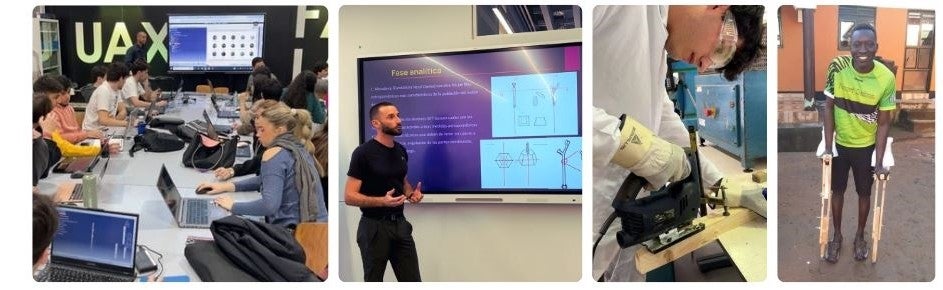
You will be trained through the UAX Makers educational model, developed based on the needs of more than 50 leading companies from different sectors and which incorporates:
Our Degree in Biomedicine is an innovative academic programme that we are continually adapting to market needs, in which a high percentage of credits are practice-based. At UAX, you will benefit from a multidisciplinary programme that provides a solid grounding in the molecular, biochemical, cellular and physiopathological mechanisms of human disease. It will give you the skills you need to engage in competitive translational research that is able to develop new procedures for preventing, diagnosing and treating disease.
We also provide you with modern facilities equipped with state-of-the-art materials. You will have access to:
At UAX you will feel connected to industry from day one: Workshops with companies, visits to health institutions, talks and lectures will be part of your day-to-day life at the university.
You will be able to carry out curricular and extracurricular internships in important health institutions, companies and research centres and benefit from our more than 8,000 collaboration agreements.
Discover some of the companies with which UAX has agreements:
Health institutions:
Biomedical and biosanitary research centres:
Pharmaceutical industries
Biomedical Engineering
At UAX every student has Career Services, where we provide everything they need to carry out their internships and encourage contact with the professional world from the very beginning.
The teaching staff is made up of experts, many of them active professionals, highly related to the field of knowledge of the subjects:
JESÚS TORNERO LÓPEZ
JOSÉ ANTONIO ARIAS NAVALÓN
ANTONIO OLIVIERO
ISABEL OLAZABAL OLARREAGA
LAURA GIL ALBERDI
MICHELE DILEONE
MARCELO ROLDÁN BLANCO
See the complete list of the faculty of the Degree in Biomedical Engineering
The admissions process is set out in the university’s Admissions Regulations. To be eligible for the degree programme, applicants must meet the following requirements:
Have passed the university entrance examination or hold an equivalent official qualification.
Demonstrate a B2 level of English. Students who do not hold an official certificate must sit a language test to demonstrate proficiency at this level.
The University will assess each candidate’s profile individually based on their route of entry: the mark obtained in the university entrance examination; the relevance of the curriculum of the previous qualification to the degree programme applied for (Advanced Vocational Training Courses); or the marks in subjects directly related to the core curriculum of the degree programme (students from foreign education systems).
Alfonso X el Sabio University will apply credit recognition in accordance with current university regulations and the criteria established for the degree. You can consult the credit recognition regulations via the following link.
Number of places available for new students: 50
Hear first-hand accounts from businesses and students, be inspired by the creativity and ingenuity of our maker projects, and discover what life is like on our campus, which is brimming with activities and events to suit all tastes.
Discover our facilities
Request visit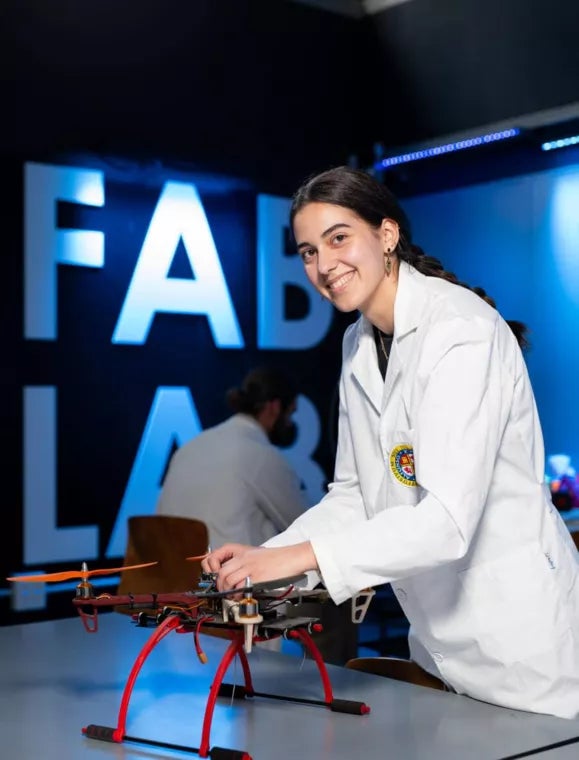
An innovative digital fabrication workshop aimed at expanding the learning of architecture, engineering and design students. Find out more

A space for innovation and advanced prototyping, designed to enhance applied learning amongst engineering students by fostering the development of real-world aeronautical solutions through experimentation, technology and collaborative work in multidisciplinary environments. Find out more

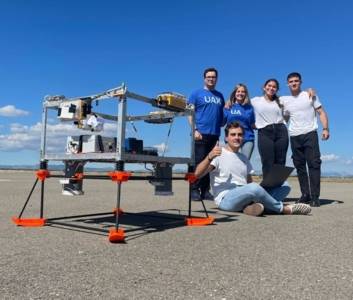
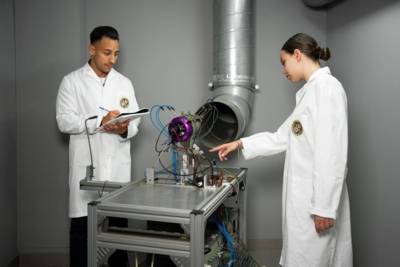
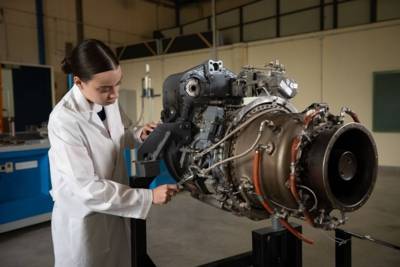
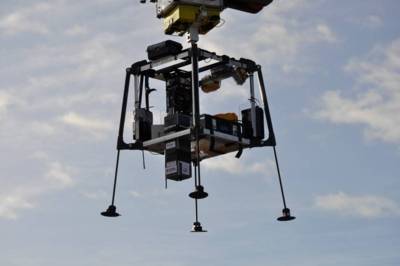
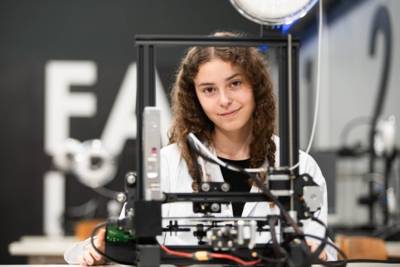


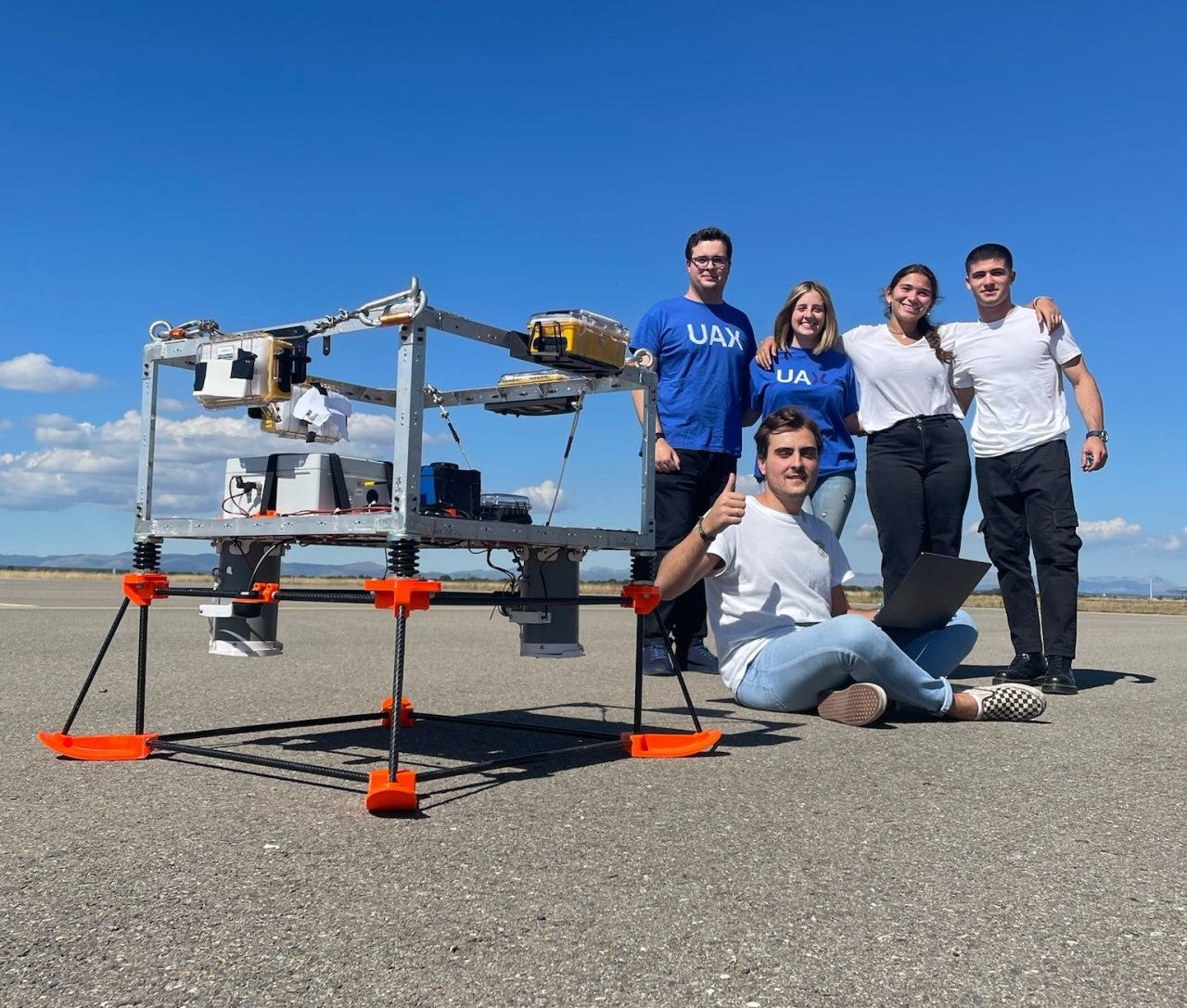
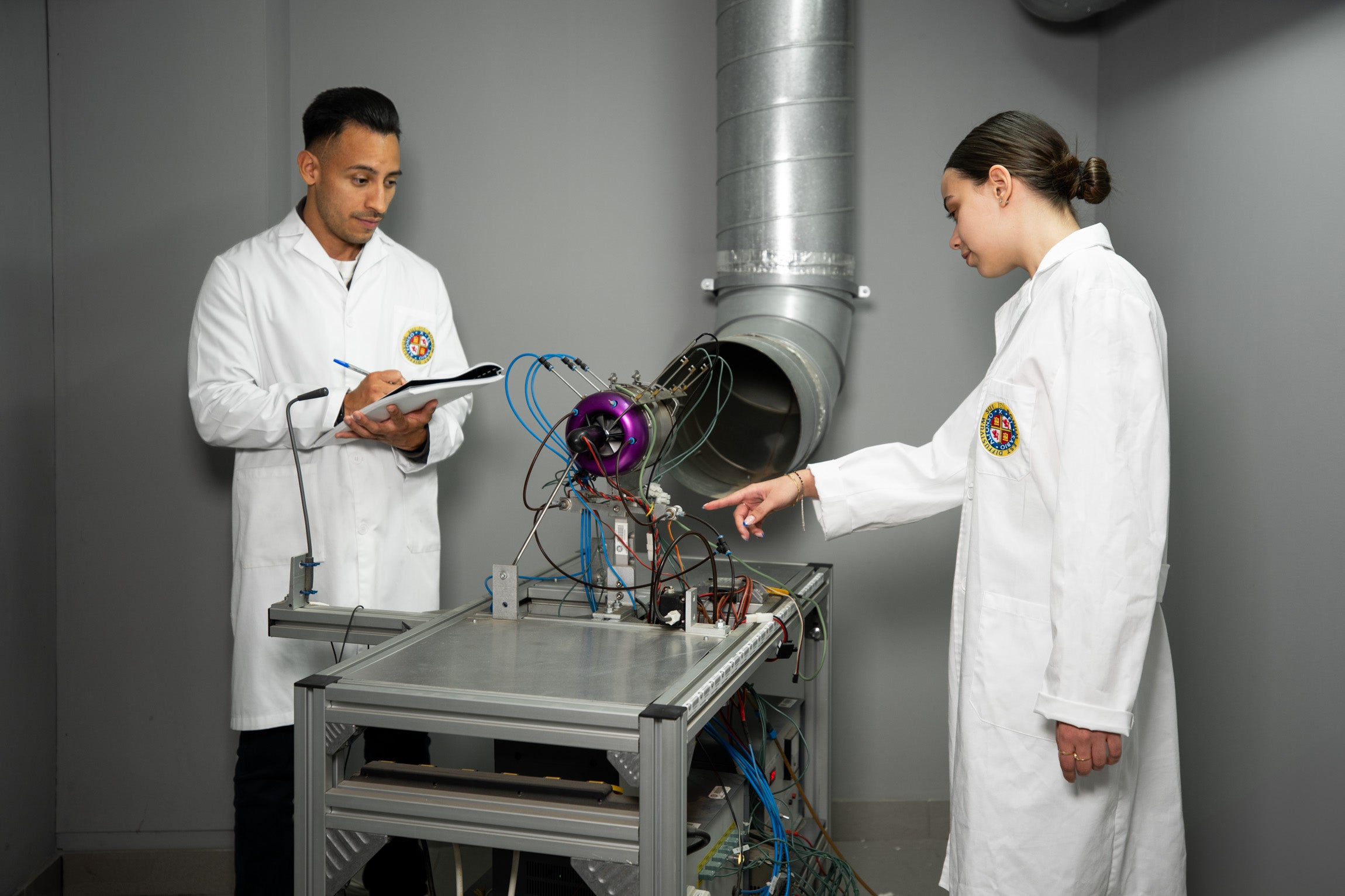
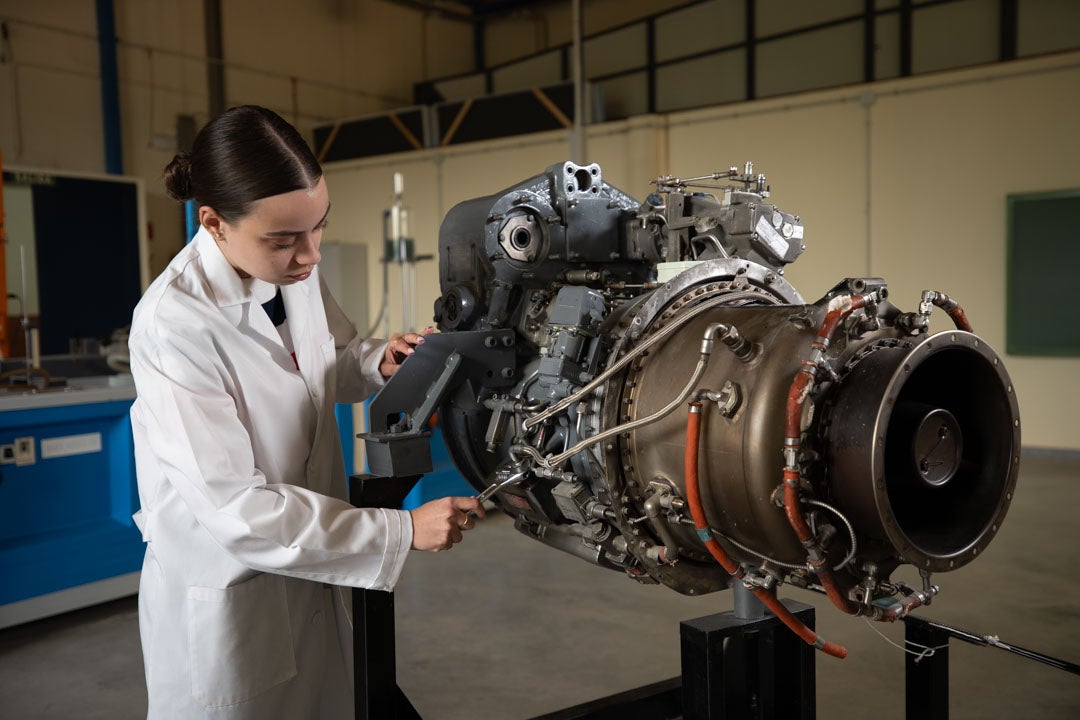
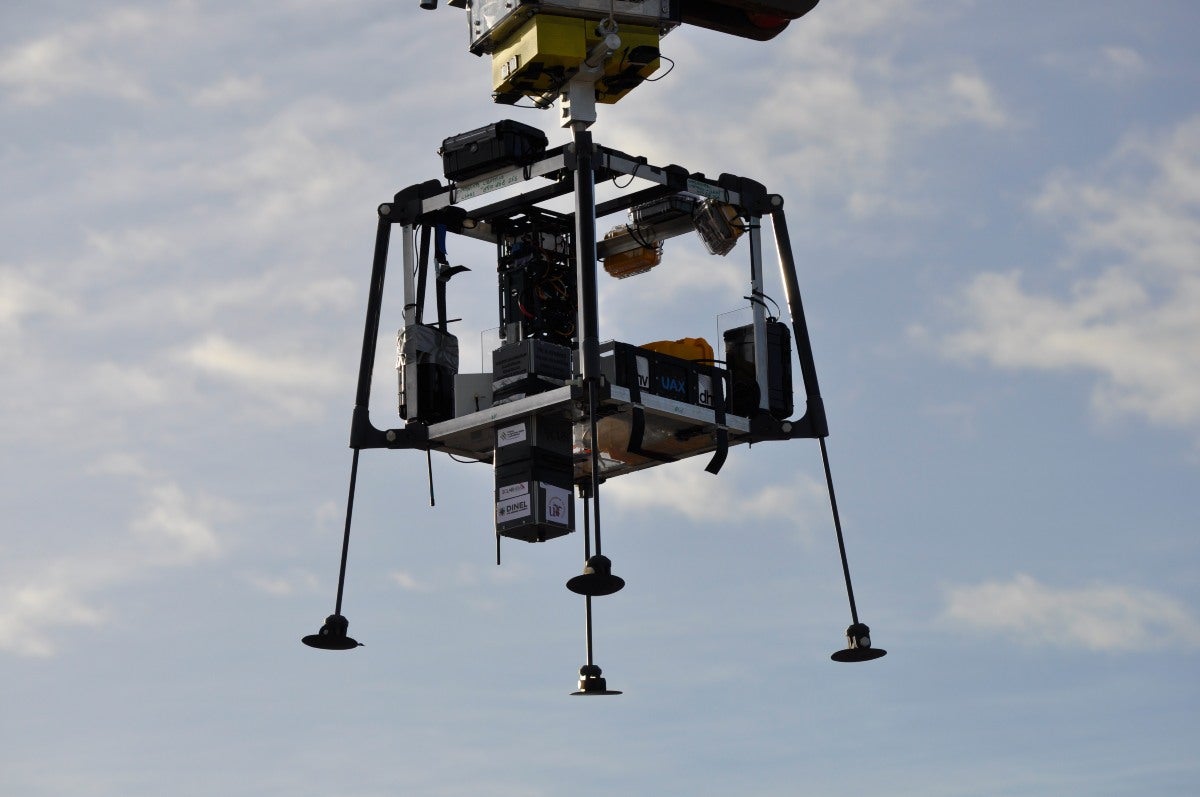
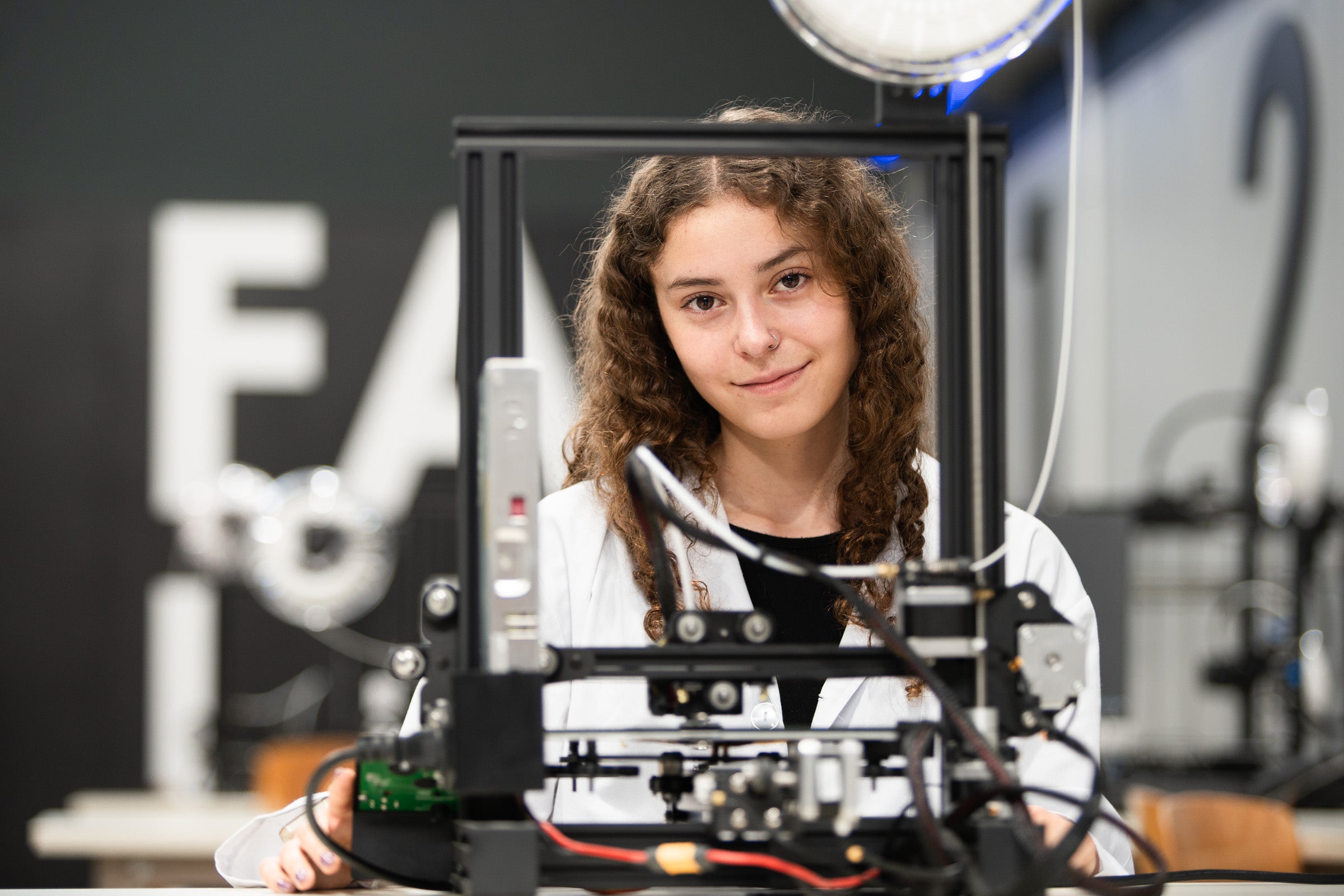

Train to become a specialist in the biomedical field, one of the fastest-growing degrees in recent years, at both a national and international level.
Where will you work when you complete your studies in Biomedical Sciences?
Not sure what you would like to do?
We help you discover which programme fits your profile.
Faculty of Professionals
Meet some of your teachers

Engineer with extensive academic experience in mechanical, industrial and aerospace engineering. She leads programmes linked to product design, new technologies and applied engineering, with a focus on innovation and industry.

He holds a degree in Computer Science. With this qualification, he has worked as a computer engineer for companies in various sectors, such as IBM, Quark Robotics, ASTI and the Honeywell Group. He has published two books (one on drones and the other on Python programming) and an article in Springer.

Several years of experience in the creation of 2D and 3D content, as well as the programming of videogames and games for mobile devices, for companies such as 5Th Element and working as a freelancer.

We have met with more than 50 leading companies to understand their needs and develop a Biomedical Engineering programme that ensures the employability and success of all our students at a crucial stage in their lives.

Real projects with companies. You will work on innovation projects such as the development of a virtual twin with the company Avanade by Microsoft.

Google and Datahack certifications. You will receive official certifications in User Experience, Google Ads and Coding For the Industry.

UAX Skill School. You will be trained in analytical thinking, disruptive thinking, leadership, ethics and storytelling.

Start date: 21 September
Timetable: The route will operate four times a day: two journeys to the campus and two back.
Stops on the route:
BUSUP App Manage your journeys and view all service information via the BUSUP app or its web version. Coming soon with direct access from the Virtual Campus.
Scholarships and Financial Support for Studying at UAX
We know that studying is an investment. That’s why we want to remove financial barriers and make things easier for you. Fill in the form and let our advisers help you discover the scholarships, agreements and personalised financial support that best suit your situation.

Community of Madrid
Financial support for students with a disability of 33 per cent or more who are studying at universities or higher education institutions specialising in the arts in the Community of Madrid.

Ministry of Education, Vocational Training and Sport
Find out about the scholarships and grants offered by the Ministry of Education, Vocational Training and Sport, categorised by type and level of education.

If you’ve already decided to take the plunge, enrol early and benefit from a direct grant. It’s a way of rewarding your commitment and giving you a head start in planning your future.

Students from Ibero-America
This programme is aimed at Ibero-American citizens or foreign nationals legally resident in countries within the OEI’s sphere of influence. The scholarship covers a 50% discount on the total tuition fees.

Students from Ecuador
This programme is aimed at citizens with Ecuadorian nationality and/or residence who wish to study an online master’s degree in Spain. The scholarship covers a 50% discount on the total tuition fees.

2025, 2nd Edition
Grants for students on higher-level vocational training, undergraduate, postgraduate or master’s programmes enrolled at Spanish universities with a Santander agreement. A financial supplement to support you whilst undertaking your work placements.

If you graduated from UAX and are now thinking of studying for a new degree, we want to continue supporting you. That’s why we’re offering you a 10 per cent discount on tuition fees.

If you have an immediate family member (up to the second degree of kinship) enrolled at UAX, you can benefit from a 5 per cent discount on tuition fees. Because studying as a family is even better.

Studying for two degrees at the same time is a challenge, and we want to support you. If you’re already at UAX and enrol on a second degree programme, you’ll be eligible for a grant towards your booking fee and tuition fees.

If you’d like to continue your studies with us and progress from vocational training to a bachelor’s degree, from one bachelor’s degree to another, or from a bachelor’s degree to a postgraduate degree, we’re here to support you with a grant covering up to 25 per cent of your tuition fees.

If you have a strong academic record, we would like to recognise your talent with a scholarship designed for new students. (Excludes the degree in Medicine).

If you’re a high-performance athlete, at UAX we want to help you balance your passion with your studies. We offer specific grants that can cover up to 50% of your tuition fees.
Recognised for helping you build your career
The rankings place UAX amongst the best universities in Spain for graduate employability, innovation and an educational model that is closely linked to the world of work.

Forbes ranks UAX as the private university with the most graduates working in its area (nearly 90%), thanks to a unique educational model firmly linked to the labour market through more than 8,800 agreements with companies.
The prestigious ranking of the BBVA Foundation and the IVIE recognises us as the university with the best job placement in Spain in 2023, consolidating our model focused on the real employability of our graduates.

The Coordenadas Institute of Governance and Applied Economics places UAX as the private university of reference in Madrid, highlighting our practical training model aligned with the reality of the market.

UAX has been awarded the top 5-star rating and the ‘Excellent’ distinction by QS Stars, one of the most prestigious international university ranking systems. This recognition attests to the university’s excellence in key areas such as employability, teaching quality, facilities, online learning and the student experience.

UAX is recognised as the second most innovative university in Spain, the only private university among the top three in the ranking. This recognition highlights our transversal commitment to AI and training in sustainability.

According to the Forbes 2025 List, UAX is positioned in the TOP 2 Spanish Universities in the adoption of Generative AI in the training of its students, developing innovative learning tools and models aligned with technological evolution.
We need to know a bit about you so that we can provide you with a personalised service.
All fields are required

Biomedical engineering is a discipline that combines the principles of engineering with the biomedical sciences to develop technologies and solutions that improve human health. This field ranges from the creation of medical devices, such as prostheses and pacemakers, to the development of medical imaging systems and bioinformatics applications.
Through the integration of biology, medicine and engineering, Biomedical Engineering focuses on solving medical problems and improving people’s quality of life.
To better understand how it differs from other related disciplines, discover the differences between Biomedicine and Medicine.
A biomedical engineer has a key role in technological innovation within the healthcare field. Their functions may include:
In addition, these professionals may work in healthcare project management, ensuring that equipment and systems meet safety and efficacy standards. In short, their work encompasses both the creation of technological solutions and the application of engineering to solve medical problems.
Studying the Bachelor's Degree in Biomedical Engineering at UAX will allow you to acquire a solid foundation in science and technology, along with practical skills in the design and innovation of biomedical devices.
UAX offers you a comprehensive approach that combines theoretical learning with practice in specialised laboratories, preparing you to face the challenges of the biomedical sector and boosting employability.
In addition, at UAX we have a network of collaborations with healthcare institutions and technology companies, providing valuable internship and networking opportunities.
The Bachelor's Degree in Biomedical Engineering at UAX offers several specialisations that allow students to delve deeper into specific areas of interest.
Among the specialisations available are Bioinstrumentation, which focuses on the design and development of medical devices; Clinical Engineering, which focuses on the management of technologies in hospital environments; Biomaterials, which studies the development of materials for medical applications; and Bioinformatics, which combines computer science and biology to analyse biological data.
These specialisations allow biomedical engineers to adapt to market needs and add value in various areas of the health sector.
Biomedical engineering offers multiple career opportunities in a variety of sectors.
Biomedical engineers can work in the medical device industry, developing and perfecting equipment such as MRI scans, pacemakers and prostheses. They may also work in hospitals and health care facilities, managing and maintaining medical technology.
Other fields include research and development in biotechnology, consultancy in health technologies, and teaching in educational institutions. In addition, due to the increasing use of technology in medicine, opportunities in bioinformatics and health software development are booming, offering even more possibilities for graduates in this discipline.
Other related degree programmes
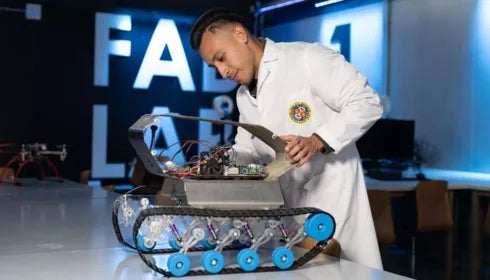
Degree in Mechanical Engineering
In collaboration with:


Start:
September
Length:
4 years
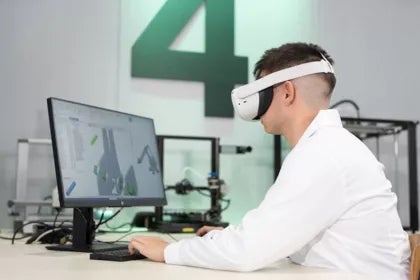
Bachelor's Degree in Industrial Design Engineering and Product Development
In collaboration with:


Start:
September
Length:
4 years

Degree in Civil Engineering in Civil Construction
In collaboration with:

Start:
September
Length:
4 years
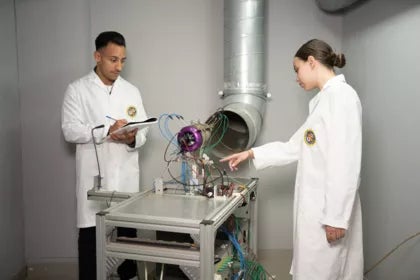
Bachelor’s Degree in Industrial Systems Engineering
Includes a professional certificate


Start:
September
Length:
4 years
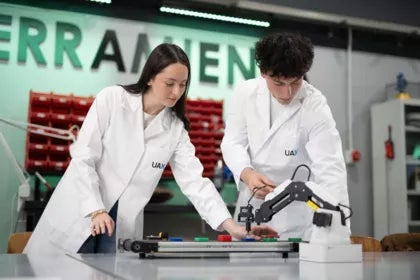
Degree in Industrial Electronics and Automation Engineering
In collaboration with:


Start:
September
Length:
4 years

Bachelor’s Degree in the Fundamentals of Architecture + Qualifying Master’s Degree
In collaboration with:

Start:
September
Length:
5 and a half years

Degree in Aerospace Engineering
In collaboration with:


Start:
September
Length:
4 years
You can view the various indicators via the following links:
Employability: View
Satisfaction results: View
Rates and indicators: View
Key action plans for the degree programme:
You can view your timetable and indicative timings via the following link .
The Degree Programme Monitoring and Improvement Committee comprises:
Lecturers:
Student representatives
Faculty Quality Coordinator: Marta Alonso Blanco
Faculty Quality Manager: Itziar Fernández Blanco
We respond to the genuine needs of our students and staff, because we believe in continuously improving our results. That is why we are always keen to hear anything you wish to tell us.
Link to the complaints and suggestions inbox.
If you’re already part of UAX, go to the ‘Customer Service: complaints, suggestions and compliments’ section on the virtual campus and log in with your username and password.
Telephone: 91 810 94 00
Email: paramejorar@uax.es
Opening hours: Monday to Friday, 9.00 am to 6.00 pm (no lunch break)