

















Definition of Biomedicine
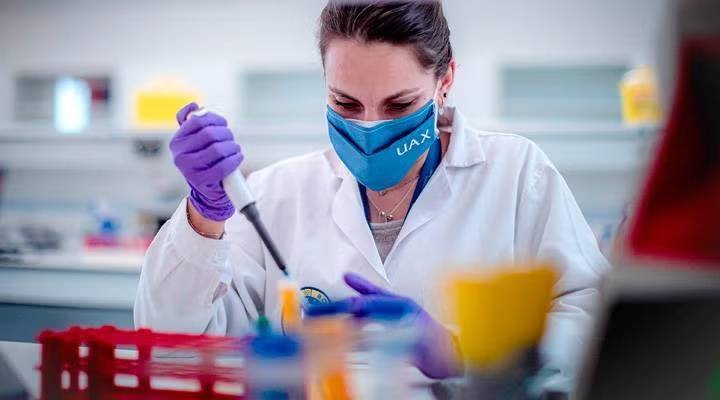
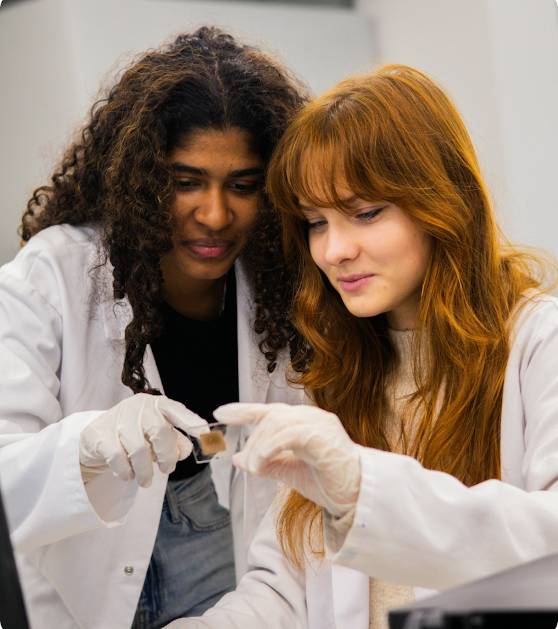
The Biomedicine is the science that applies the principles of biology, chemistry and other natural sciences to understand how the human body works at a molecular, cellular and genetic level. Its main purpose is not to treat patients directly, but to investigate the causes and mechanisms of diseases in order to develop new diagnostic tools, medicines and therapies.
The scientific and experimental approach as the cornerstone of biomedicine
At the heart of biomedicine lies the scientific method. Professionals in this field work in an environment of constant discovery, where curiosity and rigour are essential. Their work focuses on:
- Formulating hypotheses: Asking questions about why a disease occurs or how it might be halted.
- Designing experiments: Planning and carrying out laboratory tests to validate or refute these hypotheses. This may involve working with cell cultures (in vitro), animal models (in vivo) or complex molecular biology techniques.
- Analysing data: Using biostatistical and bioinformatics to interpret the results of experiments, which often involve large volumes of data (genomics, proteomics).
- Generating knowledge: The ultimate aim is to publish the findings in scientific journals so that the international community can benefit from them, laying the foundations for future medical advances. Biomedical scientists seek answers that others can subsequently apply.
Definition of Medicine
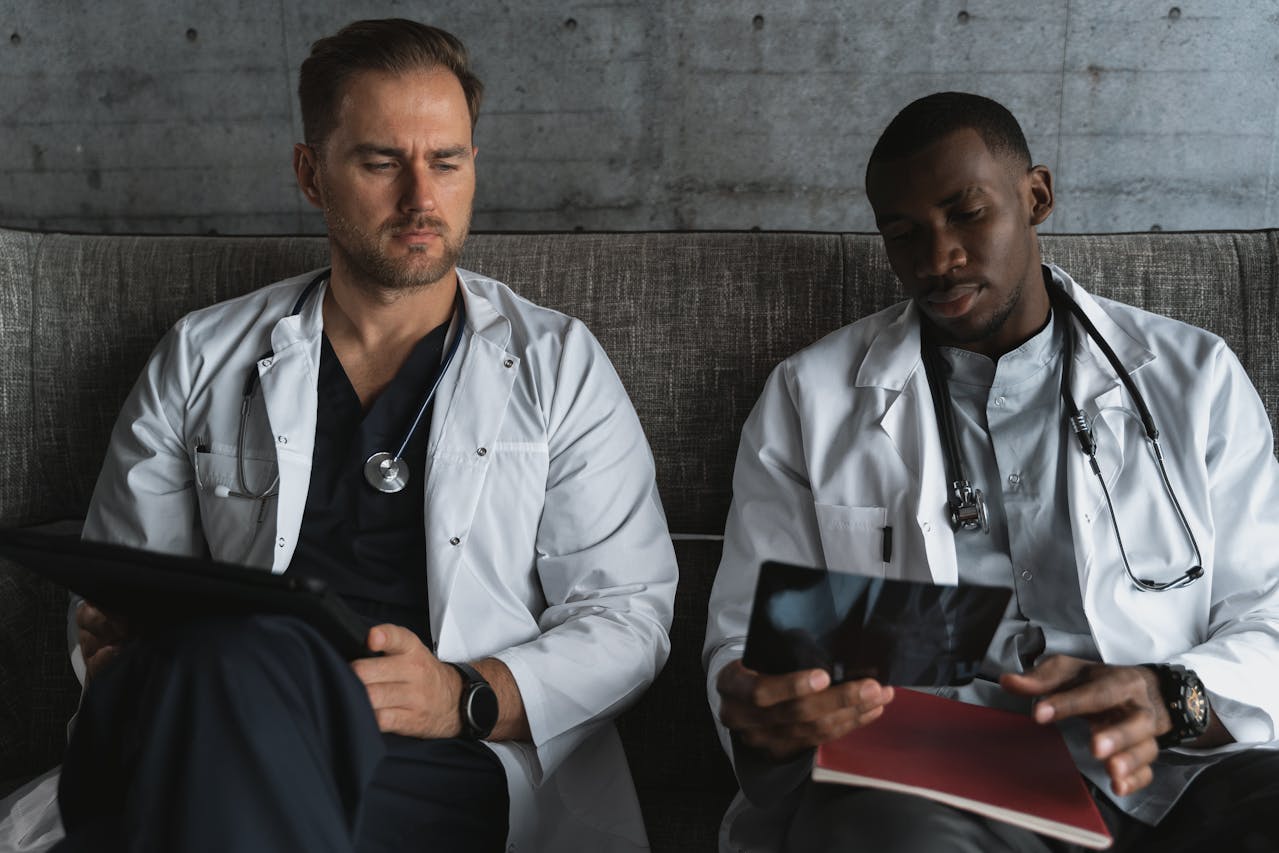
Medicine is the discipline and profession concerned with the diagnosis, treatment and prevention of diseases directly in patients. Its aim is to maintain and restore human health through clinical practice, applying available scientific knowledge to care for each individual.
The clinical approach and patient-centred care at the heart of Medicine
Whilst biomedicine seeks to understand the ‘why’ of a disease, medicine focuses on the ‘what to do’ here and now for the person suffering from it. The cornerstone of medicine is the doctor-patient relationship and a structured process that includes:
- Medical history and physical examination: Listening to the patient, understanding their symptoms and circumstances, and carrying out a physical examination to gather clues about their state of health.
- Diagnostic reasoning: Using knowledge of physiology, pathology and semiology to formulate one or more diagnostic hypotheses. These are supported by diagnostic tests (blood tests, X-rays, etc.) to confirm the diagnosis.
- Treatment plan: Prescribing medication, therapies, surgery or lifestyle changes based on available scientific evidence and clinical guidelines, whilst always adapting to each patient’s unique circumstances.
- Follow-up: Monitor the patient’s progress, adjust treatment as necessary and offer ongoing support and advice. The doctor seeks solutions and well-being for the person in front of them.
The key differences between Biomedicine and Medicine
Now that the approaches are clear, let’s delve deeper into the practical differences that will shape your future career.
1. The subject of study
Biomedical scientists focus on the smallest units: genes, proteins and cells. Their perspective is microscopic, and their aim is to understand fundamental biological processes. Doctors, on the other hand, work with the whole organism: a person with symptoms, emotions and a social environment. Their perspective is holistic and integrates all the body’s systems to arrive at a diagnosis and treatment plan.
2. The working environment
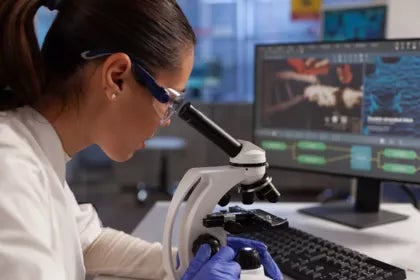
A biomedical scientist ’s day-to-day work takes place mainly in research centres, universities, and pharmaceutical or biotechnology companies. Their environment consists of laboratories, analytical equipment and computers. Doctors, on the other hand, carry out their work in hospitals, primary care centres, private clinics or general practices, in direct and constant contact with patients and other healthcare professionals.
3. The curriculum
Although they share a common foundation in health sciences, the curricula quickly become specialised:
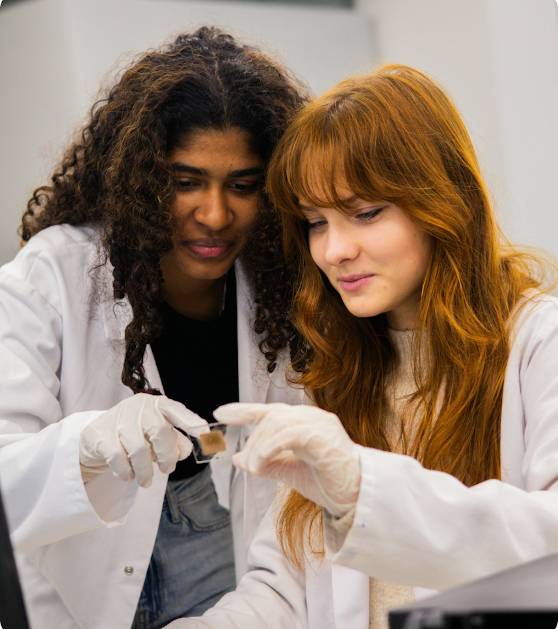
- Bachelor’s Degree in Biomedicine: This places a strong emphasis on subjects such as Molecular and Cellular Biology, Genetics, Advanced Biochemistry, Biostatistics, Immunology and Pharmacology. It prepares you to design experiments and analyse complex data.
- Degree in Medicine: This focuses on subjects such as Human Anatomy, Physiology, Pathology, Semiology (the study of symptoms) and the various clinical specialisms (Cardiology, Pulmonology, etc.). It prepares you for the diagnosis and management of patients.
4. Career prospects
- Career opportunities in Biomedicine: A career in research is the main route (in the public or private sector), but not the only one. There are also opportunities in the pharmaceutical industry (drug development, clinical trials), genetic diagnostics, biotechnology, scientific communication or as a product specialist in healthcare technology companies. To gain an in-depth understanding of the full range of career opportunities this degree offers, we recommend reading our detailed article on the career prospects in Biomedicine.
- Career Paths in Medicine: the traditional route is to pass the MIR (Resident Doctor) exam to gain entry into one of the more than 40 medical specialities (Surgery, Paediatrics, General Practice, etc.). Other options include healthcare management, private practice, teaching, clinical research or working for public health agencies.
Comparison table: Biomedicine vs. Medicine
| Feature | Biomedicine | Medicine |
| Main focus | Disease (mechanisms) | The patient (sick person) |
| Objective | To generate knowledge | To diagnose, treat and cure |
| Environment | Laboratory, research centre | Hospital, health centre, doctor’s surgery |
| Vision | Microscopic (molecular, cellular) | Holistic (whole organism) |
| Key question | Why does it happen? | What can we do to resolve it? |
| Tools | Pipettes, microscopes, sequencers | Stethoscope, scalpel, medicines |
| Final result | Scientific publication, patent | Recovered patient, improved health |
The essential synergy between biomedicine and medicine
It is crucial to understand that biomedicine and medicine are not opposing worlds, but two sides of the same coin. They form a virtuous circle known as translational medicine. Basic biomedical research in the laboratory uncovers a new therapeutic target; this knowledge enables the pharmaceutical industry to design a new drug; and, finally, the doctor applies this drug in clinical trials and in their daily practice to treat their patients.
At the same time, the problems and unanswered questions that doctors encounter in their practice are the main source of inspiration for new lines of biomedical research. Without research, medicine would stagnate; without clinical practice, research would lack an ultimate purpose.
What is your calling?
Choosing between studying Biomedicine and Medicine ultimately depends on your personality and where you see yourself making the greatest contribution.
- Choose Biomedicine if you are a curious, methodical and patient person; if you are fascinated by biological puzzles; if you enjoy laboratory work; and if you are motivated by the idea of making discoveries that could change the future of medicine.
- Choose Medicine if you have a strong calling to serve others, if you enjoy working directly with people, possess great empathy, are decisive and see yourself as capable of making important decisions under pressure to improve someone’s life here and now.
Whichever path resonates most with you, at UAX we offer the cutting-edge training you need to turn your vocation into your profession. Discover our Bachelor’s Degree in Biomedicine , where you’ll be immersed in research from day one in state-of-the-art laboratories, or our Bachelor’s Degree in Medicine , with an innovative curriculum that will enable you to undertake placements at our virtual hospital and at leading healthcare centres.
Summary
In short, the choice between Biomedicine and Medicine is a decision between two complementary yet distinct worlds. Whilst Biomedicine delves into the laboratory to investigate the ‘why’ behind diseases at a molecular level with the aim of generating knowledge, Medicine is at the clinical frontline treating patients, applying the available evidence to heal and care for them. Their curricula, working environments and daily routines reflect this fundamental difference, although both converge in a synergy that is essential for the advancement of healthcare. The former seeks the answers of the future; the latter applies the solutions of the present.
Sources consulted