






















Medicine is a field that encompasses a wide variety of specialisms. From cardiology, oncology, allergology and infectious diseases to surgery, amongst many others. A wide variety of branches that form part of a whole – the field of medicine. There are, therefore, many options for medical graduates when it comes to choosing the specialism with which they truly identify and see themselves practising in the future.
Students on the Bachelor’s degree in Medicine , upon graduating, face one of the most important decisions they will ever make: Which medical specialism am I truly passionate about?
This is a difficult question to answer when there are several specialisms that particularly appeal to us. This is often the case, but it is true that most medical graduates already have a clear idea, whilst still on their degree course, of the direction their career will take – that is, which specialism they will choose to practise this exciting and vocational profession in their promising future as a doctor.
Those who choose to specialise in internal medicine will be opting for a medical speciality that provides comprehensive care for health problems in adult patients, whether they are admitted to hospital or attending outpatient clinics. It is, without a doubt, a choice with a bright future for all those who are passionate about the diagnosis and comprehensive treatment of diseases – specifically those affecting the whole body or a single organ – and which do not require surgical intervention.
Furthermore, internists deal with systemic diseases – that is, those that affect different parts of the body simultaneously. It is a highly comprehensive medical role, requiring multidisciplinary knowledge to ensure a holistic approach to the diagnosis and treatment of adult patients.
It is also worth noting that the role of the internist brings together the functions of various specialists, thereby avoiding any overlap in treatments. However, the internist always relies on the support and opinions of other specialists.
What conditions does an internist treat on a day-to-day basis? We’ll tell you all about them!
- In-hospital care for patients admitted with a range of conditions: infectious, autoimmune, systemic, metabolic, etc.
- Comprehensive care for patients with vascular risk factors, such as high blood pressure or diabetes, amongst others; for older patients with multiple co-morbidities, including heart failure, COPD, diabetes or high blood pressure; and for patients with infectious diseases.
- Care, diagnosis and treatment of patients with systemic diseases, i.e. those affecting different organs.
- Basic health checks and risk factor assessments.
- Referrals for laboratory tests or radiological investigations.
- Provision of outpatient care.
In short, internists are the experts whom GPs and other specialists turn to when dealing with complex patients who are difficult to diagnose, who are affected by various conditions, or who present with symptoms affecting several organs.
As part of their extensive training, some internists may also choose to ‘subspecialise’ in certain fields of medicine, such as the management of cardiovascular risk factors, infectious diseases (particularly HIV), congestive heart failure, venous thromboembolic disease and autoimmune diseases, palliative care or units for complex chronic patients.
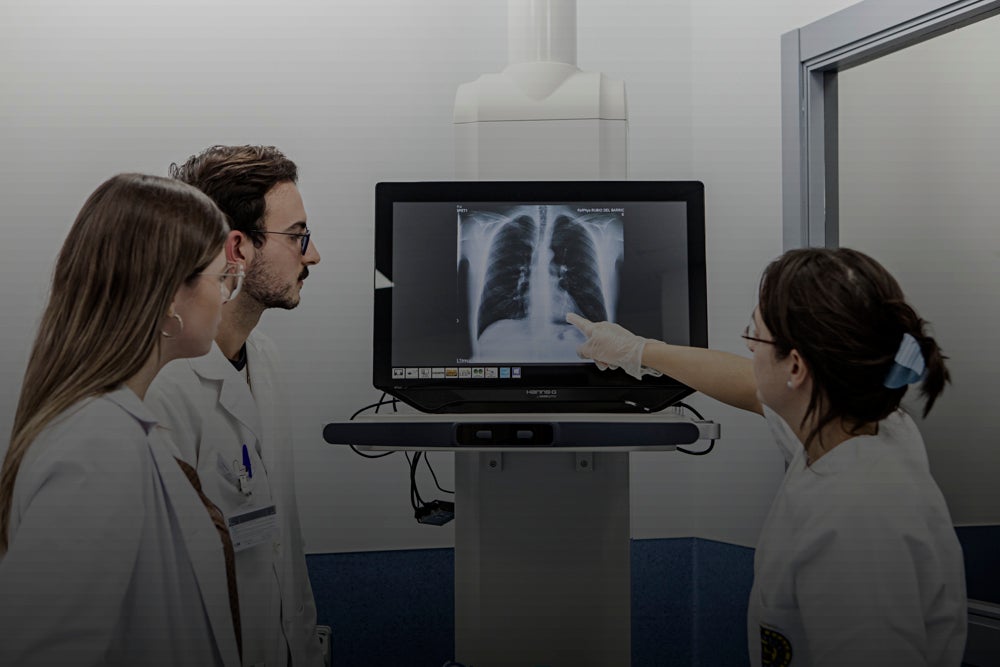
Generally, an internist requires the assistance of other specialists when carrying out diagnostic tests, such as those specialising in Radiology (CT scans or MRIs), gastroenterology (for endoscopies), or surgery (for taking biopsies), amongst other clinical cases that arise daily in hospitals. All of this is done to achieve the most accurate diagnosis.
As you can see, the specialism of internal medicine is very comprehensive. Those practising as internists will possess a highly qualified profile that is in great demand within the healthcare sector.
A GP is not the same as an internist
An internal medicine specialist should not be confused with a GP. Whilst the former focuses on a single section of the population – adults – the latter’s role is centred on treating the whole family and addressing the inheritance of diseases amongst them.
An internal medicine specialist is not the same as a junior doctor
Similarly, one should not confuse a specialist in internal medicine, or an internist, with a junior doctor. In Spain, junior doctors (MIRs) are doctors who, having completed a six-year general medical degree, must undergo a further 3 to 5 years of training to qualify in a medical or surgical specialism.
Whichever medical specialism you choose, you will be part of a highly demanding, vocational profession. Sooner or later, we will all have to turn to specialists, placing our full trust in them during diagnosis and treatment. Their role is essential now and always. Our health is in their hands!