


















The question of how long a medical degree takes is one of the most frequently asked by aspiring doctors. The answer, whilst it varies, is essential for planning your academic and professional future.
Generally speaking, a medical degree usually takes between six and seven years, depending on the country and the university. However, this is only the start of the journey.
It is important to bear in mind that, once the degree is completed, most doctors choose to specialise, which involves several additional years of training. Therefore, the total duration of a medical degree including specialisation can be considerably longer.
Nevertheless, as a prospective doctor, you should be aware that this is a profession that requires constant professional development, study and attendance at conferences to keep up to date with the latest developments in healthcare.
What do you need to get into medical school?
Before worrying about how long it takes to study medicine, it is crucial that you are aware of the entry requirements for the degree. In most countries, admission to medical school is highly competitive and requires excellent academic performance at secondary school level.
Generally, you are required to have studied subjects such as biology, chemistry, physics and mathematics, so the recommended A-level programme is the Science stream. Furthermore, it is essential to achieve a good mark in the university entrance exams, known as the Evau. Some universities may also require you to sit specific medical aptitude tests or attend personal interviews.
If you feel you need to consolidate your knowledge before starting the degree, consider taking a pre-university course in medicine. At UAX, for example, we offer a pre-med programme designed to prepare you comprehensively for the challenges of the degree programme.
How long does a degree in medicine take?
As mentioned earlier, a medical degree usually takes six years to complete. During this time, you will gain a solid theoretical and practical grounding in all areas of medicine.
In the early years of the degree, you will focus on the basic sciences, which will provide you with the necessary foundations to understand how the human body works and the diseases that affect it.
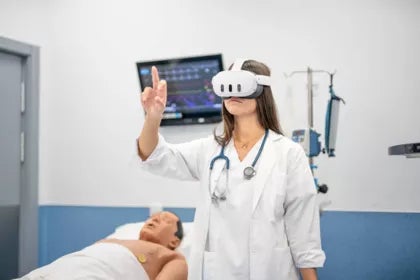
As you progress through the course, you will begin to study the various branches of medicine and undertake clinical placements in hospitals and health centres, rotating through the different medical specialities . This will allow you to familiarise yourself with all areas of medical practice and begin to decide what sort of doctor you want to become.
Steps to take after completing your medical degree
Once you have completed your medical degree, you will have several options for continuing your training and professional development.
- One of the most common options is to sit the entrance exam for specialist medical training (MIR in Spain), which will enable you to secure a place as a junior doctor in your chosen specialism.
- Another option is to pursue a career in medical research, working in universities, hospitals or research centres. You can also choose to work as a general practitioner in health centres or private practices.
- Opting for a Master’s degree for doctors. This option is not mutually exclusive; rather, you can combine it with any of the other possible alternatives after completing your degree.
Whichever option you choose, it is essential that you keep up to date with the latest advances in medicine and continue your professional development throughout your career.
Medicine is a constantly evolving discipline, and it is essential that you adapt to new knowledge and technologies in order to provide the best possible care for your patients.
How long do master’s degrees for doctors last?
If you wish to deepen your knowledge in a specific area of medicine, you can choose to undertake a master’s degree. The duration of master’s programmes for doctors varies depending on the specialism and the university, but generally ranges from one to two years.
Master’s programmes offer you the opportunity to specialise in areas such as cardiology, oncology, neurology, paediatrics or emergency medicine , amongst many others. Furthermore, they enable you to acquire advanced skills and knowledge in research, healthcare management and other areas relevant to your professional development.
At UAX, we offer a wide range of master’s programmes for doctors , designed to meet the needs of the most discerning healthcare professionals.
How long does the specialist training programme for medical residents last?
Medical specialisation is a fundamental stage in a doctor’s training, as it enables you to acquire the knowledge and skills necessary to practise a specific specialism.
The duration of the residency programme varies depending on the specialism, but generally ranges from four to five years.
During this period, you will work under the supervision of experienced specialist doctors, taking part in patient care, carrying out medical and surgical procedures, and attending clinical sessions and conferences. Residency is a demanding but also highly rewarding stage, as it allows you to develop your skills and knowledge in a practical and challenging learning environment.
Study medicine at UAX
If you dream of becoming a doctor, with the Degree in Medicine at UAX, we offer an innovative and cutting-edge programme of study, with a focus on clinical practice and research.
We have state-of-the-art facilities, a highly qualified teaching team and partnerships with the best hospitals and healthcare centres.
We know that a degree in medicine is a long and demanding journey, but also a very rewarding one; that is why, at UAX, we provide you with all the tools and support you need to achieve your goals and become a successful doctor committed to the health of others
In short, the total duration of a medical degree, including the undergraduate degree and specialisation, can exceed ten years. However, the effort is well worth it, as it will enable you to pursue a fascinating profession and contribute to the well-being of society. If you are ready to take on the challenge, medicine awaits you with open arms.
Don’t wait any longer – start building your future in medicine!