






















What is a programmer?
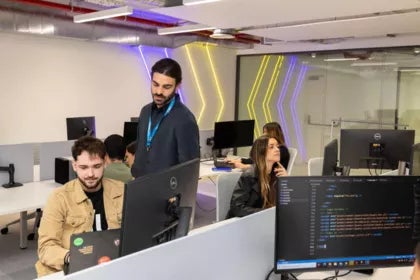
The term ‘programmer’ refers to professionals who, through the use of programming languages, create applications and systems that are essential to our daily lives in the digital age. Their expertise lies not only in their ability to write code, but also in their in-depth understanding of the problems and requirements that need to be addressed.
Types of programmers
- Specialisation is key in the world of programming. Front-end developers focus on the user experience, working with technologies such as HTML, CSS and JavaScript to build attractive and interactive interfaces.
- Back-end developers, on the other hand, delve into logic and data management, using languages such as Python, Java or PHP to ensure that everything runs smoothly in the ‘invisible’ part of applications.
- Finally, full-stack developers possess expertise in both areas, enabling them to tackle complete projects, from the user interface right through to the database.
Roles and responsibilities
A programmer’s day-to-day work is full of diverse challenges and responsibilities. From designing efficient algorithms to meticulous coding, debugging and performance optimisation, their work encompasses multiple facets of software development. The ability to work as part of a team, communicate ideas effectively and adapt to the changing demands of a project are essential skills.
The difference between a programmer and a developer
Although the terms ‘programmer’ and ‘developer’ are often used interchangeably, there is an important distinction between their roles. Whilst the programmer focuses on writing code, the developer takes on a more comprehensive role, participating in strategic planning and the design of software architectures. Both roles are essential and work together to deliver successful projects.
What it takes to be a programmer: training and education
Recommended qualifications and why
Entering the world of programming generally involves obtaining a formal education. Some recommended qualifications include:
- Degree in Computer Engineering : Studying computer engineering provides a comprehensive understanding of the theory and practice of programming, preparing students to tackle advanced technical challenges.
- Vocational Qualification in DAW (Web Application Development): This focuses on specific practical skills for web application development , providing a solid foundation for working on interactive projects.
- Vocational Training in DAM (Cross-Platform Application Development): Aimed at creating applications for various devices and operating systems, this qualification ensures versatility in the workplace.
- Bachelor’s Degree in Artificial Intelligence : Ideal for those interested in acquiring knowledge of AI, as well as in the analysis and processing of large datasets – skills that are increasingly in demand in the information age.
In addition to formal education, active participation in online courses and constant practice through personal projects are essential for keeping up to date in this dynamic field.
Required skills and knowledge
To excel as a programmer, it is crucial to develop certain skills and knowledge, such as:
- Proficiency in programming languages: Not just knowing, but thoroughly understanding the languages relevant to the specialism, such as Java, Python and JavaScript, amongst others.
- Problem-solving: The ability to tackle challenges logically and efficiently is essential, as programming involves constant puzzles that need to be solved.
- Collaboration: The ability to work effectively in multidisciplinary teams, where clear communication and an understanding of the context are key to the project’s success.
- Continuous learning: Programming is a constantly evolving field. Keeping up to date with the latest technologies and trends is crucial to remaining relevant and effective professionally.
In short, being a programmer involves more than simply writing code; it is a fusion of technical skills, logical thinking and a constant desire to learn. With the right training and a solid skill set, anyone can successfully immerse themselves in the exciting world of programming. Welcome to the digital future, where programmers are the architects who lay the foundations for technological innovation!