



















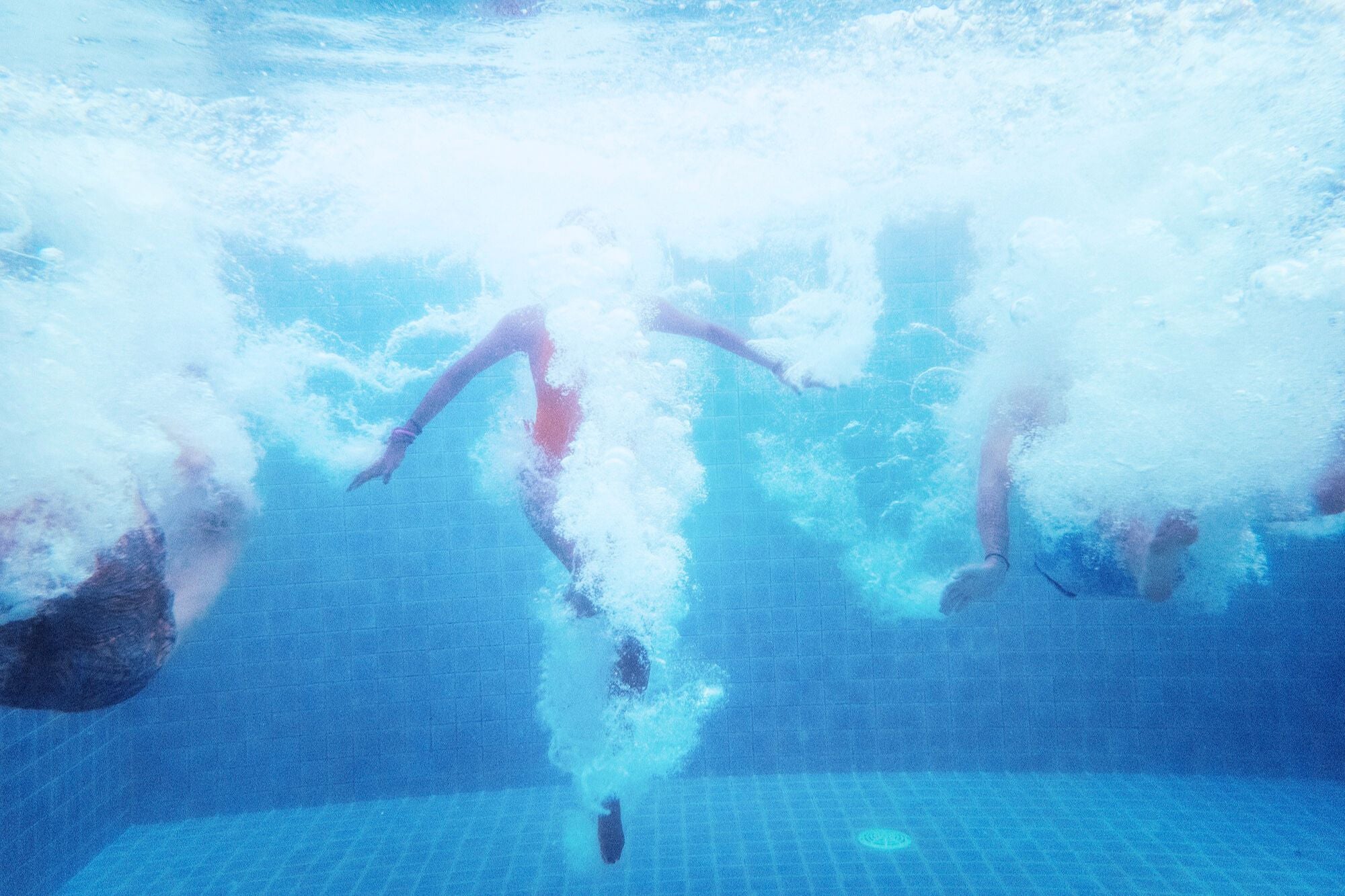
If you’re interested in water-based training or have heard of aquatic rehabilitation techniques, you’re probably wondering what hydrokinesis is and why it’s becoming increasingly popular in both sport and physical rehabilitation. Hydrokinesis is an exercise methodology that harnesses the properties of water — such as buoyancy and resistance — to work the body effectively and with less impact. In this article, we explain how it works, what its benefits are and in what contexts it is used in modern fitness training.
Hydrokinesis: definition and fundamentals of the technique?
Hydrokinesis involves performing exercises in water with a clear objective: to improve physical fitness or facilitate recovery processes without subjecting the body to excessive strain. Unlike dryland training, water acts as an environment that reduces the impact on the joints whilst generating constant resistance with every movement. This allows for a more controlled approach to building strength, mobility and coordination. Although its origins lie in physiotherapy and rehabilitation, hydrokinesis is now also an integral part of sports training programmes, particularly during phases of rehabilitation or performance enhancement.
Benefits of hydrokinesis in physical training
One of the reasons for the growth in popularity of this technique is its ability to combine effectiveness with safety. Hydrokinesis allows for high-intensity training whilst reducing the risk of injury. On the one hand, the buoyancy of the water reduces body weight, thereby lessening the load on joints such as the knees or ankles. This makes it a particularly attractive option for people recovering from injury or experiencing physical discomfort. Furthermore, water provides resistance in all directions. This means that every movement involves a more comprehensive muscular workout, even during seemingly simple exercises. In practice, this translates to:
- Improved muscle strength without high-impact strain
- Increased cardiovascular endurance
- Greater control of movement and coordination
- Reduced risk of strain and injury
For example, an exercise as basic as walking in water can engage more muscles than walking on land due to the constant resistance of the aquatic environment. Water provides continuous resistance to movement in all directions. Furthermore, buoyancy reduces the load on the joints, allowing you to work on strength, balance and mobility with less impact. This is why this type of exercise is used both in fitness programmes and in rehabilitation and recovery settings. Unlike air, water offers approximately 12 times more resistance, forcing the body to exert greater effort with every movement. This results in greater muscle activation, particularly in the legs, core and lower back, even at low intensity. Hydrostatic pressure promotes blood circulation and venous return, which helps to reduce fatigue and improve recovery. For this reason, walking in water is used not only in physical training but also in rehabilitation and functional re-adaptation programmes.
How is hydrokinesis training carried out?
Hydrokinesis training is mainly carried out in swimming pools, where sessions are tailored to each person’s level and goals. The most common exercises include moving through the water, resistance movements, balance exercises and functional circuits. In many cases, specific equipment such as floats, water weights or resistance bands is used to increase the intensity of the exercise. The appeal of this type of training lies in its versatility. It can be adapted both for people looking to improve their fitness and for those who need to recover from an injury. For example, an athlete who has suffered an injury can maintain their physical activity in the water whilst reducing the impact on the affected area. At the same time, someone with no sporting experience can start exercising gradually and safely.
Applications of hydrokinesis in sport and health
Hydrokinesis is not limited to a single use, but is applied in various contexts within the field of physical exercise. In sport, it is used as a tool to improve performance , build endurance or complement traditional training regimens. It is particularly useful in disciplines where repetitive impact can lead to physical wear and tear. In the health sector, it is used in rehabilitation, functional recovery and mobility improvement programmes. This makes it a common technique in physical rehabilitation programmes. It is precisely because of this dual aspect – sporting and therapeutic – that an increasing number of professionals in the sector are incorporating this type of training into their daily practice. In this regard, professionals qualified as Higher National Diploma in Physical Conditioning work with these types of methodologies, learning to design exercise programmes tailored to different contexts, including the aquatic environment.
What should you study to work as a hydrokinesis specialist?
If you’re interested in working in the field of physical training and applying techniques such as hydrokinesis, the most direct route is specialised vocational training in sport. Through vocational training courses in sport and health, you can gain knowledge of training planning, anatomy, injury prevention and adapting exercise to different profiles. This type of training not only prepares you to work in gyms or sports centres, but also in settings where exercise takes a more functional or rehabilitation-focused approach. Hydrokinesis is a good example of how the fitness and health sectors are becoming increasingly interconnected, and of how professionals need practical, up-to-date training to meet these new demands.
Professional profile: aquatic training specialist
Typical educational background for a fitness specialist:
Higher-level vocational training in the field of sport, such as the Advanced Physical Fitness Technician qualification.
Main duties of a hydrokinesis specialist:
- To design training programmes in an aquatic environment.
- Apply techniques such as hydrokinesis in rehabilitation and performance enhancement.
- Adapting exercises to different groups (athletes, people recovering from injury, the general public).
Where does a hydrokinesis specialist work:
- Sports centres and gyms.
- Swimming pools and aquatic facilities.
- Rehabilitation clinics and functional rehabilitation centres.
Indicative salary in Spain for a hydrokinesis specialist:
The salary for these professionals is usually between €18,000 and €24,000 gross per annum in entry-level roles, and can exceed €26,000–€30,000 for those with experience, specialisation or responsibility for training programmes.
Level of demand for this role in the sport and health sector:
This is a growing role due to the sector’s shift towards an approach increasingly focused on health, prevention and improving quality of life. In recent years, physical training has moved away from focusing solely on sporting performance to incorporate areas such as rehabilitation following injury, active ageing and the improvement of functional mobility. According to data from the INE (Labour Force Survey), employment linked to sporting, recreational and wellbeing activities has maintained a steady trend in recent years, driven by the increase in sports participation amongst the population. Furthermore, organisations such as the WHO highlight that physical inactivity is one of the main risk factors for health, which reinforces the need for qualified professionals in this field. In this context, professionals capable of designing tailored exercise programmes – including techniques such as hydrokinesis – are increasingly in demand at gyms, sports centres, rehabilitation clinics and health programmes.
SOURCES
- Arthritis Foundation – Hit the Pool to Relieve Joint Pain - Walking in water can involve more muscle work.
- Johns Hopkins Medicine – Aquatic Therapy - Greater resistance and less stress on the joints in water.
- SEPE – State Public Employment Service – Information on professional profiles in the field of sport and fitness, consulted to provide context for roles and employability
- INE – National Institute of Statistics – Labour Force Survey (EPA), used to provide context for employment in the sport and health sector in Spain – Labour Force Survey (EPA) to provide context for employment in sport and health
- WHO - World Health Organisation - Physical Activity.
- BOE – State Agency for the Official State Gazette – Official regulations on Vocational Training, consulted to provide context for the Higher Technician in Physical Conditioning qualification - Royal Decree on the ‘Higher Technician in Physical Conditioning’ qualification.
.png.webp)