











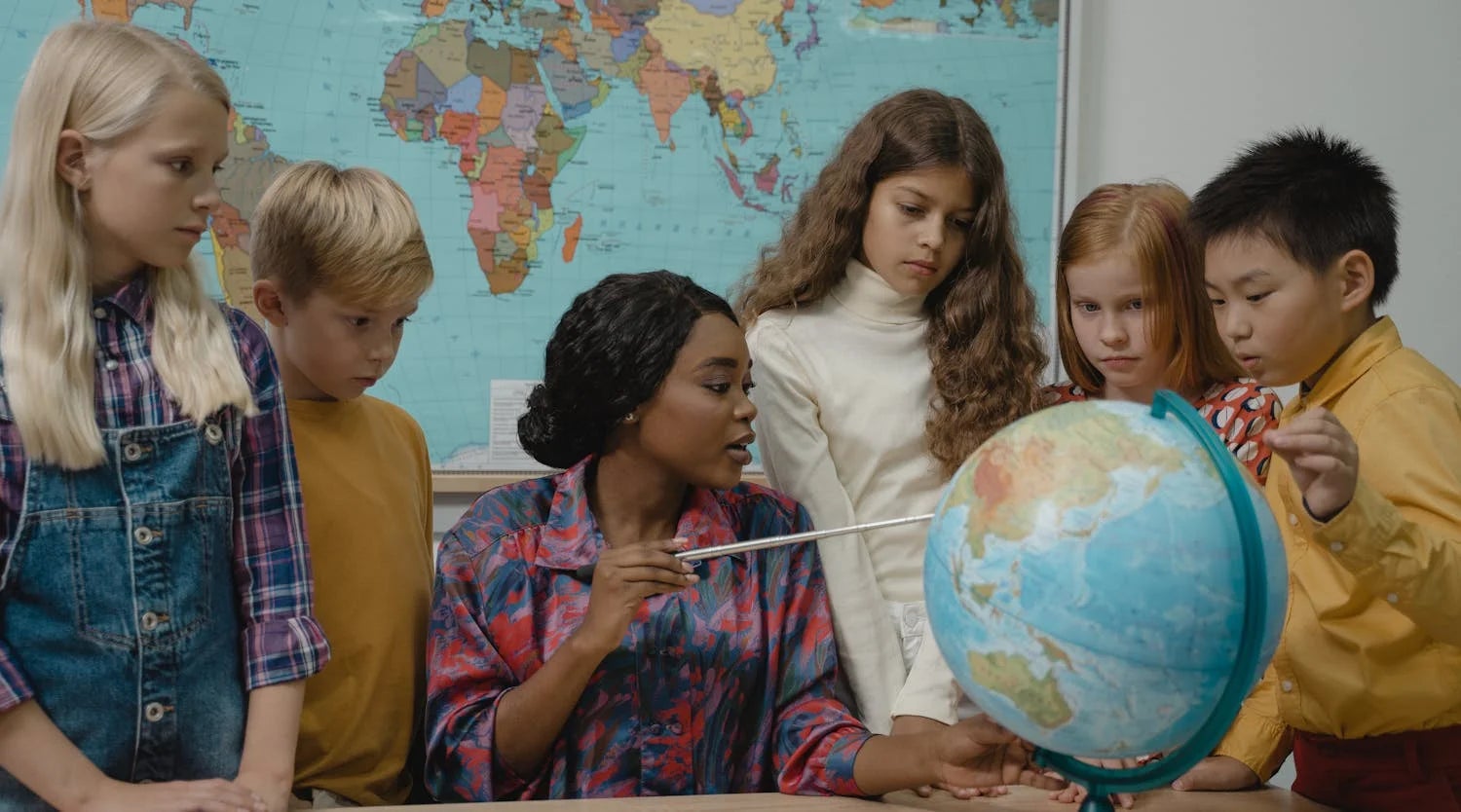
What is Primary Education?
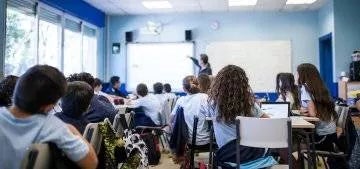
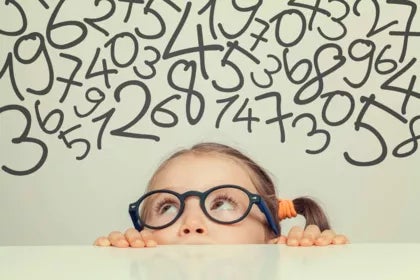
Primary Education is the first compulsory and systematic stage of the formal education system. In Spain, it spans six academic years, from the ages of 6 to 12, and precedes Compulsory Secondary Education (ESO). It is regulated by Organic Law 3/2020 (LOMLOE) , which sets out its objectives, its curriculum structure and the competences pupils must have attained by the end of the stage.
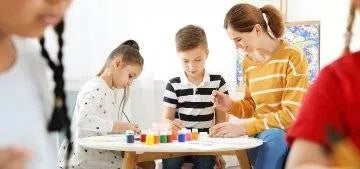
Its core purpose is to ensure that all children acquire the basic skills and knowledge necessary for their personal, social and academic development. But primary education goes far beyond teaching children to read and do arithmetic. It is a holistic environment where development takes place across five main areas:
- Cognitive development: literacy, numeracy, logical reasoning and problem-solving.
- Social and emotional : interpersonal skills, teamwork, empathy and emotional regulation.
- Physical and psychomotor development: healthy habits, coordination and body awareness.
- Creative and aesthetic development: imagination, artistic expression and cultural appreciation.
- Ethical and civic development: values such as responsibility, justice, tolerance and respect for the environment.
At this stage, children build their identity as individuals and as learners. This makes it a period of enormous responsibility for those who support them.
From a curricular perspective, it is organised into three cycles, each comprising two years:
- First cycle: Years 1 and 2 (ages 6–8)
- Second cycle: Years 3 and 4 (8–10 years)
- Third cycle: Years 5 and 6 (10–12 years)
In each cycle, the content becomes progressively more complex, adapting to the pupils’ cognitive and emotional development.
Why study Primary Education?
If you are considering this degree programme, you probably already have a sense of vocation. But beyond vocation, there are specific and objective reasons for studying for a Bachelor’s degree in Primary Education.
1. A real and lasting impact on society
A good teacher can change the course of a child’s life: sparking the curiosity of someone who didn’t believe they were clever, supporting them through a difficult time, or teaching someone to read who, years later, will become a teacher, doctor or engineer. That impact is not forgotten, and its effects extend far beyond the classroom:
- It reduces social inequality. It gives all children, regardless of their background, the opportunity to fulfil their potential.
- It shapes active and engaged citizens. The civic values and critical thinking fostered at this stage are the seeds of responsible and participatory citizenship.
- It drives economic development. A population that is well-educated from the ground up is more productive, more innovative and better able to adapt to changes in the labour market.
- It promotes social cohesion. Learning together in diverse environments fosters respect for other cultures and ways of life.
- It improves health and wellbeing indicators. Literacy and critical thinking enable people to make more informed decisions about their own health and that of their community.
- It fosters environmental awareness. From an early age, respect for the environment and an understanding of sustainability can be instilled.
Ultimately, a solid primary education is not merely a pedagogical matter: it is a strategic investment by society as a whole in its future.
2. High employability and job security
The job market for primary school teachers in Spain is strong. There is constant demand both in state education (through competitive examinations) and in the private and state-subsidised sectors. Unlike other degrees, a Bachelor’s degree in Primary Education directly qualifies graduates to practise as teachers, which simplifies access to the labour market.
Furthermore, teaching in state schools offers a level of job stability and security that few other professions can match in the long term.
3. A versatile career, beyond the classroom
Studying this degree does not limit you to the classroom. Graduates in Primary Education can pursue their careers in a wide variety of settings:
| Field | Examples |
| Formal teaching | State, state-subsidised and private schools |
| Educational support | Tutoring centres, private tuition, academic support |
| Non-formal education | Play centres, museums, cultural centres, libraries |
| Publishers and educational technology | Design of teaching materials and resources |
| Research and training | Universities, teacher training centres |
| Cooperation and NGOs | Education projects in vulnerable contexts |
4. Continuous personal development
Teaching requires you to keep your skills up to date. Every school year brings new challenges, new pupils and new realities. Whilst this demand may seem exhausting, it is also a constant source of learning and growth. You will become a better professional with every school year, and that is of immense value.
5. Specialisation tailored to your needs
The Bachelor’s Degree in Primary Education allows you to specialise through the specialisations , which are sets of optional modules that delve deeper into a specific area and are recorded on your official academic transcript. Some of the most popular specialisations are:
- Remedial Pedagogy (Special Educational Needs)
- Hearing and Language
- Foreign Language (English or French)
- Physical Education
- Music Education
- Digital Technologies for Learning
Choosing a specialisation allows you to refine your professional profile and improve your prospects in the civil service recruitment process or in the private sector.
What you’ll learn on the Bachelor’s Degree in Primary Education
The curriculum for this degree programme combines three main areas of study:
- Psycho-pedagogical training: you will learn how children learn, what factors influence their development and how to adapt teaching to their needs. Subjects such as Developmental Psychology and General Pedagogy form the core of this training.
- Subject-specific teaching: you will learn to teach every subject in the primary school curriculum: Maths , Language, Social Sciences, Natural Sciences, English, Music and Physical Education, using up-to-date methodologies and strategies that work in the real classroom.
- Teaching placements in schools: an essential part of the degree programme involves teaching placements in schools, where you will apply everything you have learnt under the supervision of expert tutors. These placements are not only compulsory; according to most students, they are the most valuable part of the degree programme.
If you’d like to find out more about the curriculum for the online Bachelor’s degree in Primary Education, read this guide.
Current teaching methods and challenges in the primary classroom
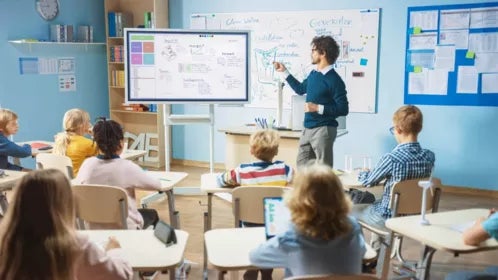
The way teaching is carried out in primary education has changed significantly over recent decades. The traditional lecture-based and rote-learning model has given way to approaches that are much more learner-centred:
- Active and meaningful learning: children take the lead in their own learning through experimentation, play and projects.
- Inclusion and attention to diversity: the primary school classroom caters for different learning paces, cognitive styles and special needs, ensuring that everyone has the same opportunities.
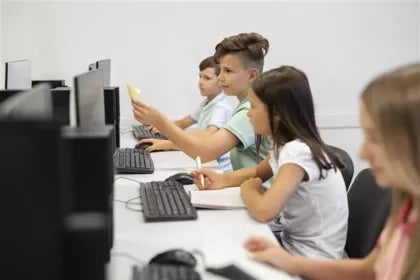
- Integration of technology : digital tools are incorporated as teaching resources to enrich learning and develop essential digital skills.
- Formative assessment: rather than focusing on marks, the aim is to support the learning process, identify difficulties early on and provide ongoing feedback.
However, the primary school classroom also faces real challenges that a good teacher must be aware of:
- The digital divide between pupils with varying levels of access to technological resources.
- The impact of socio-economic inequality on academic performance.
- The growing importance of children’s mental health and emotional wellbeing within the classroom.
- The need for ongoing teacher training to adapt to new teaching methods and social realities.
- Being aware of these challenges in advance is not meant to discourage you. It is so that you can enter the classroom better prepared.
The profile of a Primary Education student
There is no single profile, but there are certain characteristics commonly shared by those drawn to this career:
- Empathy and patience: the ability to put yourself in a child’s shoes is essential.
- Clear communication: knowing how to explain complex concepts in a simple way is a skill that can be developed, but one that is worth cultivating.
- Creativity: in the classroom, creativity is not a luxury. It is an everyday tool of the trade.
- Resilience: there will be difficult days. The ability to adapt and learn from mistakes is essential.
- Curiosity: a good teacher never stops learning.
Summary
Primary Education is the compulsory stage of education covering the ages of 6 to 12 and lays the foundations for all subsequent learning: reading, writing, reasoning, socialising and developing one’s own identity. Studying for a Bachelor’s Degree in Primary Education means choosing a degree programme with real purpose, high employability, job stability and the potential for significant social impact. Beyond the classroom, this degree opens doors to a wide range of fields, and the specialisations allow you to tailor your studies to your interests. If you are passionate about supporting children’s development during the most crucial stage of their lives, this degree could be one of the best decisions you could make.
Sources
- Organic Law 3/2020 (LOMLOE) amending Organic Law 2/2006 on Education.
- Royal Decree 157/2022, of 1 March, establishing the organisation and minimum curriculum for primary education. Official State Gazette.
- National Institute for Educational Technologies and Teacher Training (INTEF). Ministry of Education and Vocational Training.
- Organisation for Economic Co-operation and Development (OECD). Education at a Glance 2023.