












For years, science maintained that the adult brain was a static, unchanging structure, with a fixed number of neurons which, once damaged, could not regenerate.
Today, we know that this is far from the truth. This discovery, which is revolutionary in scientific terms, has opened up a whole range of potential applications in various fields such as education, psychology and rehabilitation.
What exactly is neuroplasticity?
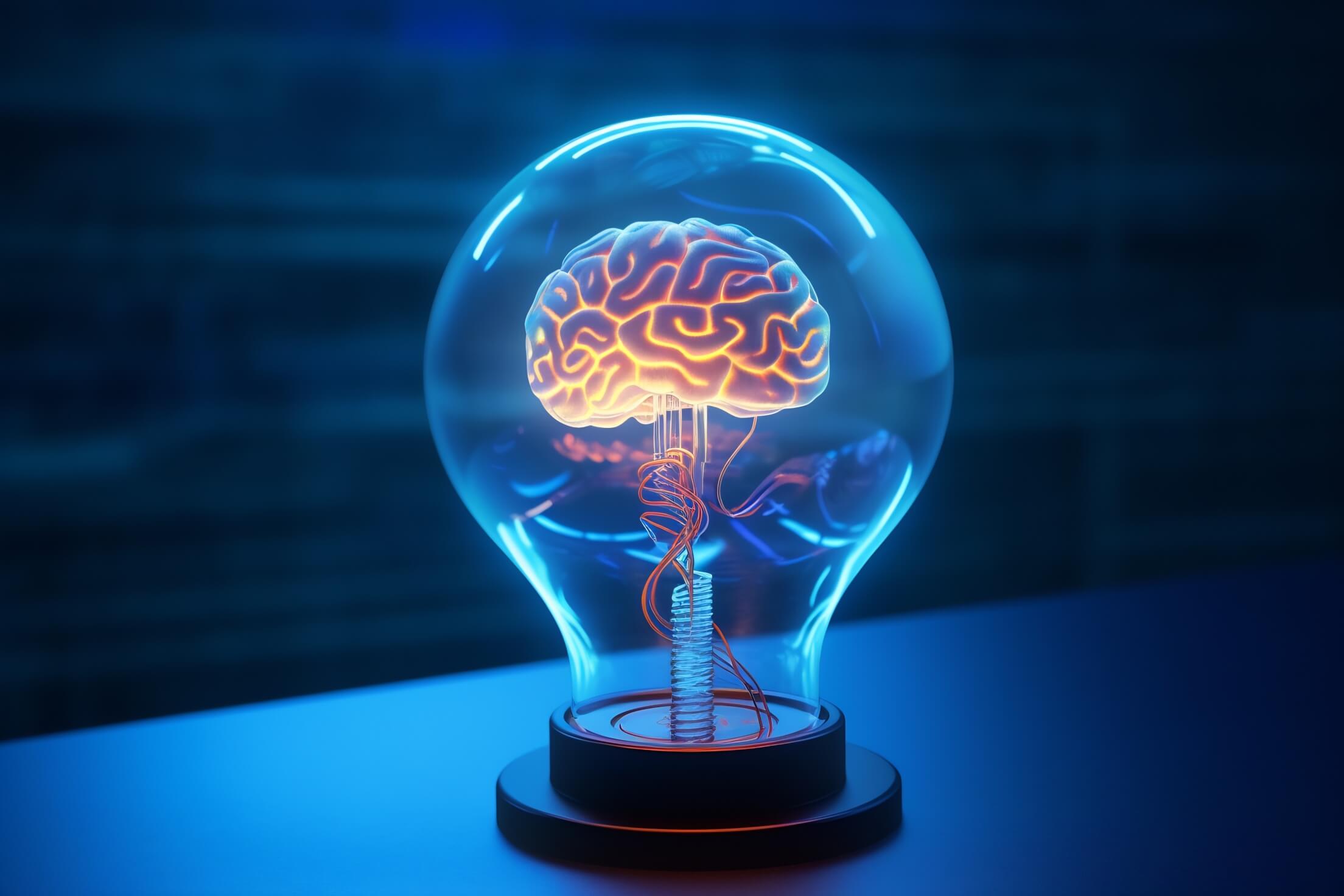
Neuroplasticity is the innate ability to modify the structure and function of the brain in response to new experiences, learning or damage. Essentially, it is the process by which the brain learns, changes and adapts. A malleable brain has the ability to modify the activity of neurons and reorganise their connections (known as synapses – a term that explains how neurons transmit information to one another).
Brain plasticity has enabled us to understand that everything we do, think and experience physically shapes our brain. Every time you learn something new, practise a skill or change a habit, you are altering your neural architecture. This knowledge is fundamental for professionals in education and psychology , as it underlines the importance of continuous stimulation and lifelong learning.
Types of neuroplasticity
There are several ways in which your brain can change thanks to its malleability. Below, we review the main transformations:
Functional plasticity
This is a type of adaptive plasticity. It occurs when the brain reorganises its functions to adapt to damage or deficits, allowing certain areas to ‘take over’. For example, if one region of the brain is damaged, another healthy region can take over its functions, as happens in some cases of rehabilitation following a stroke. This type of plasticity forms the basis of much of neurological rehabilitation.
Structural plasticity
Here, a change occurs in the physical structure of the brain. New synapses (the process of transmitting information between neurons) are formed, as are new dendrites (neuronal branches, the tangible part of the neuron that transmits information) and axons (a fundamental structure of the nervous system); new blood vessels are even created to better supply the active areas.
Synaptic plasticity: LTP (long-term potentiation) and LTD (long-term depression)
Two key mechanisms come into play here:
- Long-term potentiation (LTP): when you repeat an activity, you strengthen a synaptic connection (the transmission of information between neurons). It is like marking a path through the jungle: the more you walk along it, the clearer it becomes; the easier it is to follow.
- Long-term depression (LTD): conversely, if a connection is not used, it weakens. It is like forgetting a path: over time, it becomes difficult to follow. Sometimes, it is necessary to eliminate these connections.
Both mechanisms, which are among the most widely studied aspects of neuroplasticity, are essential. It is not enough simply to create connections; we must also eliminate those that are no longer used to keep the brain functioning efficiently.
Neurogenesis and new connections
Neurogenesis involves the generation of new neurons, particularly in areas such as the hippocampus, a region crucial for learning and memory. Although it was long thought that we were born with all our neurons, we now know that our brain can produce new cells in adulthood, provided it is properly stimulated. Furthermore, the formation of these new neurons creates connections with other existing brain networks, enabling the learning process to flow optimally.
Examples of neuroplasticity
Learning music and languages
When you play an instrument or learn a language, you activate different brain networks:
- In music, you improve coordination, rhythm and auditory memory.
- When learning languages, areas of the brain related to vocabulary, grammar and phonetics are strengthened. The language areas of the brain develop in a more complex way and show a higher density of grey matter (associated with thought and memory) compared to monolingual people.
Repetition strengthens synapses (LTP), structural connections are formed, and at a functional level, the brain adapts to process sound, rhythm and language more fluently. These are clear examples of structural plasticity induced by practising an activity.
Rehabilitation through music therapy
In cases of brain injury or neurological disorders, music therapy is a powerful tool. Thanks to music, healthy areas are activated to take over functions from damaged areas (functional plasticity), whilst new neural networks are formed. Furthermore, the pleasure derived from music facilitates learning, boosts motivation and promotes neurogenesis.
If you are interested in this discipline and its relationship with brain function, you may wish to look into the Bachelor’s Degree in Musicology.
Musical training for children with language disorders
Children with dyslexia or other language processing disorders often struggle to distinguish between rapid, consecutive speech sounds. For them, musical training can help significantly improve their communicative development. Music stimulates auditory and linguistic connections and promotes the creation of new synapses. The results are so positive that an improvement can be observed in the fluency, comprehension and rhythm of speech among people with language difficulties.