




















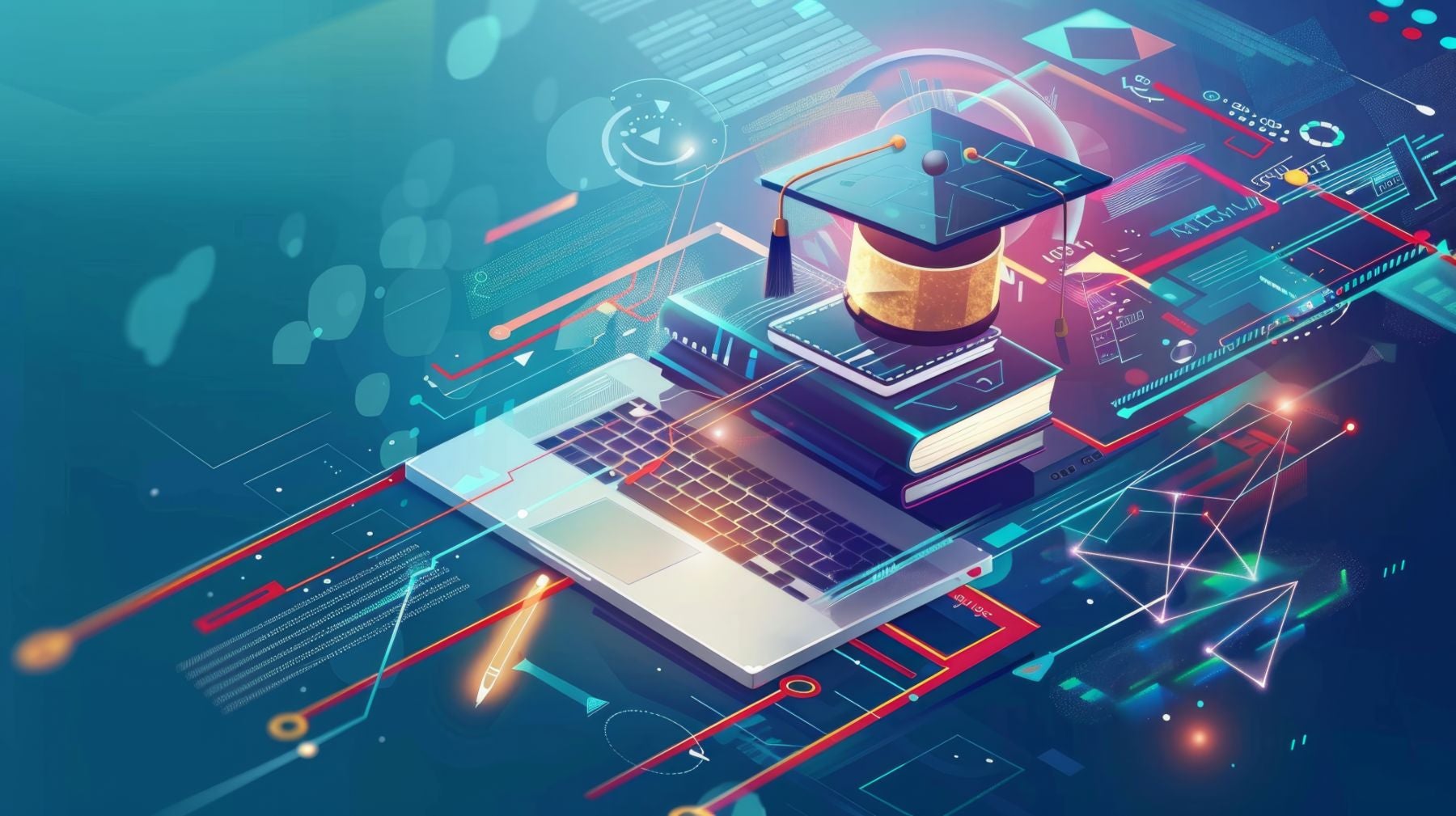

Artificial intelligence (AI) has made a significant impact on education, redefining how students and teachers interact with knowledge. From virtual assistants to adaptive learning platforms, these tools are not only optimising processes but also offering new, more personalised and effective ways of teaching and learning.
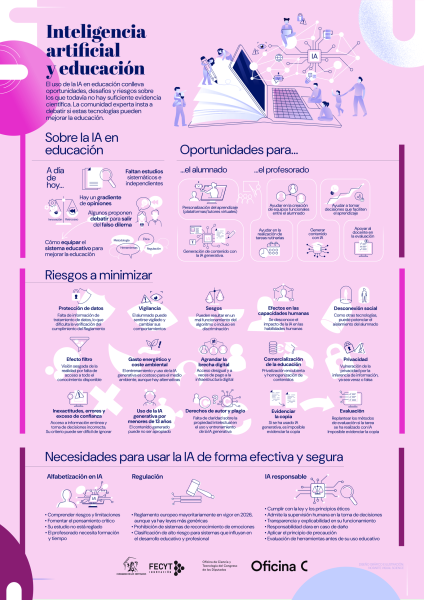
Source: Office of Science and Technology of the Congress of Deputies (Office C). Report C. Artificial Intelligence and Education. (2024) www.doi.org/10.57952/hqct-6d69
What are artificial intelligence tools in education?
Artificial intelligence tools in education are programmes designed to optimise learning and facilitate teaching through the use of systems based on advanced algorithms that combine machine learning and natural language processing to address issues such as personalising learning and automating tasks.
Whether it is to create educational bots, develop personalised learning programmes, or generate and analyse educational content on AI platforms, these tools are redefining the roles of teachers and students in the classroom.
Applications of AI in education
Personalised learning
AI stands out for its ability to personalise teaching according to each student’s pace, level and learning style. Tools such as DreamBox and Knewton analyse student data to offer them a learning pathway tailored to their needs, adjusting content and activities whilst maximising the personalisation and efficiency of the learning process.
AI-powered virtual educational assistance
In the world of education, there is a range of virtual assistants at your fingertips that can make learning and teaching easier. There are different categories that may be useful to you, depending on your needs and preferences.
On the one hand, there are specialised chatbots. These tools are created by professionals and focus on specific topics. An interesting example is the‘Lie Detector ’, designed to help you understand concepts such as deepfakes and bias. Another example is‘Summon a Philosopher and Discuss’ , which allows you to explore philosophical ideas interactively. Both were developed by Ramón Besonías, a philosophy teacher passionate about integrating technology into his lessons.
On the other hand, there are tools that combine artificial intelligence with practical features to complement your learning. For example, Canva and Edpuzzle can help you create engaging and personalised content. Furthermore, platforms such as Quizlet or Kahoot! incorporate game-like elements that make learning more fun and motivating.
There are also tools designed for teachers that automatically generate educational content. These use generative AI to provide solutions such as lessons, assessments or learning scenarios. Magic School and Mathew are two notable examples that can save you time and effort when planning your lessons.
Poe makes it easy to interact with various AI tools in a single space. Its versatility makes it an ideal resource for exploring different educational applications, such as text generation or answering questions.
Claude Sonet is a powerful natural language processing tool that enables teachers to create educational content, carry out text analysis or interact with data efficiently.
As you can see, virtual assistants are valuable resources that you can integrate into your educational experience. Whether for learning, teaching or creating, these tools are designed to make your life easier and more enriching.
AI-powered learning analytics
AI has been used for years to analyse content and offer or suggest ways to improve or tailor it to our interests. In education, something similar is happening. There are already platforms and tools that use machine learning to free up teachers’ time for pedagogical tasks rather than administrative and bureaucratic ones. Tools such as Gradescope are an example of how to identify pupils’ performance, intervene to implement improvements based on the measurement and assessment of their responses, and optimise the learning process.
Programmes such as Carnegie Learning offer personalised tutoring through real-time analysis of student progress.
How does AI benefit teachers?
Artificial intelligence applied to teaching helps teachers improve efficiency in repetitive tasks, such as marking and lesson planning. It also allows them to access detailed analyses of student performance to make more informed decisions.
Furthermore, AI systems can generate data-driven teaching suggestions, enhancing the teaching process and adapting to the specific needs of each group of students.
Ethical guidelines and considerations regarding the use of AI
The use of AI in education must comply with ethical guidelines that guarantee data privacy and security. It is essential that educational institutions implement clear policies on the storage and use of personal information, thereby establishing a secure digital environment.
Furthermore, developers of AI tools must design them to be free from bias and errors. This involves ensuring transparency in their training, based on clear and accurate policies regarding the operation of their platforms.
UAX Guide to Artificial Intelligence for Teachers
The UAX AI Guide for Teachers is an interactive resource that introduces teachers to the ethical and effective use of artificial intelligence, highlighting practical applications and success stories.
Challenges and limitations of AI in education
Despite its benefits, the implementation of artificial intelligence tools faces challenges, such as:
- The technology gap in terms of infrastructure and sustainability.
- A lack of teacher training in the use of these tools
- The initial cost of adoption
Technology is always at the service of pedagogy and people. Finding the right balance in its use is one of the greatest challenges today. Proposing policies and programmes that make technology a sustainable, healthy, ethical and productive resource should be a priority for all educational institutions, putting people first.
The future of artificial intelligence tools
The future of AI in education is full of possibilities: from the development of fully immersive platforms to integration with emerging technologies such as virtual and augmented reality. These innovations promise to make learning an even more interactive and personalised experience.
Furthermore, research into AI and personalised learning will continue to advance, enabling students to have educational experiences tailored to their interests and abilities.
Conclusion
Artificial intelligence tools are revolutionising education by offering innovative solutions for learning and teaching. From chatbots and virtual tutors to predictive analytics and interactive content, these technologies not only improve teaching efficiency but also make learning more accessible and personalised.
Adopting these tools with an ethical and balanced approach is key to realising their full potential, ensuring that AI in education benefits both students and teachers. The future of learning is here, and it is full of possibilities thanks to artificial intelligence.
At UAX, we are committed to providing our students with training in AI. Our academic programmes include the Master’s in Educational Technology and Digital Competence for Teachers , which is constantly updated to continue fostering digital literacy and supporting technology-based teaching with meaning and purpose.