See all Online Master's Degrees in Health
See all Master's Degrees in Engineering
Most searched curriculums
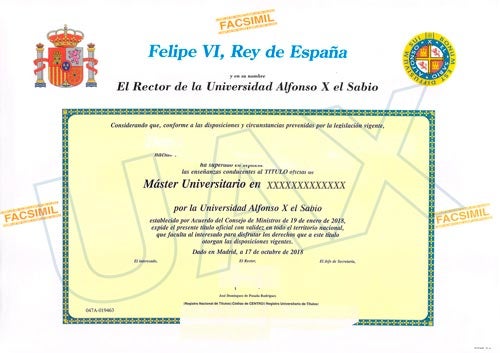
Official qualification
Specialise in resource management with the master's degree in renewable energies with 100% employability and a business management focus. A sector that creates more than 2,000 jobs per day. Stand out with a digitalised profile, expert in project management and in line with the needs of leading companies. UAX, top 2 private universities best valued by companies (Forbes, 2025)
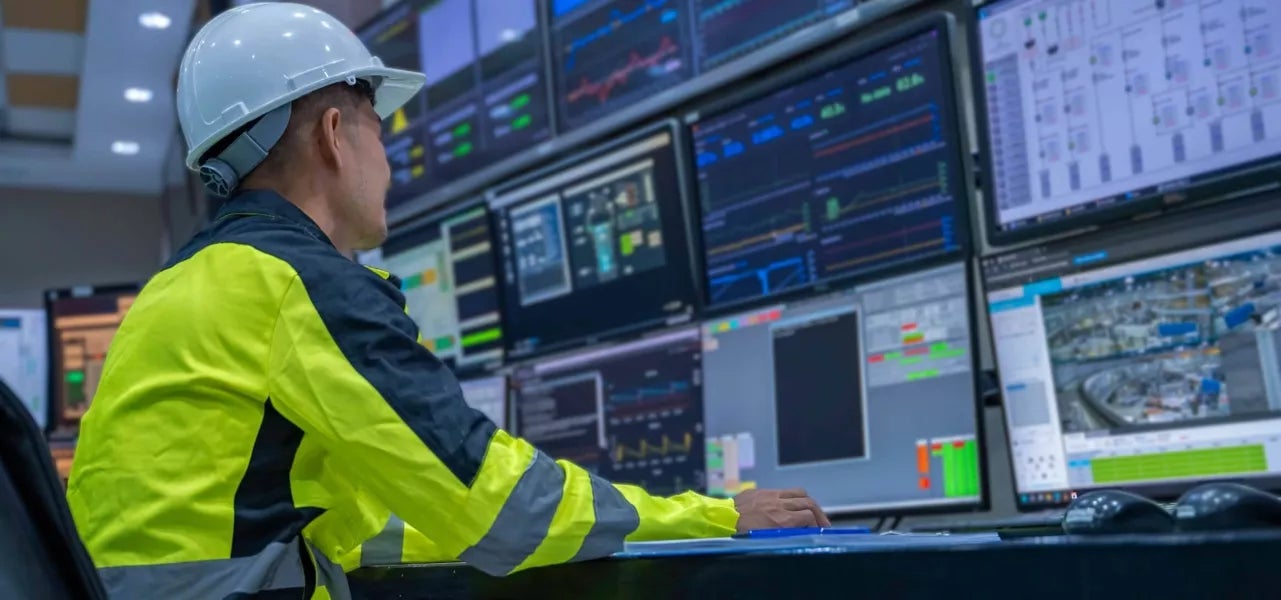
Join the sector that creates more than 2,000 jobs a day, according to the International Renewable Energy Agency (IRENA). Our Online Master’s in Renewable Energy prepares you in just 9 months to lead the energy transition with a specialised, digital skillset. Develop skills in renewable energy project management, energy efficiency and the modelling of solar, wind and photovoltaic installations, using specialised software and agile methodologies sought after by leading companies such as Iberdrola, Acciona, Endesa and Naturgy.
Master professional tools such as PVsyst, PVGIS, Windographer and System Advisor Model (SAM) to design, optimise and manage renewable energy installations. Through practical sessions, workshops and partnerships with leading companies, you’ll gain access to a sector with high employability and international prospects. All delivered 100% online, compatible with your professional commitments and aligned with the 2030 Sustainable Development Goals (SDGs).
A Master’s programme that trains you in resource management and energy efficiency, preparing you to meet the needs of a sector with a promising future.
Designs and models solar thermal and photovoltaic installations with PVsyst, PV Watts and Solar CCP.
Optimises wind farms and hydroelectric plants using Windographer, WasP and Atlas.
He is proficient in tools such as NREL, HULC and System Advisor Model for analysis and simulation.
It implements energy saving solutions and manages installations in industrial environments.
He participates in workshops with companies and develops real projects for Iberdrola, Acciona and Endesa.
Apply agile methodologies and SDG 2030 to lead energy efficiency projects.
Transform the way you work with generative artificial intelligence. This micro-credential enables you to apply tools such as ChatGPT, Copilot or Gemini in information analysis, content creation and decision-making, integrating innovative solutions in an ethical and responsible way in real professional environments.

Develop your professional potential through leadership and interpersonal skills. This micro-credential provides you with the keys to manage teams, communicate effectively and solve problems in real-world environments, combining personal leadership techniques with practical productivity and collaboration tools.
Please see the course guides for the modules via the link below.
Master’s Degree in Renewable Energy
First Year
FIRST FOUR-MONTH PERIOD
| Code | Subjects | Character* | ECTS | ||||||||
|---|---|---|---|---|---|---|---|---|---|---|---|
| SM141900 | Biomass and biofuels | OB | 6 | ||||||||
Biomass and biofuelsCódigo: SM141900 Imprimir Course 1: First-term module. Compulsory. 6 credits. Profesores
Objectives Through the course’s six teaching units, the aim is to develop the following skills and learning outcomes: § Core skills: o Ability to manage scientific and technical information, and to use the basic information systems available online. o Language skills, such as the ability to communicate verbally and in writing to convey ideas and decisions clearly and accurately. o Analytical and synthesis skills. o Critical and deductive reasoning. o Independent learning. o Fostering creativity, initiative and proactivity. § Specific competences: o Ability to handle and analyse relevant literature on biomass and biofuels, published in Spanish and English sources. o Ability to accurately interpret the potential of biomass and biofuels in combating environmental degradation and climate , as well as to engage in technical discussions and offer critical opinions on energy-related aspects of the sustainable development of biofuels. o Ability to determine the application of biomass that best suits a particular energy requirement. o Ability to integrate biomass as a renewable energy source into the national, regional or local energy mix. o Ability to analyse the various technologies and manufacturers available and make a critical selection based on costs and their actual application. § Learning outcomes: To achieve the objectives of this module, we need you to take part in the discussions we we propose, as this will enable you to gain a more comprehensive and enriching learning experience. We do not want passive students who simply receive and process information; we want students who have their own opinions and are keen to learn and contribute different perspectives. We therefore expect the following from all our students: § Active participation in the forums, sharing knowledge and experiences. § To work on the proposed activities and submit them within the estimated timeframe. § Asking questions to understand and explore the content in greater depth. § Learning about innovative technologies in the field of biomass production and use biomass and biofuels. § Analysing the advantages and disadvantages of the various technologies and processes available for developing biomass utilisation systems. § Proposing solutions to environmental problems, both global and local, arising from the exploitation, transport and consumption of biomass. Description of the course content This module is divided into 6 teaching units. To study each one, you must read, study and successfully complete all the materials it comprises. These are as follows: § Theoretical content and self-assessment exercises: In each teaching unit you will find more theoretical content (enriched with links, a bibliography and videos) in which the tutor will explain and clarify specific parts of the syllabus. Interwoven with the theoretical content, you will find forums, quizzes and assignments that will help you consolidate your knowledge by putting it into practice. § Individual and/or group activities: This course/module includes various individual and/or group activities. You must complete them and submit them to the lecturer, via the assignment submission box provided in the virtual classroom for the course/module, so that they can be assessed and you can receive personalised feedback. These activities will count towards your final mark. § Online classes: this course/module comprises 60 hours of online classes, which will take place synchronously on the dates and at the times published by the lecturer, using the virtual classroom’s video-conferencing tool. Although the classes are recorded and can be viewed asynchronously, it is advisable to attend as they are interactive and participatory sessions that will help you understand and apply the course concepts. § You must pass the final exam. Assessment system and criteria In the course/module’s virtual classroom, you will be able to view in detail the activities you are required to complete, as well as the submission dates, assessment criteria and marking schemes for each one. Your final mark will be based on the following assessment system: 30 per cent of the mark will come from continuous assessment, based on the individual activities to be submitted throughout the course: 15 per cent each. The final exam for the module will account for 70 per cent of the final mark. Standard assessment period: To pass the module during the standard assessment period, you must achieve a mark of 5.0 out of 10.0 or higher in the final mark (weighted average) for the module and, in addition: The average mark for all activities in each module must be 5.0 out of 10.0 or higher to be included in the overall average with the exam. Similarly, the exam mark must be 5.0 out of 10.0 or higher to be included in the overall average with the activities. Extraordinary examination session: To pass the module in the extraordinary examination session, you must achieve a mark of 5.0 out of 10.0 or higher in the final mark (weighted average) for the module. Students must submit any activities that were not passed during the ordinary assessment period, after receiving the relevant feedback from the lecturer, or any activities that were not submitted at all. |
|||||||||||
| SM141901 | The current context of energy and energy sustainability | OB | 6 | ||||||||
The current context of energy and energy sustainabilityCódigo: SM141901 Imprimir Course 1: First-term module. Compulsory. 6 credits. Profesores
|
|||||||||||
| SM141902 | Photovoltaic energy | OB | 6 | ||||||||
Photovoltaic energyCódigo: SM141902 Imprimir Course 1: First-term module. Compulsory. 6 credits. Profesores
Objectives - To understand the energy conversion process that takes place from the primary source of solar radiation to the generation of electrical energy, taking into account the influence of solar geometry (astronomy and atmospheric factors) and the technological aspects inherent to the photovoltaic system itself. - To learn about the most fundamental characteristics of each of the components that make up a photovoltaic system, in particular the module, the inverter and the fixed or mobile support structures. - To learn the concepts involved in calculating the output of a photovoltaic system, units of measurement, the calculation of various performance indicators and essential aspects of system design. - To understand the specific aspects of self-consumption systems within the Spanish regulatory framework, learning how energy is metered and the design considerations for such systems. - To learn how to use the PVsyst photovoltaic system simulation software, whilst at the same time reinforcing, through practical use of the programme, all the design and output calculation concepts learnt in the more theoretical sessions. - To understand aspects of the engineering, development and operation of photovoltaic plants, as well as the main tests carried out to verify their correct functioning, particularly PR tests. Course content description Unit 1 – FUNDAMENTALS OF PHOTOVOLTAIC ENERGY Astronomical coordinates Determining the position of the sun Solar geometry Solar radiation Photoelectric effect Unit 2 – Components of a photovoltaic system Modules Inverters Structures and trackers Transformers Battery energy storage systems (BESS) Other Unit 3 – Production Calculation Concepts and parameters Meteorological databases Measuring instruments System losses Simulations with PVSYST Unit 4 – Self-consumption systems Types of systems Regulation of self-consumption in Spain Design of self-consumption systems Project examples Unit 5 – Photovoltaic Plants Plant design and engineering Development phase Implementation phase PR testing Assessment system and criteria MULTIPLE-CHOICE EXAM (accounting for 60% of the final mark) 40 QUESTIONS 4 ANSWER OPTIONS, WITH ONLY ONE CORRECT ANSWER CORRECT ANSWER + 1.00 / INCORRECT ANSWER - 0.25 DURATION: 1 hour 20 minutes Result: Marks obtained out of 40 are standardised on a scale of 0 to 10. PRACTICAL ASSIGNMENT USING PVSYST (40% of the final mark), marked out of 10 according to the specific criteria set out in the instructions. CRITERIA FOR CALCULATING THE FINAL GRADE 1. If a mark of less than 4 out of 10 is obtained in the exam or a mark of less than 3 out of 10 is obtained in the practical assignment: FINAL MARK = Lower of (EXAM MARK, ASSIGNMENT MARK) 2. If a mark of 4 out of 10 or higher is obtained in the exam and a mark of 3 out of 10 or higher is obtained in the assignment: FINAL MARK = 0.6 × EXAM MARK + 0.4 × ASSIGNMENT MARK REQUIREMENT FOR PASSING THE SUBJECT FINAL MARK GREATER THAN OR EQUAL TO 5 OUT OF 10 Note: If a student fails the module in the ordinary assessment period and the assignment mark is 4 out of 10 or higher, the student may choose either to resubmit the assignment and retain the same mark for the purposes of the supplementary assessment period, in which the same assessment criteria will apply. If the assignment mark is less than 3 out of 10, the assignment must be resubmitted for the supplementary examination |
|||||||||||
| SM141903 | Hydropower | OB | 6 | ||||||||
HydropowerCódigo: SM141903 Imprimir Course 1: First-term module. Compulsory. 6 credits. Profesores
|
|||||||||||
| SM141904 | Solar thermal and thermoelectric energy | OB | 6 | ||||||||
Solar thermal and thermoelectric energyCódigo: SM141904 Imprimir Course 1: First-term module. Compulsory. 6 credits. Profesores
|
|||||||||||
| SM141950 | Fluid mechanics | CM | 4 | ||||||||
Fluid mechanicsCódigo: SM141950 Imprimir Course 1: First-term module. Supplementary module for the Master’s degree. 4 credits. Profesores
|
|||||||||||
| SM141951 | Electrical engineering | CM | 4 | ||||||||
Electrical engineeringCódigo: SM141951 Imprimir Course 1: First-term module. Supplementary module for the Master’s degree. 4 credits. Profesores
|
|||||||||||
| SM141952 | Thermodynamics and heat transfer | CM | 4 | ||||||||
Thermodynamics and heat transferCódigo: SM141952 Imprimir Course 1: First-term module. Supplementary module for the Master’s degree. 4 credits. Profesores
Objectives The Thermodynamics and Heat Transfer module helps students lay the foundations for any energy-related process. It provides basic knowledge of the variables, processes, cycles and principles that govern thermodynamic processes and analyses the various mechanisms of heat transfer. This course is a 4-credit supplementary module (3 of which are from the thermodynamics and 1 from the heat transfer section), which will be taught in the first semester to any student who has not taken it as part of their original degree programme or has not studied in sufficient depth. Upon completion of the course, students should have sufficient knowledge to be able to analyse any process involving any form of energy, understand its principles and evaluate the design of any energy installation. Course content description Module 1: Principles of Thermodynamics. - The zeroth law of thermodynamics. - First law of thermodynamics. - Second law of thermodynamics. Entropy. - Open systems. Block 2: Power cycles. Heat engines. - Reciprocating internal combustion engines (RICE) - Gas turbine. Brayton cycle. - Steam turbine. Thermal power stations. Rankine cycle. - Combined cycles. - Cogeneration. Block 3: Reverse cycles. Industrial heating and cooling. - Reverse cycle via vapour compression. - Modifications to the vapour compression cycle. - Heat pump. Aerothermal energy. - Absorption cycle - Reverse Brayton cycle Block 4: Heat transfer. - Conduction. - Convection. - Radiation. - Industrial applications: heat exchangers. Assessment system and criteria End-of-Course Assignment (EOCA) Bibliography Other: 1. Cengel, Yunus A. Thermodynamics 5th ed.: McGraw-Hill. 2006. ISBN: 970-10-5611-6 |
|||||||||||
| TOTAL: | 42 | ||||||||||
SECOND FOUR-MONTH TERM
| Code | Subjects | Character* | ECTS | ||||||
|---|---|---|---|---|---|---|---|---|---|
| SM141905 | Wind power | OB | 6 | ||||||
Wind powerCódigo: SM141905 Imprimir Course 1. Second-term module. Compulsory. 6 credits. Profesores
|
|||||||||
| SM141906 | Emerging renewable energy sources and storage | OB | 6 | ||||||
Emerging renewable energy sources and storageCódigo: SM141906 Imprimir Course 1. Second-term module. Compulsory. 6 credits. Profesores
|
|||||||||
| SM141907 | Renewable energy project management and development | OB | 6 | ||||||
Renewable energy project management and developmentCódigo: SM141907 Imprimir Course 1: Second-term module. Compulsory. 6 credits. Profesores
|
|||||||||
| SM141908 | Work placements | OB | 6 | ||||||
Work placementsCódigo: SM141908 Imprimir Course 1. Second-term module. Compulsory. 6 credits. Profesores
|
|||||||||
| SM141909 | Master’s Thesis | OB | 6 | ||||||
Master’s ThesisCódigo: SM141909 Imprimir Course 1. Second-term module. Compulsory. 6 credits. Profesores
|
|||||||||
| TOTAL: | 30 | ||||||||
*Character: BT: Basic Training, Ob: Required, Op: Optional
The main reason why at UAX there are students like you is the possibility of making your personal, professional and academic life compatible. Our differential value is a methodology without barriers, focused on you and your desire to learn.
How is our methodology?
In addition, you will have the complete availability of our campus in Madrid, to carry out your formalities, solve your doubts and enjoy the facilities it offers.
Our degree is official, verified by the Council of Universities and fully valid in Spain, as well as in the European Higher Education Area.
It is recognised by the Education Systems of Latin America, being recognised and approved by the different Ministries of Education in Latin America:
SENESCYT, MEN (MinEducation), SEP, Mescyt, among others, automatically.
*The recognition of credits for professional experience will require a personalised and detailed study by the degree validation committee and the UAX admissions department.
The flexibility of online learning, with opportunities to connect
Take your exams online wherever you are or, if you prefer, in person at our designated centres in Spain and Latin America, subject to availability and capacity.
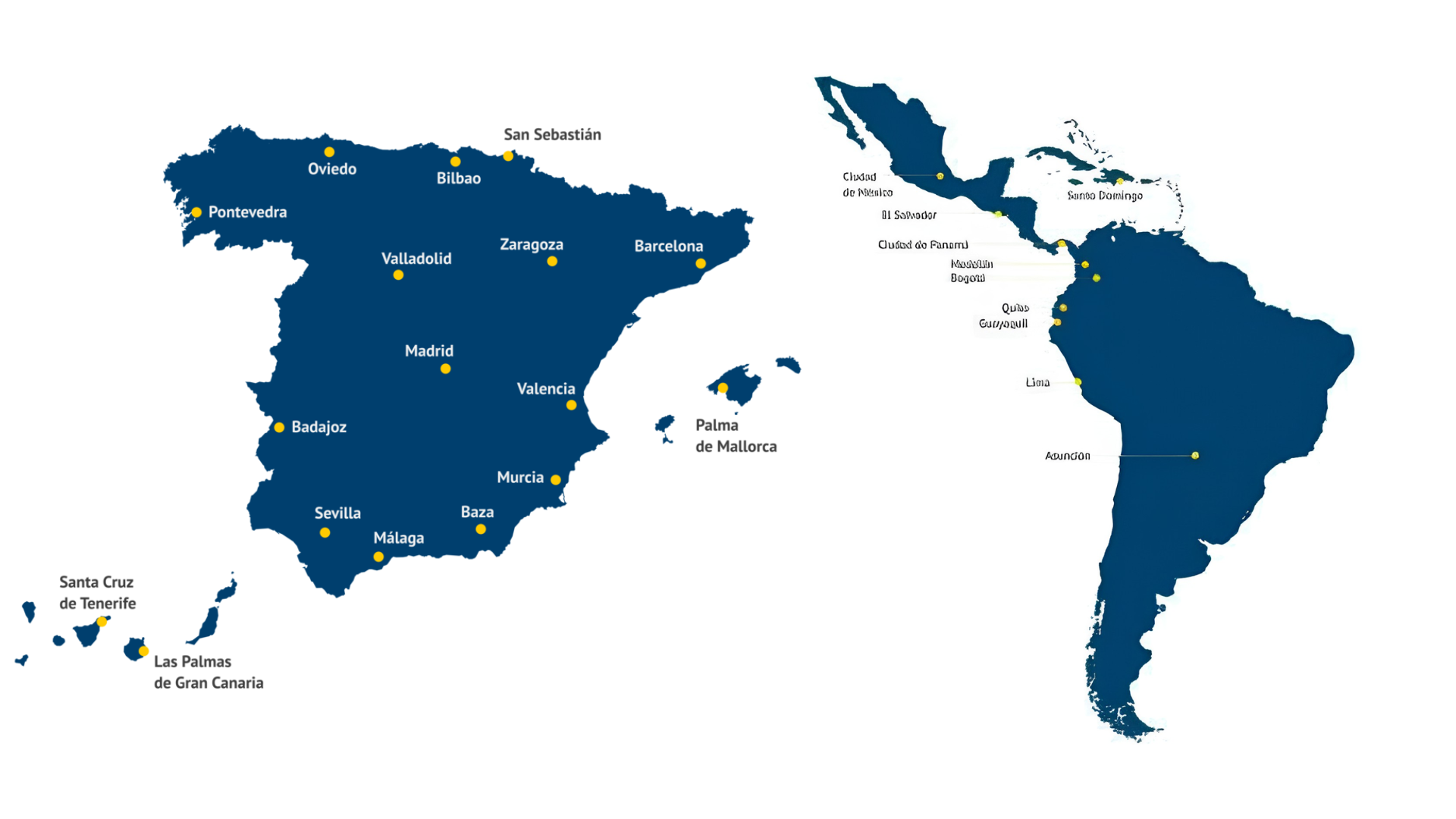
Furthermore, as a student at UAX Online, you’ll have access to our Campus Hubs, a network of exclusive physical spaces where you can study, access libraries, work in co-working areas and connect with other students. Because studying online doesn’t mean studying alone.
Campus Hubs available in: Alcobendas, Alcorcón, Valencia San Vicente, Murcia, Barcelona, Málaga, Seville and Arganda.
Access is granted with your UAX student card, subject to availability and the opening hours of each centre.
Graduates of the following degree programmes will be eligible for admission to the Master’s programme:
Students from the following degree programmes, which are not considered priority areas, may also be admitted to the Master’s programme in Renewable Energy, provided they undertake supplementary modules:
Furthermore, if you already have prior professional experience related to the skills required for this degree, this may be recognised in the form of credits. ECTS recognition will require a free personalised assessment, which you can request here.
Complete our form, give us a call or request a visit to UAX. We’re excited to show you everything we’ve prepared for you.
A professional from our university will offer guidance and help you select the path that aligns best with your interests.
Apply for admission to our university and take an admission test, either in person or online, whichever suits you best!
We recognise your potential and believe you have the right skills to thrive as a UAX student. Now, proceed with the necessary formalities—reserve your spot!
Enrol in your courses, meet the deadlines and follow the payment procedures to secure your place and fulfil the legal admission requirements.
You’re now part of UAX! Prepare to embark on a unique educational journey where you’ll take centre stage. Welcome to your university!
Teaching staff on the Master’s degree in Renewable Energy
Train alongside the best professionals
PhD in Civil Engineering, ITOP, Member of SPANCOLD and Collaborating Member of several technical committees. Director of the Area of Sanitary Engineering at the UAX for 18 years, professor in the Master's Degree in Civil Engineering. Engineer with 25 years of experience in construction companies, engineering companies and administrations. Author of several published scientific articles.

Dr. Ingeniero de Caminos, Canales y Puertos, Ingeniero Técnico de Obras Públicas, Master in Soil Mechanics and Geotechnical Engineering, Master in Professional Development. With more than 15 years of professional experience. Author of several published scientific articles. Collaborating member of SPANCOLD.

Mechanical Engineer graduated from the National University of Lomas de Zamora (Buenos Aires, Argentina). Lecturer in Project Design at the National University Almirante Brown. Former teacher, director of thesis of Industrial Engineering and coordinator of the renewable energy laboratory at the National University of Lomas de Zamora. Researcher with publications in several congresses.
Industrial Engineer from the Alfonso X el Sabio University and Official Certificate in Business Management Keys from the IESE Business School. He has 10 years of experience in the energy and Oil & Gas sector, and currently works at Siemens Energy as head of business development for power generation projects at national and international level.

Graduate in Nanoscience and Nanotechnology, Msc. in solar energy engineering at Dalarna University, Borlänge, Sweden. With more than 4 years of experience in the context of power generation and distribution and more than 3 years in photovoltaic generation. Expert in solar resource calculation and evaluation, energy assessment and design of large-scale PV plants. Leader of the solar excellence department in Iberia in a renowned international electricity company.

Degree in Civil Engineering from the UAX. Master's Degree in International Project Management from UDIMA. Technical Manager of Onshore Wind at BayWa r.e. for Iberia and internal trainer. With 10 years of experience in the energy sector, he has held management positions in companies such as DF, Elecnor or Capital Energy throughout the entire value chain of project development.

PhD in Industrial Engineering from the ETSII-UPM in Thermodynamics in the field of energy. FPI grant in R&D project at INSIA, and stay at the INRETS research centre (France). Lecturer in Master's and Degree courses in Thermal Engineering related to energy and combustion engines. Lecturer in the Master's Degree in Renewable Energies in Thermodynamics and Heat Transmission and Emerging Renewable Energies and Storage.
Senior Mining Engineer from the Polytechnic University of Madrid and Executive MBA from the EAE Business School. He currently works as Project Site Manager at Acciona with more than 18 years of experience in the development of large international industrial projects in different countries.

PhD in Chemical Engineering from the Complutense University of Madrid. University lecturer at UCM and UAX in Chemical Engineering and Industrial Engineering. Process Engineer with experience in petrochemical, fertilizer and power generation projects, in the phases of Design, Commissioning, Start-up and Warranty Testing, with more than 2 years of international experience in Saudi Arabia and 1 year in the UK.
Graduated in Energy Engineering, Javier has three years of experience as Project Engineer in the development and execution of large-scale PV plants at Enel Green Power. He has been involved not only in the design of PV plants but also in the management and coordination of the PV, BESS, and high voltage engineering team for hybrid plants.
Industrial Engineer by the Polytechnic University of Madrid (Spain) and by the RWTH Aachen University (Germany) with more than 15 years of international experience in Spain, Germany and South America, working in multinationals in the energy sector, with special focus on turbines and generators, both in their design, manufacture, sale, operation and maintenance.
Under the objectives of this Master's Degree in Renewable Energies, graduates will be able to perform qualified positions with an increasing degree of responsibility, such as:
Study wherever you like without missing out on a university experience that is accessible, practical and geared towards your professional development.
Live lessons that are always available
Flexibility to study at your own pace
Practical learning based on real-life cases
Personalised academic support
Teachers who are currently working and have links to the sector
Training aimed at improving employability
At UAX we know that studying is an investment, which is why we give you the resources to access our qualifications. Learn about some of our scholarships and grants:

Access to the master's degree is open to graduates with the following degrees:
Students coming from the following degrees, not considered as preferential, may also access the Master's programme in Renewable Energies, being obliged to take complementary training courses:
A renewable energy engineer is responsible for the rational management of available resources to minimise the impact on the environment.
Find out more in our blog post: “Environment-related careers: studies and professions ”.
A Renewable Energy Engineer is able to perform qualified positions with an increasing degree of responsibility, such as:
In the University Master's Degree in Renewable Energies
Other related qualifications
Master's Degree in Occupational Risk Prevention (online)
In collaboration with:
Start:
October
Length:
9 months
Master’s Degree in Integrated Management Systems – SIG (online)
In collaboration with:
Start:
October
Length:
9 months
Online Master’s Degree in Cybersecurity
Start:
October
Length:
9 months
Online Master’s Degree in Big Data for Business
Start:
October
Length:
9 months
All fields are required
Enquiries, complaints and claims
We respond to the genuine needs of our students and staff, because we believe in the continuous improvement of our results. That is why we always want to hear whatever you have to say.
If you are already part of UAX, please visit the ‘Customer Service: complaints, suggestions and compliments’ section on thevirtual campus , logging in with your username and password.