






















Table of Contents
Studying physiotherapy opens the door to a profession with a wide range of career opportunities. After completing your degree in physiotherapy , you can specialise by undertaking a master’s degree to focus your career path on the branch of physiotherapy that most interests you. Bear in mind that this is essential in any field of study, as there is an increasing demand for professionals who are experts in a specific aspect of their profession.
Over the years, the number of specialisms within physiotherapy has grown. This is because, at some point in their lives, people will need the help of these specialists to manage a specific condition or injury. If we add to this the fact that we are becoming increasingly aware of the importance of physical activity in helping us reach old age in the best possible state of health, it becomes clear just how vital physiotherapists are in helping us recover from the injuries we are, quite naturally, likely to sustain whilst playing sport.
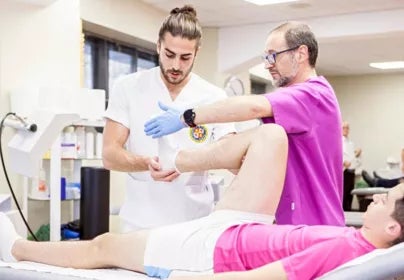
Sports physiotherapy is therefore one of the specialisms within this fascinating profession, and an increasing number of physiotherapists are choosing this branch to assist athletes with their recovery and rehabilitation from injuries. Consequently, anyone wishing to specialise in sports physiotherapy must undertake a master’s degree that qualifies them to practise this essential profession , as discussed in this other post.
However, sports physiotherapy is not the only branch of physiotherapy, as there is a wide variety of specialisms within this health sciences profession, such as neurological physiotherapy. So, if you study for a degree in physiotherapy, you’ll gain access to an amazing and exciting professional landscape, allowing you to steer your career towards the branch that truly fascinates you and through which you can give your very best to society.
What other specialisms are there in physiotherapy?
Among the numerous specialisation options available to physiotherapists, we would highlight the following:
- Neurological physiotherapy. This focuses on improving the quality of life for people with neurological disorders. With regular treatment, some people can make significant physical improvements. Within this branch, a distinction must be made between paediatric neurological physiotherapy and neurological physiotherapy for adults.
- Paediatric physiotherapy. This helps children with developmental disorders or those suffering from specific ailments. This type of physiotherapy is used to treat musculoskeletal, neurological, respiratory and rheumatological conditions, amongst others.
- Geriatric. This is used to combat the effects of ageing, which leads to an increase in health problems. Physiotherapy can help alleviate symptoms and contribute to the physical wellbeing of older people.
- Gynaecological. Physiotherapy significantly improves pelvic floor health. It can be used to treat pre-natal and post-natal conditions, urinary incontinence and sexual dysfunction.
- Respiratory. This is a specialism within physiotherapy dedicated to the prevention, treatment and stabilisation of respiratory dysfunctions or disorders. Some of its objectives include: mucociliary clearance, improving pulmonary ventilation, gas exchange and the function of the respiratory muscles.
- Mental health and psychiatry. With the help of a physiotherapy specialist, it is possible to reduce feelings of anxiety whilst achieving a balance between body and mind.
- Traumatology. This is the branch of physiotherapy focused on the treatment of bone fractures, dislocations, sprains and inflammation, amongst other injuries.
- Oncology. Cancer patients can also benefit from physiotherapy. This is because the supportive role of physiotherapy helps to improve their sense of well-being.
Would you like to specialise in any of these areas? As you have seen, physiotherapy specialists can help improve the quality of life for people of any age, whatever their condition. All that remains is for you to steer your career towards the branch that truly resonates with you, so that you can help every patient.