




















What you need to study to become a sports physiotherapist is the topic we’re focusing on today in our blog. The fact is, studying to become a sports physiotherapist is gaining popularity as it’s a profession that’s in great demand in society. Bear in mind that, when it comes to healthy lifestyles, taking part in sport is one of the key factors in promoting our health and wellbeing, alongside a heart-healthy diet.
When taking part in sport, we are at risk of sustaining certain types of sports injuries if we do not pay close attention to preventative measures to avoid these ailments. It goes without saying that when practising sport, we must do so safely and take particular care not to injure ourselves.
If we injure ourselves whilst exercising, we will need to consult a sports physiotherapist to receive the necessary care to recover from the injury. This is the professional capable of applying the most advanced physiotherapy and rehabilitation techniques to ensure a full recovery from any injury we may face.
As regards the classification and types of sports injuries, there are acute injuries – that is, those which occur suddenly whilst exercising (for example, broken bones or back strains); and chronic injuries, which are those that develop after practising a sport for a long time.
Whatever type of sports injury we face, it is worth noting that tendinitis and damage to the knee ligaments are among the most common sports injuries we are exposed to when taking part in sport, and this does not only affect professional athletes, as even those of us who are not elite athletes can suffer from these kinds of conditions.
It is vital to follow the basic preventive measures recommended by a physiotherapy specialist to avoid injury. Furthermore, it is important to bear in mind that, depending on our genetic make-up, we may be more or less prone to suffering from these sports-related conditions. In this post from our physiotherapy clinic in Madrid , we discussed the types of sports injuries and their treatment.
Bearing the above in mind, we can see that physiotherapy (or physical therapy) is one of the professions within the field of Health Sciences . Society is increasingly demanding specialists in this discipline, which offers non-pharmacological therapeutic and rehabilitation treatment to diagnose, prevent and treat symptoms of a wide range of conditions, both acute and chronic, using physical agents such as electricity, ultrasound, laser, heat, cold, water, and manual techniques such as stretching, traction and massage.
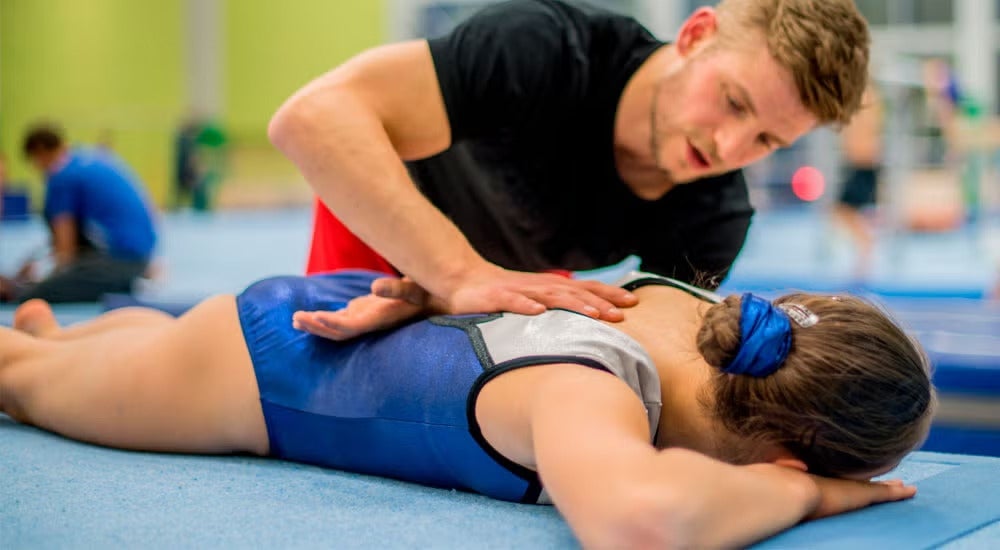
As in any professional field, after completing a degree, we have the opportunity to specialise in a specific area within the profession. In the case of physiotherapy, sports physiotherapy is one of the areas of the future for many physiotherapy professionals.
What do you need to study to become a sports physiotherapist?
The answer to the question of what to study to become a sports physiotherapist is quite simple: to become a sports physiotherapist, you can undertake a one-year Master’s degree in sports physiotherapy in Madrid , a one-year programme that will allow you to further your learning and specialise through modules covering, amongst other topics, the physiological basis of physical activity and sport, research in sports physiotherapy, and general procedures relating to physical activity and sport.
Currently, there are Master’s degrees in Sports Physiotherapy which enable physiotherapy graduates to advance in their profession by acquiring complete mastery of the most complex rehabilitation techniques – techniques they will often need to apply with professional, elite or high-performance athletes, as well as non-professional athletes.
The employability of sports physiotherapists
Sports physiotherapy opens the door to a profession with a 95 per cent employability rate, and one that has become increasingly specialised in recent years. If you specialise in sports physiotherapy, you will acquire the skills and resources needed to prevent, treat and achieve a rapid restoration of function in injured athletes as part of a team.
Another benefit of specialising in sports physiotherapy is that it opens the door to exciting career opportunities at leading centres:
- High-performance sports centres.
- Sports training centres.
- Sports clubs.
- Gyms.
- Schools.
- Private centres.
- And, of course, clinics and hospitals.
Average salary of a sports physiotherapist in Spain
The salary of a sports physiotherapist in Spain varies depending on where they practise. It is usually around €1,500 per month.
If we look at SERMAS (the Madrid Health Service), the salary of a physiotherapist in primary care is around €24,000 gross per year (according to official figures ). However, in other regions such as the Basque Country, physiotherapists’ salaries are around €30,000 gross per year, as shown in the published salary tables. The salary prospects for a sports physiotherapist in the private sector will vary depending on the clinic, centre or hospital where they practise.
An interesting option, isn’t it? Embark on a fascinating career that is greatly needed in society, now and always. Help others with the magic of your hands and the techniques used to treat sports injuries.