














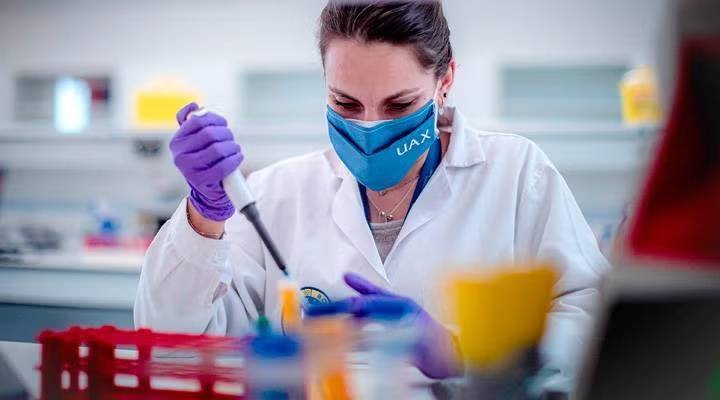










The professional practice of pharmacists: exploring the range of options
Pharmacists have the opportunity to pursue their careers in a variety of areas, including:
- Community Pharmacy
- Hospital Pharmacy
- Primary Care
- Pharmaceutical Industry
- Pharmaceutical Distribution
- Teaching
- Public Health
- Clinical Analysis
- Research
In many of these areas, academic skills are essential, but not always sufficient. This became evident with the introduction of pharmaceutical specialisations. If a pharmacist wishes to specialise, they can do so through the FIR , PhD programmes or specific master’s degrees. Each specialism has its own training programme.
Specialisations involving hospital-based training, via the FIR
Clinical Analysis, Clinical Biochemistry, Hospital Pharmacy, Microbiology and Parasitology, and Immunology and Radiopharmacy.
Exam for FIR specialisms
The Resident Intern Pharmacist (FIR) examination is aimed at pharmacy professionals. The purpose of this examination is to award the title of pharmacist in one of the specialisms within these areas, and it is a necessary requirement for working in the public sector.
The FIR examination is held once a year and consists of over 200 multiple-choice questions, covering the knowledge acquired in all subjects of the Pharmacy degree programme.
If the exam is passed, the pharmacist must complete a period of residency in a hospital. During this time, they will learn to practise their specialism under supervision and in a paid role.
Specialisations without hospital training
Industrial and Galenic Pharmacy, and Analysis and Control of Medicines and Drugs.
Master’s degrees and other postgraduate courses
Industrial Pharmacy does not focus solely on the production, research and development of medicines. It encompasses many areas or departments in which you can specialise through a Master’s degree, enabling you to develop your professional career in any of the various functional areas of the pharmaceutical sector:
- Research and development (R&D): This focuses on finding new medicines and therapies to treat diseases and improve patients’ quality of life1.
- Production and manufacturing: This is where medicines are manufactured on a large scale, in accordance with strict quality and safety standards
- Quality control: This ensures that medicines meet the established requirements and regulations before they reach the market.
- Regulation and regulatory compliance: This area is responsible for ensuring compliance with government regulations and guaranteeing the safety and efficacy of pharmaceutical products
- Pharmaceutical marketing
- Pharmacovigilance
- Registration and regulatory affairs
- Medical department
- Drug pricing regulation
- Economic analysis of medicine pricing (Market Access)
Doctoral studies
A PhD is the highest academic qualification that can be obtained in a discipline. It is a research-based programme leading to a doctoral thesis. It will give you access to certain academic and research posts, such as university lecturer, and enable you to direct research projects and lead multidisciplinary teams.
Which areas of pharmacy are in highest demand?
Demand for pharmacists is high across all specialisms, but some areas may offer more job opportunities than others.
Community Pharmacy
Community pharmacists do not currently require specialisation, and they are the first point of contact for many patients, providing care and advice on medicines in local pharmacies. This role is crucial for public health and primary care.
What makes it so attractive?
- Accessibility: Community pharmacists are easily accessible to patients, offering immediate advice and support.
- Personalised pharmaceutical care: The pharmacist plays an active role in patient care, working alongside doctors and other professionals to improve quality of life. This ranges from dispensing and monitoring treatments to disease prevention and health education, in collaboration with the primary care team. As the expert on medicines, they monitor drug treatments, carry out pharmacovigilance tasks and contribute to improving patients’ quality of life.
- Prevention and health promotion: They work in health promotion and disease prevention and act as health educators. Pharmacists promote healthy habits and take part in disease prevention campaigns.
Industrial Pharmacy
Industrial Pharmacy encompasses other sectors such as cosmetics, food and chemicals. It has many areas or departments in which you can specialise.
- Research and development (R&D): This focuses on discovering new medicines and therapies to treat diseases and improve patients’ quality of life1.
- Production and manufacturing: This is where medicines are manufactured on a large scale, in accordance with strict quality and safety standards¹².
- Quality control: Ensures that medicines meet the established requirements and regulations before they reach the market
- Regulation and regulatory compliance: Responsible for ensuring compliance with government regulations and guaranteeing the safety and efficacy of pharmaceutical products
- Pharmaceutical marketing
- Pharmacovigilance
- Registration and regulatory affairs
- Medical department
- Drug pricing regulation
- Economic analysis of medicine pricing (Market Access)
Why is this an excellent option?
- Job stability and quality: The pharmaceutical industry is regarded as offering stable, high-quality employment.
- Economic driver: The pharmaceutical industry is an economic driver in countries with pharmaceutical companies
- Investment in R&D: Pharmaceutical companies invest heavily in research and innovation to improve medicines and reduce side effects
- Attractive salaries: Salaries in the pharmaceutical industry are almost 10 per cent higher than the national average, making it a very attractive sector.
Hospital Pharmacy
From procurement to research, the responsibilities of a hospital pharmacist cover a wide range of activities, ensuring the safety and efficacy of medicines.
- Procurement and quality of medicines: The hospital pharmacist must ensure the correct procurement and quality of medicines. This includes their proper storage and preparation to ensure their effectiveness and safety.
- Dispensing of medicines: It is essential that the pharmacist supervises the dispensing of medicines, both for in-hospital and out-of-hospital use, ensuring that the correct procedures are followed.
- Safe distribution systems: Establishing safe systems for the distribution and administration of medicines is a crucial part of their responsibilities, including the management of those used in clinical trials.
- Compliance with legislation: The hospital pharmacist must ensure compliance with legislation on controlled substances, guaranteeing that they are handled in accordance with current regulations.
- Scientific evaluation and monitoring: They actively participate in hospital committees for the scientific evaluation of medicines and provide information and pharmacovigilance.
- Pharmacokinetic studies and activities: They carry out studies on the use of medicines and pharmacokinetic activities to improve patient treatment and safety.
- Education and training: Educates healthcare staff and patients on the appropriate use of medicines, contributing to a better understanding and management of them.
- Research and clinical trials: Carries out research and participates in clinical trials, collaborating in the development of new treatments and improving pharmaceutical practice.
Why is it in such high demand?
- Multidisciplinary interaction: constant collaboration with other healthcare professionals to ensure comprehensive, high-quality care
- Technical specialisation that lends prestige to the profession.
- Constant innovation in therapies and technology, which requires continuous professional development.
Hospital pharmacy is a dynamic, prestigious and evolving career.
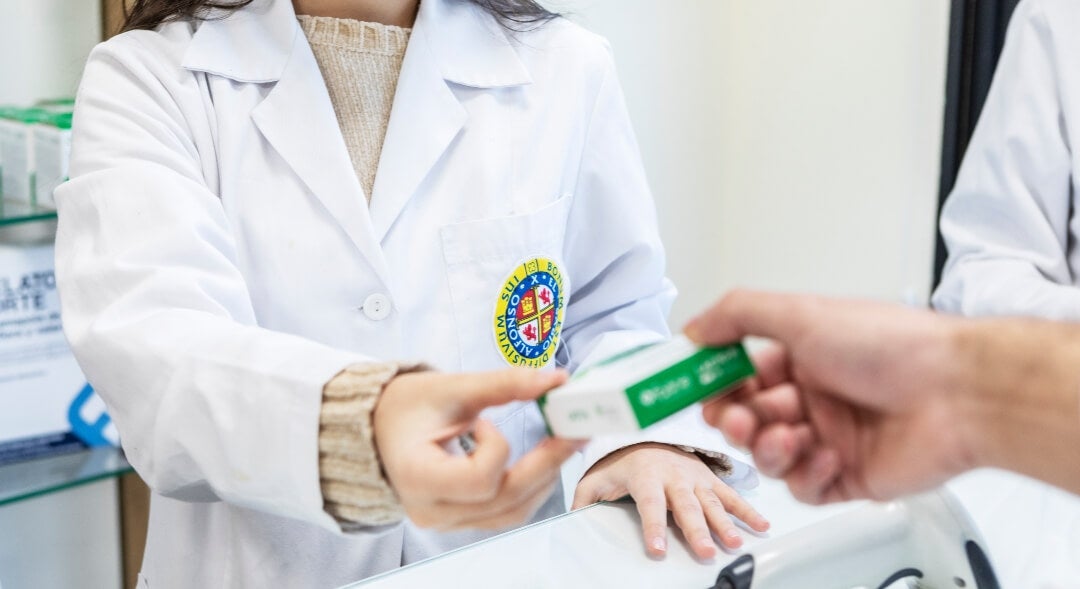
UAX, the best choice for studying Pharmacy in Spain
Bachelor’s Degree in Pharmacy
The Bachelor’s Degree in Pharmacy at UAX Madrid offers you the opportunity to acquire the professional competencies and soft skills sought after by the pharmaceutical industry. With high-calibre training across the profession’s three main specialisations, the UAX curriculum is designed to anticipate future trends in the sector.
1. Healthcare and patient care specialisation, in Community and Hospital Pharmacies
2. Focus on the pharmaceutical industry and pharmaceutical distribution
3. Focus on research and teaching
With the Blended Learning Bachelor’s Degree in Pharmacy , you’ll have fewer hours of face-to-face teaching, as the theoretical classes are delivered online, combined with practical sessions and face-to-face workshops in state-of-the-art laboratories
Double Degree in Pharmacy and Nutrition
Furthermore, with the UAX Dual Degree in Pharmacy and Nutrition in Madrid, you will receive comprehensive and up-to-date training.
You’ll study at the state-of-the-art facilities of the UAX Health Campus, with access to professional technologies and tools specific to your sector, such as the most advanced Virtual Simulation Hospital , the Pharmacy Simulation Classroom , professional biotechnology laboratories and the food technology facility.
You’ll also have the option to be exempted from certain modules through continuous assessment, with eliminatory mid-term exams.
Contact us today and discover everything UAX has to offer!