















Table of Contents
What is a nursing assistant and what are they called now?
What are the main duties of a nursing assistant?
What does a nursing assistant do in a hospital?
What skills does a nursing assistant need?
What is a nursing assistant not allowed to do?
What is the difference between a nursing assistant and a nurse?
How many years of study are required to become a nursing assistant?
What is a nursing assistant and what are they called now?
If you’re wondering whether ‘nursing assistant’ and ‘TCAE’ are the same thing, the answer is yes. The official and current term is ‘Técnico en Cuidados Auxiliares de Enfermería’ (TCAE), a title that replaced the former ‘auxiliar de enfermería’ with the introduction of vocational training courses in Spain.
In practice, both terms are used interchangeably in hospitals, health centres, care homes and private clinics. The important thing is that they refer to the same professional role: a healthcare technician trained through an Intermediate Level Vocational Training Programme who works as part of the healthcare team.
Their role is essential and irreplaceable. Whilst the nurse deals with clinical procedures and care planning, it is the TCAE who maintains the most direct, close and continuous contact with the patient throughout the day. In many ways, they are the person who spends the most hours by the patient’s side and who attends to their most immediate needs, from the first cup of coffee in the morning to the last repositioning at night.
Today, the demand for nursing assistants in Spain is very high. The ageing population, the expansion of social and healthcare services, and the pressure on hospital care have made this role one of the most in-demand in the healthcare sector, in both the public and private sectors.
What are the main duties of a nursing assistant?
The duties of a nursing assistant are governed by Spanish healthcare regulations and are organised around five main areas of responsibility:
1. Patient care and hygiene
- Complete personal hygiene and grooming: bed baths or showers, oral hygiene, skin care and the application of moisturising creams to prevent skin lesions.
- Scheduled repositioning of bedridden patients to prevent pressure ulcers (PUs), one of the most common and serious complications associated with prolonged hospitalisation.
- Safe mobilisation and transfers: helping the patient to turn in bed, sit up, get out of bed or move in a wheelchair or on a stretcher, using ergonomic techniques that protect both the patient and the healthcare professional.
- Oral, nail and hair care for patients who are unable to carry this out independently.
- Bed linen management: changing sheets on occupied and unoccupied beds, whilst maintaining hygiene in the patient’s environment.
2. Basic feeding and nutrition
- Distribution and serving of meals on hospital wards, in care homes or in social and healthcare centres.
- Providing direct assistance with feeding patients who are unable to eat on their own.
- Monitoring and recording of food intake in accordance with the instructions of the nursing team , noting any incidents or changes in appetite.
- Identifying and reporting any potential swallowing difficulties that may pose a risk.
3. Clinical and technical support
- Under the direct supervision of a nurse, the TCAE carries out clinical support tasks requiring specific technical training:
- Taking vital signs: temperature, blood pressure, heart rate and oxygen saturation.
- Administering medication orally, rectally and topically as prescribed and under supervision (never parenterally).
- Preparing equipment and the treatment room for dressings, procedures or interventions.
- Collection of non-invasive biological samples ( urine, stools, sputum) in accordance with protocol.
- Administering enemas and performing basic bowel care techniques.
- Cleaning, disinfecting and sterilising medical equipment and clinical instruments.
- Preparation of operating theatres and examination rooms, including restocking of gowns, sheets and consumables.
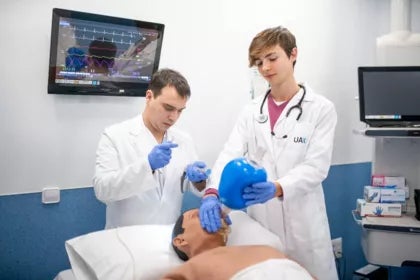
- Basic Life Support (BLS): training in first aid and basic cardiopulmonary resuscitation (CPR) in the event of an emergency.
4. Psychological support and companionship
- Active and compassionate support during hospitalisation, particularly for elderly patients or those in vulnerable situations.
- Active listening and emotional support for family members during times of stress, uncertainty or bereavement.
- Immediate communication to the team of any changes in the patient’s emotional or physical condition.
- Participation in health promotion activities and basic health education.
5. Environment management and documentation
- Maintaining tidiness and cleanliness in the patient’s room and communal areas.
- Recording data in the hospital’s computer systems (temperature, food intake, hygiene), increasingly via tablet or digital terminal.
- Managing stocks of consumables and hygiene products within the ward.
What does a nursing assistant do in a hospital?
The nursing assistant adapts their working day to the rhythm of each shift:
- Morning shift: carrying out full patient hygiene, serving meals, taking vital signs, preparing operating theatres or treatment rooms.
- Afternoon shift: assisting with dinner, repositioning patients and supporting the team.
- Night shift: monitoring patients, carrying out scheduled repositioning and reporting incidents to the on-call team.
Beyond the hospital, nursing assistants work in:
- Care homes and social and healthcare centres: the sector with the highest demand in Spain.
- Primary care centres: support during consultations and basic administration.
- Care centres for people with disabilities: specialised care and support.
- Dental clinics: as a dental assistant.
- Private clinics and practices: supporting the medical team.
- Home care services: direct care in the patient’s own home.
What skills does a nursing assistant need?
Beyond technical knowledge, this role requires:
- Empathy and active listening: a compassionate approach in times of pain or fear.
- Emotional resilience: the ability to cope with highly stressful situations, serious illness or bereavement.
- Manual dexterity and physical stamina: moving patients and assisting with personal hygiene require good physical fitness and precision.
- Teamwork: constant collaboration with nurses, doctors and other professionals.
- Assertive communication: reporting any issues to the team quickly and accurately can be critical.
- Adaptability: every patient and every shift is different.
What is a nursing assistant not allowed to do?
A nursing assistant may NOT:
- Administer medication parenterally (intravenously, intramuscularly or subcutaneously). This is the exclusive responsibility of a registered nurse.
- Perform incisions or punctures of any kind.
- Administer complex curative treatments or insert intravenous lines, tubes or catheters.
- Use complex clinical instruments independently.
- Directly assist the doctor during surgical procedures or in outpatient consultations independently.
- Make clinical decisions regarding a patient’s diagnosis, treatment or progress.
This is not a limitation of ability, but rather a clear division of responsibilities that ensures everyone’s safety.
What is the difference between a nursing assistant and a nurse?
| Nursing assistant (TCAE) | Nurse | |
| Training | Intermediate Vocational Training (FP) | Bachelor’s Degree in Nursing (4 years) |
| Autonomy | Always works under supervision | Acts independently |
| Medication | Oral, rectal and topical only | All routes, including parenteral |
| Treatments | Simple and basic treatments | Complex treatments and invasive procedures |
| Care planning | Does not plan | Assesses, plans and evaluates |
| Supervision | Receives supervision | Supervises the TCAE |
| Contact with the patient | Direct and ongoing | Clinical and evaluative |
| Access to the public healthcare system | Job vacancies and competitive examinations (Group C2) | Civil service examinations (Group A2) |
Both are necessary and entirely complementary. They are two essential parts of the same healthcare team. If, after working as a healthcare assistant, you decide to make the leap to university-level nursing, the UAX Bachelor’s Degree in Nursing is the natural next step in your healthcare career
How long does it take to train as a nursing assistant?
To practise as a nursing assistant, you need the Intermediate Vocational Training Course in Nursing Assistance, which lasts two academic years and comprises a total of around 1,400 hours, of which 440 hours are practical placements in real healthcare settings.
The main modules include: basic nursing techniques, hospital hygiene, health promotion and psychological support for patients, administrative procedures and healthcare documentation.
To enrol, you need to have completed ESO or an equivalent qualification, or pass the entrance exam for Intermediate Vocational Training programmes if you are at least 17 years old.
If you later decide to make the transition to a university nursing degree, there are pathways into the Bachelor’s degree in Nursing from vocational training —a very common pathway that allows you to progress gradually within the profession.
Summary
The nursing assistant, or TCAE, is an essential member of any healthcare team. Their duties include direct patient care, basic clinical support, managing the care environment and providing emotional support, always under the supervision of a registered nurse. There are clear legal limits that they must not exceed, particularly regarding parenteral medication and invasive procedures. Beyond technical knowledge, the role requires empathy, resilience and the ability to work as part of a team. Training involves an intermediate vocational qualification lasting approximately two years, including practical placements, and it is one of the most direct routes into the healthcare sector.
Sources:
- Royal Decree 546/1995, of 7 April, on Nursing Assistants. BOE.
- Act 44/2003 of 21 November on the regulation of healthcare professions. BOE.
- General Council of Nursing of Spain
- National Institute of Qualifications – INCUAL