























Table of Contents
Which Higher-Level Vocational Training course should you choose?
Entry requirements for Nursing via Vocational Training
Calculation of the admission mark and stages of the PAU
Benefits of studying vocational training before entering the Nursing programme
However, there is an effective and increasingly recognised route: undertaking a Higher-Level Vocational Training (FP) , then progressing to university and having your modules recognised. In this article, we explain, step by step, how to enter the Nursing degree programme via Vocational Training, which Advanced Vocational Training courses are most suitable, and the benefits of studying a Vocational Training course before entering the degree programme.
Which Advanced Vocational Training programme should you choose?
One of the most frequently asked questions is: Which Advanced Vocational Training programme do I need to get into Nursing? The short answer is: any. Yes, any Advanced Vocational Training programme is valid for entry onto a Bachelor’s degree in Nursing, provided you achieve the minimum entry mark set by the relevant university.
For example, if you’ve completed a course in the administrative field and achieved a good average mark, you could secure a place on a Nursing degree. However, there is one key difference: in that case, you will not be able to have university modules recognised, as the content of the vocational course and the degree programme are unrelated. This means you will have to complete the entire degree from scratch.
Therefore, if you are certain of your interest in the healthcare sector, it is best to opt for a vocational course in the healthcare sector. These not only prepare you better in practical terms, but also allow you to have university modules recognised, which saves you time and effort.
Some of the Higher Vocational Qualifications most closely related to nursing and which usually allow for credit transfers are:
- Pathological Anatomy and Cytodiagnosis
- Prosthetic Audiology
- Dietetics
- Healthcare Documentation and Administration
- Oral Hygiene
- Diagnostic Imaging and Nuclear Medicine
- Clinical and Biomedical Laboratory
In addition to these, the qualification as an Assistant Nursing Care Technician (TCAE), although at Intermediate Level, provides an excellent educational foundation for going on to study an Advanced Level qualification in the healthcare sector and making the transition to university with a very solid practical grounding.
In summary:
- You can gain entry from any vocational training programme, but without credit transfer if it is not in the healthcare sector.
- It is better to choose a healthcare-related course if you want to ease your transition to university and make use of credits you have already earned.
Entry requirements for Nursing from vocational training
To gain entry to a Nursing degree programme with your Advanced Vocational Qualification, you must meet two main conditions:
- Hold a Higher Vocational Qualification in any specialism. This qualification already entitles you to apply for university admission to a bachelor’s degree programme, without having to sit the general university entrance exam after completing A-levels,
- Pass the admission process set by each autonomous community. Generally, your admission mark is calculated by weighting:
- The average mark from your vocational training qualification (final grade).
- Your marks in specific tests (optional stage), if you sit them to improve your entry mark. In fact, you can sit a maximum of two tests to help raise your mark.
Each public or private university sets its own weighting and additional requirements (interviews, personal interviews, etc.), so check the official call for applications in your region.
Calculation of the admission mark and stages of the PAU
Even if you do not sit the traditional A-levels , you can sit the specific phase to improve your entry mark. The calculation is usually as follows:
> Admission mark = (60 % × average vocational training mark) + (40 % × specific phase mark)
- The specific phase includes subjects related to Health Sciences (Biology, Chemistry, etc.).
- Only a maximum of two optional exam papers are taken into account, improving your vocational training (FP) mark.
Imagine your average vocational training mark is 7.5 and you achieve an 8.0 in Biology (weighting 0.2) and a 7.0 in Chemistry (weighting 0.1). Your admission mark could rise significantly, placing you above the cut-off mark: Nursing at Higher Level (which at many universities is around 7.0–8.0)
Subject recognition process
One of the biggest advantages of this route is that you can have university modules recognised for ECTS credits you have already earned during your vocational training. The general procedure is as follows:
- Enrol on the Bachelor’s degree in Nursing at the university of your choice.
- Apply for credit transfer at the Registrar’s Office, providing: your vocational training qualification, certification of professional modules and the official syllabuses for the training programme.
- The university assesses the content and decides which university modules can be substituted by your vocational training modules.
Benefits of studying vocational training before entering the Nursing degree programme
Practical experience right from the start
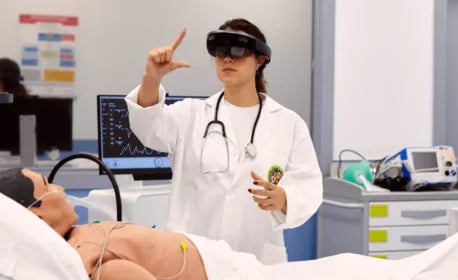
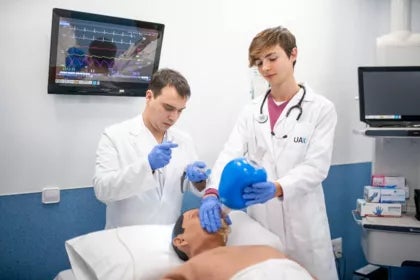
Vocational training programmes in the healthcare sector include a significant practical component that immerses you in the real world of healthcare right from the start. You will undertake work placements in hospitals, health centres, laboratories and other healthcare facilities, where you will be able to observe and participate in real-life procedures under professional supervision. This hands-on experience will enable you to familiarise yourself with the hospital environment, healthcare protocols and patient care, developing skills that many university students do not acquire until more advanced years of study.
Furthermore, during these work placements you’ll develop specific technical skills such as operating medical equipment, diagnostic techniques or laboratory procedures, depending on your specialism. All this practical experience will give you a considerable advantage when you start your Bachelor’s degree in Nursing , as you’ll begin with a solid foundation of applied knowledge.
Greater flexibility in university entry
One of the main barriers to entering the Nursing degree programme is the high entry mark, which at many universities exceeds 8.0. With an Advanced Vocational Qualification, not only can you gain entry based on your average vocational qualification mark, but you can also sit the specific entrance exam to significantly improve your admission score. This second chance is particularly valuable if your initial vocational training mark is a little on the low side.
The specific entrance phase allows you to demonstrate your knowledge in key subjects such as Biology and Chemistry, which are directly related to nursing studies. Many students manage to raise their entry mark by between 1 and 2 points, which can make the difference between securing a place and missing out.
Optimising the duration of your degree
The possibility of having university modules recognised represents a considerable saving in both time and money. Depending on the Higher Vocational Qualification you have completed and the university you choose, you may be able to have up to 60 per cent of the credits from the first and second years of the Nursing degree recognised. This can mean completing your degree in 2.5 or 3 years rather than the traditional 4 years.
The most common subjects for credit transfer include Anatomy, Physiology, Microbiology, Basic Pharmacology and subjects related to healthcare. This time saving allows you to enter the job market sooner or devote more time to specialising in specific areas of nursing.

Early career confirmation
One of the most valuable aspects of undertaking healthcare vocational training is the opportunity to confirm your vocation before investing years in a university degree. During the two-year vocational training programme, you’ll be in direct contact with patients, healthcare professionals and real-life clinical situations. This early exposure will help you discover whether you truly have the vocation, emotional resilience and interpersonal skills needed to pursue a career in healthcare.
This ‘trial by fire’ helps prevent students from dropping out of university later on, which is relatively common in healthcare degree programmes due to the gap between high initial expectations and the reality of day-to-day professional life. Starting university with the certainty that this is your chosen career path will give you greater motivation and commitment throughout your studies.
Building a strong professional network
During placements in healthcare settings, you’ll have the opportunity to meet and work with nurses, doctors, healthcare assistants and other healthcare professionals. These professional relationships are invaluable for your future career development. Many placement supervisors become mentors who can guide you in your career, recommend you for job vacancies or provide you with professional references.
Furthermore, some of the organisations where you undertake your placements may offer you job opportunities once you have completed your studies, particularly if you have demonstrated competence and commitment during your training period. This advantage in entering the job market is particularly valuable in a sector such as healthcare, where previous experience and professional references carry significant weight in recruitment processes.
Development of transferable skills
Vocational training programmes not only provide you with technical knowledge but also develop the transferable skills that are essential for any healthcare professional. During your training, you will learn to work in multidisciplinary teams, communicate effectively with patients and their families, manage stressful situations, and maintain confidentiality and respect in healthcare settings.
These soft skills are particularly valued in the field of nursing, where the human aspect of care is just as important as technical knowledge. Arriving at university with these skills already developed will allow you to focus more on the advanced academic aspects of your degree.
Step-by-step guide to admission
- Choose the right Higher Vocational Training course: prioritise the TCAE if your goal is to become a nurse, although other courses may also be recognised.
- Enrol and obtain your qualification: complete your placements and ensure your average mark is as high as possible (ideally > 7.0).
- Check with your chosen university: look up the admission dates and the recognition of prior learning annexes (each institution publishes its annual decision).
- Prepare for the specific phase (optional): if your average mark falls short, revise Biology, Chemistry and other key subjects.
- Complete the application for admission and credit transfer: attach all the necessary documentation (degree certificate, certificates, official syllabuses).
- Publication of lists: follow the official timetable and secure your place before the enrolment deadlines.
- Final enrolment: once you’ve been admitted and your subjects have been recognised, get a head start on your nursing studies!
Conclusion
If your calling is to care for others and contribute to people’s health, don’t let your A-level results hold you back. Vocational Training can be your springboard to a successful career in nursing, providing you with the practical tools and experience that will make you a better-prepared and more competent professional from day one.
The path may seem longer, but the reality is that you’ll arrive better prepared, with greater confidence in your abilities and a broader perspective on the healthcare system. Your future as a nurse begins with the decision to take that first step, and vocational training could be exactly the boost you need to achieve your professional goals.
Do it at UAX!
Sources:
- Organic Law 3/2020, Art. 44.6 and Royal Decree 659/2023
- Recognition of vocational training qualifications for university entry (procedure and restrictions)