











What are the placements like on the Master’s in Emergency Medicine?
The programme incorporates two types of practical training: in-house simulation placements, which form part of each module throughout the course, and external academic placements, which take place in real healthcare centres.
The number of credits for external placements varies depending on the mode of study:
- Online module : 12 ECTS credits, divided between External Academic Placements I (7 ECTS) and External Academic Placements II (5 ECTS)
- Málaga mode: 9 ECTS credits in a single block of External Academic Placements
In both cases, the external placements comprise a total of 206 contact hours:
- 122 hours of hospital placements
- 84 hours of non-hospital placements
Clinical simulation: preparation for the real-world environment
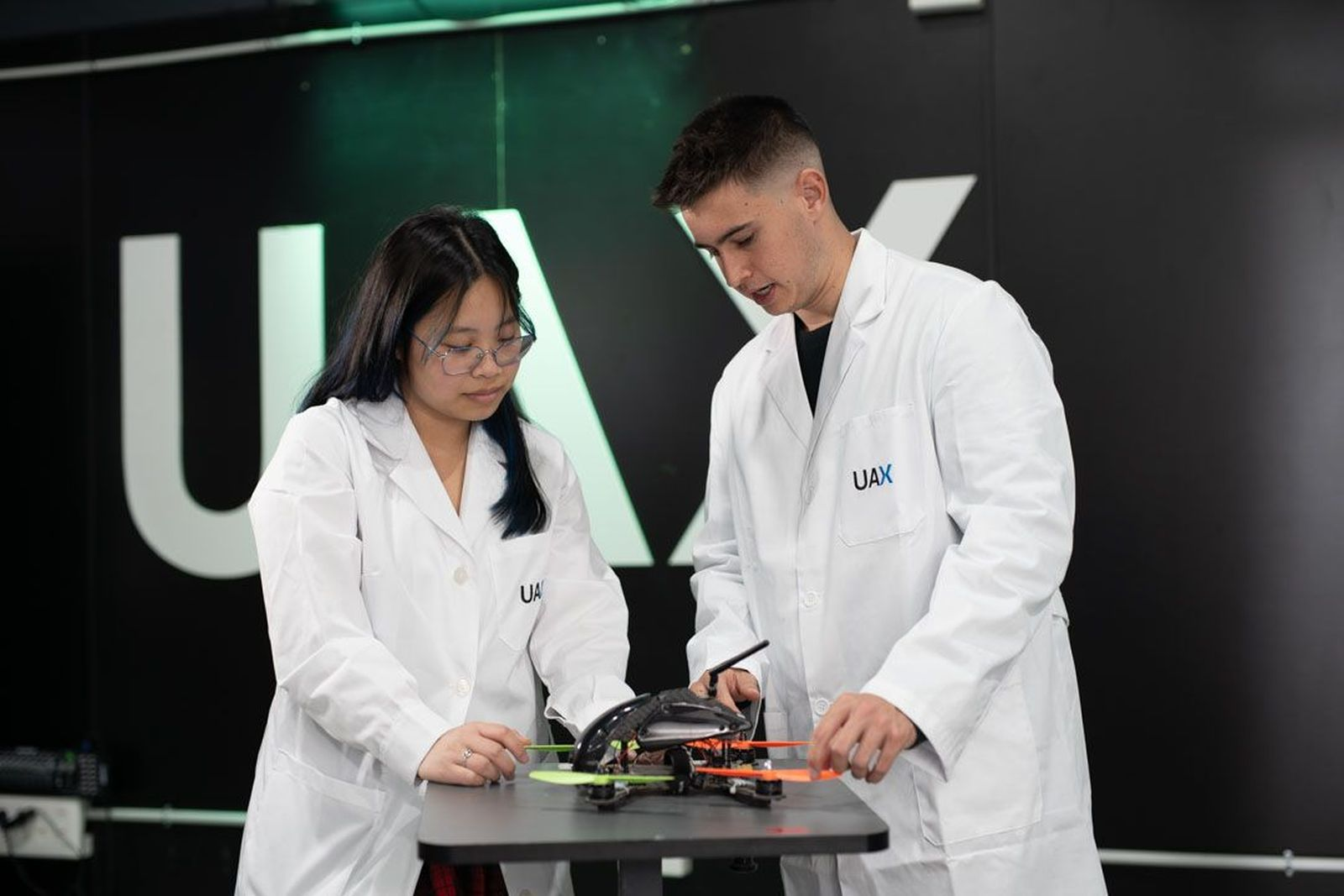
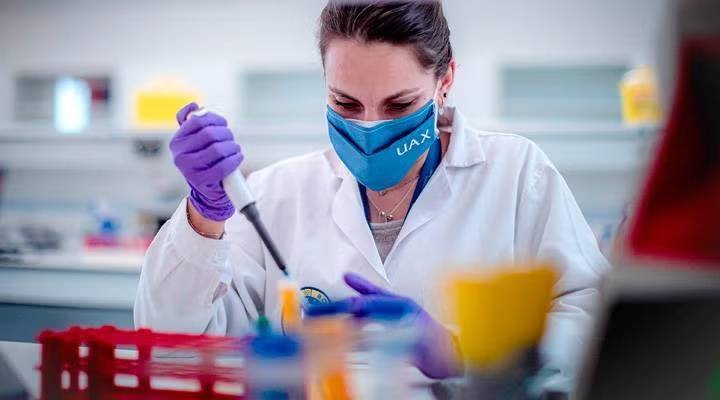
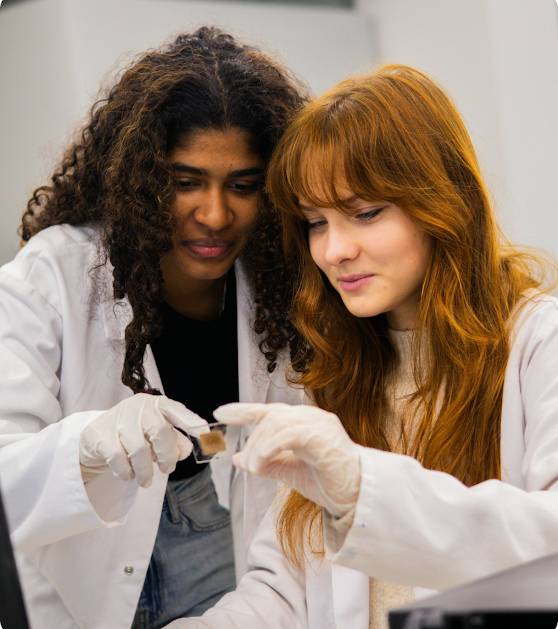
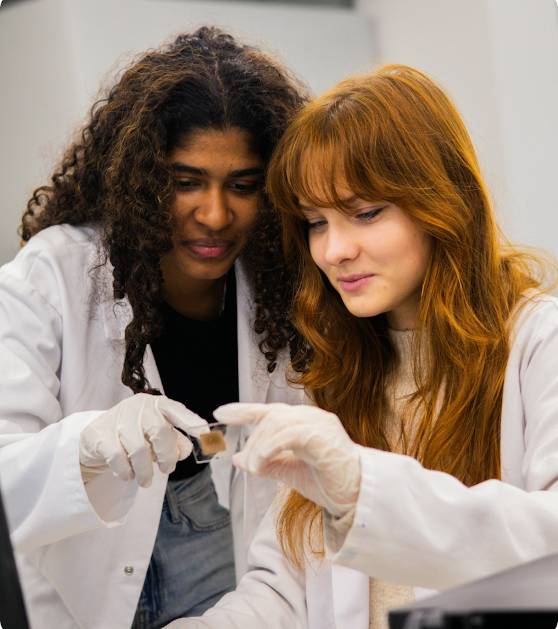
Prior to the external placements, each module includes clinical simulation sessions in the UAX nursing laboratories. These take the form of MEGACODES: on-site simulations of urgent and emergency situations with the active participation of students.
Simulation enables students to practise protocols in a controlled environment before applying them in real clinical settings. It is a well-established methodology in advanced healthcare training that reduces the learning curve when adapting to the clinical environment.
What is simulated in each module?
Each MEGACODE is designed based on the specific content of the module:
- Critical Emergencies: multiple trauma, neurological emergencies (traumatic brain injury, stroke, coma), severe burns, poisonings and acute gastrointestinal emergencies
- Internal Medicine Emergencies: cardiopulmonary arrest, management of arrhythmias, acute coronary syndrome, acute respiratory failure and metabolic decompensations
- General Emergencies: application of the Manchester Triage and MAT-SET systems, central and arterial line insertion, thoracocentesis, evacuation paracentesis and administration of blood products
- Obstetric emergencies: management of out-of-hospital births, life support for pregnant women, management of metrorrhagia and hypertensive disorders
- Disasters: management of mass casualty incidents (MCIs), mass triage, NBC protocols and the pathophysiology of medical transport
- Mental Health Emergencies and Abuse: management of psychomotor agitation, suicidal behaviour, acute psychosis and response to situations of abuse
The Virtual Simulation Hospital (HVS)
Simulations take place at UAX’s Virtual Simulation Hospital (HVS) , a facility equipped to replicate real clinical environments:
Clinical simulation rooms:
- A room with capacity for 12 students and a multifunctional room that can be divided into three spaces adaptable to different seminars
- Adult and infant manikins for basic and advanced CPR
- Anatomical models for needle punctures and intravenous cannulation
- Torsos for catheterisation
Anatomy rooms:
- Two classrooms with anatomical models of the organs and systems of the human body
- Equipped with electrocardiographs, spirometers, audiometers, a podoscope, a X-ray viewer, a weighing scale and height rod, eye charts and a biofeedback system
Autopsy theatre for comparative anatomy seminars
Clinical placements: practical application in real-world settings
The 206 hours of external placements provide an opportunity to apply the protocols and procedures learnt during the course in real clinical settings, under the supervision of practising professionals.
Hospital placements (122 hours)
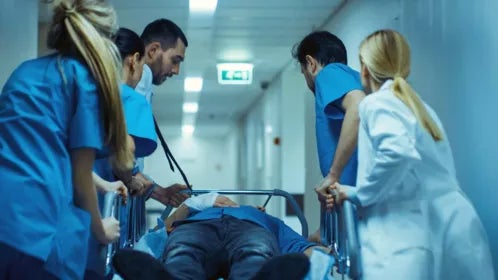
The placements take place in A&E departments and critical care units at leading hospitals. You will work alongside practising teams, applying the knowledge and procedures covered in the programme, such as clinical assessment, triage, emergency nursing procedures and coordination with the medical team.
Out-of-hospital placements (84 hours)
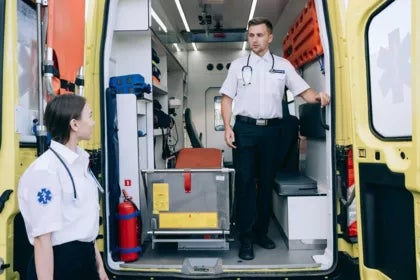
The placements take place in out-of-hospital emergency care units, where intervention occurs before the patient reaches hospital. You will work at the scene of the incident, using the equipment available in the SUMMA-112 emergency response vehicle, in varying conditions and with greater autonomy in decision-making.
Where do the placements take place?
The placement centres include leading emergency and urgent care services:
- SUMMA-112, both in VIR and UME
- Quirón Salud Group hospitals
- Viamed Group hospitals
SUMMA-112: VIR and UME
SUMMA-112 is the Community of Madrid’s Emergency Medical Service. Placements can be undertaken at two of its units:
- VIR (Rapid Intervention Vehicle): a rapid response unit that arrives at the scene of the emergency within the first few minutes. Its role is to stabilise the patient whilst awaiting the arrival of advanced medical support.
- UME (Military Emergency Unit): an advanced life support unit staffed by a doctor and a nurse. It responds to the most serious emergencies at the scene of the incident, applying advanced resuscitation protocols and stabilising critically ill patients in pre-hospital settings.
Undertaking placements with both units provides first-hand experience of the two levels of response within the out-of-hospital emergency system.
UAX has agreements with a comprehensive list of additional centres where practical training can also be carried out.
Can the placements be recognised?
For the Málaga programme, if you can provide evidence of 18 months’ prior work experience as a nurse in a hospital A&E department, you can have the 9 ECTS credits for the external practical placement module of that programme recognised.
How do you balance the placements with work?
The Master’s programme is designed for practising nursing professionals. The organisation of the placements takes this into account:
- The online programme concentrates face-to-face sessions at weekends
- The Málaga programme structures the workshops over five weekends at the campus
For those already working in A&E, the placements offer the opportunity to reinforce and develop skills in leading-edge settings, gaining the perspective that comes from working in departments other than your own.
Conclusion
The practical placements on this Master’s programme are designed so that the clinical component is not an afterthought, but a central part of the training. Simulation using MEGACODES at the Virtual Simulation Hospital allows students to practise scenarios before arriving at the hospital. The 206 hours spent at centres such as SUMMA-112, Quirónsalud or Viamed enable students to apply this preparation in real departments, with real patients and under professional supervision.
Frequently Asked Questions
- How many hours of practical training are included in the master’s programme? 206 external hours: 122 in hospital and 84 outside hospital. In addition, each module includes its own MEGACODES sessions in the laboratories of the UAX Virtual Simulation Hospital.
- How many ECTS credits are awarded for the placements? It depends on the programme format: 12 ECTS for the online format (7 + 5 ECTS) and 9 ECTS for the Málaga format (a single block).
- Where do the placements take place? At SUMMA-112 (VIR and UME), Quirón Salud Group hospitals and Viamed Group hospitals, amongst other partner centres.
- What are MEGACODES? On-site simulations of urgent and emergency situations carried out in the UAX laboratories, with active student participation in every module of the course.
- What is the difference between the VIR and the UME at SUMMA-112? The VIR is the rapid first-response unit. The UME is the advanced life support unit, staffed by a doctor and a nurse, which responds to the most serious emergencies at the scene of the incident.
- Can the work placement be recognised for credit? In the Málaga programme, yes: by providing evidence of 18 months’ experience in hospital A&E, you can have the 9 ECTS credits for the external work placement recognised.
- Is the work placement paid? As these are academic work placements integrated into the curriculum, in most cases they are unpaid.
Sources