















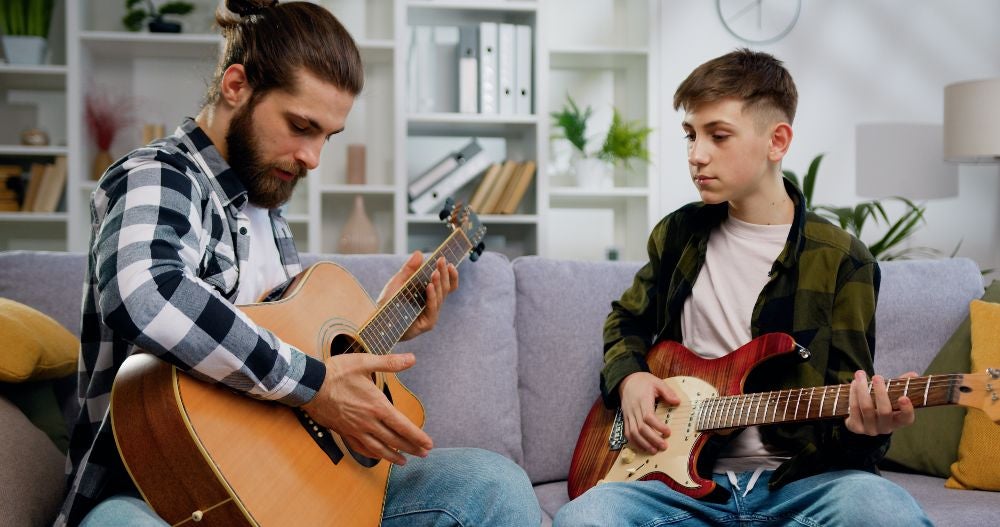

The instrumental music education , which focuses on the teaching and learning of musical instruments, has proved to be an effective tool not only for musical development but also for therapeutic support in various conditions, including Autism Spectrum Disorders (ASD).
ASD, a group of neurodevelopmental disorders, affects communication, behaviour and social interaction. This article explores how instrumental pedagogy develops and enhances the quality of teaching to benefit individuals with ASD, improving their social, communicative and motor skills.
Music as therapy
Music has been used as a form of therapy for centuries due to its ability to connect emotionally with people. The first modern educator to use music therapy was Émile Jaques-Dalcroze. Music therapy has its roots in ancient civilisations, where music was used for healing purposes. However, its formalisation as a modern therapeutic discipline began in the 20th century.
It was between 1900 and 1950 that Jaques-Dalcroze developed ‘rhythmics’, a method that combined musical and bodily rhythms. His disciples pioneered Rhythmic Educational Therapy, which is an early form of music therapy and is specifically covered in one of the modules on our degree programme.
In the context of ASD, music therapy has become a field of growing interest, given that many experts in neuroscience have highlighted the positive influence of music on key areas of the brain. Instrumental pedagogy , as an extension of music therapy, involves the active learning of an instrument; this supports the scientific evidence and underpins the entire therapeutic process alongside the more specific aspects of performance technique, which can offer additional benefits.
Benefits of Instrumental Pedagogy in ASD
Essential skills for social interaction
- Learning to play an instrument can be a social activity.
- Group lessons and musical ensembles provide opportunities for social interaction.
- It helps students with ASD to improve their ability to communicate and collaborate with others in a natural way.
Improved communication
- It benefits both verbal and non-verbal language.
- Music is a form of non-verbal communication, making it a powerful alternative means of expression, particularly for those who struggle with spoken language.
- It reinforces language patterns, improves prosody (intonation and speech rhythm), and stimulates language development.
Motor development and coordination
- Playing an instrument requires both fine and gross motor coordination.
- Playing music involves planning and sequencing movements, skills that are useful in everyday life.
- It is particularly beneficial for addressing the motor difficulties commonly experienced by people with ASD.
Managing emotions
- Music has the power to soothe and regulate emotions.
- Playing an instrument can help reduce anxiety and stress in individuals with ASD.
- It is important that the teacher is equipped with suitable resources and a well-planned teaching approach to manage mental blocks or disruptive behaviour.
- Through music, pupils can find a way to express their emotions, as emotions are more evident and unfiltered in pupils with ASD.
Implementation of Instrumental Pedagogy in the treatment of people with ASD
Instrumental Pedagogy channels the teacher’s skills and the student’s needs, providing teaching tools for their future work. In the treatment of ASD, its effective implementation must take several key aspects into account:
Individualised learning
- Teaching is adapted to the individual needs of pupils with autism.
- Each person with ASD has unique characteristics and abilities, so personalising instrument tuition is essential.
Structured environment
- People with ASD thrive in structured and predictable environments.
- Establishing clear routines and using visual and auditory techniques facilitates learning.
Specific programmes
- Programmes such as music therapy, adapted music education and approaches used in specialised schools create a synergy that enhances self-esteem, empathy and social skills in pupils with ASD.
Interdisciplinary collaboration
- Collaboration between occupational therapists, speech and language therapists and psychologists enhances the benefits of instrumental pedagogy for people with ASD.
- This multidisciplinary approach maximises the therapeutic and educational effects.
Teacher self-assessment
- Constant observation and evaluation of lessons enable teaching strategies to be adjusted, thereby improving teaching in the long term.
- Continuous planning and adaptation are essential to ensure effective learning for people with ASD.
Conclusion
Instrumental pedagogy is a promising approach to working with pupils with Autism Spectrum Disorders, as it offers benefits that support their development in key areas beyond musical learning. Music helps to develop social, communication and motor skills, as well as improving emotional regulation, making it a powerful ally in supporting people with ASD. The key lies in adapting and structuring teaching to meet the individual needs of each student, harnessing the power of music to connect and heal.
For those seeking to delve deeper into the analysis and approach to educational needs from a psychopedagogical perspective, the Master’s in Psychopedagogy offers comprehensive training. This official online programme provides tools to assess and design personalised strategies that foster pupils’ development, including those with ASD. Psycho-pedagogical training is essential for maximising each student’s potential, tailoring interventions to their unique characteristics and promoting an inclusive and effective learning environment.