What is ‘music for development’?
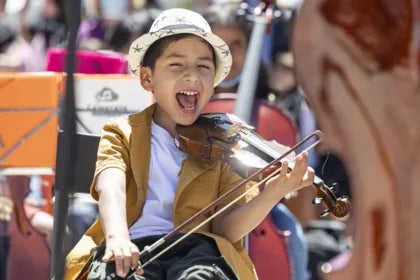
Music for Development is an interdisciplinary field that uses musical practice as a driver of social change. It is not just about teaching music: the aim is to transform lives, strengthen communities and foster social cohesion through the collective experience of creating and playing music together.
One of the most recognised examples of this discipline is El Sistema, the Venezuelan programme founded in 1975 by maestro José Antonio Abreu. It began with 11 young people in a car park in Caracas and went on to become a global model: over a million children and young people from disadvantaged backgrounds gained access to free music education, with conductor Gustavo Dudamel as one of its most prominent examples. Maestro Abreu received the Prince of Asturias Award for the Arts in 2008 for this work.
In Spain, the Acción por la Música Foundation has been actively replicating this model since 2013, working with young people at risk of social exclusion. In 2023, it signed a historic agreement with Venezuela’s El Sistema in Caracas, cementing the continuity of Maestro Abreu’s legacy in our country.
Music for development has an impact across multiple dimensions:
- It develops socio-emotional skills such as empathy, discipline and teamwork.
- It keeps young people at risk away from environments of violence or exclusion.
- It promotes the inclusion of people with disabilities.
- It builds a sense of community and belonging.
- It serves as an intervention tool in prisons, youth detention centres and conflict zones.
What does the Master’s in Music for Development involve?
The UAX Online Master’s in Music for Development is the first university postgraduate programme in Spain to provide professional training in this field. It is jointly run by Alfonso X el Sabio University and the Acción por la Música Foundation, in collaboration with leading international organisations such as Sinfonía por el Perú and Orquestra Geração in Portugal.
The programme comprises 60 ECTS credits, is completed over one academic year and begins in October. It is delivered entirely online , with 24-hour access to the virtual campus, live and pre-recorded classes, and the facilities at the Madrid Chamartín campus available to students.
Its approach is directly inspired by Maestro Abreu’s philosophy: music not as an end in itself, but as a vehicle for human and social transformation.
What modules does the Master’s in Music for Development include?
The curriculum combines theoretical, methodological and practical training across four main modules:
Block 1: Sociomusical Research
In this module, you will learn to measure the impact of musical projects with academic rigour. The modules on ‘Methodology and Statistics Applied to Sociological Research’ and ‘Anthropology and Sociology of Art and Culture’ provide you with the tools to analyse how music interacts with social contexts and lay the foundations for sociomusical research.
Module 2: Music Education and Intervention
This is the practical core of the Master’s programme. You will study Sociomusical Intervention and Supporting Diversity, learning to design projects tailored to different groups: people with disabilities, young people at risk, communities in conflict zones or marginalised environments.
Module 3: The Third Sector and Project Management
The module ‘Music and the Third Sector’ trains you in how NGOs, foundations and social organisations operate. You will learn to design, fund and sustain projects within these types of organisations, combining social mission with viability.
Module 4: Electives and Specialisation
The Master’s programme offers two specialisation pathways:
| Specialisation Pathway | Modules |
| Music Education for Development | Instrumental pedagogy ; Psychopedagogical intervention with vulnerable groups |
| Social entrepreneurship and leadership | Transformative leadership and systems thinking; Innovation and social impact |
The programme also includes external academic placements (12 ECTS) within a national and international network: the Red Música Social in Spain, Sistema Europe in Europe, and Latin American organisations such as Sinfonía por el Perú and Fundación SOIJAr. The Master’s degree culminates in the Master’s Final Project, in which you will develop your own project with real-world application in the socio-musical field.
What are the career prospects for graduates of the Master’s in Music for Development?
The career opportunities offered by this Master’s programme all share a strong focus on social impact:
- Music educator in social intervention contexts: you’ll work in educational and community settings, using music as a tool for personal development.
- Project coordinator in NGOs and foundations: you design and manage socio-musical programmes within third sector organisations.
- Socio-musical researcher: you analyse the impact of music on society, contributing to academic knowledge of the discipline.
- Entrepreneur in cultural projects with social impact: you create and lead initiatives that combine culture and social action.
- Community development programme manager: you lead social cohesion projects through musical practice.
- Music teacher with an inclusive approach: you bring a socio-educational approach to the classroom, using methodologies focused on diversity and inclusion.
This is a growing sector. In June 2026, the CAF Foundation (a development bank for Latin America and the Caribbean) signed an agreement in Madrid with Acción por la Música to promote music education as a tool for social inclusion , reflecting the growing international investment in this field.
Who is the Master’s in Music for Development aimed at?
This Master’s programme is designed for individuals with a university degree or a qualification in Higher Arts Education (EEAASS) who wish to combine their discipline with social work. The most common entry profiles are:
- Musicians and music teachers who wish to steer their careers towards social intervention.
- Educators and teachers who work with, or wish to work with, vulnerable groups.
- Social workers and psychologists interested in using artistic tools for intervention.
- Cultural managers seeking to give their projects a social purpose.
- Third-sector professionals who wish to incorporate music as a methodological resource.
You do not need to be a professional musician to enrol. What is required is a university degree or a qualification in Higher Artistic Education, and a genuine motivation to work with people through art.
What is the programme like at UAX?
UAX delivers this Master’s degree through its Faculty of Music and Performing Arts, which also offers the Bachelor’s degree in Classical Music Performance, the Bachelor’s degree in Modern Music Performance and the Master’s degree in Instrumental Pedagogy.
The online format allows you to study from anywhere. The virtual campus is available 24 hours a day, with live and recorded classes that combine theoretical instruction, discussion and work on real-life case studies. The teaching team consists of practising professionals who combine academic research with practical work on social projects.
In November 2025, the UAX Faculty of Music hosted an international round-table discussion on music as a driver of social change, featuring María Guerrero, president of the Acción por la Música Foundation, alongside other leading figures in the sector.
Summary
The Master’s in Music for Development is a pioneering postgraduate programme in Spain that trains professionals to design and lead projects using music as a tool for social transformation. Developed by UAX and the Acción por la Música Foundation, and inspired by the philosophy of maestro José Antonio Abreu, the programme combines music education, sociology of art, third sector management and community intervention across 60 ECTS credits in an online format.
It is aimed at musicians, educators, social workers and cultural managers with a university degree. Career opportunities range from coordinating projects in NGOs to socio-musical research or cultural entrepreneurship. Work placements can be undertaken within an international network comprising organisations in Spain, Europe and Latin America.
Frequently Asked Questions
Is a professional level of musical ability required to enrol on this Master’s programme? No. The programme is open to university graduates and holders of Higher Artistic Education qualifications in any discipline, provided they have an interest in music as a tool for social intervention.
Where can the Master’s work placements be carried out? Work placements(12 ECTS) can be undertaken within a wide network of partner organisations: the Red Música Social in Spain, Sistema Europe in Europe, and Latin American organisations such as Sinfonía por el Perú and Fundación SOIJAr, amongst others.
Is it an official degree or a university-specific degree? It is a university-specific degree, run by Alfonso X el Sabio University in collaboration with the Acción por la Música Foundation.
What is the difference between this Master’s degree and a Master’s in music therapy? Music therapy focuses on the clinical use of music for the treatment of specific health conditions and is regulated as a healthcare profession. The Master’s in Music for Development takes a social and community-based approach: it works with vulnerable groups, communities and third-sector organisations from an educational and cultural perspective, rather than a clinical one.
Sources: