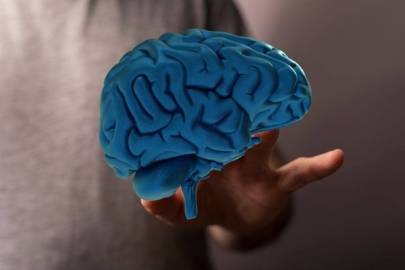
UAX’s neuroeducation courses are aimed at teachers and professionals in the field of education who wish to gain a better understanding of how cognitive, emotional and behavioural processes influence learning.
Through online micro-credentials, you will acquire the tools to spot warning signs, interpret psycho-pedagogical and neuropsychological information, cater for diversity and design educational interventions tailored to pupils’ needs.
Neuroeducation courses you can study at UAX

Neuroeducation for Teachers – Cognition, Behaviour and Neuropsychology
Length:
25 horas / 1 ECTS
Price:
300€

Neuroeducation for Teachers – Early Detection and Neuropsychological Assessment
Length:
25 horas / 1 ETCS
Price:
300€

Neuroeducation for teachers – Neuropsychological and psychopedagogical reports
Length:
35 horas / 1 ECTS
Price:
300€

Neuroeducation for teachers: Differential diagnosis in education. Contributions from neuroscience
Length:
110 horas / 4 ECTS
Price:
900€

Neuroeducation for Teachers – Psychopedagogical Intervention Based on Neuropsychology
Length:
25 horas / 1 ECTS
Price:
300€
Neuroeducation is an interdisciplinary field that draws on knowledge from neuroscience, psychology and education to gain a better understanding of how pupils learn.
Its application in the classroom enables the analysis of processes such as attention, memory, language, executive functions and emotional regulation. It also helps to identify potential learning difficulties and to design educational approaches that are better tailored to each student’s individual characteristics.
The aim is not to transfer clinical diagnosis into the classroom, but to provide teachers with evidence-based criteria for observing, interpreting and making better educational decisions.


This micro-credential provides an understanding of learning from a neuropsychological perspective. You will learn to analyse cognitive functions such as attention, memory, language and executive functions, as well as their relationship with emotions, behaviour and academic performance.
The course also provides criteria for identifying warning signs and implementing inclusive educational strategies tailored to pupils’ needs.
Early detection is key to providing an appropriate educational response to potential learning difficulties. This micro-credential will enable you to identify warning signs, understand educational assessment processes and interpret information relevant to decision-making in the classroom.
You will also learn how to collaborate with teaching teams, guidance services and families from an evidence-based perspective.
Psycho-educational and neuropsychological reports contain information that is relevant to understanding pupils’ educational needs. This micro-credential is designed to develop the skills needed to interpret these documents, identify their educational implications and integrate the assessment information into lesson planning.
The aim is for you to be able to use the reports as a useful tool for designing inclusive responses tailored to each situation.
Understanding the differences between certain learning difficulties and neurodevelopmental disorders is particularly useful in guiding the educational response.
This micro-credential enables participants to gain a deeper understanding of the cognitive, emotional and behavioural processes involved in learning, to interpret warning signs and to play a more active role in educational assessment processes.
The course does not qualify participants to make clinical diagnoses, but it provides criteria for better understanding pupils’ needs and adapting teaching approaches.
This micro-credential focuses on designing educational approaches tailored to the diversity of the student body. You will learn how to apply the principles of educational neuropsychology to teaching practice, design strategies tailored to real-life situations, and contribute to the development of individualised intervention plans.
The aim is to promote inclusive education based on sound criteria that can be applied in the classroom.
UAX’s neuroeducation courses are delivered online and are designed to be compatible with a teaching career.
The modular format allows learning to focus on specific skills and enables participants to apply the knowledge gained in real-life educational situations.
The micro-credentials are the result of a collaboration between UAX and The Valley, combining academic backing from the university with a flexible and intuitive digital learning experience.
UAX offers training aimed at transforming learning from a practical, innovative perspective that is closely linked to the reality of the classroom.
The micro-credentials in neuroeducation are designed to address the current needs of the education system: to better understand learning, cater for diversity, identify difficulties at an early stage and design evidence-based, inclusive interventions.
Furthermore, the online format allows you to advance professionally without sacrificing the flexibility needed to balance your studies with work and personal life.
UAX offers five micro-credentials focusing on cognition and behaviour, early detection, report interpretation, educational differential diagnosis and psychopedagogical intervention based on neuropsychology.
UAX offers five micro-credentials focusing on cognition and behaviour, early detection, report interpretation, educational differential diagnosis and psychopedagogical intervention based on neuropsychology.
Yes. UAX’s neuroeducation micro-credentials are delivered online and are designed to be compatible with professional commitments.
Neuroeducation draws on knowledge from various disciplines to improve teaching and learning processes. Educational neuropsychology focuses in particular on analysing how cognitive, emotional and behavioural functions influence pupils’ performance and development.
No. The courses are focused on educational practice. They enable participants to identify warning signs, interpret information and collaborate with other professionals, but they do not provide the skills required to make clinical diagnoses.
If you’re looking for an overview, the ‘Cognition, Behaviour and Neuropsychology’ micro-credential is a good place to start. From there, you can explore early detection, the interpretation of reports or psycho-educational intervention in greater depth, depending on your professional needs.
The ‘Neuropsychological and Psychopedagogical Reports’ micro-credential is specifically designed to help participants understand these documents and use the information they contain to inform educational decision-making.
The ‘Early Detection and Neuropsychological Assessment’ micro-credential focuses on the early identification of warning signs and on understanding educational assessment processes.
The micro-credential in ‘Psycho-educational Intervention Based on Neuropsychology’ focuses on the design of educational strategies and intervention plans tailored to the diversity of the student body.
Yes. Microcredentials cover complementary skills and enable learners to progress step by step from understanding learning processes to designing educational interventions.
Upon completion of the relevant micro-credential, you will receive the certificate associated with the programme you have completed, issued by UAX.