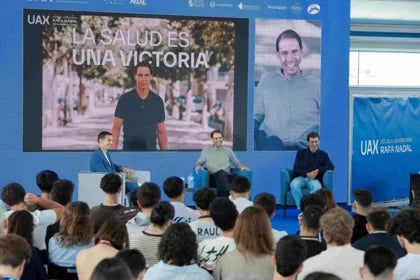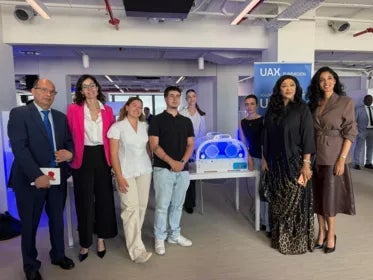







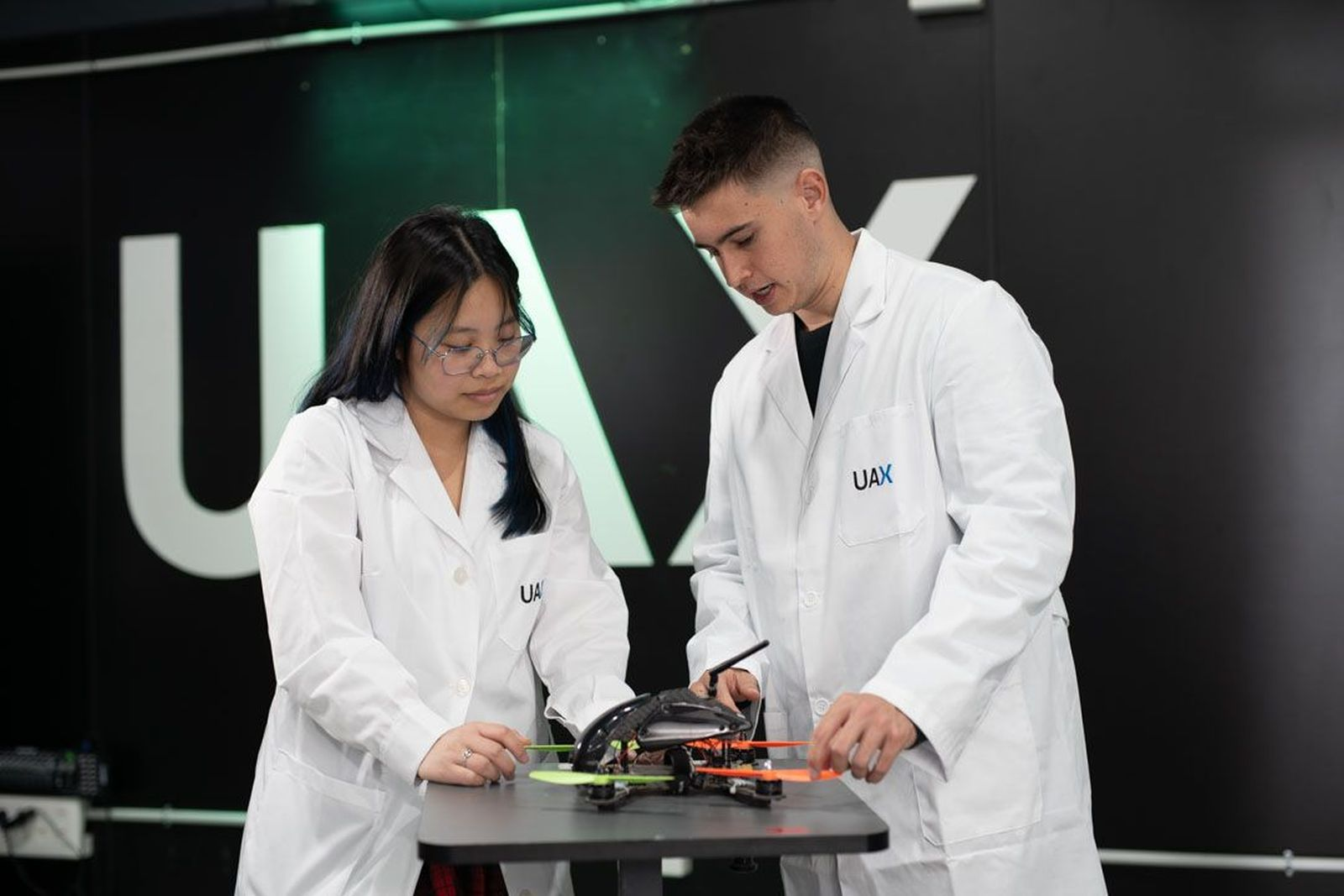




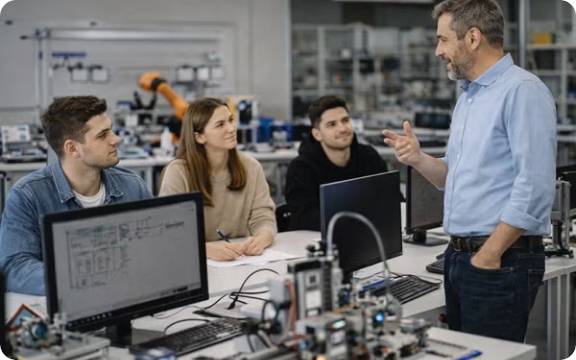

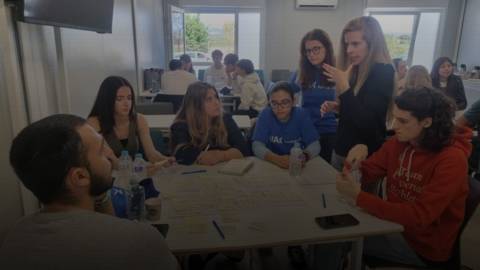
The Alfonso X el Sabio University Foundation (FUAX), in collaboration with Avanade and Sodexo, has held the fifth edition of its UAX Hackathon (dedicated on this occasion to innovation and social entrepreneurship), an event at which students from various degree programmes presented technological, social and communication solutions designed to address the real-world challenges posed by public authorities, businesses and third-sector organisations, such as the Spanish Red Cross, the Madrid Food Bank and the Amigos de Monkole Foundation, amongst others.
The 2025 edition brought together more than 100 students – from undergraduate, postgraduate and vocational training programmes in the fields of Business & Tech, Biomedical and Health Sciences, and Veterinary Science, as well as the UAX Rafa Nadal School of Sport – alongside mentors. The event focused on innovation applied to social challenges linked to the Sustainable Development Goals (SDGs). According to José Antonio Blanco, Director of FUAX, “holding this Hackathon highlights the UAX Group’s aim to train professionals who, as well as being equipped with technical skills and the ability to apply technology for professional purposes, are capable of making a positive impact and contributing to social wellbeing. It is much more than just an academic exercise; students discover that innovation and solidarity can go hand in hand, and partner organisations realise that the university is a key player in fostering this kind of talent and solutions”.
For Javier Ávila, Technical Director of the Sierra Oeste Regional Assembly of the Spanish Red Cross, “collaborating on this hackathon shows us that social innovation does not begin in organisations, but in the classroom. When young people understand that their ideas can improve people’s lives, a commitment is born that transcends theory and translates into real impact. We need more spaces like this, where the university and society come together to build the future.”
In this regard, the participating organisations have outlined some of the challenges they face when tackling current social issues relating to health, inclusion, sustainable mobility, equal opportunities and access to basic resources. For their part, the students worked on solutions by forming multidisciplinary teams and under the guidance of experts and lecturers at an event that combined knowledge, creativity, agile methodology and critical thinking.
“This hackathon gives us the opportunity to demonstrate that, from the university, we can provide real and useful solutions for people and organisations. Through this kind of activity, we feel that we have moved beyond simply being students to becoming part of the change, ” noted Martín Parrilla Cabrera, a student on the Business Analytics degree programme.
The innovation and entrepreneurship hackathons, promoted and coordinated by FUAX, have brought together more than 300 participating students across their five editions, who have developed around fifty proposals for more than 40 companies, organisations and institutions. This event reinforces the UAX Educational Group’s commitment to training the talent of the future, with a focus on innovation, whilst always upholding social responsibility. For this reason, UAX channels these kinds of activities through its Office of Volunteering and Cooperation, a body that has agreements and collaborative projects with all kinds of organisations, such as those that have taken part in this hackathon.
Effective solutions to real and social problems
Among the challenges faced by organisations in 2025, one that stands out is that of the Madrid Food Bank, which has been focused on designing digital and creative solutions to help attract and retain young volunteers, using new platforms, interactive experiences or technological tools that resonate with their values and motivations. For its part, the Amigos de Monkole Foundation sought to develop a smart tool, supported by automation and digital management, to reduce the time organisations spend on administrative tasks, streamlining calls for applications and freeing up resources for social action.
Madrid World Capital (MWCC) has invited students to apply technology, artificial intelligence, urban data and innovative design to envisage what a more efficient, sustainable and connected urban transport system might look like, whilst the Spanish Red Cross has set out to address how to bridge the digital divide affecting women in rural areas, through training platforms, online employability initiatives, access to technology and collaborative networks that generate real opportunities.
The challenge set by the Urolf Chair is to design an app that is accessible to all women from different economic and social backgrounds, enabling them to receive targeted treatment from home, thereby improving both access to and adherence to pelvic floor therapy exercises. At the local authority level, Villanueva de la Cañada Town Council has set the challenge of developing technological and social initiatives that promote healthy habits, active mobility and emotional wellbeing through digital applications, interactive campaigns or connected systems.