





















Table of Contents
What will I learn on the medical degree course?
What do you study on a nursing degree course?
Difference between medicine and nursing in terms of duration of study
What career opportunities are there after a medical degree?
Where can I work after completing a nursing degree?
Is medicine harder than nursing?
Choosing between medicine and nursing represents a significant step in the educational and professional journey of those aspiring to work in the healthcare sector. Both disciplines are vital to healthcare; however, they differ in their unique approaches and responsibilities.
In this article, we’ll break down the fundamental differences between medicine and nursing, highlighting the distinctive features of our academic programmes in both degree courses to guide future healthcare professionals in their decision-making.
What will I learn on a medical degree?
A degree in Medicine offers an in-depth immersion in disciplines such as anatomy, physiology and biochemistry, laying the foundations for a comprehensive understanding of the human body. As they progress through their studies, students delve into more specialised subjects such as pathology and pharmacology, whilst taking part in clinical placements that enable them to apply theory in real-world settings. Medical training focuses not only on technical knowledge but also on developing communication skills and empathy, which are essential for interacting effectively with patients and colleagues.
What is studied on a nursing degree course?
In contrast to medicine, the nursing degree programme focuses on providing comprehensive, direct patient care. Students learn not only technical procedures such as administering medication and providing basic care, but also ethical principles and case management skills. Clinical placements are an essential component, enabling students to apply their theoretical knowledge in real-world settings, developing the practical and emotional skills necessary for the effective care of patients.
Difference between medicine and nursing in terms of duration of study
Another key factor is the duration of study. A degree in Medicine generally involves a longer period of study, comprising at least six years of university education, followed by a residency and possibly a specialisation. In contrast, nursing offers a more direct route into the workplace, typically taking around four years to complete. The difference in the length of study reflects the varying levels of depth of knowledge and the different responsibilities associated with each profession.
What are the career prospects for medical graduates?
The career prospects for medical graduates are diverse and exciting. From medical specialisms to research, doctors have the opportunity to make a significant impact on people’s health and well-being. Hospitals, clinics and academic research are just some of the options available, offering a wide field for exploration and specialisation throughout one’s career.
Where can I work after completing a degree in nursing?
Nurses, on the other hand, have a variety of employment options in diverse healthcare settings. Hospitals, doctors’ surgeries, care homes and community healthcare are just some of the areas where they can play a vital role. The versatility of a career in nursing allows professionals to tailor their career path to their interests and preferences, offering valuable flexibility in their working life.
Is medicine more difficult than nursing?
Addressing the question of difficulty is subjective and depends on the student’s individual perspective. Although medicine tends to be perceived as more academically demanding due to its broad and in-depth focus, the intensity of the workload can vary depending on each individual’s dedication and learning style. Both professions require commitment and effort, but the personal challenge may differ.
How much do doctors and nurses earn?
Salary figures for doctors and nurses can vary considerably depending on geographical location, level of experience and specialisation. It is important to bear in mind that these figures are approximate, and it is recommended to consult up-to-date and specific sources for the most recent and accurate information.
Medical professional:
- General Practitioner: in Europe, a general practitioner’s salary can range from 60,000 to 100,000 gross per annum. Specialists and surgeons may earn higher salaries, exceeding 100,000 euros and, in some cases, reaching 150,000 euros or more.
Nurse:
- Registered Nurse (RN): in Europe, an RN’s annual salary generally ranges from 35,000 to 60,000 euros, depending on location and experience. Those with specialisations or more advanced roles, such as specialist nurses or nurse practitioners, may earn higher salaries, even exceeding 70,000 euros or more.
The choice between Medicine and Nursing goes beyond the length of study; it is about finding the career path that aligns with your interests, skills and professional goals. At Alfonso X el Sabio University, our academic programmes in both degree courses are designed to provide a comprehensive and practical education, preparing students to excel in their respective fields.
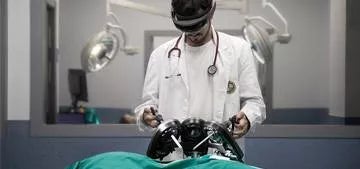
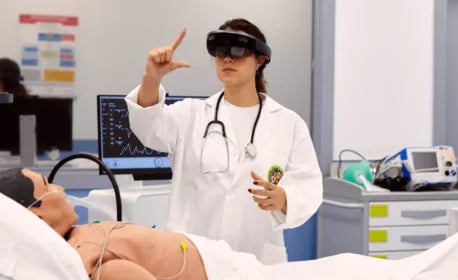
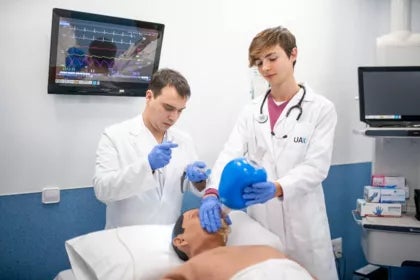
- Bachelor’s Degree in Medicine: UAX is the first university to offer high-level training in Digital Health. At UAX, you will learn in Europe’s largest Virtual Simulation Hospital using real-life cases; you will be able to undertake your clinical placements across more than 38 departments in prestigious hospitals and gain access to a specific training programme for the MIR (Residency) in the final years of your degree.
To guarantee entry onto the degree in Medicine, UAX also offers the Medicine Access Programme , designed to equip you with the knowledge and skills needed to secure your place on the degree course. Alfonso X el Sabio University is firmly committed to providing students with an excellent education in Medicine.
To this end, you’ll benefit from practical training from day one, top-class facilities and a teaching staff comprising practising professionals and researchers. In return, we expect our students to set high standards for themselves. That is why we have designed this programme to facilitate your entry onto the degree course with guaranteed success.
Furthermore, if you are a graduate in Medicine, at UAX we offer various Master’s and postgraduate programmes to specialise in different professional fields:
- Quirónsalud Master’s in A&E for Medical Graduates. If you are a medical graduate, this programme will enable you to specialise as a hospital A&E doctor and gives you the opportunity to join Quirónsalud, with your Master’s fees covered by a scholarship. Train under the guidance of experts, with over 800 hours of practical training and the option to undertake placements at the Quirónsalud hospital of your choice within its national network
- Bachelor’s Degree in Nursing. On this degree programme, our students are trained using a unique, practice-focused teaching model that will provide you with scientific, technical, digital, interdisciplinary and patient-centred training. Our nurses are sought after by the most prestigious hospitals thanks to their more than 2,300 hours of high-quality practical training, their two additional certificates in Emergency Care and Basic and Advanced Life Support, and their ability to thrive in any area of nursing.
Furthermore, if you are a nursing graduate, at UAX we offer a range of Master’s and postgraduate programmes to specialise in different professional fields, which will enhance your professional profile.
- Online Master’s in Adult Emergency and Urgent Care for nursing professionals : on this Master’s programme, you will learn from experts in emergency care, undertake in-hospital and out-of-hospital placements at SUMMA, 112 and leading hospitals, and obtain two additional certifications: Basic Life Support (BLS) and Advanced Cardiac Life Support (ACLS), awarded by the American Heart Association (AHA).
- Online Master’s in Nursing Services Management : if you are a nurse, you can now update your knowledge in digital health, care planning, mHealth, the use of Big Data for personalised care, research, management and leadership, and develop the skills required for new e-Health healthcare management roles and the management of modern nursing units. An official qualification recognised in competitive examinations and the public sector job pool.
- Master’s in Continuing Professional Development in Advanced Practice Nursing in Oncology : the main objective of the Master’s in Oncology is to provide students with solid knowledge and practical skills to tackle current and future challenges in oncology. It promotes practical learning through clinical experiences, research, case studies and simulations that will prepare students for the realities of the field of oncology.
When deciding whether to study Medicine or Nursing, consider not only the obvious differences but also your passions and aspirations. Get ready for an exciting career in the healthcare sector!



.jpg.webp)