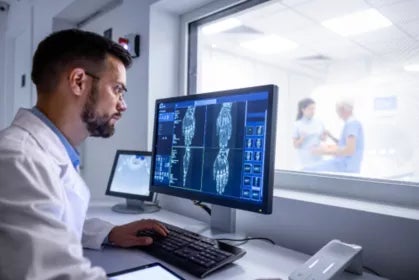























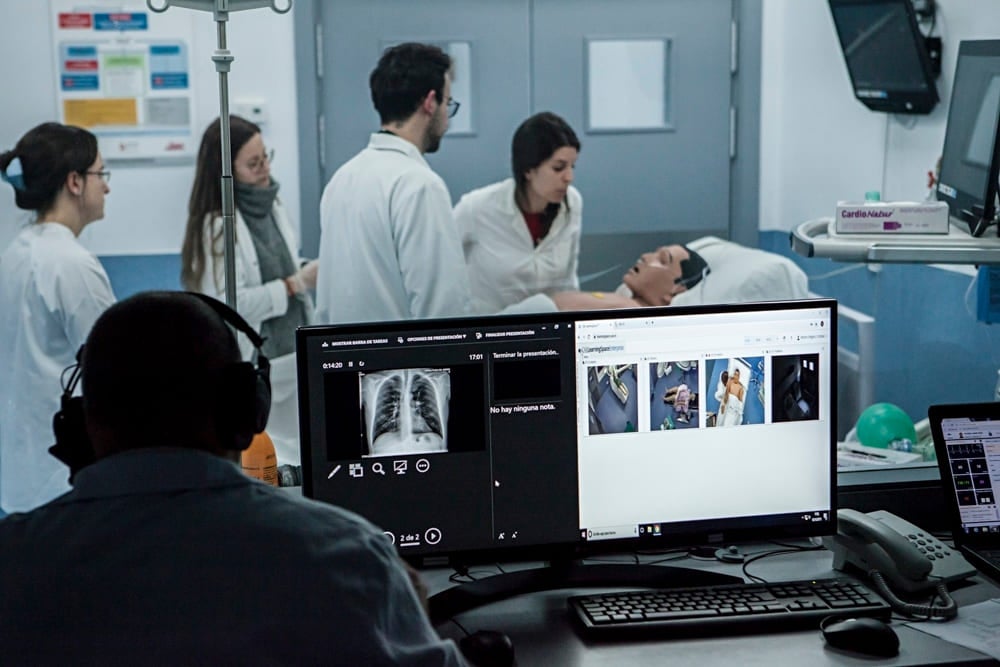
Nuclear medicine is a branch of medicine that uses radioactive tracers to obtain detailed images of how organs and tissues function within the body. These tracers, also known as radiopharmaceuticals, are administered to the patient and detected using specialised imaging equipment, such as gamma cameras and PET scanners.
What is nuclear medicine used for?
Nuclear medicine has a wide range of applications in the diagnosis and treatment of diseases. It is used to detect conditions such as cancer, heart disease, thyroid disorders, bone diseases, neurological disorders and more. In addition to diagnosis, nuclear medicine is also used in targeted therapies, such as the treatment of thyroid cancer and pain relief for patients with bone metastases.
What is diagnostic imaging?
Diagnostic imaging is an essential tool in modern medicine, enabling doctors to visualise the inside of the human body and detect abnormalities or diseases. Nuclear medicine provides unique and detailed images that complement other imaging modalities, such as X-rays, ultrasound scans and MRI scans.
What are radiotracers?
Radiotracers, also known as radiopharmaceuticals, are chemical compounds containing a small amount of radioactive material. These radiopharmaceuticals are used in nuclear medicine to diagnose and treat a variety of medical conditions. The main function of radiotracers is to act as probes or markers that enable doctors to visualise and assess the functioning of organs, tissues and biological systems within the human body.
Tracers are administered to the patient in various ways, depending on the type of examination or treatment being carried out . They may be injected into the bloodstream, inhaled, swallowed or applied topically, depending on the part of the body being examined or treated. Once inside the body, radiotracers emit radiation in the form of gamma particles, which are detected by specialised imaging equipment, such as gamma cameras and PET scanners.
The ability of radiotracers to emit radiation allows doctors to obtain detailed images of how organs and tissues function within the body. For example, in a nuclear medicine scan to assess cardiac function, a radiotracer may be administered that accumulates in the heart muscle. Then, by detecting the radiation emitted by the radiotracer, doctors can obtain real-time images of the heart in action, identifying areas of abnormal function or dysfunction.
In addition to diagnosis, radiotracers are also used in targeted therapy in nuclear medicine. In this case, radiotracers are designed to target specific cells in the body, such as cancer cells, and to emit radiation that destroys or damages these cells. For example, in the treatment of thyroid cancer, a radiotracer may be administered that accumulates in the cells of the thyroid gland, and the radiation emitted by the radiotracer then helps to destroy the cancerous cells without damaging the surrounding tissues.
What are nuclear medicine scans used for?
Nuclear medicine scans are an invaluable tool in the field of medicine for diagnosing and treating a variety of medical conditions. These scans use radiotracers to produce detailed images of the inner workings of the human body. Unlike other imaging modalities, such as X-rays or MRI scans, nuclear medicine scans offer a unique, functional view of organs, tissues and biological systems in action.
One of the main applications of nuclear medicine scans is in the diagnosis and staging of diseases, particularly cancer. Nuclear medicine scans can help doctors identify the presence of tumours, assess their size and extent, and determine whether they have metastasised to other parts of the body. This is particularly useful in the case of cancers such as lung cancer, breast cancer and prostate cancer, where early and accurate detection is crucial for effective treatment.
In addition to cancer diagnosis, nuclear medicine scans are also used in the investigation of heart disease, neurological disorders, bone diseases and endocrine disorders, amongst others. For example, in the case of heart disease, nuclear medicine scans can assess heart function, myocardial perfusion and the presence of coronary heart disease. In the field of neurology, nuclear medicine scans can help diagnose conditions such as Alzheimer’s disease, Parkinson’s disease and epilepsy.
Are there any risks to the patient?
Whilst nuclear medicine is an invaluable tool in the diagnosis and treatment of various medical conditions, it is natural to be concerned about the potential risks associated with its use. It is important to note that, when used correctly and under the appropriate supervision of trained medical professionals, the risks associated with nuclear medicine examinations are minimal compared to the benefits they offer.
One of the main risks associated with nuclear medicine is exposure to radiation. The radiotracers used in nuclear medicine scans emit radiation in the form of gamma particles, which can be detected by specialised imaging equipment. However, the amount of radiation administered during these scans is very low and is carefully adjusted to minimise any risk to the patient’s health. Furthermore, most radiotracers used in nuclear medicine have a short half-life, meaning they break down quickly and are eliminated from the body within a short period of time.
Another potential risk associated with nuclear medicine is an allergic or adverse reaction to the radiotracer administered. Whilst such cases are extremely rare, it is important for patients to inform their doctor if they have a history of allergies or adverse reactions to medicines before undergoing a nuclear medicine scan. This enables the medical team to take additional precautions if necessary and ensure the patient’s safety during the procedure.
In general, the risks associated with nuclear medicine are low compared with the benefits it offers in terms of accurate diagnosis and effective treatment of diseases.
How do you specialise in nuclear medicine?
To become a specialist in nuclear medicine, a combination of education, clinical training and specialist certifications is required.
- University education: Obtaining a degree in medicine , or a related discipline, is the first step towards becoming a doctor specialising in nuclear medicine. It is recommended that students interested in this specialism focus on courses related to physics, chemistry and the biological sciences during their undergraduate studies.
- Residency in nuclear medicine: After completing their university education and obtaining their degree, aspiring doctors specialising in nuclear medicine must complete a residency programme in this speciality. During their residency, doctors gain practical experience in interpreting nuclear medicine studies, operating specialised imaging equipment and the safe administration of radiotracers.
- Certifications and licences: Once the residency is complete, doctors may choose to obtain additional certifications in nuclear medicine. Organisations such as the Society of Nuclear Medicine and Molecular Imaging (SNMMI) offer certification examinations that assess knowledge and skills in this discipline. In addition, doctors must obtain state medical licences to practise nuclear medicine within their jurisdiction.
- Continuing education and professional development: Nuclear medicine is a constantly evolving field, with technological advances and scientific discoveries occurring regularly. Doctors specialising in nuclear medicine must participate in continuing education and professional development programmes to keep up to date with the latest advances in the field. This may include attending conferences, taking part in training courses and reading specialist literature.
- Further specialisation: Some doctors choose to specialise further in specific areas of nuclear medicine, such as cardiovascular nuclear medicine, oncological nuclear medicine or paediatric nuclear medicine. These additional specialisms may require further training and specific certifications, but they offer opportunities to focus on areas of particular interest within the field of nuclear medicine.