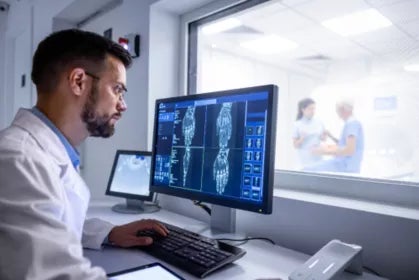
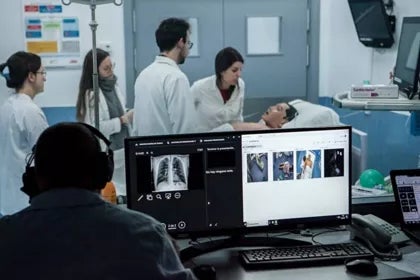
If you’ve ever wondered who is behind the X-rays, ultrasounds or MRIs that are so important for a diagnosis, the answer is a Senior Technician in Diagnostic Imaging and Nuclear Medicine, or as they are commonly known, an X-ray technician.
This professional is a key member of the medical team, as they are responsible for obtaining images of the inside of the human body that enable doctors to identify illnesses, injuries or abnormalities.
It’s not just a matter of pressing a button; the work of an X-ray technician is much more complex and requires great precision, technical knowledge and empathy with the patient. From preparing the equipment to capturing the image and reassuring the patient, the duties of an X-ray technician are varied and essential to the smooth running of any diagnostic imaging department.
What is a Senior Diagnostic Imaging Technician?
A Senior Diagnostic Imaging and Nuclear Medicine Technician ( TSID) is a highly qualified healthcare professional who forms part of the radiology team.
Their training enables them to operate high-tech equipment for medical imaging, using various modalities such as conventional radiology (the well-known X-rays), computed tomography (CT), magnetic resonance imaging (MRI), ultrasound and, of course, nuclear medicine.
This expert is not only responsible for the technical aspects of the process but also plays a crucial role in interacting with the patient.
Training required to practise as a radiography technician
If you’re interested in this profession and want to know how you can specialise to become a radiography technician, the path is clear: training is the key.
To become a TSID, you need to complete the Higher National Diploma in Diagnostic Imaging and Nuclear Medicine.
At UAX, for example, you have the option to study this Higher Diploma through a blended-learning programme, combining the best of face-to-face teaching with the flexibility of online study. This is ideal if you’re looking to balance your studies with other commitments or if you prefer a more self-directed pace of learning.
Programmes of this kind not only provide you with comprehensive theoretical training, but also include work placements in real healthcare centres, allowing you to apply your knowledge in a workplace setting and familiarise yourself with the equipment and protocols you’ll use on a day-to-day basis. In this way, upon completing your studies, you’ll be fully prepared to enter the job market.
Duties of a radiography technician
The duties of a radiography technician are very diverse and go beyond what most people imagine.
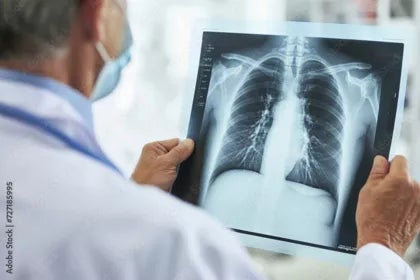
X-rays and radiographs
When we talk about X-rays, we are referring to one of the oldest and most common methods of diagnostic imaging. The role of the radiographer in this area is essential.
It will be your job to position the patient correctly to obtain the desired image of the bone or internal structure that the doctor needs to visualise. This requires a precise knowledge of anatomy and a high level of skill in collimating the X-ray beam, ensuring that the radiation is focused only on the area of interest to protect the patient.
Furthermore, you must set the appropriate radiation dose and ensure that the image is of the highest quality for diagnostic purposes. A poorly taken X-ray could lead to misinterpretation, so precision is vital.
Ultrasound scans
Ultrasound scans use high-frequency sound waves to create images of internal organs, soft tissues and blood flow. Unlike X-rays, they do not use ionising radiation, making them safe for pregnant women and children.
Although the specialist doctor interprets the ultrasound scan, the diagnostic imaging technician’s main role in this case is to prepare the patient and the equipment, apply the coupling gel and manoeuvre the transducer to obtain the best views of the area being examined.
Mammograms
Mammograms are specialised X-rays of the breasts used primarily for the early detection of breast cancer. The role of the diagnostic imaging technician in this procedure is crucial and requires a high degree of sensitivity and professionalism.
Your work involves positioning the breast tissue precisely and applying the necessary compression to obtain clear images, whilst minimising the radiation dose. It is one of those situations where empathy is essential, as the procedure can be uncomfortable or painful for some patients. The ability to reassure and guide the patient is just as important as technical skill.
Computed Tomography (CT)
Computed tomography (CT) is a technique that uses X-rays from different angles to create detailed cross-sectional images of the body. The role of a senior diagnostic imaging technician in a CT scan is highly demanding.
You are responsible for programming the scanner, positioning the patient on the examination table and, on occasion, administering intravenous contrast agents (always under medical supervision and in accordance with strict protocols) to highlight specific structures.
You must be alert to any adverse reactions and be able to manage emergency situations. Furthermore, the volume of data generated by a CT scan is enormous, and you will often be the one to pre-process these images so that the radiologist can interpret them more easily.
Magnetic Resonance Imaging (MRI)
Magnetic resonance imaging (MRI) uses a powerful magnetic field and radio waves to produce highly detailed images of organs, soft tissues, bones and virtually all internal structures of the body. They do not use radiation, but they require the patient to remain still for prolonged periods inside a tube, which can cause claustrophobia.
Here, one of the most important roles of the radiography technician is to prepare the equipment and the patient, ensuring that they are not carrying any metal objects (as the magnetic field is very powerful). You must know how to configure the equipment to obtain the necessary image sequences, and you play a key role in monitoring the patient throughout the scan, supporting them and giving them clear instructions via the intercom.

Nuclear medicine scans
The duties of a nuclear medicine technician differ slightly from those described above, as in this case small quantities of radioactive material, known as radiopharmaceuticals, are used; these are introduced into the body to diagnose and, in some cases, treat diseases.
These radiopharmaceuticals concentrate in certain organs or tissues, and a gamma camera detects the radiation emitted to create functional images of the body.
Your work in this field involves the safe preparation and administration of these radiopharmaceuticals, the careful handling of radioactive isotopes, the operation of the gamma camera and quality control of the equipment.
It requires very specific knowledge of radiopharmacy and radiological safety protocols, which are crucial for your protection and that of the patient. If you’re interested in finding out more about this field, you can read about what nuclear medicine is and what it’s used for.
Operating theatre duties
The duties of a radiographer in the operating theatre are a prime example of the versatility of this profession. In the operating theatre, the role of a radiographer is essential for fluoroscopy, a technique that uses continuous X-rays to produce real-time images. This enables surgeons to visualise internal structures during procedures such as catheter placement, fracture reduction or certain cardiovascular interventions.
You must coordinate closely with the surgical team, position the fluoroscope in a sterile manner and operate it to obtain the images the surgeon needs at any given moment, whilst ensuring that the patient and medical staff are protected from scattered radiation. It is a high-pressure environment where teamwork is essential.
Equipment and room maintenance
In addition to imaging, one of the key roles of a radiography technician is the basic maintenance, monitoring and calibration of diagnostic imaging equipment. You will be responsible for checking that the machines are working correctly, reporting any anomalies or faults, and maintaining cleanliness and sterility in all examination rooms.
This ensures not only the quality of the images, but also patient safety and the extended service life of extremely expensive equipment. Your critical eye and attention to detail are vital for detecting problems before they turn into major incidents.
In short, this profession is a career that has a significant impact on the lives of many people. The role of a Senior Diagnostic Imaging Technician (TSID ) requires not only advanced technical knowledge but also a strong commitment to service, empathy and responsibility.
Furthermore, if you are looking for a higher-level degree with good career prospects , this is an excellent option. The healthcare sector is always in need of qualified professionals, and the demand for radiographers and diagnostic imaging technicians is constant.
If you’re passionate about technology and science and want to make a meaningful contribution to healthcare, this could be the career you’re looking for.
The future of diagnostic imaging awaits you, full of opportunities to grow and make a difference!