























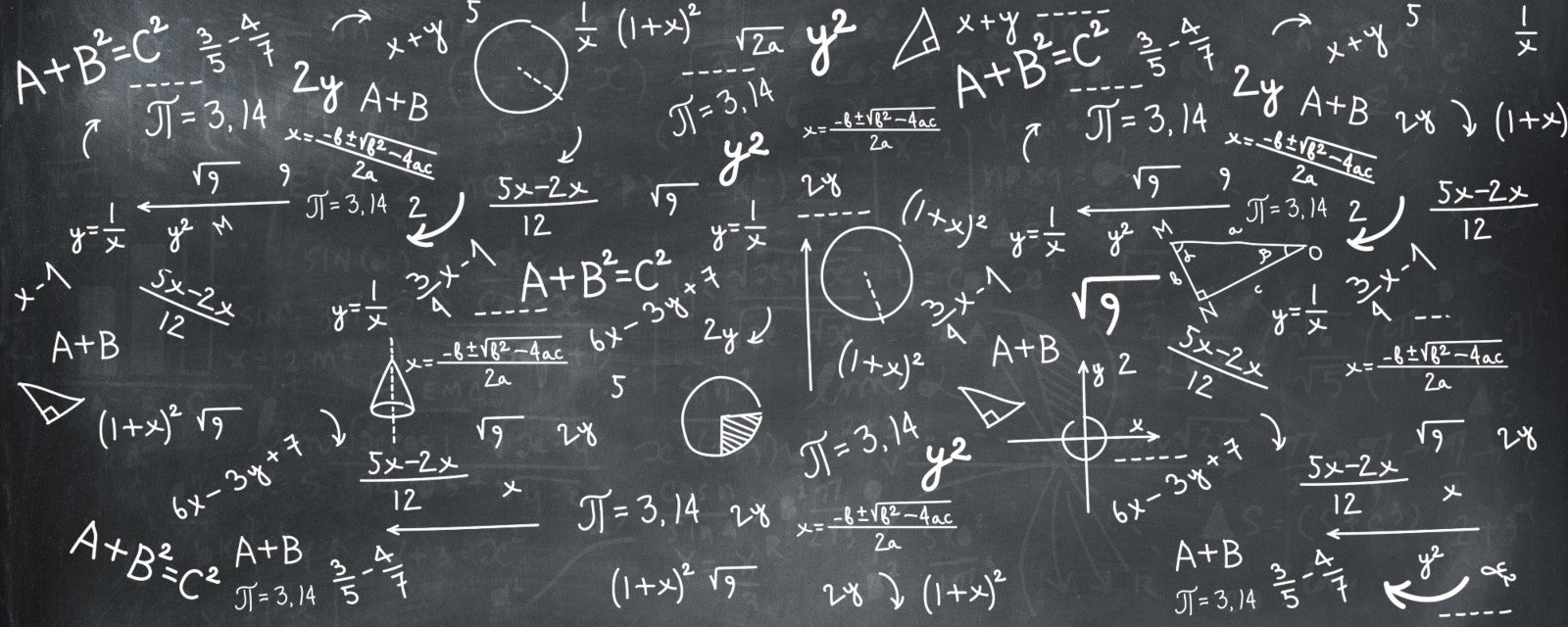
What is algebra?
Algebra is defined as the branch of mathematics that uses symbols and letters to represent numbers and relationships. Through algebraic formulas and equations, it is possible to solve complex problems in a structured way.
The history of algebra dates back to ancient civilisations, but it was the Persian mathematician Al-Khwarizmi , in the 9th century, who is regarded as the ‘father of algebra’ for formalising the basic rules of this discipline.
A basic example
A simple example of algebra is a first-degree equation:
x + 3 = 8
In this case, ‘x’ is the unknown quantity that we need to work out. If we subtract 3 from both sides, we obtain the value of ‘x’:
x = 5
This simple equation illustrates the power of algebra to solve for unknowns and understand numerical relationships.
What is the most important aspect of algebra?
The most important aspect of algebra is its ability to work with variables and equations in an abstract way, which allows us to model real-world situations, from simple calculations to complex scientific problems. The basic rules for manipulating symbols are essential, but as you progress in your studies, you will discover that there are different types of algebra with more specialised applications.
Types of algebra
There are different branches of algebra that tackle more complex problems. Some of the most relevant include:
Basic algebra
This refers to the algebra taught at the most basic levels of education. It involves solving simple equations and working with polynomials.
Linear algebra
It studies linear equations, matrices and vector spaces. It is fundamental to physics, computer science and statistics. For example, linear algebra is used to calculate the optimal flight path for an aeroplane or for image processing.
Abstract algebra
It studies algebraic structures such as groups, rings and fields. It is used in number theory, cryptography and other advanced fields of mathematics.
Boolean algebra
It deals with logical values (true and false) and forms the basis of computer science. The digital circuits found in electronic devices, such as mobile phones and computers, are based on this branch of algebra.
Relational algebra
It is applied in databases and plays a crucial role in the management of large volumes of information.
What problems does algebra solve?
Algebra not only solves theoretical problems, but also has practical applications that impact everyday life and various professions. Among the most common problems solved using algebra are:
- Financial calculations: Algebra is used to calculate interest, loans and financial forecasts.
- Engineering : Engineers use algebra to model electrical systems, design structures and optimise industrial processes.
- Social sciences: It is applied to analyse data and make predictions in economics, psychology and sociology.
- Technology: The creation of complex algorithms and software relies on advanced algebraic formulas.
The difference between algebra and calculus
Many students wonder what the difference is between algebra and calculus, and which is more difficult. The main difference lies in the fact that calculus focuses on change and motion (derivatives, integrals), whilst algebra studies the relationships between static numbers and variables. Both branches are essential for a complete understanding of mathematics, but the basic concepts of algebra are often considered more accessible than those of calculus.
Where is algebra used in everyday life?
Algebra is present in many of our everyday activities, even if we do not always realise it. Some examples include:
- Personal budgets: Planning expenditure and savings involves the use of basic algebraic equations.
- Route calculation: When we use navigation apps such as Google Maps, algebra is used to calculate the quickest routes.
- Information technology: Boolean algebra is essential for the functioning of search engines, such as Google’s algorithms.
- Medicine : Linear algebra is applied in mathematical models to simulate tumour growth or the spread of epidemics.
How difficult is algebra?
Although some people find algebra challenging, the key lies in practising and understanding the concepts step by step. A solid foundation in algebra will open doors to other, more complex areas of mathematics, such as calculus and statistics.
Algebra is a fascinating branch of mathematics
Algebra is a fascinating branch of mathematics with practical applications in almost every area of modern life. From economics to engineering, through to computer science and the social sciences, mastering algebra will enable you to solve problems and understand the world around you in greater depth.
If you’re passionate about analysis and problem-solving, algebra will be a key tool in your academic and professional development.
Thank you for visiting the UAX blog!
Degree programmes of interest: