













Are you passionate about teaching and want to know how to become a secondary school teacher? Teaching at secondary level offers a rewarding career, combining expertise in a specialist subject with the satisfaction of shaping the next generation.
For those interested in becoming secondary school teachers, it is essential to understand the specific requirements for the subject you wish to teach. This article will guide you through the steps to becoming a teacher of mathematics, physics, chemistry, biology or economics, amongst others. You’ll find key information on what to study, how to prepare and what the average salary is for teachers in each subject area.
Requirements for becoming a secondary school teacher
The first step towards becoming a secondary school teacher is to meet a series of educational and professional requirements. Generally speaking, regardless of your chosen subject, you will need:
- Hold a university degree in the subject you wish to teach. For example, if you want to be a maths teacher, you must have completed a Bachelor’s degree in maths or a related subject such as engineering.
- Complete a Master’s in Teacher Training. This Master’s is compulsory for teaching in secondary and sixth-form education in Spain, and focuses on pedagogy, didactics and teaching techniques. It is essential both for sitting competitive examinations and for teaching at private or state-subsidised schools.
- Demonstrate a B1 level in a foreign language (usually English). This requirement is essential for entry to the Master’s in Teacher Training, not directly for practising as a teacher, although some autonomous communities may require it for competitive examinations or merit-based selection processes.
- Pass the teaching competitive examinations, which consist of a series of competitive exams to secure a post in the state education system.
Different routes to becoming a secondary school teacher
Depending on the type of school you wish to work in (state, private or state-subsidised) and the route you take, the ways to become a secondary school teacher vary. Below, we explain the three main routes:
- Teaching in private or state-subsidised schools
To work in a private or state-subsidised school, you need to have completed a degree in the subject you wish to teach (for example, biology to teach natural sciences) and have completed a Master’s degree in Teacher Training. It is not necessary to sit the competitive examinations, as these schools select their teachers based on other criteria. - Entry via competitive examinations
To secure a permanent post as a civil servant in the state education system, you must pass the competitive examinations. Whilst it is advisable to have a degree related to the subject you are applying to teach, this is not compulsory. For example, you can sit the competitive examinations for mathematics whilst holding a degree in biology and, if you are offered the post, teach that subject. In this case, the Master’s degree is still compulsory. - Access via job pools without securing a post
If you do not pass the competitive examinations but have passed some of the tests, you can join job pools to fill temporary vacancies in state schools without being a civil servant. In this case, you are usually required to have a bachelor’s degree in the subject you will be teaching, in addition to the master’s degree. The specific conditions vary between autonomous communities, so it is necessary to check the regulations for each one.
Requirements for becoming a secondary school maths teacher
To become a secondary school maths teacher, you will need to complete a Bachelor’s degree in Mathematics or a university degree related to the exact sciences, such as a Bachelor’s degree in Mathematical Engineering. It is crucial to have a solid foundation in algebra, geometry, calculus and statistics.
You will then need to complete a Master’s degree in teacher training, which will qualify you to teach.
Mathematics teachers are in high demand due to the growing importance of the sciences in education. Furthermore, the salary of a mathematics teacher in the state education system ranges from 24,000 to 36,000 euros a year, depending on the autonomous community and years of experience.
Requirements for becoming a physics and chemistry teacher
To become a physics and chemistry teacher in secondary education, you must hold a Bachelor’s degree in Physics , Chemistry or a related subject that qualifies you to teach these subjects.
You must then complete a Master’s degree in Teacher Training, which is compulsory for teaching at secondary and sixth-form level. This Master’s degree will provide you with the pedagogical and teaching tools needed to deliver lessons in the sciences.
The salary of a physics and chemistry teacher ranges from 24,000 to 36,000 euros per year, with potential increases based on length of service, three-year increments and other allowances.
Requirements for becoming a biology teacher
To teach biology at secondary school level, you must hold a Bachelor’s degree in Biology or a qualification related to the health sciences. Although experience in fieldwork and laboratory work is valuable, it is not an essential requirement. The most important thing is to have the ability to explain complex biological concepts in a way that is accessible to pupils.
After completing your university studies, you must undertake a Master’s degree in Teacher Training, which is compulsory for teaching in state and state-subsidised private schools. To work in the state education system, you must pass the competitive examinations. However, in private or state-subsidised schools, a Master’s degree and an undergraduate degree are sufficient; there is no need to sit the competitive examination.
The salary of a biology teacher in the state education system ranges from 24,000 to 36,000 euros a year, with increases based on length of service and other allowances.
Requirements for becoming an economics teacher
For those interested in teaching economics, the route involves completing a bachelor’s degree in Business Administration and Management ( ADE ), Economics or any degree related to business studies. It is advantageous to have experience or practical knowledge of the business world, as well as the ability to analyse economic data and explain market trends.
As with the previous examples, it will subsequently be necessary to obtain a Master’s degree in teacher training to acquire the necessary teaching skills and to pass the competitive examinations to secure a permanent post.
The salary of an economics teacher varies depending on the autonomous community and the teacher’s experience, but is usually between 24,000 and 36,000 euros per year in the public sector.
Requirements for becoming a teacher in other subjects
In addition to the areas mentioned above, secondary education also requires qualified professionals in subjects such as Technology, Spanish Language and Literature, Foreign Languages (English), Geography and History, Physical Education, Music and Educational Guidance.
The steps to becoming a teacher in any of these subjects include:
- Completing a Bachelor’s degree or equivalent qualification in your chosen subject, which will provide you with a thorough understanding of the subject matter, along with broad and up-to-date knowledge of the content you will be teaching.
- Completing a Master’s degree in Teacher Training, which is compulsory for those wishing to teach in state, private or state-subsidised schools.
- If you wish to work in state schools, you must pass the competitive examinations. However, in private and state-subsidised schools, you can teach without having gone through this process, provided you hold the relevant degree and Master’s qualification.

Master’s in Teacher Training at UAX
The Master’s in Teacher Training is a key component for those wishing to pursue a career in teaching, and is an essential requirement for working as a secondary school teacher in Spain.
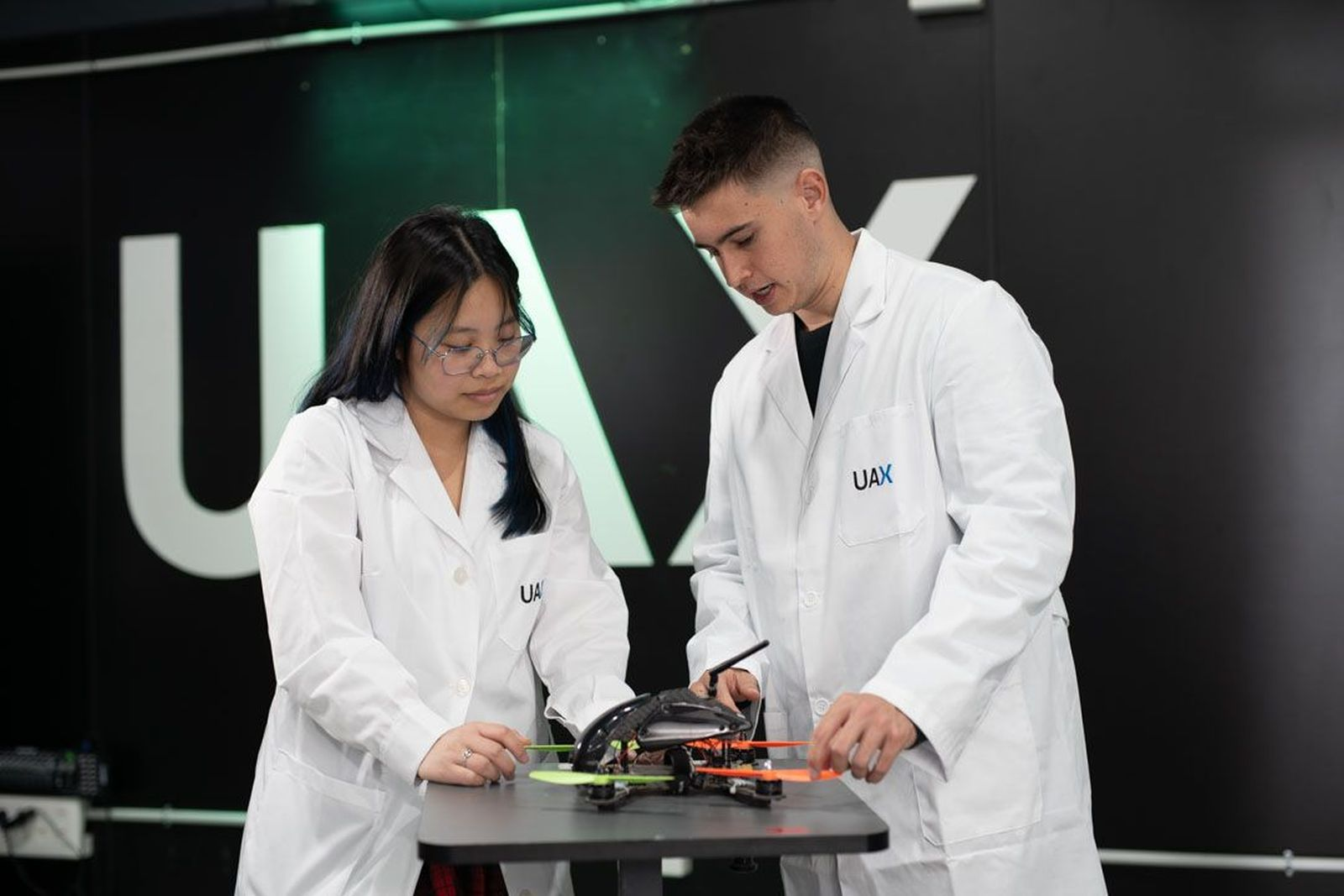
At Alfonso X el Sabio University (UAX), this master’s programme offers comprehensive training and is designed to equip future teachers with the pedagogical and teaching skills required for the classroom in secondary education, sixth form, vocational training and language teaching.
Our online Master’s programme offers you the flexibility needed to balance your studies with other commitments, allowing you to progress in your training without neglecting your daily responsibilities. Furthermore, we have agreements with numerous educational institutions that facilitate work placements, providing a comprehensive learning experience.
To enrol on the Master’s programme, you must meet the entry requirements for the Master’s in Teaching , which include holding a university degree related to the subject you wish to teach.
At UAX, we go one step further: we also offer other specialisations and master’s degrees related to education, providing a more comprehensive education in specific areas such as:
This Master’s in Teaching is essential for anyone interested in teaching at secondary level, as well as for those planning to sit the competitive teaching examinations. It is a rigorous programme, designed to train teachers with a solid foundation in pedagogy, didactics and technical skills.
The day-to-day life of a secondary school teacher
The day-to-day life of a secondary school teacher is varied and often challenging. Teachers are not only responsible for delivering lessons and assessing pupils’ progress, but also play a vital role in guiding young people and creating a productive learning environment.
In addition to classroom teaching, secondary school teachers often undertake other tasks such as:
- Preparing lessons and teaching materials.
- Delivering lessons, teaching the subject, answering questions and managing the classroom.
- Mentoring and monitoring students.
- Attending meetings with parents or legal guardians.
- Continuous assessment and adapting teaching methods to suit pupils’ needs.
The time spent on lesson planning and marking work is also an important part of the job. Furthermore, teachers are constantly keeping up to date with new teaching methods and taking part in continuous professional development to improve their performance.
A career in teaching offers numerous opportunities for professional development. The combination of specialist knowledge in your subject area, pedagogical training and interpersonal skills will be key to your success as a secondary school teacher.
Whether you’re interested in teaching mathematics, physics and chemistry, biology or economics, the path to a teaching career requires dedication and specific preparation. At UAX, we offer the training programmes you need to achieve your professional goals in secondary education.
Now you know how to become a secondary school teacher. However, if you’re interested in teaching but at other educational levels, there are other options, such as specialising in specific areas like Support for Diverse Learning Needs and Inclusive Education or Bilingual Education.
Are you ready to take the next step in your teaching career?