






















Table of Contents
What is international trade and what does it involve?
Roles of a foreign trade professional
The importance of trade in international relations
Classical theories of foreign trade and other trends
Benefits of international trade
Career opportunities and salary for an international trade professional
What you study on the International Trade and International Relations programme at UAX
International trade is an essential component of relations between countries and a key driver of global economic growth. But what exactly does this concept entail, and how does it affect our daily lives? Let’s delve deeper into this crucial topic to better understand the interconnected world in which we live.
What is international trade and what does it involve?
International trade is defined as the exchange of goods and services between different countries. It is an activity that facilitates access to products and services from other markets, improving supply and increasing competition. This trade is governed by agreements, treaties and regulations that ensure a controlled and stable flow of goods.
International marketing is, in essence, the process that enables companies to bring their products to foreign markets, thereby creating an interconnected and globalised economic network. This includes:
- International market research.
- Adapting products to foreign markets.
- Global marketing strategies.
- International logistics and distribution.
- Negotiation of international contracts.
- Risk management in international operations.
This type of trade involves various stages and tasks, such as logistics, customs management and the negotiation of trade agreements. Furthermore, it is directly linked to issues of diplomacy and geopolitics – aspects that must be managed strategically to maintain peaceful and beneficial relations between countries.
Roles of a foreign trade professional
An international trade professional, with a degree in international relations , plays key roles in ensuring that commercial operations between countries are carried out efficiently. Some of the main responsibilities include:
- Analysing international markets. Researching, identifying and evaluating business and growth opportunities in different countries.
- Managing import and export operations. Coordinating all logistical and documentation aspects of international transactions.
- Negotiating trade agreements. Establishing and collaborating on the creation of trade treaties and agreements with foreign partners, ensuring favourable terms for their company.
- Logistics and customs management. Coordinating export and import processes, devising plans to introduce products or services into new international markets.
- Risk assessment and regulatory compliance. Identifying and mitigating the risks associated with international trade, such as currency fluctuations or political instability. Ensuring that all operations comply with international regulations.
These skills enable foreign trade professionals to manage complex and dynamic operations, facilitating economic development and access to new markets.
The importance of trade in international relations
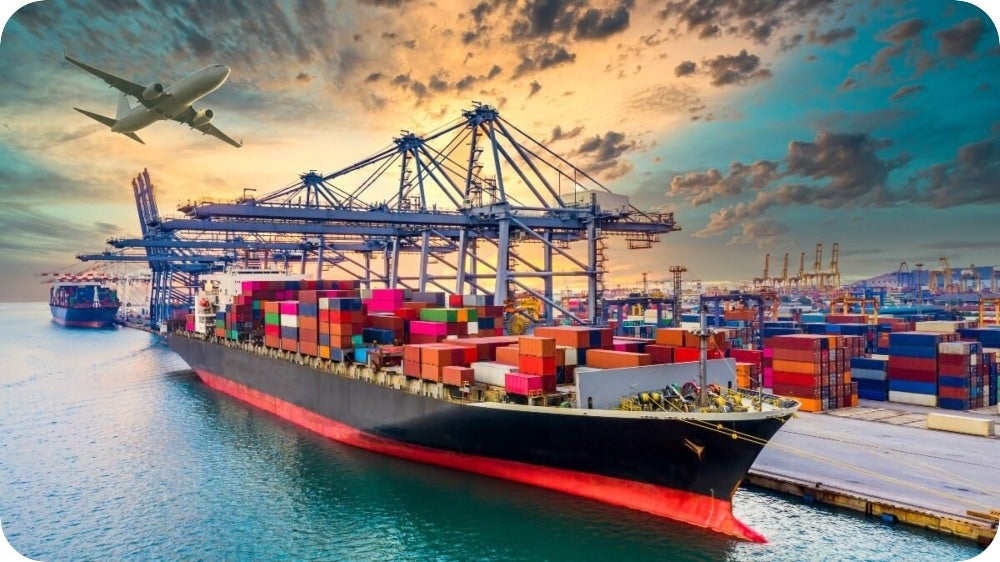
International trade plays a fundamental role in relations between countries, influencing various aspects of society. Its key impacts include:
- It fosters economic growth by facilitating access to broader and more diverse markets.
- Trade agreements strengthen political alliances and promote peace.
- By interacting with other countries, societies are culturally enriched, promoting the development of translation in international relations and other essential elements for global exchange.
Classical theories of foreign trade and other trends
To understand international trade, it is essential to be familiar with the economic theories that explain its development. Among these, two classical theories have been cornerstones of its study:
- Comparative advantage. Proposed by David Ricardo, this theory states that each country should specialise in producing goods where it has the greatest efficiency, which generates benefits for all nations involved.
- The Heckscher–Ohlin model. This theory suggests that countries will export those goods whose production requires factors of production that they possess in abundance and, in turn, will import goods for which they lack such resources.
In addition to these classical theories, new trends are emerging in international trade, such as:
- The rise of e-commerce and digital platforms is transforming the way international transactions are conducted.
- Global value chains. Companies are spreading their production processes across different countries to optimise costs and efficiency.
- The trade in services, particularly in the technology sector, is becoming increasingly important in global trade.
Benefits of international trade
International trade offers numerous benefits for the countries involved, as well as for businesses and consumers. Some of the main advantages include:
- Greater variety of products. Consumers have access to a wider range of goods and services from around the world.
- More competitive prices. International competition can lead to lower prices and higher product quality.
- Specialisation and efficiency. Countries can focus on producing what they are most efficient at, maximising overall productivity.
- Technology transfer. Trade facilitates the dissemination of new technologies and knowledge between countries.
- Economic growth. Increased exports can boost GDP growth and job creation.
- Improved international relations. Trade links can foster cooperation and reduce conflicts between nations.
These benefits enable nations to make the most of their resources and expand their trade opportunities, which has a positive impact on the global economy.
Career opportunities and salary for an international trade professional
A career in international trade offers a range of job opportunities in areas such as logistics, market analysis and international operations management. Professionals in this field can work for multinational companies, government bodies or even international organisations such as the UN or the WTO.
As for salary expectations, pay in international trade varies depending on the country and experience. In Spain, for example, a professional in international trade can earn between 24,000 and 60,000 euros a year.
These figures show that the field of foreign trade is not only relevant but also offers attractive salary prospects for those seeking careers in diplomacy.
What you’ll study in International Trade and International Relations at UAX
If you are interested in a career in international trade, it is essential to be familiar with the academic programmes that prepare you for this field. At Alfonso X el Sabio University (UAX), the Bachelor’s Degree in International Relations offers a comprehensive education ranging from economic theories to negotiation techniques and logistics management.
This programme includes modules related to economics, geopolitics and international studies, as well as language learning – a fundamental aspect for thriving in global trade.
Furthermore, at UAX we also offer exchange programmes and work placements with international companies, which pave the way for a successful career in foreign trade.
International trade is a fascinating and constantly evolving field, offering numerous opportunities for those seeking a career in international relations. If you are also interested in law and accounting, our dual degree in Law and International Relations and the dual degree in Business Administration and International Relations will provide you with a comprehensive education focused on these key disciplines, preparing you to tackle the challenges of a globalised world.
Are you committed to international trade in an increasingly interconnected world?