What is music education?
Music education is the branch of pedagogy that deals specifically with studying, planning and developing the processes through which music is taught and learnt. It is not limited to imparting musical technique or theory: its approach encompasses the holistic development of the individual through music , taking into account their cognitive , emotional, social and motor dimensions.
As a discipline, music pedagogy begins with a fundamental question : how does a person learn through music, and how can teaching be made more effective? This involves understanding the learner’s developmental progress, designing methodologies appropriate to each stage, and adapting resources and assessment to the educational objectives.
Music pedagogy is distinct from musicology (which studies music as a historical and cultural phenomenon) and from music therapy ( which uses music for therapeutic purposes). Its scope is education, both formal (conservatoires, primary and secondary schools) and non-formal (music schools, academies, workshops).
What is the purpose of music pedagogy?
Music pedagogy serves to ensure that music teaching is effective, meaningful and tailored to the needs of each pupil. It has many applications:
- To improve musical learning: designing teaching sequences that respect each student’s pace of development and technical level.
- Fostering holistic development: music develops memory, attention, discipline, creativity and emotional intelligence.
- Training music teachers: professionals trained in music pedagogy acquire the tools to teach with rigour and creativity in different contexts.
- Preparing for teaching qualification examinations: in Spain, certification to teach at conservatoires and in secondary education requires specific pedagogical training.
- Adapting teaching to diverse contexts: from pupils with special educational needs to adults returning to learn an instrument.
What are the main methods of music pedagogy?
At the beginning of the 20th century, the so-called ‘active music methods’ emerged, representing a revolution in contrast to traditional teaching based on theoretical music theory and mechanical repetition. These methods share a key principle: music is best learnt through lived experience before moving on to abstract theory.
The four most influential methods are:
| Method | Creator | Central element | Key principle |
| Dalcroze | Émile Jaques-Dalcroze | Body movement | The body as the primary instrument |
| Orff | Carl Orff | Rhythm, Word and Percussion | Improvisation and collective creativity |
| Kodály | Zoltán Kodály | The voice and singing | The musical mother tongue |
| Suzuki | Shinichi Suzuki | Listening and repetition | Learning as the acquisition of the mother tongue |
The Dalcroze Method
Developed by the Swiss Émile Jaques-Dalcroze, his method is based on body rhythm. Dalcroze believed that the body is the first musical instrument and that rhythm is best assimilated when experienced through movement. His lessons integrate physical coordination, aural development and emotional expression.
Orff Method
The German composer Carl Orff created the Schulwerk (‘school work’), an approach centred on rhythm, the spoken word, movement and accessible percussion instruments (xylophones, metallophones, tambourines). Its great contribution is that any child can make music from day one, encouraging improvisation and collective creativity without the need for prior knowledge.
Kodály Method
The Hungarian musician Zoltán Kodály placed the human voice at the heart of music education. His method is based on choral singing, the use of high-quality folk songs and tools such as phononimia (hand gestures to represent notes) and relative solfège. He believed that music should be as accessible as one’s mother tongue.
Suzuki Method
Shinichi Suzuki observed that children learn to speak through listening and repetition, without needing to study grammar first. He applied this same principle to learning to play an instrument, particularly the violin, with results that demonstrated that the environment and early exposure are crucial. The Suzuki method involves significant parental involvement in the learning process.
What is the difference between music pedagogy and instrumental pedagogy?
Although they are closely related, they are disciplines with distinct nuances:
Music pedagogy has a broader scope: it studies the teaching of music in general, including aural training, music theory, musical language and holistic development through music.
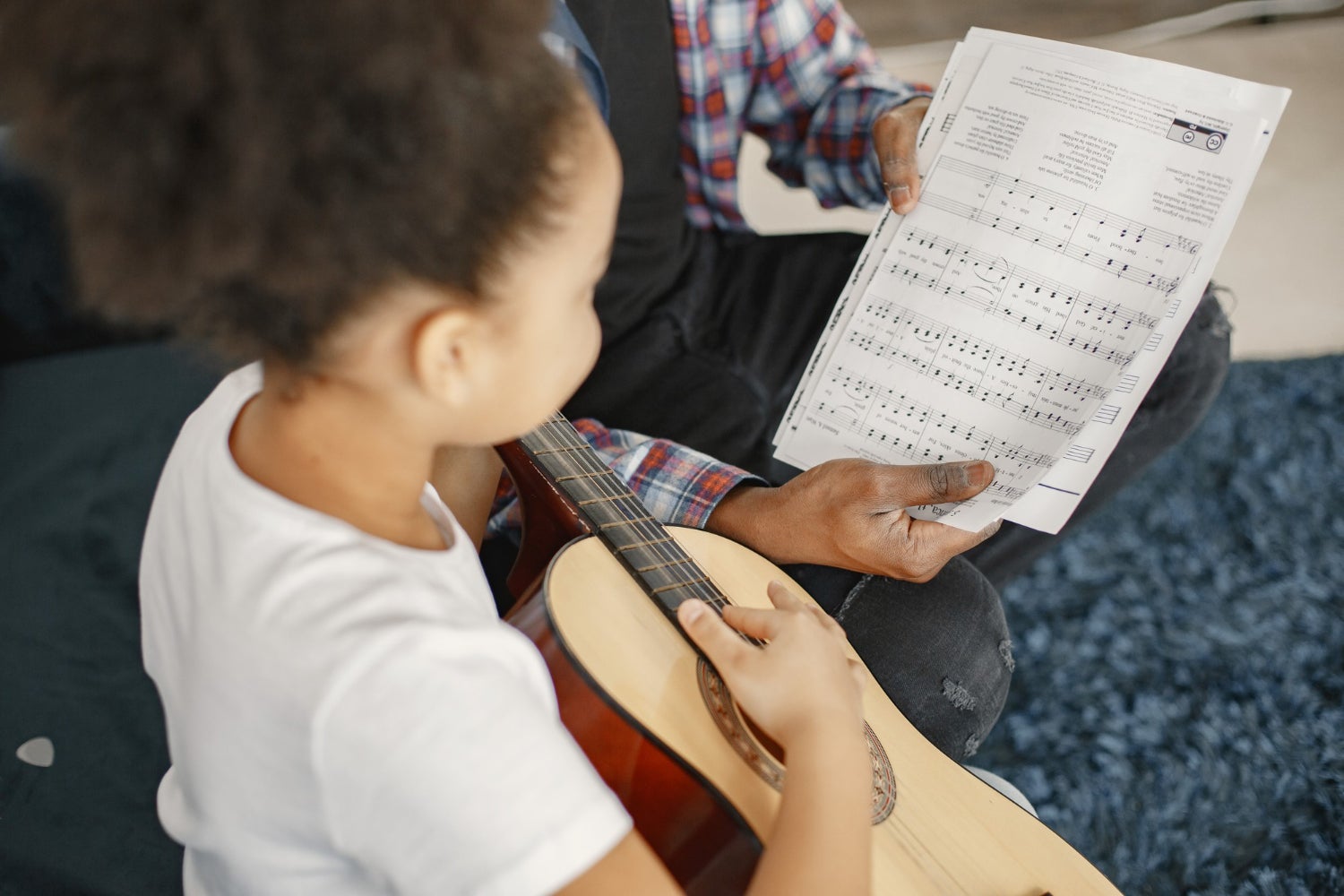
Instrumental instrumental pedagogy , on the other hand, focuses specifically on the teaching of a musical instrument. It addresses aspects such as the technique of each instrument family, posture, repertoire progression, performance and the specific methods for teaching how to play a particular instrument.
An instrumental teacher needs to have a thorough command of both the instrument they teach and the teaching tools required to pass on that knowledge. For this reason, training in instrumental pedagogy is the natural path for musicians and performers who wish to become qualified teachers.
Where is music pedagogy applied?
The contexts in which a music teacher works are varied:
- Conservatoires at elementary, professional and higher levels, where instrumental teaching is the central focus.
- Primary and secondary primary and secondary schools, where music is a subject within the general curriculum.
- Private music schools and academies, which offer greater methodological freedom and cater to a range of student profiles.
- Municipal music schools, run by local councils and focused on non-professional music training.
- Adult education and community workshops, where music teaching adapts its approaches to people learning music outside the formal education system.
What skills does a music teacher need?
A good music teacher combines technical mastery of music with specific teaching skills:
- In-depth knowledge of their discipline: music theory, musical language, music history and mastery of the instrument.
- Teaching ability: designing teaching units, curricula and learning sequences tailored to different levels.
- Communication skills: conveying complex concepts clearly and in a motivating way.
- Adaptability to diversity: addressing individual differences, different learning paces and special educational needs.
- Knowledge of active teaching methodologies: applying approaches such as those of Orff, Kodály or Suzuki, depending on the context and the pupils.
- Digital competence: integrating technological tools into music teaching (score-editing software, educational apps, online lessons).
- Formative assessment: evaluating pupils’ progress beyond their performance in a recital or exam.
How can one train in music pedagogy in Spain?
In Spain, access to teaching posts at conservatoires and formal music education centres requires a qualifying university qualification. The most common route is:
- A higher degree in music or a university degree with a musical foundation (Musicology, Musical Performance, Composition).
- A qualifying Master’s degree in instrumental pedagogy, which provides the pedagogical skills required to teach at conservatoires and music schools, and which counts towards teaching competitive examinations.
The UAX Online Master’s Degree in Instrumental Pedagogy is a 60 ECTS programme lasting 9 months, designed for musicians, performers and musicology graduates who wish to transform their artistic talent into a teaching career. The programme offers specific pathways for each instrumental family (strings, woodwinds, brass, piano, classical guitar, percussion and voice), with an innovative methodological approach that includes project-based learning and the use of technology in the classroom.
As Dr Harold Hernández, director of the Master’s programme at UAX, points out, “instrumental pedagogy is essential for gaining entry to the state education system, because it is not enough simply to master an instrument: one must know how to pass on that knowledge”.
Summary
Music pedagogy is the discipline that studies how music is taught and learnt, integrating didactic, psychological and artistic knowledge. Its applications range from the holistic development of the student to professional training for teaching at conservatoires and music schools. The active methods of Dalcroze, Orff, Kodály and Suzuki are its historical precedents and remain the foundation of contemporary music education. Instrumental pedagogy, as a specialisation, focuses on the transmission of knowledge about a specific instrument, and is the natural path for musicians who wish to become qualified teachers.
Frequently Asked Questions
Is music pedagogy the same as music education? Not exactly. Music education is the field or educational discipline in the broadest sense; music pedagogy is the science that studies and develops the methods and processes of that education. Music pedagogy is, in a sense, the theoretical and methodological tool that makes high-quality music education possible.
Is music pedagogy suitable for teaching adults? Yes. Although many of its traditional methods were developed with children in mind, music pedagogy can be applied at any stage of life. Adults learning music have specific characteristics (greater conceptual background, different motivations, and potential technical difficulties due to their age) which the music educator must be aware of and address.
Is a Master’s degree required to teach at a conservatoire? In Spain, to gain entry as a teacher at professional and higher-level conservatoires through a competitive examination, a qualifying university degree is required. The Master’s in Instrumental Pedagogy is the most direct and recognised route, as it is specifically designed for this purpose and carries weight in the selection processes.
Sources:

























.jpg.webp)