Official qualification
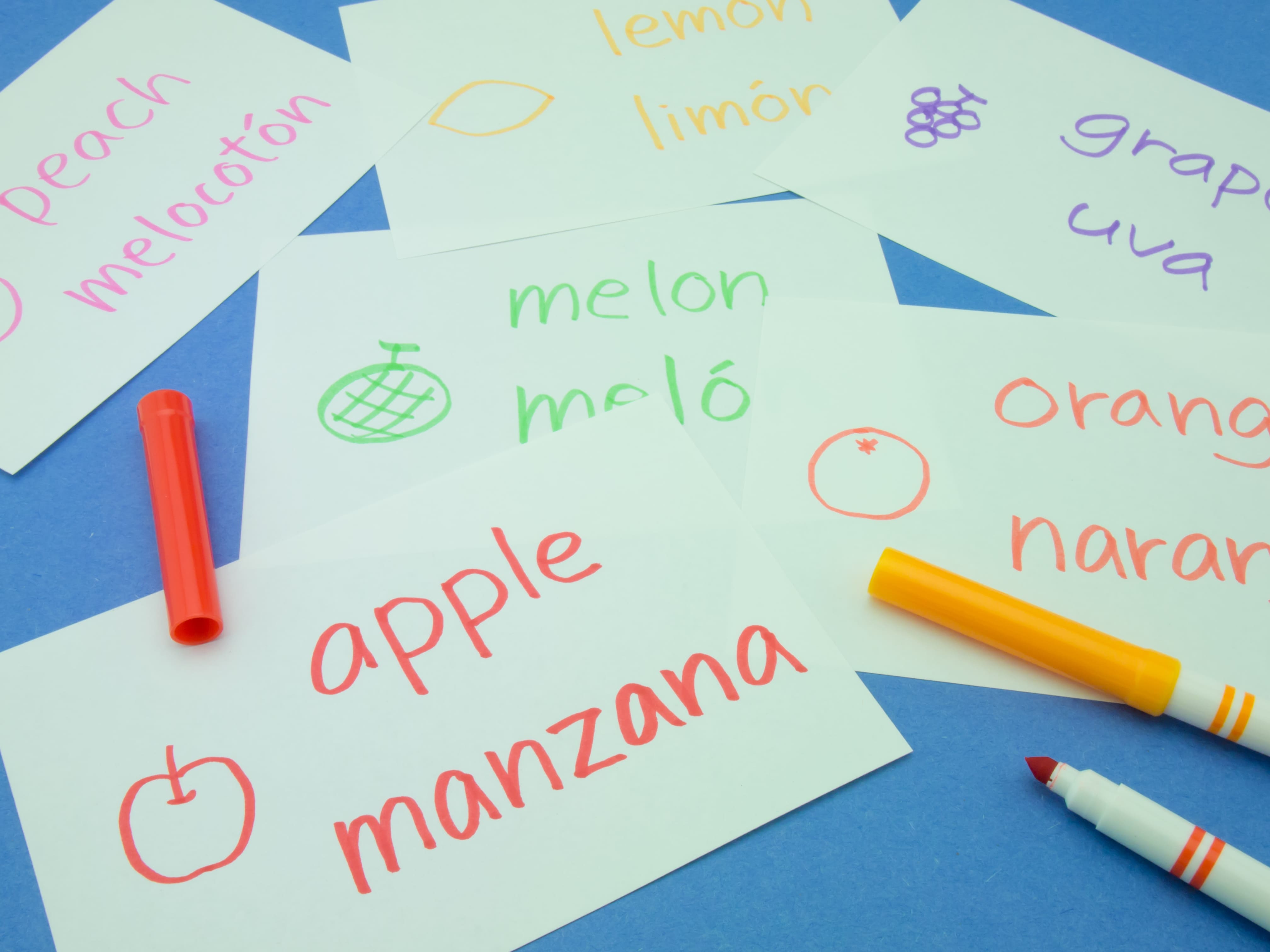
Prepare yourself to teach Spanish to students from all over the world with a practical, innovative approach adapted to each learning profile. This official master's degree incorporates the use of ICT and methodologies such as agile learning, so that you can master the most up-to-date techniques in language teaching. TOP 2 Best Master in Education in Spain, according to the Ranking 2024 of Mundo Postgrado. Limited places.
In collaboration with:


















Master's Degree in Teaching Spanish as a Foreign Language
Year 1
FIRST FOUR-MONTH PERIOD
| Code | Subjects | Character* | ECTS |
|---|---|---|---|
| SM121100 | Adquisición de L2 y enfoques metodológicos | OB | 3 |
| SM121101 | Análisis y producción de materiales en ELE | OB | 3 |
| SM121102 | Enseñanza de la gramática en ELE | OB | 6 |
| SM121103 | Enseñanza de las destrezas en ELE | OB | 6 |
| SM121104 | Enseñanza del léxico y la pronunciación en ELE | OB | 3 |
| SM121105 | Pragmática e interculturalidad en ELE | OB | 3 |
| SM121106 | Recursos educativos digitales para el aprendizaje de ELE | OB | 6 |
| SM121150 | Introducción a la lingüística del español | CM | 3 |
| SM121151 | Fundamentos de la enseñanza de ELE | CM | 3 |
| TOTAL: | 36 | ||
SECOND FOUR-MONTH PERIOD
| Code | Subjects | Character* | ECTS |
|---|---|---|---|
| SM121107 | Aprendizaje de ELE en entornos virtuales | OB | 3 |
| SM121108 | Complementos didácticos en el aula de ELE: literatura, música y cine | OB | 3 |
| SM121109 | Diseño y creación de materiales didácticos digitales en ELE | OB | 6 |
| SM121110 | Español Fines Específicos | OB | 3 |
| SM121111 | Prácticas externas | OB | 6 |
| SM121112 | Programación, planificación y evaluación de cursos de ELE | OB | 3 |
| SM121113 | Trabajo Fin de Máster | OB | 6 |
| TOTAL: | 30 | ||
*Character: BT: Basic Training, Ob: Required, Op: Optional
The main reason why at UAX there are students like you is the possibility of making your personal, professional and academic life compatible. Our differential value is a methodology without barriers, focused on you and your desire to learn.
How is our methodology?
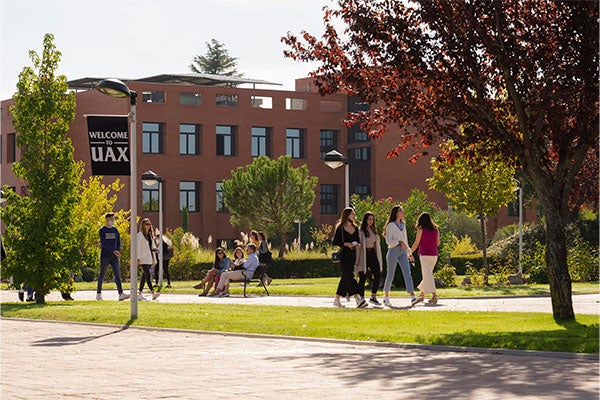
In addition, you will have the full availability of our campus in Madrid, to carry out your formalities, solve your doubts and enjoy the facilities it offers.
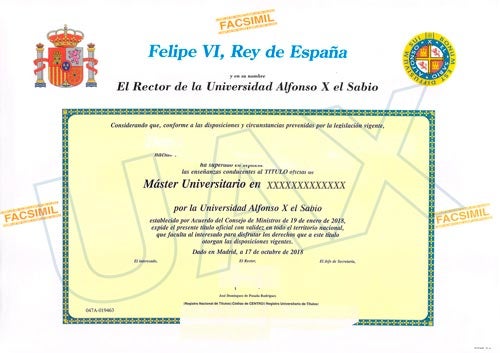
Our degree is official, verified by the Council of Universities and fully valid in Spain, as well as in the European Higher Education Area.
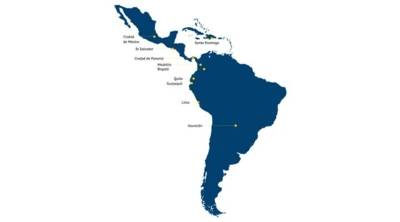
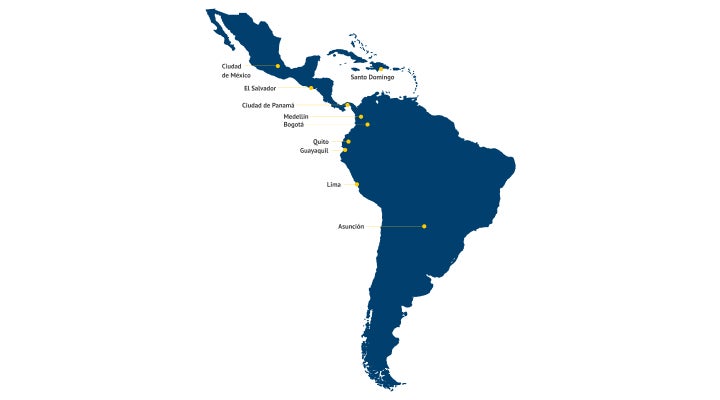
It is recognised by the Education Systems of Latin America, being recognised and approved by the different Ministries of Education in Latin America:
SENESCYT, MEN (MinEducation), SEP, Mescyt, among others, automatically.
You will do your internship in different types of institutions: educational centres, companies, NGOs, Foundations, Associations, among others.
In addition, you will be able to validate your internship by accrediting demonstrable professional experience in the area.
Some of the centres with which we have agreements. Request information and discover all our agreements.









In accordance with current legislation, the admission criteria for new master's degree students are conditioned by the possession of a previous university qualification. Based on this guideline, the university shall determine the objective, public and transparent requirements for a student to be able to effectively enrol in a postgraduate degree.
The Admissions Department determines the validity of the student's academic certification and that it allows them to meet the requirements of RD1393/2007 that give access to postgraduate studies at the Alfonso X el Sabio University and, if necessary, the employment information that accredits their professional experience (employment record and company certificate).
In addition, for students with special educational needs due to disability, appropriate support and counselling services will be incorporated to assess the need for possible curricular adaptations, itineraries or alternative studies.
The specific admission criteria for the Master's Degree in Teaching Spanish as a Foreign Language are detailed in the following lines:
Graduates in university degrees or equivalent degrees that are related to the subject area of the master's degree: Hispanic Philology, Linguistics, Humanities, Translation and Interpreting or other philologies.
Students coming from the areas of Journalism, Communication and Social and Legal Sciences must take 6 ECTS of Complementary Training:
Additionally, those students who have taken complementary training courses in the field of ELE teaching for a minimum of 90 hours that cover the following competences
established by the Instituto Cervantes (Instituto Cervantes, 2018).
In order to accredit complementary training, students must present academic certificates of the ELE training they have received in order to be able to analyse the acquisition of the required competences and check that the number of hours corresponds to that established in the profile.
Students whose mother tongue is not Spanish must accredit a compulsory C1 level of proficiency in Spanish, accredited by the Instituto Cervantes or by means of the certificates listed by the CRUE and listed below:
If the demand for places exceeds the university's offer, the weighting of the admission criteria will be as follows:
Suitability to the access degree (up to 85 points):
According to the average of the academic transcript of the degree that grants access:
Professional experience (up to 10 points):
This teaching experience must be accredited by means of a certificate from the work centre or employment contract that duly justifies this admission criterion.
Additional training in teaching Spanish as a foreign language (5 points).
Number of places offered for new students: 100
The Alfonso X El Sabio University has approved and published a regulation adapted to Royal Decree 822/2021 to deal with the transfer and recognition of credits.
https://www.uax.com/download/9959/file/Normativa-TRC.pdf
The recognition of credits in the official courses of this degree will be carried out taking into account the adequacy between the competences and knowledge derived from the courses taken and those foreseen in the syllabus of the corresponding courses.
| Subject | Requirement |
| External Work Placement (6 ECTS) | Teachers who accredit more than 150 hours of teaching in ELE. |
In order to apply for recognition, the following must be submitted:
All fields are required

The ELE Master's Degree stands for: Master's Degree in Teaching Spanish as a Foreign Language.
With this qualification you will obtain training that will allow you to develop in the field of teaching Spanish, research, linguistic mediation, consultancy and advice, among many other opportunities.
Find out how to become a Spanish teacher by exploring all the necessary requirements.
To become a teacher of Spanish as a foreign language, you need to meet certain requirements, depending on the level of teaching you want to do and the requirements of the institution in question.
Most commonly, you will need specific training to qualify as a teacher of Spanish as a foreign language, such as a Master's degree in Spanish as a Foreign Language. In addition, this qualification will help you to add points to your marks in the competitive examinations for teachers and secondary school teachers.
Si deseas ejercer la docencia en el sector privado, uno de los requisitos más comunes es acreditar una formación como profesor de ELE.
Este máster de ELE también te ayuda a sumar puntos a tu nota en las Oposiciones de Maestros y Secundaria, si tu intención es impartir clases en el sector público.
Si tu intención es continuar tu carrera profesional en el ámbito investigador, la acreditación de este máster te abre puertas hacia un doctorado.
To access the Master's Degree in the Teaching of Spanish as a Foreign Language is required:
It is an essential requirement to have a university degree or equivalent, related to the area, a master's degree in linguistics or teaching, degrees/qualifications linked to the area of Education (specialising in Language and Literature), or other areas, with complementary training.
No, the master's degree in ELE is not a qualification.
In the Master's Degree in ELE, our students acquire skills in the use of advanced digital tools that are essential for teaching in today's environment. They will master platforms such as Trello for project management, Moodle for creating virtual learning environments, and OpenShot for editing educational videos.
In addition, they will become familiar with applications such as Lumi, ExeLearning and Google Sites for creating interactive content and educational websites. Google Classroom will be an essential tool for the organisation and distribution of materials, while Padlet, Genially and Mindmeister will be used for the creation of collaborative murals, interactive presentations and concept maps, respectively.
In terms of collaboration and assessment tools, students will work with Miro and Mural for teamwork and visualisation of ideas, Socrative and Lumi for formative assessment, and Wakelet, Digipad, Kahoot and Quizizz for creating quizzes and collecting educational resources.
For those interested in further deepening their understanding of the use of technology in the classroom, we also offer the Master's Degree in Online ICT Applied to Education. This programme provides advanced training in the pedagogical use of information and communication technologies, allowing teachers to innovate in their educational practices and adapt to the changing needs of students in the digital age.

Master's Degree in Educational Technology and Digital Competences for Teachers - ICT (online)
In collaboration with:

Start:
October
Length:
9 months

Master's Degree in Teacher Training for Compulsory Secondary Education and Baccalaureate.
In collaboration with:


Start:
October
Length:
1 year

Master's Degree in Psychopedagogy (online)
In collaboration with:


Start:
October
Length:
9 months

Online University Master's Degree in Instrumental Pedagogy
Start:
October
Length:
9 meses

Online Master's Degree in Attention to Diversity and Inclusive Education
In collaboration with:

Start:
October
Length:
9 meses

Online Master's Degree in Educational Neuropsychology
In collaboration with:

Start:
October
Length:
9 months

Online Master's Degree in Leadership and Management of Educational Centres
In collaboration with:

Start:
October
Length:
9 meses

Online Master's Degree in Didactics in Mathematics
Start:
October
Length:
9 meses

Online Master's Degree in Educational Innovation
Start:
October
Length:
9 meses

Online Master's Degree in Conflict Prevention and Mediation in Educational Settings
Start:
October
Length:
9 meses

Online Master's Degree in Emotional Education and Pedagogical Accompaniment
Start:
October
Length:
9 meses

Online Master's Degree in Research Methodologies in Education
Start:
October
Length:
9 meses
Queries, complaints and claims
We listen to the real demands of our students and employees, because we believe in the continuous improvement of results. Therefore, we always want to listen to everything you want to tell us.
If you already belong to UAX, through the virtual campus in the section Customer service: complaints, suggestions and congratulations, entering your username and password.
Telephone: 91 810 94 00
E-mail: paramejorar@uax.es
Opening hours: Monday to Friday from 9:00 am to 6:00 pm
The UAX promotes the culture of quality among the university community through the UAX Quality System (SIUAX), for which the University Management is ultimately responsible, ensuring that the planning of the system is implemented to effectively meet the quality objectives, the satisfaction of needs, requirements and expectations of customers and interested parties.
The responsible bodies are:
This organisational structure channels a bidirectional communication of the different improvement actions that allow and ensure the construction of the quality culture in the University.
| Year 22/23 | Year 23/24 | Academic year 24/25 | |
| Graduation rate | 88,64% | 87,65% | No data available |
| Rate of return | 91,91% | 91,21% | 84,35% |
| Dropout rate | No data available | 7,50% | 8,70% |
| Student satisfaction with the teacher | 8,1 | 8,6 | 8,7 |
| Student satisfaction with the programme | 5,2 | 6,8 | 6,1 |
| Satisfaction of teaching staff | No data | 8,6 | 9,1 |
| Satisfaction of the administrative and service staff | 7,8 | 7,8 | 6,9 |
| Employability | 85,7% | 100% | No data |
Improvement plans for the degree:
| Action | Date of implementation |
| Updating the contents of ICT-related subjects. | July 2024-February 2025 |
| Review and modification of assessable activities to guarantee homogeneity and reduce workload. | April-December 2024 |