







New technologies are helping to drive major advances in society. In the healthcare sector, technology is also revolutionising every aspect of the industry. From surgical procedures, which are gradually incorporating non-invasive techniques to speed up the patient’s recovery, making the process less painful and leaving fewer visible signs of the operation; to advances in healthcare delivery processes, as it is now possible to attend a doctor’s appointment remotely thanks to telemedicine.
During the Covid-19 pandemic, this ability to see a doctor without having to travel to the surgery has enabled a giant leap forward in healthcare. Furthermore, it is a highly effective resource for all those who, for various reasons, face serious difficulties in attending a consultation in person.
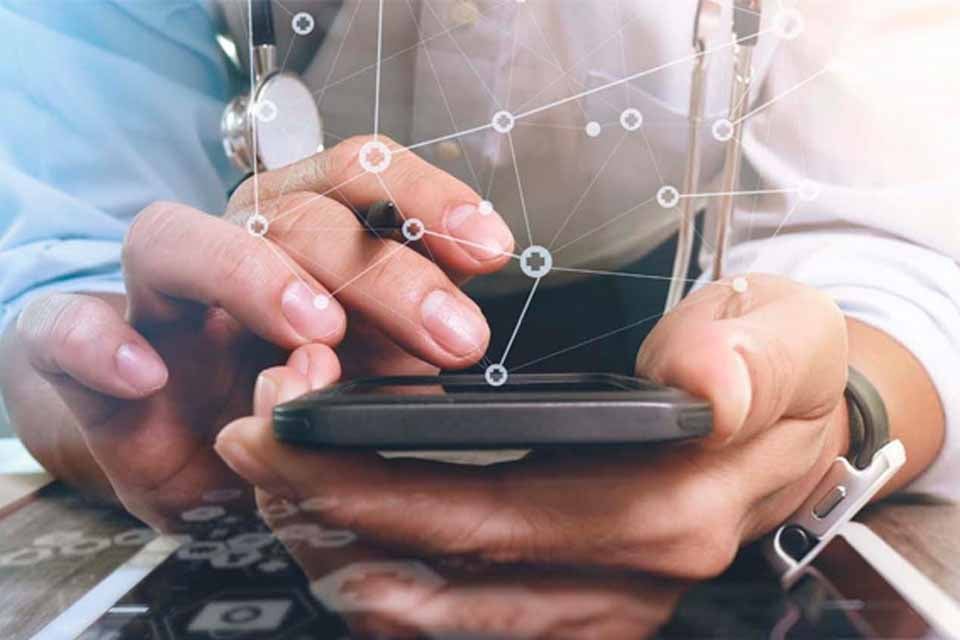
Telemedicine encompasses diagnosis, treatment and medical education. It is a technological resource that optimises healthcare services, saving time and money, and facilitating access to specialist care in remote areas. In short, it provides or supports medical care, regardless of the distance between those providing the service.
Furthermore, telecare makes it possible to monitor a patient’s health using electronic devices which, should any abnormality arise, can alert the medical centre so that the patient can receive healthcare. Telecare is very commonly used for elderly patients living at home.
Likewise, ICTs enable the use of other significant resources such as augmented reality, which allows organs to be visualised in 3D or the patient’s medical records to be consulted in real time —even during a surgical procedure—thanks to augmented reality glasses.
It is nothing new to say that the electronic health record has represented a major step forward in centralising each patient’s information, so that it can be shared securely and healthcare professionals can access that record whenever necessary.
And then there are mobile applications (apps), thanks to which we can turn our smartphone into whatever we want. From a personal trainer and a sleep monitor to a diagnostic tool. In the healthcare sector, there are many apps available for both healthcare professionals and patients. Wearable technology has also helped us to monitor our health and fitness. It does this using smart clothing and accessories, such as watches, wristbands or glasses.
As regards educational resources for healthcare professionals and students, we can mention Serious Games —that is, video games that facilitate the training of current and future healthcare professionals and enable them to expand their knowledge, something so essential in our professional lives.
eHealth or Digital Health (in English e-Health ), which refers to the use of ICT in the healthcare sector, has made a significant impact. Have you ever had a remote consultation with a specialist via an electronic device? It is now possible to do so, and it offers nothing but benefits.
Given the above, it is clear that it is becoming increasingly necessary to acquire the skills required to master the use of new technologies in the healthcare sector. Therefore, if you are a healthcare professional or are studying to become one, specialising in e-Health will bring you significant advantages in your career progression. Would you like to be able to operate with complete confidence in the field of digital health? Bear in mind that technological advances are constantly moving forward and, in the future, ICTs will continue to revolutionise every sector even further. Are you ready to commit to this training?

How to specialise in e-Health
In the specific case of nurses – the healthcare professionals we discussed in this other post – there are some very interesting postgraduate courses available to them after completing their nursing degree , enabling them to specialise in e-Health. One such programme is the Online Master’s Degree in Healthcare Management: e-Health , which allows students to delve deeper into the new e-Health paradigm, learn the key principles of strategic management of digital transformation and analyse its impact on the patient experience.
Furthermore, this master’s programme enables students to develop the skills currently required in the field of digital health, in terms of strategic management, innovation, digital transformation, patient experience and leadership.
Alternatively, you can also study the Master’s Degree in Nursing Services Management and Administration , which complements a bachelor’s degree in nursing and provides the skills and soft skills most in demand in management roles for nursing professionals. Among other things, you will work with agile methodologies and develop skills applicable to the analysis and design of efficient management and leadership policies.
There are other postgraduate programmes, such as the Blended-Learning Master’s Degree in Adult A&E for nursing professionals, which will allow you to specialise in emergency care, whilst also giving you the opportunity to undertake field simulation exercises so that you can apply them to real-world practice in your profession with greater efficiency.
We hope you have found this information useful. And as you know, if you are a healthcare professional or are about to become one, and you want to keep up to date with eHealth, specialisation will be your greatest ally in advancing in this professional field. Today we’ve provided information on master’s degrees aimed at nursing professionals, but digital health, as is evident, is relevant to all other healthcare professionals too. Would you like to be at the forefront of this change?