














First year
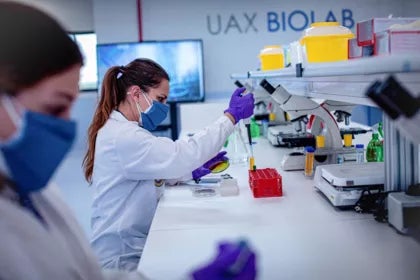
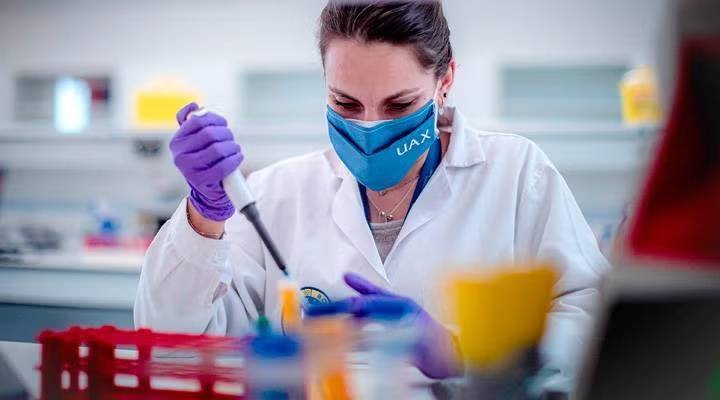
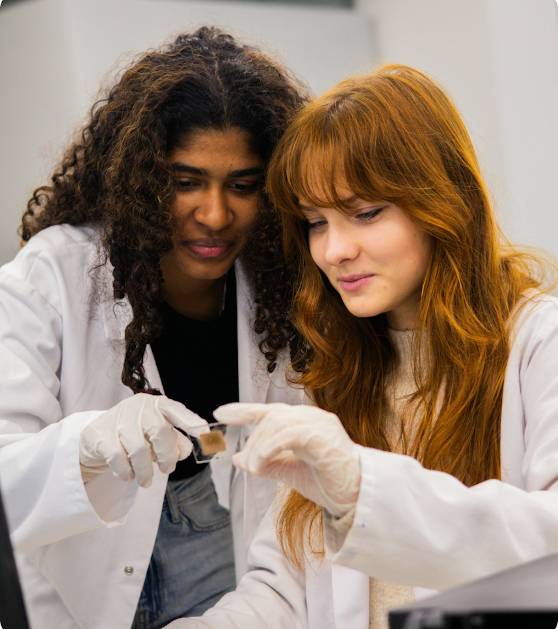
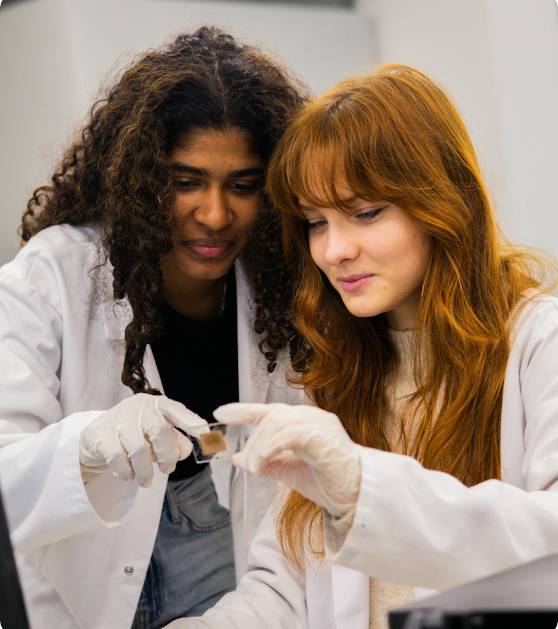
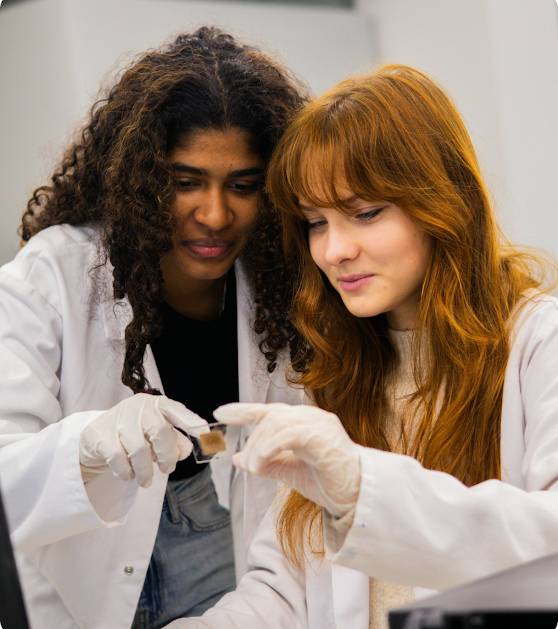
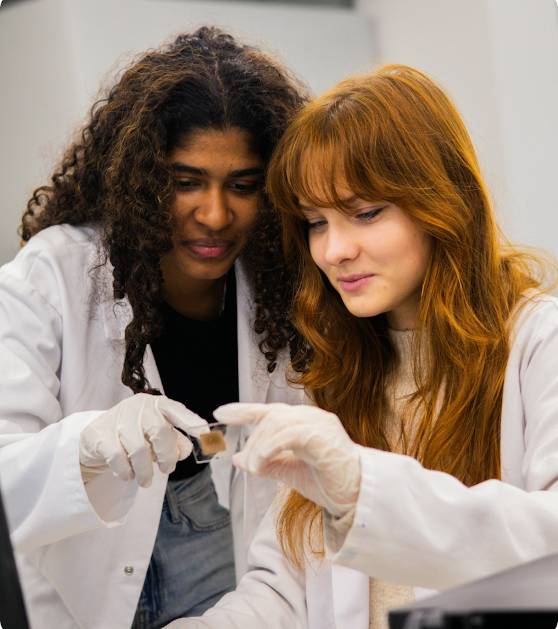
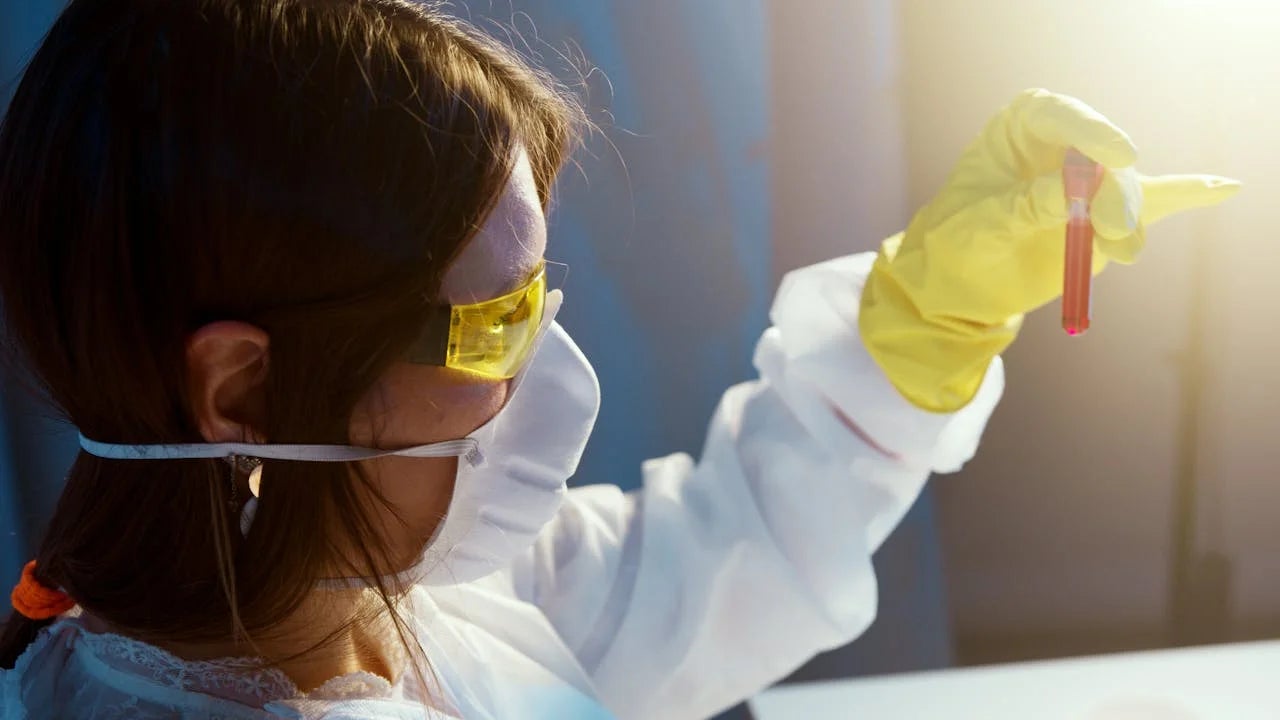
The first year lays the foundations for your future as a scientist. Over the course of 60 ECTS credits, you will master the fundamental disciplines that explain life at a molecular and cellular level, and discover the complete structure of the human body. At UAX, theory and practice go hand in hand from day one: what you learn in class is put to the test immediately in state-of-the-art laboratories such as the UAX BIOLAB or the Dissection Theatre, thereby embracing the rigour of the scientific method right from the start of your degree.
Human Anatomy
This core module is dedicated to the study of the structure and form of the human body, from the major systems (skeletal, muscular, nervous) to the organisation of individual organs. This knowledge forms the foundation upon which you will build in subsequent modules such as physiology or pathology. Mastering anatomy is, therefore, the first step towards understanding how the body works and where problems may arise.
Biology
As a cornerstone of the degree programme, biology introduces you to the principles governing life at the cellular and molecular levels. You will explore in depth the structure of eukaryotic cells, the function of their organelles and vital processes such as the cell cycle, DNA replication and protein synthesis. Through numerous hours of practical work at the UAX BIOLAB, you will learn to use a microscope and observe different cell types, linking theory with visual evidence.
Biophysics
Biophysics acts as a bridge between the physical sciences and biology, applying the laws of physics to explain complex biological phenomena. In this module, you will understand how principles such as thermodynamics, electricity and mechanics are crucial to the functioning of living organisms. You will study processes such as the transport of ions across cell membranes, the generation of nerve impulses and the biophysics of muscle contraction. Furthermore, this subject lays the foundations for understanding how diagnostic imaging which you will encounter later in your degree.
History and Ethics of Biomedicine
Being a good scientist involves not only mastering the technical aspects, but also understanding the context and the responsibility that comes with your work. This module offers you an insight into the evolution of scientific thought and the major milestones that have shaped the history of medicine and biology. Furthermore, you will grapple with the ethical dilemmas inherent in biomedical research, studying the principles of bioethics, regulations governing experimentation and the importance of scientific integrity. You will be trained as a professional who is mindful of the social and moral impact of their work.
Biochemistry: Molecular Structure and Function
This module immerses you in the most fundamental level of biology: the molecules of life. The main focus is on understanding how the precise shape of each molecule determines its specific function, a central principle for drug design and the understanding of diseases. Laboratory practicals will enable you to isolate and characterise these biomolecules, reinforcing the theoretical concepts.
Immunology
Here you will delve into the world of the immune system, our defence against infections and cancer. You will learn to identify the different types of immune cells, the molecules they use to communicate, and the strategies they employ to neutralise pathogens. You will understand the difference between innate immunity (the first line of defence) and adaptive immunity (which generates memory), laying the foundations for understanding both vaccines and autoimmune diseases.
Metabolic Biochemistry
Whilst structural biochemistry focuses on ‘what’ molecules are, metabolic biochemistry focuses on ‘what’ they do. This module studies the set of chemical reactions that sustain life, known as metabolism. You will analyse the main metabolic pathways in detail – such as glycolysis, the Krebs cycle and oxidative phosphorylation – to understand how our cells obtain, store and use energy. This knowledge is vital for understanding metabolic diseases such as diabetes.
Fundamentals of Microbiology
In this module, you will discover the invisible world of the microorganisms that surround us: bacteria, viruses, fungi and parasites. You will learn about their diversity, structure, genetics and metabolism, as well as the basic techniques for culturing and observing them in the laboratory. You will also study their fundamental role in ecosystems and their relationship with humans, in both health and disease.
Genetics and Developmental Biology
This module combines two closely linked fields that address the most fundamental questions in biology. On the one hand, genetics will teach you the principles of inheritance, how information is stored and expressed in DNA, and how genes are regulated. On the other hand, developmental biology will show you the process by which this genetic information guides the transformation of a single fertilised cell into a complex and functional organism, with all its differentiated tissues and organs.
Second year
The second year marks the definitive shift from structure to function. With the foundations laid in the first year now solid, during these 60 ECTS credits you will focus on understanding how a healthy organism functions (physiology) and, crucially, how it begins to fail (pathology).
This is the year when you truly begin to think like a researcher, learning to integrate disciplines: you will link biochemistry with clinical analysis, histology with organ function, and the initial mechanisms of an infection with the immune system’s response.
Human Physiology
This is one of the core modules of the degree programme, where you will gain an in-depth understanding of how the human body functions when healthy. Throughout the year, you will explore the physiology of each of the body’s systems: cardiovascular, respiratory, renal, digestive, endocrine and nervous. At UAX, you’ll be able to explore many of these functions in a practical way at the Virtual Simulation Hospital, by measuring vital signs or analysing physiological responses.
Biostatistics
Modern science is based on data, and this module will provide you with the tools to analyse it rigorously and critically. You will learn the fundamentals of experimental design, probability calculations, hypothesis testing and regression models. These skills are essential for reading and understanding scientific literature, as well as for planning and carrying out your own research projects. Mastering biostatistics will enable you to distinguish a robust conclusion from an unsubstantiated claim.
Clinical Biochemistry and Biomedicine
In this highly practical module, you will apply everything you know about biochemistry to the diagnosis and monitoring of diseases. You will learn what biomarkers and how changes in the levels of certain enzymes, metabolites or hormones in a blood or urine test can indicate a specific condition. You will understand the biochemical basis of the laboratory tests carried out daily in hospitals, linking basic research with clinical practice.
General and Special Histology
This module immerses you in the microscopic study of tissues and organs. In General Histology, you will learn to identify the four basic tissue types ( epithelial, connective, muscular and nervous). Then, in Special Histology, you will study the specific microscopic architecture of each organ, learning to distinguish between a kidney section and a liver section, and always to relate their structure to their function. It is a highly visual subject that will provide you with an essential foundation for understanding pathophysiology.
Methods and Techniques in Biomedicine I
This module is your first formal introduction to the laboratory techniques that form part of a biomedical scientist’s day-to-day work. It is a highly practical course in which you will learn to work under sterile conditions, to handle volumetric equipment with precision and to carry out fundamental techniques such as DNA extraction, polymerase chain reaction (PCR) and gel electrophoresis. The aim is for you to acquire the manual dexterity and methodological rigour required to work in a research laboratory.
Medical Microbiology
Building on the foundations laid in the first year, this module focuses specifically on microorganisms capable of causing disease in humans. You will study the main bacterial, viral, fungal and parasitic pathogens in detail, analysing their virulence mechanisms and the diseases they cause. In addition, you will learn the microbiological diagnostic techniques used in hospitals to identify the agent causing an infection and determine its sensitivity to antibiotics.
Medical Genetics
Here you will explore the growing importance of genetics in modern medicine. You will study the chromosomal and molecular bases of hereditary diseases, such as cystic fibrosis and Down’s syndrome. You will also analyse the genetic component of complex, multifactorial diseases, such as cardiovascular diseases and neurodegenerative disorders, and learn about genetic diagnostic tools and genetic counselling.
Neurobiology
This module is a fascinating journey into the depths of the nervous system. You will investigate the biology of neurons and glial cells, synaptic communication, and the organisation of the neural circuits that govern everything from a simple reflex to higher cognitive processes such as memory or language. Neurobiology is one of the most active fields of biomedical research, and this module will provide you with a solid foundation for understanding the latest advances in the field.
Immunopathology
Here you will study diseases caused by an inappropriate immune response. You will analyse the mechanisms that lead to autoimmune diseases, in which the immune system mistakenly attacks the body’s own tissues. You will also study the different types of immunodeficiencies, which leave the individual vulnerable to infections, and hypersensitivity reactions, such as allergies.
Third year
The third year offers an in-depth immersion into the heart of biomedicine. Here, you will focus on understanding the ‘why’ behind diseases at a molecular level and on discovering how drugs can correct biological faults. Over the course of 60 ECTS credits, you will definitively bridge the gap between basic science and clinical practice, studying the molecular basis of pathology and pharmacology – the science of drug development.
Pathological Anatomy and Pathophysiology
This module is key to understanding disease. The Pathological Anatomy (general and special) studies the structural changes that diseases cause in tissues, whilst Pathophysiology explains how these alterations affect the body’s normal function, giving rise to symptoms. Both disciplines are studied in an integrated manner so that you can understand disease as a holistic process, from the molecular alteration to the clinical manifestation.
Molecular Basis of Pathology I and II
These two modules, which run throughout the academic year, are absolutely central to the degree programme. In them, you will delve into the molecular and cellular mechanisms underpinning the major human diseases. You will study how genetic mutations, alterations in cellular signalling pathways or metabolic imbalances can trigger conditions such as cancer, atherosclerosis or neurodegenerative diseases. It is here that basic science intersects directly with medicine.
Biomedical Methods and Techniques II
This second year of laboratory techniques will enable you to master more advanced and sophisticated methodologies. You will cover everything from the principles of creating transgenic mice and the study of protein interactions using the double-hybrid method in yeast, to the analysis of genes in their context using in situ hybridisation. You will also hone your analytical skills using cutting-edge imaging techniques, such as immunofluorescence and confocal microscopy.
Medical Pharmacology
Pharmacology is the science that studies drugs and how they interact with biological systems. In this comprehensive module, you will learn the principles of pharmacokinetics (what the body does with the drug) and pharmacodynamics (what the drug does to the body). You will study the different classes of medicines, their mechanisms of action at a molecular level, their therapeutic indications and their adverse effects, which will provide you with a solid foundation for understanding current therapies and the development of new treatments.
Genomics and proteomics
This module introduces you to the era of the ‘omics’ and Systems Biology, where you will learn to analyse biological systems holistically. You will study the high-throughput technologies that make this possible, such as microarrays and sequencing, and learn to manage large biological databases of DNA, RNA and proteins. You will apply this knowledge in cutting-edge areas such as precision medicine , genetic counselling in reproduction and drug design based on protein structure.
Fourth year
The final year marks the culmination of your training, serving as the definitive stepping stone to your career and the many career paths offered by biomedicine. It is time to apply everything you have learnt to cutting-edge areas of research and develop skills in bioinformatics and, most importantly, to gain your first real-world experience in a professional setting, which will serve as the definitive stepping stone to your career as a biomedical scientist.
This course, worth 60 ECTS credits, is designed to enable you to specialise in the areas of greatest impact and demand, and to demonstrate your maturity as a scientist through external placements and your Final-Year Project.
Advances in Diagnosis and Treatment
In this block of highly specialised modules, you will bring yourself up to date with the very latest research into the conditions with the greatest health and social impact: cardiovascular and neurological diseases, cancer and ageing. Each module focuses on a specific area, discussing the latest discoveries regarding their molecular basis, the most promising therapeutic targets, and new diagnostic and treatment technologies.
Data Science and Bioinformatics
These modules will establish you as a professional well-suited to the biomedicine of the 21st century. You will learn to programme in languages such as Python and R, and to use bioinformatics software and databases to analyse genomic, transcriptomic or proteomic data. These computational skills are in extremely high demand and will enable you to extract valuable insights from complex datasets, a central task in personalised medicine.
External Placements and Final-Year Project (FYP)
This module marks your big leap into the real world. Through your external placements, you will spend several months working at a research centre, hospital or company in the sector, applying your knowledge in a professional setting. At the same time, as part of your Final Year Project (FYP), you will carry out your own research project under the supervision of an expert, demonstrating your ability to work independently and to a high standard. Both experiences are crucial for your CV and for shaping your future career.
Elective modules
The final year offers you the chance to personalise your studies by choosing modules that align with your interests and career goals. You’ll be able to delve deeper into cutting-edge fields such as Nanomedicine (the application of nanotechnology to therapy), regenerative biology (the use of stem cells to repair tissues) or forensic biomedicine. You will also be able to acquire key transferable skills through subjects such as Scientific Writing or explore areas such as Diagnostic Imaging or Nutrition and Feeding.
Summary
The curriculum for the Bachelor’s Degree in Biomedicine at UAX is much more than a simple list of modules. It is a comprehensive and progressive educational journey, designed to take you from an understanding of molecules and cells to the application of that knowledge in the fight against the most complex diseases. The combination of a solid foundation in the fundamental sciences, specialisation in cutting-edge areas and intensive training in the most advanced laboratory and bioinformatics techniques, guarantees you a comprehensive, up-to-date scientific and technical profile, equipping you to successfully tackle the challenges of biomedical research, pharmaceutical development and the medicine of the future.
Sources