















First year
The first year of Mechanical Engineering lays the foundation upon which students’ future knowledge will be built. During this stage, students will immerse themselves in the fundamental sciences – such as mathematics, physics and chemistry – which form the language of the universe. At the same time, they will acquire essential engineering skills in areas such as technical drawing, programming and materials science, preparing them for the more complex challenges of the coming years.
Physics
This subject explains the behaviour of physical systems. Students study everything from the kinematics and dynamics of particles and solids to the principles of thermodynamics, fluid mechanics and electromagnetism. This subject provides the basis for understanding how any mechanical system works.
Mathematical Foundations of Engineering
In this subject, students acquire a vital tool for engineers: calculus. They learn to model and solve complex problems by differentiating and integrating functions of one and several variables, as well as working with sequences and series.
Computer Science
In modern engineering, programming is an essential skill. Students learn the fundamentals of programming, data structures and algorithmic thinking, enabling them to create simulations, analyse data and automate tasks.
Technical Drawing
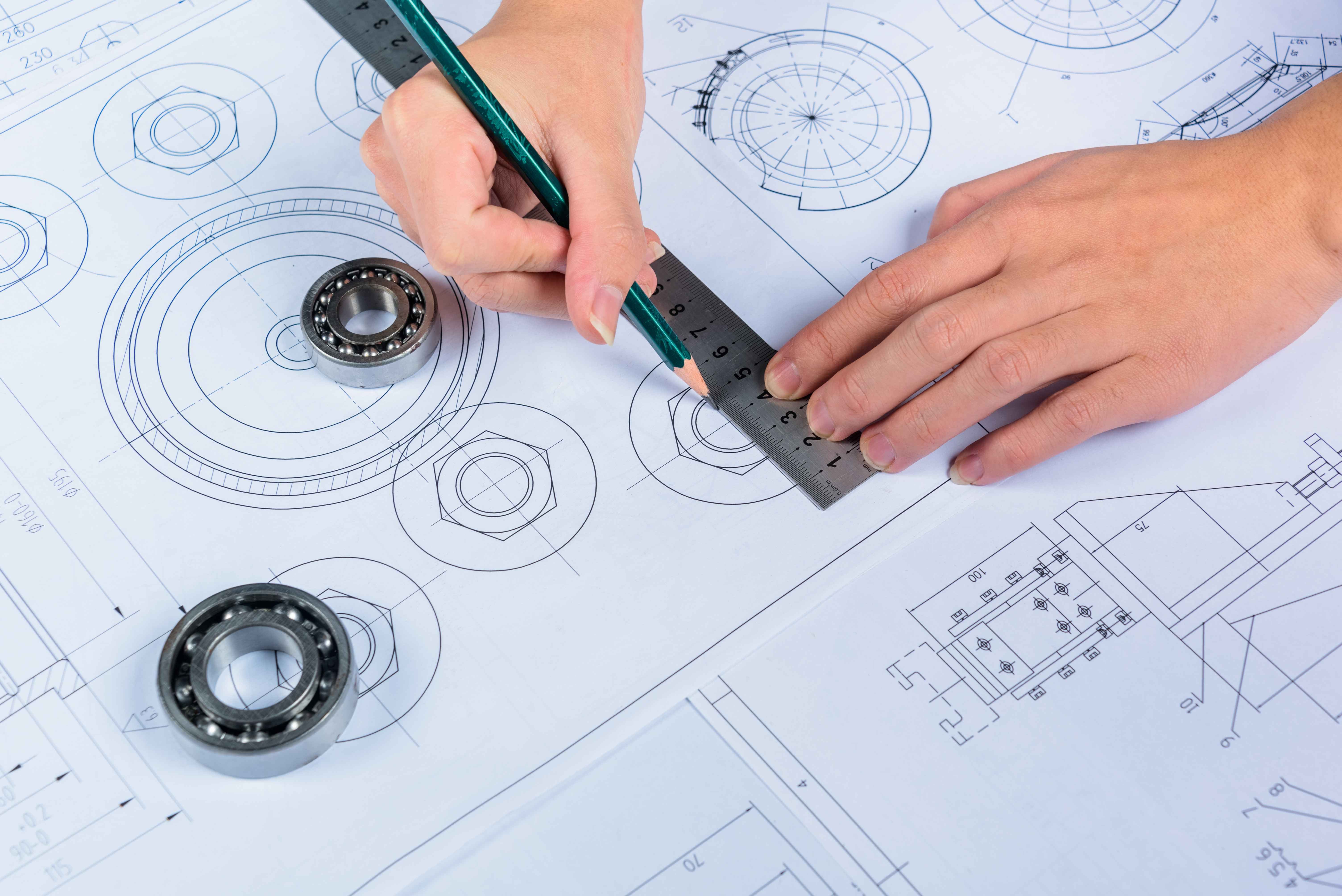
This is the universal language of design and manufacture. In this module , students learn to interpret and create technical drawings, ranging from geometric constructions to the standardisation of views, sections and dimensions, using both manual techniques and computer-aided design (CAD) software.
Fundamentals of Chemistry in Engineering
This subject provides knowledge of the composition and transformation of matter. Students explore chemical bonds, reactions, thermochemistry and equilibrium—concepts that are crucial for understanding the behaviour of fuels, lubricants and engineering materials.
Technical English for Mechanical Engineers
Engineering is a global field, so this module focuses on technical vocabulary specific to the sector. It covers terminology relating to systems, processes, safety and planning, equipping students to communicate in an international professional environment.
Economics and Business
This module introduces students to the context of business management. It covers concepts of management, strategy, finance and marketing, enabling future engineers to understand economic viability and project management in a real-world setting.
Electrical Engineering and Electrical Machines
As mechanical and electrical systems are becoming increasingly integrated, this module introduces students to circuit analysis and the fundamentals of electrical machines. It provides an essential foundation for the field of mechatronics and the design of electromechanical systems.
Fundamentals of Materials Science
This module explains why materials behave in a particular way. Students analyse internal structure, mechanical properties and phenomena such as fatigue and corrosion, enabling them to make informed decisions on the selection of the most suitable material for each engineering application.
ICT Skills for Engineers
This module develops students’ professional efficiency in the digital environment. It focuses on the advanced use of office software and data visualisation tools, providing key skills to optimise work and communication in the workplace.
Second year
In the second year, students progress from the scientific fundamentals to the core disciplines of Mechanical Engineering. The focus shifts towards practical application, delving deeper into mechanics, materials and thermodynamics. In addition, key subjects are introduced on how industrial products and processes are manufactured, organised and optimised, providing students with a comprehensive overview of the engineering life cycle.
Manufacturing Engineering
This module introduces students to ‘how things are made’. It examines the various processes for transforming raw materials (metals, ceramics or polymers) into functional parts using techniques such as machining, casting or forming, as well as joining methods (welding and adhesives).
Technical Drawing
Takes technical drawing to the next level. Students learn to represent complex mechanical assemblies, including the standardisation of elements such as threads, gears and bearings. Particular emphasis is placed on tolerances, exploded views and parametric design using advanced 3D CAD software such as CATIA.
Advanced Mathematics
Here, students are equipped with advanced mathematical tools to solve engineering problems that go beyond basic calculus. The course covers differential equations, numerical calculus, and optimisation and simulation methods, which are essential for the analysis of complex dynamic systems.
Communications for Success
This module develops students’ communication skills within an advanced professional and academic context. It refines their use of English to discuss complex topics in business, science or engineering – a key skill for leadership in a global environment.
Statistics
Provides the tools to analyse data and make decisions in environments characterised by uncertainty. The course covers probability theory, hypothesis testing and regression models – crucial skills for quality control, experimental design and the validation of results.
Mechanics
This module delves deeper into the study of motion and the equilibrium of forces, building on the physics covered in the first year. The kinematics and dynamics of both particles and rigid bodies are analysed in detail, and advanced formulations such as Lagrangian mechanics are introduced.
Fundamentals of Data Analysis (Big Data & Analytics)
In this module, students learn to extract value from the vast volumes of data generated by modern industry. Regression and optimisation models are applied to improve processes, predict failures and make strategic decisions based on data evidence.
Materials Science and Engineering
Building on the fundamentals, this module specialises in the families of materials most relevant to mechanical engineering. Ferrous and non-ferrous alloys are studied in depth, including their heat treatments, properties and applications, as well as the mechanisms of corrosion failure.
Industrial Electronics
This module equips students with the ability to design and implement electronic systems. Students gain practical experience working with components such as diodes and transistors, learn to use laboratory equipment and are introduced to digital systems programming using platforms such as Arduino.
Production Organisation
This module teaches students how to manage the efficiency of a production system. Students learn about demand planning, stock management and quality control. Key methodologies for process optimisation, such as Lean Manufacturing, are introduced.
Thermodynamics and Heat Transfer
One of the cornerstones of mechanical engineering. Students learn the fundamental laws governing energy, heat and work, and how these apply to engines, refrigeration systems and power stations. The mechanisms of conduction, convection and radiation through which heat is transferred are also studied.
Third year
The third year marks the definitive immersion in the disciplines that define the mechanical engineer. Students focus on the design and analysis of machines and mechanisms, fluid mechanics, and control and thermal systems. This is a highly specialised stage, where all prior knowledge is applied to solve complex engineering problems, ranging from the design of an engine to the automation of an industrial process.
Theory of Machines
This is the science of motion in machinery. Students learn to analyse and design the kinematics (motion) and dynamics (forces) of mechanisms such as cam systems, gear trains, brakes and clutches, in order to achieve the desired functions in a machine.
Entrepreneurship and Business Management
This course provides future engineers with a business perspective. Students gain knowledge of business plan development, strategic management, marketing and finance, equipping them to lead innovative projects or set up their own business.
Fundamentals of Strength of Materials
This module is key to safe structural design. Students learn to analyse how forces (axial, shear, bending and torsional) generate stresses and strains in the components of a machine or structure, and to apply failure theories to ensure their integrity.
Fluid Mechanics
This course introduces students to the study of the behaviour of liquids and gases. It analyses the kinematics and fundamental equations governing the motion of fluids, knowledge that is essential for the design of piping systems, aerodynamics and hydraulic machinery.
Internal Combustion Engines
A classic subject in mechanical engineering that delves into the heart of vehicles. The course covers the architecture, thermodynamic cycles (Otto, Diesel), efficiency and auxiliary systems (supercharging, emission control) of internal combustion engines.
Automatic Control
The foundation of automation and robotics. Students learn to mathematically model dynamic systems (mechanical, electrical, etc.) and to design control systems to ensure their behaviour is stable and meets the desired performance specifications.
Mechanical Technology
This module focuses on modern computer-aided manufacturing. Students are introduced to CAM (Computer-Aided Manufacturing) systems and numerical control (CNC), learning how to programme machine tools to automate the production of high-precision parts.
Digital Transformation and Innovation
This module prepares students for the Industry 4.0 environment. It covers digitalisation strategies, innovation management and agile methodologies such as Design Thinking, enabling students to lead technological change within any organisation.
Elasticity and Strength of Materials
This module explores the behaviour of solids in depth . Students tackle more complex phenomena such as column buckling, plasticity (permanent deformation) and anisotropy (properties that vary with direction). Complex structures such as frames, arches and continuous beams are analysed.
Hydraulic Machinery
This module specialises in equipment that works with fluids, such as pumps and turbines. Students learn about the theory of operation, the criteria for selecting and installing pumps, and how to analyse critical phenomena such as energy losses and cavitation.
Thermal Machinery
This module studies devices that convert heat into work and vice versa. It provides an in-depth analysis of the thermodynamic cycles of gas and steam turbines (power stations), as well as refrigeration cycles and heat pumps.
- Third-year optional modules must total 6 credits
Fourth year
The fourth and final year of the degree marks the student’s definitive transition to becoming a professional engineer. This stage is characterised by the integrated application of all the knowledge acquired in advanced modules, focusing on the advanced calculation and design of machinery, the management of complex projects and the application of cutting-edge technologies. All this learning culminates in the Final-Year Project, in which students demonstrate their competence as mechanical engineers.
Machine Calculation, Design and Testing
This is a synthesis module, in which students apply everything they have learnt to the complete design of machines. It covers the calculation of components (bearings, belts, chains), vibration analysis and the use of advanced simulation tools such as the Finite Element Method (FEM) to validate designs.
Industrial Structures and Construction
Focused on the design of industrial ‘buildings’. Students learn to calculate and design steel structures and industrial buildings in accordance with current regulations. Advanced calculation methods are used to ensure the stability and strength of large structures.
Applications of Cutting-Edge Technologies in Mechanical Engineering
Brings future engineers up to date with the latest trends that are transforming the profession. The most recent advances in manufacturing, design and process management are explored, ensuring that students graduate with a current and forward-looking perspective.
Materials Testing
A practical course, conducted in the laboratory, where students learn to ‘question’ materials to uncover their true properties. Destructive tests (tensile strength, hardness) and non-destructive tests (penetrant testing, magnetic particle testing) are carried out to characterise materials and detect defects.
Environmental Engineering
This module equips students with the skills to design and operate systems in a sustainable manner. Students study the principles of environmental management and technologies for pollution control – aspects that are mandatory and of great importance in modern engineering.
Technical Office: Mechanical Projects
Teaches the ‘craft’ of being a project engineer. Students learn the methodology for conceiving, documenting, planning and managing an engineering project from the preliminary design stage through to its implementation, using planning tools such as Gantt and PERT charts.
Computer-Aided Engineering (CAE)
A highly practical subject focused on simulation. Students learn to use specialised software (such as ANSYS) to carry out virtual analyses of the strength, stability, dynamic behaviour and thermal behaviour of components and systems, predicting their behaviour before they are manufactured.
Project Management in Industry 4.0
This module adapts project management to the new paradigm of Industry 4.0. Students learn about agile methodologies, product lifecycle management (PLM) and the implications of cybersecurity and data processing in modern projects.
Final Year Project (TFG)
This marks the culmination of the degree programme. In this module, students independently develop a complete mechanical engineering project under supervision. It serves as their introduction to the profession, demonstrating that they have acquired all the necessary skills to practise engineering competently.
- The fourth-year optional modules must total 12 credits
Elective modules
OPTIONAL MODULES, FIRST SEMESTER | |
Computer-Aided Manufacturing | 6 credits |
Materials Selection and Control | 6 credits |
Vehicle Theory | 6 credits |
Vibrations | 6 credits |
OPTIONAL SUBJECTS, SECOND TERM | |
Cars | 3 credits |
Biomechanics | 3 credits |
Industrial Design | 3 credits |
Renewable Energy Installations | 3 credits |
Machine Maintenance and Diagnostics | 3 credits |
Pneumatics | 6 credits |
Work Placement (External Placement) | 6 credits |
Joining Technologies | 6 credits |
Summary
The Bachelor’s Degree in Mechanical Engineering offers a comprehensive programme that transforms students into expert professionals. The curriculum begins with a solid foundation in fundamental sciences (mathematics, physics) and then builds upon this to cover the core disciplines of engineering: mechanics, thermodynamics, materials science and electronics.
As the course progresses, the focus shifts towards specialisation in machine design, automation, fluid systems and advanced manufacturing using simulation tools (CAE). The degree culminates in the integration of all this knowledge into project management within the framework of Industry 4.0 and is culminated in the Final-Year Project, where students demonstrate their ability to solve a real-world engineering challenge.
Sources
- Curriculum for the UAX Bachelor’s Degree in Mechanical Engineering: https://www.uax.com/titulaciones/grado-en-ingenieria-mecanica#optional-subjects-list-83230