
























However, for this approach to be truly effective, it is not enough simply to teach pupils to manage their emotions; educators themselves must be aware of their own emotional world and know how to manage it. Emotional education is not just another subject in the curriculum, but an attitude that is conveyed, consciously or unconsciously, through example.
What is emotional education and how can it be implemented in schools?
Emotional education is defined as “a continuous and lifelong educational process that aims to foster the development of emotional competences as an essential element of human development” ( Bisquerra, 2011). These competences include awareness of one’s own emotions, emotional self-regulation, empathy, social skills and the ability to make responsible decisions.
Implementing it in schools involves much more than simply running one-off workshops. Emotional education must be integrated across all areas of the curriculum, adapting it to the different stages of education and the specific needs of the pupils.
This requires us to go beyond one-off interventions and build a framework that enables us to put in place everything necessary to ensure it is integrated into the educational project and the day-to-day life of a school.
To this end, we must first and foremost consider teacher training, as teachers require specific training to incorporate emotional education into their daily practice in a natural and effective way.
Secondly, a positive emotional climate is essential – an environment where emotional diversity is respected, active listening takes place, and peaceful conflict resolution is promoted to facilitate emotional learning.
It is also important to have programmes such as, for example, RULER ( Yale Centre for Emotional Intelligence) or Rafael Bisquerra’s Emotional Education programme, as these provide us with robust, evidence-based frameworks for action.
This leads us to conclude that the involvement of the entire educational community is necessary for emotional education to be effective and to become a shared endeavour between teachers, families and the pupils themselves.
Emotional education, therefore, should not be an add-on to academic education; it is an essential part of it, as emotions directly influence attention, memory, learning and motivation ( Immordino-Yang and Damasio, 2007).
The emotional mirror: How do educators manage their emotions?
This raises a key question: how can we provide emotional education if we are unable to manage our own emotions?
Managing emotions does not mean not feeling them, but rather knowing how to recognise them, understand them and respond to them appropriately. This requires deep personal work that begins with emotional awareness: am I able to identify what I am feeling and why? It continues with self-regulation: can I manage my emotions constructively? And it is underpinned by self-care: do I set aside time for my emotional and physical wellbeing?
When teachers do not manage their emotions properly, they may transfer their stress or frustration into the classroom, damaging the school environment and affecting the teaching and learning process.
It is therefore essential that schools not only provide their pupils with emotional education, but also create spaces and opportunities for emotional reflection for teaching staff. This means it is essential to provide specific training in emotional intelligence for teachers, so that they can consciously and competently integrate these skills into their daily practice.
All this work should be underpinned by an organisational culture based on respect, active listening and mutual recognition, creating an environment where both pupils and teachers can develop emotionally in an authentic and healthy way.
We cannot overlook the fact that the emotional wellbeing of teachers is not a luxury, but a necessity for achieving quality education.

Roadmap for implementation
Implementing a process of emotional education in schools requires, as has already been stated, recognising that this is not a one-off project or a series of isolated activities, but an institutional commitment that permeates school life.
This implies, first and foremost, that the school management must take the lead in this endeavour, defining emotional education as a strategic and cross-curricular objective that forms part of the school plan and is reflected in its educational project.
To this end, it is essential to raise awareness amongst the entire educational community —teachers, families, non-teaching staff and pupils— of the importance of emotional skills for personal wellbeing and academic success, thereby creating a shared framework that facilitates their effective integration.
The next step is to provide specific and ongoing training for teachers, as has already been suggested above. One cannot teach what one does not know or master; it is therefore essential to provide teachers with theoretical knowledge about emotions, practical strategies for addressing them in the classroom, and tools for emotional self-management that enable them to be consistent role models for their pupils. This training should be practical, participatory and focused on developing skills such as emotional awareness, emotional regulation, empathy, assertiveness and positive conflict resolution.
Once teachers have been trained and are committed to the process, work with pupils should be approached gradually and tailored to each stage of their development.
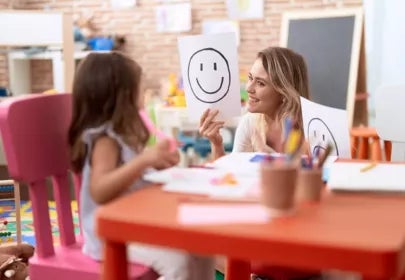
A viable approach might be to begin, in the early years of pre-school and primary education , by working on recognising and expressing basic emotions through stories, games, physical activities or art-based tasks. As pupils grow older, more complex tools can be introduced, such as emotional journals, case studies, practising active listening, or teaching self-regulation techniques such as mindful breathing or guided meditation. It is important to bear in mind that emotional education should be integrated naturally into everyday classroom life, making the most of real-life situations such as conflicts, celebrations or collaborative projects.
In addition to specific activities, it is essential to foster a positive emotional climate within the school. This involves promoting relationships based on respect, trust and cooperation; valuing emotions as a legitimate part of the school experience; and establishing rules for coexistence that prioritise dialogue, reconciliation and inclusion. To this end, teachers must be able to recognise the emotions that arise in day-to-day situations, intervene in a mindful and respectful manner, and turn every situation into an educational opportunity for the group’s emotional growth.
Finally, for emotional education to be truly effective and sustainable over time, it is essential to involve families in the process. Schools can organise workshops, talks or working groups offering guidance and resources to support children emotionally, thereby reinforcing consistency between the school and family environments.
There is no doubt that emotional education is one of the great challenges — and, at the same time, one of the greatest opportunities — of education today, as it is not merely a matter of equipping pupils with life skills, but of supporting them with authenticity, whilst we ourselves serve as living examples of emotional regulation.
That is why I believe it is important to understand that, in order to provide emotional education, we must first educate ourselves emotionally. Only through deep inner work can we truly support our pupils in their holistic development. The first step is simple, though demanding: to look into our emotional mirror and begin to build, starting with ourselves, the education we wish to offer.
How can we take the next step in emotional education?
Throughout this journey, we have seen how emotional education is much more than a complementary tool: it is an essential pillar for building schools that are more humane, inclusive and effective.
But one thing is certain: we cannot teach what we have not learnt or internalised.
This is where specialised training becomes the real turning point. Good intentions are not enough: to integrate emotional education in a profound and transformative way, we need solid knowledge, scientifically-backed methodologies and conscious personal development.
If you have felt that inner calling – that certainty that training in emotional education is the next step in your vocation as an educator or social sector professional – the UAX’s Online Master’s in Emotional Education is designed for you.
Why does this programme make the difference?
- 100% online, flexible training tailored to your lifestyle, without compromising on the academic and practical support that drives genuine learning.
- A practical, evidence-based approach that incorporates the most internationally recognised models, such as Yale’s RULER programme and the contributions of Rafael Bisquerra.
- Expert lecturers who combine professional experience and an academic background in the field of emotional intelligence and educational psychology.
- Direct application in the classroom and within the educational setting, with practical tools that you can implement straight away in your real-life contexts.
- Personal and professional development: not only will you learn to provide emotional support to others, but you will also strengthen your own emotional skills, enhancing your leadership and wellbeing.
Training in emotional education today is an investment in the future: in your own, in that of your pupils, and in that of an entire society that urgently needs more humanity, more empathy and more resilience.
Emotional education is not a trend: it is a necessity. And you can be part of the change.