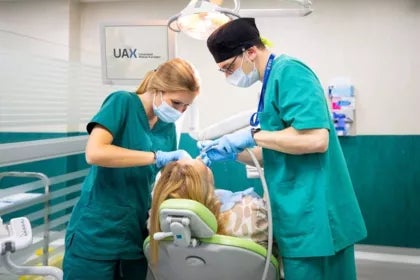


















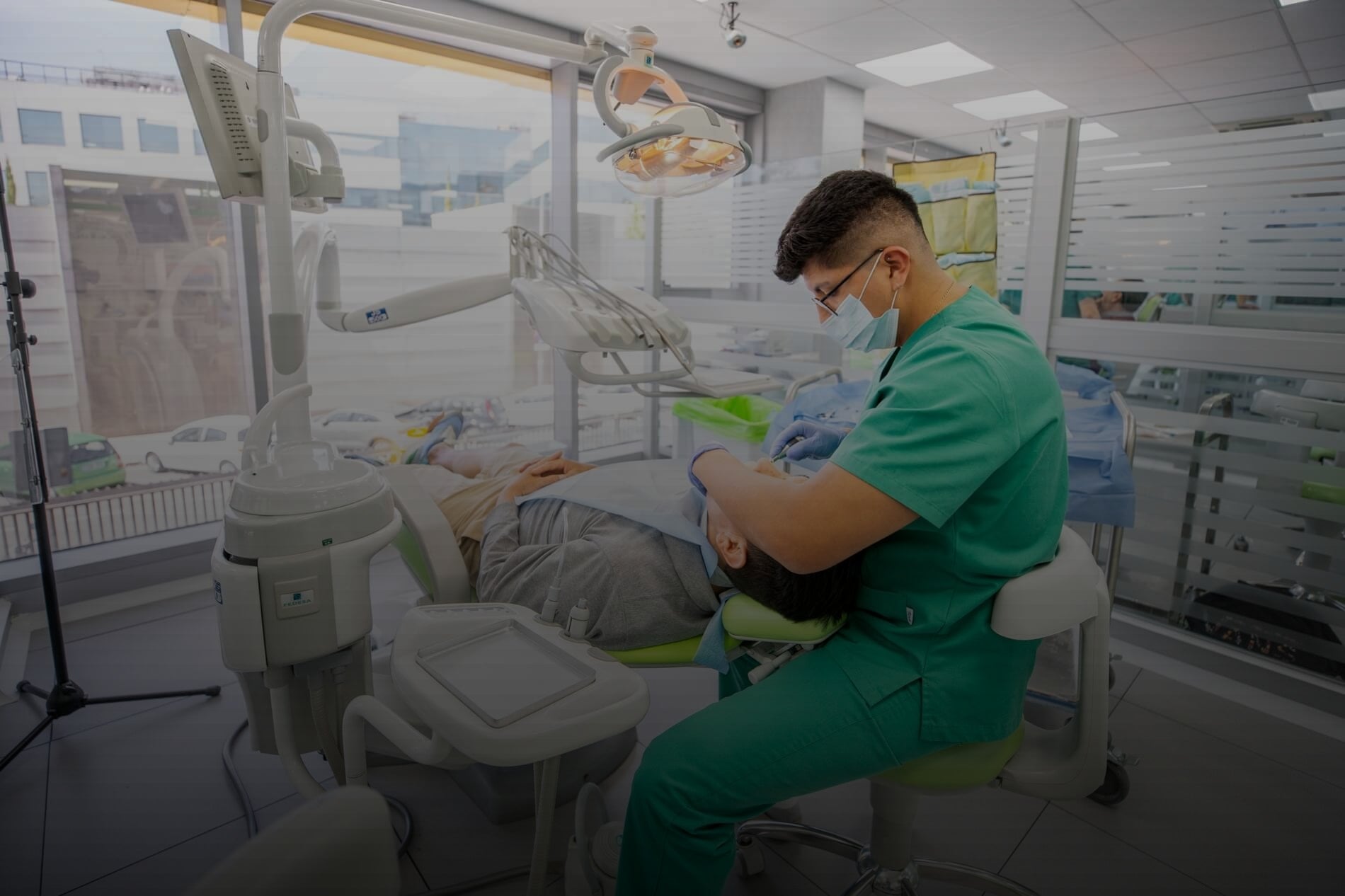
Dentistry is a degree course focused on advice, prevention, diagnosis and treatment to improve the oral health of the population. Within the field of Health Sciences , dentistry is becoming increasingly important, as optimal oral health can help prevent the onset of certain conditions associated with problems arising from the health of teeth and gums.
Specifically, we are referring to diseases of the stomatognathic system , which includes not only the teeth and gums but also the periodontal tissue, the upper jaw, the lower jaw and the temporomandibular joint.
Dentistry offers a range of specialisms, such as orthodontics, paediatric dentistry, oral surgery, endodontics, periodontics, restorative dentistry and cosmetic dentistry. Each offers unique opportunities to develop professionally and make a difference to your patients’ oral health.
Dentists are therefore essential to society as a whole, from children right through to the elderly.
As in any profession, the aim of every dentist is to carry out their work with rigour, diligence and professionalism, in order to provide the best possible care to each and every patient. To this end, it is clear that not settling for the status quo and taking a qualitative leap forward in one’s training is a key advantage for excelling in the profession.
Nowadays, it is not enough simply to complete a degree and then stop further training for the future. In all fields of knowledge in general, and in the health sciences in particular, one must constantly continue to expand one’s knowledge to stay up to date with new diagnostic and treatment techniques, thereby offering better and more accurate care.
And dentists are no exception; society is advancing and technology is advancing. Every year, there is steady progress in the techniques used to treat even the most complex cases in the field of dentistry.
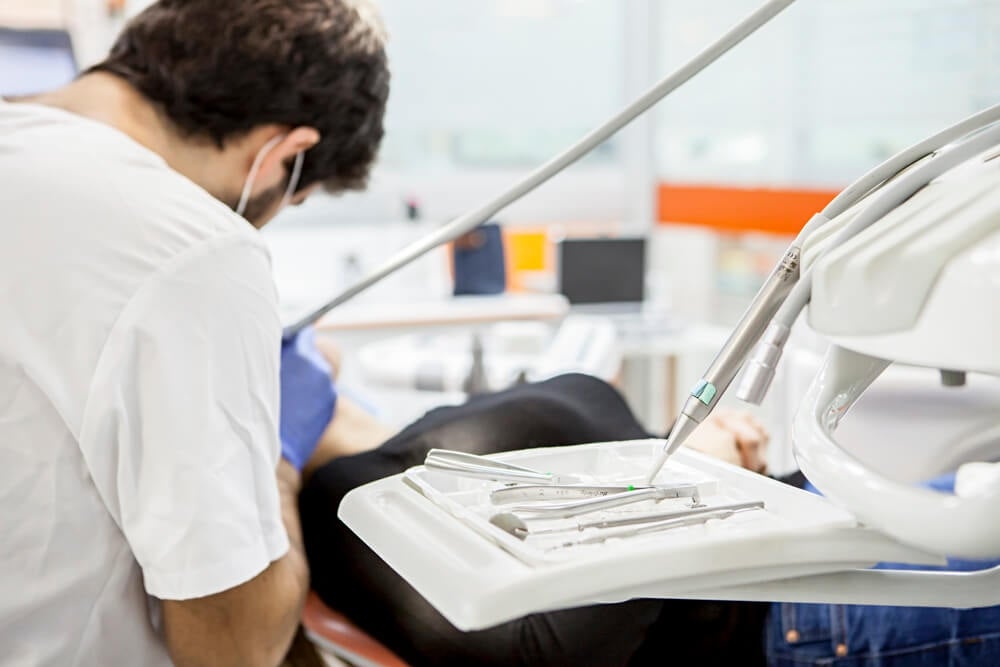
Discover the specialisms in dentistry
After completing a Bachelor’s degree in Dentistry , a world of great possibilities opens up for dentists to specialise in the area they are most passionate about through our Master’s degrees in Dentistry. These professionals will have many career opportunities and will undoubtedly enter a highly rewarding and essential profession for the wider society.
General dentistry
General dentistry focuses on comprehensive dental care, ranging from regular check-ups and cleanings to restorative treatments such as fillings and crowns. General dentists also treat gum disease, carry out tooth extractions and provide preventive education to patients. In short, they are experts in maintaining oral health and treating a variety of common dental problems, and are essential for a healthy smile.
Cosmetic Dentistry
Cosmetic dentistry focuses on improving the appearance of the smile and dental aesthetics. Cosmetic dentists offer a range of treatments, such as teeth whitening, porcelain veneers, invisible orthodontics and dental restorations using aesthetic materials.
You can learn more about this field through the Master’s in Cosmetic Dentistry and Restorative Dentistry at UAX, where you will specialise in correcting dental imperfections and enhancing facial aesthetic harmony.
Paediatric Dentistry
Paediatric dentistry is dedicated to the dental care of children and adolescents. Paediatric dentists specialise in managing the specific dental needs of young people, ranging from the prevention of tooth decay to the treatment of malocclusions and dental trauma. They offer services including regular check-ups, dental sealants, fluoridation, root canal treatments on primary teeth, and oral hygiene education tailored to the patient’s age.
You can specialise by undertaking a Master’s degree in paediatric dentistry and create a positive and comfortable dental experience for children, laying solid foundations for long-lasting oral health.
Sports Dentistry
Sports dentistry specialises in the dental care of athletes and active individuals. Sports dentists focus on preventing and treating sports-related oral injuries, such as fractured teeth, dislocated jaws and trauma to the soft tissues of the mouth. They also provide custom-made mouthguards to reduce the risk of injury during physical activity. Their aim is to ensure the oral health and safety of sportspeople, contributing to the optimal performance and general wellbeing of active patients.
Preventive dentistry
Preventive dentistry focuses on the prevention of oral diseases and the promotion of long-term oral health. Professionals in this specialism are dedicated to educating patients on proper oral hygiene habits, carrying out regular check-ups to detect dental problems at an early stage, and providing preventive treatments such as dental sealants and fluoridation. In addition, they encourage the adoption of a healthy diet and offer advice on the proper use of fluoride and other oral care products. Their aim is to prevent the onset of dental diseases and maintain optimal oral health at all stages of life.
Occupational dentistry
Occupational dentistry specialises in the assessment and treatment of dental problems related to the workplace. Occupational dentists focus on preventing oral injuries and promoting oral health amongst workers, particularly those exposed to occupational hazards such as chemicals, abrasive materials or working conditions that may affect oral health. They carry out risk assessments, provide education on oral hygiene in the workplace and offer specific treatments to address employees’ dental needs within their working environment. Their aim is to ensure a safe and healthy working environment for workers’ oral health.
Orthodontist
Orthodontics is a specialism within dentistry focused on the diagnosis, prevention and treatment of problems relating to malocclusion and dental alignment. Orthodontists specialise in correcting the position of the teeth and jaw to achieve a proper bite and an aesthetically pleasing smile. They use various devices such as braces, clear aligners and functional appliances to gradually move the teeth into their correct position. They also provide treatment to correct jaw problems, such as overbite and crossbite.
If you are interested in this specialism, you can explore it in greater depth with the UAX Master’s in Orthodontics , helping your patients to improve the function and appearance of their smile, whilst also contributing to their oral health and self-esteem.
Periodontist
Periodontics is a specialised branch of dentistry that focuses on the diagnosis, prevention and treatment of diseases of the gums and the structures supporting the teeth. Periodontists treat conditions such as gingivitis and periodontitis, which affect the gums and can lead to tooth loss if not treated properly. They offer procedures such as deep cleaning of periodontal pockets, tissue graft surgery and the placement of dental implants to restore the health and function of the gums and surrounding tissues. Their aim is to maintain periodontal health and prevent the progression of diseases that may affect the stability of the teeth and the patient’s general health.
Endodontics
Endodontics deals with treating problems inside the teeth, particularly when the inner part, known as the pulp, is damaged by deep decay or injury. Specialists in endodontics, known as endodontists, carry out root canal treatments to remove the diseased or damaged pulp, clean the inside of the tooth and seal it to prevent bacteria from re-infecting it. Their main aim is to save the tooth and relieve the patient’s pain.
Oral Surgeon
Oral surgery is a speciality of dentistry that focuses on the diagnosis and surgical treatment of conditions and injuries affecting the mouth, jaw and face. Oral surgeons carry out a variety of procedures, including complex tooth extractions, the placement of dental implants, the correction of facial deformities, biopsies of oral tissues and the treatment of lesions in the mouth. They use advanced techniques and specialised equipment to carry out these procedures safely and effectively. The main aim of oral surgery is to restore function and aesthetics, as well as to improve the patient’s oral health and quality of life.
Prosthodontics
Prosthodontics is a speciality of dentistry that focuses on the restoration and replacement of lost or damaged teeth, as well as the rehabilitation of oral function and aesthetics. Prosthodontists are experts in the fabrication of dental prostheses, such as crowns, bridges, partial and full dentures, as well as in the placement of dental implants. They use advanced techniques and specialised materials to design and fabricate bespoke prostheses that are tailored to each patient’s individual needs and preferences.
The main aim of prosthodontics is to restore chewing function, improve aesthetic appearance and enhance the patient’s quality of life.
What do I need to study to specialise in dentistry?
The key to guaranteed success lies in specialising. Dentists can acquire advanced and in-depth knowledge in fields such as Orthodontics , Endodontics , Oral and Maxillofacial Pathology, Oral and Maxillofacial Surgery, Oral and Maxillofacial Radiology, Public Health Dentistry and Paediatric Dentistry or Prosthodontics (the branch of dentistry concerned with restoring the function, anatomy, speech and aesthetics of the stomatognathic system that have been altered as a result of the loss of one or more teeth), amongst other specialisms.
Once you have completed your degree in dentistry, you need to identify the branch that most appeals to you and undertake a postgraduate specialisation course, such as a master’s degree or a diploma, which will open the door to the various specialist branches of dentistry.
Discover other specialisms offered by dentistry:
- Oral rehabilitation.
- Periodontics.
- Oral implantology.
- Aesthetic or cosmetic dentistry.
- Preventive dentistry.
- Forensic dentistry.
- Cariology (specialising in dental caries and its treatment).
- Perinatal dentistry (a branch specialising in dental care for pregnant women, newborns and children up to the age of three).
- Gnathology (a branch of dentistry that studies the functional and occlusal relationships of the teeth with one another and with the temporomandibular joint. One of the conditions it treats is bruxism).
- Occupational dentistry (a branch concerned with the dental health of workers in relation to their working environment).
- Sports dentistry (studies the influence of different sports on oral health).
- Oral pathology (concerned with the nature, identification and treatment of disorders and diseases affecting the oral cavity, maxilla, mandible and dental organs, as well as their relationship to systemic problems).
- Equine dentistry.
As you can see, there are many different types of dentistry and, therefore, many options for dentists when it comes to developing and growing as professionals. As with any medical specialism, the important thing is to choose to specialise in the branch that you are passionate about and in which you believe you can best serve society.
You can learn more about innovations in digital dentistry and how they improve efficiency in dental practices through Spain’s pioneering Master’s degree, the Master’s in Digital Dentistry .
Which dental specialism motivates you the most?